Bubble Kids are students identified as performing below the proficiency threshold on standardized assessments. This study investigated the impact of small group intervention on improving the statewide science assessment proficiency level for 5th grade science. Using criterion-based sampling, 38 participants were identified through use of NWEA MAP Growth science assessment and received the targeted instructional sessions of four-months duration. The pre-test/post-test design was employed in the study and limitedly focused on performance tracking among this subgroup, and did not include students who performed well, below or above proficiency level. Statistically, paired sample t-test results indicated significant gain in statewide science assessment, where 50% of the participants reached proficiency level, while the other 50% remained as below proficient. The mean difference score of 8.11 points indicated that the score on statewide assessment was higher than MAP Growth. However, the computed effect size (Cohen’s d) was small, suggesting that the changes and practical impact may be limited, possibly influenced by the small sample size and lack of a control group. Findings provide primary evidence for the potential effectiveness of small group interventions among transitional performers in science education. The study emphasizes the need for further research with larger samples and more rigorous designs to validate and expand upon these results.
Educational interventions can be considered as the backbone and a significant contributor to improved statewide test scores. These interventions have become essential tools, developed and implemented to enhance student proficiency levels, address academic challenges, and ensure student success in the classroom. Among the various strategies employed, small group instruction has emerged as a particularly effective method—especially when targeting so-called “bubble kids.”
In many educational contexts, high student performance on statewide assessments can often be traced to strategic teaching practices that focus on specific student groups 1 2. This paper highlights one such group: bubble students, who benefit from this study’s targeted interventions. The emphasis on the idea of this group emerged in response to high-stakes accountability systems such as the No Child Left Behind Act (NCLB) 3 and the Every Student Succeeds Act (ESSA) of 2015 4. These policies were created to raise achievement levels and ensure that school funding and evaluations align with standardized test performance.
Standardized assessments use predetermined cut scores to classify student performance into categories such as basic, proficient, or advanced. 5 These benchmarks play a central role in accountability systems, determining whether students are meeting grade-level expectations as outlined in education policy. Students who score just below the proficient cut score are often referred to as “bubble students”—those who are close to meeting proficiency but have not yet reached the threshold 6. Because even modest gains can elevate these students above the cut score, schools often prioritize them for targeted interventions, including test preparation programs, individualized tutoring, or small group instruction. This strategic focus is driven by the need to rapidly improve overall school performance metrics. Since accountability frameworks commonly rely on the percentage of students performing at or above proficiency, supporting bubble students can significantly enhance school ratings and, in some cases, influence funding and evaluations.
Booher-Jennings 6 defines bubble students as those on the cusp of meeting proficiency benchmarks, while Sparks 7 refers to them as students at risk of underachievement. Both perspectives underscore the importance of providing additional academic support to this group.
The Northwest Evaluation Association (NWEA) 8 contributes to these efforts through its linking studies, which connect Measure of Academic Progress (MAP) Growth scores with expected performance on state assessments such as Florida Assessment of Student Thinking (FAST). These studies provide valuable insights, enabling educators to forecast student outcomes on standardized tests. NWEA’s research supports early identification of learning trends, helps establish data-informed instructional goals, and guides the delivery of tailored support to improve academic outcomes. Because MAP Growth assessments are adaptive to each student's ability level, they offer a clear picture of both current academic standing and projected progress. The alignment between MAP Growth and FAST—particularly in science—makes NWEA an essential tool for instructional planning. Schools that consistently utilize NWEA data are better positioned to monitor academic growth, adjust teaching strategies in real-time, and enhance student readiness for statewide assessments. In short, NWEA and FAST work hand-in-hand to provide educators with the insights needed to drive student achievement. These linking studies further demonstrate strong correlations and classification accuracy between MAP Growth Rasch Unit (RIT) scores and FAST results 9.
Since the COVID-19 pandemic, statewide science assessment scores in the United States were reported to have fluctuated 10. Although some states have reported modest gains, significant challenges persist, especially across various grade levels and student subgroups. For instance, Michigan 11 showed slight increases in proficiency in 2023 across all tested grades: fifth-grade proficiency went up from 38.2% in 2022 to 38.9% in 2023; eighth-grade scores improved from 36.3% to 37.4%; and eleventh-grade proficiency increased from 38.0% to 39.0%. Similarly, California Science Test (CAST) results showed a minor increase in science proficiency from 29.5% in 2021–22 to 30.2% in 2022–23 12, suggesting a slow but ongoing recovery from pandemic-related learning loss.
In Maryland, science proficiency also improved. Grade 5 scores rose up from 31% in 2022 to 35% in 2023. Among disadvantaged students, gains were especially notable: scores increased from 6% to 11% 13. These improvements may reflect the impact of targeted interventions and structured STEM initiatives 14.
Nevertheless, national trends remain uneven. Data from NWEA and Education Week indicate that many students—particularly in middle and high school—have not yet returned to pre-pandemic achievement levels. For example, by 2023, eighth-grade Hispanic students were approximately 6.3 months behind their 2019 peers in science learning 15. The National Center for Education Statistics (NCES) also reported a significant decline in science scores for 13-year-olds, marking the lowest levels recorded in decades 16.
One persistent concern is the widening achievement gap for students from historically underserved backgrounds. In Connecticut, although the overall Science in Connecticut Performance Index (CPI) improved slightly from 61.4 in 2022 to 61.8 in 2024, scores for English learners and students with disabilities remained stagnant or declined, with English learners dropping from 48.6 to 47.3 and students with disabilities from 44.0 to 43.7 17. These trends highlight the urgent need for more equitable resource allocation and sustained academic support.
The pandemic has exposed vulnerabilities in science instruction—particularly given the subject’s reliance on hands-on, inquiry-based learning experiences 18. While some states have shown progress, a comprehensive national recovery in science education remains incomplete. Continued investment in science education infrastructure, informed policy decisions, and effective interventions are essential for bridging these gaps.
In light of these challenges and data trends, schools must implement interventions that promote academic growth, particularly in science. Drawing from the concept of educational triage 6, this paper supports the use of small-group instruction as a targeted intervention to help bubble students improve their performance on statewide science assessments.
Small-group instruction is a widely endorsed strategy that offers focused support for students with similar academic needs 19, 20, 21. Within the framework of standardized testing and accountability systems, it has gained importance in addressing the needs of bubble students—those just below the proficiency threshold. Although these students are close to meeting grade-level expectations, they require timely, targeted support to reach established benchmarks 6.
Bubble students are typically identified using standardized cut scores that position them just “on the bubble” of proficiency. Because they are considered the most likely to reach proficiency with modest gains, schools frequently prioritize them for intervention 22. Small-group instruction is particularly effective for this group because it enables educators to tailor instruction, provide immediate feedback, and address specific learning gaps 23.
Research shows that small-group instruction enhances academic outcomes, especially when student groups are formed based on assessment data. For bubble students, this approach allows instruction to focus on specific skills or standards that students are close to mastering. Slavin, Lake, and Davis 24 found that students in small, focused groups consistently outperform peers in whole-group settings, especially in reading and mathematics. Applied to bubble students, small groups can accelerate progress by increasing opportunities for teacher interaction, repetition, and peer collaboration.
An additional advantage of small-group instruction is the supportive learning environment it creates. Bubble students, who may struggle with confidence due to previous academic setbacks, often feel more comfortable in small settings. This environment encourages them to take academic risks, ask questions, and engage more actively—factors that are essential for deeper learning 25. Teachers can also monitor misconceptions more closely and make real-time instructional adjustments.
However, the practice of focusing on bubble students—potentially at the expense of lower- or higher-achieving peers—has raised ethical concerns. Booher-Jennings 6 refers to this as “educational triage”, where resources are allocated not according to greatest need but by the likelihood of measurable improvement. While this approach may yield short-term gains in school accountability metrics, it risks narrowing the curriculum and reinforcing educational inequities if not balanced with comprehensive support for all learners.
To be both equitable and effective, small-group instruction must be embedded within a broader tiered intervention framework, such as Response to Intervention (RTI) or Multi-Tiered System of Supports (MTSS). When implemented thoughtfully for bubble students, small-group instruction should aim not only to boost test scores but also to foster meaningful learning and long-term academic resilience 26.
In sum, small-group instruction is a powerful strategy for helping bubble kids meet academic standards. When implemented with thoughtful planning, it supports growth in both skill mastery and student confidence, positioning these learners for sustained success.
1.1. Research Question1.What is the percentage of the bubble kids who get proficiency level on the Florida Statewide Science Assessment?
2.What is the mean difference score of ‘bubble kids’ between the MAP Growth Science Assessment and Florida Statewide Science Assessment?
3.Is there a significant difference between the scores of ‘bubble kids’ from MAP Growth Science Assessment and the score in Florida Statewide Science Assessment?
4.What is the effect size to the score of ‘bubble kids’ after taking the Florida Statewide Science Assessment with targeted intervention through small group?
1.2. Research HypothesisHo =There is no significant difference between the scores of ‘bubble kids’ from MAP Growth Science Assessment and the score in Florida Statewide Science Assessment.
1.3. Scope and Limitation of the StudyThis study focused exclusively on “bubble kids,” defined as learners whose assessment scores closely approach the designated proficiency threshold. By concentrating on this specific subset, the research aims to explore specific intervention through small group instruction influencing marginal performance shifts that may bridge the gap to proficiency. The scope does not extend to students performing well, below or above the proficiency level, as they fall outside the intended target group.
A notable limitation was the absence of a control or comparison group. Without a parallel sample for benchmarking, causal claims regarding intervention effectiveness cannot be made. While the pre-test/post-test structure allows for the observation of individual progress, it does not isolate external variables or alternative explanations for score changes.
As such, conclusions are limited to observed changes within the targeted participants and cannot be generalized to broader student populations.
The study employed a quasi-experimental pretest-posttest design to assess changes in student performance, specifically focusing on 5th-grade outcomes on the Statewide Science Assessment following their NWEA-MAP Growth Science Assessment scores. This research was conducted at Renaissance Charter School at Tapestry, located in Kissimmee, Florida, USA. A pretest-posttest design involves measuring participants on a specific variable both before and after an intervention, allowing researchers to evaluate the effectiveness of that intervention in producing measurable change 27.
2.2. Participants of the StudyThe study involved a group of selected 5th-grade science students, including both male and female participants. Using criterion-based sampling, students were chosen based on their midterm scores on the Statewide Science Assessment. Criterion-based sampling is a form of purposive sampling used to select participants who meet specific qualifications or characteristics relevant to the study’s focus 28. To identify potential "bubble kids," the study utilized results from the NWEA-MAP Growth Science Assessment. This computer-adaptive test measures student knowledge and academic growth across key science topics aligned with Florida’s state standards. Students who scored just below the proficiency threshold—typically falling within the upper Level 2 range—were selected as study participants 6.
2.3. Research InstrumentThe study utilized two assessment tools: the NWEA MAP Growth Science Assessment and the Florida Statewide Science Assessment for 5th-grade science. The MAP Growth Science Assessment served as the pre-test and was used to identify potential participants, specifically students performing just below proficiency. The FAST Assessment functioned as the post-test and was the primary instrument used to evaluate the effectiveness of the targeted small-group instruction provided to the identified bubble students. Both assessments are standardized, valid, and reliable tools, designed to measure the science skills and knowledge students are expected to master by the end of the academic year.
2.4. Research ProceduresThe pre-test, consisting of the NWEA-MAP Growth Science Assessment, was administered to establish a baseline measure of students’ proficiency in 5th-grade science, aligned with Florida State Standards. Following the analysis of the winter proficiency results, the researcher obtained formal approval from the school to access student data for identifying those considered “bubble kids.” Subsequently, the small-group intervention was formally implemented. A total of 38 participants were involved in the study, distributed across five different classes. Each class was further divided into two small groups, with a maximum of five students per group. The targeted intervention consisted of small-group instruction conducted over a period of four months. The researcher personally facilitated 45-minute sessions for each group, employing a rotating series of instructional activities, including: use of an online educational platform 29; experiments and hands-on activities 30; manipulatives and simulations 31, 32; and text-based discussions and reteaching 33. Each session typically incorporated one or two of these activities, depending on the topic and the researcher’s discretion. Upon completion of the intervention, the post-test, the Florida Statewide Science Assessment for 5th grade science, was administered. All data collected were securely stored and used for analysis in the study.
The study aimed to determine whether targeted instruction through small-group intervention can improve the Statewide Science scores of bubble students. This section presents and discusses the study’s results. Data are displayed in figures and tables designed for clarity and ease of understanding. The findings are organized and analyzed within the following subsections.
3.1. Percentage of Bubble Kids Proficiency Level on Statewide Science AssessmentQuestion 1: What is the percentage of the bubble kids who get proficiency level on the Florida Statewide Science Assessment?

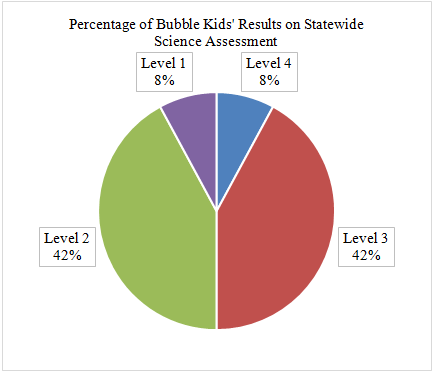
As the result of the study, there are 42% (16 bubble kids) who get proficiency level 3 and 8% (3 bubble kids) gets proficiency level 4, a total of 50% (19 bubble kids) get into the proficiency level and above. On the other hand, 42 % (16 bubble kids) get level 2 and 8 % (3 bubble kids) get level 1, a total of 50% (19 bubble kids) are still in below proficiency level.
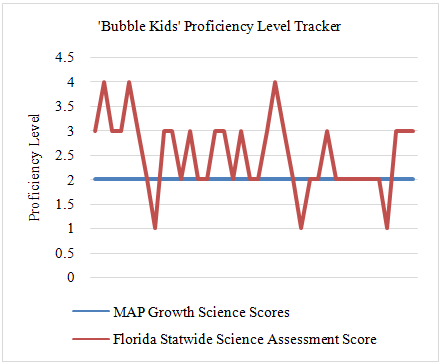
The Figure 2 shows the comparison between the MAP Growth scores (blue line) which was the baseline of determining the participants of the study and implementing intervention and the Statewide Science score (orange line) as the post-test and measure the success of the small group intervention among bubble kids.

Question 2: What is the mean difference score of ‘bubble kids’ between the MAP Growth Science Assessment and Florida Statewide Science Assessment?
The Table 1 shows the mean, standard deviation and mean difference score between the MAP Growth Science Assessment and Florida Statewide Science Assessment for 5th grade science. The mean difference is used to examine the average change between two measurements and serves as a basis for other inferential statistical tests, including the paired t-test and the calculation of effect sizes like Cohen’s d 34
To calculate the mean difference (d), the mean before intervention (Xi), the mean after intervention (Yi) are needed and the sample size (n), with the formula:
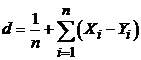 | (1) |
A mean difference of -8.11 suggests that scores in Statewide Science assessment is greater than MAP Growth Science score. The mean difference value in the study shows that the scores in Statewide Science Assessment is in 8.11 units higher than the MAP Growth Science score.
Question 3: Is there a significant difference between the scores of ‘bubble kids’ from MAP Growth Science Assessment and the score in Florida Statewide Science Assessment?
The Table 2 shows the t-test statistics comparing MAP Growth Science score and Florida Statewide Science score. The standard deviation quantifies data variability around the mean 35, while the t-test evaluates whether differences between means are likely due to chance or reflect a real effect 36. To calculate requires the mean difference (d), the difference in paired value (di), and the sample size (n), using the formula:
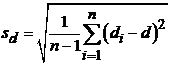 | (2) |
 | (3) |
The standard deviation on the MAP Growth Science score is low with the value of 4.09 which indicates the scores are close to the mean where small range of scores indicated. Standard deviation on Statewide Science assessment score provides greater value of 9.54, which is greater than the MAP Growth Science standard deviation that indicates that scores are spread in a larger range. The t-statistic value of -5.45 indicating the direction of the data is going to the area of rejection of null hypothesis with significant difference between the sample mean and comparison mean. The results show a statistically significant since the t-statistic absolute value of 5.45 is greater than the t-critical value of 2.03.
Ho: There is no significant between the scores of ‘bubble kids’ from MAP Growth Science Assessment and the score in Florida Statewide Science Assessment.
Using the data in Table 2, the p-value of 0.000 is less than to the significant alpha level of 0.05 which shows that the two mean scores have significant difference. Therefore, the Ho, which is there is no significant between the scores of ‘bubble kids’ from MAP Growth Science Assessment and the score in Florida Statewide Science Assessment, is rejected.
3.4. Effect Size of Bubble Kids Scores on Statewide Science AssessmentQuestion 4: What is the effect size to the score of ‘bubble kids’ after taking the Florida Statewide Science Assessment with targeted intervention through small group?
Table 3 shows the data analysis on the effect size of the scores using the Cohen’s d value. Cohen’s d quantifies the magnitude of a mean difference in terms of standard deviation, and it uses the pooled standard deviation when comparing independent groups. Where there is a small effect is d≈0.2, medium effect d≈0.5, and large effect d≈0.8 36.
To calculate the standard deviation pooled and Cohen’s d value, it requires the mean (X1, X2) of the paired sample, the squared of variances (s12, s22), and the samples (n1, n2), with the following formula:
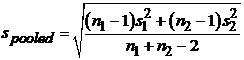 | (4) |
 | (5) |
The sets of data provided a standard deviation pooled of 7.34, this indicates that the scores in both assessments vary by an average of 7.34 with the respective means. The result of Cohen’s d value gives an idea on the effect size of the score and quantify the magnitude of the standardized difference between the MAP Growth Science mean score and Florida Statewide Science Assessment mean score. The Cohen’s d value of -0.2 indicates that the Florida Statewide Science Assessment score is slightly higher mean value than the MAP Growth Science score and the two means has small effect size.
The findings of the study show that using small group instructions can improve Statewide Assessment score for bubble kids. Among the participants, 50% made it to the proficiency level and the other 50% remains below proficient level. The mean difference value in the study shows that the improvement of the scores could be attributed to the effectiveness of the targeted intervention through small group 37 to let ‘bubble kids’ get a proficiency level in Statewide Science Assessment. This study aligned with the study conducted by Calor, et al 38, Gasser et al 39, Chen et al 40, Kraatz et al 41, Zamecnik et al 42, and Adrian Carruana Martin et al 43, which presented an outcome on how effective the small group instructions can make a good impact to students’ academic success.
The study is also challenging and limited only to bubble kids which only focus on the learners who got below proficient but close to the threshold proficiency level. On the studies of Timar 44, and Rosholm et al 45 make a significant alignment on the present study as they emphasis on low performers students, helping them to understand more the concept and most important preparing learners for Statewide Assessment as the basis of students’ achievement, promotion and preparation for higher grade level. The results of the present study show significant difference between the ‘bubble kids’ MAP Growth Science score and Statewide Science Assessment score, there is statistically significant and small effect size.
The findings of the study demonstrated statistically significant improvements among the 38 ‘bubble kids’ who participated in the intervention. This suggests that the observed changes were unlikely to be due to chance, indicating potential effectiveness of the intervention in a targeted context.
However, carefulness is necessary in interpreting these results, as the effect size (Cohen’s d) was small, indicating limited practical impact. While statistical significance may reflect a detectable difference, a small effect size often implies that the real-world relevance or magnitude of change is minimal. This discrepancy highlights the distinction between statistical and clinical or educational significance, particularly in educational settings where meaningful change often depends on larger, more sustained effects.
Moreover, the relatively small sample size of 38 participants poses limitations for generalizability. Bubble Kids, a specific subgroup already characterized by transitional academic performance, may respond uniquely to interventions. As such, results may not be representative of broader student populations or other subgroups. Smaller samples also increase the risk of Type II errors and reduce overall statistical power, potentially masking stronger intervention effects that might emerge in larger or more diverse groups.
The absence of a control or comparison group further limits causal inference. Without a baseline or an alternate treatment condition, it becomes difficult to attribute observed changes solely to the intervention. Confounding variables, natural development, or external influences, such as classroom dynamics or seasonal academic shifts could have contributed to the outcomes.
Based on the results of the study, 50% of the identified bubble kids improved to proficiency level. There is a significant difference between the mean score of the MAP Growth Science scores and Florida Statewide Science Assessment for 5th grade science. Small group instructions specially for bubble kids based on MAP Growth Science assessment provide effect to the students’ progress in achieving proficiency level in taking Florida Statewide Science Assessment.
Findings from this study suggest that small group instruction may serve as an effective strategy for improving outcomes among students whose performance falls just below proficiency levels on high-stakes assessments. Despite the limited sample size (n = 38) and absence of a control group, the observed gains indicate that targeted, differentiated instruction in small group settings holds promise for bridging the gap to proficiency.
While statistical measures such as Cohen’s d revealed a small effect size, the real-world relevance lies in the actionable nature of the intervention. Teachers and school leaders preparing students for high-stakes testing may benefit from adopting or refining small group instructional models that cater to bubble kids’ specific learning needs. These findings underscore the potential value of replicable classroom practices, and support further investigation of scalable, data-informed approaches to maximize student performance under test pressure.
Future studies incorporating randomized control designs or matched comparison groups may strengthen validity and enhance generalizability. To improve practical impact, the small group intervention may require modification, scaling, or integration with complementary strategies targeting the specific needs of bubble kids.
CAST, California science test; CPI, Connecticut performance index; FAST, Florida Assessment of student thinking; MAP, measure of academic progress; MTSS, multi-tiered system of support; NCES, national center for education statistics; NWEA, northwest evaluation association; RIT, Rasch unit; RTI, response to intervention.
The authors declare that they have no competing interest to any known competing financial interests or personal relationships that could have appeared to influence the work reported in this study.
Not applicable.
The study complied with all the relevant national regulations and institutional policies in accordance with the tenets of the Helsinkin’s Declaration and has been approved and permitted by the authors’ institution in utilizing learners’ data, and conducting the said study aimed to provide intervention for students’ academic success.
This research was conducted without any financial support from funding agencies in the public, commercial, or not-for-profit sectors. The authors declare that no external funding was received for the design, implementation, analysis, or publication of this study.
The data that support the findings of the study are available from the corresponding author [Colete, E]. The raw data, which contain the information of the participants that could compromise their privacy, are not publicly available due to a certain restriction. Researchers that wish to access the data that supports the study are available to the corresponding author, upon formal and reasonable request.
ESC did the conceptualization, methodology and design, conducted the investigation, wrote, edited and reviewed the original draft, analyzed and interpreted the data. LTC helped in methodology, analysis, gathered literature and conceptual resources, reviewed and edited original draft. CLG helped in conceptualization, visualization and supervision of the study, data curation, validation and analysis. GM assisted on conceptualization, visualization, supervision of the study, data curation and validation. Authors read and approved final manuscript.
The researcher would like to express sincere gratitude to Ms. Precilla Mendez, Principal of Renaissance Charter School at Tapestry, Kissimmee, Florida, USA, for the unwavering support, encouragement, and permission to conduct the investigation within the school. Your guidance and cooperation were invaluable to the successful completion of this study.
| [1] | Steenbergen‑Hu, S., & Cooper, H. (2014). A meta-analysis of the effectiveness of differentiated instruction in small groups. Review of Educational Research, 84(4), 405–430. | ||
| In article | |||
| [2] | Associated Press. (2023, September 19). How a rural Alabama school system outdid the country with gains in math by using data-driven, small-group instruction. The Associated Press. https:// apnews.com/ article/43253afc35621ce80f03dd00ccc160a2. | ||
| In article | |||
| [3] | No Child Left Behind Act of 2001, Pub. L. No. 107-110, 115 Stat. 1425 (2002). | ||
| In article | |||
| [4] | “EVERY STUDENT SUCCEEDS ACT,” 2016. Available: https:// www.congress.gov/114/plaws/publ95/PLAW-114publ95.pdf. | ||
| In article | |||
| [5] | Kane, M. T. (2013). Validating the interpretations and uses of test scores. Journal of Educational Measurement, 50(1), 1–73. | ||
| In article | View Article | ||
| [6] | J. Booher-Jennings, “Below the Bubble: ‘Educational Triage’ and the Texas Accountability System,” American Educational Research Journal, vol. 42, no. 2, pp. 231–268, Jan. 2005. | ||
| In article | View Article | ||
| [7] | S. D. Sparks, “Study Finds ‘Bubble Student’ Triage a Gut Reaction to Rising Standards,” Education Week, Mar. 09, 2012. https://www.edweek.org/leadership/study-finds-bubble-student-triage-a-gut-reaction-to-rising-standards/2012/03 (accessed Jul. 03, 2025). | ||
| In article | |||
| [8] | “Linking Study Report: Predicting Performance on the Florida Statewide Assessment Program based on NWEA MAP Growth Scores NWEA Psychometric Solutions,” 2020. Available: https:// www.nwea.org/uploads/2020/07/FL-MAP-Growth-Linking-Study-Report-2020-07-23.pdf. | ||
| In article | |||
| [9] | “Predicting Proficiency on the Florida Assessment of Student Thinking (FAST) Based on NWEA MAP Growth Scores,” 2024. Accessed: Jul. 03, 2025. [Online]. Available: https:// www.nwea.org/ uploads/ FL-MAP-Growth-Linking-Study-Report-2024.pdf. | ||
| In article | |||
| [10] | Kowalski, S., Peters, S. J., Kuhfeld, M., Robinson, G., & Lewis, K. (2024, September 17). COVID’s impact on science achievement: Trends from 2019 through 2024 [Research report]. NWEA. | ||
| In article | |||
| [11] | Michigan Department of Education, “MDE - Michigan department of education,” Michigan.gov, 2019. https:// www.michigan. gov/mde. | ||
| In article | |||
| [12] | 2022–23 California Statewide Assessment Results - Year 2023 (CA Dept of Education),” www.cde.ca.gov. https:// www.cde.ca.gov/ nr/ne/ yr23/yr23rel83.asp. | ||
| In article | |||
| [13] | “Press Releases,” Maryland.gov, 2025. https:// news. maryland.gov/ msde (accessed Jul. 03, 2025). | ||
| In article | |||
| [14] | Accelerate Learning Inc, “STEMscopes Science Boosts School Science Scores Nationwide | Accelerate Learning,” Acceleratelearning.com, 2024. https:// info. acceleratelearning. com/ news/ stemscopes -science-boosts-student-achievement- and-scores-nationwide-2022-2023 (accessed Jul. 03, 2025). | ||
| In article | |||
| [15] | Education Week American Education News Site of Record, “Education Week American Education News Site of Record,” Edweek.org, Jan. 21, 2013. https://www.edweek.org. | ||
| In article | |||
| [16] | “Parents - Pregnancy, Birth, Babies, Parenting,” Parents, 2019. https://www.parents.com. | ||
| In article | |||
| [17] | Connecticut State Department of Education. (2024). Improved attendance and mathematics and science scores. CT.gov. https://portal.ct.gov/SDE/Press-Room/Press-Releases/ 2024/ Improved- Attendance-and-Mathematics-and-Science-Scores. | ||
| In article | |||
| [18] | Zucker, A., & Noyce, P. (2020). Lessons from the pandemic about science education. Thinking Classroom, 25(6). | ||
| In article | View Article | ||
| [19] | Reading Rockets. (n.d.). Instructional grouping for reading for students with LD: Implications for practice. Retrieved from https://www.readingrockets.org/topics/learning-disabilities/ articles/ instructional-grouping-reading-students-ld-implications. | ||
| In article | |||
| [20] | Yeh, S. (2017). Meta-analysis of targeted smallgroup reading interventions. Journal of Learning Disabilities, 50(1), 3–15. | ||
| In article | |||
| [21] | Kalaian, S. A., Kasim, R. M., & Nims, J. K. (2018). Effectiveness of small-group learning pedagogies in engineering and technology education: A metaanalysis. Journal of Technology Education, 29(2), 20–35. | ||
| In article | View Article | ||
| [22] | J. Jennings and H. Sohn, “Measure for Measure,” Sociology of Education, vol. 87, no. 2, pp. 125–141, Mar. 2014. | ||
| In article | View Article PubMed | ||
| [23] | Elevate K-12, “What Are the Biggest Benefits of Small-Group Instruction?,” www.elevatek12.com, Apr. 29, 2024. https:// www.elevatek12.com/blog/elevate-in-action/benefits-of-small-group-instruction/. | ||
| In article | |||
| [24] | R. E. Slavin, C. Lake, B. Chambers, A. Cheung, and S. Davis, “Effective Reading Programs for the Elementary Grades: A Best-Evidence Synthesis,” Review of Educational Research, vol. 79, no. 4, pp. 1391–1466, Dec. 2009. | ||
| In article | View Article | ||
| [25] | L. Ferlazzo, “Small-Group Instruction: Work It for Your Students—and You,” Education Week, Nov. 15, 2021. Available: https://www.edweek.org/teaching-learning/opinion-small-group-instruction-work-it-for-your-students-and-you/2021/11. | ||
| In article | |||
| [26] | D. FUCHS and L. S. FUCHS, “Introduction to response to intervention: What, why, and how valid is it?,” Reading Research Quarterly, vol. 41, no. 1, pp. 93–99, Jan. 2006. | ||
| In article | View Article | ||
| [27] | T. D. Little et al., “The retrospective pretest–posttest design redux: On its validity as an alternative to traditional pretest–posttest measurement,” International Journal of Behavioral Development, vol. 44, no. 2, p. 016502541987797, Oct. 2019. | ||
| In article | View Article | ||
| [28] | F. Nyimbili and L. Nyimbili, “Types of Purposive Sampling Techniques with Their Examples and Application in Qualitative Research Studies,” British Journal of Multidisciplinary and Advanced Studies, vol. 5, no. 1, pp. 90–99, Feb. 2024. | ||
| In article | View Article | ||
| [29] | C. N. Akpen, S. Asaolu, S. Atobatele, H. Okagbue, and S. Sampson, “Impact of Online Learning on student’s Performance and engagement: a Systematic Review,” Discover Education, vol. 3, no. 1, Nov. 2024, Available: https://link.springer.com/article/10.1007/s44217-024-00253-0. | ||
| In article | View Article | ||
| [30] | M. B. Tindall, A pilot study on the effects of increased lab experiments and hands-on activities on summative assessments, Doctoral dissertation, University of Dayton, 2023. ProQuest LLC, Publication No. ED645186. | ||
| In article | |||
| [31] | Victoria Olubola Adeyele, “Relative effectiveness of simulation games, blended learning, and interactive multimedia in basic science achievement of varying ability pupils,” Education and Information Technologies, Jan. 2024. | ||
| In article | |||
| [32] | M. B. Ouahi, D. Lamri, T. Hassouni, and E. M. Al Ibrahmi, “Science Teachers’ Views on the Use and Effectiveness of Interactive Simulations in Science Teaching and Learning,” International Journal of Instruction, vol. 15, no. 1, pp. 277–292, Jan. 2022. | ||
| In article | View Article | ||
| [33] | K. Keane, “Text-based discussion interactions and engagement with three different text types,” The Journal of Educational Research, vol. 118, no. 2, pp. 185–199, Feb. 2025. | ||
| In article | View Article | ||
| [34] | J. M. Bland and D. G. Altman, “Comparing methods of measurement: why plotting difference against standard method is misleading,” The Lancet, vol. 346, no. 8982, pp. 1085–1087, Oct. 1995. | ||
| In article | View Article PubMed | ||
| [35] | D.S. Moore, G.P. McCAbe, & B.A. Craig, “WebAssign - Introduction to the Practice of Statistics 9th edition,” 2016, www.webassign.net., https:// www.webassign.net/ features/ textbooks/ mintrostat9/details.html. | ||
| In article | |||
| [36] | J. Cohen, Statistical Power Analysis for the Behavioral Sciences, 2nd ed. New York: Routledge, 1988. | ||
| In article | |||
| [37] | C. Howe, “Strategies for supporting the transition from small-group activity to student learning: A possible role for beyond-group sharing,” Learning, Culture and Social Interaction, vol. 28, p. 100471, Mar. 2021. | ||
| In article | View Article | ||
| [38] | S. M. Calor, R. Dekker, Jannet, and Monique L.L. Volman, “Improving the quality of mathematical discussions: The impact of small-group scaffolding,” Learning Culture and Social Interaction, vol. 49, pp. 100858–100858, Sep. 2024. | ||
| In article | View Article | ||
| [39] | L. Gasser, D. Preisig, A. Frei, Y. Dammert, S. Egger, and P. K. Murphy, “Effects of a literary intervention on interaction quality in small-group discussions in the upper elementary grades,” Learning and Instruction, vol. 95, p. 101996, Feb. 2025. | ||
| In article | View Article | ||
| [40] | J. Chen, T.-J. Lin, Ian A.G. Wilkinson, Seung Yon Ha, and N. Paul, “Linkages between cognitive and social dialogue patterns during collaborative small-group discussions,” Learning and instruction, vol. 87, pp. 101795–101795, Oct. 2023. | ||
| In article | View Article | ||
| [41] | E. Kraatz et al., “Teacher Scaffolding of Social and Intellectual Collaboration in Small Groups: A Comparative Case Study,” Frontiers in Psychology, vol. 11, no. 587058, p. 587058, 2020. | ||
| In article | View Article PubMed | ||
| [42] | A.Zamecnik et al., “The cohesion of small groups in technology-mediated learning environments: A systematic literature review,” Educational Research Review, vol. 35, p. 100427, Feb. 2022. | ||
| In article | View Article | ||
| [43] | Adrián Carruana Martín, C. Alario-Hoyos, and C. D. Kloos, “Smart Groups: A Tool for Group Orchestration in Synchronous Hybrid Learning Environments,” Lecture notes in computer science, pp. 384–388, Jan. 2021. | ||
| In article | View Article | ||
| [44] | A. Timar, “Timar: Multiplying success: Small-group instructions in an early college high school mathematics class Multiplying Success: Small-Group Instruction in an Early College High School Mathematics Class,” 2023. Available: https:// files.eric.ed.gov/ fulltext/EJ1413480.pdf. | ||
| In article | View Article | ||
| [45] | M. Rosholm et al., “A tailored small group instruction intervention in mathematics benefits low achievers,” npj Science of Learning, vol. 10, no. 1, Apr. 2025. | ||
| In article | View Article PubMed | ||
Published with license by Science and Education Publishing, Copyright © 2025 Emmanuel S. Colete, Lejeb T. Colete, Courtney-Leigh Gourley and Gadiel Morales
 This work is licensed under a Creative Commons Attribution 4.0 International License. To view a copy of this license, visit
http://creativecommons.org/licenses/by/4.0/
This work is licensed under a Creative Commons Attribution 4.0 International License. To view a copy of this license, visit
http://creativecommons.org/licenses/by/4.0/
| [1] | Steenbergen‑Hu, S., & Cooper, H. (2014). A meta-analysis of the effectiveness of differentiated instruction in small groups. Review of Educational Research, 84(4), 405–430. | ||
| In article | |||
| [2] | Associated Press. (2023, September 19). How a rural Alabama school system outdid the country with gains in math by using data-driven, small-group instruction. The Associated Press. https:// apnews.com/ article/43253afc35621ce80f03dd00ccc160a2. | ||
| In article | |||
| [3] | No Child Left Behind Act of 2001, Pub. L. No. 107-110, 115 Stat. 1425 (2002). | ||
| In article | |||
| [4] | “EVERY STUDENT SUCCEEDS ACT,” 2016. Available: https:// www.congress.gov/114/plaws/publ95/PLAW-114publ95.pdf. | ||
| In article | |||
| [5] | Kane, M. T. (2013). Validating the interpretations and uses of test scores. Journal of Educational Measurement, 50(1), 1–73. | ||
| In article | View Article | ||
| [6] | J. Booher-Jennings, “Below the Bubble: ‘Educational Triage’ and the Texas Accountability System,” American Educational Research Journal, vol. 42, no. 2, pp. 231–268, Jan. 2005. | ||
| In article | View Article | ||
| [7] | S. D. Sparks, “Study Finds ‘Bubble Student’ Triage a Gut Reaction to Rising Standards,” Education Week, Mar. 09, 2012. https://www.edweek.org/leadership/study-finds-bubble-student-triage-a-gut-reaction-to-rising-standards/2012/03 (accessed Jul. 03, 2025). | ||
| In article | |||
| [8] | “Linking Study Report: Predicting Performance on the Florida Statewide Assessment Program based on NWEA MAP Growth Scores NWEA Psychometric Solutions,” 2020. Available: https:// www.nwea.org/uploads/2020/07/FL-MAP-Growth-Linking-Study-Report-2020-07-23.pdf. | ||
| In article | |||
| [9] | “Predicting Proficiency on the Florida Assessment of Student Thinking (FAST) Based on NWEA MAP Growth Scores,” 2024. Accessed: Jul. 03, 2025. [Online]. Available: https:// www.nwea.org/ uploads/ FL-MAP-Growth-Linking-Study-Report-2024.pdf. | ||
| In article | |||
| [10] | Kowalski, S., Peters, S. J., Kuhfeld, M., Robinson, G., & Lewis, K. (2024, September 17). COVID’s impact on science achievement: Trends from 2019 through 2024 [Research report]. NWEA. | ||
| In article | |||
| [11] | Michigan Department of Education, “MDE - Michigan department of education,” Michigan.gov, 2019. https:// www.michigan. gov/mde. | ||
| In article | |||
| [12] | 2022–23 California Statewide Assessment Results - Year 2023 (CA Dept of Education),” www.cde.ca.gov. https:// www.cde.ca.gov/ nr/ne/ yr23/yr23rel83.asp. | ||
| In article | |||
| [13] | “Press Releases,” Maryland.gov, 2025. https:// news. maryland.gov/ msde (accessed Jul. 03, 2025). | ||
| In article | |||
| [14] | Accelerate Learning Inc, “STEMscopes Science Boosts School Science Scores Nationwide | Accelerate Learning,” Acceleratelearning.com, 2024. https:// info. acceleratelearning. com/ news/ stemscopes -science-boosts-student-achievement- and-scores-nationwide-2022-2023 (accessed Jul. 03, 2025). | ||
| In article | |||
| [15] | Education Week American Education News Site of Record, “Education Week American Education News Site of Record,” Edweek.org, Jan. 21, 2013. https://www.edweek.org. | ||
| In article | |||
| [16] | “Parents - Pregnancy, Birth, Babies, Parenting,” Parents, 2019. https://www.parents.com. | ||
| In article | |||
| [17] | Connecticut State Department of Education. (2024). Improved attendance and mathematics and science scores. CT.gov. https://portal.ct.gov/SDE/Press-Room/Press-Releases/ 2024/ Improved- Attendance-and-Mathematics-and-Science-Scores. | ||
| In article | |||
| [18] | Zucker, A., & Noyce, P. (2020). Lessons from the pandemic about science education. Thinking Classroom, 25(6). | ||
| In article | View Article | ||
| [19] | Reading Rockets. (n.d.). Instructional grouping for reading for students with LD: Implications for practice. Retrieved from https://www.readingrockets.org/topics/learning-disabilities/ articles/ instructional-grouping-reading-students-ld-implications. | ||
| In article | |||
| [20] | Yeh, S. (2017). Meta-analysis of targeted smallgroup reading interventions. Journal of Learning Disabilities, 50(1), 3–15. | ||
| In article | |||
| [21] | Kalaian, S. A., Kasim, R. M., & Nims, J. K. (2018). Effectiveness of small-group learning pedagogies in engineering and technology education: A metaanalysis. Journal of Technology Education, 29(2), 20–35. | ||
| In article | View Article | ||
| [22] | J. Jennings and H. Sohn, “Measure for Measure,” Sociology of Education, vol. 87, no. 2, pp. 125–141, Mar. 2014. | ||
| In article | View Article PubMed | ||
| [23] | Elevate K-12, “What Are the Biggest Benefits of Small-Group Instruction?,” www.elevatek12.com, Apr. 29, 2024. https:// www.elevatek12.com/blog/elevate-in-action/benefits-of-small-group-instruction/. | ||
| In article | |||
| [24] | R. E. Slavin, C. Lake, B. Chambers, A. Cheung, and S. Davis, “Effective Reading Programs for the Elementary Grades: A Best-Evidence Synthesis,” Review of Educational Research, vol. 79, no. 4, pp. 1391–1466, Dec. 2009. | ||
| In article | View Article | ||
| [25] | L. Ferlazzo, “Small-Group Instruction: Work It for Your Students—and You,” Education Week, Nov. 15, 2021. Available: https://www.edweek.org/teaching-learning/opinion-small-group-instruction-work-it-for-your-students-and-you/2021/11. | ||
| In article | |||
| [26] | D. FUCHS and L. S. FUCHS, “Introduction to response to intervention: What, why, and how valid is it?,” Reading Research Quarterly, vol. 41, no. 1, pp. 93–99, Jan. 2006. | ||
| In article | View Article | ||
| [27] | T. D. Little et al., “The retrospective pretest–posttest design redux: On its validity as an alternative to traditional pretest–posttest measurement,” International Journal of Behavioral Development, vol. 44, no. 2, p. 016502541987797, Oct. 2019. | ||
| In article | View Article | ||
| [28] | F. Nyimbili and L. Nyimbili, “Types of Purposive Sampling Techniques with Their Examples and Application in Qualitative Research Studies,” British Journal of Multidisciplinary and Advanced Studies, vol. 5, no. 1, pp. 90–99, Feb. 2024. | ||
| In article | View Article | ||
| [29] | C. N. Akpen, S. Asaolu, S. Atobatele, H. Okagbue, and S. Sampson, “Impact of Online Learning on student’s Performance and engagement: a Systematic Review,” Discover Education, vol. 3, no. 1, Nov. 2024, Available: https://link.springer.com/article/10.1007/s44217-024-00253-0. | ||
| In article | View Article | ||
| [30] | M. B. Tindall, A pilot study on the effects of increased lab experiments and hands-on activities on summative assessments, Doctoral dissertation, University of Dayton, 2023. ProQuest LLC, Publication No. ED645186. | ||
| In article | |||
| [31] | Victoria Olubola Adeyele, “Relative effectiveness of simulation games, blended learning, and interactive multimedia in basic science achievement of varying ability pupils,” Education and Information Technologies, Jan. 2024. | ||
| In article | |||
| [32] | M. B. Ouahi, D. Lamri, T. Hassouni, and E. M. Al Ibrahmi, “Science Teachers’ Views on the Use and Effectiveness of Interactive Simulations in Science Teaching and Learning,” International Journal of Instruction, vol. 15, no. 1, pp. 277–292, Jan. 2022. | ||
| In article | View Article | ||
| [33] | K. Keane, “Text-based discussion interactions and engagement with three different text types,” The Journal of Educational Research, vol. 118, no. 2, pp. 185–199, Feb. 2025. | ||
| In article | View Article | ||
| [34] | J. M. Bland and D. G. Altman, “Comparing methods of measurement: why plotting difference against standard method is misleading,” The Lancet, vol. 346, no. 8982, pp. 1085–1087, Oct. 1995. | ||
| In article | View Article PubMed | ||
| [35] | D.S. Moore, G.P. McCAbe, & B.A. Craig, “WebAssign - Introduction to the Practice of Statistics 9th edition,” 2016, www.webassign.net., https:// www.webassign.net/ features/ textbooks/ mintrostat9/details.html. | ||
| In article | |||
| [36] | J. Cohen, Statistical Power Analysis for the Behavioral Sciences, 2nd ed. New York: Routledge, 1988. | ||
| In article | |||
| [37] | C. Howe, “Strategies for supporting the transition from small-group activity to student learning: A possible role for beyond-group sharing,” Learning, Culture and Social Interaction, vol. 28, p. 100471, Mar. 2021. | ||
| In article | View Article | ||
| [38] | S. M. Calor, R. Dekker, Jannet, and Monique L.L. Volman, “Improving the quality of mathematical discussions: The impact of small-group scaffolding,” Learning Culture and Social Interaction, vol. 49, pp. 100858–100858, Sep. 2024. | ||
| In article | View Article | ||
| [39] | L. Gasser, D. Preisig, A. Frei, Y. Dammert, S. Egger, and P. K. Murphy, “Effects of a literary intervention on interaction quality in small-group discussions in the upper elementary grades,” Learning and Instruction, vol. 95, p. 101996, Feb. 2025. | ||
| In article | View Article | ||
| [40] | J. Chen, T.-J. Lin, Ian A.G. Wilkinson, Seung Yon Ha, and N. Paul, “Linkages between cognitive and social dialogue patterns during collaborative small-group discussions,” Learning and instruction, vol. 87, pp. 101795–101795, Oct. 2023. | ||
| In article | View Article | ||
| [41] | E. Kraatz et al., “Teacher Scaffolding of Social and Intellectual Collaboration in Small Groups: A Comparative Case Study,” Frontiers in Psychology, vol. 11, no. 587058, p. 587058, 2020. | ||
| In article | View Article PubMed | ||
| [42] | A.Zamecnik et al., “The cohesion of small groups in technology-mediated learning environments: A systematic literature review,” Educational Research Review, vol. 35, p. 100427, Feb. 2022. | ||
| In article | View Article | ||
| [43] | Adrián Carruana Martín, C. Alario-Hoyos, and C. D. Kloos, “Smart Groups: A Tool for Group Orchestration in Synchronous Hybrid Learning Environments,” Lecture notes in computer science, pp. 384–388, Jan. 2021. | ||
| In article | View Article | ||
| [44] | A. Timar, “Timar: Multiplying success: Small-group instructions in an early college high school mathematics class Multiplying Success: Small-Group Instruction in an Early College High School Mathematics Class,” 2023. Available: https:// files.eric.ed.gov/ fulltext/EJ1413480.pdf. | ||
| In article | View Article | ||
| [45] | M. Rosholm et al., “A tailored small group instruction intervention in mathematics benefits low achievers,” npj Science of Learning, vol. 10, no. 1, Apr. 2025. | ||
| In article | View Article PubMed | ||