Newton's Law of Cooling is a first-order differential equation that explains a fundamental concept in transport phenomena, as it describes how quickly an object gives up heat to its surroundings. This law, while seemingly simple, is based on complex principles of heat transfer that are often difficult for students to understand. Problem-Based Learning (PBL) is a suitable methodology to strengthen the teaching-learning process, allowing students to explore the law of cooling in practical and meaningful scenarios. PBL offers a student-centered pedagogical approach, where problem-solving becomes the engine of learning. By facing challenges related to Newton's Law of Cooling, students develop critical thinking, collaboration, and communication skills. This work is an exploratory study on how PBL can support the teaching of Newton's Law of Cooling, in a group of fifth semester of the Chemical Engineering career of the FES Cuautitlán level, presenting concrete examples of problems and activities that promote the understanding of the concepts and their application in real-world situations. The results obtained, derived from the implementation and its subsequent evaluation using analytical rubrics and a Likert-type instrument, demonstrate the effectiveness of PBL as a pedagogical methodology to address complex concepts in the field of engineering. The analysis of cognitive levels was carried out based on the Bloom-Barrows Taxonomy. The evaluation of the degree of satisfaction and motivation of the students corroborated the positive perception of the strategy used in this work.
Newton's Law of Cooling is based on concepts of heat transfer, which are fundamental to understanding how heat is transferred from high-temperature to low-temperature zones 1. The mechanisms of heat transfer are: conduction, convection and radiation.
Conduction: It is the transfer of thermal energy through matter, which remains macroscopically stationary, through physical contact. Example: The heating of a metal bar.
Convection: It is the transfer process by which heat is transported through a fluid (liquid or gas) due to the movement of its particles. Example: Boiling water.
Radiation: Heat transfer by means of electromagnetic waves. Example: The heating of the sand by the sun.
Newton's Law of Cooling is most applicable in situations where convection is the primary method of heat transfer 2. However, it can also be adapted for conduction and radiation situations, as long as conditions remain constant and homogeneous 3.
Heat transfer is a fundamental phenomenon in many chemical engineering processes. From distillation to chemical reaction, understanding how heat is transferred is essential for designing and optimizing equipment and processes 4. In this context, Newton's Law of Cooling is a conceptual and mathematical tool of great relevance.
While this law is relatively simple, its application transcends the academic realm and extends to real industrial problems. However, students often find it difficult to understand the practical relevance of this law and how it is integrated into more complex processes.
That is why it is essential to develop pedagogical strategies that allow students not only to know the equation, but also to understand the underlying physical principles and apply them to problem solving. The problem-based approach (PBL) is a suitable methodology to achieve this goal, as it promotes active, collaborative, and problem-solving-focused learning. If the PBL is integrated into a more specific context to the generating question, the strategy becomes more complete since it is not only a "generic problem", but rather transcends to a "real-life problem" which impacts on the student's motivation and increases the acquisition of significant knowledge by students 5.
Having a context of the problem that replicates real challenges and authentic situations within PBL, when facing complex scenarios that demand the application of multidisciplinary knowledge and the active search for solutions, students not only build meaningful and lasting learning, but also cultivate autonomy, collaboration and the ability to transfer their knowledge to various situations. effectively preparing them for real-world and professional challenges.
Ammonia is critical to the production of fertilizers, sustaining the food of a growing world population, and is a key component in the manufacture of explosives, pharmaceuticals, and various polymers. By integrating this process as a context of the importance of ammonia to be used in PBL, students not only develop analytical and problem-solving skills to optimize yields or select catalysts, but also explore the ethical and sustainability dimensions associated with large-scale industrial production, thus forging holistic learning that goes beyond the chemical formula, connecting them directly to the global reality and its challenges.
The Bloom-Barrows Taxonomy 6 is a fundamental tool that allows the assessment of significant learning since it provides a hierarchical framework that classifies the levels of thinking, from basic knowledge to complex assessment, this allows understanding and structuring the learning process progressively, likewise, it allows the design of activities that promote work in the cognitive depth of their learning, and facilitates the creation of clear and measurable learning objectives, which is essential for assessing student progress.
The objective of this work is to explain the first-order differential equation of Newton's Law of Cooling through the problem-based learning strategy for the achievement of meaningful learning that allows its understanding, as well as the evaluation of the levels of cognitive development of application and analytical capacity based on the Bloom-Barrows Taxonomy.
An exploratory study was carried out with a mixed-methods approach and quasi-experimental design, in a fifth-semester group of the Chemical Engineering career of the FES Cuautitlán, with 59% men and 41% women, with an average age of 21 years integrated into 8 work teams with 4 participants, the students were separated into groups, which defined the role that each student, within the options of secretary (rapporteur of the discussions), leader (motivator and mediator), spokesperson (group voice) and other members (researchers), following the stages of application 7 of PBL, (a) present the situation of the problem, (b) identify the problem (c) discuss the group's prior knowledge about the situation of the problem (the groups raised hypotheses based on their previous knowledge on the topic); (d) summarize the discussion (e) identify obscure points and form the set of topics/contents that need to be studied (6) study or search for information individually, which will be confronted (f) all members bring the information collected and the group discusses and identifies what may be useful to solve the problem. The learning strategy was applied for two cognitive levels to be evaluated:
Cognitive level: Apply. PBL Generating Question
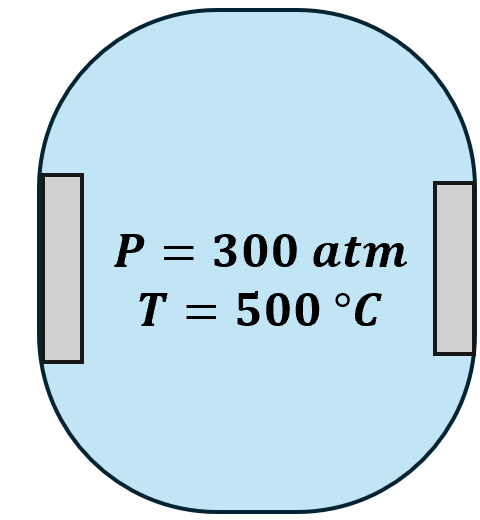
Before asking the question that generates the ABP cycle, the context was presented: Ammonia is a precursor compound of several raw materials such as fertilizers, explosives and additives, it is currently synthesized from hydrogen and nitrogen in the air through the Haber-Bosch process where iron catalysts are used and the synthesis conditions in the reactor are 300 atm of pressure and temperatures around 500°C, Subsequently, after the reaction, the mixture containing the ammonia goes through a process of cooling and condensation and then purifies it by absorption. The final product is ammonia gas which serves as a raw material for the production of fertilizers, drug synthesis, polymer production, among others.
After the context presented, the following question was asked to generate the PBL cycle: ¿How long does it take to cool a batch reactor where ammonia synthesis takes place from 500°C to 50°C in a place where the room temperature is 20°C? Assuming the cooling constant is 0.05 min-1.
Cognitive level: Analyze. Developing a Cooling Profile
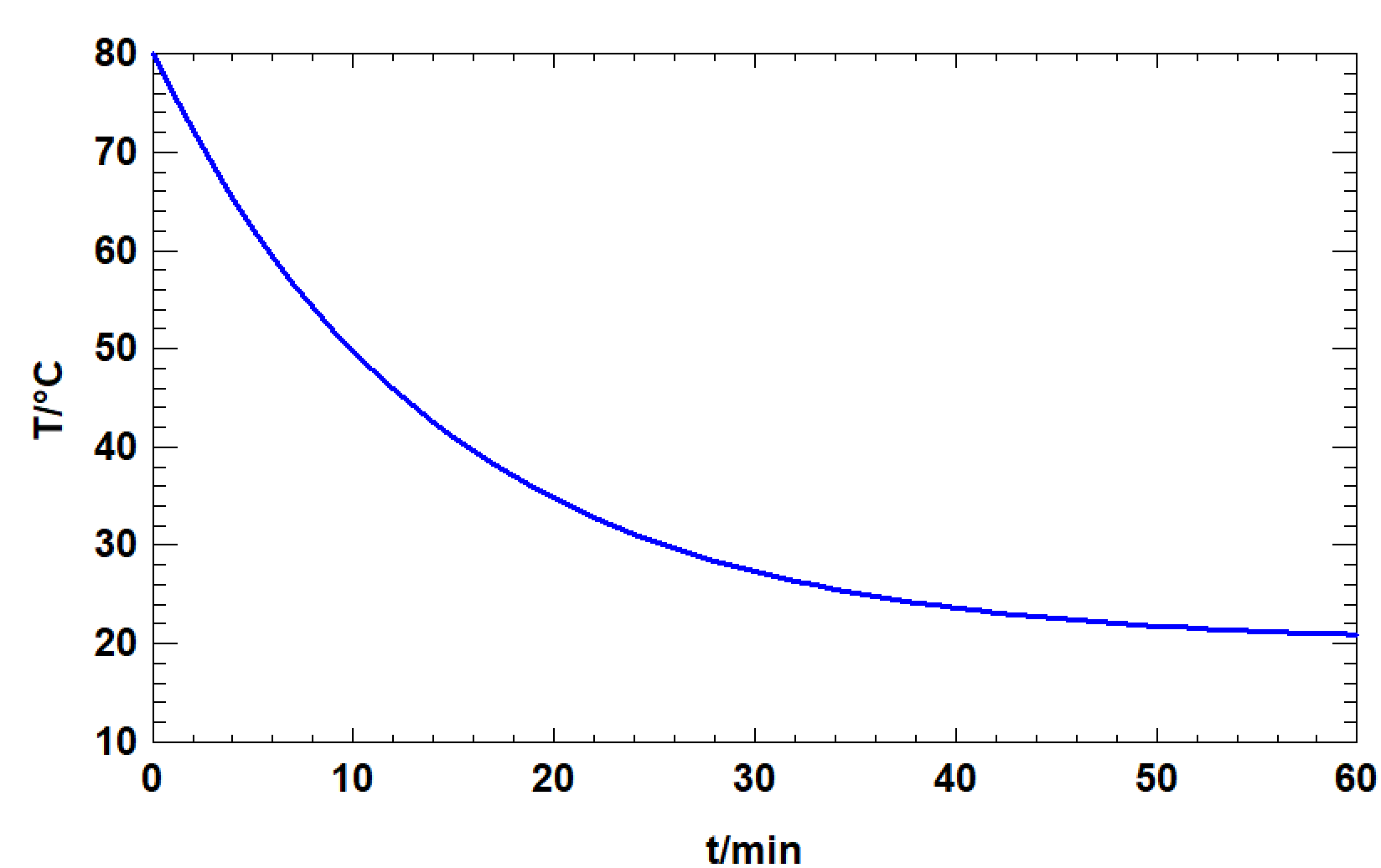
Later they were presented with the following problem: A container of hot water is left in a room at 20°C. The initial wáter temperature is 80°C. Assuming that the cooling constant is 0.01 min-1, build the cooling profile within 0 to 30 minutes
At the end, the evaluation of the didactic strategy used was carried out through an analytical rubric and a Likert-type survey to determine if the levels of application and analysis of the Blooms Barrow taxonomy were obtained, as well as the degree of satisfaction of the students in relation to the proposal proposed.
Cognitive Level: Apply
The generating question was the analysis of the following exothermic reaction:

The reactor conditions are shown in Figure 1:
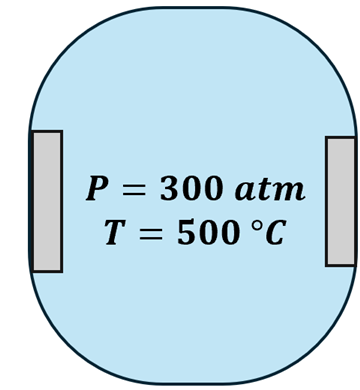
As the reaction is exothermic, the reactor increases its temperature, likewise, the reactor needs external heating to reach the operating temperature of 500°C, and then it must be cooled to after the reaction to carry out the separation and purification of the ammonia, the operating temperature of the separation must be close to 50°C, therefore, the time in which the reactor is cooled is given by Newton's Law of Cooling:
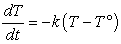 [Equation 1]
Where:
 |
 |
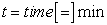 |
 |
Equation 1 is a first-order differential with separable variables, its resolution allows us to obtain an explicit expression for final temperature,  , starting from an initial temperature,
  , and room temperature,
  .
.
The students solved equation 1 as follows:
Separating variables:
 |
Integrating both members of the equation:
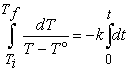 |
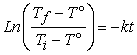 [Equation 2]
Equation 2 is the analytical solution to Newton's Law of Cooling
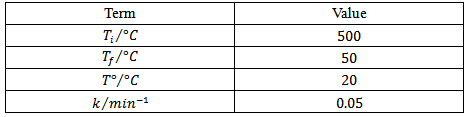
The data for reactor cooling:
From equation 2 time is cleared:
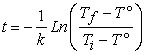 [Equation 3]
When substituting values in equation 3:
 |
 |
Therefore, the time in which the reactor cools down from 500°C to 50°C is  when the room temperature is 20°C
Cognitive level: Analyze
This problem has a higher cognitive level than the previous one, since here the student must not only carry out a substitution of a point time value, but also make the analysis in the entire time interval, for this equation 2 the final time is cleared,  :
:
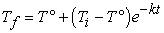 [Equation 4]
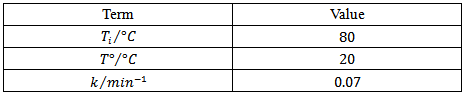
The data for cooling the vessel with hot water are:
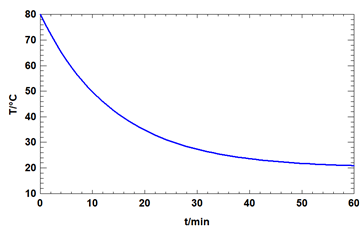
In equation 4, the data in Table 2 are substituted by giving different arbitrary values to time in an interval of 0 to 30 minutes, the tabulation of the final temperature values as a function of time gives rise to the cooling curve (Figure 2).
Two evaluation rubrics were applied. One for the evaluation of the applicability and analysis of Newton's law of cooling and another evaluation for satisfaction survey, evaluation of objectives and motivation. Descriptive statistics were applied to the results
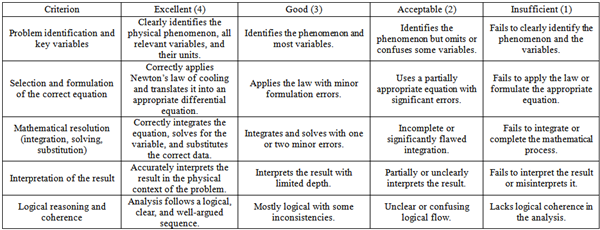
For the evaluation of the didactic strategy at its levels of application and capacity of analysis based on the Bloom-Barrow Taxonomy, the following analytical rubric was applied (Table 3).
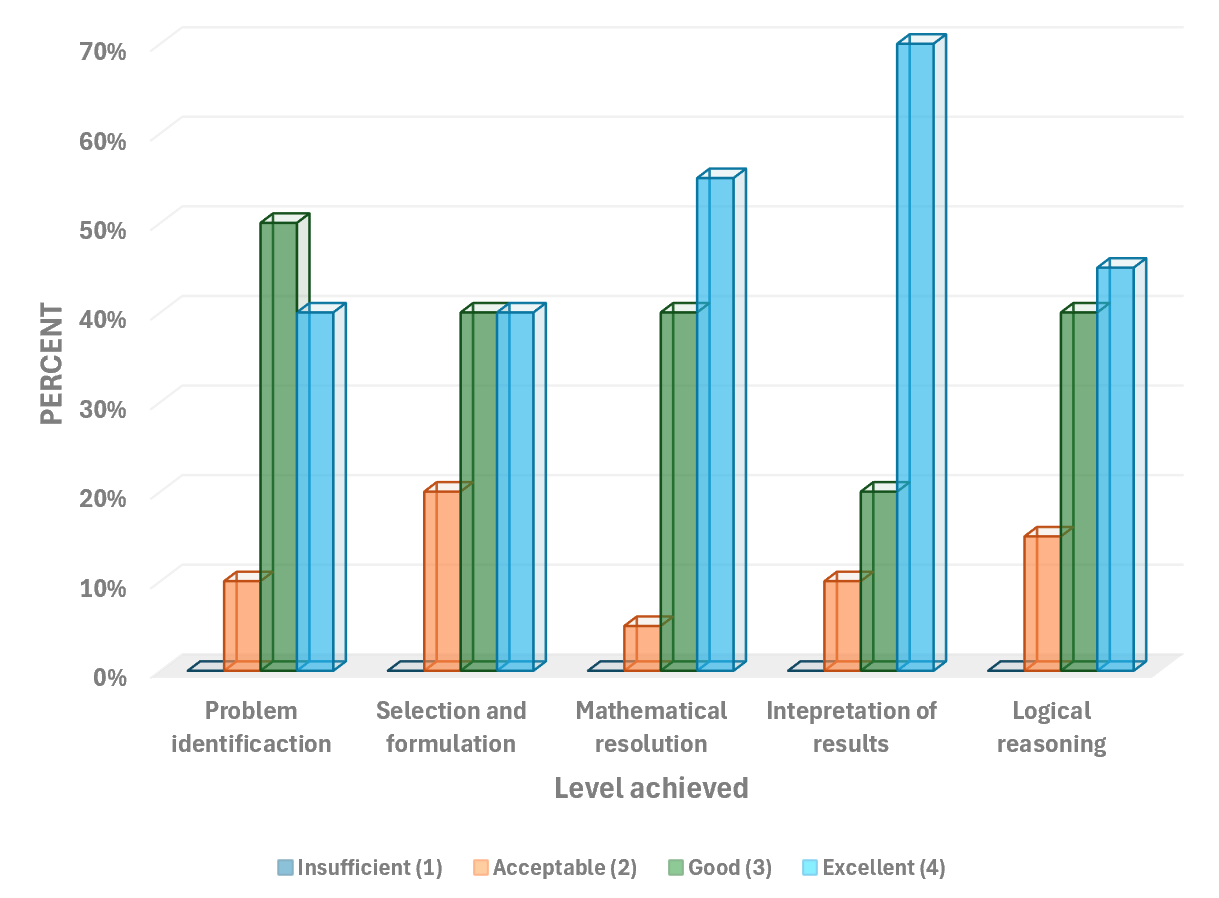
The analysis of the results obtained from the analytical rubric applied to the PBL didactic strategy reveals the following: in criterion A (identification and understanding of the problem), the 50% of students achieved an outstanding level, 40% a competent level and the 10% an acceptable level. In relation to criterion B (mathematical formulation), the 40% correctly formulated the differential equation with the variables appropriate to the context in an outstanding way other 40% did so competently and the 20% remaining in an acceptable manner. For criterion C (mathematical integration process), 55% of the students performed the procedure in an outstanding way, showing all the steps correctly and systematically; 40% performed competently and 5% acceptably. In criterion D (substitution and calculation of values), 70% of the students performed the correct substitution of values in the integrated equation and performed the calculations accurately, while 30% did so competently and 10% acceptably. Finally, in criterion E (analysis and interpretation of results), 45% of the students presented the results with the corresponding units and interpreted them clearly in the context of the problem in an outstanding way, 40% did so competently and 15% in an acceptable way.
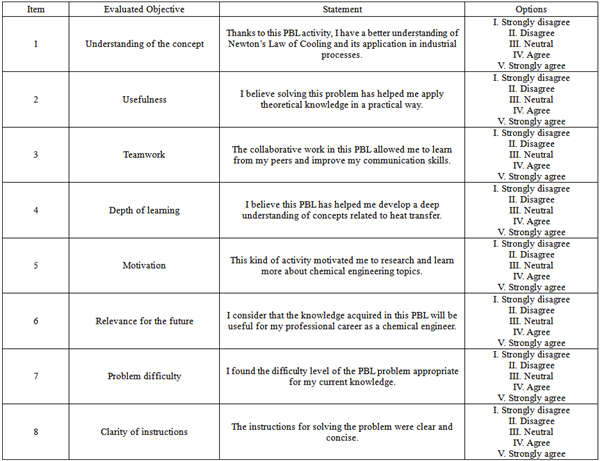
A Likert-type instrument (Table 4) was applied to determine the degree of satisfaction, evaluation of the objectives and motivation of the students in relation to the proposed proposal.
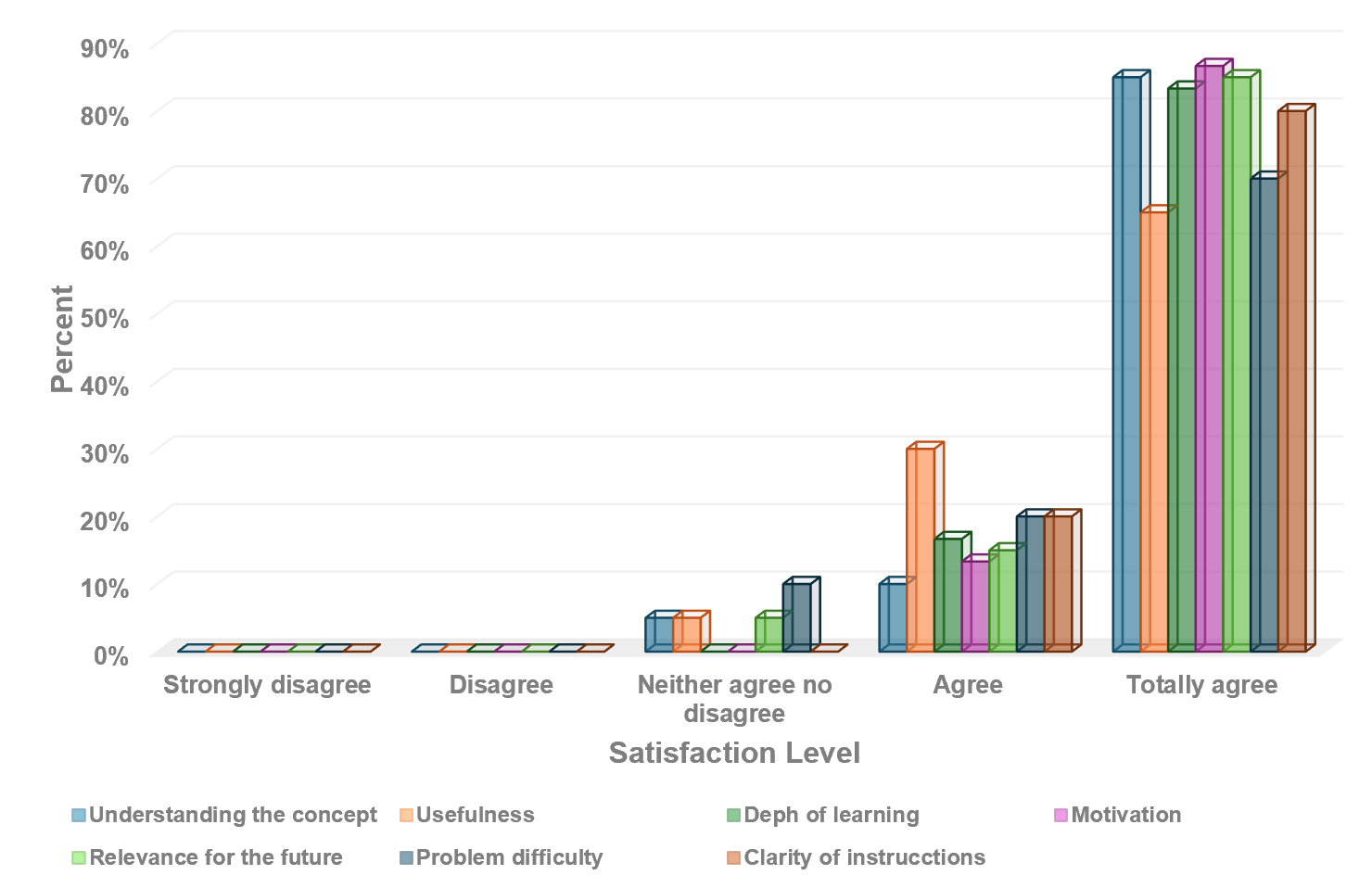
In relation to the understanding of the concept (item 1), 56% of the students completely agreed that, thanks to the PBL didactic strategy, they had a better understanding of Newton's Law of Cooling and its application in industrial processes, while 44% agreed. Regarding the usefulness of the strategy (item 2), 65% said they completely agreed that solving the problems helped them to apply theoretical knowledge in a practical way, 30% agreed and 5% adopted a neutral position. Regarding teamwork (item 3), 85% agreed that the collaborative work promoted by PBL allowed them to learn from their peers and improve their communication skills, 15% agreed and 5% remained in a neutral position. Regarding the depth of learning (item 4), 56% indicated that PBL allowed them to develop a deep understanding of concepts related to heat transfer, 44% agreed and 5% remained neutral. Regarding motivation (item 5), 87% expressed complete agreement that the activity motivated them to research and learn more about topics related to chemical engineering, while 13% agreed. In relation to the relevance for the professional future (item 6), 85% completely agreed that the knowledge acquired through PBL will be useful for their performance as a chemical engineer, 10% agreed and 5% adopted a neutral position. Regarding the difficulty of the problem posed (item 7), 70% considered that they completely agreed that the level of difficulty was adequate for their current knowledge, 15% agreed and 5% were neutral. Finally, regarding the clarity of the instructions (item 8), 80% said they completely agreed that the instructions were clear and concise, while 20% agreed.
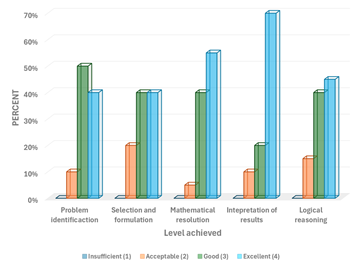
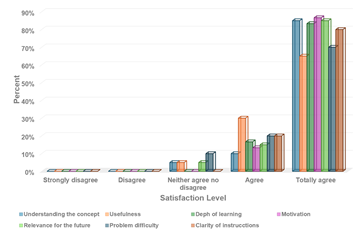
Based on Figure 3 and Figure 4, it is determined that the students acquired significant learning about Newton's law of cooling, and the didactic strategy also promoted motivation for the subject, which caused them satisfaction as an affective level.
The present research evaluated the influence of Problem-Based Learning (PBL) in the teaching of Newton's Law of Cooling to chemical engineering students, focusing on their ability to apply and analyze concepts.
The results obtained, derived from the implementation of the didactic strategy and its subsequent evaluation using analytical rubrics and a Likert-type instrument, demonstrate the effectiveness of PBL as a superior pedagogical methodology to address complex concepts in the field of engineering.
The analysis of cognitive levels, based on the Bloom-Barrows Taxonomy, revealed that the majority of students (with 50% achieving an outstanding level in problem identification and understanding, and 70% in substitution and calculation of values) achieved outstanding or competent mastery in the different stages of problem solving.
This suggests that PBL not only facilitates the acquisition of theoretical knowledge, but also promotes the development of essential skills such as mathematical formulation, integration of procedures, and interpretation of results in specific contexts.
Although mathematical formulation and analysis and interpretation of results showed slightly lower percentages of outstanding (40% and 45% respectively), the combined levels of outstanding and proficient in all criteria consistently exceeded 80%, indicating a robust understanding and ability to apply the principles of Newton's Law of Cooling effectively.
Likewise, the evaluation of the degree of satisfaction and motivation of the students corroborated the positive perception of the strategy. The vast majority of participants (56% strongly agree and 44% agree) expressed a high degree of agreement that PBL improved their understanding of Newton's Law of Cooling and its application in industrial processes.
The perception of the usefulness of the strategy (65% completely agree), the promotion of teamwork (85% completely agree) and the intrinsic motivation generated (87% completely agree to investigate and learn more) are remarkable.
These findings are consistent with the literature posing PBL 4, 5, 7 as a catalyst for meaningful learning, collaboration, and the development of autonomy in the student.
In summary, the results of this research provide strong evidence that PBL is a highly effective didactic strategy for teaching Newton's Law of Cooling in the context of chemical engineering. By encouraging active and contextualized learning, PBL not only improves students' conceptual mastery and analytical skills, but also increases their satisfaction, motivation, and collaborative work skills, preparing them more holistically for the challenges of their professional future.
The systematic integration of this methodology into the chemical engineering curriculum is recommended to optimize the teaching-learning processes and strengthen the competencies of future engineers.
Informed consent was obtained from the students before the study.
There are no conflicts to declare.
The ethical rules in force in our institution were followed.
| [1] | Ball, D. (2004) Fisicoquímica. Ed. Gale. Cengage Learning. España. | ||
| In article | |||
| [2] | Kern, D. (2001) Procesos de transferencia de calor. CECSA. México. | ||
| In article | |||
| [3] | Mortimer, R. (2008) Physical Chemistry. 3rd Edition. Rhodes College, Memphis, TN, USA. | ||
| In article | |||
| [4] | Obaya-Valdivia, A., Montaño-Osorio, C., Vargas-Rodríguez, Y. (2022) Exploratory Study to Determine the Effectiveness of Discussion Sessions as a Teaching Strategy on the Concepts of Spontaneity. Science Education International ¦ Volume 33 ¦ Issue 4 1-5 2022. | ||
| In article | View Article | ||
| [5] | Valkanou, E.-M.; Starakis, I.; Zoupidis, A. (2024) Design, Development, Implementation, and Evaluation of a Teaching–Learning Sequence on Heat Conduction. Educ. Sci. 2024, 14, 1149. | ||
| In article | View Article | ||
| [6] | Vargas-Rodríguez,Y., Obaya-Valdivia A.,Vargas Rodríguez I.(2021) Problem Based Learning: Barrows and Bloom Taxonomy (Experimental activity) International Journal of Education (IJE) vol 9, No 4, December https:// airccse.com/ ije/ abstract/ 9421ije02.html. | ||
| In article | View Article | ||
| [7] | Zárate-Navarro, M. A., Schiavone-Valdez, S. D., Cuevas, J. E., Warren-Vega, W. M., Campos-Rodríguez, A., & Romero-Cano, L. A. (2024). STEM activities for heat transfer learning: Integrating simulation, mathematical modeling, and experimental validation in transport phenomena education. Education for Chemical Engineers, 49, 81-90. | ||
| In article | View Article | ||
Published with license by Science and Education Publishing, Copyright © 2025 Adolfo Eduardo Obaya-Valdivia, Carlos Montaño Osorio and Yolanda Marina Vargas-Rodríguez
 This work is licensed under a Creative Commons Attribution 4.0 International License. To view a copy of this license, visit
http://creativecommons.org/licenses/by/4.0/
This work is licensed under a Creative Commons Attribution 4.0 International License. To view a copy of this license, visit
http://creativecommons.org/licenses/by/4.0/
| [1] | Ball, D. (2004) Fisicoquímica. Ed. Gale. Cengage Learning. España. | ||
| In article | |||
| [2] | Kern, D. (2001) Procesos de transferencia de calor. CECSA. México. | ||
| In article | |||
| [3] | Mortimer, R. (2008) Physical Chemistry. 3rd Edition. Rhodes College, Memphis, TN, USA. | ||
| In article | |||
| [4] | Obaya-Valdivia, A., Montaño-Osorio, C., Vargas-Rodríguez, Y. (2022) Exploratory Study to Determine the Effectiveness of Discussion Sessions as a Teaching Strategy on the Concepts of Spontaneity. Science Education International ¦ Volume 33 ¦ Issue 4 1-5 2022. | ||
| In article | View Article | ||
| [5] | Valkanou, E.-M.; Starakis, I.; Zoupidis, A. (2024) Design, Development, Implementation, and Evaluation of a Teaching–Learning Sequence on Heat Conduction. Educ. Sci. 2024, 14, 1149. | ||
| In article | View Article | ||
| [6] | Vargas-Rodríguez,Y., Obaya-Valdivia A.,Vargas Rodríguez I.(2021) Problem Based Learning: Barrows and Bloom Taxonomy (Experimental activity) International Journal of Education (IJE) vol 9, No 4, December https:// airccse.com/ ije/ abstract/ 9421ije02.html. | ||
| In article | View Article | ||
| [7] | Zárate-Navarro, M. A., Schiavone-Valdez, S. D., Cuevas, J. E., Warren-Vega, W. M., Campos-Rodríguez, A., & Romero-Cano, L. A. (2024). STEM activities for heat transfer learning: Integrating simulation, mathematical modeling, and experimental validation in transport phenomena education. Education for Chemical Engineers, 49, 81-90. | ||
| In article | View Article | ||