This review explores strategies to enhance equitable access to quality education for marginalized communities in Ghana, addressing the systemic challenges that undermine efforts to achieve Sustainable Development Goal 4 (SDG 4). Despite significant initiatives by the government, NGOs, and the private sector, barriers such as socio-economic inequality, inadequate infrastructure, and gender disparities persist. The research examines the current educational landscape, highlighting gaps in funding, teacher capacity, and digital access. It underscores the need for targeted policy reforms, including needs-based funding allocation, continuous professional development for teachers, and the integration of digital technology in rural schools. Additionally, it emphasizes the importance of community engagement, particularly in shifting socio-cultural norms that limit educational opportunities for girls. The study advocates for curriculum reforms to include vocational training and local languages, as well as the expansion of gender-responsive policies that support girls' education. Practical recommendations include the establishment of monitoring and evaluation frameworks and strengthening public-private partnerships to ensure sustained progress. By addressing these multi-faceted challenges, the study aims to contribute to the development of a more inclusive and equitable education system, ensuring that all children, regardless of background, have access to quality education and the opportunity to succeed.
In Ghana, these global educational challenges are reflected in the stark disparities between urban and rural educational outcomes. Children in rural areas are more likely to experience higher dropout rates, lower enrollment levels, and poorer access to resources such as textbooks, trained teachers, and infrastructure 1. The gap in educational quality between urban and rural schools is exacerbated by economic constraints and geographic isolation, where rural schools often lack essential learning materials, adequate facilities, and skilled educators. Gender inequalities are also a persistent issue in Ghana, particularly in rural areas where cultural norms and economic pressures disproportionately affect girls' education. Many girls are forced to leave school early due to factors such as early marriage, teenage pregnancy, and the expectation that they contribute to household labor, further entrenching the cycle of poverty and inequality 2.
To address these challenges, the Ghanaian government has introduced several initiatives aimed at improving educational access. The Free Compulsory Universal Basic Education (FCUBE) initiative, launched in 1995, significantly increased school enrollment rates by eliminating school fees for basic education. While FCUBE has been successful in boosting enrollment, it has not led to a proportional improvement in the quality of education. Many students continue to complete basic education without acquiring the necessary literacy, numeracy, and critical thinking skills needed for future employment or societal engagement 3. Additionally, efforts to improve the quality of education have been hampered by a shortage of well-trained teachers, especially in rural areas, and the lack of adequate school infrastructure 4.
Achieving equitable access to quality education for all children in Ghana, especially those in marginalized communities, will require more comprehensive strategies that address both the demand for and supply of education. These strategies should focus on improving teacher training and professional development, investing in infrastructure development in underserved areas, and integrating technology to bridge learning gaps between rural and urban regions 5. Additionally, addressing cultural and societal norms that hinder girls’ education is crucial for creating an inclusive educational environment. A multi-stakeholder approach involving governments, non-governmental organizations (NGOs), and the private sector is essential for pooling resources and expertise to tackle these challenges. Such collaboration can help ensure that the educational needs of marginalized populations are addressed, ultimately contributing to the broader goal of sustainable national development 6, 7.
This review aims to critically assess the barriers that hinder equitable access to quality education in Ghana, with a focus on marginalized communities. It will explore existing initiatives, identify gaps in the current system, and propose practical, evidence-based interventions to support the development of more inclusive and equitable education policies. By addressing these systemic challenges, the study seeks to contribute to the achievement of Sustainable Development Goal 4 (SDG 4) and the broader vision of ensuring that every child in Ghana, regardless of their background, has access to quality education and the opportunity to succeed.
This study aims to explore strategies for improving access to quality education for marginalized communities in Ghana, identify barriers to equitable access, assess current initiatives, and propose recommendations aligned with Sustainable Development Goal 4 (SDG 4). The specific objectives of the study are to:
1. Assess the current state of educational access and quality in marginalized communities in Ghana.
2. Identify key barriers to equitable access to quality education.
3. Evaluate the effectiveness of existing educational initiatives and policies.
4. Propose strategies for enhancing equitable access to quality education.
5. Explore the role of stakeholders in promoting equitable education.
6. Align recommendations with sustainable development goals.
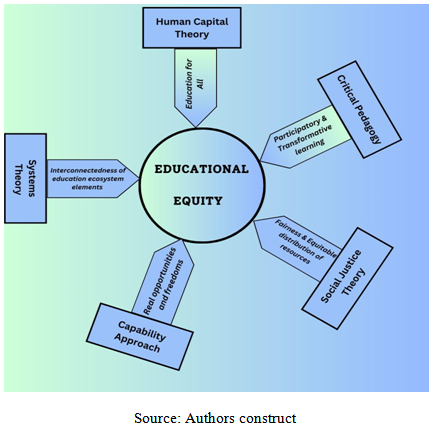
Promoting equitable and quality education in Ghana requires a robust theoretical framework, integrating Social Justice Theory, Critical Pedagogy, Human Capital Theory, Capability Approach, and Systems Theory. These frameworks collectively contribute to developing strategies that address educational inequities, aiming to bridge gaps and ensure access to quality education for marginalized communities.
Social Justice Theory emphasizes the moral obligation of society to ensure equitable distribution of educational resources. It underscores fairness in access, regardless of socioeconomic background, gender, or geographic location, advocating for the dismantling of barriers that reproduce inequalities 8. In Ghana, disparities in educational outcomes between urban and rural areas, especially concerning infrastructure, teacher quality, and resources, reinforce systemic inequities 1. Social Justice Theory thus provides a critical lens for examining how policy reforms can address these inequalities, advocating for differentiated support for marginalized groups 9. By allocating more resources to rural schools, enhancing teacher training, and implementing policies tailored to disadvantaged students, this theory supports the creation of equitable educational outcomes 10. In addition to addressing resource distribution, Social Justice Theory calls for recognizing power imbalances within educational systems. In Ghana, these imbalances are manifested in cultural norms that disadvantage girls, particularly in rural areas, where early marriage and gender-based labor expectations hinder girls’ education 11. The theory suggests targeted interventions, such as community sensitization and protective policies for girls’ education, to counter these inequalities 12. It also stresses participatory governance, ensuring that marginalized communities have a voice in shaping educational policies, which can be achieved through community involvement in school management and budgeting decisions 9.
Critical Pedagogy, developed by Paulo Freire, further deepens this perspective by viewing education as a tool for emancipation. It challenges passive learning models, advocating for participatory and dialogic education where students critically engage with societal structures 13. In Ghana, where marginalized students face exclusion due to socio-economic barriers, Critical Pedagogy promotes an education system that empowers students to question inequities and advocate for change 14. This approach necessitates reforming curricula to include local knowledge and addressing issues relevant to marginalized students, such as poverty and gender inequality 15. Teachers, as facilitators, play a crucial role in this transformation by fostering environments where students become active participants in their learning 16. Implementing Critical Pedagogy in Ghana would involve integrating local cultures and histories into the curriculum and emphasizing critical thinking, dialogue, and social awareness. This requires significant reforms in teacher training programs, equipping educators with the skills to engage students in active learning and critical analysis of their social contexts 17. Furthermore, creating spaces where students can discuss social justice issues can empower them to take collective action within their communities, promoting civic engagement and social responsibility 15.
Human Capital Theory takes a more economic perspective, arguing that education is an investment in individuals' productivity and societal growth 18. Education increases individual skills and contributes to national development by fostering a more competitive workforce. In Ghana, where rural and marginalized populations often lack educational opportunities, expanding access to quality education is essential not only for social equity but also for economic growth 19. Investing in teacher training, infrastructure, and vocational education in rural areas can equip students with the skills needed to participate in the economy, thereby reducing poverty and increasing social mobility 20. Expanding Human Capital involves targeted interventions to improve educational quality, particularly in underserved areas where teacher shortages and poor infrastructure persist 1. By improving the quality of vocational training and secondary education, Ghana can better prepare its citizens for a modern, globalized economy. Teacher training programs, specifically tailored to rural areas, and investment in infrastructure, such as digital learning platforms, are necessary to improve student outcomes and reduce disparities in education quality 18.
The Capability Approach, introduced by Amartya Sen 21, shifts the focus from resources to actual freedoms and opportunities individuals must achieve their potential. This approach is highly relevant to education in Ghana, where many marginalized students technically have access to schooling but face barriers that limit the actual benefits they derive from education. These barriers include poor educational quality, lack of relevance to students’ lives, and socio-cultural constraints. The Capability Approach advocates for measuring educational success not merely through enrollment numbers but by assessing whether education equips students with the skills and opportunities they need to lead meaningful lives 22. In Ghana, this approach calls for reforms that ensure education enhances real freedoms, particularly for marginalized groups. Policies must address adaptive preferences, where students from disadvantaged backgrounds may have lower aspirations due to limited opportunities 21. This framework supports interventions like career counseling, gender-sensitive curricula, and community engagement programs that raise students’ aspirations and help them realize the tangible benefits of education 23. For girls in rural areas, targeted support such as scholarships, mentorship, and safe transport can expand their capabilities and help overcome barriers related to early marriage or household labor 11.
Systems Theory, originating from Bronfenbrenner 24, provides a holistic view of education by emphasizing the interconnectedness of various elements within the education ecosystem. It suggests that changes in one part of the system, such as teacher training or policy reforms, can have ripple effects throughout the educational landscape. Systems Theory is especially useful for analyzing the complexity of educational reform in Ghana, where multiple stakeholders, government, NGOs, the private sector, and local communities, play interdependent roles in shaping educational outcomes 25. This theory underscores the need for coordinated, multi-stakeholder efforts to improve educational equity in Ghana. Partnerships between government bodies, international organizations, and the private sector can address infrastructural deficits, improve teacher quality, and ensure equitable resource distribution. Importantly, Systems Theory highlights the feedback loops within educational systems, where effective reforms in one area can support improvements in others 24. For example, improving school infrastructure in rural areas can positively impact student attendance, which in turn can enhance learning outcomes 26. Systems Theory also stresses the importance of sustainability and adaptability. Educational reforms in Ghana must be designed with long-term sustainability in mind, ensuring that external support or short-term initiatives lead to lasting improvements. Capacity-building for local education authorities, data-driven decision-making, and integrating cross-sectoral policies such as linking health and education services are essential for maintaining a resilient education system 25.
The integration of Social Justice Theory, Critical Pedagogy, Human Capital Theory, Capability Approach, and Systems Theory forms a comprehensive framework for addressing educational equity in Ghana. These frameworks collectively emphasize the need for resource redistribution, participatory governance, lifelong learning, and systemic reforms that address both immediate and structural barriers to educational access. By applying these theories in concert, Ghana can develop policies that are equitable, sustainable, and aligned with the goals of national development and social justice, ensuring that all students can succeed. Figure 1 illustrates an educational equity model, demonstrating the influence of the various theories on promoting educational equity.
The study employed a comprehensive document review and content analysis to explore literature on equitable access to quality education for marginalized communities in Ghana. Following Creswell’s 27 recommendations, relevant academic journals, policy reports, and credible online sources were systematically collected and critically analyzed to identify key themes, patterns, and gaps. To ensure credibility and relevance, documents were selected based on specific criteria, focusing on their relevance to the study's objectives, credibility, and geographical focus. Priority was given to peer-reviewed journal articles, policy reports, and publications from reputable organizations such as UNESCO, UNICEF, and the World Bank. Documents published within the last ten years were prioritized, while older foundational works were included selectively to provide historical context. The selection of sources was guided by relevance, credibility, and recency, ensuring the inclusion of up-to-date research on educational equity, particularly in the context of developing countries. Bowen 28 notes that document analysis is a valuable qualitative method for triangulating data and gaining a holistic perspective.
A systematic content analysis was conducted on the selected documents to identify recurring themes and patterns 29. The analysis began with a preliminary review, during which key sections of the documents were screened based on major issues such as socio-economic disparities, gender barriers, teacher quality, and policy initiatives. These findings were categorized into broad themes aligned with the study's objectives, providing a structured foundation for deeper analysis. A coding framework was developed to facilitate detailed examination, systematically assigning codes to specific themes such as "resource allocation," "community engagement," and "digital access." This thematic coding enabled the identification of patterns and relationships between different barriers and interventions, which were synthesized to generate comprehensive findings.
While the study primarily relied on secondary sources, it also incorporated case study data from credible sources to provide real-world insights and address limitations associated with the lack of primary data 30. Case studies focused on specific interventions in Ghana and other regions were included to illustrate how targeted initiatives have addressed educational disparities and improved access for marginalized communities. The inclusion of case study data provided contextual evidence, effectively strengthening the depth of the analysis and supporting the recommendations. Through content analysis, recurring themes such as educational disparities, government policy impacts, socio-economic barriers, and effective interventions were synthesized. This synthesis allowed for the identification of key challenges and strategies, forming the basis for the study's recommendations 31. This approach provided a structured understanding of the complexities of educational inequities in Ghana, offering insights to guide future research and policy reforms aimed at addressing these challenges.
However, it is important to acknowledge certain limitations inherent in this methodology. The study's reliance on secondary data introduces potential biases, as the analysis is based on interpretations and findings reported by other researchers. Additionally, obtaining detailed data on specific educational interventions in some regions posed challenges, potentially resulting in gaps. To mitigate these limitations, the study incorporated a wide range of credible sources and sought to triangulate findings where possible, enhancing the reliability of the conclusions 32.
Educational quality and equity are key components of global development, particularly in the context of achieving Sustainable Development Goal 4 (SDG 4), which emphasizes inclusive, equitable, and quality education for all 33. Despite global efforts, disparities in education persist, especially along socio-economic, geographic, and gender lines. Ensuring that educational systems provide all learners with the relevant knowledge, skills, and competencies necessary for full societal participation remains a pressing challenge 5. Equity in education focuses on ensuring fair access and opportunities for all, aiming to mitigate the effects of unequal backgrounds on educational outcomes. Globally, wealthier nations with developed educational systems, such as Finland and Singapore, tend to achieve better outcomes in both quality and equity 34. These countries emphasize early childhood education, continuous teacher development, and student-centered policies, leading to more equitable educational outcomes. However, low- and middle-income countries often face significant resource constraints, leading to growing educational gaps between affluent and marginalized populations 35. This is particularly evident in sub-Saharan Africa, where educational disparities are stark, and dropout rates remain among the highest globally 5. Despite increased enrollment rates, the quality of education, especially in rural and underserved areas, remains poor due to a lack of infrastructure, learning materials, and trained teachers 26. These resource disparities, combined with socio-cultural barriers such as early marriage and child labor, disproportionately affect marginalized communities, particularly girls 36.
In Ghana, despite significant progress in improving access to basic education through initiatives like the Free Compulsory Universal Basic Education (FCUBE) program, disparities in educational access and quality persist, particularly in rural areas 3. Educational quality is often assessed through national exams, such as the Basic Education Certificate Examination (BECE), which frequently reveal performance gaps between students in rural and urban settings. Schools in rural areas often lack critical infrastructure, trained teachers, and essential learning materials, severely affecting educational outcomes 1. Gender disparities remain another significant challenge in Ghana. While progress has been made toward gender parity in primary education, girls in rural areas continue to face obstacles that hinder their educational progression. Early marriage, household labor responsibilities, and cultural expectations disproportionately limit girls' access to education, reducing their chances of advancing to secondary and higher education 11. These socio-cultural barriers exacerbate existing inequalities, underscoring the need for policies that not only increase school enrollment but also retain marginalized students, particularly girls, through initiatives like scholarships and school feeding programs.
Teacher quality is a major determinant of educational outcomes, and in Ghana, many rural schools suffer from a lack of qualified teachers. Research highlights that teacher effectiveness is one of the most important factors influencing student learning outcomes 4. However, rural areas face challenges in attracting and retaining qualified teachers due to poor working conditions, inadequate salaries, and limited professional development opportunities 37. Addressing this issue requires policies that offer incentives for teachers to work in underserved areas, as well as ongoing professional support to improve teaching practices. Non-governmental organizations (NGOs) and international development partners have played an essential role in improving access to education for marginalized groups in Ghana. NGOs have implemented initiatives such as building schools in remote areas and providing scholarships and school supplies to disadvantaged students 6. These efforts, while valuable, need to be sustained and expanded to meet the scale of the challenge. Continued government commitment and international support are crucial to addressing the systemic barriers that impede educational equity and quality in Ghana.
Equitable access to education remains a significant challenge in Ghana, where socio-economic, geographic, and gender-based barriers prevent marginalized communities from fully benefiting from educational opportunities. Despite efforts to expand access, disparities persist, particularly for rural and underserved populations. Key barriers include economic disparities, socio-cultural practices, institutional inefficiencies, and language barriers. Understanding these barriers is essential for developing targeted interventions.
Economic disparities are among the most pressing obstacles, particularly in rural areas. While basic education is free, the associated costs such as uniforms, textbooks, supplies, and transportation pose financial burdens on low-income families 38. These costs disproportionately affect rural students, where poverty rates are higher and educational resources are scarce. In a study conducted in rural school districts in the Northern Region, Anlimachie, Avoada, and Amoako-Mensah 39 highlighted how inadequate infrastructure and poor resource allocation significantly hindered access to quality education in these areas. Schools lacked basic amenities such as functioning classrooms, teaching materials, and sanitation facilities, which discouraged parents from sending their children to school, particularly girls, due to the absence of gender-sensitive facilities like private toilets. This lack of resources led to higher dropout rates and lower completion rates among students in these districts. Economic hardship leads to lower enrollment and higher dropout rates, further widening the gap in educational access 2. Financial support through scholarships, fee waivers, and the provision of school supplies is critical for alleviating these barriers and promoting equitable access.
Socio-cultural factors also significantly influence educational access, particularly in terms of gender disparities. Traditional practices in many regions prioritize boys' education, with girls often expected to fulfill household duties or marry early 40. Tanye 41 examined how entrenched cultural norms continue to impede girls' access to education, particularly in rural and traditional communities. In her research, she found that families often prioritize the education of boys over girls due to the expectation that girls should contribute to household work or enter early marriages. This is particularly evident in the northern regions of Ghana, were socio-economic challenges further limit girls' opportunities for academic advancement. Early marriages and teenage pregnancies further exacerbate the dropout rates among girls in rural areas 42. To address these deeply rooted cultural barriers, both policy reforms and community-level initiatives are necessary. Programs that provide scholarships, mentorship, and advocacy for girls' education show promise but need to be scaled up to effect widespread change.
Institutional inefficiencies within Ghana’s education system further exacerbate challenges for marginalized communities. Bureaucratic delays, resource mismanagement, and corruption often result in rural schools receiving fewer resources than their urban counterparts 43. Delayed disbursement of government funds for infrastructure and school supplies, coupled with corruption, leads to inequitable distribution of resources, disproportionately affecting rural areas. Sefa Dei 44 highlighted these institutional inefficiencies by examining the challenges of implementing inclusive schooling in Ghana. His study focused on rural and peri-urban areas where inclusive education initiatives frequently failed due to a lack of resources, limited teacher training, and insufficient understanding of the socio-economic and cultural contexts in which schools operate. The absence of inclusive policies perpetuated discrimination and exclusion of marginalized groups, particularly children with disabilities and ethnic minorities. Strengthening governance and accountability mechanisms is essential to ensuring that resources are fairly and efficiently allocated, with a particular focus on supporting rural schools.
The quality and distribution of teachers is another significant barrier to equitable education in Ghana. Rural schools frequently rely on untrained or underqualified teachers, negatively impacting student learning outcomes 45. Qualified teachers are often reluctant to accept postings in rural areas due to poor working conditions, limited professional development opportunities, and inadequate infrastructure. Mantey 46 found that children with disabilities in rural areas faced additional barriers due to the lack of trained special educators and accessible school infrastructure. His study in two selected districts revealed that most schools did not have facilities like ramps or adapted classrooms, and the absence of trained special educators resulted in many disabled children being excluded from mainstream schooling. Policies offering rural posting bonuses, housing allowances, and professional development opportunities can help attract and retain skilled teachers in underserved areas, improving the quality of education for rural students.
Language barriers also impede access to quality education, particularly in rural regions where local languages are predominantly spoken, while English is the language of instruction in schools. This mismatch can hinder comprehension and learning, especially for younger students developing foundational literacy skills 43. A study by Tuwor and Sossou 47 revealed that many students in rural areas struggle with the transition to English as the primary language of instruction, leading to poor academic performance, particularly in subjects like mathematics and science. Students often find it challenging to grasp concepts that are not presented in their mother tongue, which impedes their overall learning experience. The study emphasized that this language gap is more pronounced among younger students who are just developing literacy skills in both their local language and English.
Bilingual education programs, which allow instruction in both local languages and English, have been shown to improve students’ understanding and academic performance. However, implementing such programs would require significant investments in teacher training and the development of appropriate learning materials. Mfum-Mensah 48 explored the effectiveness of bilingual programs in rural Ghana and found that students who received instruction in both their local language and English showed improved academic performance compared to their peers in English-only classrooms. Despite these findings, the lack of bilingual education policies and the insufficient training of teachers in delivering bilingual instruction remain significant hurdles.
In another case study, Bisilki 49 studied the implementation of a bilingual education program in Nkwanta North District, Ghana, focusing on challenges faced by teachers, students, and administrators. The program aimed to improve students’ comprehension and engagement by using both local languages and English. The study found that teaching in students' mother tongue led to better understanding and more active participation. However, several challenges emerged, notably inadequate teacher training. Many teachers lacked proficiency in local languages and the skills to implement bilingual instruction effectively, often reverting to English-only teaching. Additionally, a shortage of educational materials in local languages hindered lesson planning and limited the program’s success. The program's sustainability was compromised by these limitations, highlighting the need for a more comprehensive approach that includes teacher capacity building and the development of culturally relevant learning resources. Thus, the language barrier presents a significant impediment to equitable education in Ghana, particularly in rural areas where students are already grappling with multiple socio-economic challenges. Addressing this issue would require the development of bilingual education policies, investment in teacher training, and the provision of culturally and linguistically appropriate learning materials to enhance students’ comprehension and academic performance.
Collectively, these case studies provide critical insights into the persistent barriers that hinder equitable access to education in Ghana. From economic disparities to gender-based discrimination, infrastructural inadequacies, and language barriers, the evidence highlights the urgent need for comprehensive and targeted interventions. It is evident that without addressing these systemic issues, achieving inclusive and equitable education for all will remain a distant goal.
The Government of Ghana has introduced several key initiatives aimed at improving access to quality education and addressing educational inequities, particularly for marginalized communities. The Free Compulsory Universal Basic Education (FCUBE) program, launched in 1995, was designed to eliminate tuition fees and increase access to basic education 3. FCUBE successfully boosted enrollment rates, especially in rural areas, but persistent disparities between urban and rural schools, as well as concerns about the quality of education provided, have limited its overall effectiveness 50. Similarly, the School Feeding Programme, introduced in 2005, sought to enhance school attendance and retention by providing free meals to students in public schools, particularly in deprived areas. Research indicates that this program has positively impacted enrollment, especially for girls who are more vulnerable to dropping out due to socio-economic pressures 51. However, irregular meal supplies and issues of mismanagement have compromised its effectiveness, underscoring the need for better oversight and resource allocation 50.
Efforts to reduce financial barriers also include providing free school uniforms and supplies to students in public basic schools, which have particularly benefited families in rural and low-income areas 52. While this initiative has provided some relief, inconsistent funding has limited its reach and sustainability. Similarly, the Capitation Grant Scheme, initiated in 2005, allocates funds to public schools to cover basic operational costs and reduce or eliminate school fees 51. Despite increasing enrollment, especially in rural schools, the grant often fails to fully cover the operational needs, leading to resource shortages and persistent disparities between urban and rural education systems 52.
A significant step towards expanding educational access was the introduction of the Free Senior High School (Free SHS) Policy in 2017, which eliminated fees for secondary education and significantly increased enrollment 50. While this policy has been successful in democratizing access, particularly for marginalized students, the rapid increase in enrollment has strained existing infrastructure and resources. This has led to overcrowded classrooms, shortages of learning materials, and overburdened teachers. There are also concerns about the policy's long-term sustainability due to high costs, raising questions about the ability to maintain educational quality as access continues to expand.
To address disparities in teacher quality, the government introduced the National Teacher Education Curriculum Framework to standardize teacher education and ensure that educators are equipped to meet the diverse needs of students 51. However, attracting and retaining qualified teachers in rural areas remains a challenge due to poor working conditions and limited professional development opportunities. To counter this, the government implemented incentive schemes such as rural posting allowances and housing subsidies. While these initiatives have had some success, disparities in teacher quality and distribution between urban and rural areas persist. Despite these comprehensive policies, the effectiveness of the government’s initiatives remains mixed. Programs like FCUBE and Free SHS have increased enrollment, but issues with educational quality remain. Indirect costs such as transportation and school supplies continue to exclude many marginalized families from fully benefiting from free basic education 50. Moreover, infrastructural deficits and resource constraints in rural areas, coupled with challenges in attracting qualified teachers, raise concerns about the long-term impact and sustainability of these programs.
Evidence from case studies provides a more nuanced understanding of the effectiveness and limitations of these government initiatives. One of the prominent policy initiatives in Ghana’s basic education system, the FCUBE program, aimed to expand access and improve educational quality. According to Kadingdi 53, the program marked a significant shift in the education sector, with deliberate efforts to enhance equity. The FCUBE was structured around three main pillars: expanding access, improving the quality of teaching and learning, and enhancing the efficiency of educational management. However, the implementation of this policy faced numerous challenges, particularly in rural and underserved areas, where poor infrastructure, inadequate teaching materials, and a shortage of trained educators hindered its success. Thus, despite the government's efforts, the FCUBE program struggled to bridge the gap between policy and practice, especially in remote and economically disadvantaged regions.
Further insights into government-led initiatives come from Strutt and Kepe 54, who analyzed the Ghana National Education Campaign Coalition (GNECC). Formed as part of the global “Education for All” (EFA) agenda, the GNECC aimed to ensure universal access to quality education by 2015. The coalition was instrumental in advocating for reforms and pushing the government to fulfill its EFA commitments. However, Strutt and Kepe 54 found that the implementation of these reforms was often influenced by political interests and donor agendas, which created a disconnect between grassroots demands for educational change and top-down policy implementation. This dynamic limited the effectiveness of the FCUBE and other EFA-driven reforms, particularly in reaching marginalized communities and improving rural education. Their study emphasizes the need for localized, context-sensitive policy approaches to better address the challenges faced by disadvantaged groups.
Another important initiative to enhance education quality was the introduction of quality-enhancement programs targeting rural junior high schools. Inkoom 55 examined these programs and identified key issues that impacted their success. For instance, in-service teacher training and professional development programs were intended to equip teachers with modern pedagogical skills. However, the lack of adequate monitoring and support structures hindered the application of new techniques in classrooms. Inkoom 55 also noted that these programs were often narrow in scope and failed to address deeper systemic issues such as poor school infrastructure, inadequate learning materials, and large class sizes. Such challenges were particularly pronounced in rural areas, where schools faced chronic resource shortages and high teacher attrition rates.
The evidence from these case studies illustrates that, while the government has introduced several commendable policy initiatives to improve access and quality in basic education, persistent challenges in implementation continue to hinder their effectiveness. The studies underscore the importance of aligning policy objectives with on-the-ground realities, especially in rural and underserved regions where disparities are most pronounced. Moreover, they highlight the need for localized, community-driven approaches to educational reform, which would better address the specific needs of different regions and groups within the country.
Non-Governmental Organizations (NGOs) have been instrumental in mitigating educational disparities in underserved regions of Ghana. While government initiatives have laid the foundation for expanding access, NGOs have complemented these efforts, especially in areas where governmental resources are limited. These organizations address complex barriers to education, including socio-economic limitations, inadequate infrastructure, and teacher shortages. Through scholarships, school construction, teacher training, and community-based programs, NGOs have significantly contributed to advancing educational equity in Ghana. One prominent NGO, CAMFED (Campaign for Female Education), focuses on improving access to education for girls in rural areas. CAMFED provides scholarships, uniforms, and essential learning materials to economically disadvantaged girls, thereby removing key financial barriers to education 56. Additionally, CAMFED's empowerment programs offer mentorship and leadership training, which encourages girls to stay in school and aspire to leadership roles in their communities. CAMFED’s initiatives have been shown to reduce dropout rates and increase secondary school completion, particularly in rural areas 57. This underscores the importance of gender-sensitive strategies in addressing educational inequities.
Similarly, KOICA (Korea International Cooperation Agency) has focused on improving educational infrastructure and teacher training in underserved regions. KOICA’s efforts include building and renovating schools, providing safe learning environments, and implementing professional development programs for teachers 6. By enhancing teacher capacity and providing educational materials, KOICA addresses the disparity in teacher quality and distribution between urban and rural schools, a key issue in improving overall educational quality 58. World Vision also plays a significant role in improving educational access by constructing schools, providing clean water and sanitation, and distributing supplies in remote areas 56. In addition to infrastructure, World Vision addresses socio-cultural barriers to education by promoting girls' education and working to reduce early marriages and teenage pregnancies, which contribute to high dropout rates in rural Ghana 57. This holistic approach highlights NGOs' roles in addressing both physical and socio-cultural barriers to education.
Case studies provide further evidence of the critical role of NGOs in advancing educational equity in Ghana. Adu-Baffoe and Bonney 59 highlighted the multifaceted role of NGOs in enhancing basic education delivery in Ghana. Their study illustrates how NGOs have been pivotal in providing essential educational resources, improving school infrastructure, and supporting teacher training programs in underserved communities. In many rural areas, where government funding and support are often inadequate, NGOs have filled the gap by constructing school buildings, supplying textbooks and learning materials, and establishing libraries. These interventions have significantly improved the learning environment for students in marginalized regions. Furthermore, Adu-Baffoe and Bonney 59 emphasize the role of NGOs in facilitating community engagement and participation in school management. By involving local communities in decision-making processes, NGOs have helped create a sense of ownership and accountability, which has contributed to the sustainability of educational programs.
Another case in point is the Sefwi-Wiawso Municipality, where NGOs have played a central role in poverty alleviation and education initiatives. Tetteh 60 investigated the impact of NGO-led educational programs in this region and found that many organizations focused on providing scholarships and financial support to disadvantaged students. This approach helped alleviate the financial burden on low-income families, enabling more children to stay in school and complete their basic education. The study also noted that NGOs in Sefwi-Wiawso were instrumental in implementing school feeding programs, which addressed the issue of child malnutrition and improved student attendance and retention rates. The provision of meals not only enhanced students’ physical well-being but also created an incentive for parents to send their children to school, particularly in economically struggling households. Tetteh 60 concludes that NGO interventions in this municipality have significantly contributed to increasing school enrollment and reducing dropout rates, particularly among girls and children from poor families.
The role of NGOs in supporting girl-child education is particularly significant in regions where cultural norms and socio-economic barriers hinder girls’ access to education. Issah 61 conducted a case study in the Tolon-Kumbungu District of the Northern Region, where NGOs have been actively engaged in promoting education for girls. The study revealed that NGOs such as Plan International and ActionAid implemented targeted programs to raise awareness about the importance of educating girls and to challenge prevailing gender norms. These organizations also provided financial support and scholarships to girls, established safe learning spaces, and advocated for the enforcement of policies aimed at protecting girls’ right to education. As a result of these interventions, there was a noticeable increase in the enrollment and retention of girls in schools within the district. Issah 61 highlights that the sustained advocacy efforts of NGOs have been crucial in shifting societal attitudes towards girl-child education and in fostering a more inclusive educational environment.
ActionAid has focused on both policy advocacy and grassroots interventions. It advocates for policy changes promoting educational equity, such as increased government investment in rural education and incentives for teachers working in underserved regions 58. At the community level, ActionAid enhances school governance and advocates for inclusive education, particularly for children with disabilities, by pushing for policy reforms and making schools more accessible 6. Beyond direct interventions, NGOs have also contributed to capacity-building for teachers and school administrators. These programs, particularly in rural schools, aim to improve pedagogical practices and equip teachers with the skills needed to deliver high-quality instruction 56. By addressing both access and quality, NGOs are helping to create a more equitable and effective education system in Ghana.
Several other NGOs also play critical roles in advancing educational equity. Plan International Ghana supports girls' education by improving school infrastructure and addressing socio-cultural barriers like early marriage and child labor. The Varkey Foundation has introduced the MGCubed initiative, leveraging distance learning technology to address teacher shortages in remote areas, with a focus on enhancing literacy and numeracy skills for girls 62. CARE International promotes gender equality in education by addressing gender disparities and providing inclusive education for students with disabilities 63. SEND Ghana advocates for the equitable distribution of resources to rural schools, bridging the gap between local communities and government initiatives 64. Right to Play Ghana integrates play-based learning to improve educational outcomes, particularly in rural schools, helping to address student retention challenges 65. Despite these contributions, challenges remain in scaling these interventions to reach all marginalized communities. NGO initiatives are often dependent on external funding, which can be inconsistent or limited. Additionally, the fragmented nature of some interventions can result in duplication of efforts and a lack of coordination between NGOs and government agencies 6. To maximize their impact, stronger collaboration between NGOs, the government, and other stakeholders is essential. This would ensure that NGO efforts align with national policies, resources are used efficiently, and interventions have long-term sustainability.
Beyond direct interventions in schools, NGOs have also been instrumental in shaping educational policy, particularly in rural areas. Okine 66 explored the impact of NGOs on educational policy in rural Ghana and found that these organizations often serve as intermediaries between local communities and policymakers. By conducting research, gathering data, and providing evidence-based recommendations, NGOs have been able to influence policy decisions at the district and national levels. For example, in several rural districts, NGOs successfully advocated for the introduction of flexible school schedules to accommodate the needs of children who work to support their families. Additionally, NGOs have played a key role in promoting inclusive education policies, ensuring that children with disabilities and other marginalized groups are not left behind. Okine 66 argues that the collaborative efforts of NGOs and government agencies have led to more context-sensitive and inclusive educational policies, which better address the unique challenges faced by rural communities.
These contributions collectively underscore the vital role of NGOs in advancing educational equity in Ghana. Through their interventions, NGOs have not only provided tangible resources and support but have also contributed to shifting societal attitudes, empowering marginalized communities, and influencing educational policies. The work of NGOs in enhancing basic education delivery highlights the importance of multi-stakeholder collaboration in addressing complex social and educational challenges. However, the studies also point to the need for stronger partnerships between NGOs and government agencies to ensure the sustainability and scalability of successful initiatives.
While NGOs have significantly contributed to addressing educational disparities in Ghana, the private sector has also played an essential role in complementing government and NGO efforts. Private companies, foundations, and public-private partnerships (PPPs) have been instrumental in addressing resource gaps, especially in underserved regions. Their contributions, ranging from investments in infrastructure and technology to scholarships and teacher training, are critical for expanding educational opportunities, particularly in rural areas where public resources are limited. A key area where the private sector has made an impact is through public-private partnerships (PPPs), which have supported the development of infrastructure and provision of learning materials. For instance, Samsung Ghana's Smart School for Africa Initiative has introduced digital learning tools, such as tablets and smartboards, and established e-learning centers in rural schools 67. This investment in digital infrastructure has modernized education delivery, making it more interactive and accessible to students in remote areas, helping bridge the technology gap in education.
Similarly, the Mastercard Foundation has focused on expanding educational access through its Scholarship Program, which supports economically disadvantaged but academically talented students in Ghana 68. By providing financial assistance and promoting leadership development, this program helps students overcome financial barriers and fosters socio-economic development in marginalized communities. The telecommunications industry has also leveraged its expertise to improve educational access. MTN Ghana, through its MTN Ghana Foundation, has made significant contributions by offering scholarships through the MTN Bright Scholarship program. This initiative provides financial support for tuition, accommodation, and learning materials, easing the financial burden on marginalized students and increasing access to higher education 69. Additionally, MTN has constructed schools and ICT centers in rural areas, promoting digital learning and improving the educational experience in these underserved communities.
Azina-Nartey 70 offers a deeper understanding of MTN Ghana Foundation’s contributions through a case study that evaluates beneficiary responses to the foundation’s Corporate Social Responsibility (CSR) programs. The study highlights how the MTN Bright Scholarship has addressed critical educational barriers for students from low-income households, particularly in rural areas. Beneficiaries reported that the scholarship program relieved their families of financial burdens and allowed them to focus on their studies. The MTN Foundation’s construction of ICT centers in these areas was also recognized as instrumental in expanding digital literacy and bridging the technology divide. However, the study points out that while these CSR initiatives have been effective, the sustainability of such efforts depends on continuous funding and alignment with local educational needs 70.
The Vivo Energy Ghana Foundation has focused on enhancing educational infrastructure, particularly in rural areas. The foundation has supported the construction of classrooms, libraries, and science laboratories, with an emphasis on promoting STEM (Science, Technology, Engineering, and Mathematics) education 71. By creating modern learning environments, Vivo Energy has contributed to improving educational quality, giving students in remote areas better opportunities to engage in hands-on learning. Teacher training and capacity-building initiatives are other key areas of private sector involvement. Teach for Ghana, backed by private-sector support, recruits recent university graduates to teach in underserved schools across the country, addressing the shortage of qualified teachers in rural areas 72. This initiative not only improves the quality of instruction but also encourages young professionals to engage in national development through education.
Moreover, private-sector initiatives have increasingly used technology to improve educational outcomes. Companies like Tigo Ghana (now AirtelTigo) have introduced mobile learning platforms, providing students in rural areas access to educational content via mobile phones 73. These platforms offer curriculum-aligned materials, practice tests, and interactive tools, providing an alternative means of learning for students who face barriers to traditional classroom education. Such innovations help reduce the digital divide and promote educational equity by ensuring that rural students have access to the same resources as their urban peers.
Despite these contributions, challenges remain in sustaining private-sector initiatives. Many of these projects rely on corporate social responsibility (CSR) budgets, which can fluctuate with the financial health of companies. Furthermore, while private-sector efforts have been impactful, better coordination is needed to ensure that these contributions align with national education policies and avoid fragmentation or duplication of efforts 6. Strengthening public-private partnerships that promote long-term collaboration between the government and private companies can help overcome these challenges, ensuring that private-sector efforts are well-integrated into the broader education system.
Despite the concerted efforts of stakeholders like the government, NGOs, and the private sector, achieving equitable access to quality education in Ghana faces persistent challenges. Socio-economic barriers, inadequate infrastructure, teacher shortages, and socio-cultural norms continue to hinder progress. A comprehensive, multi-faceted approach is required to address these root causes of educational inequality. A critical starting point is improving funding allocation. While initiatives like the Capitation Grant Scheme have provided essential support, the allocated funds are often insufficient to meet the operational needs of schools, especially in rural areas. A needs-based funding model should be established, where resources are allocated based on comprehensive school resource audits and poverty indices. This would ensure that schools with inadequate infrastructure, insufficient learning materials, and high dropout rates receive priority funding to meet their unique needs. This approach would better address the specific needs of marginalized communities, ensuring equitable resource distribution and enhancing the effectiveness of educational policies.
Building teacher capacity is equally crucial for improving educational outcomes. Teachers are central to delivering quality education, yet those in underserved areas often lack adequate resources and training. The government could establish local Teacher Resource Centers equipped with modern teaching materials, mentorship opportunities, and access to continuous professional development (CPD) programs. These centers should regularly organize training sessions focusing on inclusive teaching strategies and child-centered pedagogical methods, with follow-up visits to assess the application of these strategies. CPD programs should extend beyond one-time training sessions, offering teachers ongoing opportunities to enhance their pedagogical strategies. Incentives such as housing allowances, rural posting bonuses, and career advancement opportunities could further attract and retain qualified teachers in rural areas, addressing teacher shortages.
However, professional development alone is insufficient without addressing teachers’ well-being. Educators in rural areas face numerous challenges, including inadequate pay, poor working conditions, and large class sizes, leading to high burnout and turnover rates. Policies aimed at improving teachers’ wages, classroom resources, and reducing class sizes would alleviate some of these pressures. Furthermore, support programs for teachers’ mental and physical health, such as access to healthcare and counseling services, are vital for retaining talented educators in the profession, particularly in underserved regions.
Community engagement plays a critical role in promoting accountability and ensuring the effective use of educational resources. Establishing School Management Committees (SMCs) and Parent-Teacher Associations (PTAs) in all rural schools, with clear roles and responsibilities, would empower community members to participate in school decision-making and governance. This engagement is particularly important for promoting girls' education, where traditional norms often limit educational opportunities. Additionally, implementing community-based scholarship programs that offer financial support to disadvantaged students, like the CAMFED model, can enhance retention and completion rates among girls in rural areas. Community awareness programs that emphasize the value of educating girls can help shift socio-cultural norms, reduce dropout rates, and encourage families to support their daughters' continued education.
The digital divide poses another significant challenge to educational equity in Ghana. Although initiatives like Samsung’s Smart School for Africa and AirtelTigo’s mobile learning platforms have introduced technology in rural schools, much remains to be done to ensure widespread access to digital learning tools. A detailed plan for rural electrification and broadband expansion should be developed, prioritizing remote schools with the highest connectivity challenges. Partnerships with private technology companies could be leveraged to provide affordable tablets and digital devices through programs like the MTN Bright Scholarship initiative, which offers a holistic package including digital training and devices for scholarship recipients. The government must invest in rural electrification and internet connectivity, equipping remote schools with the necessary infrastructure to support digital education. Public-private partnerships can play a critical role in providing affordable devices and e-learning platforms, helping to bridge the gap between urban and rural educational opportunities.
Curriculum reform is also essential for addressing disparities, particularly in rural areas where employment opportunities are limited. Adopting vocational training models that focus on practical skills development, like the Vivo Energy Foundation's STEM programs, would enhance students' employability in sectors like agriculture, craftsmanship, and technology. The current curriculum, which is heavily theory-based, does not adequately prepare students for practical challenges. A shift toward vocational and technical skills training would equip students for employment in sectors like agriculture and craftsmanship, contributing to both individual development and community economic growth. Additionally, a clear implementation framework for bilingual education programs in rural schools is needed, incorporating teacher training on local language instruction and the development of curriculum-aligned resources in multiple languages. Incorporating local languages into the curriculum, especially in the early years, would also improve comprehension and engagement, giving students a stronger foundation for learning.
Gender disparities in education demand a multi-faceted approach that addresses both societal and structural issues. Although scholarship programs and school feeding initiatives have made progress, deeper challenges, such as early marriage and teenage pregnancy, continue to undermine girls' education. Strengthening legal protections for girls against early marriage, accompanied by the establishment of community task forces to enforce these laws, would create safer environments for young girls. Strengthening legal protections for girls and ensuring schools provide comprehensive sexual and reproductive health education would empower girls to make informed decisions. Expanding mentorship programs can also provide girls with role models and support systems, helping them stay in school and pursue higher education. Additionally, community-based interventions that target harmful cultural norms are necessary for creating long-term changes in attitudes toward girls’ education.
Within schools, gender-responsive policies are essential to address the unique challenges girls face. A notable example is the Girls' Clubs initiative introduced by the Right to Play program, which has successfully promoted leadership and peer support among girls in rural schools. Establishing similar clubs in more schools would encourage girls to pursue education and leadership roles in their communities. Schools should offer safe spaces where girls can receive mentorship, discuss their concerns, and build confidence. Providing free sanitary products in rural schools would reduce absenteeism related to menstruation, thereby improving attendance rates. Establishing girls' clubs within schools, where girls can develop leadership skills and peer support networks, would further encourage them to pursue education and leadership roles in their communities.
Finally, strong monitoring and evaluation (M&E) systems are critical for assessing the effectiveness of educational initiatives. Many current programs lack data on their long-term impacts, especially in rural areas. Developing robust M&E frameworks that utilize digital data collection tools to track key indicators like student attendance, teacher retention, and resource allocation would allow stakeholders to assess and refine interventions more effectively. A data-driven approach would ensure that resources are allocated effectively and that programs remain relevant to the needs of marginalized communities.
By implementing these recommendations, Ghana can make significant strides toward achieving equitable access to quality education. A combination of targeted funding, teacher capacity building, curriculum reform, community engagement, and gender-responsive policies will address the structural and societal barriers that impede educational progress. These interventions, when applied holistically and supported by public-private partnerships, will ensure that all children, youth, and adults, regardless of their background, can benefit from an inclusive and effective education system. This comprehensive approach will contribute to Ghana's goal of realizing Sustainable Development Goal 4 (SDG 4) and fostering national development.
In conclusion, achieving equitable access to quality education in Ghana remains a complex and multifaceted challenge, despite the numerous efforts of stakeholders including the government, NGOs, and the private sector. The persistence of socio-economic disparities, inadequate infrastructure, teacher shortages, and deeply ingrained socio-cultural barriers continues to hinder the realization of Sustainable Development Goal 4 (SDG 4), which calls for inclusive and equitable education for all. As this study has demonstrated, addressing these challenges requires a holistic approach that integrates targeted policy reforms, community engagement, and sustained investment in both human and material resources. Key recommendations have been identified throughout the study. These include enhancing funding mechanisms to prioritize under-resourced schools, particularly in rural areas, and increasing support for teacher training and retention through continuous professional development programs and incentives. Addressing the wellbeing of teachers, improving classroom conditions, and ensuring fair wages are equally crucial to retaining skilled educators in underserved areas. In addition, fostering greater community involvement through School Management Committees (SMCs) and Parent-Teacher Associations (PTAs) will enhance local accountability and encourage a collective effort to promote girls' education, which remains a critical area of focus given persistent gender disparities.
The role of technology in bridging the educational divide has also been highlighted, with investments in rural electrification and internet connectivity being essential for enabling digital learning. Curriculum reform is necessary to equip students with practical, vocational, and technical skills that align with local employment opportunities, especially in agriculture and other key industries. Additionally, expanding access to early childhood education and addressing the digital divide will help lay a stronger foundation for lifelong learning. Addressing gender inequalities in education requires comprehensive efforts that include legal reforms, community sensitization, and gender-responsive school policies. Ensuring that girls have access to safe learning environments, free sanitary products, and mentorship opportunities can significantly reduce dropout rates and empower them to pursue higher education and leadership roles.
Ultimately, by adopting these comprehensive and sustainable strategies, Ghana can make significant progress toward achieving equitable education for all. This approach, supported by strong public-private partnerships and community involvement, will ensure that marginalized populations, especially those in rural areas, can access quality education. This is not only essential for individual empowerment but also critical for national development and poverty reduction.
| [1] | Ghana Statistical Service. (2018). Multiple Indicator Cluster Survey (MICS) 2018. Government of Ghana. | ||
| In article | |||
| [2] | Arkorful, V., Doe, F., & Addo, E. (2020). Barriers to equitable education in Ghana: A socio-cultural analysis. Journal of Educational Research in Africa, 12(3), 233–247. | ||
| In article | |||
| [3] | Ministry of Education, Ghana. (2021). Education sector report 2021: Progress and challenges. Government of Ghana. | ||
| In article | |||
| [4] | Bashir, S., Lockheed, M., Ninan, E., & Tan, J. P. (2018). Facing forward: Schooling for learning in Africa. The World Bank. | ||
| In article | View Article | ||
| [5] | UNESCO. (2020). Global Education Monitoring Report 2020: Inclusion and education. UNESCO Publishing. | ||
| In article | |||
| [6] | Buchanan, J. (2019). Partnerships for equitable education: NGOs and their role in African education systems. Educational Policy Review, 6(2), 178–190. | ||
| In article | |||
| [7] | Taylor, P., & Robinson, S. (2021). Technology as an equalizer: The role of ed tech in bridging learning gaps in Africa. Educational Technology Review, 10(1), 25–40. | ||
| In article | |||
| [8] | Gewirtz, S. (2020). Social justice and education: Policies, practices and pedagogies. British Journal of Educational Studies, 68(2), 139–158. | ||
| In article | |||
| [9] | Fraser, N. (2008). Scales of justice: Reimagining political space in a globalizing world. Columbia University Press. | ||
| In article | |||
| [10] | Gewirtz, S., & Cribb, A. (2021). Understanding education: A sociological perspective. Polity Press. | ||
| In article | |||
| [11] | Tanye, M. (2020). Gender disparity in education: The case of rural girls in northern Ghana. Journal of African Studies, 29(4), 327–345. | ||
| In article | |||
| [12] | Unterhalter, E. (2017). Education and international development: Theory, practice and issues. Bloomsbury Publishing. | ||
| In article | |||
| [13] | Freire, P. (2000). Pedagogy of the oppressed (30th anniversary ed.). Continuum. | ||
| In article | |||
| [14] | Giroux, H. A. (2020). On critical pedagogy. Bloomsbury Academic. | ||
| In article | View Article | ||
| [15] | Shor, I. (1992). Empowering education: Critical teaching for social change. University of Chicago Press. | ||
| In article | View Article | ||
| [16] | Darder, A., Mayo, P., & Paraskeva, J. (2017). The international critical pedagogy reader (2nd ed.). Routledge. | ||
| In article | View Article PubMed | ||
| [17] | Andreotti, V. (2011). Actionable postcolonial theory in education. Palgrave Macmillan. | ||
| In article | View Article | ||
| [18] | Becker, G. S. (1993). Human capital: A theoretical and empirical analysis, with special reference to education (3rd ed.). The University of Chicago Press. | ||
| In article | View Article | ||
| [19] | Schultz, T. W. (2002). Investing in people: The economics of population quality. The Edwin Mellen Press. | ||
| In article | |||
| [20] | Psacharopoulos, G., & Patrinos, H. A. (2018). Returns to investment in education: A decennial review of the global literature. Education Economics, 26(5), 445–458. | ||
| In article | View Article | ||
| [21] | Sen, A. (1999). Development as freedom. Oxford University Press. | ||
| In article | |||
| [22] | Robeyns, I. (2017). Wellbeing, freedom and social justice: The capability approach re-examined. Open Book Publishers. | ||
| In article | View Article | ||
| [23] | Nussbaum, M. C. (2011). Creating capabilities: The human development approach. Harvard University Press. | ||
| In article | View Article | ||
| [24] | Bronfenbrenner, U. (1979). The ecology of human development: Experiments by nature and design. Harvard University Press. | ||
| In article | View Article | ||
| [25] | Senge, P. M. (2006). The fifth discipline: The art and practice of the learning organization. Doubleday. | ||
| In article | |||
| [26] | UNICEF. (2019). State of the world’s children 2019: Children, food, and nutrition. UNICEF. | ||
| In article | |||
| [27] | Creswell, J. W. (2013). Qualitative inquiry and research design: Choosing among five approaches (3rd ed.). SAGE Publications. | ||
| In article | |||
| [28] | Bowen, G. A. (2009). Document analysis as a qualitative research method. Qualitative Research Journal, 9(2), 27–40. | ||
| In article | View Article | ||
| [29] | Saldaña, J. (2014). Thinking qualitatively: Methods of mind. SAGE Publications. | ||
| In article | View Article | ||
| [30] | Yin, R. K. (2018). Case study research and applications: Design and methods (6th ed.). SAGE Publications. | ||
| In article | |||
| [31] | Vaismoradi, M., Turunen, H., & Bondas, T. (2016). Content analysis and thematic analysis: Implications for conducting a qualitative descriptive study. Nursing & Health Sciences, 15(3), 398–405. | ||
| In article | View Article PubMed | ||
| [32] | Flick, U. (2018). Triangulation in data collection. In U. Flick (Ed.), the SAGE Handbook of Qualitative Data Collection (pp. 527-544). London: SAGE Publications. | ||
| In article | View Article | ||
| [33] | United Nations. (2015). Transforming our world: The 2030 agenda for sustainable development. United Nations Publishing. | ||
| In article | |||
| [34] | OECD. (2019). Education at a glance 2019: OECD indicators. OECD Publishing. | ||
| In article | View Article | ||
| [35] | World Bank. (2018). World development report: Learning to realize education’s promise. World Bank Publications. | ||
| In article | |||
| [36] | UNICEF. (2020). State of the world’s children 2020: Children, food, and nutrition. UNICEF. | ||
| In article | |||
| [37] | World Bank. (2019). Educational equity and access: Policy priorities for Ghana. World Bank Publications. | ||
| In article | |||
| [38] | Anlimachie, M. A., & Avoada, A. (2020). Education in rural Ghana: Economic barriers and policy implications. International Journal of Educational Development, 73, 102–116. | ||
| In article | |||
| [39] | Anlimachie, M. A., Avoada, C., & Amoako-Mensah, T. (2022). Leapfrogging inequality strategies for transformed rural education: A school district case, Ghana. Australian and International Journal of Rural Education, 32(1), 33–51. | ||
| In article | View Article | ||
| [40] | Ayelazuno, J. A., & Aziabah, M. A. (2021). Gender inequality in education: Early marriages and cultural norms in northern Ghana. Gender and Development Review, 25(2), 147–160. | ||
| In article | |||
| [41] | Tanye, M. (2008). Access and barriers to education for Ghanaian women and girls. Interchange, 39(2), 167–184. | ||
| In article | View Article | ||
| [42] | Asamoah, Y., Nketiah, J., & Amankwah, K. (2022). Teenage pregnancy and school dropout: Examining the role of socio-cultural factors in rural Ghana. Journal of African Studies, 33(4), 112–125.d. | ||
| In article | |||
| [43] | Takyi, S. A., Mensah, F., & Owusu, S. (2021). Bureaucratic inefficiencies and their impact on educational equity in Ghana: A review. Ghana Educational Review, 9(2), 89–104. | ||
| In article | |||
| [44] | Sefa Dei, G. J. (2005). Social difference and the politics of schooling in Africa: A Ghanaian case study. Compare, 35(3), 227-245. | ||
| In article | View Article | ||
| [45] | Amagnya, A. (2020). The impact of teacher quality on educational outcomes in rural Ghana. African Journal of Education, 12(3), 211–225. | ||
| In article | |||
| [46] | Mantey, E. E. (2014). Accessibility to inclusive education for children with disabilities: A case of two selected areas in Ghana. (Master’s thesis, University of Ghana. | ||
| In article | |||
| [47] | Tuwor, T., & Sossou, M. A. (2008). Gender discrimination and education in West Africa: Strategies for maintaining girls in school. International Journal of Inclusive Education, 12(4), 363-379. | ||
| In article | View Article | ||
| [48] | Mfum-Mensah, O. (2005). The impact of colonial and postcolonial Ghanaian language policies on vernacular use in schools in two northern Ghanaian communities. Comparative Education, 41(1), 71-85. | ||
| In article | View Article | ||
| [49] | Bisilki, A. K. (2018). The dilemmas of bilingual education in rural Ghana: A case study of the Nkwanta North District. Legon Journal of the Humanities, 29(2), 146-175. | ||
| In article | View Article | ||
| [50] | Adamba, C. (2023). Assessing the impact of free SHS policy on educational equity in Ghana. Journal of Educational Policy and Management, 15(1), 45–58. | ||
| In article | |||
| [51] | Darkwa, K., & Acquah, F. (2022). Government initiatives in education: Evaluating the impact of school feeding and capitation grants in rural Ghana. Ghana Education Review, 9(4), 102–115. | ||
| In article | |||
| [52] | Williams, J. (2024). Educational reforms in Ghana: An analysis of free uniforms and school supply programs. Journal of African Educational Studies, 20(2), 75–89. | ||
| In article | |||
| [53] | Kadingdi, S. (2006). Policy initiatives for change and innovation in basic education programmes in Ghana. The Journal of Doctoral Research in Education, 4(2), 1-18. | ||
| In article | |||
| [54] | Strutt, C., & Kepe, T. (2010). Implementing education for all – whose agenda, whose change? The case study of the Ghana national education campaign coalition. International Journal of Educational Development, 30(4), 369-376. | ||
| In article | View Article | ||
| [55] | Inkoom, A. (2012). Implementation of initiatives to reform the quality of education in rural Ghanaian junior high schools. Retrieved from https:// ro.ecu.edu.au/theses/485. | ||
| In article | |||
| [56] | Win, P. P., & Siriwato, N. (2020). Non-governmental organizations and their impact on girls' education in sub-Saharan Africa. Journal of Development Studies, 36(4), 233–248. | ||
| In article | |||
| [57] | UNICEF. (2018). Education in Ghana: A focus on equity and inclusion. UNICEF Report. | ||
| In article | |||
| [58] | Cudjoe, A. (2024). The role of NGOs in teacher training and educational reform in Ghana. Ghana Education Journal, 11(1), 89–102. | ||
| In article | |||
| [59] | Adu-Baffoe, E., & Bonney, S. (2021). The role of non-governmental organizations in basic education delivery in Ghana: Implications for theory, policy, and practice. International Education Studies, 14(4), 35-47. | ||
| In article | View Article | ||
| [60] | Tetteh, R. (2018). The role of non-governmental organisations (NGOs) in poverty alleviation and education, a case study in Sefwi-Wiawso Municipality (Doctoral dissertation, University of Education, Winneba). | ||
| In article | |||
| [61] | Issah, H. (2012). The role of Non-Governmental Organizations in girl-child education in the Tolon-Kumbungu District of the Northern Region of Ghana (Master’s thesis, Kwame Nkrumah University of Science and Technology). | ||
| In article | |||
| [62] | Varkey Foundation. (2023). The power of technology in rural education: MGCubed. Varkey Foundation Impact Report. | ||
| In article | |||
| [63] | CARE International. (2021). Empowering girls through education: CARE’s approach in Ghana. CARE International Report. https:// care.org/Ghana. | ||
| In article | |||
| [64] | SEND Ghana. (2022). Community engagement and educational access in northern Ghana. SEND Ghana Report. | ||
| In article | |||
| [65] | Right to Play. (2021). Empowering children through play: Annual report on education programs in Ghana. Right to Play International. | ||
| In article | |||
| [66] | Okine, S. (2021). Non-Governmental Organisations' Impact on Educational Policy in Rural Ghana (Doctoral dissertation, Walden University). | ||
| In article | View Article | ||
| [67] | Samsung Ghana. (2021). Samsung Smart School for Africa Initiative. Samsung Annual Report. | ||
| In article | |||
| [68] | Mastercard Foundation. (2022). Mastercard Foundation Scholarship Program. Mastercard Foundation Report. | ||
| In article | |||
| [69] | MTN Ghana Foundation. (2020). MTN Bright Scholarship: Empowering the next generation of leaders through education. MTN Foundation Impact Report. | ||
| In article | |||
| [70] | Azina-Nartey, N. (2018). Beneficiary response to corporate social responsibility (CSR): A case study of MTN Ghana foundation (Master’s thesis, University of Ghana). | ||
| In article | |||
| [71] | Vivo Energy. (2021). STEM for All Initiative: Improving educational infrastructure in rural schools. Vivo Energy Annual Report. | ||
| In article | |||
| [72] | Teach for Ghana. (2022). Teaching for equity: Addressing teacher shortages in underserved regions. Teach for Ghana Annual Review. | ||
| In article | |||
| [73] | AirtelTigo. (2020). AirtelTigo mobile learning: Enhancing access to education through technology. AirtelTigo Annual Report. | ||
| In article | |||
Published with license by Science and Education Publishing, Copyright © 2024 Isaac Buabeng and Bridget Amo-Darko
 This work is licensed under a Creative Commons Attribution 4.0 International License. To view a copy of this license, visit
https://creativecommons.org/licenses/by/4.0/
This work is licensed under a Creative Commons Attribution 4.0 International License. To view a copy of this license, visit
https://creativecommons.org/licenses/by/4.0/
| [1] | Ghana Statistical Service. (2018). Multiple Indicator Cluster Survey (MICS) 2018. Government of Ghana. | ||
| In article | |||
| [2] | Arkorful, V., Doe, F., & Addo, E. (2020). Barriers to equitable education in Ghana: A socio-cultural analysis. Journal of Educational Research in Africa, 12(3), 233–247. | ||
| In article | |||
| [3] | Ministry of Education, Ghana. (2021). Education sector report 2021: Progress and challenges. Government of Ghana. | ||
| In article | |||
| [4] | Bashir, S., Lockheed, M., Ninan, E., & Tan, J. P. (2018). Facing forward: Schooling for learning in Africa. The World Bank. | ||
| In article | View Article | ||
| [5] | UNESCO. (2020). Global Education Monitoring Report 2020: Inclusion and education. UNESCO Publishing. | ||
| In article | |||
| [6] | Buchanan, J. (2019). Partnerships for equitable education: NGOs and their role in African education systems. Educational Policy Review, 6(2), 178–190. | ||
| In article | |||
| [7] | Taylor, P., & Robinson, S. (2021). Technology as an equalizer: The role of ed tech in bridging learning gaps in Africa. Educational Technology Review, 10(1), 25–40. | ||
| In article | |||
| [8] | Gewirtz, S. (2020). Social justice and education: Policies, practices and pedagogies. British Journal of Educational Studies, 68(2), 139–158. | ||
| In article | |||
| [9] | Fraser, N. (2008). Scales of justice: Reimagining political space in a globalizing world. Columbia University Press. | ||
| In article | |||
| [10] | Gewirtz, S., & Cribb, A. (2021). Understanding education: A sociological perspective. Polity Press. | ||
| In article | |||
| [11] | Tanye, M. (2020). Gender disparity in education: The case of rural girls in northern Ghana. Journal of African Studies, 29(4), 327–345. | ||
| In article | |||
| [12] | Unterhalter, E. (2017). Education and international development: Theory, practice and issues. Bloomsbury Publishing. | ||
| In article | |||
| [13] | Freire, P. (2000). Pedagogy of the oppressed (30th anniversary ed.). Continuum. | ||
| In article | |||
| [14] | Giroux, H. A. (2020). On critical pedagogy. Bloomsbury Academic. | ||
| In article | View Article | ||
| [15] | Shor, I. (1992). Empowering education: Critical teaching for social change. University of Chicago Press. | ||
| In article | View Article | ||
| [16] | Darder, A., Mayo, P., & Paraskeva, J. (2017). The international critical pedagogy reader (2nd ed.). Routledge. | ||
| In article | View Article PubMed | ||
| [17] | Andreotti, V. (2011). Actionable postcolonial theory in education. Palgrave Macmillan. | ||
| In article | View Article | ||
| [18] | Becker, G. S. (1993). Human capital: A theoretical and empirical analysis, with special reference to education (3rd ed.). The University of Chicago Press. | ||
| In article | View Article | ||
| [19] | Schultz, T. W. (2002). Investing in people: The economics of population quality. The Edwin Mellen Press. | ||
| In article | |||
| [20] | Psacharopoulos, G., & Patrinos, H. A. (2018). Returns to investment in education: A decennial review of the global literature. Education Economics, 26(5), 445–458. | ||
| In article | View Article | ||
| [21] | Sen, A. (1999). Development as freedom. Oxford University Press. | ||
| In article | |||
| [22] | Robeyns, I. (2017). Wellbeing, freedom and social justice: The capability approach re-examined. Open Book Publishers. | ||
| In article | View Article | ||
| [23] | Nussbaum, M. C. (2011). Creating capabilities: The human development approach. Harvard University Press. | ||
| In article | View Article | ||
| [24] | Bronfenbrenner, U. (1979). The ecology of human development: Experiments by nature and design. Harvard University Press. | ||
| In article | View Article | ||
| [25] | Senge, P. M. (2006). The fifth discipline: The art and practice of the learning organization. Doubleday. | ||
| In article | |||
| [26] | UNICEF. (2019). State of the world’s children 2019: Children, food, and nutrition. UNICEF. | ||
| In article | |||
| [27] | Creswell, J. W. (2013). Qualitative inquiry and research design: Choosing among five approaches (3rd ed.). SAGE Publications. | ||
| In article | |||
| [28] | Bowen, G. A. (2009). Document analysis as a qualitative research method. Qualitative Research Journal, 9(2), 27–40. | ||
| In article | View Article | ||
| [29] | Saldaña, J. (2014). Thinking qualitatively: Methods of mind. SAGE Publications. | ||
| In article | View Article | ||
| [30] | Yin, R. K. (2018). Case study research and applications: Design and methods (6th ed.). SAGE Publications. | ||
| In article | |||
| [31] | Vaismoradi, M., Turunen, H., & Bondas, T. (2016). Content analysis and thematic analysis: Implications for conducting a qualitative descriptive study. Nursing & Health Sciences, 15(3), 398–405. | ||
| In article | View Article PubMed | ||
| [32] | Flick, U. (2018). Triangulation in data collection. In U. Flick (Ed.), the SAGE Handbook of Qualitative Data Collection (pp. 527-544). London: SAGE Publications. | ||
| In article | View Article | ||
| [33] | United Nations. (2015). Transforming our world: The 2030 agenda for sustainable development. United Nations Publishing. | ||
| In article | |||
| [34] | OECD. (2019). Education at a glance 2019: OECD indicators. OECD Publishing. | ||
| In article | View Article | ||
| [35] | World Bank. (2018). World development report: Learning to realize education’s promise. World Bank Publications. | ||
| In article | |||
| [36] | UNICEF. (2020). State of the world’s children 2020: Children, food, and nutrition. UNICEF. | ||
| In article | |||
| [37] | World Bank. (2019). Educational equity and access: Policy priorities for Ghana. World Bank Publications. | ||
| In article | |||
| [38] | Anlimachie, M. A., & Avoada, A. (2020). Education in rural Ghana: Economic barriers and policy implications. International Journal of Educational Development, 73, 102–116. | ||
| In article | |||
| [39] | Anlimachie, M. A., Avoada, C., & Amoako-Mensah, T. (2022). Leapfrogging inequality strategies for transformed rural education: A school district case, Ghana. Australian and International Journal of Rural Education, 32(1), 33–51. | ||
| In article | View Article | ||
| [40] | Ayelazuno, J. A., & Aziabah, M. A. (2021). Gender inequality in education: Early marriages and cultural norms in northern Ghana. Gender and Development Review, 25(2), 147–160. | ||
| In article | |||
| [41] | Tanye, M. (2008). Access and barriers to education for Ghanaian women and girls. Interchange, 39(2), 167–184. | ||
| In article | View Article | ||
| [42] | Asamoah, Y., Nketiah, J., & Amankwah, K. (2022). Teenage pregnancy and school dropout: Examining the role of socio-cultural factors in rural Ghana. Journal of African Studies, 33(4), 112–125.d. | ||
| In article | |||
| [43] | Takyi, S. A., Mensah, F., & Owusu, S. (2021). Bureaucratic inefficiencies and their impact on educational equity in Ghana: A review. Ghana Educational Review, 9(2), 89–104. | ||
| In article | |||
| [44] | Sefa Dei, G. J. (2005). Social difference and the politics of schooling in Africa: A Ghanaian case study. Compare, 35(3), 227-245. | ||
| In article | View Article | ||
| [45] | Amagnya, A. (2020). The impact of teacher quality on educational outcomes in rural Ghana. African Journal of Education, 12(3), 211–225. | ||
| In article | |||
| [46] | Mantey, E. E. (2014). Accessibility to inclusive education for children with disabilities: A case of two selected areas in Ghana. (Master’s thesis, University of Ghana. | ||
| In article | |||
| [47] | Tuwor, T., & Sossou, M. A. (2008). Gender discrimination and education in West Africa: Strategies for maintaining girls in school. International Journal of Inclusive Education, 12(4), 363-379. | ||
| In article | View Article | ||
| [48] | Mfum-Mensah, O. (2005). The impact of colonial and postcolonial Ghanaian language policies on vernacular use in schools in two northern Ghanaian communities. Comparative Education, 41(1), 71-85. | ||
| In article | View Article | ||
| [49] | Bisilki, A. K. (2018). The dilemmas of bilingual education in rural Ghana: A case study of the Nkwanta North District. Legon Journal of the Humanities, 29(2), 146-175. | ||
| In article | View Article | ||
| [50] | Adamba, C. (2023). Assessing the impact of free SHS policy on educational equity in Ghana. Journal of Educational Policy and Management, 15(1), 45–58. | ||
| In article | |||
| [51] | Darkwa, K., & Acquah, F. (2022). Government initiatives in education: Evaluating the impact of school feeding and capitation grants in rural Ghana. Ghana Education Review, 9(4), 102–115. | ||
| In article | |||
| [52] | Williams, J. (2024). Educational reforms in Ghana: An analysis of free uniforms and school supply programs. Journal of African Educational Studies, 20(2), 75–89. | ||
| In article | |||
| [53] | Kadingdi, S. (2006). Policy initiatives for change and innovation in basic education programmes in Ghana. The Journal of Doctoral Research in Education, 4(2), 1-18. | ||
| In article | |||
| [54] | Strutt, C., & Kepe, T. (2010). Implementing education for all – whose agenda, whose change? The case study of the Ghana national education campaign coalition. International Journal of Educational Development, 30(4), 369-376. | ||
| In article | View Article | ||
| [55] | Inkoom, A. (2012). Implementation of initiatives to reform the quality of education in rural Ghanaian junior high schools. Retrieved from https:// ro.ecu.edu.au/theses/485. | ||
| In article | |||
| [56] | Win, P. P., & Siriwato, N. (2020). Non-governmental organizations and their impact on girls' education in sub-Saharan Africa. Journal of Development Studies, 36(4), 233–248. | ||
| In article | |||
| [57] | UNICEF. (2018). Education in Ghana: A focus on equity and inclusion. UNICEF Report. | ||
| In article | |||
| [58] | Cudjoe, A. (2024). The role of NGOs in teacher training and educational reform in Ghana. Ghana Education Journal, 11(1), 89–102. | ||
| In article | |||
| [59] | Adu-Baffoe, E., & Bonney, S. (2021). The role of non-governmental organizations in basic education delivery in Ghana: Implications for theory, policy, and practice. International Education Studies, 14(4), 35-47. | ||
| In article | View Article | ||
| [60] | Tetteh, R. (2018). The role of non-governmental organisations (NGOs) in poverty alleviation and education, a case study in Sefwi-Wiawso Municipality (Doctoral dissertation, University of Education, Winneba). | ||
| In article | |||
| [61] | Issah, H. (2012). The role of Non-Governmental Organizations in girl-child education in the Tolon-Kumbungu District of the Northern Region of Ghana (Master’s thesis, Kwame Nkrumah University of Science and Technology). | ||
| In article | |||
| [62] | Varkey Foundation. (2023). The power of technology in rural education: MGCubed. Varkey Foundation Impact Report. | ||
| In article | |||
| [63] | CARE International. (2021). Empowering girls through education: CARE’s approach in Ghana. CARE International Report. https:// care.org/Ghana. | ||
| In article | |||
| [64] | SEND Ghana. (2022). Community engagement and educational access in northern Ghana. SEND Ghana Report. | ||
| In article | |||
| [65] | Right to Play. (2021). Empowering children through play: Annual report on education programs in Ghana. Right to Play International. | ||
| In article | |||
| [66] | Okine, S. (2021). Non-Governmental Organisations' Impact on Educational Policy in Rural Ghana (Doctoral dissertation, Walden University). | ||
| In article | View Article | ||
| [67] | Samsung Ghana. (2021). Samsung Smart School for Africa Initiative. Samsung Annual Report. | ||
| In article | |||
| [68] | Mastercard Foundation. (2022). Mastercard Foundation Scholarship Program. Mastercard Foundation Report. | ||
| In article | |||
| [69] | MTN Ghana Foundation. (2020). MTN Bright Scholarship: Empowering the next generation of leaders through education. MTN Foundation Impact Report. | ||
| In article | |||
| [70] | Azina-Nartey, N. (2018). Beneficiary response to corporate social responsibility (CSR): A case study of MTN Ghana foundation (Master’s thesis, University of Ghana). | ||
| In article | |||
| [71] | Vivo Energy. (2021). STEM for All Initiative: Improving educational infrastructure in rural schools. Vivo Energy Annual Report. | ||
| In article | |||
| [72] | Teach for Ghana. (2022). Teaching for equity: Addressing teacher shortages in underserved regions. Teach for Ghana Annual Review. | ||
| In article | |||
| [73] | AirtelTigo. (2020). AirtelTigo mobile learning: Enhancing access to education through technology. AirtelTigo Annual Report. | ||
| In article | |||