This study assesses the hydrological dynamics of the Bandama River Basin in Côte d’Ivoire under increasing climatic and anthropogenic pressures. Hydroclimatic series (1950–2020) of rainfall, temperature, evapotranspiration, and discharge were analyzed using statistical tests (cumulative deviation, Kruskal–Wallis, Mann–Kendall, SNHT) to identify breakpoints, trends, and spatio-temporal variability. The results reveal strong interannual variability of river discharge (CV = 74.5%) compared to rainfall (CV = 14.3%) and potential Evapotranspiration (PET) (CV = 5.5%). Significant hydro-climatic breakpoints were detected around 1970–1976 and 1994. The assessment of relative contributions using the climate elasticity method and Budyko decomposition shows the predominance of human activities (75–79%) over climatic factors (21–24%) in explaining mean discharge variations at Tiassalé. These findings highlight that the proliferation of dams, agricultural expansion, deforestation, and urbanization are now the main drivers of hydrological alterations, outweighing the effect of climate. The study provides scientific references to support sustainable and integrated water resources management in the Bandama Basin.
Worldwide, freshwater resources are subject to a dual constraint resulting from climate change and the intensification of human activities. Rising temperatures, altered rainfall patterns, and increased evapotranspiration are disrupting the hydrological cycle, leading to variations in streamflow, more frequent droughts and floods, and a seasonal and spatial redistribution of water resources 1, 2. These dynamics threaten water, food, and energy security, particularly in tropical regions where hydroclimatic variability is already high 3. Alongside climate change, human activities (dams, irrigated perimeters, deforestation, urbanization, and land-use changes) have profoundly modified river flow regimes. Several recent studies have emphasized that the impact of human pressures often exceeds that of climate in explaining changes in river discharge 4, 5, 6.
The climatic and anthropogenic changes that have affected West African river basins have not spared the Bandama River Basin in Côte d’Ivoire. This basin, which drains the country from north to south over an area of 97,500 km², has been experiencing the effects of climate variability and change for several decades. The impacts of climate variability on Bandama’s water resources have been highlighted by the works of 7, 8, 9, 10, 11, 12.
Moreover, the Bandama River Basin, which plays a key role in the socio-economic development of several cities, is under unprecedented anthropogenic pressure. This includes the construction of more than one hundred agro-pastoral dams, four hydroelectric dams, three currently in operation (Kossou, Taabo, and Buyo) and one under construction (Singrobo-Ahouaty) as well as numerous weirs and water intake structures for drinking water supply 13. This growing pressure from different water users is further exacerbated by the absence of a national integrated water resources management plan for the Bandama Basin. The combined impacts of climate variability and land-use dynamics have been revealed by 14 in the Upper Bandama, particularly in studies conducted in Tortiya on the effects of climate change and anthropogenic pressures on water resources.
In view of previous studies, scientific research on the Bandama River Basin focusing on quantifying the hydrological contributions of climate change and human activities to river discharge remains limited, while investigations on hydrological resilience are almost non-existent. Yet, it is crucial to understand and quantify how the hydrological responses of the Bandama Basin are influenced by anthropogenic activities and climate change in order to design effective adaptation strategies to global changes. According to 15, separately assessing the impacts of anthropogenic changes and climate variability on runoff evolution can contribute to improving, developing, and adjusting measures planned for climate change adaptation. The Budyko conceptual framework thus provides a robust approach to disentangle the effects of climatic factors (rainfall, PET) and anthropogenic drivers (dams, LUCC) on streamflow variability 16.
In this context, the objective of this study is to evaluate the relative contribution of climatic and anthropogenic factors to streamflow dynamics and the hydrological resilience of the Bandama River Basin.
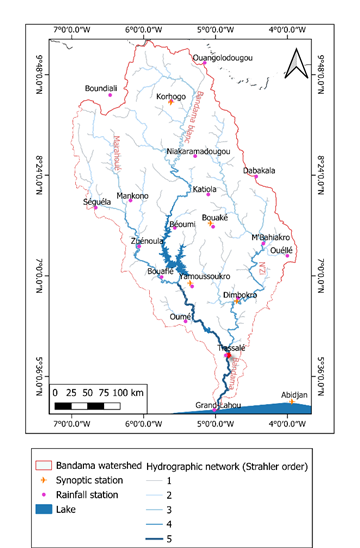
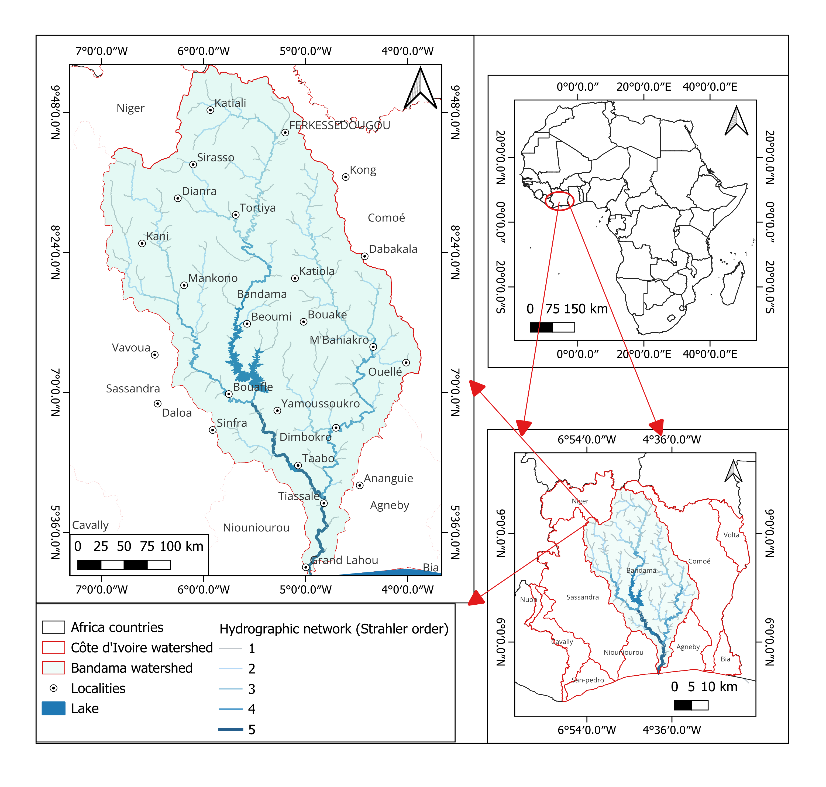
The Bandama River Basin, located in Côte d’Ivoire, is the country’s largest hydrographic basin, covering an area of approximately 97,500 km², or nearly 30% of the national territory. It extends between 7° and 10° North latitude and 4° to 6°30’ West longitude, flowing from north to south before emptying into the Atlantic Ocean at Grand-Lahou (Figure 1). The Bandama is subdivided into several sub-basins, the main ones being the N’Zi, the Marahoué, the Solomougou, and the Kan. The relief is composed of gently undulating plateaus, with altitudes ranging between 200 and 500 m. The climate is of the Sudano-Guinean type, marked by a north – south gradient: annual rainfall ranges from about 900 –1,100 mm in the north to 1,200 – 1,500 mm in the south. The hydrological regime is pluvial, strongly dependent on the rainy season (May–October), and has been subject to markedinterannual variability since the droughts of the 1970s 17. The basin hosts the major Kossou and Taabo dams, used for hydropower generation, irrigation, and fishing, as well as numerous small hydraulic structures for drinking water supply and agriculture. It is a vital space for the national economy, providing water to major cities such as Bouaké and Yamoussoukro, while supporting agriculture and energy production.
2.2. DataThe historical annual rainfall data and annual minimum and maximum temperature records were obtained from the database of the National Meteorological Directorate (DMN) and the Airport, Aeronautical and Meteorological Operations and Development Company (SODEXAM). Evapotranspiration data were calculated from minimum and maximum temperatures using the Hargreaves method. 18 noted that the Hargreaves method was the best temperature-based approach among the ten models they evaluated.
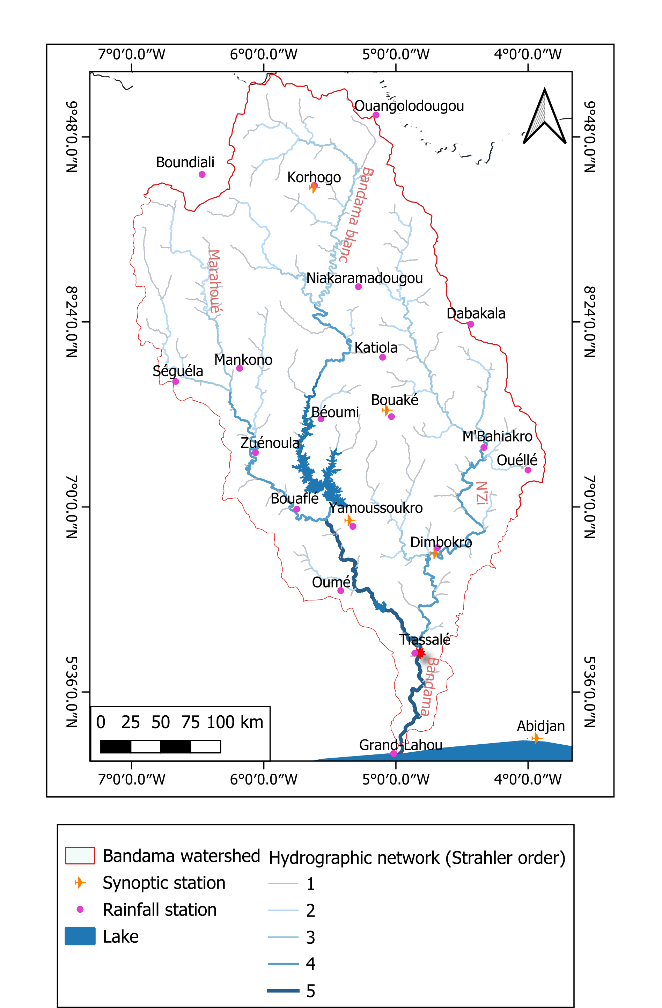
The hydrometric data collected consist of annual mean discharges. They were provided by the Directorate of Hydrology, an entity under the supervision of the General Directorate of Hydraulics. The dataset covers the period from 1950 to 2020 (Figure 2).
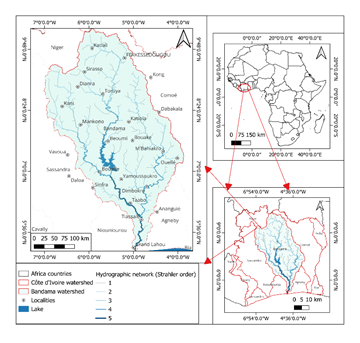
The Thiessen polygon method was used to estimate the mean annual rainfall or potential evapotranspiration over the Bandama Blanc watershed at Tiassale, based on a network of stations. The watershed is divided into polygons of influence, each polygon representing the area closest to a given station. The area of each polygon determines a weight applied to the measured value. The spatial average is thus obtained through a weighted mean of the observations 19.
3.2. Break Detection MethodThe cumulative deviation is a parametric statistical test that makes it possible to verify whether the means of two parts of a time series are significantly different (for an unknown change date). It allows the detection of simple change points 20. The principle of the test is to detect a change in the mean of the series after m observations.
 | (1) |
 | (2) |
Where µ is the mean of the data prior to the change and ∆ is the change in the mean. Based on these means, the calculations of cumulative deviations are carried out as follows.
And the adjusted partial sums are obtained by dividing the Sk values by the standard deviation:
Statistical test Q is defined as: 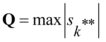 (3)
(3)
It is calculated for each year, with the maximum value indicating the change point. The critical values of Q/√(n) are provided in the appendix. A positive value of S0 indicates that the mean of the most recent part of the series is significantly higher than that of the older part, and vice versa.
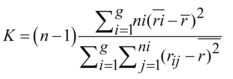
The Kruskal-Wallis test is a non-parametric statistical test that determines whether the data from one period are significantly different from those of another. This test is used for detecting multiple breakpoints 21. It is applied to time series whose data are non-normally distributed and includes at least 10 values. If the p-value of the test is less than the error risk (0.05), there is a significant difference between the data of at least two periods. The null hypothesis is that the periods are not different from each other. The test statistic is defined as follows:
 | (4) |
Where g is the number of periods, nᵢ the number of observations in period i, and rᵢⱼ the rank of observation j in group i.
…rᵢⱼ is the rank of observation j in group i, and n is the total number of data points. The statistic is then compared to the quantiles of a Chi-square distribution with (g–1) degrees of freedom.
3.3. Methods for Quantifying Relative ContributionsThe climate elasticity method was proposed by 22 to assess the impacts of climate variability on runoff variations. This method uses runoff elasticity coefficients to evaluate the sensitivity of runoff changes to variations in meteorological parameters.
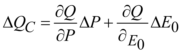
According to 23, runoff variation due to climate is a function of precipitation and evapotranspiration and can be estimated as follows 24:
 | (5) |
The runoff elasticity coefficient (εX) is defined as the ratio of the rate of change in runoff to the rate of change in the climatic factors E₀ and P 22:
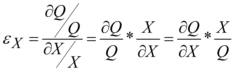 | (6) |
 | (7) |
By substituting equation (7) into equation (5) 25, we obtain:
Where ∆P and ∆E₀ are the changes in precipitation and potential evapotranspiration, respectively. The terms εₚ and ε₍E₀₎ are the climatic elasticity coefficients of runoff with respect to precipitation and potential evapotranspiration, respectively. According to Budyko’s hypothesis, the values can be estimated as follows 26:
 | (9) |
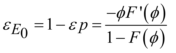 | (10) |
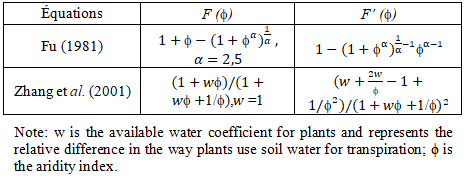
Where Q, P, and E₀ represent the mean annual runoff, precipitation, and potential evapotranspiration, respectively, and ϕ = E₀ / P is the aridity index. Six commonly used forms of F(ϕ) and F′(ϕ) are presented in Table 1.
This approach is based on the assumption that river basins follow the Budyko curve according to variations in aridity, and that any deviation from the curve results from human influence. According to 28, only land surface conditions can affect actual evapotranspiration (AET), while climate impacts AET, PET, and precipitation simultaneously 27. Based on this assumption, the contributions of climate change and human interferences are estimated (Eq.11).
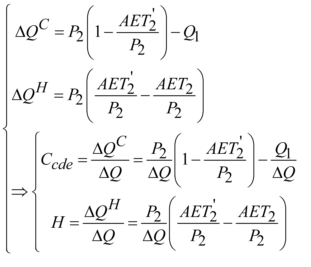 | (11) |
Where:
∆Qᴄ and ∆Qʜ represent the respective contributions of climate change and human interferences to runoff variation; Ccde and H are the ratios of ∆Qᴄ and ∆Qʜ to the total runoff variation (∆Q); P₂ and AET₂ are the mean annual precipitation and actual evapotranspiration during the impact period; AET′₂ is the actual evapotranspiration during the impact period in the absence of human interference. It is obtained using the Budyko function with the parameter value from the base period and the aridity index of the impact period. Q₁ is the mean annual runoff depth during the reference period.
The Budyko decomposition approach is distinguished by its ability to clearly express runoff variations due to climatic factors and human influence. Nevertheless, the validity of the fundamental assumption of this approach remains subjective 29.
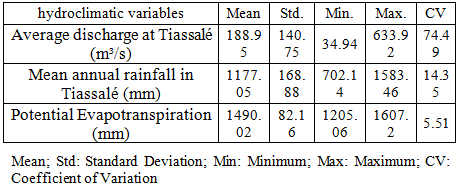
The analysis of the statistical characteristics of hydroclimatic data at Tiassalé is presented in Table 2. It highlights marked contrasts between the variables. The mean discharge of the Bandama River is 188.95 m³/s. However, a strong interannual variability is observed (CV = 74.49%). The extreme values range between 34.94 and 633.92 m³/s. In comparison, the mean annual rainfall is more regular, with 1177 mm/year and a moderate coefficient of variation (14.35%). As for potential evapotranspiration, its variation is stable, with an average of 1490 mm and a coefficient of variation of 5.51%.
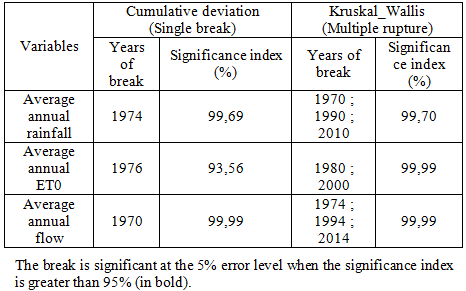
The results of the application of the Cumulative Deviation and Kruskal-Wallis tests on mean annual rainfall, mean annual evapotranspiration, and mean annual discharge are summarized in Table 3. Significant breakpoints were detected across the entire Bandama River Basin at Tiassalé in 1974 at a 95% significance level. The Kruskal-Wallis test, meanwhile, indicated breakpoints at the same rainfall stations and dates as those found by the Cumulative Deviation test. However, according to this test, the breakpoints of all rainfall stations are located in the periods 1950–1970, 1971–1990, and 1991–2010.
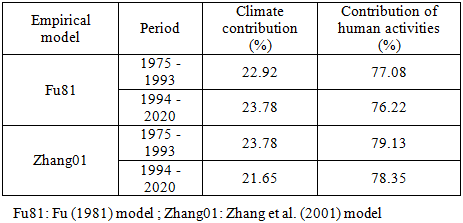
Table 4 presents the relative contributions of climate and anthropogenic activities to the variation in the mean discharge of the Bandama River at Tiassalé, estimated using the climate elasticity method based on the models of 30 and 23. The results highlight the predominance of human factors over natural factors. According to the Fu (1981) model, the share attributed to climate is 22.92% for the period 1975–1993 and 23.78% between 1994 and 2020. Similarly, the 23 model indicates climate contributions of 23.78% and 21.65% for the respective periods. In contrast, the contribution of human activities is largely predominant, representing between 76% and 79% of the variation in the mean discharge of the Bandama River according to the models.
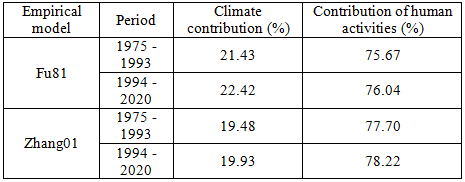
The contribution of climate change and human activities to the variation of the mean runoff of the Bandama River at Tiassalé using the Budyko model decomposition method is presented in Table 5. As for the Budyko decomposition method, the climate contribution was estimated at 21.43% by the Fu model and 22.42% by the 23 model. This proportion is almost identical to the climate impacts observed after the second breakpoint in 1994. Overall, the two approaches used provide comparable results for quantifying impacts.
The results of this study clearly show that the main anthropogenic pressure factors in the Bandama River Basin are related to hydraulic developments (dams, weirs, irrigated perimeters) and land use changes (deforestation, agricultural expansion, urbanization). This predominance of human activities over climate variability in explaining runoff variations is not an isolated case. Indeed, 31 in Côte d’Ivoire and 32 in China demonstrated that, in very different geographical contexts, anthropogenic interferences often surpass the effect of climate in disturbing hydrological regimes.
According to 33, landscape structures such as dams and reservoirs exert a decisive influence on the spatial and temporal dynamics of slopes, by altering water flows and hydrological balances. These observations corroborate the findings of 7, who indicate that pressures on water resources mainly stem from withdrawals for agricultural, pastoral, and domestic uses. The case of the Bandama perfectly illustrates this reality: the multiplication of hydro-agricultural developments, the expansion of irrigated areas, and the growing demand for drinking water in large cities (Bouaké, Yamoussoukro, Abidjan via the Taabo and Kossou dams) considerably intensify pressure on the resource.
Beyond hydraulic infrastructures, land use changes profoundly alter the hydrological functioning of the basin. Deforestation reduces the soil’s water storage capacity and increases surface runoff, while urbanization impervious surfaces disrupt natural flows. These dynamics accentuate the seasonal and interannual variability of streamflow and reduce the basin’s hydrological resilience to climatic shocks. Thus, even though climate variability (droughts of the 1970s–1990s, alternation of rainfall deficits and surpluses) played a non-negligible role, the results indicate that anthropogenic pressures have become the dominant factor disturbing flows in the Bandama Basin
The analysis of hydroclimatic series in the Bandama River Basin over the period 1950–2020 highlighted strong interannual variability in streamflow, with significant breakpoints detected around the 1970s and 1994. The results clearly show that while climate variability contributes to observed fluctuations, anthropogenic pressures through dam construction, expansion of irrigated areas, deforestation, and urbanization are the dominant drivers of hydrological dynamics in the basin. The estimation of relative contributions using the climate elasticity method and Budyko decomposition confirms that human activities account for 75–79% of the variation in mean discharge, compared to only 21–24% for climatic factors.These findings emphasize the urgent need to integrate hydraulic infrastructure management, land-use planning, and ecosystem protection into a sustainable and coordinated water resources management strategy. They also provide an essential scientific basis for anticipating the combined impacts of climate and anthropogenic dynamics and for strengthening the hydrological resilience of the Bandama Basin in the face of global change.
The authors thank the Department of Hydraulic Infrastructure division and the National Directions of Meteorology of Côte d’Ivoire for data acquisition.
| [1] | IPCC (2021). Sixth Assessment Report: Climate Change 2021. The Physical Science Basis. Cambridge University Press. | ||
| In article | |||
| [2] | Ali, A., Lebel, T., & Amani, A. (2019). Rainfall variability, floods and droughts in the Sahel: recent trends and future projections. Climate Dynamics, 52(3–4), 1095–1113. | ||
| In article | |||
| [3] | Dottori, F., Szewczyk, W., Ciscar, J. C., Zhao, F., Alfieri, L., Hirabayashi, Y., ... & Feyen, L. (2018). Increased human and economic losses from river flooding with anthropogenic warming. Nature Climate Change, 8(9), 781–786. | ||
| In article | View Article | ||
| [4] | Tan, X., Liu, B., & Chen, J. (2020). Relative contributions of climate change and human activities to runoff variation: A review. Stochastic Environmental Research and Risk Assessment, 34, 1541–1556. | ||
| In article | |||
| [5] | Zhai, R., Wang, G., & Liu, J. (2016). Runoff response to climate change and human activities in typical catchments of the Loess Plateau, China. Hydrology Research, 47(6), 1166–1181. | ||
| In article | |||
| [6] | Xia, H., Su, Y., Yang, L., Feng, Q., Liu, W., & Ma, J. (2024). Effects of climate change and human activities on streamflow in arid alpine water source regions: A case study of the Shiyang River, China. Land, 13(11), 1961. | ||
| In article | View Article | ||
| [7] | Goula B. T. A., Savane I., Konan B., Fadika V. et Kouadio G. B. (2006). Impact de la variabilité climatique sur les ressources hydriques des bassins de N’Zo et N’Zi en Côte d’Ivoire (Afrique tropicale humide), VertigO, 1. | ||
| In article | View Article | ||
| [8] | Saley M. B. & Savané I. (2009). Impacts du changement climatique sur les ressources en eau en zone tropicale humide: cas du bassin versant du Bandama en Côte d’Ivoire. Agronomie Africaine, 21 (1), 1-11p. | ||
| In article | |||
| [9] | Kouassi A. M., Kouamé K. F., Koffi Y. B., Goula B. T. A., Lasm T., Paturel J. E. et Biemi J. (2008). Influence de la variabilité climatique et de la modification de l’occupation du sol sur la relation pluie-débit à partir d’une modélisation globale du bassin versant du N’Zi (Bandama) en Côte d’Ivoire. Revue Ivoirienne des Sciences et Technologie: 207 – 229. | ||
| In article | |||
| [10] | Kouassi A. M., Kouamé K. F., Koffi Y. B., Djè K. B., Paturel J. E. et Oularé S. (2010). Analyse de la variabilité climatique et de ses influences sur les régimes pluviométriques saisonniers en Afrique de l’Ouest: cas du bassin versant du N’Zi (Bandama) en Côte d’Ivoire. Cybergéo: European Journal of Geography, Environment, Nature, Paysage, 513: 29. | ||
| In article | View Article | ||
| [11] | Kouassi A. M., Assoko A. V. S., Djè K. B., Kouakou K. E., Kouamé K. F. et Biemi J. (2017). Analysis of the persistence of drought in West Africa: Characterization of the recent climate variability in Ivory Coast. Environmental and Water Sciences, Public Health et Territorial Intelligence, 2: 47-59. | ||
| In article | |||
| [12] | Kamagaté A., Koffi Y. B., Kouassi A. M., Kouakou B.D., et Seydou D. (2019). Impacts des Évolutions Climatiques sur les Ressources en eau des Petits Bassins en Afrique Sub-Saharienne: Application au bassin versant du Bandama à Tortiya (Nord Côte d’Ivoire). European Scientific Journal, ESJ, 15 (9), 84. | ||
| In article | View Article | ||
| [13] | FAO (1996). Etat des connaissances sur les pêcheries continentales ivoiriennes. Rapport de consultation, avril 1996. Rome: Organisation des Nations Unies pour l’alimentation et l’agriculture (FAO), 52 p. | ||
| In article | |||
| [14] | SORO, T. D., BLE, L. O., KOUA, T. J.-J., ADJIRI, O. A., AHOUSSI, K. E., SORO, G., OGA Y.M-S. SORO, N. (2022). Suivi de la dynamique de l’occupation et de l’utilisation du sol dans le bassin versant du Haut Bandama à Tortiya (Nord de la Côte d’Ivoire) et son impact sur les écoulements. Environmental and Water Sciences, Public Health and Territorial Intelligence Journal, 6(1), 754–760. | ||
| In article | |||
| [15] | Torabi H., Darabi H., Shahedi K., Solaimani K., Klove B. et al. (2020). Une approche basée sur des scénarii pour évaluer les impacts hydrologiques de l’utilisation des terres et du changement climatique dans le bassin versant de Marboreb, Iran. Journal of Hydrology, Modélisation et évaluation environnemental, 25:41 – 57. | ||
| In article | |||
| [16] | Zhang L., Chen X., Huang B., Chen L. et Liu J. (2024). Attribution de la variation du ruissellement dans la zone de construction du réservoir: basée sur un modèle d’apprentissage profond fusionné et le cadre Budyko. Atmosphère, 15 (2):164. | ||
| In article | |||
| [17] | Lévêque C., Dejoux C. et Iltis A. (1983). Limnologie du fleuve Bandama, Côte d’Ivoire. Hydrobiologia, 100: 113-141. | ||
| In article | View Article | ||
| [18] | Naorem N. et Devi T. K. (2014). Estimation of potential evapotranspiration using empirical models for Imphal. International Journal of Innovative Technology and Exploring Engineering (IJITEE), 4 (7):119 – 123. | ||
| In article | |||
| [19] | Chow & Mays, 1988. | ||
| In article | |||
| [20] | Schauber, S., & Nouns, Z. M. (2010). Using the cumulative deviation method for cross-institutional benchmarking in the Berlin progress test. Medical Teacher, 32(6), 471–475. | ||
| In article | View Article PubMed | ||
| [21] | Chan, Y., & Walmsley, R. P. (1997). Learning and understanding the Kruskal–Wallis one‐way analysis‐of‐variance‐by‐ranks test for differences among three or more independent groups. Physical Therapy, 77(12), 1755–1762. | ||
| In article | View Article PubMed | ||
| [22] | Schaake J. C. (1990). From climate to flow. In Climate Change and US Water Resources: 177–206. | ||
| In article | |||
| [23] | Zhang L., Dawes W. R. et Walker G. R. (2001). Response of mean annual evapotranspiration to vegetation changes at catchment scale. Water Resources Research, 37(3): 701-708. | ||
| In article | View Article | ||
| [24] | Koster R. D. et Suarez M. J. (1999). A simple framework for examining the interannual variability of land surface moisture fluxes. Journal of Climate, 12: 1911–1917. | ||
| In article | View Article | ||
| [25] | Zheng H., Lu Z., Zhu R., Liu C., Sato Y. et Fukushima Y. (2009). Responses of streamflow to climate and land surface change in the headwaters of the Yellow River Basin. Water Resources Research, 45: 641–648. | ||
| In article | View Article | ||
| [26] | Xia J., Zeng S., Du H. et Zhang C. (2014). Quantifying the effects of climate change and human activities on runoff in the water source area of Beijing, China. Hydrological Sciences Journal, 59 (10):1794 -1807. | ||
| In article | View Article | ||
| [27] | Gbohoui Y. P. (2021). Modélisation hydrologique de bassins emboîtés du Nakanbé au Burkina Faso dans un contexte de changement global, Thèse de doctorat à l’Institut International d’Ingénierie de l’Eau et de l’Environnement (2iE), Ouagadougou, Burkina Faso, 292 p. | ||
| In article | |||
| [28] | Wang D, Hejazi M. 2011. Quantifying the relative contribution of the climate and direct human impacts on mean annual streamflow in the contiguous United States. Water Resources Research 47 (10). | ||
| In article | View Article | ||
| [29] | Berghuijs W., Wouter R., Sebastian J. et Gnann R. A. W. (2020). Unanswered questions on the Budyko framework. Hydrological Processes, 265: 164 – 177. | ||
| In article | |||
| [30] | Fu B. P. (1981). On the calculation of the evaporation from land surface (in Chinese). Scientia Atmospherica Sinica, 5: 23 – 31. | ||
| In article | |||
| [31] | Brou Y. T. (2005). Climat, mutations socio-économiques et paysages en Côte d’Ivoire. Mémoire de l’Habilitation à Diriger des Recherches, Université des Sciences et Technologies de Lille, France, 212 p. | ||
| In article | |||
| [32] | Zhao G., Tian P. Mu X., Jiao J., Wang F. et Gao P. (2014). Quantifying the impact of climate variability and human activities on streamflow in the middle reaches of the yellow River basin, China. Journal of Hydrology, 519, pp. 387 – 398. | ||
| In article | View Article | ||
| [33] | Viel V., Delahaye D. et Reulier R. (2014). "Impact de l’organisation des structures paysagères sur les dynamiques de ruissellement de surface en domaine bocager. Etude comparée de trois petits bassin s versants bas-normands", Géomorphologie, 2, pp. 175-188. | ||
| In article | View Article | ||
Published with license by Science and Education Publishing, Copyright © 2025 N’Guessan Kouamé Emmanuel ABO, Emile Gneneyougo SORO and Blé Anouma Fhorest YAO
 This work is licensed under a Creative Commons Attribution 4.0 International License. To view a copy of this license, visit
http://creativecommons.org/licenses/by/4.0/
This work is licensed under a Creative Commons Attribution 4.0 International License. To view a copy of this license, visit
http://creativecommons.org/licenses/by/4.0/
| [1] | IPCC (2021). Sixth Assessment Report: Climate Change 2021. The Physical Science Basis. Cambridge University Press. | ||
| In article | |||
| [2] | Ali, A., Lebel, T., & Amani, A. (2019). Rainfall variability, floods and droughts in the Sahel: recent trends and future projections. Climate Dynamics, 52(3–4), 1095–1113. | ||
| In article | |||
| [3] | Dottori, F., Szewczyk, W., Ciscar, J. C., Zhao, F., Alfieri, L., Hirabayashi, Y., ... & Feyen, L. (2018). Increased human and economic losses from river flooding with anthropogenic warming. Nature Climate Change, 8(9), 781–786. | ||
| In article | View Article | ||
| [4] | Tan, X., Liu, B., & Chen, J. (2020). Relative contributions of climate change and human activities to runoff variation: A review. Stochastic Environmental Research and Risk Assessment, 34, 1541–1556. | ||
| In article | |||
| [5] | Zhai, R., Wang, G., & Liu, J. (2016). Runoff response to climate change and human activities in typical catchments of the Loess Plateau, China. Hydrology Research, 47(6), 1166–1181. | ||
| In article | |||
| [6] | Xia, H., Su, Y., Yang, L., Feng, Q., Liu, W., & Ma, J. (2024). Effects of climate change and human activities on streamflow in arid alpine water source regions: A case study of the Shiyang River, China. Land, 13(11), 1961. | ||
| In article | View Article | ||
| [7] | Goula B. T. A., Savane I., Konan B., Fadika V. et Kouadio G. B. (2006). Impact de la variabilité climatique sur les ressources hydriques des bassins de N’Zo et N’Zi en Côte d’Ivoire (Afrique tropicale humide), VertigO, 1. | ||
| In article | View Article | ||
| [8] | Saley M. B. & Savané I. (2009). Impacts du changement climatique sur les ressources en eau en zone tropicale humide: cas du bassin versant du Bandama en Côte d’Ivoire. Agronomie Africaine, 21 (1), 1-11p. | ||
| In article | |||
| [9] | Kouassi A. M., Kouamé K. F., Koffi Y. B., Goula B. T. A., Lasm T., Paturel J. E. et Biemi J. (2008). Influence de la variabilité climatique et de la modification de l’occupation du sol sur la relation pluie-débit à partir d’une modélisation globale du bassin versant du N’Zi (Bandama) en Côte d’Ivoire. Revue Ivoirienne des Sciences et Technologie: 207 – 229. | ||
| In article | |||
| [10] | Kouassi A. M., Kouamé K. F., Koffi Y. B., Djè K. B., Paturel J. E. et Oularé S. (2010). Analyse de la variabilité climatique et de ses influences sur les régimes pluviométriques saisonniers en Afrique de l’Ouest: cas du bassin versant du N’Zi (Bandama) en Côte d’Ivoire. Cybergéo: European Journal of Geography, Environment, Nature, Paysage, 513: 29. | ||
| In article | View Article | ||
| [11] | Kouassi A. M., Assoko A. V. S., Djè K. B., Kouakou K. E., Kouamé K. F. et Biemi J. (2017). Analysis of the persistence of drought in West Africa: Characterization of the recent climate variability in Ivory Coast. Environmental and Water Sciences, Public Health et Territorial Intelligence, 2: 47-59. | ||
| In article | |||
| [12] | Kamagaté A., Koffi Y. B., Kouassi A. M., Kouakou B.D., et Seydou D. (2019). Impacts des Évolutions Climatiques sur les Ressources en eau des Petits Bassins en Afrique Sub-Saharienne: Application au bassin versant du Bandama à Tortiya (Nord Côte d’Ivoire). European Scientific Journal, ESJ, 15 (9), 84. | ||
| In article | View Article | ||
| [13] | FAO (1996). Etat des connaissances sur les pêcheries continentales ivoiriennes. Rapport de consultation, avril 1996. Rome: Organisation des Nations Unies pour l’alimentation et l’agriculture (FAO), 52 p. | ||
| In article | |||
| [14] | SORO, T. D., BLE, L. O., KOUA, T. J.-J., ADJIRI, O. A., AHOUSSI, K. E., SORO, G., OGA Y.M-S. SORO, N. (2022). Suivi de la dynamique de l’occupation et de l’utilisation du sol dans le bassin versant du Haut Bandama à Tortiya (Nord de la Côte d’Ivoire) et son impact sur les écoulements. Environmental and Water Sciences, Public Health and Territorial Intelligence Journal, 6(1), 754–760. | ||
| In article | |||
| [15] | Torabi H., Darabi H., Shahedi K., Solaimani K., Klove B. et al. (2020). Une approche basée sur des scénarii pour évaluer les impacts hydrologiques de l’utilisation des terres et du changement climatique dans le bassin versant de Marboreb, Iran. Journal of Hydrology, Modélisation et évaluation environnemental, 25:41 – 57. | ||
| In article | |||
| [16] | Zhang L., Chen X., Huang B., Chen L. et Liu J. (2024). Attribution de la variation du ruissellement dans la zone de construction du réservoir: basée sur un modèle d’apprentissage profond fusionné et le cadre Budyko. Atmosphère, 15 (2):164. | ||
| In article | |||
| [17] | Lévêque C., Dejoux C. et Iltis A. (1983). Limnologie du fleuve Bandama, Côte d’Ivoire. Hydrobiologia, 100: 113-141. | ||
| In article | View Article | ||
| [18] | Naorem N. et Devi T. K. (2014). Estimation of potential evapotranspiration using empirical models for Imphal. International Journal of Innovative Technology and Exploring Engineering (IJITEE), 4 (7):119 – 123. | ||
| In article | |||
| [19] | Chow & Mays, 1988. | ||
| In article | |||
| [20] | Schauber, S., & Nouns, Z. M. (2010). Using the cumulative deviation method for cross-institutional benchmarking in the Berlin progress test. Medical Teacher, 32(6), 471–475. | ||
| In article | View Article PubMed | ||
| [21] | Chan, Y., & Walmsley, R. P. (1997). Learning and understanding the Kruskal–Wallis one‐way analysis‐of‐variance‐by‐ranks test for differences among three or more independent groups. Physical Therapy, 77(12), 1755–1762. | ||
| In article | View Article PubMed | ||
| [22] | Schaake J. C. (1990). From climate to flow. In Climate Change and US Water Resources: 177–206. | ||
| In article | |||
| [23] | Zhang L., Dawes W. R. et Walker G. R. (2001). Response of mean annual evapotranspiration to vegetation changes at catchment scale. Water Resources Research, 37(3): 701-708. | ||
| In article | View Article | ||
| [24] | Koster R. D. et Suarez M. J. (1999). A simple framework for examining the interannual variability of land surface moisture fluxes. Journal of Climate, 12: 1911–1917. | ||
| In article | View Article | ||
| [25] | Zheng H., Lu Z., Zhu R., Liu C., Sato Y. et Fukushima Y. (2009). Responses of streamflow to climate and land surface change in the headwaters of the Yellow River Basin. Water Resources Research, 45: 641–648. | ||
| In article | View Article | ||
| [26] | Xia J., Zeng S., Du H. et Zhang C. (2014). Quantifying the effects of climate change and human activities on runoff in the water source area of Beijing, China. Hydrological Sciences Journal, 59 (10):1794 -1807. | ||
| In article | View Article | ||
| [27] | Gbohoui Y. P. (2021). Modélisation hydrologique de bassins emboîtés du Nakanbé au Burkina Faso dans un contexte de changement global, Thèse de doctorat à l’Institut International d’Ingénierie de l’Eau et de l’Environnement (2iE), Ouagadougou, Burkina Faso, 292 p. | ||
| In article | |||
| [28] | Wang D, Hejazi M. 2011. Quantifying the relative contribution of the climate and direct human impacts on mean annual streamflow in the contiguous United States. Water Resources Research 47 (10). | ||
| In article | View Article | ||
| [29] | Berghuijs W., Wouter R., Sebastian J. et Gnann R. A. W. (2020). Unanswered questions on the Budyko framework. Hydrological Processes, 265: 164 – 177. | ||
| In article | |||
| [30] | Fu B. P. (1981). On the calculation of the evaporation from land surface (in Chinese). Scientia Atmospherica Sinica, 5: 23 – 31. | ||
| In article | |||
| [31] | Brou Y. T. (2005). Climat, mutations socio-économiques et paysages en Côte d’Ivoire. Mémoire de l’Habilitation à Diriger des Recherches, Université des Sciences et Technologies de Lille, France, 212 p. | ||
| In article | |||
| [32] | Zhao G., Tian P. Mu X., Jiao J., Wang F. et Gao P. (2014). Quantifying the impact of climate variability and human activities on streamflow in the middle reaches of the yellow River basin, China. Journal of Hydrology, 519, pp. 387 – 398. | ||
| In article | View Article | ||
| [33] | Viel V., Delahaye D. et Reulier R. (2014). "Impact de l’organisation des structures paysagères sur les dynamiques de ruissellement de surface en domaine bocager. Etude comparée de trois petits bassin s versants bas-normands", Géomorphologie, 2, pp. 175-188. | ||
| In article | View Article | ||