Water as essential for life is considered everywhere as a fundamental and indispensable element of natural resources. The aim of the present study was to physico-chemically assess the properties of water from Chari river along the Banda township in the Middle-Chari region in Chad. Water samples were taken from five different sites (ChS1-ChS5) along the Chari river during the dry (February) and wet (July) seasons of 2023. The studied parameters were temperature, pH, electrical conductivity, turbidity, Total Disolved Solids, Chemical Oxygen Demand, Suspended Materials, total nitrogen, total phosphorus, Nitrate, Nitrite and Sulfate that were compared between sampling sites. In situ analyses revealed a significant variation in temperature between sampling sites, ranging from between 26.01-28.52°C in the dry and 29.6-33.13°C in the wet seasons. Whereas the electrical conductivity was comprised between 53.8 and 146.63 μS/cm, the Total Disolved Solids varied from between 28.87 and 73.47 mg/L. The pH values remained within the maximum limits set by Chad's National Drinking Water Standards (6.5-8.5), except for station ChS1, where a slightly acidic pH was observed. In the dry season, water quality was safe for COD, except for site ChS5, based on the SEQ-water classification. Apart from the sampling site ChS1 that was contaminated with nitrate in the wet season, water from all the other sites was not at risk for nitrate concentration. During the dry season, the concentrations in nitrite at sites ChS1, ChS3 and ChS4 were above the WHO (2002) norm, which is 0.1 mg.L-1, thus were at risk as drinking water. The registered turbidity values were positively correlated to SM in the dry season, but were largely above the acceptable limits for drinking water which is set to 5 NTU. The physico-chemical pollution of water from Chari river was mostly originated from agricultural, industrial and urban activities. Although the risk levels quality of studied water parameters were revealed weak for some, it seems important to set up a monitoring system to reduce the water pollution attributed to the above physico-chemical properties of the Chari river.
Water plays a fundamental role in many areas 1, and is considered worldwide as an indispensable element to natural resources, covering three quarters of our planet, and comprising only 0.014% freshwater 2. The main water resources used by human are lakes, rivers, soil moisture and relatively shallow aquifers, whose management is a major challenge for many countries in the world 3. The development of human societies and demographic pressures have caused numerous water pollutions that threaten public and environmental health. Water quality is influenced by many factors including, electrical conductivity, temperature, pH, total dissolved solids 4, and therefore, water pollution is ranked among the major ecological concerns to scientists, governmental and non-governmental bodies 5. The geographical location of Chad implies its supply by several water sources means, supplied by a large number of water courses, which are provided for agricultural exploitations, industrial operations, homes, schools and hospitals, but also ensure the maintenance of the underground water and the sustainability of heterogeneous wildlife environments 6. Moreover, Chad is one of the countries in the world where rivers and streams are not only subjected to climatic constraints, but is served as dumping sites of industrial wastes 7. Studies carried out on water quality from Chari and Logone rivers have shown profound changes, due to multiplication of industrial activities that negatively affect the water quality 7, 8, 9. Chari as one of the most important rivers in Central Africa, receives several urban and industrial discharges from its borders with the Central African Republic, up to Lake Chad. Along its course, the degradation of water quality is attributed to industrial and household wastes which bio-degradability is only achieved under very specific conditions 7. Moreover, the neighboring population of the Chari river through their activities exert negative effects on the aquatic ecosystems, as they are in needs for water, while producing liquid effluents polluted with pathogens or chemical substances, some of which are rarely biodegradable 10. These pollutions from different origins have been reported to affect the quality of surface water 11. To the best of our knowledge, no study has yet been conducted on the pollution of water flowing in the Chari river, along the Banda township within the city of Sarh. Determining the physico-chemical characteristics of this water could be a mean of assessing its pollution risks. In this research, the above parameters affecting Chari water are discussed as far as their contents are concerned, in a bit to determine their risk levels for water quality along the Banda township.
Presentation of the study area
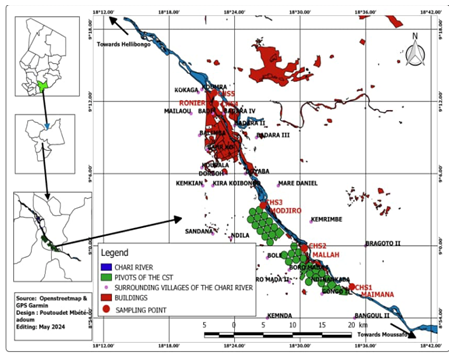
The study was conducted on the Chari river along the Banda township, located at Sarh sub-council in the Bahr Kôh Department of the southern Chad. It lies between 9°08 North and 18°23 East, at averagely 365 m altitude. Water samples were taken at five sites, namely ChS1, ChS2, ChS3, ChS4, ChS5 (Figure 1) from the upstream to the downstream direction for in-situ physico-chemical analysis at the National Water Laboratory.

Experimental design and treatments
Along the Chari river and within the Banda township, the experiment was set up for each of the sampling periods (dry and wet seasons) in a randomized block design, the water sampling sites representing treatments, and the number of water samples (three) at each site representing the replications. There were five treatments known as Chari sampling sites from 1 to 5 (ChS1, ChS1, ChS2, ChS3, ChS4, ChS5): ChS1 was located upstream the Chari river, 5 km away of the Sugar Complex Company (CST); ChS2 was 3 km downstream ChS1, at the outlet of CST, and was receiving wastes water from CST; ChS3 and ChS2 were 5 km apart, at 3 km downstream the outlet that provides water to the sugar cane fields in the dry season; ChS4 was located 5 km away from ChS3, downstream the slaughterhouse of Sarh, and was receiving wastes water from this company; ChS5 was 1 km distant from ChS4, at 200 m downstream the city of Sarh.
In-situ physico-chemical analysis of water samples
The physico-chemical parameters of water samples such as pH, temperature, conductivity and Total Dissolved Solids (TDS) were measured directly in the field. The aim was to avoid any modification of these parameters due to possible exchanges between the samples and the outside conditions. Measurements were made as soon as water samples were collected, using a field multimeter (Palintest Waterproof 800) equipped with tools to assess conductivity, pH and TDS, with automatic temperature correction.
Physico-chemical analysis of water samples in the laboratory
Collected water samples were stored in 1.5L sterile polyethylene bottles, pre-cleaned with water to be analyzed. These water-filled bottles were carefully sealed, labeled and kept to cool in coolers containing ice packs, before transportation to the National Water Laboratory on the same day for analysis. In the laboratory, samples for physico-chemical analysis were filtered through cellulose filters (Ø ≤ 0.45 μm). The filtrates obtained were stored in 50 mL sterile bottles and kept at 4°C in the fridge. For each water sample, the turbidity, COD, SM, total nitrogen, total phosphorus, NO3-, NO2-, (SO4)2- were assessed using a DR 2400 spectrophotometer. Nitrates was measured using the sodium salicylate method, and the absorbance read through the spectrophotometer at 415 nm 12, whereas phosphorus was assessed using the ammonium molybdate colorimetric method followed by spectrophotometer reading at 440 nm against a blanc 13.
Data processes and analysis
For each parameter, data were assessed in triplicate and analyzed through ANOVA using a Statgraphic program. Means between treatments were separated using the Duncan Multiple range test at the indicated level of significance. Relationships between parameters of the same sampling period were assessed using the Pearson correlation.
Variation of water physical parameters between sampling sites and seasons
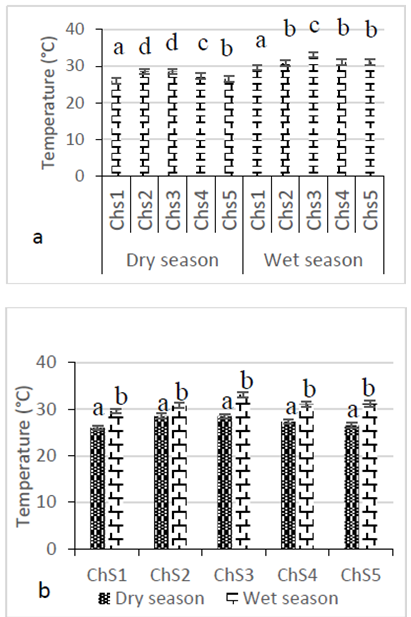
Temperature (°C): Known to be involved in almost all physical, chemical and biological reactions 14, water temperature has been reported to be an extremely useful environmental parameter used to regulate aquatic life, thus might have ecological important repercussions 15. The physical water parameters assessed in this study varied from one sampling site to another within a season, and for a particular sampling site between seasons (dry and wet). Water temperature ranged from 26.01°C (ChS1) to 28.52°C (ChS2, ChS3) in the dry season, compared to 29.6°C (ChS1) to 33.13°C (ChS3) during the wet season (Figure 2a), indicating respectively a site difference of 2.51 and 3.53°C between sampling sites. Water temperature was significantly (p = 0.0001) more elevated in the wet than in the dry season for all sampling sites (Figure 2b). Water temperature is an ecological factor influencing the density, the viscosity and solubility of gases in water, the dissolution of salts, the chemical and biochemical reactions, as well as the growth and development of water organisms and microorganisms 16. The significant thermal variation between sites could be attributed to differences in sampling periods and seasons. Variation of temperature between sites, and sampling periods have been reported for surface water of some Continental Wetlands in Mauritania 17, to follow those of the regional climate.

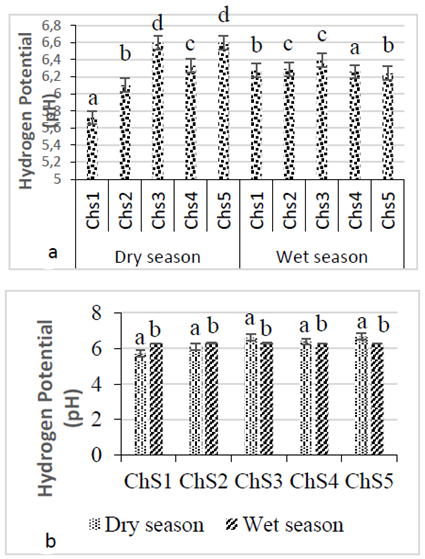
Hydrogen Potential (pH): The water pH expresses the concentration H+ ions contained in water 18. Water pH was significantly (p = 0.0001) different between sampling sites during each of the dry and wet seasons. Water pH values were all acid, ranging from 5.72 at ChS1 to 6.6 at ChS3 and ChS5 during the dry season, compared to 6.29 (ChS1) to 6.76 (ChS4) during the wet season (Figure 3a), thus correspond to the pH of most of the underground water (5.5 < pH < 8). Apart from the sampling site ChS4 where water pH did not change between seasons, it was significantly (p = 0.0001) more elevated in the wet than the dry season for sampling sites ChS1 and 2, with the opposite happening for pH values from sampling sites ChS3 and 5 (Figure 3b). On the overall, the pH values remained within the maximum limits set by Chad's National Drinking Water Standards (6.5-8.5), except for sites ChS1, where a slightly acidic pH was measured. Opposite to your results, low pH values were revealed in the wet season for water sampled along the Comoe estuary river at Ivory Coast 19. The reduced water acidity followed the numerical evolution of sampling sites (ChS1 to ChS5), thus from the up to the downstream in the running direction of water. The variation in water pH might be attributed to the acidity or alkalinity of soils crossed by running water.

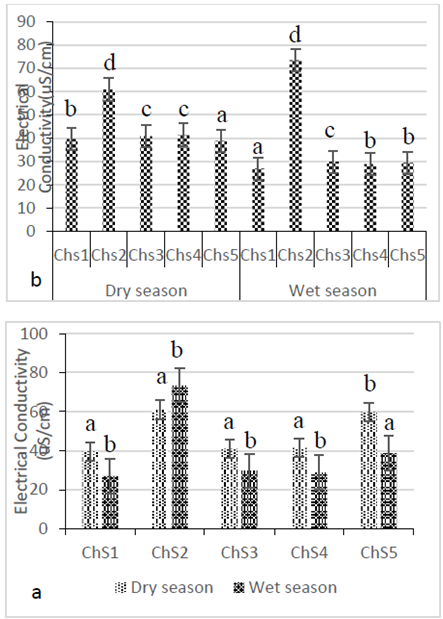
Electrical Conductivity (EC): The electrical conductivity is the numerical expression of the capacity of a solution to conduct electricity, and is used to appreciate the dissolved salts in water. It increases with temperature, and indicates the degree of mineralization of water, in which each ion acts through its concentration and its specific conductivity. In terms of temporal variation, the electrical conductivity from sampling site ChS2 (122.57 us/cm in the dry season, 146.56 us/cm in the wet season) was significantly (p = 0.0001) greater than those of other sampling sites (Figure 4a), the weakest values accounting for the sampling site ChS5 with 38.72 us/cm in the dry season and ChS1 with 53.8 us/cm in the wet season (Figure 4b). This could be explained by the concentration of mineral elements present in the water, showing the poor mineralization of the Chari river. These results confirm those of Ngaram 7 on the Chari river in the city of N'Djamena, which showed that water was less mineralized. Although the electrical conductivity for natural water was fixed between 50 and 1500 us/cm, fluctuations from between 219 to 3920 us/cm were reported respectively during the wet and the dry season in Morocco, indicating excessive mineralization attributed to industrial wastes 20. On the other hand, surface water of Oued Guigouwas was revealed to be weakly mineralized with electrical conductivity values between 230-552 us/cm 21. Results obtained from this study are below the maximum limit (50 μS/cm) set by national and the Water Quality Evaluation standards 22, indicating no rick as far as electrical water conductivity of the Chari river is concerned.

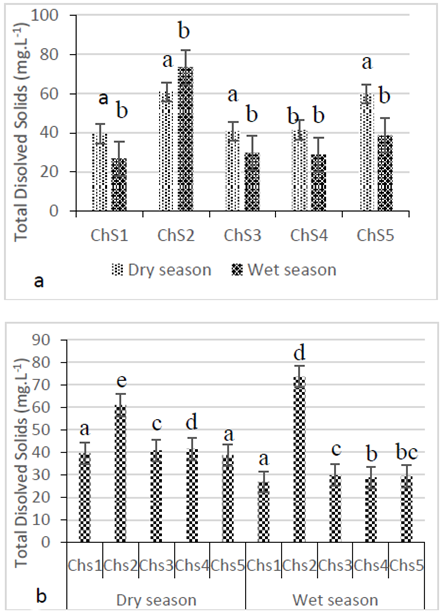
Total Disolved Solids (TDS): The total dissolved solids comprise all mineral and organic matter, and include clay, loam, sand, plankton and other microorganisms. The TDS normally varies with seasons and water running regime. The TDS registered varied from 38.72 mg.L-1 (ChS5) in the dry season to 73.47 mg.L-1 (ChS2) in the wet season (Figure 5b), but within any of the season, the TDS significantly (p = 0.0001) differed from one water sampling site to another (Figure 5a). The increased TDS at sampling site ChS5 was probably attributed to liquid wastes discharges from CST factory thrown into water, in agreement with other results reported 23. Moreover, the impact of increased water in the wet season was reflected by draining of natural organic matter from upstream (ChS1) to downstream (ChS5) sampling sites.

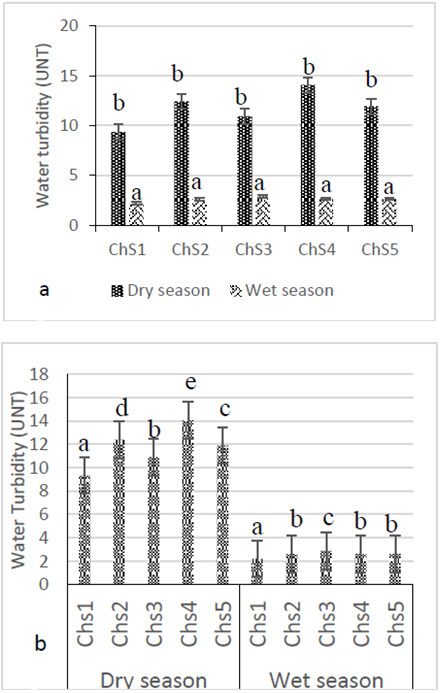
Turbidity: Water turbidity is concerned with the presence of small size suspended matters, including clay, limon, silice, or organic matter. The appreciation of organic matter abundance expresses its degree of turbidity. The variation of turbidity during the wet season did not show an important variation (Figure 6b), whereas a significant (p = 0.0001) variation between sampling sites was observed during the dry season (Figure 6a) ranging between 9.39 (ChS1) to 14. 06 UNT (CHS4), although it was very low compared to the maximum content of 330 NTU reported by Tfeila et al. 24 on the Senegal river. The very weak variation during the wet season could be due to draining of rain water into the river. However, the registered TDS values in the dry season were largely above the acceptable limits for drinking water which is set to 5 NTU 25. The increased turbidity has been reported to be linked to concentration of particles (organic debris, clays, microscopic organisms) in the environment due to reduced rainfall during the dry season and the development of microscopic algae 26.
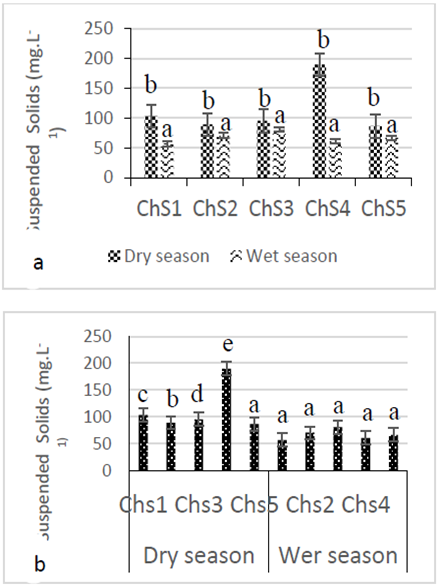
Suspended Matter (SM): Suspended materials represent the entire mineral and organic particles contained in water, and is influenced by the nature of soil crossed, the seasons, the pluviometry, the nature of wastes, and the running regime of water 27. The average mean of suspended matter was between 86.4 and 189.68 mg.L-1 in the dry season, against 56.80 and 80.80 mg.L-1 in the wet season (Figure 7b). These values were very high compared to between 1.51 mg.L-1 and 23.33 mg.L-1 revealed by Keumean et al. 19 on Comoe river, but were still low when opposed to between 123-2730 mg.L-1 previously reported in Morocco 20. On the overall, water was more charged in suspended materials in the dry than in the wet season, but with fluctuations varying from one water sampling site to another, and from the upstream to downstream direction (Figure 7a). These results contradict with those reported by Azzaoui 23, who instead pointed out more suspended materials in water during the wet than the dry season. These elevated SM values could be attributed to an intense erosion of watershed, that occasionally enhance the suspended materials in water, or to solid wastes deposited by neighboring inhabitants on the edges of the Chari river. Metakhoukh et al. 20 also showed the same trend in a study carried out in south-eastern Côte d'Ivoire. Elevated contents of suspended materials in water considered as a form of pollution, could lead to increased warming of water, that negatively affects the habitat quality of water cool organisms 28. Water quality for SM at all water sampling sites was acceptable in the dry season, but was at risk in the wet season (SEQ-water classification).


Variation of water chemical parameters between sampling sites and seasons
Nitrates
Nitrate constitutes the final stage of nitrogen oxidation, and represents the nitrogen form with the highest degree of oxidation present in water. Nitrate concentrations in natural water range from 1 to 10 mg.L-1 20.Table 1 highlights the nitrate fluctuations between 10.49 mg.L-1 (ChS1) and 16.57 mg.L-1 (ChS5) during the dry season, against 38.11mg.L-1 (ChS5) and 52.01 mg.L-1 (ChS1) for the wet season. In other words, nitrates were concentrated downstream the Chari river in the dry season and upstream in the wet season, suggesting the dilution phenomenon. Weak nitrate contents in water in the dry than in the wet season were previously reported by Metakhoukh et al. 20. Although weakly utilized by neighboring inhabitants for their agricultural activities, the elevated concentrations of nitrates in the wet compared to the dry season could be due to leaching of chemical fertilizers used for crop production, along the edges of the Chari river, as has been previously reported 14, and constitute one of the main degrading factor of water quality. Present in its natural state and soluble in the soil, nitrates penetrate in soils and ground water, then circulates into rivers. Conversely, the weak nitrates contents of the dry season could be attributed to wastes water from CST company in the Sarh township, particularly at water sampling sites close to CST factory, or to the weak oxygen content that could not oxygenate the nitrogen to its highest degree to form nitrate. However, these nitrate concentrations remained below the WHO reference value of 50 mg.L-1, except for site ChS1, which recorded higher than norm values in the wet season. This increase in nitrate content is thought to be due to leaching from agricultural soils crossed by the river, as nitrogen is present in water in its nitrate form (NO3-). Apart from site ChS1, studied water samples were not subjected to pollution risks by nitrates, since nitrate contamination seems to be linked to ground water sources contaminated with infiltrated pollutants from agricultural activities 29. Since nitrate content in water is influenced by climatic variations and depends on temperature and the water content, the most important nitrates flux and concentrations of nitrates generally occur during the wet season, where water is abundant to cover the plant needs 24. Thus, draining of soils by water increase the leaching potential, thus the nitrate flux in water 30.
Nitrite: Nitrites can be encountered in water, but generally at low concentrations, water containing nitrites being considered suspect 24. Nitrite contents in water (Table 1) were significantly (p = 0.0001) more elevated in the sampling site (ChS1) than in others, both in the dry (5.97 mg.L-1) and the wet (0.21 mg.L-1) seasons, compared to between 8.75 μg.L-1 and 69.35 μg.L-1 reported by Keumean et al. 19 in ivory Coast. Nitrites are considered as intermediate ions between nitrates and amoniacal nitrogen, as such, is encountered in weak quantity in water. Contrary to our expectations, nitrite contents were more important in the dry than the wet season, not in agreement with observations of Akil et al. 21, who revealed instead more nitrites concentration in water during the wet season. During the dry season, the concentrations of nitrite at ChS1, ChS3 and ChS4, were above the 25 norm, which is 0.1 mg.L-1, thus were at risk as drinking water.
Sulfates
The concentrations of surface water is generally comprised between 2.2 mg.L-1 and 5 mg.L-1 31. In this study, sulfate was found to be accumulated only in the water sampling site ChS3 in the dry season. Although it was quantified in all the samples during the wet season, its content was very weak, with only 2 mg.L-1 at ChS2, ChS3, ChS4, ChS5, and 2.5 folds concentrated at sampling site ChS1 (Table 1). This elevated sulfate content could be linked to the dissolution of sedimentary rocks and the use of chemical fertilizers in this predominantly agricultural area as pointed out by 32, 33. However, the weak sulfates contents in the studied water samples could be seen as the effect of agricultural activities practiced along the Chari river of Banda township, with no or very little use of sulfates containing fertilizers. According to Barry and Biggs 34, the anthropic origin of sulfates are the combustion of charcoal and kerosen leading to an important production of sulfures, and the use of chemical fertilizers. Similar weak values 1-1.3 mg.L-1 were also reported in the Senegal river 24. Very high concentration of sulfates (14.03-237.74 mg.L-1) in some water was reported to be attributed to the presence of secondary formation such as gypsium 21. However, the studied water samples were not at risk for sulfate, as far as water quality is concerned, since its content was below the limit value set by the National Water Quality standards (250 mg.L-1) according to SEQ-water.
Chemical Oxygen Demand (COD): The chemical oxygen demand (COD) represents the quantity of oxygen consumed by chemically oxidable matter contained in water, including organic compounds, but also oxidable mineral salts such as sulfures and chlorures. COD registered from the studied water samples was comprised between 7.21 mg.L-1 (ChS4) and 27.30 mg.L-1 ChS5) in the dry season, against between 24.80 mg.L-1 (ChS3) and 32.70 mg.L-1 (ChS4) in the wet season (Table 1). COD values were very weak in the dry than the wet season, but were always more important at ChS4 sampling site both in the dry and the wet season. The increased COD values at ChS4 could be due to leaching of residual matters flowing from the upstream (ChS1) to the downstream (ChS4) direction, and containing different inorganic elements. This peak could be attributed to discharges from the Sarh slaughterhouse, agricultural waste or unidentified upstream sources of pollution. 35 also obtained a significant COD value in the waters of the Inaouene river in Morocco. In the dry season, water quality was safe from COD, except for site ChS5, and very safe in the wet season based on the SEQ-water classification.
Total nitrogen and phosphorus contents: Nitrogen is present in nature in different forms including mineral (nitrate (NO3-), nitrite (NO2) and ammonium (NH4+), organic which is integrated in organisms (plant roots, microflora et microfauna), and soil organic matter. In this study, nitrogen content in sampled water was comprised between 0.91 and 2.10 mg.L-1 in the dry season, compared to 2.50 and 5.50 mg.L-1 in the wet season, the highest accounting for ChS1 in the wet and ChS3 in the dry season. The high total nitrogen values in the wet season could be justified by leaching of agricultural soils by rainwater into the river. Similar results were found by Houelome et al. 36 in Alibori river water in Benin. Although nitrogen is one of the most important elements for plant growth, it induces perturbation of aquatic ecosystems 37. Total phosphorus comes mainly from domestic, agricultural and industrial activities 38.
Phosphorus concentration was significantly greater at ChS1 in the dry (2.39 mg.L-1) and wet seasons (9.1 mg.L-1). Water from ChS5 sampling site was the less concentrated in phosphorus with only 0.41 and 4.80 mg.L-1 during the dry and wet seasons respectively. Our values are higher than those of Keumean et al. 19, who presented mean phosphate values ranging from 60.43 µg.L-1 to 304.13 µg.L-1.
Correlations between some phsico-chemical water parameters
Pearson‘s correlation coefficients can be used to prepare scientific measures for better management of the water. Relationships between water parameters varied between sites and seasons. During the dry season, turbidity was positively and significantly (p = 0.009) correlated with suspended materials (r = 0.66) and total Nitrogen (r= 0.57; p= 0.033). Indeed, turbidity (Tu) was been reported to be closely linked to suspended solids (SS) by the equation Tu = 13.426 + 0.04303 SM 39, 40. In contrast, negative and significant correlations were found between turbidity and CO2 (p = 0.008), total phosphorus (p = 0.003), and nitrite (p < 0.0001). Elevated turbidity could thus favor the proliferation of saprophytic microorganisms that feed on these organic charges. Sulfate on its part was negatively correlated with SM (r = -0.25; p = 0.038), but was positively and significantly linked to CO2 (r = 0.86; p = 0.0001). Whereas COD was positively linked to total N (p = 0.021), it was instead positively associated to nitrate (p = 0.048). High content of COD could indicate excessive consumption of oxygen with lethal consequences on aquatic life, leading to water eutrophization that provides Nitrate 41. During the wet season, apart from SM which was positively and significantly correlated with the turbidity (r = 0.28; p<0.0001), sulfate (r = -0.85; p = 0.0001), nitrate (r = -0.81; p = 0.0002), Total P (r = -0.79; p = 0.0004), nitrite (r = -0.61; p= 0.014), COD (r = -0.73; p = 0.0019), CO2 (r = -0.51; p = 0.014) were all negatively correlated with turbidity. Sulfate only negatively correlated with the SM (r = -0.78; p = 0.0006), while showing positive relationship with all the other parameters. A negative correlation was established between suspended solid and nitrite (r = -0.58; p = 0.02), nitrate (r = -0.69; p = 0.005), and C02 (r = -0.56; p= 0.027), whereas total P was positively linked to nitrite (r = 0.62; p = 0.012), and nitrate (r = 0.62; p = 0.0001). On the overall, COD shares strong negative and significant relationships with CO2, SM, total N and P, whereas turbidity was also negatively correlated with SO4-2, COD, CO2, total P, nitrite and nitrate during both the dry (Table 3) and wet seasons (Table 2). On the basis of the above, it seems like COD, SM and turbidity are important water parameters, the most at risk to be considered as far as the water quality of Chari river is concerned.
The physico-chemical analysis of water from Chari river along the Banda township has revealed a high degree of spatial and seasonal variability of the assessed parameters between the water sampling sites. The pH values have remained within the maximum limits set by Chad's National Drinking Water standards (6.5-8.5) except for station ChS1, where a slightly acidic pH was observed. In the dry season, water quality was safe for COD, except for site ChS5, based on the SEQ-water classification. Apart from the sampling site ChS1 that was contaminated with nitrate in the wet season, water from all the other sampling sites were not at risk for nitrate concentration. During the dry season, the concentrations in nitrite at sites ChS1, ChS3 and ChS4, were above the OMS (2002) norm, which is 0.1 mg.L-1, thus were at risk as drinking water. The registered TDS values in the dry season were largely above the acceptable limits for drinking water which is set to 5 NTU. Water quality for SM at all water sampling sites was acceptable in the dry season, but was at risk in the wet season (SEQ-water classification). These elevated parameter contents are suggested for some to be attributed to the leaching of agricultural input residues and organic matters drained by runoff into the Chari river, and for others to seasonal variations.
| [1] | Bello, O.O., Mabekoje, O.S., Egberongbe, H.O. and Bello, T.K., 2012. Microbial Qualities of Swimming Pools in Lagos, Nigeria. International Journal of Applied Science and Technology, 2(8): 89-96. | ||
| In article | |||
| [2] | Nehme N., 2014. Assessment of water quality in the lower basin of the Litani river, Lebanon: environmental approach. France, University of Lorraine, 359p. | ||
| In article | |||
| [3] | Ashton P., Seetal A., 2002. Challenge of water resource management in Africa. Rebirth of Science in Africa. pp.133-148. | ||
| In article | |||
| [4] | Sauvage S., 2009. Mulpti-polluting transfer in surface water: Role of hydromorphological and physicochemical parameters, University of Liege, Scientific and Technical Institut of Lisbonne, 20p. | ||
| In article | |||
| [5] | OECD, 2012. Water governance in Latin America and the Caribbean: A multi-level approach. 150p. | ||
| In article | |||
| [6] | MAE, 1994. Proceedings of the seminar on fishing in Chad from May 31 to june 1 1994, N’Djamena Chad, 43p. | ||
| In article | |||
| [7] | Ngaram N., 2011. Contribution to the analytical study of pollutants (in particular heavy metals) in the Chari river water as it passes through the city of N’Djamena. Analytical Chemistry. Claude Bernard University-Lyon I. 166p. | ||
| In article | |||
| [8] | Kayalto B., 2009. Contribution to the assessment of heavy metal contamination of Lake Chad sediments in three fish species. DEA Dissertation, University of Ngaoundere, 82p. | ||
| In article | |||
| [9] | Maoudombaye, T., Ndoutamia, G., Ali, M.S., Ngakou, A., 2015. Comparative study of the physico-chemical quality of water from wells, boreholes and rivers consumed at Doba oil shed in Chad. Larhyss Journal, 24: 193‐208. | ||
| In article | |||
| [10] | Evens E., 2004. Assessment of health and ecotoxicological risks associated with hospital effluents. Thesis INSA, Lyon, France. 246p. | ||
| In article | |||
| [11] | Maoudombaye T., 2017. Evaluation of the physicochemical and bacteriological quality of water resources consumed at Doba oil shed in Chad. Doctorate thesis Ph.D, Faculty of Sciences, University of Ngaoundere, Cameroon.156p. | ||
| In article | |||
| [12] | Priso R. J., Oum G. O., Din N., 2012. Using macrophytes as the water quality descriptors of the Kondi river in the city of Douala (Cameroon, central Africa), Journal of Applied Biosciences, 53: 3797-3811. | ||
| In article | |||
| [13] | Rodier J., Legube B., Merlet N., 2009. Water analysis (9è edn). Dunod: Paris. 1526p. | ||
| In article | |||
| [14] | Chapman D., Kimstach V., 1996. Selection of water quality variables. Water quality assessments: a guide to the use of biota, sediments and water in environment monitoring, Chapman edition, 2nd ed. E and FN Spon, London, pp. 59-126. | ||
| In article | View Article | ||
| [15] | Leynaud G., 1968. Thermal pollution, influence of temperature on aquatic life. B.T.I. The Minister of Agriculture, pp. 224-881. | ||
| In article | |||
| [16] | WHO, 2011. Guidlines for drinking-water quality. Fourth édition, Genève, Suisse, 564 p. | ||
| In article | |||
| [17] | Tfeil H., Mahfoudh M.M., Baba A.M.M., Ahmed A., Lemhaba Y., Abdellahi M.V.H., 2018. Physico-Chemical Characterization of Surface Water and Study of the Ichthyological Diversity of Some Continental Wetlands in Mauritania. European Scientific Journal, 14(6): 83. | ||
| In article | View Article | ||
| [18] | Mbilou U. G., Martin T., Médard N. M., 2016. Study of the physico-chemical composition of the water of the Congolese shed, Republic of Congo. Ivorian Journal of Science and Technology, 28: 1-12. | ||
| In article | |||
| [19] | Keumean K.N., Bamba S.B., Soro G., Metongo B.S., Soro N., Biemi J., 2013. Spatio-temporal evolution of the physico-chemical quality of water in the Comoe River estuary (South-eastern Ivory Coast). International Journal of Biological and Chemical Sciences, 7(4): 1752-1766. | ||
| In article | View Article | ||
| [20] | Makhoukh M., Sbaa M. Berrahou A., Clooster V.M., 2011. Contribution to the physico-chemical study of surface water of Oued Moulorya; Moroco. Larhyss Journal, 9: 149-169. | ||
| In article | |||
| [21] | Akil A., Hassan T., Fatima El.H., 2014. Study of the physicochemical and metal contamination of surface water of the Bassin versant of Guigou, Moroco. European Scientific Journal, 10(23): 84-94. | ||
| In article | |||
| [22] | SEQ-water, 2003. Evaluation guide for river water quality assessment system (SEQ-water)-MEDD & Water Agencies 40p. | ||
| In article | |||
| [23] | Azzaoui, S. 1999. Heavy metal of the basin versant of Sebou, geochemistry source of pollution and impact of the quality of surface water. Ph.D. thesis, University Ibn Tofail, Kenitra, Morroco, 130p. | ||
| In article | |||
| [24] | Tfeila M.M., M.O.S.A. Ouled K., ouabi S., Aboulhassan M.A., Taleb A., Bouezmarni M., 2016. Monitoring the physicochemical quality of water from the Senegal River: Case of the Beni Nadji catchment supplying drinking water to the wilayas of Nouakchott. Journal of Materials and Environmental Science., 7(1): 148-160. | ||
| In article | |||
| [25] | WHO (2002). Quantification of certain mojor risks to health. Report in the world- repany Risk and promote healthy living. U.N. Geneve, World Health Organization: pp. 51-104. | ||
| In article | |||
| [26] | Iounes N., Mohamed K., Souad El A., 2016. Physico-chemical characterization and biological analysis of Oued Daliya surface water, Morocco. Afrique Science, 12(4): 256-270. | ||
| In article | |||
| [27] | Rodier J., 1984. Water analysis: Natural water, wastewater, sea water. Bordas Edition. Paris, 1365p. | ||
| In article | |||
| [28] | Hebert S., Legare S., 2000. Monitoring of water quality in rivers and small streams. 24p. | ||
| In article | |||
| [29] | Neal A., Griffin M., Hart P., 2000. The impact of organizational climate on Safety climate and individual behavior. Safety Science, 34: 99-109. | ||
| In article | View Article | ||
| [30] | Arlot M. P., 1999. Nitrates in water: actor drainage, control drainage? University Thesis, University Paris 6, 446p. | ||
| In article | |||
| [31] | Meybeck M., Friedrich, G., Thomas, R., Chapman, D. Rivers, 1996. Water quality assessments: a guide to the use of biota, sediments and water in environment monitoring, Chapman edition, 2nd ed. E & FN Spon, London, pp. 56-126. | ||
| In article | |||
| [32] | Abboudi A., Tabyaoui H., El Hamichi F., Benaabidate L., Lahrach A., 2014. Study of the physico- chemical quality and metallic contamination of waters of the Guigou catchment area Morocco. European Scientific Journal, (10)23: 84-94. | ||
| In article | |||
| [33] | Hisseien A.Al-T., Kamga R., Mahamat T.N., 2015. Physico-chemical analysis of Logone river water at Moundou City in Southern Chad. International Journal of Biological and Chemical Sciences., 9(3): 1654-1664. | ||
| In article | View Article | ||
| [34] | Barry J. F. Biggs.,1989. Biomonitoring of organic pollution using periphyton, South Branch, Canterbury, New Zealand, New Zealand Journal of Marine and Freshwater Research, 23(2): 263-274. | ||
| In article | View Article | ||
| [35] | Naoura J., Lahcen B., Kawtar F.B., 2015. Assessment of the water quality of the Inaouene river, northern Morocco. International Journal of Innovation and Applied Studies, 10(1): 60-66. | ||
| In article | |||
| [36] | Houelome T.M.A., Delphine A., Antoine C., Ibrahim I.T., Issaka Y., Laleye P., 2017. Characterization of the physico-chemical quality of the waters of the Alibori River in the cotton basin of Benin. International Journal of Biological and Chemical Sciences, 9(1): 504-516. | ||
| In article | |||
| [37] | Powlson, D.S., Addiscott, T.M., Benjamin, N., Cassman, K.G., de Kok, T.M., van Grinsven, H., L’Hirondel, J.L., Avery, A.A. and van Kessel, C., 2008). When does nitrate become a risk for Humans. Journal of Environment Quality, 37(2): 291-295. | ||
| In article | View Article PubMed | ||
| [38] | Lalami El-O.A., Merzouki M., El Hillali O., Maniar S., Ibnsouda Koraichi S., 2010. Pollution of surface water of the city of Fes in Morocco: typology, origin and consequences. Larhyss Journal, 09: 55-72. | ||
| In article | |||
| [39] | Houma F., Belkessa R., Khouider A., Bachari N., Derriche Z., 2004. The characterization of aquatic pollution using correlative analysis of physico-chemical parameters and data from the IRS1C satellite: Application to Oran city, Algeria. Journal of Water Science, 17(4): 428-446. | ||
| In article | View Article | ||
| [40] | Atanle K., Moctar L.B., Kouami K., Gbandi D.B., 2012. Physico-chemical characterization and phytoplankton diversity of the waters of Lake Zowla (Lac Boko), Togo. International Journal of Biological and Chemical Sciences., 6(1): 543-558. | ||
| In article | View Article | ||
| [41] | Shroff P, Vashi R T, Champaneri V.A., Patel KK., 2015. Correlation study among water quality parameters of groundwater of valsad district of south gujarat (India). J. Fundam. Journal of Applied Sciences.,7(3): 340-349. | ||
| In article | View Article | ||
Published with license by Science and Education Publishing, Copyright © 2024 Hassane Mansour, Jean Marie Dikdim Dangwang, Theophile Maoudombaye, Yoradji Nadjilom, Albert Ngakou and Guy Bertrand Noumi
 This work is licensed under a Creative Commons Attribution 4.0 International License. To view a copy of this license, visit
https://creativecommons.org/licenses/by/4.0/
This work is licensed under a Creative Commons Attribution 4.0 International License. To view a copy of this license, visit
https://creativecommons.org/licenses/by/4.0/
| [1] | Bello, O.O., Mabekoje, O.S., Egberongbe, H.O. and Bello, T.K., 2012. Microbial Qualities of Swimming Pools in Lagos, Nigeria. International Journal of Applied Science and Technology, 2(8): 89-96. | ||
| In article | |||
| [2] | Nehme N., 2014. Assessment of water quality in the lower basin of the Litani river, Lebanon: environmental approach. France, University of Lorraine, 359p. | ||
| In article | |||
| [3] | Ashton P., Seetal A., 2002. Challenge of water resource management in Africa. Rebirth of Science in Africa. pp.133-148. | ||
| In article | |||
| [4] | Sauvage S., 2009. Mulpti-polluting transfer in surface water: Role of hydromorphological and physicochemical parameters, University of Liege, Scientific and Technical Institut of Lisbonne, 20p. | ||
| In article | |||
| [5] | OECD, 2012. Water governance in Latin America and the Caribbean: A multi-level approach. 150p. | ||
| In article | |||
| [6] | MAE, 1994. Proceedings of the seminar on fishing in Chad from May 31 to june 1 1994, N’Djamena Chad, 43p. | ||
| In article | |||
| [7] | Ngaram N., 2011. Contribution to the analytical study of pollutants (in particular heavy metals) in the Chari river water as it passes through the city of N’Djamena. Analytical Chemistry. Claude Bernard University-Lyon I. 166p. | ||
| In article | |||
| [8] | Kayalto B., 2009. Contribution to the assessment of heavy metal contamination of Lake Chad sediments in three fish species. DEA Dissertation, University of Ngaoundere, 82p. | ||
| In article | |||
| [9] | Maoudombaye, T., Ndoutamia, G., Ali, M.S., Ngakou, A., 2015. Comparative study of the physico-chemical quality of water from wells, boreholes and rivers consumed at Doba oil shed in Chad. Larhyss Journal, 24: 193‐208. | ||
| In article | |||
| [10] | Evens E., 2004. Assessment of health and ecotoxicological risks associated with hospital effluents. Thesis INSA, Lyon, France. 246p. | ||
| In article | |||
| [11] | Maoudombaye T., 2017. Evaluation of the physicochemical and bacteriological quality of water resources consumed at Doba oil shed in Chad. Doctorate thesis Ph.D, Faculty of Sciences, University of Ngaoundere, Cameroon.156p. | ||
| In article | |||
| [12] | Priso R. J., Oum G. O., Din N., 2012. Using macrophytes as the water quality descriptors of the Kondi river in the city of Douala (Cameroon, central Africa), Journal of Applied Biosciences, 53: 3797-3811. | ||
| In article | |||
| [13] | Rodier J., Legube B., Merlet N., 2009. Water analysis (9è edn). Dunod: Paris. 1526p. | ||
| In article | |||
| [14] | Chapman D., Kimstach V., 1996. Selection of water quality variables. Water quality assessments: a guide to the use of biota, sediments and water in environment monitoring, Chapman edition, 2nd ed. E and FN Spon, London, pp. 59-126. | ||
| In article | View Article | ||
| [15] | Leynaud G., 1968. Thermal pollution, influence of temperature on aquatic life. B.T.I. The Minister of Agriculture, pp. 224-881. | ||
| In article | |||
| [16] | WHO, 2011. Guidlines for drinking-water quality. Fourth édition, Genève, Suisse, 564 p. | ||
| In article | |||
| [17] | Tfeil H., Mahfoudh M.M., Baba A.M.M., Ahmed A., Lemhaba Y., Abdellahi M.V.H., 2018. Physico-Chemical Characterization of Surface Water and Study of the Ichthyological Diversity of Some Continental Wetlands in Mauritania. European Scientific Journal, 14(6): 83. | ||
| In article | View Article | ||
| [18] | Mbilou U. G., Martin T., Médard N. M., 2016. Study of the physico-chemical composition of the water of the Congolese shed, Republic of Congo. Ivorian Journal of Science and Technology, 28: 1-12. | ||
| In article | |||
| [19] | Keumean K.N., Bamba S.B., Soro G., Metongo B.S., Soro N., Biemi J., 2013. Spatio-temporal evolution of the physico-chemical quality of water in the Comoe River estuary (South-eastern Ivory Coast). International Journal of Biological and Chemical Sciences, 7(4): 1752-1766. | ||
| In article | View Article | ||
| [20] | Makhoukh M., Sbaa M. Berrahou A., Clooster V.M., 2011. Contribution to the physico-chemical study of surface water of Oued Moulorya; Moroco. Larhyss Journal, 9: 149-169. | ||
| In article | |||
| [21] | Akil A., Hassan T., Fatima El.H., 2014. Study of the physicochemical and metal contamination of surface water of the Bassin versant of Guigou, Moroco. European Scientific Journal, 10(23): 84-94. | ||
| In article | |||
| [22] | SEQ-water, 2003. Evaluation guide for river water quality assessment system (SEQ-water)-MEDD & Water Agencies 40p. | ||
| In article | |||
| [23] | Azzaoui, S. 1999. Heavy metal of the basin versant of Sebou, geochemistry source of pollution and impact of the quality of surface water. Ph.D. thesis, University Ibn Tofail, Kenitra, Morroco, 130p. | ||
| In article | |||
| [24] | Tfeila M.M., M.O.S.A. Ouled K., ouabi S., Aboulhassan M.A., Taleb A., Bouezmarni M., 2016. Monitoring the physicochemical quality of water from the Senegal River: Case of the Beni Nadji catchment supplying drinking water to the wilayas of Nouakchott. Journal of Materials and Environmental Science., 7(1): 148-160. | ||
| In article | |||
| [25] | WHO (2002). Quantification of certain mojor risks to health. Report in the world- repany Risk and promote healthy living. U.N. Geneve, World Health Organization: pp. 51-104. | ||
| In article | |||
| [26] | Iounes N., Mohamed K., Souad El A., 2016. Physico-chemical characterization and biological analysis of Oued Daliya surface water, Morocco. Afrique Science, 12(4): 256-270. | ||
| In article | |||
| [27] | Rodier J., 1984. Water analysis: Natural water, wastewater, sea water. Bordas Edition. Paris, 1365p. | ||
| In article | |||
| [28] | Hebert S., Legare S., 2000. Monitoring of water quality in rivers and small streams. 24p. | ||
| In article | |||
| [29] | Neal A., Griffin M., Hart P., 2000. The impact of organizational climate on Safety climate and individual behavior. Safety Science, 34: 99-109. | ||
| In article | View Article | ||
| [30] | Arlot M. P., 1999. Nitrates in water: actor drainage, control drainage? University Thesis, University Paris 6, 446p. | ||
| In article | |||
| [31] | Meybeck M., Friedrich, G., Thomas, R., Chapman, D. Rivers, 1996. Water quality assessments: a guide to the use of biota, sediments and water in environment monitoring, Chapman edition, 2nd ed. E & FN Spon, London, pp. 56-126. | ||
| In article | |||
| [32] | Abboudi A., Tabyaoui H., El Hamichi F., Benaabidate L., Lahrach A., 2014. Study of the physico- chemical quality and metallic contamination of waters of the Guigou catchment area Morocco. European Scientific Journal, (10)23: 84-94. | ||
| In article | |||
| [33] | Hisseien A.Al-T., Kamga R., Mahamat T.N., 2015. Physico-chemical analysis of Logone river water at Moundou City in Southern Chad. International Journal of Biological and Chemical Sciences., 9(3): 1654-1664. | ||
| In article | View Article | ||
| [34] | Barry J. F. Biggs.,1989. Biomonitoring of organic pollution using periphyton, South Branch, Canterbury, New Zealand, New Zealand Journal of Marine and Freshwater Research, 23(2): 263-274. | ||
| In article | View Article | ||
| [35] | Naoura J., Lahcen B., Kawtar F.B., 2015. Assessment of the water quality of the Inaouene river, northern Morocco. International Journal of Innovation and Applied Studies, 10(1): 60-66. | ||
| In article | |||
| [36] | Houelome T.M.A., Delphine A., Antoine C., Ibrahim I.T., Issaka Y., Laleye P., 2017. Characterization of the physico-chemical quality of the waters of the Alibori River in the cotton basin of Benin. International Journal of Biological and Chemical Sciences, 9(1): 504-516. | ||
| In article | |||
| [37] | Powlson, D.S., Addiscott, T.M., Benjamin, N., Cassman, K.G., de Kok, T.M., van Grinsven, H., L’Hirondel, J.L., Avery, A.A. and van Kessel, C., 2008). When does nitrate become a risk for Humans. Journal of Environment Quality, 37(2): 291-295. | ||
| In article | View Article PubMed | ||
| [38] | Lalami El-O.A., Merzouki M., El Hillali O., Maniar S., Ibnsouda Koraichi S., 2010. Pollution of surface water of the city of Fes in Morocco: typology, origin and consequences. Larhyss Journal, 09: 55-72. | ||
| In article | |||
| [39] | Houma F., Belkessa R., Khouider A., Bachari N., Derriche Z., 2004. The characterization of aquatic pollution using correlative analysis of physico-chemical parameters and data from the IRS1C satellite: Application to Oran city, Algeria. Journal of Water Science, 17(4): 428-446. | ||
| In article | View Article | ||
| [40] | Atanle K., Moctar L.B., Kouami K., Gbandi D.B., 2012. Physico-chemical characterization and phytoplankton diversity of the waters of Lake Zowla (Lac Boko), Togo. International Journal of Biological and Chemical Sciences., 6(1): 543-558. | ||
| In article | View Article | ||
| [41] | Shroff P, Vashi R T, Champaneri V.A., Patel KK., 2015. Correlation study among water quality parameters of groundwater of valsad district of south gujarat (India). J. Fundam. Journal of Applied Sciences.,7(3): 340-349. | ||
| In article | View Article | ||