Passive balance ability (PBA) maintains postural stability on unstable ground. The efficacy of this compensatory mechanism appears to differ among individuals and may also differ between directions (back–forth vs. left–right) and sexes, but variations in PBA during ground instability have not been assessed comprehensively under controlled laboratory conditions. The current study examined both the reproducibility and inter-relations among center of gravity sway (COGS) variables as measured on a new support-base variation device fluctuating downward slightly in the back–forth or left–right directions, and further if these variables differ between sexes and directions. Thirty-one middle-aged and older Japanese individuals participated in this study, including 17 males (mean age ± standard deviation, 61.8 ± 8.3 years) and 14 females (56.9 ± 9.6 years). Participants were instructed to maintain a stable standing posture for 1 min on the support-base variation device without the edges contacting an underlying sensor plate while the device measured COGS variables. Center of gravity variables were measured during two, one-minute trials separated by a one-min intertrial interval following one practice trial in either the back–forth or left–right device variation condition. The x-axis and y-axis trajectory lengths, total trajectory length, outer peripheral area, and rectangular area were selected as COGS variables. There were no significant differences in COGS variables between trials, but intraclass correlation coefficients (ICCs) were generally higher for the left–right device condition compared to the back–forth device condition (≥0.7 vs. <0.7) with the exception of the y-axis trajectory length during back–forth device variation (also >0.7). A two-way analysis of variance with main factors, sex and direction, revealed no significant direction × sex interaction but a significant main effect of direction on COGS distance variables. Post-hoc tests also revealed that in both sexes, the x-axis and total trajectory lengths were higher during left–right device variation than back–forth device variation, whereas the y-axis trajectory length was higher during back–forth device variation than left–right device variation. There were moderate to strong significant correlations among almost all COGS variables during back–forth device variation (r values ranging from 0.50 to 0.99). The x-axis trajectory during back–forth device variation also correlated moderately with COGS variables measured during left–right device variation (r values from 0.41 to 0.73), except for rectangular and peripheral areas. In conclusion, the COGS variables during left–right ground variation and the y-axis trajectory length during back–forth ground variation can be measured with high reliability. The strong associations among COGS variables for the same direction but weaker associations between back–forth and left–right COGS variables suggest direction differences in PBA. In contrast, no significant sex differences in PBA were observed.
Human motor abilities, including walking, diminish with age. Many older individuals find it difficult to walk and are at risk of falling due to general physical frailty and age-related muscle loss (sarcopenia). A high risk of falling may necessitate nursing care 1, 2, 3, placing added burdens on the geriatric healthcare system. Japan is rapidly approaching a super-aging society, so numerous programs are currently ongoing to extend health life 4, 5, 6, such as training for fall avoidance 7, 8, 9, 10. The Japanese Orthopedic Association recommends locomotion training for muscle-strength improvement and fall prevention 11, 12, 13.
The causes of falls among the elderly are broadly divided into passive and active events. Active events include bumping into another person and sudden breaking while standing on a train or bus, while passive events include tripping while walking or going up and down stairs. The elderly are at particularly high risk of stumbling even when traversing ground with only a slight slope or undulation. Further, these events are not limited to the outdoors but may occur due to a small level difference between the entrance and main area of a room or a slippery area in the kitchen or bathroom. For the prevention of falls, it is essential to maintain balance in the standing position.
To date, balance has been evaluated as the ability to maintain a stable standing posture on static ground (static balance ability). This static balance can be measured by one-leg standing with eyes open and eyes closed, the FRT, or by the ability to maintain a stable posture during physical movement (active balance ability) such as balance-beam walking and the timed up & go (TUG) test. Conversely, the passive balance ability (PBA) needed to maintain a stable posture when the support-base changes, such as during a sudden stop while standing in a bus or sudden movement while stepping on an escalator, has not been extensively evaluated. Recently, a balance board test was described in which the subject must maintain a stable standing posture during manipulation of an unstable support-base. The ability to maintain PBA on a balance board is considered distinct from static and active balance ability 14, 15, 16, 17, 18, so to adequately evaluate balance ability and falling risk among the elderly, it is important to test PBA in addition to static and active balance ability. However, the support-base of the aforementioned balance board moves in every direction, including back–forth and left–right, because the reverse side of the plate has only a single pivot point at the center. Hence, the balance board itself is very unstable. Subjects need to demonstrate both rapid adaptability and balance ability to maintain a stable posture, and this task may be very difficult for the elderly, increasing the risk of falling injury.
Thus, considering safety as the top priority, we developed a new device in which the plate leans slightly in either the back−forth or left−right direction (Takei, Tokyo, Japan), simplifying the balance task as subjects need only to exert compensatory PBA in these two directions. Nonetheless, these directional abilities may be distinct based on skeletomuscular anatomy. The current study examined the reliability of COGS measures for back−forth and left−right directions using this device, the inter-relations among COGS variables, and both sex and directional differences in PBA among middle-aged and older adults.
The participants in this study were 31 middle-aged and older Japanese adults (17 males and 14 females) ranging in age from 40–81 years. All participants received 90 min of exercise training per week. A preliminary survey revealed no diseases afflicting the legs or back. None of the participants had any experience maintaining a standing position on devices with a varying support base. Table 1 summarizes the baseline demographic and physical characteristics of the study group stratified by sex (including age, height, weight, and body mass index [BMI]). As expected, mean height and weight were significantly greater among males. In both sexes, height and weight were well matched to contemporary controls 19. Hence, the present participants were considered to be middle-aged and older adults of normal physique. This study was approved by the research ethics committee of the higher education thrust mechanism, Osaka Prefectural University (2018–2022).
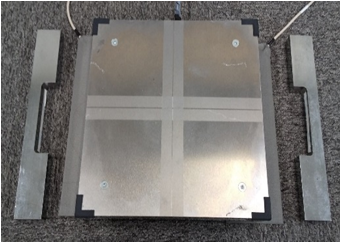
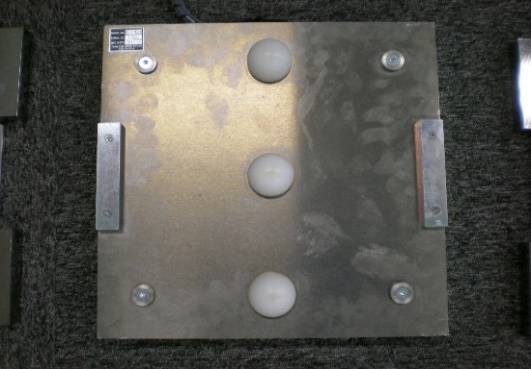
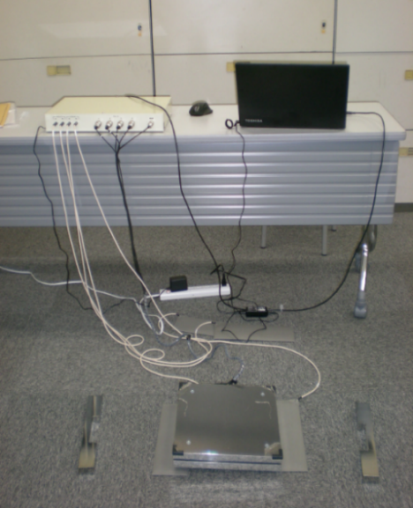
The plate of the measuring device has four built-in load sensors. The signals from the plate, the contact-sensing plate, and the step mat are sent to a personal computer through a repeater (A/D converter) and recorded. The support plate is 300 mm2 in area and 72-mm high. The components are described in Table 2. A typical balance board (e.g., DYJOC) pivots to a maximal angle in every direction. However, the device used in this study has a range of only ±2.5° in the back–forth or left–right direction. Further, the system can calculate the COGS variables, such as the x-axis and y-axis trajectory lengths, total trajectory length, outer peripheral area, and rectangular area for either direction by interfacing with a personal computer (Windows 10®, ≥ 32 bit). The measuring time is 1–600 s, and the sampling frequency can be set to 10, 20, 50, or 100 Hz. Figure 1 and Figure 2 show the front and reverse sides of the support plate, which was designed to decline in the back–forth or left–right direction by a three-boss set on the center of the reverse side.


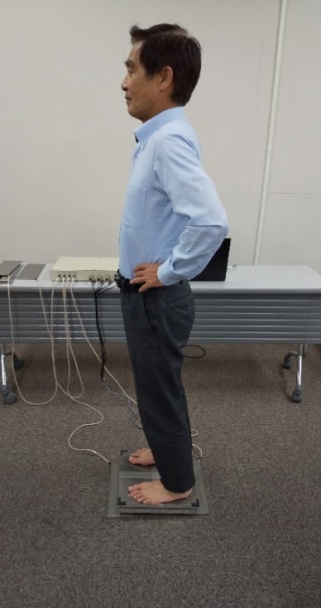
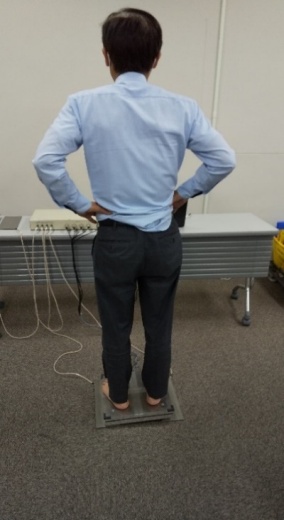
The participants stood on the support plate of the measurement device (Figure 3), which leans slightly along the y-axis (back–forth) or x-axis (left–right) depending on lengthwise orientation (Figure 4 and Figure 5), and are instructed to maintain a stable standing posture for 1 min without letting the support plate edge contact a lower contact-sensing plate. During a measurement, participants maintained an open-leg standing position with the toes of both feet aligned to the plate edge and hands on hips. After the tester confirmed the subject’s stable posture on the support plate, the measurement started. When the support plate edges contacted the lower contact-sensing plate, the participants were notified by a buzzer. After the buzzer, the subject had to quickly detach the plate edge from the contact-sensing plate via a compensatory upward movement. To avoid falls during the measurements, we deployed spotters on both sides. No participants slipped off the support plate or fell during the measurement. The order of back–forth and left–right directions was randomly presented to each participant within each device variation block. Directional measurements (Figure 4 and Figure 5) were acquired during two, one-min trials with a 1-min intertrial interval following one practice trial in the same direction. The data were recorded at a sampling frequency of 50 Hz.


The COGS variables for distance (total trajectory length and sway amplitude), area (peripheral area and root mean square value area), position (mean positions of the x-axis direction and y-axis direction), and variance (standard deviation of the x-axis direction and y-axis direction) were measured during trials in which the support base declined back−forth or left−right as described in previous studies 14, 20, 21, 22 demonstrating relatively high reliability for assessment of PBA 23. In the current study, x-axis and y-axis trajectory lengths, total trajectory length, outer peripheral area, and rectangular area were calculated over 1 min and entered into the statistical analyses.
2.5. Statistical AnalysisStatistical analyses were conducted using SPSS software version 29.0 for Windows (SPSS Inc., Tokyo, Japan). All parameters are expressed as mean ± SD based on results of the Shapiro−Wilk test for normality. Age, height, weight, and BMI were compared between sexes by Student’s t-test, and the size of the mean difference (effect size) was evaluated by calculating Cohen’s d, where d ≤0.2 is considered small, ≥0.5 moderate, and ≥0.8 large 24. Height and weight were also z-transformed for comparison to national means 19. Trial-to-trial reliability was evaluated by calculating the intraclass correlation coefficient (ICC), with ICC >0.7 considered good 25. Differences in COGS variables were evaluated by two-way ANOVA with main factors sex (Factor 1) and variation direction (Factor 2), and the effect size (η2) was calculated. In this study, an η2 ≤0.01 was considered a small effect size, ≥0.06 a moderate effect size, and ≥0.14 a large effect size 26. Results were corrected for multiple comparisons using the Bonferroni method. Relationships among COGS variables were examined by calculating Pearson’s correlation coefficient (r). An r value from 0.2 to 0.4 was considered weak, 0.4–0.7 moderate, and 0.7 or above strong. A p-value <0.05 was considered statistically significant for all tests.
Table 3 presents the means of COGS variables measured during the first and second trials for the backforth and leftright device variation conditions as well as the associated statistical parameters. There were no significant differences in COGS variables between trials in either condition and the effect size of trial number as expressed by Cohen’s d was small in all cases ( ≤ 0.3). Moreover, ICCs were ≥ 0.7 in the leftright device variation condition, indicating high reliability across trials. However, ICCs were ≤ 0.7 in the backforth device variation condition with the exception of y-axis trajectory length. Based on these ICC values, the two-trial means were used for subsequent analyses.
Table 4 presents the differences in COGS values between sexes and direction conditions as assessed by two-way ANOVA. There was no interaction or main effect of sex on any COGS variable, but there was a significant main effect of variation direction on all distance variables (x-axis, y-axis, and total trajectory lengths). Further, post-hoc tests using the Bonferroni method showed that the x-axis trajectory length and total trajectory length were larger in the leftright device variation condition than the backforth device variation condition for both sexes. Conversely, the y-axis trajectory length was larger in the backforth condition than in the leftright condition for both sexes. The effect sizes of these differences in x-, y-axis, and total trajectory lengths were large (x-axis trajectory length = 0.69, y-axis trajectory length = 0.65, and total trajectory length = 0.15).
Given the absence of significant sex differences among COGS variables, correlation coefficients were calculated from pooled data. Table 5 presents the correlation coefficients among age, physique, and COGS variables for both the back−forth and left−right device variation conditions. Age was moderately correlated with y-axis trajectory length (r = 0.52) and total trajectory length (r = 0.49) but weakly with x-axis trajectory length (r = 0.39) and outer peripheral area (r = 0.36) in the left−right device variation condition, while BMI was weakly and negatively correlated with y-axis trajectory length (r = −0.36) and total trajectory length (r = −0.39) in the back−forth device variation condition. There were also significant moderate to strong correlations among all COGS variables in back−forth and left−right device variation conditions, except for between the x- and y-axis trajectory lengths under the back−forth variation condition (r > 0.50), and among them, especially very strong correlations between the total trajectory length and the x-axis, and y-axis trajectory lengths (r = 0.80–0.94), and between the outer peripheral and rectangular areas (r = 0.98–0.99). Most COGS variables exhibited significant moderate correlations between conditions (r = 0.41–0.73), except that the x-axis trajectory length in the back−forth condition was not significantly correlated with either peripheral or rectangular areas in the left−right condition.
The support base of our newly developed device tilts either in the back−forth or left−right direction depending on long-axis orientation and allows for the measurement of multiple COGS variables. In the current study, we validated the reliability of the device for COGS variable measurements by calculating the ICC for two trials and the associations among variables for back−forth and left−right support-base variation (device variation) conditions. Further, we examined sex and directional differences in PBA. Results revealed high reliability for COGS measurements and directional differences but no sex differences in PBA.
Demura et al. 27 examined the reliability of COGS variables for evaluating static standing posture and found significant difference among three trials. However, the ICCs for the second and third trials were strong for most variables. Similarly, we found strong ICCs for all COGS variables across two trials conducted after a practice trial under both back−forth and left−right device variation conditions, consistent with Demura et al. 27. The ICCs of all COGS variables were strong in the left−right device variation condition (≥0.7), while only the y-axis trajectory length in the back−forth device variation condition was deemed strong according to this criterion. In addition, the ICCs of the COGS variables in the left–right device variation condition were generally higher than those in the back−forth device variation condition (0.74–0.86 vs. 0.41–0.52), again with the exception of the back−forth y-axis trajectory length. Therefore, reliability differs between orientations but is nevertheless high for COGS measured during left−right device variation condition and at least for the y-axis trajectory length during the back−forth device variation condition. Demura et al. 27 also found that subjects maintained a static standing posture on a stable plate, but the present task required subjects to maintain a stable standing posture on an unstable plate (tilting either back−forth or left−right). Therefore, this task required greater exertion by lower limb muscles compared to a static surface. The center of gravity varies in the back−forth direction during standing 28, so keeping postural stability is more difficult when the support-base tilts back−forth compared to left−right, resulting in larger individual differences. Therefore, the repeatability of COGS variables was markedly lower in the back−forth device variation condition compared to the left−right device variation condition.
There were no significant sex differences in COGS variables (neither distance nor area measures). Similarly, no sex differences were found in distance and area variables among young adults by Kitabayashi et al. 14 or in mean position among elderly subjects by Wiśniowska-Szurlej et al. 29. Therefore, the current results are consistent with the previous studies, confirming that there is little or no sex difference in PBA for either back−forth and left−right deviations in stability. In the present study, the two area variables (outer peripheral and rectangular) did not differ between back−forth and left−right device variation conditions, while all distance variables (the x-axis, y-axis, and total trajectory lengths) differed between conditions, with the x-axis and total trajectory lengths larger in the left−right device variation condition and y-axis trajectory length larger in the back−forth device variation condition. While standing on a stable board, a large center of gravity sway will increase distance and area variables 14. In the current study, it was found that the x-axis trajectory length increased when the support-base tilted in the left−right direction while the y-axis trajectory length increased when the support-base tilted in the back−forth direction. Thus, left−right and back−forth sway increased in response to left−right and back−forth variations of the support base, respectively. Conversely, the area variables increased in parallel with the x-axis trajectory length during left−right variations and in parallel with the y-axis trajectory length during back−forth variations; as a result, the area variables did not differ between the variation orientations. Based on these results, it can be inferred that there are no sex differences in the PBA during back−forth or left−right device variations, but that the PBA differs with the direction in support base variation.
Age was also moderately correlated with y-axis trajectory length (r = 0.52) and total trajectory length (r = 0.49), but only during the left−right device variation condition. With advancing age, leg strength and balance ability supporting the standing posture decline 30, the center of gravity shifts backward 31, and the standing posture also changes 32. From the present results, however, age appears to have little effect on COGS variables during either back−forth or left−right device variations. There were no significant correlations between x-axis and y-axis trajectory lengths during back−forth device variation. However, moderate and strong correlations (r > 0.50) were found among many COGS variables for the back−forth and for the left−right device variation. In particular, the correlations between total trajectory length and both x-axis and y-axis trajectory lengths and between the outer peripheral area and the rectangular area were very high during both device variations (r > 0.80). These results are consistent with a previous study that examined COGS during a static standing posture 14, suggesting associations among many sway variables in both device variations. Conversely, the x-axis trajectory length in the back−forth device variation condition was only moderately correlated with other variables (r = 0.41–0.73) and unrelated to areas in the left−right device variation condition. Thus, stabilization strategy may differ between back−forth and left−right perturbations as previously reported using an unstable balance board test 33, 34, 35. Therefore, relationships between sway variables are relatively weaker between back−forth and left−right device variation conditions.
Balance ability has been evaluated primarily by the ability to maintain a stable standing posture on a static surface (static balance ability) or to maintain a stable posture during physical movement (active balance ability) against one’s loading stimulation. In this study, we developed a new device to measure COGS during support-base variation and examined PBA during both back−forth and left−right variations among middle-aged and older adults. Future studies are warranted to examine the relationship between active and passive balance abilities in young, middle-aged, and older adults. Limitations of this study include the small number of participants and the selection of a relatively small number of COGS variables.
In conclusion, COGS variables were measured with acceptable reliability, and were especially high for the left−right device variation condition and the y-axis trajectory length during back−forth device variation. Moderate to strong associations were found among many COGS variables during back−forth device variations and during left−right device variations, but the associations of COGS variables between directions were much lower, suggesting direction-dependent differences in balance abilities and mechanisms. Conversely, PBA did not differ according to sex.
This study was supported in part by a Grant-in-Aid for Scientific Research (project number 17K19832) from the Ministry of Education, Science and Culture of Japan.
The authors have no competing interests.
| [1] | Gusi, N., Adsuar, J. C., Corzo, H., del Pozo-Cruz, B., Olivares, P. R., and Parraca, J. A. (2012) Balance training reduces fear of falling and improves dynamic balance and isometric strength in institutionalized older people: a randomized trial. Journal of Physiotherapy, 58(2), 97-104. | ||
| In article | View Article | ||
| [2] | Kuzuya, M. (2015) The Cutting-edge of Medicine; Sarcopenia and frailty in super-aged society. The Journal of the Japanese Society of Internal Medicine, 104(12), 2602-2607. | ||
| In article | View Article PubMed | ||
| [3] | Morley, J. E. (2016) Frailty and sarcopenia in elderly. Springer-Verlag Wien, s439-s445. | ||
| In article | View Article PubMed | ||
| [4] | Kasahara, M., Yamasaki, H., Aoki, U., Yokoyama, H., Omori, Y., and Hiraki, K. (2001) Relationship between one leg standing time and knee extension strength in elderly patients. The Japanese Journal of Physical Fitness and Sports Medicine, 50(3), 369-374. | ||
| In article | View Article | ||
| [5] | Murata, S., Kai, Y., Mizota, K., Yamasaki, S., Yumioka, M., Otao, H., and Takeda, I. (2006) Relationship between one-leg standing duration with vision and physical function among community dwelling older adults. Rigakuryoho Kagaku, 21(4), 437-440. | ||
| In article | View Article | ||
| [6] | Murata, S. and Tsuda, A. (2006) A prospective study of the relationship between physical and cognitive factors and falls in the elderly disabled at home. Journal of the Japanese Physical Therapy Association, 33(3), 97-104. | ||
| In article | |||
| [7] | Takakura, S., Ohgi, S., and Akiyama, T. (2004) Standing postural control test using the elderly balance board type N and predicting falls. Journal of the Japanese Physical Therapy Association, 31(6), 364-368. | ||
| In article | |||
| [8] | Murata, S., Tsuda, A., Inatani, F., and Tanaka Y. (2005) Physical and cognitive factors associated with falls among the elderly with disability at home. Journal of the Japanese Physical Therapy Association, 32(2), 88-95. | ||
| In article | |||
| [9] | Hirase, T., Inokuchi, S., Shiozuka, J., Nakahara, K., and Matsusaka, N. (2008) Relationship between balance ability and lower extremity muscular strength in the elderly: comparison by gender, age, and Tokyo Metropolitan Institute of Gerontology (TMIG) index of competence. Rigakuryoho Kagaku, 23(5), 641-646. | ||
| In article | View Article | ||
| [10] | Uchida, Y., Demura, S., and Hirai, H. (2018) Influence of hand help pressure on body sway and leg muscle activity during one-leg stance. Advances in Research, 17(5), 1-9. | ||
| In article | View Article | ||
| [11] | Uchida, Y. and Demura, S. (2016) Body sway and muscle activity during assisted one-and two-leg stances in the elderly, Advances in Research, 7(3), 1-9. | ||
| In article | View Article | ||
| [12] | Shibata, Y., Okada, E., Nakamura, M., and Ojima, T. (2021) Effects of locomotion training in community-dwelling older individuals attending clubs. Nihon Koshu Eisei Zasshi, 68(3), 180-185. | ||
| In article | |||
| [13] | The Japanese Orthopedic Association (2021) The brochure of locomotion in Japan, 2013. https://www.med.or.jp/dl-med/ doctor/ ssi/sports25/sports25_k14.pdf (2021/9/11). | ||
| In article | |||
| [14] | Kitabayashi, T., Shinichi, D., Yamaji, S., Nakada, M., Noda, M., and Imaoka, K. (2002) Gender differences and relationships between physical parameters on evaluating the center of foot pressure in static standing posture. Equilibrium Research, 61(1), 16-27. | ||
| In article | View Article | ||
| [15] | Hayashi, F., Asai, Y., Morimoto, H., Maruyama, T., Watanabe, M., Lohman E. B., Johnson E. G., and Kashiwa, N. (2012) The postural control in different conditions among the healthy elderly person. Journal of health sciences, Nihon Fukushi University, 15, 11-16. | ||
| In article | |||
| [16] | Suzuki, Y., Nakata, Y., Kato, H., Tanabe, Y., Iwabuchi, S., and Ishikawa, K. (2015) Association between age and dynamic balance capability assessed by use of force plates. The Japanese Journal of Physical Fitness and Sports Medicine, 64(4), 419-425. | ||
| In article | View Article | ||
| [17] | Morita, M., Urabe, Y., Takeuchi, T., and Maeda, N. (2018) Effects on ankle muscle activity of the tilt direction of a balance board. Rigakuryoho Kagaku, 33(3), 395-400. | ||
| In article | View Article | ||
| [18] | Oyama, Y., Murayama, T., and Ohta, T. (2019) Influence of standing posture on a stable surface affecting center-of-pressure sway and stability in standing posture on an unstable surface in middle-aged women. Japan Journal of Test and Evaluation of Physical Education and Sports, 18, 59-69. | ||
| In article | |||
| [19] | Ministry of Health, Labor and Welfare (2019) II. Results of physical status survey, The National Health and Nutrition Survey in Japan, 2019, 115-168. https:// www.mhlw.go.jp/ stf/seisakunitsuite/ bunya/kenkou_iryou/ kenkou/eiyou/r1-houkoku_00002.html. | ||
| In article | |||
| [20] | Demura S., Kitabayashi T., Noda M., Yamada T., and Imaoka K. (2005) Study of individual sway patterns based on Four body sway factors. Equilibrium Research, 64, 143-150. | ||
| In article | View Article | ||
| [21] | Matsuda S., Demura S., and Demura T. (2010) Examining differences between center of pressure sway in one-legged and two-legged stances for soccer players and typical adults. Perceptual & Motor Skills, 110, 751-760. | ||
| In article | View Article PubMed | ||
| [22] | Kitabayashi T., Demura S., and Aoki H. (2018) Examination of effective body sway parameters for healthy elderly. American Journal of Sports Science and Medicine, 6, 50-55. | ||
| In article | View Article | ||
| [23] | Russo L., D'Eramo U., Padulo J., Foti C., Schiffer R., and Scoppa F. (2015) Day-time effect on postural stability in young sportsmen. Muscles Ligaments and Tendons Journal, 5, 38-42. | ||
| In article | View Article PubMed | ||
| [24] | Cohen, J. (1988) Statistical power analysis in the behavioral sciences, 2nd Edition, Academic Press. | ||
| In article | |||
| [25] | Jackson, A., Jackson A. S., and Bell, J. (1980) A comparison of alpha and the intraclass reliability coefficients. Research Quarterly for Exercise and Sport, 51(3), 568-571. | ||
| In article | View Article PubMed | ||
| [26] | Tabachnick, B. G. and Fidell, L. S. (2006) Using multivariate statistics, 5th Edition, Pearson/Allyn & Bacon. | ||
| In article | |||
| [27] | Demura, S., Yamaji, S., Noda, M., Kitabayashi, T., and Nagasawa, Y. (2001) Examination of parameters evaluating the center of foot pressure in static standing posture from the viewpoints of trial-to-trial reliability and interrelationships among parameters. Equilibrium Research, 60 (1), 44-55. | ||
| In article | View Article | ||
| [28] | Aoki, H., Demura, S., Yamaji, S., Nagasawa, Y., Nakatani, T., and Nadamoto, M. (2023) Sex and age-level differences of center of pressure sway variables and their inter-relations during static standing posture in healthy people. Journal of Education Technology in Health Sciences, 68(4), 247-257. | ||
| In article | |||
| [29] | Wiśniowska-Szurlej, A., Ćwirlej-Sozańska, A. B., Wilmowska-Pietruszyńska, A., Wołoszyn, N., and Sozański, B. (2019) Gender differences in postural stability in elderly people under institutional care. Acta of Bioengineering and Biomechanics, 21(2), 45-53. | ||
| In article | View Article PubMed | ||
| [30] | Usuda S., Yamahata R., and Endo F. (1999) The relationship of balance to muscle strength and gait speed in community-dwelling elderly women. Rigakuryoho Kagaku, 14, 33-36. | ||
| In article | View Article | ||
| [31] | Mano Y. (1999) Falls of the elderly and their countermeasures. Ishiyaku Publication, pp.13. | ||
| In article | |||
| [32] | Takai I., Miyano M., Nakai T., Yamaguchi T., Yoshimura T., Shirai H., Murakami M., Inoue K., Tsuzaki R., and Shutou H. (2001) Postural change and posture control with aging. Japanese Journal of Physiological Anthropology, 6, 11-16. | ||
| In article | |||
| [33] | Gatev, P., Thomas, S., Kepple, T., and Hallett, M. (1999) Feedforward ankle strategy of balance during quiet stance in adults. The Journal of Physiology, 514(3), 915-928. | ||
| In article | View Article PubMed | ||
| [34] | Loram, I. D., Kelly, S. M., and Lakie, M. (2001) Human balancing of an inverted pendulum: is sway size controlled by ankle impedance? The Journal of Physiology, 532(3), 879-891. | ||
| In article | View Article PubMed | ||
| [35] | Winter, D. A., Patla, A. E., Ishac, M., and Gage, W. H. (2003) Motor mechanisms of balance during quiet standing. Journal of Electromyography and Kinesiology, 13(1), 49-56. | ||
| In article | View Article | ||
Published with license by Science and Education Publishing, Copyright © 2025 Yoshinori Nagasawa and Shinichi Demura
 This work is licensed under a Creative Commons Attribution 4.0 International License. To view a copy of this license, visit
http://creativecommons.org/licenses/by/4.0/
This work is licensed under a Creative Commons Attribution 4.0 International License. To view a copy of this license, visit
http://creativecommons.org/licenses/by/4.0/
| [1] | Gusi, N., Adsuar, J. C., Corzo, H., del Pozo-Cruz, B., Olivares, P. R., and Parraca, J. A. (2012) Balance training reduces fear of falling and improves dynamic balance and isometric strength in institutionalized older people: a randomized trial. Journal of Physiotherapy, 58(2), 97-104. | ||
| In article | View Article | ||
| [2] | Kuzuya, M. (2015) The Cutting-edge of Medicine; Sarcopenia and frailty in super-aged society. The Journal of the Japanese Society of Internal Medicine, 104(12), 2602-2607. | ||
| In article | View Article PubMed | ||
| [3] | Morley, J. E. (2016) Frailty and sarcopenia in elderly. Springer-Verlag Wien, s439-s445. | ||
| In article | View Article PubMed | ||
| [4] | Kasahara, M., Yamasaki, H., Aoki, U., Yokoyama, H., Omori, Y., and Hiraki, K. (2001) Relationship between one leg standing time and knee extension strength in elderly patients. The Japanese Journal of Physical Fitness and Sports Medicine, 50(3), 369-374. | ||
| In article | View Article | ||
| [5] | Murata, S., Kai, Y., Mizota, K., Yamasaki, S., Yumioka, M., Otao, H., and Takeda, I. (2006) Relationship between one-leg standing duration with vision and physical function among community dwelling older adults. Rigakuryoho Kagaku, 21(4), 437-440. | ||
| In article | View Article | ||
| [6] | Murata, S. and Tsuda, A. (2006) A prospective study of the relationship between physical and cognitive factors and falls in the elderly disabled at home. Journal of the Japanese Physical Therapy Association, 33(3), 97-104. | ||
| In article | |||
| [7] | Takakura, S., Ohgi, S., and Akiyama, T. (2004) Standing postural control test using the elderly balance board type N and predicting falls. Journal of the Japanese Physical Therapy Association, 31(6), 364-368. | ||
| In article | |||
| [8] | Murata, S., Tsuda, A., Inatani, F., and Tanaka Y. (2005) Physical and cognitive factors associated with falls among the elderly with disability at home. Journal of the Japanese Physical Therapy Association, 32(2), 88-95. | ||
| In article | |||
| [9] | Hirase, T., Inokuchi, S., Shiozuka, J., Nakahara, K., and Matsusaka, N. (2008) Relationship between balance ability and lower extremity muscular strength in the elderly: comparison by gender, age, and Tokyo Metropolitan Institute of Gerontology (TMIG) index of competence. Rigakuryoho Kagaku, 23(5), 641-646. | ||
| In article | View Article | ||
| [10] | Uchida, Y., Demura, S., and Hirai, H. (2018) Influence of hand help pressure on body sway and leg muscle activity during one-leg stance. Advances in Research, 17(5), 1-9. | ||
| In article | View Article | ||
| [11] | Uchida, Y. and Demura, S. (2016) Body sway and muscle activity during assisted one-and two-leg stances in the elderly, Advances in Research, 7(3), 1-9. | ||
| In article | View Article | ||
| [12] | Shibata, Y., Okada, E., Nakamura, M., and Ojima, T. (2021) Effects of locomotion training in community-dwelling older individuals attending clubs. Nihon Koshu Eisei Zasshi, 68(3), 180-185. | ||
| In article | |||
| [13] | The Japanese Orthopedic Association (2021) The brochure of locomotion in Japan, 2013. https://www.med.or.jp/dl-med/ doctor/ ssi/sports25/sports25_k14.pdf (2021/9/11). | ||
| In article | |||
| [14] | Kitabayashi, T., Shinichi, D., Yamaji, S., Nakada, M., Noda, M., and Imaoka, K. (2002) Gender differences and relationships between physical parameters on evaluating the center of foot pressure in static standing posture. Equilibrium Research, 61(1), 16-27. | ||
| In article | View Article | ||
| [15] | Hayashi, F., Asai, Y., Morimoto, H., Maruyama, T., Watanabe, M., Lohman E. B., Johnson E. G., and Kashiwa, N. (2012) The postural control in different conditions among the healthy elderly person. Journal of health sciences, Nihon Fukushi University, 15, 11-16. | ||
| In article | |||
| [16] | Suzuki, Y., Nakata, Y., Kato, H., Tanabe, Y., Iwabuchi, S., and Ishikawa, K. (2015) Association between age and dynamic balance capability assessed by use of force plates. The Japanese Journal of Physical Fitness and Sports Medicine, 64(4), 419-425. | ||
| In article | View Article | ||
| [17] | Morita, M., Urabe, Y., Takeuchi, T., and Maeda, N. (2018) Effects on ankle muscle activity of the tilt direction of a balance board. Rigakuryoho Kagaku, 33(3), 395-400. | ||
| In article | View Article | ||
| [18] | Oyama, Y., Murayama, T., and Ohta, T. (2019) Influence of standing posture on a stable surface affecting center-of-pressure sway and stability in standing posture on an unstable surface in middle-aged women. Japan Journal of Test and Evaluation of Physical Education and Sports, 18, 59-69. | ||
| In article | |||
| [19] | Ministry of Health, Labor and Welfare (2019) II. Results of physical status survey, The National Health and Nutrition Survey in Japan, 2019, 115-168. https:// www.mhlw.go.jp/ stf/seisakunitsuite/ bunya/kenkou_iryou/ kenkou/eiyou/r1-houkoku_00002.html. | ||
| In article | |||
| [20] | Demura S., Kitabayashi T., Noda M., Yamada T., and Imaoka K. (2005) Study of individual sway patterns based on Four body sway factors. Equilibrium Research, 64, 143-150. | ||
| In article | View Article | ||
| [21] | Matsuda S., Demura S., and Demura T. (2010) Examining differences between center of pressure sway in one-legged and two-legged stances for soccer players and typical adults. Perceptual & Motor Skills, 110, 751-760. | ||
| In article | View Article PubMed | ||
| [22] | Kitabayashi T., Demura S., and Aoki H. (2018) Examination of effective body sway parameters for healthy elderly. American Journal of Sports Science and Medicine, 6, 50-55. | ||
| In article | View Article | ||
| [23] | Russo L., D'Eramo U., Padulo J., Foti C., Schiffer R., and Scoppa F. (2015) Day-time effect on postural stability in young sportsmen. Muscles Ligaments and Tendons Journal, 5, 38-42. | ||
| In article | View Article PubMed | ||
| [24] | Cohen, J. (1988) Statistical power analysis in the behavioral sciences, 2nd Edition, Academic Press. | ||
| In article | |||
| [25] | Jackson, A., Jackson A. S., and Bell, J. (1980) A comparison of alpha and the intraclass reliability coefficients. Research Quarterly for Exercise and Sport, 51(3), 568-571. | ||
| In article | View Article PubMed | ||
| [26] | Tabachnick, B. G. and Fidell, L. S. (2006) Using multivariate statistics, 5th Edition, Pearson/Allyn & Bacon. | ||
| In article | |||
| [27] | Demura, S., Yamaji, S., Noda, M., Kitabayashi, T., and Nagasawa, Y. (2001) Examination of parameters evaluating the center of foot pressure in static standing posture from the viewpoints of trial-to-trial reliability and interrelationships among parameters. Equilibrium Research, 60 (1), 44-55. | ||
| In article | View Article | ||
| [28] | Aoki, H., Demura, S., Yamaji, S., Nagasawa, Y., Nakatani, T., and Nadamoto, M. (2023) Sex and age-level differences of center of pressure sway variables and their inter-relations during static standing posture in healthy people. Journal of Education Technology in Health Sciences, 68(4), 247-257. | ||
| In article | |||
| [29] | Wiśniowska-Szurlej, A., Ćwirlej-Sozańska, A. B., Wilmowska-Pietruszyńska, A., Wołoszyn, N., and Sozański, B. (2019) Gender differences in postural stability in elderly people under institutional care. Acta of Bioengineering and Biomechanics, 21(2), 45-53. | ||
| In article | View Article PubMed | ||
| [30] | Usuda S., Yamahata R., and Endo F. (1999) The relationship of balance to muscle strength and gait speed in community-dwelling elderly women. Rigakuryoho Kagaku, 14, 33-36. | ||
| In article | View Article | ||
| [31] | Mano Y. (1999) Falls of the elderly and their countermeasures. Ishiyaku Publication, pp.13. | ||
| In article | |||
| [32] | Takai I., Miyano M., Nakai T., Yamaguchi T., Yoshimura T., Shirai H., Murakami M., Inoue K., Tsuzaki R., and Shutou H. (2001) Postural change and posture control with aging. Japanese Journal of Physiological Anthropology, 6, 11-16. | ||
| In article | |||
| [33] | Gatev, P., Thomas, S., Kepple, T., and Hallett, M. (1999) Feedforward ankle strategy of balance during quiet stance in adults. The Journal of Physiology, 514(3), 915-928. | ||
| In article | View Article PubMed | ||
| [34] | Loram, I. D., Kelly, S. M., and Lakie, M. (2001) Human balancing of an inverted pendulum: is sway size controlled by ankle impedance? The Journal of Physiology, 532(3), 879-891. | ||
| In article | View Article PubMed | ||
| [35] | Winter, D. A., Patla, A. E., Ishac, M., and Gage, W. H. (2003) Motor mechanisms of balance during quiet standing. Journal of Electromyography and Kinesiology, 13(1), 49-56. | ||
| In article | View Article | ||