Oral health is an essential component of overall health and well-being, yet significant challenges continue to shape the delivery and accessibility of public dental services in the United States. This review examines three converging forces transforming U.S. public dental health: demographic aging, pandemic-related disruptions, and rapid technological advancement. The aging population, projected to comprise nearly one in five Americans by 2030, presents increasing demands for geriatric-focused dental care, including prevention and management of caries, periodontal disease, tooth loss, and oral cancer. Concurrently, the COVID-19 pandemic exposed structural vulnerabilities in dental care systems, resulting in widespread disruptions to preventive services, delayed treatment, and heightened disparities in access. At the same time, innovations such as tele-dentistry, artificial intelligence–assisted diagnostics, and digital health integration have emerged as potential solutions to expand access and enhance care delivery, though questions remain regarding cost-effectiveness, equity, and long-term outcomes. This review synthesizes current evidence on these intersecting challenges and evaluates their implications for policy, workforce development, and public health planning. It identifies critical research gaps, including the need for longitudinal data on pandemic-related oral health outcomes and rigorous evaluation of emerging technologies in community settings. Strengthening integration between dentistry and broader healthcare systems, expanding preventive infrastructure, and adopting proactive policy reforms are essential to building a resilient and equitable public dental health framework. Addressing these challenges collectively will be central to improving oral health outcomes and advancing population health across the United States.
Oral health is a fundamental component of overall health and quality of life. Poor oral health can lead to pain, difficulty eating and speaking, impaired sleep, missed work or school days, and reduced social interaction, all of which diminish wellbeing and productivity. Untreated dental diseases such as caries and periodontitis are not only local problems but are also associated with systemic health conditions, including cardiovascular disease, diabetes, and adverse pregnancy outcomes, underscoring the critical mouth, body connection that influences general health across the lifespan. 1
In the United States, the public dental health landscape reflects both advancements and persistent challenges. National surveillance data indicate that although some improvements in caries control have been seen in children, overall progress in adult oral health has been modest over recent decades. Dental care access remains unevenly distributed: significant portions of the population face barriers due to cost, lack of insurance, geographical shortages of providers, and social determinants of health that contribute to persistent disparities in oral health outcomes. 2
Emerging challenges in U.S. public dental health have highlighted the need for renewed focus and innovation. First, the aging U.S. population is expanding rapidly, increasing demand for specialized geriatric dental care as more older adults retain natural teeth and face ageassociated oral conditions. Second, the COVID19 pandemic disrupted routine dental services, leading to reduced preventive visits, deferred care, and shifts toward alternative care models that may reshape future dental practice. Third, technology, especially teledentistry and digital diagnostic tools, offers new opportunities to improve access and efficiency but also raises questions about equity, implementation, and integration into public oral health systems. 3, 4
Given these converging trends, this review critically examines how aging demographics, pandemicrelated disruptions, and technological advances are shaping public dental health in the United States. Its purpose is to synthesize existing evidence, identify policy and practice gaps, and highlight strategies to improve oral health outcomes and equity across diverse U.S. populations.
The United States is experiencing a substantial demographic shift as the population of older adults continues to grow. Currently, adults aged 65 years and older comprise one of the fastestexpanding age groups, projected to increase to nearly 20% of the U.S. population by 2030, surpassing the number of individuals under age 18 and presenting unique oral health needs for public dental systems. 5
Older adults face distinct oral health challenges compared to younger populations. Dental caries (tooth decay) persists as one of the most prevalent chronic diseases in seniors, even though it is largely preventable, and untreated decay is common among those who retain natural teeth. Periodontal disease, which is strongly associated with tooth loss, affects a high proportion of adults aged 65 and older, with estimates indicating that a majority of older adults have some form of gum disease. 6 Tooth loss remains an ongoing concern: despite longterm declines in edentulism, a significant number of seniors have lost most or all of their natural teeth, which can adversely affect nutrition, speech, and quality of life. Additionally, the incidence of oral and pharyngeal cancers increases with age, with older adults showing higher diagnosis rates than younger individuals. 7
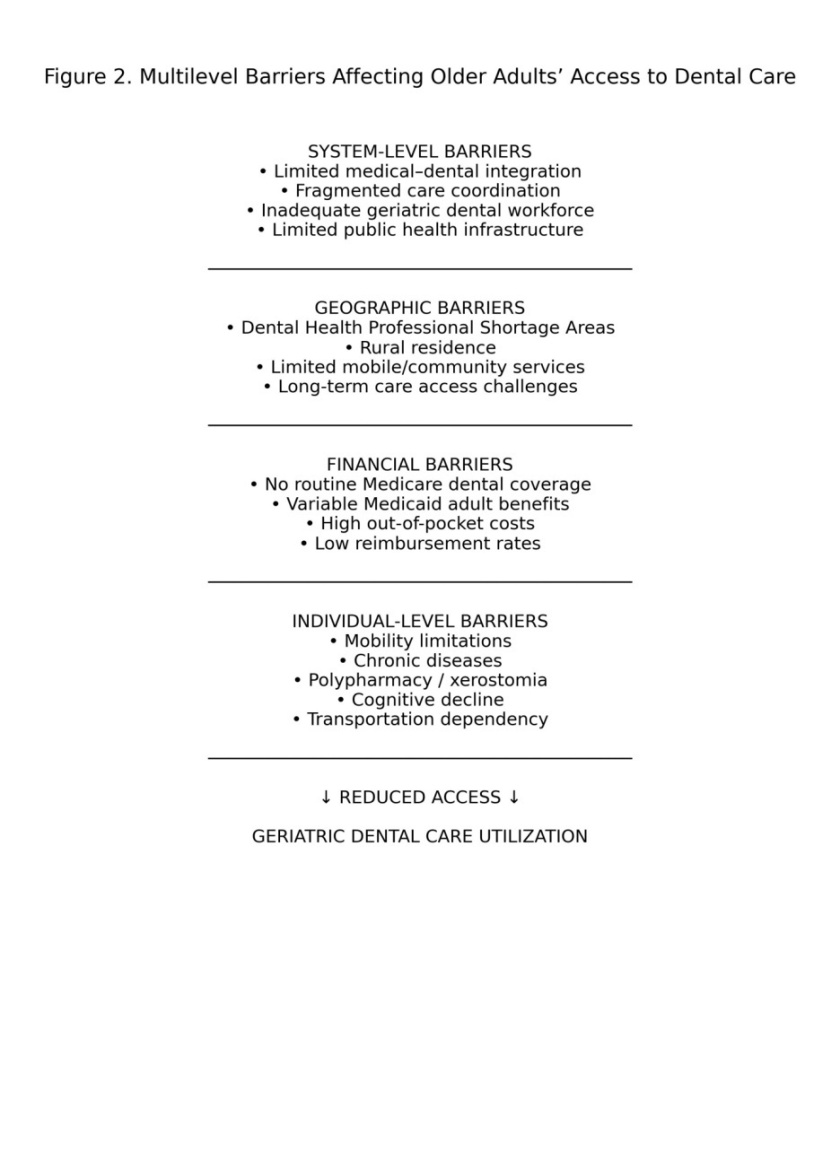
Access to dental care for older adults in the U.S. is hindered by multiple systemic barriers. Routine dental services are typically excluded from Medicare coverage, leaving many older individuals without affordable dental insurance after retirement. Financial constraints especially among lowincome seniors, combine with geographic disparities, such as dental health professional shortage areas, to reduce utilization of preventive and restorative care. Physical limitations, mobility challenges, and the presence of multiple chronic health conditions further complicate older adults’ ability to seek and receive regular dental treatment, contributing to underutilization and delayed care. 8
Public health interventions targeting aging populations emphasize prevention and tailored care strategies. Communitybased programs often focus on oral health education, promoting daily hygiene and regular professional checkups to prevent caries and periodontal disease. Fluoridebased preventive measures, including highfluoride toothpaste and varnish application, are recommended to reduce risk of decay in older adults with higher susceptibility to root caries. Integrating dental care into primary care settings, improving transportation and mobile dental services, and expanding dental coverage through public insurance reforms are important policy directions identified in recent literature aimed at mitigating access barriers and improving oral health outcomes for older adults. 9 Together, these demographic, clinical, and accessrelated trends underscore the importance of strategically addressing the oral health needs of older Americans as a critical component of public dental health planning. Figure 1
The COVID-19 pandemic profoundly disrupted dental care delivery systems across the United States. In March 2020, the American Dental Association (ADA) recommended postponing all elective dental procedures and limiting care to urgent and emergency services in order to reduce viral transmission and preserve personal protective equipment (PPE) for frontline healthcare workers. As a result, routine preventive visits, including prophylaxis, sealants, fluoride treatments, and routine examinations, were temporarily suspended nationwide. 10
National data indicate significant declines in dental service utilization during the early phases of the pandemic. According to the Centers for Disease Control and Prevention (CDC), delayed or foregone medical and dental care was widely reported during 2020, particularly among adults with underlying health conditions. These disruptions highlighted the vulnerability of dental care systems to public health emergencies and exposed longstanding access disparities. 12
3.2. Disruptions in Preventive and Emergency Dental ServicesPreventive dental services experienced substantial declines during the pandemic, increasing the risk of untreated caries, periodontal disease progression, and delayed detection of oral cancers. Federally Qualified Health Centers (FQHCs), which serve many low-income and underserved populations, reported dramatic reductions in dental visits during the initial months of COVID-19. 12
Although emergency dental care remained available, patients often delayed seeking urgent treatment due to fear of infection, financial instability, or clinic closures. A study reported a sharp decline in patient volume during early 2020, followed by a gradual recovery later in the year as enhanced infection control protocols were implemented. These service disruptions may have contributed to delayed diagnoses, greater disease severity at presentation, and widening oral health disparities, particularly among vulnerable populations. 13
3.3. Infection Control Challenges and Policy ResponsesDentistry was considered a high-risk profession during COVID-19 because many dental procedures generate aerosols, which can facilitate viral transmission. This prompted rapid implementation of enhanced infection control measures, including pre-appointment screening, temperature checks, N95 respirators, high-volume evacuation systems, air filtration units, and extended fallow times between patients. Policy responses evolved as evidence accumulated. The CDC and ADA provided updated interim guidance to ensure safe reopening of dental practices while minimizing transmission risks. Notably, studies later demonstrated that, when appropriate infection control measures were implemented, transmission rates in dental settings were relatively low. This reinforced the effectiveness of evidence-based infection prevention protocols and underscored the importance of preparedness planning for future pandemics. 14
3.4. Role of Tele-Dentistry and Public Health PlanningThe pandemic accelerated the adoption of tele-dentistry as a tool for triage, consultation, follow-up care, and oral health education. The ADA defines tele-dentistry as the use of telehealth systems and methodologies in dentistry, which can improve access to care in underserved or rural communities. During COVID-19, many states temporarily expanded reimbursement policies for telehealth services, including dental consultations. Tele-dentistry proved valuable for screening urgent cases, reducing unnecessary in-person visits, and maintaining continuity of care. However, disparities in broadband access and digital literacy posed barriers to equitable implementation.
From a public health perspective, the pandemic highlighted the need for stronger emergency preparedness frameworks within dental systems, including integration with broader healthcare infrastructure, improved supply chain resilience for PPE, and sustainable tele-dentistry reimbursement policies. The experience of COVID-19 has reshaped public dental health planning and emphasized the importance of flexibility, technological integration, and equity-focused strategies moving forward. 15
The convergence of demographic aging, pandemic-related disruption, and rapid technological transformation calls for a coordinated and integrated public health strategy for dentistry in the United States. Older adults represent a rapidly expanding segment of the population with complex oral health needs shaped by chronic disease, polypharmacy, and functional limitations. At the same time, the COVID-19 pandemic exposed structural vulnerabilities in dental delivery systems, particularly their reliance on in-person encounters and limited integration into broader emergency preparedness frameworks. Technological innovations, including tele-dentistry and digital health platforms, have emerged as potential mechanisms to enhance resilience, continuity of care, and access, but their benefits depend on equitable implementation and sustainable policy support. 16
The U.S. Department of Health and Human Services, in Oral Health in America, underscores the necessity of integrating oral health into primary care systems and public health infrastructure to improve outcomes and reduce disparities. This integration requires aligning geriatric-focused dental services with chronic disease management, embedding pandemic preparedness into dental standards, and institutionalizing digital health tools as routine components of care delivery and surveillance. 17
4.1. Policy ReformPolicy reform at both federal and state levels is central to achieving these objectives. The Centers for Medicare & Medicaid Services notes that routine dental services are generally excluded from Medicare Part A and Part B, leaving many older adults without comprehensive coverage. Expanding federal dental benefits could increase preventive care utilization and reduce costly emergency interventions. 18
State-level variation in Medicaid adult dental benefits further contributes to inequities. The Kaiser Family Foundation documents substantial differences in coverage scope and reimbursement rates across states. Establishing standardized essential preventive benefits and improving reimbursement structures may enhance provider participation and patient access. Additionally, tele-dentistry reimbursement policies introduced during the pandemic should be evaluated and sustained where effective to improve continuity of care. 19
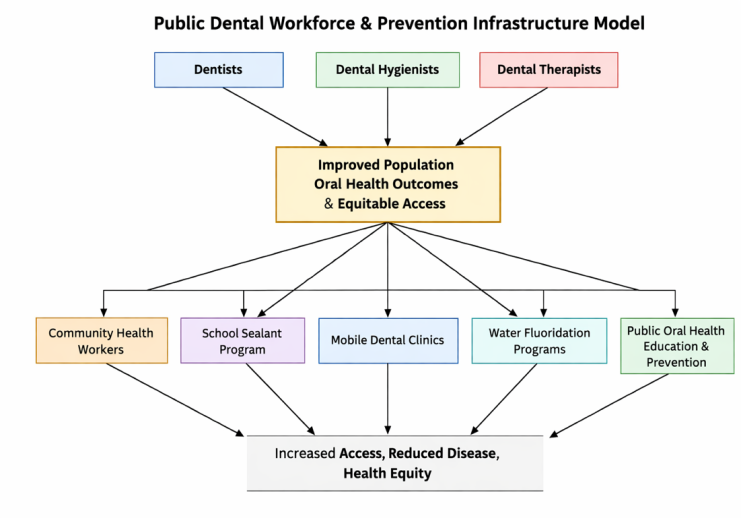
4.2. Workforce and PreventionWorkforce development is critical to strengthening public dental infrastructure. The Health Resources and Services Administration continues to designate numerous Dental Health Professional Shortage Areas nationwide. Expanding team-based care models, including broader roles for dental hygienists, dental therapists where authorized, and community health workers, may help address workforce gaps and improve preventive outreach. 20
Strengthening geriatric dentistry training and interprofessional education can better prepare providers to manage medically complex older adults. Preventive public health measures, including community water fluoridation, school-based sealant programs, and mobile clinics, remain cost-effective strategies for reducing disease burden. The Centers for Disease Control and Prevention continues to recognize community water fluoridation as a foundational preventive intervention. Integrating digital surveillance tools into these programs can enhance monitoring and population-level impact. 21 Figure 2
Resource allocation must prioritize equity-focused approaches that address social determinants of health, including transportation barriers, income inequality, and limited digital access. Investments in broadband infrastructure and digital literacy are necessary to ensure that tele-dentistry expansion does not exacerbate disparities. Coordinated leadership, sustainable reimbursement models, workforce expansion, and preventive infrastructure investment are essential to building a resilient and equitable public dental health system capable of meeting the evolving needs of the U.S. population. 21
As the U.S. public dental health system adapts to demographic shifts, pandemic recovery, and rapid technological change, several critical research gaps remain. Addressing these gaps is essential to improving oral health outcomes, strengthening care delivery models, and reducing disparities.
5.1. Areas Needing Further ResearchOne of the most pressing areas for investigation is the cost-effectiveness and long-term sustainability of tele-dentistry. While tele-dentistry expanded rapidly during the COVID-19 pandemic, particularly for triage and consultation, robust longitudinal data evaluating its impact on caries progression, periodontal disease management, and oral cancer detection are limited. The American Dental Association has recognized tele-dentistry as a tool to improve access, but further evaluation of reimbursement models, diagnostic accuracy, patient satisfaction, and return on investment is needed. Research should also assess whether tele-dentistry reduces emergency department utilization for nontraumatic dental conditions, a persistent public health concern. 22
Another significant gap involves understanding the long-term oral health consequences of pandemic-related care disruptions. National surveys reported widespread delays in dental visits during 2020-2021, but comprehensive longitudinal studies examining increases in untreated caries, advanced periodontal disease, or late-stage oral cancer diagnoses are still emerging. Dental researchers should investigate whether pandemic-related service interruptions disproportionately affected vulnerable populations, including older adults, Medicaid beneficiaries, and racial/ethnic minorities. 23
Additionally, more research is needed in geriatric dentistry, particularly regarding preventive strategies for root caries, xerostomia associated with polypharmacy, implant maintenance in older adults, and oral-systemic disease interactions. The National Institute of Dental and Craniofacial Research (NIDCR) highlights the need for expanded research addressing oral health challenges among aging populations. Evidence-based protocols tailored to frail and medically complex seniors remain underdeveloped. 24
Workforce research is also critical. Studies should evaluate the impact of expanding scopes of practice for dental hygienists and dental therapists on preventive service delivery, particularly in Dental Health Professional Shortage Areas identified by HRSA. Rigorous assessments of workforce redistribution, interprofessional collaboration, and outcomes in community-based settings are needed. 25
5.2. Potential Innovations and Strategies to Improve Access and OutcomesLooking forward, dentistry must leverage technological and policy innovation to strengthen public health integration. Artificial intelligence (AI)-assisted diagnostics, including radiographic caries detection and periodontal risk assessment tools, offer promising adjuncts to improve early disease detection and clinical decision-making. However, validation studies assessing diagnostic reliability, bias in algorithm training datasets, and cost-effectiveness in community settings are necessary before widespread adoption. 26
Integration of electronic dental records (EDRs) with medical health records (EHRs) represents another promising innovation. Interoperability between dental and medical systems could improve chronic disease screening (e.g., diabetes, hypertension), facilitate coordinated care for medically complex patients, and enhance population-level surveillance. Federal initiatives supporting health information exchange infrastructure may accelerate this integration. 27
From a preventive standpoint, expansion of minimally invasive dentistry approaches, such as silver diamine fluoride (SDF), atraumatic restorative treatment (ART), and community-based fluoride varnish programs, offers cost-effective strategies for managing caries in both children and older adults. These approaches are particularly relevant in low-resource or long-term care settings. The CDC continues to support community water fluoridation as a foundational public health measure to reduce caries prevalence nationwide. 28
Policy innovation should also focus on strengthening dental inclusion in broader health reform efforts. Incorporating adult dental benefits into Medicare, stabilizing Medicaid reimbursement rates, and sustaining tele-dentistry coverage could significantly enhance preventive care utilization. Furthermore, public health planning should integrate dental emergency preparedness into national response frameworks, ensuring adequate PPE stockpiles and continuity protocols for future infectious disease outbreaks. 29
Finally, research must prioritize equity-focused implementation science. Technological advancements and policy reforms must be evaluated through the lens of social determinants of health to ensure that innovations reduce, rather than exacerbate, oral health disparities.
This review highlights the evolving landscape of public dental health in the United States, shaped by three intersecting forces: demographic aging, pandemic-related disruptions, and technological advancement. The rapid growth of the older adult population has intensified demand for geriatric-focused dental care, particularly for the prevention and management of caries, periodontal disease, tooth loss, and oral cancer. At the same time, the COVID-19 pandemic exposed vulnerabilities in dental care delivery systems, including limited emergency preparedness, dependence on in-person services, and disparities in access among vulnerable populations. Concurrently, technological innovations, especially tele-dentistry, digital diagnostics, and electronic integration, have emerged as promising tools to enhance access, efficiency, and continuity of care.
Collectively, these findings underscore the necessity of proactive planning within U.S. public dental health systems. Preparing for an aging population requires expanded preventive strategies, workforce training in geriatric dentistry, and policy reforms that improve insurance coverage and access. Pandemic preparedness must become a permanent component of dental public health infrastructure, incorporating infection control readiness, supply chain resilience, and sustainable telehealth reimbursement frameworks. Meanwhile, thoughtful adoption of technology, guided by evidence, cost-effectiveness analyses, and equity considerations, can strengthen service delivery while reducing disparities.
Public dental health plays a critical role within the broader U.S. healthcare system. Oral health is inseparable from systemic health, influencing chronic disease outcomes, nutritional status, communication, and overall quality of life. Integrating dentistry more fully into primary care, public health surveillance, and health policy reform will be essential to advancing population health. By aligning aging strategies, emergency preparedness, and technological innovation within a cohesive framework, the United States can build a more resilient, equitable, and prevention-oriented public dental health system for the future.
| [1] | 2022 National Healthcare Quality and Disparities Report [Internet]. Rockville (MD): Agency for Healthcare Research and Quality (US); 2022 Oct. ORAL HEALTH. Available from: https:// www.ncbi.nlm.nih.gov/books/NBK587187/. | ||
| In article | |||
| [2] | National Institutes of Health. Oral Health in America: Advances and Challenges [Internet]. Bethesda (MD): National Institute of Dental and Craniofacial Research (US); 2021. Available from: . | ||
| In article | |||
| [3] | Choi SE, Mo E, Sima C, Wu H, Thakkar-Samtani M, Tranby EP, Frantsve-Hawley J, Barrow JR. Impact of COVID-19 on dental care utilization and oral health conditions in the United States. JDR Clin Trans Res. 2024 Jul; 9(3): 256-264. | ||
| In article | View Article PubMed | ||
| [4] | Choi SE, Kalenderian E, Normand SL. Measuring the quality of dental care among privately insured children in the United States. Health Serv Res. 2022 Feb; 57(1): 137-144. | ||
| In article | View Article PubMed | ||
| [5] | Petersen PE, Yamamoto T. Improving the oral health of older people: the approach of the WHO Global Oral Health Programme. Community Dent Oral Epidemiol. 2005; 33(2): 81-92. | ||
| In article | View Article PubMed | ||
| [6] | Lowenstein A, Singh ML, Papas AS. Addressing disparities in oral health access and outcomes for aging adults in the United States. Front Dent Med. 2025 Apr 1; 6: 1522892. | ||
| In article | View Article PubMed | ||
| [7] | Kaurani P, Kakodkar P, Bhowmick A, Samra RK, Bansal V. Association of tooth loss and nutritional status in adults: an overview of systematic reviews. BMC Oral Health. 2024 Jul 24; 24(1): 838. | ||
| In article | View Article PubMed | ||
| [8] | Dolan TA, Atchison KA. Implications of access, utilization and need for oral health care by the non-institutionalized and institutionalized elderly on the dental delivery system. J Dent Educ. 1993 Dec; 57(12): 876-887. | ||
| In article | View Article PubMed | ||
| [9] | Palapar L, Blom JW, Wilkinson-Meyers L, Lumley T, Kerse N. Preventive interventions to improve older people's health outcomes: systematic review and meta-analysis. Br J Gen Pract. 2024 Mar; 74(741): e208-e218. | ||
| In article | View Article PubMed | ||
| [10] | Brian Z, Weintraub JA. Oral health and COVID-19: increasing the need for prevention and access. Prev Chronic Dis. 2020 Aug 13; 17: E82. | ||
| In article | View Article PubMed | ||
| [11] | Olaisen RH, Manski RJ. Dental utilization and expenditures, U.S. civilian noninstitutionalized population aged 2 and older, 2019–2021. Statistical Brief (Medical Expenditure Panel Survey [Internet]). Rockville (MD): Agency for Healthcare Research and Quality (US); 2024 Mar. Statistical Brief #555. Available from: . | ||
| In article | |||
| [12] | Danagoulian S, Wilk TA. Locking out prevention: dental care in the midst of a pandemic. Health Econ. 2022 Sep; 31(9): 1973-1992. | ||
| In article | View Article PubMed | ||
| [13] | Kranz AM, Chen A, Gahlon G, Stein BD. 2020 trends in dental office visits during the COVID-19 pandemic. J Am Dent Assoc. 2021 Jul; 152(7): 535-541.e1. | ||
| In article | View Article PubMed | ||
| [14] | Induri SNR, Chun YC, Chun JC, Fleisher KE, Glickman RS, Xu F, Ioannidou E, Li X, Saxena D. Protective measures against COVID-19: dental practice and infection control. Healthcare (Basel). 2021 Jun 4; 9(6): 679. | ||
| In article | View Article PubMed | ||
| [15] | Sangani K, Gill AK, Chakor M, Alamolhoda HS, Chileveru K, Bhola R, Singh S. Teledentistry: a comprehensive review of methods, applications, and future directions. Sch J Dent Sci. 2025 Jun; 12(5): 74-80. | ||
| In article | View Article | ||
| [16] | Filip R, Puscaselu RG, Anchidin-Norocel L, Dimian M, Savage WK. Global challenges to public health care systems during the COVID-19 pandemic: a review of pandemic measures and problems. J Pers Med. 2022 Aug 7; 12(8): 1295. | ||
| In article | View Article PubMed | ||
| [17] | Oral Health in America: Advances and Challenges: Executive Summary [Internet]. Bethesda (MD): National Institute of Dental and Craniofacial Research (US); 2021 Dec. Available from: . | ||
| In article | |||
| [18] | Teitelbaum J, McGowan AK, Richmond TS, Kleinman DV, Pronk N, Ochiai E, Blakey C, Brewer KH. Law and policy as tools in Healthy People 2030. J Public Health Manag Pract. 2021 Nov-Dec; 27(Suppl 6): S265-S273. | ||
| In article | View Article PubMed | ||
| [19] | Chisolm DJ, Dugan JA, Figueroa JF, Lane-Fall MB, Roby DH, Rodriguez HP, Ortega AN. Improving health equity through health care systems research. Health Serv Res. 2023 Dec;58(Suppl 3):289-299. | ||
| In article | View Article PubMed | ||
| [20] | Hui JCY, Hu LL, Chan AKY, Chu CH. Interdisciplinary strategies for improving oral health in older adults: a comprehensive review. Geriatrics (Basel). 2026 Feb 19; 11(1): 22. | ||
| In article | View Article PubMed | ||
| [21] | Hollimon LA, Taylor KV, Fiegenbaum R, Carrasco M, Garchitorena Gomez L, Chung D, Seixas AA. Redefining and solving the digital divide and exclusion to improve healthcare: going beyond access to include availability, adequacy, acceptability, and affordability. Front Digit Health. 2025 Apr 22; 7: 1508686. | ||
| In article | View Article PubMed | ||
| [22] | Thacharodi A, Singh P, Meenatchi R, Tawfeeq Ahmed ZH, Kumar RRS, V N, Kavish S, Maqbool M, Hassan S. Revolutionizing healthcare and medicine: the impact of modern technologies for a healthier future—a comprehensive review. Health Care Sci. 2024 Oct 9; 3(5): 329-349. | ||
| In article | View Article PubMed | ||
| [23] | Pingsuthiwong P, Wiriyakijja P, Pisarnturakit PP, Subbalekha K. Patient perspective on dental care amidst COVID-19 pandemic: a survey during Omicron stage. J Patient Exp. 2025 May 9; 12: 23743735251342125. | ||
| In article | View Article PubMed | ||
| [24] | Murali A, Muddappa SC, Rajan RR, Joseph A, Ravi AB. Barriers to geriatric oral health: a multifaceted public health issue. Cureus. 2025 Aug 8; 17(8): e89604. | ||
| In article | View Article | ||
| [25] | Yang YT, Chen B, Wanchek T. Dental therapists: a solution to a shortage of dentists in underserved communities? Public Health Rep. 2017 May-Jun; 132(3): 285-288. | ||
| In article | View Article PubMed | ||
| [26] | Kothapalle J, Vangapalli V, Ajayi A, Malait RK, Rakha R, Elbanna L, Singh S, Bhola R. Artificial intelligence and digital dentistry: bridging innovation and clinical outcomes. EAS J Dent Oral Med. 2025; 7(5): 192-198. | ||
| In article | View Article | ||
| [27] | Simon L, Obadan-Udoh E, Yansane AI, Gharpure A, Licht S, Calvo J, Deschner J, Damanaki A, Hackenberg B, Walji M, Spallek H, Kalenderian E. Improving oral-systemic healthcare through the interoperability of electronic medical and dental records: an exploratory study. Appl Clin Inform. 2019 May; 10(3): 367-376. | ||
| In article | View Article PubMed | ||
| [28] | Aljohani AA, Alarifi AI, Almoain MF, Alrhaimi FF, Alhejji MT, Gazzaz NW, Ali LS, Alammari HD, Alwattban RR, Alharbi HM, Barnawi BM. Managing early childhood caries: a comparative review of preventive and restorative approaches. Cureus. 2024 Nov 28; 16(11): e74704. | ||
| In article | View Article | ||
| [29] | Elani HW, Sommers BD. Fillings needed for gaps in government dental coverage. JAMA Health Forum. 2025 Feb 7; 6(2): e250370. | ||
| In article | View Article PubMed | ||
Published with license by Science and Education Publishing, Copyright © 2026 Dr. Latifa Elbanna, Dr. Mohammed Imran Idrees, Dr. Unseba, Dr. Sruthi Kalakota, Dr. Sonal Ugalmugle, Dr. Sowmya Yelagandula and Dr. Sandeep Singh
 This work is licensed under a Creative Commons Attribution 4.0 International License. To view a copy of this license, visit
http://creativecommons.org/licenses/by/4.0/
This work is licensed under a Creative Commons Attribution 4.0 International License. To view a copy of this license, visit
http://creativecommons.org/licenses/by/4.0/
| [1] | 2022 National Healthcare Quality and Disparities Report [Internet]. Rockville (MD): Agency for Healthcare Research and Quality (US); 2022 Oct. ORAL HEALTH. Available from: https:// www.ncbi.nlm.nih.gov/books/NBK587187/. | ||
| In article | |||
| [2] | National Institutes of Health. Oral Health in America: Advances and Challenges [Internet]. Bethesda (MD): National Institute of Dental and Craniofacial Research (US); 2021. Available from: . | ||
| In article | |||
| [3] | Choi SE, Mo E, Sima C, Wu H, Thakkar-Samtani M, Tranby EP, Frantsve-Hawley J, Barrow JR. Impact of COVID-19 on dental care utilization and oral health conditions in the United States. JDR Clin Trans Res. 2024 Jul; 9(3): 256-264. | ||
| In article | View Article PubMed | ||
| [4] | Choi SE, Kalenderian E, Normand SL. Measuring the quality of dental care among privately insured children in the United States. Health Serv Res. 2022 Feb; 57(1): 137-144. | ||
| In article | View Article PubMed | ||
| [5] | Petersen PE, Yamamoto T. Improving the oral health of older people: the approach of the WHO Global Oral Health Programme. Community Dent Oral Epidemiol. 2005; 33(2): 81-92. | ||
| In article | View Article PubMed | ||
| [6] | Lowenstein A, Singh ML, Papas AS. Addressing disparities in oral health access and outcomes for aging adults in the United States. Front Dent Med. 2025 Apr 1; 6: 1522892. | ||
| In article | View Article PubMed | ||
| [7] | Kaurani P, Kakodkar P, Bhowmick A, Samra RK, Bansal V. Association of tooth loss and nutritional status in adults: an overview of systematic reviews. BMC Oral Health. 2024 Jul 24; 24(1): 838. | ||
| In article | View Article PubMed | ||
| [8] | Dolan TA, Atchison KA. Implications of access, utilization and need for oral health care by the non-institutionalized and institutionalized elderly on the dental delivery system. J Dent Educ. 1993 Dec; 57(12): 876-887. | ||
| In article | View Article PubMed | ||
| [9] | Palapar L, Blom JW, Wilkinson-Meyers L, Lumley T, Kerse N. Preventive interventions to improve older people's health outcomes: systematic review and meta-analysis. Br J Gen Pract. 2024 Mar; 74(741): e208-e218. | ||
| In article | View Article PubMed | ||
| [10] | Brian Z, Weintraub JA. Oral health and COVID-19: increasing the need for prevention and access. Prev Chronic Dis. 2020 Aug 13; 17: E82. | ||
| In article | View Article PubMed | ||
| [11] | Olaisen RH, Manski RJ. Dental utilization and expenditures, U.S. civilian noninstitutionalized population aged 2 and older, 2019–2021. Statistical Brief (Medical Expenditure Panel Survey [Internet]). Rockville (MD): Agency for Healthcare Research and Quality (US); 2024 Mar. Statistical Brief #555. Available from: . | ||
| In article | |||
| [12] | Danagoulian S, Wilk TA. Locking out prevention: dental care in the midst of a pandemic. Health Econ. 2022 Sep; 31(9): 1973-1992. | ||
| In article | View Article PubMed | ||
| [13] | Kranz AM, Chen A, Gahlon G, Stein BD. 2020 trends in dental office visits during the COVID-19 pandemic. J Am Dent Assoc. 2021 Jul; 152(7): 535-541.e1. | ||
| In article | View Article PubMed | ||
| [14] | Induri SNR, Chun YC, Chun JC, Fleisher KE, Glickman RS, Xu F, Ioannidou E, Li X, Saxena D. Protective measures against COVID-19: dental practice and infection control. Healthcare (Basel). 2021 Jun 4; 9(6): 679. | ||
| In article | View Article PubMed | ||
| [15] | Sangani K, Gill AK, Chakor M, Alamolhoda HS, Chileveru K, Bhola R, Singh S. Teledentistry: a comprehensive review of methods, applications, and future directions. Sch J Dent Sci. 2025 Jun; 12(5): 74-80. | ||
| In article | View Article | ||
| [16] | Filip R, Puscaselu RG, Anchidin-Norocel L, Dimian M, Savage WK. Global challenges to public health care systems during the COVID-19 pandemic: a review of pandemic measures and problems. J Pers Med. 2022 Aug 7; 12(8): 1295. | ||
| In article | View Article PubMed | ||
| [17] | Oral Health in America: Advances and Challenges: Executive Summary [Internet]. Bethesda (MD): National Institute of Dental and Craniofacial Research (US); 2021 Dec. Available from: . | ||
| In article | |||
| [18] | Teitelbaum J, McGowan AK, Richmond TS, Kleinman DV, Pronk N, Ochiai E, Blakey C, Brewer KH. Law and policy as tools in Healthy People 2030. J Public Health Manag Pract. 2021 Nov-Dec; 27(Suppl 6): S265-S273. | ||
| In article | View Article PubMed | ||
| [19] | Chisolm DJ, Dugan JA, Figueroa JF, Lane-Fall MB, Roby DH, Rodriguez HP, Ortega AN. Improving health equity through health care systems research. Health Serv Res. 2023 Dec;58(Suppl 3):289-299. | ||
| In article | View Article PubMed | ||
| [20] | Hui JCY, Hu LL, Chan AKY, Chu CH. Interdisciplinary strategies for improving oral health in older adults: a comprehensive review. Geriatrics (Basel). 2026 Feb 19; 11(1): 22. | ||
| In article | View Article PubMed | ||
| [21] | Hollimon LA, Taylor KV, Fiegenbaum R, Carrasco M, Garchitorena Gomez L, Chung D, Seixas AA. Redefining and solving the digital divide and exclusion to improve healthcare: going beyond access to include availability, adequacy, acceptability, and affordability. Front Digit Health. 2025 Apr 22; 7: 1508686. | ||
| In article | View Article PubMed | ||
| [22] | Thacharodi A, Singh P, Meenatchi R, Tawfeeq Ahmed ZH, Kumar RRS, V N, Kavish S, Maqbool M, Hassan S. Revolutionizing healthcare and medicine: the impact of modern technologies for a healthier future—a comprehensive review. Health Care Sci. 2024 Oct 9; 3(5): 329-349. | ||
| In article | View Article PubMed | ||
| [23] | Pingsuthiwong P, Wiriyakijja P, Pisarnturakit PP, Subbalekha K. Patient perspective on dental care amidst COVID-19 pandemic: a survey during Omicron stage. J Patient Exp. 2025 May 9; 12: 23743735251342125. | ||
| In article | View Article PubMed | ||
| [24] | Murali A, Muddappa SC, Rajan RR, Joseph A, Ravi AB. Barriers to geriatric oral health: a multifaceted public health issue. Cureus. 2025 Aug 8; 17(8): e89604. | ||
| In article | View Article | ||
| [25] | Yang YT, Chen B, Wanchek T. Dental therapists: a solution to a shortage of dentists in underserved communities? Public Health Rep. 2017 May-Jun; 132(3): 285-288. | ||
| In article | View Article PubMed | ||
| [26] | Kothapalle J, Vangapalli V, Ajayi A, Malait RK, Rakha R, Elbanna L, Singh S, Bhola R. Artificial intelligence and digital dentistry: bridging innovation and clinical outcomes. EAS J Dent Oral Med. 2025; 7(5): 192-198. | ||
| In article | View Article | ||
| [27] | Simon L, Obadan-Udoh E, Yansane AI, Gharpure A, Licht S, Calvo J, Deschner J, Damanaki A, Hackenberg B, Walji M, Spallek H, Kalenderian E. Improving oral-systemic healthcare through the interoperability of electronic medical and dental records: an exploratory study. Appl Clin Inform. 2019 May; 10(3): 367-376. | ||
| In article | View Article PubMed | ||
| [28] | Aljohani AA, Alarifi AI, Almoain MF, Alrhaimi FF, Alhejji MT, Gazzaz NW, Ali LS, Alammari HD, Alwattban RR, Alharbi HM, Barnawi BM. Managing early childhood caries: a comparative review of preventive and restorative approaches. Cureus. 2024 Nov 28; 16(11): e74704. | ||
| In article | View Article | ||
| [29] | Elani HW, Sommers BD. Fillings needed for gaps in government dental coverage. JAMA Health Forum. 2025 Feb 7; 6(2): e250370. | ||
| In article | View Article PubMed | ||