Background: Abortion is the termination of a pregnancy prior to fetal viability, often presenting a woman with physical and emotional challenges. Nurses play a crucial role in post-abortion counseling, aiding in recovery, lifestyle improvement, and providing psychological support to women and their families. The PLISSIT model offers a framework for healthcare providers to implement effective strategies for addressing post-abortion life adjustments. Aim: The current study was conducted to evaluate correlation between women’s knowledge, life style and impact level of social networking sites on women after abortion using counseling based on PLISSIT model. Subjects & Methods: Design: A quasi-experimental (pre- and post-test) research design was used. Subjects & Settings: A convenient sample of 92 women who had abortions affiliated obstetrics & gynecology unit at Beni-Suef University Hospital. Tools: (1) structured interview questionnaire. (2) women's knowledge regarding abortion and management. (3) Women's lifestyle after abortion. (4) Information technology. (5) post-abortion counseling based on the PLISSIT model. Results: mean age 28.13±5.824 years. The mean of the total general knowledge of the studied women during pretest was 20.73±6.33 regarding general knowledge about abortion which improved posttest to become 34.04±6.76. Total life style improved from 38.17±10.99 pretest to 68.33±10.38post test. Total impact of social networking sites on women after abortion improved from 8.15±3.05 to 14.69±3.25 after implementation of counseling. There was a statistically significant improvement among the studied women regarding knowledge; life style sub-items on abortion posttest and total impact of social networking sites on women after abortion, as well (p≤0.01). Conclusion: There was no correlation between total knowledge, lifestyle and impact level of social networking sites on women after abortion during pretest. Also, there was negative correlation between total knowledge and impact level of social networking sites on women after abortion during posttest. While, there was strong positive correlation between total knowledge and total lifestyle level and between total lifestyle level and total impact level of social networking sites on women after abortion. Recommendations: Developing strategies to facilitate women's understanding and support lifestyle adjustments after abortion by applying this study to a large sample in inpatient and outpatient departments.
Abortion is defined as the termination of pregnancy and an expulsion from the uterus of an embryo or fetus before 20 week’s gestation or when fetal weight is less than 500g 1. Approximately 26 million legal and 20 million illegal abortions estimated worldwide in 2018, resulting in a worldwide abortion rate of 35 per 1,000 women aged 15-44 2.
Expectant management is advised as the first-line recommendation for the majority of women in the National Institute for Care and Health Excellence guidelines, leading to complete miscarriage in approximately 50% of women. This can continue safely for as long as necessary, according to women preference, provided that there is no evidence of infection. Expectant management is relatively inexpensive and safe, but its failure rate varies in the literature between 10% and 75% 3.
Awareness of individuals’ life style and the detection of the factors that lower the life style can contribute to identifying effective strategies to improve the quality-of-service delivery and the quality of life in the community 4, 5, 6, 7, 8, 9, 10, 11. Aborted women are more likely to experience major difficulties; therefore, life style counseling is an important part of post-abortion care. Concerns over the effects of food habits on women who have abortions, blood loss, smoking, sleep disruption, improper family planning techniques, and emotional state are causing alarm and major issues 12.
Lifestyle is a way of living of individuals, families (households), and societies, which manifest in coping with women’s physical, psychological, social, and economic environments on a day to-day basis. Moreover, is formed in specific geographical, economic, political, cultural and religious text. Life style is referred to the characteristics of inhabitants of a region in special time and place 13, 14, 15, 16, 17, 18, 19.
The post-abortion period is a very important time for woman; it has an effect on a woman's life style and her family. Nurses play a multi-disciplinary role in women’s life span generally, and during post-abortion as a direct care provider, manager, educator, counselor, and researcher to promote post-abortion woman health, which sequentially reflected bone minimizing mortality, morbidity and correcting misconceptions and ill health behaviors post-abortion among patients. As well as improving women’s life styles post-abortion 20, 21, 22, 23, 24, 25, 26, 27.
Nurses play a crucial role in counselling. Counseling, in a nursing context, is a process where a skilled nurse helps a woman problem-solve to enhance adaptation, address misconceptions, and improve her response to a gynecological exam, ensuring client autonomy in decision-making 28, 29, 30, 31, 32, 33, 34.
The PLISSIT model is a therapeutic counseling approach that can help any persuasive practitioner address women's health. The four levels of the PLISSIT model are: Permit (P): Gives a woman permission to discuss issues adversely affect her Limited Information (LI): Provides limited information on the physiological and psychological consequences of post abortion issues without going into detail. Specific Suggestions (SS): offers guidance on how to manage common post-abortion concerns. In some cases, such as when the first three steps fail to resolve the problem. Internal conflict or psychological problems 35, 36.
The current study was conducted to evaluate correlation between women’s knowledge, life style and impact level of social networking sites on women after abortion using counseling based on PLISSIT model.
The subject and methods of the study have been portrayed under four main topics as follows:
A. Technical design.
B. Operational design.
C. Administrative design.
D. Statistical design.
A. Technical design: The technical item includes research design, setting, subject, and tools for data collection.
Research design: A quasi-experimental (pre- and post-test) research design was used in this study.
Setting: The study was conducted in the post-natal unit of the Beni-Suef University Hospital's obstetrics and gynecology department, located on the fifth floor in a single room with 15 beds.
Subjects:
Sample type: A convenient sample of 92 women who had abortions in the previously mentioned setting.
Sample Size: Between September 2022 and August 2023, Beni-Suef University Hospital recorded a total of 121 abortions. The target population for this study comprises 92 women who underwent abortions, with sample size calculated using the Steven and Thompson equation 37.
 |
N= population size = 121, z2= 1.96, d2= 0.05, p= 0.50
n= sample size = 92
 |
Tools of data collection:
Data were collected using the following tools:
Tool I: A Structured Interview Questionnaire
This questionnaire was designed by the researcher based on reviewing related literature, and it was written in simple Arabic. It consists of women’s socio-demographic data and general characteristics.-
Tool II: Women's knowledge regarding abortion and management
The tool, adapted from Foster et al. (2016) and translated into Arabic, assesses women's knowledge of abortion 38. It comprises 50 multiple-choice questions (1 point per correct answer, 0 for incorrect) divided into two parts: Part 1 (35 items) covers general abortion knowledge, and Part 2 (15 items) addresses modern educational information on abortion. The total score, out of 50 points, is converted to a percentage. Unsatisfactory knowledge is defined as less than 60% (< 30 points), while satisfactory knowledge is 60% or more (≥ 30 points).
Tool III: Women's lifestyle after abortion
This tool, adapted from Ramadan et al. (2021) and translated into Arabic, assesses women's lifestyles post-abortion 2. It consists of 48 items organized into seven parts: smoking and alcohol, nutritional lifestyle, weight and exercise lifestyle, personal habits, sleeping, spiritual habits and relationships, and sexual intercourse practice. Responses are scored on a three-point Likert scale (always=0, sometimes=1, never=2), with the total score from the 48 items (out of 96 points) converted into a percentage. An unhealthy lifestyle is classified as a total score below 60% (<57.6 points), while a healthy lifestyle is classified as 60% or above (≥57.6 points).
Tool IV: Information technology
This tool, adapted from Ramadan et al. (2021) and translated into Arabic, assesses women's lifestyles post-abortion 2. It consists of 48 items organized into seven parts: smoking and alcohol, nutritional lifestyle, weight and exercise lifestyle, personal habits, sleeping, spiritual habits and relationships, and sexual intercourse practice. Responses are scored on a three-point Likert scale (always=0, sometimes=1, never=2), with the total score from the 48 items (out of 96 points) converted into a percentage. An unhealthy lifestyle is classified as a total score below 60% (<57.6 points), while a healthy lifestyle is classified as 60% or above (≥57.6 points).
Post-Abortion Counseling Based on the PLISSIT Model
The program, developed in Arabic by a researcher, reviews literature from Turesheva et al. (2023), Haghighi et al. (2022), and Keshavarz et al. (2021) 39, 40, 41. It is designed for post-abortion counseling for women, utilizing the PLISSIT model. The program covers abortion definition, signs and symptoms, causes, risk factors, types, complications, management, and post-abortion lifestyle.
Tool validity:
Face and content validity was ascertained by a panel of five experts in maternal & newborn health nursing from the faculty of nursing and obstetrics & gynecology from the faculty of medicine at Beni-Suef University. The experts reviewed the tools for clarity, relevance, comprehensiveness, simplicity, and applicability; minor modifications were done, and the final forms were developed.
Reliability:
In the present study, reliability was tested using Cronbach's alpha coefficients for women’s knowledge (tool II), which was 0.815; women's lifestyle after abortion (tool III), which was 0.773; and information technology (tool IV), which was 0.732.
B. Operational design:
The operational design includes a preparatory phase, supportive material, tools validity and reliability, a pilot study, and fieldwork.
The study preparation involved literature review, the development of data collection tools and post-abortion counseling based on the PLISSIT model, and obtaining approval from the Faculty of Nursing dean and Beni-Suef University Hospital manager. A supportive Arabic booklet was created to educate women on abortion recovery, aiming to enhance their lifestyles. A pilot study on 10% of the sample indicated the tools' applicability, with participants included in the main study. Fieldwork, conducted over six months (mid-February to mid-August 2024), involved interviewing post-abortion women in the post-natal unit at Beni-Suef University Hospital, after obtaining their consent. Data collection occurred three days a week across morning and afternoon shifts.
Data collection included 4 phases as follows:
The study details a four-phase approach to post-abortion counseling based on the PLISSIT model.
i. Assessment phase involved collecting socio-demographic data, obstetrical and gynecological history, baseline knowledge about abortion, lifestyle information, and IT data through individual interviews and questionnaires.
ii. Planning phase focused on determining the optimal timing for counseling sessions, setting objectives, defining learning content, preparing the environment, designing methodology and media, and establishing evaluation tools.
iii. Implementation phase consisted of individual, interactive counseling sessions, lasting 45 minutes to one hour, covering the definition, causes, risk factors, signs, symptoms, types, complications, and avoidance of abortion, as well as appropriate lifestyle choices during pregnancy and post-abortion, uterine cleaning methods, and addressing women's concerns.
iv. Evaluation phase assessed the impact of the counseling by administering the same assessment tools four months post-intervention via video calls, Zoom, or home visits, repeating the baseline data collection format to measure changes in women's lifestyles.
Ethical Considerations:
Research approval was obtained from the Faculty of Medicine, Beni-Suef Scientific Ethical Committee (Approval number: FMBSUREC/03102023). Participants received information regarding the study's aims, anonymity, and confidentiality, and were reminded of their voluntary participation and right to withdraw.
C. Administrative design:
Official permission for the study was secured through letters from the Dean of the Faculty of Nursing, Beni-Suef University, to the Manager of Beni-Suef University Hospital. These letters detailed the study's title, aims, primary data items, and anticipated outcomes.
D. Statistical design
The data analysis involved descriptive statistics, reporting means and standard deviations for dispersion and percentages for qualitative data, utilizing SPSS version 26. The chi-square test was applied for comparing proportions of qualitative parameters, and the student's t-test for comparing two quantitative variables, especially with large or expected cell sizes less than 5. Statistical significance was set at a P-value less than 0.05, with results below 0.001 indicating high significance.
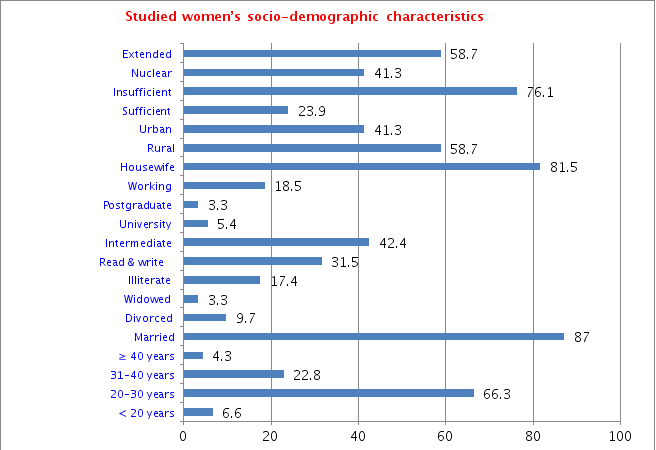
Figure 1 shows that, two-thirds (66.3%) of the studied women their age group was 20- 30 years with mean age 28.13±5.824 years, most (87%) of the studied women were married, less than half (42.4%) of the studied women had intermediate education, most of them (81.5%) were not working, more than half (58.7%) of them were from rural areas, more than three-quarters (76.1%) of them had insufficient monthly income and more than half (58.7%) of them had extended family type.
Table 1 shows that, the mean of the total general knowledge of the studied women during pretest was 20.73±6.33regarding general knowledge about abortion which improved posttest to become 34.04±6.76. Moreover, total life style improved from 38.17±10.99 pretest to 68.33±10.38post test. Additionally, total impact of social networking sites on women after abortion improved from 8.15±3.05 to 14.69±3.25after implementation of counseling. There was a statistically significant improvement among the studied women regarding knowledge; life style sub-items on abortion posttest and total impact of social networking sites on women after abortion, as well (p value ≤0.01).
Table 2 represents that; there was no statistically significant relation between the studied women’ total knowledge level and their socio-demographic characteristics during pre and posttest.
Table 3 represents that; there was no statistically significant relation between the studied women’ total lifestyle level and their socio-demographic characteristics during pre and posttest.
Table 4 represents that; there was no statistically significant relation between the studied women’ total impact level of social networking sites on women after abortion and their socio-demographic characteristics during pre and posttest.
Table 5 shows that, there was no correlation between total knowledge, lifestyle and impact level of social networking sites on women after abortion during pretest. Also, there was negative correlation between total knowledge and impact level of social networking sites on women after abortion during posttest. While, there was strong positive correlation between total knowledge and total lifestyle level and between total lifestyle level and total impact level of social networking sites on women after abortion.

Abortion is the termination of a pregnancy before the fetus can survive outside the uterus. It is a physically and emotionally challenging experience for a woman and can affect her life style for some time. A woman may experience feelings of sadness, anxiety, or guilt, along with physical changes such as hormonal imbalance or fatigue.
Maternity nurses play а crucial role in the quality of antenatal/postnatal care improvement, which provides woman education and support. 42, 43, 44, 45, 46, 47, 48, 49. So, nurses have a very important role in counseling woman after abortion, counseling helps with faster recovery, improve post abortion life style and providing psychological support to women after abortion and their families. The PLISSIT model provides a framework for health care providers to implement appropriate and effective strategies to address post abortion life style 50.
Therefore, the current study was conducted to evaluate correlation between women’s knowledge, life style and impact level of social networking sites on women after abortion using counseling based on PLISSIT model. The study revealed a statistically significant improvement in women's knowledge regarding general and modern educational information on abortion following counseling sessions. The mean knowledge score increased from 20.73±6.33 pre-counseling to 34.04±6.76 post-counseling. This study's findings align with Turner et al. (2018), who observed the largest knowledge score increases in abortion among participants with the lowest initial knowledge levels following a workshop 51. The current research also supports Ngo et al. (2023), who documented a statistically significant improvement in total abortion knowledge scores among women surveyed 52.
Concerning the comparison between the studied women regarding their lifestyle sub-items after abortion, the present study revealed improvement across all lifestyle areas after counseling, including smoking, alcohol consumption, nutrition, sleep, weight, exercise, spirituality, and sexual intercourse. For total life style, the present study found that the mean total life style score during pre-counseling was 38.17±10.99, which improved to 68.33±10.38post-counseling. This result was similar to Zahmatkesh et al. (2024), who revealed a statistically significant improvement in the quality of life among studied women post-intervention compared to pre-intervention 53. Likewise, this study was supported by Mirian et al. (2023), who reported that the mean score of women’s personal habits improved from 107.42±15.08 pre-intervention to 126.72±31.01 post-intervention 54.
Regarding the total impact of social networking sites on women after abortion, the current study reported that the mean impact score during pre-counseling was 8.15±3.05, which improved significantly to 14.69 ± 3.25 post counseling. The study aligns with Hill et al. (2020), which found a statistically significant improvement in mobile phone use among women post-abortion in Cambodia as part of their support intervention 55.
There was a highly statistically significant improvement in the mean scores of all sub-items related to general, modern educational information, total knowledge, sub-items and total life style, and the total impact of social networking sites on women after abortion post-counseling. This may be attributed to the completeness, comprehensiveness, accuracy, and effectiveness of the counseling program based on the PLISSIT model.
This study found that women's overall knowledge, lifestyle, and the impact of social networking sites improved following counseling sessions, potentially due to session attendance, lectures, positive reinforcement, long-term knowledge retention, and diverse educational methods 56, 57, 58. The Arabic booklets, characterized as brief, plain-language, and visually rich, also contributed significantly to knowledge acquisition and retention, aligning with Edgar Dale's Pyramid of Learning, which suggests higher retention rates from discussions and audiovisual methods compared to reading 59, 60, 61, 62, 63, 64.
Regarding relation between socio-demographic characteristics of the studied women and their total knowledge about abortion during pre and post counseling, The study found no statistically significant relationship between the socio-demographic characteristics of women and their overall knowledge about abortion, both before and after counseling. Similar results were found in the study by Ahmed et al. (2020), where education positively influenced abortion-related knowledge 65. However, other studies like that of Hassan (2021) found a stronger significance 66.
Concerning relation between socio-demographic characteristics of the studied women and their total life style level after abortion during pre-counseling and post counseling, the current study reported that, there was no statistically significant relation between the studied women’ total life style level and their socio-demographic characteristics during pre-counseling and post implementation of counseling sessions program. This result was in accordance with Iwanowicz-Palus et al., (2021) who revealed that there was no statistically significant relation between the studied women’s quality of life after abortion and their age, marital status, and educational level 67.
Contrariwise, this finding was in congruence with Kerns et al., (2022) who carried out a study entitled “Abortion stigma and its relationship with grief, post-traumatic stress, and mental health-related quality of life after abortion for fetal anomalies” and found that there was a statistically significant relation between the studied women’s quality of life after abortion and their occupation, monthly income, residence place, and family type 68.
Regarding relation between socio-demographic characteristics of the studied women and the total impact level of social networking sites on women after abortion during pretest and posttest, the present study found that, there was no statistically significant relation between the studied women’ total impact level of social networking sites on women after abortion and their socio-demographic characteristics during pre-counseling and post implementation of counseling sessions.
The study examining the impact of social networking sites on women post-abortion during pre- and post-counseling found a statistically significant positive correlation between knowledge scores and the total impact level in the pre-counseling phase. This suggests that women with higher knowledge perceived a greater impact from social networking sites. This study was in agreement with Aiken et al. (2023), who conducted a study entitled “Factors associated with knowledge and experience of self-managed abortion among patients seeking care at 49 US abortion clinics” and mentioned that there was a positive correlation between the studied women’s level of knowledge and perception regarding abortion and their abortion perceptions/experiences and self-management behavior 69.
Additionally, this result was supported by Rezaee et al., (2022) who conducted a study entitled “Healthy lifestyle during pregnancy: Uncovering the role of online health information-seeking experience” and revealed that there was a positive correlation between online health information-seeking behavior and a healthy lifestyle among the studied women 70.
The PLISSIT-based counseling effectively strengthened the connection between knowledge and healthy lifestyles, though knowledge alone did not directly correlate with perceived post-intervention impact. The indirect effect through lifestyle is significant, highlighting the value of combining lifestyle counseling with educational information in post-abortion care.
Based on the results of the current study, it was observed that There was no statistically significant relation between the studied women’s total knowledge level or total lifestyle level and their socio-demographic characteristics during pre- and post-tests. Moreover, there was no statistically significant relation between the studied women’s total impact level of social networking sites on women after abortion and their socio-demographic characteristics during pre- and post-tests. Additionally, there was no correlation between total knowledge, lifestyle, and impact level of social networking sites on women after abortion during the pretest. Also, there was a negative correlation between total knowledge and the impact level of social networking sites on women after abortion during the posttest. While there was a strong positive correlation between total knowledge and total lifestyle level and between total lifestyle level and total impact level of social networking sites on women after abortion.
1. Developing strategies to facilitate women's understanding and support lifestyle adjustments after abortion by applying this study to a large sample in inpatient and outpatient departments.
2. Counseling for maternity nurses should focus on enhancing their decision-making confidence and implementation skills. Nurses are required to clearly communicate negative results, necessary evaluations, follow-up procedures, and the importance of patient engagement during screenings.
| [1] | Nashed N., Hassan H., Gooda W. Impact of Post Abortion Counseling Based on PLISSIT Model on Women's Life Style. Egyptian Journal of Health Care, 2025; 16 (2): 1009-1028. | ||
| In article | View Article | ||
| [2] | Ramadan, A., Abo Shabana, K., & Mossa, S. (2021): Assessment of post abortion woman lifestyle. Egyptian Journal of Health Care, 12(3), 831-842. | ||
| In article | View Article | ||
| [3] | Murugesu, S., Braun, E., Saso, S., & Bourne, T. (2024): Predictors of successful expectant and medical management of miscarriage: A systematic review. Acta Obstetricia et Gynecologica Scandinavica. 9(67),42-637. | ||
| In article | View Article PubMed | ||
| [4] | Hassan H., Abd-ELhakam F., Ali E. (2025). Effect of Life Style Modification Implemented Program among Infertile Women with Poly Cystic Ovary Syndrome on Obesity and Menstrual Regulation. Journal of Clinical and Laboratory Research, 8(2): 1-7. | ||
| In article | View Article | ||
| [5] | Hassan H. (2020). Quality of Life with Gestational Diabetes. American Research Journal of Public Health, 3(1): 1-4. | ||
| In article | View Article | ||
| [6] | Nady F., Said M., Youness E., Hassan H. (2018). Effect of Nursing Intervention Program on Quality of Life Improvement for Women Undergoing Gynecological and Breast Cancer Treatment. Assuit Scientific Nursing Journal, 6(15): 62-77. | ||
| In article | View Article | ||
| [7] | Mohammed F., Shahin M., Youness E., Hassan H. (2018). Survivorship in Women Undergoing Gynecological and Breast Cancer Treatment in Upper Egypt: The Impact of Quality of Life Improvement Educational Program”. American Research Journal of Gynaecolog 2(1): 1-28. | ||
| In article | |||
| [8] | Emem E., Hassan H. (2017). Correlation between Quality Of Life and Dysmenorrhea among Nursing Schools Students. International Journal of Nursing Science, 7(6): 123-132. | ||
| In article | |||
| [9] | Nady F., Said M., Youness E., Hassan H. (2017). Impact of Tailored Educational Program of Quality of Life Improvement on Women Undergoing Breast Cancer Treatment at El-Minia Region, Egypt. American Research Journal of Gynaecology, 1(1): 1-17. | ||
| In article | |||
| [10] | Nady F., El-Sherbiny M., Youness E., Hassan H. (2018). Effectiveness of Quality of Life Planned Teaching Program on Women Undergoing Gynecologic Cancer Treatment. American Research Journal of Oncology, 1(1): 1-17. | ||
| In article | |||
| [11] | Mostafa H., Yousef F., Hassan H. (2018). Health Related Quality of Life Educational Interventions: Effect on Chronic Hepatitis C Patients'. Saudi Journal of Nursing and Health Care, 1(2): 56-67. | ||
| In article | |||
| [12] | Magnus, M. C., Havdahl, A., Morken, N., Wensaas, K., Wilcox, A. J., & Håberg, S. E. (2021): Risk of miscarriage in women with psychiatric disorders. The British Journal of Psychiatry, 219(3), 501-506. | ||
| In article | View Article PubMed | ||
| [13] | Hassan H., Ahmed W., Ahmed Arafa A. (2019). Physical Activity and Menstrual Disorders Аmong School Girls in Southern Egypt. International Journal of Studies in Nursing, 4(3): 54-59. | ||
| In article | View Article | ||
| [14] | Mohamed W., Hassan H. (2020). Effect of Instructional Supportive Guideline for Improving Women's Awareness towards Endometriosis. American Journal of Nursing Research, 8(1): 38-47. | ||
| In article | |||
| [15] | Hassan H & Farag D. (2019). The impact of polycystic ovary syndrome on women’s quality of life: Nursing guidelines for its management. Clinical Nursing Studies, 7(3):42-57. | ||
| In article | View Article | ||
| [16] | Hassan H. (2020). Evidence-Based Practice in Midwifery and Maternity Nursing for Excellent Quality of Care Outcomes. American Journal of Nursing Research, 8(6): 606-607. | ||
| In article | View Article | ||
| [17] | Hassan H. (2019). The Impact of Evidence-Based Nursing as the Foundation for Professional Maternity Nursing Practices. Open Access Journal of Reproductive System and Sexual Disorder, 2(2): 195-197. OAJRSD.MS.ID.000135. | ||
| In article | |||
| [18] | Hassan H., Abd-ELhakam F., Kasem E. (2025). Androgen-related Alopecia and Infertility: Impact of Lifestyle Modifications. International Journal of Clinical Research and Reports, 4(2): 1-6. | ||
| In article | |||
| [19] | Wesselink, A. K., Wise, L. A., Hatch, E. E., Mikkelsen, E. M., Savitz, D. A., Kirwa, K., & Rothman, K. J. (2022): A prospective cohort study of seasonal variation in spontaneous abortion. Epidemiology, 33(3), 441-448. | ||
| In article | View Article PubMed | ||
| [20] | Arshad, A., Aziz, H., Shabbir, G., Shakya, S., & Munir, Z. (2023): Improving safe post-abortion care practices: A study on interventions implemented by Ipas Pakistan. Frontiers in Public Health, 11. | ||
| In article | View Article PubMed | ||
| [21] | Hassan, H., Zahran, K., Youness, E., & Nady, F. (2015): Pregnant Women's Awareness, Intention and Compliance regarding Folic Acid Usage for Prevention of Neural Tube Defects According to Health Belief Model in Beni-Suef City. Pyrex Journal of Nursing and Midwifery, 1(3), 13-26. | ||
| In article | |||
| [22] | Said S., H., A. . American Journal of Nursing Research. 2018; 6(2): 59-66. | ||
| In article | |||
| [23] | Hassan, H., Nady, F., Youns, E., & Zahran, K. (2016): Call for Change Level of Knowledge, Awareness and Attitude to Follow A High Folate Diet Among Pregnant Women. IOSR Journal of Nursing and Health Science, 5(1), 93-100. | ||
| In article | |||
| [24] | Said, A. (2016): Effect of counseling intervention on women's knowledge, practices and lifestyle of fetal well-being among Primigravida. International Journal of Nursing Science, 6(4), 87-93. | ||
| In article | |||
| [25] | Farg, D., & Hassan, H. (2019): Study Hyperemesis Graviderum Requiring Hospital Admission during Pregnancy: Effect of Nursing Implication on Its Progress. American Journal of Nursing Research, 7(3), 328-341. | ||
| In article | |||
| [26] | Hassan, H., Said, S., & Hassanine, Sh. (2017): Disparities of Prevalence and Causes of Maternal Antenatal Anxiety among Primigravida Pregnant Women in Egypt. American Research Journal of Nursing, 3(1), 1-15. | ||
| In article | |||
| [27] | Mostafa H., Yousef F., Hassan H. (2018): Health Related Quality of Life Educational Interventions: Effect on Chronic Hepatitis C Patients'. Saudi Journal of Nursing and Health Care; 1(2): 56-67. | ||
| In article | |||
| [28] | Malk R., Fahem E., Hassan H., Soultan A. (2022). Efficacy of Training Program on Nurses Performance regarding Preventive Measures of Venous Thromboembolism among Critical Pregnant Women. Egyptian Journal of Health Care, 13(2): 401-413. | ||
| In article | View Article | ||
| [29] | Ali M., Elshabory N., Hassan H., Zahra N., Alrefai H. (2018). Perception about Premarital Screening and Genetic Counseling Among Males and Females Nursing Students. IOSR Journal of Nursing and Health Science, 7(1): 51-57. | ||
| In article | |||
| [30] | Hassan H., Gamel W., Sheha E., Sayed M., Arafa A. (2019). Menstrual disorders Necessitating Counseling among Students in Beni-Suef University. Clinical Nursing Studies, 7(2): 29-36. | ||
| In article | View Article | ||
| [31] | Hassan H., Eid S., Hassan A., Abou-Shabana K. (2022). Pre-Gynecological Examination: Impact Counseling on Women’s Pain, Discomfort, and Satisfaction. American Journal of Public Health Research, 10(2): 63-75 | ||
| In article | View Article | ||
| [32] | Abou-Shabana K., Hassan A., Eid S., Hassan H. (2022). Effect of Counseling Sessions on Women’s Satisfaction during Gynecological Examination. Journal of Obstetrics Gynecology and Reproductive Sciences, 6(4): 1-10. | ||
| In article | View Article | ||
| [33] | Eid S., Abou-Shabana K., Hassan A., Hassan H. (2023). Effect of Pre-Gynecological Examination Counseling Sessions on Relieving Women’s Pain, Discomfort and Enhancing their Satisfaction. Journal of Nursing Science - Benha University, 4(1): 751-768. | ||
| In article | View Article | ||
| [34] | Shahamabadi, M. G., Farajkhoda, T., & Mahmoodabadi, H. Z. (2022). Online versus face-to-face metacognitive educational counseling program on anxiety and meta-worry in women with a history of miscarriage: A randomized clinical trial. Journal of Education and Health Promotion, 11(1), 264. | ||
| In article | View Article PubMed | ||
| [35] | Hassan H., Saber N., Sheha E. (2019). Comprehension of Dyspareunia and Related Anxiety among Northern Upper Egyptian women: Impact of Nursing Consultation Context Using PLISSIT Model. Nursing & Care Open Access Journal, 6(1): 1-19. | ||
| In article | View Article | ||
| [36] | Buehler, S. (2021): What every mental health professional needs to know about sex. 23294 (23)-84. | ||
| In article | View Article | ||
| [37] | Thompson, S. K. (2012): Sampling. Wiley Series in Probability and Statistics. | ||
| In article | View Article | ||
| [38] | Foster, A. M., Arnott, G., Hobstetter, M., Zaw, H., Maung, C., Sietstra, C., & Walsh, M. (2016): Establishing a referral system for safe and legal abortion care: a pilot project on the Thailand-Burma border. International Perspectives on Sexual and Reproductive Health, 42(3)7836. | ||
| In article | View Article PubMed | ||
| [39] | Turesheva, A., Aimagambetova, G., Ukybassova, T., Marat, A., Kanabekova, P., Kaldygulova, L., & Atageldiyeva, K. (2023): Recurrent pregnancy loss etiology, risk factors, diagnosis, and management. Fresh look into a full box. Journal of Clinical Medicine, 12(12), 4074. | ||
| In article | View Article PubMed | ||
| [40] | Haghighi, M., Oladbaniadam, K., Mohaddesi, H., & Rasuli, J. (2022): Individual counseling in mothers bereaved by pregnancy loss. Journal of Education and Health Promotion, 11(1), 209. | ||
| In article | View Article PubMed | ||
| [41] | Keshavarz, Z., Karimi, E., Golezar, S., Ozgoli, G., & Nasiri, M. (2021): The effect of PLISSIT based counseling model on sexual function, quality of life, and sexual distress in women surviving breast cancer: A single-group pretest–posttest trial. BMC Women's Health, 21(1). | ||
| In article | View Article PubMed | ||
| [42] | Hassan, H., Zahran, K., Youness, E., & Nady, F. (2015). Pregnant Women's Awareness, Intention and Compliance regarding Folic Acid Usage for Prevention of Neural Tube Defects According to Health Belief Model in Beni-Suef City. Pyrex Journal of Nursing and Midwifery, 1(3), 13-26. | ||
| In article | |||
| [43] | Said, A. (2016). Effect of counseling intervention on women's knowledge, practices and lifestyle of fetal well-being among Primigravida. International Journal of Nursing Science, 6(4), 87-93. | ||
| In article | |||
| [44] | Hassan, H., Nady, F., Youns, E., & Zahran, K. (2016). Call for Mostafa H., Yousef F., Hassan H. (2018). Health Related Quality of Life Educational Interventions: Effect on Chronic Hepatitis C Patients'. Saudi Journal of Nursing and Health Care; 1(2): 56-67. | ||
| In article | |||
| [45] | Change Level of Knowledge, Awareness and Attitude to Follow A High Folate Diet Among Pregnant Women. IOSR Journal of Nursing and Health Science, 5(1), 93-100. | ||
| In article | |||
| [46] | Farg, D., & Hassan, H. (2019). Study Hyperemesis Graviderum Requiring Hospital Admission during Pregnancy: Effect of Nursing Implication on Its Progress. American Journal of Nursing Research, 7(3), 328-341. | ||
| In article | |||
| [47] | Hassan, H., Said, S., & Hassanine, Sh. (2017). Disparities of Prevalence and Causes of Maternal Antenatal Anxiety among Primigravida Pregnant Women in Egypt. American Research Journal of Nursing, 3(1), 1-15. | ||
| In article | |||
| [48] | Said S., H., A. (2018). . American Journal of Nursing Research; 6(2): 59-66. | ||
| In article | |||
| [49] | Atwa A., Hassan H., Ahmed S. (2019). The impact of a hospital-based awareness program on the knowledge of patients about breast cancer and cancer cervix. International Journal of Studies in Nursing; 4(1): 20-29. | ||
| In article | View Article | ||
| [50] | Frederico, M., Arnaldo, C., Decat, P., Juga, A., Kemigisha, E., Degomme, O., & Michielsen, K. (2020): Induced abortion: A cross-sectional study on knowledge of and attitudes toward the new abortion law in Maputo and Quelimane cities, Mozambique. BMC Women's Health, 20(1). | ||
| In article | View Article PubMed | ||
| [51] | Turner, K. L., Pearson, E., George, A., & Andersen, K. L. (2018): Values clarification workshops to improve abortion knowledge, attitudes and intentions: A pre-post assessment in 12 countries. Reproductive Health, 15(1). | ||
| In article | View Article PubMed | ||
| [52] | Ngo, A., Nguyen, V. T., Phan, H., Pham, V., Ngo, C., Nguyen, L., & Ha, T. (2023): Effectiveness of mHealth intervention on safe abortion knowledge and perceived barriers to safe abortion services among female sex workers in Vietnam. mHealth, 9, 3-3. | ||
| In article | View Article PubMed | ||
| [53] | Zahmatkesh, M., Faal Siahkal, S., Alahverdi, F., Tahmasebi, G., & Ebrahimi, E. (2024): The role of art therapy on quality of life of women with recent pregnancy loss: A randomized clinical trial. PLOS ONE, 19(7), e0305403. | ||
| In article | View Article PubMed | ||
| [54] | Mirian, Z., AbdiShahshahani, M., Noroozi, M., Mostafavi, F., & Beigi, M. (2023): Effect of intervention based on the 5a self-management model on the improvement of behaviors related to women's reproductive health after legal abortion. Scientific Reports, 13(1). | ||
| In article | View Article PubMed | ||
| [55] | Hill, J., McGinn, J., Cairns, J., Free, C., & Smith, C. (2020): A mobile phone–based support intervention to increase use of Postabortion family planning in Cambodia. JMIR mHealth and uHealth, 8(2), e16276. | ||
| In article | View Article PubMed | ||
| [56] | Hassan H. (2019): . International Journal of Health and Biological Sciences; 2(1): 17-18. | ||
| In article | |||
| [57] | Masters K. (2013): Edgar Dale’s Pyramid of Learning in medical education: A literature review, Medical Teacher; 35(11): e1584-e1593. | ||
| In article | View Article PubMed | ||
| [58] | Hassan H., Mohamady Sh., & Abd El-Gawad N. (2017): Protocol for improving nursing performance towards placental examination at labor units. Clinical Nursing Studies; 5(2): 1-11. | ||
| In article | View Article | ||
| [59] | Gamel W., Genedy A., Hassan H. Impact of Puerperal Sepsis Self-Care Nursing Guideline on Women's Knowledge and Practices. American Journal of Nursing Research, 2020; 8(2): 132-141. | ||
| In article | |||
| [60] | Hassan H, Nasr E. (2017): Improving nurses’ knowledge and skills regarding tocolytics for inhibiting preterm labor. Clinical Nursing Studies; 5(1): 1-12. | ||
| In article | View Article | ||
| [61] | Nady F., Said M., Youness E., Hassan H. Impact of Tailored Educational Program of Quality of Life Improvement on Women Undergoing Breast Cancer Treatment at El-Minia Region, Egypt. American Research Journal of Gynaecology. 2017; 1(1): 1-17. | ||
| In article | |||
| [62] | Masters K. (2013): Edgar Dale’s Pyramid of Learning in medical education: A literature review, Medical Teacher; 35(11): e1584-e1593. | ||
| In article | View Article PubMed | ||
| [63] | Hassan H., Gooda W., Nashed N. (2025). Post Abortion Women's Life Style: Impact of Counseling Based on PLISSIT Model. American Journal of Nursing Research, 13 (4): 89-96. | ||
| In article | View Article | ||
| [64] | Malk R., Hassan E., Mohamed A., Amr E., Hassan H. (2022). Effect of an Educational Program on Nurses Performance Regarding COVID-19 in the Obstetrics and Surgical units. Egyptian Journal of Health Care, 13(4): 251-269. | ||
| In article | View Article | ||
| [65] | Ahmed, R., Hassan, H., & El-Masry, R. (2020). Women's knowledge about abortion and associated factors. Journal of Reproductive Health, 34(2), 123–132. | ||
| In article | |||
| [66] | Hassan, M. (2021). The impact of education level on women's health literacy. Reproductive and Maternal Health Review, 28(1), 33–42. | ||
| In article | |||
| [67] | Iwanowicz-Palus, G., Mróz, M., & Bień, A. (2021): Quality of life, social support and self-efficacy in women after a miscarriage. Health and Quality of Life Outcomes, 19(1). | ||
| In article | View Article PubMed | ||
| [68] | Kerns, J., Cheeks, M., Cassidy, A., Pearlson, G., & Mengesha, B. (2022): Abortion stigma and its relationship with grief, post-traumatic stress, and mental health-related quality of life after abortion for fetal anomalies. Women's Health Reports, 3(1), 385-394. | ||
| In article | View Article PubMed | ||
| [69] | Aiken, A. R., Tello-Pérez, L. A., Madera, M., Starling, J. E., Johnson, D. M., Broussard, K., & Scott, J. G. (2023): Factors associated with knowledge and experience of self-managed abortion among patients seeking care at 49 US abortion clinics. JAMA Network Open, 6(4), e238701. | ||
| In article | View Article PubMed | ||
| [70] | Rezaee, R., Ravangard, R., Amani, F., Dehghani Tafti, A., Shokrpour, N., & Bahrami, M. A. (2022): Healthy lifestyle during pregnancy: Uncovering the role of online health information seeking experience. PLOS ONE, 17(8), e0271989. | ||
| In article | View Article PubMed | ||
Published with license by Science and Education Publishing, Copyright © 2025 Hanan Elzeblawy Hassan, Walaa Khalaf Gooda and Noha Nasser Nashed
 This work is licensed under a Creative Commons Attribution 4.0 International License. To view a copy of this license, visit
http://creativecommons.org/licenses/by/4.0/
This work is licensed under a Creative Commons Attribution 4.0 International License. To view a copy of this license, visit
http://creativecommons.org/licenses/by/4.0/
| [1] | Nashed N., Hassan H., Gooda W. Impact of Post Abortion Counseling Based on PLISSIT Model on Women's Life Style. Egyptian Journal of Health Care, 2025; 16 (2): 1009-1028. | ||
| In article | View Article | ||
| [2] | Ramadan, A., Abo Shabana, K., & Mossa, S. (2021): Assessment of post abortion woman lifestyle. Egyptian Journal of Health Care, 12(3), 831-842. | ||
| In article | View Article | ||
| [3] | Murugesu, S., Braun, E., Saso, S., & Bourne, T. (2024): Predictors of successful expectant and medical management of miscarriage: A systematic review. Acta Obstetricia et Gynecologica Scandinavica. 9(67),42-637. | ||
| In article | View Article PubMed | ||
| [4] | Hassan H., Abd-ELhakam F., Ali E. (2025). Effect of Life Style Modification Implemented Program among Infertile Women with Poly Cystic Ovary Syndrome on Obesity and Menstrual Regulation. Journal of Clinical and Laboratory Research, 8(2): 1-7. | ||
| In article | View Article | ||
| [5] | Hassan H. (2020). Quality of Life with Gestational Diabetes. American Research Journal of Public Health, 3(1): 1-4. | ||
| In article | View Article | ||
| [6] | Nady F., Said M., Youness E., Hassan H. (2018). Effect of Nursing Intervention Program on Quality of Life Improvement for Women Undergoing Gynecological and Breast Cancer Treatment. Assuit Scientific Nursing Journal, 6(15): 62-77. | ||
| In article | View Article | ||
| [7] | Mohammed F., Shahin M., Youness E., Hassan H. (2018). Survivorship in Women Undergoing Gynecological and Breast Cancer Treatment in Upper Egypt: The Impact of Quality of Life Improvement Educational Program”. American Research Journal of Gynaecolog 2(1): 1-28. | ||
| In article | |||
| [8] | Emem E., Hassan H. (2017). Correlation between Quality Of Life and Dysmenorrhea among Nursing Schools Students. International Journal of Nursing Science, 7(6): 123-132. | ||
| In article | |||
| [9] | Nady F., Said M., Youness E., Hassan H. (2017). Impact of Tailored Educational Program of Quality of Life Improvement on Women Undergoing Breast Cancer Treatment at El-Minia Region, Egypt. American Research Journal of Gynaecology, 1(1): 1-17. | ||
| In article | |||
| [10] | Nady F., El-Sherbiny M., Youness E., Hassan H. (2018). Effectiveness of Quality of Life Planned Teaching Program on Women Undergoing Gynecologic Cancer Treatment. American Research Journal of Oncology, 1(1): 1-17. | ||
| In article | |||
| [11] | Mostafa H., Yousef F., Hassan H. (2018). Health Related Quality of Life Educational Interventions: Effect on Chronic Hepatitis C Patients'. Saudi Journal of Nursing and Health Care, 1(2): 56-67. | ||
| In article | |||
| [12] | Magnus, M. C., Havdahl, A., Morken, N., Wensaas, K., Wilcox, A. J., & Håberg, S. E. (2021): Risk of miscarriage in women with psychiatric disorders. The British Journal of Psychiatry, 219(3), 501-506. | ||
| In article | View Article PubMed | ||
| [13] | Hassan H., Ahmed W., Ahmed Arafa A. (2019). Physical Activity and Menstrual Disorders Аmong School Girls in Southern Egypt. International Journal of Studies in Nursing, 4(3): 54-59. | ||
| In article | View Article | ||
| [14] | Mohamed W., Hassan H. (2020). Effect of Instructional Supportive Guideline for Improving Women's Awareness towards Endometriosis. American Journal of Nursing Research, 8(1): 38-47. | ||
| In article | |||
| [15] | Hassan H & Farag D. (2019). The impact of polycystic ovary syndrome on women’s quality of life: Nursing guidelines for its management. Clinical Nursing Studies, 7(3):42-57. | ||
| In article | View Article | ||
| [16] | Hassan H. (2020). Evidence-Based Practice in Midwifery and Maternity Nursing for Excellent Quality of Care Outcomes. American Journal of Nursing Research, 8(6): 606-607. | ||
| In article | View Article | ||
| [17] | Hassan H. (2019). The Impact of Evidence-Based Nursing as the Foundation for Professional Maternity Nursing Practices. Open Access Journal of Reproductive System and Sexual Disorder, 2(2): 195-197. OAJRSD.MS.ID.000135. | ||
| In article | |||
| [18] | Hassan H., Abd-ELhakam F., Kasem E. (2025). Androgen-related Alopecia and Infertility: Impact of Lifestyle Modifications. International Journal of Clinical Research and Reports, 4(2): 1-6. | ||
| In article | |||
| [19] | Wesselink, A. K., Wise, L. A., Hatch, E. E., Mikkelsen, E. M., Savitz, D. A., Kirwa, K., & Rothman, K. J. (2022): A prospective cohort study of seasonal variation in spontaneous abortion. Epidemiology, 33(3), 441-448. | ||
| In article | View Article PubMed | ||
| [20] | Arshad, A., Aziz, H., Shabbir, G., Shakya, S., & Munir, Z. (2023): Improving safe post-abortion care practices: A study on interventions implemented by Ipas Pakistan. Frontiers in Public Health, 11. | ||
| In article | View Article PubMed | ||
| [21] | Hassan, H., Zahran, K., Youness, E., & Nady, F. (2015): Pregnant Women's Awareness, Intention and Compliance regarding Folic Acid Usage for Prevention of Neural Tube Defects According to Health Belief Model in Beni-Suef City. Pyrex Journal of Nursing and Midwifery, 1(3), 13-26. | ||
| In article | |||
| [22] | Said S., H., A. . American Journal of Nursing Research. 2018; 6(2): 59-66. | ||
| In article | |||
| [23] | Hassan, H., Nady, F., Youns, E., & Zahran, K. (2016): Call for Change Level of Knowledge, Awareness and Attitude to Follow A High Folate Diet Among Pregnant Women. IOSR Journal of Nursing and Health Science, 5(1), 93-100. | ||
| In article | |||
| [24] | Said, A. (2016): Effect of counseling intervention on women's knowledge, practices and lifestyle of fetal well-being among Primigravida. International Journal of Nursing Science, 6(4), 87-93. | ||
| In article | |||
| [25] | Farg, D., & Hassan, H. (2019): Study Hyperemesis Graviderum Requiring Hospital Admission during Pregnancy: Effect of Nursing Implication on Its Progress. American Journal of Nursing Research, 7(3), 328-341. | ||
| In article | |||
| [26] | Hassan, H., Said, S., & Hassanine, Sh. (2017): Disparities of Prevalence and Causes of Maternal Antenatal Anxiety among Primigravida Pregnant Women in Egypt. American Research Journal of Nursing, 3(1), 1-15. | ||
| In article | |||
| [27] | Mostafa H., Yousef F., Hassan H. (2018): Health Related Quality of Life Educational Interventions: Effect on Chronic Hepatitis C Patients'. Saudi Journal of Nursing and Health Care; 1(2): 56-67. | ||
| In article | |||
| [28] | Malk R., Fahem E., Hassan H., Soultan A. (2022). Efficacy of Training Program on Nurses Performance regarding Preventive Measures of Venous Thromboembolism among Critical Pregnant Women. Egyptian Journal of Health Care, 13(2): 401-413. | ||
| In article | View Article | ||
| [29] | Ali M., Elshabory N., Hassan H., Zahra N., Alrefai H. (2018). Perception about Premarital Screening and Genetic Counseling Among Males and Females Nursing Students. IOSR Journal of Nursing and Health Science, 7(1): 51-57. | ||
| In article | |||
| [30] | Hassan H., Gamel W., Sheha E., Sayed M., Arafa A. (2019). Menstrual disorders Necessitating Counseling among Students in Beni-Suef University. Clinical Nursing Studies, 7(2): 29-36. | ||
| In article | View Article | ||
| [31] | Hassan H., Eid S., Hassan A., Abou-Shabana K. (2022). Pre-Gynecological Examination: Impact Counseling on Women’s Pain, Discomfort, and Satisfaction. American Journal of Public Health Research, 10(2): 63-75 | ||
| In article | View Article | ||
| [32] | Abou-Shabana K., Hassan A., Eid S., Hassan H. (2022). Effect of Counseling Sessions on Women’s Satisfaction during Gynecological Examination. Journal of Obstetrics Gynecology and Reproductive Sciences, 6(4): 1-10. | ||
| In article | View Article | ||
| [33] | Eid S., Abou-Shabana K., Hassan A., Hassan H. (2023). Effect of Pre-Gynecological Examination Counseling Sessions on Relieving Women’s Pain, Discomfort and Enhancing their Satisfaction. Journal of Nursing Science - Benha University, 4(1): 751-768. | ||
| In article | View Article | ||
| [34] | Shahamabadi, M. G., Farajkhoda, T., & Mahmoodabadi, H. Z. (2022). Online versus face-to-face metacognitive educational counseling program on anxiety and meta-worry in women with a history of miscarriage: A randomized clinical trial. Journal of Education and Health Promotion, 11(1), 264. | ||
| In article | View Article PubMed | ||
| [35] | Hassan H., Saber N., Sheha E. (2019). Comprehension of Dyspareunia and Related Anxiety among Northern Upper Egyptian women: Impact of Nursing Consultation Context Using PLISSIT Model. Nursing & Care Open Access Journal, 6(1): 1-19. | ||
| In article | View Article | ||
| [36] | Buehler, S. (2021): What every mental health professional needs to know about sex. 23294 (23)-84. | ||
| In article | View Article | ||
| [37] | Thompson, S. K. (2012): Sampling. Wiley Series in Probability and Statistics. | ||
| In article | View Article | ||
| [38] | Foster, A. M., Arnott, G., Hobstetter, M., Zaw, H., Maung, C., Sietstra, C., & Walsh, M. (2016): Establishing a referral system for safe and legal abortion care: a pilot project on the Thailand-Burma border. International Perspectives on Sexual and Reproductive Health, 42(3)7836. | ||
| In article | View Article PubMed | ||
| [39] | Turesheva, A., Aimagambetova, G., Ukybassova, T., Marat, A., Kanabekova, P., Kaldygulova, L., & Atageldiyeva, K. (2023): Recurrent pregnancy loss etiology, risk factors, diagnosis, and management. Fresh look into a full box. Journal of Clinical Medicine, 12(12), 4074. | ||
| In article | View Article PubMed | ||
| [40] | Haghighi, M., Oladbaniadam, K., Mohaddesi, H., & Rasuli, J. (2022): Individual counseling in mothers bereaved by pregnancy loss. Journal of Education and Health Promotion, 11(1), 209. | ||
| In article | View Article PubMed | ||
| [41] | Keshavarz, Z., Karimi, E., Golezar, S., Ozgoli, G., & Nasiri, M. (2021): The effect of PLISSIT based counseling model on sexual function, quality of life, and sexual distress in women surviving breast cancer: A single-group pretest–posttest trial. BMC Women's Health, 21(1). | ||
| In article | View Article PubMed | ||
| [42] | Hassan, H., Zahran, K., Youness, E., & Nady, F. (2015). Pregnant Women's Awareness, Intention and Compliance regarding Folic Acid Usage for Prevention of Neural Tube Defects According to Health Belief Model in Beni-Suef City. Pyrex Journal of Nursing and Midwifery, 1(3), 13-26. | ||
| In article | |||
| [43] | Said, A. (2016). Effect of counseling intervention on women's knowledge, practices and lifestyle of fetal well-being among Primigravida. International Journal of Nursing Science, 6(4), 87-93. | ||
| In article | |||
| [44] | Hassan, H., Nady, F., Youns, E., & Zahran, K. (2016). Call for Mostafa H., Yousef F., Hassan H. (2018). Health Related Quality of Life Educational Interventions: Effect on Chronic Hepatitis C Patients'. Saudi Journal of Nursing and Health Care; 1(2): 56-67. | ||
| In article | |||
| [45] | Change Level of Knowledge, Awareness and Attitude to Follow A High Folate Diet Among Pregnant Women. IOSR Journal of Nursing and Health Science, 5(1), 93-100. | ||
| In article | |||
| [46] | Farg, D., & Hassan, H. (2019). Study Hyperemesis Graviderum Requiring Hospital Admission during Pregnancy: Effect of Nursing Implication on Its Progress. American Journal of Nursing Research, 7(3), 328-341. | ||
| In article | |||
| [47] | Hassan, H., Said, S., & Hassanine, Sh. (2017). Disparities of Prevalence and Causes of Maternal Antenatal Anxiety among Primigravida Pregnant Women in Egypt. American Research Journal of Nursing, 3(1), 1-15. | ||
| In article | |||
| [48] | Said S., H., A. (2018). . American Journal of Nursing Research; 6(2): 59-66. | ||
| In article | |||
| [49] | Atwa A., Hassan H., Ahmed S. (2019). The impact of a hospital-based awareness program on the knowledge of patients about breast cancer and cancer cervix. International Journal of Studies in Nursing; 4(1): 20-29. | ||
| In article | View Article | ||
| [50] | Frederico, M., Arnaldo, C., Decat, P., Juga, A., Kemigisha, E., Degomme, O., & Michielsen, K. (2020): Induced abortion: A cross-sectional study on knowledge of and attitudes toward the new abortion law in Maputo and Quelimane cities, Mozambique. BMC Women's Health, 20(1). | ||
| In article | View Article PubMed | ||
| [51] | Turner, K. L., Pearson, E., George, A., & Andersen, K. L. (2018): Values clarification workshops to improve abortion knowledge, attitudes and intentions: A pre-post assessment in 12 countries. Reproductive Health, 15(1). | ||
| In article | View Article PubMed | ||
| [52] | Ngo, A., Nguyen, V. T., Phan, H., Pham, V., Ngo, C., Nguyen, L., & Ha, T. (2023): Effectiveness of mHealth intervention on safe abortion knowledge and perceived barriers to safe abortion services among female sex workers in Vietnam. mHealth, 9, 3-3. | ||
| In article | View Article PubMed | ||
| [53] | Zahmatkesh, M., Faal Siahkal, S., Alahverdi, F., Tahmasebi, G., & Ebrahimi, E. (2024): The role of art therapy on quality of life of women with recent pregnancy loss: A randomized clinical trial. PLOS ONE, 19(7), e0305403. | ||
| In article | View Article PubMed | ||
| [54] | Mirian, Z., AbdiShahshahani, M., Noroozi, M., Mostafavi, F., & Beigi, M. (2023): Effect of intervention based on the 5a self-management model on the improvement of behaviors related to women's reproductive health after legal abortion. Scientific Reports, 13(1). | ||
| In article | View Article PubMed | ||
| [55] | Hill, J., McGinn, J., Cairns, J., Free, C., & Smith, C. (2020): A mobile phone–based support intervention to increase use of Postabortion family planning in Cambodia. JMIR mHealth and uHealth, 8(2), e16276. | ||
| In article | View Article PubMed | ||
| [56] | Hassan H. (2019): . International Journal of Health and Biological Sciences; 2(1): 17-18. | ||
| In article | |||
| [57] | Masters K. (2013): Edgar Dale’s Pyramid of Learning in medical education: A literature review, Medical Teacher; 35(11): e1584-e1593. | ||
| In article | View Article PubMed | ||
| [58] | Hassan H., Mohamady Sh., & Abd El-Gawad N. (2017): Protocol for improving nursing performance towards placental examination at labor units. Clinical Nursing Studies; 5(2): 1-11. | ||
| In article | View Article | ||
| [59] | Gamel W., Genedy A., Hassan H. Impact of Puerperal Sepsis Self-Care Nursing Guideline on Women's Knowledge and Practices. American Journal of Nursing Research, 2020; 8(2): 132-141. | ||
| In article | |||
| [60] | Hassan H, Nasr E. (2017): Improving nurses’ knowledge and skills regarding tocolytics for inhibiting preterm labor. Clinical Nursing Studies; 5(1): 1-12. | ||
| In article | View Article | ||
| [61] | Nady F., Said M., Youness E., Hassan H. Impact of Tailored Educational Program of Quality of Life Improvement on Women Undergoing Breast Cancer Treatment at El-Minia Region, Egypt. American Research Journal of Gynaecology. 2017; 1(1): 1-17. | ||
| In article | |||
| [62] | Masters K. (2013): Edgar Dale’s Pyramid of Learning in medical education: A literature review, Medical Teacher; 35(11): e1584-e1593. | ||
| In article | View Article PubMed | ||
| [63] | Hassan H., Gooda W., Nashed N. (2025). Post Abortion Women's Life Style: Impact of Counseling Based on PLISSIT Model. American Journal of Nursing Research, 13 (4): 89-96. | ||
| In article | View Article | ||
| [64] | Malk R., Hassan E., Mohamed A., Amr E., Hassan H. (2022). Effect of an Educational Program on Nurses Performance Regarding COVID-19 in the Obstetrics and Surgical units. Egyptian Journal of Health Care, 13(4): 251-269. | ||
| In article | View Article | ||
| [65] | Ahmed, R., Hassan, H., & El-Masry, R. (2020). Women's knowledge about abortion and associated factors. Journal of Reproductive Health, 34(2), 123–132. | ||
| In article | |||
| [66] | Hassan, M. (2021). The impact of education level on women's health literacy. Reproductive and Maternal Health Review, 28(1), 33–42. | ||
| In article | |||
| [67] | Iwanowicz-Palus, G., Mróz, M., & Bień, A. (2021): Quality of life, social support and self-efficacy in women after a miscarriage. Health and Quality of Life Outcomes, 19(1). | ||
| In article | View Article PubMed | ||
| [68] | Kerns, J., Cheeks, M., Cassidy, A., Pearlson, G., & Mengesha, B. (2022): Abortion stigma and its relationship with grief, post-traumatic stress, and mental health-related quality of life after abortion for fetal anomalies. Women's Health Reports, 3(1), 385-394. | ||
| In article | View Article PubMed | ||
| [69] | Aiken, A. R., Tello-Pérez, L. A., Madera, M., Starling, J. E., Johnson, D. M., Broussard, K., & Scott, J. G. (2023): Factors associated with knowledge and experience of self-managed abortion among patients seeking care at 49 US abortion clinics. JAMA Network Open, 6(4), e238701. | ||
| In article | View Article PubMed | ||
| [70] | Rezaee, R., Ravangard, R., Amani, F., Dehghani Tafti, A., Shokrpour, N., & Bahrami, M. A. (2022): Healthy lifestyle during pregnancy: Uncovering the role of online health information seeking experience. PLOS ONE, 17(8), e0271989. | ||
| In article | View Article PubMed | ||