This study investigated the public drinking water quality parameters from different sources, streams, springs, wells, and reservoirs and the hygienic conditions of people living in six communities in Yoni Chiefdom, Tonkolili District. The study involved both laboratory analysis and a survey on the perceptions of respondents on the hygienic conditions of drinking water. A total of 75 questionnaires were administered to respondents that fetch water for household consumption. The results revealed that different levels of turbidity, pH, temperature, oxygen demand (DO), biochemical oxygen demand (BOD), chemical oxygen demand (COD), magnesium, nitrate, and chloride from streams, springs, wells, and reservoir water obtained based on well-established procedures were within the world health organization (WHO) standard for drinking water. The findings also revealed that four communities (Mamancha, Dogbokarama, Mile 91, and Malenpeh) recorded the highest mean turbidity values of 7.34 NTU, DO of 6.5 mg/l, NO3- of 11.00 mg/l and NO3- of 12.00 mg/l respectively, which exceeded the World Health Organization (WHO) standard level for drinking water. Most (89.3%) of the respondents opined that they had easy access to drinking water throughout the year, and most of the respondents affirmed that the drinking water was odourless (81.3%) and tasteless (72.0%). However, the drinking water turns cloudy or milky during the dry season, as opined by 53.3% of the respondents. The majority (66.7%) of the respondents experience water-borne diseases in their communities, such as skin disease, typhoid, and cholera. Most (86.7%) of the drinking water sources are not treated and are 20 m away from the toilet and dustbin, as opined by 65.3% of the respondents. Findings indicate that the short distance and poor sanitary precautions are the probable causes of the contamination of the drinking water in these communities. The government should create an enabling policy environment regarding quality drinking water and hygienic conditions for adaptation as well as to implement routine monitoring to improve the health and sanitary conditions of the people.
Quality of drinking water indicates water suitability for human consumption. Water quality depends on water composition influenced by natural process and human activities. Safe drinking water is both a fundamental human right and a necessity for good health. Nearly half a million deaths per year are attributed to inadequate drinking water supplies 1. Water is an essential component of natural resources and plays an important role for the purposes of drinking, irrigation, aquaculture and livestock usages 2, 3, 4. It is the planet's most prevalent physical substance and clear liquid 5. There are two hydrogen atoms and one oxygen atom in a water molecule. Water is the basis of all life and an important natural resource for the survival of humans, plants, and animals on earth 5. According to “The United Nations reports, nearly 850,000 people die every year from lack of access to good water, sanitation and hygiene”. At the same time, a large intake of unclean or toxic water can also lead to terminal illnesses.
Drinking water affects the health of human beings due to the presence of various dissolved chemical constituents 6, 7, 8. Researchers have found out that numerous communities throughout the world have a very limited access to clean quality water and its supporting infrastructure especially in the rural areas. Groundwater is a vital source of water throughout the world 5. Groundwater is extracted by a bore or a well. Groundwater is a fundamental component of the water resources for domestic, industries and drinking purpose. Groundwater is contaminated from waste disposal sites, animal waste, leaking underground storage tanks, industrial chemical waste by pesticides and fertilizers, used in broad agricultural lands 5, 7. Contaminated groundwater can be unsuitable for various purposes and its remediation is difficult, time-consuming and expensive. Human settlements, industries and agriculture are the major sources of water pollution. Globally, 80 percent of municipal wastewater is discharged into water bodies untreated, and industry is responsible for dumping millions of tons of heavy metals, solvents, toxic sludge and other wastes into water bodies each year 10. Quality drinking water is essential for life but the occurrence of physicochemical parameters above the permissible standards make it unsafe for drinking 11, 12, 13. Despite remarkable progress in extending access to improved water sources over the past decades, an estimated 2.2 billion people still rely on sources contaminated with physico chemical parameters, the vast majority of whom live in rural areas of low- and middle-income countries (LMICs) 14. Many rural households must fetch their daily water away from the home, presenting a further opportunity for recontamination during transport, storage and handling 15, 16, 17.
The quality of drinking water in developing countries, particularly Sierra Leone, is deteriorating due to rapid growth, industrial expansion, and the disposal of waste water containing chemical effluents into canals and waterways 18, 19. The Yoni chiefdom is now known for its agriculture activities in Sierra Leone, especially the establishment of the Miro Forest plantation, which covered large hectares of land across the chiefdom. This forest company is influenced by the huge application of fertilizers, which takes months or years in the soil, and most rural settlers are found within these artificial forest areas, which in turn lead to the discharge of many mineral chemicals into the bodies of water. The runoff from these fertilization areas has a high impact on the surface and groundwater in the community. Therefore, this research was to assess the public drinking water in six (6) selected areas. This study evaluates the levels of physico-chemical parameters of ground and surface water in six selected locations within the Miro Forest Company operational areas in the Yoni Chiefdom in Sierra Leone.
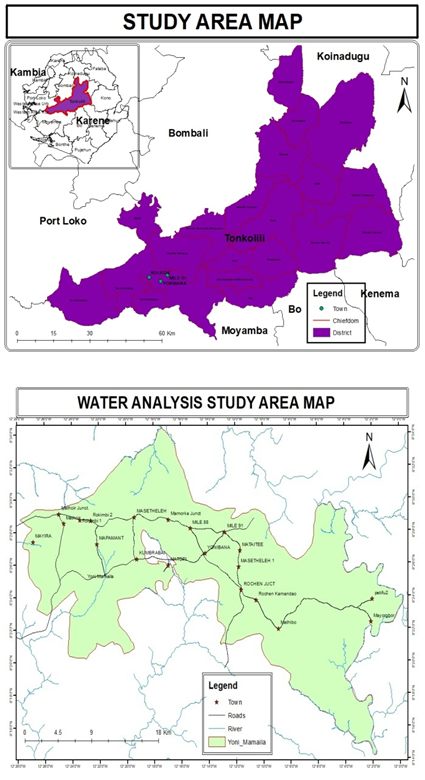
The study was conducted in six selected communities (Dogbokarama, Mamancha, Yonibana, Mile 91, Morlia and Malenpeh) in the Yoni chiefdom in in the where the Miro Forestry Project is implemented (Figure 1). The Project involves existing commercial forestry and timber products operations in Sierra Leone. The company produces plywood, edge glue boards and utility transmission poles from these commercial forests for exportation. The Yoni Chiefdom is located in the Northern Province of Sierra Leone, in the Tonkolili District. Yonibana is the center of the chiefdom, and is about 28.2 miles from the district capital, Magburaka. The Yoni Chiefdom has a population of 131,591 20. Most of the lands are flat and undulating, covered by farm bushes and forest patches. The most common land use is cultivation of upland rice, vegetables, and groundnuts. Some indigenes are engaged in the raring of sheep, goats, and chickens. The primary livelihood activities are farming, petty trading, particularly in agricultural products, and some government positions such as teaching, nursing, and administration.

A field survey design was employed, accompanied by laboratory tests, which were used in assessing the physicochemical parameters and hygienic conditions of public drinking water in six selected locations in Yoni Chiefdom, Tonkolili District. A purposive sampling technique was employed wherein the existing functional hand-operated pumps, streams, boreholes/wells, and reservoir springs were sampled. The researcher and four enumerators conducted the data collection. The enumerators were trained and tested using the questionnaire tool and their work was checked during piloting and survey, to ensure accurate data collection. The samples of drinking water were collected during the dry season in the six selected locations and laboratory analysis was carried out at the Njala University Quality Control Laboratory to determine the levels of physico-chemical parameters of both surface and groundwater compared to World Health Organization (WHO) standards. Water samples were collected from the six selected locations in November 2021 (Table 1). Samples were collected in the morning hours between 5:00 AM and 6:30 AM. Both ground and surface water were collected in 500 ml plastic bottles, soaked in dilute hydrochloric acid, and rinsed twice with distilled water to avoid alteration of samples. The bottles containing water samples were corked, stored in the coolman box with ice cubes and transported to the laboratory for physico-chemical analysis 21. The parameters were analyzed using the standard methods by Sierra Leone Standards Bureau (SLBS). Also, households were randomly selected within the six selected communities sourcing drinking water at the various sampled sites. In every village, 12 to 15 households were randomly selected, for a total of 75 households. A questionnaire that probed households’ perceptions and practices related to Water, Sanitation and Hygiene (WASH) WASH was conducted, including a structured inspection of observable sanitary conditions. Informed consent was obtained from all participants prior to the interview and from community or village leaders before the research was done.
2.3. Water Quality TreatmentA team consisted of the researchers, and four local enumerators who were hired to conduct the interviews and structured observations at households collected the water samples. The enumerators were chosen based on their familiarity with the study area and experience in survey-based research. A training and pilot test for conducting interviews and collecting water samples took place before the data collection began. Immediately after the interviews were finished, the enumerator asked for permission to collect a water sample from the household’s water source. Ground and surface water samples were collected in 500 ml plastic bottles, soaked in dilute hydrochloric acid, and rinsed twice with distilled water to avoid alteration of samples. Physical and chemical parameters (Table 2) were analyzed at the Institute of Environmental Management and Quality Control (IEMQC) laboratory of Njala University.
Data was imported into IBM SPSS Statistics version 24 (IBM Corp., Armonk, NY, USA) and Microsoft Excel for statistical analysis. Descriptive statistics were used to analyse the demographics, container and filter handling factors, as well as sanitation and hygiene infrastructure and practices.
The highest mean value (pH = 7.1) of pH was found in Pan House and the lowest mean value (pH = 6.0) of pH was found in Dogbokarama. The pH values of four communities (Malenpeh, Mile 91, Morlia, and Pan House) were within the standard level of pH for drinking (pH =6.5-8.5) (Table 3). In Bangladesh, Shamsur et al. 2 noted the highest mean pH value of 6.68 in Tatholia Union and the lowest mean pH value of 6.52 in Gaglajur Union. Jesmin 22 noted pH values of ground water in Gaibandha aquifers ranging between 6.73 and 8.66, indicating slightly acidic to alkaline water. In another study done on source water (drinking and surface water) within five cities from the semi-arid and arid region, in China, recorded a pH value of 7.1 to 8.5 23. The highest mean turbidity value of 7.34 NTU was found in Mamancha and the lowest mean turbidity value of 1.00 NTU was found in Dogbokarama. The turbidity of five communities (Dogbokarama, Malenpeh, Mile 91, Morlia, and Pan House) with values ranging from (1.00–4.00 NTU) was within the standard level of turbidity for drinking (turbidity = 1.0–5.0 NTU) (Table 3). Samples with low turbidity indicate a low amount of particulate matter suspended in water. The low turbidity of water also implies a low scattering effect of suspended solids on light. Thus, water samples with low turbidity are good for drinking.
However, the highest mean value of dissolved oxygen (DO=6.5 mg/l) was found in Dogbokarama and the lowest mean value (DO=3.2 mg/l) of DO was found in Morlia. The DO values of five communities (Morlia, Malenpeh, Mile 91, Pan House, and Mamancha) were within the standard level of DO for drinking (DO = 4.0-6.0 ppm or 4.0-6.0 mg/l) (Table 3). These findings are consistent with 24, who found a DO value of 4.4 ppm for tubewell water collected from Rakibnagor slum of Sakhipur upazila in Tangail District in Bangladesh. Shamsur et al. 2 reported the highest mean of dissolved oxygen value of 4.99 ppm in Gaglajur Union and the lowest mean DO value of 4.29 ppm in Tatholia Union in Bangladesh. The highest mean value of biological oxygen demand (BOD) (BOD = 1.80 mg/l) was found in Mamancha and the lowest mean value of BOD (BOD = 0.80 mg/l) was found in Malenpeh. These values were less than the standard BOD value of <2 ppm (< 2 mg/l) for drinking water (Table 3). The BOD values were less than 2.4 mg/l BOD in tube well water collected from the Rakibnagor Slum of Sakhipur Upazila in Tangail District in Bangladesh 24. The highest mean value of chemical oxygen demand (COD) (COD = 26.25 mg/l) was found in Mile 91 and the lowest mean value of COD (COD = 20.25 mg/l) was found in Pan House. These values are below the standard of COD value of 30–700 mg/l for drinking water (Table 3). These findings indicate that the water samples exhibited low concentrations of organics with relatively good dissolved oxygen, leading to positive environmental and regulatory consequences. Chemical oxygen demand describes the amount of oxygen required to chemically break down pollutants, while BOD indicates the amount of oxygen required to breakdown organic pollutants biologically with microorganisms. To determine the impact and ultimately limit the amount of organic pollution in the water, oxygen demand is an essential measurement. The COD concentrations observed in surface water resources ranged between 20 mg/l or less in unpolluted water sources and greater than 200 mg/l in water sources receiving effluents 25, 26
The highest mean value of Magnesium (Mg) (Mg=8.28 mg/l) was found in Dogbokarama and lowest mean value of Mg (Mg=1.20 mg/l) was found in Mamancha. The Magnesium values in water of all the studied communities (Mamancha, Morlia, Malenpeh, Pan House, Mile 91 and Dogbokarama) with values ranging from (1.20-8.28 mg/l) were within the standard level of Magnesium for drinking (Magnesium=80.0 mg/l) (Table 3). These findings concur with those obtained in 24 samples of Romanian bottled drinking water with magnesium content ranging from 2.0–47.0 mg/l 27. The highest mean value of chloride (Cl- = 4.45 mg/l) (Cl-) was found in Dogbokarama and the lowest mean value of Cl- (Cl- = 2.20 mg/l) was found in Mile 91. The chloride contents in water samples of all the studied communities (Mamancha, Morlia, Malenpeh, Pan House, Mile 91, and Dogbokarama) with values ranging from (2.20–4.45 mg/l) were within the standard level of chloride for drinking (Chloride < 250.0 mg/l) (Table 3)
Malenpeh had the highest mean value of nitrate (NO3-) (NO3- = 12.00 mg/l) and Pan House had the lowest mean value (NO3- = 1.00 mg/l) of nitrate (NO3-). The nitrate values of four communities (Pan House, Mamancha, Dogbokarama, and Morlia) were within the standard level of nitrate for drinking (NO3- < 10.0 mg/l) (Table 3). These findings are consistent with Raman et al. 24 who found NO3- value of 4.4 ppm in their assessment of treated wastewater that comes from a decentralized wastewater treatment system at Rakibnagor slum, Tangail, Bangladesh.
The results on the demographic and water parameter attributes of the respondents are presented in Table 4. The findings showed that the majority of the respondents sampled were female (69.3%), while 30.7% of the respondents were male. Most (40.0%) of the respondents in the studied communities lacked a well-defined main source of income as they are dependent on gifts, tips, etc., followed by the MIRO company, which serves as a main source of income for 37.3% of the sampled communities, whereas the herbalist career exhibited the lowest of 2.7%. According to the findings, majority of respondents (57.3%) get their drinking water from a bore hole/well, while 22.7% get it from a stream, 13.3% from a pump and reservoir, and 6.7% from a spring (Table 4). The findings imply that drinking water sources in the study area depend largely on underground sources through bore holes/wells. It was found that sub-massive pumps were connected to the spring source of drinking water at Morlia village. For months of water scarcity, the majority of the respondents (89.3%) opined that they had easy access to drinking water throughout the year. 6.7% of them experienced water scarcity in February and March, 2.7% experienced it in February, March and April, whereas 1.3% was the lowest obtained for those that experienced water scarcity in January, February, March and April. Majority (70.7%) of the respondents agreed that their bore holes/wells develop faults once per year, while 29.3% of them lack this experience.
The findings on the perceptions of respondents on water quality and waterborne diseases in the study area are presented in Table 5. The study found that most of the respondents opined that the drinking water was odourless (81.3%) and tasteless (72.0%). However, the water source turns cloudy or milky during the dry season, as opined by 53.3% of the respondents, followed by those that supported colourless (21.3%), colour depends on water harvest frequency during the dries (17.3%), and is lowest for those that consumed brownish water during the dries (8.0%). Majority (66.7%) of the respondents experience water-borne diseases in their communities. The study showed that skin disease, typhoid and cholera are the most common diseases (22.7%), followed by fatigue, cholera and typhoid (16.0%), typhoid and skin disease (10.7%), cholera, fatigue and diarrhoea (9.3%), diarrhoea and typhoid (6.7%), and lowest by those that opined fatigue and typhoid (1.3%). The respondents' perceived knowledge of death caused by diseases was estimated at 30.7%, with >20 (13.3%) deaths in their communities per annum. Children account for most (12.0%) of the deaths by waterborne disease, followed by adults or aged people (6.7%), children, youth and adults (4.0%), and youth (2.7%). The toilets or dustbins are mostly (65.3%) 20 m away from the drinking water source. This short distance and poor sanitary precautions are the probable cause of contamination of the drinking water in the communities.
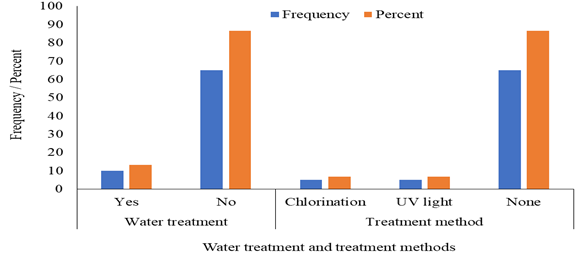
The perceptions of respondents on water treatment and treatment methods in the study area revealed that most (86.7%) of the drinking water sources are not treated (Figure 2). Moreover, only 6.7% of the drinking water is treated by either chlorination or UV light.
The research investigated the levels of physico-chemical parameters of ground and surface water in six selected locations within the Miro Forest Company operational areas in the Yoni Chiefdom in Sierra Leone. The pH values of Malenpeh, Mile 91, Morlia, and Pan House communities were within the standard level of pH for drinking. The turbidity of Dogbokarama, Malenpeh, Mile 91, Morlia, and Pan House communities had a low amount of particulate matter suspended in water that indicated its portability and could be exploited as a good source of drinking water. The oxygen demand (DO) of Morlia, Malenpeh, Mile 91, Pan House, and Mamancha communities were within the standard level of DO for drinking. The studied water samples had low concentrations of organics with relatively good dissolved oxygen which indicates that the use of chemicals by the Miro Forestry Company has not affected the sources of drinking water within the studied communities. The poor hygienic and sanitary conditions practiced could lead to the spread of waterborne diseases and the death of people in the studied communities. It is recommended that government should create an enabling policy environment regarding quality drinking water and hygienic conditions for adaptation as well as to implement routine monitoring to improve the health and sanitary conditions of the people.
Conflict of Interest. The authors declare no conflict of Interest
| [1] | Prüss-Ustün, A., Wolf, J., Bartram, J., Clasen, T., Cumming, O., Freeman, M. C., ... & Johnston, R. (2019). Burden of disease from inadequate water, sanitation and hygiene for selected adverse health outcomes: An updated analysis with a focus on low-and middle-income countries. International journal of hygiene and environmental health, 222(5), 765-777. | ||
| In article | View Article PubMed | ||
| [2] | Shamsur, R., Muhammad, A. A., Md Azharul, I., Sayema, T. F. K., & Mohammod, L. K. (2017). Assessment of Drinking Water Quality and Hygienic Conditions of the People Living around the Dingaputha Haor Area of Netrokona District, Bangladesh. Journal of Ecology and Environmental Sciences, 5(1), 12-23. | ||
| In article | |||
| [3] | Kılıç, Z. (2020). The importance of water and conscious use of water. International Journal of Hydrology, 4(5), 239-241. | ||
| In article | View Article | ||
| [4] | Ibrahim, L. A., Abu-Hashim, M., Shaghaleh, H., Elsadek, E., Hamad, A. A. A., & Alhaj Hamoud, Y. (2023). A comprehensive review of the multiple uses of water in aquaculture-integrated agriculture based on international and national experiences. Water, 15(2), 367. | ||
| In article | View Article | ||
| [5] | Yadev, A. K. (2016). Physiochemical studies on assessment of groundwater quality at Kota District. | ||
| In article | |||
| [6] | Kumar, P., & Yadav, S. (2016). Seasonal Variations in Water Soluble Inorganic Ions, OC and EC in PM10 and PM>10 Aerosols over Delhi: Influence of Sources and Meteorological Factors. Aerosol and Air Quality Research, 16(5), 1165–1178. | ||
| In article | View Article | ||
| [7] | Naseem, F., Zia, H. Z., Tariq, M. I., Bashir, M. A., Hameed, S. A., Samiullah, K., ... & Alshehri, M. A. (2022). Role of chemical composition of drinking water in human health of the community. Journal of King Saud University-Science, 34(7), 102232. | ||
| In article | View Article | ||
| [8] | Mukhopadhyay, A., Duttagupta, S., & Mukherjee, A. (2022). Emerging organic contaminants in global community drinking water sources and supply: A review of occurrence, processes and remediation. Journal of Environmental Chemical Engineering, 10(3), 107560. | ||
| In article | View Article | ||
| [9] | Irfeey, A. M. M., Najim, M. M., Alotaibi, B. A., & Traore, A. (2023). Groundwater pollution impact on food security. Sustainability, 15(5), 4202. | ||
| In article | View Article | ||
| [10] | WWAP World Water Assessment Programme (2017). The United Nations World Water Development Report 2017: Wastewater, the untapped resource. United Nations World Water Assessment Programme (WWAP). Paris, United Nations Educational, Scientific and Cultural Organization. | ||
| In article | |||
| [11] | Onwughara, N. I., Ajiwe, V. I. E., & Nnabuenyi, H. O. (2013). Physicochemical studies of water from selected boreholes in Umuahia North Local Government Area, in Abia State, Nigeria. International Journal of Pure & Applied Bioscience, 1, 34-44. | ||
| In article | |||
| [12] | Adnan, S., & Iqbal, J. (2014). Spatial Analysis of the Groundwater Quality in the Peshawar District, Pakistan. Procedia Engineering, 70, 14-22. | ||
| In article | View Article | ||
| [13] | Singh, A. K., Das, S., Singh, S., Pradhan, N., Gajamer, V. R., Kumar, S., ... & Tiwari, H. K. (2019). Physicochemical parameters and alarming coliform count of the potable water of Eastern Himalayan state Sikkim: An indication of severe fecal contamination and immediate health risk. Frontiers in public health, 7, 174. | ||
| In article | View Article PubMed | ||
| [14] | United Nations Children's Fund, & World Health Organization. (2024). Progress on household drinking water, sanitation and hygiene 2000-2022: special focus on gender. World Health Organization. | ||
| In article | |||
| [15] | Elala, D., Labhasetwar, P., & Tyrrel, S. F. (2011). Deterioration in water quality from supply chain to household and appropriate storage in the context of intermittent water supplies. Water Science and Technology: Water Supply, 11(4), 400-408. | ||
| In article | View Article | ||
| [16] | Shields, K. F., Bain, R. E., Cronk, R., Wright, J. A., & Bartram, J. (2015). Association of supply type with fecal contamination of source water and household stored drinking water in developing countries: a bivariate meta-analysis. Environmental health perspectives, 123(12), 1222-1231. | ||
| In article | View Article PubMed | ||
| [17] | Meierhofer, R., Bänziger, C., Deppeler, S., Kunwar, B. M., & Bhatta, M. (2018). From water source to tap of ceramic filters—factors that influence water quality between collection and consumption in rural households in Nepal. International journal of environmental research and public health, 15(11), 2439. | ||
| In article | View Article PubMed | ||
| [18] | Mohsin, M. (2013). Assessment of Drinking Water Quality and its Impact on Residents Health in Bahawalpur City. | ||
| In article | |||
| [19] | Bryant, L., Maconachie, R., Schnabel, B., Swaray, A., Howard, G., Gbanie, S., & Antwi-Agyei, P. (2025). A growing concern: investigating sustainable water quality and urban food production in Freetown, Sierra Leone. Water Supply, 25(2), 183-192. | ||
| In article | View Article | ||
| [20] | Sierra, S. Sierra Leone’s Voter Registration Data Discredits the Midterm Census Data: What are Implications for the Presidential Election of June 2023? | ||
| In article | |||
| [21] | Gichumbi, J. M., Ombaka, O., & Gichuki, J. G. (2012). Geochemical and Mineralogical Characteristics of Geophagic Materials from Kiambu, Kenya JM. International Journal of Modern Chemistry, 2(3), 108-116. | ||
| In article | |||
| [22] | Jesmin, M. S. (2000). Pollution studies on groundwater for irrigation, drinking and industrial usage in Gaibandha aquifers. M.S. Thesis, Department of Agricultural Chemistry, Bangladesh Agricultural University, Mymensingh. sanitation. Accessed 20/03/25. | ||
| In article | |||
| [23] | Wu, T., Li, X., Yang, T., Sun, X., Mielke, H. W., Cai, Y., ... & Yu, H. (2017). Multi-elements in source water (drinking and surface water) within five cities from the semi-arid and arid region, NW China: Occurrence, spatial distribution and risk assessment. International Journal of Environmental Research and Public Health, 14(10), 1168. | ||
| In article | View Article PubMed | ||
| [24] | Rahman, M. S., Islam, M. N., Hoque, M. M., & Roy, S. (2014). Assessment of treated wastewater comes from decentralized wastewater treatment system at Rakibnagor slum, Tangail, Bangladesh. Bangladesh Journal of Environmental Science, 27, 106-109. | ||
| In article | |||
| [25] | Ulsido, M. D., Geleto, M. Z., & Berego, Y. S. (2024). Waste Water Management in Wet Coffee Processing Mills and their Impact on the Water quality status of Gidabo River and its Tributaries, Southern Ethiopia. Environmental Health Insights, 18, 11786302241260953. | ||
| In article | View Article PubMed | ||
| [26] | Phungela, T. T. (2020). Impact of wastewater treatment effluent on the water quality of the Crocodile river, Ehlanzeni district, Mpumalanga (Doctoral dissertation, Cape Peninsula University of Technology). | ||
| In article | |||
| [27] | Mahajan, R. K., Walia, T. P. S., Lark, B. S., & Sumanjit, K. (2006). Analysis of physical and chemical parameters of bottled drinking water. International Journal of Environmental Health Research, 16(2), 89–98. | ||
| In article | View Article PubMed | ||
Published with license by Science and Education Publishing, Copyright © 2025 Prince Tongor Mabey, Sahr Lamin Sumana, Prince Emmanuel Norman and Samuel Joseph Bebeley
 This work is licensed under a Creative Commons Attribution 4.0 International License. To view a copy of this license, visit
http://creativecommons.org/licenses/by/4.0/
This work is licensed under a Creative Commons Attribution 4.0 International License. To view a copy of this license, visit
http://creativecommons.org/licenses/by/4.0/
| [1] | Prüss-Ustün, A., Wolf, J., Bartram, J., Clasen, T., Cumming, O., Freeman, M. C., ... & Johnston, R. (2019). Burden of disease from inadequate water, sanitation and hygiene for selected adverse health outcomes: An updated analysis with a focus on low-and middle-income countries. International journal of hygiene and environmental health, 222(5), 765-777. | ||
| In article | View Article PubMed | ||
| [2] | Shamsur, R., Muhammad, A. A., Md Azharul, I., Sayema, T. F. K., & Mohammod, L. K. (2017). Assessment of Drinking Water Quality and Hygienic Conditions of the People Living around the Dingaputha Haor Area of Netrokona District, Bangladesh. Journal of Ecology and Environmental Sciences, 5(1), 12-23. | ||
| In article | |||
| [3] | Kılıç, Z. (2020). The importance of water and conscious use of water. International Journal of Hydrology, 4(5), 239-241. | ||
| In article | View Article | ||
| [4] | Ibrahim, L. A., Abu-Hashim, M., Shaghaleh, H., Elsadek, E., Hamad, A. A. A., & Alhaj Hamoud, Y. (2023). A comprehensive review of the multiple uses of water in aquaculture-integrated agriculture based on international and national experiences. Water, 15(2), 367. | ||
| In article | View Article | ||
| [5] | Yadev, A. K. (2016). Physiochemical studies on assessment of groundwater quality at Kota District. | ||
| In article | |||
| [6] | Kumar, P., & Yadav, S. (2016). Seasonal Variations in Water Soluble Inorganic Ions, OC and EC in PM10 and PM>10 Aerosols over Delhi: Influence of Sources and Meteorological Factors. Aerosol and Air Quality Research, 16(5), 1165–1178. | ||
| In article | View Article | ||
| [7] | Naseem, F., Zia, H. Z., Tariq, M. I., Bashir, M. A., Hameed, S. A., Samiullah, K., ... & Alshehri, M. A. (2022). Role of chemical composition of drinking water in human health of the community. Journal of King Saud University-Science, 34(7), 102232. | ||
| In article | View Article | ||
| [8] | Mukhopadhyay, A., Duttagupta, S., & Mukherjee, A. (2022). Emerging organic contaminants in global community drinking water sources and supply: A review of occurrence, processes and remediation. Journal of Environmental Chemical Engineering, 10(3), 107560. | ||
| In article | View Article | ||
| [9] | Irfeey, A. M. M., Najim, M. M., Alotaibi, B. A., & Traore, A. (2023). Groundwater pollution impact on food security. Sustainability, 15(5), 4202. | ||
| In article | View Article | ||
| [10] | WWAP World Water Assessment Programme (2017). The United Nations World Water Development Report 2017: Wastewater, the untapped resource. United Nations World Water Assessment Programme (WWAP). Paris, United Nations Educational, Scientific and Cultural Organization. | ||
| In article | |||
| [11] | Onwughara, N. I., Ajiwe, V. I. E., & Nnabuenyi, H. O. (2013). Physicochemical studies of water from selected boreholes in Umuahia North Local Government Area, in Abia State, Nigeria. International Journal of Pure & Applied Bioscience, 1, 34-44. | ||
| In article | |||
| [12] | Adnan, S., & Iqbal, J. (2014). Spatial Analysis of the Groundwater Quality in the Peshawar District, Pakistan. Procedia Engineering, 70, 14-22. | ||
| In article | View Article | ||
| [13] | Singh, A. K., Das, S., Singh, S., Pradhan, N., Gajamer, V. R., Kumar, S., ... & Tiwari, H. K. (2019). Physicochemical parameters and alarming coliform count of the potable water of Eastern Himalayan state Sikkim: An indication of severe fecal contamination and immediate health risk. Frontiers in public health, 7, 174. | ||
| In article | View Article PubMed | ||
| [14] | United Nations Children's Fund, & World Health Organization. (2024). Progress on household drinking water, sanitation and hygiene 2000-2022: special focus on gender. World Health Organization. | ||
| In article | |||
| [15] | Elala, D., Labhasetwar, P., & Tyrrel, S. F. (2011). Deterioration in water quality from supply chain to household and appropriate storage in the context of intermittent water supplies. Water Science and Technology: Water Supply, 11(4), 400-408. | ||
| In article | View Article | ||
| [16] | Shields, K. F., Bain, R. E., Cronk, R., Wright, J. A., & Bartram, J. (2015). Association of supply type with fecal contamination of source water and household stored drinking water in developing countries: a bivariate meta-analysis. Environmental health perspectives, 123(12), 1222-1231. | ||
| In article | View Article PubMed | ||
| [17] | Meierhofer, R., Bänziger, C., Deppeler, S., Kunwar, B. M., & Bhatta, M. (2018). From water source to tap of ceramic filters—factors that influence water quality between collection and consumption in rural households in Nepal. International journal of environmental research and public health, 15(11), 2439. | ||
| In article | View Article PubMed | ||
| [18] | Mohsin, M. (2013). Assessment of Drinking Water Quality and its Impact on Residents Health in Bahawalpur City. | ||
| In article | |||
| [19] | Bryant, L., Maconachie, R., Schnabel, B., Swaray, A., Howard, G., Gbanie, S., & Antwi-Agyei, P. (2025). A growing concern: investigating sustainable water quality and urban food production in Freetown, Sierra Leone. Water Supply, 25(2), 183-192. | ||
| In article | View Article | ||
| [20] | Sierra, S. Sierra Leone’s Voter Registration Data Discredits the Midterm Census Data: What are Implications for the Presidential Election of June 2023? | ||
| In article | |||
| [21] | Gichumbi, J. M., Ombaka, O., & Gichuki, J. G. (2012). Geochemical and Mineralogical Characteristics of Geophagic Materials from Kiambu, Kenya JM. International Journal of Modern Chemistry, 2(3), 108-116. | ||
| In article | |||
| [22] | Jesmin, M. S. (2000). Pollution studies on groundwater for irrigation, drinking and industrial usage in Gaibandha aquifers. M.S. Thesis, Department of Agricultural Chemistry, Bangladesh Agricultural University, Mymensingh. sanitation. Accessed 20/03/25. | ||
| In article | |||
| [23] | Wu, T., Li, X., Yang, T., Sun, X., Mielke, H. W., Cai, Y., ... & Yu, H. (2017). Multi-elements in source water (drinking and surface water) within five cities from the semi-arid and arid region, NW China: Occurrence, spatial distribution and risk assessment. International Journal of Environmental Research and Public Health, 14(10), 1168. | ||
| In article | View Article PubMed | ||
| [24] | Rahman, M. S., Islam, M. N., Hoque, M. M., & Roy, S. (2014). Assessment of treated wastewater comes from decentralized wastewater treatment system at Rakibnagor slum, Tangail, Bangladesh. Bangladesh Journal of Environmental Science, 27, 106-109. | ||
| In article | |||
| [25] | Ulsido, M. D., Geleto, M. Z., & Berego, Y. S. (2024). Waste Water Management in Wet Coffee Processing Mills and their Impact on the Water quality status of Gidabo River and its Tributaries, Southern Ethiopia. Environmental Health Insights, 18, 11786302241260953. | ||
| In article | View Article PubMed | ||
| [26] | Phungela, T. T. (2020). Impact of wastewater treatment effluent on the water quality of the Crocodile river, Ehlanzeni district, Mpumalanga (Doctoral dissertation, Cape Peninsula University of Technology). | ||
| In article | |||
| [27] | Mahajan, R. K., Walia, T. P. S., Lark, B. S., & Sumanjit, K. (2006). Analysis of physical and chemical parameters of bottled drinking water. International Journal of Environmental Health Research, 16(2), 89–98. | ||
| In article | View Article PubMed | ||