Introduction: Non-communicable diseases (NCDs), mainly cardiovascular diseases, cancers, diabetes, and chronic respiratory diseases are becoming public health concern with cardio vascular diseases being the leading causes of deaths. NCDs have long being associated to aging and mostly recorded in developed countries but recent studies have shown a significant increase in developing countries and adolescent group. Hence, assessing Knowledge level of non-communicable diseases and its associated behavioral prevention practices is important to shade light on community, household and individual factors that contribute to NCDs and help to inform and guide national discussion and promote evidence decision making to shape programmes, policies and plans focusing on reduction of NCDs among adolescent. Objective: To assess the Knowledge level of NCDs and its associated behavioral prevention practices among in-school adolescents in Dar es salaam city and Kinondoni districts, Tanzania, 2024. Methods: This study employed a mixed-methods sequential explanatory design, conducted from February 2024 to May 2024, focusing on adolescents in Ordinary level secondary school. Data collection involved a structured, researcher-administered questionnaire for quantitative information and in-depth interviews for qualitative insights. The findings were presented as frequencies, proportions, and median values. Spearman's rank correlation was utilized to evaluate the relationships between prevention practices and knowledge. Findings: The quantitative phase included approximately 400 participants, representing an anticipated 80% response rate, while 16 respondents completed the qualitative phase. The study revealed that 11.25% of participants demonstrated high knowledge about NCDs. In both phases, healthy diet and physical exercise were identified as prevention practices associated with high knowledge levels, although these correlations were not particularly strong. Conclusion: The knowledge level was poor. Hence, this highlights a potential need for increased public health education campaigns or resources to improve knowledge level regarding NCD among adolescents in secondary school.
Non-communicable diseases (NCDs), mainly cardiovascular diseases, cancers, diabetes, and chronic respiratory diseases are becoming public health concern with cardio vascular diseases being the leading causes of deaths. NCDs have long being associated to aging and mostly recorded in developed countries but recent studies have shown a significant increase in developing countries and adolescent group 1. These major public health problems are responsible for causing 74% of all deaths each year globally, where 85% of it being premature deaths and 77% occurring in low- and middle-income country 2 below. Notably, this shows a major shift in NCDs burden from developed countries to developing countries. The burden of NCDs in Africa accounted for 22% of all deaths whereby Tanzania accounted for about 33% of all deaths 3. In 2019, NCDs has caused approximately 20 per cent of the deaths among those aged 10-19. However, the impact of NCDs differ according to age and sex where, NCDs was sought to have caused about one in four deaths globally among girls as compared to one in five among boys both in 10-14 years NCDs cause similar proportions of deaths among adolescents aged 15-19 4. Regardless of age, NCDs are primarily caused by behavioral factors which start during childhood and adolescence such as; unhealthy diet, physical inactivity, tobacco use and harmful use of alcohol, which not only impact adolescent life but also cause negative health outcomes in adulthood 4, 5, 6. Other risk factors such as overweight and obesity during adolescence has significantly contributed to disease development and poor health later in life. Studies have shown a drastic increase in prevalence of, overweight and obesity during mid-adolescence and into adulthood. 5 which also contribute significantly to the risk for premature mortality and physical morbidity later in life, including cardiovascular disease, asthma, and certain types of cancers 6. However, the effort to address NCDs to date has focused on the adult population with adolescents largely ignored in global health and public policy despite the fact that NCDs are often manifested during childhood and adolescence 7. According to 8, there are laws and policies for preventing risk factors across countries, but those targeting drug harm reduction, contraceptive use, as well as mental health and nutrition are limited. Also, NCDs burden among adolescents and adults are associated with structural, community and household factors. So, health policies, plans and programmes for adolescent health are required, but they need to be informed by data on prevalence rates, disease burden, risk factors and general knowledge 9, 10, 11. However, there are minimal studies conducted to determine the burden of NCDs among adolescent in Tanzania, but also among in-school adolescent. So, this study aims to explore knowledge and prevention related practices for NCDs modifiable risk factors among in-school adolescents in Dar es Salaam. The study is important because it will help to shade light on community, household and individual factors that contribute to NCDs among in-school adolescent. The findings will also help to inform and guide national discussion and promote evidence decision making to shape programmes, policies and plans focusing on reduction of NCDs among adolescent. Prevention of NCDs during adolescent will help to reduce the risks among adult but also disease burden within the country for the next generation 12.
The study was conducted among secondary school adolescents aged 12–19 years in 8 schools. The study population consisted of all students of both sexes who were selected from eight ordinary secondary schools of these two districts in the Dar es Salaam region. The study design is a mixed-method explanatory sequential design whereby two phases were independently implemented and analyzed, which means quantitative data was collected and analysed first, then informed the design of the questions and areas of focus in qualitative data that was collected based on feedback from the quantitative responses. 13. The qualitative data was then help to provide more insight of the findings collected while using quantitative approach. All the data was then synthesized and triangulated to provide meaningful interpretation of the outcomes of the entire study.
2.2. Sample Size and Sampling ProcedureMultistage Simple random sampling and was used to select participants for the study where every student aged 12 to 19 had an equal chance of being selected. However, based on an estimated sample of 400 participants, the target population was divided according to the population of the districts or municipality and wards under study. Initially, we selected Kinondoni municipal and Dar es Salaam city council as our primary sampling units (PSUs) from the overall population. Then, a sample frame consisting of the list of all wards was created. Next, another random sample of 8 wards was taken in a similar way. Then, within the selected ward, all public secondary schools were enumerated, and only one school was randomly sampled from each ward. Finally, during a quantitative phase, a total of 400 participants were recruited from 8 schools by probability proportional to size (PPS), meaning that the number of participants depends on their school’s size. Then, 16 students who were identified and purposively sampled during quantitative data collection phase, were selected basing on their ability to answer questions or indication of general knowledge regarding NCDs and preventive practices.
2.3. Data Collection Tools and ProcedureWe applied a mixed-methods sequential explanatory approach to this study. Thus, we started with quantitative data collection and analysis, followed by qualitative data collection and analysis, and then we combined results to interpret the findings (joint display integration). But, before starting the actual data collection process, we developed a questionnaire in English and translated it to Kiswahili. I requested permission to conduct research in schools through Dar es Salaam regional commissioner officer, Dar es Salaam city council and Kinondoni municipal directors, education officers, and the visited school heads. The questionnaire was piloted in one among the sampled schools and revised accordingly. Also, an in-depth interview (IDI) guide was translated to Kiswahili where needed. We created and provided consent form to respondents aged 18 and 19 years while those aged 12 - 17 years, were given assent document addressed to the adolescents with signature lines for assent and parental or guardian’s permission on behalf of their children. The confidentiality of the study participants was well maintained and adhered to. Then, we conducted phase one data collection and its analysis. Finally, we interviewed 16 adolescents to explore the relationship between prevention practices and knowledge about non-communicable diseases.
2.4. Data Management and AnalysisData was analyzed separately, but the interpretation of the entire study was made after analysis of both phases:
a). Quantitative data
A structured questionnaire was prepared and imported into a survey solution data server for data collection. Data was collected using tablets and analyzed using STATA version 15. Descriptive statistics of the study population, including gender, age, living district, education level, and school type, were reported using a frequency distribution table. Ordinal data/Likert scale data were analyzed using frequencies and percentages for variability, with a p-value < 0.05 being considered statistically significant. A confidence scale was used to determine if a respondent knows or does not know about NCDs. A threshold level was set to distinguish between those who "know" and those who "do not know." Respondents were considered "know" if they responded with a level of 4 (fairly confident) or 5 (very confident), and "not know" if they responded with a level of 1(very unconfident), 2 (fairly unconfident) or 3 (neutral). The study used Mann-Whitney U test to compare knowledge scores between boys and girls, and Spearman's rank correlation test to examine the strength of association between the independent variable and main outcome variable. Knowledge about non-communicable diseases was coded as an independent variable, while prevention practices behaviors like smoking, salt intake, diet, exercise, and supplements were analyzed as a main outcome.
b). Qualitative data
For the qualitative data, all the 16 which were recorded were transcribed word-for-word. All the transcripts were reviewed to ensure all the information from the audio have been well captured. Thematic content analysis was used in analyzing the data where deductive approach was used. The deductive approach involves examining data based on pre-existing themes 14. Nvivo software for qualitative data analysis was used to arrange the themes and respective quotes.
Data Triangulation
Data was then synthesized and triangulated to provide meaningful interpretation of the outcomes of the entire study. The triangulation approach was used to provide further explanation and insight into the quantitative findings, which then contributed significantly to the credibility of the findings.
2.5. Ethical ConsiderationEthical approval for the proposed study was obtained from the Institutional Review Body of Ifakara Health Institute and approval from National Institute for Medical Research (NIMR). Application of appropriate ethical principles such as informed consent or assenting and anonymity was adhered to during data collection and handling.
This chapter presents how the collected data was analyzed and interpreted in order to arrive at the discussion of findings and conclusion. The data used for the study was primary data from government secondary schools in Dar es Salaam City council and Kinondoni municipal, which are districts found in Dar es Salaam Region. The results were tabulated and presented below according to the research objectives that guided this study:
3.1. Quantitative ResultsA total of 400 students participated in the study, where 201 (50.2%) were female and 199 (49.8%) were male, who completed knowledge surveys prior to the in-depth interview. This part covered demographic characteristics, participation in NCD-related education programs, respondents' level of knowledge about non-communicable diseases, respondents’ distribution according to their behavioral risk factors, and the association between respondents' level of knowledge and prevention practices.
The respondents’ distribution according to demographic characteristics includes gender/sex, class level, age groups and districts are shown in Table 1. Out of the total respondents, 199 were male while female respondents were 201, which is equivalent to 50.2%. The distribution by secondary classes (forms) showed that there were 105 respondents from form 1, which is 26.2%; there were 90 respondents from form 2, which is 27.2%; 107 respondents from form 3, which is 26.6%; and 98 respondents were form 4 students, which is 24.4% of all the respondents. The distribution by age group was, 274 in age group of 12–15, which is 68.5% of all the respondents, while 126, which is 31.5% of all respondents fell into the age group of 16–19. The results show that the majority of respondents were aged between 12 and 15, inclusive. In the distribution according to where they live had indicated 201, which is 50.2% of all respondents, live in Kinondoni districts, while 199, which is 49.8% of all respondents, reside in Dar es Salaam city.
Respondent’s levels of knowledge about Non-communicable diseases are summarized in Table 2. It is observed that a significant majority of respondents (66.75%) reported having poor knowledge about NCDs, only a small portion of respondents (11.25%) indicated having high knowledge about NCDs. Respondents who reported to have moderate knowledge are 14% and those with fair knowledge are 8% only. The results indicate that there might be a lack of awareness or understanding about NCDs among the population surveyed. This highlights a potential need for increased public health education campaigns or resources to improve NCDs knowledge among adolescents in secondary school.

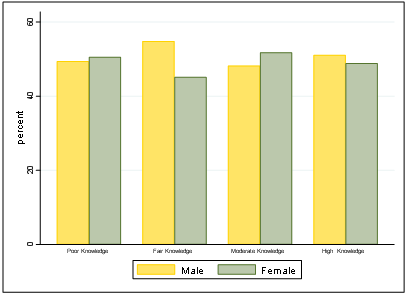
According to the data on knowledge levels, as shown in detail in Figure 1, male respondents' knowledge values were highest at the fair level and lowest at the moderate level while among the female respondents, the fair knowledge level had the lowest value. However, the proportion increases significantly at the moderate level. The results imply that the general public may not fully understand or be aware of NCDs.
Similarly, during interviews, some study participants stated the main causes of non-communicable diseases (NCDs) and mentioned at least three of the major five NCDs, indicating their awareness of these diseases.
“Non-communicable diseases are diseases that cannot be transmitted from one person to another. I used to hear it at school, at home. I have heard of diseases like diabetes, high blood pressure, cancer, arthritis and tuberculosis. A person can get non-communicable diseases due to lifestyles. For example, eating foods with a lot of sugar can lead to diabetes, another reason is eating foods with a lot of fat can lead to high blood pressure and not exercising regularly.” (Interview 3, adolescent girl, 16 years)
“Non-infectious diseases are diseases that cannot pass from one person to another. I used to hear it at school, at home and on television. I have heard of diseases like diabetes, pressure, cancer, arthritis, sickle cell. a person can get non-communicable diseases due to the lifestyle. for example, eating foods with a lot of sugar can lead to diabetes, applying cosmetics with chemicals on the skin can causes skin cancer, drinking a lot of alcohol and physical inactivity.” (interview 6, adolescent boy, 18years)
“Non-communicable diseases are diseases that cannot be transmitted from one person to another. I've heard of diseases like high blood pressure, diabetes, cancer and asthma. A person can get non-communicable diseases due to lifestyle. For instance, eating fatty foods can cause high blood pressure, eating foods high in sugar can cause diabetes, and the use of chemicals in the skin causes skin cancer.” (Interview 8, adolescent girl, 14 years)
“Non-communicable diseases are non-infectious diseases that cannot pass from one person to another. I heard it at school, at home, and on Television. I have heard of diseases like diabetes, pressure, asthma, obesity, UTI, kwashiorkor, marasmus A person can get non-communicable diseases due to various lifestyle habits, for example, smoking habits and drug use cause lung cancer, throat, etc. A habit of liking sugary foods or sugary drinks like soda and processed juices can lead to diabetes. Also, preferring to eat fatty foods often is dangerous because it can lead people to heart disease.” (Interview 16, adolescent boy)
A very small percentage of respondents (4.75%) reported currently smoking. The results show a relatively low percentage of respondents (10%) reported ever consuming alcohol in their lifetime while among those who ever consumed alcohol, a significant majority (75%) reported consuming it within the past year. The results indicate a potentially low prevalence of current alcohol consumption in the population surveyed which are the teenagers in secondary school. Additionally, it was observed that a smaller percentage of respondents (21.25%) reported daily or almost daily intake of fruits compared to vegetables daily intake (47.37%). The majority (more than 75%) of participants in physical activity categories practiced at least four days of physical activity per week, indicating low participation among the youth population. In that perspective, the predominant risk factors for this include physical inactivity and daily fruit intake, as shown in Table 3.
Moreover, during the interviews the same factors were also identified to be the main risk behaviors, including unhealthy diet, smoking, excessive salt consumption, excessive alcohol consumption, and inactivity, and explained how they related to the mentioned diseases as indicated in the quotes below:
“People get non-communicable diseases because they are not educated on how to protect themselves, not getting vaccinated, level of hygiene, lifestyle such as using high-sugar substances that cause diabetes and high blood pressure, cigarette and alcohol use, and inactivity.” (Interview 2, adolescent boy, 19 years)
“People get non-communicable diseases because of lifestyle patterns, how they eat, it's easy to get high pressure if you consume high-fat foods and it's easier to get diabetes if you consume sugary foods Also, stress can lead to high blood pressure. Environment for example asthma can be caused by a cold environment. The major behavioral risks are lifestyle factors, for example a person that use fatty foods can get high pressure, a person that use sugary foods can get diabetes, and the use of chemical cosmetics can cause skin cancer. (Interview 3, adolescent girl, 16 years)
“People can get non-communicable diseases because of the lifestyle patterns they live, such as the types of foods they prefer to eat. For example, someone who likes to eat high-fat foods is at risk of heart disease, and if you consume high-sugar foods regularly, it is easy to get diabetes. Also, excessive salt consumption can lead to stroke. Physical inactivity is another factor contributing to the onset of non-communicable diseases. (Interview 8, adolescent girl, 14 years)
people get non-communicable diseases because of lifestyle. For example, eating junk foods, foods with a lot of sugar, foods with a lot of salt and a lot of fat cause diseases like diabetes and pressure. Smoking can also cause lung cancer. Behavioral risk factors are poor nutrition, smoking and excessive alcohol consumption (Interview 16, adolescent boy, 17 years)
Furthermore, the same study respondents, also revealed their insights on the complication of NCDs including high treatment cost, disability (limbs amputation or blindness), long term treatment and decrease in the social workforce, indicating a comprehensive understanding of the complications associated with these conditions. The participants described how a certain risk factor contribute to a given condition. Below quotes explains further different complications:
“The difficulties/problems experienced by people with these diseases, like diabetes or high blood pressure, are making them dependent, and recovery is difficult; it becomes a long process that spends a lot of money to treat the patient.” (Interview 2, adolescent girl)
“Also, some treatments are offered at a high cost e.g. radiotherapy for cancer patients and special meals for patients These diseases lead to loss of a limb or organs, such as patients with diabetes, which are forced to have some limbs amputated to prevent the wound progressing and eventually death, which leads to a decrease in the social workforce.” (Interview 3, adolescent girl, 16 years)
The problems that patients experience are physical weakness and failure to perform productive tasks, leading to a difficult life situation. They are treated with high cost and high cost for special meals for patients. Also, loss of organs, such as patients with diabetes, are forced to have some limbs amputated to prevent the wound from progressing and eventually death, which leads to a decrease in the national labor force. (Interview 8, adolescent girl)
“The patient is affected by being sick for a long time, being unable to engage in production activities, finding money for his family, and the development of society in general; for example, a cancer patient may lose a limb to prevent the spread of the disease. Deaths lead to an increase in the labor force of the community.” (Interview 11, adolescent boy, 16 years)
“Non-communicable diseases are the main causes of disability, as some patients go through the stage of amputation of a lower limb or suffer blindness during the period of examination. Also, the high cost of treatment may affect the economic development of the patient's family and society in general.” (Interview 16, adolescent boy, 17 years)
A Mann-Whitney U test (also called a Wilcoxon rank-sum test) was used to compare knowledge scores between males and females. The expected values (around 39501 and 39900) represent the average rank sums we would expect under the null hypothesis (H0) which states that there's no difference in knowledge scores between males and females (knowledge for males is equal to knowledge for females). In this case, with a p-value of 0.6935 (much greater than 0.05), we fail to reject the null hypothesis. There is not enough evidence to conclude a statistically significant difference in knowledge scores between males and females based on this test as shown Table 4.
The results show the Spearman's rank correlation coefficients between knowledge and five other variables related to preventive health behaviors (smoking, salt intake, diet, and physical exercise). Therefore, analysis of specific correlations indicated that knowledge with smoking pointed out the coefficient of 0.2531. This suggests a weak positive association. People with higher knowledge scores tend to report not smoking more often, but the relationship is not very strong. Knowledge with salt intake revealed the coefficient of 0.1072. This is a very weak positive value, indicating an almost negligible association between knowledge and salt intake. There's no clear trend. Knowledge with diet showed a coefficient of 0.1787. This is another weak positive association. People with higher knowledge might score slightly better on a healthy diet measure, but the evidence is weak. Knowledge with physical exercise points to the coefficient of 0.1234. This is a weak positive association similar to non-smoking and diet. There's a suggestion that people with higher knowledge might exercise more, but it's not a strong trend as shown Table 5.
Additionally, the majority of interviewees also said that these illnesses are preventable and that adopting certain lifestyle changes, such as cutting back on alcohol and stopping tobacco use, exercising, and eating a healthy diet while avoiding sugary and salty foods, will greatly reduce their risk of developing them. Below are different quotes supporting the findings:
“Diseases can be prevented, for example diabetes can be prevented by using a type of food that does not have a large amount of sugar, exercising a lot, regarding cancer, the best way to prevent it is to have a good lifestyle such as reducing such, smoking, etc., this disease can also be prevented by vaccination like cervical cancer.” (Interview 2, adolescent boy,19 years)
“People get non-communicable diseases because of lifestyles, for example eating foods with a lot of sugar can lead to diabetes, another reason is eating foods with a lot of fat can lead to high blood pressure. unhealthy behavioral reasons are smoking causes non-communicable diseases such as lung cancer.” (Interview 3, adolescent girl, 16 years)
yes, these diseases can be prevented, for example diabetes can be prevented by avoiding the consumption of foods with a lot of sugar, getting education about the right diet, reducing alcohol consumption. Pressure is also thought to be preventable by not consuming foods with a lot of fat, reducing stress. Cancers such as skin cancer can be prevented by avoiding the use of chemical-rich cosmetics and chemical-based medicines.” (Interview 6, adolescent boy, 18 years)
“these diseases can be prevented, for example diabetes can be prevented by avoiding the consumption of foods with a lot of sugar, reducing the consumption of alcohol, providing education about the healthy nutrition. cancer, for example, skin cancer can be prevented by avoiding applying cosmetics with many chemicals and drugs with chemicals.” (Interview 16, adolescent boy)
Adolescents are adopting healthier lifestyles, including healthy eating and exercise, and regularly seeking healthcare, such as regular check-ups and vaccines. Knowledge and preventive health behaviors are positively associated, with individual perceptions, external factors such as the environment as well as people adherering to healthy behavior playing a significant role on adaptation of healthy behavior among adolescent. Below quotes explains further different behaviour:
”(Interview 2, interview boy, 19 years)
“Yes, I have been vaccinated because I know that the cervical cancer vaccine is given to young girls aged 9 to 14 and that it is aimed at preventing women from getting cervical cancer” and “I often eat healthy food when I'm at home because we raise chickens and grow vegetables at home.” (Interview 3, interview girl, 16 years)
"I have received cervical cancer vaccination here at school” and “I do walk, I do squats every day in the evening, and sometimes I dance” and “I often eat healthy food at home.” (Interview 8, adolescent girl, 14 years)
“I participate in football practice every Friday and Saturday with my friends who encourage me to go to the field” and “Often when I’m at home we eat rice, beans, potatoes, dairy products, fish, vegetables, fruits and fresh juice” and “I have had a health examination/check-up twice because my hobby is football.” (Interview 16, adolescent boy, 17 years)
The Majority of research on non-communicable diseases (NCDs) in Tanzania has focused on adult populations’ knowledge and practices regarding NCDs prevention 15, 16, 17 leaving out a young population like in school adolescents who a part of the global efforts to prevent and treat NCDs in order to reduce premature deaths from NCDs by one-third by 2030 18. This study demonstrates adolescents’ prevention-related behavior and knowledge of modifiable risk factors for NCDs in Dar es Salaam, Tanzania. These findings could be helpful in promoting evidence-based decision-making when creating programs, policies, and plans aimed at reducing NCDs, as well as inform and direct national discussions. Adolescents’ NCD prevention will lower the risks in adulthood and lower the nation's disease burden for the following generation. 12.
The study results revealed the most predominant modifiable NCDs risk factors were diet (insufficient fruits consumption) and physical inactivity, where by Fruits consumption was 56.5% between 1-2 days per week and less than half of the participants consumed fruits almost every day. This means the majority of participants could not afford to consume fruits on a daily basis, reflecting the affordability for the mentioned reasons. So far, taste preference and fruit availability are also concerned. This is in line with studies done in Japan to assess psychosocial determinants of fruit and vegetable intake among school adolescents, as it was observed that the barriers were preference, availability, social support, and cost 19. Similarly, in Dhaka it was revealed an insufficient consumption of fruits and vegetables among school-going adolescents that was associated with social support, maternal education attainment, social environmental, behavioural factors, and income status 20. The majority of respondents, more than (75%), are seen to participate in each of the assessed categories of physical activities for at most four days, meaning that there is a low tendency of this youth population to participate in various physical activities. In that aspect, the most predominant risk factor is physical inactivity. This finding is in agreement with the study done by 21 in urban Cameroon among state secondary in-school adolescents, where only 20% met recommended physical activity levels and nearly half lived sedentary lifestyles were reported. Similarly, a high prevalence of physical inactivity among university students of nursing courses was reported 22. In Thailand, a study done by 23 reported a high prevalence of multiple behavioural risk factors of non-communicable diseases in which physical inactivity is predominantly identified. Additionally, several studies among adults supported the current research suggesting that physical inactivity was the most prevalent risk factor 24, 25, 26.
In this sample, it is found that a significant majority of respondents reported having poor knowledge about NCDs, while a small portion of respondents indicated having high knowledge about them. According to the results of a Mann-Whitney U test, also called a Wilcoxon rank-sum test, there is no apparent difference in the knowledge scores of male and female participants, which provides insight into the knowledge gap that exists between them. This means that knowledge about NCDs is still a challenge among adolescents, and this gives the impression that health knowledge is not given much priority. This is in contrast to studies that reported low levels of knowledge about NCDs risk factors 27, 28. Research from Cameroon revealed that half of the respondents lacked sufficient knowledge about NCDs and their associated risk factors 21. Similarly, this is central to a study conducted in Dhaka by 29 that revealed a difference in knowledge with respect to gender, where males were more knowledgeable than females.
The relationships between participants' awareness of non-communicable diseases and preventative strategies were also examined in this study. Although there is a lack of awareness regarding NCDs, the results show a minor tendency for those who are well-informed to report primarily healthier behaviors, such as abstaining from smoking, consuming less salt, maintaining a healthy diet, getting frequent exercise, and getting regular checkups. Although the associations are not very strong, the results suggest a strongly that there is a positive correlation between knowledge and all preventative health behaviors. This concurs with studies done in Spain, Ukraine and Poland that revealed that the level of knowledge was related to the practice of healthy behaviors as such, people with more knowledge seemed to attempt health practices 30, 31, 32 and Western Ethiopian research has shown that the level of health knowledge had an influence in stimulating people to undertake healthy behaviors towards NCDs 33. Generally, participants' ignorance about NCDs, risk factors, and their preventative measures accelerates a lot of people to undergo many unhealthy lifestyle choices 34, 35.
Even though the main study objective was achieved, our study has some limitations, including limited generalizability and replicability to other settings. Second, the researcher can bring their own biases and assumptions into the study whether in interview or in questionnaire. Third, Fear of information disclosure, because in school settings, alcohol consumption and smoking are misconduct, which was not easy for some participants to expose the reality as the question needs because of ethical reasons. So, it is possible that among students who expressed their behaviors as non-smokers and non-alcohol consumers, there are a number of respondents who engage in these risky behaviors, which prompts further research.
The research suggests limited awareness about non-communicable diseases among the participants. It also analysed the factors that influence preventive behaviours among adolescents, using a model that considers various environmental and personal factors. This information can help create interventions that address multiple influences on healthy behaviours such as vaccinations, diet, physical activity, and regular health check-ups.
6.2. RecommendationIt is therefore recommended that emphasis be given to the influential factors raised to support the implementation of various interventions aimed at reducing risks and likelihood of getting diseases in the future. This highlights a potential need for increased public health education campaigns or resources to improve NCD knowledge among adolescents in secondary school.
| [1] | Armocida, B., Monasta, L., Sawyer, S., Bustreo, F., Segafredo, G., et al, “Burden of non-communicable diseases among adolescents aged 10–24 years in the EU, 1990–2019: a systematic analysis of the Global Burden of Diseases Study 2019,” Lancet Child Adolesc. Heal., 6 (6). 367–383, Jun. 2022. | ||
| In article | |||
| [2] | WHO, “Global action plan for the prevention and control of noncommunicable diseases 2013-2030. World Health Organization.,” WHO, 2013. | ||
| In article | |||
| [3] | WHO, “Noncommunicable diseases country profiles,” WHO, 2018. | ||
| In article | |||
| [4] | UNICEF, “Monitoring the situation of children and women, New York,” UNICEF, 2021. | ||
| In article | |||
| [5] | Ng, M., Fleming, T., Robinson, M., Thomson, B., Graetz, N., Margono, C., Erin C. Mullany, E. C., et al, “Global, regional, and national prevalence of overweight and obesity in children and adults during 1980–2013: a systematic analysis for the Global Burden of Disease Study 2013,” Lancet, 384 (9945). 766-781., 2014. | ||
| In article | |||
| [6] | Reilly, J.J., and Kelly, J., “Long-term impact of overweight and obesity in childhood and adolescence on morbidity and premature mortality in adulthood: systematic review,” Int. J. Obes. , 35 (7). 891–898, 2011. | ||
| In article | View Article PubMed | ||
| [7] | Dick, B., & Ferguson, B. J., “Health for the world’s adolescents: a second chance in the second decade.,” J. Adolesc. Heal., 56 (1). 3–6. 2015. | ||
| In article | View Article PubMed | ||
| [8] | Akseer, N., Mehta, S., Wigle, J., Chera, R., Brickman, Z. J., Al-Gashm, S., ... & Bhutta, Z. A., “Non-communicable diseases among adolescents: current status, determinants, interventions and policies,” BMC Public Health, vol. 20. 1–20. 2020. | ||
| In article | View Article PubMed | ||
| [9] | Muhihi, A. J., Anaeli, A., Mpembeni, R. N., Bruno F. Sunguya, B. F., Leyna, G., Kakoko, D., Kessy, A. T., Sando, M. M., Marina Njelekela, M., and Urassa, D. P., “Public knowledge of risk factors and warning signs for cardiovascular disease among young and middle-aged adults in rural Tanzania.,” BMC Public Heal. 20 (1832). 1–12. Nov. 2020. | ||
| In article | View Article PubMed | ||
| [10] | Abdulbasat, S., and Kazaura., M., “Modifiable risk factors for non-communicable diseases among medical and non-medical University students in Dar es Salaam, Tanzania: A cross sectional study,” Res. Sq., 2 (1). Mar. 2020. | ||
| In article | View Article | ||
| [11] | Maluka, S. O., and Sangeti, S., “Knowledge, Attitude and Practices on Non-Communicable Diseases among Students and Staff at the Dar es Salaam University College of Education in Tanzania,” J. Humanit. Soc. Sci., 11 (2). 120–134, 2022. | ||
| In article | View Article | ||
| [12] | UN, “Transforming our world: the 2030 Agenda for Sustainable Development,” UN, 2015. | ||
| In article | |||
| [13] | Ivankova, N. V., Creswell, J. W., & Stick, S. L, “Using Mixed-Methods Sequential Explanatory Design: From Theory to Practice.,” Field methods, 18 (1). 3–20, 2006. | ||
| In article | View Article | ||
| [14] | Roberts, K., Dowell, A., & Nie, J. B., “Attempting rigour and replicability in thematic analysis of qualitative research data; a case study of codebook development.,” BMC Med. Res. Methodol., 19 (1). 1–8, 2019. | ||
| In article | View Article PubMed | ||
| [15] | Sirili, N., Kilonzi, M., Kiwango, G., Lengai, E., Nandala R, Mwakawanga, D.L., Philipo, E.G., Thobias, J.M., Frumence, G., “Knowledge of non-communicable diseases and access to healthcare services among adults before and during COVID-19 pandemic in rural Tanzania,” Front Public Heal. 28(12).1342885, 28 (12). 1342885, Mar. 2024. | ||
| In article | View Article PubMed | ||
| [16] | Msollo, S. S., Shausi, G. L., & Mwanri, A. W., “Prevalence, knowledge and practices on prevention and management of overweight and obesity among adults in Dodoma City, Tanzania,” PLoS One, 19 (1). e0297665, Jan. 2024. | ||
| In article | View Article PubMed | ||
| [17] | Pallangyo, P., Komba, M., Mkojera, Z. S., Mayala, H. A., Bhalia, S. V., Millinga, J., Wibonela, S., Swai, G., Minja, D. A., and Janabi, M., “Non-communicable disease risk factors among caregivers of patients attending a tertiary cardiovascular hospital in Tanzania,” Int. J. Gen. Med., 4685–4696, 2022. | ||
| In article | View Article PubMed | ||
| [18] | WHO, “Tackling NCDs: best buys and other recommended interventions for the prevention and control of noncommunicable diseases,” WHO, 2024. | ||
| In article | |||
| [19] | Bel-Serrat, S., Von der Schulenburg, A., Marques-Previ, M., Mullee, A., and Murrin, C. M.,“What are the determinants of vegetable intake among adolescents from socioeconomically disadvantaged urban areas? A systematic review of qualitative studies,” Int. J. Behav. Nutr. Phys. Act., 19 (1). 158, 2022. | ||
| In article | View Article PubMed | ||
| [20] | Salwa, M., Subaita, F., Choudhury, S. R., Khalequzzaman, M., Al Mamun, M. A., Bhuiyan, M. R., & Haque, M. A., “Fruit and vegetables consumption among school-going adolescents: Findings from the baseline survey of an intervention program in a semi-urban area of Dhaka, Bangladesh.,” Plos one, , 16 (6), p. e0252297, 2021. | ||
| In article | View Article PubMed | ||
| [21] | Changoh, C. M., Tatah, L., Aroke, D., Nsagha, D., & Choukem, S. P, “Noncommunicable diseases behavioural risk factors among secondary school adolescents in Urban Cameroon,” BMC Public Health, 24 (1). 377, 2024. | ||
| In article | View Article PubMed | ||
| [22] | Monteiro, L. Z., Varela, A. R., Spinola, M. D. S., Carneiro, M. D. L. A., Oliveira, D. M. S. D., & Toledo, J. O. D., “High prevalence of risk factors for non-communicable diseases in university students of a nursing course. ,” Cad. Saúde Coletiva , 31 (1). e30040429., 2023. | ||
| In article | View Article | ||
| [23] | Pengpid, S., & Peltzer, K, “Behavioral Risk Factors of Non-Communicable Diseases Among a Nationally Representative Sample of School-Going Adolescents In Indonesia,” Int. J. Gen. Med., 12, pp. 387–394, 2019. | ||
| In article | View Article PubMed | ||
| [24] | Tagurum, Y. O., Okoh, O. E., Inalegwu, E., Ozoilo, J. U., Banwat, M. E., & Zoakah, A. I., “Non-communicable diseases: prevalence and risk factors among adults in a rural community in Plateau State, Nigeria,” Int. J. Biomed. Res. , 6 (4). 228–234, 2015. | ||
| In article | View Article | ||
| [25] | Azadnajafabad, S., Ebrahimi, N., Mohammadi, E., Ghasemi, E., Moghaddam, S. S., Aminorroaya, A., ... & Farzadfar, F., “Disparities and spatial variations of high salt intake in Iran: a subnational study of districts based on the small area estimation method,” Public Health Nutr., 24 (18). 6281–6291, 2021. | ||
| In article | View Article PubMed | ||
| [26] | Sapkota, A., Neupane, D., Shrestha, A. D., Adhikari, T. B., McLachlan, C. S., & Shrestha, N., “Prevalence and associated factors of hypertension among veterans of the Indian Gorkha regiments living in Pokhara Metropolitan City, Nepal.,” BMC Heal. Serv. Res., vol. 21, pp. 1–6, 2021. | ||
| In article | View Article PubMed | ||
| [27] | Kiplagat, S. J., Steyl, T., Wachira, L. J., & Phillips, J., “Knowledge of non-communicable diseases among adolescents in Uasin Gishu County, Kenya. ,” Afr. Health Sci., vol. 23, no. 2, pp. 589–96., 2023. | ||
| In article | View Article PubMed | ||
| [28] | Legesse, E., Nigussie, T., Girma, D., Geleta, L. A., Dejene, H., Deriba, B. S., ... & Negash, D., “Does knowledge of non-communicable diseases risk factors influence screening service utilization? The finding from North Shewa Zone, Central Ethiopia.,” Prev. Med. Reports, vol. 30, p. 102040, 2022. | ||
| In article | View Article PubMed | ||
| [29] | Islam, M.Z., Rahman, M.M. and Moly, M.A.H, “Knowledge about non-communicable diseases among selected urban school students,” J. Armed Forces Med. Coll. Bangladesh., vol. 15, no. 1, p. .90-93, 2019. | ||
| In article | View Article | ||
| [30] | Schab, K., and Żarów, R. “Physical Activity and Lifestyle of Female Students of the Faculty of Health Sciences University of Applied Sciences in Tarnów (Poland),” IgMin Res, vol. 2, no. 7, pp. 528–536, Jul. 2024. | ||
| In article | View Article | ||
| [31] | Andrieieva, O., Maltsev, D., Kashuba, V., Grygus, I., Zaharina, E., Vindyk, A., ... & Hutsman, S., “ The Correlation between the Level of Health-Improving and Recreational Physical Activity and Family Well-Being. ,” Phys. Educ. Theory Methodol., 22 (3). 1993-7989. 2022. | ||
| In article | View Article | ||
| [32] | Zapata-Lamana, R., Poblete-Valderrama, F., Cigarroa, I., & Parra-Rizo, M. A., “The practice of vigorous physical activity is related to a higher educational level and income in older women,” Int. J. Environ. Res. Public Health, 18 (20). 10815, 2021. | ||
| In article | View Article PubMed | ||
| [33] | Amenu, D., Nugusa, A., and Tafesse, T., “Assessing Community Awareness and Engagement in the Prevention and Control of Non-Communicable Diseases (NCDs) in East Wollega Zone, Nekemte town: A Comprehensive Study,” Res. Square, vol. 1, Jul. 2024. | ||
| In article | View Article | ||
| [34] | Ahmad, S., Eram, U., Abedi, A. J., Mehnaz, S., Ahmad, A., Saif, S. and Ansari, M. A., “Exploring non-communicable diseases among rural women-knowledge, attitudes and barriers to early detection and prevention,” Glob. J. Med. Public Heal., 13 (2). 2277–9604, 2024. | ||
| In article | View Article | ||
| [35] | L. W. C. A. Ho LLK, “Helping patients with chronic diseases quit smoking by understanding their risk perception, behaviour, and smoking-related attitudes,” PLoS One, 18 (4). 0284690., Apr. 2023. | ||
| In article | View Article PubMed | ||
Published with license by Science and Education Publishing, Copyright © 2025 Stella Martine Mkandya, Haikael Daudi Martin and Irene Richard Moshi
 This work is licensed under a Creative Commons Attribution 4.0 International License. To view a copy of this license, visit
http://creativecommons.org/licenses/by/4.0/
This work is licensed under a Creative Commons Attribution 4.0 International License. To view a copy of this license, visit
http://creativecommons.org/licenses/by/4.0/
| [1] | Armocida, B., Monasta, L., Sawyer, S., Bustreo, F., Segafredo, G., et al, “Burden of non-communicable diseases among adolescents aged 10–24 years in the EU, 1990–2019: a systematic analysis of the Global Burden of Diseases Study 2019,” Lancet Child Adolesc. Heal., 6 (6). 367–383, Jun. 2022. | ||
| In article | |||
| [2] | WHO, “Global action plan for the prevention and control of noncommunicable diseases 2013-2030. World Health Organization.,” WHO, 2013. | ||
| In article | |||
| [3] | WHO, “Noncommunicable diseases country profiles,” WHO, 2018. | ||
| In article | |||
| [4] | UNICEF, “Monitoring the situation of children and women, New York,” UNICEF, 2021. | ||
| In article | |||
| [5] | Ng, M., Fleming, T., Robinson, M., Thomson, B., Graetz, N., Margono, C., Erin C. Mullany, E. C., et al, “Global, regional, and national prevalence of overweight and obesity in children and adults during 1980–2013: a systematic analysis for the Global Burden of Disease Study 2013,” Lancet, 384 (9945). 766-781., 2014. | ||
| In article | |||
| [6] | Reilly, J.J., and Kelly, J., “Long-term impact of overweight and obesity in childhood and adolescence on morbidity and premature mortality in adulthood: systematic review,” Int. J. Obes. , 35 (7). 891–898, 2011. | ||
| In article | View Article PubMed | ||
| [7] | Dick, B., & Ferguson, B. J., “Health for the world’s adolescents: a second chance in the second decade.,” J. Adolesc. Heal., 56 (1). 3–6. 2015. | ||
| In article | View Article PubMed | ||
| [8] | Akseer, N., Mehta, S., Wigle, J., Chera, R., Brickman, Z. J., Al-Gashm, S., ... & Bhutta, Z. A., “Non-communicable diseases among adolescents: current status, determinants, interventions and policies,” BMC Public Health, vol. 20. 1–20. 2020. | ||
| In article | View Article PubMed | ||
| [9] | Muhihi, A. J., Anaeli, A., Mpembeni, R. N., Bruno F. Sunguya, B. F., Leyna, G., Kakoko, D., Kessy, A. T., Sando, M. M., Marina Njelekela, M., and Urassa, D. P., “Public knowledge of risk factors and warning signs for cardiovascular disease among young and middle-aged adults in rural Tanzania.,” BMC Public Heal. 20 (1832). 1–12. Nov. 2020. | ||
| In article | View Article PubMed | ||
| [10] | Abdulbasat, S., and Kazaura., M., “Modifiable risk factors for non-communicable diseases among medical and non-medical University students in Dar es Salaam, Tanzania: A cross sectional study,” Res. Sq., 2 (1). Mar. 2020. | ||
| In article | View Article | ||
| [11] | Maluka, S. O., and Sangeti, S., “Knowledge, Attitude and Practices on Non-Communicable Diseases among Students and Staff at the Dar es Salaam University College of Education in Tanzania,” J. Humanit. Soc. Sci., 11 (2). 120–134, 2022. | ||
| In article | View Article | ||
| [12] | UN, “Transforming our world: the 2030 Agenda for Sustainable Development,” UN, 2015. | ||
| In article | |||
| [13] | Ivankova, N. V., Creswell, J. W., & Stick, S. L, “Using Mixed-Methods Sequential Explanatory Design: From Theory to Practice.,” Field methods, 18 (1). 3–20, 2006. | ||
| In article | View Article | ||
| [14] | Roberts, K., Dowell, A., & Nie, J. B., “Attempting rigour and replicability in thematic analysis of qualitative research data; a case study of codebook development.,” BMC Med. Res. Methodol., 19 (1). 1–8, 2019. | ||
| In article | View Article PubMed | ||
| [15] | Sirili, N., Kilonzi, M., Kiwango, G., Lengai, E., Nandala R, Mwakawanga, D.L., Philipo, E.G., Thobias, J.M., Frumence, G., “Knowledge of non-communicable diseases and access to healthcare services among adults before and during COVID-19 pandemic in rural Tanzania,” Front Public Heal. 28(12).1342885, 28 (12). 1342885, Mar. 2024. | ||
| In article | View Article PubMed | ||
| [16] | Msollo, S. S., Shausi, G. L., & Mwanri, A. W., “Prevalence, knowledge and practices on prevention and management of overweight and obesity among adults in Dodoma City, Tanzania,” PLoS One, 19 (1). e0297665, Jan. 2024. | ||
| In article | View Article PubMed | ||
| [17] | Pallangyo, P., Komba, M., Mkojera, Z. S., Mayala, H. A., Bhalia, S. V., Millinga, J., Wibonela, S., Swai, G., Minja, D. A., and Janabi, M., “Non-communicable disease risk factors among caregivers of patients attending a tertiary cardiovascular hospital in Tanzania,” Int. J. Gen. Med., 4685–4696, 2022. | ||
| In article | View Article PubMed | ||
| [18] | WHO, “Tackling NCDs: best buys and other recommended interventions for the prevention and control of noncommunicable diseases,” WHO, 2024. | ||
| In article | |||
| [19] | Bel-Serrat, S., Von der Schulenburg, A., Marques-Previ, M., Mullee, A., and Murrin, C. M.,“What are the determinants of vegetable intake among adolescents from socioeconomically disadvantaged urban areas? A systematic review of qualitative studies,” Int. J. Behav. Nutr. Phys. Act., 19 (1). 158, 2022. | ||
| In article | View Article PubMed | ||
| [20] | Salwa, M., Subaita, F., Choudhury, S. R., Khalequzzaman, M., Al Mamun, M. A., Bhuiyan, M. R., & Haque, M. A., “Fruit and vegetables consumption among school-going adolescents: Findings from the baseline survey of an intervention program in a semi-urban area of Dhaka, Bangladesh.,” Plos one, , 16 (6), p. e0252297, 2021. | ||
| In article | View Article PubMed | ||
| [21] | Changoh, C. M., Tatah, L., Aroke, D., Nsagha, D., & Choukem, S. P, “Noncommunicable diseases behavioural risk factors among secondary school adolescents in Urban Cameroon,” BMC Public Health, 24 (1). 377, 2024. | ||
| In article | View Article PubMed | ||
| [22] | Monteiro, L. Z., Varela, A. R., Spinola, M. D. S., Carneiro, M. D. L. A., Oliveira, D. M. S. D., & Toledo, J. O. D., “High prevalence of risk factors for non-communicable diseases in university students of a nursing course. ,” Cad. Saúde Coletiva , 31 (1). e30040429., 2023. | ||
| In article | View Article | ||
| [23] | Pengpid, S., & Peltzer, K, “Behavioral Risk Factors of Non-Communicable Diseases Among a Nationally Representative Sample of School-Going Adolescents In Indonesia,” Int. J. Gen. Med., 12, pp. 387–394, 2019. | ||
| In article | View Article PubMed | ||
| [24] | Tagurum, Y. O., Okoh, O. E., Inalegwu, E., Ozoilo, J. U., Banwat, M. E., & Zoakah, A. I., “Non-communicable diseases: prevalence and risk factors among adults in a rural community in Plateau State, Nigeria,” Int. J. Biomed. Res. , 6 (4). 228–234, 2015. | ||
| In article | View Article | ||
| [25] | Azadnajafabad, S., Ebrahimi, N., Mohammadi, E., Ghasemi, E., Moghaddam, S. S., Aminorroaya, A., ... & Farzadfar, F., “Disparities and spatial variations of high salt intake in Iran: a subnational study of districts based on the small area estimation method,” Public Health Nutr., 24 (18). 6281–6291, 2021. | ||
| In article | View Article PubMed | ||
| [26] | Sapkota, A., Neupane, D., Shrestha, A. D., Adhikari, T. B., McLachlan, C. S., & Shrestha, N., “Prevalence and associated factors of hypertension among veterans of the Indian Gorkha regiments living in Pokhara Metropolitan City, Nepal.,” BMC Heal. Serv. Res., vol. 21, pp. 1–6, 2021. | ||
| In article | View Article PubMed | ||
| [27] | Kiplagat, S. J., Steyl, T., Wachira, L. J., & Phillips, J., “Knowledge of non-communicable diseases among adolescents in Uasin Gishu County, Kenya. ,” Afr. Health Sci., vol. 23, no. 2, pp. 589–96., 2023. | ||
| In article | View Article PubMed | ||
| [28] | Legesse, E., Nigussie, T., Girma, D., Geleta, L. A., Dejene, H., Deriba, B. S., ... & Negash, D., “Does knowledge of non-communicable diseases risk factors influence screening service utilization? The finding from North Shewa Zone, Central Ethiopia.,” Prev. Med. Reports, vol. 30, p. 102040, 2022. | ||
| In article | View Article PubMed | ||
| [29] | Islam, M.Z., Rahman, M.M. and Moly, M.A.H, “Knowledge about non-communicable diseases among selected urban school students,” J. Armed Forces Med. Coll. Bangladesh., vol. 15, no. 1, p. .90-93, 2019. | ||
| In article | View Article | ||
| [30] | Schab, K., and Żarów, R. “Physical Activity and Lifestyle of Female Students of the Faculty of Health Sciences University of Applied Sciences in Tarnów (Poland),” IgMin Res, vol. 2, no. 7, pp. 528–536, Jul. 2024. | ||
| In article | View Article | ||
| [31] | Andrieieva, O., Maltsev, D., Kashuba, V., Grygus, I., Zaharina, E., Vindyk, A., ... & Hutsman, S., “ The Correlation between the Level of Health-Improving and Recreational Physical Activity and Family Well-Being. ,” Phys. Educ. Theory Methodol., 22 (3). 1993-7989. 2022. | ||
| In article | View Article | ||
| [32] | Zapata-Lamana, R., Poblete-Valderrama, F., Cigarroa, I., & Parra-Rizo, M. A., “The practice of vigorous physical activity is related to a higher educational level and income in older women,” Int. J. Environ. Res. Public Health, 18 (20). 10815, 2021. | ||
| In article | View Article PubMed | ||
| [33] | Amenu, D., Nugusa, A., and Tafesse, T., “Assessing Community Awareness and Engagement in the Prevention and Control of Non-Communicable Diseases (NCDs) in East Wollega Zone, Nekemte town: A Comprehensive Study,” Res. Square, vol. 1, Jul. 2024. | ||
| In article | View Article | ||
| [34] | Ahmad, S., Eram, U., Abedi, A. J., Mehnaz, S., Ahmad, A., Saif, S. and Ansari, M. A., “Exploring non-communicable diseases among rural women-knowledge, attitudes and barriers to early detection and prevention,” Glob. J. Med. Public Heal., 13 (2). 2277–9604, 2024. | ||
| In article | View Article | ||
| [35] | L. W. C. A. Ho LLK, “Helping patients with chronic diseases quit smoking by understanding their risk perception, behaviour, and smoking-related attitudes,” PLoS One, 18 (4). 0284690., Apr. 2023. | ||
| In article | View Article PubMed | ||