Background: Counseling on post-abortion care is vital for reproductive health, utilizing structured models for informed decision-making. The PLISSIT model (Permission, Limited Information, Specific Suggestions, Intensive Therapy) offers a stepwise approach to address women's concerns regarding psychological, emotional, and social complications post-abortion. Its effective implementation can mitigate post-abortion complications and improve women's knowledge, emotional adaptation, and lifestyle. Aim: The current study was conducted to evaluate the impact of counseling based on PLISSIT model on post abortion women's life style. Subjects & Methods: Design: A quasi-experimental (pre- and post-test) research design was used. Sample &Settings: A convenient sample of 92 women who had abortions affiliated obstetrics & gynecology unit at Beni-Suef University Hospital. Tools: (1) women's knowledge regarding abortion and management sheet; (2) women's lifestyle after abortion Questionnaire; (3) information technology Questionnaire; (4) abortion counseling based on the PLISSIT model. Results: 15.2% of the studied women had satisfactory knowledge regarding modern educational information on abortion pretest which improved posttest to become 80.4%. Also, 88% of the studied women had unhealthy lifestyle regarding weight and exercise which improved posttest to become 27.2%. Moreover, 3.3% of the studied women had good level of impact of social networking sites after abortion which improved posttest to become 76.1%. The mean total knowledge of the studied women about abortion during pretest was 20.73±6.33 which improved posttest to become 34.04±6.76. Conclusion: In the pretest, no correlation was found between total knowledge, lifestyle, and the impact of social networking sites on women post-abortion. However, the posttest revealed a correlation between total knowledge and the impact of social networking sites. Furthermore, positive correlations were identified between total knowledge and overall lifestyle, and between overall lifestyle and the total impact of social networking sites on women post-abortion. Recommendations: Developing an educational program to enhancing women’s knowledge regarding the using of social media properly, maximizing its advantages, introducing women to the most trustworthy and legitimate social media sites, and showing them how to use these resources to improve women’s life style after abortion.
According to the World Health Organization (WHO, 2012), abortion is defined as the termination of pregnancy before 20 weeks of gestation or with a fetus weighing less than 500 grams. The incidence of miscarriage is correlated with gestational age, and is estimated at approximately 15%, out of which 80% occur within the first trimester. Recurrent miscarriages account for 1–2% of cases 1.
Life style is a multidimensional and relative concept, influenced by time and individual and social values. Many variables affect individuals’ perceptions of women’s health and status in life, which encompasses physical and psychological aspects, independence, beliefs, emotions, social relations, and environment 2, 3, 4, 5, 6, 7, 8, 9. Although the quality of life plays a critical role in the health of women with an abortion, and understanding the women's post-abortion health behaviors is of paramount importance in promoting women's optimal health, few studies have examined the life style among women who have experienced an abortion 10, 11, 12, 13, 14, 15, 16, 17.
Counseling about post-abortion care is a crucial component of reproductive health services and requires the application of structured models to support informed decision-making. One widely recognized model is the PLISSIT model, which stands for Permission, Limited Information, Specific Suggestions, and Intensive Therapy. This model provides a stepwise framework to address women’s individual concerns, especially those related to psychological, emotional, and social complications following abortion. When effectively implemented, counseling based on the PLISSIT model can help reduce post-abortion complications and enhance women’s knowledge, emotional adaptation, and overall life style 18, 19, 20, 21, 22, 23, 24, 25.
The post-abortion period is critical for a woman's health, and maternity nurses play a multi-faceted role in supporting recovery. Nurses act as direct care providers, establishing trust and rapport, offering acceptance and respect, and prioritizing privacy and confidentiality while maintaining a non-judgmental stance. They are the first line of defense, initiating interventions to improve physical, psychological, and emotional well-being and addressing patient anxieties and misconceptions with sensitivity 26.
As monitors, nurses track physical recovery by assessing vital signs, vaginal bleeding, pain, and signs of infection or complications such as retained tissue or uterine perforation. They also monitor emotional and psychological well-being, observing for depression, anxiety, or distress, and evaluating the patient's support system, referring to mental health professionals or support groups when needed. This monitoring extends to identifying signs of future pregnancy and collaborating with other healthcare providers to ensure comprehensive care 27, 28.
In their role as educators, nurses provide crucial guidance on the normal recovery process, including expected bleeding patterns and signs that necessitate medical attention. They teach patients to recognize complications, manage post-abortion discomfort, and discuss immediate and long-term contraception options. Nurses also encourage emotional self-monitoring and seeking professional help for emotional challenges 29, 30.
The current study was conducted to evaluate the impact of counseling based on PLISSIT model on post abortion women's life style.
Women’s knowledge and life style will be improved after implementation of the counseling sessions based on the PLISSIT model.
Research design: A quasi-experimental (pre- and post-test) research design was used in this study.
Settings: The current study was conducted at the post-natal unit, which is affiliated with the department of obstetrics and gynecology at Beni-Suef University Hospital.
Subjects: A convenient sample of 92 women who had abortions in the previously mentioned setting
Tools of data collection:
Ø Unsatisfactory knowledge if total score < 60%.
Ø Satisfactory knowledge if the total score is ≥ 60%.
Tool II: Women's lifestyle after abortion Questionnaire
his tool was adapted from Ramadan et al. (2021) and was used to assess women’s lifestyles post-abortion after being translated into Arabic by the researcher 32. It consists 7 parts:
Part 1: Smoking and alcohol.
Part 2: Nutritional lifestyle.
Part 3: Weight and exercise lifestyle.
Part 4: Personal habits.
Part 5: Sleeping.
Tool III: Information technology Questionnaire
This tool was developed by the researcher after reviewing the related literature review and was used to assess the impact of social networking sites on women after abortion 33, 34.
Scoring system: three-point Likert scale was used as (always = 0, sometimes = 1, and never = 2). These scores were summed and converted into a percent score. It was classified into three categories according to the following:
Ø Poor if total score < 50%.
Ø Moderate if total score is 50% - <70%.
Ø Good if total score is ≥ 70%.
Tool IV: -Abortion Counseling Based on the PLISSIT Model
This program was developed by the researcher in the Arabic language after reviewing related literature reviewing 35, 36, 37. It used for counseling the women post-abortion based on the PLISSIT model about abortion and lifestyle post-abortion.
Tool validity:
Five maternal and newborn health nursing experts from Beni-Suef University's faculty of nursing and obstetrics & gynecology established the face and content validity of the research tools. They evaluated the instruments for clarity, relevance, comprehensiveness, simplicity, and applicability, leading to minor revisions and their finalization.
Reliability:
In the present study, reliability was tested using Cronbach's alpha coefficients for women’s knowledge (tool II), which was 0.815; women's lifestyle after abortion (tool III), which was 0.773; and information technology (tool IV), which was 0.732.
II. Operational design:
A) Preparatory phase:
The study involved reviewing literature and theoretical knowledge from various sources to develop data collection tools and post-abortion counseling based on the PLISSIT model. Approval was obtained from the Dean of the Faculty of Nursing to the manager of Beni-Suef University Hospital, granting permission to conduct the study and outlining its aims and nature.
B) Supportive material (Arabic booklet)
A booklet has been developed to provide women with comprehensive information about abortion, with a particular emphasis on post-abortion care. The booklet details counseling services aimed at improving women's lifestyles, helping them to overcome unhealthy habits, and supporting their physical, psychological, and emotional recovery after an abortion.
C) A pilot study:
A pilot study involving nine post-abortion participants, constituting 10% of the intended sample, was completed to evaluate research instruments. The instruments required no alterations and were subsequently incorporated into the main study.
D) Fieldwork:
Ethical approval was secured from the dean of the faculty of nursing and the director of Beni-Suef University Hospital. Oral consent was obtained from post-abortion women in the post-natal unit. Data collection occurred over six months (mid-February to mid-August 2024), with the researcher present three days weekly across both shifts. The data collection process comprised four phases: Assessment, Planning, Implementation, and Evaluation. Phase I involved gathering socio-demographic data, obstetric/gynecologic history, and baseline abortion knowledge (Tool I), along with post-abortion lifestyle information (Tools II, III, IV), taking 10-20 minutes per woman. Phase II focused on planning post-abortion counseling sessions using the PLISSIT model, defining objectives, content, settings, methods, media, and evaluation tools. Phase III consisted of 45-60 minute individual, interactive counseling sessions in the post-natal unit waiting area. The evaluation phase, conducted one month post-intervention and four months post-abortion, reassessed women's lifestyles using the original tools to measure the impact of the PLISSIT model counseling, with data collected via Zoom or home visits.
The session was run based on the PLISSIT model as follows:
The study outlines a four-step PLISSIT model for post-abortion counseling: Permission (P) to build rapport and obtain consent, Limited Information (LI) to provide factual data and correct misconceptions, Specific Suggestions (SS) for personalized advice on diet, stress, and future issues, and Intensive Therapy (IT) for referring severe distress to specialists, with IT lasting 4 months. General recommendations include smoking cessation, adequate sleep, social support, exercise, healthy eating, and hygiene.
Ethical Considerations:
Research approval was obtained from the Faculty of Medicine, Beni-Suef Scientific Ethical Committee (Approval number: FMBSUREC/03102023). Prior to the study, participants received information regarding its objectives and purpose, with guarantees of anonymity and confidentiality. Participation was voluntary, including the right to withdraw at any time without requiring a reason.
III. Administrative design:
The study received official approval through formal correspondence from the Dean of the Faculty of Nursing at Beni-Suef University to the Beni-Suef University Hospital manager, detailing the study's title, objective, primary data, and expected results.
IV. Statistical design
The data was analyzed using descriptive statistics (means, standard deviations) in SPSS version 26. Qualitative data was presented as percentages, with chi-square tests used for parameter comparisons. Quantitative data between two variables was compared using the student's t-test for large cell sizes. Significance was established at P<0.05, with P<0.001 indicating high significance. Pearson correlation was employed for correlation analysis. Spiritual habits and relationships.
Part 7: Sexual intercourse as practice.
Scoring system: three-point Likert scale as was used always = 0, sometimes = 1, and never = 2. These scores were summed and converted into a percent score. It was classified into two categories according to the following:
Ø Unhealthy lifestyle if total score < 60%,
Ø Healthy lifestyle if total score is ≥ 60%.
Tool III: Information technology Questionnaire
This tool was developed by the researcher after reviewing the related literature review and was used to assess the impact of social networking sites on women after abortion 33, 34.
Scoring system: three-point Likert scale was used as (always = 0, sometimes = 1, and never = 2). These scores were summed and converted into a percent score. It was classified into three categories according to the following:
Ø Poor if total score < 50%.
Ø Moderate if total score is 50% - <70%.
Ø Good if total score is ≥ 70%.
Tool IV: -Abortion Counseling Based on the PLISSIT Model
This program was developed by the researcher in the Arabic language after reviewing related literature reviewing 35, 36, 37. It used for counseling the women post-abortion based on the PLISSIT model about abortion and lifestyle post-abortion.
Tool validity:
Five maternal and newborn health nursing experts from Beni-Suef University's faculty of nursing and obstetrics & gynecology established the face and content validity of the research tools. They evaluated the instruments for clarity, relevance, comprehensiveness, simplicity, and applicability, leading to minor revisions and their finalization.
Reliability:
In the present study, reliability was tested using Cronbach's alpha coefficients for women’s knowledge (tool II), which was 0.815; women's lifestyle after abortion (tool III), which was 0.773; and information technology (tool IV), which was 0.732.
II. Operational design:
A) Preparatory phase:
The study involved reviewing literature and theoretical knowledge from various sources to develop data collection tools and post-abortion counseling based on the PLISSIT model. Approval was obtained from the Dean of the Faculty of Nursing to the manager of Beni-Suef University Hospital, granting permission to conduct the study and outlining its aims and nature.
B) Supportive material (Arabic booklet)
A booklet has been developed to provide women with comprehensive information about abortion, with a particular emphasis on post-abortion care. The booklet details counseling services aimed at improving women's lifestyles, helping them to overcome unhealthy habits, and supporting their physical, psychological, and emotional recovery after an abortion.
C) A pilot study:
A pilot study involving nine post-abortion participants, constituting 10% of the intended sample, was completed to evaluate research instruments. The instruments required no alterations and were subsequently incorporated into the main study.
D) Fieldwork:
Ethical approval was secured from the dean of the faculty of nursing and the director of Beni-Suef University Hospital. Oral consent was obtained from post-abortion women in the post-natal unit. Data collection occurred over six months (mid-February to mid-August 2024), with the researcher present three days weekly across both shifts. The data collection process comprised four phases: Assessment, Planning, Implementation, and Evaluation. Phase I involved gathering socio-demographic data, obstetric/gynecologic history, and baseline abortion knowledge (Tool I), along with post-abortion lifestyle information (Tools II, III, IV), taking 10-20 minutes per woman. Phase II focused on planning post-abortion counseling sessions using the PLISSIT model, defining objectives, content, settings, methods, media, and evaluation tools. Phase III consisted of 45-60 minute individual, interactive counseling sessions in the post-natal unit waiting area. The evaluation phase, conducted one month post-intervention and four months post-abortion, reassessed women's lifestyles using the original tools to measure the impact of the PLISSIT model counseling, with data collected via Zoom or home visits.
The session was run based on the PLISSIT model as follows:
The study outlines a four-step PLISSIT model for post-abortion counseling: Permission (P) to build rapport and obtain consent, Limited Information (LI) to provide factual data and correct misconceptions, Specific Suggestions (SS) for personalized advice on diet, stress, and future issues, and Intensive Therapy (IT) for referring severe distress to specialists, with IT lasting 4 months. General recommendations include smoking cessation, adequate sleep, social support, exercise, healthy eating, and hygiene.
Ethical Considerations:
Research approval was obtained from the Faculty of Medicine, Beni-Suef Scientific Ethical Committee (Approval number: FMBSUREC/03102023). Prior to the study, participants received information regarding its objectives and purpose, with guarantees of anonymity and confidentiality. Participation was voluntary, including the right to withdraw at any time without requiring a reason.
III. Administrative design:
The study received official approval through formal correspondence from the Dean of the Faculty of Nursing at Beni-Suef University to the Beni-Suef University Hospital manager, detailing the study's title, objective, primary data, and expected results.
IV. Statistical design
The data was analyzed using descriptive statistics (means, standard deviations) in SPSS version 26. Qualitative data was presented as percentages, with chi-square tests used for parameter comparisons. Quantitative data between two variables was compared using the student's t-test for large cell sizes. Significance was established at P<0.05, with P<0.001 indicating high significance. Pearson correlation was employed for correlation analysis.
Table 1 shows that, less than one-quarter (15.2%) of the studied women had satisfactory knowledge regarding modern educational information on abortion pretest which improved posttest to become 80.4%. There was a statistically significant improvement among the studied women regarding their general and modern educational information on abortion posttest.
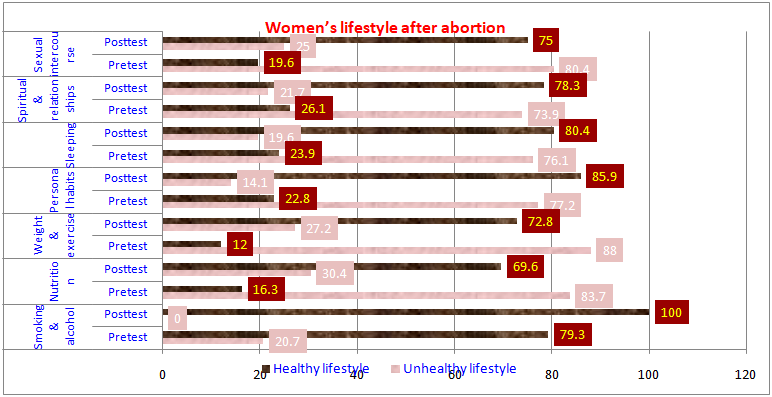
Table 2 and Figure 1 present that, 88% of the studied women had unhealthy lifestyle regarding weight and exercise which improved posttest to become 27.2%. There was a statistically significant improvement among the studied women regarding lifestyle sub-items posttest.
Table 3 presents that, 3.3% of the studied women had good level of impact of social networking sites after abortion which improved posttest to become 76.1%. There was a statistically significant improvement among the studied women regarding the total impact level of social networking sites on women after abortion posttest.
Table 4 shows that, the mean total knowledge of the studied women about abortion during pretest was 20.73±6.33 which improved posttest to become 34.04±6.76. Moreover, the mean during pretest for life style was 38.17±10.99 and improved to 68.33±10.38 posttest. For the mean of the impact of social networking; it was 8.15±3.05 in pretest that improved to 14.69±3.25 in posttest. There was a statistically significant improvement among the studied women regarding knowledge life style, and the impact of social media on abortion posttest (p value ≤0.01).
Table 5 shows that, there was no correlation between total knowledge, lifestyle and impact level of social networking sites on women after abortion during pretest. Also, there was correlation between total knowledge and impact level of social networking sites on women after abortion during posttest. While, there was positive correlation between total knowledge and total lifestyle level and between total lifestyle level and total impact level of social networking sites on women after abortion.

Abortion stigma is a major drawback for women seeking safe abortion services and the clinicians offering the services. Experienced stigma is the actual acts of discrimination and harassment by others whereas internalized stigma is the materialization of perceived and experienced stigma in feelings of guilt, shame, anxiety, and other negative feelings which influence on women’s life style 38, 39.
The current study was conducted to evaluate the impact of counseling based on PLISSIT model on post abortion women's life style. Regarding the total knowledge level about general and modern educational information on abortion, the current study reported that less than one-tenth of the studied women had a satisfactory level of knowledge during pre-counseling, which improved to more than three-quarters post-counseling. There was a statistically significant improvement in the total knowledge regarding modern educational information on abortion among the studied women following the counseling sessions.
This finding is in line with Turner et al. (2018), who reported that participants who began the workshop with the lowest level of knowledge experienced the greatest increase in knowledge scores regarding abortion, rising from 20.0 to 55.0 between the pre- and post-workshop surveys 40. Similarly, the current study is consistent with the findings of Ngo et al. (2023), who reported a statistically significant difference between pretest and posttest scores among the studied women regarding their total knowledge about abortion 41. This improvement may be attributed to the fact that the program was implemented in group settings using the PLISSIT model, which helped capture the participants' attention and motivation, especially since the topic had a personal relevance for them. As a result, the program had a significant and meaningful impact.
Concerning women’s lifestyle after abortion, the results revealed that the overall smoking and alcohol-related lifestyle after abortion, the present study reported that the majority of the studied women had a healthy lifestyle in relation to smoking and alcohol during the pre-counseling phase, which improved to include all of them post-counseling. This finding is in agreement with Hamadneh and Hamadneh (2023), who conducted a study entitled “The Impact of an Online Educational Program to Reduce Second-Hand Exposure to Smoke Among Nonsmoking Pregnant Women: A Hospital-Based Intervention Study” and found a statistically significant improvement in the women’s lifestyle regarding both active and passive smoking cessation 42. In contrast, this result is inconsistent with Bannour et al. (2023), who conducted a study entitled “Knowledge, Attitude and Practices on Second-Hand Smoke Exposure Among Pregnant Women” and reported that most of the studied women were smokers 43.
Regarding total nutritional habit, the present study reported that, most of the studied women had unhealthy nutritional habit during pre-counseling which improved to less than one-third of them during post implementation of counseling sessions. There was a statistically significant improvement among the studied women regarding nutritional life style after abortion post counseling. This study is similar to Mostafa et al. (2022), who conducted a study entitled “Effect of Health Belief Model-Based Educational Package on Lifestyle Among Gestational Diabetic Women,” and reported a highly statistically significant improvement in nutrition among the studied women post-counseling compared to pre-counseling 44.
Regarding overall weight management and exercise, the current study revealed that slightly less than one-fifth of the studied women had a healthy lifestyle related to weight and exercise during pre-counseling, which improved significantly to around three-quarters post-counseling. This finding aligns with Han et al. (2024), who reported a statistically significant improvement in weight management among the studied women post-intervention 45. Additionally, there was a statistically significant improvement in weight and exercise habits among the studied women after abortion following counseling sessions.
Additionally, this study’s finding is consistent with Ramadan et al. (2021), who reported that most of the studied women had unhealthy lifestyles concerning exercise practices. From the researcher’s point of view, this may reflect the positive impact of the counseling sessions in increasing women’s knowledge about the importance of maintaining normal weight and engaging in regular exercise, which in turn influenced their lifestyle behaviors 32.
Regarding total personal habits after abortion, the current study revealed that more than three-quarters of the studied women exhibited unhealthy lifestyle levels concerning personal habits during the pretest, which improved significantly to less than one-fifth during post-counseling. There was a statistically significant improvement among the studied women in their personal habits after abortion posttest. This finding is supported by Mirian et al. (2023), who reported a highly statistically significant improvement in personal and self-care behaviors post-abortion during posttest compared to pre-counseling 46.
Regarding total sleeping habits after abortion, the current study reported that more than three-quarters of the studied women had unhealthy sleeping habits during pre-counseling, which improved to around one-fifth during post-counseling. There was a statistically significant improvement among the studied women regarding sleeping habits after abortion post counseling. This result aligns with Kibira et al. (2023), who conducted a study entitled “Lived experiences and drivers of induced abortion among women in central Uganda” and reported that most women experienced sleeping problems for a long period post-abortion and resorted to medication to alleviate these issues 47. The study recommended training and educational programs to improve sleeping patterns and address sleep-related problems after abortion, noting that studies focusing on sleep post-abortion are limited. This may be attributed to that sleep problems in women after abortion may stem from psychological stress and fear, as women go through difficult emotional states and may begin to adopt random behaviors influenced by their feelings or advice from non-specialists, especially if they live within extended family environments 48.
In relation to total spiritual habits and relationships after abortion, the present study revealed that around three-quarters of the studied women had an unhealthy lifestyle level regarding spiritual habits and relationships during pretest, which improved to less than one-quarter of them during post counseling. There was a statistically significant improvement among the studied women regarding spiritual habits and relationships after abortion post counseling. These study findings align with Hassani et al. (2023), who found a statistically significant improvement among the studied women regarding their spiritual status and interpersonal relationships post-program compared to pre-program. They noted that more than half of the women had poor to moderate spiritual status at pretest, which improved post-program, with only about one-quarter continuing to experience poor spiritual status, unhealthy relationships, and anxiety 49.
Sexual issue is a crucial item for everyone; it affected by many factors 50, 51, 52, 53, 54. Regarding women’s sexual intercourse after abortion, the current study revealed that about one-fifth of the studied women had a healthy sexual intercourse during pre-counseling, which improved post-counseling to three-quarters of them. From the researcher’s point of view, this improvement may be attributed to the positive effect of counseling based on the PLISSIT model in enhancing women’s sexual intercourse. This finding aligns with Heera et al. (2021), who conducted a study entitled “Women’s empowerment for abortion and family planning decision making among marginalized women in Nepal” and found a statistically significant improvement in sexual lifestyle post-empowerment program compared to pretest 55. Additionally, this study agrees with Charlton et al. (2020), who, in their study “Sexual orientation differences in pregnancy and abortion across the life course,” revealed that about three-fifths of the studied women had a healthy sexual lifestyle 56.
Regarding the total lifestyle level after abortion, the current study revealed that about one-fifth of the studied women had a healthy lifestyle during pre-counseling, which improved post-counseling to most of them. From the researcher’s point of view, this improvement may be attributed to the positive effect of counseling based on the PLISSIT model in enhancing women’s lifestyle behaviors and practices across all dimensions. This finding is consistent with Huss (2021), who conducted a study entitled “Well-being before and after pregnancy termination: The consequences of abortion and miscarriage on satisfaction with various domains of life,” and found that the majority of studied women experienced temporary declines in overall lifestyle and life satisfaction post-abortion 57.
In relation to the impact of social networking sites on women after abortion, the present study found that only a minority of the studied women had a good level of positive impact from social networking sites after abortion during pre-counseling, which improved post counseling to more than two-thirds of them. There was a statistically significant improvement in the total impact level of social networking sites on women after abortion post counseling. From the researcher’s point of view, the widespread use of social media makes it essential to educate women on how to effectively utilize social networking sites, particularly for post-abortion counseling and support. This result was agreed with Hill et al., (2020) who carried out a study entitled “A mobile phone–based support intervention to increase use of Post abortion family planning in Cambodia” and mentioned that there was a statistically significant improvement among the studied women regarding using of mobile phone post abortion 58.
Concerning the correlation between total scores of knowledges, lifestyle, and total impact level of social networking sites on women after abortion during pre- and post-counseling, the current study revealed that during the pre-counseling, a statistically significant positive correlation was found only between the knowledge score and the total impact level, suggesting that women with better knowledge tended to perceive a greater impact of social networking sites. However, no statistically significant correlation was found between lifestyle and either knowledge or impact level. These findings are supported by the study of Araban et al. (2014), which emphasized the role of health education in enhancing both knowledge and lifestyle behaviors among women 59.
Additionally, the study by Fakhri et al. (2021) supports the idea that counseling can significantly enhance lifestyle dimensions, particularly in the context of reproductive health. In the researcher’s point of view, this might be related to the fact that women’s knowledge naturally affects their lifestyle and how they manage themselves after abortion 60.
If they have good knowledge about abortion and the post-abortion period, they tend to cope better with their lives and themselves. Also, the better information they gain through the internet and social media, the more it reflects positively on their lifestyle post abortion, and vice versa. On the other hand, during the post-implementation of counseling sessions, a strong positive correlation was observed between knowledge and lifestyle, and between lifestyle and total impact level. This indicates that as knowledge improved post-counseling, women also demonstrated healthier lifestyle choices, which in turn were associated with greater awareness of the impact of social networking sites. The correlation between knowledge and impact level was not statistically significant, suggesting that although knowledge increased, it may not have been the sole influencing factor on perceived impact.
This finding was in line with Samila & Mboineki (2024) in their recent study entitled “Knowledge level and constructs of the theory of planned behavior to the practice of unsafe abortion among postnatal mothers attending Mkonze Health Center, Dodoma Region, Tanzania,” who found that there was no significant association between knowledge level and self-care practices of women post abortion 61. These results reflect the effectiveness of the PLISSIT-based counseling in strengthening the link between knowledge and healthy lifestyle. Even though knowledge alone did not significantly correlate with perceived impact post-intervention, the indirect effect via lifestyle is notable. This suggests the importance of integrating lifestyle counseling alongside informational education in post-abortion care programs.
Based on the results of the current study, it was observed that there was no correlation between total knowledge, lifestyle and impact level of social networking sites on women after abortion during pretest. Also, there was correlation between total knowledge and impact level of social networking sites on women after abortion during posttest. While, there was positive correlation between total knowledge and total lifestyle level and between total lifestyle level and total impact level of social networking sites on women after abortion.
Developing an educational program to enhancing women’s knowledge regarding the using of social media properly, maximizing its advantages, introducing women to the most trustworthy and legitimate social media sites, and showing them how to use these resources to improve women’s life style after abortion.
| [1] | World Health Organization.(2012). Safe abortion, technical and policy guidance for health system (2nd ed.) World Health Organization. https://apps.who.int/iris/handle.10665.70914. | ||
| In article | |||
| [2] | Mostafa H., Yousef F., Hassan H. (2018). Health Related Quality of Life Educational Interventions: Effect on Chronic Hepatitis C Patients'. Saudi Journal of Nursing and Health Care, 1(2): 56-67. | ||
| In article | |||
| [3] | Hassan H., Gooda W., Ahmed T., Farag D. (2025). Marital, Sexual Satisfaction and Quality of Life among Post-hysterectomy Women: Impact of Nursing Counseling Guided by BETTER Model. Egyptian Journal of Health Care, 16 (1): 99-116. | ||
| In article | View Article | ||
| [4] | Nady F., Said M., Youness E., Hassan H. (2017). Impact of Tailored Educational Program of Quality of Life Improvement on Women Undergoing Breast Cancer Treatment at El-Minia Region, Egypt. American Research Journal of Gynaecology, 1(1): 1-17. | ||
| In article | |||
| [5] | Hassan H. (2020). Quality of Life with Gestational Diabetes. American Research Journal of Public Health, 3(1): 1-4. | ||
| In article | View Article | ||
| [6] | Emem E., Hassan H. (2017). Correlation between Quality Of Life and Dysmenorrhea among Nursing Schools Students. International Journal of Nursing Science, 7(6): 123-132. | ||
| In article | |||
| [7] | Nady F., Said M., Youness E., Hassan H. (2018). Effect of Nursing Intervention Program on Quality of Life Improvement for Women Undergoing Gynecological and Breast Cancer Treatment. Assuit Scientific Nursing Journal, 6(15): 62-77. | ||
| In article | View Article | ||
| [8] | Hassan H. (2020). Evidence-Based Practice in Midwifery and Maternity Nursing for Excellent Quality of Care Outcomes. American Journal of Nursing Research, 8(6): 606-607. | ||
| In article | View Article | ||
| [9] | Mohammed F., Shahin M., Youness E., Hassan H. (2018). Survivorship in Women Undergoing Gynecological and Breast Cancer Treatment in Upper Egypt: The Impact of Quality of Life Improvement Educational Program”. American Research Journal of Gynaecolog 2(1): 1-28. | ||
| In article | |||
| [10] | Nady F., El-Sherbiny M., Youness E., Hassan H. (2018). Effectiveness of Quality of Life Planned Teaching Program on Women Undergoing Gynecologic Cancer Treatment. American Research Journal of Oncology, 1(1): 1-17. | ||
| In article | |||
| [11] | Hassan H & Farag D. (2019). The impact of polycystic ovary syndrome on women’s quality of life: Nursing guidelines for its management. Clinical Nursing Studies, 7(3):42-57. | ||
| In article | View Article | ||
| [12] | Feizollahi, N., Nahidi, F., Sereshti, M., Nasiri, M., & Azadpour, A. (2020): Evaluation of Quality of Life in Women with Abortion Experience in Tehran 2015 - 2016. Advances in Nursing and Midwifery, 29(1), 8-15. Retrieved from file: ///C:/Users/ Windows%20Company/Downloads/114120200102%20(1).pdf. | ||
| In article | |||
| [13] | Hassan H. (2019). The Impact of Evidence-Based Nursing as The Foundation for Professional Maternity Nursing Practices. Open Access Journal of Reproductive System and Sexual Disorder, 2(2): 195-197. OAJRSD.MS.ID.000135. | ||
| In article | |||
| [14] | Hassan H., Ahmed W., Ahmed Arafa A. (2019). Physical Activity and Menstrual Disorders Аmong School Girls in Southern Egypt. International Journal of Studies in Nursing, 4(3): 54-59. | ||
| In article | View Article | ||
| [15] | Mohamed W., Hassan H. (2020). Effect of Instructional Supportive Guideline for Improving Women's Awareness towards Endometriosis. American Journal of Nursing Research, 8(1): 38-47. | ||
| In article | |||
| [16] | Hassan H., Abd-ELhakam F., Kasem E. (2025). Androgen-related Alopecia and Infertility: Impact of Lifestyle Modifications. International Journal of Clinical Research and Reports, 4(2): 1-6. | ||
| In article | |||
| [17] | Hassan H., Abd-ELhakam F., Ali E. (2025). Effect of Life Style Modification Implemented Program among Infertile Women with Poly Cystic Ovary Syndrome on Obesity and Menstrual Regulation. Journal of Clinical and Laboratory Research, 8(2): 1-7. | ||
| In article | View Article | ||
| [18] | Rinehart, W., Rudy, S., & Drennan, M. (1998): GATHER guide to counseling. Population reports. Series J, Family planning programs, 234(48):1-31 | ||
| In article | |||
| [19] | Malk R., Fahem E., Hassan H., Soultan A. (2022). Efficacy of Training Program on Nurses Performance regarding Preventive Measures of Venous Thromboembolism among Critical Pregnant Women. Egyptian Journal of Health Care, 13(2): 401-413. | ||
| In article | View Article | ||
| [20] | Ali M., Elshabory N., Hassan H., Zahra N., Alrefai H. (2018). Perception about Premarital Screening and Genetic Counseling among Males and Females Nursing Students. IOSR Journal of Nursing and Health Science, 7(1): 51-57. | ||
| In article | |||
| [21] | Hassan H., Saber N., Sheha E. (2019). Comprehension of Dyspareunia and Related Anxiety among Northern Upper Egyptian women: Impact of Nursing Consultation Context Using PLISSIT Model. Nursing & Care Open Access Journal, 6(1): 1-19. | ||
| In article | View Article | ||
| [22] | Hassan H., Gamel W., Sheha E., Sayed M., Arafa A. (2019). Menstrual disorders Necessitating Counseling among Students in Beni-Suef University. Clinical Nursing Studies, 7(2): 29-36. | ||
| In article | View Article | ||
| [23] | Hassan H., Eid S., Hassan A., Abou-Shabana K. (2022). Pre-Gynecological Examination: Impact Counseling on Women’s Pain, Discomfort, and Satisfaction. American Journal of Public Health Research, 10(2): 63-75 | ||
| In article | View Article | ||
| [24] | Abou-Shabana K., Hassan A., Eid S., Hassan H. (2022). Effect of Counseling Sessions on Women’s Satisfaction during Gynecological Examination. Journal of Obstetrics Gynecology and Reproductive Sciences, 6(4): 1-10. | ||
| In article | View Article | ||
| [25] | Eid S., Abou-Shabana K., Hassan A., Hassan H. (2023). Effect of Pre-Gynecological Examination Counseling Sessions on Relieving Women’s Pain, Discomfort and Enhancing their Satisfaction. Journal of Nursing Science - Benha University, 4(1): 751-768. | ||
| In article | View Article | ||
| [26] | Ramadan E., Eldesokey A., Hassan H. (2020). Effect of an Educational Package on Knowledge, Practices, and Attitude of Premenopausal Women Regarding Sexuality. American Journal of Nursing Research, 8(5): 495-505. | ||
| In article | |||
| [27] | Qian, J. L., Pan, P. E., Wu, M. W., Zheng, Q., Sun, S. W., Liu, L., ... & Yu, X. Y. (2021): The experiences of nurses and midwives who provide surgical abortion care: A qualitative systematic review. Journal of advanced nursing, 77(9), 3644-3656. | ||
| In article | View Article PubMed | ||
| [28] | Dutta, A. P. (2025): From Chaos to Clarity: How Social Work Skills Can Change Your Life. Notion Press. 632(5)5426378. | ||
| In article | |||
| [29] | Lee, L., Ma, W., Davies, S., & Kammers, M. (2023): Toward optimal emotional care during the experience of miscarriage: an integrative review of the perspectives of women, partners, and health care providers. Journal of Midwifery & Women's Health, 68(1), 52-61. | ||
| In article | View Article PubMed | ||
| [30] | Musik, T., Grimm, J., Juhasz-Böss, I., & Bäz, E. (2021): Treatment options after a diagnosis of early miscarriage: expectant, medical, and surgical. Deutsches Ärzteblatt International, 118(46), 789. | ||
| In article | View Article PubMed | ||
| [31] | Foster, A. M., Arnott, G., Hobstetter, M., Zaw, H., Maung, C., Sietstra, C., & Walsh, M. (2016): Establishing a referral system for safe and legal abortion care: a pilot project on the Thailand-Burma border. International Perspectives on Sexual and Reproductive Health, 42(3):7836. | ||
| In article | View Article PubMed | ||
| [32] | Ramadan, A., Abo Shabana, K., & Mossa, S. (2021): Assessment of post abortion woman lifestyle. Egyptian Journal of Health Care, 12(3), 831-842. | ||
| In article | View Article | ||
| [33] | Attali, L., Voillot, P., Fournet, P., & Agostini, A. (2024): Experiences of women with medical abortion care reflected in social media (VEILLE study): Noninterventional retrospective exploratory Infodemiology study. JMIR Infodemiology, 4, e49335. | ||
| In article | View Article PubMed | ||
| [34] | Zolfaqari, Z., Ayatollahi, H., Ranjbar, F., & Abasi, A. (2024): Acceptance and use of mobile health technology in post-abortion care. BMC Health Services Research, 24(1). | ||
| In article | View Article PubMed | ||
| [35] | Turesheva, A., Aimagambetova, G., Ukybassova, T., Marat, A., Kanabekova, P., Kaldygulova, L., & Atageldiyeva, K. (2023): Recurrent pregnancy loss etiology, risk factors, diagnosis, and management. Fresh look into a full box. Journal of Clinical Medicine, 12(12), 4074. | ||
| In article | View Article PubMed | ||
| [36] | Haghighi, M., Oladbaniadam, K., Mohaddesi, H., & Rasuli, J. (2022): Individual counseling in mothers bereaved by pregnancy loss. Journal of Education and Health Promotion, 11(1), 209. | ||
| In article | View Article PubMed | ||
| [37] | Keshavarz, Z., Karimi, E., Golezar, S., Ozgoli, G., & Nasiri, M. (2021): The effect of PLISSIT based counseling model on sexual function, quality of life, and sexual distress in women surviving breast cancer: A single-group pretest–posttest trial. BMC Women's Health, 21(1). | ||
| In article | View Article PubMed | ||
| [38] | Saeed, S., Jain, S., Emma, N., Afzali, H., Razaqi, N., Ahmadi, M., & Lucero-Prisno III, D. E. (2022): Knowledge and attitude towards abortion among women in= Afghanistan. Razi International Medical Journal, 2(2), 52-62. | ||
| In article | View Article | ||
| [39] | Nashed N., Hassan H., Gooda W. Impact of Post Abortion Counseling Based on PLISSIT Model on Women's Life Style. Egyptian Journal of Health Care, 2025; 16 (2): 1009-1028. | ||
| In article | View Article | ||
| [40] | Turner, K. L., Pearson, E., George, A., & Andersen, K. L. (2018): Values clarification workshops to improve abortion knowledge, attitudes and intentions: A pre-post assessment in 12 countries. Reproductive Health, 15(1). | ||
| In article | View Article PubMed | ||
| [41] | Ngo, A., Nguyen, V. T., Phan, H., Pham, V., Ngo, C., Nguyen, L., & Ha, T. (2023): Effectiveness of mHealth intervention on safe abortion knowledge and perceived barriers to safe abortion services among female sex workers in Vietnam. mHealth, 9, 3-3. | ||
| In article | View Article PubMed | ||
| [42] | Hamadneh, J., & Hamadneh, S. (2023): The impact of an online educational program to reduce second-hand exposure to smoke among nonsmoking pregnant women; a hospital-based intervention study. Heliyon, 9(4), e13148. | ||
| In article | View Article PubMed | ||
| [43] | Bannour, B., Bannour, R., & Bannour, I. (2023): Knowledge, attitude and practices on second hand smoke exposure among pregnant women. Population, Medicine, 5(Supplement). 918(53). 732. | ||
| In article | View Article | ||
| [44] | Mostafa, M., Morsy, H., & Abdo Hussien, A. (2022): Effect of health belief model based educational package on lifestyle among gestational diabetic women. Egyptian Journal of Health Care, 13(4), 1277-1292. | ||
| In article | View Article | ||
| [45] | Han, Y., Sung, H., Kim, G., Ryu, Y., Yoon, J., & Kim, Y. S. (2024): Effects of a web-based weight management education program on various factors for overweight and obese women: Randomized controlled trial. JMIR Cardio, 8, e42402. | ||
| In article | View Article PubMed | ||
| [46] | Mirian, Z., AbdiShahshahani, M., Noroozi, M., Mostafavi, F., & Beigi, M. (2023): Effect of intervention based on the 5a self-management model on the improvement of behaviors related to women's reproductive health after legal abortion. Scientific Reports, 13(1). | ||
| In article | View Article PubMed | ||
| [47] | Kibira, S. P., Stillman, M., Makumbi, F. E., Giorgio, M., Nabukeera, S., Nalwoga, G. K., & Sully, E. A. (2023): Lived experiences and drivers of induced abortion among women in central Uganda. PLOS Global Public Health, 3(12), e0002236. | ||
| In article | View Article PubMed | ||
| [48] | Farag D. & Hassan H. Maternal Postpartum Sleep disturbance and Fatigue: Factors Influencing. ARC Journal of Nursing and Healthcare, 2019; 5(2): 33-46. | ||
| In article | |||
| [49] | Hassani, R., Fadlalmola, H., Said, T., AlZahrani, B., & Mariod, A. (2023): Effect of a psycho-awareness-training program on women's attitude and psychosomatic status post-abortion in Jazan, Saudi Arabia. Afr J Reprod Health, 27(8), 58-64. | ||
| In article | |||
| [50] | Hassan H., Ebrahim R., Mohammed M., Abd-ELhakam F. (2022). Female Genital Mutilation: Impact on Knowledge, Attitude, Sexual Score Domains and Intention of Females in Northern Upper Egypt. Archives of Medical Case Reports and Case Study, 6(5): 1-8. | ||
| In article | View Article | ||
| [51] | Hassan H., Mohammed M., Abd-ELhakam F., Ebrahim R. (2023). Female Genital Mutilation: Study Sexual Issues. Journal of Gynecology and Women’s Health, 24(4): 1-8. | ||
| In article | View Article | ||
| [52] | Hassan H., Ali R., Abd El Salam S., Kamal H. (2021). Impact of an Educational Program on Sexual Dysfunction Associated With Cervical Cancer. Journal of Cancer Research and Treatment, 9(2): 22-31. | ||
| In article | |||
| [53] | Hassan H., Ramadan S., Ali R., Kamal H. (2021). Sexual Issues among Cervical Cancer Survivors' Women in Northern Upper Egypt. Journal of Advanced Trends in Basic and Applied Science, 1(1): 1-11. | ||
| In article | |||
| [54] | Masaud H., Abd Rabo R., Ramadan S. Hassan H. (2021). Impact of Protocol of Nursing Intervention on Sexual Dysfunction among Women with Cervical Cancer. Journal of Nursing Science Benha University, 2(2): 203-224. | ||
| In article | View Article | ||
| [55] | Heera, K., Shrestha, M., Pokharel, N., Niraula, S. R., Pyakurel, P., & Parajuli, S. B. (2021): Women’s empowerment for abortion and family planning decision making among marginalized women in Nepal: A mixed method study. Reproductive Health, 18(1). | ||
| In article | View Article PubMed | ||
| [56] | Charlton, B. M., Everett, B. G., Light, A., Jones, R. K., Janiak, E., Gaskins, A. J., & Austin, S. B. (2020): Sexual orientation differences in pregnancy and abortion across the Lifecourse. Women's Health Issues, 30(2), 65-72. | ||
| In article | View Article PubMed | ||
| [57] | Huss, B. (2021): Well-being before and after pregnancy termination: The consequences of abortion and miscarriage on satisfaction with various domains of life. Journal of Happiness Studies, 22(6), 2803-2828. | ||
| In article | View Article | ||
| [58] | Hill, J., McGinn, J., Cairns, J., Free, C., & Smith, C. (2020): A mobile phone–based support intervention to increase use of Postabortion family planning in Cambodia. JMIR mHealth and uHealth, 8(2), e16276. | ||
| In article | View Article PubMed | ||
| [59] | Araban, M., Karimy, M., Mesrabadi, J., & Zamani-Alavijeh, F. (2014). The impact of educational intervention on health-promoting lifestyle: A randomized controlled trial. Iranian Red Crescent Medical Journal, 16(6), e19259. | ||
| In article | |||
| [60] | Fakhri, M., Hamzehgardeshi, Z., & Hajikhani Golchin, N. A. (2021). The effect of counseling on lifestyle improvement in reproductive health: A systematic review. Journal of Education and Health Promotion, 10, 218. | ||
| In article | |||
| [61] | Samila, I. A., & Mboineki, J. F. (2024): Knowledge level and constructs of the theory of planned behaviour (TPB) to the practice of unsafe abortion among postnatal mothers attending Mkonze health center, Dodoma region, Tanzania. BMC Public Health, 24(1)67. | ||
| In article | View Article PubMed | ||
Published with license by Science and Education Publishing, Copyright © 2025 Hanan Elzeblawy Hassan, Walaa Khalaf Gooda and Noha Nasser Nashed
 This work is licensed under a Creative Commons Attribution 4.0 International License. To view a copy of this license, visit
http://creativecommons.org/licenses/by/4.0/
This work is licensed under a Creative Commons Attribution 4.0 International License. To view a copy of this license, visit
http://creativecommons.org/licenses/by/4.0/
| [1] | World Health Organization.(2012). Safe abortion, technical and policy guidance for health system (2nd ed.) World Health Organization. https://apps.who.int/iris/handle.10665.70914. | ||
| In article | |||
| [2] | Mostafa H., Yousef F., Hassan H. (2018). Health Related Quality of Life Educational Interventions: Effect on Chronic Hepatitis C Patients'. Saudi Journal of Nursing and Health Care, 1(2): 56-67. | ||
| In article | |||
| [3] | Hassan H., Gooda W., Ahmed T., Farag D. (2025). Marital, Sexual Satisfaction and Quality of Life among Post-hysterectomy Women: Impact of Nursing Counseling Guided by BETTER Model. Egyptian Journal of Health Care, 16 (1): 99-116. | ||
| In article | View Article | ||
| [4] | Nady F., Said M., Youness E., Hassan H. (2017). Impact of Tailored Educational Program of Quality of Life Improvement on Women Undergoing Breast Cancer Treatment at El-Minia Region, Egypt. American Research Journal of Gynaecology, 1(1): 1-17. | ||
| In article | |||
| [5] | Hassan H. (2020). Quality of Life with Gestational Diabetes. American Research Journal of Public Health, 3(1): 1-4. | ||
| In article | View Article | ||
| [6] | Emem E., Hassan H. (2017). Correlation between Quality Of Life and Dysmenorrhea among Nursing Schools Students. International Journal of Nursing Science, 7(6): 123-132. | ||
| In article | |||
| [7] | Nady F., Said M., Youness E., Hassan H. (2018). Effect of Nursing Intervention Program on Quality of Life Improvement for Women Undergoing Gynecological and Breast Cancer Treatment. Assuit Scientific Nursing Journal, 6(15): 62-77. | ||
| In article | View Article | ||
| [8] | Hassan H. (2020). Evidence-Based Practice in Midwifery and Maternity Nursing for Excellent Quality of Care Outcomes. American Journal of Nursing Research, 8(6): 606-607. | ||
| In article | View Article | ||
| [9] | Mohammed F., Shahin M., Youness E., Hassan H. (2018). Survivorship in Women Undergoing Gynecological and Breast Cancer Treatment in Upper Egypt: The Impact of Quality of Life Improvement Educational Program”. American Research Journal of Gynaecolog 2(1): 1-28. | ||
| In article | |||
| [10] | Nady F., El-Sherbiny M., Youness E., Hassan H. (2018). Effectiveness of Quality of Life Planned Teaching Program on Women Undergoing Gynecologic Cancer Treatment. American Research Journal of Oncology, 1(1): 1-17. | ||
| In article | |||
| [11] | Hassan H & Farag D. (2019). The impact of polycystic ovary syndrome on women’s quality of life: Nursing guidelines for its management. Clinical Nursing Studies, 7(3):42-57. | ||
| In article | View Article | ||
| [12] | Feizollahi, N., Nahidi, F., Sereshti, M., Nasiri, M., & Azadpour, A. (2020): Evaluation of Quality of Life in Women with Abortion Experience in Tehran 2015 - 2016. Advances in Nursing and Midwifery, 29(1), 8-15. Retrieved from file: ///C:/Users/ Windows%20Company/Downloads/114120200102%20(1).pdf. | ||
| In article | |||
| [13] | Hassan H. (2019). The Impact of Evidence-Based Nursing as The Foundation for Professional Maternity Nursing Practices. Open Access Journal of Reproductive System and Sexual Disorder, 2(2): 195-197. OAJRSD.MS.ID.000135. | ||
| In article | |||
| [14] | Hassan H., Ahmed W., Ahmed Arafa A. (2019). Physical Activity and Menstrual Disorders Аmong School Girls in Southern Egypt. International Journal of Studies in Nursing, 4(3): 54-59. | ||
| In article | View Article | ||
| [15] | Mohamed W., Hassan H. (2020). Effect of Instructional Supportive Guideline for Improving Women's Awareness towards Endometriosis. American Journal of Nursing Research, 8(1): 38-47. | ||
| In article | |||
| [16] | Hassan H., Abd-ELhakam F., Kasem E. (2025). Androgen-related Alopecia and Infertility: Impact of Lifestyle Modifications. International Journal of Clinical Research and Reports, 4(2): 1-6. | ||
| In article | |||
| [17] | Hassan H., Abd-ELhakam F., Ali E. (2025). Effect of Life Style Modification Implemented Program among Infertile Women with Poly Cystic Ovary Syndrome on Obesity and Menstrual Regulation. Journal of Clinical and Laboratory Research, 8(2): 1-7. | ||
| In article | View Article | ||
| [18] | Rinehart, W., Rudy, S., & Drennan, M. (1998): GATHER guide to counseling. Population reports. Series J, Family planning programs, 234(48):1-31 | ||
| In article | |||
| [19] | Malk R., Fahem E., Hassan H., Soultan A. (2022). Efficacy of Training Program on Nurses Performance regarding Preventive Measures of Venous Thromboembolism among Critical Pregnant Women. Egyptian Journal of Health Care, 13(2): 401-413. | ||
| In article | View Article | ||
| [20] | Ali M., Elshabory N., Hassan H., Zahra N., Alrefai H. (2018). Perception about Premarital Screening and Genetic Counseling among Males and Females Nursing Students. IOSR Journal of Nursing and Health Science, 7(1): 51-57. | ||
| In article | |||
| [21] | Hassan H., Saber N., Sheha E. (2019). Comprehension of Dyspareunia and Related Anxiety among Northern Upper Egyptian women: Impact of Nursing Consultation Context Using PLISSIT Model. Nursing & Care Open Access Journal, 6(1): 1-19. | ||
| In article | View Article | ||
| [22] | Hassan H., Gamel W., Sheha E., Sayed M., Arafa A. (2019). Menstrual disorders Necessitating Counseling among Students in Beni-Suef University. Clinical Nursing Studies, 7(2): 29-36. | ||
| In article | View Article | ||
| [23] | Hassan H., Eid S., Hassan A., Abou-Shabana K. (2022). Pre-Gynecological Examination: Impact Counseling on Women’s Pain, Discomfort, and Satisfaction. American Journal of Public Health Research, 10(2): 63-75 | ||
| In article | View Article | ||
| [24] | Abou-Shabana K., Hassan A., Eid S., Hassan H. (2022). Effect of Counseling Sessions on Women’s Satisfaction during Gynecological Examination. Journal of Obstetrics Gynecology and Reproductive Sciences, 6(4): 1-10. | ||
| In article | View Article | ||
| [25] | Eid S., Abou-Shabana K., Hassan A., Hassan H. (2023). Effect of Pre-Gynecological Examination Counseling Sessions on Relieving Women’s Pain, Discomfort and Enhancing their Satisfaction. Journal of Nursing Science - Benha University, 4(1): 751-768. | ||
| In article | View Article | ||
| [26] | Ramadan E., Eldesokey A., Hassan H. (2020). Effect of an Educational Package on Knowledge, Practices, and Attitude of Premenopausal Women Regarding Sexuality. American Journal of Nursing Research, 8(5): 495-505. | ||
| In article | |||
| [27] | Qian, J. L., Pan, P. E., Wu, M. W., Zheng, Q., Sun, S. W., Liu, L., ... & Yu, X. Y. (2021): The experiences of nurses and midwives who provide surgical abortion care: A qualitative systematic review. Journal of advanced nursing, 77(9), 3644-3656. | ||
| In article | View Article PubMed | ||
| [28] | Dutta, A. P. (2025): From Chaos to Clarity: How Social Work Skills Can Change Your Life. Notion Press. 632(5)5426378. | ||
| In article | |||
| [29] | Lee, L., Ma, W., Davies, S., & Kammers, M. (2023): Toward optimal emotional care during the experience of miscarriage: an integrative review of the perspectives of women, partners, and health care providers. Journal of Midwifery & Women's Health, 68(1), 52-61. | ||
| In article | View Article PubMed | ||
| [30] | Musik, T., Grimm, J., Juhasz-Böss, I., & Bäz, E. (2021): Treatment options after a diagnosis of early miscarriage: expectant, medical, and surgical. Deutsches Ärzteblatt International, 118(46), 789. | ||
| In article | View Article PubMed | ||
| [31] | Foster, A. M., Arnott, G., Hobstetter, M., Zaw, H., Maung, C., Sietstra, C., & Walsh, M. (2016): Establishing a referral system for safe and legal abortion care: a pilot project on the Thailand-Burma border. International Perspectives on Sexual and Reproductive Health, 42(3):7836. | ||
| In article | View Article PubMed | ||
| [32] | Ramadan, A., Abo Shabana, K., & Mossa, S. (2021): Assessment of post abortion woman lifestyle. Egyptian Journal of Health Care, 12(3), 831-842. | ||
| In article | View Article | ||
| [33] | Attali, L., Voillot, P., Fournet, P., & Agostini, A. (2024): Experiences of women with medical abortion care reflected in social media (VEILLE study): Noninterventional retrospective exploratory Infodemiology study. JMIR Infodemiology, 4, e49335. | ||
| In article | View Article PubMed | ||
| [34] | Zolfaqari, Z., Ayatollahi, H., Ranjbar, F., & Abasi, A. (2024): Acceptance and use of mobile health technology in post-abortion care. BMC Health Services Research, 24(1). | ||
| In article | View Article PubMed | ||
| [35] | Turesheva, A., Aimagambetova, G., Ukybassova, T., Marat, A., Kanabekova, P., Kaldygulova, L., & Atageldiyeva, K. (2023): Recurrent pregnancy loss etiology, risk factors, diagnosis, and management. Fresh look into a full box. Journal of Clinical Medicine, 12(12), 4074. | ||
| In article | View Article PubMed | ||
| [36] | Haghighi, M., Oladbaniadam, K., Mohaddesi, H., & Rasuli, J. (2022): Individual counseling in mothers bereaved by pregnancy loss. Journal of Education and Health Promotion, 11(1), 209. | ||
| In article | View Article PubMed | ||
| [37] | Keshavarz, Z., Karimi, E., Golezar, S., Ozgoli, G., & Nasiri, M. (2021): The effect of PLISSIT based counseling model on sexual function, quality of life, and sexual distress in women surviving breast cancer: A single-group pretest–posttest trial. BMC Women's Health, 21(1). | ||
| In article | View Article PubMed | ||
| [38] | Saeed, S., Jain, S., Emma, N., Afzali, H., Razaqi, N., Ahmadi, M., & Lucero-Prisno III, D. E. (2022): Knowledge and attitude towards abortion among women in= Afghanistan. Razi International Medical Journal, 2(2), 52-62. | ||
| In article | View Article | ||
| [39] | Nashed N., Hassan H., Gooda W. Impact of Post Abortion Counseling Based on PLISSIT Model on Women's Life Style. Egyptian Journal of Health Care, 2025; 16 (2): 1009-1028. | ||
| In article | View Article | ||
| [40] | Turner, K. L., Pearson, E., George, A., & Andersen, K. L. (2018): Values clarification workshops to improve abortion knowledge, attitudes and intentions: A pre-post assessment in 12 countries. Reproductive Health, 15(1). | ||
| In article | View Article PubMed | ||
| [41] | Ngo, A., Nguyen, V. T., Phan, H., Pham, V., Ngo, C., Nguyen, L., & Ha, T. (2023): Effectiveness of mHealth intervention on safe abortion knowledge and perceived barriers to safe abortion services among female sex workers in Vietnam. mHealth, 9, 3-3. | ||
| In article | View Article PubMed | ||
| [42] | Hamadneh, J., & Hamadneh, S. (2023): The impact of an online educational program to reduce second-hand exposure to smoke among nonsmoking pregnant women; a hospital-based intervention study. Heliyon, 9(4), e13148. | ||
| In article | View Article PubMed | ||
| [43] | Bannour, B., Bannour, R., & Bannour, I. (2023): Knowledge, attitude and practices on second hand smoke exposure among pregnant women. Population, Medicine, 5(Supplement). 918(53). 732. | ||
| In article | View Article | ||
| [44] | Mostafa, M., Morsy, H., & Abdo Hussien, A. (2022): Effect of health belief model based educational package on lifestyle among gestational diabetic women. Egyptian Journal of Health Care, 13(4), 1277-1292. | ||
| In article | View Article | ||
| [45] | Han, Y., Sung, H., Kim, G., Ryu, Y., Yoon, J., & Kim, Y. S. (2024): Effects of a web-based weight management education program on various factors for overweight and obese women: Randomized controlled trial. JMIR Cardio, 8, e42402. | ||
| In article | View Article PubMed | ||
| [46] | Mirian, Z., AbdiShahshahani, M., Noroozi, M., Mostafavi, F., & Beigi, M. (2023): Effect of intervention based on the 5a self-management model on the improvement of behaviors related to women's reproductive health after legal abortion. Scientific Reports, 13(1). | ||
| In article | View Article PubMed | ||
| [47] | Kibira, S. P., Stillman, M., Makumbi, F. E., Giorgio, M., Nabukeera, S., Nalwoga, G. K., & Sully, E. A. (2023): Lived experiences and drivers of induced abortion among women in central Uganda. PLOS Global Public Health, 3(12), e0002236. | ||
| In article | View Article PubMed | ||
| [48] | Farag D. & Hassan H. Maternal Postpartum Sleep disturbance and Fatigue: Factors Influencing. ARC Journal of Nursing and Healthcare, 2019; 5(2): 33-46. | ||
| In article | |||
| [49] | Hassani, R., Fadlalmola, H., Said, T., AlZahrani, B., & Mariod, A. (2023): Effect of a psycho-awareness-training program on women's attitude and psychosomatic status post-abortion in Jazan, Saudi Arabia. Afr J Reprod Health, 27(8), 58-64. | ||
| In article | |||
| [50] | Hassan H., Ebrahim R., Mohammed M., Abd-ELhakam F. (2022). Female Genital Mutilation: Impact on Knowledge, Attitude, Sexual Score Domains and Intention of Females in Northern Upper Egypt. Archives of Medical Case Reports and Case Study, 6(5): 1-8. | ||
| In article | View Article | ||
| [51] | Hassan H., Mohammed M., Abd-ELhakam F., Ebrahim R. (2023). Female Genital Mutilation: Study Sexual Issues. Journal of Gynecology and Women’s Health, 24(4): 1-8. | ||
| In article | View Article | ||
| [52] | Hassan H., Ali R., Abd El Salam S., Kamal H. (2021). Impact of an Educational Program on Sexual Dysfunction Associated With Cervical Cancer. Journal of Cancer Research and Treatment, 9(2): 22-31. | ||
| In article | |||
| [53] | Hassan H., Ramadan S., Ali R., Kamal H. (2021). Sexual Issues among Cervical Cancer Survivors' Women in Northern Upper Egypt. Journal of Advanced Trends in Basic and Applied Science, 1(1): 1-11. | ||
| In article | |||
| [54] | Masaud H., Abd Rabo R., Ramadan S. Hassan H. (2021). Impact of Protocol of Nursing Intervention on Sexual Dysfunction among Women with Cervical Cancer. Journal of Nursing Science Benha University, 2(2): 203-224. | ||
| In article | View Article | ||
| [55] | Heera, K., Shrestha, M., Pokharel, N., Niraula, S. R., Pyakurel, P., & Parajuli, S. B. (2021): Women’s empowerment for abortion and family planning decision making among marginalized women in Nepal: A mixed method study. Reproductive Health, 18(1). | ||
| In article | View Article PubMed | ||
| [56] | Charlton, B. M., Everett, B. G., Light, A., Jones, R. K., Janiak, E., Gaskins, A. J., & Austin, S. B. (2020): Sexual orientation differences in pregnancy and abortion across the Lifecourse. Women's Health Issues, 30(2), 65-72. | ||
| In article | View Article PubMed | ||
| [57] | Huss, B. (2021): Well-being before and after pregnancy termination: The consequences of abortion and miscarriage on satisfaction with various domains of life. Journal of Happiness Studies, 22(6), 2803-2828. | ||
| In article | View Article | ||
| [58] | Hill, J., McGinn, J., Cairns, J., Free, C., & Smith, C. (2020): A mobile phone–based support intervention to increase use of Postabortion family planning in Cambodia. JMIR mHealth and uHealth, 8(2), e16276. | ||
| In article | View Article PubMed | ||
| [59] | Araban, M., Karimy, M., Mesrabadi, J., & Zamani-Alavijeh, F. (2014). The impact of educational intervention on health-promoting lifestyle: A randomized controlled trial. Iranian Red Crescent Medical Journal, 16(6), e19259. | ||
| In article | |||
| [60] | Fakhri, M., Hamzehgardeshi, Z., & Hajikhani Golchin, N. A. (2021). The effect of counseling on lifestyle improvement in reproductive health: A systematic review. Journal of Education and Health Promotion, 10, 218. | ||
| In article | |||
| [61] | Samila, I. A., & Mboineki, J. F. (2024): Knowledge level and constructs of the theory of planned behaviour (TPB) to the practice of unsafe abortion among postnatal mothers attending Mkonze health center, Dodoma region, Tanzania. BMC Public Health, 24(1)67. | ||
| In article | View Article PubMed | ||