Objective: Adherence to fluid restrictions is critical in patients undergoing hemodialysis (HD). However, limiting fluid intake is the most stressful aspect of treatment in this population. This study aimed to determine the level of fluid control and its predictors among patients undergoing HD. Methods: A cross-sectional study was conducted with a convenience sample of 110 patients treated in two HD centers in Türkiye, using an information form and the Fluid Control in Hemodialysis Patients Scale (FCHPS). Multivariate linear regression analysis with backward elimination was performed to examine the predictors of fluid control. Results: The mean FCHPS total score (47.26 ± 13.82) was slightly lower than a moderate level of fluid control. The body mass index (BMI; unstandardized β = −0.44, 95% Confidence Interval (CI) [-0.80, -0.07], p = 0.021), the interdialytic weight gain (IWG; unstandardized β = −7.24, 95% CI [-9.20, -5.29], p < 0.001), and the Visual Analog Scale (VAS) thirst score (unstandardized β = −0.84, 95% CI [-1.68, -0.01], p = 0.043) were independent predictors for the FCHPS scores, after controlling for all other independent variables. Approximately 57.8% of the variance in fluid control was explained by BMI, IWG, and the VAS thirst score. Conclusion: The study revealed that fluid control is a challenging issue for patients undergoing HD. The patients with higher BMI, IWG, and thirst intensity were more likely to have difficulty with fluid control. A greater understanding of fluid control and its related factors could contribute to developing tailored interventions.
Currently, hemodialysis (HD) is widely used for end-stage renal disease in the world 1. Similarly, the data obtained in Türkiye indicates that HD is used more frequently (71.2%) than other treatment regimens (24.7% renal transplantation, and 4.1% peritoneal dialysis). In addition, cardiovascular diseases are the leading cause of death in patients undergoing HD, accounting for 46.3% of all deaths 2.
One of the main parameters of cardiovascular morbidity and mortality in this population is fluid overload 3, 4. Fluid or volume overload (hypervolemia), which is also related to decreased quality of life and increased healthcare costs 4, is defined as “an excess of extracellular fluid beyond the body's homeostatic capacity which manifests as increased total body water leading to venous and pulmonary congestion” [3, p. 1]. Therefore, adherence to diet and fluid restrictions is critical in patients undergoing HD. However, limiting fluid intake is the most stressful and challenging aspect of HD treatment 4, 5, 6, 7, 8. The prevalence of nonadherence with fluid restriction varies in the literature, depending on methodological differences or measurement methods used. A meta-analysis of studies published between 2000 and 2020 reported that the worldwide prevalence of nonadherence with fluid restriction in patients undergoing HD was 60.6%, ranging from 50.0% and 70.7% 9.
Several studies have also demonstrated that nonadherence with fluid restrictions was more common among younger 6, 10, 11, males, smokers 11, and patients with lower levels of perceived social support 5, 11. Many factors contribute to adherence to fluid restriction in patients undergoing HD, but the results of relevant studies are contradictory. For example, Kugler et al. 11 demonstrated an increased nonadherence rate to fluid restriction among patients with longer HD duration, whereas other studies found no such association 5, 10. Kara 6 also indicated that married patients were likelier to have nonadherence to fluid restrictions, while Halle 10 suggested that unmarried patients were more at risk for nonadherence. Another study showed that nonadherence to fluid restrictions was associated with salt-restricted diet-related beliefs 5. Furthermore, in the limited number of studies conducted on fluid control in patients undergoing HD, fluid control was found to be influenced by various factors, including gender, education level, marital status, illness perception 12, age, body mass index (BMI), interdialytic weight gain (IWG), sodium intake control 13, nonadherence with diet and fluid restrictions 14, auricular acupressure 4, and education programs 4, 15.
Consequently, maintaining rigorous fluid control is an increasing health concern for every patient undergoing HD 4, 12, 13, 14, and innovative approaches for improving fluid management are recommended 3, 16. Although there are many studies on adherence to fluid restriction in this population, there are very few studies on fluid control. Therefore, the purpose of this study was to determine the level of fluid control and its predictors among patients undergoing HD.
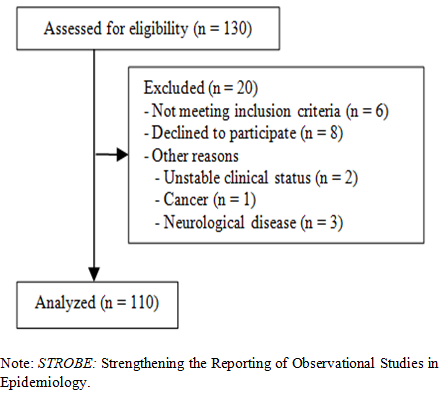
This study used a cross-sectional design. The participants were a convenience sample of 130 patients from two HD centers in Türkiye. The study population included patients aged ≥18 years who were undergoing maintenance HD for at least 1 month (4 hours, thrice-weekly) and were able to communicate in Turkish. Patients comorbid with major mental or neurological disorders or cancer, and those with unstable clinical status, were excluded. Of the 118 eligible patients, 110 (56.4% male) agreed to participate in this study (response rate: 93.2%). Figure 1 presents the Strengthening the Reporting of Observational Studies in Epidemiology (STROBE) flow diagram of the study design.
The minimum required sample size was estimated using the “a priori sample size calculator for multiple regression” 17. Based on an anticipated effect size of f2 = 0.15 (medium), an alpha of 0.05, a power of 80%, and the number of predictors of five, the minimum sample size was computed as 91. In this study, the total sample size was increased to 110 patients to account for dropouts during the study.

Based on the relevant literature, an information form was prepared in the present study. The demographic characteristics consisted of age, gender, marital status, education level, employment status, income level, living arrangement, smoking history, and alcohol consumption. In addition, the disease characteristics were examined, including dialysis vintage, the presence of other chronic diseases, self-rated health (SRH), thirst intensity, the presence of residual urine output, height, pre-dialysis and post-dialysis weight, pre-dialysis systolic and diastolic blood pressure, urea reduction ratio (URR), and single pool Kt/V (spKt/V) values. In this study, SRH was evaluated by a question with a 4-point Likert scale and dichotomized into two groups: good (good/very good) versus poor (fair/bad). The patients rated their sensation of thirst since the last dialysis session using a Visual Analog Scale (VAS), ranging from 0 (none) to 10 (worst possible). The IWG was calculated by subtracting pre-dialysis weight from post-dialysis weight of the prior session. The BMI was also calculated from the measurements of height and pre-dialysis weight (kg/m2).
“The Fluid Control in Hemodialysis Patients Scale (FCHPS)” was developed by Albayrak and Cinar 14 to assess the fluid control in Turkish patients undergoing HD. The scale consists of 24 items and three subscales, including knowledge, behaviors, and attitudes. It is a 3-point Likert scale (1 = Don’t agree, 2 = Indecisive, 3 = Agree). The scale score is calculated after reversing the scores on the nine negative items. The possible range of the total score of FCHPS is 24–72, with a higher score indicating better fluid control. The Cronbach’s alpha coefficient for the overall scale was found to be 0.88 in the original scale development study 14 and 0.90 in this study.
2.3. Ethical ConsiderationsThe Non-Interventional Research Ethics Committee of Health Sciences University approved the study (date: 25 September 2018, decision number: 18/213), which was performed according to the ethical standards of the Helsinki Declaration (2013). Written informed consent was also obtained from all patients before inclusion in the study.
2.4. Data CollectionBetween January and February 2019, face-to-face interviews were performed using a structured questionnaire during the midweek HD session, and all interviews lasted for about 15 minutes. The medical records were reviewed to obtain information about clinical variables and laboratory values.
2.5. Data AnalysisAll statistical analyses were performed using the Statistical Package for Social Sciences (SPSS) (version 21.0). Descriptive statistics such as mean (M), median, standard deviation (SD), frequency distributions, and percentages were calculated for data analysis. The one-sample Kolmogorov-Smirnov test was used to assess the normality of the study sample. Statistical differences between continuous variables were analyzed by the Student’s t-test (a parametric test) or the Mann–Whitney U-test (a non-parametric test) when comparing two independent groups. The difference between the three groups for income level was assessed with the Kruskal-Wallis test, followed by pairwise comparisons with the Mann-Whitney U test, with a Bonferroni correction (significance level set at p < 0.017). The relationships between the study variables were determined by Pearson’s correlation coefficient (a parametric test) or Spearman’s rank correlation coefficient (a non-parametric test). A p-value less than 0.05 was accepted to be statistically significant.
Multivariate linear regression analysis with backward elimination was performed to investigate independent risk factors for fluid control. The categorical variables in the multiple regression models were income level, alcohol consumption, and the presence of residual urine output. The continuous variables were age, BMI, IWG, and the VAS thirst score. The normality of the residuals was also confirmed using Q-Q plots. The presence of multicollinearity was assessed using tolerance (< 0.20) and variance inflation factor values (> 10) in the multiple regression models 18. The lowest tolerance value in the regression models was 0.57, and the highest variance inflation factor value was 1.76, suggesting that multicollinearity was unlikely in these models.
The power value of the final multiple regression model was calculated using the “post-hoc statistical power calculator for multiple regression” 17 based on the following parameters: the probability level (value = 0.05), the sample size (n = 110), the number of predictors (n = 3) and the observed R2 (squared multiple correlation) for the model (value = 0.59). The observed power value of the final multiple linear regression model was 1.0 and sufficient for the analyses.
The mean age of the patients was 58.75 ± 15.36 years (range = 25-90), and the median dialysis vintage was 36 months (67.54 ± 73.08, range = 1-336). Most patients were nonsmokers (78.2%) and nondrinkers (93.6%). Ninety-four patients (85.5%) had a comorbid disorder (51.8% hypertension, 27.3% diabetes, 10.0% cardiac disease, and 10.9% other). The mean VAS score for thirst was 3.93 ± 2.66 (range = 0-10). Further characteristics of the study group are available in Table 1 and Table 2.
The mean total FCHPS score of the patients was 47.26 ± 13.82 (range = 24-72), which is slightly below the midpoint (48.00) of the scale. The differences in the FCHPS total scores by characteristics of the patients were evaluated using appropriate statistical methods (see Table 1). There was a significant difference between the mean FCHPS total scores by income levels (χ2 = 6.40, p = 0.041). Pairwise comparisons revealed that the FCHPS total score of patients with adequate income was higher than both that of patients with moderate income and inadequate income (z = -2.17, p = 0.030; z = -2.02, p = 0.044, respectively), but the p-values were greater than the significance level of 0.017, which means that these variables were not statistically significant. Moreover, the FCHPS total scores were significantly higher in patients who did not consume alcohol (z = -2.05, p = 0.040) and those who had residual urine output (t = 4.81, p < 0.001) (Table 1).
As shown in Table 2, Pearson’s correlation coefficients showed a significant positive correlation between the FCHPS total score of patients undergoing HD and the age variable (r = 0.22, p = 0.019), and negative correlations with the BMI (r = -0.31, p = 0.001), and IWG (r = −0.74, p < 0.001). A significant positive correlation was also found between the FCHPS total score and the VAS thirst score by Spearman’s rho correlation coefficient (r = −0.52, p < 0.001).
Multivariate linear regression analysis was conducted to assess the relationship between the FCHPS scores and potential predictors (see Table 3). In the present study, income level, alcohol consumption, the presence of residual urine, age, BMI, IWG, and the VAS thirst score were included in the analysis. The final model was statistically significant in predicting fluid control, F (3, 106) = 50.70, p < 0.001. In the final model, the BMI (unstandardized β = −0.44, 95% Confidence Interval (CI) [-0.80, -0.07], p = 0.021), the IWG value (unstandardized β = −7.24, 95% CI [-9.20, -5.29], p < 0.001), and the VAS thirst score (unstandardized β = −0.84, 95% CI [-1.68, -0.01] p = 0.043) were determined as important predictors for the FCHPS scores, after controlling for all other independent variables. These three variables accounted for 57.8% of the variance in fluid control (adjusted R2 = 0.578).
It is underlined that the identification of fluid management in patients undergoing HD is needed to make tailored interventions 6, 9, 19. However, there is currently sparse evidence about fluid control and its related factors in this population. This study represents a comprehensive evaluation of the impact of demographics and disease characteristics on fluid control among patients undergoing HD. The study revealed that fluid control in patients undergoing HD is below a moderate level. Our results also indicated that significant predictors of fluid control are biological variables, including the BMI, IWG, and thirst intensity.
The mean total FCHPS score of our sample was 47.26 ± 13.82, which was lower than that found in previous studies. In a methodological study conducted in Türkiye, the total FCHPS score for patients undergoing HD was relatively high (56.55 ± 6.37) 14. In another Turkish study, the effect of an education program on patients’ adherence to diet and fluid restrictions was examined. The overall baseline FCHPS scores for the intervention and control groups were calculated as 50.08 ± 5.81 and 50.53 ± 5.44, respectively 15. Furthermore, in a quasi-experimental study in South Korea, the mean total baseline FCHPS scores for the experimental, comparison, and control groups were found as 50.32 ± 6.04, 51.22 ± 5.81, and 52.61 ± 6.24, respectively 4. In a cross-sectional study in China, Zhang et al. 12 reported that the mean total FCHPS score of the patients was a “moderate level”. Our findings are also consistent with a study conducted in Brazil by Nerbass et al. 13, which assessed fluid control by a self-reported scale ranging from 0 to 10. The researchers found that many patients (56.0%) perceived considerable difficulty in control of fluid intake (score: > 6) 13. Our results are noteworthy because they demonstrate that patients undergoing HD struggle with control of their fluid management. Despite the increased interventions in recent years, adherence to fluid restriction in patients undergoing HD remains poor, which could in turn negatively affect their health outcomes 6, 9, 20, 21. Effective interventions should, therefore, be developed to increase fluid control in this population.
Our results demonstrated that patients with higher BMI were more likely to have worse fluid control and had a higher risk of developing fluid overload. This finding is consistent with Nerbass et al's 13 study, reporting that patients with a higher BMI >23 kg/m2 perceived higher difficulty in controlling fluid intake than other patients. However, a recent study by Jagodage et al. 19 revealed that patients with higher IWG were more likely to have abnormal BMI (overweight/obese or underweight). Our findings may have resulted from several reasons. For example, in other studies among patients undergoing HD, higher values of BMI were found to be associated with increased thirst 7 and thirst distress 22. Interestingly, clinical evidence also indicates that obese patients undergoing HD not only have a lower prevalence of hypertension but also achieve better blood pressure control and survival rates. This phenomenon is suggested to be associated with more effective sequestration of excess extracellular fluid volume in this patient group compared to their lean counterparts, as well as with increased release of the renalase enzyme, which metabolizes catecholamines, from muscle mass 23. The reasons underlying our findings remain unclear, and further studies are needed.
As expected, our results indicated that patients with higher IWG were more likely to have difficulty with fluid control. This finding is congruent with the results reported by previous studies. Kara 6 demonstrated that nonadherence to the prescribed diet and fluid restrictions was positively associated with patients’ IWG values. Similarly, Nerbass 13 found that patients’ perceived difficulty in control of fluid intake was positively associated with their IWG. One of the tools proposed to monitor the fluid status of patients undergoing HD is clinical assessment with measurement of dry weight, blood pressure, and a fluid status check 22, 24. The IWG is the product of fluid retention resulting from metabolic processes, dietary habits, and fluid consumption. Nonadherence with salt restriction and excessive fluid intake are considered primary contributors to IWG 8, 25. Therefore, a patient-centered approach is important to provide IWG control and fluid management 8, 19.
Another important finding in our study was that patients who suffered from higher levels of thirst were more likely to have worse fluid control. In contrast, a recent study suggested that increased thirst was not associated with higher IWG 26. Our findings were parallel to the results of other studies, indicating that both thirst and thirst distress were positively associated with IWG 22, 27, 28. It is well known that fluid intake in patients undergoing HD is influenced by many biological variables, such as thirst sensation, which leads to large IWG by inducing nonadherence with fluid restriction 22, 28. This finding in our study may have been influenced by confounding factors. For example, salivary glands may be affected due to both kidney diseases and diabetes, potentially leading to decreased saliva secretion or xerostomia, which may contribute to thirst and play a role as a powerful stimulus for fluid intake 25, 29. In our study, 27.3% of the patients had diabetes as a comorbidity. Healthcare professionals should support these patients to improve their fluid control. The relationship between fluid control and thirst should be examined further.
The main limitations of this study include the use of a convenience sample that may not be representative of the total population and self-reported data to measure fluid control. Another limitation of this study is the use of a cross-sectional design, which does not allow for causal interpretations among the study variables. The study limitations prevent the generalization of our results to all Turkish patients undergoing HD. Follow-up studies should be undertaken to ascertain the potential impact of time on patients’ fluid control.
In this study, fluid control is a challenging issue in patients undergoing HD. This study demonstrated that patients with higher BMI, IWG, and thirst intensity were more likely to have difficulty with fluid control. Our findings highlight the importance of designing tailored interventions that take into account the parameters that contribute to fluid control in patients undergoing HD. Implementing these interventions to increase fluid control in patients may contribute to their health and well-being. Longitudinal studies are required to verify our findings and to clarify the causal processes that underlie them.
Body mass index (BMI); confidence interval (CI); diastolic blood pressure (DBP); Fluid Control in Hemodialysis Patients Scale (FCHPS); hemodialysis (HD); interdialytic weight gain (IWG); mean (M); self-rated health (SRH); single-pool Kt/V (spKt/V); standard deviation (SD). standard error (SE), systolic blood pressure (SBP), urea reduction rate (URR), and visual analog scale (VAS).
The author thanks all the patients who took the time to participate in this study.
The author has no conflicts of interest to declare.
The author declares that this study has received no financial support.
| [1] | Lee, T., Flythe, J.E. and Allon, M. Dialysis care around the world: a global perspectives series. Kidney360. 2021; 2(4): 604-607. | ||
| In article | View Article PubMed | ||
| [2] | Seyahi, N., Kocyigit, İ., Eren, N., Tonbul, H.Z., Tatar, E. Yilmaz, Z., et al. Current status of kidney replacement therapy in Türkiye: A summary of 2022 Turkish Society of Nephrology registry report. Turk J Nephrol. 2024; 33(2): 134-139. | ||
| In article | View Article | ||
| [3] | Patel, S., Ashokkumar, S. and Green, A. Modern tools for optimizing fluid management in dialysis patients: a comprehensive review. BMC Nephrology. 2024; 25(1): 464. | ||
| In article | View Article PubMed | ||
| [4] | Chang, A., Chung, Y. and Kang, M. Effects of the combination of auricular acupressure and a fluid-restriction adherence program on salivary flow rate, xerostomia, fluid control, interdialytic weight gain, and diet-related quality of life in patients undergoing hemodialysis. Int J Environ Res Public Health. 2021; 18(19): 10520. | ||
| In article | View Article PubMed | ||
| [5] | Kara, B. Health beliefs related to salt-restricted diet in patients on hemodialysis: Psychometric evaluation of the Turkish version of the Beliefs About Dietary Compliance Scale. J Transcult Nurs. 2014; 25(3): 256-264. | ||
| In article | View Article PubMed | ||
| [6] | Kara, B., Caglar, K. and Kilic, S. Nonadherence with diet and fluid restrictions and perceived social support in patients receiving hemodialysis. J Nurs Scholarsh. 2007; 39(3): 243-248. | ||
| In article | View Article PubMed | ||
| [7] | Bellomo, G., Coccetta, P., Pasticci, F., Rossi, D. and Selvi, A. The effect of psychological intervention on thirst and interdialytic weight gain in patients on chronic hemodialysis: a randomized controlled trial. J Renal Nutr. 2015; 25(5): 426-432. | ||
| In article | View Article PubMed | ||
| [8] | Bossola, M., Mariani, I., Strizzi, C.T., Piccinni, C.P. and Di Stasio, E. How to limit ınterdialytic weight gain in patients on maintenance hemodialysis: state of the art and perspectives. J Clin Med. 2025; 14(6): 1846. | ||
| In article | View Article PubMed | ||
| [9] | Vr, V. and Kaur Kang, H. The worldwide prevalence of nonadherence to diet and fluid restrictions among hemodialysis patients: a systematic review and meta-analysis. J Renal Nutr. 2022; 32(6): 658-669. | ||
| In article | View Article PubMed | ||
| [10] | Halle, M.P., Nelson, M., Kaze, F.F., Jean Pierre, N.M., Denis, T., Fouda, H., et al. Non-adherence to hemodialysis regimens among patients on maintenance hemodialysis in sub-Saharan Africa: an example from Cameroon. Ren Fail. 2020; 42(1): 1022-1028. | ||
| In article | View Article PubMed | ||
| [11] | Kugler, C., Vlaminck, H., Haverich, A. and Maes, B. Nonadherence with diet and fluid restrictions among adults having hemodialysis. J Nurs Scholarsh. 2005; 37(1): 25-29. | ||
| In article | View Article PubMed | ||
| [12] | Zhang, X., Luo, X., Xiao, F., Xu, W., Ma, L. and Yan, J. The relationship between illness perceptions and fluid-control adherence among Chinese hemodialysis patients: a cross-sectional study. Psychol Health Med. 2023; 28(7): 1682-1697. | ||
| In article | View Article PubMed | ||
| [13] | Nerbass, F.B., Correa, D., Santos, R.G.D., Kruger, T.S., Sczip, A.C., Vieira, M.A., et al. Perceptions of hemodialysis patients about dietary and fluid restrictions. J Bras Nefrol. 2017; 39(2): 154-161. | ||
| In article | View Article PubMed | ||
| [14] | Albayrak Cosar, A. and Cinar Pakyuz, S. Scale development study: The Fluid Control in Hemodialysis Patients. Jpn J Nurs Sci. 2016; 13(1): 174-82. | ||
| In article | View Article PubMed | ||
| [15] | Başer, E. and Mollaoğlu, M. The effect of a hemodialysis patient education program on fluid control and dietary compliance. Hemodial Int. 2019; 23(3): 392-401. | ||
| In article | View Article PubMed | ||
| [16] | Sandys, V., Sexton, D. and O'Seaghdha, C. Artificial intelligence and digital health for volume maintenance in hemodialysis patients. Hemodial Int. 2022; 26(4): 480-495. | ||
| In article | View Article PubMed | ||
| [17] | Soper, D. Free statistics calculators (Version 4.0) [Online]. Available at: https:// www.danielsoper.com/ statcalc/ calculator.aspx? id=1. (Accessed May 4, 2025). | ||
| In article | |||
| [18] | Kara, B. Health beliefs related to salt-restricted diet and associated factors in Turkish patients on hemodialysis. J Transcult Nurs. 2018; 29(2): 155-164. | ||
| In article | View Article PubMed | ||
| [19] | Jagodage, H., Bonner, A., McGuire, A. and Seib, C. A feasibility cluster randomised control trial of a person-centred fluid adherence intervention for adults receiving haemodialysis. Nephron. 2025: 1-16. | ||
| In article | View Article PubMed | ||
| [20] | Chan, Y.M., Zalilah, M.S. and Hii, S.Z. Determinants of compliance behaviours among patients undergoing hemodialysis in Malaysia. PLoS One. 2012; 7(8): e41362. | ||
| In article | View Article PubMed | ||
| [21] | de Ruiter, A., Bello, A. and Braam, B. Fluid management in chronic kidney disease: What is too much, what is the distribution, and how to manage fluid overload in patients with chronic kidney disease? Curr Opin Nephrol Hypertens. 2020; 29(6): 572-580. | ||
| In article | View Article PubMed | ||
| [22] | Kara, B. Determinants of thirst distress in patients on hemodialysis. Int Urol Nephrol. 2016; 48(9): 1525-32. | ||
| In article | View Article PubMed | ||
| [23] | Rabbani, R., Noel, E., Boyle, S., Khan, W.A., Pronovost, P. and Gillespie, A. Impact of extremes of body mass index (BMI) in end-stage renal disease (ESRD) patients. Cureus. 2022; 14(6): e25892. | ||
| In article | View Article | ||
| [24] | Canaud, B., Chazot, C., Koomans, J. and Collins, A. Fluid and hemodynamic management in hemodialysis patients: challenges and opportunities. J Bras Nefrol. 2019; 41(4): 550-559. | ||
| In article | View Article PubMed | ||
| [25] | Bruzda-Zwiech, A., Szczepańska, J. and Zwiech, R. Xerostomia, thirst, sodium gradient and inter-dialytic weight gain in hemodialysis diabetic vs. non-diabetic patients. Med Oral Patol Oral Cir Bucal. 2018; 23 (4): e406-e412. | ||
| In article | View Article PubMed | ||
| [26] | Chhabra, R. and Davenport, A. Is increased subjective thirst associated with greater interdialytic weight gains, extracellular fluid and dietary sodium intake? Artif Organs. 2024; 48(1): 91-97. | ||
| In article | View Article PubMed | ||
| [27] | Ashrafi, S.A., Phansikar, M. and Wilund, K.R. Subjective thirst in relation to interdialytic weight gain: a systematic review of observational studies. Blood Purif. 2023; 52(2): 201-209. | ||
| In article | View Article PubMed | ||
| [28] | Kara, B. Validity and reliability of the Turkish version of the Thirst Distress Scale in patients on hemodialysis. Asian Nurs Res (Korean Soc Nurs Sci). 2013; 7(4): 212-218. | ||
| In article | View Article PubMed | ||
| [29] | Jung, E.S. and Chang, A.K. Effects of auricular acupressure in patients on hemodialysis. J Nurs Res. 28(4): e106. 2020. | ||
| In article | View Article PubMed | ||
Published with license by Science and Education Publishing, Copyright © 2025 Belgüzar Kara
 This work is licensed under a Creative Commons Attribution 4.0 International License. To view a copy of this license, visit
http://creativecommons.org/licenses/by/4.0/
This work is licensed under a Creative Commons Attribution 4.0 International License. To view a copy of this license, visit
http://creativecommons.org/licenses/by/4.0/
| [1] | Lee, T., Flythe, J.E. and Allon, M. Dialysis care around the world: a global perspectives series. Kidney360. 2021; 2(4): 604-607. | ||
| In article | View Article PubMed | ||
| [2] | Seyahi, N., Kocyigit, İ., Eren, N., Tonbul, H.Z., Tatar, E. Yilmaz, Z., et al. Current status of kidney replacement therapy in Türkiye: A summary of 2022 Turkish Society of Nephrology registry report. Turk J Nephrol. 2024; 33(2): 134-139. | ||
| In article | View Article | ||
| [3] | Patel, S., Ashokkumar, S. and Green, A. Modern tools for optimizing fluid management in dialysis patients: a comprehensive review. BMC Nephrology. 2024; 25(1): 464. | ||
| In article | View Article PubMed | ||
| [4] | Chang, A., Chung, Y. and Kang, M. Effects of the combination of auricular acupressure and a fluid-restriction adherence program on salivary flow rate, xerostomia, fluid control, interdialytic weight gain, and diet-related quality of life in patients undergoing hemodialysis. Int J Environ Res Public Health. 2021; 18(19): 10520. | ||
| In article | View Article PubMed | ||
| [5] | Kara, B. Health beliefs related to salt-restricted diet in patients on hemodialysis: Psychometric evaluation of the Turkish version of the Beliefs About Dietary Compliance Scale. J Transcult Nurs. 2014; 25(3): 256-264. | ||
| In article | View Article PubMed | ||
| [6] | Kara, B., Caglar, K. and Kilic, S. Nonadherence with diet and fluid restrictions and perceived social support in patients receiving hemodialysis. J Nurs Scholarsh. 2007; 39(3): 243-248. | ||
| In article | View Article PubMed | ||
| [7] | Bellomo, G., Coccetta, P., Pasticci, F., Rossi, D. and Selvi, A. The effect of psychological intervention on thirst and interdialytic weight gain in patients on chronic hemodialysis: a randomized controlled trial. J Renal Nutr. 2015; 25(5): 426-432. | ||
| In article | View Article PubMed | ||
| [8] | Bossola, M., Mariani, I., Strizzi, C.T., Piccinni, C.P. and Di Stasio, E. How to limit ınterdialytic weight gain in patients on maintenance hemodialysis: state of the art and perspectives. J Clin Med. 2025; 14(6): 1846. | ||
| In article | View Article PubMed | ||
| [9] | Vr, V. and Kaur Kang, H. The worldwide prevalence of nonadherence to diet and fluid restrictions among hemodialysis patients: a systematic review and meta-analysis. J Renal Nutr. 2022; 32(6): 658-669. | ||
| In article | View Article PubMed | ||
| [10] | Halle, M.P., Nelson, M., Kaze, F.F., Jean Pierre, N.M., Denis, T., Fouda, H., et al. Non-adherence to hemodialysis regimens among patients on maintenance hemodialysis in sub-Saharan Africa: an example from Cameroon. Ren Fail. 2020; 42(1): 1022-1028. | ||
| In article | View Article PubMed | ||
| [11] | Kugler, C., Vlaminck, H., Haverich, A. and Maes, B. Nonadherence with diet and fluid restrictions among adults having hemodialysis. J Nurs Scholarsh. 2005; 37(1): 25-29. | ||
| In article | View Article PubMed | ||
| [12] | Zhang, X., Luo, X., Xiao, F., Xu, W., Ma, L. and Yan, J. The relationship between illness perceptions and fluid-control adherence among Chinese hemodialysis patients: a cross-sectional study. Psychol Health Med. 2023; 28(7): 1682-1697. | ||
| In article | View Article PubMed | ||
| [13] | Nerbass, F.B., Correa, D., Santos, R.G.D., Kruger, T.S., Sczip, A.C., Vieira, M.A., et al. Perceptions of hemodialysis patients about dietary and fluid restrictions. J Bras Nefrol. 2017; 39(2): 154-161. | ||
| In article | View Article PubMed | ||
| [14] | Albayrak Cosar, A. and Cinar Pakyuz, S. Scale development study: The Fluid Control in Hemodialysis Patients. Jpn J Nurs Sci. 2016; 13(1): 174-82. | ||
| In article | View Article PubMed | ||
| [15] | Başer, E. and Mollaoğlu, M. The effect of a hemodialysis patient education program on fluid control and dietary compliance. Hemodial Int. 2019; 23(3): 392-401. | ||
| In article | View Article PubMed | ||
| [16] | Sandys, V., Sexton, D. and O'Seaghdha, C. Artificial intelligence and digital health for volume maintenance in hemodialysis patients. Hemodial Int. 2022; 26(4): 480-495. | ||
| In article | View Article PubMed | ||
| [17] | Soper, D. Free statistics calculators (Version 4.0) [Online]. Available at: https:// www.danielsoper.com/ statcalc/ calculator.aspx? id=1. (Accessed May 4, 2025). | ||
| In article | |||
| [18] | Kara, B. Health beliefs related to salt-restricted diet and associated factors in Turkish patients on hemodialysis. J Transcult Nurs. 2018; 29(2): 155-164. | ||
| In article | View Article PubMed | ||
| [19] | Jagodage, H., Bonner, A., McGuire, A. and Seib, C. A feasibility cluster randomised control trial of a person-centred fluid adherence intervention for adults receiving haemodialysis. Nephron. 2025: 1-16. | ||
| In article | View Article PubMed | ||
| [20] | Chan, Y.M., Zalilah, M.S. and Hii, S.Z. Determinants of compliance behaviours among patients undergoing hemodialysis in Malaysia. PLoS One. 2012; 7(8): e41362. | ||
| In article | View Article PubMed | ||
| [21] | de Ruiter, A., Bello, A. and Braam, B. Fluid management in chronic kidney disease: What is too much, what is the distribution, and how to manage fluid overload in patients with chronic kidney disease? Curr Opin Nephrol Hypertens. 2020; 29(6): 572-580. | ||
| In article | View Article PubMed | ||
| [22] | Kara, B. Determinants of thirst distress in patients on hemodialysis. Int Urol Nephrol. 2016; 48(9): 1525-32. | ||
| In article | View Article PubMed | ||
| [23] | Rabbani, R., Noel, E., Boyle, S., Khan, W.A., Pronovost, P. and Gillespie, A. Impact of extremes of body mass index (BMI) in end-stage renal disease (ESRD) patients. Cureus. 2022; 14(6): e25892. | ||
| In article | View Article | ||
| [24] | Canaud, B., Chazot, C., Koomans, J. and Collins, A. Fluid and hemodynamic management in hemodialysis patients: challenges and opportunities. J Bras Nefrol. 2019; 41(4): 550-559. | ||
| In article | View Article PubMed | ||
| [25] | Bruzda-Zwiech, A., Szczepańska, J. and Zwiech, R. Xerostomia, thirst, sodium gradient and inter-dialytic weight gain in hemodialysis diabetic vs. non-diabetic patients. Med Oral Patol Oral Cir Bucal. 2018; 23 (4): e406-e412. | ||
| In article | View Article PubMed | ||
| [26] | Chhabra, R. and Davenport, A. Is increased subjective thirst associated with greater interdialytic weight gains, extracellular fluid and dietary sodium intake? Artif Organs. 2024; 48(1): 91-97. | ||
| In article | View Article PubMed | ||
| [27] | Ashrafi, S.A., Phansikar, M. and Wilund, K.R. Subjective thirst in relation to interdialytic weight gain: a systematic review of observational studies. Blood Purif. 2023; 52(2): 201-209. | ||
| In article | View Article PubMed | ||
| [28] | Kara, B. Validity and reliability of the Turkish version of the Thirst Distress Scale in patients on hemodialysis. Asian Nurs Res (Korean Soc Nurs Sci). 2013; 7(4): 212-218. | ||
| In article | View Article PubMed | ||
| [29] | Jung, E.S. and Chang, A.K. Effects of auricular acupressure in patients on hemodialysis. J Nurs Res. 28(4): e106. 2020. | ||
| In article | View Article PubMed | ||