This article is part of an effort to promote local resources and reduce the environmental impact of construction materials. The study aims to design and characterize ecological insulating panels made from Typha domingensis, an invasive plant, combined with cassava starch used as a natural binder. Samples were produced under four compaction pressures (3, 10, 20, and 30 MPa) and then characterized based on their physical and thermal properties. The results show that compaction pressure strongly influences the density, porosity, thermal conductivity, and thermal resistance of the panels. An intermediate pressure of 20 MPa was identified as the optimal level, yielding a material that is lightweight, stable, exhibits low thermal conductivity (0.087 W•m⁻¹•K⁻¹), and offers high thermal resistance (0.227 m²•K•W⁻¹). This balance reflects a homogeneous internal structure that effectively combines porosity and cohesion, supporting both durability and insulating performance of the material.
The use of bio-based materials for building insulation offers a relevant response to the challenges of reducing carbon footprints 1 and promoting the sustainable valorization of local biomass-derived resources 2, 3. Among these resources, Typha domingensis (cattail) has attracted growing interest. Its stems and fibers exhibit a naturally porous structure 4 and particularly low thermal conductivity when processed into panels or composite materials 5, making it a promising candidate for the production of local, ecological, and biodegradable insulating materials. Typha domingensis-based panels display thermal conductivity values ranging from 0.039 to 0.146 W·m⁻¹·K⁻¹, depending on the formulation—values comparable to or even better than those of many natural insulators and significantly lower than those of conventional materials such as hardboard or plywood 5, 6, 7, 8. The addition of natural binders (starch, clay, arabic gum, cement, plaster, etc.) improves mechanical strength and dimensional stability while preserving favorable thermal performance 9, 10. These panels also exhibit excellent sound absorption capacity, particularly in the frequency range critical for indoor comfort 7.
The properties of the panels depend strongly on particle size distribution, density, and the type and proportion of binder. Optimal formulations are generally obtained with high Typha fiber content (up to 60%) combined with a suitable binder (starch, clay, cement, plaster, magnesite, or bio-based resins) 8, 9, 11, 12, 13. These panels achieve mechanical strengths compatible with normative requirements for interior insulation but still show limited resistance to moisture, restricting their use to dry environments 10, 12. Using Typha domingensis for insulation materials contributes not only to managing an invasive plant species but also to reducing the carbon footprint of buildings and promoting circular-economy approaches 8, 14. Such panels can be used for wall, roof, and ceiling insulation and are compatible with both local and industrial construction techniques 11, 14.
Combining Typha domingensis with cassava starch as a binder for producing insulating panels thus offers an ecological, economical, and climate-adapted solution, particularly suitable for tropical regions. Several recent studies have characterized the thermal and mechanical properties of these composites; however, the specific influence of compaction pressure (3, 10, 20, 30 MPa) remains insufficiently explored. Previous research has mainly focused on formulation parameters, particle size, starch proportion, and the resulting thermal and mechanical properties of Typha–starch panels, demonstrating their potential for thermal insulation and compliance with construction standards 5, 11, 12. The best mechanical performance is typically achieved with fine particle size and a starch content of around 20% 12. Thermal properties are also optimized for specific particle sizes and starch ratios 5, 11.
Nevertheless, no available study has systematically evaluated the effect of compaction pressure on the final properties of Typha–starch panels, particularly within the 3–30 MPa range. Although some works mention the use of thermo-compression, they do not detail the precise impact of different pressure levels on density, cohesion, mechanical strength, or material durability 5, 12. This parameter therefore remains a significant gap in the existing literature.
Insulating panels made from Typha domingensis powder and cassava starch are produced through a simple and environmentally friendly process: powder mixing, heating to activate the natural binder, and compaction under various pressures (3–30 MPa). Increasing pressure improves cohesion and mechanical resistance but reduces porosity and thus thermal insulation capacity, leading to an optimal compromise around 20 MPa. This approach, validated by the work of Hounkpatin 12 and Colson 15, confirms the viability of the process for producing high-performance thermal materials, particularly suited to tropical regions. The objective of this study is the valorization of abundant local materials for the insulation of modern buildings.
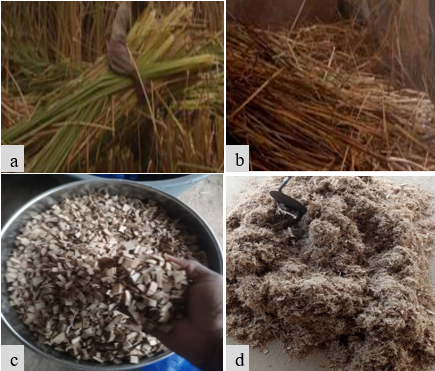
Mature Typha stems were harvested using a curved knife in the locality of Zinvié, located in the municipality of Abomey-Calavi in Benin. The harvested stems were cleaned, and unwanted weeds were removed, then dried in the sun for two weeks. After drying, the materials were chopped into small granules and dried again to ensure complete removal of moisture from the particles.
Next, the granulated particles were ground into finer sizes using a Vicking-type knife mill. Figure 1 shows the harvested, dried, chopped, and ground Typha stems.
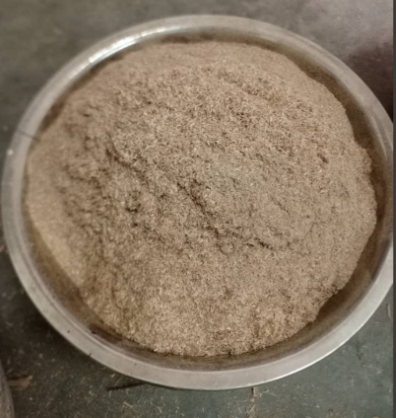
The purpose of this step is to make the particles obtained from grinding the Typha stems more uniform in size in order to achieve a homogeneous particle size distribution. The Typha particles obtained after grinding are sieved using a set of sieves arranged in decreasing mesh size (4. 3.15, 2.5, and 2 mm) to facilitate progressive separation. The 2 mm passing fraction is preferred in this study, as it is considered the optimal size for producing insulating materials according to the literature 15. Figure 2 shows the Typha particles obtained after sieving.


The composite mixture is prepared using a defined proportion of Typha domingensis particles and starch serving as a natural binder. Colson 16 and Hounkpatin 17 showed in their studies that particles smaller than 2 mm are suitable for producing particle boards. Furthermore, the article ofHounkpatin et al. 5 and other studies in the literature investigated different Typha–starch ratios (cassava or maize starch), particularly: 85%–15%, 80%–20%, and 75%–25%.
Additionally, Thieblesson et al. 18 reported that, to obtain boards with adequate moisture content, the binder-to-material ratio must not exceed 0.28, which excludes any binder proportion above 25%. According to their results, the mixture of 80% Typha and 20% cassava starch exhibited the best thermal performance. Consequently, our composite mixture consists of 80% Typha (particle size < 2 mm) and 20% cassava starch.
v Weighing of Materials
For a chosen mass  of Typha corresponding to 80% of the total mass (Typha + starch), the mass
  of starch is equal to 20% of the total mass is calculated as:
 | (1) |
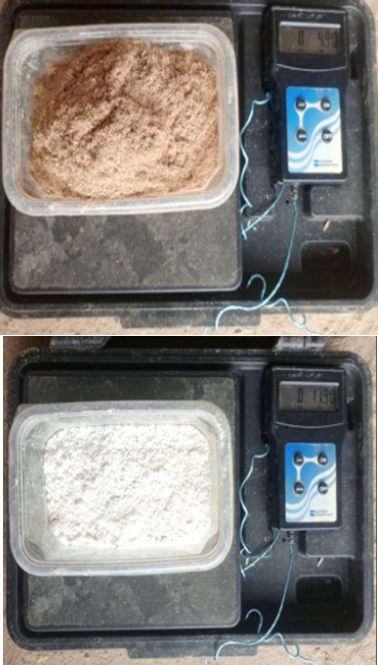
The masses are measured using the RS-12005 electronic balance (Figure 3).

v Mixing and Blending of the Composite
The quantified Typha particles and starch are poured into a container for mixing. The mixture is then blended in a mixer. At this stage, a moderate amount of water is added at a rate of one liter of water per kilogram of dry material. Mixing is carried out carefully to avoid the formation of lumps that could compromise the homogeneity and structure of the boards.
v Heating of the Composite Mixture
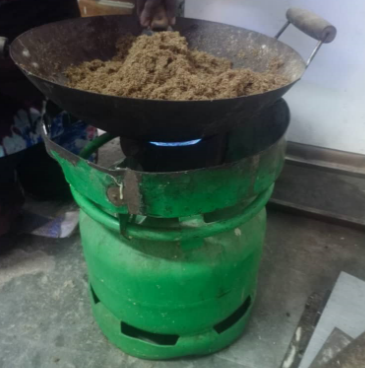
The blended mixture is poured into a pan and heated over a stove (Figure 4) at a temperature of approximately 52°C to 60°C, at which the starch develops its adhesive properties to effectively bind the Typha fibers. The mixture is stirred with a spoon to promote adhesion between the starch matrix and the Typha domingensis fibers. The heating is performed using a gas-powered stove, which provides gentle and controlled heat, preventing material calcination. The result is a homogeneous composite, ready to be poured into a mold for pressing and shaping.

v Thermopressing
Several processes may be used to produce insulating panels. The thermopressing method is used in this study.
Two steel molds were used for pressing:
• A mold of 10cm × 10 cm × 3 cm, 2 cm, or 1 cmdepending on the cover used, for manufacturing test specimens;
• A mold of 20 cm × 20 cm × 3 cm.
The compacting pressure is a critical parameter in the manufacturing process, as it directly affects the structure, thermal performance, mechanical strength, and physical properties of the final product. In his study, Hounkpatin 17 used a constant pressure of 2.2 MPa for 20 minutes to produce particle boards. In contrast, Abohoumbo et al. 19 did not systematically specify the applied pressure, although some resulting products exhibited good thermal performance but weak mechanical properties such as crumbling.
It is therefore essential to find a compromise between effective thermal insulation and sufficient mechanical resistance to ensure durability and material stability. In this work, four compacting pressure levels were defined, ranging from moderate to very high compression :3, 10,20, and 30 MPa. These values allow assessment of the progressive influence of pressure on the properties of the resulting boards.
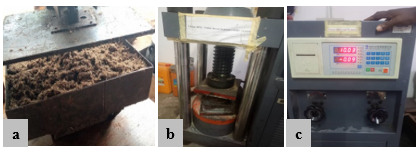
For sample fabrication, the 10 cm × 10 cm × 1 cm mold was used. The heated composite mixture is placed into the mold by filling (Figure 5) and then closed with a cover. The assembly is inserted into the loading cell equipped with two force sensors that indicate the applied load. The pressure exerted on the material is displayed on the machine’s LCD screen and can be controlled through the automated hydraulic system, which adjusts the loading rate.

Each pressure level is applied consistently for 5 minutes to allow the formation of particle boards intended for experimental analysis. After pressing, the mold is removed from the loading cell, the board is demolded, and then left in open air for drying.

The bulk density is evaluated from a dry mass sample  taken from the panel. This mass is then placed in a graduated cylinder, where compaction by tapping is performed at a frequency of 180 strokes per minute for approximately 5 minutes. After compaction, the volume V occupied by the material in the cylinder is recorded, allowing the bulk density to be calculated using the following relation:
 | (2) |
This procedure aims to represent the evolution of mass loss in a sample due to water evaporation over time. The initial mass  of the sample is measured after preparation, while the mass at a given time t is noted
  . The mass loss is then expressed by the following equation:
 | (3) |
The thermal properties of the panels are measured using the asymmetric guarded hot plate method, recommended for dry samples with low moisture content.
• Asymmetric Guarded Hot Plate Method
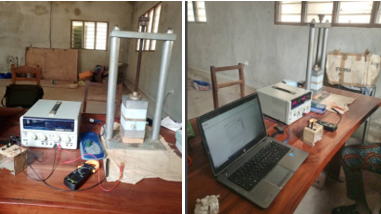
This technique consists of arranging the components in a specific order inside the test chamber before clamping the sample. It relies on selecting a current I (0.2 A) under a direct voltage U (9 V), in accordance with Ohm’s law, applied across a heating resistor. This resistor generates a heat flux by Joule effect, which passes through the panel sample over an estimated time t(s). During this period, a temperature rise is observed on the heated face (HF) of the panel, generally ranging from 9 °C to 13 °C. A type-K thermocouple connected to a data logger records the temperature evolution in real time.
Characteristics of the heating resistor used:
Surface area (S): 105 mm² ; Thickness (e): 3 mm; Electrical resistance (R): 41.3 Ω
The measurement setup for the asymmetric guarded hot plate method is shown in Figure 7 below:
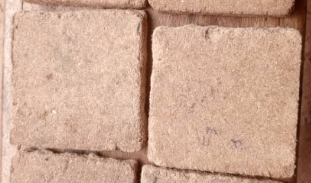
The panels obtained and dried after demolding are shown in Figure 8:

Figure 8 illustrates the panels with dimensions 10 × 10 × 1 cm and 20 × 20 × 1 cm. The samples exhibit a smooth surface, indicating good compaction and a uniform distribution of the binder. The uniform color reflects a homogeneous mixture of fibers and binder. The presence of edges is characteristic of thermopressed materials. The material appears to have high internal porosity, favorable for thermal and acoustic insulation, although mechanical strength may vary depending on the compaction rate and binder content.
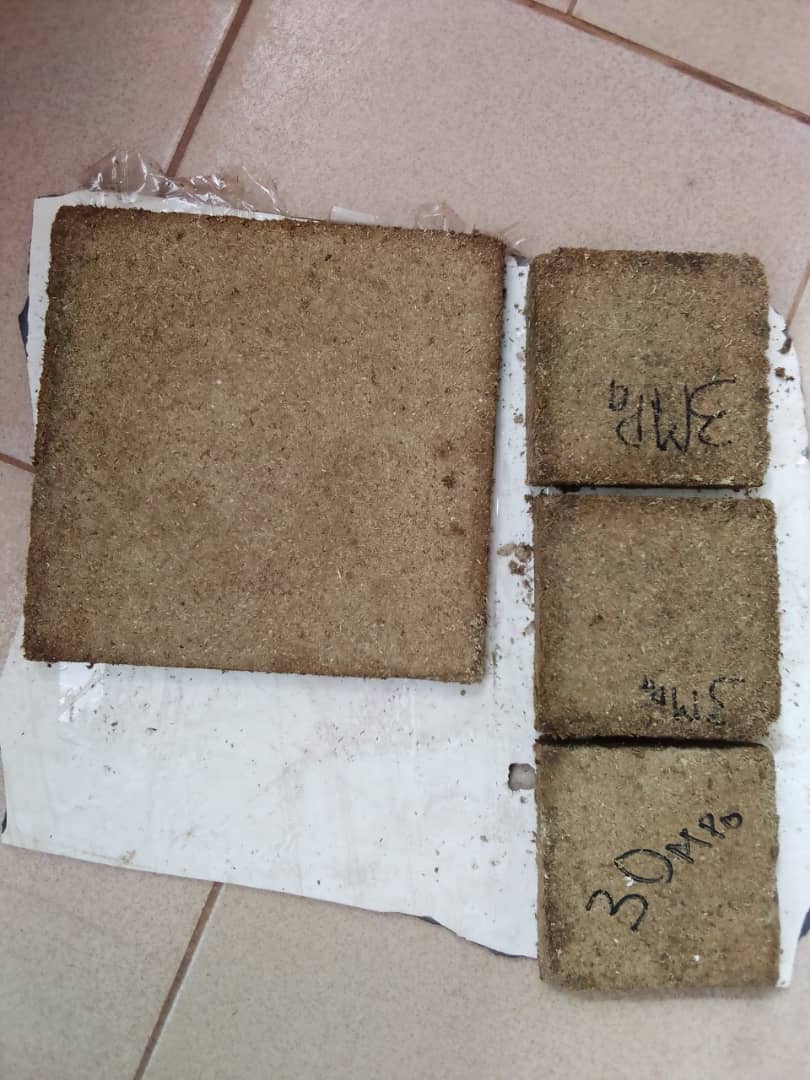
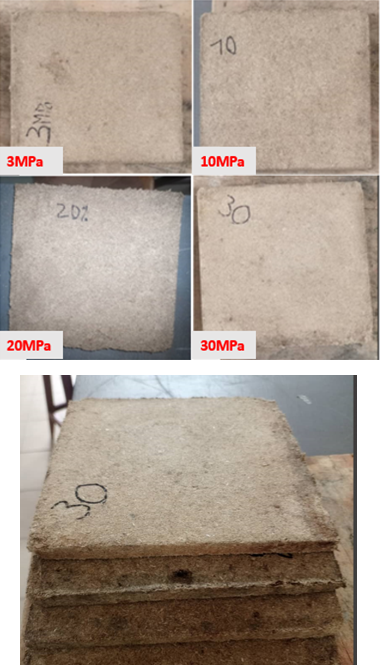
The insulating panels produced at each compaction pressure level are shown in Figure 9:

These panels exhibit notable physical differences. The sample compacted at 3 MPa appears porous and low-density, with a slightly uneven surface and relatively weak cohesion, making it mechanically fragile. At 10 MPa, the panel is more compact with a smoother surface, but microcracks may appear due to drying. The 20 MPa panel shows a visibly homogeneous structure without apparent cracks. At 30 MPa, the material becomes very dense, hard, and rigid, with surface cracking. Based on these observations, 20 MPa appears to be the most suitable pressure, producing a homogeneous, well-compacted, and crack-free panel. This pressure ensures good internal cohesion without excessive rigidity, guaranteeing physical stability and enhanced durability compared to other pressures.
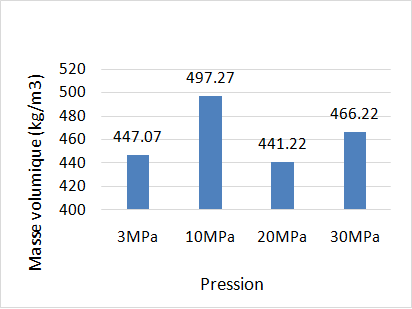
3.2. Thermophysical PropertiesFigure 10 presents the bulk density of the different insulating panels:

The panels have bulk densities ranging from 441.22 to 497.27 kg/m³. Density increases significantly between 3 MPa and 10 MPa, consistent with better material compaction. However, at 20 MPa, a slight decrease is observed, likely due to greater moisture loss. At 30 MPa, density increases slightly again but remains lower than at 10 MPa, reflecting the higher amount of material used during compaction at this pressure. Bulk density reflects compaction level and internal structure, directly influencing thermal and mechanical properties: low density yields fragile material, while excessive density increases thermal conductivity, reducing insulation performance. The bulk density trends confirm that controlling compaction pressure is crucial for achieving a balanced insulating panel with both good mechanical strength and low thermal conductivity.
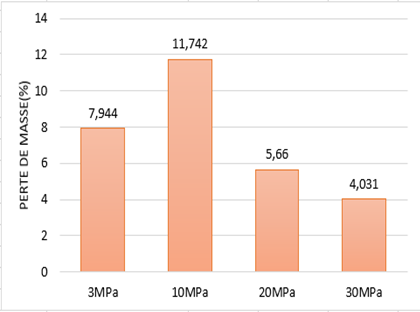
Figure 11 shows the mass loss results of the panels:

The results indicate a high mass loss (11.74%) at 10 MPa, possibly due to strong water evaporation. Higher pressures show better resistance to degradation, with lower losses at 20 MPa and 30 MPa.
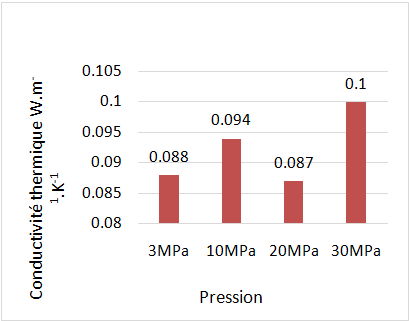
The thermal conductivity of the different panels is presented in Figure 12:
Thermal conductivity increases with pressure, particularly at 10 and 30 MPa, due to reduced voids in the matrix that promote heat conduction. At 20 MPa, a low conductivity of 0.087 W·m⁻¹·K⁻¹ is observed, linked to its lower density, suggesting internal porosity beneficial for insulation. Additionally, the thermal conductivities (0.087–0.1 W·m⁻¹·K⁻¹) of the panels for each pressure are close to values reported by Hounkpatin 17, Colson 16, and Abohoumbo 19.

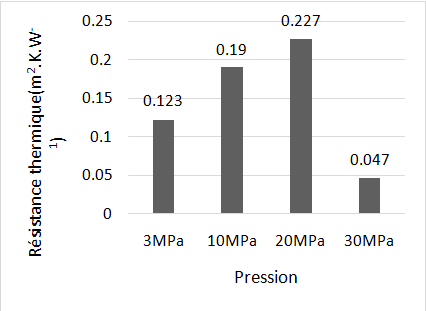
Figure 13 shows the thermal resistance of the panels at each pressure level:

Thermal resistance is optimal at 20 MPa (0.227 m²·K·W⁻¹), indicating excellent insulation capability. The sharp drop at 30 MPa (0.047 m²·K·W⁻¹) is explained by increased conductivity and probable internal structural degradation (microcracks, pore collapse), making the material more conductive. For compressed insulation, 20 MPa is recommended, as it maintains high thermal resistance while ensuring sufficient mechanical cohesion.
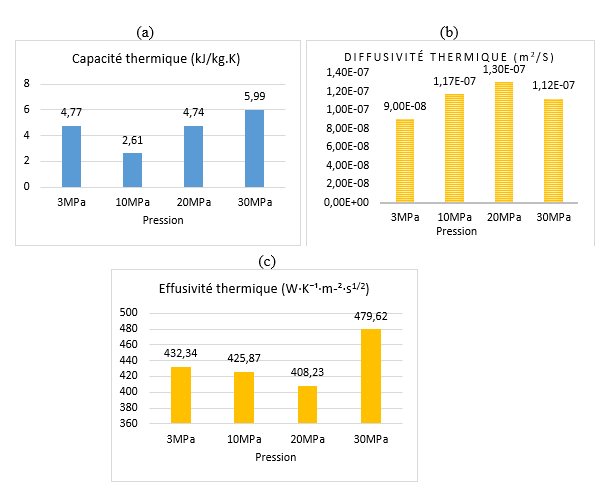
Figure 14 presents the results for each compaction pressure:
The heat capacity (a) is highest at 30 MPa, indicating good heat storage behavior. At 10 MPa, it is lower, possibly due to a structure too compact to retain heat effectively. Thermal diffusivity (b) is lowest at 3 MPa (9.00E-08 m²·s⁻¹), ideal for insulation, increasing with density at 20 MPa (1.30E-07 m²·s⁻¹) but remaining below Hounkpatin 17 (3.77E-07 m²·s⁻¹). Thermal effusivity (c) is lowest at 20 MPa (408.23 W·K⁻¹·m⁻²·s¹ᐟ²), indicating limited heat transfer to another body, whereas it is higher at 30 MPa.
3.3. Determination of Optimal Compaction PressureAnalysis of the thermophysical characteristics indicates that a compaction pressure around 20 MPa is the best compromise for Typha domingensis-based insulating panels. This pressure yields a material with high thermal resistance (0.227 m²·K·W⁻¹), higher than other pressures, consistent with Colson 16 (0.06–0.5 m²·K·W⁻¹). Thermal conductivity is low at 20 MPa (0.087 W·m⁻¹·K⁻¹), below that at other pressures (3, 10, 30 MPa) and well below Hounkpatin 17 (0.094–0.5345 W·m⁻¹·K⁻¹) and ANSI208 (1999) limit (<0.12 W·m⁻¹·K⁻¹). Heat capacity (4.741 kJ·kg⁻¹·K⁻¹) and effusivity (408.23 W·K⁻¹·m⁻²·s¹ᐟ²) indicate good thermal inertia. Moderate mass loss (5.66%) suggests a stable, homogeneous structure favorable for durability.
This shows that intermediate compaction optimizes internal structure, limiting heat transfer while preserving physical stability. Too low pressure yields high porosity and low cohesion, while excessive pressure causes over-compaction, reducing air pockets essential for insulation and increasing heat losses.

At the end of this study, it appears that compaction pressure has a decisive influence on the physical and thermal properties of Typha domingensis-based insulating panels. Analysis of the different applied pressure levels (3, 10, 20, and 30 MPa) demonstrated that density, thermal conductivity, and thermal resistance vary significantly according to the compaction applied to the material. The results revealed that a pressure around 20 MPa represents the best compromise between compaction, mechanical stability, and thermal performance. At this pressure, the panels exhibit low thermal conductivity (0.087 W·m⁻¹·K⁻¹) and high thermal resistance (0.227 m²·K·W⁻¹), indicating excellent insulation capability. These performances are accompanied by a homogeneous structure, low mass loss, and good internal cohesion, ensuring enhanced durability.
Thus, pressures around 20 MPa are considered the optimal compaction level for the fabrication of Typha domingensis insulating panels. This result represents a significant step forward in valorizing this plant resource as a sustainable construction material, contributing to the promotion of ecological and locally sourced alternatives for building thermal insulation, particularly in tropical regions.
| [1] | Aredokou L. O., Chegnimonhan, K.V. Guidi T.C, Vissoh L., and Kapen P. T., “Numerical simulation of the performance of a supersonic ejector for solar refrigeration applications,” vol. 14, no. 2, pp. 18–28, 2025. | ||
| In article | |||
| [2] | M. Charai, H. Sghiouri, A. Mezrhab, and M. Karkri, “Thermal insulation potential of non-industrial hemp (Moroccan cannabis sativa L.) fibers for green plaster-based building materials,” J. Clean. Prod., vol. 292, p. 126064, Apr. 2021. | ||
| In article | View Article | ||
| [3] | Somassè R, Chegnimonhan V, Fannou J-L , Yamonché JAS and Fagbémi L,Hounkpatin H.W& Aredokou L.O, “Vers une construction durable : analyse prospective des matériaux biosources pour une enveloppe du bâtiment respectueuse de l’environnement,” J. Rech. Sci. Univ. Lomé, vol. 26, no. 3, pp. 1–18, 2024. | ||
| In article | View Article | ||
| [4] | J. Liu, Z. Zhang, Z. Yu, Y. Liang, X. Li, and L. Ren, “The Structure and Flexural Properties of Typha Leaves,” Appl. Bionics Biomech., vol. 2017, pp. 1–9, 2017. | ||
| In article | View Article PubMed | ||
| [5] | Hounkpatin, W,H. Chegnimonhan V. Kouamy, Allognon-Houessou E., and Kounouhewa B. B, “Thermal Insulation Panel Based on Vegetable Typha Domingensis and Starch: Formulation and Physico-chemical Characterization,” Int. J. Sustain. Green Energy, vol. 9, no. 2, p. 29, 2020. | ||
| In article | View Article | ||
| [6] | Hounkpatin W. H.., Donnou H. E. V., Chegnimonhan K. V., G. H. Hounguè, and Kounouhewa B. B., “Thermal characterisation of insulation panels based on vegetable typha domengensis and starch,” Sci. African, vol. 21, p. e01786, Sep. 2023. | ||
| In article | View Article | ||
| [7] | M. Khosro, S., Soltani, P., Sheikhmozafari, M., Piégay, C., Amininasab, S., Faridan, M., Taban, E., & Esmaeelpour, “Acoustical, Thermal, and Mechanical Performance of Typha Latifolia Fiber Panels: Experimental Evaluation and Modeling for Sustainable Building Applications,” J. Build. Eng., 2024. | ||
| In article | View Article | ||
| [8] | G. Georgiev, M. Krus, C. Loretz, and W. Theuerkorn, “Typhaboard in the Restoration of Historic Black Sea Houses in Bulgaria,” Sustainability, vol. 11, no. 4, p. 1000, Feb. 2019. | ||
| In article | View Article | ||
| [9] | M. De Jong, M., Van Hal, O., Pijlman, J., Van Eekeren, N., & Junginger, “Paludiculture as paludifuture on Dutch peatlands: An environmental and economic analysis of Typha cultivation and insulation production,” Sci. Total Environ. 792, 148161, 2021. | ||
| In article | View Article PubMed | ||
| [10] | Y. Dièye, “Thermomechanical Characterization Of Particleboards From Powder Typha Leaves.,” J. Sustain. Constr. Mater. Technol., 2019. | ||
| In article | View Article | ||
| [11] | M. M. Barbero-Barrera, A. Salas-Ruíz, and R. Galbis-Morales, “Mechanical and Physical Characterisation of Typha domingensis-Based Thermal Insulation Boards for Developing Areas such as Nigeria,” Waste and Biomass Valorization, vol. 12, no. 10, pp. 5795–5806, Oct. 2021. | ||
| In article | View Article | ||
| [12] | H. W. Hounkpatin, V. K. Chegnimonhan, C. A. Kouchade, and B. B. Kounouhewa, “Mechanical Characterisation of Insulation Panels Based on Vegetable Typha Domingensis and Starch To cite this article :,” Sci. J. Energy Eng. Vol., vol. 8, no. 3, pp. 33–43, 2020. | ||
| In article | View Article | ||
| [13] | R. Wuzella, G., Mahendran, A., & Kandelbauer, “Green Composite Material Made from Typha latifolia Fibres Bonded with an Epoxidized Linseed Oil/Tall Oil-Based Polyamide Binder System,” J. Renew. Mater., 2020. | ||
| In article | View Article | ||
| [14] | M. Brinksma, H., Van Der Stelt, M., & Oostra, “Typha as a circular building material,” IOP Conf. Ser. Earth Environ. Sci. 1122, 2022. | ||
| In article | View Article | ||
| [15] | Colson V, “Panneaux composites bio-sourcés destinés à l’isolation des bâtiments : Caractérisation des ressources et procédé de production,” Université de Rennes 1, 2019. | ||
| In article | |||
| [16] | A. Nenonene, “To cite this version :,” 2024. | ||
| In article | |||
| [17] | Hounkpatin. W.H, “Utilisation du Typha domingensis dans l’amélioration de la performance énergétique des bâtiments en milieu tropical humide,” Université d’Abomey Calavi, 2021. | ||
| In article | |||
| [18] | O. B. L. M. Thieblesson, F. Collet, S. Prétot, C. Lanos, H. Kouakou, “Elaboration and Characterization Of Eco-Materials Made From Recycled Or Bio-Based Raw Materials,” Energy Procedia, vol. 139, pp. 468–474, 2017. | ||
| In article | View Article | ||
| [19] | Abohumbo M. et al, “Elaboration et caractérisation de plaquettes isolantes à base de Typha domingensis pour le confort thermique dans les bâtiments au Benin,” Abomey, 2024. | ||
| In article | |||
Published with license by Science and Education Publishing, Copyright © 2026 Somassè Gbènato Roland, Chegnimonhan K. Victorin, Fannou Jean -Louis, Yamonché Jules Anicet Sagnon, Hounkpatin Henri Wilfried, Fagbémi Latif and Aredokou Louis
 This work is licensed under a Creative Commons Attribution 4.0 International License. To view a copy of this license, visit
http://creativecommons.org/licenses/by/4.0/
This work is licensed under a Creative Commons Attribution 4.0 International License. To view a copy of this license, visit
http://creativecommons.org/licenses/by/4.0/
| [1] | Aredokou L. O., Chegnimonhan, K.V. Guidi T.C, Vissoh L., and Kapen P. T., “Numerical simulation of the performance of a supersonic ejector for solar refrigeration applications,” vol. 14, no. 2, pp. 18–28, 2025. | ||
| In article | |||
| [2] | M. Charai, H. Sghiouri, A. Mezrhab, and M. Karkri, “Thermal insulation potential of non-industrial hemp (Moroccan cannabis sativa L.) fibers for green plaster-based building materials,” J. Clean. Prod., vol. 292, p. 126064, Apr. 2021. | ||
| In article | View Article | ||
| [3] | Somassè R, Chegnimonhan V, Fannou J-L , Yamonché JAS and Fagbémi L,Hounkpatin H.W& Aredokou L.O, “Vers une construction durable : analyse prospective des matériaux biosources pour une enveloppe du bâtiment respectueuse de l’environnement,” J. Rech. Sci. Univ. Lomé, vol. 26, no. 3, pp. 1–18, 2024. | ||
| In article | View Article | ||
| [4] | J. Liu, Z. Zhang, Z. Yu, Y. Liang, X. Li, and L. Ren, “The Structure and Flexural Properties of Typha Leaves,” Appl. Bionics Biomech., vol. 2017, pp. 1–9, 2017. | ||
| In article | View Article PubMed | ||
| [5] | Hounkpatin, W,H. Chegnimonhan V. Kouamy, Allognon-Houessou E., and Kounouhewa B. B, “Thermal Insulation Panel Based on Vegetable Typha Domingensis and Starch: Formulation and Physico-chemical Characterization,” Int. J. Sustain. Green Energy, vol. 9, no. 2, p. 29, 2020. | ||
| In article | View Article | ||
| [6] | Hounkpatin W. H.., Donnou H. E. V., Chegnimonhan K. V., G. H. Hounguè, and Kounouhewa B. B., “Thermal characterisation of insulation panels based on vegetable typha domengensis and starch,” Sci. African, vol. 21, p. e01786, Sep. 2023. | ||
| In article | View Article | ||
| [7] | M. Khosro, S., Soltani, P., Sheikhmozafari, M., Piégay, C., Amininasab, S., Faridan, M., Taban, E., & Esmaeelpour, “Acoustical, Thermal, and Mechanical Performance of Typha Latifolia Fiber Panels: Experimental Evaluation and Modeling for Sustainable Building Applications,” J. Build. Eng., 2024. | ||
| In article | View Article | ||
| [8] | G. Georgiev, M. Krus, C. Loretz, and W. Theuerkorn, “Typhaboard in the Restoration of Historic Black Sea Houses in Bulgaria,” Sustainability, vol. 11, no. 4, p. 1000, Feb. 2019. | ||
| In article | View Article | ||
| [9] | M. De Jong, M., Van Hal, O., Pijlman, J., Van Eekeren, N., & Junginger, “Paludiculture as paludifuture on Dutch peatlands: An environmental and economic analysis of Typha cultivation and insulation production,” Sci. Total Environ. 792, 148161, 2021. | ||
| In article | View Article PubMed | ||
| [10] | Y. Dièye, “Thermomechanical Characterization Of Particleboards From Powder Typha Leaves.,” J. Sustain. Constr. Mater. Technol., 2019. | ||
| In article | View Article | ||
| [11] | M. M. Barbero-Barrera, A. Salas-Ruíz, and R. Galbis-Morales, “Mechanical and Physical Characterisation of Typha domingensis-Based Thermal Insulation Boards for Developing Areas such as Nigeria,” Waste and Biomass Valorization, vol. 12, no. 10, pp. 5795–5806, Oct. 2021. | ||
| In article | View Article | ||
| [12] | H. W. Hounkpatin, V. K. Chegnimonhan, C. A. Kouchade, and B. B. Kounouhewa, “Mechanical Characterisation of Insulation Panels Based on Vegetable Typha Domingensis and Starch To cite this article :,” Sci. J. Energy Eng. Vol., vol. 8, no. 3, pp. 33–43, 2020. | ||
| In article | View Article | ||
| [13] | R. Wuzella, G., Mahendran, A., & Kandelbauer, “Green Composite Material Made from Typha latifolia Fibres Bonded with an Epoxidized Linseed Oil/Tall Oil-Based Polyamide Binder System,” J. Renew. Mater., 2020. | ||
| In article | View Article | ||
| [14] | M. Brinksma, H., Van Der Stelt, M., & Oostra, “Typha as a circular building material,” IOP Conf. Ser. Earth Environ. Sci. 1122, 2022. | ||
| In article | View Article | ||
| [15] | Colson V, “Panneaux composites bio-sourcés destinés à l’isolation des bâtiments : Caractérisation des ressources et procédé de production,” Université de Rennes 1, 2019. | ||
| In article | |||
| [16] | A. Nenonene, “To cite this version :,” 2024. | ||
| In article | |||
| [17] | Hounkpatin. W.H, “Utilisation du Typha domingensis dans l’amélioration de la performance énergétique des bâtiments en milieu tropical humide,” Université d’Abomey Calavi, 2021. | ||
| In article | |||
| [18] | O. B. L. M. Thieblesson, F. Collet, S. Prétot, C. Lanos, H. Kouakou, “Elaboration and Characterization Of Eco-Materials Made From Recycled Or Bio-Based Raw Materials,” Energy Procedia, vol. 139, pp. 468–474, 2017. | ||
| In article | View Article | ||
| [19] | Abohumbo M. et al, “Elaboration et caractérisation de plaquettes isolantes à base de Typha domingensis pour le confort thermique dans les bâtiments au Benin,” Abomey, 2024. | ||
| In article | |||