The effectiveness of tailings dewatering has become a topic of increasing discussion in recent years, particularly in regions with water scarcity. Among many benefits, dewatering ensures the reuse of water and the stability of tailings storage facilities (TSFs). The tailings dewatering process is heavily influenced by the mineralogical composition and particle size distribution (PSD) of the tailings material. Much of the research on tailing dewatering has focused mainly on these factors in isolation, with very few studies considering their combined effect. For example, mineralogy influences the surface chemistry, rheological characteristics, and water retention capacity of tailings. Additionally, particle size affects the porosity, permeability, and compressibility of tailings. The multiscale interaction between these factors adds further complexity, as fine particles, such as clays, may adhere to the surfaces of coarser particles, modifying their surface characteristics and impeding water release. These interactions could be physicochemically complex, affecting the entire dewatering process. The review aims to offer an overview of the combined effect of mineralogy and particle size on tailings dewatering processes. It also highlights key gaps in existing research and encourages further study to enhance the understanding of the effects of mineralogy and particle size in tailings dewatering.
Tailings are fine-grained waste materials generated during the extraction and processing of minerals from ore deposits. Mining and mineral processing operations generate a substantial amount of tailings material, which must be managed effectively to mitigate environmental, operational, and economic risks 1. Tailings are typically stored in specially designed tailings storage facilities (TSFs) to ensure safe containment and prevent environmental contamination. However, the high water content in tailings poses significant challenges, including increased risk of dam failure and environmental degradation 2, 3.
Dewatering enhances storage capacity, improves stability, reduces environmental risks, and enables water recycling within the processing plant 4, 5, 6. Techniques commonly employed for tailings dewatering include slurry thickening, paste tailings, and filtered cake. Each of these techniques has its distinct advantages and limitations, depending on the nature of the tailings material and the region of application 7, 8.
The success of dewatering processes is primarily influenced by the physical and chemical properties of the tailings material, particularly its mineralogical composition and particle size distribution 9. The interaction between mineralogy and particle size characteristics also controls the settling rate, consolidation behavior, and final strength of the dewatered tailings 10, 11.
While theory predicts that mineralogy and PSD interact to affect dewatering, empirical validation further supports this claim. Desriviers et al. 12 conducted a comprehensive rheological analysis of global gold and copper tailings, comparing volumetric concentration with yield stress across samples with varying phyllosilicate contents and particle size distributions. Their work demonstrated that the relative content of phyllosilicate minerals (e.g., clays, micas) and particle size distribution (PSD) jointly influence rheology and dewatering performance. A quantified phyllosilicate influence (PI) factor shows that finer tailings with higher clay content exhibit elevated yield stresses. For example, a comparison of gold tailings grouped with similar fine fraction distributions but differing phyllosilicate contents yielded plastic index (PI) values of 0.23, 0.26, and 0.76. These quantitative results confirmed that finer tailings with elevated clay (phyllosilicate) content exhibit considerably higher yield stresses, which impede dewatering efficiency. Hassan et al. 13 also demonstrated that ultra-fine content affects dewatering performance, showing that settling rates drop below a critical size threshold (< 2 µm).
Mineralogy and particle sizes present significant challenges for conventional dewatering techniques, necessitating innovative approaches to enhance dewatering and improve tailings stability.
Dewatering of tailings is a complex process influenced by mineralogy and particle size of the tailings material 1. From Figure 1, tailings could be dewatered from a slurry into a paste to reclaim process water and minimize storage volume. Dry stacking, a method that transforms tailings into a more stable and geotechnically secure form, is also becoming a preferred solution for safer and more sustainable tailings management. Each of these methods offers some advantages and is usually selected based on the material properties and site-specific conditions.
Tailings typically occur in a slurry form, with total solid contents ranging from 20% to 35% weight by weight (w/w) 14, 15, 16. This is a mass-based concentration, indicating that 20 to 35 grams of solids are present in every 100 grams of the mixture (slurry). Thickening is the most commonly applied initial step in tailings dewatering, involving the use of gravity sedimentation to concentrate the solids within the slurry. This process increases the percentage of solids and decreases the amount of free water in the tailings stream. Achieving optimal thickening depends on factors such as particle size distribution and the presence of clay minerals, which can affect settling rates 17. The process is carried out in a thickener, where flocculants are often added to accelerate the settling of fine particles. This reduction in water content not only lessens the volume of material requiring storage but also allows a significant amount of the processed water to be recovered and recycled back into the plant. Thickened tailings are pumped to a tailings storage facility (TSF), where they are deposited with a gentler beach slope, thereby increasing the storage efficiency and enabling improved water management. While thickening reduces the need for large tailings ponds, it does not eliminate the reliance on surface storage, which may still pose geotechnical and environmental risks if not managed effectively 18.
Paste tailings represent a more advanced form of dewatering where the thickened slurry is further dewatered into a highly viscous, non-settling mixture that flows as a plug. The solid content of an engineered mix of cemented-paste tailings can range between 70% and 85% 19, making it significantly drier than thickened tailings. This method enhances the structural stability of TSFs and reduces the risk of dam failures. Due to their high yield stress and low water content, paste can be deposited in steeper slopes, reducing the footprint of tailings storage facilities 20. It also allows greater storage efficiency, safer structural performance, and reduced seepage potential. Despite these advantages, paste tailings systems are often associated with higher capital and operational costs. It also requires careful engineering, particularly in terms of pipeline design, pump capacity, and maintaining sufficient
pressure to prevent plugging 21. This makes paste tailings handling more challenging but highly advantageous in jurisdictions with stringent environmental regulations or limited water availability.
Dewatering tailings to a paste-like state is a method for minimizing tailings volume and enhancing dam safety. However, dewatering to a dry, bulk cake consistency has typically been limited to smaller operations in areas where seismic activity or challenging terrain makes dam construction impractical 22.
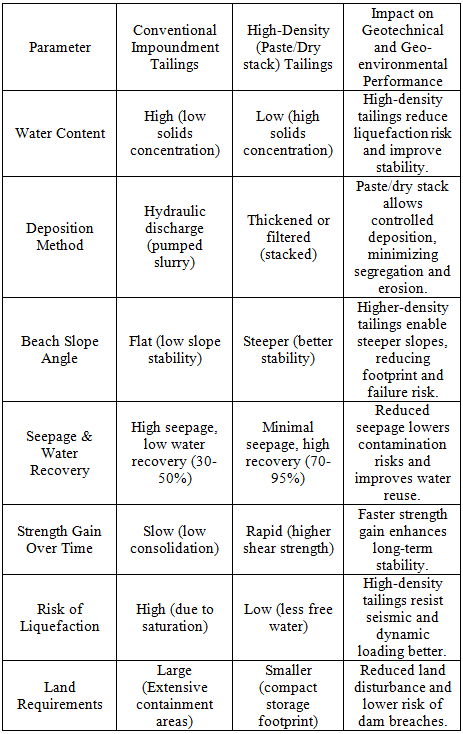
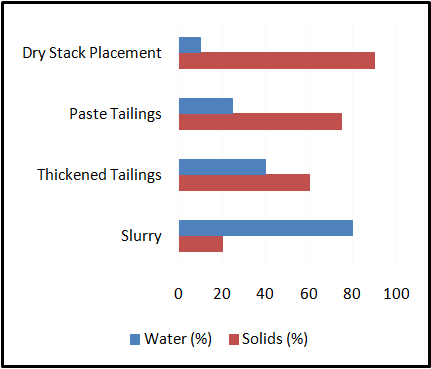
Stack tailings represents the most intensive and advanced form of tailings dewatering technique, where filtered tailings can be transported and stacked to form a stable, dry stack facility. It aims to remove as much water as possible from the tailings stream, producing a material with a moisture content low enough to allow for dry stacking. Often with moisture contents of 15–25% 23, 1, 24, 25, dry stack tailings behave similarly to soil and can be transported via conveyor or truck, offering an alternative to traditional hydraulic transport 26. Dry stack tailings is achieved through mechanical methods, such as pressure filtration, vacuum filtration, or belt filtration. The choice of filtration method depends on the nature of the tailings (particle size, clay content, and abrasiveness) and the required throughput 27. The benefits of filtration are substantial. It nearly eliminates the need for a tailings pond, significantly reduces the risk of dam failure, and enables concurrent land reclamation. Filtered tailings can also be compacted, reducing the potential for liquefaction and enhancing the geotechnical stability of the storage facility. In addition, water recovery from the filtered tailings can exceed 85% 28, 29, making this an attractive solution in arid regions or operations with limited water access 18. Despite these advantages, filtration systems are associated with high capital costs, complex infrastructure requirements, and high energy consumption, particularly at high throughput rates. Figure 2 shows the graphical representation of the solids and water concentration percentages at each dewatering stage. Table 1 also shows the comparison between conventional impoundment and high-density (paste/dry stack) tailings, highlighting critical differences in geotechnical and geo-environmental performance.
Emerging Technologies: New Additives and Intelligent Control Systems
Recent advances in chemical additives have demonstrated high potential for enhancing tailings dewatering, particularly for clay-rich or ultra-fine suspensions. Boshrouyeh et al. 30 examined the geotechnical and hydro-mechanical behavior of a model slurry used in high-solids, high-salinity applications, both before and after inline flocculation with an anionic polyacrylamide. This was a laboratory experiment conducted using a slurry consolidometer for a comprehensive monitoring of the changes in raw and flocculated materials under increasing applied stress. In their study, treatment of a saline, high-solids tailings slurry with an anionic polyacrylamide (flocculant) led to a reduction in moisture content from 107% to 53% (nearly a 50% absolute drop), a void ratio decrease from 2.6 to 1.6, and an increase in dry density from 0.711 to 1.069 t/m³. Postflocculation consolidation tests also revealed 60% less settlement during the first 48 hours and achieved 50% more free water drainage, a clear indication of significant enhancement in dewatering efficiency.
Besra 31 examined kaolin (kaolinite) dewatering in the presence of surfactants and flocculants. Kaolin clay suspensions are difficult to dewater due to their fine particle size, stable colloidal nature, and high surface charge, which leads to high cake moisture content after filtration. Traditional flocculants (polymers) are used to aggregate particles and reduce specific resistance to filtration (SRF), but they can sometimes trap water within the floc structures, limiting the minimum achievable moisture content. According to their report, flocculation of surfactant-pretreated kaolin substantially reduced the cake moisture content, even if SRF was not significantly altered. These improvements are attributed to enhanced particle aggregation and modification of the pore structure.
Digital solutions, such as real-time rheology monitoring and machine learning-based optimization, further improve dewatering efficiency. A reconstructed rheometer, connected to a self-made rake, was used to monitor shear stress and torque during the thickening of tailings. Dewatering performance improved, reaching a solid mass fraction of 75.33% in 240 minutes, approximately 13.60% higher than that of static sedimentation 32. This demonstrates how continuous rheological monitoring directly links mechanical behavior with dewatering efficiency. Additionally, a hybrid machine learning model was developed to predict the initial settling rate (ISR) of tailings by integrating Principal Component Analysis (PCA) for dimensionality reduction with Particle Swarm Optimization (PSO) and Adaptive Neuro-Fuzzy Inference Systems (ANFIS). The model demonstrated strong predictive performance, achieving correlation coefficients (R) of 0.85 using raw data, 0.89 with PCA retaining 99% variance (PCA99, nine variables), and 0.88 with 95% variance (PCA95, seven variables), highlighting its effectiveness in optimizing tailings dewatering processes 33.
Particle Size and Mineralogical Composition of Tailings
Tailings typically consist of a mixture of fine and coarse particles, contributing differently to dewatering process. The size distribution of particles within tailings affects key processes such as filtration which depends for instance on the properties of the solid particles and how these particles arrange themselves when the filter cake is formed. In an experimental study, Kinnarinen et al. 34 looked at the factors effecting the observed filtration behavior of ground slurry samples with respect to particle sizes and the average specific cake resistances. According to their findings, the width of PSD influences the properties of the filter cake in the pressure filtration of Ni-Cu mine tailings. The results further showed that controlled grinding of Ni–Cu tailings to narrow the coarse tail of the PSD selectively produced a >60% reduction in average specific cake resistance and a marked increase in cake porosity under pressure filtration. Porosity across tests also ranged between 0.50 and 0.66. However, broader PSDs backfill voids with fines, which densifies the cake and chokes flow paths. Narrowing the PSD opens tortuous channels and reduces resistance. This finding agrees with established cake-formation theory 35, 36: a broad PSD tends to let smaller particles fill the voids between larger ones, densifying the cake. In contrast, a narrow, more uniform PSD favors an open cake structure with lower resistance to fluid flow.
Mine tailings also exhibit diverse mineralogical compositions that are influenced by the nature of the mined ore and the extraction processes employed. Mineralogy affects the physical and chemical behavior of the tailings, influencing water retention, consolidation, and long-term stability. For instance, the effectiveness of flocculants and coagulants such as lime and fly ash is highly dependent on the mineralogical context 37. Lime, commonly used to improve dewatering, reacts with aluminosilicate minerals to enhance particle aggregation and water release. However, in tailings where sulfide oxidation has occurred, the resulting sulfate ions can precipitate calcium from lime, diminishing its flocculating efficacy 38. Clay minerals, such as montmorillonite and kaolinite, exhibit slower settling velocities compared to minerals like silica.
In a lab filtration process, Ma et al. 39 investigated how the dewatering of coal slurry is impacted by the presence of clay minerals (i.e., kaolinite and montmorillonite). The results showed that adding either kaolinite or montmorillonite lowered filtration velocity, increased cake moisture, raised average specific resistance, and reduced porosity. However, the effects were widely different between the two clay minerals. At 10% (by weight) montmorillonite, filtration slowed markedly, and cake moisture jumped from ~21.3% (coal only) to ~42.0%, compared with ~24.4% at 10% kaolinite. The specific cake resistance also rose from 1.98×10⁷ m/kg (coal only) to 8.05×10⁹ m/kg with 10% montmorillonite, while increasing to 2.35×10⁸–4.51×10⁸ m/kg across 10–30% kaolinite. This highlights the disproportionate impact of swelling clays. Cake resistance quantifies the inherent 'filterability' of the solid particles being separated, representing the additional resistance to flow contributed by each kilogram of solid cake that builds up on the filter medium. It expresses the resistance (in meters) per kilogram of dry solids in the cake. From the study, this mechanism is rooted in mineral structure and clay-water interactions. Kaolinite is a non-swelling 1:1 clay with tightly bonded layers, leaving an interlayer gap too short for water entry. This means that kaolinite adds relatively little structural water to the cake. Montmorillonite, in contrast, is a swelling 2:1 clay with a permanent layer charge balanced by hydrated cations. Water and these cations diffuse between layers, expanding basal spacing as structural water increases and forming ordered multilayers that retain water. The study concludes that swelling interactions in montmorillonite dominate dewatering outcomes, explaining why swelling clays degrade filtration far more than non-swelling kaolinite.
The major mineralogical components in mine tailings include silicates, sulfides, carbonates, and oxide/hydroxides, each of which has distinct implications for tailings behavior and dewatering performance.
Silicates: Silicate minerals, particularly quartz (SiO₂), dominate in most tailings. For instance, studies have shown quartz content reaching up to 86% in certain tailings samples 40. The prevalence of silicates is attributed to their abundance in many of the ore bodies and their natural resistance to chemical weathering.
Sulfides: Tailings from sulfide ore processing frequently contain minerals such as pyrite (FeS₂), pyrrhotite (Fe₁₋ₓS), and chalcopyrite (CuFeS₂). These sulfide minerals are of particular environmental concern due to their potential to generate acid mine drainage when exposed to atmospheric conditions 9.
Carbonates: Minerals such as calcite (CaCO₃) and dolomite (CaMg(CO₃)₂) may be present, especially in tailings derived from carbonate-hosted ore deposits. Carbonates can act as neutralizing agents against acid generation but can also dissolve, leading to the release of associated metals 41.
Oxides and Hydroxides: Iron oxides such as hematite (Fe₂O₃) and magnetite (Fe₃O₄), along with hydroxides like goethite FeO(OH), are common in tailings. These minerals can form through the oxidation of primary sulfides and play a role in sequestering heavy metals 42.
Mineralogical and PSD Effects on Tailings Dewatering by Ore Type
The effect of mineralogy and PSD on tailings dewatering varies significantly with the geochemical origin and processing method of the ore. The primary ore types, which include sulfide ores, iron ores, bauxite (aluminum ores), and phosphate ores, all produce tailings with distinct mineralogical profiles and PSDs, leading to unique dewatering challenges and behaviors.
Sulfide ore tailings (e.g., Cu, Au, Zn, and Ni) are among the most challenging to dewater due to their complex mineralogy and the frequent presence of clays and ultra-fines. These ores are often associated with silicate gangue minerals (e.g., quartz), and phyllosilicates like micas and clays (usually introduced from the host rock or as alteration products). Extraction of metals from sulfide ores often requires fine grinding to liberate the valuable minerals, resulting in tailings with a high proportion of ultra-fine particles (<2 µm). The combination of ultra-fines and phyllosilicate minerals dramatically increases slurry viscosity and yield stress, as demonstrated by Desriviers et al. 12. Gold and copper tailings with higher phyllosilicate content exhibit significantly higher yield stresses, which severely impede gravity settling and thickening.
Iron ore tailings are generally more responsive to dewatering due to their dominant mineralogy. Still, their properties are highly dependent on the ore genesis (e.g., Banded Iron Formations vs. weathered ores). Iron ore tailings often have a relatively coarser PSD, usually dominated by quartz and iron oxides, resulting in high permeability, rapid settling, and the formation of filter cakes with low specific resistance. Their granular nature promotes a more open, porous cake structure, as described by cake-formation theory 34, 35. The primary dewatering challenges arise when the PSD contains a significant ultra-fines fraction, typically associated with weathered ores. These fine particles can fill the voids between coarser grains. This densifies the cake and increases its resistance, a mechanism similar to that observed in Ni-Cu tailings 34. However, if the ore contains clay minerals, the adverse effects of viscosity and water retention seen in sulfide tailings will manifest.
Bauxite residue represents an extreme case where mineralogy dictates inferior dewatering characteristics, often overshadowing the influence of PSD. The tailings are a highly alkaline slurry, and the residue is almost entirely composed of very fine and colloidal particles. The mineralogical complex, particularly the neo-formed sodium aluminosilicates, creates a gel-like structure with extremely high specific surface area and a strong negative surface charge. This results in a suspension that is resistant to consolidation under its own weight 4. The combination of ultrafine PSD and this specific, reactive mineralogy results in exceptionally high yield stresses, very low permeability, and long-term self-desiccation rather than the release of free water.
Combined effects of mineralogy and particle size on tailings dewatering
The dewatering process is complicated by the mineralogy of fine particles (particularly clays) and larger granular-sized minerals like quartz. Clay’s presence increases slurry viscosity, creating a thick, resistant medium that hinders the movement of water. Experimental results by Grosso et al. 27 demonstrated that even minor variations in clay mineralogy affected dewatering performance and resultant cake properties. Most significantly, the presence of smectite clay was identified as a primary detrimental agent, with concentrations of 1% being sufficient to worsen filterability. However, beyond increasing viscosity, clays actively disrupt dewatering on a structural level. They tend to form heterogeneous aggregates with coarser particles, such as silicates, effectively coating them and filling the void spaces between larger grains. These aggregation behaviors are governed by surface chemistry and promote hetero-aggregation between unlike particles, increasing clogging under typical tailings water chemistries 43. This action could alter pore connectivity within the sediment, collapsing pathways through which water would otherwise escape. The overall result is a reduction in permeability, causing water to be retained within the matrix rather than released. This directly undermines the efficiency and effectiveness of the dewatering operation.
The coating effect of fines also reduces the mechanical strength of the deposit by altering the inter-particle contacts. In a granular-dominated tailings deposit, shear strength is derived mainly from the frictional resistance generated at the points of contact between grains. However, when these critical contact points are somewhat “lubricated” and separated by a layer of cohesive fines (such as clays), the inter-particle friction is reduced. This means the bonding shifts from strong frictional resistance to weaker, more vulnerable cohesive bonds. The overall reduction in shear strength then transforms the tailings mass into a susceptible material that, when subjected to static or dynamic loading (i.e., continued deposition or an earthquake), could face an increased risk of liquefaction.
Research Need
Despite notable progress in dewatering techniques, the combined effect of mineralogy and particle size distribution (PSD) remains inadequately characterized. Fine particles, such as clays, not only increase slurry viscosity but can also form heterogeneous aggregates with coarser particles, alter pore connectivity, and reduce permeability. This could lower filtration rates compared to uncoated particles.
Another critical research gap lies in the long-term geotechnical implications of dewatering. The adhesion of fines to coarse particles not only impedes water release but also weakens inter-particle bonding, reducing shear strength in deposited tailings. This increases the risk of liquefaction and dam failure. The question then is, what are the thresholds at which mineralogical coatings become detrimental? This and other related questions often remain poorly understood, particularly under dynamic consolidation conditions.
A recurring limitation in the literature is the lack of methodological consistency and normalization when comparing dewatering results across studies. Investigations frequently report PSD using different descriptors (e.g., D10/D50/D90 vs. percent finer), which complicates cross-study interpretations. Additionally, clay content is often reported as ‘bulk fines’, masking mineralogical distinctions (e.g., kaolinite vs. smectite) that are decisive for bound water and post-deposition behavior. Meanwhile, comparative experiments demonstrate that even modest additions of swelling clays (about 1%) can sharply deteriorate filtration rates and increase cake moisture relative to kaolinite at similar mass fractions. However, these effects are sometimes attributed generically to fines, concealing the mineralogical effect.
The above complexities underscore the need for further studies on the multiscale effects of mineralogy and particle size parameters to understand better the behavior of tailings dewatering under varying operational conditions. Such research outcomes will support the design of dewatering processes and improve water recovery.
There is a need for continued research and innovation in tailings dewatering technologies. For example, in the laboratory, a design that varies clay type and fraction (kaolinite vs. smectite; 0–20 wt.%) and PSD span (e.g., D50) can isolate thresholds beyond which filtration times and cake moisture increase non-linearly. Here, “wt. % (weight percent)” refers to the proportion of clay mass relative to the total mass of the sample, providing a standardized way to compare the influence of different clay contents across experiments. Imaging, using Scanning Electron Microscopy–Energy-Dispersive X-ray Spectroscopy (SEM-EDS) and micro-Computed Tomography (micro-CT), should quantify the fine coating of coarse grains and pore-throat occlusion. At the same time, rheology and SRF link these fabrics to key process performance indicators (KPIs). These arrangements are guided by the empirical evidence that narrowing PSD can improve filtration in mine tailings. Also, clay mineralogy (especially smectite) exerts first-order control on filterability and moisture generation. Finally, machine learning models could help predict dewatering performance based on mineral composition, particle size distribution, and slurry chemistry, enabling more robust tailings management strategies.
Richard Otoo and Benjamin Abankwa: Designed the review framework, conducted a systematic literature search, synthesized key findings, and wrote the initial draft.
Mehrdad Razavi: Supervision, validated interpretations, and revised the manuscript.
Abraham Armah, Sandra Donkor, and Ernest Brakohiapa: Conducted literature search, assisted in data organization, and created tables/figures.
The authors certify that there is no conflict of interest.
TSFsTailings Storage Facilities
PSDParticle Size Distribution
PIPhyllocilicate Index
PIPlastic Index
RCorrelation coefficients
w/wweight by weight
wt. %Weight percent
SRFSpecific Resistance to Filtration
ISRInitial Settling Rate
PCAPrincipal Component Analysis
PSOParticle Swarm Optimization
KPIsKey Performance Indicators
micro-CTMicro-Computed Tomography
SEM-EDSScanning Electron Microscopy–Energy-Dispersive X-ray Spectroscopy
ANFISAdaptive Neuro-Fuzzy Inference Systems
| [1] | Wang, C., Harbottle, D., Liu, Q., & Xu, Z. (2014). Current state of fine mineral tailings treatment: A critical review on theory and practice. Minerals Engineering, 58, 113-131. | ||
| In article | View Article | ||
| [2] | Rico, M., Benito, G., Salgueiro, A. R., Díez-Herrero, A., & Pereira, H. G. (2008). Reported tailings dam failures: a review of the European incidents in the worldwide context. Journal of hazardous materials, 152(2), 846-852. | ||
| In article | View Article PubMed | ||
| [3] | Lee, J. K., Shang, J. Q., & Xu, Y. (2016). Electrokinetic dewatering of mine tailings using DSA electrodes. Int. J. Electrochem. Sci, 11(5), 4149-4160. | ||
| In article | View Article | ||
| [4] | Sofrá, F., & Boger, D. V. (2002). Environmental rheology for waste minimisation in the minerals industry. Chemical Engineering Journal, 86(3), 319-330. | ||
| In article | View Article | ||
| [5] | Yüksek, S. (2022). Electroosmotic dewatering of iron ore tailings: a laboratory study to improve geotechnical properties. Advances in Civil Engineering, 2022(1), 7662997. | ||
| In article | View Article | ||
| [6] | Abankwa, B., Islam, M. M., Shakil, M. A., Al-Khateeb, H. A. A. A., Otoo, R., & Islam, M. A. (2025). Advancing Tailings Dam Safety: Integrating Risk Management, Technological Innovations, and Regulatory Reforms. American Journal of Mining and Metallurgy, 8(1), 1-12. | ||
| In article | View Article | ||
| [7] | Scales, P. J., Johnson, S. B., & Kapur, P. C. (2000). The influence of surface chemistry on the rheology and flow of flocculated particulate suspensions. Mineral Processing and Extractive Metallurgy Review, 20(1), 27-40. | ||
| In article | View Article | ||
| [8] | Burdukova, E., Becker, M., Ndlovu, B., Mokgethi, B., & Deglon, D. A. (2008, September). Relationship between slurry rheology and its mineralogical content. In the 24th Int. Minerals Processing Congress, China (pp. 2169-2178). | ||
| In article | |||
| [9] | Edraki, M., Baumgartl, T., Manlapig, E., Bradshaw, D., Franks, D. M., & Moran, C. J. (2014). Designing mine tailings for better environmental, social and economic outcomes: a review of alternative approaches. Journal of Cleaner Production, 84, 411-420. | ||
| In article | View Article | ||
| [10] | Bussière, B. (2007). Colloquium 2004: Hydrogeotechnical properties of hard rock tailings from metal mines and emerging geoenvironmental disposal approaches. Canadian Geotechnical Journal, 44(9), 1019-1052. | ||
| In article | View Article | ||
| [11] | Boger, D. V. (2013). Rheology of slurries and environmental impacts in the mining industry. Annual review of chemical and biomolecular engineering, 4(1), 239-257. | ||
| In article | View Article PubMed | ||
| [12] | Desriviers, P., Quintero, A., & Primeau, P. (2019, May). Effects of the mineralogical composition and particle size distribution on the rheology of gold and copper tailings. In Paste 2019: Proceedings of the 22nd International Conference on Paste, Thickened and Filtered Tailings (pp. 504-514). Australian Centre for Geomechanics. | ||
| In article | View Article | ||
| [13] | Hassan, S., Ekanayake, N. I., Scales, P. J., Batterham, R. J., & Stickland, A. D. (2025). Quantifying the effect of ultra-fine particles on dewatering performance in bimodal suspensions. Powder Technology, 458, 120986. | ||
| In article | View Article | ||
| [14] | Beier, N. A., & Sego, D. C. (2009). Cyclic freeze–thaw to enhance the stability of coal tailings. Cold Regions Science and Technology, 55(3), 278-285. | ||
| In article | View Article | ||
| [15] | Alamgir, A., Harbottle, D., Masliyah, J., & Xu, Z. (2012). Al-PAM assisted filtration system for abatement of mature fine tailings. Chemical engineering science, 80, 91-99. | ||
| In article | View Article | ||
| [16] | Murphy, C., Bennett, C., Olinger, G., & Cousins, B. (2012). Alternatives to coal mine tailings impoundment–evaluation of three dewatering methods at Rockspring Coal Mine. In Water in Mineral Processing-Proceedings of the 1st International Symposium (pp. 301-309). | ||
| In article | |||
| [17] | Cacciuttolo, C., & Atencio, E. (2022). An alternative technology to obtain dewatered mine tailings: safe and controlled environmental management of filtered and thickened copper mine tailings in Chile. Minerals, 12(10), 1334. | ||
| In article | View Article | ||
| [18] | Cacciuttolo, C., & Valenzuela, F. (2022). Efficient Use of Water in Tailings Management: New Technologies and Environmental Strategies for the Future of Mining. Water, 14(11), 1741. | ||
| In article | View Article | ||
| [19] | Liu, Q., Liu, D., Liu, X., Gao, F., & Li, S. (2016). Research and application of surface paste disposal for clay-sized tailings in tropical rainy climate. International Journal of Mineral Processing, 157, 227-235. | ||
| In article | View Article | ||
| [20] | Simms, P., Grabinsky, M., & Zhan, G. (2007). Modelling evaporation of paste tailings from the Bulyanhulu mine. Canadian Geotechnical Journal, 44(12), 1417-1432. | ||
| In article | View Article | ||
| [21] | Newman, P., White, R., & Cadden, A. (2001). Paste-the future of tailings disposal. In Proceedings of the 2nd International Conference on Mining and the Environment (Vol. 594). | ||
| In article | |||
| [22] | Furnell, E., Bilaniuk, K., Goldbaum, M., Shoaib, M., Wani, O., Tian, X., & Bobicki, E. R. (2022). Dewatered and stacked mine tailings: a review. Acs Es&T Engineering, 2(5), 728-745. | ||
| In article | View Article | ||
| [23] | Hogg, C.S. (2010). Filtered tailings in Western Australian iron ore projects. Comparison of filtered tailings with other tailings disposal methods. In: R. Jewell & A.B. Fourie (Eds.), Proceedings of the First International Seminar on the Reduction of Risk in the Management of Tailings and Mine Waste (pp. 463-472). Perth: Australian Centre for Geomechanics. | ||
| In article | View Article | ||
| [24] | Ulrich, B. (2019). Practical thoughts regarding filtered tailings. In: A.J.C. Paterson, A.B. Fourie & D. Reid (Eds.), Proceedings of the 22nd International Conference on Paste, Thickened and Filtered Tailings (pp. 71-79). Perth: Australian Centre for Geomechanics. | ||
| In article | View Article PubMed | ||
| [25] | Oldecop, L. A., & Rodari, G. J. (2021). Unsaturated mine tailings disposal. Soils and Rocks, 44, e2021067421. | ||
| In article | View Article | ||
| [26] | McPhail, G. I., Ugaz, R., & Garcia, F. (2019). Practical tailings slurry dewatering and tailings management strategies for small and medium mines. In Paste 2019: Proceedings of the 22nd International Conference on Paste, Thickened and Filtered Tailings (pp. 235-243). Australian Centre for Geomechanics. | ||
| In article | View Article | ||
| [27] | Grosso, A., Kaswalder, F., & Hawkey, A. (2021). Clay-bearing mine tailings analysis and implications in large filter press design. In Paste 2021: Proceedings of the 24th International Conference on Paste, Thickened and Filtered Tailings (pp. 107-118). Australian Centre for Geomechanics. | ||
| In article | View Article | ||
| [28] | Demers, I., & Pabst, T. (2021). 13 Alternative and Innovative Integrated Mine Waste Management Approaches. | ||
| In article | View Article | ||
| [29] | Sako, C. H., & Pabst, T. (2023). Experimental and numerical evaluation of the critical degree of saturation and critical exposure time of acid-generating filtered tailings. Applied Geochemistry, 155, 105726. | ||
| In article | View Article | ||
| [30] | Boshrouyeh, B., Edraki, M., Baumgartl, T., Costine, A., Quintero Olaya, S., Lepková, K., & Dwivedi, D. (2024). Impact of Inline Polyacrylamide Polymer Flocculation on the Mechanical and Hydrological Properties of Saline Tailings. Minerals, 14(11), 1180. | ||
| In article | View Article | ||
| [31] | Besra, L., Sengupta, D. K., & Roy, S. K. (2000). Particle characteristics and their influence on dewatering of kaolin, calcite and quartz suspensions. International Journal of Mineral Processing, 59(2), 89-112. | ||
| In article | View Article | ||
| [32] | Wang, Y., Wu, A. X., Ruan, Z. E., Wang, Z. H., Wei, Z. S., Yang, G. F., & Wang, Y. M. (2020). Reconstructed rheometer for direct monitoring of dewatering performance and torque in tailings thickening process. International Journal of Minerals, Metallurgy and Materials, 27(11), 1430-1437. | ||
| In article | View Article | ||
| [33] | Qi, C., Ly, H. B., Chen, Q., Le, T. T., Le, V. M., & Pham, B. T. (2020). Flocculation-dewatering prediction of fine mineral tailings using a hybrid machine learning approach. Chemosphere, 244, 125450. | ||
| In article | View Article PubMed | ||
| [34] | Kinnarinen, T., Tuunila, R., Häkkinen, A., Reduction of the width of particle size distribution to improve pressure filtration properties of slurries, Minerals Engineering, 2017, 102: 68-74. | ||
| In article | View Article | ||
| [35] | Hwang, K. J., Wu, Y. S., & Lu, W. M. (1997). Effect of the size distribution of spheroidal particles on the surface structure of a filter cake. Powder technology, 91(2), 105-113. | ||
| In article | View Article | ||
| [36] | Koekemoer, A., & Luckos, A. (2015). Effect of material type and particle size distribution on pressure drop in packed beds of large particles: Extending the Ergun equation. Fuel, 158, 232-238. | ||
| In article | View Article | ||
| [37] | Khazaie, A., Mazarji, M., Samali, B., Osborne, D., Minkina, T., Sushkova, S., & Soldatov, A. (2022). A review on coagulation/flocculation in dewatering of coal slurry. Water, 14(6), 918. | ||
| In article | View Article | ||
| [38] | Blowes, D., Ptacek, C., Jambor, J., & Weisener, C. (2005). The geochemistry of acid mine. Environ. Geochem, 9, 149. | ||
| In article | View Article | ||
| [39] | Ma, X., Fan, Y., Dong, X., Chen, R., Li, H., Sun, D., & Yao, S. (2018). Impact of clay minerals on the dewatering of coal slurry: an experimental and molecular-simulation study. Minerals, 8(9), 400. | ||
| In article | View Article | ||
| [40] | Weng, R., Chen, G., Huang, X., Tian, F., Ni, L., Peng, L., & Xi, B. (2022). Geochemical characteristics of tailings from typical metal mining areas in Tibet autonomous region. Minerals, 12(6), 697. | ||
| In article | View Article | ||
| [41] | Weber, P. A., Thomas, J. E., Skinner, W. M., & Smart, R. S. C. (2005). A methodology to determine the acid-neutralization capacity of rock samples. The Canadian Mineralogist, 43(4), 1183-1192. | ||
| In article | View Article | ||
| [42] | Xu, Z., Huang, Z., Li, H., Zhu, S., Lei, Z., Liu, C., ... & Feng, C. (2024). Sulfidation− reoxidation enhances heavy metal immobilization by vivianite. Water research, 263, 122195. | ||
| In article | View Article PubMed | ||
| [43] | Bradley, M., Lazim, A. M., & Eastoe, J. (2011). Stimulus-responsive heteroaggregation of colloidal dispersions: reversible systems and composite materials. Polymers, 3(3), 1036-1050. | ||
| In article | View Article | ||
Published with license by Science and Education Publishing, Copyright © 2025 Richard Otoo, Mehrdad Razavi, Benjamin Abankwa, Abraham Armah, Sandra Donkor and Ernest Brakohiapa
 This work is licensed under a Creative Commons Attribution 4.0 International License. To view a copy of this license, visit
http://creativecommons.org/licenses/by/4.0/
This work is licensed under a Creative Commons Attribution 4.0 International License. To view a copy of this license, visit
http://creativecommons.org/licenses/by/4.0/
| [1] | Wang, C., Harbottle, D., Liu, Q., & Xu, Z. (2014). Current state of fine mineral tailings treatment: A critical review on theory and practice. Minerals Engineering, 58, 113-131. | ||
| In article | View Article | ||
| [2] | Rico, M., Benito, G., Salgueiro, A. R., Díez-Herrero, A., & Pereira, H. G. (2008). Reported tailings dam failures: a review of the European incidents in the worldwide context. Journal of hazardous materials, 152(2), 846-852. | ||
| In article | View Article PubMed | ||
| [3] | Lee, J. K., Shang, J. Q., & Xu, Y. (2016). Electrokinetic dewatering of mine tailings using DSA electrodes. Int. J. Electrochem. Sci, 11(5), 4149-4160. | ||
| In article | View Article | ||
| [4] | Sofrá, F., & Boger, D. V. (2002). Environmental rheology for waste minimisation in the minerals industry. Chemical Engineering Journal, 86(3), 319-330. | ||
| In article | View Article | ||
| [5] | Yüksek, S. (2022). Electroosmotic dewatering of iron ore tailings: a laboratory study to improve geotechnical properties. Advances in Civil Engineering, 2022(1), 7662997. | ||
| In article | View Article | ||
| [6] | Abankwa, B., Islam, M. M., Shakil, M. A., Al-Khateeb, H. A. A. A., Otoo, R., & Islam, M. A. (2025). Advancing Tailings Dam Safety: Integrating Risk Management, Technological Innovations, and Regulatory Reforms. American Journal of Mining and Metallurgy, 8(1), 1-12. | ||
| In article | View Article | ||
| [7] | Scales, P. J., Johnson, S. B., & Kapur, P. C. (2000). The influence of surface chemistry on the rheology and flow of flocculated particulate suspensions. Mineral Processing and Extractive Metallurgy Review, 20(1), 27-40. | ||
| In article | View Article | ||
| [8] | Burdukova, E., Becker, M., Ndlovu, B., Mokgethi, B., & Deglon, D. A. (2008, September). Relationship between slurry rheology and its mineralogical content. In the 24th Int. Minerals Processing Congress, China (pp. 2169-2178). | ||
| In article | |||
| [9] | Edraki, M., Baumgartl, T., Manlapig, E., Bradshaw, D., Franks, D. M., & Moran, C. J. (2014). Designing mine tailings for better environmental, social and economic outcomes: a review of alternative approaches. Journal of Cleaner Production, 84, 411-420. | ||
| In article | View Article | ||
| [10] | Bussière, B. (2007). Colloquium 2004: Hydrogeotechnical properties of hard rock tailings from metal mines and emerging geoenvironmental disposal approaches. Canadian Geotechnical Journal, 44(9), 1019-1052. | ||
| In article | View Article | ||
| [11] | Boger, D. V. (2013). Rheology of slurries and environmental impacts in the mining industry. Annual review of chemical and biomolecular engineering, 4(1), 239-257. | ||
| In article | View Article PubMed | ||
| [12] | Desriviers, P., Quintero, A., & Primeau, P. (2019, May). Effects of the mineralogical composition and particle size distribution on the rheology of gold and copper tailings. In Paste 2019: Proceedings of the 22nd International Conference on Paste, Thickened and Filtered Tailings (pp. 504-514). Australian Centre for Geomechanics. | ||
| In article | View Article | ||
| [13] | Hassan, S., Ekanayake, N. I., Scales, P. J., Batterham, R. J., & Stickland, A. D. (2025). Quantifying the effect of ultra-fine particles on dewatering performance in bimodal suspensions. Powder Technology, 458, 120986. | ||
| In article | View Article | ||
| [14] | Beier, N. A., & Sego, D. C. (2009). Cyclic freeze–thaw to enhance the stability of coal tailings. Cold Regions Science and Technology, 55(3), 278-285. | ||
| In article | View Article | ||
| [15] | Alamgir, A., Harbottle, D., Masliyah, J., & Xu, Z. (2012). Al-PAM assisted filtration system for abatement of mature fine tailings. Chemical engineering science, 80, 91-99. | ||
| In article | View Article | ||
| [16] | Murphy, C., Bennett, C., Olinger, G., & Cousins, B. (2012). Alternatives to coal mine tailings impoundment–evaluation of three dewatering methods at Rockspring Coal Mine. In Water in Mineral Processing-Proceedings of the 1st International Symposium (pp. 301-309). | ||
| In article | |||
| [17] | Cacciuttolo, C., & Atencio, E. (2022). An alternative technology to obtain dewatered mine tailings: safe and controlled environmental management of filtered and thickened copper mine tailings in Chile. Minerals, 12(10), 1334. | ||
| In article | View Article | ||
| [18] | Cacciuttolo, C., & Valenzuela, F. (2022). Efficient Use of Water in Tailings Management: New Technologies and Environmental Strategies for the Future of Mining. Water, 14(11), 1741. | ||
| In article | View Article | ||
| [19] | Liu, Q., Liu, D., Liu, X., Gao, F., & Li, S. (2016). Research and application of surface paste disposal for clay-sized tailings in tropical rainy climate. International Journal of Mineral Processing, 157, 227-235. | ||
| In article | View Article | ||
| [20] | Simms, P., Grabinsky, M., & Zhan, G. (2007). Modelling evaporation of paste tailings from the Bulyanhulu mine. Canadian Geotechnical Journal, 44(12), 1417-1432. | ||
| In article | View Article | ||
| [21] | Newman, P., White, R., & Cadden, A. (2001). Paste-the future of tailings disposal. In Proceedings of the 2nd International Conference on Mining and the Environment (Vol. 594). | ||
| In article | |||
| [22] | Furnell, E., Bilaniuk, K., Goldbaum, M., Shoaib, M., Wani, O., Tian, X., & Bobicki, E. R. (2022). Dewatered and stacked mine tailings: a review. Acs Es&T Engineering, 2(5), 728-745. | ||
| In article | View Article | ||
| [23] | Hogg, C.S. (2010). Filtered tailings in Western Australian iron ore projects. Comparison of filtered tailings with other tailings disposal methods. In: R. Jewell & A.B. Fourie (Eds.), Proceedings of the First International Seminar on the Reduction of Risk in the Management of Tailings and Mine Waste (pp. 463-472). Perth: Australian Centre for Geomechanics. | ||
| In article | View Article | ||
| [24] | Ulrich, B. (2019). Practical thoughts regarding filtered tailings. In: A.J.C. Paterson, A.B. Fourie & D. Reid (Eds.), Proceedings of the 22nd International Conference on Paste, Thickened and Filtered Tailings (pp. 71-79). Perth: Australian Centre for Geomechanics. | ||
| In article | View Article PubMed | ||
| [25] | Oldecop, L. A., & Rodari, G. J. (2021). Unsaturated mine tailings disposal. Soils and Rocks, 44, e2021067421. | ||
| In article | View Article | ||
| [26] | McPhail, G. I., Ugaz, R., & Garcia, F. (2019). Practical tailings slurry dewatering and tailings management strategies for small and medium mines. In Paste 2019: Proceedings of the 22nd International Conference on Paste, Thickened and Filtered Tailings (pp. 235-243). Australian Centre for Geomechanics. | ||
| In article | View Article | ||
| [27] | Grosso, A., Kaswalder, F., & Hawkey, A. (2021). Clay-bearing mine tailings analysis and implications in large filter press design. In Paste 2021: Proceedings of the 24th International Conference on Paste, Thickened and Filtered Tailings (pp. 107-118). Australian Centre for Geomechanics. | ||
| In article | View Article | ||
| [28] | Demers, I., & Pabst, T. (2021). 13 Alternative and Innovative Integrated Mine Waste Management Approaches. | ||
| In article | View Article | ||
| [29] | Sako, C. H., & Pabst, T. (2023). Experimental and numerical evaluation of the critical degree of saturation and critical exposure time of acid-generating filtered tailings. Applied Geochemistry, 155, 105726. | ||
| In article | View Article | ||
| [30] | Boshrouyeh, B., Edraki, M., Baumgartl, T., Costine, A., Quintero Olaya, S., Lepková, K., & Dwivedi, D. (2024). Impact of Inline Polyacrylamide Polymer Flocculation on the Mechanical and Hydrological Properties of Saline Tailings. Minerals, 14(11), 1180. | ||
| In article | View Article | ||
| [31] | Besra, L., Sengupta, D. K., & Roy, S. K. (2000). Particle characteristics and their influence on dewatering of kaolin, calcite and quartz suspensions. International Journal of Mineral Processing, 59(2), 89-112. | ||
| In article | View Article | ||
| [32] | Wang, Y., Wu, A. X., Ruan, Z. E., Wang, Z. H., Wei, Z. S., Yang, G. F., & Wang, Y. M. (2020). Reconstructed rheometer for direct monitoring of dewatering performance and torque in tailings thickening process. International Journal of Minerals, Metallurgy and Materials, 27(11), 1430-1437. | ||
| In article | View Article | ||
| [33] | Qi, C., Ly, H. B., Chen, Q., Le, T. T., Le, V. M., & Pham, B. T. (2020). Flocculation-dewatering prediction of fine mineral tailings using a hybrid machine learning approach. Chemosphere, 244, 125450. | ||
| In article | View Article PubMed | ||
| [34] | Kinnarinen, T., Tuunila, R., Häkkinen, A., Reduction of the width of particle size distribution to improve pressure filtration properties of slurries, Minerals Engineering, 2017, 102: 68-74. | ||
| In article | View Article | ||
| [35] | Hwang, K. J., Wu, Y. S., & Lu, W. M. (1997). Effect of the size distribution of spheroidal particles on the surface structure of a filter cake. Powder technology, 91(2), 105-113. | ||
| In article | View Article | ||
| [36] | Koekemoer, A., & Luckos, A. (2015). Effect of material type and particle size distribution on pressure drop in packed beds of large particles: Extending the Ergun equation. Fuel, 158, 232-238. | ||
| In article | View Article | ||
| [37] | Khazaie, A., Mazarji, M., Samali, B., Osborne, D., Minkina, T., Sushkova, S., & Soldatov, A. (2022). A review on coagulation/flocculation in dewatering of coal slurry. Water, 14(6), 918. | ||
| In article | View Article | ||
| [38] | Blowes, D., Ptacek, C., Jambor, J., & Weisener, C. (2005). The geochemistry of acid mine. Environ. Geochem, 9, 149. | ||
| In article | View Article | ||
| [39] | Ma, X., Fan, Y., Dong, X., Chen, R., Li, H., Sun, D., & Yao, S. (2018). Impact of clay minerals on the dewatering of coal slurry: an experimental and molecular-simulation study. Minerals, 8(9), 400. | ||
| In article | View Article | ||
| [40] | Weng, R., Chen, G., Huang, X., Tian, F., Ni, L., Peng, L., & Xi, B. (2022). Geochemical characteristics of tailings from typical metal mining areas in Tibet autonomous region. Minerals, 12(6), 697. | ||
| In article | View Article | ||
| [41] | Weber, P. A., Thomas, J. E., Skinner, W. M., & Smart, R. S. C. (2005). A methodology to determine the acid-neutralization capacity of rock samples. The Canadian Mineralogist, 43(4), 1183-1192. | ||
| In article | View Article | ||
| [42] | Xu, Z., Huang, Z., Li, H., Zhu, S., Lei, Z., Liu, C., ... & Feng, C. (2024). Sulfidation− reoxidation enhances heavy metal immobilization by vivianite. Water research, 263, 122195. | ||
| In article | View Article PubMed | ||
| [43] | Bradley, M., Lazim, A. M., & Eastoe, J. (2011). Stimulus-responsive heteroaggregation of colloidal dispersions: reversible systems and composite materials. Polymers, 3(3), 1036-1050. | ||
| In article | View Article | ||