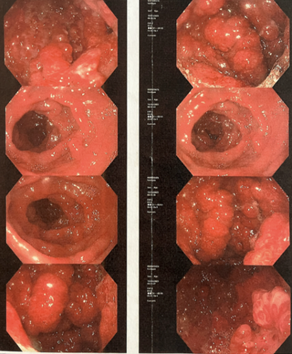
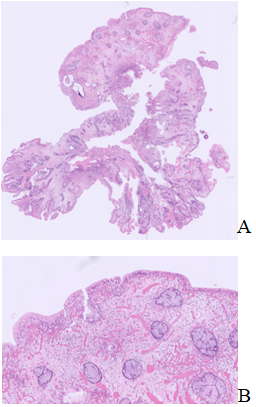
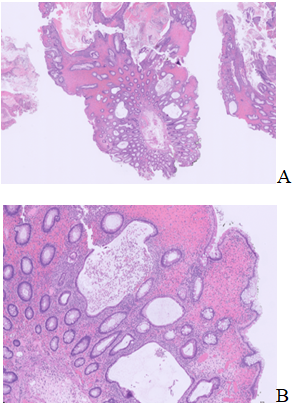
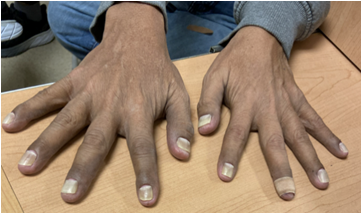
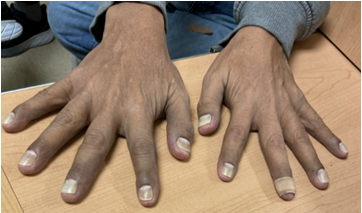
Background: Cronkhite-Canada syndrome (CCS) is a rare, nonhereditary polyposis syndrome that causes protein-losing enteropathy, weight loss, diarrhea, and skin changes. Around 500 cases have been documented worldwide in 50 years. CCS is difficult to diagnose and many patients fail therapy and have high morbidity and mortality. We report CCS in a 62-year-old Asian male. Case Description: A 62-year-old healthy male presented with several weeks of bloating, loss of smell and taste, decreased appetite, diarrhea, darkened hands, and fingernail splitting () following a screening colonoscopy, which showed three small benign polyps. He also endorsed fifty pounds of weight loss over three months. Extensive investigation of infectious, neoplastic, and inflammatory causes was negative. Stool was positive for occult blood. He developed hypoproteinemia and markedly elevated calprotectin level to 4,260 μg/g. Endoscopy and repeat colonoscopy was performed with endoscopic ultrasound. This showed thickened polypoid folds in the stomach (), duodenum, and colon. Pathology revealed edematous lamina propria and cystically dilated glands throughout the gastrointestinal tract (). A diagnosis of CCS was made. The patient was started on prednisone plus mesalamine and a high-calorie, high-protein diet. In three months, he gained twenty pounds, and all of his symptoms improved. He continues to be followed by gastroenterology. Conclusions: CCS is rare. Most reported cases are from Asia. The etiology is unknown, but an autoimmune etiology has been purported due to positive responses to immunosuppression. Diagnosis combines clinical features of chronic diarrhea, weight loss, malnutrition, and skin changes with multiple hamartomatous polyps in the gastrointestinal tract. Management is primarily immunosuppression with glucocorticoids with or without 5-aminosalicylates. CCS can lead to complications, including infections and blood clots, and increased risk of gastrointestinal cancers. Nutritional support is crucial. Regular upper and lower endoscopies are important to monitor malignant complications. CCS is progressive with a poor prognosis. Given its rarity, prospective data on management is limited, and there are no guidelines for monitoring. This case shows how prompt diagnosis and multifaceted management for this rare syndrome can improve symptoms and disease control and encourages further studies to improve management.
Cronkhite-Canada syndrome (CCS) is a rare, nonhereditary polyposis syndrome that causes protein-losing enteropathy, chronic diarrhea, and dermatologic changes. Only around 500 cases have been documented worldwide, the majority from Japan 1. CCS is difficult to diagnose, and many patients fail therapy and have high morbidity and mortality. We report CCS in a 62-year-old Asian male.
A 62-year-old healthy male presented for a screening colonoscopy, which showed 3 small benign polyps. 1 day later, he started feeling bloated with loss of smell and taste and decreased appetite. COVID-19 rapid antigen test was negative. He saw his primary care physician who gave him simethicone and ordered labs. All labs were normal except stool was positive for occult blood. Subsequent endoscopy showed erythema from the stomach to the duodenum. Stomach biopsies showed edematous lamina propria with chronic gastritis. Biopsies were negative for H. pylori and metaplasia/dysplasia. Stains were negative for AFB. Immunostains were negative for gastrin and lymphoma. Duodenum biopsies showed edematous lamina propria, villous blunting, and eosinophilia. No definite diagnosis was possible. The patient was started on antacids and proton-pump inhibitors.
Over the next 2 months, the patient started losing weight and started to have fatigue and diarrhea. He was admitted for further workup. CT abdomen showed mild small bowel wall thickening. CT enterography was normal. MRI brain for his loss of smell/taste was normal. Abdominal ultrasound showed no gallstones. Labs showed elevated C-reactive protein level of 14.8 mg/L and calprotectin level of 4,260 μg/g. Albumin was low at 2.6 g/dl. Quantiferon test was positive but chest X-ray negative. Hep B surface antigen was positive with a virus load of 15,100 IU/ml. IgE was 641 KU/l (normal <114 KU/l). Gastrin level was 306 pg/ml (normal <100 pg/ml), but intrinsic factor and tests for parietal cell antibody were negative. IgG subclasses were normal. Other negative tests included: ova/parasite, CMV PCR, ANA, and respiratory virus panel. The patient was started on budesonide 9 mg daily. Within 1 month, his C-reactive protein level improved to 11.9 mg/L, and his calprotectin improved to 1,200 μg/g.
However, he continued to lose weight. At this point, 3 months into his illness, he had lost a total of 50 pounds. CCS, Menetrier disease, autoimmune gastroenteritis, and gastric cancer were on the differential. A repeat EGD/colonoscopy with EUS showed polypoid, thickened folds in the stomach, duodenum, and colon (Figure 1). Pathology revealed polypoid, edematous lamina propria and cystically dilated glands throughout the gastrointestinal tract (Figure 2, Figure 3). Around this time, the patient started experiencing darkening of the hands and fingernail splitting (Figure 4, Figure 5). Menetrier disease, autoimmune gastroenteritis, and gastric cancer lack skin findings and diffuse involvement of the gastrointestinal tract. Based on these clinical features and endoscopy and pathology findings, the patient was diagnosed with CCS.


Budesonide was stopped. The patient was started on prednisone 40 mg plus mesalamine 1.2 g daily, and tenofovir 300 mg daily for chronic hepatitis B. He was referred to a dietician, who started him on a high-calorie, high-protein diet with daily Peptamen supplementation. Within three months, he gained thirty pounds, all his symptoms improved, and his C-reactive protein level normalized. He continues to be followed by gastroenterology and infectious disease.
Since CCS was first documented in 1955 2, 3, only around 500 cases have been documented worldwide, 75% of which are from Japan. The etiology of CCS is unknown, but it is thought to be autoimmune-related given positive autoimmune markers, increased IgG4 levels, and positive responses to immunosuppression 4.
There is no diagnostic criteria for CCS. Diagnosis combines clinical features with hamartomatous polyps in the gastrointestinal tract. Diarrhea is the most common symptom (80%) 5, 6. Patients also often present with malnutrition. Dermatological changes include hyperpigmentation and onychodystrophy. Gastrointestinal polyps in CCS are largely hamartomatous. However, cases have been documented of malignant polyps and serrated polyps becoming colorectal cancer. Histological features of CCS polyps include cystically dilated glands and lamina propria edema. However, these are non-specific.
CCS is progressive and has a poor prognosis with a 5-year mortality of 55%, largely due to complications of sepsis, gastrointestinal bleeding, malnourishment, electrolyte imbalances, and malignancy. Complete remission has only been documented in 5% of cases 7, 8.
Prospective data on management is limited given the rarity of CCS. Most management is guided by case reports and series. The mainstay of medical management is immunosuppression with glucocorticoids. Case series and retrospective cohort studies showed that over half of patients on glucocorticoids for CCS had symptom reductions and polyp regression 9, 10. Some of these patients were additionally on a 5-aminosalicylate, which have been shown to have an antiproliferative effect on colorectal adenomas 11. However, there is no consensus on glucocorticoid type, route, dose, duration, or need for maintenance therapy. Multicenter collaborations are needed to develop treatment guidelines for rare diseases like CCS.
Patients who are refractory to glucocorticoids can receive immunosuppressants like azathioprine, cyclosporine, or infliximab 12, 13. Medical management also includes treating H.pylori infection and gastroesophageal reflux disease. Surgery is reserved for patients with refractory CCS or malignant complications.
CCS can lead to complications. CCS leads to increased infection risk due to immunosuppressants and the loss of immunoglobulins from protein-losing enteropathy. CCS leads to increased risk of deep vein thrombosis and pulmonary embolism due to the loss of anticoagulation factors from protein-losing enteropathy. Therefore, prophylactic anticoagulation must be considered. There is also increased risk of gastrointestinal bleeding due to frequent surveillance endoscopies.
Lastly, nutritional support and electrolyte replacement are crucial. If enteral feeding is not tolerated or nutritional deficiencies are refractory to enteral feeding, parenteral nutrition must be considered.
There are no guidelines for monitoring treatment. Regular upper and lower endoscopies are important to monitor polyposis and malignant complications. Improvements in symptoms, albumin, and electrolytes can warrant de-escalation of nutritional support and electrolyte replacement.
CCS is a rare, nonhereditary polyposis syndrome that causes protein-losing enteropathy, chronic diarrhea, and dermatologic changes. Given the rarity, there is no diagnosis criteria, and prospective data on management is limited. This case shows how prompt diagnosis and multifaceted management, including glucocorticoid therapy and nutritional support can improve symptoms and disease control. We hope this case encourages more prospective studies and multicenter collaborations to better define treatment pathways for CCS.
Thank you to the University of Pittsburgh Medical Center, Peninsula Pathologists Medical Group, and the Palo Alto Medical Foundation.
| [1] | Goto A. Cronkhite-Canada Syndrome: Epidemiological study of 110 cases reported in Japan. Nippon Geka Hokan. 1995; 64(1): 3-14. | ||
| In article | |||
| [2] | Cronkhite LW Jr, Canada WJ. Generalized gastrointestinal polyposis; an unusual syndrome of polyposis, pigmentation, alopecia and onychotrophia. N Engl J Med. 1955; 252(24): 1011–5. | ||
| In article | View Article PubMed | ||
| [3] | Gardner EJ, Burt RW, Freston JW. Gastrointestinal polyposis: Syndromes and genetic mechanisms. West J Med. 1980; 132: 488–499. | ||
| In article | |||
| [4] | Sweetser S, Ahlquist DA, Osborn NK, Sanderson SO, Smyrk TC, Chari ST, Boardman LA. Clinicopathologic features and treatment outcomes in Cronkhite-Canada syndrome: support for autoimmunity. Dig Dis Sci. 2012; 57(2): 496–502. | ||
| In article | View Article PubMed | ||
| [5] | Ward EM, Wolfsen HC. Review article: The non-inherited gastrointestinal polyposis syndromes. Aliment Pharmacol Ther. 2002; 16: 333–342. | ||
| In article | View Article PubMed | ||
| [6] | Daniel ES, Ludwig SL, Lewin KJ, Ruprecht RM, Rajacich GM, Schwabe AD. The Cronkhite-Canada syndrome. An analysis of clinical and pathologic features and therapy in 55 patients. Medicine (Baltimore). 1982; 61(5): 293–309. | ||
| In article | View Article PubMed | ||
| [7] | Chadalavada R, Brown DK, Walker AN, Sedghi S. Cronkhite-Canada syndrome: sustained remission after corticosteroid treatment. Am J Gastroenterol. 2003; 98: 1444–1446. | ||
| In article | View Article PubMed | ||
| [8] | Dore MP, Satta R, Murino A, Pes GM. Long-lasting remission in a case of Cronkhite-Canada syndrome. BMJ Case Rep. 2018: bcr-2017-223527. | ||
| In article | View Article PubMed | ||
| [9] | Peart AG Jr, Sivak MV Jr, Rankin GB, Kish LS, Steck WD. Spontaneous improvement of Cronkhite-Canada syndrome in a postpartum female. Dig Dis Sci. 1984; 29(5): 470–4. | ||
| In article | View Article PubMed | ||
| [10] | Takakura MAH, Tsuchihashi N, Miyazaki E, Yoshioka Y, Yoshida K, Oryo F, Sawada T. A case of cronkhite-Canada syndrome markedly improved with mesalazine therapy. Dig Endosc. 2004; 16: 74–8. | ||
| In article | View Article | ||
| [11] | Schulte, S., Kütting, F., Mertens, J. et al. Case report of patient with a Cronkhite-Canada syndrome: sustained remission after treatment with corticosteroids and mesalazine. BMC Gastroenterol. 2019; 19(1): 36. | ||
| In article | View Article PubMed | ||
| [12] | Yamakawa K, Yoshino T, Watanabe K, Kawano K, Kurita A, Matsuzaki N, et al Effectiveness of cyclosporine as a treatment for steroid-resistant Cronkhite-Canada syndrome; two case reports. BMC Gastroenterol. 2016; 16(1): 123. | ||
| In article | View Article PubMed | ||
| [13] | Jiang CD, Myint H, Tie A, Stace NH. Sustained clinical response to infliximab in refractory Cronkhite-Canada syndrome. BMJ Case Rep. 2020; 13(12). | ||
| In article | View Article PubMed | ||
Published with license by Science and Education Publishing, Copyright © 2025 Swetha Tummala, Natalie Patel and Sanjeev Tummala
 This work is licensed under a Creative Commons Attribution 4.0 International License. To view a copy of this license, visit
http://creativecommons.org/licenses/by/4.0/
This work is licensed under a Creative Commons Attribution 4.0 International License. To view a copy of this license, visit
http://creativecommons.org/licenses/by/4.0/
| [1] | Goto A. Cronkhite-Canada Syndrome: Epidemiological study of 110 cases reported in Japan. Nippon Geka Hokan. 1995; 64(1): 3-14. | ||
| In article | |||
| [2] | Cronkhite LW Jr, Canada WJ. Generalized gastrointestinal polyposis; an unusual syndrome of polyposis, pigmentation, alopecia and onychotrophia. N Engl J Med. 1955; 252(24): 1011–5. | ||
| In article | View Article PubMed | ||
| [3] | Gardner EJ, Burt RW, Freston JW. Gastrointestinal polyposis: Syndromes and genetic mechanisms. West J Med. 1980; 132: 488–499. | ||
| In article | |||
| [4] | Sweetser S, Ahlquist DA, Osborn NK, Sanderson SO, Smyrk TC, Chari ST, Boardman LA. Clinicopathologic features and treatment outcomes in Cronkhite-Canada syndrome: support for autoimmunity. Dig Dis Sci. 2012; 57(2): 496–502. | ||
| In article | View Article PubMed | ||
| [5] | Ward EM, Wolfsen HC. Review article: The non-inherited gastrointestinal polyposis syndromes. Aliment Pharmacol Ther. 2002; 16: 333–342. | ||
| In article | View Article PubMed | ||
| [6] | Daniel ES, Ludwig SL, Lewin KJ, Ruprecht RM, Rajacich GM, Schwabe AD. The Cronkhite-Canada syndrome. An analysis of clinical and pathologic features and therapy in 55 patients. Medicine (Baltimore). 1982; 61(5): 293–309. | ||
| In article | View Article PubMed | ||
| [7] | Chadalavada R, Brown DK, Walker AN, Sedghi S. Cronkhite-Canada syndrome: sustained remission after corticosteroid treatment. Am J Gastroenterol. 2003; 98: 1444–1446. | ||
| In article | View Article PubMed | ||
| [8] | Dore MP, Satta R, Murino A, Pes GM. Long-lasting remission in a case of Cronkhite-Canada syndrome. BMJ Case Rep. 2018: bcr-2017-223527. | ||
| In article | View Article PubMed | ||
| [9] | Peart AG Jr, Sivak MV Jr, Rankin GB, Kish LS, Steck WD. Spontaneous improvement of Cronkhite-Canada syndrome in a postpartum female. Dig Dis Sci. 1984; 29(5): 470–4. | ||
| In article | View Article PubMed | ||
| [10] | Takakura MAH, Tsuchihashi N, Miyazaki E, Yoshioka Y, Yoshida K, Oryo F, Sawada T. A case of cronkhite-Canada syndrome markedly improved with mesalazine therapy. Dig Endosc. 2004; 16: 74–8. | ||
| In article | View Article | ||
| [11] | Schulte, S., Kütting, F., Mertens, J. et al. Case report of patient with a Cronkhite-Canada syndrome: sustained remission after treatment with corticosteroids and mesalazine. BMC Gastroenterol. 2019; 19(1): 36. | ||
| In article | View Article PubMed | ||
| [12] | Yamakawa K, Yoshino T, Watanabe K, Kawano K, Kurita A, Matsuzaki N, et al Effectiveness of cyclosporine as a treatment for steroid-resistant Cronkhite-Canada syndrome; two case reports. BMC Gastroenterol. 2016; 16(1): 123. | ||
| In article | View Article PubMed | ||
| [13] | Jiang CD, Myint H, Tie A, Stace NH. Sustained clinical response to infliximab in refractory Cronkhite-Canada syndrome. BMJ Case Rep. 2020; 13(12). | ||
| In article | View Article PubMed | ||