The major by-products from mango processing are peels and seeds which represent 35–60% of the total weight of the fruit. This study aimed to assess the physicochemical and functional properties of starch and fat extracted from mangoes seeds kernels for their use as alternative ingredients or additives in the food and non-food industries. Three cultivars of ripe mangoes (Kent, Keitt, Amelie) were collected in two orchards in Northern part of Côte d’Ivoire and starches and fats were extracted using sodium chloride solution and hexane, respectively. The starches granules had spherical and oval shapes with following sizes: 10.71 ± 1.19 µm (Kent); 16.34 ± 1.03 µm (Keitt) and 12.65 ± 1.02 µm (Amelie). The amylose content of mango kernel starches ranged from 23.01 ± 1.17% (Kent) to 27.31 ± 3.64% (Keitt). The swelling power (SP) ranged from 2.8 to 20.27 g/g for all varieties from 50 to 95°C while the solubility increased rapidly at 80°C, with Keitt mango kernel starch exhibiting the highest solubility (12.6%). The syneresis rate at 4°C increases from week 1 (W1) to week 3 (W3), rising from 13.4% to 16.7% for Kent variety, from 16.7% to 20.3% for Keitt variety, and from 12.7% to 15.8% for Amelie variety. Saponification value (SV) of oils extracted from mango seed kernel oils (MKOs) ranged from 179.00 to 189.33 mg KOH/g while iodine value (IV) of MKOs varied from 22.87 to 23.85 g/100 g with no significant differences (p > 0.05) between varieties. The results of the GC-FID analysis showed that palmitic (26.17 – 25.78%), stearic acid (48.05 – 51.93%) and oleic acid (14.49 – 21.22%) were the major fatty acids. All these findings support the potential applications of starches and fats extracted from mangoes (cv Kent, Keitt, Amelie) seeds kernels for edible purposes, for cosmetics, pharmaceutical and chemical industries.
Mango (Mangifera indica L.) is one of the most important tropical fruits in the world due to its taste, aroma and high nutritional value 1. Indeed, mango fruits provide energy, dietary fibre, carbohydrates, proteins, fats and phenolic compounds which are vital for human health 2. The annual production of mango fruit reached about 52 million tons according to FAO in 2020 with India, Indonesia and China as the third major producing countries with more than 50% of the total production. In Côte d’Ivoire, mango fruit plays an important economic role as the third major exported fruit after banana and pineapple. The main producing regions (Korhogo, Ferkessedougou, Sinematiali, Boundiali, Odienne) of mango fruits are located in Northern part of Côte d’Ivoire and the most cultivated varieties are Kent, Keitt and Amelie. Mango fruit is eaten fresh, and a wide range of foods can be processed by using the pulp. Indeed, mango puree, nectar, slices in syrup, pickles, canned slices, chutney and dried slices are the main industrial products obtained from mango fruits 3, 4. The major by-products from mango processing are peels and seeds which represent 35–60% of the total weight of the fruit 5. The peels accounts approximately for 7–24% of the total weight of mango fruit and these by-products have been reported as source of dietary fibre, cellulose, hemicellulose, lipids, proteins, enzymes and pectin 6. Moreover, mango peels flour can be used for various food applications as functional ingredients in food products such as cakes, bread, biscuits and other bakery products 7. As concern the seeds, more than one million tons of mango seeds are annually produced as wastes, and these are often underutilized 8, 9. The seed kernels represent 45–85% of the seed and approximately 20% of the whole fruit 10. Some studies have reported mango seeds as biowastes with high content of bioactive compounds (phenolic compounds, carotenoids, vitamin C, and dietary fibre) 11. Mango seeds are also good source of carbohydrates (58–80%), proteins (6–13%) and fats (6–16%) 12. It has been reported that mango seeds were characterized by anticancer and antimicrobial activities attributed to high antioxidant capacity 13, 14. Therefore, the proper use of mango seed as raw material for food and non-food applications could generate economic benefit for industries, promote health, and reduce environmental pollution. In this context, this study aims to assess the physicochemical and functional properties of starches and fats extracted from mangoes seeds kernels for their use as alternative ingredients or additives in the food and non-food industries.
Three cultivars of ripe mangoes (Kent, Keitt, Amelie) were collected in two orchards in the city of Korhogo (9°27′41″ North, 5°38′19″ West, Côte d'Ivoire), during 2021-2022 harvest season. Mangoes were washed with potable water, peeled, and the pulp was removed from the seeds. Mango seeds were dried at 50 °C/24h in oven and knife-opened to obtain the kernels. Afterwards mango seed kernels (MSKKn, MSKKt, MSKAm) were ground to obtain powder that passed through a 100-mesh sieve. The powder was stored at 4 °C after oven-drying to 6% to 8% moisture for subsequent starch and fat extraction.
2.2. Mango Seed Kernels Starch and Fat ExtractionStarch from mango seed kernels was obtained by using sodium chloride solution 15. The kernels were washed and cut into small pieces, crushed in a blender for 10 min with 4% (w/v) sodium chloride solution. The suspension obtained was filtered on Whatman filter paper and the residue was washed several times with 4% (w/v) sodium chloride solution to remove starch. Then, the filtrate was subjected to overnight decantation under refrigeration. The supernatant was discarded and the starch residue was dried in a oven at 50 °C for 24 h, ground using mortar and passed through a 100-mesh sieve. The starch yield was determined and hermetically stored at 4°C until further analyses.
The soxhlet method was used for kernel fat extraction 16. Thirty (30) g of kernel flour were weighed into cellulose extraction cartridges plugged with cotton. These cartridges were introduced into the Soxhlet system and fat was extracted using 300 mL of n-hexane. After two extraction cycles of 7 h each, the solvent was recovered using a HEIDOLPH HEI-VAP rotary evaporator. The flask containing fat was weighed to determine the extraction yield. Mango kernels fats were stored in dark bottles at -15°C for future use.
2.3. Determination of Physicochemical and Functional Properties of Mango Seed Kernel StarchThe morphology of starch granules was observed using a scanning electron microscope (HIROX, SH-4000 M, Japan). The samples in powder form were coated with palladium and observed under the following conditions: 15 to 20 nm, 30x to 60,000x magnification and 5 to 30 kV accelerating voltage. Particle size of starch granules was determined by a lazer particle size analyzer, (HORIBA, LA-350, Germany). Starches slurry 0.032–0.055% (w/v) was taken in a small glass vial then vortexed and finally sonicated for 1 h before analysis.
The proximate composition of mango seed kernel starches was assessed by determinig the moisture, ash, fat, and proteins according to AOAC methods 17. Carbohydrates were calculated by difference.
Amylose and amylopectin contents were determined following a colorimetric method 18 with modification. Defatted starch (0.1g) was dissolved in 5 mL of potassium hydroxide (1N) solution. The suspension was thoroughly mixed and 5 mL of HCl (1N) solution were added. The mixture was boiled in water bath for 15 min and the volume was adjusted to 10 mL. After centrifugation at 1000 rpm for 10 min, a volume (0.05 mL) of the supernatant was introduced in test tube and 4.85 mL of distilled water, following by 0.1 mL of iodine reagent. The mixture was left to stand for 10 min and absorbance was read at 620 nm by using a spectrophotometer (THERMO SCIENTIFIQUE Helios Omega, USA). The amylose content was determined using a standard curve obtained from amylose standard solution (5 mg/mL). Amylopectin was determined by the following equation:
 |
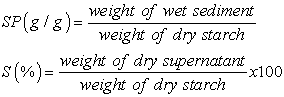
The swelling power (SP) and solubility (S) were performed according to a gravimetric method 19. Suspensions of 10 mL of 1% (w/v) starch in centrifuge tubes were placed in water bath at various temperatures ranging from 50°C to 95°C under agitation for 1 h. After cooling at room temperature, suspensions were centrifuged at 5000 rpm for 15 min. The sediments and supernatants were collected in different test tubes and placed in a ventilated oven at 105°C for 24 h for the supernatants and 48 h for the sediments. The swelling power (SP) and solubility (S) for 1 g of dry starch were estimated using the following formula:
 |
The starch syneresis was carried out following a gravimetric method 20, 21. Briefly, starch suspensions were prepared at 4% w/w into 12 test tubes and heated until 95°C for 15 minutes in a shaking water bath. Afterwards, the gels were stored at 4°C for 4 weeks. After cooling at ambient temperature (25°C), the amounts of gel before the centrifugation (gel mass) and water exudate (supernatant mass) was gravimetrically determined each week and the percentage of syneresis was calculated as follows:
 |
The physicochemical characteristics: acid value - AV (mg KOH/g), saponification value - SV (mg KOH/g), iodine value - IV (g/100g), peroxide value - PV (meqO2/kg), and unsaponifiable matter - UM (%) were determined according to standard AOAC methods 17.
Fatty acids from the extracted mango seed kernels fats were converted into their respective fatty acid methyl esters (FAMEs) and analyzed by gas chromatography coupled with flame ionisation detector (FID). In brief, 100 mg of fat was taken in a vial, then 2 mL of heptane was added and shaken vigorously to dissolve the fat, and mixed with 0.2 mL of 2N methanolic KOH. The mixture was shaken and divided into two clear layers. Afterwards, the upper layer of each sample containing the FAMEs was transferred into a separate vial for fatty acid analysis. FAMEs were analyzed using the Perkin Elmer Clarus 580 GC-FID system. The machine was equipped with a Elite 5MS capillary column of length 30 m and an internal diameter of 0.25 mm (film thickness, 0.25 μm). The carrier gas used was helium, and the flow rate was 1 mL/min. The injector temperature with split mode was 200°C. A sample volume of 1 μL was injected into the column with the initial temperature set to 50°C and held for 2 min; then, the temperature was increased up to 170°C and further increased to 190°C at a rate of 1.5°C/min and finally held for 10 min. The calculation of FAMEs content was done by using an internal standard (C19) at 2 μg/mL.
2.5. Data AnalysisAll measurements were carried out in triplicate and the results expressed as mean ± standard deviation. Analysis of variance (1-way ANOVA) was performed to analyze significant differences of means among the selected mango varieties at p < 0.05. All statistical analyses were performed by using XLSTAT software version 2024.
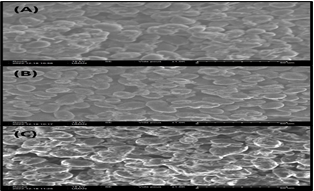
The morphology of starch granules extracted from Kent Keitt and Amelie mango varieties was evaluated by scanning electron microscopy, and the images are presented in Figure 1.
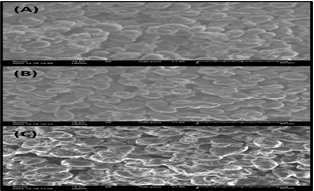
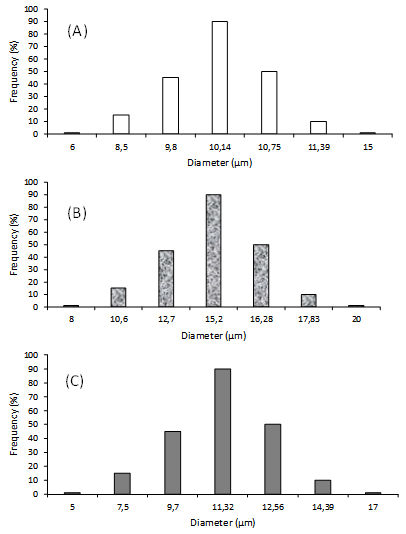
The scanning electron microscopy (SEM) images of mango seed kernel starch granules revealed a heterogeneous morphology, consisting predominantly of oval, round, and irregularly shaped granules. Most granules had smooth surfaces with few fissures or surface indentations. The absence of significant agglomeration suggests minimal starch damage during extraction and drying. Granule surface features and shape varied depending on the mango cultivar, which supports earlier findings that starch morphology is influenced by both genetic and environmental factors 22, 23. Unlike cassava or potato starches, mango starch showed less uniformity in granule shape, indicating a mixed amylose-amylopectin distribution and moderate crystallinity 24. The distribution of starch grain sizes (Figure 2) showed variability depending on the variety, with values of 10.71 ± 1.19 µm (Kent); 16.34 ± 1.03 µm (Keitt) and 12.65 ± 1.02 µm (Amelie).
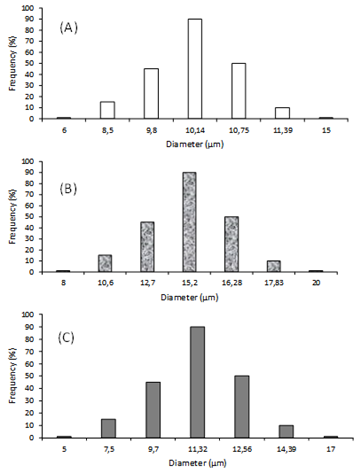
The distribution curve indicated a unimodal pattern, with a narrow span of granule sizes, suggesting relative homogeneity in the extracted starch fractions. Granules size is an important factor during the starch gelatinization process. Indeed, larger granules generally exhibit higher swelling capacity and lower gelatinization temperatures, attributes that align with the functional data reported by some authors 25, 26. Furthermore, larger and smoother granules tend to have lower enzymatic hydrolysis rates, potentially contributing to lower glycemic index (GI) food formulations 27. The morphological characteristics and particle size of mango seed kernel starch granules support their use in a variety of food and non-food applications. The moderately large, smooth granules of mango seed kernel starch indicate good potential for food and non food applications like thickeners and puddings and biodegradable packaging materials.
3.2. Proximate Composition of Mango Seed Kernels StarchThe results related to yield and physicochemical composition of mango seed starches from different cultivars are presented in Table 1. The starch extraction process indicated a yield ranging from 41.20 to 47.40%, showing significant differences (p < 0.05) between the varieties. The starch from the Kent variety (47.40 ± 0.25%) showed the highest yield (p < 0.05), higlighting industrial potential for exploitation as non-conventional starch source. Overall, the results obtained are within the range (27 to 59%) of those reported for mango seed starches from the Sindhoori, Tommy Atkins, Corazon, Uba, and Totapuri cultivars 28, 29.
Moisture contents ranged from 4.20 to 5.20%. These results are lower than those reported (6–10%) for starches from Tommy and Herein mango seed cultivars 30. The relatively low moisture contents would inhibit the growth of microorganisms that degrade starch during storage 31. The starches from the kernels of mango varieties also showed negligible differences in terms of ash (0.18–0.23%), fat (0.26–0.31%), and protein contents (0.06–0.07%). These results are consistent with those of previous studies on different mango varieties 32, 33. The low ash, fat, and protein contents could have positive impact on starch purity, potentially affecting its physicochemical properties 34.
The high carbohydrate content (94.23 - 95.22%), primarily due to starch, aligns with earlier reports indicating mango seed kernels are rich in starch granules with high amylopectin content 22. The amylose content of mango seed kernel starches ranged from 23.01 ± 1.17% (Kent) to 27.31 ± 3.64% (Keitt), exceeding the values obtained (11.9–16.74%) by other authors 30. The amylose content was similar to that of corn starch (22.20%) and potato starch (25.2%) 35, 36. Thus, these starches could be used in industries that produce thickeners and binders 33.
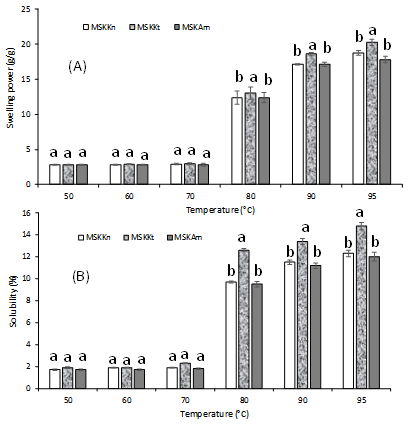
3.3. Functional Properties of Mango Seed Kernels StarchMost starch applications are determined by amylose and amylopectin content, particularly gel producing, thickening, and water retention capacity. Figure 3 shows the swelling power (SP) and solubility percentage (S) of mango seed kernel starches from the Kent, Keitt, and Amelie varieties. Both properties are directly correlated with increases in temperature. The SP values ranged from 2.8 to 20.27 g/g for all varieties from 50 to 95°C. These values are higher than the value reported (1.90 g/g) for Tommy Atkins mango starch at 65°C 30. Swelling power is the ability of starch to expand when heated to a certain temperature and also expresses the volume/dry weight ratio of the starch paste 37. The difference in swelling power between different types of starch can be explained by differences in the amylose/amylopectin ratio. In fact, Keitt mango kernel starch has the highest amylose content (27.31%), which is correlated to its swelling power (20.27 g/g).
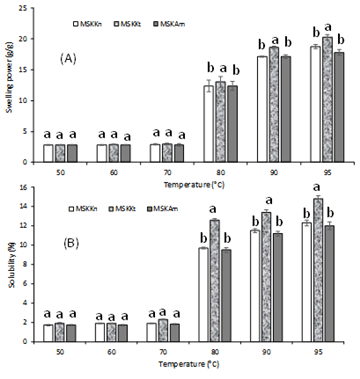
Figure 3B shows the solubility of mango seed kernel starches evaluated at different temperatures. Solubility values increased from 1.7 to 2.3% between 50 and 70°C. However, at 80°C, the solubility increased rapidly, with Keitt mango kernel starch exhibiting the highest solubility (12.6%). The percentage solubility of starches is related to the level of structural degradation of the granules. In addition, it can be influenced by several factors, such as particle size, amylose content, and the degree of the amylopectin chains 38. High swelling power is beneficial in soup thickeners, pie fillings, and gravies, where viscosity and gel strength are critical. Moderate solubility suggests controlled leaching of amylose, useful for textural stability in processed foods 39.
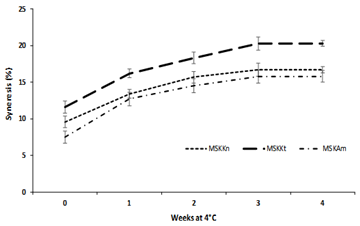
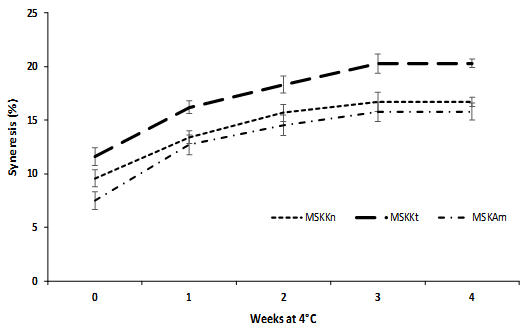
The evolution of syneresis in mango seed kernel starches from the Kent, Keitt, and Amelie varieties is shown in Figure 4.
The syneresis rate at 4°C increases from week 1 (W1) to week 3 (W3), rising from 13.4% to 16.7% (Kent variety), from 16.7% to 20.3% (Keitt variety), and from 12.7% to 15.8% (Amelie variety). During cold storage, the reorganization of starch molecules can lead to water release (or syneresis), which can affect functional properties in terms of viscosity or gel behavior 40. These syneresis indicate that Keitt mango kernel starch may be more stable for use in the manufacture of refrigerated food products. On the other hand, Kent and Amelie mango kernel starches, which are less stable at refrigeration temperatures, could be used in the manufacture of salad dressings and sauces 41.
3.4. Physicochemical Properties and Fatty Acid Composition of Mango Seed Kernel FatThe physicochemical properties and fatty acid composition of mango seed kernel oils from Kent, Keitt and Amelie varieties are shown in Table 2.
The yield of oil from different mango seed kernels (MKOs) varied in the range of 6.91 - 9.60% with the maximum yield (9.60%) for Kent variety while the minimum (6.91%) was obtained for Amelie variety. The differences in oil yields may be due to some factors such as ripening stage and harvesting times 42. The mango seed kernel may be considered as potential source of oils for industry purposes considering the fact that these oils are derived from under-utilized and available waste material 43.
Saponification value (SV) of MKOs ranged from 179.00 to 189.33 mg KOH/g. The highest value was obtained for Kent variety (186.33 ± 3.06 mg KOH/g). The SV values of MKOs are comparable to those of oils and fats used for industrial purposes, such as shea butter (178−193), cocoa butter (188 − 200), peanut oil (187−196) and cottonseed oil (189−198). The SV of MKOs suggest a predominance of medium to long-chain fatty acids, which enhances the oil’s suitability for soap, cosmetics, and biodiesel applications 44, 45. The iodine value (IV) of MKOs varied from 22.87 to 23.85 g/100 g with no significant differences (p > 0.05) between varieties. Also, MKOs had lower iodine values (g/100 g) than shea butter (57 - 66), cottonseed oil (100 - 105), palm oil (50 - 55), and cocoa butter (33 – 42). The relatively low iodine values of the MKOs indicates their resistance to oxidation and longer shelf-life with regard to peroxide (4.56 – 6.54 meq O2/kg) and acid values (3 – 4.03 mg KOH/g). Based on the lower iodine values, MKOs may be used in the manufacture of lubricants, soaps, leather and candles 46.
The unsaponifiable matter of the MKOs ranged from 1.40 to 1.55%, with the highest values observed for Amelie variety (1.55 ± 0.07%). These values are are lower than those reported for Indian mangoes 47. The unsaponifiable matter in oil can be used to assess the magnitude of minor components such as tocopherols, phytosterols, carotenoids, and other non-lipidic fractions 48.
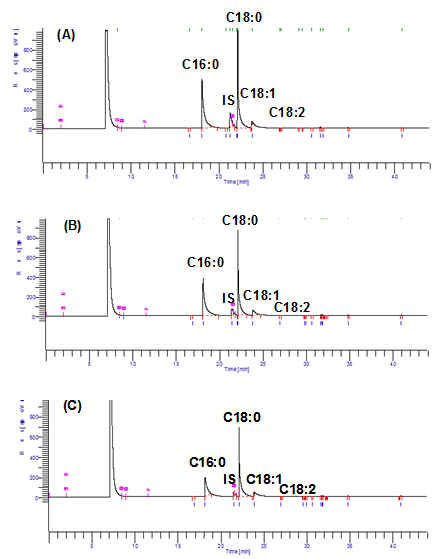
The fatty acids profiles of MKOs are presented in the Figure 5.
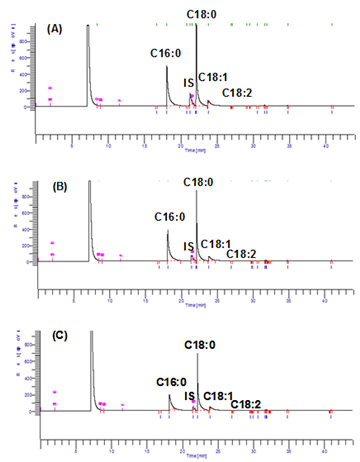
The results of the GC-FID analysis showed the presence of 4 major fatty acids in the MKOs, namely, palmitic acid (C16:0), stearic acid (C18:0) oleic acid (18:1) and , linoleic acid (18:2). The total saturated fatty acids (SFA) content of MKOs ranged from 71.61 to 78.10, with the highest value (78.10 ± 0.52%) for Kent variety. Total unsaturated fatty acids (TUSFAs) are in the range of 21.14 – 27.48%. Analysis of MKOs showed that palmitic (26.17 – 25.78%) and stearic acid (48.05 – 51.93%) were the dominant fatty acids. Also MKOs contained a considerable amount of one of essential fatty acids, (C18:2) which cannot be synthesized by the human body and needs to be provided by the diet. The presence of some important fatty acids, especially C18:1 and C18:2, makes MKOs fit for edible purposes as well as for industrial applications such as the manufacture of candles, soaps, detergents, cosmetics, shaving soaps, lubricants, and pharmaceuticals 46.
The overall objective of this study was to assess the potential use of starches and fats from mango seed kernels (cv Kent, Keitt and Amelie) in agro-industry by determining their physicochemical, biochemical, and functional properties. The results of this research showed that starches from the kernels of mango varieties had interesting characteristics (granulometry, amylose content, swelling power, solubility) that could be exploited in food industries as thickeners and binders and also in chemical industries for adhesives products. The findings also showed variations in the physicochemical properties, and fatty acid compositions of MKOs of the selected varieties of mangoes. Saponification and iodine values with palmitic, stearic and oleic acid contents support the potential applications of MKOs for edible purposes and for cosmetics and pharmaceutical industries. However, it would be interesting to evaluate some valuable parameters of the starches, such as enzymatic and chemical digestion and the unsaponifiable fraction composition of fats before their application in food and non food industries.
The authors are thankful to the Fund for Science, Technology, and Innovation (FONSTI) of Côte d’Ivoire for financial support of this research.
| [1] | Ibarra, I., Ramos, P., Hernández, C., & Jacobo, D. (2015). Effects of postharvest ripening on the nutraceutical and physicochemical properties of mango (Mangifera indica L. cv Keitt). Postharvest Biology and Technology, 103, 45–54. | ||
| In article | View Article | ||
| [2] | Tharanathan, R. N., Yashoda, H. M., & Prabha, T. N. (2006). Mango (Mangifera indica L.), "The king of fruits" – A review. Food Reviews International, 22, 95–123. | ||
| In article | View Article | ||
| [3] | Masibo, M., & He, Q. (2009). Mango bioactive compounds and related nutraceutical properties—A review. Food Reviews International, 25(4), 346–370. | ||
| In article | View Article | ||
| [4] | Ribeiro, S., & Schieber, A. (2010). Bioactive compounds in mango (Mangifera indica L.). In Bioactive Foods in Promoting Health (Vol. 34, pp. 507–523). | ||
| In article | View Article | ||
| [5] | Larrauri, J. A., Rupérez, P., Borroto, B., & Saura-Calixto, F. (1996). Mango peels as a new tropical fibre: Preparation and characterization. Lebensmittel-Wissenschaft und Technologie – Food Science and Technology, 29, 729–733. | ||
| In article | View Article | ||
| [6] | Kim, H., Kim, H., Mosaddik, A., Gyawali, R., Ahn, K. S., & Cho, S. K. (2012). Induction of apoptosis by ethanolic extract of mango peel and comparative analysis of the chemical constituents of mango peel and flesh. Food Chemistry, 133, 416–422. | ||
| In article | View Article PubMed | ||
| [7] | Aziz, N. A. A., Wong, L. M., Bhat, R., & Cheng, L. H. (2012). Evaluation of processed green and ripe mango peel and pulp flours (Mangifera indica var. Chokanan) in terms of chemical composition, antioxidant compounds and functional properties. Journal of the Science of Food and Agriculture, 92, 557–563. | ||
| In article | View Article PubMed | ||
| [8] | Leanpolchareanchai, J., Padois, K., Falson, F., Bavovada, R., & Pithayanukul, P. (2014). Microemulsion system for topical delivery of Thai mango seed kernel extract: Development, physicochemical characterisation and ex vivo skin permeation studies. Molecules, 19(11), 17107–17129. | ||
| In article | View Article PubMed | ||
| [9] | Solís-Fuentes, J. A., & Durán-de-Bazúa, M. C. (2011). Mango (Mangifera indica L.) seed and its fats. In V. Preedy, R. R. Watson, & V. B. Patel (Eds.), Nuts and Seeds in Health and Disease Prevention (pp. 741–748). Academic Press. | ||
| In article | View Article | ||
| [10] | Ajila, C., Bhat, S., & Rao, P. (2007). Valuable components of raw and ripe peels from two Indian mango varieties. Food Chemistry, 102(4), 1006–1011. | ||
| In article | View Article | ||
| [11] | Jahurul, M. H. A., Zaidul, I. S. M., Norulaini, N. A. N., Sahena, F., Jaffri, J. M., & Omar, A. K. M. (2014). Supercritical carbon dioxide extraction and studies of mango seed kernel for cocoa butter analogy fats. CyTA – Journal of Food, 12(1), 97–103. | ||
| In article | View Article | ||
| [12] | Siaka, D. (2014). Potential of mango (Mangifera indica) seed kernel as feed ingredient for poultry – A review. World’s Poultry Science Journal, 70(2), 279–288. | ||
| In article | View Article | ||
| [13] | Kathleen, P. (2010). Mango fruit found to prevent or stop certain colon and breast cancer cells in the lab. ScienceDaily, 12, 1. | ||
| In article | |||
| [14] | Khammuang, S., & Sarnthima, R. (2011). Antioxidant and antibacterial activities of selected varieties of Thai mango seed extract. Pakistan Journal of Pharmaceutical Sciences, 24(1), 37–42. | ||
| In article | |||
| [15] | Noor, F., Rahman, J., Mahomud, S., Akter, M. S., Talukder, A. I., & Ahmed, M. (2014). Physicochemical properties of flour and extraction of starch from jackfruit seed. International Journal of Nutrition and Food Sciences, 3, 347. | ||
| In article | View Article | ||
| [16] | Kittiphoom, S. (2012). Utilization of mango seed. International Food Research Journal, 19, 1325–1335. | ||
| In article | |||
| [17] | AOAC. (2000). Official methods of analysis (pp. 12–14). Association of Official Analytical Chemistry. | ||
| In article | |||
| [18] | Jarvis, C. E., & Walker, J. R. L. (1993). Simultaneous, rapid, spectrophotometric determination of total starch, amylose and amylopectin. Journal of the Science of Food and Agriculture, 63, 53–57. | ||
| In article | View Article | ||
| [19] | Leach, H. W., McCowen, D., & Scotch, T. J. (1959). Structure of the starch granule I. Swelling and solubility patterns of various starches. Cereal Chemistry, 36, 534–544. | ||
| In article | |||
| [20] | Eliasson, A. C., & Kim, H. R. (1992). Changes in rheological properties of hydroxypropyl potato starch pastes during freeze-thaw treatments: I. A rheological approach for evaluation of freeze-thaw stability. Journal of Texture Studies, 23, 279–295. | ||
| In article | View Article | ||
| [21] | Phillips, R. D., Chinnan, M. S., Branch, A. L., Miller, J., & McWatters, K. H. (1988). Effect of pretreatment on the functional and nutritional properties of cowpea flour. Journal of Food Science, 53, 805–809. | ||
| In article | View Article | ||
| [22] | Ajila, C. M., & Prasada Rao, U. J. S. (2010). Mango peel dietary fibre: Composition and functional properties. Journal of the Science of Food and Agriculture, 90(4), 622–626. | ||
| In article | |||
| [23] | Ghosh, S., Mukherjee, A., & Banerjee, A. (2022). Morphological and functional evaluation of seed starches from fruit industry waste. Starch - Stärke, 74(5–6), 2100175. | ||
| In article | |||
| [24] | Bajaj, R., Singh, N., Kaur, A., & Inouchi, N. (2018). Structural, morphological, functional and digestibility properties of starches from cereals, tubers and legumes: A comparative study. Journal of Food Science and Technology, 55, 3799–3808. | ||
| In article | View Article PubMed | ||
| [25] | Adebowale, A. R., Alamu, A. E., & Oyelami, K. T. (2023). Comparative physicochemical properties of native starches from underutilized tropical crops. Food Hydrocolloids, 138, 108501. | ||
| In article | |||
| [26] | Rodrigues, A. A. M., Santos, L. F. D., Costa, R. R. D., Félix, D. T., Nascimento, J. H. B., & Lima, M. A. C. (2020). Characterization of starch from different non-traditional sources and its application as coating in ‘Palmer’ mango fruit. Ciência e Agrotecnologia, 44, e0112. | ||
| In article | View Article | ||
| [27] | Zhou, Z., Robards, K., Helliwell, S., & Blanchard, C. (2022). Effect of starch granule structure on glycemic index. Carbohydrate Polymers, 283, 119171. | ||
| In article | |||
| [28] | Ferreira, S., Araujo, T., Souza, N., Rodrigues, L., Lisboa, H. M., Pasquali, M., Trindade, G., & Rocha, A. P. (2019). Physicochemical, morphological and antioxidant properties of spray-dried mango kernel starch. Journal of Agricultural Research, 1, 100012. | ||
| In article | View Article | ||
| [29] | Mieles, G. L., Quintana, S. E., & García, Z. L. A. (2023). Ultrasound-assisted extraction of mango (Mangifera indica) kernel starch: Chemical, techno-functional, and pasting properties. Gels, 9, 136. | ||
| In article | View Article PubMed | ||
| [30] | Souza, J. C. A. D., Macena, J. F. F., Andrade, I. H. P., Camilloto, G. P., & Cruz, R. S. (2021). Functional characterization of mango seed starch (Mangifera indica L.). Research, Society and Development, 10, e30310310118. | ||
| In article | View Article | ||
| [31] | Tesfaye, T., Johakimu, J. K., Chavan, R., Sithole, B., & Ramjugernath, D. (2018). Valorisation of mango seed via extraction of starch: Preliminary techno-economic analysis. Clean Technologies and Environmental Policy, 20, 81–94. | ||
| In article | View Article | ||
| [32] | Hassan, L. G., Muhammad, A. B., Aliyu, R. U., Idris, Z. M., Izuagie, T., & Umar, K. J. (2013). Extraction and characterization of starches from four varieties of Mangifera indica seeds. IOSR Journal of Applied Chemistry, 3(6), 16–23. | ||
| In article | View Article | ||
| [33] | Bharti, I., Singh, S., & Saxena, D. C. (2019). Influence of thermal and hydrothermal treatments on physicochemical, particle size, structural and morphological properties of mango starches from Indian cultivars. LWT – Food Science and Technology, 110, 197–206. | ||
| In article | View Article | ||
| [34] | Izuagie, T., Hassan, L. G., Uba, A., Achor, M., & Sahabi, D. M. (2012). Composition and physicochemical properties of starch from Christ thorn seed. Bayero Journal of Pure and Applied Sciences, 5(1), 60–65. | ||
| In article | View Article | ||
| [35] | Alvani, K., Qi, X., Tester, R. F., & Snape, C. E. (2011). Physicochemical properties of potato starches. Food Chemistry, 125(3), 958–965. | ||
| In article | View Article | ||
| [36] | Singh, J., & Singh, N. (2003). Studies on the morphological and rheological properties of water-soluble corn and potato granular starches. Food Hydrocolloids, 17(1), 63–72. | ||
| In article | View Article | ||
| [37] | Azima, F., Anggraini, T., Syukri, D., & Septia, R. A. (2017). Effects of sodium bisulfite soaking on durian seed flour quality and its application to dakak-dakak production (a traditional West Sumatran snack). Pakistan Journal of Nutrition, 16(3), 175–178. | ||
| In article | View Article | ||
| [38] | Subroto, E., Jeanette, G., Meiyanasari, Y., Luwinsky, I., & Baraddiaz, S. (2020). Review of methods for analyzing starch, amylose, and amylopectin in food and agricultural products. International Journal of Emerging Trends in Engineering Research, 8(7). | ||
| In article | View Article | ||
| [39] | Zhang, D., Li, F., Campanella, O., & Narsimhan, G. (2023). A review of starch swelling behavior: Its mechanism, determination methods, influencing factors, and influence on food quality. Carbohydrate Polymers, 321, 121260. | ||
| In article | View Article PubMed | ||
| [40] | Charles, A. L., Cato, K., Huang, T., Chang, Y., Ciou, J., Chang, J., & Lin, H. (2016). Functional properties of arrowroot starch in composite cassava and sweet potato starches. Food Hydrocolloids, 53, 187–191. | ||
| In article | View Article | ||
| [41] | Tetchi, F. A. (2006). Modélisation de la clarté des solutions et gels d’amidons [Thèse de doctorat, Université d’Abobo-Adjamé]. | ||
| In article | |||
| [42] | Mohamed, E. M., & Girgis, A. Y. (2005). Utilization of mango seed kernels for improving stability of some oils and biscuit production. Journal of Agricultural Sciences, 30, 4625–4636. | ||
| In article | |||
| [43] | Sadiq, A. S., Ejilah, I. R., & Aroke, U. O. (2017). Extraction and assessment of physicochemical properties of rosigold mango (Mangifera indica) seed kernel oil for bioresin production. Arid Zone Journal of Engineering, Technology and Environment, 13, 643–654. | ||
| In article | |||
| [44] | Oyedeji, F. O., Ehimen, E. A., & Adeleke, B. B. (2018). GC–mass spectroscopic chemical characterization and physicochemical properties of oil from seed kernels of four Mangifera indica cultivars. European Journal of Pure and Applied Chemistry, 5. | ||
| In article | |||
| [45] | Oni, A. O., Popoola, L. T., & Olorunfemi, B. A. (2023). Optimization of biodiesel production from mango seed kernel oil: A sustainable energy resource. Renewable Energy, 208, 931–940. | ||
| In article | |||
| [46] | Nahar, M. K., Lisa, S. A., Nada, K., & Begum, M. (2017). Characterization of seed kernel oil of Bangladeshi mango and its evaluation as a cosmetic ingredient. Bangladesh Journal of Scientific and Industrial Research, 52, 43–48. | ||
| In article | View Article | ||
| [47] | Dhara, R., Bhattacharyya, D. K., & Ghosh, M. (2010). Analysis of sterol and other components present in unsaponifiable matter of mahua, sal and mango kernel oil. Journal of Oleo Science, 59, 169–176. | ||
| In article | View Article PubMed | ||
| [48] | Rossell, J. B. (1991). Vegetable oil and fats. In J. B. Rossell & J. L. R. Pritchard (Eds.), Analysis of Oilseeds, Fats and Fatty Foods (pp. 261–319). Elsevier Applied Sciences. | ||
| In article | |||
Published with license by Science and Education Publishing, Copyright © 2025 Dao Klognin, Lessoy Thierry Zoué, Essoma Edwige Akoa and Sébastien Niamké
 This work is licensed under a Creative Commons Attribution 4.0 International License. To view a copy of this license, visit
http://creativecommons.org/licenses/by/4.0/
This work is licensed under a Creative Commons Attribution 4.0 International License. To view a copy of this license, visit
http://creativecommons.org/licenses/by/4.0/
| [1] | Ibarra, I., Ramos, P., Hernández, C., & Jacobo, D. (2015). Effects of postharvest ripening on the nutraceutical and physicochemical properties of mango (Mangifera indica L. cv Keitt). Postharvest Biology and Technology, 103, 45–54. | ||
| In article | View Article | ||
| [2] | Tharanathan, R. N., Yashoda, H. M., & Prabha, T. N. (2006). Mango (Mangifera indica L.), "The king of fruits" – A review. Food Reviews International, 22, 95–123. | ||
| In article | View Article | ||
| [3] | Masibo, M., & He, Q. (2009). Mango bioactive compounds and related nutraceutical properties—A review. Food Reviews International, 25(4), 346–370. | ||
| In article | View Article | ||
| [4] | Ribeiro, S., & Schieber, A. (2010). Bioactive compounds in mango (Mangifera indica L.). In Bioactive Foods in Promoting Health (Vol. 34, pp. 507–523). | ||
| In article | View Article | ||
| [5] | Larrauri, J. A., Rupérez, P., Borroto, B., & Saura-Calixto, F. (1996). Mango peels as a new tropical fibre: Preparation and characterization. Lebensmittel-Wissenschaft und Technologie – Food Science and Technology, 29, 729–733. | ||
| In article | View Article | ||
| [6] | Kim, H., Kim, H., Mosaddik, A., Gyawali, R., Ahn, K. S., & Cho, S. K. (2012). Induction of apoptosis by ethanolic extract of mango peel and comparative analysis of the chemical constituents of mango peel and flesh. Food Chemistry, 133, 416–422. | ||
| In article | View Article PubMed | ||
| [7] | Aziz, N. A. A., Wong, L. M., Bhat, R., & Cheng, L. H. (2012). Evaluation of processed green and ripe mango peel and pulp flours (Mangifera indica var. Chokanan) in terms of chemical composition, antioxidant compounds and functional properties. Journal of the Science of Food and Agriculture, 92, 557–563. | ||
| In article | View Article PubMed | ||
| [8] | Leanpolchareanchai, J., Padois, K., Falson, F., Bavovada, R., & Pithayanukul, P. (2014). Microemulsion system for topical delivery of Thai mango seed kernel extract: Development, physicochemical characterisation and ex vivo skin permeation studies. Molecules, 19(11), 17107–17129. | ||
| In article | View Article PubMed | ||
| [9] | Solís-Fuentes, J. A., & Durán-de-Bazúa, M. C. (2011). Mango (Mangifera indica L.) seed and its fats. In V. Preedy, R. R. Watson, & V. B. Patel (Eds.), Nuts and Seeds in Health and Disease Prevention (pp. 741–748). Academic Press. | ||
| In article | View Article | ||
| [10] | Ajila, C., Bhat, S., & Rao, P. (2007). Valuable components of raw and ripe peels from two Indian mango varieties. Food Chemistry, 102(4), 1006–1011. | ||
| In article | View Article | ||
| [11] | Jahurul, M. H. A., Zaidul, I. S. M., Norulaini, N. A. N., Sahena, F., Jaffri, J. M., & Omar, A. K. M. (2014). Supercritical carbon dioxide extraction and studies of mango seed kernel for cocoa butter analogy fats. CyTA – Journal of Food, 12(1), 97–103. | ||
| In article | View Article | ||
| [12] | Siaka, D. (2014). Potential of mango (Mangifera indica) seed kernel as feed ingredient for poultry – A review. World’s Poultry Science Journal, 70(2), 279–288. | ||
| In article | View Article | ||
| [13] | Kathleen, P. (2010). Mango fruit found to prevent or stop certain colon and breast cancer cells in the lab. ScienceDaily, 12, 1. | ||
| In article | |||
| [14] | Khammuang, S., & Sarnthima, R. (2011). Antioxidant and antibacterial activities of selected varieties of Thai mango seed extract. Pakistan Journal of Pharmaceutical Sciences, 24(1), 37–42. | ||
| In article | |||
| [15] | Noor, F., Rahman, J., Mahomud, S., Akter, M. S., Talukder, A. I., & Ahmed, M. (2014). Physicochemical properties of flour and extraction of starch from jackfruit seed. International Journal of Nutrition and Food Sciences, 3, 347. | ||
| In article | View Article | ||
| [16] | Kittiphoom, S. (2012). Utilization of mango seed. International Food Research Journal, 19, 1325–1335. | ||
| In article | |||
| [17] | AOAC. (2000). Official methods of analysis (pp. 12–14). Association of Official Analytical Chemistry. | ||
| In article | |||
| [18] | Jarvis, C. E., & Walker, J. R. L. (1993). Simultaneous, rapid, spectrophotometric determination of total starch, amylose and amylopectin. Journal of the Science of Food and Agriculture, 63, 53–57. | ||
| In article | View Article | ||
| [19] | Leach, H. W., McCowen, D., & Scotch, T. J. (1959). Structure of the starch granule I. Swelling and solubility patterns of various starches. Cereal Chemistry, 36, 534–544. | ||
| In article | |||
| [20] | Eliasson, A. C., & Kim, H. R. (1992). Changes in rheological properties of hydroxypropyl potato starch pastes during freeze-thaw treatments: I. A rheological approach for evaluation of freeze-thaw stability. Journal of Texture Studies, 23, 279–295. | ||
| In article | View Article | ||
| [21] | Phillips, R. D., Chinnan, M. S., Branch, A. L., Miller, J., & McWatters, K. H. (1988). Effect of pretreatment on the functional and nutritional properties of cowpea flour. Journal of Food Science, 53, 805–809. | ||
| In article | View Article | ||
| [22] | Ajila, C. M., & Prasada Rao, U. J. S. (2010). Mango peel dietary fibre: Composition and functional properties. Journal of the Science of Food and Agriculture, 90(4), 622–626. | ||
| In article | |||
| [23] | Ghosh, S., Mukherjee, A., & Banerjee, A. (2022). Morphological and functional evaluation of seed starches from fruit industry waste. Starch - Stärke, 74(5–6), 2100175. | ||
| In article | |||
| [24] | Bajaj, R., Singh, N., Kaur, A., & Inouchi, N. (2018). Structural, morphological, functional and digestibility properties of starches from cereals, tubers and legumes: A comparative study. Journal of Food Science and Technology, 55, 3799–3808. | ||
| In article | View Article PubMed | ||
| [25] | Adebowale, A. R., Alamu, A. E., & Oyelami, K. T. (2023). Comparative physicochemical properties of native starches from underutilized tropical crops. Food Hydrocolloids, 138, 108501. | ||
| In article | |||
| [26] | Rodrigues, A. A. M., Santos, L. F. D., Costa, R. R. D., Félix, D. T., Nascimento, J. H. B., & Lima, M. A. C. (2020). Characterization of starch from different non-traditional sources and its application as coating in ‘Palmer’ mango fruit. Ciência e Agrotecnologia, 44, e0112. | ||
| In article | View Article | ||
| [27] | Zhou, Z., Robards, K., Helliwell, S., & Blanchard, C. (2022). Effect of starch granule structure on glycemic index. Carbohydrate Polymers, 283, 119171. | ||
| In article | |||
| [28] | Ferreira, S., Araujo, T., Souza, N., Rodrigues, L., Lisboa, H. M., Pasquali, M., Trindade, G., & Rocha, A. P. (2019). Physicochemical, morphological and antioxidant properties of spray-dried mango kernel starch. Journal of Agricultural Research, 1, 100012. | ||
| In article | View Article | ||
| [29] | Mieles, G. L., Quintana, S. E., & García, Z. L. A. (2023). Ultrasound-assisted extraction of mango (Mangifera indica) kernel starch: Chemical, techno-functional, and pasting properties. Gels, 9, 136. | ||
| In article | View Article PubMed | ||
| [30] | Souza, J. C. A. D., Macena, J. F. F., Andrade, I. H. P., Camilloto, G. P., & Cruz, R. S. (2021). Functional characterization of mango seed starch (Mangifera indica L.). Research, Society and Development, 10, e30310310118. | ||
| In article | View Article | ||
| [31] | Tesfaye, T., Johakimu, J. K., Chavan, R., Sithole, B., & Ramjugernath, D. (2018). Valorisation of mango seed via extraction of starch: Preliminary techno-economic analysis. Clean Technologies and Environmental Policy, 20, 81–94. | ||
| In article | View Article | ||
| [32] | Hassan, L. G., Muhammad, A. B., Aliyu, R. U., Idris, Z. M., Izuagie, T., & Umar, K. J. (2013). Extraction and characterization of starches from four varieties of Mangifera indica seeds. IOSR Journal of Applied Chemistry, 3(6), 16–23. | ||
| In article | View Article | ||
| [33] | Bharti, I., Singh, S., & Saxena, D. C. (2019). Influence of thermal and hydrothermal treatments on physicochemical, particle size, structural and morphological properties of mango starches from Indian cultivars. LWT – Food Science and Technology, 110, 197–206. | ||
| In article | View Article | ||
| [34] | Izuagie, T., Hassan, L. G., Uba, A., Achor, M., & Sahabi, D. M. (2012). Composition and physicochemical properties of starch from Christ thorn seed. Bayero Journal of Pure and Applied Sciences, 5(1), 60–65. | ||
| In article | View Article | ||
| [35] | Alvani, K., Qi, X., Tester, R. F., & Snape, C. E. (2011). Physicochemical properties of potato starches. Food Chemistry, 125(3), 958–965. | ||
| In article | View Article | ||
| [36] | Singh, J., & Singh, N. (2003). Studies on the morphological and rheological properties of water-soluble corn and potato granular starches. Food Hydrocolloids, 17(1), 63–72. | ||
| In article | View Article | ||
| [37] | Azima, F., Anggraini, T., Syukri, D., & Septia, R. A. (2017). Effects of sodium bisulfite soaking on durian seed flour quality and its application to dakak-dakak production (a traditional West Sumatran snack). Pakistan Journal of Nutrition, 16(3), 175–178. | ||
| In article | View Article | ||
| [38] | Subroto, E., Jeanette, G., Meiyanasari, Y., Luwinsky, I., & Baraddiaz, S. (2020). Review of methods for analyzing starch, amylose, and amylopectin in food and agricultural products. International Journal of Emerging Trends in Engineering Research, 8(7). | ||
| In article | View Article | ||
| [39] | Zhang, D., Li, F., Campanella, O., & Narsimhan, G. (2023). A review of starch swelling behavior: Its mechanism, determination methods, influencing factors, and influence on food quality. Carbohydrate Polymers, 321, 121260. | ||
| In article | View Article PubMed | ||
| [40] | Charles, A. L., Cato, K., Huang, T., Chang, Y., Ciou, J., Chang, J., & Lin, H. (2016). Functional properties of arrowroot starch in composite cassava and sweet potato starches. Food Hydrocolloids, 53, 187–191. | ||
| In article | View Article | ||
| [41] | Tetchi, F. A. (2006). Modélisation de la clarté des solutions et gels d’amidons [Thèse de doctorat, Université d’Abobo-Adjamé]. | ||
| In article | |||
| [42] | Mohamed, E. M., & Girgis, A. Y. (2005). Utilization of mango seed kernels for improving stability of some oils and biscuit production. Journal of Agricultural Sciences, 30, 4625–4636. | ||
| In article | |||
| [43] | Sadiq, A. S., Ejilah, I. R., & Aroke, U. O. (2017). Extraction and assessment of physicochemical properties of rosigold mango (Mangifera indica) seed kernel oil for bioresin production. Arid Zone Journal of Engineering, Technology and Environment, 13, 643–654. | ||
| In article | |||
| [44] | Oyedeji, F. O., Ehimen, E. A., & Adeleke, B. B. (2018). GC–mass spectroscopic chemical characterization and physicochemical properties of oil from seed kernels of four Mangifera indica cultivars. European Journal of Pure and Applied Chemistry, 5. | ||
| In article | |||
| [45] | Oni, A. O., Popoola, L. T., & Olorunfemi, B. A. (2023). Optimization of biodiesel production from mango seed kernel oil: A sustainable energy resource. Renewable Energy, 208, 931–940. | ||
| In article | |||
| [46] | Nahar, M. K., Lisa, S. A., Nada, K., & Begum, M. (2017). Characterization of seed kernel oil of Bangladeshi mango and its evaluation as a cosmetic ingredient. Bangladesh Journal of Scientific and Industrial Research, 52, 43–48. | ||
| In article | View Article | ||
| [47] | Dhara, R., Bhattacharyya, D. K., & Ghosh, M. (2010). Analysis of sterol and other components present in unsaponifiable matter of mahua, sal and mango kernel oil. Journal of Oleo Science, 59, 169–176. | ||
| In article | View Article PubMed | ||
| [48] | Rossell, J. B. (1991). Vegetable oil and fats. In J. B. Rossell & J. L. R. Pritchard (Eds.), Analysis of Oilseeds, Fats and Fatty Foods (pp. 261–319). Elsevier Applied Sciences. | ||
| In article | |||