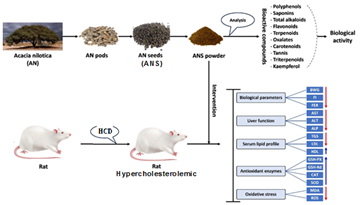
This study examined the chemical composition, bioactive compounds, antioxidant activity of Acacia nilotica seed powder (ANS), and its effects on hypercholesterolemic rats over four weeks. Thirty-six rats were acclimated on a basal diet (BD) for two weeks, then divided into groups: a negative control on BD, a positive control fed a hypercholesterolemic diet (HCD) for 3 weeks, followed by BD, and three treatment groups receiving BD with 5%, 7%, and 9% ANS. Proximate analysis of ANS revealed 8.27% moisture, 9.43% crude fat, 27.13% protein, and 39.44% carbohydrates, indicating high nutritional value. Bioactive compounds included polysaccharides, polyphenols, saponins, alkaloids, flavonoids, and kaempferol, with low oxalates and tannins within safe limits. Antioxidant activity was 66.89%, comparable to standard antioxidants. ANS treatment improved metabolic parameters dose-dependently. Body weight gain (BWG), reduced by ~40% in untreated rats, improved by 10%, 20%, and 43% at 3, 6, and 9 g/100 g ANS, respectively. Feed intake and feed efficiency ratio similarly recovered. Liver enzymes AST, ALT, and ALP, elevated in the model by 39.8%, 61.8%, and 16.6%, decreased significantly with 9 g ANS by 22.1%, 95.5%, and 10.7%. Serum triglycerides and total cholesterol, increased by ~181% and 38%, declined dose-dependently with ANS, with TG dropping by ~260% and TC by ~22.7% at 9 g. HDL cholesterol rose by 25%, 37%, and 72%, while LDL and VLDL cholesterol fell by up to 44% and 41%. Glutathione levels (GSH and GSSG) improved, reversing 23.14% and 19.84% declines in controls. Erythrocyte antioxidant enzymes (GSH-Px, GSH-Rd, SOD, CAT) decreased by 25–38% in controls but increased by 23–45% with ANS. Oxidative stress markers ROS and MDA, elevated by 45% and 62.48%, were reduced dose-dependently, with MDA decreasing by 42.89% at the highest dose. These results demonstrate ANS’s potent antioxidant and lipid-lowering effects in hypercholesterolemic rats.
|
Hypercholesterolemia refers to elevated levels of cholesterol in the blood. It is a type of "hyperlipidemia" (increased lipid levels in the blood) and "hyperlipoproteinemia" (increased lipoprotein levels in the blood). Cholesterol, a sterol, is one of the three main classes of lipids utilized by animal cells to build their membranes and is therefore produced by all animal cells. However, plant cells do not produce cholesterol. Cholesterol serves as a precursor for steroid hormones, bile acids, and vitamin D 1. Since cholesterol is water-insoluble, it is carried through the blood plasma within protein particles known as lipoproteins. These lipoproteins are categorized by their density: very low-density lipoproteins (VLDL), intermediate-density lipoproteins (IDL), low-density lipoproteins (LDL), and high-density lipoproteins (HDL) 2. While all lipoproteins transport cholesterol, high levels of lipoproteins other than HDL (referred to as non-HDL cholesterol), particularly LDL cholesterol, are linked to an increased risk of atherosclerosis and coronary heart disease 3. On the other hand, higher levels of HDL cholesterol are considered protective 4. Elevated non-HDL cholesterol and LDL levels may result from various factors such as diet, obesity, genetic conditions (like LDL receptor mutations in familial hypercholesterolemia), or diseases like diabetes and hypothyroidism 1. To reduce total blood cholesterol and LDL levels in adults, lowering dietary fat intake is recommended 5. In cases of extremely high cholesterol (e.g., familial hypercholesterolemia), dietary changes alone may not be sufficient to achieve the desired reduction in LDL levels, and lipid-lowering medications that reduce cholesterol production or absorption are generally necessary. In severe cases, additional treatments, such as specialized LDL therapy or even surgery (especially for certain subtypes of familial hypercholesterolemia), may be required 6.
Plants still remain a major source for drug discovery in spite of the great development of synthetic molecules. Consequently, the uses of traditional plant extract in the treatment of various diseases have been flourished 7. Acacia nilotica, also known as the gum arabic tree, is a versatile species from the Fabaceae family, native to tropical Africa, the Middle East, and the Indian subcontinent. This deciduous tree, thriving in dry and arid regions, is noted for its ability to adapt to various ecosystems, making it ecologically significant and economically valuable. Beyond its use in traditional medicine and agriculture, Acacia nilotica is particularly renowned for its gum, utilized in food, cosmetics, and pharmaceuticals 8. The seeds of this tree have drawn increasing attention due to their substantial nutritional and therapeutic potential. From a botanical perspective, Acacia nilotica belongs to the Acacia genus, which includes over 1,000 species. It grows up to 20 meters tall and features light green bipinnate leaves and fragrant yellow flowers, arranged in cylindrical clusters. The tree produces a leguminous pod with hard, dark-colored, oval seeds that mature during the dry season, aiding their wide distribution via animal dispersal 9.
The seeds are particularly noteworthy for their rich macronutrient profile, including proteins, fats, and carbohydrates, which make them an important food source in regions facing food insecurity. They are encased in a hard shell, ensuring their long-term viability in harsh conditions. The high energy content of the seeds allows them to serve as a reliable source of calories, often consumed in processed forms such as flour or paste 10. Recent research has highlighted the nutritional significance of these seeds, revealing protein content ranging from 22% to 30%, along with 5-8% fats, including essential fatty acids. These attributes make them a viable alternative to animal proteins in areas where these are scarce or costly 11. Furthermore, the seeds contain approximately 50% carbohydrates, primarily in the form of starch, which provides slow-releasing energy, making it beneficial for blood sugar regulation. The fiber content, ranging from 7-10%, aids digestive health, and the seeds are rich in essential minerals such as calcium, potassium, and magnesium 9.
In addition to macronutrients, the chemical composition of Acacia nilotica seeds is characterized by bioactive compounds, including polyphenols, flavonoids, tannins, alkaloids, saponins, and glycosides. These compounds offer significant therapeutic potential due to their antioxidant, anti-inflammatory, and antimicrobial properties 8. Among these, flavonoids have been particularly noted for their role in reducing oxidative stress, a key factor in aging and chronic diseases like cardiovascular diseases and cancer 12. The seeds also contain compounds with potential in managing metabolic diseases such as hypertension and hypercholesterolemia. Studies have indicated that Acacia nilotica seed extracts can lower cholesterol by inhibiting lipid peroxidation and improving lipid metabolism, positioning it as a candidate for developing natural treatments for hypercholesterolemia and related disorders 13, 14.
Beyond their nutritional value, Acacia nilotica seeds also possess bioactive compounds that have proven therapeutic benefits. The seeds' high fiber content helps regulate blood sugar and cholesterol levels, contributing to the management of diabetes and cardiovascular diseases 8. Additionally, flavonoids and tannins in the seeds support immune function and possess anti-inflammatory properties, which can aid in treating conditions like arthritis and asthma 12. Notably, Acacia nilotica seed extracts have been shown to have lipid-lowering effects, making them promising for managing hypercholesterolemia. Studies have demonstrated that these extracts significantly reduce total cholesterol, triglycerides, and LDL cholesterol levels while increasing HDL cholesterol, highlighting their potential in protecting against cardiovascular diseases 14.
Current investigations into Acacia nilotica seeds highlight their significant promise in enhancing human health, particularly in areas related to nutrition and disease prevention. Nonetheless, additional research is necessary to isolate and identify the specific bioactive compounds within the seeds and to gain a deeper understanding of how they function. As a result, the aim of this study was to analyze the chemical composition, bioactive compound content, and antioxidant properties of Acacia nilotica seed powder (ANS). Furthermore, the study explored the impact of a four-week treatment with Acacia nilotica seeds on rats with induced hypercholesterolemia.
Dried and matured fruit pods used for seeds preparation were obtained from of Acacia nilotica trees spread at Santa Center Villages, Gharbia Governorate, Egypt after the grateful facilities provided to the authors.Taxonomic confirmation of Acacia nilotica pods were carried out by Agricultural Plant Department, Faculty of Agriculture, Menoufia University, Shebin El-Kom, Egypt.
Cholesterol and bile salts were purchased from ElGhohorya Company for Trading Drugs, Chemicals and Medical Suppliers, Cairo Egypt. Kit's assays for Alanine aminotransferase (ALT), aspartate aminotransferase (AST), alkaline phosphatase (ALP), malondialdehyde (MDA) were purchased from BIODIAGNOSTIC, Dokki, Giza, Egypt. Albumin (Alb), total protein (TP), triglycerides (TGs), cholesterol (Cho), highdenisty lipoprotein (HDL) and low density lipoprotein (LDL) were determined using kits purchased from El-Nasr Pharmaceutical Chemicals Company, Cairo, Egypt. GSH and GSSG were assayed by the kits provided by MyBioSource, Inc., San Diego, CA, USA. Casein was obtained from Morgan Chemical Co., Cairo, Egypt. Vitamins and salts mixtures, organic solvents, buffers, and all other chemicals were obtained in analytical grade from El-Ghomhorya Company for Trading Drugs, Chemicals, and Medical Instruments, Cairo, Egypt. Throughout this study absorbance for different assays were measured using UV-160A; Shimadzu Corporation, Kyoto, Japan.
2.2. MethodsSeeds of Acacia nilotica were extracted from the fruits/pods manually using special sharp knives for this purpose. The collected seeds were manually sorted to exclude damaged and deformed ones, as well as foreign bodies. Seeds were dried in oven at 600C for one hour and ground into a fine powder in high mixer speed (Moulinex Egypt, Al-Araby Co., Egypt). The material that passed through an 80 mesh sieve was retained for use.
Acacia nilotica seeds sample (ANS) were analyzed for proximate composition including moisture (using oven method at 1050C for 4 h), protein (T.N. × 6.25, using Kjeldahl method through oxidation, distillation, and titration, semiautomatic apparatus, Velp company, Italy), fat (soxhelt semiautomatic apparatus Velp company, Italy, petroleum ether solvent), ash (dry ashing method, muffle furnace at 6000C up to material becoming ash) crude and dietary fibers content were determined using the official methods of analysis of the Association of Official Analytical Chemists (AOAC, (1995). Carbohydrates calculated by difference using the following formula: Carbohydrates (%) = 100 – (% protein + % fat + % Ash + % fiber).
Acacia nilotica seeds (ANS) was prepared/extracted for bioactive compounds determination according to the method of Gharib et al., 15. In brief, A 5 g of dried powder of Acacia nilotica seeds were extracted in a Soxhlet apparatus (Soxhlet Semiautomatic apparatus Velp Company, Italy) for 4-5 h (20 ± 4 min per cycle) using 80% hydro-ethanol (Ethanol:H2O by 80 : 20%). Ethanol was evaporated in a rotary evaporator (Büchi R-210, Switzerland) to obtain the dried solvent extract and stored at 4 0C until use. The total yield of GLE was 2.64%% (w/w) in terms of the Acacia nilotica seeds. The total phenolic content in ANS was quantified using the Folin-Ciocalteu reagent, as described by Singleton and Rossi, 16 and Wolfe et al., 17, with results expressed as mg gallic acid equivalent.100 g-1. The total carotenoid content in the 80% acetone extract was measured using the method outlined by Litchenthaler, 18 and expressed as mg catechin equivalent.100 g-1. Total flavonoids were estimated using the colorimetric method of Zhisen et al., 19, with results expressed as mg resveratrol equivalent,.100 g-1 . Polysaccharides were extracted and quantified following the procedure of Vazirian et al., 20, using starch as the standard and the results were expressed as g starch equivalent. 100 g-1. Total terpenoids were extracted and measured as per the method of Ghorai et al. 21, with linalool used as a standard and results presented as mg linalool equivalent. 100 g-1. Total triterpenoids were assessed according to Schneider et al., 22, using ursolic acid as the standard, with results expressed in mg ursolic acid equivalent.100 g-1. Tannin content was determined using the method of Van-Burden and Robinson, 23, with catechine as the standard for constructing the calibration curve to estimate tannin levels as mg catechine equivalent. 100 g-1. Total alkaloids were determined using the method of Zhao and Wang 24, with atropine serving as the standard for constructing the calibration curve, from which the alkaloid content was estimated as mg atropine equivalent.100g-1. Saponin content was determined according to the method of Fenwick and Oakenfull, 25 and expressed as mg.100g-1. Gallic acid was used as a standard to establish the standard curve, from which the saponin content of sample was determined. Oxalate was determined such as described by Oke, 26 and expressed as mg.100g-1. Finally, Kaempherol was measured according to the method mentioned in Fouda et al., 27 and expressed as mg.100g-1.
Antioxidant activity (AA) of ANS and standards (α-tocopherol and butalated hydroxytoluene, BHT) was determined according to the β-carotene bleaching assay following the procedure described by Marco, 28.
2.3. Biological ExperimentsAnimals used in this study, adult male albino rats (160±7g per each) were obtained from were obtained from the Laboratory Animal Unit, College of Veterinary Medicine, Cairo University, Egypt.
The basic diet prepared according to the following formula as mentioned by (Reeves et al., 29 as follow: protein (10%), corn oil (10%), vitamin mixture (1%), mineral mixture (4%), choline chloride (0.2%), methionine (0.3%), cellulose (5%), and the remained is corn starch (69.5%). The used vitamins and minerals mixture component were formulated according to Reeves et al., 29.
Twenty four male albino rats were fed on hypercholesterolemic diet (HCD, basal diet plus 1.5% cholesterol +10% animal fat and 0.2% bile salts) for 3 weeks to obtain hypercholesterolemic rats 30. Hypercholesterolemic rats was confirmed by taking a random sample of experimental animals (4 rats) and biochemical (serum lipid profile parameters including cholesterol) examined.
All biological experiments were performed in a complying with the rulings of the Institute of Laboratory Animal Resources, Commission on life Sciences, National Research Council 31. Rats (n=36 rats) were housed individually in wire cages in a room maintained at 24±3 0C, relative humidity (54±4%), a 12-h lighting cycle and kept under normal healthy conditions. All rats were fed on basal diet (BD) for two-week before starting the experiment for acclimation. After two week period, the rats were divided into main groups. First group (6 rats), as a negative control group, fed on BD. Second main group (24 rats) was fed on hypercholesterolemic diet (HCD) for 3 weeks to obtain hypercholesterolemic rats then classified into sex equal sub groups as follow: group (2), as a positive control group, fed on BD and groups (3-5) fed on BD containing 3, 6 and 9% (w/w) Acacia nilotica seeds powder (ANS), respectively.
During the experimental period (28 days), the diet consumed was recorded every day and body weight was recorded every week. The body weight gain (BWG,%), food intake (FI) and food efficiency ratio (FER) were determined according to Chapman et al., 32 using the following equations: BWG (%)=(Final weight – Initial weight)/ Initial weight x100 and FER= Grams gain in body weight (g/28 day)/ Grams feed intake (g/28 day)
At the end of the experiment period, 28 days, blood samples were collected after 12 hours of fasting by using the abdominal aorta, and rats were sacrificed under ether anesthetized. Blood samples were received into glass centrifuge tubes. After centrifugation at 3000 rpm for 10 min., serum was with drowning and used for the analysis. The erythrocyte residue was washed with three successive portions of NaCl solution (0.9 %) and then haemolysed with deionized water for 30 min. Haemolysate was then centrifuged at 30,000 rpm for 30 min and the supernatant fractions were transferred to a clean test tube and analyzed of antioxidant enzymes (GSH-Px, GSH-Rd, SOD, and CAT) 33.
Serum alanine aminotransferase (ALT) and serum aspartate aminotransferase (AST) activities were measured in serum using the modified kinetic method of Yound, 34, Tietz, 35, repectively. Alkaline phosphatase (ALP) activity was determined using modified kinetic method of Vassault et al., 36.
Triglycerides (TGs), Total cholesterol (Cho), high density lipoprotein cholesterol (HDL-C) and low density lipoprotein cholesterol (LDL-C) were determined in serum according to the methods of Fossati and Prenape, 37, Richmod, 38, Lopes-Virella et al., 39 and Islam et al., 40.
Reduced (GSH) and oxidized (GSSG) glutathione levels in serum samples were quantified colorimetrically according to Elman et al., 41.
Glutathione peroxidase (GSH-Px) and catalase (CAT) activities were measured as mentioned by Splittgerber and Tappel, 42 and Aebi, 43. Superoxide dismutase (SOD) activity was measured by a colorimetric assay kit (Creative BioLab, NY) according to the method of Mett and Müller 44. The International Committee for Standardization in Haematology recommended a method for determining GSH-Rd activity.
MDA was measured as described by Buege and Aust, 45. A half milliliter of plasma was added to 1.0 ml of thiobarbituric acid (TBA) reagent (15% TCA, 0.375% TBA, and 0.01% butylated hydroxytoluene in 0.25 N HCl). Twenty-five microliters of 0.1 M FeSO4.7H2O were added and the mixture was heated for 20 min in boiling water. The samples were centrifuged at 1000 xg for 10 min and the absorbance was measured at 535 nm against a reagent blank. The absorbance of the samples was compared to a standard curve of known concentrations of MDA. ROS was detected as described by Jambunathan, 46 through reducing the NBT (Nitroblue Tetrazolium) to formazan by ROS which has a blue color and can be quantified colorimetrically.
2.4. Statistical AnalysisAll data were statistically analyzed using a computerized Costat program by one way ANOVA. Results were given as means ±standard deviation (SD). Differences between treatments at P≤ 0.05 were considered significant 47.
The proximate composition of Acacia nilotica seeds powder (ANS) is presented in Table 1. Based on this data, it is evident that Acacia nilotica seeds also exhibit a rich nutritional profile, making them a valuable source of protein, lipids, fiber, and carbohydrates. The crude fat and protein contents in these seeds were found to be higher than those reported for Acacia nilotica fruit by Bwai et al., 48. Specifically, the seeds contained a low moisture content of 8.27 ± 0.95%, which is significantly lower than the 11.50% reported for Cassia tora seeds by Adamu et al., 49. This low moisture level is advantageous as it contributes to an extended shelf life for Acacia nilotica seed flour. The crude fat content was 9.43 ± 0.56%, which, while lower than the 15.48% in Parkia biglobosa seeds 50 and the 16.01% in Cassia tora seeds 49, still classifies the seeds as oil-rich. The protein content, measured at 27.13 ± 0.77%, is comparable to the values reported for Parkia biglobosa 50 and exceeds the 21.0% found in pigeon pea (Cajanus cajan) according to Abdelrahman et al., 51. Additionally, the carbohydrate content of Acacia nilotica seeds was recorded at 39.44 ± 3.08%, substantially higher than the 8.2 ± 0.32% reported for Acacia sieberiana by Abubakar et al., 52, indicating that these seeds may serve as a superior energy source compared to many others. The variation in the proximate composition of Acacia nilotica seeds reported in these and other studies is likely influenced by multiple factors such as plant species, geographical differences, soil characteristics, and local environmental conditions, including human activity.
The content of antinutritional and bioactive compounds in Acacia nilotica seed powder (ANS) is presented in Table 2, showing that polysaccharides were the most abundant, followed by polyphenols, saponins, total alkaloids, flavonoids, terpenoids, oxalates, carotenoids, tannins, triterpenoids, and kaempferol. These findings indicate higher values than those previously reported by Ndamitso et al., 9, who recorded saponins, tannins, flavonoids, alkaloids, oxalates, and cyanogenic glycosides at 2.40 ± 0.20, 0.11 ± 0.01, 6.20 ± 0.10, 8.70 ± 0.12, 0.22 ± 0.001, and 0.23 ± 0.01 mg/100 g, respectively, in A. nilotica seeds. Polysaccharides in ANS play essential roles in food processing due to their use as thickening, gelling, and emulsifying agents 53, 54. They also offer numerous biological effects such as anticoagulant, anti-inflammatory, anti-obesity, anti-osteoporotic, antioxidant, and antimicrobial properties 30, 55, 56, 57, 58, 59. Moreover, polysaccharides can absorb cholesterol and assist in its elimination from the digestive tract, acting as hypocholesterolemic and hypolipidemic agents 60, 61. Oxalates, naturally occurring in many plant-based foods like leafy greens, soy, nuts, and grains, are also produced in the human body as waste. High oxalate levels are associated with kidney stone formation and reduced calcium absorption 62. Thus, seeds like ANS with relatively low oxalate content pose less risk. Phenolics and carotenoids in ANS contribute significantly to health by offering antioxidant activity, neutralizing free radicals, and preventing low-density lipoprotein oxidation 15, 30, 63, 64, 65. Tannins, which are water-soluble polyphenols, are known to reduce feed intake, growth, and protein digestibility in animals 66, and can form indigestible complexes with proteins 67.
However, the tannin content in ANS is below the toxicity threshold of 9.0 mg/g 68, indicating minimal negative effects. Kaempferol, a flavonoid found in broccoli, grapes, and yellow fruits, is a potent antioxidant known for reducing chronic disease risks, especially cancer, and modulating apoptosis, angiogenesis, inflammation, and metastasis 69. Saponins, classified as triterpene glycosides, are bitter, foam-forming compounds that also offer significant therapeutic potential. While often toxic in high amounts, their levels in ANS are low and thus safe for consumption. Saponins contribute to cholesterol reduction, immune enhancement, and suppression of cancer cell growth 67, 70, 71. Overall, the presence of these bioactive compounds and low antinutrient levels in Acacia nilotica seeds supports their therapeutic relevance, including antioxidant, anti-inflammatory, antitumor, astringent, antispasmodic, and anticancer activities 72, without significantly hindering nutrient absorption or utilization.
3.3. Antioxidant Activity of Acacia nilotica Seeds Powder (ANS)Table 3 presents the antioxidant activity of Acacia nilotica seed powder (ANS), evaluated using the β-carotene bleaching (BCB) method alongside standard antioxidants. The results demonstrated that ANS exhibited a significant antioxidant capacity of 66.89 ± 0.67%, which is comparable to the reference antioxidants BHT at 50 mg/ml and 100 mg/ml, and α-tocopherol at 50 mg/ml, showing respective values of 76.10 ± 0.52%, 69.67 ± 0.29%, and 68.94 ± 0.48%. Numerous earlier studies have established the effectiveness of the BCB assay in assessing the antioxidant activity of various plant parts, particularly seeds, under in vitro conditions 30, 59, 63 65, 73, 74, 75, 76. These investigations consistently report a strong relationship between antioxidant activity and the presence of polyphenols, tannins, carotenoids, and polysaccharides, compounds found in high concentrations in ANS. Additionally, the antioxidant potential of Delonix regia seeds was explored by Batiha et al. 8 and Saini 72, using various in vitro methods. Their findings revealed that the seed extracts exhibited substantial antioxidant activity, closely tied to their total phenolic and flavonoid content. Antioxidants play a critical protective role in human health by neutralizing free radicals, which otherwise damage essential cellular components like lipids, proteins, and DNA, potentially leading to chronic conditions such as cancer, cardiovascular diseases, inflammation, diabetes, obesity, anemia, and premature aging 56, 76, 77 78, 79, 80 81, 82. Thus, the high antioxidant potential and nutrient content of ANS make it a strong candidate for use as a functional food ingredient. In the context of the current study, this potential was further supported by its application in mitigating hypercholesterolemia-related health impacts in experimental rats, affirming the value of ANS in therapeutic nutrition.
3.4. Biological ExperimentsThe four-week administration of Acacia nilotica seed powder (ANS) to hypercholesterolemic rats demonstrated clear, dose-dependent improvements across several metabolic parameters, with body weight gain (BWG) showing a significant ~40% reduction in model control animals (G2), indicative of metabolic suppression typically induced by high-cholesterol feeding (Table 4). However, supplementation with ANS at 3, 6, and 9 g/100 g of diet resulted in progressive restoration of BWG by approximately 10%, 20%, and 43%, respectively, with the highest dose nearly returning values to those observed in the normal control group (G1). Feed intake (FI), which declined by roughly 36% in G2, also exhibited a dose-dependent recovery pattern under ANS treatment, echoing BWG trends. Similarly, feed efficiency ratio (FER), which dropped 24% in G2, showed improvements of 8%, 15%, and 24% at the respective ANS doses, reflecting improved nutrient utilization and restored metabolic balance. These findings are consistent with those reported by Mehanna et al., 83, where a stem bark ethyl acetate fraction of A. nilotica (250–500 mg/kg) significantly improved lipid metabolism, insulin sensitivity, and oxidative status in high-fat diet-fed rats, highlighting the plant's broad metabolic modulatory potential. Similarly, Adewale and Alli, 84 reported that root extracts reduced cholesterol and triglycerides in normolipidemic rats, though without affecting BW, which aligns with the present results in that the seed powder influenced not only lipid metabolism but also body weight and intake parameters. Complementary findings by Hussain et al., 85, using A. nilotica honey in cholesterol-fed rats, showed enhanced BWG and FI along with improved lipid profiles, further supporting the therapeutic efficacy of various A. nilotica components. Additionally, although Khalaf et al., 86 observed body weight reduction at an 8% seed inclusion level, they reported no organ toxicity and full BW recovery post-treatment, indicating a safety margin near the 9% threshold used in this study. This supports the notion that therapeutic effects are achievable within safe dietary levels. Notably, similar metabolic improvements reported with Acacia tortilis in diabetic models suggest that seed-based bioactivity may be conserved across Acacia species. Mechanistically, the observed effects are likely due to ANS's lipotropic, antioxidant, and anti-inflammatory actions, which counteract appetite suppression and inefficient nutrient metabolism caused by hypercholesterolemia. The dose-dependent nature of the improvements points to increasing concentrations of bioactive compounds with higher ANS inclusion, a characteristic common to many phytomedicinal preparations. While findings from stem bark and root studies align directionally with this study, differences in compound composition, such as flavonoids, tannins, and saponins, may explain variations in efficacy across plant parts. Furthermore, toxicity studies 87 confirm that inclusion of ANS up to 9% in the diet is safe, with adverse effects emerging only beyond this threshold. Discrepancies among related studies may be attributed to differences in extract forms (powder vs. aqueous or ethanolic extract), bioavailability, dosage form, feeding duration, animal strain (Wistar vs. Sprague Dawley), and the severity of the induced hypercholesterolemia model. Additionally, endpoint variability, such as the focus on BWG, FI, and FER in this study versus biochemical markers (e.g., lipids, glucose, insulin) in others,further contributes to interpretive differences. Despite this, the results of the current study, along with other studies, have shown that other seeds than Acacia nilotica such Poinciana (Delonix regia) extract contains some anti-nutritional substances such as tannins 58, 88, 89, 90. They have been reported to be responsible for decreases in feed intake, growth rate, feed efficiency, net metabolizable energy, and protein digestibility in experimental animals 66. Also, Lewu et al., 67 found that tannins complex proteins resulting in the reduction of protein digestibility and palatability. However, it must be noted that the content of tannins in Acacia nilotica as going in the present study is lower than the critical value of 9.0 mg g–1 that could induce tannin toxicity/adverse effects 68. Overall, the current findings affirm that Acacia nilotica seeds offer significant metabolic restoration in hypercholesterolemic rats in a dose-responsive manner, aligning with previous data from bark, root, and honey preparations, and supporting their safe therapeutic use in functional food or nutraceutical formulations targeting lipid-related metabolic disorders.
The 28-day administration of Acacia nilotica seed powder (ANS) in hypercholesterolemic rats yielded significant, dose-responsive amelioration of liver enzyme biomarkers, with serum AST, ALT, and ALP levels initially elevated by 39.8%, 61.8%, and 16.6%, respectively, in the untreated model control group (G2), signifying hepatic stress due to the high-cholesterol diet (Table 5). Upon supplementation, AST and ALT levels were modestly reduced at 3 g ANS, while more pronounced decreases occurred at 6 g, particularly for ALT (-24.4%), and strikingly at 9 g, where AST, ALT, and ALP levels were reduced by 22.1%, 95.5%, and 10.7%, respectively, nearly restoring liver function markers to those of the normal control group. These outcomes resonate with earlier studies, such as Murugesan et al., 91, who demonstrated that a 250 mg/kg dose of A. nilotica bark extract protected rats from acetaminophen-induced hepatic injury through normalization of liver enzymes and enhancement of endogenous antioxidants like GSH. Similarly, Abdel-Razik et al. 92 reported dose-dependent reductions in liver enzymes using methanolic extracts of A. nilotica leaves in a CCl₄-induced model, affirming the hepatoprotective properties across different plant parts. Comparable effects have also been observed with non-Acacia species; for example, Delonix regia (Poinciana) seed extract significantly lowered serum AST, ALT, and ALP levels, suggesting its capacity to mitigate liver cell damage, an effect attributed to its rich phytochemical composition, including polysaccharides, flavonoids, tannins, saponins, carotenoids, and kaempferol 64, 90. Parallel investigations affirm that such bioactive compounds commonly present in plant-based interventions confer protective benefits against hepatotoxic agents such as CCl₄, as supported by Elhassaneen et al., 93, Badawy, 94, and Elhassaneen et al., 59, 75.
Additionally, Murugesan et al., 91 found that ethanolic fruit extract from A. nilotica mitigated liver injury from aspirin, while gentamicin-induced toxicity models revealed that A. nilotica suppressed pro-inflammatory cytokines and preserved liver histoarchitecture. These consistent outcomes across diverse injury paradigms reinforce A. nilotica's robust hepatoprotective capacity. Mechanistically, the liver-enzyme-lowering effects of ANS are likely attributed to its antioxidative, anti-inflammatory, and lipotropic actions that prevent hepatocyte membrane destabilization and subsequent leakage of intracellular enzymes. The dose-dependent decline in liver enzymes observed in this study is consistent with the typical pharmacodynamics of plant-based therapies, where increased concentrations of phytochemicals such as phenolics and flavonoids correlate with enhanced efficacy. The hepatoprotective effects are further reinforced by the known ability of such compounds to modulate bilirubin metabolism and enhance enzymatic pathways related to detoxification and clearance, as discussed by Fati, 95, Arthur et al., 96, Coria-Tellez et al., 97, and Elhassaneen et al., 98. Although disparities exist across studies using different plant parts or extract types (powder vs. ethanol/methanol), dosage forms, or injury models, the directionality of results remains consistent, pointing to a conserved hepatoprotective mechanism in A. nilotica. Notably, toxicological evaluations suggest that adverse effects occur only at high doses (≥500 mg/kg of root extract), with the current study’s dietary inclusion of up to 9 g/100 g shown to be well-tolerated and therapeutically safe 99. In summary, the current data convincingly establish that Acacia nilotica seed powder effectively reverses hypercholesterolemia-induced liver dysfunction in a dose-dependent manner, confirming its potential as a safe and natural hepatoprotective agent.
As shown in Table 6, the four-week Acacia nilotica seed powder (ANS) treatment in hypercholesterolemic rats led to significant, dose-dependent improvements in serum triglycerides (TG) and total cholesterol (TC), with the model control group (G2) showing a pronounced elevation in both markers, approximately 181% for TG and 38% for TC, due to the high-cholesterol diet, confirming the induction of dyslipidemia. Supplementation with ANS demonstrated therapeutic potential: the 3 g dose decreased TG by ~12% and TC by ~6.6%, the 6 g dose achieved ~30% and ~15% reductions, and the highest dose (9 g) most significantly reduced TG by ~100.93% and TC by ~22.7%, effectively restoring lipid values close to those of the normal control. These observations are in agreement with prior studies. For instance, Adewale, 100 showed that root extracts of A. nilotica at 500 mg/kg significantly reduced serum lipid parameters, confirming the hypolipidemic efficacy of the species. Similarly, Khalaf et al., 86 demonstrated that stem bark extract of A. nilotica improved lipid profiles and alleviated metabolic syndrome features in rats fed a high-fat diet, while Abuelgassim, 101 reported that methanolic fruit extract decreased TG and LDL-C in diabetic rats, and ethanolic leaf extract improved lipid indices by reducing TG and LDL-C and elevating HDL-C. These consistent findings suggest a conserved lipid-lowering mechanism across various parts of the plant. Mechanistically, the lipid-modulating activity of A. nilotica is attributed to its abundance in polyphenols, flavonoids, saponins, and tannins,bioactive compounds that inhibit hepatic cholesterol synthesis, increase fecal bile acid excretion, upregulate LDL receptors, and scavenge reactive oxygen species, thereby attenuating oxidative stress and systemic inflammation, both central to hyperlipidemia. The dose-responsive nature of lipid improvement with increasing ANS levels in your study supports the well-established concept in phytotherapy that greater bioactive compound availability leads to enhanced therapeutic outcomes.
Differences in efficacy between studies can be explained by variations in extract type (aqueous, ethanolic, methanolic), plant part used, administration method (dietary vs. oral gavage), and animal model characteristics (normolipidemic vs. hyperlipidemic vs. diabetic). Nonetheless, the convergence of results across diverse experimental setups strongly supports the lipid-lowering potential of A. nilotica. Importantly, toxicological evaluations by Al-Mustafa and Dafallah, 87 showed no hepatic or renal toxicity at 8% dietary inclusion of A. nilotica, reinforcing the safety of your tested 9 g/100 g dietary dose, especially since enzyme levels remained within normal ranges. In conclusion, the present findings offer robust evidence that Acacia nilotica seed powder can effectively and safely reduce hypercholesterolemia-induced elevations in triglycerides and cholesterol in a dose-dependent manner, extending its traditional use and pharmacological relevance in lipid disorder management.
The four-week intervention using Acacia nilotica seed powder (ANS) in hypercholesterolemic rats demonstrated pronounced, dose-dependent modulation of serum cholesterol fractions,highlighting its therapeutic potential in lipid management (Table 7). In the model control group, high-cholesterol feeding led to marked dysregulation, with HDL-C levels dropping by approximately 47% and LDL-C and VLDL-C increasing by 108% and 181%, respectively, compared to normal controls. Supplementation with ANS reversed these disturbances: HDL-C levels progressively rose to 1.09, 1.20, and 1.50 mmol/L with 3, 6, and 9 g doses, corresponding to increases of 25%, 37%, and 72%, respectively. Simultaneously, LDL-C decreased by 14%, 26%, and 44%, and VLDL-C by 12%, 30%, and 41%, respectively, reflecting a favorable lipid profile shift. These outcomes are in line with earlier research. Also, Murugesan et al., 91 observed that A. nilotica fruit extract significantly improved lipid profiles in diabetic rats, while Hafez et al., 102 reported that ethanolic leaf extracts increased HDL and decreased LDL, TG, and VLDL levels in rats on high-fat diets. Furthermore, Adewale, 100 documented lipid-lowering effects of A. nilotica root extract, suggesting the therapeutic consistency of the plant across different parts. The lipid-modulating effects of ANS may be mechanistically linked to its rich phytochemical content, polyphenols, flavonoids, tannins, saponins, which influence lipid metabolism by enhancing HDL biosynthesis, inhibiting intestinal cholesterol absorption, upregulating hepatic LDL receptors, and promoting VLDL catabolism. These bioactive compounds also exhibit antioxidant and anti-inflammatory activities, helping to stabilize cellular membranes and prevent lipid peroxidation, a critical step in atherogenesis.
The dose-responsive effects observed in this study align with a typical pharmacodynamic pattern seen in plant-based therapeutics. Despite differences across studies—such as plant part used, type of extract, and animal model—the consistency of results points to a broadly conserved lipid-lowering mechanism. Moreover, Al-Mustafa and Dafallah, 87 found no toxic lipid effects at 8% dietary inclusion of A. nilotica, reinforcing the safety of your 9 g/100 g dosage. Comparable hypolipidemic activities have also been reported with Delonix regia seed extract, where it significantly reduced LDL, TC, and TG in CCl₄-induced hyperlipidemia 103. These effects are thought to arise from its content of polyphenols, carotenoids, saponins, and kaempferol, which modulate HMG-CoA reductase activity, a key enzyme in cholesterol biosynthesis 104, 105. Moreover, phenolic compounds in D. regia have demonstrated strong affinity for proteins like albumin, preventing their integration into LDL particles, thereby reducing oxidation and atherosclerotic risk 81, 106, 107. These antioxidant and hypocholesterolemic actions are also characteristic of A. nilotica phytochemicals 75, which improve lipid profiles through reactive oxygen species scavenging, endothelial protection, and anti-inflammatory effects 108, 109. Ultimately, the reduction in LDL oxidation and protection against vascular injury, a precursor to atherosclerosis, appears central to the observed benefits. In conclusion, your findings offer strong, dose-dependent evidence that Acacia nilotica seed powder effectively counteracts high-cholesterol-induced dyslipidemia by improving HDL while reducing LDL and VLDL levels, corroborating and extending the lipid-regulatory efficacy of this species across diverse experimental models and phytopreparations.
The data presented in Table 8 illustrate the impact of a four-week supplementation with Acacia nilotica seed powder on glutathione fractions, specifically reduced glutathione (GSH) and oxidized glutathione (GSSG), in rats fed a hypercholesterolemia-inducing diet, across five groups: normal control (G1), model control (G2), and three treatment groups receiving 3.0, 6.0, and 9.0 g/100g of diet (G3, G4, G5, respectively). The GSH concentration in the normal control group (G1) was 10.77 µmol/L, representing the expected antioxidant status under physiological conditions. In contrast, the model control group (G2), which received the high-cholesterol diet without treatment, showed a 23.14% reduction in GSH (8.28 µmol/L), indicating oxidative stress and depletion of endogenous antioxidants. With increasing doses of Acacia nilotica, GSH levels rose in a dose-dependent manner: G3 showed a 2.58% increase (8.49 µmol/L), G4 a 15.14% increase (9.53 µmol/L), and G5 an 18.64% increase (9.82 µmol/L), suggesting that the bioactive components of Acacia nilotica, such as flavonoids and phenolics, play a restorative role in mitigating oxidative damage and enhancing antioxidant capacity. Regarding GSSG, the normal control had a mean concentration of 0.87 µmol/L, while the model control group dropped by 19.84% to 0.70 µmol/L, likely reflecting a disrupted redox state. Upon treatment, GSSG levels showed dose-related increases: G3 (0.71 µmol/L, +2.78%), G4 (0.79 µmol/L, +13.00%), and G5 (0.83 µmol/L, +19.52%), indicating improved redox cycling and antioxidant regeneration at higher doses.
These findings collectively indicate that Acacia nilotica supplementation exerts a beneficial, dose-dependent influence on glutathione homeostasis under hypercholesterolemic conditions, likely through its antioxidant phytochemicals that reduce oxidative stress and restore redox equilibrium. The significant reduction in GSH in the model group reflects the oxidative burden caused by cholesterol-induced lipid peroxidation, consistent with prior reports linking hypercholesterolemia to compromised antioxidant defenses 86. The subsequent elevation in GSH with Acacia nilotica treatment aligns with earlier studies that attributed such effects to the plant’s rich content of flavonoids, known for scavenging free radicals and upregulating antioxidant enzymes 86. Furthermore, the increase in GSSG, particularly at higher doses, suggests that Acacia nilotica aids in modulating the glutathione redox cycle, which is vital for cellular redox regulation and detoxification processes, as supported by findings from Kamata and Hirata, 110. Comparative studies reinforce these results: Khalaf et al., 86 demonstrated the significant antioxidant activity of Acacia species in models of oxidative stress induced by hypercholesterolemia, while Rauf et al., 111 noted the dose-sensitive nature of Acacia’s effects, highlighting the superior efficacy of higher doses, as also evident in the current study where the 9.0 g/100g dose (G5) consistently yielded the most substantial improvements in GSH and GSSG levels, thereby underlining the therapeutic potential of Acacia nilotica as a natural antioxidant in managing cholesterol-related oxidative stress.
The data in Table 9 evaluate the influence of a four-week dietary supplementation with Acacia nilotica seed powder on erythrocyte antioxidant enzyme activities, glutathione peroxidase (GSH-Px), glutathione reductase (GSH-Rd), superoxide dismutase (SOD), and catalase (CAT), in rats subjected to a hypercholesterolemic diet. With five experimental groups including a normal control (G1), a model control with induced hypercholesterolemia (G2), and three treatment groups receiving 3.0, 6.0, and 9.0 g/100g diet of Acacia nilotica (G3, G4, G5 respectively), where results revealed that hypercholesterolemia in G2 significantly impaired antioxidant enzyme activities compared to G1, suggesting oxidative stress-mediated redox imbalance, while Acacia nilotica treatment (G3–G5) induced a clear, dose-dependent restoration of enzyme activity, pointing to its potent antioxidant potential. GSH-Px, a vital enzyme in detoxifying lipid hydroperoxides, dropped by 37.98% in G2 compared to G1 but increased progressively from 26.05 U/g Hb in G3 to 36.10 U/g Hb in G5, reflecting a 45.25% recovery at the highest dose. Similarly, GSH-Rd, crucial for regenerating reduced glutathione, was down by 30.63% in G2 but rose significantly to 11.50 U/g Hb in G5 (+31.12%), indicating improved glutathione recycling. SOD, the primary defense against superoxide radicals, decreased by 36.73% in G2 but increased markedly with treatment, showing a 42.87% rise in G5, while CAT, responsible for hydrogen peroxide detoxification, also declined in G2 (−25.69%) but improved notably across treatment groups, especially G4 and G5 with over 23% increases each, thus confirming that Acacia nilotica enhances enzymatic defense mechanisms disrupted by hypercholesterolemia. These findings support previous research such as Elmongy et al., 112 who demonstrated that cholesterol-rich diets induce oxidative stress and suppress antioxidant enzymes, and Khalaf et al., 86 who attributed the antioxidant effects of Acacia nilotica to its rich content of phenolic compounds and flavonoids which can scavenge free radicals and boost enzymatic activity. In alignment with Rauf et al., 111, who reported enhanced antioxidant enzyme levels following Acacia species supplementation in hyperlipidemic rats. The current study also aligns with Rathod et al., 113 who highlighted the role of plant-derived compounds in activating Nrf2 signaling, thereby promoting the expression of antioxidant enzymes. Notably, the highest dose (G5) was consistently the most effective, demonstrating a dose-dependent relationship that reinforces the therapeutic potential of Acacia nilotica, though long-term safety and efficacy, particularly concerning possible pro-oxidant effects at very high doses, should be considered as emphasized by Rauf et al., 111 collectively. These outcomes affirm that Acacia nilotica acts as a potent natural antioxidant enhancer capable of restoring oxidative balance and mitigating the effects of hypercholesterolemia through upregulation of erythrocyte enzymatic antioxidants.
The data in Table 10 assess the effect of a four-week dietary intervention with Acacia nilotica seed powder on key oxidative stress biomarkers, reactive oxygen species (ROS) and malondialdehyde (MDA), in rats subjected to a hypercholesterolemic diet, divided across five groups: G1 (normal control), G2 (model control with hypercholesterolemia), and treatment groups G3, G4, and G5 receiving increasing doses (3.0, 6.0, and 9.0 g/100g diet) of Acacia nilotica seed powder.
The data clearly show that hypercholesterolemia significantly elevated oxidative markers in G2 compared to the normal group G1, with ROS increasing by 45.00% and MDA by 62.48%, indicating that the high-cholesterol diet substantially disrupted redox homeostasis, leading to enhanced free radical production and lipid peroxidation. Upon administration of Acacia nilotica, a dose-dependent decline in ROS levels was observed: a modest reduction to 81.92 U/mL (−6.33%) in G3, a more notable decrease to 76.22 U/mL (−12.85%) in G4, and a substantial drop to 70.12 U/mL (−19.83%) in G5, highlighting the plant’s strong radical scavenging potential. MDA values followed a similar trend, with the exception of an unexpected increase in G3 (10.77 nmol/mL, +23.55%), possibly indicating that the lowest dose lacked sufficient antioxidant potency, or may have triggered a mild pro-oxidative or hormetic response, as described by Rathod et al. (2023), where low-dose exposure temporarily amplifies oxidative stress before enhancing the body's adaptive response. By contrast, G4 and G5 showed declining MDA concentrations, with G4 decreasing to 8.28 nmol/mL (−5.05%) and G5 to 4.98 nmol/mL (−42.89%), the latter even falling below the baseline level observed in the normal control group. This pattern reinforces the hypothesis that Acacia nilotica possesses significant antioxidant capacity, particularly at higher doses, which is attributed to its rich content of phenolic compounds, flavonoids, and tannins capable of neutralizing ROS and inhibiting lipid peroxidation. These results align with earlier findings from Elmongy et al., 112 who documented that high-fat diets provoke oxidative damage in rats, and from Khalaf et al., 86 who showed that Acacia nilotica effectively reduced ROS and MDA through its phytochemical profile. Also, Rauf et al., 111 supported this by demonstrating that Acacia species improve redox parameters in a dose-dependent manner in hyperlipidemic models, emphasizing the therapeutic relevance of optimized dosing. Furthermore, Sultana et al., 114 observed that the effectiveness of botanical antioxidants is closely linked to dosage, bioavailability, and phytochemical interactions, which may explain why G4 and especially G5 achieved better outcomes. Overall, these findings emphasize that Acacia nilotica not only mitigates oxidative stress by reducing ROS and MDA levels but does so most effectively at higher dosages, underscoring its potential as a natural therapeutic agent for counteracting oxidative damage in hypercholesterolemia, while also pointing to the need for further investigations into optimal dosing and long-term safety profiles.
Acacia nilotica seed powder (ANS) exhibits a rich nutritional profile characterized by high protein and carbohydrate contents alongside beneficial bioactive compounds with strong antioxidant properties. Its administration to hypercholesterolemic rats over a four-week period resulted in significant, dose-dependent improvements in various metabolic, hepatic, and oxidative stress markers. ANS effectively restored body weight gain, feed intake, and feed efficiency ratios impaired by hypercholesterolemia. It demonstrated a potent hepatoprotective effect by normalizing elevated liver enzymes. Additionally, ANS improved serum lipid profiles by reducing triglycerides, total cholesterol, LDL-C, and VLDL-C, while elevating protective HDL-C levels. The treatment also enhanced the antioxidant defense system by increasing glutathione levels and erythrocyte antioxidant enzyme activities, contributing to a reduction in reactive oxygen species and lipid peroxidation markers. These combined effects underscore the therapeutic potential of ANS in mitigating hypercholesterolemia-associated complications through antioxidant and lipid-lowering mechanisms. Based on these findings, further research is recommended to explore the clinical relevance of ANS in human subjects and its long-term safety. Additionally, investigations into the molecular pathways underlying its bioactivity and the development of functional foods or nutraceutical formulations containing Acacia nilotica seeds could provide valuable insights for cardiovascular health management and dietary interventions.
The authors would like to express their heartfelt appreciation to the farmers in the Santa Center Villages, Gharbia Governorate, Egypt, for their generous support and assistance during the collection of Acacia nilotica pod samples.
The authors acknowledge that this is not present in the article for the possibility of publishing it.
The ethical considerations for this study were thoroughly reviewed and approved by the Scientific Research Ethics Committee at the Faculty of Home Economics, Menoufia University, Shebin El-Kom, Egypt (Approval # 12-SREC-01-2023).
Yousif Elhassaneen played a key role in designing and developing the study protocol, overseeing the experimental procedures, gathering conceptual data, reviewing and confirming the results and statistical analyses, and supporting the preparation and revision of the manuscript. Esraa S. Abd El-Aty was responsible for conducting the experiments, collecting, organizing, and analyzing the data, gathering relevant information, and drafting the manuscript. Basma A. El-Khateeb helped in formulating the study protocol, supervising the experimental phase, gathering conceptual insights, validating the results, and contributed to writing the manuscript.
AA, antioxidant activity; Abs, absorbance; Alb, albumin; ALP, alkaline phosphatase; ALT, alanine aminotransferase activity; ANS, Acacia nilotica seeds powder; AST, aspartate aminotransferase activity; BWG, body weight gain; CAT, catalase; Cho, cholesterol; FI, feed intake; FER, feed efficiency ratio; GSH, reduced glutathione; GSH-PX, glutathione peroxidase; HDL-c, High density lipoprotein-cholesterol; LDL-c, low density lipoprotein-cholesterol; MDA, malondialdehyde; ROS, reactive oxygen species; SD, standard deviation; SOD, superoxide dismutase; TGs, triglycerides; TP, total protein.
| [1] | Durrington, P. (2003). Dyslipidaemia. The Lancet, 362(9385), 717-731. | ||
| In article | View Article | ||
| [2] | Biggerstaff, K. D., & Wooten, J. S. (2004). Understanding lipoproteins as transporters of cholesterol and other lipids. Advances in physiology education, 28(3), 105-106. | ||
| In article | View Article PubMed | ||
| [3] | Carmena, R., Duriez, P., & Fruchart, J. C. (2004). Atherogenic lipoprotein particles in atherosclerosis. Circulation, 109 (Suppl-1), III-2. | ||
| In article | View Article PubMed | ||
| [4] | Kontush, A., & Chapman, M. J. (2006). Antiatherogenic small, dense HDL—guardian angel of the arterial wall?. Nature clinical practice Cardiovascular medicine, 3(3), 144-153. | ||
| In article | View Article PubMed | ||
| [5] | Hooper, D. U., Adair, E. C., Cardinale, B. J., Byrnes, J. E., Hungate, B. A., Matulich, K. L & O’Connor, M. I. (2012). A global synthesis reveals biodiversity loss as a major driver of ecosystem change. Nature, 486(7401), 105-108. | ||
| In article | View Article PubMed | ||
| [6] | Ito, S., Shen, L., Dai, Q., Wu, S. C., Collins, L. B., Swenberg, J. A. & Zhang, Y. (2011). Tet proteins can convert 5-methylcytosine to 5-formylcytosine and 5-carboxylcytosine. Science, 333(6047),1300-1303. | ||
| In article | View Article PubMed | ||
| [7] | Jouad, H., Haloui, M., Rhiouani, H., El Hilaly, J., & Eddouks, M. (2001). Ethnobotanical survey of medicinal plants used for the treatment of diabetes, cardiac and renal diseases in the North centre region of Morocco (Fez–Boulemane). Journal of ethnopharmacology, 77(2-3), 175-182. | ||
| In article | View Article | ||
| [8] | Batiha, G. E., Akhtar, N., Alsayegh, A. A., Abusudah, W. F., Almohmadi, N. H., Shaheen, H. M., Singh, T. G., & De Waard, M. (2022). Bioactive compounds, pharmacological actions, and pharmacokinetics of genus Acacia. Molecules, 27(21), 7340. | ||
| In article | View Article PubMed | ||
| [9] | Ndamitso, M. M., Mustapha, S., Etsuyankpa, M. B., Ajai, A. I., & Mathew, J. T. (2017). Evaluation of chemical composition of Acacia nilotica seeds. FUW Trends in Science & Technology Journal, 2(2), 927-931. | ||
| In article | |||
| [10] | Kumari, S., & Swer, T. L. (2025). Acacia nilotica Linn: a comprehensive review of its nutritional profile, pharmacological activities, and food applications. Phytochemistry Reviews, 1-25. | ||
| In article | View Article | ||
| [11] | Abbasian, K., Asgarpanah, J., & Ziarati, P. (2015). Chemical composition profile of Acacia nilotica seed growing wild in the south of Iran. Oriental Journal of Chemistry, 31(2), 1027-1033. | ||
| In article | View Article | ||
| [12] | Eleazu, C. O., Okafor, P. N., Amajor, J., Awa, E., Ikpeama, A. I., & Eleazu, K. C. (2011). Chemical composition, antioxidant activity, functional properties, and inhibitory action of unripe plantain (Musa paradisiaca) flour. African J. Biotech., 10(74), 16948-16952. | ||
| In article | View Article | ||
| [13] | Babiker, E. E., Al-Juhaimi, F. Y., Alqah, H. A., Adisa, A. R., Adiamo, O. Q., Mohamed Ahmed, I. A., Alsawmahi, O. N., Ghafoor, K., Ozcan, M. M. (2019). The effect of Acacia nilotica seed extract on the physicochemical, microbiological, and oxidative stability of chicken patties. J. Food Sci. Technol., 56(8), 3910-3920. | ||
| In article | View Article PubMed | ||
| [14] | Shalaby, O. A., Hassan, A. R., & Mehanna, E. T. (2024). Acacia nilotica as a potential remedy for obesity. Rec. Pharm. Biomed. Sci., 8(1), 142-146. | ||
| In article | View Article | ||
| [15] | Gharib, M. A., Radwan, H. A., & Elhassaneen, Y. A. (2022). Nutrients and nutraceuticals content and in vitro biological activities of Reishi mushroom (Ganoderma lucidum) fruiting bodies. Alexandria Science Exchange Journal, 43(2), 301-316. https://doi.org/10.21608/ asejaiqjsae.2022.245271. | ||
| In article | |||
| [16] | Singleton, V. L., & Rossi, J. A., Jr. (1965).Colorimetry of total phenolics with phosphomolybdic- phosphotungstic acid reagents. American Journal of Enology and Viticulture, 16, 144-158. | ||
| In article | View Article | ||
| [17] | Wolfe, K., Wu, X., & Liu, R. H. (2003). Antioxidant activity of apple peels. Journal of Agricultural and Food Chemistry, 51, 609–614. | ||
| In article | View Article PubMed | ||
| [18] | Lichtenthaler, H. K. (1987). Chlorophylls and carotenoids, the pigments of photosynthetic biomembranes. In R. Douce & L. Packer (Eds.), Methods in Enzymology (pp. 350-382). Academic Press Inc., New York. | ||
| In article | View Article | ||
| [19] | Zhishen, J., Mengcheng, T., & Jianming, W. (1999). The determination of flavonoid contents in mulberry and their scavenging effects on superoxide radicals. Food Chemistry, 64, 555–559. | ||
| In article | View Article | ||
| [20] | Vazirian, M., Dianat, S., Manayi, A., Ziari, R., Mousazadeh, A., Emran, H., Saeidnia, S. and Amanzadeh, Y. (2014). Anti-inflammatory effect, total polysaccharide, total phenolics content and antioxidant activity of the aqueous extract of three basidiomycetes. Research Journal of Pharmacognosy1:13-19. | ||
| In article | |||
| [21] | Ghorai, N., Chakraborty, S., Guchhait, S., Saha, S., & Biswas, S. (2012). Estimation of total terpenoids concentration in plant tissues using a monoterpene, Linalool as standard reagent: Protocol Exchange. Protocol Exchange, 1-6. . | ||
| In article | View Article | ||
| [22] | Schlemmer, U., Frølich, W., Prieto, R. M., & Grases, F. (2009). Phytate in foods and significance for humans: Food sources, intake, processing, bioavailability, protective role, and analysis. Molecular Nutrition & Food Research, 53(Suppl 2), S330–S375. | ||
| In article | View Article PubMed | ||
| [23] | Van-Burden, T. P., & Robinson, W. C. (1981). Formation of complexes between protein and tannic acid. Journal of Agricultural and Food Chemistry, 1, 77. | ||
| In article | |||
| [24] | Zhao, J., & Wang, M. Y. (2010). Colorimetric determination of total alkaloids in plant extracts. Journal of Analytical Methods in Chemistry, 2010, 482476. | ||
| In article | |||
| [25] | Fenwick, D.E. and 0akenfuI1, D. (1981). Saponin content offood plants and some prepared foods. Journal of the Science of Food and Agriculture 34, 186-191. | ||
| In article | View Article PubMed | ||
| [26] | Oke, O.L. (1966). Chemical Studies of Some Nigerian Vegetables. Experimental Agriculture, 1(2):125-129. | ||
| In article | View Article | ||
| [27] | Fouda, W., Wael, M., Ibrahim, A., Ellamie1, M. and Gamal, R. (2019). Biochemical and mineral compositions of six brown seaweeds collected from Red Sea at Hurghada Coast. Indian Journal of Geo Marine Sciences. 48 (04), 484-491. | ||
| In article | |||
| [28] | Marco, G. (1968). A rapid method for evaluation of antioxidants. Journal of the American Oil Chemists' Society, 45, 594-598. | ||
| In article | View Article | ||
| [29] | Reeves, P., Nielsen, F. and Fahey, G. (1993). AIN-93 Purified Diets for Laboratory Rodents: Final Report of the American Institute of Nutrition Ad Hoc Writing Committee on the Reformulation of the AIN-76A Rodent Diet. Journal of Nutrition,123(11), 1939-1951. | ||
| In article | View Article PubMed | ||
| [30] | Abd Elalal, N., El Seedy, G., & Elhassaneen, Y. (2021). Chemical composition, nutritional value, bioactive compounds content and biological activities of the brown alga (Sargassum subrepandum) collected from the Mediterranean Sea, Egypt. Alexandria Science Exchange Journal,42(4), 893-906. https://doi.org/10.21608/asejaiqjsae.2021.205527. | ||
| In article | |||
| [31] | NRC, National Research Council (1996). Guide for the Care and Use of Laboratory Animals. Washington: National Academy Press. | ||
| In article | |||
| [32] | Chapman, D.G., Castilla, R. and Champbell, J.A. (1959). "Evaluation of protein in food. I.A. Method for the determination of protein efficiency ratio". Can. J. Biochemistry Physiology, 37, 679-686. | ||
| In article | View Article | ||
| [33] | Stroev, S. & Makarova, M. (1989). "Textbook of clinical chemistry", Carl A. Burtis, 3rd ed., WB Saunders, Philadelphia, USA. | ||
| In article | |||
| [34] | Yound, D. S. (1975). Determination of GOT. Clin. Chem., 22 (5): 21-27. | ||
| In article | |||
| [35] | Tietz, N.W. (1976). "Fundamental of Clinical Chemistry". Philadelphia, W.B. Saunders, P. 243. | ||
| In article | |||
| [36] | Vassault, A., Grafmeyer, D., Graeve, J., Cohen, R., Beaudonnet, A. and Bienvenu, J. (1999). Quality specifications and allowable standards for validation of methods used in clinical biochemistry. Ann Biol Clin (Paris)., 57(6): 685-95. | ||
| In article | |||
| [37] | Fossati, P. and Prencipe, L. (1982). Serum triglycerides determined colorimetrically with an enzyme that produces hydrogen peroxide. Clin. Chem., 28, 2077–2080. | ||
| In article | View Article PubMed | ||
| [38] | Richmond, W. (1973). Preparation and properties of a cholesterol oxidase from Nocardia sp. and its application to the enzymatic assay of total cholesterol in serum. Clinical Chemistry, 19,1350-1356. | ||
| In article | View Article PubMed | ||
| [39] | Lopes-Virella, M.F., Stone, P., Ellis, S. and Colwell, J.A. (1977). Cholesterol determination in high-density lipoproteins separated by three different methods. Clin Chem. 23(5):882-884. | ||
| In article | View Article PubMed | ||
| [40] | Islam, S.M.T., Osa-Andrews, B., Jones, P.M., Muthukumar, A.R., Hashim, I. Cao, J. (2022). Methods of Low-Density Lipoprotein-Cholesterol Measurement: Analytical and Clinical Applications. 33(4): 282-294. | ||
| In article | |||
| [41] | Ellman, G. L. (1959). Tissue sulfhydryl groups. Archives of Biochemistry and Biophysics, 82(1), 70-77. | ||
| In article | View Article PubMed | ||
| [42] | Splittgerber, A. G., & Tappel, A. L. (1979). Inhibition of glutathione peroxidase by cadmium and other metal ions. Archives of biochemistry and biophysics, 197(2), 534-542. | ||
| In article | View Article PubMed | ||
| [43] | Aebi, H. (1974). Catalase. In Methods of enzymatic analysis (pp. 673-684). Academic press. | ||
| In article | View Article | ||
| [44] | Mett, J., & Müller, U. (2021). The medium-chain fatty acid decanoic acid reduces oxidative stress levels in neuroblastoma cells. Scientific Reports, 11(1), 6135. | ||
| In article | View Article PubMed | ||
| [45] | Buege, J. A., & Aust, S. D. (1978). Microsomal lipid peroxidation. In Methods in enzymology,. 52, 302-310). | ||
| In article | View Article PubMed | ||
| [46] | Jambunathan, N. (2010). Determination and detection of reactive oxygen species (ROS), lipid peroxidation, and electrolyte leakage in plants. In Methods in Molecular Biology, 639, 292-298. | ||
| In article | View Article PubMed | ||
| [47] | Snedecor, G.W. and Cochran, W.G. (1967). Statistical Methods, Sixth Edition. Lowa State University Press, Ames, IA. | ||
| In article | |||
| [48] | Bwai, M. D., Uzama, D., Abubakar, S., Olajide, O. O., Ikokoh, P. P., & Magu, J. (2015). Proximate, elemental, phytochemical, and anti-fungal analysis of Acacia nilotica fruit. Pharmac. & Bio. Evaluations, 2(3), 52-59. | ||
| In article | |||
| [49] | Adamu, H. M., Ushie, O. A., & Elisha, B. (2013). Chemical and nutrient analysis of raw and fermented seeds of Cassia tora. J. Physical Sci. & Innov., 5(1), 125-138. | ||
| In article | |||
| [50] | Elemo, G. N., Babajide, O., Elemo, O., & Ochuko, L. E. (2011). Comprehensive investigation into the nutritional composition of dehulled and defatted African locust bean seed (Parkia biglobosa). Afr. J. Plants Sci., 5, 291-295. | ||
| In article | |||
| [51] | Abdelrahman, S. M. E., Osman, A., & Haron, R. (2010). The chemical composition of pigeon pea (Cajanus cajan) seed and functional properties of protein isolate. Pak. J. Nutr., 9, 1069-1073. | ||
| In article | View Article | ||
| [52] | Abubakar, S., Godwin, H., Ogbadu, P., Onyenekwe, C., Olorode, O., & Rebecca, W. N. (2014). Evaluating the nutritional potential of Acacia sieberiana seeds (DC) growing in the northwest of Nigeria. J. Bio & Life Sci., 5(2), 25-36. | ||
| In article | View Article | ||
| [53] | Helen, F. (2003). Brown marine algae: A survey of therapeutic potentials. Alternative & complementary therapies. February, PP: 29-33. | ||
| In article | View Article | ||
| [54] | Bixler, H. and Porse, A. (2011). Decade of change in the seaweed hydrocolloids industry, J. Appl. Phycol., 23, 321-335. | ||
| In article | View Article | ||
| [55] | Fitton, J. H., Irhimeh, M., & Teas, J. (2008). Marine algae and polysaccharides with therapeutic applications. Marine nutraceuticals and functional foods, 345. | ||
| In article | View Article | ||
| [56] | Nagaoka, M., Shibata, H., Kimura-Takagi, I., Hashimoto, S., Aiyama, R., Ueyama, S. and Yokokura, T. (2000). Anti-ulcer effects and biological activities of polysaccharides from marine algae. Biofactors.12(1-4), 267-74. | ||
| In article | View Article PubMed | ||
| [57] | El-Gamal, N. T. (2020). Studies on the antioxidant activities of brown algae and their effects on obesity and osteoporosis in rats. Ph.D. Thesis in Nutrition and Food Science, Faculty of Home Economics, Menoufia University, Shebin El-Kom, Egypt. | ||
| In article | |||
| [58] | Elhassaneen, Y., Ragab, S. and Essa, E. (2020). Chemical and nutritional studies on extracts of food processing by-products and their effects on obesity complications in rats. Journal of Home Economics, 30 (2): 1-26. DOI: 10.21608/mkas.2020.156506. | ||
| In article | |||
| [59] | Elhassaneen, Y., Abd El-Rahman, A. and El-Samouny, S. (2021-a). Potential Protective Effects of Cauliflower Leaves and Prickly Pear Fruits Skin on Liver Disorders Induced by Carbon Tetrachloride in Rats. Journal of Home Economics, 32(1),19-42. [DOI: 110.21608/mkas.100636.1085]. | ||
| In article | |||
| [60] | Ito, K. and Tsuchida, Y. (1972). The effect of algal polysaccharides on depressing of plasma cholesterol level in rats. Proceedings of the7th International Seaweed Symposium, pp 451–455. | ||
| In article | |||
| [61] | Burtin, P. (2003). Nutritional value of seaweeds. Electron. J. Environ. Agric. Food Chem. 2, 498–503. | ||
| In article | |||
| [62] | Masao, T. (2008). Mechanism of calcium oxalate renal stone formation and renal tubular cell injury. International J. of Urology, 15 (2), 115-120. | ||
| In article | |||
| [63] | Elhassaneen, Y.A. and Sanad, M.I. (2009). Phenolics, Selenium, Vitamin C, Amino Acids and Pungency Levels and Antioxidant Activities of Two Egyptian Onion Varieties. American J. of Food Technology, 4(6), 241-254. | ||
| In article | |||
| [64] | Elhassaneen, Y., El-Waseef, S., Fathy, N. and Sarah, S. A. (2016). Bioactive Compounds and Antioxidant Potential of Food Industry By-products in Egypt. American Journal of Food and Nutrition, 4(1), 1-7. | ||
| In article | |||
| [65] | Elhassaneen, Y., Mekawy, S., Khder, S., & Salman, M. (2019). Effect of some plant parts powder on obesity complications of obese rats. Journal of Home Economics, 29(1), 83-106. https://doi.org/10.21608/mkas.2017.166177. | ||
| In article | |||
| [66] | Chung, K. T., Wong, T. Y., Wei, C. I., Huang, Y. W., & Lin, Y. (1998). Tannins and human health: A review. Critical Reviews in Food Science and Nutrition, 38(6), 421-464. | ||
| In article | |||
| [67] | Lewu, M.N., Adebola, P.O. and Afolayan, A.J. (2010). Effect of cooking on the mineral contents and anti-nutritional factors in seven accessions of Colocasia esculenta (L.) Schott growing in South Africa, J. Food Comp. Anal., 23, 389–393. | ||
| In article | |||
| [68] | Oboh, G. and Akindahunsi, A.A. (2003). Biochemical changes in cassava products (flour & gari) subjected to Saccharomyces cerevisae solid media fermentation, Food Chem. , 8, 599–602. | ||
| In article | |||
| [69] | Allen, Y. C. and Yi, C. C. (2013). "A review of the dietary flavonoid, kaempferol on human health and cancer chemoprevention", Food Chem., 138(4), 2099–2107. | ||
| In article | |||
| [70] | Jukanti, A.K.P.M., Gaur, C.L., Gowda, L. and Chibbar, R.N. (2012).Nutritional quality and health benefits of chickpea (Cicer arietinum L.): a review,Brit. J. Nutr., 108, 11–26. | ||
| In article | |||
| [71] | Timilsena, Y. P., Phosanam, A., & Stockmann, R. (2023). Perspectives on saponins: food functionality and applications. International Journal of Molecular Sciences, 24(17), 13538. | ||
| In article | |||
| [72] | Saini, M. L. (2008). Comparative pharmacognostical and antimicrobial studies of Acacia species (Mimosaceae). J. Medicinal Plants Res., 2(12), 378-386. | ||
| In article | |||
| [73] | Ismail, A., Marjan, Z.M. and Foong, C.W. (2004). Total antioxidant activity and phenolic content in selected vegetables. Food Chem. 87(4):581–586. | ||
| In article | |||
| [74] | Barros, L., Baptista, P., Correia, D.M., Morais, J.S. and Ferreira, I.C.F.R. (2007). Effects of conservation treatment and cooking on the chemical composition and antioxidant activity of Portuguese wild edible mushrooms. J. Agric. Food Chem., 55(12):4781-4788. | ||
| In article | |||
| [75] | Elhassaneen, Y. A., Gadallah, H. M. and Nasef, A. Z. (2023). Brown Algae (Sargassum Subrepandum) from Egypt Exhibited High Nutritional Composition and Bioactive Constituent's Content: A Biological Application on Obesity and its Complications in Experimental Rats. Journal of Agriculture and Crops, 9 (4): 441-461. [DOI: 10.32861/jac.94.441.461]. | ||
| In article | |||
| [76] | Mahran, M. Z. and Elhassaneen, Y. A. (2023-b). A Study of the Physical, Chemical, Phytochemical and Nutritional Properties of Wild Silybum marianum L. Seeds Oil to Investigate Its Potential Use to Boost Edible Oil Self-Sufficiency in Egypt. Alexandria Science Exchange Journal, 44, (1): 81-91. [DOI: 10.21608/asejaiqjsae.2023.292950]. | ||
| In article | |||
| [77] | Halliwell, B. and Aruoma, O. I. (1991). DNA damage by oxygen derived species. Its mechanism and measurement in mammalian systems. FEBS Letters, 281, 9–19. | ||
| In article | |||
| [78] | Yang, S., Madyastha, P., Bingel, S., Ries, W. and Key, L. (2001). A new superoxide-generating oxidase in murine osteoclasts. J Biol Chem., 276, 5452–8. | ||
| In article | |||
| [79] | Salman, M. (2016). Immunomodulatory and mineral absorption improvement of some red mushroom ". M.Sc. Thesis in Nutrition and Food Science, Faculty of Home Economics, Minoufiya University, Egypt. | ||
| In article | |||
| [80] | Mahran, M., Elbassyouny, G. and Elhassaneen, Y. (2018). Preventive effects of onion skin powder against hepatotoxicity in rats treated with benzo(a)pyrene. Proceeding of the Annual Conference (13th Arab; 10th International), 11-12 April, Faculty of Specific Education, Mansoura University, " Higher Education in Egypt and the Arab World in the Light of Sustainable Development Strategies", Mansoura, Egypt. [http://sefac.mans.edu. eg/English /mokatamar.htm]. | ||
| In article | |||
| [81] | Aly, A., Ghada, M., Elbassyouny, G. and Elhassaneen, Y. (2018). Studies on the antioxidant properties of vegetables processing by-products extract and their roles in the alleviation of health complications caused by diabetes in rats. Proceeding of the 1st International Conference of the Faculty of Specific Education, Kafrelsheikh University, “Specific Sciences, their Developmental Role and Challenges of Labor Market” October, Sharm ElSheikh, Egypt, PP 1-24, 24-27. | ||
| In article | |||
| [82] | Mehram, E., Alaa, O., Aboraya, and Elhassaneen, Y.A. (2021-b). Potential Effects of Food Processing Byproducts on Neurological and Immunological Disorders of Obese Rats. Alexandria Science Exchange Journal, 42, (2): 509-522. | ||
| In article | |||
| [83] | Mehanna, H., Taberna, M., Von Buchwald, C., Tous, S., Brooks, J., Mena, M., ... & Ärztin, L. (2023). Prognostic implications of p16 and HPV discordance in oropharyngeal cancer (HNCIG-EPIC-OPC): a multicentre, multinational, individual patient data analysis. The Lancet Oncology, 24(3), 239-251. | ||
| In article | |||
| [84] | Adewale, L. A., & Alli, A. (2017). Evaluation of root extract of Acacia nilotica on hematological and lipid profile in rats. European Journal of Medicinal Plants, 17(4), 1-7. | ||
| In article | |||
| [85] | Hussain, M. B. H., Ahmad, R. S., Arshad, M. U., Imran, A., & Imran, M. (2021). Hypocholesterolemic effect of Acacia and Citrus honeys on cholesterol induced Sprague Dawley rats. Sain Malaysiana, 50(10),3095-3106. | ||
| In article | |||
| [86] | Khalaf, S. S., Shalaby, O. A., Hassan, A. R., El-Kherbetawy, M. K., & Mehanna, E. T. (2023). Acacia nilotica stem bark extract ameliorates obesity, hyperlipidemia, and insulin resistance in a rat model of high fat diet-induced obesity. Journal of Traditional and Complementary Medicine, 13(4), 397-407. | ||
| In article | |||
| [87] | Al-Mustafa, Z. H., & Dafallah, A. A. (2000). A study on the toxicology of Acacia nilotica. American Journal of Chinese Medicine, 28(1), 123-129. | ||
| In article | |||
| [88] | Amata, I.A. and Nwagu, K.M. (2013). Comparative evaluation of the nutrient profile of the seeds of four selected tropical plants and maize, Int. J. Appl. Biol. Pharm. Tech, 4, 200–204. | ||
| In article | |||
| [89] | Oyedeji, O., Daw, C. S., Labbe, N., Ayers, P., & Abdoulmoumine, N. (2017). Kinetics of the release of elemental precursors of syngas and syngas contaminants during devolatilization of switchgrass. Bioresource Technology, 244, 525-533. | ||
| In article | |||
| [90] | Abd-ElAziz, Y. E. (2024). Effect of Delonix regia seeds on liver injury induced by carbon tetrachloride in rats: Technological, chemical, biological, and histopathological studies (Ph.D. Thesis). Faculty of Home Economics, Menoufia University, Shebin El-Kom, Egypt. | ||
| In article | |||
| [91] | Murugesan, S. K., Chandrasekaran, G., & Narayanan, K. (2013). Protective effect of Acacia nilotica (L.) against acetaminophen-induced hepatocellular damage in Wistar rats. Advances in Pharmacological and Pharmaceutical Sciences, 2013, 1-9. | ||
| In article | |||
| [92] | Abdel Razik, H. F., Enayat, A. O., El Toumy, S. A. A., & Wafaa, E. A. A. (2006). Evaluation of hepatoprotective activity of Acacia nilotica leaves on CCl₄ induced liver damage in rats. Planta Medica, 72, P_006. | ||
| In article | |||
| [93] | Elhassaneen, Y., Ragab, S., Thoraya, M., Azza, E. & Abeer, A. (2012). Effect of Sweet Violet (Viola odorata L.) Blossoms Powder on Liver and Kidney Functions as well as Serum Lipid Peroxidation of Rats Treated with Carbon Tetrachloride. The Journal of American Science, 9 (5):88-95. | ||
| In article | |||
| [94] | Badawy, N. M. (2021). "Antioxidant activities of Milk Thistle (Silybum marinum) and its effects on liver disorders induced by carbontetrachloride ". MSc. Thesis in Nutrition and Food Science, Faculty of Home Economics, Menoufia University, Shebin El-Kom, Egypt (April, 2021). | ||
| In article | |||
| [95] | Fati, G. (2017). "The effect of some bakery products fortified with functional food consumption on rats suffered from liver cancer ". Ph.D. Thesis in Nutrition and Food Science, Faculty of Home Economics, Menoufia University, Egypt. | ||
| In article | |||
| [96] | Arthur, F. K., Woode, E., Terlabi, E. and Larbie, C. (2012b). "Evaluation of hepatoprotetctive effect of aqueous extract of Annona muricata (Linn.) leaf against carbon tetrachloride and acetaminopheninduced liver damage". J. Nat. Pharm., 3, 25–30. | ||
| In article | |||
| [97] | Coria-Tellez, A., Efigenia, M., Elhadi, M. and Obledo-Vazquez, E. (2018). Annona muricata: A comprehensive review on its traditional medicinal uses, phytochemicals, pharmacological activities, mechanisms of action and toxicity. Arabian Journal of Chemistry, 11, 662–691. | ||
| In article | |||
| [98] | Elhassaneen, Y., Ghamry, H. and Lotfy, L. (2018). "Potential chemoprevention of liver disorders by dietary curcumin in rats Treated with Benzo(a)pyrene". Proceeding of the 1st Scientific International Conference of the Faculty of Specific Education, Minia University, “Specific Education, innovation and labor market” 16-17 Juli, Minia, Egypt. | ||
| In article | |||
| [99] | Alli, L. A., Adesokan, A. A., Salawu, O. A., & Akanji, M. A. (2015). Toxicological studies of aqueous extract of Acacia nilotica root. Interdisciplinary Toxicology, 8(1), 48-54. | ||
| In article | |||
| [100] | Adewale, A. L. (2017). Evaluation of root extract of Acacia nilotica on haematological and lipid profile in rats. European Journal of Medicinal Plants, 17(4), 1-7. | ||
| In article | |||
| [101] | Abuelgassim, A. O. (2013). Effect of Acacia nilotica fruit extract on serum glucose and lipid concentrations in alloxan-induced diabetic rats. Pakistan Journal of Biological Sciences, 16(21), 1398-1402. | ||
| In article | |||
| [102] | Hafez, L. O., Brito-Casillas, Y., Abdelmageed, N., Alemán-Cabrera, I. M., Morad, S. A. F., Abdel-Raheem, M. H., & Wägner, A. M. (2024). The Acacia (Vachellia nilotica L.) P.J.H. Hurter & Mabb.): Traditional uses and recent advances on its pharmacological attributes and potential activities. Nutrients, 16(24), 4278. | ||
| In article | |||
| [103] | Usunobun, U., & Okolie, N. P. (2015). Phytochemical, trace and mineral composition of Vernonia amygdalina leaves. International Journal of Biological and Pharmaceutical Research, 6(5), 393-399. | ||
| In article | |||
| [104] | McAnlis, G.T., McEneny, J., Pearce, J. and Young, I.S. (1999). Absorption and antioxidant effects of quercetin from onions, in man. Eur. J. Clin. Nutr, 53(2): 92-96. | ||
| In article | |||
| [105] | Kaneko, T., Kajji, k. and Matsuo, M. (1994). Protection of linoleic acid hydroperoxide-induced cytotoxicity by phenolic antioxidants. Free Radical Biol. Med. 16:405-409. | ||
| In article | |||
| [106] | Aviram, M., Rosenblat, M., Billecke, S., Erogul, J., Sorenson, R., Bisgaier, C., Newton, R. and LaDu, B. (1999). Human serum paraoxonase is inactivated by oxidized low density liporotein and preserved by antioxidants. Free Radical Biology and Medicine, 26(7/8), 892-904. | ||
| In article | |||
| [107] | Boraey, R. A. (2023). " Study of The Biological Activities of Ashwagandha Extract and Its Effects on Neurological Complications in Obese Ratsrats " MSc. Thesis in Nutrition and Food Science, Faculty of Home Economics, Minoufiya University, Shebin El-Kom, Egypt. | ||
| In article | |||
| [108] | Kuhlmann, M., Burkhardt, G., Horsch, E., Wagner, M. and Kohler, H. (1998). Inhibition of oxidant-induced lipid peroxidation in cultured renal tublar epithelial cells by quercetin. Free Rad. Res, 29, 451-460. | ||
| In article | |||
| [109] | Correa-Gordillo, J., Ortiz, J., Sanchez-Mejıa, M. and Pachon, H. (2012). Actividad antioxidante en guanabana (Annona muricata L.) una revisio´ n bibliogra´ fica. Bol. Latinoam. Caribe Plant. Med. Aromat., 11, 111–126. | ||
| In article | |||
| [110] | Kamata, H. & Hirata, H. (1999). Redox regulation of cellular signalling. Cellular Signalling, 11(1), 1-14. | ||
| In article | |||
| [111] | Rauf, A., Ibrahim, M., Alomar, T. S., AlMasoud, N., Khalil, A. A., Khan, M., Khalid, A., Jan, M. S., Formanowicz, D. & Quradha, M. M. (2024). Hypoglycemic, anti-inflammatory, and neuroprotective potentials of crude methanolic extract from Acacia nilotica L. Results of an in vitro study. Food Science and Nutrition, 12(5), 3483-3491. | ||
| In article | |||
| [112] | Elmongy, N. F., Hussein, I. A., Said Ahmed, W. M., & Shatla, I. M. (2022). Cardioprotective effect of Cinnamomum zeylanicum extract on rats fed a high fat high fructose diet. Bulletin of the Egyptian Society of Physiological Sciences, 42(4), 344-358. | ||
| In article | |||
| [113] | Rathod, N. B., Elabed, N., Punia, S., Ozogul, F., Kim, S.K. & Rocha, J. M. (2023). Recent developments in polyphenol applications on human health: A review with current knowledge. Plants, 12, 1217. | ||
| In article | |||
| [114] | Sultana, B., Anwar, F. & Ashraf, M. (2009). Effect of extraction solvent/technique on the antioxidant activity of selected medicinal plant extracts. Molecules, 14, 2167-2180. | ||
| In article | |||
Published with license by Science and Education Publishing, Copyright © 2025 Yousif A. Elhassaneen, Basma A. El-khateeb and Esraa S. Abd El-Aty
 This work is licensed under a Creative Commons Attribution 4.0 International License. To view a copy of this license, visit
http://creativecommons.org/licenses/by/4.0/
This work is licensed under a Creative Commons Attribution 4.0 International License. To view a copy of this license, visit
http://creativecommons.org/licenses/by/4.0/
| [1] | Durrington, P. (2003). Dyslipidaemia. The Lancet, 362(9385), 717-731. | ||
| In article | View Article | ||
| [2] | Biggerstaff, K. D., & Wooten, J. S. (2004). Understanding lipoproteins as transporters of cholesterol and other lipids. Advances in physiology education, 28(3), 105-106. | ||
| In article | View Article PubMed | ||
| [3] | Carmena, R., Duriez, P., & Fruchart, J. C. (2004). Atherogenic lipoprotein particles in atherosclerosis. Circulation, 109 (Suppl-1), III-2. | ||
| In article | View Article PubMed | ||
| [4] | Kontush, A., & Chapman, M. J. (2006). Antiatherogenic small, dense HDL—guardian angel of the arterial wall?. Nature clinical practice Cardiovascular medicine, 3(3), 144-153. | ||
| In article | View Article PubMed | ||
| [5] | Hooper, D. U., Adair, E. C., Cardinale, B. J., Byrnes, J. E., Hungate, B. A., Matulich, K. L & O’Connor, M. I. (2012). A global synthesis reveals biodiversity loss as a major driver of ecosystem change. Nature, 486(7401), 105-108. | ||
| In article | View Article PubMed | ||
| [6] | Ito, S., Shen, L., Dai, Q., Wu, S. C., Collins, L. B., Swenberg, J. A. & Zhang, Y. (2011). Tet proteins can convert 5-methylcytosine to 5-formylcytosine and 5-carboxylcytosine. Science, 333(6047),1300-1303. | ||
| In article | View Article PubMed | ||
| [7] | Jouad, H., Haloui, M., Rhiouani, H., El Hilaly, J., & Eddouks, M. (2001). Ethnobotanical survey of medicinal plants used for the treatment of diabetes, cardiac and renal diseases in the North centre region of Morocco (Fez–Boulemane). Journal of ethnopharmacology, 77(2-3), 175-182. | ||
| In article | View Article | ||
| [8] | Batiha, G. E., Akhtar, N., Alsayegh, A. A., Abusudah, W. F., Almohmadi, N. H., Shaheen, H. M., Singh, T. G., & De Waard, M. (2022). Bioactive compounds, pharmacological actions, and pharmacokinetics of genus Acacia. Molecules, 27(21), 7340. | ||
| In article | View Article PubMed | ||
| [9] | Ndamitso, M. M., Mustapha, S., Etsuyankpa, M. B., Ajai, A. I., & Mathew, J. T. (2017). Evaluation of chemical composition of Acacia nilotica seeds. FUW Trends in Science & Technology Journal, 2(2), 927-931. | ||
| In article | |||
| [10] | Kumari, S., & Swer, T. L. (2025). Acacia nilotica Linn: a comprehensive review of its nutritional profile, pharmacological activities, and food applications. Phytochemistry Reviews, 1-25. | ||
| In article | View Article | ||
| [11] | Abbasian, K., Asgarpanah, J., & Ziarati, P. (2015). Chemical composition profile of Acacia nilotica seed growing wild in the south of Iran. Oriental Journal of Chemistry, 31(2), 1027-1033. | ||
| In article | View Article | ||
| [12] | Eleazu, C. O., Okafor, P. N., Amajor, J., Awa, E., Ikpeama, A. I., & Eleazu, K. C. (2011). Chemical composition, antioxidant activity, functional properties, and inhibitory action of unripe plantain (Musa paradisiaca) flour. African J. Biotech., 10(74), 16948-16952. | ||
| In article | View Article | ||
| [13] | Babiker, E. E., Al-Juhaimi, F. Y., Alqah, H. A., Adisa, A. R., Adiamo, O. Q., Mohamed Ahmed, I. A., Alsawmahi, O. N., Ghafoor, K., Ozcan, M. M. (2019). The effect of Acacia nilotica seed extract on the physicochemical, microbiological, and oxidative stability of chicken patties. J. Food Sci. Technol., 56(8), 3910-3920. | ||
| In article | View Article PubMed | ||
| [14] | Shalaby, O. A., Hassan, A. R., & Mehanna, E. T. (2024). Acacia nilotica as a potential remedy for obesity. Rec. Pharm. Biomed. Sci., 8(1), 142-146. | ||
| In article | View Article | ||
| [15] | Gharib, M. A., Radwan, H. A., & Elhassaneen, Y. A. (2022). Nutrients and nutraceuticals content and in vitro biological activities of Reishi mushroom (Ganoderma lucidum) fruiting bodies. Alexandria Science Exchange Journal, 43(2), 301-316. https://doi.org/10.21608/ asejaiqjsae.2022.245271. | ||
| In article | |||
| [16] | Singleton, V. L., & Rossi, J. A., Jr. (1965).Colorimetry of total phenolics with phosphomolybdic- phosphotungstic acid reagents. American Journal of Enology and Viticulture, 16, 144-158. | ||
| In article | View Article | ||
| [17] | Wolfe, K., Wu, X., & Liu, R. H. (2003). Antioxidant activity of apple peels. Journal of Agricultural and Food Chemistry, 51, 609–614. | ||
| In article | View Article PubMed | ||
| [18] | Lichtenthaler, H. K. (1987). Chlorophylls and carotenoids, the pigments of photosynthetic biomembranes. In R. Douce & L. Packer (Eds.), Methods in Enzymology (pp. 350-382). Academic Press Inc., New York. | ||
| In article | View Article | ||
| [19] | Zhishen, J., Mengcheng, T., & Jianming, W. (1999). The determination of flavonoid contents in mulberry and their scavenging effects on superoxide radicals. Food Chemistry, 64, 555–559. | ||
| In article | View Article | ||
| [20] | Vazirian, M., Dianat, S., Manayi, A., Ziari, R., Mousazadeh, A., Emran, H., Saeidnia, S. and Amanzadeh, Y. (2014). Anti-inflammatory effect, total polysaccharide, total phenolics content and antioxidant activity of the aqueous extract of three basidiomycetes. Research Journal of Pharmacognosy1:13-19. | ||
| In article | |||
| [21] | Ghorai, N., Chakraborty, S., Guchhait, S., Saha, S., & Biswas, S. (2012). Estimation of total terpenoids concentration in plant tissues using a monoterpene, Linalool as standard reagent: Protocol Exchange. Protocol Exchange, 1-6. . | ||
| In article | View Article | ||
| [22] | Schlemmer, U., Frølich, W., Prieto, R. M., & Grases, F. (2009). Phytate in foods and significance for humans: Food sources, intake, processing, bioavailability, protective role, and analysis. Molecular Nutrition & Food Research, 53(Suppl 2), S330–S375. | ||
| In article | View Article PubMed | ||
| [23] | Van-Burden, T. P., & Robinson, W. C. (1981). Formation of complexes between protein and tannic acid. Journal of Agricultural and Food Chemistry, 1, 77. | ||
| In article | |||
| [24] | Zhao, J., & Wang, M. Y. (2010). Colorimetric determination of total alkaloids in plant extracts. Journal of Analytical Methods in Chemistry, 2010, 482476. | ||
| In article | |||
| [25] | Fenwick, D.E. and 0akenfuI1, D. (1981). Saponin content offood plants and some prepared foods. Journal of the Science of Food and Agriculture 34, 186-191. | ||
| In article | View Article PubMed | ||
| [26] | Oke, O.L. (1966). Chemical Studies of Some Nigerian Vegetables. Experimental Agriculture, 1(2):125-129. | ||
| In article | View Article | ||
| [27] | Fouda, W., Wael, M., Ibrahim, A., Ellamie1, M. and Gamal, R. (2019). Biochemical and mineral compositions of six brown seaweeds collected from Red Sea at Hurghada Coast. Indian Journal of Geo Marine Sciences. 48 (04), 484-491. | ||
| In article | |||
| [28] | Marco, G. (1968). A rapid method for evaluation of antioxidants. Journal of the American Oil Chemists' Society, 45, 594-598. | ||
| In article | View Article | ||
| [29] | Reeves, P., Nielsen, F. and Fahey, G. (1993). AIN-93 Purified Diets for Laboratory Rodents: Final Report of the American Institute of Nutrition Ad Hoc Writing Committee on the Reformulation of the AIN-76A Rodent Diet. Journal of Nutrition,123(11), 1939-1951. | ||
| In article | View Article PubMed | ||
| [30] | Abd Elalal, N., El Seedy, G., & Elhassaneen, Y. (2021). Chemical composition, nutritional value, bioactive compounds content and biological activities of the brown alga (Sargassum subrepandum) collected from the Mediterranean Sea, Egypt. Alexandria Science Exchange Journal,42(4), 893-906. https://doi.org/10.21608/asejaiqjsae.2021.205527. | ||
| In article | |||
| [31] | NRC, National Research Council (1996). Guide for the Care and Use of Laboratory Animals. Washington: National Academy Press. | ||
| In article | |||
| [32] | Chapman, D.G., Castilla, R. and Champbell, J.A. (1959). "Evaluation of protein in food. I.A. Method for the determination of protein efficiency ratio". Can. J. Biochemistry Physiology, 37, 679-686. | ||
| In article | View Article | ||
| [33] | Stroev, S. & Makarova, M. (1989). "Textbook of clinical chemistry", Carl A. Burtis, 3rd ed., WB Saunders, Philadelphia, USA. | ||
| In article | |||
| [34] | Yound, D. S. (1975). Determination of GOT. Clin. Chem., 22 (5): 21-27. | ||
| In article | |||
| [35] | Tietz, N.W. (1976). "Fundamental of Clinical Chemistry". Philadelphia, W.B. Saunders, P. 243. | ||
| In article | |||
| [36] | Vassault, A., Grafmeyer, D., Graeve, J., Cohen, R., Beaudonnet, A. and Bienvenu, J. (1999). Quality specifications and allowable standards for validation of methods used in clinical biochemistry. Ann Biol Clin (Paris)., 57(6): 685-95. | ||
| In article | |||
| [37] | Fossati, P. and Prencipe, L. (1982). Serum triglycerides determined colorimetrically with an enzyme that produces hydrogen peroxide. Clin. Chem., 28, 2077–2080. | ||
| In article | View Article PubMed | ||
| [38] | Richmond, W. (1973). Preparation and properties of a cholesterol oxidase from Nocardia sp. and its application to the enzymatic assay of total cholesterol in serum. Clinical Chemistry, 19,1350-1356. | ||
| In article | View Article PubMed | ||
| [39] | Lopes-Virella, M.F., Stone, P., Ellis, S. and Colwell, J.A. (1977). Cholesterol determination in high-density lipoproteins separated by three different methods. Clin Chem. 23(5):882-884. | ||
| In article | View Article PubMed | ||
| [40] | Islam, S.M.T., Osa-Andrews, B., Jones, P.M., Muthukumar, A.R., Hashim, I. Cao, J. (2022). Methods of Low-Density Lipoprotein-Cholesterol Measurement: Analytical and Clinical Applications. 33(4): 282-294. | ||
| In article | |||
| [41] | Ellman, G. L. (1959). Tissue sulfhydryl groups. Archives of Biochemistry and Biophysics, 82(1), 70-77. | ||
| In article | View Article PubMed | ||
| [42] | Splittgerber, A. G., & Tappel, A. L. (1979). Inhibition of glutathione peroxidase by cadmium and other metal ions. Archives of biochemistry and biophysics, 197(2), 534-542. | ||
| In article | View Article PubMed | ||
| [43] | Aebi, H. (1974). Catalase. In Methods of enzymatic analysis (pp. 673-684). Academic press. | ||
| In article | View Article | ||
| [44] | Mett, J., & Müller, U. (2021). The medium-chain fatty acid decanoic acid reduces oxidative stress levels in neuroblastoma cells. Scientific Reports, 11(1), 6135. | ||
| In article | View Article PubMed | ||
| [45] | Buege, J. A., & Aust, S. D. (1978). Microsomal lipid peroxidation. In Methods in enzymology,. 52, 302-310). | ||
| In article | View Article PubMed | ||
| [46] | Jambunathan, N. (2010). Determination and detection of reactive oxygen species (ROS), lipid peroxidation, and electrolyte leakage in plants. In Methods in Molecular Biology, 639, 292-298. | ||
| In article | View Article PubMed | ||
| [47] | Snedecor, G.W. and Cochran, W.G. (1967). Statistical Methods, Sixth Edition. Lowa State University Press, Ames, IA. | ||
| In article | |||
| [48] | Bwai, M. D., Uzama, D., Abubakar, S., Olajide, O. O., Ikokoh, P. P., & Magu, J. (2015). Proximate, elemental, phytochemical, and anti-fungal analysis of Acacia nilotica fruit. Pharmac. & Bio. Evaluations, 2(3), 52-59. | ||
| In article | |||
| [49] | Adamu, H. M., Ushie, O. A., & Elisha, B. (2013). Chemical and nutrient analysis of raw and fermented seeds of Cassia tora. J. Physical Sci. & Innov., 5(1), 125-138. | ||
| In article | |||
| [50] | Elemo, G. N., Babajide, O., Elemo, O., & Ochuko, L. E. (2011). Comprehensive investigation into the nutritional composition of dehulled and defatted African locust bean seed (Parkia biglobosa). Afr. J. Plants Sci., 5, 291-295. | ||
| In article | |||
| [51] | Abdelrahman, S. M. E., Osman, A., & Haron, R. (2010). The chemical composition of pigeon pea (Cajanus cajan) seed and functional properties of protein isolate. Pak. J. Nutr., 9, 1069-1073. | ||
| In article | View Article | ||
| [52] | Abubakar, S., Godwin, H., Ogbadu, P., Onyenekwe, C., Olorode, O., & Rebecca, W. N. (2014). Evaluating the nutritional potential of Acacia sieberiana seeds (DC) growing in the northwest of Nigeria. J. Bio & Life Sci., 5(2), 25-36. | ||
| In article | View Article | ||
| [53] | Helen, F. (2003). Brown marine algae: A survey of therapeutic potentials. Alternative & complementary therapies. February, PP: 29-33. | ||
| In article | View Article | ||
| [54] | Bixler, H. and Porse, A. (2011). Decade of change in the seaweed hydrocolloids industry, J. Appl. Phycol., 23, 321-335. | ||
| In article | View Article | ||
| [55] | Fitton, J. H., Irhimeh, M., & Teas, J. (2008). Marine algae and polysaccharides with therapeutic applications. Marine nutraceuticals and functional foods, 345. | ||
| In article | View Article | ||
| [56] | Nagaoka, M., Shibata, H., Kimura-Takagi, I., Hashimoto, S., Aiyama, R., Ueyama, S. and Yokokura, T. (2000). Anti-ulcer effects and biological activities of polysaccharides from marine algae. Biofactors.12(1-4), 267-74. | ||
| In article | View Article PubMed | ||
| [57] | El-Gamal, N. T. (2020). Studies on the antioxidant activities of brown algae and their effects on obesity and osteoporosis in rats. Ph.D. Thesis in Nutrition and Food Science, Faculty of Home Economics, Menoufia University, Shebin El-Kom, Egypt. | ||
| In article | |||
| [58] | Elhassaneen, Y., Ragab, S. and Essa, E. (2020). Chemical and nutritional studies on extracts of food processing by-products and their effects on obesity complications in rats. Journal of Home Economics, 30 (2): 1-26. DOI: 10.21608/mkas.2020.156506. | ||
| In article | |||
| [59] | Elhassaneen, Y., Abd El-Rahman, A. and El-Samouny, S. (2021-a). Potential Protective Effects of Cauliflower Leaves and Prickly Pear Fruits Skin on Liver Disorders Induced by Carbon Tetrachloride in Rats. Journal of Home Economics, 32(1),19-42. [DOI: 110.21608/mkas.100636.1085]. | ||
| In article | |||
| [60] | Ito, K. and Tsuchida, Y. (1972). The effect of algal polysaccharides on depressing of plasma cholesterol level in rats. Proceedings of the7th International Seaweed Symposium, pp 451–455. | ||
| In article | |||
| [61] | Burtin, P. (2003). Nutritional value of seaweeds. Electron. J. Environ. Agric. Food Chem. 2, 498–503. | ||
| In article | |||
| [62] | Masao, T. (2008). Mechanism of calcium oxalate renal stone formation and renal tubular cell injury. International J. of Urology, 15 (2), 115-120. | ||
| In article | |||
| [63] | Elhassaneen, Y.A. and Sanad, M.I. (2009). Phenolics, Selenium, Vitamin C, Amino Acids and Pungency Levels and Antioxidant Activities of Two Egyptian Onion Varieties. American J. of Food Technology, 4(6), 241-254. | ||
| In article | |||
| [64] | Elhassaneen, Y., El-Waseef, S., Fathy, N. and Sarah, S. A. (2016). Bioactive Compounds and Antioxidant Potential of Food Industry By-products in Egypt. American Journal of Food and Nutrition, 4(1), 1-7. | ||
| In article | |||
| [65] | Elhassaneen, Y., Mekawy, S., Khder, S., & Salman, M. (2019). Effect of some plant parts powder on obesity complications of obese rats. Journal of Home Economics, 29(1), 83-106. https://doi.org/10.21608/mkas.2017.166177. | ||
| In article | |||
| [66] | Chung, K. T., Wong, T. Y., Wei, C. I., Huang, Y. W., & Lin, Y. (1998). Tannins and human health: A review. Critical Reviews in Food Science and Nutrition, 38(6), 421-464. | ||
| In article | |||
| [67] | Lewu, M.N., Adebola, P.O. and Afolayan, A.J. (2010). Effect of cooking on the mineral contents and anti-nutritional factors in seven accessions of Colocasia esculenta (L.) Schott growing in South Africa, J. Food Comp. Anal., 23, 389–393. | ||
| In article | |||
| [68] | Oboh, G. and Akindahunsi, A.A. (2003). Biochemical changes in cassava products (flour & gari) subjected to Saccharomyces cerevisae solid media fermentation, Food Chem. , 8, 599–602. | ||
| In article | |||
| [69] | Allen, Y. C. and Yi, C. C. (2013). "A review of the dietary flavonoid, kaempferol on human health and cancer chemoprevention", Food Chem., 138(4), 2099–2107. | ||
| In article | |||
| [70] | Jukanti, A.K.P.M., Gaur, C.L., Gowda, L. and Chibbar, R.N. (2012).Nutritional quality and health benefits of chickpea (Cicer arietinum L.): a review,Brit. J. Nutr., 108, 11–26. | ||
| In article | |||
| [71] | Timilsena, Y. P., Phosanam, A., & Stockmann, R. (2023). Perspectives on saponins: food functionality and applications. International Journal of Molecular Sciences, 24(17), 13538. | ||
| In article | |||
| [72] | Saini, M. L. (2008). Comparative pharmacognostical and antimicrobial studies of Acacia species (Mimosaceae). J. Medicinal Plants Res., 2(12), 378-386. | ||
| In article | |||
| [73] | Ismail, A., Marjan, Z.M. and Foong, C.W. (2004). Total antioxidant activity and phenolic content in selected vegetables. Food Chem. 87(4):581–586. | ||
| In article | |||
| [74] | Barros, L., Baptista, P., Correia, D.M., Morais, J.S. and Ferreira, I.C.F.R. (2007). Effects of conservation treatment and cooking on the chemical composition and antioxidant activity of Portuguese wild edible mushrooms. J. Agric. Food Chem., 55(12):4781-4788. | ||
| In article | |||
| [75] | Elhassaneen, Y. A., Gadallah, H. M. and Nasef, A. Z. (2023). Brown Algae (Sargassum Subrepandum) from Egypt Exhibited High Nutritional Composition and Bioactive Constituent's Content: A Biological Application on Obesity and its Complications in Experimental Rats. Journal of Agriculture and Crops, 9 (4): 441-461. [DOI: 10.32861/jac.94.441.461]. | ||
| In article | |||
| [76] | Mahran, M. Z. and Elhassaneen, Y. A. (2023-b). A Study of the Physical, Chemical, Phytochemical and Nutritional Properties of Wild Silybum marianum L. Seeds Oil to Investigate Its Potential Use to Boost Edible Oil Self-Sufficiency in Egypt. Alexandria Science Exchange Journal, 44, (1): 81-91. [DOI: 10.21608/asejaiqjsae.2023.292950]. | ||
| In article | |||
| [77] | Halliwell, B. and Aruoma, O. I. (1991). DNA damage by oxygen derived species. Its mechanism and measurement in mammalian systems. FEBS Letters, 281, 9–19. | ||
| In article | |||
| [78] | Yang, S., Madyastha, P., Bingel, S., Ries, W. and Key, L. (2001). A new superoxide-generating oxidase in murine osteoclasts. J Biol Chem., 276, 5452–8. | ||
| In article | |||
| [79] | Salman, M. (2016). Immunomodulatory and mineral absorption improvement of some red mushroom ". M.Sc. Thesis in Nutrition and Food Science, Faculty of Home Economics, Minoufiya University, Egypt. | ||
| In article | |||
| [80] | Mahran, M., Elbassyouny, G. and Elhassaneen, Y. (2018). Preventive effects of onion skin powder against hepatotoxicity in rats treated with benzo(a)pyrene. Proceeding of the Annual Conference (13th Arab; 10th International), 11-12 April, Faculty of Specific Education, Mansoura University, " Higher Education in Egypt and the Arab World in the Light of Sustainable Development Strategies", Mansoura, Egypt. [http://sefac.mans.edu. eg/English /mokatamar.htm]. | ||
| In article | |||
| [81] | Aly, A., Ghada, M., Elbassyouny, G. and Elhassaneen, Y. (2018). Studies on the antioxidant properties of vegetables processing by-products extract and their roles in the alleviation of health complications caused by diabetes in rats. Proceeding of the 1st International Conference of the Faculty of Specific Education, Kafrelsheikh University, “Specific Sciences, their Developmental Role and Challenges of Labor Market” October, Sharm ElSheikh, Egypt, PP 1-24, 24-27. | ||
| In article | |||
| [82] | Mehram, E., Alaa, O., Aboraya, and Elhassaneen, Y.A. (2021-b). Potential Effects of Food Processing Byproducts on Neurological and Immunological Disorders of Obese Rats. Alexandria Science Exchange Journal, 42, (2): 509-522. | ||
| In article | |||
| [83] | Mehanna, H., Taberna, M., Von Buchwald, C., Tous, S., Brooks, J., Mena, M., ... & Ärztin, L. (2023). Prognostic implications of p16 and HPV discordance in oropharyngeal cancer (HNCIG-EPIC-OPC): a multicentre, multinational, individual patient data analysis. The Lancet Oncology, 24(3), 239-251. | ||
| In article | |||
| [84] | Adewale, L. A., & Alli, A. (2017). Evaluation of root extract of Acacia nilotica on hematological and lipid profile in rats. European Journal of Medicinal Plants, 17(4), 1-7. | ||
| In article | |||
| [85] | Hussain, M. B. H., Ahmad, R. S., Arshad, M. U., Imran, A., & Imran, M. (2021). Hypocholesterolemic effect of Acacia and Citrus honeys on cholesterol induced Sprague Dawley rats. Sain Malaysiana, 50(10),3095-3106. | ||
| In article | |||
| [86] | Khalaf, S. S., Shalaby, O. A., Hassan, A. R., El-Kherbetawy, M. K., & Mehanna, E. T. (2023). Acacia nilotica stem bark extract ameliorates obesity, hyperlipidemia, and insulin resistance in a rat model of high fat diet-induced obesity. Journal of Traditional and Complementary Medicine, 13(4), 397-407. | ||
| In article | |||
| [87] | Al-Mustafa, Z. H., & Dafallah, A. A. (2000). A study on the toxicology of Acacia nilotica. American Journal of Chinese Medicine, 28(1), 123-129. | ||
| In article | |||
| [88] | Amata, I.A. and Nwagu, K.M. (2013). Comparative evaluation of the nutrient profile of the seeds of four selected tropical plants and maize, Int. J. Appl. Biol. Pharm. Tech, 4, 200–204. | ||
| In article | |||
| [89] | Oyedeji, O., Daw, C. S., Labbe, N., Ayers, P., & Abdoulmoumine, N. (2017). Kinetics of the release of elemental precursors of syngas and syngas contaminants during devolatilization of switchgrass. Bioresource Technology, 244, 525-533. | ||
| In article | |||
| [90] | Abd-ElAziz, Y. E. (2024). Effect of Delonix regia seeds on liver injury induced by carbon tetrachloride in rats: Technological, chemical, biological, and histopathological studies (Ph.D. Thesis). Faculty of Home Economics, Menoufia University, Shebin El-Kom, Egypt. | ||
| In article | |||
| [91] | Murugesan, S. K., Chandrasekaran, G., & Narayanan, K. (2013). Protective effect of Acacia nilotica (L.) against acetaminophen-induced hepatocellular damage in Wistar rats. Advances in Pharmacological and Pharmaceutical Sciences, 2013, 1-9. | ||
| In article | |||
| [92] | Abdel Razik, H. F., Enayat, A. O., El Toumy, S. A. A., & Wafaa, E. A. A. (2006). Evaluation of hepatoprotective activity of Acacia nilotica leaves on CCl₄ induced liver damage in rats. Planta Medica, 72, P_006. | ||
| In article | |||
| [93] | Elhassaneen, Y., Ragab, S., Thoraya, M., Azza, E. & Abeer, A. (2012). Effect of Sweet Violet (Viola odorata L.) Blossoms Powder on Liver and Kidney Functions as well as Serum Lipid Peroxidation of Rats Treated with Carbon Tetrachloride. The Journal of American Science, 9 (5):88-95. | ||
| In article | |||
| [94] | Badawy, N. M. (2021). "Antioxidant activities of Milk Thistle (Silybum marinum) and its effects on liver disorders induced by carbontetrachloride ". MSc. Thesis in Nutrition and Food Science, Faculty of Home Economics, Menoufia University, Shebin El-Kom, Egypt (April, 2021). | ||
| In article | |||
| [95] | Fati, G. (2017). "The effect of some bakery products fortified with functional food consumption on rats suffered from liver cancer ". Ph.D. Thesis in Nutrition and Food Science, Faculty of Home Economics, Menoufia University, Egypt. | ||
| In article | |||
| [96] | Arthur, F. K., Woode, E., Terlabi, E. and Larbie, C. (2012b). "Evaluation of hepatoprotetctive effect of aqueous extract of Annona muricata (Linn.) leaf against carbon tetrachloride and acetaminopheninduced liver damage". J. Nat. Pharm., 3, 25–30. | ||
| In article | |||
| [97] | Coria-Tellez, A., Efigenia, M., Elhadi, M. and Obledo-Vazquez, E. (2018). Annona muricata: A comprehensive review on its traditional medicinal uses, phytochemicals, pharmacological activities, mechanisms of action and toxicity. Arabian Journal of Chemistry, 11, 662–691. | ||
| In article | |||
| [98] | Elhassaneen, Y., Ghamry, H. and Lotfy, L. (2018). "Potential chemoprevention of liver disorders by dietary curcumin in rats Treated with Benzo(a)pyrene". Proceeding of the 1st Scientific International Conference of the Faculty of Specific Education, Minia University, “Specific Education, innovation and labor market” 16-17 Juli, Minia, Egypt. | ||
| In article | |||
| [99] | Alli, L. A., Adesokan, A. A., Salawu, O. A., & Akanji, M. A. (2015). Toxicological studies of aqueous extract of Acacia nilotica root. Interdisciplinary Toxicology, 8(1), 48-54. | ||
| In article | |||
| [100] | Adewale, A. L. (2017). Evaluation of root extract of Acacia nilotica on haematological and lipid profile in rats. European Journal of Medicinal Plants, 17(4), 1-7. | ||
| In article | |||
| [101] | Abuelgassim, A. O. (2013). Effect of Acacia nilotica fruit extract on serum glucose and lipid concentrations in alloxan-induced diabetic rats. Pakistan Journal of Biological Sciences, 16(21), 1398-1402. | ||
| In article | |||
| [102] | Hafez, L. O., Brito-Casillas, Y., Abdelmageed, N., Alemán-Cabrera, I. M., Morad, S. A. F., Abdel-Raheem, M. H., & Wägner, A. M. (2024). The Acacia (Vachellia nilotica L.) P.J.H. Hurter & Mabb.): Traditional uses and recent advances on its pharmacological attributes and potential activities. Nutrients, 16(24), 4278. | ||
| In article | |||
| [103] | Usunobun, U., & Okolie, N. P. (2015). Phytochemical, trace and mineral composition of Vernonia amygdalina leaves. International Journal of Biological and Pharmaceutical Research, 6(5), 393-399. | ||
| In article | |||
| [104] | McAnlis, G.T., McEneny, J., Pearce, J. and Young, I.S. (1999). Absorption and antioxidant effects of quercetin from onions, in man. Eur. J. Clin. Nutr, 53(2): 92-96. | ||
| In article | |||
| [105] | Kaneko, T., Kajji, k. and Matsuo, M. (1994). Protection of linoleic acid hydroperoxide-induced cytotoxicity by phenolic antioxidants. Free Radical Biol. Med. 16:405-409. | ||
| In article | |||
| [106] | Aviram, M., Rosenblat, M., Billecke, S., Erogul, J., Sorenson, R., Bisgaier, C., Newton, R. and LaDu, B. (1999). Human serum paraoxonase is inactivated by oxidized low density liporotein and preserved by antioxidants. Free Radical Biology and Medicine, 26(7/8), 892-904. | ||
| In article | |||
| [107] | Boraey, R. A. (2023). " Study of The Biological Activities of Ashwagandha Extract and Its Effects on Neurological Complications in Obese Ratsrats " MSc. Thesis in Nutrition and Food Science, Faculty of Home Economics, Minoufiya University, Shebin El-Kom, Egypt. | ||
| In article | |||
| [108] | Kuhlmann, M., Burkhardt, G., Horsch, E., Wagner, M. and Kohler, H. (1998). Inhibition of oxidant-induced lipid peroxidation in cultured renal tublar epithelial cells by quercetin. Free Rad. Res, 29, 451-460. | ||
| In article | |||
| [109] | Correa-Gordillo, J., Ortiz, J., Sanchez-Mejıa, M. and Pachon, H. (2012). Actividad antioxidante en guanabana (Annona muricata L.) una revisio´ n bibliogra´ fica. Bol. Latinoam. Caribe Plant. Med. Aromat., 11, 111–126. | ||
| In article | |||
| [110] | Kamata, H. & Hirata, H. (1999). Redox regulation of cellular signalling. Cellular Signalling, 11(1), 1-14. | ||
| In article | |||
| [111] | Rauf, A., Ibrahim, M., Alomar, T. S., AlMasoud, N., Khalil, A. A., Khan, M., Khalid, A., Jan, M. S., Formanowicz, D. & Quradha, M. M. (2024). Hypoglycemic, anti-inflammatory, and neuroprotective potentials of crude methanolic extract from Acacia nilotica L. Results of an in vitro study. Food Science and Nutrition, 12(5), 3483-3491. | ||
| In article | |||
| [112] | Elmongy, N. F., Hussein, I. A., Said Ahmed, W. M., & Shatla, I. M. (2022). Cardioprotective effect of Cinnamomum zeylanicum extract on rats fed a high fat high fructose diet. Bulletin of the Egyptian Society of Physiological Sciences, 42(4), 344-358. | ||
| In article | |||
| [113] | Rathod, N. B., Elabed, N., Punia, S., Ozogul, F., Kim, S.K. & Rocha, J. M. (2023). Recent developments in polyphenol applications on human health: A review with current knowledge. Plants, 12, 1217. | ||
| In article | |||
| [114] | Sultana, B., Anwar, F. & Ashraf, M. (2009). Effect of extraction solvent/technique on the antioxidant activity of selected medicinal plant extracts. Molecules, 14, 2167-2180. | ||
| In article | |||