Regular consumption of fruits and vegetables is beneficial for health, as they play a role in preventing chronic diseases and reducing associated risks. This study was undertaken to evaluate the effect of ripe whole fruits and leaves of Ficus sycomorus on blood pressure. The vitamin and mineral contents of ripe whole fruits and leaves of Ficus sycomorus were determined. Hydroethanolic extracts were then prepared by homogenizing 100 g of the leaves or ripe whole fruits of Ficus sycomorus in one liter of ethanol (70%). The hypotensive effect of extracts was evaluated in vivo in normotensive rabbits. The vitamin content of the fruits is higher than that of the leaves, except for vitamins C and B1, which are higher in the leaves. Minerals also have higher levels in fruits, except for iron, which is abundant in leaves. All doses of extracts induced arterial hypotension in normotensive rabbits. However, the dose of 20 mg/kg b.w. of fruit extract yielded the best result. Hydroethanolic extracts of ripe whole fruits and leaves of Ficus sycomorus induced reductions in blood pressure values of normotensive rabbits of 15 to 20 mmHg and 8.57 to 14.28 mmHg respectively. These extracts possess hypotensive properties.
Hypertension, also known as high blood pressure (HBP), represents a prevalent chronic ailment within the general population 1 and stands as the predominant risk factor for various cardiovascular disorders, including heart failure, arterial aneurysm, and arrhythmia 2. It manifests through consistently elevated blood pressure levels, typically measuring equal to or exceeding 140/90 mm Hg 2. The incidence of hypertension among adults (aged 30 to 79 years) surged from 650 million in 1990 to 1.28 billion in 2019, with 82% of hypertensive cases distributed across low- and middle-income nations 3. Sub-Saharan Africa, in particular, experiences notable escalation in its prevalence. In Côte d'Ivoire, hypertension accounted for 75% of consultations at the Abidjan Cardiology Institute in 2019, signifying a prevalence rate of 38% 4. Alarmingly, hypertension is increasingly afflicting younger demographics, with the affected population continuing to expand 5. The management of this disease is challenging due to its high cost and lifelong treatment requirements. Moreover, its widespread prevalence and associated cardiovascular and renal complications underscore its significance as a major public health concern 6. In response to this challenge, World Health Organization (WHO) advocates prioritizing the prevention of chronic diseases and endorses the utilization of enhanced traditional medicines for more effective management 7. Consequently, numerous scientific inquiries have explored the role of a diet abundant in fruits and vegetables in mitigating chronic conditions. Increased intake of fruits and vegetables has been linked to a reduced risk of cancer and cardiovascular diseases 8. The array of nutrients (minerals, vitamins, and phytochemical compounds) present in these foods synergistically contribute to overall population health 9. Ali et al. 10 have illustrated that regular consumption aids in averting nutritional deficiencies (such as mineral and vitamin deficiencies) and chronic ailments. Thus, attention has been directed towards wild fruits and leaves of Ficus sycomorus, which, in addition to their nutritional richness, exhibit noteworthy therapeutic properties. Ficus sycomorus, belonging to the Moraceae family, thrives in northern regions of Côte d'Ivoire 11. Its ripe fruits are consumed across Africa, including Burkina Faso 12, Niger 13, Egypt 14, 15, and Ethiopia 16. In various regions, including China 17, Arabia 18, Lebanon, Cyprus, and Israel 19, Ficus sycomorus fruits are consumed. They exhibit a spectrum of beneficial properties, including antioxidant 15, antibacterial 20, antimicrobial, anticancer 21, and hypotensive 22 effects.
The overarching goal of this investigation is to evaluate the impact of extracts derived from both leaves and ripe whole fruits of Ficus sycomorus on blood pressure of rabbits. Specifically, the study aims to achieve the following objectives:
- Characterize the composition of vitamins and mineral salts present in the leaves and ripe whole fruits.
- Assess the dose-response relationship of these extracts on the blood pressure of normotensive rabbits.
The plant material, comprising leaves and fully ripe fruits of Ficus sycomorus, were collected respectively in August 2020 and February 2021 from fields in Sinématiali, within the Poro region of northern Côte d'Ivoire. Specimens were authenticated at the National Center for Floristics (CNF) of Félix Houphouët-Boigny University of Cocody and assigned herbarium number UCJ012714.
Healthy rabbits, Oryctolagus cuniculus (Leporidae), sourced from farms located in Bingerville, a suburb of Abidjan (Côte d'Ivoire), were used as a predictive model. These animals (rabbits), with an average weight of 2.5 ± 0.01 kg, constituted the animal material for experimental study. They were acclimatized at animal facility of Superior Normal School Abidjan, ENS at Félix Houphouët-Boigny University (Côte d'Ivoire) and treated according to the guidelines of European Convention for the Protection of Vertebrate Animals used for experimental and other scientific purposes (2010/63/EU).
2.2. MethodsThe total hydroethanolic extract was prepared in accordance with the modified technique outlined by Coulibaly et al. 24. Initially, five hundred grams (500g) of fruit pulp were dissolved in one liter of 70% ethanol. The resultant mixture underwent homogenization for a duration of 10 to 15 minutes utilizing a blender (Binatone, China). Subsequently, the resulting homogenate was wrung out in a square of white cotton, then filtered three times on absorbent cotton and once on Whatman paper (3 mm). The filtrate obtained was then subjected to evaporation at 50°C for a period of 24 hours employing an oven (Venticell®, China). The brown extract obtained was coded EFRE.
The extraction process followed the methodology outlined by Zirihi et al. 25. Initially, one hundred grams (100g) of dried leaf powder were dissolved in one liter of 70% ethanol. The resultant mixture underwent homogenization and concentration as previously described. The resulting brown powder represents the total hydroethanolic extract derived from leaves, designated as EEFS.
Quantification of vitamins (A, D, E, K, and B) was conducted following the method outlined by Jedlicka and Klimeš 26. Vitamin content assessment was performed using HPLC coupled with fluorimetric detector. To each 5 grams sample previously ground into powder, 25 mL of hexane was added. The resulting solutions underwent ultrasound extraction for 30 minutes, with the top of Erlenmeyer flask containing macerate sealed with plastic wrap. After filtration, 5 mL of filtrate was collected and evaporated in darkness. The residue obtained was dissolved in 10 mL of methanol and homogenized for 10 minutes. Methanolic solution was filtered through hydrophobic filter and stored in test tubes. Subsequently, 20 µl of solutions from each plant were injected into the HPLC system for chromatographic analysis, and the peak areas were measured. The concentrations of vitamins were determined by measuring the peak areas obtained relative to the peak areas of the diluted standard solution (external standard). The concentration of each vitamin in each solution was then determined relative to the diluted standard methanolic solution following the formula:

where [vit20 µl] represents the quantity of vitamin in the 20 µl injected into the chromatograph
The method outlined by Pongracz et al. 27 was employed for the quantification of vitamin C. The determination of vitamin C relies on the reduction of 2,6-dichlorophenol-indophenol (DCPIP). Ten grams (10 g) of the sample were dissolved in 40 mL of metaphosphoric acid-acetic acid solution (2%: w/v). Following dissolution, the resulting mixture was centrifuged at 3000 rpm for 20 minutes. The supernatant was then transferred into a volumetric flask and adjusted to 50 mL with boiled and cooled distilled water while excluding air.
Subsequently, a 10 mL aliquot of the solution was introduced into an Erlenmeyer flask and titrated with 0.5 g/L 2,6-DCPIP until a persistent pink color change is observed for 30 seconds. The 2,6-DCPIP solution was previously standardized using a pure vitamin C solution at 0.5 g/L.
The minerals (Ca, Mg, K, Na, Fe, and Zn) were quantified using an atomic absorption spectrophotometer following the methodology outlined by Kouassi et al. 28. One gram (1 g) of the sample was mineralized in a muffle furnace at 650°C, and various sample solutions were prepared thereafter.
Prior to analysis, the wavelengths corresponding to the elements under investigation were established on the instrument (424.7 nm for calcium, 248.3 nm for iron, 213.9 nm for zinc, 285.2 nm for magnesium, 766.5 nm for potassium, and 589.0 nm for sodium). Subsequently, the absorbance of the solutions containing the ashes was determined to quantify the mineral content.
The evaluation of the hypotensive activity of the extracts was conducted on normotensive rabbits using the Ludwig mercury manometer method according to the techniques outlined by Abo 29 and N'dia et al. 30. The rabbits were anesthetized by intraperitoneal injection of 10% thiopental, at a dose of 1g/kg of body weight. The saphenous vein was cannulated with a heparinized polyvinyl tube for the intravenous injection of the extracts. The left common carotid artery was cannulated and connected to a Ludwig mercury manometer kymograph. The variations in carotid blood pressure were transmitted to the mercury and recorded by a stylus on paper. The hydroethanolic extracts of ripe whole fruits and leaves of Ficus sycomorus were tested at doses of 5, 10, and 20 mg/kg of body weight.
Mean and standard deviations were calculated from three (3) repetitions in tables. Statistical analysis was performed using GraphPad Prism V 7.00 software. Analysis of variance (ANOVA) was conducted followed by Tukey's multiple comparison test at a significance level of 5% to evaluate the significance of observed differences.
Table 1 presents the vitamin contents of ripe whole fruits and leaves. Results demonstrate a significant increase (p < 0.001) in vitamin A content in ripe whole fruits (144 ± 0.88 IU) compared to leaves (55.67 ± 0.33 IU).
Similarly, ripe whole fruits exhibit significantly higher values of vitamin D2 (0.74 ± 0.02 μg/100g) and vitamin E (0.09 ± 0.00 mg/100g) compared to leaves (0.36 ± 0.01 μg/100g; 0.02 ± 0.01 mg/100g), with p < 0.001.
The vitamin K1 content in ripe whole fruits (3.93 ± 0.03 μg/100g) is slightly but significantly higher (p < 0.05) than that in leaves (1.48 ± 0.02 μg/100g). Conversely, the values of vitamins C and B1 are significantly higher in leaves (15.03 ± 0.02 mg/100g and 0.09 ± 0.01 mg/100g, respectively) compared to ripe whole fruits (2.63 ± 0.24 mg/100g for vitamin C and 0.033 ± 0.01 mg/100g for vitamin B1).
No significant difference is observed in the values of vitamin B2. However, ripe whole fruits exhibit significantly higher values of vitamin B9 (12.7 ± 0.11 μg/100g) compared to leaves (8.57 ± 0.01 μg/100g), with p < 0.001.
3.2. Minerals Contents of Ripe Whole Fruits and Leaves of Ficus sycomorusThe mineral composition of ripe whole fruits and leaves of Ficus sycomorus is delineated in Table 2. These results indicate that the values obtained for calcium, potassium, magnesium, and sodium are significantly higher in ripe whole fruits compared to the leaves. However, the iron content is significantly lower (p < 0.001) in ripe whole fruits (0.37 ± 0.01 mg/100g) than in the leaves (0.7 ± 0.01 mg/100g). For zinc, no significant difference was observed between the values obtained; however, the content in ripe whole fruits (0.1 ± 0.01 mg/100g) is slightly higher.
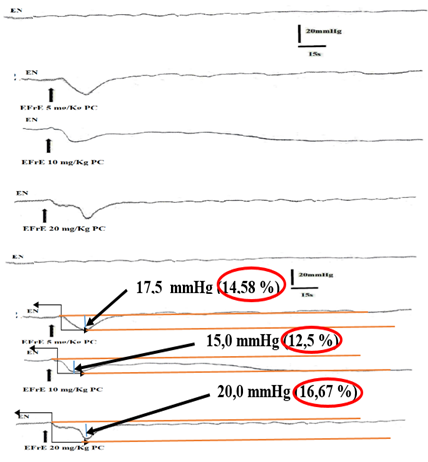
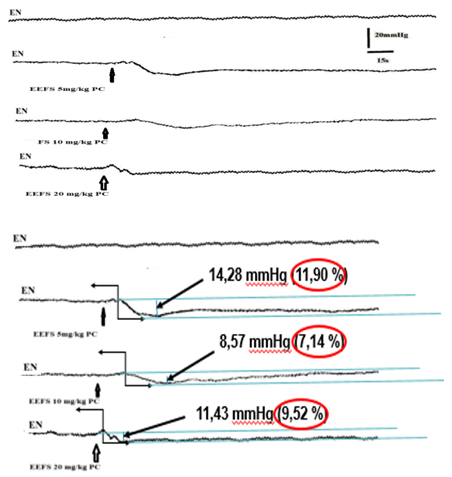
The administration of hydroethanolic extracts from ripe whole fruits and leaves of Ficus sycomorus elicited a hypotensive response in normotensive rabbits across varying doses of 5, 10, and 20 mg/kg body weight (refer to Figure 1 and Figure 2). Notably, all three doses of the ripe whole fruit extract generated a reduction in blood pressure in rabbits exhibiting a baseline blood pressure of 120 mmHg.
At a dosage of 5 mg/kg body weight, the ripe whole fruit extract resulted in a decrease in blood pressure of 17.5 mmHg, equating to a 14.58% reduction in blood pressure. The latency period post-extract injection was recorded at 6 seconds, with a prompt recovery of baseline blood pressure immediately following the hypotensive effect.
Upon administering a dosage of 10 mg/kg body weight, a reduction in blood pressure of 15 mmHg was observed, corresponding to a 12.5% decrease. At this dose, a latency period of 7 seconds was noted before irreversible hypotension ensued.


Subsequently, at a dosage of 20 mg/kg body weight, the extract induced a decrease in blood pressure of 20 mmHg, representing a reduction of 16.67%. Here, a latency period of 3.5 seconds preceded irreversible hypotension.
Similarly, the leaf extract at all three tested doses elicited irreversible hypotension, with the following observed effects:
At a dosage of 5 mg/kg body weight, a reduction in blood pressure of 14.28 mmHg, corresponding to an 11.9% decrease, was noted. The latency period post-leaf extract injection was measured at 14.12 seconds.
At a dosage of 10 mg/kg body weight, a decrease in blood pressure of 8.57 mmHg, representing a 7.14% reduction, was recorded. The latency period post-extract injection was observed to be 28.23 seconds.
Lastly, at a dosage of 20 mg/kg body weight, the leaf extract induced a decrease in blood pressure of 11.43 mmHg, indicating a 9.52% reduction. The latency period post-extract injection was measured at 13.23 seconds.
The nutritional analysis of ripe whole fruits and leaves from Ficus sycomorus reveals a comprehensive array of vitamins encompassing all major groups. Ripe whole fruits exhibit elevated levels of vitamins A, D, E, K, B2 and B9, while leaves are notably abundant in vitamins C and B1. Nonetheless, these values fall below those reported for dried figs of Ficus carica as investigated by Russo et al. 31, where the vitamin content significantly surpasses that of Ficus sycomorus fruits. Conversely, the vitamin A and C contents of Ficus sycomorus fruits exceed those of dried figs of Ficus carica sourced from Turkey, as noted by Caliskan 32. This disparity may stem from various factors including processing techniques, geographical origin of harvest, and notably, the distinct Ficus species. Vitamins play a pivotal role in maintaining overall bodily function and cardiovascular health. Studies, such as that by Szmrzsik 33, underscore the cardioprotective effects of vitamins A, E, and C, with vitamin D shown to mitigate hypertension by reducing systolic blood pressure levels 34. Vitamin K contributes to cardiovascular health by averting arterial mineralization, thereby sustaining optimal blood pressure levels 35. Furthermore, B-group vitamins exhibit antihypertensive properties akin to calcium channel blockers and diuretics 36. The mineral analysis reveals that both ripe fruits and leaves of Ficus sycomorus contain essential minerals such as calcium, potassium, magnesium, sodium, zinc, and iron. Among these, calcium, potassium, and sodium play pivotal roles in cardiovascular health 37, 38, 39. Magnesium and zinc are critical for bolstering the immune system 40, while iron is integral to red blood cell formation 41. Notably, calcium significantly regulates blood pressure values 38, while potassium and magnesium exhibit hypotensive effects and contribute to renal regulation of blood pressure 37, 38, 39, 40, 41, 42. Zinc regulates blood pressure, inducing hypotension at high doses 43, while sodium promotes blood pressure elevation, potentially leading to hypertension at elevated levels 39.
The mineral levels (Ca, Mg, K, Na, Zn, Fe) observed in ripe fruits and leaves of Ficus sycomorus are comparatively lower than those reported by Okoronkwo et al. 44 (5.84 ± 0.021, 300.67 ± 0.021, 9.56 ± 0.021, and 390.77 ± 0.012 mg/100g, respectively, for K, Mg, Zn, and Ca) in similar fruits from Nigeria. This variance may be attributed to differences in processing methods, geographical origins of harvest, and the physiological state of the Ficus sycomorus fruits. Nonetheless, the values recorded for calcium and potassium surpass those documented by Dessie and Minbale 16, which stand at 122 ± 1.6 mg/kg and 31 ± 0.77 mg/kg for potassium and calcium, respectively, in Ficus sycomorus fruits sourced from Ethiopia.
The decrease in blood pressure induced by hydroethanolic extracts of ripe fruits and leaves of Ficus sycomorus may stem from the hypotensive properties inherent in various phytochemical compounds. This proposition finds support in studies by authors who have identified catechic tannins 45, sterols, polyterpenes 46, and alkaloids 47 as constituents possessing hypotensive effects, all of which are present in these extracts. Furthermore, Ramdé-Tiendrébéogo et al. 48 have demonstrated the vasorelaxant activity of Ficus sycomorus leaf extracts on aortic rings, further bolstering the assertion of hypotensive potential.
The hypotensive activity of these extracts could also be attributed to the presence of minerals such as calcium, potassium, magnesium, and zinc, known for their vasoprotective and vasodilating properties 37, 38, 39. Our findings parallel those of El-Sayyad et al. 22, who illustrated that ethanol extracts from leaves and unripe fruits of Ficus sycomorus induce arterial hypotension in rabbits. From this analysis, it emerges that the hypotensive activity of Ficus sycomorus is more pronounced with ripe whole fruits. It is plausible that cardiodepressant compounds within these extracts act synergistically to promote arterial vasodilation and subsequent arterial hypotension 49.
The intravenous injection of hydroethanolic extract from leaves and ripe whole fruits of Ficus sycomorus induces arterial hypotension in normotensive rabbits. This hypotensive activity is thought to arise from the interplay of phytochemical compounds, minerals, and vitamins present in the extract. Beyond its therapeutic potential, the presence of these minerals and vitamins impart substantial nutritional value to both ripe fruits and leaves of Ficus sycomorus.
To all the authors who took part in carrying out this study and writing this article.
| [1] | Holl, A. Représentations en santé des patients hypertendus précaires suivis en médecine générale, Thèse, Université Sorbonne, Paris, médecine générale; 2019, p125. | ||
| In article | |||
| [2] | Krzesinski, J-M. - Saint-Remy A.: Les maladies complexes: l’hypertension artérielle. Revue Médicale Liège, 67, 2012, pp. 279-285. | ||
| In article | |||
| [3] | OMS, 2022. Hypertension. WHO, international. | ||
| In article | |||
| [4] | Orange Côte d’Ivoire: Lutte contre les maladies cardiovasculaires et l’hypertension artérielle. Communiqué de presse, Fondation Orange, 2012. servicepresse.oci@orange.com. | ||
| In article | |||
| [5] | Niamkey J. T. - Boka C. - N’djessan J. J. - Angoran I. - Kramoh E.: Prévalence et facteurs de risque associés à l’hypertension artérielle en milieu universitaire ivoirien: résultats d’une campagne de dépistage communautaire.Tropical Cardiology, 70, 2012, pp. 13–17. | ||
| In article | |||
| [6] | N’djessan Y. J-J. - Soya E. - Niamkey T. - Gbasi C. - Aiedego S. - Konin C.: Etat psychologique des patients hypertendus suivis à l’Institut de Cardiologie d’Abidjan /Psychological state of Hypertensive at patients followed at the abidjan heart institute. Revue International des Sciences Médicales d’Abidjan-RISM, 21, 2012 (3), pp. 219-222. | ||
| In article | |||
| [7] | OMS: L’OMS soutient une médecine traditionnelle reposant sur des éléments scientifiques probants. WHO, Regional office for Africa, 2021. | ||
| In article | |||
| [8] | Abdelhay B.: The effects of the Mediterranean Diet on Chronic Diseases: Cardiovascular Diseases, Oxidative Stress, Dyslipidemia, Diabetes Mellitus, Blood Pressure, Cancer, Neurodegenerative Disease and Obesity. Researchgate, 2017, 1-37. https:// www.researchgate.net/ publication/321416257. | ||
| In article | |||
| [9] | Bédard A.: Impact du mode alimentaire méditerranéen sur la santé cardiovasculaire. Étude des différences entre les hommes et les femmes. Thèse, Université Laval, Québec, nutrition ; 2015, p 317. | ||
| In article | |||
| [10] | Ali O. - Ibrahima C. - Koffi E. N. - Anin A. L. - Adima A. A.: Composition phytochimique, nutritionnelle et activité antioxydante des feuilles de baobab de Côte d’Ivoire. Journal of Applied Biosciences, 141, 2019, pp. 14391 – 14399. | ||
| In article | |||
| [11] | Koné M. W. - Atindehou K. K. - Dossahoua T. - Betschart B.: Anthelmintic Activity of Medicinal Plants Used in Northern Cote d’Ivoire Against Intestinal Helminthiasis. Pharmaceutical Biology, 43, 2005 (1): 72–78. | ||
| In article | View Article | ||
| [12] | Thiombiano D. N. E. - Lamien N. - Dibong D. S. - Boussim I. J. - Belem B.: Le rôle des espèces ligneuses dans la gestion de la soudure alimentaire au Burkina Faso. Sécheresse, 23, 2012 (2), pp. 86-93. | ||
| In article | View Article | ||
| [13] | Moussa D. I. - Diouf A. - Morou B. - Adagoye A. B. – Agúndez D. M. - Oumani A. A.: Perception locale sur l’état des espèces ligneuses alimentaires spontanées et leur rôle: cas des communes rurales de Tamou et Simiri au Niger. Revue Ivoirienne des Sciences et Technologies, 35, 2020, pp. 328 – 344. | ||
| In article | |||
| [14] | Abd-el-hak N. A. - Hanaa S. M. A. E - Ayat E. R.: Production and evaluation of Sycamore and figblends jam. Egyptian Journal of Agricultural Research, 94, 2016 (3), pp. 647-658. | ||
| In article | View Article | ||
| [15] | Abdel-Aty M. A. - Hamed B. M. - Salama H. W. - Ali M. M. - Fahmy A. S. - Mohamed A. S. Ficus carica, Ficus sycomorus and Euphorbia tirucalli latex extracts: Phytochemical screening, antioxidant and cytotoxic properties. Biocatalysis and Agricultural Biotechnology, 20, 2019, pp. 1-8. | ||
| In article | View Article | ||
| [16] | Dessie A. T. - Minbale A. T. Determination of the Levels of Selected Essential Metals in Sycamore (Ficus sycomorus L.) Fruit and Seed Using Flame Atomic Absorption Spectrophotometry. Research square, 2022, pp.1-23. | ||
| In article | View Article | ||
| [17] | Shi Y. - Mon M. A. - Fu Y. - Zhang Y. - Wang C. - Yang X. - Wang Y. The genus Ficus (Moraceae) used in diet: Its plant diversity, distribution, traditional uses and ethnopharmacological importance. Journal of Ethnopharmacology, 226, 2022, pp. 185–196. | ||
| In article | View Article PubMed | ||
| [18] | Hossain A. M. A review on Ficus sycomorus: A potential indigenous medicinal plant in Oman. Journal of King Saud University – Science, 2018, 1-5. | ||
| In article | |||
| [19] | Ozdenefe S. M. - Tanoglu F. - Suer K. - Guler E. - Mercimek T. H. A. Antioxidant and antimicrobial activity of Ficus sycomorus fruit and leaf extracts. Marmara Medecine Journal, 33, 2020 (3), pp. 133-140. | ||
| In article | View Article | ||
| [20] | Braide W. - Dokubo K. O. - Adeleye S. A. - Uzoh, C. V. - Akobundu C. I. Phytochemical properties, toxicological screening and antibacterial qualities of various parts extracts of Ficus sycomorus. Journal of Medecine Plant and Herbal Therapy Research, 6, 2018, pp. 1-8. | ||
| In article | |||
| [21] | El-Beltagi S. H. - Mohamed I. H. - Abdelazeem S. A. - Youssef R. - Safwat G. GS-MS analysis, antioxidant, antimicrobial and anticancer activities of extracts from Ficus sycomorus fruits and leaves. Notulae Botanicae Horti Agrobotanici Cluj-Napoca, 47, 2019 (2), pp. 493-505. | ||
| In article | View Article | ||
| [22] | El-Sayyad M. S. - Makboul A. M. - Ali M. R. - Farag F. S. Hypotensive effect of Ficus sycomorus L. on the arterial blood pressure of rabbits. Journal of Pharmacognosy and Phytochemistry, 4, 2016 (2), pp. 1-6. | ||
| In article | |||
| [23] | Koné H. S. - Kisselmina Y. K. - Koffi D. A. - Soro D. Caractérisation biochimique de la pulpe des fruits du prunier noir (Vitex doniana) de la Côte d’Ivoire. European Scientific Journal, 14, 2018 (3), pp. 252-270. | ||
| In article | View Article | ||
| [24] | Coulibaly S. O. - Ouattara A. - Ouattara K. - Coulibaly A. Effets antihypertensifs des extraits aqueux et éthanolique des graines fermentées de Parkiabiglobosa (Mimosaceae) chez les rats. European Scientific Journal; 13, 2017 (36), pp. 162-176. | ||
| In article | View Article | ||
| [25] | Zirihi G. N. - Kra A. K. M. - Guédé-Guina F. Évaluation de l’activité antifongique de Microglossa Pirifolia (Larmarck, O. Kuntze) (Asteraceae) "PYMI" sur la croissance in vitro de Candida albicans. Revue de Médecine et Pharmacie- African, 17, 2003, pp. 11-8. | ||
| In article | |||
| [26] | Jedlička A. - Klimeš J. Determination of water- and fat-soluble vitamins in different matrices using high-performance liquid chromatography. Chemical Papers, 59, 2005, pp. 202–222. | ||
| In article | View Article | ||
| [27] | Pongracz G. Neue potentiometrische Bestimmungsmethodefüe Ascorbinsäureundderen Verbindungen. Journal of Analytical Chemistry, 253, 1971, pp. 271–274. | ||
| In article | View Article | ||
| [28] | Kouassi B. J. - Cissé-Camara M. - Sess E. D. - Tiahou G. G. - MONDE A. A. - Djohan Y. F. Détermination des teneurs en fer, en calcium, en cuivre et en zinc de deux variétés de gombo Determination of iron, calcium, copper and zinc contents of two varieties of okra. Bulletin de la Société Royale des Sciences de Liège, 82, 2013, pp. 22 – 32. | ||
| In article | View Article | ||
| [29] | Abo K. J. C. De la plante à la molécule: toxicité, effets pharmacologiques et mécanisme d’action de Justiciasecunda (Acanthaceae), plante antihypertensive, sur le système cardio-vasculaire de mammifères. Thèse, Université Félix Houphouet Boigny de Côte d’Ivoire, 2013, p 351. | ||
| In article | |||
| [30] | N’dia K. F. - Kouakou K. L. - Bléyéré N. M. - Yapo A. P. - Ehilé E. E. Hypotensive effects of a butanol active fraction from leaves of Blighia unijugata bak. (Sapindaceae) on arterial blood pressure of rabbit. World journal of pharmacy and pharmaceutical Sciences, 2, 2013(6), pp. 6693-6705. | ||
| In article | |||
| [31] | Russo M. T. - Sanzo D. R. - Cefaly V. - Fuda S. - Postorino S. - Suraci F.: Quality and nutritional composition of dried figs: A traditional Calabria Region (Italy) product. Acta horticulturae, 939, 2012, pp. 189-196. 10.17660/ActaHortic.2012.939.24. | ||
| In article | View Article | ||
| [32] | Caliskan O. Mediterranean figs (Ficus carica L.) functional Food Properties. The Mediterranean Diet, 2015, pp. 629–637. | ||
| In article | View Article | ||
| [33] | Szmrzsik B. N. La vitamine E: ses effets préventifs vis à vis des cancers et des maladies cardiovasculaires. Sciences pharmaceutiques, 2020, pp. 1-147. | ||
| In article | |||
| [34] | Courbebaisse M. - Cormier C. La vitamine D, vitamine ou hormone? Vitamine D et santé cardiovasculaire. Oilseeds & fats Crops and Lipids, 21, 2014 (3), pp. 1-6. | ||
| In article | View Article | ||
| [35] | Lambert L. Les nouvelles propriétés thérapeutiques de la vitamine K. Thèse, Université Grenoble Alpes, Sciences pharmaceutiques, dumas-01825863, 2018, p 111. | ||
| In article | |||
| [36] | Houston M. C. Treatment of Hypertension with Nutrition and Nutraceutical Supplements: Part 2. Alternative and Complementary Therapies, 25, 2019 (1), pp. 1-36. | ||
| In article | View Article | ||
| [37] | Zisimopoulou S. - Pechère-Bertschi A. -Burnier M. Potassium et pression artérielle, une vieille histoire revisitée. Revue Médicale Suisse, 12, 2016, pp. 1502-1506. | ||
| In article | View Article PubMed | ||
| [38] | Nakamura H. - Tsujiguchi H. - Hara A. - Kambayashi Y. - Miyagi S. - Nguyen T. T. T. - Suzuki K. - Tao Y. - Sakamoto Y. - Shimizu Y. - Yamamoto N. - Nakamura H.: Dietary calcium intake and hypertension: importance of serum concentrations of 25-Hydroxyvitamin D. Nutrients, 11, 2019, pp. 1-11. | ||
| In article | View Article PubMed | ||
| [39] | Grillo A. - Salvi L. - Coruzzi P. - Salvi P. - Parati G. Sodium Intake and Hypertension. Nutrients, 11, 2019(1970), pp. 1-16. | ||
| In article | View Article PubMed | ||
| [40] | Balmont S. Intérêts des micronutriments pour l’immunité des personnes âgées. Sciences pharmaceutiques. Thèse, faculté de pharmacie de Grenoble ; 2006, p. 141. | ||
| In article | |||
| [41] | Dembele B. - Bathily-Sidibe M. - Sanogo I. - Sokouri J. Exploration de la réserve en fer chez les donneurs de sang du CNTS d’Abidjan. Transfusion Clinique et Biologique, 24, 2017 (3), pp. 326 –327. | ||
| In article | View Article | ||
| [42] | Dominguez L. J. - Veronese N. - Barbagallo M. Magnesium and Hypertension in Old Age. Nutrients, 13, 2021 (139), pp. 1-32. | ||
| In article | View Article PubMed | ||
| [43] | Gouaref I. - Zina B. Z. - Samia Z. S. - Alamir B. - Koceir E-A.: Association du profil des minéraux traces au syndrome métabolique et au stress oxydant dans l’hypertension artérielle essentielle avec ou sans diabète de type 2. Annales de biologie clinique, 74, 2016 (2), pp. 233-43. | ||
| In article | View Article PubMed | ||
| [44] | Okoronkwo C. U. - Ogwo P. A. - Udensi E. A. - Agu R. O.: Nutritional and Phytochemical Composition of Utu (Icacina senegalensis) and Sycamore (Ficus sycomorus). Seeds. IOSR Journal of Environmental Science, Toxicology and Food Technology, 8, 2014 (7), pp. 49-53. | ||
| In article | View Article | ||
| [45] | Dehou R. - Dougnon V. - Atchade P. - Attakpa C. - Legba B. - Baba-Moussa L. - Gbaguidi F.: Étude phytochimique et toxicologique de Cassia italica, Momordica balsamina et Ocimum gratissimum, trois plantes utilisées contre la gale au sud-Bénin. Revue Ivoirienne des Sciences et Technologie, 32, 2018, pp.: 286 – 297. | ||
| In article | |||
| [46] | Mamyrbekova-Bekro J. A. - Boua B. B. - Kouassi K. C. - Békro Y-A.: Sur l’analyse qualitative et pharmacologique de 2 plantes antihypertensives utilisées à N’gramanssabo en Côte d’Ivoire. Nature & Technologie, B- Sciences Agronomiques et Biologiques, 8, 2013, pp. 2-12. | ||
| In article | |||
| [47] | Koné D. Enquête ethnobotanique de six plantes médicinales maliennes: extraction, identification d’alcaloïdes - caractérisation, quantification de polyphénols: étude de leur activité antioxydante. Biologie végétale. Thèse, Université Paul Verlaine, France; 2009, p.150. | ||
| In article | |||
| [48] | Ramdé-Tiendrébéogo A. - Tibiri A. - Ouedraogo M. - Ouédraogo S. - Nacoulma O. G. -Guissou I. P.: Study of antisickling and vasorelaxantactivities and acute toxicityassessment of crudeextracts of leaves of Ficus sycomorus L. (Moraceae). Pakistan Journal of Biological Sciences, 17, 2014 (6), pp. 829-835. | ||
| In article | View Article | ||
| [49] | Ehoussou, N. C. - Nene Bi S. A. - Soro Y. T. - Traore F.: Effets pharmacologiques d’un extrait aqueux de Costus afer (Zingiberaceae) sur l’activité cardiaque et la pression artérielle couplée à la respiration de mammifères. International Journal of Biological and Chemical Sciences, 8, 2014 (4), pp. 1644-1655. | ||
| In article | View Article | ||
Published with license by Science and Education Publishing, Copyright © 2024 Larissa Adjoua Kouadio, Pierre Martial Thierry Akely, Adou Koffi Mathieu Kra and Goueh Gnahoue
 This work is licensed under a Creative Commons Attribution 4.0 International License. To view a copy of this license, visit
https://creativecommons.org/licenses/by/4.0/
This work is licensed under a Creative Commons Attribution 4.0 International License. To view a copy of this license, visit
https://creativecommons.org/licenses/by/4.0/
| [1] | Holl, A. Représentations en santé des patients hypertendus précaires suivis en médecine générale, Thèse, Université Sorbonne, Paris, médecine générale; 2019, p125. | ||
| In article | |||
| [2] | Krzesinski, J-M. - Saint-Remy A.: Les maladies complexes: l’hypertension artérielle. Revue Médicale Liège, 67, 2012, pp. 279-285. | ||
| In article | |||
| [3] | OMS, 2022. Hypertension. WHO, international. | ||
| In article | |||
| [4] | Orange Côte d’Ivoire: Lutte contre les maladies cardiovasculaires et l’hypertension artérielle. Communiqué de presse, Fondation Orange, 2012. servicepresse.oci@orange.com. | ||
| In article | |||
| [5] | Niamkey J. T. - Boka C. - N’djessan J. J. - Angoran I. - Kramoh E.: Prévalence et facteurs de risque associés à l’hypertension artérielle en milieu universitaire ivoirien: résultats d’une campagne de dépistage communautaire.Tropical Cardiology, 70, 2012, pp. 13–17. | ||
| In article | |||
| [6] | N’djessan Y. J-J. - Soya E. - Niamkey T. - Gbasi C. - Aiedego S. - Konin C.: Etat psychologique des patients hypertendus suivis à l’Institut de Cardiologie d’Abidjan /Psychological state of Hypertensive at patients followed at the abidjan heart institute. Revue International des Sciences Médicales d’Abidjan-RISM, 21, 2012 (3), pp. 219-222. | ||
| In article | |||
| [7] | OMS: L’OMS soutient une médecine traditionnelle reposant sur des éléments scientifiques probants. WHO, Regional office for Africa, 2021. | ||
| In article | |||
| [8] | Abdelhay B.: The effects of the Mediterranean Diet on Chronic Diseases: Cardiovascular Diseases, Oxidative Stress, Dyslipidemia, Diabetes Mellitus, Blood Pressure, Cancer, Neurodegenerative Disease and Obesity. Researchgate, 2017, 1-37. https:// www.researchgate.net/ publication/321416257. | ||
| In article | |||
| [9] | Bédard A.: Impact du mode alimentaire méditerranéen sur la santé cardiovasculaire. Étude des différences entre les hommes et les femmes. Thèse, Université Laval, Québec, nutrition ; 2015, p 317. | ||
| In article | |||
| [10] | Ali O. - Ibrahima C. - Koffi E. N. - Anin A. L. - Adima A. A.: Composition phytochimique, nutritionnelle et activité antioxydante des feuilles de baobab de Côte d’Ivoire. Journal of Applied Biosciences, 141, 2019, pp. 14391 – 14399. | ||
| In article | |||
| [11] | Koné M. W. - Atindehou K. K. - Dossahoua T. - Betschart B.: Anthelmintic Activity of Medicinal Plants Used in Northern Cote d’Ivoire Against Intestinal Helminthiasis. Pharmaceutical Biology, 43, 2005 (1): 72–78. | ||
| In article | View Article | ||
| [12] | Thiombiano D. N. E. - Lamien N. - Dibong D. S. - Boussim I. J. - Belem B.: Le rôle des espèces ligneuses dans la gestion de la soudure alimentaire au Burkina Faso. Sécheresse, 23, 2012 (2), pp. 86-93. | ||
| In article | View Article | ||
| [13] | Moussa D. I. - Diouf A. - Morou B. - Adagoye A. B. – Agúndez D. M. - Oumani A. A.: Perception locale sur l’état des espèces ligneuses alimentaires spontanées et leur rôle: cas des communes rurales de Tamou et Simiri au Niger. Revue Ivoirienne des Sciences et Technologies, 35, 2020, pp. 328 – 344. | ||
| In article | |||
| [14] | Abd-el-hak N. A. - Hanaa S. M. A. E - Ayat E. R.: Production and evaluation of Sycamore and figblends jam. Egyptian Journal of Agricultural Research, 94, 2016 (3), pp. 647-658. | ||
| In article | View Article | ||
| [15] | Abdel-Aty M. A. - Hamed B. M. - Salama H. W. - Ali M. M. - Fahmy A. S. - Mohamed A. S. Ficus carica, Ficus sycomorus and Euphorbia tirucalli latex extracts: Phytochemical screening, antioxidant and cytotoxic properties. Biocatalysis and Agricultural Biotechnology, 20, 2019, pp. 1-8. | ||
| In article | View Article | ||
| [16] | Dessie A. T. - Minbale A. T. Determination of the Levels of Selected Essential Metals in Sycamore (Ficus sycomorus L.) Fruit and Seed Using Flame Atomic Absorption Spectrophotometry. Research square, 2022, pp.1-23. | ||
| In article | View Article | ||
| [17] | Shi Y. - Mon M. A. - Fu Y. - Zhang Y. - Wang C. - Yang X. - Wang Y. The genus Ficus (Moraceae) used in diet: Its plant diversity, distribution, traditional uses and ethnopharmacological importance. Journal of Ethnopharmacology, 226, 2022, pp. 185–196. | ||
| In article | View Article PubMed | ||
| [18] | Hossain A. M. A review on Ficus sycomorus: A potential indigenous medicinal plant in Oman. Journal of King Saud University – Science, 2018, 1-5. | ||
| In article | |||
| [19] | Ozdenefe S. M. - Tanoglu F. - Suer K. - Guler E. - Mercimek T. H. A. Antioxidant and antimicrobial activity of Ficus sycomorus fruit and leaf extracts. Marmara Medecine Journal, 33, 2020 (3), pp. 133-140. | ||
| In article | View Article | ||
| [20] | Braide W. - Dokubo K. O. - Adeleye S. A. - Uzoh, C. V. - Akobundu C. I. Phytochemical properties, toxicological screening and antibacterial qualities of various parts extracts of Ficus sycomorus. Journal of Medecine Plant and Herbal Therapy Research, 6, 2018, pp. 1-8. | ||
| In article | |||
| [21] | El-Beltagi S. H. - Mohamed I. H. - Abdelazeem S. A. - Youssef R. - Safwat G. GS-MS analysis, antioxidant, antimicrobial and anticancer activities of extracts from Ficus sycomorus fruits and leaves. Notulae Botanicae Horti Agrobotanici Cluj-Napoca, 47, 2019 (2), pp. 493-505. | ||
| In article | View Article | ||
| [22] | El-Sayyad M. S. - Makboul A. M. - Ali M. R. - Farag F. S. Hypotensive effect of Ficus sycomorus L. on the arterial blood pressure of rabbits. Journal of Pharmacognosy and Phytochemistry, 4, 2016 (2), pp. 1-6. | ||
| In article | |||
| [23] | Koné H. S. - Kisselmina Y. K. - Koffi D. A. - Soro D. Caractérisation biochimique de la pulpe des fruits du prunier noir (Vitex doniana) de la Côte d’Ivoire. European Scientific Journal, 14, 2018 (3), pp. 252-270. | ||
| In article | View Article | ||
| [24] | Coulibaly S. O. - Ouattara A. - Ouattara K. - Coulibaly A. Effets antihypertensifs des extraits aqueux et éthanolique des graines fermentées de Parkiabiglobosa (Mimosaceae) chez les rats. European Scientific Journal; 13, 2017 (36), pp. 162-176. | ||
| In article | View Article | ||
| [25] | Zirihi G. N. - Kra A. K. M. - Guédé-Guina F. Évaluation de l’activité antifongique de Microglossa Pirifolia (Larmarck, O. Kuntze) (Asteraceae) "PYMI" sur la croissance in vitro de Candida albicans. Revue de Médecine et Pharmacie- African, 17, 2003, pp. 11-8. | ||
| In article | |||
| [26] | Jedlička A. - Klimeš J. Determination of water- and fat-soluble vitamins in different matrices using high-performance liquid chromatography. Chemical Papers, 59, 2005, pp. 202–222. | ||
| In article | View Article | ||
| [27] | Pongracz G. Neue potentiometrische Bestimmungsmethodefüe Ascorbinsäureundderen Verbindungen. Journal of Analytical Chemistry, 253, 1971, pp. 271–274. | ||
| In article | View Article | ||
| [28] | Kouassi B. J. - Cissé-Camara M. - Sess E. D. - Tiahou G. G. - MONDE A. A. - Djohan Y. F. Détermination des teneurs en fer, en calcium, en cuivre et en zinc de deux variétés de gombo Determination of iron, calcium, copper and zinc contents of two varieties of okra. Bulletin de la Société Royale des Sciences de Liège, 82, 2013, pp. 22 – 32. | ||
| In article | View Article | ||
| [29] | Abo K. J. C. De la plante à la molécule: toxicité, effets pharmacologiques et mécanisme d’action de Justiciasecunda (Acanthaceae), plante antihypertensive, sur le système cardio-vasculaire de mammifères. Thèse, Université Félix Houphouet Boigny de Côte d’Ivoire, 2013, p 351. | ||
| In article | |||
| [30] | N’dia K. F. - Kouakou K. L. - Bléyéré N. M. - Yapo A. P. - Ehilé E. E. Hypotensive effects of a butanol active fraction from leaves of Blighia unijugata bak. (Sapindaceae) on arterial blood pressure of rabbit. World journal of pharmacy and pharmaceutical Sciences, 2, 2013(6), pp. 6693-6705. | ||
| In article | |||
| [31] | Russo M. T. - Sanzo D. R. - Cefaly V. - Fuda S. - Postorino S. - Suraci F.: Quality and nutritional composition of dried figs: A traditional Calabria Region (Italy) product. Acta horticulturae, 939, 2012, pp. 189-196. 10.17660/ActaHortic.2012.939.24. | ||
| In article | View Article | ||
| [32] | Caliskan O. Mediterranean figs (Ficus carica L.) functional Food Properties. The Mediterranean Diet, 2015, pp. 629–637. | ||
| In article | View Article | ||
| [33] | Szmrzsik B. N. La vitamine E: ses effets préventifs vis à vis des cancers et des maladies cardiovasculaires. Sciences pharmaceutiques, 2020, pp. 1-147. | ||
| In article | |||
| [34] | Courbebaisse M. - Cormier C. La vitamine D, vitamine ou hormone? Vitamine D et santé cardiovasculaire. Oilseeds & fats Crops and Lipids, 21, 2014 (3), pp. 1-6. | ||
| In article | View Article | ||
| [35] | Lambert L. Les nouvelles propriétés thérapeutiques de la vitamine K. Thèse, Université Grenoble Alpes, Sciences pharmaceutiques, dumas-01825863, 2018, p 111. | ||
| In article | |||
| [36] | Houston M. C. Treatment of Hypertension with Nutrition and Nutraceutical Supplements: Part 2. Alternative and Complementary Therapies, 25, 2019 (1), pp. 1-36. | ||
| In article | View Article | ||
| [37] | Zisimopoulou S. - Pechère-Bertschi A. -Burnier M. Potassium et pression artérielle, une vieille histoire revisitée. Revue Médicale Suisse, 12, 2016, pp. 1502-1506. | ||
| In article | View Article PubMed | ||
| [38] | Nakamura H. - Tsujiguchi H. - Hara A. - Kambayashi Y. - Miyagi S. - Nguyen T. T. T. - Suzuki K. - Tao Y. - Sakamoto Y. - Shimizu Y. - Yamamoto N. - Nakamura H.: Dietary calcium intake and hypertension: importance of serum concentrations of 25-Hydroxyvitamin D. Nutrients, 11, 2019, pp. 1-11. | ||
| In article | View Article PubMed | ||
| [39] | Grillo A. - Salvi L. - Coruzzi P. - Salvi P. - Parati G. Sodium Intake and Hypertension. Nutrients, 11, 2019(1970), pp. 1-16. | ||
| In article | View Article PubMed | ||
| [40] | Balmont S. Intérêts des micronutriments pour l’immunité des personnes âgées. Sciences pharmaceutiques. Thèse, faculté de pharmacie de Grenoble ; 2006, p. 141. | ||
| In article | |||
| [41] | Dembele B. - Bathily-Sidibe M. - Sanogo I. - Sokouri J. Exploration de la réserve en fer chez les donneurs de sang du CNTS d’Abidjan. Transfusion Clinique et Biologique, 24, 2017 (3), pp. 326 –327. | ||
| In article | View Article | ||
| [42] | Dominguez L. J. - Veronese N. - Barbagallo M. Magnesium and Hypertension in Old Age. Nutrients, 13, 2021 (139), pp. 1-32. | ||
| In article | View Article PubMed | ||
| [43] | Gouaref I. - Zina B. Z. - Samia Z. S. - Alamir B. - Koceir E-A.: Association du profil des minéraux traces au syndrome métabolique et au stress oxydant dans l’hypertension artérielle essentielle avec ou sans diabète de type 2. Annales de biologie clinique, 74, 2016 (2), pp. 233-43. | ||
| In article | View Article PubMed | ||
| [44] | Okoronkwo C. U. - Ogwo P. A. - Udensi E. A. - Agu R. O.: Nutritional and Phytochemical Composition of Utu (Icacina senegalensis) and Sycamore (Ficus sycomorus). Seeds. IOSR Journal of Environmental Science, Toxicology and Food Technology, 8, 2014 (7), pp. 49-53. | ||
| In article | View Article | ||
| [45] | Dehou R. - Dougnon V. - Atchade P. - Attakpa C. - Legba B. - Baba-Moussa L. - Gbaguidi F.: Étude phytochimique et toxicologique de Cassia italica, Momordica balsamina et Ocimum gratissimum, trois plantes utilisées contre la gale au sud-Bénin. Revue Ivoirienne des Sciences et Technologie, 32, 2018, pp.: 286 – 297. | ||
| In article | |||
| [46] | Mamyrbekova-Bekro J. A. - Boua B. B. - Kouassi K. C. - Békro Y-A.: Sur l’analyse qualitative et pharmacologique de 2 plantes antihypertensives utilisées à N’gramanssabo en Côte d’Ivoire. Nature & Technologie, B- Sciences Agronomiques et Biologiques, 8, 2013, pp. 2-12. | ||
| In article | |||
| [47] | Koné D. Enquête ethnobotanique de six plantes médicinales maliennes: extraction, identification d’alcaloïdes - caractérisation, quantification de polyphénols: étude de leur activité antioxydante. Biologie végétale. Thèse, Université Paul Verlaine, France; 2009, p.150. | ||
| In article | |||
| [48] | Ramdé-Tiendrébéogo A. - Tibiri A. - Ouedraogo M. - Ouédraogo S. - Nacoulma O. G. -Guissou I. P.: Study of antisickling and vasorelaxantactivities and acute toxicityassessment of crudeextracts of leaves of Ficus sycomorus L. (Moraceae). Pakistan Journal of Biological Sciences, 17, 2014 (6), pp. 829-835. | ||
| In article | View Article | ||
| [49] | Ehoussou, N. C. - Nene Bi S. A. - Soro Y. T. - Traore F.: Effets pharmacologiques d’un extrait aqueux de Costus afer (Zingiberaceae) sur l’activité cardiaque et la pression artérielle couplée à la respiration de mammifères. International Journal of Biological and Chemical Sciences, 8, 2014 (4), pp. 1644-1655. | ||
| In article | View Article | ||