As urbanization accelerates in India, the demand for sustainable solutions in urban spaces has become increasingly critical. This paper explores the potential of integrating bio-solar technologies into rooftop design as a means to enhance energy efficiency, reduce urban heat islands, and promote green practices within Indian cities. By combining solar energy generation with biodiverse green roofs, this study evaluates the multifaceted benefits of bio-solar integration, including energy savings, improved air quality, and enhanced urban resilience. Through an expert survey conducted among professionals in urban planning, architecture, and renewable energy sectors, insights were gathered on the feasibility, benefits, and potential barriers to implementing bio-solar systems in urban rooftops. The findings indicate that integrating bio-solar solutions can enhance energy efficiency, improve air quality, and contribute to urban biodiversity. This paper advocates for maximizing the adoption of bio-solar technologies as part of sustainable urban planning, providing a framework for policymakers and stakeholders to facilitate their implementation in Indian cities.
India’s ascendant urban trajectory, characterized by an annual growth rate exceeding 2.3%, presents a formidable paradox: cities are the epicenters of economic prosperity yet simultaneously the crucibles of profound environmental degradation. This rapid urbanization, manifest in the proliferation of impervious surfaces and dense built forms, has precipitated a tripartite crisis encompassing elevated energy demand, exacerbated urban heat island (UHI) effects, and a critical depletion of urban green spaces and associated ecosystem services. Within this constrained spatial matrix, the conventional urban rooftop—often an underutilized, thermally absorptive plane—emerges as a significant yet overlooked spatial resource. This paper posits that the strategic reconfiguration of these ubiquitous horizontal surfaces through integrated Bio-Solar systems—a synergistic confluence of photovoltaic energy generation and vegetative cultivation—represents a critical intervention for advancing urban sustainability in the Indian context. 1 2.
The prevailing approach to urban environmental mitigation has largely been characterized by sectoral silos. Initiatives promoting rooftop solar photovoltaic (PV) installations, driven by policy instruments such as the Jawaharlal Nehru National Solar Mission, prioritize carbon-neutral energy production but frequently ignore the ancillary benefits of green infrastructure. Conversely, urban agriculture and green roof advocates emphasize local food security, stormwater management, and psychological well-being, yet often grapple with questions of economic viability and water efficiency in water-stressed regions. This bifurcation overlooks the compelling synergies inherent in their integration. The Bio-Solar model, an adaptation of the agrivoltaic concept for urban built environments, proposes a symbiotic interface: vegetative layers can reduce PV panel operating temperatures, thereby potentially enhancing photovoltaic conversion efficiency, while the moderated microclimate beneath partially shaded arrays can support specific horticultural varieties and reduce irrigation demand. This integrated system functions as a multifunctional urban ecosystem, simultaneously contributing to energy provisioning, and thermal regulation for underlying structures, carbon sequestration, and urban biodiversity enhancement. 3
Despite its theoretical promise, the translation of Bio-Solar integration from a niche concept to a mainstream urban practice in India remains impeded by significant knowledge and implementation gaps. Existing scholarship, while growing, is often geographically specific to temperate climates or focused on large-scale rural agrivoltaics, lacking transferability to the unique socio-technical and climatic realities of Indian cities. These realities include extreme hydro-meteorological variability, heterogeneous building stock with structural limitations, complex tenure and ownership patterns, and entrenched regulatory frameworks that are ill-equipped to govern multifunctional land uses. Consequently, critical questions pertaining to optimal techno-ecological design parameters, lifecycle cost-benefit analyses inclusive of social and environmental externalities, and enabling governance mechanisms remain insufficiently addressed. 4, 5, 6.
To interrogate these complexities and bridge the gap between conceptual potential and practical deployment, this study employs an expert survey methodology. Recognizing that the requisite knowledge for system optimization and implementation is distributed across disciplinary boundaries, insights were solicited from professionals in urban planning, architectural design, renewable energy engineering, horticultural science, and environmental policy. This methodological approach serves to aggregate and analyze perceived efficacies, identify prioritized benefits, and delineate the most salient technical, economic, and institutional barriers to adoption as viewed by key stakeholders. Their collective expertise provides a grounded, pragmatic lens through which to evaluate feasibility and formulate context-specific recommendations. 7, 8.
Thus, this research aims to conduct a comprehensive evaluation of Bio-Solar rooftop integration as a sustainable urban solution for India. It moves beyond a mere techno-environmental assessment to incorporate the critical dimensions of stakeholder perception and institutional readiness. The subsequent analysis presents findings from the expert survey, structured around key themes of system optimization, benefit valuation, and barrier deconstruction. Synthesizing these insights, the paper culminates in a strategic advocacy framework designed to inform policymakers, urban planners, and built environment professionals. Ultimately, this work argues for a paradigm shift in urban design and governance—one that re-envisions rooftops not as inert structural coverings but as active, productive, and essential components of the urban ecological infrastructure, vital for forging climate-resilient and sustainable cities.
1.1. Aim of the StudyThe primary aim of this research is to investigate and evaluate the levels of sectoral awareness and perceived efficacy among urban planning, architectural, and renewable energy professionals regarding bio-solar integration as a multifunctional, sustainable rooftop solution for mitigating urban environmental challenges in India.
1.2. Research ObjectivesHere are objectives, designed to systematically support and operationalize the stated aim.
To benchmark and stratify sector-specific knowledge gradients regarding bio-solar integration within Indian urban contexts among architects, urban planners/designers, and energy experts.
To map the alignment between professional awareness and practice by identifying the key institutional, cognitive, and market-driven constraints that modulate the translation of knowledge into advocacy or technical specification.
1.3. Scope and LimitationsThis study is explicitly confined to professionals operating within defined sectors critical to urban transformation in India: urban planning, architecture, and renewable energy. This includes practitioners, consultants, and policy makers within these domains. The research is situated within the Indian urban context. The core data derives from expert surveys, it focuses on measuring and comparing subjective professional awareness and knowledge.
Indian cities, characterized by rapid urbanization, acute heat island effects, air pollution, and energy insecurity, present a critical crucible for sustainable innovation. The rooftops cape, a largely underutilized urban asset, has emerged as a strategic frontier for deploying mitigates technologies. Conventional approaches have often treated solutions in isolation—green roofs for thermal moderation and storm water management, and solar photovoltaic (PV) systems for renewable energy generation. Rooftop spaces in urban settings offer a unique opportunity for ecological and energy integration. In their study, Pardo et al. (2018) emphasize the multi-functionality of rooftop gardens and green roofs in urban areas, noting their potential to enhance aesthetics, improve thermal performance, and mitigate runoff. Furthermore, when paired with solar technologies, these spaces can significantly contribute to urban energy production while improving air quality and promoting biodiversity (Oberndorfer et al., 2007). However, the emerging paradigm of bio-solar integration, which synergistically combines vegetation (biosphere) with solar energy harvesting (techno sphere) on a single rooftop, promises a multifunctional solution. This literature review synthesizes existing knowledge on the technological, environmental, and sectoral dimensions of this integration, specifically framing the research gap concerning sectoral awareness and translational barriers within the Indian professional landscape. 9 10 11.
2.2. Bio-Solar TechnologyBio-solar technology, which merges biological processes with solar energy utilization, presents a promising solution for urban sustainability. A comprehensive overview by Karmakar & Feroz (2021) discusses various implementations of bio-solar systems, revealing that they not only harness solar energy but also support vegetative growth, thus improving urban biodiversity. This technology facilitates the maintenance of ambient temperatures, thereby reducing energy consumption for cooling. The integration of bio-solar systems can also serve as a composting medium for urban waste, illustrating a holistic sustainable approach. 12, 13.
The core premise of bio-solar integration, often termed "agrivoltaics" in agricultural settings or "biosolar roofs" in urban ones, is that symbiosis can enhance overall system performance. International studies indicate that vegetation can cool the ambient air around PV panels, potentially increasing their electrical efficiency, which is negatively impacted by high temperatures—a significant factor in tropical Indian climates. Conversely, partial shading from panels can create microclimates that support a more diverse and resilient plant life, reducing irrigation needs and enhancing biodiversity compared to conventional green roofs. Beyond this reciprocal benefit, the integrated system delivers compounded urban ecosystem services: enhanced stormwater retention through substrate, improved building insulation leading to reduced cooling loads, particulate matter sequestration, and habitat provision. Literature confirms that such multifunctionality aligns with the principles of circular urban metabolism and land-use efficiency, making it particularly relevant for space-constrained, dense Indian metropolises. 14, 15.
2.3. The Indian Context: A Landscape of Isolated Initiatives and Policy GapsWhile global research, particularly from Europe, North America, and Japan, provides a robust technical foundation, its direct applicability to India is nuanced. Indian studies on standalone green roofs or solar rooftops are growing, highlighting their individual viability. However, scholarly work on their integrated application remains nascent and fragmented. Policy frameworks, such as the Solar Rooftop Programme and the Green Building codes (e.g., IGBC, GRIHA), incentivize solar deployment and green features separately but lack a unified policy catalyst for bio-solar hybrids. This regulatory silo is mirrored in the market, where supply chains for green roofs and solar PV operate independently. The literature identifies climate-specific challenges—such as monsoon-driven water logging, extreme heat, and dust accumulation on panels—that an integrated system must be designed to address, suggesting a need for localized technical guidelines and plant-panel configuration research. 16
2.4. The Critical Knowledge Gap: Sectoral Awareness and Translational BarriersDespite the promising potential of bio-solar solutions, the literature indicates a gap in sectoral awareness among urban professionals. A study by Gupta and Chatterjee (2022) reveals that although awareness of green technologies is rising among architects and planners, significant barriers remain. These include institutional inertia, lack of regulatory frameworks, and insufficient training focused on innovative technologies. Moreover, knowledge gradients among professionals are evident, with architects often more familiar with aesthetic considerations while energy experts focus on technological feasibility (Kumar & Singh, 2021). This disjunction suggests a need for targeted educational initiatives to harmonize perspectives and enhance collaboration between disciplines. 17, 18.
2.5. Barriers to ImplementationIdentifying barriers to the adoption of bio-solar systems is critical to developing effective strategies for implementation. Research by Rathi et al. (2020) identifies key constraints including financial limitations, lack of supportive policy frameworks, and market unpreparedness. Their findings emphasize the importance of establishing incentives for building owners and developers to incorporate bio-solar technologies into their projects. Additionally, cognitive barriers manifested in the form of skepticism towards innovative technologies can hinder uptake (Prajapati & Kordas, 2019). Effective knowledge transfer and advocacy strategies are necessary to address such concerns and bolster professional confidence in bio-solar systems.
2.6. Need of the ResearchThis review establishes that while the technological and environmental rationale for bio-solar rooftop integration is strong and particularly pertinent to Indian urban challenges, its pathway to mainstream adoption is obstructed by a significant research deficit. The deficit lies not in proving the basic science, but in understanding the sector-specific knowledge gradients and the complex ecosystem of constraints that modulate professional practice. Therefore, this research paper directly addresses this gap. By investigating and stratifying awareness among architects, urban planners/designers, and energy experts, and by mapping the institutional, cognitive, and market barriers they perceive, the study aims to move the discourse from technical potential to actionable strategy. The findings will provide a foundational benchmark for targeted capacity building, interdisciplinary dialogue, and policy formulation aimed at unlocking the multifunctional potential of India's urban rooftops.
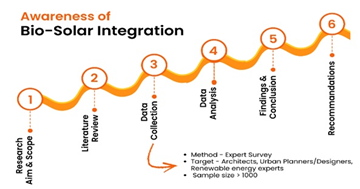
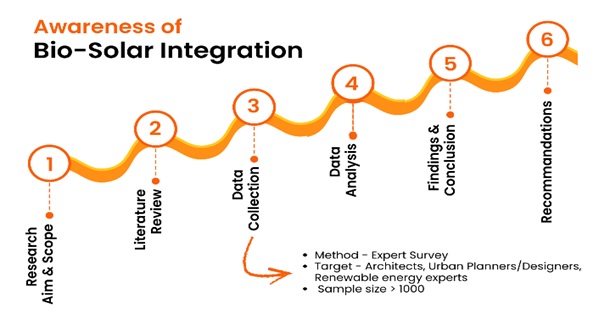
This study employs a sequential explanatory mixed-methods design, anchored by a structured expert survey, to investigate sectoral awareness and translational barriers regarding bio-solar rooftop integration in Indian urban contexts. The methodology is designed to address the research objectives of benchmarking knowledge gradients and mapping constraints to practice. Figure 1 shows the research methodology chart.
3.1. Research DesignThe study adopts a cross-sectional, descriptive, and analytical design. A quantitative survey forms the primary data collection phase, providing broad, generalizable insights into awareness levels and perceived barriers across sectors. This is supplemented by qualitative insights from open-ended survey questions and follow-up interviews, which add depth and nuance to the quantitative findings, facilitating a more comprehensive understanding of the "why" behind the observed trends.
3.2. Population, Sampling Frame, and SampleTarget Population: Professionals actively engaged in the conceptualization, design, approval, or implementation of sustainable urban solutions in India. This is stratified into three key sectors:
• Architects (registered with the Council of Architecture, India).
• Urban Planners/Designers (members of the Institute of Town Planners, India, or professionals in municipal planning authorities/private firms).
• Renewable Energy Experts (professionals from solar energy firms, energy consultancies, and sustainability researchers with a focus on built-environment applications).
Sampling Technique: A purposive and snowball sampling strategy is employed. Initial respondents are identified through professional directories, LinkedIn searches using standardized keywords, and referrals from academic and industry networks. This non-probability technique is deemed appropriate given the study's focus on "expert" knowledge and the challenge of accessing a definitive sampling frame.
Sample Size: A target sample of N = 1000 completed responses (approx. 500 architects, 300 urban designers and rest for renewable energy experts) is set. This aims to ensure sufficient statistical power for between-group comparisons while acknowledging the practical constraints of surveying specialized professionals.
3.3. Survey Instrument Design & ValidationThe survey instrument is a structured questionnaire divided into four sections, designed for online administration (via Google Forms).
Section A: Demographic and Professional Profile: Captures sector, years of experience, geographical focus, and prior exposure to green roofs, solar PV, or integrated systems.
Section B: Awareness and Knowledge Assessment: Uses a combination of Likert-scale items and direct knowledge-check questions to benchmark awareness. This includes:
• Perceived Awareness: Self-rated familiarity with the concept of bio-solar roofs.
• Technical Knowledge: Questions on understanding core benefits (e.g., PV cooling effect, biodiversity synergy), suitable plant types, and system configurations.
• Policy Awareness: Knowledge of relevant national/state policies, building codes, and financial incentives that could support integration.
Section C: Open-ended Qualitative Responses: Invites respondents to elaborate on the most critical barrier in their view and suggest one policy or market intervention to accelerate adoption.
Pre-Testing and Validation: The questionnaire is pre-tested with a pilot group of 15 professionals (5 from each sector) to assess clarity, terminology, and logical flow. Content validity is established through review by two academic experts in sustainable urban systems. Reliability of scaled sections is assessed using Cronbach's Alpha post-data collection.
3.4. Data Collection ProcedureAn invitation email with a personalized note, explaining the study's purpose and ensuring confidentiality, is sent to potential respondents. The survey link is activated for eight weeks, with two reminder emails sent at the 3rd and 6th weeks to enhance response rates. Upon completion of the survey, respondents are invited (via a separate opt-in) to participate in a brief, semi-structured follow-up interview to deepen insights into barriers.
3.5. Data Analysis PlanDescriptive Statistics: Frequencies, means, and standard deviations to profile the sample and summarize awareness/efficacy scores.
Inferential Statistics: Benchmarking knowledge: One-way Analysis of Variance (ANOVA) with post-hoc tests to identify statistically significant differences in mean knowledge scores across the three professional sectors. Responses from open-ended questions and interview transcripts analyzed using inductive thematic analysis.
3.6. Ethical ConsiderationsInformed consent is obtained at the beginning of the online survey. Anonymity and confidentiality of responses are strictly maintained; data is reported only in aggregate form. The study protocol is reviewed and approved by the relevant institutional ethics committee.
This section presents the analysis and findings from the expert survey conducted with architects, urban planners/designers, and renewable energy professionals across India. The data, comprising more than 1000 validated responses, provides empirical evidence to stratify sector-specific knowledge and map the critical barriers inhibiting the translation of awareness into practice.
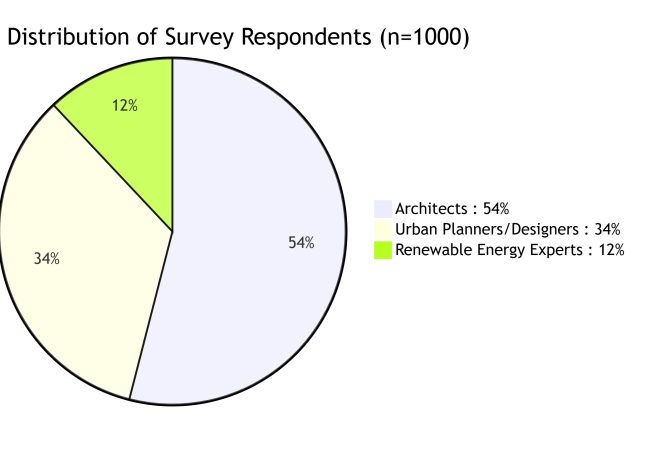
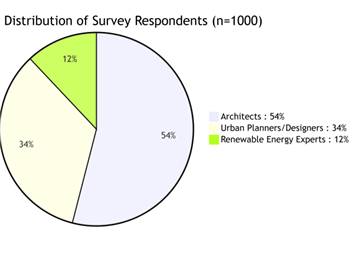
4.1. Demographic and Experiential Profile of RespondentsThe survey captured a diverse cohort of professionals with significant experience in sustainable design. Of the almost 1000 respondents, 54% identified as Architects, 34% as Urban Planners/Designers, and 12% as Renewable Energy/Solar PV Experts (Figure 2). A majority (62%) reported 10-20 years of professional experience, indicating that responses are grounded in substantial practice. Geographically, the sample was well-distributed, with 28% from North India, 24% from South India, 18% from West India, 12% from East India, and 18% reporting a Pan-India scope of work (Figure 3). This distribution mitigates regional bias and suggests findings are broadly representative of urban India.
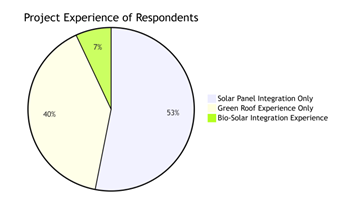
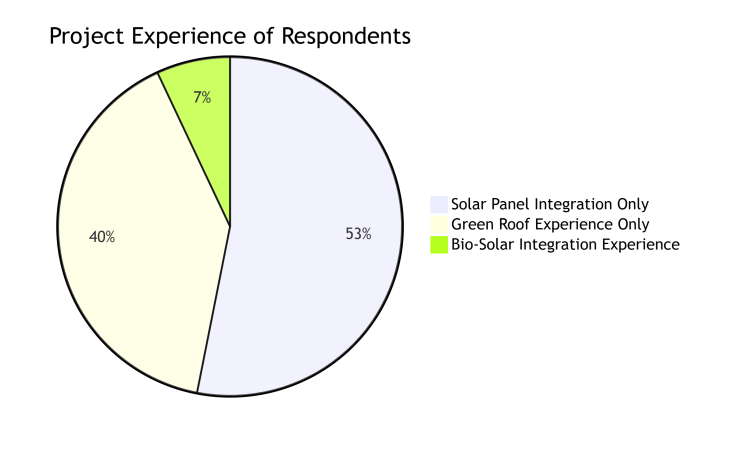
A foundational analysis of project experience revealed a significant disconnect: while 78% of all respondents had been involved in projects with solar panel integration, and 61% in projects with green roofs, only 9% had direct experience with integrated bio-solar rooftop projects. This chasm between experience in singular technologies and their synergy underscores the nascent stage of adoption 19.
4.2. Stratified Awareness and Knowledge GradientsThe data reveals a clear, statistically significant gradient in both awareness and technical knowledge across professional sectors, addressing Research Objective 1.
Knowledge of Core Synergistic Benefit: A critical knowledge-check was embedded in the survey description and subsequent questions. When selecting advantages (Q14), 92% of Renewable Energy Experts correctly identified "Enhanced solar panel efficiency due to cooling from vegetation" as a key benefit, compared to 76% of Architects and only 58% of Urban Planners. This indicates that the fundamental technical synergy—the cooling effect of vegetation on PV performance—is not uniformly understood, with Urban Planners displaying a pronounced knowledge gap in this technical efficacy.
Awareness of Supportive Policy Frameworks: Policy awareness was uniformly low but varied by sector (Q18). A mere 23% of all respondents were aware of any policies promoting bio-solar integration specifically. Breaking this down, Energy Experts showed marginally higher awareness (31%), likely due to their engagement with solar subsidies, while Architects (21%) and Urban Planners (19%) were largely unaware. This highlights a critical systemic failure: the professionals responsible for design and urban policy are not cognizant of potential policy levers, real or needed.
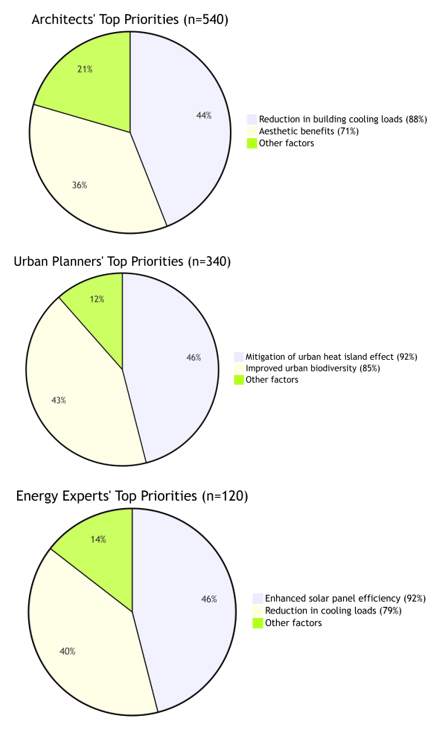
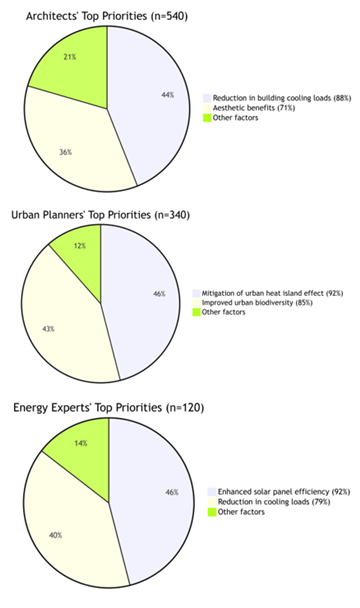
4.3. Perceived Efficacy and Advantage PrioritiesRespondents overwhelmingly perceived bio-solar roofs as effective, with 81% rating them as "Highly" or "Moderately" effective in improving urban energy efficiency (Q13). However, sectoral priorities for advantages diverged, revealing differing professional lenses (Figure 4).
• Architects prioritized Reduction in building cooling loads (88% selection) and Aesthetic benefits (71%).
• Urban Planners focused strongly on Mitigation of urban heat island effect (92%) and Improved urban biodiversity (85%).
• Energy Experts overwhelmingly selected Enhanced solar panel efficiency (92%) and Reduction in cooling loads (79%).
This divergence is not contradictory but rather highlights the multifaceted value proposition of the technology. However, it also suggests that cross-sectoral communication may be hampered by differing core value metrics—energy yield, microclimate regulation, or building performance.
The data elucidates a complex web of barriers, categorisable into cognitive, technical, economic, and institutional domains, directly addressing Research Objective 2.
Primary Technical Challenges (Q15): Across all sectors, "Maintenance of vegetation beneath solar panels" was the foremost technical concern (selected by 74% of respondents), followed by "Structural load-bearing capacity" (68%). Energy Experts expressed significantly higher concern regarding "Compatibility between PV systems and green roof substrates" (55%) compared to Architects (32%), pointing to a specific technical knowledge gap in interdisciplinary design details.
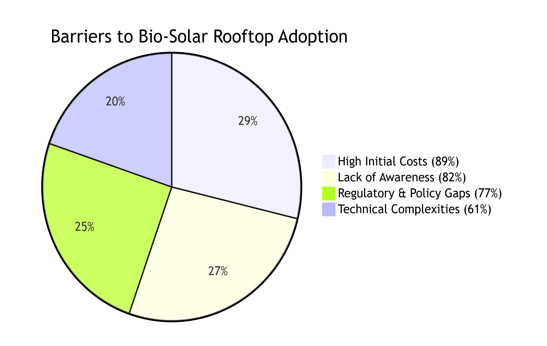
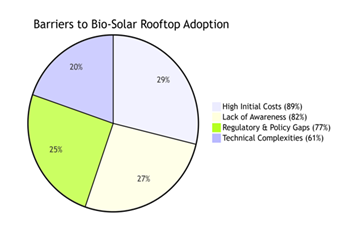
Most Critical Adoption Barriers (Q20): The barriers perceived as most critical as shown in Figure 5 were:
• High Initial Costs (Selected by 89% of all respondents).
• Lack of Awareness among Stakeholders (82%).
• Regulatory and Policy Gaps (77%).
• Technical Complexities (61%).
A cross-tabulation revealed that Urban Planners uniquely emphasized "Regulatory and Policy Gaps" (91%), aligning with their professional interface with governance systems. In contrast, Energy Experts rated "Lack of Awareness" highest (88%), often citing client and developer skepticism in their qualitative comments.
Financial and Innovation Mechanisms (Q19, Q21): To overcome cost barriers, "Subsidies for integrated solar-green roof systems" (85%) and "Tax incentives for green buildings" (80%) were deemed most effective. Notably, when asked about innovations (Q21), "AI-driven cleaning systems" and "Bifacial panels" were highly ranked by Energy Experts, suggesting a forward-looking focus on optimizing energy yield, which could be a lever for integrating vegetation as a cooling "service" to the PV system.
4.5. The Crucial Stakeholder and Collaborative PathwaysRespondents identified "Builders/Developers" (45%) and "Government Agencies" (38%) as the stakeholder groups most in need of heightened awareness (Q22). This points to the market's demand and regulatory sides as the primary blockage points.
The qualitative responses to Q23 on collaboration yielded rich, thematic insights. The predominant suggestion (coded in 62% of open responses) was the need for "Developing standardized interdisciplinary design guidelines and case studies." Professionals lamented the absence of a shared knowledge resource. The second major theme (51%) called for "Forming mandatory interdisciplinary review committees in municipal corporations" for large projects, forcing early-stage integration of energy, design, and planning perspectives. A third theme emphasized "Joint training workshops and accredited professional development courses" to build a common foundational language across the sectors.
A conspicuous gap in the existing literature is a systematic investigation into the human and institutional dimensions driving or hindering adoption. While technical potential is discussed, there is scant empirical research benchmarking the awareness levels and perceived efficacy of bio-solar integration among the key professional sectors responsible for its specification and implementation: architecture, urban planning/design, and renewable energy engineering in India 20.
Awareness is broad but shallow: While basic concept awareness is high, deep, technical understanding of the synergistic benefits—particularly the PV cooling effect—is uneven, with Urban Planners significantly lagging. This knowledge gradient impedes effective advocacy and specification.
Barriers are Multifaceted and Sectorally Perceived: High cost is a universal concern, but the secondary barriers are filtered through professional lenses: Planners see policy gaps, Energy Experts see awareness deficits, and Architects wrestle with technical maintenance concerns. This fragmentation of the problem hinders unified advocacy.
The Path Forward is Interdisciplinary Integration: The findings conclusively show that the solution does not lie solely in technological refinement or isolated policy tweaks. The overwhelming emphasis from respondents is on creating structured platforms for interdisciplinary collaboration—through guidelines, regulatory processes, and joint education—to bridge the knowledge gaps and align the disparate value priorities of each sector.
This research set out to investigate the awareness and perceived efficacy of bio-solar rooftop integration among India’s key urban professionals—architects, urban planners, and renewable energy experts—and to map the barriers preventing its translation from concept to widespread practice. The findings paint a clear and compelling picture: the promise of bio-solar rooftops as a multifunctional solution for India’s pressing urban challenges of heat, energy, and ecological degradation is widely acknowledged, yet its adoption is stalled at a critical precipice. The primary impediment is not a lack of technical potential, but a profound translational disconnect characterized by fragmented knowledge, misaligned incentives, and institutional inertia.
The survey conclusively demonstrates that while superficial awareness of the concept is high, deep, sectorally stratified knowledge gaps persist. Urban planners, crucial for policy shaping, exhibit a significant deficit in understanding the core energy synergy of PV cooling. Conversely, energy experts, while technically astute, often overlook the broader urban ecological benefits. Architects, positioned as integrators, grapple with perceived maintenance complexities. This cognitive fragmentation is compounded by an almost universal lack of hands-on project experience with integrated systems, creating a cycle where uncertainty breeds hesitation. The barriers—led by high perceived costs, but deeply rooted in policy gaps and a stark lack of stakeholder awareness—are viewed through distinct professional lenses, preventing a unified front for advocacy.
Therefore, the transition of bio-solar rooftops from a niche innovation to a mainstream urban strategy demands a coordinated, multi-pronged approach that directly addresses these translational failures. The following recommendations are derived from the study’s findings and are targeted at specific actors within the ecosystem.
Develop an Integrated Policy and Incentive Framework: Move beyond siloed policies for solar and green buildings. Introduce a specific "Bio-Solar Rooftop Subsidy and Fast-Track Approval" scheme that offers enhanced financial incentives (e.g., 5-10% additional subsidy over standalone solar) for integrated systems. This directly addresses the paramount cost barrier.
Mandate Interdisciplinary Integration in Building Codes: Amend green building certification systems (GRIHA, IGBC) and municipal building bylaws to include extra credit points or mandatory provisions for bio-solar integration in commercial and large residential complexes. Create simplified, single-window clearance protocols for such projects.
Fund and Disseminate "Living Laboratories": Sponsor the creation of 5-10 high-visibility pilot projects across different climatic zones in public buildings (metros, hospitals, universities). These will serve as crucial evidence bases for performance data, maintenance costs, and design guidelines, directly combating the knowledge deficit.
6.2. For Professional Bodies and Academic Institutions (Council of Architecture, ITPI, NIUA, Universities)Create and Disseminate Standardized Interdisciplinary Design Guidelines: Collaborate to publish the "Indian Bio-Solar Rooftop Handbook," detailing climate-appropriate plant-panel configurations, structural assessment protocols, maintenance schedules, and case studies. This provides the shared technical resource the survey identified as desperately needed.
Reform Professional Education and Accreditation: Integrate modules on bio-solar integration and multifunctional urban design into the core curricula of architecture, planning, and engineering programs. Introduce mandatory continuing professional development (CPD) courses on the topic for licensed practitioners.
Establish Cross-Sectoral Knowledge Platforms: Facilitate regular national and regional conclaves that bring together architects, planners, energy experts, horticulturists, and civil engineers to foster dialogue, share research, and build a cohesive community of practice.
6.3. For Industry and Private Sector (Developers, Consulting Firms, Solar EPC Companies)Cultivate Integrated Service Offerings: Move beyond single-technology services. Architectural and engineering firms should develop in-house expertise or form strategic partnerships to offer turnkey bio-solar design and consultancy services. Solar companies should train staff on green roof compatibility and market the combined energy yield and sustainability benefits.
Innovate in Financing and Business Models: Develop and promote Pay-As-You-Save (PAYS) or Green Lease models specifically for bio-solar retrofits in commercial spaces, mitigating upfront cost barriers. Clearly quantify and market the dual returns: energy savings + asset value enhancement through green certification.
Target Awareness Campaigns: Direct focused advocacy not just at end-clients, but crucially at real estate developers and corporate decision-makers, demonstrating the long-term economic, ESG (Environmental, Social, and Governance), and branding value of integrated sustainable infrastructure.
6.4. For Researchers and Think TanksGenerate Localized, Robust Performance Data: Prioritize longitudinal research on installed systems in India to generate definitive data on energy yield improvement percentages, microclimate impact, biodiversity enhancement, and lifecycle cost-benefit analyses. This evidence is critical for convincing skeptical stakeholders and refining technical guidelines. Focus on Socio-Economic and Governance Research: Investigate effective models for multi-tenant residential societies (the prevalent urban housing form), including governance structures for shared maintenance and benefit distribution. Study the potential for linking bio-solar systems to municipal stormwater fee credits or tradable green certificates. In essence, unlocking the potential of India’s rooftops requires a paradigm shift from viewing them as mere spaces for singular utilities to recognizing them as vital, multi-service urban infrastructure 21. This study confirms that the will exists among professionals, but the way is obstructed by systemic hurdles. By implementing these sector-specific, collaborative recommendations, India can move decisively from benchmarking awareness to catalyzing action, transforming its urban rooftops into productive, resilient, and sustainable landscapes that simultaneously power and cool its cities.
While this study establishes a crucial baseline on sectoral awareness and perceived barriers, it simultaneously reveals specific gaps that demand targeted future investigation. The path to mainstreaming bio-solar rooftops in India must be paved with evidence-based research that directly addresses the constraints identified. First, there is an urgent need for longitudinal, performance-based research within the Indian climatic context. Rigorous empirical studies measuring the quantifiable co-benefits—such as the precise percentage increase in PV efficiency due to vegetative cooling, the reduction in peak indoor temperatures, and stormwater retention capacity—are essential. This localized performance data is the critical ammunition needed to combat perceived high costs with concrete return-on-investment models and to persuade skeptical developers and financial institutions. Second, future research must adopt a socio-technical and governance-oriented lens. Studies should investigate effective business and ownership models, particularly for multi-tenant residential societies which dominate Indian urban housing. Research into innovative financial mechanisms, such as green bonds for retrofits or pay-as-you-save schemes tailored for integrated systems, is vital. Furthermore, policy analysis should move beyond identifying gaps to designing actionable regulatory frameworks, including standardized technical guidelines for municipal approval and integration with existing urban missions like the Smart Cities initiative.
This research would not have been possible without the generous contributions of time, expertise, and insights from numerous professionals across India. I extend my deepest gratitude to all the architects, urban planners, urban designers, and renewable energy experts who participated in this study.
| [1] | Alexandri, E., & Jones, P. Temperature decreases in an urban canyon due to green walls and green roofs in diverse climates. Building and Environment, *43*(4), page 480-493. (2008). | ||
| In article | View Article | ||
| [2] | Avitesha, B. D. T. S. "Bio Solar Terrace: A Review on Benefits of Photovoltaic Green Roof." New Arch-international Journal of Contemporary Architecture 7, page 81-107. (2020). | ||
| In article | |||
| [3] | Besir, A. B., &Cuce, E. Green roofs and facades: A comprehensive review. Renewable and Sustainable Energy Reviews, *82*, page 915-939. (2018). | ||
| In article | View Article | ||
| [4] | Chemisana, D., &Lamnatou, C. Photovoltaic-green roofs: A review of benefits, limitations, and trends. Solar Energy Materials and Solar Cells, *130*, page 515-526. (2014). | ||
| In article | |||
| [5] | D’Orazio, M., Di Perna, C., & Di Giuseppe, E. The effects of vegetation on the thermal performance of green roofs and of photovoltaic panels on green roofs. Energy and Buildings, *173*, page 389-401. (2018). | ||
| In article | |||
| [6] | Jaffal, I., Ouldboukhitine, S. E., &Belarbi, R. A comprehensive study of the impact of green roofs on building energy performance. Renewable Energy, *43*, page 157-164. (2012). | ||
| In article | View Article | ||
| [7] | Köhler, M., Schmidt, M., &Laar, M. Green roofs as a contribution to reduce urban heat islands. In Proceedings of World Climate & Energy Event. page. 1-6. (2002). | ||
| In article | |||
| [8] | Lamnatou, C., & Chemisana, D. Photovoltaic/thermal (PV/T) systems: Principles, design, and applications. Solar Energy page. 233-276. (2017). | ||
| In article | |||
| [9] | Nagendra, H., & Gopal, D. Street trees in Bangalore: Density, diversity, composition and distribution. Urban Forestry & Urban Greening, *9*(2), page 129-137. (2010). | ||
| In article | View Article | ||
| [10] | Nayak, Avitesh Vaishnavi, and Tejwant Singh Brar. "Life Cycle Assessment of Solar Panels: Environmental Impacts from Production to Disposal." International Journal of Environmental Planning and Development Architecture, no. 2: page 33-38. (2025). | ||
| In article | |||
| [11] | Oberndorfer, E., Lundholm, J., Bass, B., Coffman, R. R., Doshi, H., Dunnett, N., & Rowe, B. Green roofs as urban ecosystems: ecological structures, functions, and services. Bio Science, *57*(10), page 823-833. (2007). | ||
| In article | View Article | ||
| [12] | Patel, S., & Sharma, M. Urban heat island effect and mitigation strategies in Indian cities: A review. Urban Climate, *32*, page 100- 108. (2020). | ||
| In article | View Article | ||
| [13] | Pérez, G., Coma, J., Solé, C., & Cabeza, L. F. Green roofs as passive system for energy savings in buildings during the cooling period: Use of rubber crumbs as drainage layer. Energy Efficiency, *9*(1), page 81-93. (2016). | ||
| In article | |||
| [14] | Shafique, M., Kim, R., & Rafiq, M. Green roof benefits, opportunities and challenges – A review. Renewable and Sustainable Energy Reviews, *90*, page 757-773. (2018). | ||
| In article | View Article | ||
| [15] | Singh, R., & Kaur, M. Barriers to adoption of rooftop solar photovoltaic systems in India: A stakeholder analysis. Energy Policy, *149*, page 112-119. (2021). | ||
| In article | |||
| [16] | Stern, N. The Economics of Climate Change: The Stern Review. Cambridge University Press. (2006). | ||
| In article | View Article | ||
| [17] | Susca, T., Gaffin, S. R., & Dell'Osso, G. R. Positive effects of vegetation: Urban heat island and green roofs. Environmental Pollution, *159*(8-9), page 2119-2126. (2011). | ||
| In article | View Article PubMed | ||
| [18] | Wong, N. H., Chen, Y., Ong, C. L., & Sia, A. Investigation of thermal benefits of rooftop garden in the tropical environment. Building and Environment, *38*(2), page 261-270. (2003). | ||
| In article | View Article | ||
| [19] | Chomal N. S., Ahmad S., Mahalik A., Banta M., Kamal Arif M. Viability Analysis of Building Integrated Photovoltaic System for Energy Efficiency in Residential Buildings, Indian Journal of Environmental Protection, 45 (12), 1133-1141, 2025. | ||
| In article | |||
| [20] | Jain R., Brar T. S. and Kamal Arif M., Strategies to Reduce Urban Heat Island Effect in Compact Low Rise Density Residential Areas of Delhi, India, Russian Journal of Building Construction and Architecture, 4(8), 2025. | ||
| In article | View Article | ||
| [21] | Desai D., Modi S., Kumar L and Kamal Arif M., Net Zero Energy Retrofitting Strategies for Low-Rise Row Housing: The Case of Nashik, India, Architecture Engineering and Science, 6(3), pp.331-346, 2025. | ||
| In article | View Article | ||
Published with license by Science and Education Publishing, Copyright © 2026 Avitesh, Tejwant Singh Brar, Rajiv Garg and Mohammad Arif Kamal
 This work is licensed under a Creative Commons Attribution 4.0 International License. To view a copy of this license, visit
http://creativecommons.org/licenses/by/4.0/
This work is licensed under a Creative Commons Attribution 4.0 International License. To view a copy of this license, visit
http://creativecommons.org/licenses/by/4.0/
| [1] | Alexandri, E., & Jones, P. Temperature decreases in an urban canyon due to green walls and green roofs in diverse climates. Building and Environment, *43*(4), page 480-493. (2008). | ||
| In article | View Article | ||
| [2] | Avitesha, B. D. T. S. "Bio Solar Terrace: A Review on Benefits of Photovoltaic Green Roof." New Arch-international Journal of Contemporary Architecture 7, page 81-107. (2020). | ||
| In article | |||
| [3] | Besir, A. B., &Cuce, E. Green roofs and facades: A comprehensive review. Renewable and Sustainable Energy Reviews, *82*, page 915-939. (2018). | ||
| In article | View Article | ||
| [4] | Chemisana, D., &Lamnatou, C. Photovoltaic-green roofs: A review of benefits, limitations, and trends. Solar Energy Materials and Solar Cells, *130*, page 515-526. (2014). | ||
| In article | |||
| [5] | D’Orazio, M., Di Perna, C., & Di Giuseppe, E. The effects of vegetation on the thermal performance of green roofs and of photovoltaic panels on green roofs. Energy and Buildings, *173*, page 389-401. (2018). | ||
| In article | |||
| [6] | Jaffal, I., Ouldboukhitine, S. E., &Belarbi, R. A comprehensive study of the impact of green roofs on building energy performance. Renewable Energy, *43*, page 157-164. (2012). | ||
| In article | View Article | ||
| [7] | Köhler, M., Schmidt, M., &Laar, M. Green roofs as a contribution to reduce urban heat islands. In Proceedings of World Climate & Energy Event. page. 1-6. (2002). | ||
| In article | |||
| [8] | Lamnatou, C., & Chemisana, D. Photovoltaic/thermal (PV/T) systems: Principles, design, and applications. Solar Energy page. 233-276. (2017). | ||
| In article | |||
| [9] | Nagendra, H., & Gopal, D. Street trees in Bangalore: Density, diversity, composition and distribution. Urban Forestry & Urban Greening, *9*(2), page 129-137. (2010). | ||
| In article | View Article | ||
| [10] | Nayak, Avitesh Vaishnavi, and Tejwant Singh Brar. "Life Cycle Assessment of Solar Panels: Environmental Impacts from Production to Disposal." International Journal of Environmental Planning and Development Architecture, no. 2: page 33-38. (2025). | ||
| In article | |||
| [11] | Oberndorfer, E., Lundholm, J., Bass, B., Coffman, R. R., Doshi, H., Dunnett, N., & Rowe, B. Green roofs as urban ecosystems: ecological structures, functions, and services. Bio Science, *57*(10), page 823-833. (2007). | ||
| In article | View Article | ||
| [12] | Patel, S., & Sharma, M. Urban heat island effect and mitigation strategies in Indian cities: A review. Urban Climate, *32*, page 100- 108. (2020). | ||
| In article | View Article | ||
| [13] | Pérez, G., Coma, J., Solé, C., & Cabeza, L. F. Green roofs as passive system for energy savings in buildings during the cooling period: Use of rubber crumbs as drainage layer. Energy Efficiency, *9*(1), page 81-93. (2016). | ||
| In article | |||
| [14] | Shafique, M., Kim, R., & Rafiq, M. Green roof benefits, opportunities and challenges – A review. Renewable and Sustainable Energy Reviews, *90*, page 757-773. (2018). | ||
| In article | View Article | ||
| [15] | Singh, R., & Kaur, M. Barriers to adoption of rooftop solar photovoltaic systems in India: A stakeholder analysis. Energy Policy, *149*, page 112-119. (2021). | ||
| In article | |||
| [16] | Stern, N. The Economics of Climate Change: The Stern Review. Cambridge University Press. (2006). | ||
| In article | View Article | ||
| [17] | Susca, T., Gaffin, S. R., & Dell'Osso, G. R. Positive effects of vegetation: Urban heat island and green roofs. Environmental Pollution, *159*(8-9), page 2119-2126. (2011). | ||
| In article | View Article PubMed | ||
| [18] | Wong, N. H., Chen, Y., Ong, C. L., & Sia, A. Investigation of thermal benefits of rooftop garden in the tropical environment. Building and Environment, *38*(2), page 261-270. (2003). | ||
| In article | View Article | ||
| [19] | Chomal N. S., Ahmad S., Mahalik A., Banta M., Kamal Arif M. Viability Analysis of Building Integrated Photovoltaic System for Energy Efficiency in Residential Buildings, Indian Journal of Environmental Protection, 45 (12), 1133-1141, 2025. | ||
| In article | |||
| [20] | Jain R., Brar T. S. and Kamal Arif M., Strategies to Reduce Urban Heat Island Effect in Compact Low Rise Density Residential Areas of Delhi, India, Russian Journal of Building Construction and Architecture, 4(8), 2025. | ||
| In article | View Article | ||
| [21] | Desai D., Modi S., Kumar L and Kamal Arif M., Net Zero Energy Retrofitting Strategies for Low-Rise Row Housing: The Case of Nashik, India, Architecture Engineering and Science, 6(3), pp.331-346, 2025. | ||
| In article | View Article | ||