Empathy-driven design emphasizes the significance of comprehending and prioritizing the needs, preferences, and emotions of users during the engineering and development process. By employing human-centered approaches, engineers can create products that not only function effectively but also enhance user experience and satisfaction. In the context of Autonomous Aerial Rescue Vehicles (AARVs), this approach becomes particularly crucial, as the vehicle's design must accommodate a diverse group of users, including medical personnel, patients, and rescue teams in high-pressure, emergency situations. The incorporation of ergonomics is fundamental to ensuring that both patients and medical staff experience comfort and safety during transit. For patients, this entails designing vehicles that minimize physical strain, accommodate various body types, and ensure stability during flight. Medical personnel must also have access to essential medical tools and equipment without being impeded by confined or awkward spaces, as they need to operate efficiently during emergencies. Alongside ergonomics, psychological dynamics play an equally significant role. In stressful, high-stakes situations, the design of the AARV must consider the psychological comfort of patients and crew, aiming to mitigate anxiety and stress. This could include features such as calming lighting, noise reduction, and optimized seating for patient stability. This paper examines how empathy-driven design can foster these considerations, providing practical guidelines to ensure that AARVs are not only operationally effective but also user-friendly and adaptable to the needs of both patients and medical teams, ultimately enhancing their acceptance and effectiveness in real-world emergencies.
Emergency response systems are essential for minimizing casualties and enhancing survival rates during disasters or emergencies. These systems, including ambulances, helicopters, and medical teams, are designed to provide rapid assistance, life-saving interventions, and transportation for those in need. However, despite advancements in technology and infrastructure, response times often remain delayed due to factors such as urban congestion, poor road conditions, and geographical barriers 1. In densely populated urban areas, such delays can be aggravated by traffic congestion and overcrowded streets, further hindering timely medical assistance. This is particularly problematic in regions with complex terrains, such as border areas, where road access is limited, making it challenging for traditional emergency medical services (EMS) to operate efficiently 2.
To address these challenges, the development of Autonomous Aerial Rescue Vehicles (AARVs) is being explored as a potential solution. AARVs are designed to bypass ground-level traffic and navigate challenging landscapes, offering the capability to deliver emergency medical services in a fraction of the time compared to conventional methods. By traversing congested areas and accessing remote locations, AARVs have the potential to significantly reduce response times and improve survival rates during critical moments. However, the successful integration of AARVs into emergency response systems extends beyond overcoming technical and logistical barriers. The design of these vehicles must also account for the physical and psychological needs of both the patients being transported and the medical personnel operating the vehicle. Empathy in design plays a crucial role in ensuring that the AARVs are not only technologically advanced but also user-centric. The ergonomic design of the vehicle is essential to provide comfort and support during high-stress situations, minimizing physical strain on medical personnel and patients alike 3. Additionally, psychological considerations, such as reducing anxiety and fostering trust in the technology, are critical for improving patient outcomes and enhancing the effectiveness of medical interventions. Ensuring that the design of the AARVs aligns with these human-centered factors will ultimately enhance operational efficiency, improve user satisfaction, and increase the overall effectiveness of emergency response efforts.
The design of Autonomous Aerial Rescue Vehicles (AARVs) plays a crucial role in ensuring the efficiency, safety, and usability of these systems in emergency response operations. One of the most vital aspects of AARV design is ergonomics, which refers to the science of designing systems, products, and processes to optimize human well-being and overall system performance. In the context of AARVs, ergonomics encompasses the integration of human-centered design principles to enhance the interaction between human operators, passengers, and the vehicle's various components. This ensures that these vehicles can effectively respond to emergencies, improve operator efficiency, and ensure user safety, even in high-pressure situations 4. The role of ergonomics in AARV design involves multiple aspects, ranging from human-machine interaction and cockpit design to accessibility and comfort for both emergency responders and victims. The following are key areas where ergonomics plays an essential role in AARV design:
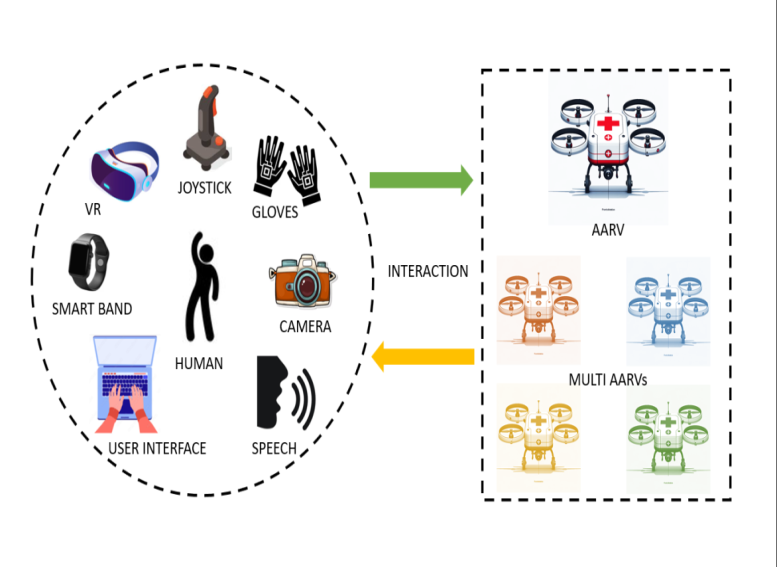
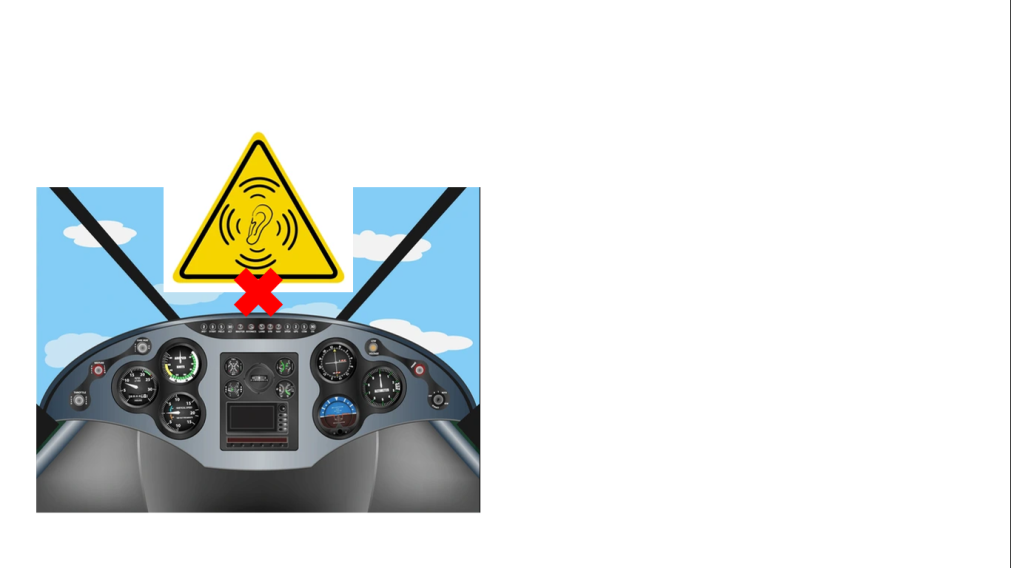
2.1. Human-Machine Interaction (HMI) and Control SystemsHuman-machine interaction is a fundamental aspect of ergonomic design in AARVs. In autonomous vehicles, the interaction between the vehicle's control system and the human operator (either remotely or on-site) is crucial. The design of control interfaces, such as joysticks, touch screens, and feedback mechanisms, significantly influences the operator's capacity to effectively control the vehicle, particularly during high-stress emergency situations 5. For instance, when an operator needs to control the vehicle remotely in a disaster zone, the control system must be intuitive and responsive. Ergonomic principles guide the placement and usability of control panels to ensure that operators do not need to exert excessive physical or cognitive effort to operate the vehicle. Controls should be designed to minimize cognitive load and enhance situational awareness, enabling operators to focus on critical decision-making 6. A user-friendly interface with clear visual and auditory cues can reduce the mental effort required to process complex information as shown in Figure 1.
The physical design of control systems should also consider factors such as hand and wrist strain. Ergonomic joysticks or steering systems, designed to align with the operator's natural range of motion, would prevent discomfort or fatigue during extended operations, thereby increasing the overall performance of the operator 7.

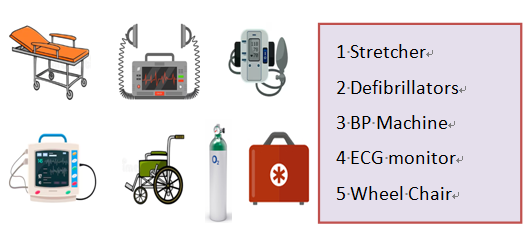
AARVs are designed to facilitate the transportation of emergency responders or injured individuals to and from disaster zones. Ergonomic principles ensure that the design of the cabin or medical compartment allows for efficient loading and unloading of casualties, as well as appropriate transport conditions. The positioning of seats, storage for medical equipment, and the accessibility of entry and exit points are all influenced by ergonomic considerations 8. For instance, when evacuating a victim, the AARV design should enable prompt and efficient access to the individual, allowing medical personnel to perform critical interventions without delay. A vehicle that is ergonomically designed will permit responders to access the casualty from multiple angles, enhancing their ability to provide care. Furthermore, the dimensions and configuration of the medical compartment should facilitate the maneuvering of medical equipment, such as stretchers, defibrillators, and oxygen tanks, without compromising space for medical personnel as shown in Figure 2 9.

The well-being of both the responders and victims is also a crucial consideration. For victims, the seating and restraints should be designed to ensure safety and comfort during transit 3. Additionally, if the AARV is intended to transport victims for extended periods, the ergonomics of the cabin, including ventilation and lighting, must be considered to minimize stress or discomfort, particularly in a high-stress environment.
2.3. Ergonomic Design for Operator Safety and EfficiencyThe design of the operator's work environment is critical to the safety and efficiency of AARVs. AARVs frequently operate in high-pressure and dynamic environments, necessitating that operators have optimal tools to perform their tasks efficiently. Ergonomics is particularly significant in terms of mitigating physical strain and enhancing cognitive function during complex tasks 10.

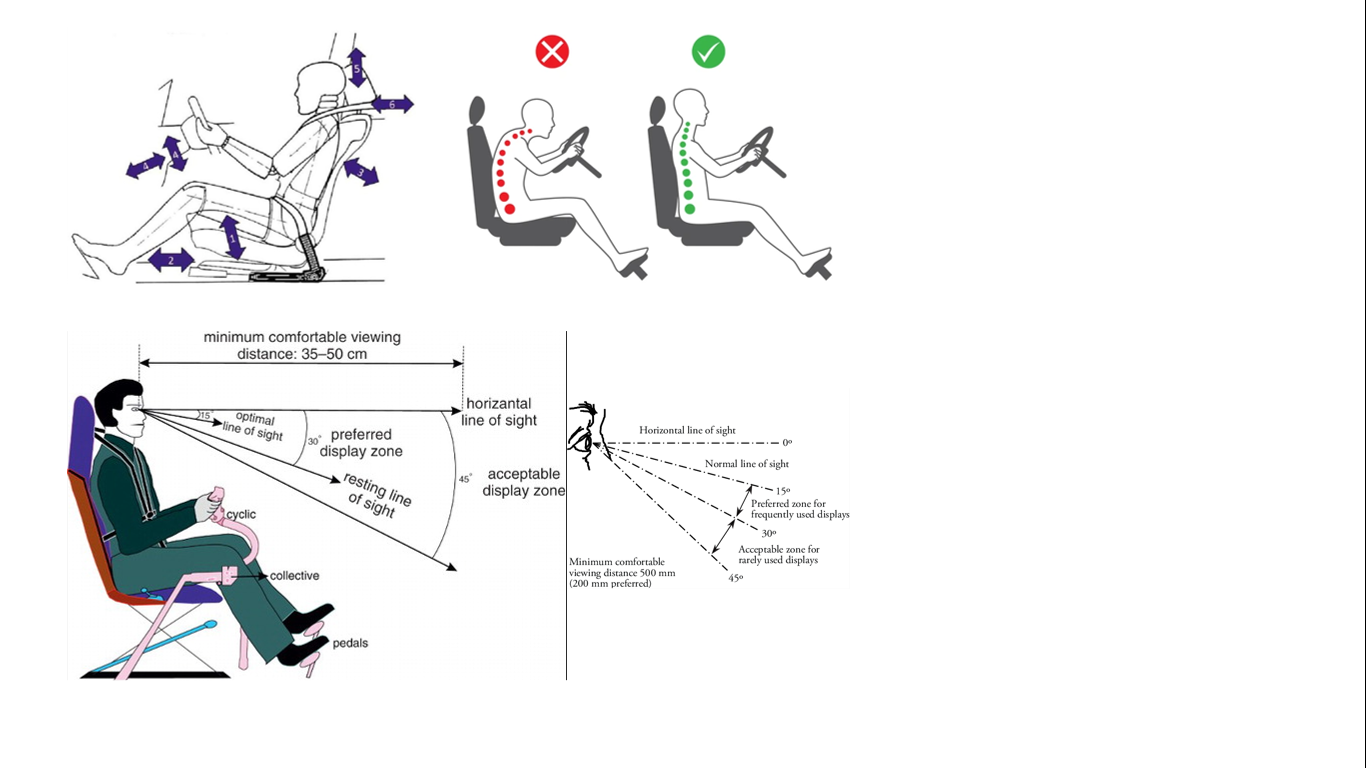
For instance, the control seat for an operator as seen in Figure 3, whether situated in a ground control station or within the vehicle, should be designed to ensure proper posture. Adjustability in seating, including the capacity to modify height, lumbar support, and seat angles, would enhance operator comfort, particularly during extended operational periods. Moreover, the design of controls and displays should enable the operator to access all essential systems with minimal movement and effort 11.

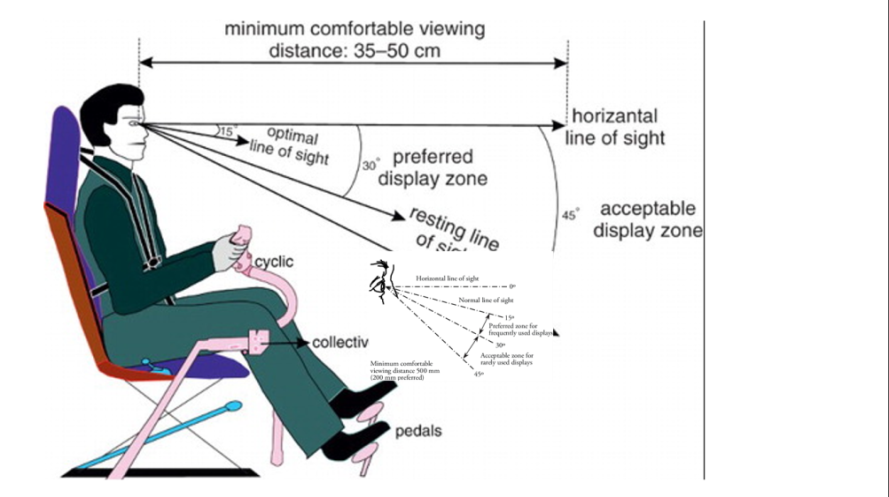
Visual ergonomics are also crucial; the display screens providing vital information to the operator, such as navigation, system status, and sensor data, should be positioned at an optimal viewing angle to prevent cervical strain and visual fatigue. Figure 4 gives the details of required visual ergonomic standards that are necessary to reduce strain and visual fatigue during long operations. Furthermore, the information displayed should be clear and concise, with color-coded alerts or warnings to draw attention to critical issues without overwhelming the operator with extraneous details.
2.4. Designs for Stressful and High-Risk EnvironmentsEmergency response operations are inherently stressful and high-risk, necessitating rapid decision-making and effective execution 12. Ergonomic design in AARVs ensures that the vehicle can be utilized safely and efficiently, even under intense pressure. This encompasses not only the physical configuration of the vehicle but also how it supports the cognitive functions of its operators. For instance, the cabin of an AARV should be designed to minimize acoustic disturbances and vibrations, both of which can lead to distractions and psychological stress. Excessive noise levels during flight can impede communication and hinder an operator's cognitive clarity, while vibrations can result in physical discomfort or fatigue. Effective ergonomic design ensures that these elements are mitigated through soundproofing and vibration-damping technologies 13.

Furthermore, the design of emergency procedures and control interfaces should take into account the high-pressure nature of rescue operations. Emergency controls should be readily accessible and operable under duress, ensuring that the operator can swiftly implement critical actions such as deploying rescue equipment or activating emergency protocols.
Psychological considerations in the design of Autonomous Aerial Rescue Vehicles (AARVs) play a crucial role in ensuring their effectiveness in emergency response scenarios. These vehicles are intended to assist in disaster-stricken or high-risk areas, often involving high-stress, life-threatening situations 14. Understanding and integrating psychological principles into their design can significantly enhance the vehicle's operational success and improve outcomes for both the victims and the rescue personnel. One of the primary psychological factors in AARV design is user experience (UX) for the operators. The operators of these vehicles, whether human rescue teams or remotely controlling personnel, must be able to interact intuitively with the system. AARV design must incorporate elements that support decision-making under stress, reduce cognitive overload, and promote efficient, clear, and effective communication 15. For instance, an operator may need to navigate through dense urban areas or disaster zones where visibility is limited. The design of the vehicle's interface should prioritize clarity, with visual and auditory cues that provide immediate feedback and guide the operator to make decisions expeditiously, without overwhelming them with excessive data 16. A practical example of this would be the design of a rescue vehicle interface utilized by emergency teams in disaster zones. If the interface includes real-time updates on the rescue operation's progress and alerts for potential obstacles or hazards, the operator can maintain situational awareness and adapt swiftly.
Additionally, minimizing the number of manual inputs required to control the vehicle allows the operator to focus on critical tasks, enhancing operational efficiency. Moreover, psychological considerations also extend to the design of the AARV's interactions with victims. The vehicle's visual and auditory signals should be designed to communicate safety and reassurance to those being rescued. For instance, flashing lights and a calm, non-threatening voice may be employed to signal to victims that they are being assisted. The psychological comfort of the victims during an emergency can often be the determining factor between panic and cooperation, which is crucial for the success of the rescue mission 17. In terms of rescue operations, the design of AARVs should also consider human factors related to stress, fatigue, and the emotional state of rescue workers. In a disaster zone, rescuers may experience mental and physical exhaustion, as well as stress due to the high-stakes nature of saving lives. AARVs can be equipped with ergonomic features that mitigate the physical strain on the rescue team and enhance their ability to operate the vehicle effectively over extended periods. For instance, the design of the AARV cockpit, or the remote-control interface for drone-based systems, should ensure that operators are positioned to minimize musculoskeletal strain, with controls that reduce effort for prolonged tasks. Furthermore, integrating artificial intelligence systems that anticipate the operators' needs based on their actions and inputs can diminish the psychological burden 16. If an AI-assisted AARV can predict and prepare the necessary actions for the operators, it could alleviate the cognitive load on the human operator, potentially ensuring more accurate responses and fewer errors during critical moments. Finally, there is also the aspect of trust in autonomous systems. Rescue personnel and victims must have confidence that the AARV will perform reliably. This trust is developed through transparency in the vehicle's actions and providing adequate training for human operators. The more familiar the operator becomes with the AARV's responses and behaviours, the more likely they are to rely on it, particularly in high-stress situations.
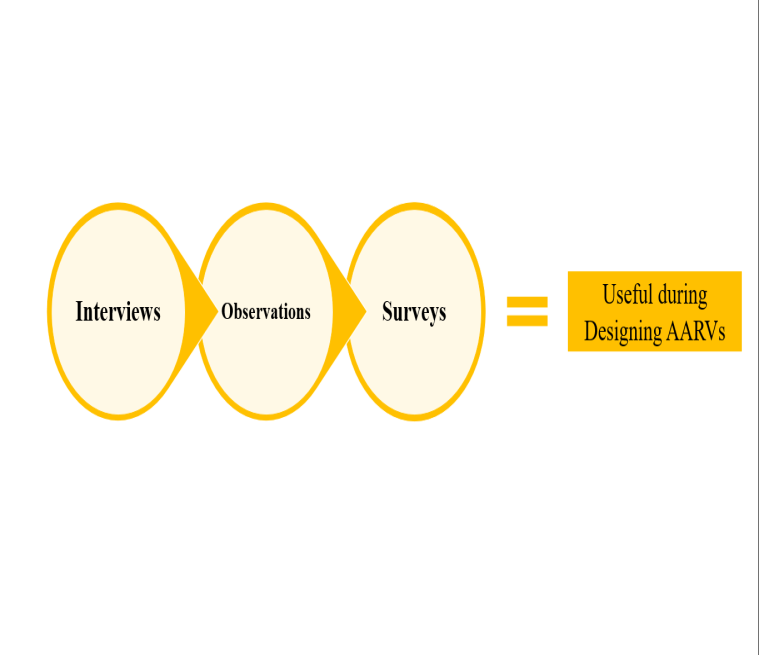
Empathy in the design process refers to the capacity to comprehend and share the sentiments, requirements, and experiences of the end users for whom the design is being developed. It constitutes a fundamental principle in human-centered design, wherein the primary focus is on addressing problems and creating solutions that cater to the specific needs of individuals, communities, or organizations. The process of integrating empathy in design extends beyond merely anticipating user preferences; it involves immersing oneself in their lives to gain a comprehensive understanding of their challenges, aspirations, and emotions 18. This approach leads to designs that resonate profoundly with users and are more likely to provide meaningful and efficacious solutions. One method of incorporating empathy in the design process is through user research. This can encompass techniques such as interviews, observations, and surveys, all aimed at gathering real-life experiences from the target audience as shown in Figure 6. For instance, when designing a healthcare product, designers might allocate time in hospitals or clinics, engaging with patients, doctors, and nurses to comprehend their pain points 19. By observing how users interact with existing solutions or how they manage certain challenges, designers can identify gaps and unmet needs. This insight guides the creation of designs that enhance user experiences.

For example, when designing medical equipment for elderly patients, a company might incorporate larger buttons, simplified interfaces, or more accessible placement to accommodate physical limitations such as arthritis or impaired vision. Another illustration of empathy in design can be observed in the development of assistive technologies. A designer working on hearing aids, for instance, would immerse themselves in the daily lives of individuals with hearing loss. Understanding how their users navigate environments such as busy streets, public transportation, or social gatherings allows designers to develop hearing aids that not only amplify sound but also filter out background noise 20. This ensures that users can have a more comfortable and functional experience, addressing their specific needs and challenges. In this scenario, the designer must empathize with both the physical limitations of the users and the emotional impact of hearing loss, which often results in isolation or frustration.
Empathy in design also involves prototyping and testing. After gathering insights from users, designers create prototypes of their solutions, which are then tested with real users. This iterative process allows designers to refine their ideas based on actual feedback 21. For example, when designing an app for parents to track their children's health, the designers might first create a basic version of the app, test it with a group of parents, and refine the interface or functionality based on their input. This continuous cycle of empathizing with users and refining the design ensures that the final product is truly responsive to user needs. Incorporating empathy also means designing for inclusivity. Designers must consider diverse user needs, including people with disabilities, varying cultural backgrounds, and different social contexts. An example is the design of universal design principles in public spaces, like ramps, elevators, and accessible toilets, which accommodate people with mobility issues. These features not only meet regulatory standards but also reflect an empathetic approach to creating spaces where everyone, regardless of ability, can navigate freely.
Empathy-driven design plays a crucial role in ensuring the efficacy of Autonomous Aerial Rescue Vehicles (AARVs) in emergency response scenarios. In contrast to conventional vehicle designs, which often prioritize technical specifications and operational efficiency, empathy-driven design focuses on comprehending and addressing the emotional, psychological, and ergonomic needs of the end-users, including emergency responders, victims, and the general public. By incorporating empathy into the design process, AARVs can facilitate improved user satisfaction, trust, and performance, ultimately leading to enhanced outcomes in critical situations. In emergency scenarios, where time is of the essence, the design of an AARV must prioritize both functionality and user interaction efficiency. For emergency responders, this necessitates creating an interface and control system that is intuitive, minimizes cognitive load, and facilitates rapid decision-making 22.
For instance, if an AARV is deployed in a disaster-stricken area, a pilot or operator should be able to access pertinent information—such as the vehicle's location, fuel levels, and casualty information—without being overwhelmed by complex commands or visual distractions. A well-designed control panel, ergonomically arranged, can reduce stress and improve the operator's reaction time, thus enhancing operational efficiency. The psychological needs of responders must also be considered. Emergency workers often experience high-stress situations, and incorporating empathy into the design can improve their mental well-being. For example, integrating user feedback during the development stage to understand the emotional strains faced by responders could lead to the inclusion of features such as calming sounds, clear visual cues and non-distracting interfaces that help them maintain focus during operations. Such design considerations can significantly reduce mental fatigue and burnout, fostering higher trust and satisfaction with the technology. For the victims or individuals being rescued, the design of AARVs must prioritize comfort and psychological reassurance. When a person is in distress due to an emergency, the design of the AARV's cabin should create a calming, secure environment.
For example, soft lighting, adjustable seating, and even personalized air circulation systems can alleviate anxiety and improve the overall experience of being rescued. In a scenario where an AARV is transporting a patient to safety, design elements such as easy-to-navigate stretchers, user-friendly communication systems, and minimal turbulence can make the ride less jarring and more comfortable, fostering trust in the vehicle's ability to deliver them to safety. Furthermore, future research should explore cutting-edge technologies such as artificial intelligence (AI) and virtual reality (VR) to enhance the user experience and operational efficiency of AARVs. AI has the potential to greatly improve the adaptability and response time of autonomous vehicles by allowing them to learn from their surroundings, predict challenges, and optimize routes based on real-time conditions. In a disaster setting, AI could assist by analyzing data from various sensors on the AARV, such as environmental conditions, and adjusting its actions accordingly, thus improving both performance and safety.
Virtual reality can also play a significant role in training operators and responders, enabling them to immerse themselves in simulated emergency environments 23. This approach would facilitate users' familiarization with the AARV's operations and emergency procedures in a controlled setting, thereby enhancing their confidence and effectiveness in real-world situations. Furthermore, VR can be utilized to simulate high-stress scenarios, assisting responders in developing emotional resilience and decision-making skills, thus further augmenting the efficacy of the AARV in critical situations 24. Hence, empathy-driven design is fundamental for the efficacy of AARVs in emergency response, as it considers the ergonomic and psychological requirements of users, ultimately improving satisfaction, trust, and performance. By incorporating emerging technologies such as AI and VR, future research can further optimize the design of these vehicles to ensure they meet the complex demands of disaster response while supporting the emotional and mental well-being of both operators and victims.
The authors thank their colleagues for their feedback and acknowledge the insights provided by the medical professionals and emergency response personals, which greatly contributed to the ergonomics focus of this study.
| [1] | S. Krishnan, I. Patnaik, “Health and Disaster Risk Management in India,” 2020, pp. 155–184. | ||
| In article | View Article | ||
| [2] | N. Aamareswaran, “Problems of North-East People in Metro Cities of India: Need of Human Values for Happy and Healthy Life,” IRA International Journal of Education and Multidisciplinary Studies (ISSN 2455-2526), vol. 7, no. 2, p. 103, May 2017. | ||
| In article | View Article | ||
| [3] | P. Vanucci, “Design concept for the Interior of an ambulance through the guidance to the functionality and ergonomics”. | ||
| In article | |||
| [4] | Y. Zhang, Y. Sun, Y. Chen, “A framework for ergonomics design of transport category airplane cockpit,” in Procedia Engineering, Elsevier Ltd, 2014, pp. 573–580. | ||
| In article | View Article | ||
| [5] | Y. Cai, Y. Lu, “Current study on human-computer interaction in machine learning,” Applied and Computational Engineering, vol. 36, no. 1, pp. 77–83, Feb. 2024. | ||
| In article | View Article | ||
| [6] | K. W. Williams, “8. Human Factors Implications of Unmanned Aircraft Accidents: Flight-Control Problems,” 2006. | ||
| In article | View Article | ||
| [7] | M. Adawy, H. Abualese, N. K. T. El-Omari, A. Alawadhi, “Human-Robot Interaction (HRI) using Machine Learning (ML): a Survey and Taxonomy,” International Journal of Advances in Soft Computing and its Applications, vol. 16, no. 3, pp. 183–213, 2024. | ||
| In article | View Article | ||
| [8] | J. Bethanney Janney, J. Premkumar, S. Krishnakumar, S. Aishvariya Shivani, E. Atchaya, P. Grace Kanmani, “Air Ambulance Drone for Medical Surveillance,” in Journal of Physics: Conference Series, Institute of Physics, 2022. | ||
| In article | View Article | ||
| [9] | M. Dadfarnia, Y. Tina Lee, D. Kibira, A. B. Feeney, “Requirements analysis for safer ambulance patient compartments,” in Procedia Computer Science, Elsevier B.V., 2013, pp. 601–610. | ||
| In article | View Article | ||
| [10] | J. Hussain, N. Al-Masoody, A. Alsuraihi, F. Almogbel, A. Alayed, “Enhancing the Quality of Ambulance Crew Work by detecting Ambulance Equipment using Computer Vision and Deep Learning,” Engineering, Technology and Applied Science Research, vol. 14, no. 4, pp. 15439–15446, Aug. 2024. | ||
| In article | View Article | ||
| [11] | H. Benzerouk, A. Knyazhsky, A. Nebylov, V. Nebylov, “Control of a group of low-flying vehicles near the waved sea surface in order to minimize their average altitude,” Elsevier B.V., Jan. 2018, pp. 69–74. | ||
| In article | View Article | ||
| [12] | S. H. Alsamhi et al., “UAV Computing-Assisted Search and Rescue Mission Framework for Disaster and Harsh Environment Mitigation,” Drones, vol. 6, no. 7, Jul. 2022. | ||
| In article | View Article | ||
| [13] | P. Zimroz et al., “Application of UAV in search and rescue actions in underground mine—A specific sound detection in noisy acoustic signal,” Energies (Basel), vol. 14, no. 13, Jul. 2021. | ||
| In article | View Article | ||
| [14] | E. Yucesoy, B. Balcik, E. Coban, “The role of drones in disaster response: A literature review of operations research applications,” 2024, John Wiley and Sons Inc. | ||
| In article | View Article | ||
| [15] | A. Verma et al., “Security and privacy in human-machine interaction for healthcare,” in Artificial Intelligence and Multimodal Signal Processing in Human-Machine Interaction, Elsevier, 2024, pp. 377–392. | ||
| In article | View Article | ||
| [16] | W. Sun, P. Bocchini, B. D. Davison, “Applications of artificial intelligence for disaster management,” Sep. 01, 2020, Springer. | ||
| In article | |||
| [17] | A. P. Rahvy, A. Gani, “Emergency care accessibility for road accidents victims: a review,” Emergency Care Journal, vol. 19, no. 2, Jun. 2023. | ||
| In article | View Article | ||
| [18] | J. S. Marcinkowski Atos, “Empathy at Work-Designing Tomorrow’s Workplace”. | ||
| In article | |||
| [19] | J. S. Marcinkowski Atos, “Empathy at Work-Designing Tomorrow’s Workplace”. | ||
| In article | |||
| [20] | J. Su, X. Zhu, S. Li, W. H. Chen, “AI meets UAVs: A survey on AI empowered UAV perception systems for precision agriculture,” Jan. 21, 2023, Elsevier B.V.. | ||
| In article | View Article | ||
| [21] | M. Kouprie, F. S. Visser, “A framework for empathy in design: Stepping into and out of the user’s life,” Journal of Engineering Design, vol. 20, no. 5, pp. 437–448, Oct. 2009. | ||
| In article | View Article | ||
| [22] | S. Reis, L. Pinto-Coelho, M. Sousa, M. Neto, M. Silva, “Advancing Emotion Recognition: EEG Analysis and Machine Learning for Biomedical Human–Machine Interaction,” Biomed Informatics, vol. 5, no. 1, p. 5, Jan. 2025. | ||
| In article | View Article | ||
| [23] | S. Sharma S. Sharma, “Basic life support skills training among general public – Need of the hour,” The Journal of Community Health Management, vol. 11, no. 2, pp. 40–42, Jul. 2024. | ||
| In article | View Article | ||
| [24] | A. Bangre, R. Surwade, M. Arif Kamal, “Empowering Disaster Resilience: Community-Centered Applications of Autonomous Aerial Rescue Vehicles in Disaster Management”, 1st International Conference on Smart Innovations, Engineering Systems & Design (SIESD-2025), 23-24 May 2025, Quantum University, India, 2025. | ||
| In article | |||
Published with license by Science and Education Publishing, Copyright © 2025 Abhishek M. Bangre, Kanwaljit Khas, Rupesh Surwade and Mohammad Arif Kamal
 This work is licensed under a Creative Commons Attribution 4.0 International License. To view a copy of this license, visit
http://creativecommons.org/licenses/by/4.0/
This work is licensed under a Creative Commons Attribution 4.0 International License. To view a copy of this license, visit
http://creativecommons.org/licenses/by/4.0/
| [1] | S. Krishnan, I. Patnaik, “Health and Disaster Risk Management in India,” 2020, pp. 155–184. | ||
| In article | View Article | ||
| [2] | N. Aamareswaran, “Problems of North-East People in Metro Cities of India: Need of Human Values for Happy and Healthy Life,” IRA International Journal of Education and Multidisciplinary Studies (ISSN 2455-2526), vol. 7, no. 2, p. 103, May 2017. | ||
| In article | View Article | ||
| [3] | P. Vanucci, “Design concept for the Interior of an ambulance through the guidance to the functionality and ergonomics”. | ||
| In article | |||
| [4] | Y. Zhang, Y. Sun, Y. Chen, “A framework for ergonomics design of transport category airplane cockpit,” in Procedia Engineering, Elsevier Ltd, 2014, pp. 573–580. | ||
| In article | View Article | ||
| [5] | Y. Cai, Y. Lu, “Current study on human-computer interaction in machine learning,” Applied and Computational Engineering, vol. 36, no. 1, pp. 77–83, Feb. 2024. | ||
| In article | View Article | ||
| [6] | K. W. Williams, “8. Human Factors Implications of Unmanned Aircraft Accidents: Flight-Control Problems,” 2006. | ||
| In article | View Article | ||
| [7] | M. Adawy, H. Abualese, N. K. T. El-Omari, A. Alawadhi, “Human-Robot Interaction (HRI) using Machine Learning (ML): a Survey and Taxonomy,” International Journal of Advances in Soft Computing and its Applications, vol. 16, no. 3, pp. 183–213, 2024. | ||
| In article | View Article | ||
| [8] | J. Bethanney Janney, J. Premkumar, S. Krishnakumar, S. Aishvariya Shivani, E. Atchaya, P. Grace Kanmani, “Air Ambulance Drone for Medical Surveillance,” in Journal of Physics: Conference Series, Institute of Physics, 2022. | ||
| In article | View Article | ||
| [9] | M. Dadfarnia, Y. Tina Lee, D. Kibira, A. B. Feeney, “Requirements analysis for safer ambulance patient compartments,” in Procedia Computer Science, Elsevier B.V., 2013, pp. 601–610. | ||
| In article | View Article | ||
| [10] | J. Hussain, N. Al-Masoody, A. Alsuraihi, F. Almogbel, A. Alayed, “Enhancing the Quality of Ambulance Crew Work by detecting Ambulance Equipment using Computer Vision and Deep Learning,” Engineering, Technology and Applied Science Research, vol. 14, no. 4, pp. 15439–15446, Aug. 2024. | ||
| In article | View Article | ||
| [11] | H. Benzerouk, A. Knyazhsky, A. Nebylov, V. Nebylov, “Control of a group of low-flying vehicles near the waved sea surface in order to minimize their average altitude,” Elsevier B.V., Jan. 2018, pp. 69–74. | ||
| In article | View Article | ||
| [12] | S. H. Alsamhi et al., “UAV Computing-Assisted Search and Rescue Mission Framework for Disaster and Harsh Environment Mitigation,” Drones, vol. 6, no. 7, Jul. 2022. | ||
| In article | View Article | ||
| [13] | P. Zimroz et al., “Application of UAV in search and rescue actions in underground mine—A specific sound detection in noisy acoustic signal,” Energies (Basel), vol. 14, no. 13, Jul. 2021. | ||
| In article | View Article | ||
| [14] | E. Yucesoy, B. Balcik, E. Coban, “The role of drones in disaster response: A literature review of operations research applications,” 2024, John Wiley and Sons Inc. | ||
| In article | View Article | ||
| [15] | A. Verma et al., “Security and privacy in human-machine interaction for healthcare,” in Artificial Intelligence and Multimodal Signal Processing in Human-Machine Interaction, Elsevier, 2024, pp. 377–392. | ||
| In article | View Article | ||
| [16] | W. Sun, P. Bocchini, B. D. Davison, “Applications of artificial intelligence for disaster management,” Sep. 01, 2020, Springer. | ||
| In article | |||
| [17] | A. P. Rahvy, A. Gani, “Emergency care accessibility for road accidents victims: a review,” Emergency Care Journal, vol. 19, no. 2, Jun. 2023. | ||
| In article | View Article | ||
| [18] | J. S. Marcinkowski Atos, “Empathy at Work-Designing Tomorrow’s Workplace”. | ||
| In article | |||
| [19] | J. S. Marcinkowski Atos, “Empathy at Work-Designing Tomorrow’s Workplace”. | ||
| In article | |||
| [20] | J. Su, X. Zhu, S. Li, W. H. Chen, “AI meets UAVs: A survey on AI empowered UAV perception systems for precision agriculture,” Jan. 21, 2023, Elsevier B.V.. | ||
| In article | View Article | ||
| [21] | M. Kouprie, F. S. Visser, “A framework for empathy in design: Stepping into and out of the user’s life,” Journal of Engineering Design, vol. 20, no. 5, pp. 437–448, Oct. 2009. | ||
| In article | View Article | ||
| [22] | S. Reis, L. Pinto-Coelho, M. Sousa, M. Neto, M. Silva, “Advancing Emotion Recognition: EEG Analysis and Machine Learning for Biomedical Human–Machine Interaction,” Biomed Informatics, vol. 5, no. 1, p. 5, Jan. 2025. | ||
| In article | View Article | ||
| [23] | S. Sharma S. Sharma, “Basic life support skills training among general public – Need of the hour,” The Journal of Community Health Management, vol. 11, no. 2, pp. 40–42, Jul. 2024. | ||
| In article | View Article | ||
| [24] | A. Bangre, R. Surwade, M. Arif Kamal, “Empowering Disaster Resilience: Community-Centered Applications of Autonomous Aerial Rescue Vehicles in Disaster Management”, 1st International Conference on Smart Innovations, Engineering Systems & Design (SIESD-2025), 23-24 May 2025, Quantum University, India, 2025. | ||
| In article | |||