In Benin, the expansion of road infrastructure projects has led to a growing demand for quality construction materials, while conventional resources are becoming increasingly scarce. In this context, the valorization of local materials such as bar soil—which is abundant but mechanically weak—has become essential. This study investigates the geotechnical enhancement of Tori-Dokanmey bar soil through lithostabilization using crushed granite aggregates sourced from Dan. Bar soil and granite aggregate samples were collected and characterized in accordance with applicable geotechnical standards. Five mixtures were formulated with granite contents of 30%, 40%, 50%, 60%, and 70%. The results indicate that the addition of granite aggregates improves particle size distribution, lowers the liquid limit and plasticity index, increases maximum dry density, and reduces optimum moisture content. The California Bearing Ratio (CBR) shows a significant increase with higher granite contents, reaching values that meet the requirements for sub-base layers in all mixtures, and for base layers in mixtures with 60% or more granite. These findings confirm that lithostabilization of bar soil with crushed granite is an effective, economical, and sustainable solution for road construction in Benin.
In Benin, as in many other developing countries, extensive road infrastructure programs are currently being implemented as part of national development strategies aimed at improving rural connectivity and promoting the efficient transport of goods and people. This expanding momentum has led to a growing demand for reliable, high-performance road construction materials. However, conventional materials such as crushed stone and lateritic gravel are becoming increasingly scarce or prohibitively expensive, especially in remote or underserved regions. This situation raises significant challenges to the sustainability and scalability of ongoing road development efforts. In response, attention has shifted toward the utilization of abundant but geotechnically marginal local materials, such as bar soil—a ferralitic sandy-clayey soil widely available in southern Benin. Although bar soil is locally abundant and its acquisition cost is relatively low, its inadequate mechanical properties and high sensitivity to moisture render it unsuitable for direct use in pavement layers. Consequently, prior treatment is necessary to enhance its characteristics and meet the technical requirements of road infrastructure. However, despite the additional costs associated with such treatment, the utilization of this locally available material—available in sufficient quantities and in close proximity to construction sites—proves to be more economically advantageous than the exclusive use of crushed granite aggregates. The latter, primarily sourced from quarries located over 100 km away, incurs substantial transportation costs, making its procurement significantly more expensive, particularly for large-scale projects.
Soil stabilization has long been recognized as an effective strategy for enhancing the strength, durability, and bearing capacity of weak subgrade materials 1. While traditional stabilizers such as cement and lime have proven effective, their high cost, environmental impact, and limited availability in some regions have prompted the search for more sustainable alternatives. Consequently, the development of low-cost, locally available, and environmentally friendly stabilization techniques is crucial for supporting sustainable infrastructure in tropical regions.
Among these alternatives, lithostabilization—which involves the partial substitution of fine soils with high-quality granular materials—has shown considerable promise. Several studies 2, 3, 4, have demonstrated the technical feasibility of this method, particularly using crushed granite, dolerite, basalt, quarry dust, and even agro-industrial by-products to improve the geotechnical performance of tropical soils by reducing plasticity and increasing bearing strength.
The present study explores the potential of lithostabilizing bar soil from Tori-Dokanmey using crushed granite aggregates sourced from the Dan quarry. Through a systematic geotechnical investigation of various soil–aggregate mixtures, the objective is to identify optimal formulations suitable for use in road sub-base and base layers. The findings are expected to contribute to the development of sustainable, low-carbon, and context-specific road construction solutions for tropical developing countries.
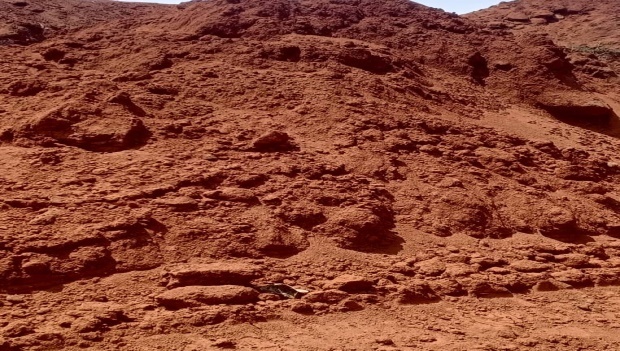
The study soil originates from Tori-Bossito, specifically from the village of Tori Dokanmey, located in the southern part of Benin. Tori-Bossito lies within the Atlantic Department, approximately 40 kilometers northwest of Cotonou. Geographically, the commune is bounded by Allada to the north, Ouidah to the south, Zè and Abomey-Calavi to the east, and Kpomassè to the west. The area is situated between latitudes 6°25′ and 6°37′ North and longitudes 2°01′ and 2°17′ East ( Figure 1).
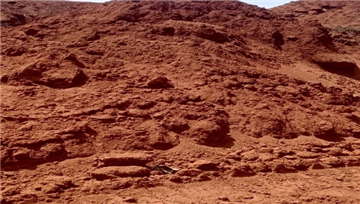
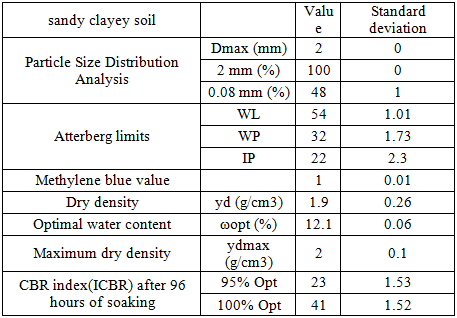
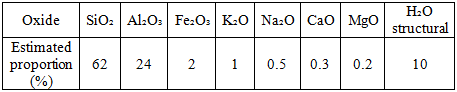
In order to assess the potential of bar soil for use in road pavement applications, a detailed geotechnical (Table 1) and chemical characterization (Table 2) was performed. The geotechnical investigation included particle size distribution, Atterberg limits, Modified Proctor compaction, and California Bearing Ratio (CBR) tests, all conducted in accordance with recognized standards. These tests provided insights into the soil’s gradation, plasticity, compaction behavior, and bearing capacity. Chemically, the soil was analyzed 5 to identify the presence and proportions of key oxides such as silicon dioxide (SiO₂), aluminum oxide (Al₂O₃), and iron oxides (Fe₂O₃), which are known to influence the mechanical performance and stabilization potential of soils. The results confirmed that the untreated bar soil exhibits low bearing capacity and moderate plasticity, thus requiring stabilization to meet the technical specifications for use in road construction.
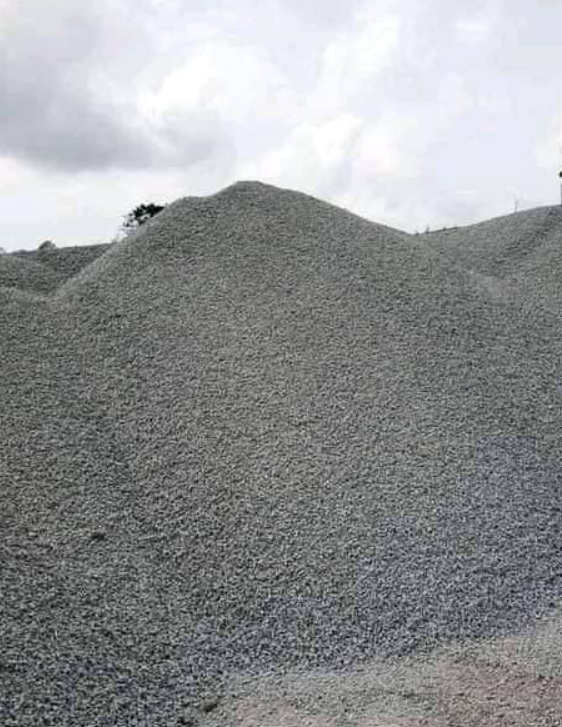
In this study, the granite aggregates used were of 0/31.5 mm grading, sourced from the Dan quarry in the Republic of Benin. The village of Dan is situated in the municipality of Djidja, in the Zou Department, approximately 30 km from the city of Bohicon. Geographically, the municipality of Djidja lies between latitudes 7°10′ and 7°40′ North, and longitudes 1°04′ and 2°10′ East. The Dan quarry itself is located at 7°21′44″ N and 2°06′38″ E.
At this site, aggregates are extracted directly from massive granite outcrops using artisanal crushing techniques. The crushed materials are then screened and stockpiled according to their particle size distribution (Figure 2).
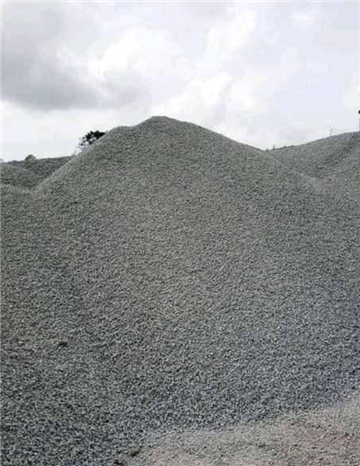
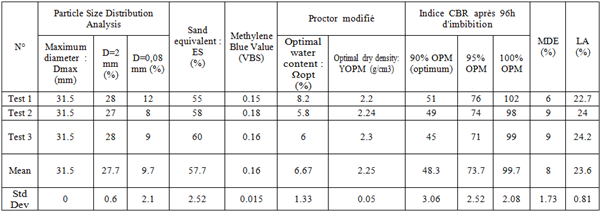
Table 3 summarizes the key geotechnical parameters of the granite aggregates sourced from the Dan quarry. The particle size analysis shows that 27.7% of the material is retained on the 2 mm sieve—exceeding the 25% minimum required—while only 9.7% passes through the 80 µm sieve, in line with 6, 7 recommendations for materials used in CBR testing. The sand equivalence test performed on the 0/31.5 mm fraction passing the 5 mm sieve reveals a clean material rate of 57.7%, confirming its suitability for road construction under T1 to T4 traffic categories.
The Los Angeles (LA) abrasion test yielded a value of 23.6%, well below the 6, 7 limits of 45% for T1–T3 traffic and 30% for T4–T5 traffic (with axle loads of 8 to 13 tons). Likewise, the Micro-Deval (MDE) test result of 8% is comfortably within the acceptable thresholds of 15% and 12% for the respective traffic classes. Finally, the CBR index at 95% Modified Proctor compaction was measured at 73.7%, making the material acceptable for T1 (>40%) and T2 (>60%) traffic, though below the 80% required for T3 and T4.
These mechanical properties confirm that the crushed granite aggregates from Dan quarry can be effectively used for lithostabilizing Tori-Dokanmey bar soil, particularly for applications requiring improved bearing capacity in low to moderate traffic road layers.
2.2. MethodsBar soil and crushed granite aggregate samples were collected in accordance with 8. Following sampling, the materials were air-dried under laboratory conditions prior to geotechnical characterization.
The preparation of the soil–aggregate mixtures followed a structured seven-step procedure, outlined as follows:
1. Drying: Samples of bar soil and crushed granite aggregates were either oven-dried at 50 °C for two hours or air-dried at room temperature until a stable moisture condition was achieved.
2. Mix Design: Various proportions of 0/31.5 mm granite aggregate were empirically selected, including 30%, 40%, 50%, 60%, and 70%, with potential for higher dosages depending on experimental requirements.
3. Batch Calculation: The quantities of bar soil and granite aggregates required for each test type were calculated accordingly.
4. Moisture Content Determination: The optimum water content for each formulation was determined.
5. Sample Preparation: Specific quantities of the mixtures were measured and prepared for the geotechnical tests.
6. Homogenization: Manual mixing was carried out to ensure uniformity while avoiding alteration in particle size distribution due to mechanical handling.
7. Storage: Prepared mixtures were sealed in airtight plastic or self-sealing polyethylene bags to maintain consistent moisture content prior to testing.
The geotechnical characterization of the bar soil and granite aggregates was carried out in accordance with the latest applicable international and European standards. The following test methods were employed:
• Particle Size Distribution by Sieving (after washing): Conducted according to 9, which outlines the procedure for dry sieving after wet washing for soil classification.
• Particle Size Analysis by Sedimentation: Also performed under 9, applicable for determining the distribution of fine-grained soils using sedimentation methods.
• Water Content Determination: Performed using the oven-drying method in compliance with 10.
• Methylene Blue Value (Spot Test Method): Conducted in accordance with 11, still widely referenced for assessing clay activity in fine soils.
• Sand Equivalent Test: Executed following 12, which evaluates the proportion of fine particles and their cleanliness in aggregates.
• Organic Matter Content (by Calculation): Determined using 13, a French experimental standard for estimating organic content in soil materials.
• Atterberg Limits (Liquid Limit and Plastic Limit): Measured in line with 14, for determining soil consistency limits.
• Compaction Characteristics (Proctor Tests): Both standard and modified Proctor tests were carried out according to 15, for determining optimal moisture content and dry density.
• California Bearing Ratio (CBR) Test: Performed under 16, which defines procedures for CBR testing in soaked and unsoaked conditions,
• Los Angeles Abrasion Test: Conducted following 17, which specifies the method for determining the resistance of aggregates to fragmentation.
• Micro-Deval Abrasion Test: Executed according to 18, applicable to wear resistance testing of coarse aggregates.
This section presents the results of geotechnical tests conducted on various mixtures of Bar soil (TB) and crushed granite aggregate from Dan (CG), as described in the formulation methodology. Five distinct mixtures were prepared and tested: Mixture 1 (70% TB + 30% CG), Mixture 2 (60% TB + 40% CG), Mixture 3 (50% TB + 50% CG), Mixture 4 (40% TB + 60% CG), and Mixture 5 (30% TB + 70% CG).
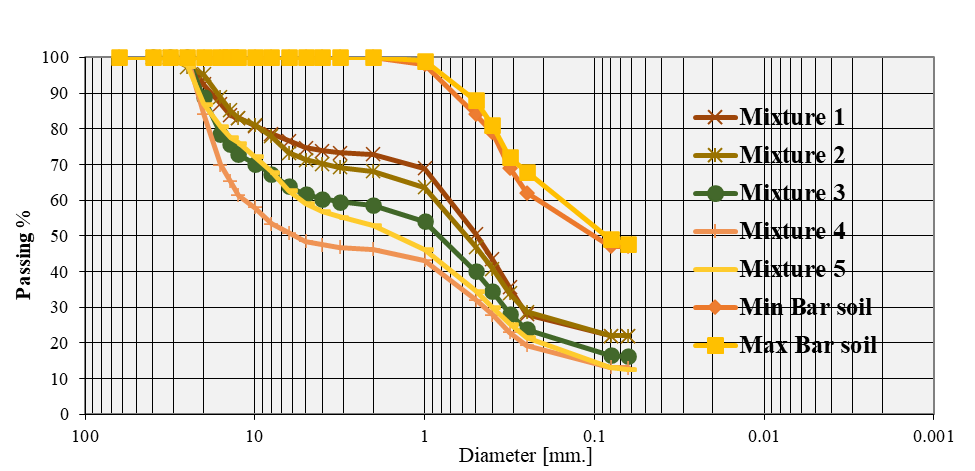
The results of the particle size distribution tests for the different soil–granite aggregate mixtures are illustrated in the corresponding curves (Figure 3). These results highlight the variation in grain size distribution with increasing proportions of crushed granite, reflecting improvements in grading and the reduction of fine content.
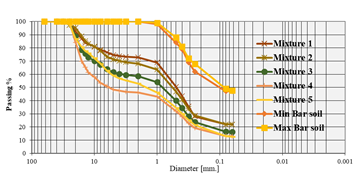
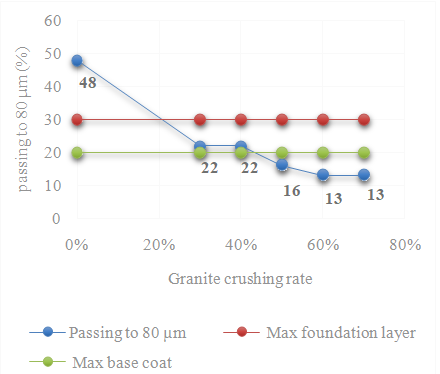
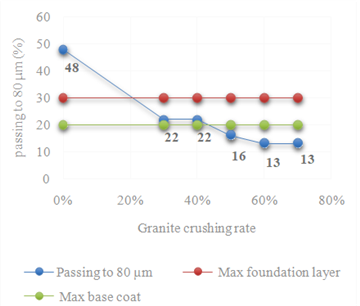
Grain size analysis revealed that the addition of granite aggregates acts primarily as a structural filler, effectively occupying the voids between the fine clay and sand particles present in the natural soil. This results in an improved particle size distribution and a noticeable reduction in the overall porosity of the mixtures. According to the 6, 7 specifications, the allowable percentage of particles passing through the 80 μm sieve should be between 10% and 30% for sub-base (foundation) layers, and less than or equal to 20% for base layers.
The results indicate that all mixtures satisfy the 6, 7 criteria for use in sub-base layers. In addition, mixes containing 50%, 60% and 70% granite aggregates also meet the requirements for base course applications. Because the latter, with percentages ranging from 0.08mm to less than 20%, meet the CEBTP requirements. Consequently, while all tested mixtures are suitable for use as sub-base layers, only those with 50% or more granite aggregates are appropriate for base layer construction, as illustrated in Figure 4.
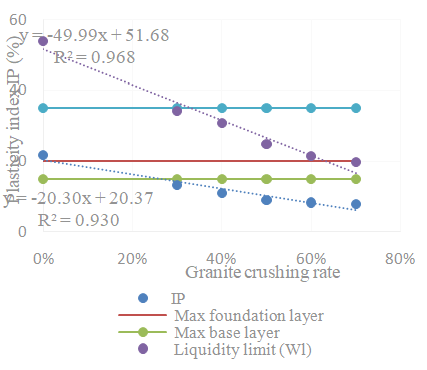
The results of the Atterberg limits test for the different soil–granite aggregate mixtures are presented in the following Figure 5.
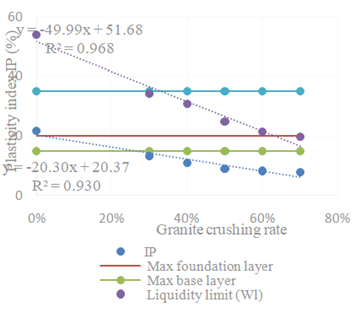
Examination of Figure 5 reveals two key trends:
Decrease in Liquid Limit (WL): The liquid limit exhibits a consistent decline with increasing granite aggregate content. Specifically, the initial WL of the untreated bar soil (sandy clay), estimated at 54.00%, decreases to 34.00% (30% granite), 31.00% (40%), 24.80% (50%), 21.40% (60%), and 19.80% (70%). According to the 6, 7 criteria, all these values fall below the 35% threshold, indicating the suitability of all mixtures for use in base course applications.
• Reduction in Plasticity Index (PI): The plasticity index also decreases progressively with higher granite content, registering values of 13.00%, 11.00%, 9.00%, 8.40%, and 8.00% for the respective mixtures. As per 6, 7 guidelines, PI values below 20% confirm the acceptability of all mixtures for base course use.
• These trends align well with findings from previous studies by 3, 4, 19, confirming the efficacy of lithostabilization with granite aggregates in improving the plasticity characteristics of ferralitic soils.
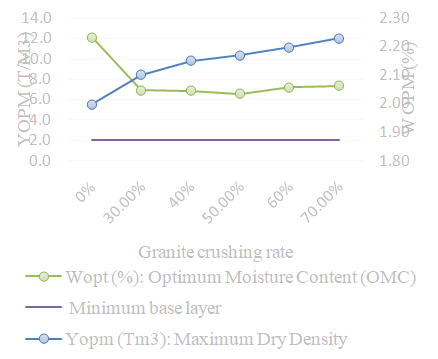
The compaction characteristics of raw sandy clay and mixtures stabilized with varying proportions of granite aggregates were evaluated using the Modified Proctor test. The results, presented in the Figure 6 below, indicate a progressive increase in maximum dry density (MDD) with increasing granite content, accompanied by a corresponding decrease in optimum moisture content (OMC). This behavior reflects the improved packing and grain-size distribution achieved through lithostabilization.
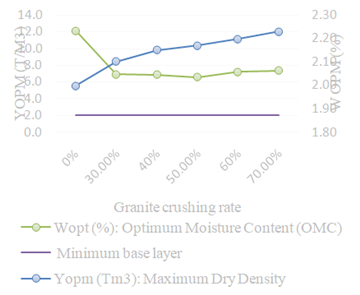
Interpretation of Figure 6 reveals the following key observations:
• Decrease in optimum moisture content (OMC): The OMC decreases progressively with increasing proportions of crushed granite in the mixtures. This trend suggests that the litho-stabilized mixtures require less water for compaction compared to the untreated sandy-clayey soil, indicating a denser granular arrangement and reduced water absorption capacity.
• Increase in maximum dry density (MDD): The MDD increases as the content of crushed granite rises. For each mixture, the dry density obtained at the OMC exceeds that of the untreated bar soil, highlighting the densification effect of the added coarse material. This improvement can be attributed to the better interlocking of particles and the enhanced granular skeleton provided by the granite aggregates.
All recorded MDD values exceed 2.00 t/m³, meeting the requirements outlined in the revised 6, 7 guidelines and the 20 catalog for materials intended for road base construction. These findings corroborate earlier studies conducted by 21 and 22, confirming the beneficial impact of lithostabilization with crushed granite on compaction characteristics.
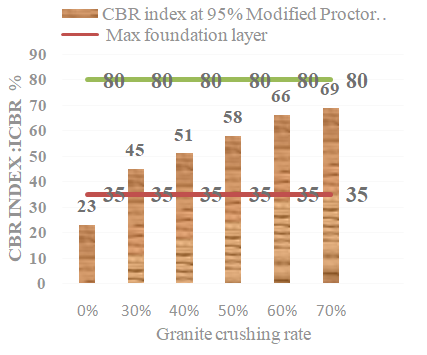
The results of the California Bearing Ratio (CBR) test performed on both untreated sandy clay soil and mixtures stabilized with crushed granite aggregates are presented in the following Figure 7. This test was conducted under soaked conditions, with compaction achieved at 95% of the Modified Proctor Optimum. The purpose was to assess the improvement in load-bearing capacity resulting from lithostabilization using varying proportions of granite aggregate.
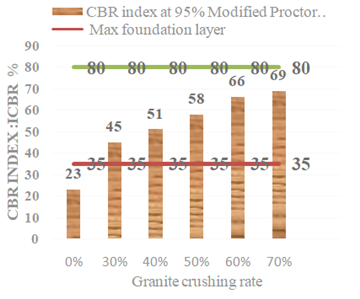
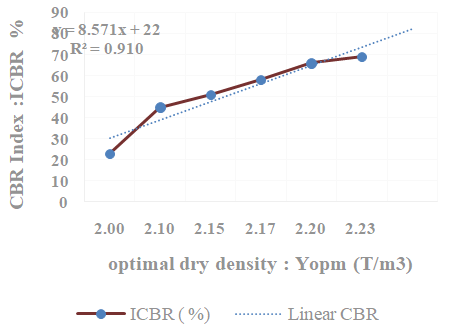
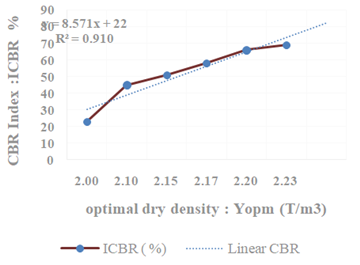
Analysis of Figure 7 indicates that the CBR index increases with the percentage of crushed granite in the mixtures. This trend mirrors the variation observed in the optimum dry density values from the Modified Proctor test (refer to Figure 6). Although all the CBR values at 95% OPM (optimum) remain below the 80% threshold specified by 6, 7 for materials to be used as base courses for flexible pavements, they consistently exceed the 35% minimum requirement for use in sub-base layers. These findings are in agreement with previous research by 23, 24, and 4. Furthermore, Figure 8 illustrates that the relationship between dry density and the CBR index is nonlinear.
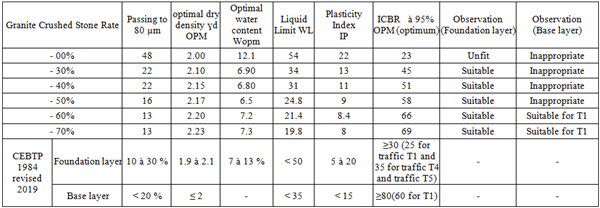
In summary, Table 4 presents a consolidated overview of the results obtained from the analysis of litho-stabilized sandy clay from Tori-Dokanmey, assessed against the specifications provided in the CEBTP (Experimental and Study Center for Building and Public Works) guidelines of 1984 and their 2019 revision.
From the results summarized in Table 4, it can be concluded that all litho-stabilized mixtures meet the 6, 7 requirements for use as subgrade (foundation layer) materials. However, only the mixtures incorporating 60% and 70% of 0/31.5 mm crushed granite aggregates satisfy the criteria for base layer application, and this suitability is restricted to roads subjected to light traffic (T1 category).
This study aimed to evaluate the mechanical behavior of Tori-Dokanmey ferrallitic sandy-clayey soil (bar soil) improved through lithostabilization using 0/31.5 mm crushed granite aggregates sourced from Dan, with a view to its application in road construction in Benin. Five mixtures were empirically formulated with granite aggregate contents of 30%, 40%, 50%, 60%, and 70%. Based on the geotechnical tests performed, the following conclusions were drawn:
• The 0/31.5 mm Dan crushed granite is a corrective (stabilizing) material with satisfactory technical performance. The percentage passing through the 80 μm sieve decreases as the granite content increases.
• The plasticity index of the native bar soil decreases with increasing granite aggregate content, enhancing its workability and suitability as a road material. However, due to the angular nature of the aggregates, special attention must be paid to compaction energy and moisture control to avoid brittle behavior under repeated loads in the event of insufficient particle bonding. Overall, the treated soil has promising potential for road construction, provided that field implementation takes these technical considerations into account.
• The maximum dry density improves progressively with the increase in granite aggregate proportion, indicating better compaction characteristics.
• The CBR index rises proportionally with granite content, reflecting improved bearing capacity of the treated soil.
Particularly promising results were obtained for Mixture 4 (60% granite) and Mixture 5 (70% granite), which meet the technical requirements for use as base course materials for light traffic (T1) flexible pavements, in accordance with Benin and Sub-Saharan African standards. Additionally, all tested mixtures (30% to 70% granite content) conform to 6, 7 specifications for use in subgrade layers, demonstrating the viability of lithostabilization as a sustainable and cost-effective technique for road infrastructure in the region.
Valéry k. DOKO: Writing – review & editing, Supervision, Resources, Methodology. Mohamed GIBIGAYE: Writing – review & editing, Supervision, Methodology. Coovi rocambols Thède AGBELELE: Writing – original draft, Methodology, Investigation, Formal analysis, Conceptualization. Edem CHABI: Writing – review & editing. Boris GANMAVO: Writing – review & editing.
The authors would like to thank all the laboratory technicians at the Laboratory of Applied Energy and Mechanics (LEMA), University of Abomey-Calavi (UAC), Benin; at SNERTP (National Society for Testing and Research in Public Works); and at X-TECHLAB, Sèmè City, Benin, for their consistent support and technical assistance in performing the geotechnical, mineralogical, and mechanical tests.
The authors declare that they have no known competing financial interests or personal relationships that could have appeared to influence the work reported in this paper.
| [1] | Alhassan, M. (2008). Potentials of rice husk ash for soil stabilization. Assumption University Journal of Technology, 11(4), 246–250. | ||
| In article | |||
| [2] | Ndiaye, M. (2013). Contribution à l’étude de sols latéritiques du Sénégal et du Brésil [Ph.D. Thesis, Université Paris-Est / UCAD, Dakar]. NNT: 2013PEST1133. https://tel.archives-ouvertes.fr/tel-00977354. | ||
| In article | |||
| [3] | Babaliyè, O., Houanou, A., Vianou, A., Adolphe, T., & Erick, F. (2020). Litho-stabilization of the lateritic gravelly by granite crushed for their use in flexible pavement in Bénin. International Journal of Advanced Research, 8, 1008–1016. | ||
| In article | View Article | ||
| [4] | Houanou, K.A., Dossou, K.S., Prodjinonto, V., Ahouétohou, P., & Olodo, E. (2022). Mechanical characteristics of Avlamè lateritic gravel improved with granite crushed for its use in road construction in Benin. World Journal of Advanced Research and Reviews, 15(2), 279–292. | ||
| In article | View Article | ||
| [5] | CEN (2003) Non-destructive testing – X-ray diffraction from polycrystalline and amorphous materials – Part 1: General principles. EN 13925-1:2003. European Committee for Standardization, Brussels. | ||
| In article | |||
| [6] | CEBTP (1984) Practical guide for road design in tropical countries. Ministry of External Relations, Paris, p. 160. | ||
| In article | |||
| [7] | CEBTP (2019) Review of the practical guide for road design in tropical countries. ISBN 978-2-84060-499-0. | ||
| In article | |||
| [8] | ISO (2021) Geotechnical Investigation and Testing—Sampling Methods and Groundwater Measurements—Part 1: Technical Principles for the Sampling of Soil, Rock and Groundwater. ISO 22475-1:2021. International Organization for Standardization, Geneva. | ||
| In article | |||
| [9] | AFNOR (2016) NF EN ISO 17892-4:2016. Geotechnical investigation and testing – Laboratory testing of soil – Part 4: Determination of particle size distribution. Association Française de Normalisation (AFNOR), Paris. | ||
| In article | |||
| [10] | AFNOR (2015) NF EN ISO 17892-1:2015. Geotechnical investigation and testing – Laboratory testing of soil – Part 1: Determination of water content. Association Française de Normalisation (AFNOR), Paris. | ||
| In article | |||
| [11] | AFNOR (1998) NF P 94-068:1998. Sols: Reconnaissance et essais – Détermination de la valeur de bleu de méthylène d’un sol ou d’un matériau rocheux – Méthode par essai ponctuel. Association Française de Normalisation (AFNOR), Paris. | ||
| In article | |||
| [12] | AFNOR (2012) NF EN 933-8+A1:2012. Tests for geometrical properties of aggregates – Part 8: Assessment of fines – Sand equivalent test. Association Française de Normalisation (AFNOR), Paris. | ||
| In article | |||
| [13] | AFNOR (1998) XP P 94-047:1998. Détermination de la teneur pondérale en matière organique d’un matériau – Méthode de calcul. Association Française de Normalisation (AFNOR), Paris. | ||
| In article | |||
| [14] | AFNOR (2018) NF EN ISO 17892-12:2018. Geotechnical investigation and testing – Laboratory testing of soil – Part 12: Determination of Atterberg limits. Association Française de Normalisation (AFNOR), Paris. | ||
| In article | |||
| [15] | AFNOR (2010) NF EN 13286-2:2010. Unbound and hydraulically bound mixtures – Part 2: Test methods for laboratory reference density and water content – Proctor compaction. Association Française de Normalisation (AFNOR), Paris. | ||
| In article | |||
| [16] | AFNOR (2021) NF EN 13286-47:2021. Unbound and hydraulically bound mixtures – Part 47: Test method for the determination of the California bearing ratio, immediate bearing index and linear swelling. Association Française de Normalisation (AFNOR), Paris. | ||
| In article | |||
| [17] | AFNOR (2020) NF EN 1097-2:2020. Tests for mechanical and physical properties of aggregates – Part 2: Methods for the determination of resistance to fragmentation. Association Française de Normalisation (AFNOR), Paris. | ||
| In article | |||
| [18] | AFNOR (2011) NF EN 1097-1:2011. Tests for mechanical and physical properties of aggregates – Part 1: Determination of the resistance to wear (Micro-Deval). Association Française de Normalisation (AFNOR), Paris. | ||
| In article | |||
| [19] | Shah, S.H.A., Khan, S.A., Shah, S.H., Ahmad, F., Khan, M.Z., Khan, I., & Shah, S.F. (2022). Laboratory and in situ stabilization of compacted clay through granite waste powder. Sustainability, 14(21), 14459. | ||
| In article | View Article | ||
| [20] | AGEROUTE-Sénégal (2015) Catalogue de structures de chaussées neuves et guide de dimensionnement des chaussées au Sénégal. AGEROUTE-Sénégal, Sénégal, p. 214. | ||
| In article | |||
| [21] | Kumar, A., Krishna, M.V., & Sreedeep, S. (2021). A state-of-the-art review on suitability of granite dust as a stabilizer for clayey soils. Crystals, 11(12), 1526. | ||
| In article | View Article | ||
| [22] | Sekloka, H.G.R., Yabi, C.P., Cloots, R., & Gibigaye, M. (2022). Elaboration of a road material based on clayey soil and crushed sand. Fluid Dynamics and Materials Processing, 18(6), 1596–1605. | ||
| In article | View Article | ||
| [23] | Toe, D. (2007). Lithostabilisation d’un graveleux latéritique avec du granite concassé. Laboratoire National du Bâtiment et des Travaux Publics (LNBTP), Burkina Faso. | ||
| In article | |||
| [24] | Madjadoumbaye, M., Faye, A., & Baudet, B.A. (2012). Lithostabilisation d’une latérite du Cameroun. Revue des Laboratoires des Ponts et Chaussées, 280–281, 123–137. | ||
| In article | |||
Published with license by Science and Education Publishing, Copyright © 2025 Coovi rocambols Thède AGBELELE, Valéry k. DOKO, Edem CHABI, Boris GANMAVO and Mohamed GIBIGAYE
 This work is licensed under a Creative Commons Attribution 4.0 International License. To view a copy of this license, visit
http://creativecommons.org/licenses/by/4.0/
This work is licensed under a Creative Commons Attribution 4.0 International License. To view a copy of this license, visit
http://creativecommons.org/licenses/by/4.0/
| [1] | Alhassan, M. (2008). Potentials of rice husk ash for soil stabilization. Assumption University Journal of Technology, 11(4), 246–250. | ||
| In article | |||
| [2] | Ndiaye, M. (2013). Contribution à l’étude de sols latéritiques du Sénégal et du Brésil [Ph.D. Thesis, Université Paris-Est / UCAD, Dakar]. NNT: 2013PEST1133. https://tel.archives-ouvertes.fr/tel-00977354. | ||
| In article | |||
| [3] | Babaliyè, O., Houanou, A., Vianou, A., Adolphe, T., & Erick, F. (2020). Litho-stabilization of the lateritic gravelly by granite crushed for their use in flexible pavement in Bénin. International Journal of Advanced Research, 8, 1008–1016. | ||
| In article | View Article | ||
| [4] | Houanou, K.A., Dossou, K.S., Prodjinonto, V., Ahouétohou, P., & Olodo, E. (2022). Mechanical characteristics of Avlamè lateritic gravel improved with granite crushed for its use in road construction in Benin. World Journal of Advanced Research and Reviews, 15(2), 279–292. | ||
| In article | View Article | ||
| [5] | CEN (2003) Non-destructive testing – X-ray diffraction from polycrystalline and amorphous materials – Part 1: General principles. EN 13925-1:2003. European Committee for Standardization, Brussels. | ||
| In article | |||
| [6] | CEBTP (1984) Practical guide for road design in tropical countries. Ministry of External Relations, Paris, p. 160. | ||
| In article | |||
| [7] | CEBTP (2019) Review of the practical guide for road design in tropical countries. ISBN 978-2-84060-499-0. | ||
| In article | |||
| [8] | ISO (2021) Geotechnical Investigation and Testing—Sampling Methods and Groundwater Measurements—Part 1: Technical Principles for the Sampling of Soil, Rock and Groundwater. ISO 22475-1:2021. International Organization for Standardization, Geneva. | ||
| In article | |||
| [9] | AFNOR (2016) NF EN ISO 17892-4:2016. Geotechnical investigation and testing – Laboratory testing of soil – Part 4: Determination of particle size distribution. Association Française de Normalisation (AFNOR), Paris. | ||
| In article | |||
| [10] | AFNOR (2015) NF EN ISO 17892-1:2015. Geotechnical investigation and testing – Laboratory testing of soil – Part 1: Determination of water content. Association Française de Normalisation (AFNOR), Paris. | ||
| In article | |||
| [11] | AFNOR (1998) NF P 94-068:1998. Sols: Reconnaissance et essais – Détermination de la valeur de bleu de méthylène d’un sol ou d’un matériau rocheux – Méthode par essai ponctuel. Association Française de Normalisation (AFNOR), Paris. | ||
| In article | |||
| [12] | AFNOR (2012) NF EN 933-8+A1:2012. Tests for geometrical properties of aggregates – Part 8: Assessment of fines – Sand equivalent test. Association Française de Normalisation (AFNOR), Paris. | ||
| In article | |||
| [13] | AFNOR (1998) XP P 94-047:1998. Détermination de la teneur pondérale en matière organique d’un matériau – Méthode de calcul. Association Française de Normalisation (AFNOR), Paris. | ||
| In article | |||
| [14] | AFNOR (2018) NF EN ISO 17892-12:2018. Geotechnical investigation and testing – Laboratory testing of soil – Part 12: Determination of Atterberg limits. Association Française de Normalisation (AFNOR), Paris. | ||
| In article | |||
| [15] | AFNOR (2010) NF EN 13286-2:2010. Unbound and hydraulically bound mixtures – Part 2: Test methods for laboratory reference density and water content – Proctor compaction. Association Française de Normalisation (AFNOR), Paris. | ||
| In article | |||
| [16] | AFNOR (2021) NF EN 13286-47:2021. Unbound and hydraulically bound mixtures – Part 47: Test method for the determination of the California bearing ratio, immediate bearing index and linear swelling. Association Française de Normalisation (AFNOR), Paris. | ||
| In article | |||
| [17] | AFNOR (2020) NF EN 1097-2:2020. Tests for mechanical and physical properties of aggregates – Part 2: Methods for the determination of resistance to fragmentation. Association Française de Normalisation (AFNOR), Paris. | ||
| In article | |||
| [18] | AFNOR (2011) NF EN 1097-1:2011. Tests for mechanical and physical properties of aggregates – Part 1: Determination of the resistance to wear (Micro-Deval). Association Française de Normalisation (AFNOR), Paris. | ||
| In article | |||
| [19] | Shah, S.H.A., Khan, S.A., Shah, S.H., Ahmad, F., Khan, M.Z., Khan, I., & Shah, S.F. (2022). Laboratory and in situ stabilization of compacted clay through granite waste powder. Sustainability, 14(21), 14459. | ||
| In article | View Article | ||
| [20] | AGEROUTE-Sénégal (2015) Catalogue de structures de chaussées neuves et guide de dimensionnement des chaussées au Sénégal. AGEROUTE-Sénégal, Sénégal, p. 214. | ||
| In article | |||
| [21] | Kumar, A., Krishna, M.V., & Sreedeep, S. (2021). A state-of-the-art review on suitability of granite dust as a stabilizer for clayey soils. Crystals, 11(12), 1526. | ||
| In article | View Article | ||
| [22] | Sekloka, H.G.R., Yabi, C.P., Cloots, R., & Gibigaye, M. (2022). Elaboration of a road material based on clayey soil and crushed sand. Fluid Dynamics and Materials Processing, 18(6), 1596–1605. | ||
| In article | View Article | ||
| [23] | Toe, D. (2007). Lithostabilisation d’un graveleux latéritique avec du granite concassé. Laboratoire National du Bâtiment et des Travaux Publics (LNBTP), Burkina Faso. | ||
| In article | |||
| [24] | Madjadoumbaye, M., Faye, A., & Baudet, B.A. (2012). Lithostabilisation d’une latérite du Cameroun. Revue des Laboratoires des Ponts et Chaussées, 280–281, 123–137. | ||
| In article | |||