This study examined the role of Civil Society Organisation’s (CSOs) in enhancing women’s participation in political governance in Zambia. Despite Zambia’s commitment to gender equality through national and international frameworks, women’s representation in political decision-making remains disproportionately low. The study was operationalized through determination of the extent of women’s participation in political governance, as well as the establishment of the approaches used by CSOs to enhance this participation and identify the challenges faced by women in the political sphere. The study adopted a mixed-methods design combining both quantitative and qualitative approaches. Data was collected using a questionnaire and interview guide from a sample of civil society organisations and political parties. It was analysed using IBM SPSS and thematic analysis was adopted to analyse qualitative data. Findings revealed that while women’s involvement in political activities has moderately improved in recent years, it remains inadequate in achieving gender parity. The study established that CSOs have been essential in advocacy, capacity-building, sensitisation and lobbying for gender-responsive legislation and policy reforms. However, persistent barriers such as entrenched patriarchal norms, inadequate financial resources, weak political party support structures and limited implementation of gender policies continue to constrain women’s full participation in governance. The research also noted that the impact of CSO interventions has been uneven due to fragmented coordination and insufficient funding. The study concluded that achieving gender-balanced governance in Zambia requires bridging the gap between policy commitments and actual implementation.
Women's participation in political governance is a crucial aspect of achieving gender equality and inclusive decision-making processes. In Zambia, like many other countries, women have historically faced barriers and discrimination that limit their political engagement. Understanding the historical context and the factors that have influenced women's political participation is essential for developing strategies to enhance their representation and influence in political governance.
Before the 18th century, women worldwide were confined to the private sphere, while men dominated the public domain, including political activities. However, the advent of the French Revolution ushered in a new era of opportunities for women. According to Fraisse and Perrot (1993), this period marked the genesis of feminism and an unprecedented rise of women as a united force in politics.
Since gaining independence, Zambia has experienced the leadership of different political parties across different ruling governments. Under these different ruling governments, a number of initiatives were and continue to be implemented to address the growing problem of underrepresentation of women in political governance
To complement government effort, civil society organisations have played a significant role in advocating for women's rights and promoting their political participation in Zambia. These organisations have been instrumental in raising awareness, providing training and capacity-building programs, and advocating for policy changes to advance women's political empowerment 1, 2.
1.1. Contribution of StudyThe Zambian Constitution guarantees equality between men and women and underlines fundamental rights and freedoms as contained in Part III of the Constitution. Additionally, Article 8 outlines national values and principles, including non-discrimination 3. Despite these constitutional guarantees, women remain underrepresented in the National Assembly, particularly in constituency-based parliamentary seats. Therefore, this research sort to determine the extent of women’s participation and representation at the parliamentary level in Zambia, as guided by the Constitution and other gender equality laws. Establishing the extent of women’s representation in the National Assembly provided evidence that can inform government, political parties and other stakeholders in strengthening interventions aimed at increasing the number of women elected as Members of Parliament.
This study aligns with international development commitments advocating for gender equality, the 2030 Agenda for Sustainable Development outlines 17 Sustainable Development Goals (SDGs). SDG 5 specifically calls for the achievement of gender equality and the empowerment of all women and girls 4. Increasing women’s representation in Parliament is central to achieving this goal, particularly in ensuring inclusive law-making, equitable resource allocation and gender-responsive national policies. It is therefore important to examine the approaches employed by civil society organisations in Zambia to enhance women’s candidature and election to constituency seats in the National Assembly. This will help establish whether such approaches align with existing national policy frameworks and global accountability frameworks on gender equality and women’s political representation.
It is equally important to examine the specific barriers that women face in contesting and winning parliamentary seats. These may include limited access to campaign financing, political party nomination processes, socio-cultural norms, electoral violence, and structural disadvantages within constituency-based electoral systems. Identifying these challenges will enable stakeholders to design targeted strategies that directly address obstacles affecting women aspiring to become Members of Parliament. Furthermore, understanding these constraints may strengthen advocacy efforts and attract technical and financial support from international cooperating partners and the donor community. For instance, German development policy emphasises equal rights, equal obligations, equal opportunities, and equal power for women and men. As Germany remains a strategic development partner to Zambia, among other cooperating nations, analysing the barriers to women’s parliamentary representation is critical for sustaining development partnerships that prioritise inclusive governance. Enhancing women’s representation in the National Assembly is not only a constitutional imperative but also a development necessity for strengthening democratic governance and achieving sustainable national development.
Ethical clearance was obtained from the University of Zambia School of Humanities and Social Sciences Research Ethics Committee. Before administering the questionnaire and undertaking an interview, consent was sought from the participants after informing them about the research. Participants were informed that their participation was solely voluntary and they were at liberty to withdraw at any time. None of the questions in the questionnaire included identifiable details of the participants which maintained the anonymity of the participants.
2.2. Study DesignThis study employed a convergent parallel design within a mixed-methods research approach. A mixed-methods approach refers to the philosophical and methodological orientation of combining both quantitative and qualitative forms of data to strengthen the overall understanding of a research problem 5. It is an approach that guides how data from different traditions are integrated. Within this approach, the convergent parallel design was selected because it allows the researcher to collect quantitative and qualitative data concurrently, analyse each dataset separately and then merge the findings during interpretation to generate a more comprehensive picture of the role of civil society organisations in enhancing women’s participation in parliamentary elections.
The convergent parallel design was particularly appropriate for this study because the phenomenon under investigation contains both measurable elements such as the extent of women’s participation and complex social dimensions, such as CSO advocacy strategies and socio-cultural barriers. According to Mason 6, integrating multiple forms of data offers enormous potential for generating new ways of understanding the complexities and contexts of social experience. By analysing survey results alongside interview narratives, this design enabled triangulation, improved validity and facilitated a nuanced understanding of how CSO interventions align with lived experiences and institutional realities.
Although the convergent design is resource-intensive and demands high levels of analytical skill, its benefits outweighed these challenges. It allowed the study to address the research objectives from complementary angles: quantitative data helped document patterns, frequencies and trends, while qualitative insights provided the depth needed to explain why these trends persist. As noted by Mertens et al. 7, mixed-methods approach enhances the researcher’s capacity for explanation and generalisation by expanding the methodological repertoire. Therefore, the convergent parallel design was the most suitable choice for capturing both the breadth and depth necessary to understand women’s political participation as aspirants and candidates at constituency level and the contribution of civil society organisations in Zambia, hence it was adopted.
2.3. Study PopulationThe study population for this research consisted of a total of 129 participants. This diverse group included 119 registered civil society organisations that are engaged in women's advocacy programs 8. Out of this population, 15 were purposively sampled. Additionally, the population purposively targeted 10 political parties that have been consistent and have had a proven commitment to women's empowerment and have stood for the general elections in 2011, 2015 or 2021 9, 10.
2.4. Sampling TechniqueThe study utilised purposive sampling for both primary and secondary informants.
Purposive sampling, also known as judgment sampling, is a non-probability sampling method that is well-suited to the needs of this research study. Firstly, the large number of registered civil society organisations in Lusaka necessitates a strategic approach to participant selection. By employing purposive sampling, the researcher judiciously narrowed the pool of potential participants down to a "workable and meaningful number" that aligns with the study's objectives 11. Secondly, the flexibility inherent in purposive sampling, which does not require "prior knowledge or a predetermined number of informants," further supports its appropriateness for this exploratory investigation 11. Given that the sample size for this qualitative inquiry is expected to be relatively small compared to probability-based approaches, purposive sampling enabled the researcher to select participants based on specific characteristics, such as subject matter expertise or the willingness and capacity to engage with the study 12. This non-probability sampling technique helped to ensure that the data collected is "consistent, reliable and useful," thereby enhancing the generalisability of the study's findings 13.
2.5. Sample SizeThe study sample size for this research consisted of two main components. The first component comprised of registered civil society organisations engaged in women's advocacy programs. 15 civil society organisations deemed to have a stake in advocating for women’s participation in parliamentary elections were purposively selected.
The second component of the study sample size focused on political parties with a proven commitment to women's empowerment. There is a total of 10 political parties that have been consistent and have had aspiring female candidates at constituency level in either the 2011, 2015 or 2021 general elections, as per the records of the Electoral Commission of Zambia in 2024.
2.6. Data Collection Tools and MethodsThe research employed a mixed-methods approach, utilising both qualitative and quantitative techniques to collect data for this study. For the primary data, questionnaires and face-to-face interviews were the primary instruments. Before commencing data collection, the study obtained informed consent from all participants, ensuring their voluntary involvement and the ethical integrity of the study. Through these questionnaires and interviews, the researcher gathered invaluable insights directly from the collaborating participants, including civil society organisations engaged in women's advocacy and political parties in Zambia.
To supplement the primary data, the study also drew on secondary sources such as academic research articles, journals, reports, official government documents and books that served to inform literature on the role of CSOs in promoting women’s participation in parliamentary elections.
2.7. Data AnalysisThe data collected for this research study was analysed using both quantitative and qualitative methods. The quantitative data was coded, recorded and then analysed using the IBM Statistical Package for the Social Sciences (SPSS) software, version 20. This allowed the researcher to apply statistical techniques to identify patterns, relationships and trends within the numerical data gathered from the participating civil society organisations and political parties. In contrast, the qualitative data, such as the interview transcripts, were systematically analysed to identify key themes and insights. This qualitative analysis was important for presenting the perspectives and experiences of the participants in their own words, preserving the nuances and context of the information provided.
2.8. LimitationsThe only visible limitation with the outcome of this study is that the findings will be limited to the parliamentary setting while much on other gender important aspects may not be fully co-opted.

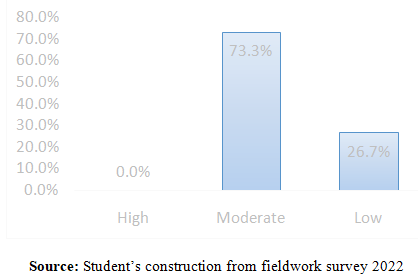
When asked about their opinions on the current level of women’s participation in parliamentary elections with options of high, moderate and low, the majority (73.3%) of the study participants indicated moderate. 26.7% of the respondents rated it as low, with no responses on the “high” option.
When further asked during the interviews, respondents expressed that the current level of women participation in parliamentary elections within their region or context was insufficient. One of the respondents stated that, “The level of women’s participation in parliamentary elections in our region is still relatively low. Of course, there has been some progress, but many women are still underrepresented in parliament. Cultural norms and lack of access to resources continue to prevent their full participation.” Similarly, another respondent stated that, “The current level of women’s participation is still quite low. Even though some progress has been recorded, women remain underrepresented in parliament.” The other respondent noted some improvements but still thought more needed to be done. In particular, the respondent stated that, “Women’s participation in parliamentary elections is gradually improving but remains insufficient. This is because women are still facing significant barriers, including societal expectations and limited access to political networks.” The respondent went on to add that, “There is a need for more targeted interventions in order to address these gaps.”

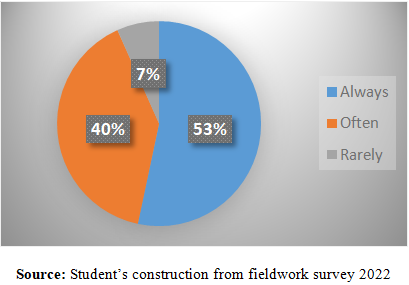
Figure 3 below highlights responses from the 15 respondents on women participation in political activities. when asked, ‘How often do you think women participate in political activities?’, 53% of the study participants felt that women always participated in political activities, while 40% responded that women often participated and lastly, a small percentage of 7% believed that women rarely participated in political activities.

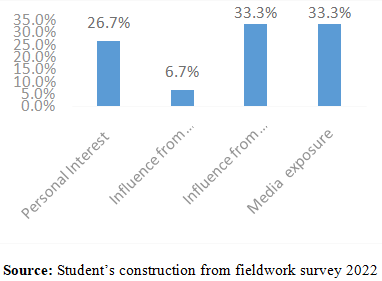
The study participants were asked to indicate the factors they believed to influence women’s decision to participate in elections at constituency level. The findings of the study revealed that 33.3% of the women’s influence was from civil society organisations, while 33.3% was from media exposure. Personal interest accounted for 26.7% of the influence and lastly, only 6.7% was believed to have been resulting from the influence of family/friends.
The respondents were asked to state their observations on how the level of women participation in parliamentary elections has changed in the last five years. 80% of the respondents stated that it had increased, while 13.3% indicated that it had decreased. Lastly, 6.7% stated that it had stayed the same.

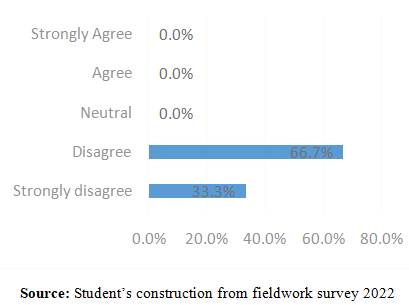
The study participants were asked as to whether they thought women are adequately represented in political positions. Figure 5 below shows findings on a likert scale that revealed that 66.7% of the respondents disagreed that women were adequately represented in political positions, while 33.3% strongly disagreed. No respondent was neutral or of the view that women are adequately represented in political positions.
When further asked the question, ‘In your opinion, what percentage of parliamentary seats should be occupied by women to ensure fair representation?’, the responses were as depicted in Table 2 below.
73.3% of the study participants felt that 50% of women should occupy parliamentary seats to ensure fair representation, while 26.7% stated that more than 50% of women should occupy the parliamentary seats. No respondents believed that percentage share should fall below 50%.
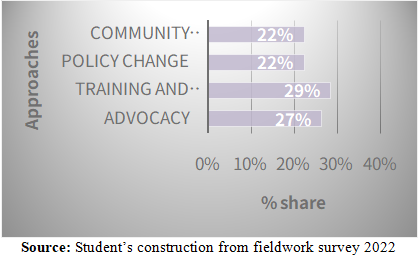
Participationg CSOs were asked to state the approaches used by their organisations to enhance women’s participation in parliamentary elections. The findings revealed that training and capacity building was the most selected by participants at 29%, while 27% of the participants selected advocacy. Policy change and community mobilisation both got an equal percentage share of 22%.
To acquire a deeper understanding from the study participants, a question was asked during the interview on the strategies or approaches their respective organisations used to effectively promote women’s participation.
The responses were as reported below.
Interviews with the study participants, who are also responding on behalf of their respective organisations revealed the following as presented below.
One of the respondents said:
Our strategies include policy advocacy, organising workshops and training for women and running public awareness campaigns. We also collaborate with international donors to fund initiatives that support women in politics and work on capacity building for women’s groups.
Another study participant had this to say:
We have employed several strategies, including advocacy for gender-sensitive policies, organising leadership training sessions and partnering with other organisations to amplify our efforts. We also engage in community outreach to change attitudes about women in leadership roles.
A respondent from a youth-led organisation placed much emphasis on their use of grassroot mobilisation as an effective strategy. In her own words she said:
As a youth-led organisation, we have found grassroots mobilisation to be an effective strategy. We also conduct capacity building for women leaders and advocacy for policy reforms. Besides that, we also to work around building networks of young women politicians and support their efforts through mentorship and resources.
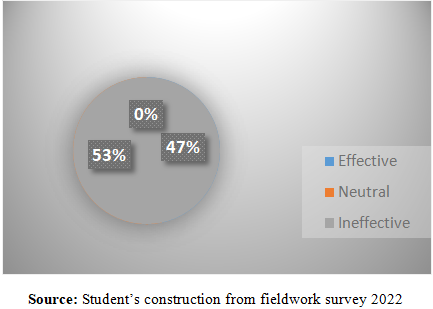
When further asked how effective the respondents thought their respective organisations had been in enhancing women’s participation in parliamentary elections, 53% were neutral, while 47% thought they had been effective. No respondents thought their organisation’s efforts had been ineffective.
These findings are presented in Figure 7 below.


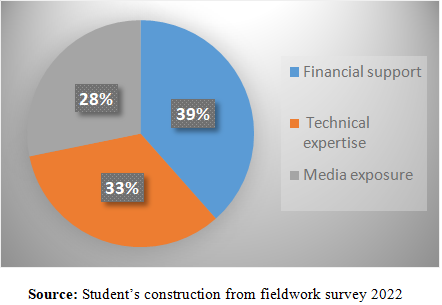
The study participants were asked the kind of additional resources they thought civil society organisations needed to better support women in parliamentary elections. The findings revealed that 39% of the selections were on financial support, while technical expertise accounted for 33%, with media exposure accounting for 28%. The findings below shows that financial support was the major additional resource required by the civil society organisations as stated by the study participants.
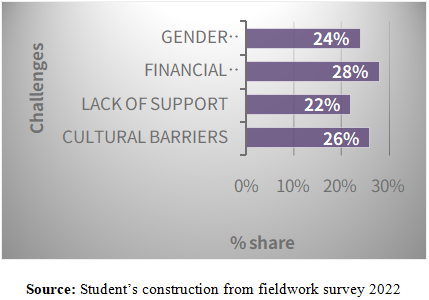
4.3. Challenges Faced by Women in Parliamentary ElectionsThe 15 respondents were asked the major challenges faced by women contesting in parliamentary elections. The findings revealed that 28% of the respondents included financial constraints in their selection, while 26% of the respondents had selected cultural barriers. The other selections were gender discrimination representing 24% and lack of support corresponding to 22% of the selections. These findings indicate that financial constraints was the major challenge identified by the study participants while lack of support was the least of the challenges selected.

During the interviews, respondents explained more on their identified major challenges for women contesting in parliamentary elections. In her own words, one of the study participants stated that:
The main challenges are the obvious cultural barriers that we know to be limiting women’s public participation, financial constraints and gender discrimination. We have also observed that there is most of the times, a lack of support from political parties and inadequate policies that promote women’s participation.
Another respondent echoed the above sentiments on the lack of support from political parties. In her own words she said:
I would like to believe that key challenges are entrenched patriarchal norms, insufficient support from political parties and lack of resources. We also know that women also face barriers in accessing political training and mentorship opportunities.
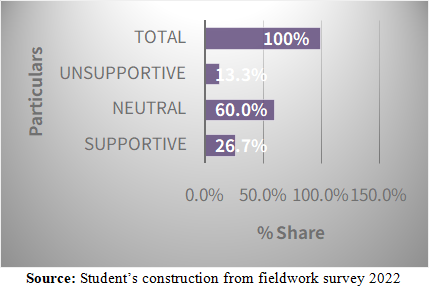
The study participants were asked the following question, “How do you perceive the support from political parties towards women parliamentary candidates?” The majority of respondents remained neutral and represented a percentage share of 60%, 26.7% of the respondents stated that they were supportive, while 13.3% indicated that political parties were unsupportive towards women parliamentary candidates.

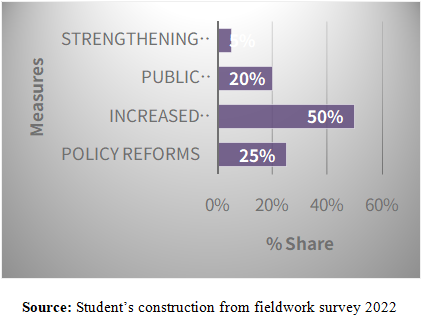
When asked measures to be taken to overcome the challenges faced by women in parliamentary elections, the responses were spread across 4 measures as follows. 50% of the study participants selected increased financial support, while policy reforms was selected by 25% of the study participants. Public awareness campaigns and strengthening women’s networks was opted for by 20% and 5% of the respondents respectively.

Interviews with representatives from ten political parties in Zambia highlighted varying levels of women’s participation in parliamentary elections, reflecting both progress and persistent challenges. A representative from the PF stated that,
while women’s participation is moderate, with several women holding key positions, we feel there is still a big gap that needs to be addressed to ensure more women aspire and contest for parliamentary elections.
In contrast, a respondent from the MMD frankly admitted saying,
Women’s involvement is low in our party, with no women representing the party in parliament. We recognise the urgency to boost their active participation.
The study participant from the UPND provided a more optimistic view, noting that,
Women’s participation is high within our party. We have significant representation in parliament and leadership roles, which has been a deliberate effort on our part.
However, in the ADD, the narrative was less positive, as the respondent acknowledged that,
Women’s participation is unfortunately low, but we are actively working on initiatives to boost their involvement.
Similarly, the NMP respondent expressed concern, in his own words he said,
Our party has few women in leadership positions and non in parliament, and we are currently exploring ways to encourage more involvement.
The NAREP and UNIP both reported moderate participation levels. A NAREP representative noted,
Women are involved in our decision-making processes, but we still face challenges in getting them into aspiring as parliamentary candidates.
A similar concern was echoed by UNIP, where the respondent stated,
While we are seeing an increase in women’s involvement in political governance, parliamentary seat still remain predominantly occupied by male.
The FDD noted that women’s participation is moderate, especially in grassroots mobilisation, with the study participant stating,
Women in our party play an important role at the grassroots level, but more needs to be done to bring them into contesting for elections in constituencies.
The HP expressed a moderate level of participation as well, with the respondent mentioning that,
Cultural barriers persist, but we do have women in some leadership roles though not in parliament.
Lastly, ZED reported low participation, with the respondent expressing concern that,
Despite our efforts, women’s roles within the party remain limited, and we are focusing on increasing their involvement through targeted programs that can encourage them to aspire and contest for seats in constituencies.
All political parties acknowledged the important role that civil society organisations have played in enhancing women’s participation in parliamentary elections. The PF representative highlighted their collaboration with CSOs, stating,
We’ve partnered with several organisations to implement training programs and workshops aimed at empowering parliamentarian women and those aspiring.
The MMD representative similarly noted,
We work closely with CSOs to provide advocacy and capacity-building for women candidates, which has been important in our efforts to enhance their participation.
This partnership was echoed by the UPND, where the study participant said,
CSOs have been instrumental in policy advocacy and public awareness campaigns, significantly contributing to the higher levels of women’s participation in our party.
During the interviews, across all parties, cultural norms and gender stereotypes were consistently identified as major barriers.
A respondent from the PF highlighted that, “Cultural norms and gender bias are still deeply ingrained, making it difficult for women to aspire for parliamentary elections.” Similarly, the respondent from the HP observed that, “Cultural expectations continue to pose significant challenges for women in our party.”
Financial constraints were another recurring theme. The study participant from the MMD mentioned that, “Financial challenges are a major hindrance for women, preventing them from competing effectively in political spaces.” A study participant from NAREP agreed, stating that, “Lack of financial resources is a significant barrier that needs to be addressed if we are to see more women in parliament.”
In the UPND, the respondent noted that despite higher participation levels, “Women still face challenges related to gender bias and cultural expectations, which can hinder their progress.” The FDD and ZED representatives also acknowledged that, ‘gender discrimination, financial challenges and cultural norms continue to limit women’s participation’, despite ongoing efforts to address these issues.
The research objectives guiding the discussion of the findings include; (1) To determine the extent of women’s participation in parliamentary elections in Zambia; (2) To examine the approaches used by civil society organisations to promote women’s participation in parliamentary elections and; (3) To analyse the challenges that limit women’s participation and electoral success in parliamentary elections.
5.1. Extent of Women’s Participation in Parliamentary ElectionsThe findings revealed a persistent gap between women’s participation as candidates and their eventual representation in the National Assembly. While there is evidence of gradual increases in women’s candidature, these gains remain insufficient in translating into electoral success. This pattern strongly aligns with global and regional studies 14, 15, which argue that participation and representation are not linearly related but mediated by structural and institutional dynamics. The study therefore reinforces the argument that participation, when analysed in isolation, is an inadequate indicator of political inclusion.
This discrepancy is understood through the lens of electoral competitiveness, which highlights the conditions under which candidates contest elections. Norris 16 and Matland 17 argue that competitive electoral environments tend to favour candidates with access to financial resources, party backing and established political networks. The findings of this study corroborate this perspective, as women’s increased participation occurs within an electoral system that structurally privileges resource-endowed candidates. However, while these institutional explanations are compelling, they do not fully account for why such inequalities persist over time.
The findings suggest that women’s limited electoral success is not merely a consequence of resource constraints or institutional design, but also reflects deeply embedded gender hierarchies that shape access to political opportunities. For instance, male dominance within political party structures and societal perceptions of leadership as inherently masculine function as mechanisms of exclusion. These dynamics resonate with the arguments of Lonsway and Fitzgerald 18 and Burt 19, who demonstrate how societal beliefs sustain gender inequalities by normalising male dominance across institutions. Applied to the political context, such norms influence both candidate selection and voter preferences, which constrains women’s electoral prospects.
At the same time, some studies offer a more optimistic interpretation of increasing participation. For example, Dahlerup (2006) suggests that incremental increases in women’s candidature may eventually lead to a “critical mass” capable of transforming political institutions. However, the findings of this study challenge this assumption, as increased participation has not produced a corresponding shift in representation. This suggests that the “critical mass” thesis is overly deterministic, particularly in contexts where structural constraints remain unaddressed.
Furthermore, the findings highlight the limitations of institutional reforms that do not fundamentally alter the distribution of power. While countries such as Rwanda and South Africa have achieved higher levels of representation through quota systems and proportional representation 20, 21, Zambia’s continued reliance on a majoritarian electoral system constrains similar outcomes. This supports the argument that institutional design matters, but also reinforces the need to examine how such institutions interact with socio-cultural norms and power relations.
5.2. Approaches Used by Civil Society Organisations to Enhance Women’s ParticipationThe findings confirmed that CSOs play several roles in promoting women’s participation through advocacy, capacity building and policy engagement. These interventions align with existing empirical studies 1, 2, which position CSOs as critical actors in advancing gender equality in political processes. However, a further analysis revealed that the effectiveness of these approaches is uneven and often limited in translating into tangible electoral outcomes.
CSOs are conceptualised as agents of resistance operating within patriarchal systems. Their efforts to challenge gender inequalities through training, advocacy and awareness campaigns represent attempts to disrupt existing power relations. For instance, capacity-building initiatives aim to enhance women’s political skills and confidence, addressing the “supply-side” barriers to participation 21. The findings of this study support this view, as CSO interventions have contributed to increased candidature at parliamentary level and awareness of women’s political rights.
However, the study also revealed the limitations of these interventions when they are not accompanied by structural transformation. While capacity building improves women’s readiness to participate, it does not necessarily alter the institutional conditions that determine electoral success. This aligns with critiques by Krook 21 and Waylen 22, who argue that empowerment strategies often fail to produce meaningful change in the absence of institutional reform. In this sense, the findings challenge the assumption that enhancing individual capacity is sufficient to overcome systemic barriers.
Moreover, the findings highlight inconsistencies in the impact of awareness campaigns and advocacy efforts. While some studies 23 suggest that increasing awareness can shift public attitudes and reduce gender bias, the current study indicates that such changes are not always reflected in electoral outcomes. This suggests a disconnect between attitudinal change and behavioural outcomes, particularly in contexts where voting decisions are influenced by entrenched social norms and political dynamics.
Contrasting evidence by Domingo etal 14 demonstrates that sustained CSO advocacy in Kenya contributed to significant constitutional reforms, including gender equality provisions. Similarly, UN Women 2 highlights cases where coordinated civil society efforts have successfully influenced policy and representation outcomes. The relatively limited impact observed in this study therefore raises questions about the contextual factors shaping CSO effectiveness in Zambia.
One possible explanation lies in the issue of fragmentation and limited coordination among CSOs, as identified in the findings. Fragmented efforts reduce the collective influence of civil society, limiting its ability to exert sustained pressure on political institutions. This supports the argument by Kalinda and Chirwa 23 that resource constraints and organisational fragmentation undermine the effectiveness of CSO interventions. Additionally, political resistance and entrenched institutional interests further constrain the ability of CSOs to drive transformative change.
Thus, while CSOs play a crucial role in promoting women’s participation, their impact is understood within the broader context of structural and institutional constraints. Their interventions are necessary but not sufficient, as they often operate within systems that reproduce the very inequalities they seek to address.
5.3. Challenges Faced by Women Contesting in Parliamentary ElectionsThe findings identify multiple, interrelated barriers that limit women’s participation and electoral success, including patriarchal socio-cultural norms, financial constraints, institutional biases within political parties and weak implementation of gender policies. These challenges are widely documented in the literature 20, but the present study provides a more integrated understanding of how they interact within the Zambian context.
Radical feminist theory offers a critical framework for interpreting these findings by conceptualising these barriers as manifestations of systemic patriarchal control. Rather than viewing them as isolated obstacles, the theory highlights how they collectively function to maintain male dominance in political institutions. For example, socio-cultural norms that associate leadership with masculinity not only influence voter perceptions but also shape internal party dynamics and parliamentary candidate selection processes. This supports Norris and Inglehart’s (2003) argument that cultural values play a central role in structuring political participation.
At the same time, alternative perspectives emphasise the role of economic and institutional factors. Ohman 24 and Matland 17 argue that financial constraints are a primary barrier to women’s participation, particularly in majoritarian systems where campaign costs are high. The findings of this study strongly support this argument, as limited access to financial resources was identified as a key constraint on women’s competitiveness. However, the study also suggests that financial inequality is itself embedded within broader gendered power relations, thereby linking economic and structural explanations.
Institutional barriers within political parties further reinforce these inequalities. Consistent with Caul 25 and Chikwanda 26, the findings indicate that party nomination processes often disadvantage women, despite formal commitments to gender equality. This reflects what North (1990) describes as the persistence of informal institutional practices that undermine formal rules. In this case, gender-neutral policies coexist with gender-biased practices, resulting in unequal outcomes.
The study also highlights the limited effectiveness of gender policies due to weak implementation. While Zambia has adopted progressive legal frameworks, their impact is constrained by lack of enforcement and political will. This finding aligns with Waylen 22, who argues that institutional reforms often fail when they are not accompanied by changes in underlying power structures. However, some studies suggest that gradual institutional change can still yield positive outcomes over time 21, indicating that the relationship between policy and practice may be more complex than the findings alone suggest.
Importantly, the study demonstrates that these challenges are not independent but mutually reinforcing. Socio-cultural norms influence party practices, which in turn affect access to resources and electoral competitiveness. This interconnectedness supports the conceptual framework’s emphasis on the interaction between structural and institutional constraints. It also highlights the need for multi-dimensional interventions that address both formal and informal barriers
This study has concluded that women’s participation in parliamentary elections in Zambia remains far below both regional and international aspirations, despite the existence of progressive policy frameworks. The persistent underrepresentation of women speaks to a structural governance challenge that requires urgent and holistic attention. While civil society organisations have been instrumental in advocating for reforms, building capacity and pushing for inclusivity, the findings show that barriers remain deeply entrenched in Zambia’s political, cultural and economic systems.
At the heart of the challenge is the gap between policy and practice. Zambia has endorsed ambitious commitments under the Southern African Development Community (SADC) Protocol on Gender and Development, the Convention on the Elimination of All Forms of Discrimination Against Women (CEDAW), the Sustainable Development Goals (SDG 5 on gender equality) and the African Union’s Agenda 2063. Yet, the translation of these commitments into enforceable action has been limited. For instance, although the Gender Equity and Equality Act was passed in 2015, the operationalisation of its provisions has been slow and inconsistent. Without effective monitoring and accountability mechanisms, these frameworks risk being reduced to aspirational documents rather than lived realities.
The study further revealed that women’s underrepresentation is not merely about political numbers but also about the quality of participation. Even when women are appointed or elected, they are often assigned to “soft” portfolios perceived as less influential, such as gender, community development or social affairs, rather than core ministries such as finance, defence or home affairs. This reflects a deeper pattern of symbolic inclusion without genuine empowerment. Until women occupy diverse and powerful roles across all sectors of governance, their influence on national priorities will remain constrained.
The comparative evidence from across Africa highlights the urgency of Zambia’s situation. Countries such as Rwanda, South Africa, Namibia and Mozambique have demonstrated that bold reforms, including legislated quotas, can drastically improve women’s representation. Rwanda, for example, has maintained the world’s highest proportion of women in parliament at over 60%, largely due to constitutional quotas and strong political will. These examples illustrate that structural interventions, rather than reliance on gradual cultural change, can yield transformative results. Zambia’s reliance on voluntary party measures has proven inadequate; political parties continue to field disproportionately few female candidates and internal party structures remain dominated by male elites.
Another dimension highlighted in this research is the economic exclusion of women from political competition. The high cost of nomination fees and campaign financing effectively sidelines many women aspirants. This monetisation of politics creates an uneven playing field, reinforcing male dominance in electoral contests. Addressing this requires systemic reforms such as the introduction of campaign finance regulations, targeted subsidies or gender-responsive electoral funds that lower barriers for women. Without addressing the economic dimension of exclusion, political participation will remain a privilege of those with resources rather than a democratic right accessible to all.
Cultural and social norms continue to pose formidable challenges. Deeply entrenched patriarchal attitudes, reinforced by conservative traditions and religious interpretations, limit women’s acceptance as leaders in public life. Women who attempt to enter politics are frequently subjected to ridicule, harassment or accusations of immorality. The persistence of such practices reflects the fact that gender inequality is as much a societal problem as it is a political one. Changing attitudes requires long-term investment in civic education, engagement of traditional leaders and integration of gender equality messages in schools, churches and community platforms. CSOs have a critical role to play here, but their efforts must be scaled up and complemented by state support.
The study also emphasises that women’s exclusion weakens democracy itself. A democracy that side-lines half of its population cannot claim full legitimacy. Women bring unique perspectives and priorities that enrich governance, from health and education to peace building and community development. The absence of women at the decision-making table results in blind spots within policy design, perpetuating inequalities and slowing progress towards inclusive development. By contrast, the meaningful inclusion of women has been shown globally to increase collaboration, transparency and responsiveness in governance. Zambia therefore stands to gain from a justice perspective and from an efficiency and effectiveness standpoint if it increases women’s political participation.
A critical insight emerging from this study is that CSOs alone cannot achieve the scale of change required. While their efforts in training, advocacy and capacity building are invaluable, they often lack resources, coherence and national reach. Furthermore, their dependence on external donors exposes them to funding volatility and questions of sustainability. A stronger partnership model is needed, one that brings together CSOs, political parties, government institutions, traditional authorities and international partners in a coordinated effort. Only through shared responsibility can entrenched barriers be dismantled.
This research also highlights the need for intersectionality in policy and advocacy. Women are not a uniform group; young women, rural women and women with disabilities face unique challenges that differ from those of elite, urban women. Policies that adopt a one-size-fits-all approach risk leaving the most marginalised behind. CSOs and government actors must design interventions that respond to these diverse realities, whether through targeted mentorship for young women, literacy and civic education for rural women or accessible platforms for women with disabilities.
Looking forward, Zambia’s path towards inclusive governance depends on bold political choices that go beyond rhetoric and tokenism. Achieving gender parity in political governance will require a deliberate and sustained commitment to dismantling entrenched barriers that have historically sidelined women from leadership. One of the most critical interventions lies in the adoption of legally binding quotas, which have proven transformative in countries such as Rwanda, Namibia and South Africa. These measures do not only guarantee a minimum level of female representation but also signal a decisive political will to shift the balance of power. Zambia cannot continue to rely on voluntary measures that have consistently failed to deliver meaningful change.
This study affirms that women’s political participation in Zambia is both a human rights imperative and a governance necessity. The barriers are significant, but they are not insurmountable. Lessons from across Africa show that determined leadership, combined with civil society activism and community mobilisation, can produce transformative change. The challenge for Zambia is to move beyond rhetoric and incrementalism, towards a bold, coordinated strategy that fully recognises women as equal partners in governance. Only then will Zambia’s democracy reflect the diversity, strength and aspirations of its people, ensuring sustainable development that leaves no one behind.
No potential conflict of interest was reported by the authors
| [1] | Mvula, P. M. (2015). Women political participation in Zambia: Challenges and prospects. Journal of Governance and Development, 11(1), 1-22. | ||
| In article | |||
| [2] | UN Women (2020). Women’s Political Participation Report. New York: UN Women. | ||
| In article | |||
| [3] | Ryan, J. (2016). The Carter Center’s Experts Mission to Zambian Presidential and Parliamentary Elections. Final Report. Atlanta. | ||
| In article | |||
| [4] | United Nations Development Programme (2023) Gender Equality and Women’s Political Participation. New York: UNDP | ||
| In article | |||
| [5] | John W. Creswell and Vicki L. Plano Clark (2018) Designing and Conducting Mixed Methods Research. 3rd edn. Thousand Oaks, CA: Sage Publications | ||
| In article | |||
| [6] | Mason, J. (2006). Mixing Methods in a qualitatively driven way 6(1): 9-25. University of Manchester. | ||
| In article | View Article | ||
| [7] | Mertens, D.M. (2020). Research and Evaluation in Education and Psychology. Integrating Diversity, Qualitative, and Mixed Methods. 5th Edition. Sage Publications, Inc. Atlanta. | ||
| In article | |||
| [8] | Registrar of NGOs (2024) Annual NGO Sector Report. Lusaka: Government Printer | ||
| In article | |||
| [9] | Electoral Commission of Zambia (2011) Electoral Process and Women Participation in Zambia. Lusaka: ECZ | ||
| In article | |||
| [10] | Electoral Commission of Zambia (2021). Election Nomination Fees Report. Lusaka: ECZ. | ||
| In article | |||
| [11] | Thomas, B. (2022). The Role of Purposive Sampling Technique as a Tool for Informal Choices in a Social Sciences in Research Methods. Just Agriculture Multidisciplinary E-Newsletter, 2, Article ID: 047. | ||
| In article | |||
| [12] | Oliver, P. (2015). Sociology: A Complete Introduction: Teach Yourself. Hachette UK. | ||
| In article | |||
| [13] | Bernards, A. (1996) Women and Political Empowerment in Africa. London: Routledge. | ||
| In article | |||
| [14] | Domingo, et al. (2015). Women’s voices and leadership in decision-making: assessing the evidence. Shaping policy for development | ||
| In article | |||
| [15] | Inter-Parliamentary Union (IPU). (2023). Women in Parliament 2023. Geneva: IPU. | ||
| In article | |||
| [16] | Pippa Norris (2014) Why Electoral Integrity Matters. New York: Cambridge University Press. | ||
| In article | View Article | ||
| [17] | Matland, R.E. (2005) ‘Enhancing Women’s Political Participation: Legislative Recruitment and Electoral Systems’, in Ballington, J. and Karam, A. (eds.) Women in Parliament: Beyond Numbers. Stockholm: International IDEA, pp. 93–111. | ||
| In article | |||
| [18] | Kathleen Fitzgerald (1994) Women’s Movements in the United States. Boston: Twayne Publishers. | ||
| In article | |||
| [19] | Ronald Burt (1980) ‘Models of Network Structure’, Annual Review of Sociology, 6, pp. 79–141. | ||
| In article | View Article | ||
| [20] | Tripp, A.M. (2001). “Women and democracy: the new political activism in Africa. “Perspectives on Politics, 6(1), 140-175. | ||
| In article | View Article | ||
| [21] | Mona Lena Krook (2010) Quotas for Women in Politics: Gender and Candidate Selection Reform Worldwide. New York: Oxford University Press. | ||
| In article | |||
| [22] | Georgina Waylen (2014) ‘Informal Institutions, Institutional Change and Gender Equality’, Political Research Quarterly, 67(1), pp. 212–223. | ||
| In article | View Article | ||
| [23] | Kalinda, R., Chirwa, M. (2015). Women’s Participation in key Decision Making Institutions in Zambia: case of the three Arms of Government: Legislature, Executive and the Judiciary. Journal of Societal and Cultural Research Volume 1, Number 3 | ||
| In article | |||
| [24] | Magnus Öhman (2011) Funding of Political Parties and Election Campaigns: A Handbook on Political Finance. Stockholm: International IDEA. | ||
| In article | |||
| [25] | Caul, M. (2001) ‘Political Parties and the Adoption of Candidate Gender Quotas’, Journal of Politics, 63(4), pp. 1214–1229. | ||
| In article | View Article | ||
| [26] | Chikwanda, M. (2017) The Role of Civil Society Organisations in Enhancing Women’s Political Participation in Zambia. Lusaka: University of Zambia Press. | ||
| In article | |||
Published with license by Science and Education Publishing, Copyright © 2026 Masonde Mwango and Hanson Chishimba
 This work is licensed under a Creative Commons Attribution 4.0 International License. To view a copy of this license, visit
http://creativecommons.org/licenses/by/4.0/
This work is licensed under a Creative Commons Attribution 4.0 International License. To view a copy of this license, visit
http://creativecommons.org/licenses/by/4.0/
| [1] | Mvula, P. M. (2015). Women political participation in Zambia: Challenges and prospects. Journal of Governance and Development, 11(1), 1-22. | ||
| In article | |||
| [2] | UN Women (2020). Women’s Political Participation Report. New York: UN Women. | ||
| In article | |||
| [3] | Ryan, J. (2016). The Carter Center’s Experts Mission to Zambian Presidential and Parliamentary Elections. Final Report. Atlanta. | ||
| In article | |||
| [4] | United Nations Development Programme (2023) Gender Equality and Women’s Political Participation. New York: UNDP | ||
| In article | |||
| [5] | John W. Creswell and Vicki L. Plano Clark (2018) Designing and Conducting Mixed Methods Research. 3rd edn. Thousand Oaks, CA: Sage Publications | ||
| In article | |||
| [6] | Mason, J. (2006). Mixing Methods in a qualitatively driven way 6(1): 9-25. University of Manchester. | ||
| In article | View Article | ||
| [7] | Mertens, D.M. (2020). Research and Evaluation in Education and Psychology. Integrating Diversity, Qualitative, and Mixed Methods. 5th Edition. Sage Publications, Inc. Atlanta. | ||
| In article | |||
| [8] | Registrar of NGOs (2024) Annual NGO Sector Report. Lusaka: Government Printer | ||
| In article | |||
| [9] | Electoral Commission of Zambia (2011) Electoral Process and Women Participation in Zambia. Lusaka: ECZ | ||
| In article | |||
| [10] | Electoral Commission of Zambia (2021). Election Nomination Fees Report. Lusaka: ECZ. | ||
| In article | |||
| [11] | Thomas, B. (2022). The Role of Purposive Sampling Technique as a Tool for Informal Choices in a Social Sciences in Research Methods. Just Agriculture Multidisciplinary E-Newsletter, 2, Article ID: 047. | ||
| In article | |||
| [12] | Oliver, P. (2015). Sociology: A Complete Introduction: Teach Yourself. Hachette UK. | ||
| In article | |||
| [13] | Bernards, A. (1996) Women and Political Empowerment in Africa. London: Routledge. | ||
| In article | |||
| [14] | Domingo, et al. (2015). Women’s voices and leadership in decision-making: assessing the evidence. Shaping policy for development | ||
| In article | |||
| [15] | Inter-Parliamentary Union (IPU). (2023). Women in Parliament 2023. Geneva: IPU. | ||
| In article | |||
| [16] | Pippa Norris (2014) Why Electoral Integrity Matters. New York: Cambridge University Press. | ||
| In article | View Article | ||
| [17] | Matland, R.E. (2005) ‘Enhancing Women’s Political Participation: Legislative Recruitment and Electoral Systems’, in Ballington, J. and Karam, A. (eds.) Women in Parliament: Beyond Numbers. Stockholm: International IDEA, pp. 93–111. | ||
| In article | |||
| [18] | Kathleen Fitzgerald (1994) Women’s Movements in the United States. Boston: Twayne Publishers. | ||
| In article | |||
| [19] | Ronald Burt (1980) ‘Models of Network Structure’, Annual Review of Sociology, 6, pp. 79–141. | ||
| In article | View Article | ||
| [20] | Tripp, A.M. (2001). “Women and democracy: the new political activism in Africa. “Perspectives on Politics, 6(1), 140-175. | ||
| In article | View Article | ||
| [21] | Mona Lena Krook (2010) Quotas for Women in Politics: Gender and Candidate Selection Reform Worldwide. New York: Oxford University Press. | ||
| In article | |||
| [22] | Georgina Waylen (2014) ‘Informal Institutions, Institutional Change and Gender Equality’, Political Research Quarterly, 67(1), pp. 212–223. | ||
| In article | View Article | ||
| [23] | Kalinda, R., Chirwa, M. (2015). Women’s Participation in key Decision Making Institutions in Zambia: case of the three Arms of Government: Legislature, Executive and the Judiciary. Journal of Societal and Cultural Research Volume 1, Number 3 | ||
| In article | |||
| [24] | Magnus Öhman (2011) Funding of Political Parties and Election Campaigns: A Handbook on Political Finance. Stockholm: International IDEA. | ||
| In article | |||
| [25] | Caul, M. (2001) ‘Political Parties and the Adoption of Candidate Gender Quotas’, Journal of Politics, 63(4), pp. 1214–1229. | ||
| In article | View Article | ||
| [26] | Chikwanda, M. (2017) The Role of Civil Society Organisations in Enhancing Women’s Political Participation in Zambia. Lusaka: University of Zambia Press. | ||
| In article | |||