Many kinds of generalizations of these polynomials and numbers have been presented in the literature (see [1,2]). Bayad and Hamahata in [1] introduced and investigated the poly-Bernoulli polynomials and proved some relations for these polynomials. Cenkci and Kamatsu in [3] are defined q-parameter poly-Bernoulli numbers. They proved some relations between these polynomials. Kim et al. in ([4,5]) defined poly-Genocchi polynomials and gave the some properties for the multiple-poly-Bernoulli numbers and multiple-zeta values. We introduce the Hermite-based poly-Genocchi polynomials with a q-parameter. After, we give and investigate some properties and identities for these polynomials. Furthermore, we prove closed formula and two explicit relations.
As usual, throughout this paper, N denotes the set of natural numbers,  denotes the set of nonnegative integers, Z denotes the set of integer numbers, R denotes the set of real numbers and C denotes the complex numbers.
In the usual notations, let
 and
and  denote respectively, the classical Bernoulli polynomials, the classical Euler polynomials and the classical Genocchi polynomials defined by the following generating functions;
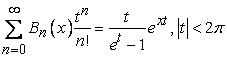 | (1) |
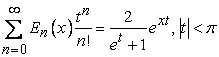 | (2) |
and
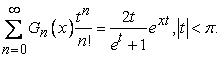 | (3) |
Also, let x=0,
 Where
Where 
 and
and  are respectively, the classical Bernoulli numbers, the classical Euler numbers and the classical Genoccchi numbers.
The 2-variable Hermite-Kampé de Feriét polynomials are defined by (see 6, 7, 8)
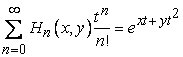 | (4) |
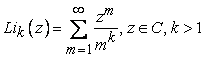
Let  the k-th polylogarithm function is defined by (see 1, 6, 9)
 | (5) |
when k=1,  In the case
 are the rational functions:
 |
Further information about poly-logarithm function and polynomials (see 1, 4).
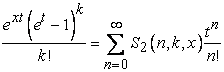
Cenkci et al. in 3 defined the weighted Stirling numbers of the second kind as
 | (6) |
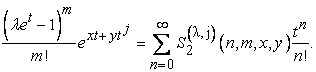
Duran et al. in 6 defined the Hermite-based 𝜆-Stirling polynomials of the second kind as
 | (7) |
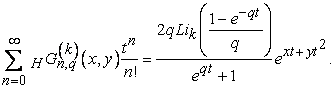
The special values of the (6) are given in 6. Let  We define the Hermite-based poly-Genocchi polynomials with a q-parameter by the following generating functions:
 | (8) |
For x=y=0, we get 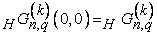 which is called a new class of the Hermite-based poly-Genocchi number with a q-parameter. Some special cases of
  are following remarks.
Remark. For y=0, we have  called the Hermite-based poly-Genocchi polynomials with a q-parameter.
Remark. For q=1,  reduces to the Hermite-based poly-Genocchi polynomials.
Remark. For q=1 and y=0,  reduces to the poly-Genocchi polynomials.
Remark. When q=k=1 and y=0, we obtain the classical Genocchi polynomials.
Srivastava and Srivastava et al. in ( 10, 11) investigated some properties and proved some theorems for the Bernoulli, Euler and Genocchi polynomials. D. S. Kim et al. in ( 12, 13) introduced the poly-Bernoulli polynomials and gave some recurrences relations and idebtities. Cenkci et al. in 3 gave the poly-Bernoulli polynomials with a q-parameter. Kurt 7 gave the poly-Genocchi polynomials with a q-parameter. Duran et al. in ( 6, 14) considered the (p,q)-Hermite polynomials and the (p,q)-Euler polynomials.
In this section, we give some basic identites and relations for the Hermite-based poly-Genocchi polynomial with a q-parameter. Further we give closed formula and explicit relation for these polynomials.
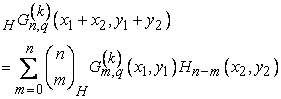
Theorem. The Hermite-based poly-Genocchi polynomials with a q-parameter satisfy following relation:
 |
 |
and
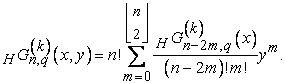 |
The proof of this theorem is easily obtain from the Hermite-based poly-Genocchi polynomials definition.
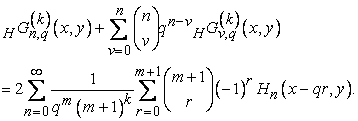
Theorem. The following relation holds true:
 | (9) |
Proof. By (4) and (8), we write as
 |
L. H. S of this equation is
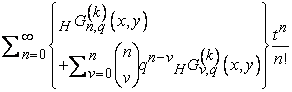 | (10) |
R. H. S of this equation is
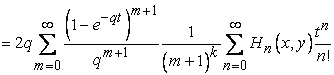 |
 |
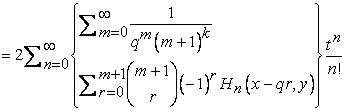 | (11) |
From (10) and (11), we obtain (9).
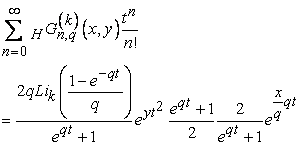
Theorem. There is the following relation between the Hermite-based poly-Genocchi polynomials with a q-parameter and the Euler polynomials:
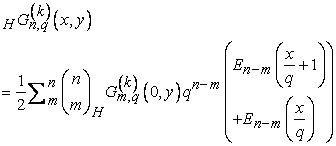 | (12) |
Proof. By (2) and (8), we write
 |
 |
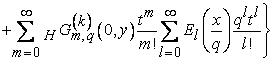 |
By using Cauchy product and comparing the coefficients of  we have (12).
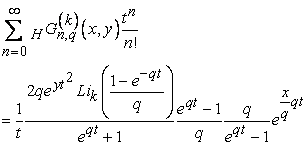
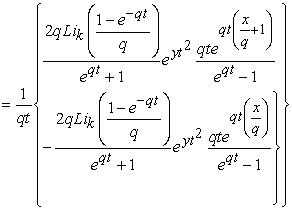
Theorem. There is the following relation between the Hermite-based poly-Genocchi polynomials with a q-parameter and the Bernoulli polynomials:
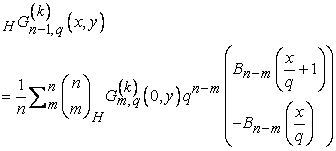 | (13) |
Proof. From (1) and (8), we write as
 |
 |
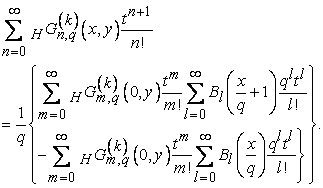 |
By using Cauchy product and comparing the coefficients of  we have (13).
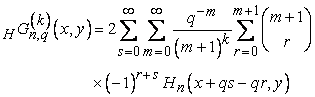
Theorem. The following relation holds true:
 | (14) |
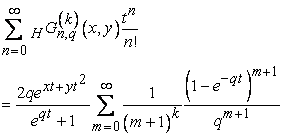
Proof. By (8),
 |
 |
From here, we have (14).
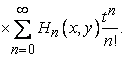
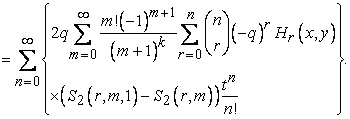
Theorem. There is following relationship between the Hermite-based poly-Genocchi polynomials with a q-parameter and the Stirling numbers of the second kind as:
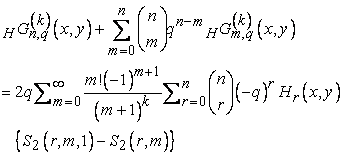 | (15) |
Proof. By (16) and (8), we write as:
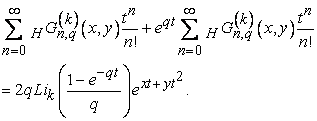 |
L. H. S. of this equation is
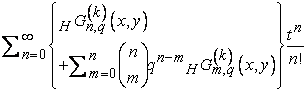 | (16) |
R. H. S. of this equation
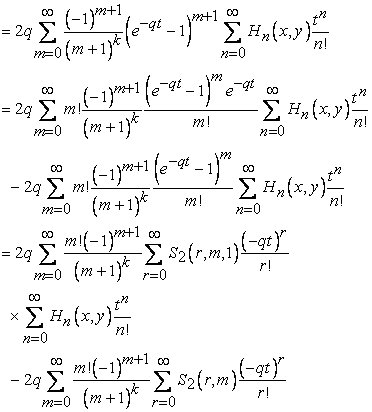 |
 |
By using Cauchy product, we have
 | (17) |
From (16) and (17), we get (15).
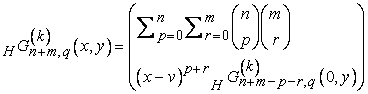
Theorem. The following relation holds true:
 | (18) |
Proof. By (8),
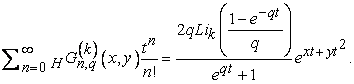 | (19) |
We replace t by t+u in (19)
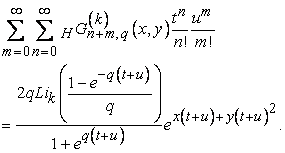 |
From this equation, we write as
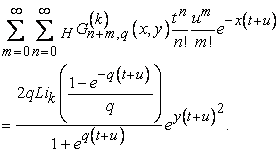 | (20) |
In the last equation, we replace x by v, we get
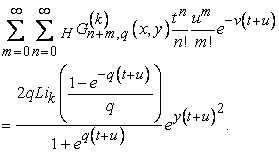 | (21) |
By (12) and (13), we write
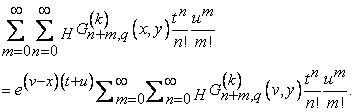 | (22) |
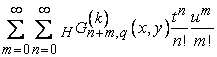
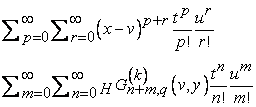
Now, by applying the following known series identity [ 19, p. 52, Eq. 1. 6 (2)]
 | (23) |
in the right hand side of (23), we get
 |
 | (24) |
Finally, upon first replacing n by n-p and m by m-r by using the Cauchy product in the left hand side of the above equation (24) and comparing the coefficients of  and
and  On both sides of the resulting equation, we have (18).
Theorem (Closed Formula) The following relation holds true:
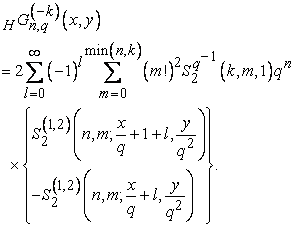 | (25) |
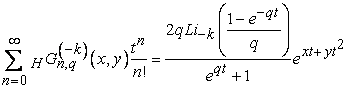
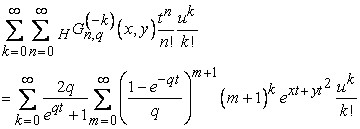
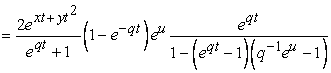
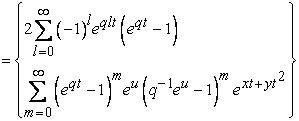
Proof. By replacing k by (-k) in (8), we get
 |
 |
 |
 |
 |
 |
 | (26) |
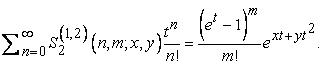
For 𝜆=1 and j=2 in (8), we get
 | (27) |
We put the equation (8) and (27) in (26). We have
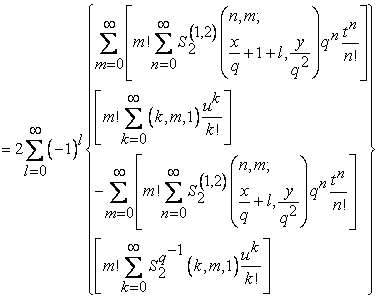 |
From the last equation, comparing the coefficients of  and
and  we have (25).
The present investigation was supported by the Scientific Research Project Administration of Akdeniz University.
| [1] | A. Bayad and Y. Hamahata, “Polylogarithms and poly-Bernoulli polynomials,” Kyushu. J. Math., 65, pp. 15-34, 2011. | ||
| In article | View Article | ||
| [2] | R. Sanchez-Peregrino, “Closed formula for Poly-Bernoulli numbers,” Fibonacci Quart., 40, pp. 362-364, 2002. | ||
| In article | |||
| [3] | M. Cenkci and T. Komatsu, “Poly-Bernoulli numbers and polynomials with a q-parameter,” J. Number Theory, 152, pp. 38-54, 2015. | ||
| In article | View Article | ||
| [4] | T. Kim, S. Y. Jang and J. J. Seo, “A note on poly-Genocchi numbers and polynomials,” Appl. Math. Sci., 18(96), 4775-4781, 2014. | ||
| In article | View Article | ||
| [5] | T. Kim, “Multiple zeta values and their application,” Lecture Notes in Number Theory, 31-95, 1996. | ||
| In article | |||
| [6] | U. Duran, M Acikgoz and S. Araci, “Hermite based poly-Bernoulli polynomials with q-parameter,” Advanced Stud. In Comptem., 28(2), pp. 285-296, 2018. | ||
| In article | View Article | ||
| [7] | B. Kurt, “Identities and relation on the Poly-Genocchi polynomials with a q-parameter,” J. Inequa. Special Func., 9(1), pp. 1-8, 2018. | ||
| In article | |||
| [8] | M. A. Ozarslan, Hermite-based unified Apostol-Bernoulli, Euler and Genocchi polynomials,” Advances in Diff. Equa., 2013.2013.1847. | ||
| In article | View Article | ||
| [9] | Y. Hamahata, “Poly-Euler polynomials and Arakawa-Kaneko type zeta functions,” Functione et. App. Commentarii Mathematica, 51(1), pp. 7-27, 2014. | ||
| In article | View Article | ||
| [10] | H. M. Srivastava, “Some generalization and basic (or q-) extensition of the Bernoulli, Euler and Genocchi polynomials,” App. Math. Information Sci., 5, pp. 390-444, 2011. | ||
| In article | |||
| [11] | H. M. Srivastava and J. Choi, “Series associated with the zeta and related functions,” Kluver Academic Pub., Dordrect, Boston and London, 2001. | ||
| In article | View Article | ||
| [12] | D. S. Kim and T. Kim, “Higher-order Frobenius-Euler and Poly-Bernoulli mixed-type polynomials,” Advances in Diff. Equa., 2013.2013.251. | ||
| In article | View Article | ||
| [13] | D. S. Kim and T. Kim, “Higher order Bernoulli and poly-Bernoulli mixed type polynomials,” Georgian Math. J., 22, pp. 265-272, 2015. | ||
| In article | View Article | ||
| [14] | U. Duran and M. Acikgoz, “On (p,q)-Euler numbers and polynomials associated with (p,q)-Volkenborn integral,” Int. J. of Number Theory, 14(1), pp. 241-253, 2018. | ||
| In article | View Article | ||
| [15] | A. Bayad and T. Kim, “Higher recurrences for Apostol-Bernoulli-Euler polynomials,” Russ. J. of Math. Phys., 19(1), pp. 1-10, 2012. | ||
| In article | View Article | ||
| [16] | U. Duran, M Acikgoz, A. Esi and S. Araci, “A note on the (p,q)-Hermite polynomials,” App. Math. And Information Sciences, 12, pp. 227-231, 2018. | ||
| In article | View Article | ||
| [17] | H. Jolany, R. B. Corcino and T. Komatsu, “More properties on multi-Poly-Euler polynomials,” Bull. Soc. Math. Mex., 21, pp. 149-162, 2015. | ||
| In article | View Article | ||
| [18] | D. S. Kim and T. Kim, Hermite and Poly-Bernoulli mixed type polynomials,” Advances in Diff. Equa., 2013. 2013. 343. | ||
| In article | View Article | ||
| [19] | D. S. Kim, T. Kim, D. V. Dolgy and S. H. Rim, “Some new identities of Bernoulli, Euler and Hermite polynomials arising from umbral calculus,” Advances in Diff. Equa., 2013. 2013. 73. | ||
| In article | View Article | ||
| [20] | D. S. Kim and T. Kim, “Some identities of Frobenius-Euler polynomials arising from umbral calculus,” Advances in Diff. Equa., 2012. 2012. 196. | ||
| In article | View Article | ||
| [21] | D. S. Kim and T. Kim, “A note on poly-Bernoulli and higher order poly-Bernoulli polynomials,” Russ. J. Math., 22(1), pp. 26-33, 2015. | ||
| In article | View Article | ||
| [22] | B. Kurt and Y. Simsek, “On the generalized Apostol-type Frobenius-Euler polynomials,” Advances in Diff. Equa., 2013. 2013. 1. | ||
| In article | View Article | ||
| [23] | H. M. Srivastava and H. L. Manocho, “A Treatise on generating functions,” Halsted Press, John Willey and sums, New York, Chichester, Brisbane and Toronto, 1984. | ||
| In article | |||
Published with license by Science and Education Publishing, Copyright © 2019 Burak KURT
 This work is licensed under a Creative Commons Attribution 4.0 International License. To view a copy of this license, visit
http://creativecommons.org/licenses/by/4.0/
This work is licensed under a Creative Commons Attribution 4.0 International License. To view a copy of this license, visit
http://creativecommons.org/licenses/by/4.0/
| [1] | A. Bayad and Y. Hamahata, “Polylogarithms and poly-Bernoulli polynomials,” Kyushu. J. Math., 65, pp. 15-34, 2011. | ||
| In article | View Article | ||
| [2] | R. Sanchez-Peregrino, “Closed formula for Poly-Bernoulli numbers,” Fibonacci Quart., 40, pp. 362-364, 2002. | ||
| In article | |||
| [3] | M. Cenkci and T. Komatsu, “Poly-Bernoulli numbers and polynomials with a q-parameter,” J. Number Theory, 152, pp. 38-54, 2015. | ||
| In article | View Article | ||
| [4] | T. Kim, S. Y. Jang and J. J. Seo, “A note on poly-Genocchi numbers and polynomials,” Appl. Math. Sci., 18(96), 4775-4781, 2014. | ||
| In article | View Article | ||
| [5] | T. Kim, “Multiple zeta values and their application,” Lecture Notes in Number Theory, 31-95, 1996. | ||
| In article | |||
| [6] | U. Duran, M Acikgoz and S. Araci, “Hermite based poly-Bernoulli polynomials with q-parameter,” Advanced Stud. In Comptem., 28(2), pp. 285-296, 2018. | ||
| In article | View Article | ||
| [7] | B. Kurt, “Identities and relation on the Poly-Genocchi polynomials with a q-parameter,” J. Inequa. Special Func., 9(1), pp. 1-8, 2018. | ||
| In article | |||
| [8] | M. A. Ozarslan, Hermite-based unified Apostol-Bernoulli, Euler and Genocchi polynomials,” Advances in Diff. Equa., 2013.2013.1847. | ||
| In article | View Article | ||
| [9] | Y. Hamahata, “Poly-Euler polynomials and Arakawa-Kaneko type zeta functions,” Functione et. App. Commentarii Mathematica, 51(1), pp. 7-27, 2014. | ||
| In article | View Article | ||
| [10] | H. M. Srivastava, “Some generalization and basic (or q-) extensition of the Bernoulli, Euler and Genocchi polynomials,” App. Math. Information Sci., 5, pp. 390-444, 2011. | ||
| In article | |||
| [11] | H. M. Srivastava and J. Choi, “Series associated with the zeta and related functions,” Kluver Academic Pub., Dordrect, Boston and London, 2001. | ||
| In article | View Article | ||
| [12] | D. S. Kim and T. Kim, “Higher-order Frobenius-Euler and Poly-Bernoulli mixed-type polynomials,” Advances in Diff. Equa., 2013.2013.251. | ||
| In article | View Article | ||
| [13] | D. S. Kim and T. Kim, “Higher order Bernoulli and poly-Bernoulli mixed type polynomials,” Georgian Math. J., 22, pp. 265-272, 2015. | ||
| In article | View Article | ||
| [14] | U. Duran and M. Acikgoz, “On (p,q)-Euler numbers and polynomials associated with (p,q)-Volkenborn integral,” Int. J. of Number Theory, 14(1), pp. 241-253, 2018. | ||
| In article | View Article | ||
| [15] | A. Bayad and T. Kim, “Higher recurrences for Apostol-Bernoulli-Euler polynomials,” Russ. J. of Math. Phys., 19(1), pp. 1-10, 2012. | ||
| In article | View Article | ||
| [16] | U. Duran, M Acikgoz, A. Esi and S. Araci, “A note on the (p,q)-Hermite polynomials,” App. Math. And Information Sciences, 12, pp. 227-231, 2018. | ||
| In article | View Article | ||
| [17] | H. Jolany, R. B. Corcino and T. Komatsu, “More properties on multi-Poly-Euler polynomials,” Bull. Soc. Math. Mex., 21, pp. 149-162, 2015. | ||
| In article | View Article | ||
| [18] | D. S. Kim and T. Kim, Hermite and Poly-Bernoulli mixed type polynomials,” Advances in Diff. Equa., 2013. 2013. 343. | ||
| In article | View Article | ||
| [19] | D. S. Kim, T. Kim, D. V. Dolgy and S. H. Rim, “Some new identities of Bernoulli, Euler and Hermite polynomials arising from umbral calculus,” Advances in Diff. Equa., 2013. 2013. 73. | ||
| In article | View Article | ||
| [20] | D. S. Kim and T. Kim, “Some identities of Frobenius-Euler polynomials arising from umbral calculus,” Advances in Diff. Equa., 2012. 2012. 196. | ||
| In article | View Article | ||
| [21] | D. S. Kim and T. Kim, “A note on poly-Bernoulli and higher order poly-Bernoulli polynomials,” Russ. J. Math., 22(1), pp. 26-33, 2015. | ||
| In article | View Article | ||
| [22] | B. Kurt and Y. Simsek, “On the generalized Apostol-type Frobenius-Euler polynomials,” Advances in Diff. Equa., 2013. 2013. 1. | ||
| In article | View Article | ||
| [23] | H. M. Srivastava and H. L. Manocho, “A Treatise on generating functions,” Halsted Press, John Willey and sums, New York, Chichester, Brisbane and Toronto, 1984. | ||
| In article | |||


