This study explored how using drill cards can help improve the handwriting of students with Autism Spectrum Disorder (ASD). Many children with ASD face challenges in writing due to issues with motor skills, focus, and sensory processing. Drill cards—simple, structured tools with guided handwriting activities—were used to support their writing development. The study compared two groups of students: one used drill cards and the other did not. Results showed that while all students had difficulty with handwriting at the beginning, those who used drill cards showed more improvement in letter sizing, formation, and legibility. Although the improvement wasn’t statistically significant, the findings suggest that drill cards offer a promising, accessible, and easy-to-use strategy to support writing skills in students with ASD. The study highlights the importance of structured practice and recommends further research on combining drill cards with other supportive techniques.
One of the most effective tools for learning and proving knowledge is writing. It encourages self-expression, self-reflection, and personal growth while facilitating communication and interpersonal interactions. As a result, writing issues significantly impede one's ability to succeed in education, the workforce, and other areas of life 1.
Handwriting is a fundamental skill taught in educational settings worldwide 2. It is an essential skill used in learning that enables students express their knowledge and thoughts, develop linguistic expertise, and academic readiness necessitating the tying together of the mental and motor functions. The handwriting skill to form letters on a page, is essential in writing process and can predict the amount and quality of student’s written ideas (Kim et al., 2021). Even though Kim et al, found handwriting a pivotal in developing fine motor skills of students but little attention has been focused on the instruction of writing mechanics (e.g., letter formation, size, spacing); as a result, students are struggling with foundational handwriting skills that affect legibility and ultimately writing performance.
Similarly, Gargot, T. 3 mentioned that handwriting has been demonstrated to be crucial for the brain's processing of letters. Traditionally, instruction in handwriting has relied on paper and pencil methods. However, the effectiveness of this approach has come under scrutiny due to various challenges that hinder optimal learning outcomes. This explores the challenges associated with learning handwriting with paper and pencil and propose potential solutions to address these issues 4.
While Graham, S. 5 said that handwriting skills are essential for students, including those with special needs. It helps improve fine motor skills as it requires precise finger movements and coordination. It provides tactile feedback which can be helpful to students in understanding the writing process. Using paper and pen/pencil can be less distracting than digital devices for some students. Handwriting improved word retrieval more than writing using touch keyboard 6.
However, in this modern age, text in a variety of forms, includes typewriting digital writing, keyboarding the use of electronic writing instruments and text-to-speech software. These features can assist students with ASD in both writing and reading. Digital writing allows for easy editing and revising, which can be a significant benefit for these students with organization or have difficulties with fine motor skills 7. But according to Bennett, J., & McKain, D. 8 making traditional notes is more effective and more advantageous than using digital equipment. They discovered that writing down notes increases intellectual understanding and factual content retention. It also fosters more mental activities assisting to successful learning. Added scientific evidence is also demonstrating the beneficial effects of handwriting performance in all sorts of academic learning, such as language, reading, and writing. Students can focus more on writing which increases reading comprehension 9. Nevertheless, problems with handwriting can be connected in a significant risk factor for academic failure since handwriting tasks account for approximately 30 to 60 percent of primary school activities 10.
Despite its long-standing use in educational settings, learning handwriting with paper and pencil faces several challenges that impede its effectiveness most especially for children with autism spectrum disorder (Verma, P., & Lahiri, U. 2022). Given that these students frequently have comorbid attention-deficit/hyperactivity disorder (ADHD), they frequently struggle in writing. The fact that writing requires a complicated, diverse collection of skills makes it challenging to comprehend the complexity of the writing issues that affect these students (Chang et al., 2022). One major challenge is the limited engagement experienced by the students, as traditional methods may fail to capture their interest and motivation 11. Furthermore, accessibility to adequate handwriting resources, such as quality paper and pencils, is often constrained in certain educational contexts, exacerbating disparities in learning opportunities (Jones & Smith, 2019). Additionally, Graham 5 mentioned that variability in instructional quality poses a significant obstacle, with many educators lacking the necessary training and resources to deliver effective handwriting instruction.
Moreover, Bhat, A.N. 12 added that students with spectrum disorder have physical limitations that make handwriting challenging or painful. Their handwriting legibility is also a significant challenge with motor or sensory issues. According to him, approximately 60% of students with ASD present some type of specific difficulty in learning to write. These mainly involved the student’s foundational writing skills 13. Although there are few research focusing on engagement during writing activities, students with ASD exhibit extremely diverse engagement patterns in educational contexts 14.
While it is true, students with ASD have the potential of neurological differences that cause them to need additional help in learning handwriting. They have significant underlying neurological abnormalities that may cause differences in their movements and execution of motor tasks. Even their fine motor skills have been developed but still they find difficulty to write 15. Frequently, they experienced difficulties with motor coordination and fine motor skills, which are essential for precise and controlled hand movements involved in handwriting 16. In addition, their sensory processing also affects their ability to tolerate and integrate sensory input, making it challenging for them to engage in the fine motor aspects of handwriting 17. Thus, challenges in executive functioning, such as planning, organization, and task initiation, further contribute to their difficulties in maintaining the sequential and organized nature of handwriting 18.
According to Al-Farra, R., & Al-Smadi, J. (2023), drill cards can improve the handwriting skills of students with ASD. It helps in developing their fine motor skill through structured and repetitive way of writing (Ch’ng, H. L., & Ahmad, A. C., 2021). It provides a format for practicing specific handwriting movements, allowing students to benefit from consistent practice and reinforcement (Bolger et al., 2021). Supported by Collins et al 19, drill cards are beneficial for students with autism who thrive on routine and predictability. Drill cards have clear instructions and visual cues that can enhance the understanding and execution of handwriting tasks for these students 20. By breaking down handwriting tasks into smaller, manageable components through drill cards build foundational skills gradually, promoting a step-by-step approach to handwriting development for students with ASD (Pian, L., 2019).
However, utilizing drill cards as a therapeutic tool for students with ASD offers a structured and supportive approach to developing handwriting skills, and catering to their unique needs. It needs assessment and/or assessing the severity of autism in students that involves a comprehensive evaluation that considers various domains of their functioning. Observations of the student's social interactions, communication skills, and repetitive behaviors are crucial aspects of the assessment (Prince et al., 2023). Further, assessing cognitive abilities, adaptive functioning, and sensory processing can offer a more holistic understanding of the child's overall development. Severity is often categorized based on the intensity of impairments in these areas, ranging from mild to severe. Regular reevaluation is essential to monitor progress and adapt interventions to address the specific needs of the child, facilitating early and targeted support for optimal developmental outcomes (Francés et al., 2022).
Addressing these difficulties requires a comprehensive approach that includes targeted interventions to improve fine motor skills, sensory processing, and executive functioning, as well as providing accommodations and support in the learning environment. Thus, this study will be conducted to determine the effects of using drill cards in developing writing literacy for students with autism spectrum disorders.
The study anchored on behaviorist learning theory of B.F. Skinner as introduced by Cherry, K. 21, that emphasizes the importance of reinforcement and repetition in learning and shaping behaviors. When applied to the development of handwriting skills in students with autism, behaviors should be strengthened by giving positive reinforcement such as praise, rewards, or tokens to encourage desired behaviors, like holding the pencil correctly or forming letters accurately. Further, breaking down complex behaviors into smaller, manageable tasks. This is particularly useful for teaching handwriting to students with autism, who may struggle with fine motor skills or sensory issues. By breaking down the process of handwriting into smaller steps, they will be provided with clear instructions and opportunities for practice, gradually building proficiency. To improve students’ handwriting skills, repetition and practice will be given emphasis. To master the skills more repetition and structured practice sessions focusing on handwriting can be beneficial. By providing regular practice opportunities and feedback, students improve their handwriting over time.
Skinner's theory also includes techniques such as prompting and fading, which involve providing cues or assistance to support learning and gradually reducing them as the student becomes more proficient. Teacher may initially provide physical guidance to help a student with autism hold the pencil correctly, gradually fading this support as the student gains independence. Moreover, focusing on individualized instruction that eventually tailored to meet the individual needs of students. By carefully observing each student's strengths, challenges, and learning preferences, teachers can adapt their instructional strategies to effectively support handwriting skill development.
Moreover, drill and practice is applicable for students with ASD for it involves repeated exposure to a particular skill (such as forming letters or words) with the aim of reinforcing and conditioning the desired behavior. Positive reinforcement could be provided when students successfully completes a writing task or forms letters accurately. This positive feedback encourages the repetition of correct behaviors. Drill and practice also involve a systematic task analysis, focusing on specific elements of handwriting such as letter formation, spacing, and motor control. Drill and practice activities are designed to facilitate the acquisition of handwriting skills through consistent repetition and positive reinforcement 22.
Further, behaviorist learning theory provides a framework for understanding how drill cards can effectively help in developing handwriting to students with ASD. By utilizing principles of operant conditioning, such as positive reinforcement and repetition, drill cards capitalize on the behaviorist approach to facilitate skill acquisition. Through consistent practice and immediate feedback provided by drill cards, students can reinforce correct handwriting behaviors and gradually improve their handwriting skills. The structured format of drill cards aligns with the need for clear, predictable routines often preferred by the students, promoting engagement and motivation in learning tasks. On top of that, behaviorist strategies incorporated into drill card activities, such as shaping and prompting, help scaffold learning and support gradual skill development in a systematic manner 23.
Supported by Sukmana, N. (2023), drill cards are beneficial not only students with ASD but to all young children to help them get used to the activities. This will motivate students to engage in writing activities. Aside of beneficial to the students, it emphasizes the significance of observable behaviors and their reinforcement to shape learning. Through repetitive drills and positive reinforcement, students can enhance their cognitive and social skills. The clear and structured format of drill cards aligns with behaviorist principles by breaking down complex skills into manageable components, allowing for gradual learning and reinforcement. This approach is particularly effective for these students, as it provides a systematic and predictable environment, catering to their need for routine and consistency. Overall, the integration of drill cards within behaviorist frameworks offers a tailored and effective approach to support the developmental needs of students on the autism spectrum.
Students with Autism Spectrum Disorder (ASD) often experience challenges in various aspects of their development, including communication and language skills. Writing skills, in particular, can present significant hurdles for these students due to differences in sensory processing, social communication, and executive functioning. Understanding and addressing these challenges is crucial for educators, parents, and professionals working with students on the autism spectrum.
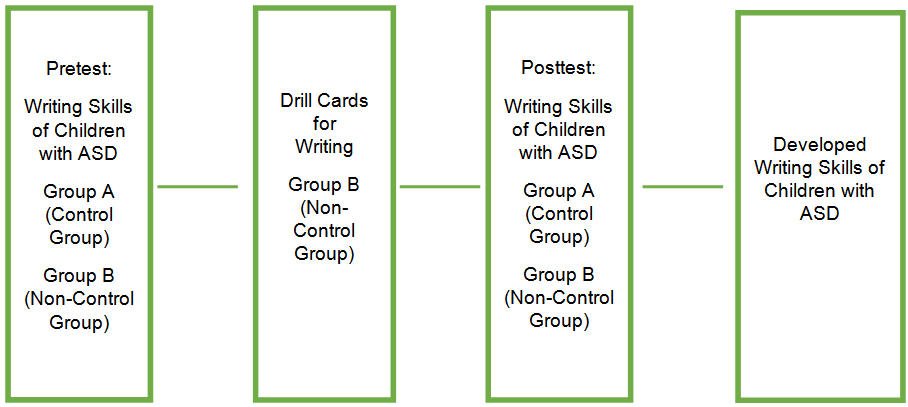
Before implementing interventions to enhance writing skills of students with ASD, it is essential to conduct a thorough pre-assessment of the two groups (control and non-control) to identify the specific needs and areas of difficulty. The pre-assessment should encompass various aspects of writing, such as fine motor skills, letter sizing, letter formation, and legibility of writing. Additionally, it is crucial to consider the student's sensory preferences and sensitivities, as sensory issues can significantly impact the engagement and participation of students in writing activities.
Then, pretest will be administered for the two groups (control and non-control) as baseline session prior to intervention. This is to carefully observe student's current writing abilities, including their ability to hold a writing tool, size letters, form letters, and legibility of their writing. Evaluating the student's fine motor skills is also needed to understand their hand-eye coordination, grip strength, and dexterity. Further, assessing the students’ sensory preferences and sensitivities to tailor interventions that accommodate their sensory needs. This includes considering factors such as tactile sensitivity, visual processing, and auditory processing. The communication abilities of the students (verbal and nonverbal) be evaluated too to understand how they may impact written expression. Most of the students with ASD may struggle with pragmatic language skills, which can affect their ability to convey ideas in writing.
After which students in the non-control group will be given a writing activity using the drill cards as part of their writing instruction. They will be provided with the drill cards as instructional tools for writing practice. Each drill card typically contains a writing prompt, question, or exercise for them to perform. These cards will be used sequentially, starting with simpler tasks and progressing to more complex ones as proficiency improves. By then, students will typically work through the drill cards independently or under the guidance of the teacher, depending on the instructional format. The frequency and duration of the intervention sessions will depend on the study's design and objectives. Researcher may schedule regular sessions over a specified period to assess the intervention's effectiveness.
Throughout the intervention, researcher will monitor student’s progress and performance in writing activities. This may include observations, writing samples, assessments, or surveys to measure changes in writing skills or behaviors. Overall, conducting the intervention using drill cards for student’s writing activity involves structured practice and targeted instruction aimed at improving writing skills. The intervention's success is evaluated through careful monitoring, data analysis, and potential adjustments to enhance effectiveness
After implementing targeted interventions and strategies using drill cards to enhance writing skills of students with ASD, a posttest is conducted to the non-control group to measure progress and identify areas for further development. The posttest provides valuable insights into the effectiveness of interventions and guides adjustments to the intervention plan if necessary. Posttest may involve progress monitoring to compare the student's current writing abilities to the baseline established during the pretest. This includes reviewing samples of the student's writing, evaluating improvements in fine motor skills, and assessing changes in sensory processing. Gathering feedback from teachers, parents, and caregivers regarding the student's writing progress and any observed changes in behavior or engagement during writing activities.

Statement of the Problem
The study aims to determine the effect of using drill cards in developing the handwriting skills of students with autism spectrum disorder in North City Central School, Cagayan de Oro City. Specifically, it seeks to answer the following questions:
1. 1. What is the level of handwriting skills of students with ASD in the pretest in terms of:
1.1 letter sizing
1.2 letter formation
1.3 legibility of writing
2. What is the level of handwriting skills of students with ASD in the posttest in terms of:
1.1 letter sizing
1.2 letter formation
1.3 legibility of writing
3. How does the use of drill cards effect the handwriting skills of children with ASD in terms of:
1.1 letter sizing
1.2 letter formation
1.3 legibility of writing
Significance of the Study
Handwriting is an important and basic tool in learning. This allows students to perform tasks such as writing name, filling in data, answering worksheets and copying information. Many students with ASD have difficulty writing letters, numbers and symbols. Thus, the result of this study would be beneficial and of great help to the following individuals:
SPED Teachers. This will provide them the knowledge and skills in using drill cards to develop the students’ handwriting skill that easily available with instruction and paired with assessment tool that are comprehensible.
Students with Autism Spectrum Disorder. This will help students to develop their handwriting skills through the use of drill cards that provide handwriting activities and practice to develop consistent letter formation, spacing, sizing and legibility in writing.
Parents. This will help the parents in assisting their children in the handwriting activities and practice using drill cards which is handy and easily available at home.
Future Researchers. This study helps the future researchers to conduct in-depth studies to use drill cards not only to develop the handwriting skills of the students but also in academic endeavor of the students.
Scope and Limitation of the Study
The main focus of the study is to determine the effect of drill cards as a tool for developing handwriting skills of Children with Autism in North Central School in the Division of Cagayan de Oro for School Year 2023-2024.
This study is limited to students with autism spectrum disorder with greater severity of ASD, attention, and motor symptoms with lower handwriting performance and greater difficulties in functional handwriting performance.
Definition of Terms
Autism Spectrum Disorder. This refers to the developmental disability caused by differences in the brain. Students with ASD often have problems with social communication and interaction, and restricted or repetitive behaviors or interests. Some of them have weak in motor skills which drill cards could help develop aside of their handwriting skills.
Dimension of Handwriting. This refers to various aspects of students’ writing style and characteristics. It contributes to the overall quality and style of students’ handwriting.
Drill cards. This refers to the tool created by the teacher with varied writing activities to develop the handwriting skills of students.
Handwriting. This refers to the writing of students with ASD using pen, pencil, or another instrument.
Letter Formation. This refers to the process of correctly creating individual letters by the students when writing by hand. It involves the precise execution of strokes and shapes to produce legible and recognizable letters. Proper letter formation is essential for clear and effective communication through handwriting.
Letter Size. This refers to the overall size of the handwriting of the students which can range from large to small. Large handwriting may suggest extroversion and a desire for attention, while smaller handwriting may indicate introversion and attention to detail.
Legibility in Writing. This refers to the clarity and ease of the students’ written text that can be read and understood. It is also a measure of how well the characters and words in handwriting or printed text can be distinguished from one another. Legible writing is essential for effective communication, as it ensures that the intended message is conveyed accurately and efficiently.
Pretest. Refers to an initial assessment of the writing skills of students before some intervention, condition, manipulation, or treatment is introduced.
Posttest. This refers to an assessment of the students carried out to measure any changes that have occurred and for valuable insights into the effectiveness of using the drill cards in their handwriting skills.
Special Education. This refers to the education of students who differ socially, mentally, or physically from the average to such an extent that they require modifications of usual school practices. Special education serves students with emotional, behavioral, or cognitive impairments or with intellectual, hearing, vision, speech, or learning disabilities; gifted children with advanced academic abilities; and children with orthopedic or neurological impairments.
This chapter deals with literature and studies relevant to the present study. The review consists of related literature which serve as a pathfinder in the undertaking of students and teachers on using drill cards for developing handwriting. Other variables related to the study are taken into consideration. A number of books have been amply documented to support the framework of the study.
Proficient handwriting is an important scholastic skill that students must acquire to meet common classroom demands 24. These are the skills needed for students to be ready in writing activities. Moreover, writing activities would not limit in the hand and pen/pencil activity and/or for finger dexterity. It involves good sitting posture for smooth writing activity. According to Grimm, P. A. 25 there is a link between good posture while sitting and scholastic achievement. There is a direct and advantageous correlation between sitting posture, output volume, and output accuracy. Further, it is for physiological, social, and academic reasons that health professionals and educators have long recognized the significance of children’s posture.
While majority of clinical and epidemiological investigations, there is a need to conduct an evaluation of the fine motor skills of students. As Van den Bergh, 26 said that it is difficult to adequately assess motor skills because many fine motor duties necessitate not only manual dexterity but also suitable motor planning, perception of tactile, kinesthetic, visual feedback, and perceptual abilities for visual-motor cooperation. These are essential for it include the handwriting skills of these students. The handwriting involves intricate visual-perceptual-motor processing that is mediated by executive, motor, and motor-related functions. To create a word, these processes are coordinated and integrated at several levels 27. Depending on which of the tasks involved in writing are planned and carried out, the visual image of letters or shapes will be processed after being perceived as a word 28. This includes writing lines, shapes and symbols which are the first step into handwriting. That is why learning to copy these basic things are essential to move forward and develop handwriting.
According to McClelland, M. M., & Cameron, C. E. 29, writing abilities require further social and language executive functioning and attention for these are two cognitive processes that can be used to traverse various handwriting settings. Supported by Skar et al 4, these will help students establish plans, obtain information to write about, organize and construct information appropriate for the writing task. This will also manage thoughts and behaviors to stay focused on writing tasks which enhance self-regulation while writing 30. Further, theoretical foundations of written language have provided strong support for the significance of self-regulation to writing. Effective teaching strategies that aid struggling writers in becoming more strategic in their writing have emerged from research and development choices 15.
Students with autism spectrum disorders frequently exhibit difficulties in fine motor skill development, which can impede their ability to master essential life skills, including handwriting 31. Absolutely, the development of fine motor skills is crucial for their various tasks, including handwriting and it can present unique challenges for them. Challenges in the coordination of their small muscles in the hands and fingers which is essential in writing 32.
In like manner, students with ASD demonstrate heterogeneous handwriting skills 33 with handwriting difficulties 34. While not all students with ASD experience the same writing challenges, it is also through various developmental disabilities and issues in handwriting, text organization, and quality 35. Further, on spelling, grammatical, and punctuation issues 36. Empirical research has provided reasons for some of these problems that include cognitive and linguistic issues; social interaction 34; executive functioning and attention 33.
Given that writing is a complex process, it can be challenging to comprehend the complexity of the writing challenges that affect students with ASD of diverse, versatile combination of abilities. Writing abilities can be broadly categorized both from a simple and more complex perspective. Conceptually divided between text creation (converting thoughts into words, phrases, and handwriting) and transcription (handwriting, keyboarding, and spelling), larger conversation units as well (Gillespie-Lynch et al., 2020).
While concerning the evaluation of skills, recent observational and intervention research have been divided including self-control and attention. Observational studies typically concentrate on attentional challenges using comparison groups, whereas intervention studies put more emphasis on organizing the groups 33. Further, attention revealed that attentional issues may contribute to the writing challenges that students with ASD experience in both text generation and handwriting. Thus, using self-management techniques is essential to improve skills in writing 37.
Moreover, using the paper and pencil tool for teaching handwriting skills to students with ASD presents several challenges, particularly in the context of modern education. Despite its traditional use, this method may not adequately address the diverse needs of learners, including those with specific learning difficulties such as dysgraphia and ASD. Challenges include limited engagement, as digital natives may find paper and pencil tasks less appealing than interactive or digital learning experiences. Additionally, accessibility to adequate resources, such as quality paper and pencils, may be constrained, exacerbating disparities in learning opportunities. Furthermore, variability in instructional quality and the inability to provide immediate feedback can hinder effective skill development (Peters et al., 2020).
However, assistive devices for students with ASD in learning how to write serve to address specific challenges associated with the condition, such as fine motor difficulties, sensory sensitivities, and attention deficits. Adaptive writing tools like pencil grips and weighted pens can help improve grip strength, control, and comfort during writing tasks, accommodating variations in motor skills and sensory preferences. Visual aids such as writing guides and templates provide structure and support for letter formation and spacing, promoting consistency and legibility in handwriting. Additionally, technology-based assistive devices, such as interactive writing apps or speech-to-text software, offer alternative methods for expressing ideas and practicing writing skills, catering to individual learning styles and needs 38.
Notwithstanding, handwriting remains a valuable skill for taking down notes due to several advantages it offers over digital alternatives. Handwriting engages multiple sensory modalities, including tactile, visual, and kinesthetic, facilitating deeper encoding of information and enhancing memory retention 11. Additionally, the process of writing by hand encourages active engagement and cognitive processing, promoting better comprehension and synthesis of complex concepts. Furthermore, handwritten notes allow for greater flexibility in formatting, annotation, and illustration, enabling individuals to personalize their note-taking style to suit their learning preferences and needs. Overall, handwriting fosters a more interactive and effective note-taking experience, supporting academic success and knowledge integration (Richardson, L., & Lacroix, G., 2024).
For this reason, Zampella et al (2021) explores the potential benefits of using drill cards as an intervention tool for enhancing the handwriting skills of students with ASD. This could be a valuable tool in developing the writing skills of students with autism. Drill cards provide a clear and organized format for learning writing skills. The repetition and routine of using drill cards can help create a structured learning experience, which can be particularly beneficial for students with autism who may struggle with unstructured or ambiguous tasks 35. Graham, S. 5 added that consistent repetition is key for skill development, especially for students with autism. Drill cards offer opportunities for repetitive practice, allowing students to reinforce and master writing skills over time. The repetitive nature of drill cards can help improve muscle memory and promote automaticity in writing tasks.
Further, Rutherford et al 39 mentioned that most of the students with autism are visual learners. Drill cards often incorporate visual elements such as pictures or diagrams to illustrate concepts. Visual supports can enhance understanding and engagement, making it easier for the students to grasp writing concepts and instructions. Drill cards can also be adapted to meet the individual needs and abilities of each student. Educators and parents can customize the content and pace of drill card activities based on the students' skill level, ensuring that the learning experience is tailored to their specific needs and challenges.
According to Dawson, P., & Guare, R. 40, mastering writing skills can be challenging for students with autism. Drill cards provide a systematic approach to learning, allowing them to build skills gradually and experience success at each step. This success can boost their confidence and motivation to continue developing their writing abilities. Once writing skills are developed through drill cards, students may find it easier to generalize these skills to other contexts. The structured and repetitive nature of drill cards can contribute to the transfer of skills from the drill card activities to real-life writing situations.
Febriantini et al 41 maintained that drill cards can be a beneficial tool and most effective when used as part of a comprehensive and individualized educational approach. Combining drill cards with other strategies, such as sensory integration techniques, social skills training, and communication interventions, can provide a holistic and tailored approach to support the unique needs of children with autism. Additionally, the involvement of parents and caregivers in the learning process is crucial for reinforcing skills and promoting consistency across different environments.
One notable advantage of drill cards is their adaptability to individual needs. Students with autism often benefit from personalized interventions that consider their unique strengths and challenges 42. Drill cards can be modified to accommodate varying skill levels, ensuring that students receive targeted support. Hence the use of drill cards helps students develop their writing skills. The repetition of facts or increased efficiency is the focus of the drilling and practice approach. Exercise should be performed as frequently as feasible to aid with memory retention and usage of technique of mindless repetition of the students 43. In addition, timed practice drills as a method for developing automaticity offer a clear alternative to strategy instruction for academically low-achieving students 44.
The literature reviewed suggests that drill cards hold promise as effective tools for developing handwriting skills in children with autism. Although, using drill cards to develop the writing skills of students with Autism Spectrum Disorder (ASD) can have both positive and negative implications, depending on various factors such as individual needs, preferences, and instructional methods. Further research is warranted to explore the long-term effects and optimal implementation strategies. Educators, therapists, and parents can consider integrating drill card interventions into existing educational programs to enhance fine motor skill development of students with ASD.
This chapter presents the research design, research setting, research respondents, sampling procedure, research instruments, and data gathering procedure, categorization of variables, and statistical treatment of the problem.
RESEARCH DESIGN
The study will make use of pretest-posttest non-equivalent comparison group design. In the pretest-posttest non-equivalent comparison group design, there is a treatment group that is given a pretest, receives a treatment, and then is given a posttest. But at the same time there is a non-equivalent comparison group that is given a pretest, does not receive the treatment, and given a posttest. The question, then, is not simply whether participants who receive the treatment improve, but whether they change more than participants who do not receive the treatment.
RESEARCH SETTING
The study will be conducted at North City Central School at Puntod, Cagayan de Oro City of SY 2022-2023. North City Central School is located at Puntod, North I District, Cagayan de Oro, Misamis Oriental. Near this place are: Puntod National High School (31 meter), Piaping Puti Day Care Center (661 meter), Macabalan Elementary School (727 m), Macabalan National High School (773 meter), Corrales Elementary School (1 km). The class organization is monograde with special classes (see location map, Appendix C).
PARTICIPANTS OF THE STUDY
Students assessed and diagnosed with autism spectrum disorder will be the participants of this study. Four of these students are graded that follow certain academic curriculum. The remaining six are non-graded students, newly enrolled and are currently working on developing prerequisite skills which include writing to be able to move to graded level. Some of the students are non-verbal hence hand writing skills are essential in developing their academic skills. They are 10 in all to be properly distributed into two assigned group as control and non-control group. Students’ identity will not be disclosed in any documents of the study.
RESEARCH INSTRUMENT
The instrument is adapted from the assessment tool of Mason, J. 45 on handwriting fluency and legibility of children with special needs. The researcher asked permission to the author and given the permission to use the tool (see Appendix A). To ensure that specific area will be assessed, the instrument is modified to address the needs of students in their writing skills. The instrument undergoes face and content validity in the area of difficulty and advice for administration on the student’s performance before and after the block of intervention.
Base on the dimension of handwriting, the drill cards will be designed to cater the students’ needs and develop their handwriting skills. The drill card is handy, attractive and easy to use for the students. It will be used in writing activities like tracing vertical, horizontal, slant, waves, and zigzag. It is also for tracing numbers, letters and proper sizing. Students will be provided assistance such as verbal cues and hand-over-hand if needed. These are preparation for transitioning from lines to shapes.
DATA GATHERING PROCEDURE
Prior to the conduct of the study, a formal letter of request will be sent to the Schools Division Superintendent for approval to conduct the study. As soon as the approval will be sought from the Schools Division Superintendent, the letter will be endorsed and forwarded to the Supervisor and principal.
The students with ASD will be grouped into two, balancing each level of skills into two group using purposive sampling. This type of sampling, also known as judgement sampling, involves the researcher using their expertise to select a sample that is most useful to the purposes of the research.
Both the treatment group (the group receiving the intervention) and the comparison group (the group not receiving the intervention) are assessed before the intervention begins. The pretest serves to measure the baseline levels of the students’ handwriting skills. The treatment group undergoes the intervention or treatment that the study is evaluating. This is with the use of drill cards in developing the handwriting skills of the students. Reinforcement will also be given to students in order to sustain their interest in writing.
After the intervention is complete, both the treatment group and the comparison group are assessed again using the same measures as in the pretest. The posttest helps determine the extent of change in the dependent variable(s) in each group. Unlike in a randomized controlled trial where participants are randomly assigned to either the treatment or control group, in a non-equivalent comparison group design, groups are not randomly assigned. Instead, pre-existing groups are used, and efforts are made to match them on relevant characteristics to create a comparable comparison group. The changes in the treatment group are compared to the changes in the comparison group to evaluate the impact of the intervention. The implementation will be of three (3) months long since the students have prior knowledge in writing activity.
Statistical Treatment
Statistical analyses, such as analysis of covariance (ANCOVA) will be used to control for initial differences between the groups. T-test will also be used to compare the gain or development after the use of drill cards to develop handwriting on students with ASD. The gain is the difference between the posttest and pretest scores. Then paired samples t-test will be used to determine the difference between pre-and post-test scores and the significance of using drill cards in the development of students’ hand writing skills.
This chapter presents the findings, the analyses and interpretations of the data by examining each group that determined the effect of the use of drill cards in developing handwriting skill of children with ASD in North City Central School.
1. What is the level of handwriting skills of students with ASD in the pretest in terms of:
The pretest results on letter sizing for students with Autism Spectrum Disorder (ASD) reveal that the majority of students faced significant challenges in this area, with a mean score of 1.42 (indicating "A lot of difficulty"). Both groups—those using the Drill Cards (mean = 1.30) and those not using them (mean = 1.53)—showed similar struggles in maintaining proper letter size, suggesting that even with intervention, the difficulty remained considerable. The fact that six students experienced "a lot of difficulty" while four had "some difficulty" highlights the widespread nature of these challenges. These difficulties can be attributed to common issues faced by individuals with ASD, such as deficits in fine motor coordination, sensory processing, and motor planning. Research by Grace et al. (2018) and Finnegan et al. 36 suggests that children with ASD often have trouble controlling and manipulating writing tools due to issues with motor planning and hand-eye coordination, which are critical for consistent letter sizing. Additionally, spatial processing difficulties, which are also typical in ASD, may contribute to problems in judging letter proportions and spacing on paper.
The findings also point to the importance of understanding the multifaceted nature of handwriting difficulties in children with autism. While the use of Drill Cards showed a slight improvement (with a lower mean score for the With Drill Card group), it was not enough to resolve the core difficulties, which reinforces the idea that simple interventions may not fully address the underlying challenges. As noted by Davis (2017), executive functioning issues can further complicate the handwriting process, as children with ASD may struggle with planning, organizing, and maintaining focus during tasks like writing. This suggests that interventions need to be more comprehensive, addressing not just fine motor skills but also sensory integration, spatial awareness, and executive functioning. Tailored interventions that take a holistic approach—such as sensory integration therapies, motor coordination exercises, and visual-spatial training—could help children with ASD improve their handwriting skills. These results underscore the importance of continued research and the development of individualized strategies to support the development of handwriting skills in students with autism.
The pretest results indicate that letter formation is a significant challenge for children with Autism Spectrum Disorder (ASD), with eight students experiencing considerable difficulty. These findings align with existing literature, highlighting that handwriting difficulties in children with ASD often stem from deficits in fine motor skills, sensory processing abnormalities, and motor coordination issues (Hannant et al., 2016).
A major contributing factor is the difficulty in performing the precise movements required for letter formation. As noted by Rosenblum et al. (2019), children with ASD may struggle with maintaining consistent letter size and spacing, which is essential for legibility. Fine motor challenges hinder their ability to hold writing tools correctly and produce uniform letter shapes. Additionally, sensory processing issues, such as tactile defensiveness, can make handwriting uncomfortable, discouraging engagement in writing tasks (Hilton & Ratcliff, 2022).
Impaired visual-motor integration also significantly affects handwriting, as students may have difficulty coordinating visual input with motor output. Verma (2022) and Solari et al. (2022) emphasize that this impairment can lead to uneven and poorly organized handwriting.
To effectively support handwriting development in children with ASD, a holistic approach is necessary. Interventions should address motor skills, sensory regulation, and visual-motor integration. Strategies can include exercises to strengthen fine motor skills, using tactile-friendly writing tools, and improving the connection between visual input and motor output. By addressing these interconnected challenges, educators can help children with ASD enhance their handwriting abilities, supporting their academic success and self-confidence.
The pretest results indicated that nine students experienced significant difficulty, and one had moderate difficulty with the legibility of their writing. This aligns with existing research highlighting the challenges faced by children with Autism Spectrum Disorder (ASD) in producing clear written work. Factors contributing to these difficulties include impairments in fine motor skills, sensory sensitivities, motor planning and coordination issues, and executive functioning deficits.
Impaired fine motor coordination is a primary factor affecting handwriting legibility in children with ASD. According to Davis (2017), students often struggle with the skills necessary for fluent and accurate writing, leading to uneven and poorly spaced handwriting. Difficulties with grip, pressure control, and coordinated movements further exacerbate these challenges (Verma et al., 2022).
Sensory sensitivities can also interfere with handwriting. Tactile issues might make holding a pen uncomfortable, causing children to rush or avoid writing (Van den Bos, 2022). Additionally, visual sensory overload can disrupt their perception of spatial relationships between letters and words, impacting writing clarity.
Motor planning and coordination difficulties also hinder legibility. Many children with ASD face challenges in organizing movements necessary for writing, resulting in inconsistent letter size and poor alignment (Van den Bos, 2022). Moreover, executive functioning deficits can impede planning and organization, causing disorganized writing (Gillespie-Lynch et al., 2020).
Given these factors, interventions should be multifaceted, focusing on enhancing fine motor skills, providing sensory accommodations, improving motor planning, and supporting executive functioning. Exercises to strengthen hand muscles, adaptive writing tools, activities promoting spatial awareness, and graphic organizers can all help improve writing legibility for students with ASD.
2. What is the level of handwriting skills of students with ASD in the posttest in terms of:
The use of handwriting drill cards as an intervention to improve letter sizing in students with Autism Spectrum Disorder (ASD) showed promising outcomes. In the group utilizing drill cards, three students had no difficulty with letter sizing, while two exhibited some difficulty; the non-drill card group had only two with no difficulty and three with some. This indicates that the structured practice from drill cards effectively aids students with ASD who often struggle with fine motor control and spatial awareness 30.
Drill cards provide a systematic method for practicing letter formation, which is essential for legibility and communication. Achieving consistent letter sizing is crucial for academic success and self-expression in written communication. However, some students still faced challenges in maintaining uniform letter sizing post-intervention, likely due to ongoing sensory or motor coordination issues common in ASD (Good, 2019). This variability emphasizes the need for individualized intervention strategies, as not all students will progress equally, and some may require additional support.
To enhance the effectiveness of handwriting drill cards, it is important to customize them to meet each student’s unique needs. Ensuring visual accessibility, breaking down letters into manageable components, and using visual aids can help students develop specific motor skills for accurate letter formation. A step-by-step teaching strategy combined with repetition is crucial.
Positive reinforcement plays a vital role as well, with immediate feedback boosting students' confidence and motivation, which is supported by research showing that it improves handwriting outcomes (Ch’ng & Ahmad, 2021). Furthermore, incorporating digital tools into handwriting instruction can provide flexible and engaging practice opportunities, allowing students to progress at their own pace. Merging traditional and digital methods offers a comprehensive approach to help students with ASD master letter formation and sizing.
Overall, findings suggest that handwriting drill cards can effectively improve letter sizing when tailored to individual needs. While they may not fully overcome all sensory or motor challenges, they offer a structured approach to enhancing handwriting skills. By incorporating clear supports, step-by-step instruction, positive reinforcement, and digital tools, educators can foster an environment that promotes skill development.
The study finds that the effectiveness of handwriting drill cards as an intervention for improving letter formation in students with Autism Spectrum Disorder (ASD) varies among individuals. In the handwriting drill card group, three students showed no difficulties, while two had some challenges. Conversely, the group without drill cards displayed a mixed response, with two students facing no difficulty, two experiencing some challenges, and one facing significant difficulty. This indicates that while handwriting drill cards can benefit some students, outcomes may differ significantly among learners with ASD.
Research by Catama et al. (2017) demonstrates that the structured, repetitive practice offered by these cards supports motor coordination and letter formation skills in children with ASD. Drill cards reinforce correct letter formation through visual cues and practice, enhancing motor memory (Crawford, 2018). However, some students still struggle even with this intervention due to variability in sensory processing and motor coordination (Uljarević et al., 2017). This variability suggests that additional or alternative strategies may be required for some learners.
To optimize the effectiveness of handwriting drill cards, integrating multisensory techniques can be beneficial. Students could trace letters with fingers or on textured surfaces to enhance engagement and motor memory. Visual supports, like color-coded strokes, can also clarify the letter formation process. According to Bondy and Tincani (2018), combining these approaches can improve handwriting outcomes for children with ASD.
Frequent, specific feedback and positive reinforcement are essential for skill acquisition and motivation. Constructive feedback helps maintain engagement, while praise for effort fosters a sense of accomplishment.
To cater to the diverse needs of students with ASD, individualized and adaptive instruction is crucial. Regular practice sessions tailored to each student's pace can enhance long-term skill development. Although drill cards provide a solid foundation for letter formation, their effectiveness increases with multisensory methods and personalized feedback. Overall, a combination of structured practice, multisensory techniques, visual supports, and positive reinforcement can significantly improve handwriting skills and promote academic success for students with ASD.
The results of this study suggest that handwriting drill cards can effectively improve handwriting legibility in students with Autism Spectrum Disorder (ASD), though outcomes vary by individual. Among those using drill cards, two showed good legibility, while three faced some difficulty. Conversely, the non-user group had three students with some difficulty and two with significant challenges. This indicates that drill cards offer structured practice that can enhance letter formation, but individual variability highlights the complexities involved in handwriting development for children with ASD.
Handwriting drill cards provide repetitive, structured practice that reinforces motor skills and letter formation. Research shows such interventions can improve handwriting legibility by offering students controlled practice opportunities. Verma and Lahiri (2022) argue that these drills support fine motor coordination and motor planning challenges often seen in children with autism. The structured format aids in developing consistent letter formation and spacing, essential for legible handwriting.
However, some students continue to face legibility challenges even with drill cards, primarily due to factors such as fine motor coordination difficulties, which affect pencil control and letter consistency (Verma & Lahiri, 2022). Sensory processing differences also significantly impact handwriting, as many children with ASD experience sensitivities that hinder their engagement in writing tasks. Hilton and Ratcliff (2022) note that such sensitivities can affect students' ability to regulate pencil pressure and maintain spatial awareness, leading to poorly formed letters.
Additionally, deficits in executive functioning, such as planning and organizing, contribute to handwriting difficulties. Bourke et al. (2020) state that students with ASD often struggle to organize thoughts on paper, resulting in misaligned and improperly spaced handwriting.
To address the complexities of handwriting legibility in children with autism, interventions must be tailored to meet each student's unique needs. While drill cards can help improve motor skills and letter formation, they should be supplemented with multisensory techniques, such as tracing letters on textured surfaces, to reinforce motor memory (Bondy & Tincani, 2018). Visual supports like color-coded strokes can also assist in guiding students through handwriting tasks.
Level of handwriting skills of students in the pretest and posttest in terms of letter sizing, letter formation and legibility of writing, using a three (3) point scale.
3. How does the use of drill cards effect the handwriting skills of children with ASD?
Preliminary assumption testing was conducted. Shapiro Wilk test for normality and a Leven’s test for equality of variance. Normality for the group who did not use drill cards and the group who uses drill cards on the dependent variable was found tenable (the assumption is meet) at the 0.05 alpha level, 𝑝 = 0.51 𝑎𝑛𝑑 𝑝 < 0.05, respectively. Also, the result of Leven’s test provided evidence that the assumption of homogeneity of variance across groups was tenable, 𝐹(1,8) = 0.55, 𝑝 = 0.48. Consequently, an independent t-test was employed.
Using an alpha level of .05, an independent-samples t-test was conducted to evaluate whether experimental group and control group differed significantly on posttest. The test was significant, 𝑡 (8) = −0.13, 𝑝 = 0.90, 𝑑 = 0.08. The 95% confidence interval of the difference ranged from −0.61 𝑡𝑜 0.54. An examination of the group means indicate that the group who utilized drill cards (𝑀 = 2.33, 𝑆𝐷 = 0.49, 𝑛 = 5) have higher posttest score than the group who did not utilized drill cards (𝑀 = 2.30, 𝑆𝐷 = 0.27, 𝑛 = 5).
Handwriting drill cards are beneficial tools for students with Autism Spectrum Disorder (ASD) as they aid in developing letter sizing skills. These cards provide structured exercises that focus on letter formation, spacing, and alignment, which are often challenging for individuals with ASD due to fine motor skill difficulties and sensory processing issues (Ch’ng, H. L., & Ahmad, A. C., 2021). By using consistent and repetitive practice with drill cards, learners can improve their motor coordination and spatial awareness, leading to more legible and consistent handwriting (Panos, K. M., 2020). The structured format of drill cards also helps in reducing anxiety and promoting engagement by providing clear expectations and a systematic approach to learning (May-Poole, S., 2018). Overall, handwriting drill cards serve as effective tools in supporting the development of letter sizing skills among students with ASD.
Preliminary assumption testing was conducted. Shapiro Wilk test for normality and a Leven’s test for equality of variance. Normality for the group who did not use drill cards and the group who uses drill cards on the dependent variable was found tenable (the assumption is meet) at the 0.05 alpha level, 𝑝 = 0.20 𝑎𝑛𝑑 𝑝 > .05, respectively. Also, the result of Leven’s test provided evidence that the assumption of homogeneity of variance across groups was tenable, 𝐹(1,8) = 0.61, 𝑝 = 0.46. Consequently, an independent t-test was employed.
Using an alpha level of .05, an independent-samples t-test was conducted to evaluate whether experimental group and control group differed significantly on posttest. The test was significant, 𝑡 (8) = −0.20, 𝑝 = 0.85, 𝑑 = 0.13. The 95% confidence interval of the difference ranged from −1.25 𝑡𝑜 1.05. An examination of the group means indicate that the group who utilized drill cards (𝑀 = 2.40, 𝑆𝐷 = 0.89, 𝑛 = 5) have higher posttest score than the group who did not utilized drill cards (𝑀 = 2.30, 𝑆𝐷 = 0.67, 𝑛 = 5).
Students with Autism Spectrum Disorders (ASD) have exhibited significant improvements in letter formation skills through the structured use of handwriting drill cards. Studies by Zajic, M. C., Dunn, M., & Berninger, V. W. (2019) have consistently demonstrated enhanced letter formation abilities among children with ASD following interventions utilizing drill cards. These interventions provide a systematic and repetitive approach that is particularly beneficial for individuals with ASD, who often benefit from structured learning environments. Study of Price, J. R., Lacey, E. A., Weaver, V. L., & Ogletree, B. T. (2017), further supports these findings, indicating that the visual prompts and structured nature of drill cards contribute to sustained improvements in letter formation skills over time. This evidence highlights the effectiveness of handwriting drill cards as a targeted intervention to enhance letter formation skills in learners with ASD, emphasizing their potential to facilitate meaningful advancements in fine motor and functional writing abilities.
Preliminary assumption testing was conducted. Shapiro Wilk test for normality and a Leven’s test for equality of variance. Normality for the group who did not use drill cards and the group who uses drill cards on the dependent variable was found tenable (the assumption is meet) at the 0.05 alpha level, 𝑝 = 0.68 𝑎𝑛𝑑 𝑝 = 0.40, respectively. Also, the result of Leven’s test provided evidence that the assumption of homogeneity of variance across groups was tenable, 𝐹(1,8) = 2.87, 𝑝 = 0.13. Consequently, an independent t-test was employed.
Using an alpha level of .05, an independent-samples t-test was conducted to evaluate whether experimental group and control group differed significantly on posttest. The test was significant, 𝑡 (8) = −0.38, 𝑝 = 0.90, 𝑑 = 0.23. The 95% confidence interval of the difference ranged from −0.95 𝑡𝑜 0.68. An examination of the group means indicate that the group who utilized drill cards (𝑀 = 2.03, 𝑆𝐷 = 0.69, 𝑛 = 5) have higher posttest score than the group who did not utilized drill cards (𝑀 = 1.90, 𝑆𝐷 = 0.38, 𝑛 = 5).
When handwriting drill cards are used in an organized manner, students with autism spectrum disorders (ASD) have shown significant increases in the legibility of writing. Research by Harris, G. M. (2017), regularly demonstrate improved readability abilities in children with ASD after drill card therapies. These interventions emphasize repetition, visual cues, and unambiguous instructional signals in order to meet the unique learning needs of individuals with ASD. They also offer scheduled practice opportunities. These results are corroborated by research conducted by Asaro-Saddler, K., Arcidiacono, M. B., & Morris Deyoe, M. (2017), which show that the systematic use of drill cards promotes continuous improvement in legibility even after the intervention period. The effectiveness of handwriting drill cards as a focused intervention to improve writing legibility is seen in the data.
This chapter presents the summary, findings, conclusions and recommendations on the Drill Cards as a Tool for Developing Handwriting Literacy of Students with Autism Spectrum Disorder in North City Central School.
Summary
This study investigated the use of Drill Cards as a Tool for Developing Handwriting Literacy of Students with Autism Spectrum Disorder in North City Central school during the School Year 2023-2024. Specifically, it sought to answer 1.) What is the level of handwriting skills of students with ASD in the pretest, 2. What is the level of handwriting skills of students with ASD in the posttest, 3. How does the use of drill cards effect the handwriting skills of children with ASD in terms of: letter sizing, letter formation and legibility of writing. The respondents were the 10 learners with ASD. A researcher-made instrument adapted from Mason Joanne, Occupational therapist on Handwriting fluency and legibility. Intervention Programme for Schools. Statistical analyses, such as analysis of covariance (ANCOVA) will be used to control for initial differences between the groups. T-test will also be used to compare the gain or development after the use of drill cards to develop handwriting on students with ASD. The gain is the difference between the posttest and pretest scores. Then paired samples t-test will be used to determine the difference between pre-and post-test scores and the significance of using drill cards in the development of students’ hand writing skills.
Findings
1. Handwriting Skills of Students with ASD in the Pretest:
• Letter Sizing: In the pretest, students with ASD, whether using drill cards or not, experienced significant difficulty with letter sizing, with a mean score of 1.42, indicating "a lot of difficulty." Both groups (with and without drill cards) had similar results, with the group using drill cards having a slightly lower mean (1.30) compared to the group without drill cards (1.53).
• Letter Formation: In the pretest, letter formation was also a major challenge for students with ASD. Both groups (with and without drill cards) scored similarly, with the total group scoring a mean of 1.15, indicating "a lot of difficulty." The group with drill cards had a mean of 1.20, while the group without drill cards had a mean of 1.10.
• Legibility of Writing: Legibility also posed a significant challenge for the students in the pretest, with a mean score of 1.13, indicating "a lot of difficulty." Both groups showed similar performance, with the group using drill cards scoring 1.13 and the group without drill cards scoring 1.13 as well.
2. Handwriting Skills of Students with ASD in the Posttest:
• Letter Sizing: After the intervention, both groups showed some improvement in letter sizing. The group using drill cards improved slightly more, with a mean score of 2.33, indicating "some difficulty," while the group without drill cards scored 2.30, also indicating "some difficulty." Despite the improvement, the group using drill cards showed a higher level of improvement.
• Letter Formation: Both groups showed an improvement in letter formation skills in the posttest. The group using drill cards had a mean score of 2.40, which is categorized as "some difficulty," while the group without drill cards had a mean of 2.30, also indicating "some difficulty." The group using drill cards showed more noticeable improvement in this area.
• Legibility of Writing: In terms of legibility, the group using drill cards achieved a mean score of 2.03, reflecting "some difficulty," while the group without drill cards scored 1.90, still categorized as "a lot of difficulty." The group with drill cards showed improvement in legibility, though the overall challenge persisted.
3. Effect of Handwriting Drill Cards:
• Letter Sizing: The use of drill cards resulted in a slight improvement in letter sizing for students with ASD, although the difference between groups was not statistically significant (p = 0.90). The group using drill cards had a higher mean posttest score (2.33) compared to the group without drill cards (2.30), suggesting that the drill cards had a positive, though modest, effect.
• Letter Formation: While both groups improved in letter formation, the group using drill cards showed a larger mean posttest score (2.40) compared to the group without drill cards (2.30), suggesting some benefit to using drill cards. However, the difference was not statistically significant (p = 0.85), implying that while the drill cards showed promise, the effect was not strong enough to be conclusive.
• Legibility of Writing: Both groups showed improvement in writing legibility, with the group using drill cards achieving a higher mean (2.03) compared to the group without drill cards (1.90). This suggests that handwriting drill cards can help improve legibility, though the improvement was not statistically significant (p = 0.71).
The use of handwriting drill cards showed some positive effects on the handwriting skills of students with ASD, particularly in improving letter sizing, letter formation, and legibility. However, the improvements were modest, and statistical analysis indicated no significant differences between the groups in the posttest results. These findings suggest that while handwriting drill cards may offer some benefits, they are not a cure-all for the handwriting challenges faced by students with ASD.
Overall, the students in both groups demonstrated consistent difficulty with handwriting tasks, particularly with letter sizing, formation, and legibility, both before and after the intervention. The results highlight the complexity of handwriting difficulties in students with ASD and suggest that further interventions may be necessary to address the underlying motor coordination, sensory processing, and executive functioning challenges that affect handwriting.
Individualized Interventions: While handwriting drill cards show potential benefits, the improvements were modest. Therefore, interventions should be tailored to individual student needs. More targeted strategies, including multi-sensory approaches (e.g., tactile or kinesthetic learning tools), may further help students with ASD improve their handwriting skills.
Repetition and Consistency: To improve handwriting outcomes, it is recommended that drill cards or similar interventions be used consistently over a longer period. Repetition and frequent practice are essential for students with ASD, who often thrive in structured environments.
Use of Visual and Tactile Aids: In addition to drill cards, the inclusion of visual cues (such as color-coded strokes) and tactile aids (such as textured surfaces for tracing) could help improve letter formation and legibility.
Incorporation of Technology: Digital tools and apps designed for handwriting practice can complement traditional drill cards. Customizable interfaces could cater to the unique sensory needs of students with ASD, allowing for more engaging and personalized learning experiences.
Addressing Sensory and Motor Coordination Needs: Given the significant role of fine motor skills and sensory processing in handwriting difficulties, additional interventions focused on improving motor coordination (e.g., through physical therapy or fine motor exercises) may be beneficial.
Comprehensive Support: Handwriting instruction for students with ASD should be part of a broader, holistic approach that includes support for executive functioning, sensory processing, and emotional regulation. Collaboration between educators, therapists, and families is crucial to ensure that interventions are effective and sustainable.
Further Research: Given the modest improvements observed in this study, future research should explore the use of a combination of interventions, including handwriting drills, motor coordination exercises, and sensory strategies. Longitudinal studies could help assess the long-term effectiveness of handwriting interventions for students with ASD.
|
|
APPENDIX C – Handwriting Assessment Tool
Child’s name …………………………………………….
Date of birth ………………………………………………
Class …………………………………………………………
Date of assessment …………………………………….
Fill in this table to rate the student’s performance before and after the block of intervention sessions.


| [1] | Myhill, D. (2018). Grammar as a meaning-making resource for im-proving writing. L1–Educational Studies in Language and Literature, 18, 1-22. | ||
| In article | View Article | ||
| [2] | Park, S. (2022). Multisensory Alphabet Instruction for Young Children (Doctoral dissertation, The Ohio State University). | ||
| In article | |||
| [3] | Gargot, T., Asselborn, T., Pellerin, H., Zammouri, I., M. Anzalone, S., Casteran, L., ... & Jolly, C. (2020). Acquisition of handwriting in children with and without dysgraphia: A computational approach. PLoS One, 15(9), e0237575. | ||
| In article | View Article PubMed | ||
| [4] | Skar, G. B., Lei, P. W., Graham, S., Aasen, A. J., Johansen, M. B., & Kvistad, A. H. (2022). Handwriting fluency and the quality of primary grade students’ writing. Reading and Writing, 1-30. | ||
| In article | View Article | ||
| [5] | Graham, S. (2020). The sciences of reading and writing must become more fully integrated. Reading research quarterly, 55, S35-S44. | ||
| In article | View Article | ||
| [6] | Khoury-Metanis, A., & Khateb, A. (2022). Exploring the writing-reading connection among Arabic-speaking kindergarten children: the role of fine motor skills and orthographic knowledge. Reading and Writing, 35(7), 1525-1547. | ||
| In article | View Article | ||
| [7] | Janokar, S., Ratnaparkhi, S., Rathi, M., & Rathod, A. (2023). Text-to-Speech and Speech-to-Text Converter—Voice Assistant. In Inventive Systems and Control: Proceedings of ICISC 2023 (pp. 653-664). Singapore: Springer Nature Singapore. | ||
| In article | View Article | ||
| [8] | Bennett, J., & McKain, D. (2018). The iPad: a mobile learning device and innovative note-taking tool. In Handbook of research on mobile devices and smart gadgets in K-12 education (pp. 194-224). IGI Global. | ||
| In article | View Article | ||
| [9] | Topuzkanamış, E. (2019). Investigation of Reading and Writing Strategies Used by Future Teachers: Do Good Readers Write Well?. Advances in Language and Literary Studies, 10(3), 89-100. | ||
| In article | View Article | ||
| [10] | Chung, P. J., Patel, D. R., & Nizami, I. (2020). Disorder of written expression and dysgraphia: definition, diagnosis, and management. Translational pediatrics, 9(Suppl 1), S46. | ||
| In article | View Article PubMed | ||
| [11] | de Royston, M. M., Lee, C., Nasir, N. I. S., & Pea, R. (2020). Rethinking schools, rethinking learning. Phi Delta Kappan, 102(3), 8-13. | ||
| In article | View Article | ||
| [12] | Bhat, A. N. (2021). Motor impairment increases in children with autism spectrum disorder as a function of social communication, cognitive and functional impairment, repetitive behavior severity, and comorbid diagnoses: A SPARK study report. Autism research, 14(1), 202-219. | ||
| In article | View Article PubMed | ||
| [13] | Zajic, M. C., & Wilson, S. E. (2020). Writing research involving children with autism spectrum disorder without a co-occurring intellectual disability: A systematic review using a language domains and mediational systems framework. Research in Autism Spectrum Disorders, 70, 101471. | ||
| In article | View Article | ||
| [14] | Sam, A. M., Cox, A. W., Savage, M. N., Waters, V., & Odom, S. L. (2020). Disseminating information on evidence-based practices for children and youth with autism spectrum disorder: AFIRM. Journal of autism and developmental disorders, 50, 1931-1940. | ||
| In article | View Article PubMed | ||
| [15] | Chandler, M. C., Gerde, H. K., Bowles, R. P., McRoy, K. Z., Pontifex, M. B., & Bingham, G. E. (2021). Self-regulation moderates the relationship between fine motor skills and writing in early childhood. Early Childhood Research Quarterly, 57, 239-250. | ||
| In article | View Article | ||
| [16] | Cai, S., Zhu, G., Wu, Y. T., Liu, E., & Hu, X. (2018). A case study of gesture-based games in enhancing the fine motor skills and recognition of children with autism. Interactive Learning Environments, 26(8), 1039-1052. | ||
| In article | View Article | ||
| [17] | Kojovic, N., Ben Hadid, L., Franchini, M., & Schaer, M. (2019). Sensory processing issues and their association with social difficulties in children with autism spectrum disorders. Journal of clinical medicine, 8(10), 1508. | ||
| In article | View Article PubMed | ||
| [18] | Golshan, F., Soltani, A., & Afarinesh, M. R. (2019). The study of executive function domains in children with high-functioning autism. Learning and Motivation, 67, 101578. | ||
| In article | View Article | ||
| [19] | Collins, A., Brown, J. S., & Newman, S. E. (2018). Cognitive apprenticeship: Teaching the crafts of reading, writing, and mathematics. In Knowing, learning, and instruction (pp. 453-494). Routledge. | ||
| In article | View Article | ||
| [20] | Panos, K. M. (2020). Effects of intervention on handwriting accuracy and speed for elementary students with autism spectrum disorder (Doctoral dissertation, The University of Iowa). | ||
| In article | |||
| [21] | Cherry, K. (2019). What is operant conditioning and how does it work. How reinforcement and punishment modify behavior. Verywell Mind. | ||
| In article | |||
| [22] | Ibrahim, I. (2020). Specific learning disorder in children with autism spectrum disorder: Current issues and future implications. Advances in Neurodevelopmental Disorders, 4, 103-112. | ||
| In article | View Article | ||
| [23] | Oliver-Kerrigan, K. A., Christy, D., & Stahmer, A. C. (2021). Practices and experiences of general education teachers educating students with autism. Education and training in autism and developmental disabilities, 56(2), 158-172. | ||
| In article | |||
| [24] | Seo, S. M. (2018). The effect of fine motor skills on handwriting legibility in preschool age children. Journal of physical therapy science, 30(2), 324-327. | ||
| In article | View Article PubMed | ||
| [25] | Grimm, P. A. (2020). Teacher perceptions on flexible seating in the classroom: Effects on student engagement and student achievement (Doctoral dissertation, William Woods University). | ||
| In article | |||
| [26] | Van den Bergh, B. R., van den Heuvel, M. I., Lahti, M., Braeken, M., de Rooij, S. R., Entringer, S., & Schwab, M. (2020). Prenatal developmental origins of behavior and mental health: The influence of maternal stress in pregnancy. Neuroscience & Biobehavioral Reviews, 117, 26-64. | ||
| In article | View Article PubMed | ||
| [27] | Buckle, F. (2019). Effectiveness of additional computer-based intervention for the remediation of visual perceptual skills in 7-9 year old learners diagnosed with attention deficit heperactivity disorder (Doctoral dissertation). | ||
| In article | |||
| [28] | Lupyan, G., Rahman, R. A., Boroditsky, L., & Clark, A. (2020). Effects of language on visual perception. Trends in cognitive sciences, 24(11), 930-944. | ||
| In article | View Article PubMed | ||
| [29] | McClelland, M. M., & Cameron, C. E. (2019). Developing together: The role of executive function and motor skills in children’s early academic lives. Early Childhood Research Quarterly, 46, 142-151. | ||
| In article | View Article | ||
| [30] | Graham, Hebert, M., Bohaty, J. J., Nelson, J. R., & Roehling, J. V., 2018). Writing informational text using provided information and text structures: An intervention for upper elementary struggling writers. Reading and Writing, 31, 2165-2190. | ||
| In article | View Article | ||
| [31] | Jordán, O. R. C., & Infantes-Paniagua, Á. (2021). Fine Motor Skills and Academic Achievement: Special Consideration to Graphomotor Skills. In Physical Education Initiatives for Early Childhood Learners (pp. 55-69). IGI Global. | ||
| In article | View Article | ||
| [32] | Talkar, T., Williamson, J. R., Hannon, D. J., Rao, H. M., Yuditskaya, S., Claypool, K. T., & Quatieri, T. F. (2020). Assessment of speech and fine motor coordination in children with autism spectrum disorder. IEEE Access, 8, 127535-127545. | ||
| In article | View Article PubMed | ||
| [33] | Zajic, M. C., Solari, E.J., McIntyre, N.S., Lerro, L., Novotny, S., Oswald, T., & Mundy, P. (2018). Attention and written expression in school-age, high-functioning children with autism spectrum disorders. Autism: The International Journal of Research and Practice, 22(3), 245–258. | ||
| In article | View Article PubMed | ||
| [34] | Hilvert, E., Davidson, D., & Gámez, P. B. (2020). Assessment of personal narrative writing in children with and without autism spectrum disorder. Research in Autism Spectrum Disorders, 69, 101453. | ||
| In article | View Article PubMed | ||
| [35] | Zajic, M. C., Solari, E., J, McIntyre, N. S., Lerro, L., & Mundy, P. (2020). Overt planning behaviors during writing in school-age children with autism spectrum disorder and attention-deficit/hyperactivity disorder. Research in Developmental Disabilities, 100, 103631. | ||
| In article | View Article PubMed | ||
| [36] | Finnegan, E., & Accardo, A. L. (2018). Written expression in individuals with autism spectrum disorder: A meta-analysis. Journal of autism and developmental disorders, 48, 868-882. | ||
| In article | View Article PubMed | ||
| [37] | Martin, F., Clyne, W., Pearce, G., & Turner, A. (2019). Self-management support intervention for parents of children with developmental disorders: The role of gratitude and hope. Journal of Child and Family Studies, 28, 980-992. | ||
| In article | View Article | ||
| [38] | Ozdowska, A., Wyeth, P., Carrington, S., & Ashburner, J. (2021). Using assistive technology with SRSD to support students on the autism spectrum with persuasive writing. British Journal of Educational Technology, 52(2), 934-959. | ||
| In article | View Article | ||
| [39] | Rutherford, M., Baxter, J., Grayson, Z., Johnston, L., & O’Hare, A. (2020). Visual supports at home and in the community for individuals with autism spectrum disorders: A scoping review. Autism, 24(2), 447-469. | ||
| In article | View Article PubMed | ||
| [40] | Dawson, P., & Guare, R. (2018). Executive skills in children and adolescents: A practical guide to assessment and intervention. Guilford Publications. | ||
| In article | |||
| [41] | Febriantini, W. A., Fitriati, R., & Oktaviani, L. (2021). Aanalysis of verbal and non-verbal communication in autistic children. Journal of Research on Language Education, 2(1), 53-56. | ||
| In article | View Article | ||
| [42] | Kasari, C., Sturm, A., & Shih, W. (2018). SMARTer approach to personalizing intervention for children with autism spectrum disorder. Journal of Speech, Language, and Hearing Research, 61(11), 2629-2640. | ||
| In article | View Article PubMed | ||
| [43] | Husnah, R. (2022). Teaching Descriptive Writing Skill by Using Flash Card Media at the Seventh Grade of MTs Miftahul Ulum Rambipuji (Doctoral dissertation, UIN KIAI ACHAD SIDDIQ JEMBER). | ||
| In article | |||
| [44] | Baker, A. T., & Cuevas, J. (2018). The importance of automaticity development in mathematics. Georgia Educational Researcher, 14(2), 11-23. | ||
| In article | View Article | ||
| [45] | Mason, J. (2016). Handwriting fluency and legibility. Intervention Programme for Schools. https://www.swft.nhs.uk/application/files/2914/6158/0965/6_handwriting_fluency_and_legibility.pd | ||
| In article | |||
Published with license by Science and Education Publishing, Copyright © 2025 Desiree G. Tacbas and Sol J. Dalonos
 This work is licensed under a Creative Commons Attribution 4.0 International License. To view a copy of this license, visit
http://creativecommons.org/licenses/by/4.0/
This work is licensed under a Creative Commons Attribution 4.0 International License. To view a copy of this license, visit
http://creativecommons.org/licenses/by/4.0/
| [1] | Myhill, D. (2018). Grammar as a meaning-making resource for im-proving writing. L1–Educational Studies in Language and Literature, 18, 1-22. | ||
| In article | View Article | ||
| [2] | Park, S. (2022). Multisensory Alphabet Instruction for Young Children (Doctoral dissertation, The Ohio State University). | ||
| In article | |||
| [3] | Gargot, T., Asselborn, T., Pellerin, H., Zammouri, I., M. Anzalone, S., Casteran, L., ... & Jolly, C. (2020). Acquisition of handwriting in children with and without dysgraphia: A computational approach. PLoS One, 15(9), e0237575. | ||
| In article | View Article PubMed | ||
| [4] | Skar, G. B., Lei, P. W., Graham, S., Aasen, A. J., Johansen, M. B., & Kvistad, A. H. (2022). Handwriting fluency and the quality of primary grade students’ writing. Reading and Writing, 1-30. | ||
| In article | View Article | ||
| [5] | Graham, S. (2020). The sciences of reading and writing must become more fully integrated. Reading research quarterly, 55, S35-S44. | ||
| In article | View Article | ||
| [6] | Khoury-Metanis, A., & Khateb, A. (2022). Exploring the writing-reading connection among Arabic-speaking kindergarten children: the role of fine motor skills and orthographic knowledge. Reading and Writing, 35(7), 1525-1547. | ||
| In article | View Article | ||
| [7] | Janokar, S., Ratnaparkhi, S., Rathi, M., & Rathod, A. (2023). Text-to-Speech and Speech-to-Text Converter—Voice Assistant. In Inventive Systems and Control: Proceedings of ICISC 2023 (pp. 653-664). Singapore: Springer Nature Singapore. | ||
| In article | View Article | ||
| [8] | Bennett, J., & McKain, D. (2018). The iPad: a mobile learning device and innovative note-taking tool. In Handbook of research on mobile devices and smart gadgets in K-12 education (pp. 194-224). IGI Global. | ||
| In article | View Article | ||
| [9] | Topuzkanamış, E. (2019). Investigation of Reading and Writing Strategies Used by Future Teachers: Do Good Readers Write Well?. Advances in Language and Literary Studies, 10(3), 89-100. | ||
| In article | View Article | ||
| [10] | Chung, P. J., Patel, D. R., & Nizami, I. (2020). Disorder of written expression and dysgraphia: definition, diagnosis, and management. Translational pediatrics, 9(Suppl 1), S46. | ||
| In article | View Article PubMed | ||
| [11] | de Royston, M. M., Lee, C., Nasir, N. I. S., & Pea, R. (2020). Rethinking schools, rethinking learning. Phi Delta Kappan, 102(3), 8-13. | ||
| In article | View Article | ||
| [12] | Bhat, A. N. (2021). Motor impairment increases in children with autism spectrum disorder as a function of social communication, cognitive and functional impairment, repetitive behavior severity, and comorbid diagnoses: A SPARK study report. Autism research, 14(1), 202-219. | ||
| In article | View Article PubMed | ||
| [13] | Zajic, M. C., & Wilson, S. E. (2020). Writing research involving children with autism spectrum disorder without a co-occurring intellectual disability: A systematic review using a language domains and mediational systems framework. Research in Autism Spectrum Disorders, 70, 101471. | ||
| In article | View Article | ||
| [14] | Sam, A. M., Cox, A. W., Savage, M. N., Waters, V., & Odom, S. L. (2020). Disseminating information on evidence-based practices for children and youth with autism spectrum disorder: AFIRM. Journal of autism and developmental disorders, 50, 1931-1940. | ||
| In article | View Article PubMed | ||
| [15] | Chandler, M. C., Gerde, H. K., Bowles, R. P., McRoy, K. Z., Pontifex, M. B., & Bingham, G. E. (2021). Self-regulation moderates the relationship between fine motor skills and writing in early childhood. Early Childhood Research Quarterly, 57, 239-250. | ||
| In article | View Article | ||
| [16] | Cai, S., Zhu, G., Wu, Y. T., Liu, E., & Hu, X. (2018). A case study of gesture-based games in enhancing the fine motor skills and recognition of children with autism. Interactive Learning Environments, 26(8), 1039-1052. | ||
| In article | View Article | ||
| [17] | Kojovic, N., Ben Hadid, L., Franchini, M., & Schaer, M. (2019). Sensory processing issues and their association with social difficulties in children with autism spectrum disorders. Journal of clinical medicine, 8(10), 1508. | ||
| In article | View Article PubMed | ||
| [18] | Golshan, F., Soltani, A., & Afarinesh, M. R. (2019). The study of executive function domains in children with high-functioning autism. Learning and Motivation, 67, 101578. | ||
| In article | View Article | ||
| [19] | Collins, A., Brown, J. S., & Newman, S. E. (2018). Cognitive apprenticeship: Teaching the crafts of reading, writing, and mathematics. In Knowing, learning, and instruction (pp. 453-494). Routledge. | ||
| In article | View Article | ||
| [20] | Panos, K. M. (2020). Effects of intervention on handwriting accuracy and speed for elementary students with autism spectrum disorder (Doctoral dissertation, The University of Iowa). | ||
| In article | |||
| [21] | Cherry, K. (2019). What is operant conditioning and how does it work. How reinforcement and punishment modify behavior. Verywell Mind. | ||
| In article | |||
| [22] | Ibrahim, I. (2020). Specific learning disorder in children with autism spectrum disorder: Current issues and future implications. Advances in Neurodevelopmental Disorders, 4, 103-112. | ||
| In article | View Article | ||
| [23] | Oliver-Kerrigan, K. A., Christy, D., & Stahmer, A. C. (2021). Practices and experiences of general education teachers educating students with autism. Education and training in autism and developmental disabilities, 56(2), 158-172. | ||
| In article | |||
| [24] | Seo, S. M. (2018). The effect of fine motor skills on handwriting legibility in preschool age children. Journal of physical therapy science, 30(2), 324-327. | ||
| In article | View Article PubMed | ||
| [25] | Grimm, P. A. (2020). Teacher perceptions on flexible seating in the classroom: Effects on student engagement and student achievement (Doctoral dissertation, William Woods University). | ||
| In article | |||
| [26] | Van den Bergh, B. R., van den Heuvel, M. I., Lahti, M., Braeken, M., de Rooij, S. R., Entringer, S., & Schwab, M. (2020). Prenatal developmental origins of behavior and mental health: The influence of maternal stress in pregnancy. Neuroscience & Biobehavioral Reviews, 117, 26-64. | ||
| In article | View Article PubMed | ||
| [27] | Buckle, F. (2019). Effectiveness of additional computer-based intervention for the remediation of visual perceptual skills in 7-9 year old learners diagnosed with attention deficit heperactivity disorder (Doctoral dissertation). | ||
| In article | |||
| [28] | Lupyan, G., Rahman, R. A., Boroditsky, L., & Clark, A. (2020). Effects of language on visual perception. Trends in cognitive sciences, 24(11), 930-944. | ||
| In article | View Article PubMed | ||
| [29] | McClelland, M. M., & Cameron, C. E. (2019). Developing together: The role of executive function and motor skills in children’s early academic lives. Early Childhood Research Quarterly, 46, 142-151. | ||
| In article | View Article | ||
| [30] | Graham, Hebert, M., Bohaty, J. J., Nelson, J. R., & Roehling, J. V., 2018). Writing informational text using provided information and text structures: An intervention for upper elementary struggling writers. Reading and Writing, 31, 2165-2190. | ||
| In article | View Article | ||
| [31] | Jordán, O. R. C., & Infantes-Paniagua, Á. (2021). Fine Motor Skills and Academic Achievement: Special Consideration to Graphomotor Skills. In Physical Education Initiatives for Early Childhood Learners (pp. 55-69). IGI Global. | ||
| In article | View Article | ||
| [32] | Talkar, T., Williamson, J. R., Hannon, D. J., Rao, H. M., Yuditskaya, S., Claypool, K. T., & Quatieri, T. F. (2020). Assessment of speech and fine motor coordination in children with autism spectrum disorder. IEEE Access, 8, 127535-127545. | ||
| In article | View Article PubMed | ||
| [33] | Zajic, M. C., Solari, E.J., McIntyre, N.S., Lerro, L., Novotny, S., Oswald, T., & Mundy, P. (2018). Attention and written expression in school-age, high-functioning children with autism spectrum disorders. Autism: The International Journal of Research and Practice, 22(3), 245–258. | ||
| In article | View Article PubMed | ||
| [34] | Hilvert, E., Davidson, D., & Gámez, P. B. (2020). Assessment of personal narrative writing in children with and without autism spectrum disorder. Research in Autism Spectrum Disorders, 69, 101453. | ||
| In article | View Article PubMed | ||
| [35] | Zajic, M. C., Solari, E., J, McIntyre, N. S., Lerro, L., & Mundy, P. (2020). Overt planning behaviors during writing in school-age children with autism spectrum disorder and attention-deficit/hyperactivity disorder. Research in Developmental Disabilities, 100, 103631. | ||
| In article | View Article PubMed | ||
| [36] | Finnegan, E., & Accardo, A. L. (2018). Written expression in individuals with autism spectrum disorder: A meta-analysis. Journal of autism and developmental disorders, 48, 868-882. | ||
| In article | View Article PubMed | ||
| [37] | Martin, F., Clyne, W., Pearce, G., & Turner, A. (2019). Self-management support intervention for parents of children with developmental disorders: The role of gratitude and hope. Journal of Child and Family Studies, 28, 980-992. | ||
| In article | View Article | ||
| [38] | Ozdowska, A., Wyeth, P., Carrington, S., & Ashburner, J. (2021). Using assistive technology with SRSD to support students on the autism spectrum with persuasive writing. British Journal of Educational Technology, 52(2), 934-959. | ||
| In article | View Article | ||
| [39] | Rutherford, M., Baxter, J., Grayson, Z., Johnston, L., & O’Hare, A. (2020). Visual supports at home and in the community for individuals with autism spectrum disorders: A scoping review. Autism, 24(2), 447-469. | ||
| In article | View Article PubMed | ||
| [40] | Dawson, P., & Guare, R. (2018). Executive skills in children and adolescents: A practical guide to assessment and intervention. Guilford Publications. | ||
| In article | |||
| [41] | Febriantini, W. A., Fitriati, R., & Oktaviani, L. (2021). Aanalysis of verbal and non-verbal communication in autistic children. Journal of Research on Language Education, 2(1), 53-56. | ||
| In article | View Article | ||
| [42] | Kasari, C., Sturm, A., & Shih, W. (2018). SMARTer approach to personalizing intervention for children with autism spectrum disorder. Journal of Speech, Language, and Hearing Research, 61(11), 2629-2640. | ||
| In article | View Article PubMed | ||
| [43] | Husnah, R. (2022). Teaching Descriptive Writing Skill by Using Flash Card Media at the Seventh Grade of MTs Miftahul Ulum Rambipuji (Doctoral dissertation, UIN KIAI ACHAD SIDDIQ JEMBER). | ||
| In article | |||
| [44] | Baker, A. T., & Cuevas, J. (2018). The importance of automaticity development in mathematics. Georgia Educational Researcher, 14(2), 11-23. | ||
| In article | View Article | ||
| [45] | Mason, J. (2016). Handwriting fluency and legibility. Intervention Programme for Schools. https://www.swft.nhs.uk/application/files/2914/6158/0965/6_handwriting_fluency_and_legibility.pd | ||
| In article | |||