This study focuses on the reservoir characterization of the UM field in the Niger Delta using Amplitude Versus Offset (AVO) analysis. The study integrates various data sources, including 3D seismic data, well deviation survey data, and checkshot survey data, to gain a comprehensive understanding of the reservoir properties. The AVO analysis involved cross-plotting gradient against intercept values derived from the AVO analysis, revealing an anomalous deviation from the background trend. The identified Class IV AVO anomaly suggests the presence of a gas sand reservoir within the study interval. The seismic stacks and attribute slices confirm the amplitude variations at different offsets, further supporting the identification of the gas sand reservoir. The results provide valuable insights into the reservoir's seismic response, as indicated by the amplitude variations observed in the seismic stacks. Additionally, the AVO analysis allows for the assessment of lithological variations within the reservoir. The cross-plot of gradient and intercept values aids in understanding the reservoir's fluid content, as different combinations of these parameters correspond to specific lithologies and depositional environments. The findings of this study have significant implications for reservoir evaluation and exploration activities. The identification and characterization of the gas sand reservoir using AVO analysis contribute to a better understanding of the subsurface properties in the UM field. This knowledge can guide future drilling and production decisions, leading to more effective reservoir management and hydrocarbon recovery strategies.
The UM Field, located in the Niger Delta, is renowned for its significant hydrocarbon potential. Over the years, extensive exploration and production activities have been carried out in the region, leading to the discovery of several oil and gas reservoirs. However, the complex geological and geophysical characteristics of the field present challenges in accurately characterizing and evaluating these reservoirs. In order to optimize production and enhance hydrocarbon recovery, a comprehensive understanding of the reservoir properties, including lithology, fluid content variations, and distribution of hydrocarbons, is crucial. Reservoir characterization techniques play a vital role in addressing these challenges and improving the success rate of exploration and production activities. In recent years, the application of advanced seismic analysis methods has gained prominence in the petroleum industry. Amplitude Variation with Offset (AVO) analysis, in particular, has proven to be a valuable tool for reservoir characterization. AVO analysis is based on the principle that the reflectivity of seismic waves changes as a function of offset angle, providing valuable information about subsurface lithology and fluid content.
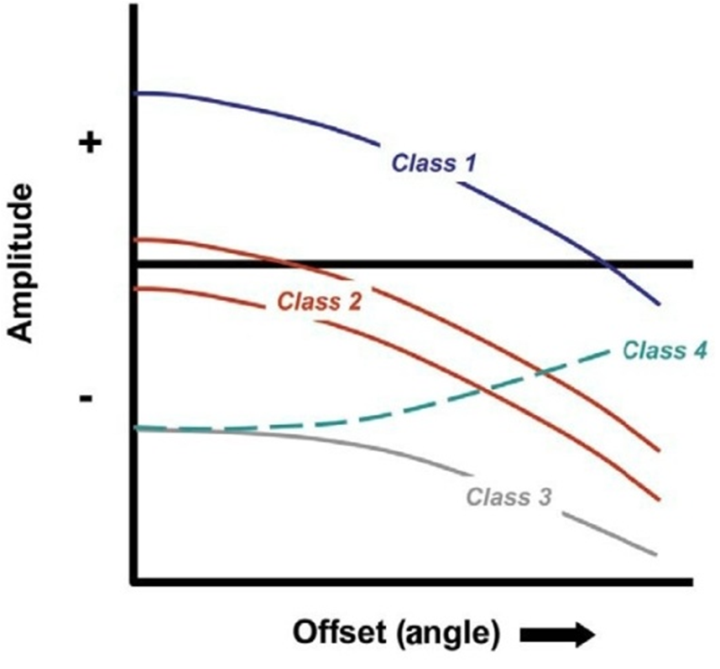
Over the years, explorationists have gained valuable insights into the analysis of Amplitude Versus Offset (AVO) in gas sands reflections. It has been observed that AVO analysis is not solely reliant on identifying bright spots in stacked seismic data. Instead, it encompasses various classes of AVO effects associated with gas sands encountered during exploration. 1 Introduced a three-fold classification of AVO (amplitude versus offset) characteristics for seismic reflections from the interface between shales and underlying gas sands. The classification scheme they proposed is explicitly defined for gas sands and has become the industry standard; it has proven its validity and usefulness in countless exploration efforts. 2 Proposed AVO crossplotting wherein an estimate of the normal-incidence reflectivity is plotted against a measure of the offset dependent reflectivity. Using this approach Castagna and Swan graphically illustrated the continuum between the classes and defined the characteristics of the classes using what they termed AVO Intercept and AVO Gradient. They also added a class 4 3 (Figure 1 and Table 1).

Class 1: High impedance Gas-Sandstone
Class 1 sandstone has higher impedance than its cover (shale). Interface between shale and this kind of sandstone will generate a high reflection coefficient and a positive zero offset, but has amplitude magnitude decreasing in order to offset. Class 1 has greater gradient than class 2 and class 3. Sandstone at class 1 is having a change in polarity in certain angle, and then the amplitude will be increasing proportionally to the offset.
Class 2: Near zero impedance contrast gas sandstone
Class 2 sandstone has almost equally acoustic impedance with its cover (seal rock) and the amplitude which is increasing proportionally to the offset. Class 2 sandstone divided into class 2 and class 2p. Class 2 sandstone has negative reflection coefficient at zero offset while class 2p has positive at zero offset.
Class 3: Low impedance gas sandstone
Class 3 has lower acoustic impedance than its cover.
Class 4
Class 4 has negative reflection coefficient at zero offset and lower impedance with amplitude that is decreasing against the offset. There is a change in polarity at a certain angle and then amplitude will increase proportionally to the offset.
These insights have provided explorationists with a deeper understanding of AVO analysis, enabling them to better interpret gas sands reflections and enhance their exploration efforts. Several studies have highlighted the effectiveness of AVO analysis in characterizing hydrocarbon reservoirs. For example, 5 applied AVO analysis in the Gulf of Mexico and demonstrated its capability in identifying hydrocarbon-bearing sand reservoirs. Similarly, 6 conducted AVO analysis in the North Sea and successfully delineated lithology variations and hydrocarbon prospects. 7 stated that the Acoustic Impedance (Zp), Lamda-rho (λρ)), Mu-rho (μρ) Poisson impedance (PI), shear impedance (SI), Extended impedance (EI), Two – term elastic impedance ( EI2), Extended elastic impedance (EEI) P-wave modulus, Shear modulus, Bulk modulus, Young modulus, Poisson ratio, Lame coefficient, Lame's Coefficient/Shear modulus, Shear modulus *Rho (mu-Rho) attributes were found to be highly useful in lithology and fluid discrimination within the W-Field, Onshore, Niger Delta in their crossplot analysis.
In the context of the UM Field, limited research has been conducted using advanced reservoir characterization techniques such as AVO analysis and crossplotting of impedance attributes. Therefore, there is a need to apply these methods in the field to gain a comprehensive understanding of the reservoirs and improve exploration and production strategies. The exploration and exploitation of hydrocarbon reservoirs involve inherent risks, particularly in selecting drilling locations. To mitigate these risks, a comprehensive description of the reservoir, including its lithology and pore fluid content, is essential. Such characterization directly influences reservoir development and management. In mature fields like the UM Field in the Niger Delta, unconventional exploration tools are often necessary for prospecting reservoir zones 8. One such tool is the Amplitude Variation with Offset (AVO) analysis, widely used in the industry as a direct hydrocarbon indicator 9.
AVO analysis has evolved beyond its traditional role as a hydrocarbon detection tool and is now utilized for lithology identification and fluid parameter analysis. Seismic amplitudes at boundaries are influenced by the variations in physical properties above and below those boundaries 10 Seismic data, specifically reflection seismic, provide subsurface seismic properties and assists in creating 2D or 3D images of the reservoir, thereby establishing the structural framework 11. In addition to seismic data volumes, various seismic characterization methods, including AVO analysis and crossplotting, enable the extraction of further information. These methods operate within the elastic properties domain, necessitating the conversion of these properties into reservoir properties that are more familiar to geoscientists and engineers. The calibration of reservoir models based on well data, synthetic seismic waveforms, and petrophysical inputs, such as clay volume, porosity, and water saturation (Sw), allows for improved reservoir characterization and interpretation. Velocity modeling, AVO analysis, and inversion studies are conducted using these models to enhance the understanding of the subsurface properties and optimize hydrocarbon recovery strategies.
Reservoir characterization based on the application of AVO analysis and crossplotting of acoustic and shear impedance provides valuable insights into lithology, pore fluid content, and reservoir geometry. The primary objective of this study is to apply AVO analysis and crossplotting techniques to characterize the reservoirs in the UM Field. By integrating various datasets, including 3D seismic data, well deviation survey data, and checkshot survey data, we aim to gain a comprehensive understanding of the subsurface reservoir properties. Our study focuses on the identification and evaluation of potential hydrocarbon reservoirs within the field. We hypothesize that the application of AVO analysis and crossplotting of acoustic and shear impedance will provide valuable insights into the lithology variations and hydrocarbon content within the UM Field. Specifically, we expect to identify Class IV AVO anomalies indicative of gas sand reservoirs. Furthermore, we anticipate that the crossplot analysis of acoustic and shear impedance will aid in mapping the distribution and extent of these reservoirs. The findings of this research have significant implications for reservoir characterization and exploration activities in the UM Field. By accurately identifying and delineating hydrocarbon-bearing zones, operators can optimize drilling locations, reservoir development strategies, and production techniques. This knowledge will ultimately contribute to maximizing hydrocarbon recovery and enhancing the economic viability of the field. Additionally, the application of advanced reservoir characterization techniques in the UM Field adds to the existing body of knowledge in the field of petroleum geoscience. This study demonstrates the effectiveness of AVO analysis and crossplotting in complex geological settings, showcasing their potential for reservoir evaluation and management in similar hydrocarbon-rich regions worldwide. In the following sections, we will provide a detailed description of the materials and methodology employed in this study, followed by the presentation and discussion of the results. Subsequently, we will analyze the implications of the findings and discuss their significance in the context of reservoir characterization and exploration strategies. Finally, we will conclude with a summary of the key findings and recommendations for future research and field operations.
By employing advanced reservoir characterization techniques and integrating multiple datasets, this study aims to contribute to the understanding of the UM Field's reservoir properties and enhance the decision-making process for exploration and production activities. Through the application of AVO analysis and crossplotting of impedance attributes, we anticipate providing valuable insights into lithology variations, hydrocarbon distribution, and the identification of potential hydrocarbon reservoirs. The outcomes of this research will not only benefit the operators and stakeholders involved in the UM Field, Niger Delta but also contribute to the broader knowledge base of reservoir characterization and geoscience in hydrocarbon exploration. The findings will aid in reducing interpretation risks, improving reservoir understanding, and optimizing hydrocarbon recovery strategies, ultimately leading to improved production efficiency and profitability in the field.
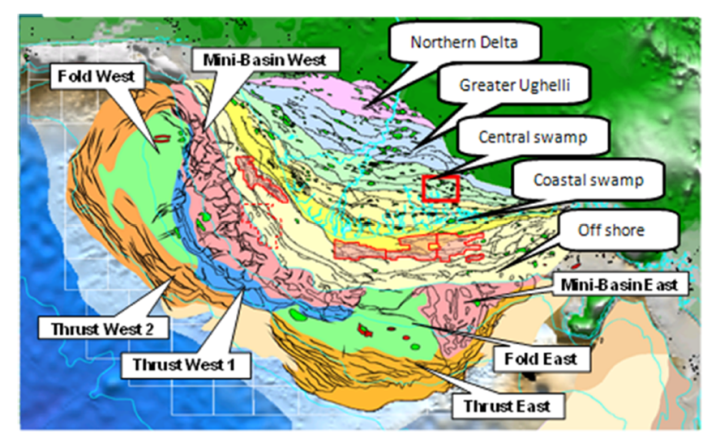
1.1. Location and Geology of the Study AreaThe Niger Delta basin is located in the Gulf of Guinea, Central West Africa, at the southern culmination of the Benue Trough. The basin is considered as one of the most prolific hydrocarbon provinces in the world. Following the opening of the Equatorial Atlantic in the early Cretaceous, the Benue Trough progressively filled with Albian and younger post-rift deposits, and by the Late Eocene, a delta has begun to build out over the continental margin. Seaward progradation and enlargement of the delta, via the deposition of a thick succession of marine and marginal-marine sediment, continues to the present day 12, 13, 14, 15. The subaerial portion of the modern delta top is a complex combination of wetlands and drylands covering an area of approximately 75,000 km². The delta top extends for more than 300 km from its apex in interior Nigeria to its broadly seaward-convex coastline. The modern sedimentary prism is at its maximum extent, up to 12 km thick, and has a broadly arcuate form covering an area of approximately 140,000 km² with two main lobes – one building out to the west and the other to the south (Figure 2).

Continental-margin collapse structures exerted an important control on the depositional and stratigraphic patterns within the Niger Delta 15. These structures extend laterally along depositional strike across nearly the entire basin, defining “megastructures” associated with depobelts that are tens of kilometers wide and perpendicular to the shoreline. The Niger Delta is divided into seven regional depobelts, which succeed each other in the southward direction as the delta progrades. They are: Northern delta, Greater Ughelli, Central swamp I, Central swamp II, Coastal swamp I, Coastal swamp II, and Offshore (Figure 2). The Niger Delta exhibits distinct patterns of deposition and structural deformation. The Depobelts, which are major sedimentary units, tend to have a finer-grained composition as they extend laterally away from areas of rapid delta progradation. Similarly, the basinward portions of the depobelts experience less intense growth fault development. On a smaller scale, faults and associated structural deformation are more complex near the progradational axis of the delta compared to its margins. These patterns of deposition and deformation persist in the present-day delta, with the extensional development of growth faults on the modern shelf and slope, as well as continental uplift near the toe of the slope 17.
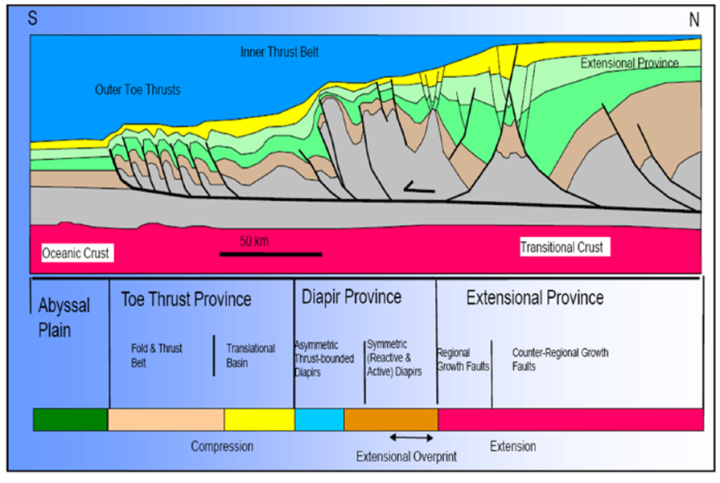
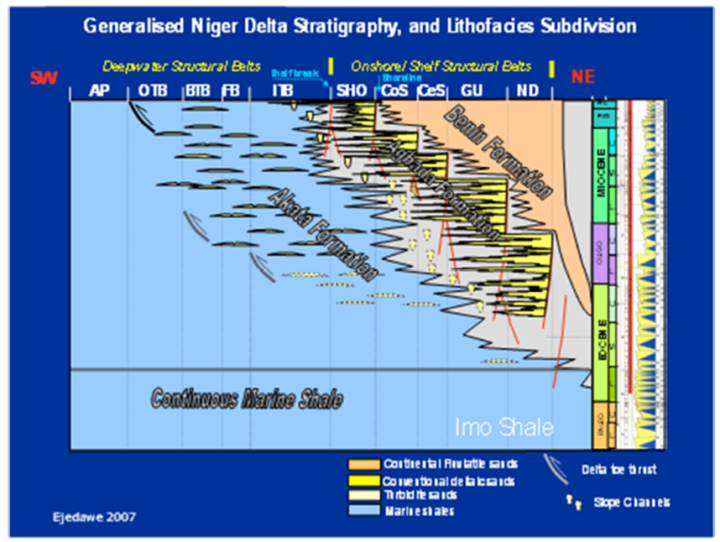
In terms of structural zones, the Niger Delta can be broadly divided into three categories: extensional, translational, and compressional tectonics (Figure 3). These zones represent different types of structural processes and deformation occurring within the deltaic system. The stratigraphy of the Niger Delta comprises the continental to marginal-marine sands of the Benin Formation, the paralic Agbada Formation, and the marine shales of the Akata Formation (Figure 4). The lithofacies subdivision within the Niger Delta reflects the interplay of fluvial, deltaic, and marine processes that have shaped the basin over time. (Ejedawe, 2007) conducted an unpublished report on the Niger Delta, which was submitted to SPDC, Warri.


The study area is located in the eastern parts of the Central Swamp Depobelt (Figure 2) of the hydrocarbon-rich Niger Delta Basin of Nigeria. It covers an area extent of about 1171.42 km². Structurally, it is in the extensional zone, and the formations penetrated by this study comprise the Akata, Agbada, and Benin Formations. Understanding the geological characteristics and depositional history of the study area is crucial for unraveling the reservoir architecture, sediment distribution, and hydrocarbon potential within the Niger Delta Basin. It provides essential insights into the spatial variations of lithofacies, structural trends, and the complex interplay between tectonic and depositional processes. In this study, we aim to investigate the reservoir properties and hydrocarbon potential of the UM field in the Niger Delta. The outcomes of this research will contribute to the knowledge of the Niger Delta Basin's hydrocarbon resources and provide valuable insights for future exploration and production activities. Moreover, the findings will assist in the optimization of field development strategies and reservoir management practices in this prolific hydrocarbon province.
1.2. Available Data SetsThe UM field benefits from comprehensive coverage of 3-D seismic data, which was acquired in both swamp and land environments. The seismic acquisition employed a bin size/CDP (Common Depth Point) of 25x25m with a nominal 15-fold coverage. The record length was 6 seconds two-way travel time (TWT) with a sampling interval of 2ms. The data underwent reprocessing to achieve zero phase reflectivity to 4ms. The polarity of the data is SEG, and the datum plane is referenced to mean sea level (MSL). The energy source utilized was dynamite. The seismic processing sequence involved three velocity passes, with a Kirchhoff migration algorithm applied post-stack, along with static corrections based on basic LVL (Land Vertical Load) and uphole survey. The overall quality of the 3D data is considered fair to good, with reflectivity resolution extending down to 2800ms TWT. Inline sections of the data are oriented WNW-ESE, generally parallel to the major fault of the UM Field structure.
A valuable collection of well-log curves was available from five wells. The well-log curves encompass gamma ray, resistivity, P-wave sonic, density, caliper, neutron porosity, and spontaneous potential (SP). Among these wells, Wells 1, 2, and 3 possess check-shot data, while only Well 1 features a substantial amount of footage covered by DT (Delta-T) and RHOB (Bulk Density) logs across the entirety of the UM Field macrostructure.
A quantitative approach was employed in the current study, focusing on a detailed reservoir description in the UM field of the Niger Delta. The study involved the integration of all available data in the field.
2.1. Data Availability and QualityThe dataset utilized in this study includes the following:
i. 3D Seismic data
ii. Well deviation survey data
iii. Checkshot survey data (available in one well)
The UM field benefits from comprehensive coverage of 3D Seismic data, which is generally considered fair to good. However, it should be noted that the resolution of the data diminishes at deeper levels beyond 2 seconds.
2.2. AVO AnalysisIn this study, an AVO (Amplitude Versus Offset) analysis was conducted to investigate the reservoir characteristics of the UM field in the Niger Delta. The AVO analysis involved the generation of a cross-plot of reflectivity against offset angle using Aki and Richards' approximation of the Zoeppritz equation. This quantitative approach allowed for the assessment of how the seismic amplitude changes with varying offsets, providing valuable insights into the subsurface properties.
The intercept value (A) obtained from the AVO analysis was inverted to estimate the zero-offset P-wave reflectivity, which reflects the response of compressional waves in the reservoir. Additionally, the zero-offset S-wave reflectivity was derived by subtracting the intercept value (B) from A, representing the response of shear waves. These reflectivity values served as indicators of the seismic response and provided information on the rock properties within the reservoir.
To further analyze the AVO data, the reflectivities were transformed to estimate acoustic impedance and shear impedance. Acoustic impedance represents the resistance to the propagation of sound waves in the subsurface, while shear impedance relates to the resistance of shear waves. Cross-plotting these impedance values facilitated the identification of lithological variations and provided insights into fluid content within the reservoir.
The final results of the AVO analysis and cross-plotting offered valuable information for reservoir characterization. They enabled the identification of potential hydrocarbon-bearing zones, assessment of lithological variations, and understanding of the structural complexities within the UM field. This analysis contributed to a better understanding of the reservoir and facilitated informed decision-making in exploration and production activities.
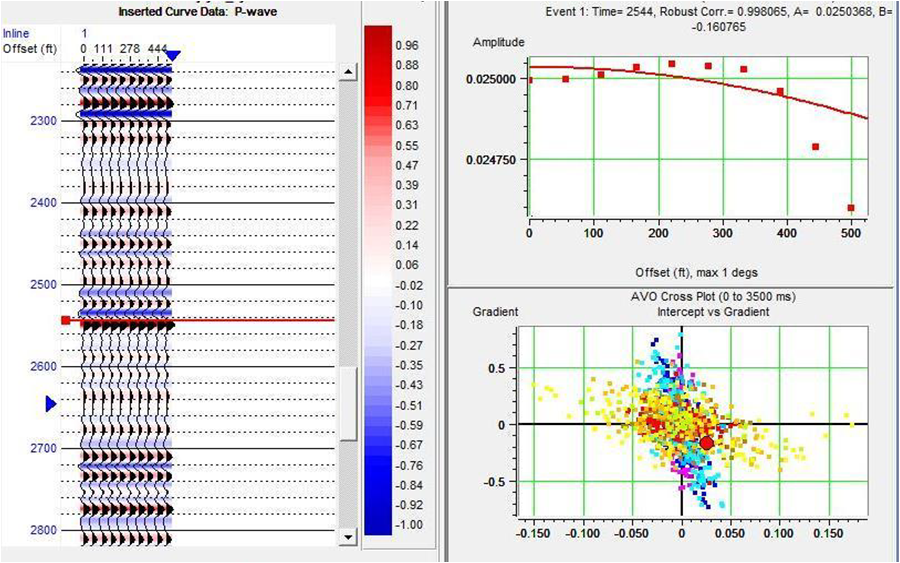
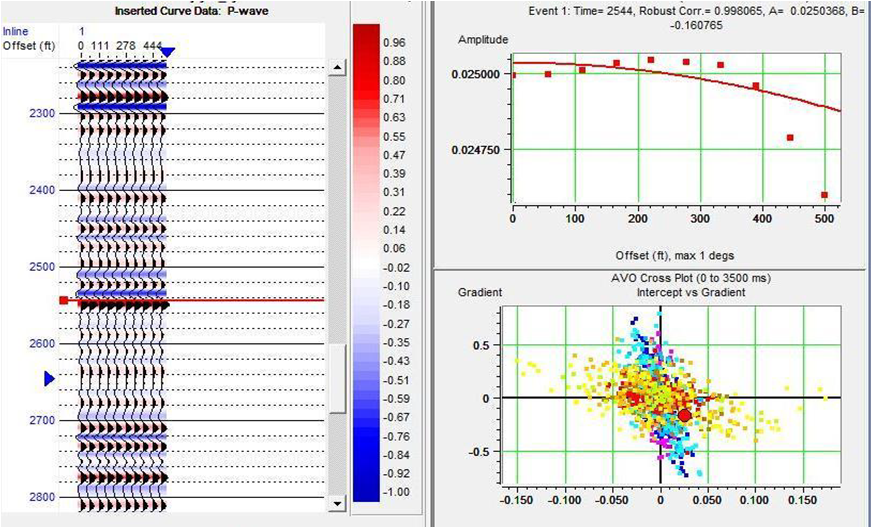
Figure 5 illustrates the cross-plot of Gradient against Intercept, which visually depicts the relationship between the slope (gradient) and y-intercept (intercept) values derived from the AVO analysis. The plot showcases the position of the sand base, denoted by a red dot, which falls in the second quadrant, away from the shale trend depicted in blue. This particular positioning indicates a CLASS IV AVO response, offering valuable insights into the reservoir characteristics. The analysis of the AVO response aids in understanding the lithological variations, fluid content, and potential hydrocarbon accumulation within the reservoir.

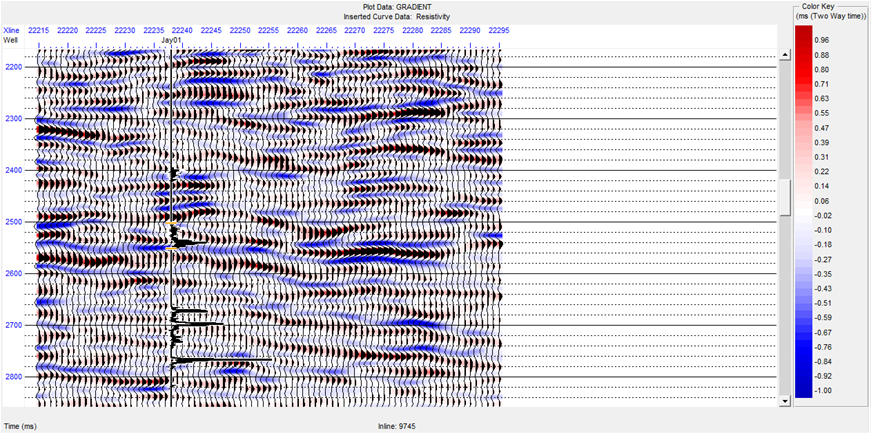
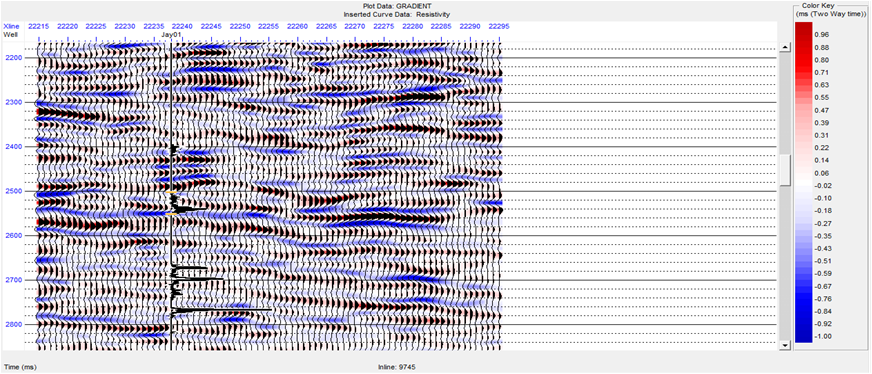
Figure 6 illustrates a seismic section displaying the gradient volume in the UM field. This volume offers significant insights into the spatial distribution of gradient values across the surveyed area. Analyzing the variations in gradient allows for the identification of geological features and potential reservoir zones within the field. The gradient volume represents changes in seismic amplitudes or reflections concerning offset. It serves as a visual indicator of high and low gradients, which can correspond to geological boundaries, fault zones, or structural complexities. These variations in gradient are influenced by lithological changes, fluid content, or porosity variations in the subsurface. By examining the gradient volume, geoscientists can pinpoint areas of interest for further exploration or production activities. Regions exhibiting high-gradient values often indicate the presence of reservoir units or zones with significant hydrocarbon potential. Conversely, low-gradient values may suggest sealing lithologies or non-reservoir intervals.

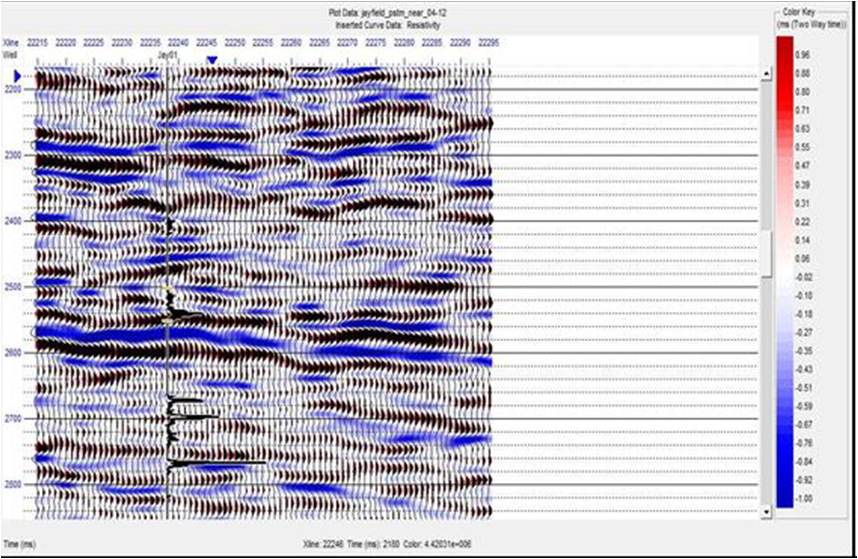
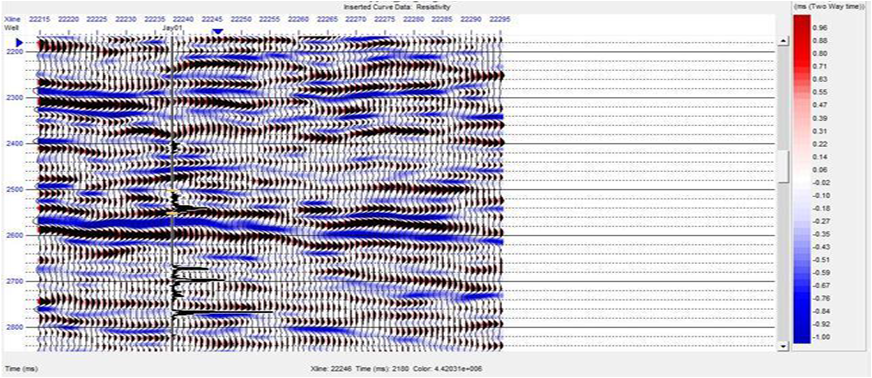
Figure 7 illustrates the intercept volume, showcasing the distribution of intercept values across the surveyed area. This seismic section provides valuable insights into the characterization of different rock properties and lithologies within the reservoir. By analyzing the intercept values, we can gain a better understanding of the reservoir's composition and identify potential hydrocarbon-bearing zones. The intercept volume analysis is a key component of the AVO (Amplitude Versus Offset) analysis. It allows us to evaluate the variations in intercept values, which are indicative of different rock types and their seismic response. Through this analysis, we can distinguish between lithologies such as sandstone, shale, and limestone based on their distinctive intercept values. This information is essential for reservoir characterization and assessing the heterogeneity of the subsurface. Additionally, the intercept volume aids in mapping the stratigraphic variations within the reservoir. Changes in intercept values can signify the presence of geological features such as unconformities, bedding planes, or fault zones. By identifying these variations, we can better understand the reservoir's structural complexities and their impact on fluid flow and hydrocarbon distribution. The insights gained from the intercept volume analysis contribute to a comprehensive understanding of the reservoir and aid in making informed decisions regarding exploration and production activities. By identifying the distribution of intercept values and understanding the associated rock properties and lithologies, we can optimize well placement and target potential hydrocarbon-bearing zones.

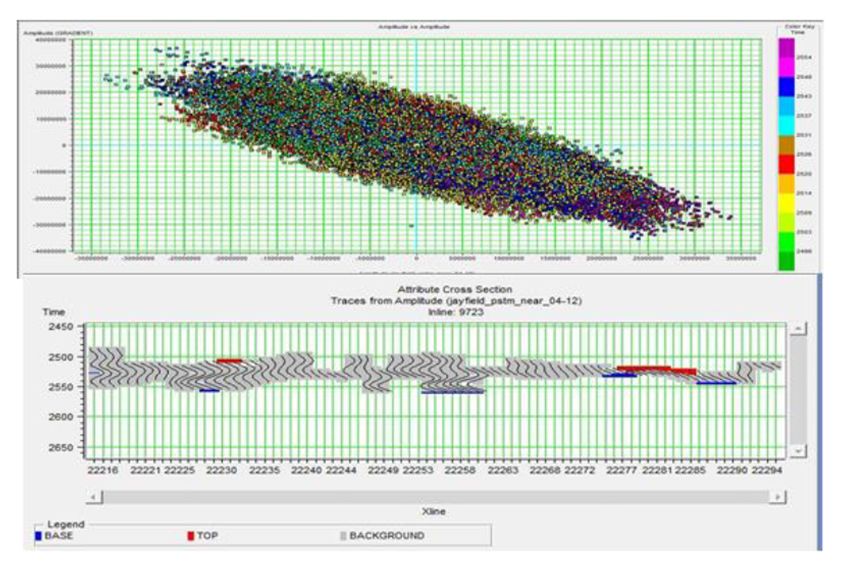
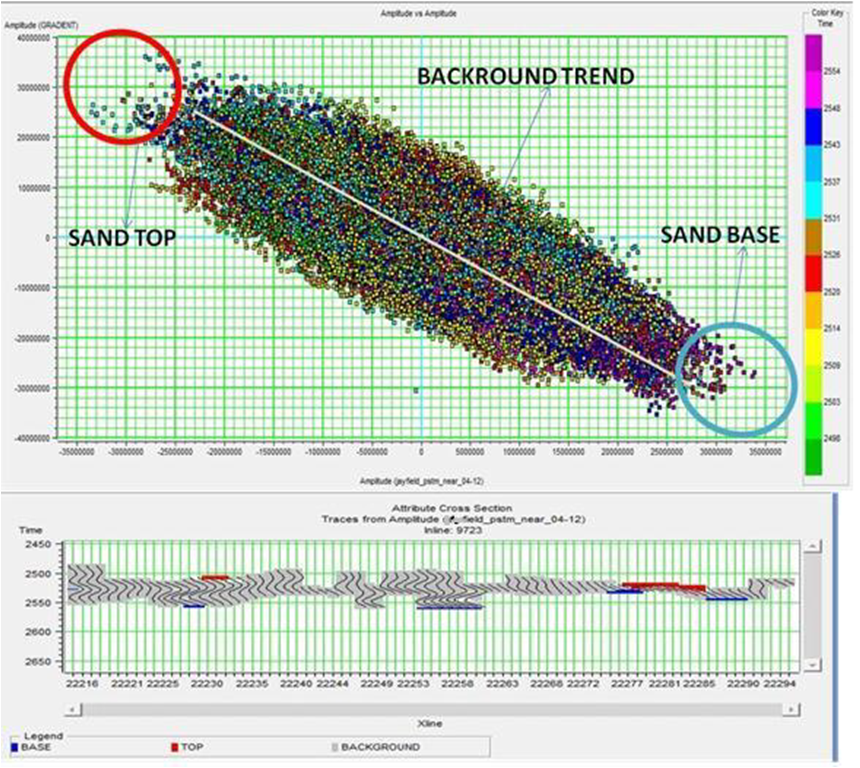
Figure 8 illustrates the reservoir characteristics through a cross-plot of gradient and intercept, accompanied by a cross-section. The cross-plot visually represents the relationship between the gradient (slope) and intercept (y-intercept) values obtained from the AVO analysis. It provides a clear and comprehensive visualization of how these parameters vary within the reservoir. By examining the cross-plot, distinct reservoir facies and potential stratigraphic variations can be identified. Different combinations of gradient and intercept values correspond to specific lithologies and depositional environments, enabling the differentiation of various geological units within the reservoir. This information aids in understanding the reservoir's composition and heterogeneity. The cross-section in Figure 8 complements the cross-plot by offering a vertical view of the reservoir. It illustrates the boundaries and layering of the reservoir, providing insights into its structural architecture. The cross-section helps visualize the extent and continuity of the reservoir, as well as any potential structural complexities or stratigraphic features that may influence fluid flow and hydrocarbon accumulation. The combined analysis of the cross-plot and cross-section enhances our understanding of the reservoir's spatial distribution and internal characteristics. It provides valuable information for reservoir modeling, well planning, and production optimization. The identification of reservoir facies, stratigraphic variations, and structural features aids in making informed decisions related to reservoir management and hydrocarbon recovery.

The AVO (Amplitude Versus Offset) analysis was performed to investigate the reservoir characteristics. The results are presented and discussed below


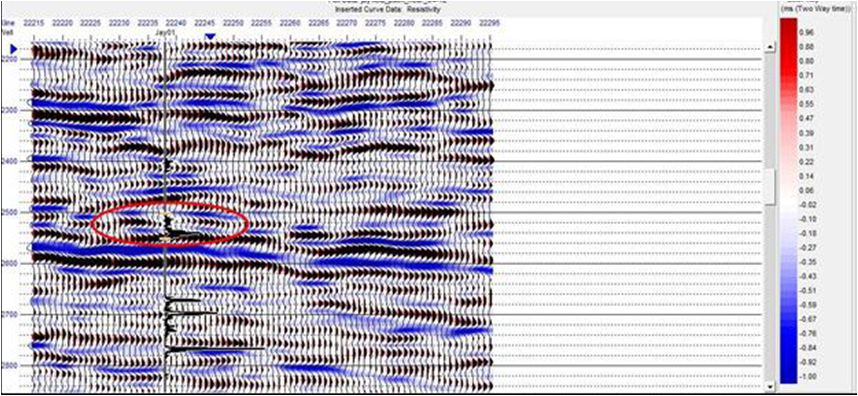
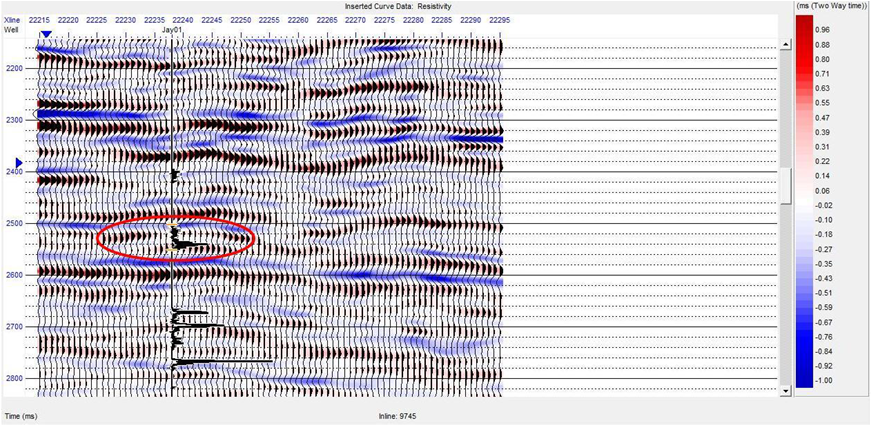
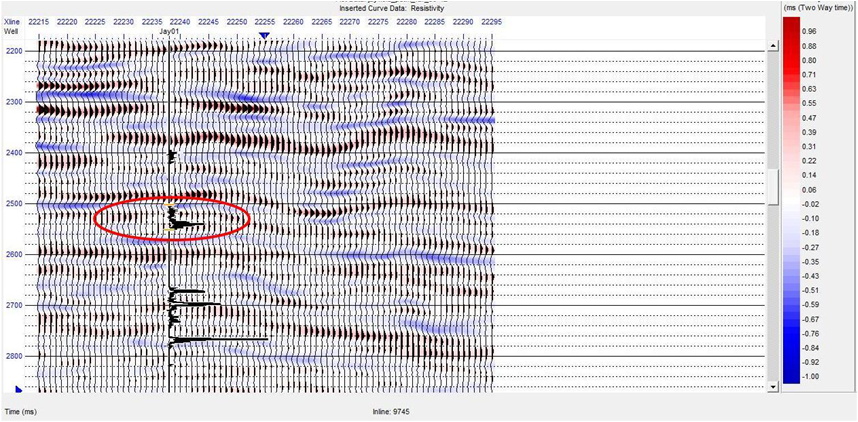
Figure 15 presents the crossplot of gradient against intercept, revealing an anomalous deviation from the background trend. This classification identifies the study interval sand as a Class IV AVO anomaly, as it plots in the fourth quadrant of the crossplot. The deviation behind the background trend represents the top of the gas sand, while the deviation in front of the background trend represents the base of the gas sand. Figure 9, Figure 10, and Figure 11 display the original near, mid, and far seismic stacks, respectively. It can be observed that seismic amplitudes appear brighter at near offset and gradually diminish with increasing offset. This anomalous behavior is characteristic of a Class IV AVO anomaly. The AVO signature for the sand base indicates a Class IV AVO anomaly, demonstrating a positive amplitude that decreases with offset. A closer examination of the crossplot of gradient against intercept in Figure 9 reveals the sand base (shown as a red dot) plotting on the second quadrant away from the shale trend (blue). This further supports the classification of a Class IV AVO anomaly. The gradient and intercept stacks also exhibit a similar amplitude variation, with brighter amplitudes in the gradient stack that gradually fade out in the intercept stack. Comparing the original seismic stacks with the AVO attributes confirms the amplitude variation at near and far offset, providing a level of certainty that the reservoir sand exhibits a Class IV AVO anomaly gas sand characteristic. Figure 9 illustrates the crossplot of gradient and intercept, along with a cross section showing the top and base of the reservoir. The red dot indicates the Class IV AVO anomaly, further supporting the findings. Figure 10, Figure 11, and Figure 12 present the near, mid, and far angle stacks, respectively, displaying variations in negative amplitude for the reservoir sand top. To further analyze the AVO analysis results, gradient and intercept slices are shown in Figure 13 and Figure 14, respectively. These slices provide additional insights into the spatial distribution of gradient and intercept values within the reservoir. Figure 15 depicts the gradient-intercept crossplot and a cross section showing the top and base of the reservoir. The top of the reservoir is highlighted in red, while the base is shown in blue. This visualization aids in understanding the vertical extent and boundaries of the reservoir.
The results from the AVO analysis and the comparison of seismic stacks with AVO attributes confirm the presence of a Class IV AVO anomaly gas sand. These findings are significant for reservoir characterization and contribute to a better understanding of the subsurface properties in the study area.
In conclusion, this has successfully investigated the reservoir characteristics using AVO analysis and provided significant insights into the studied area. The analysis of seismic data, cross-plots, and attribute slices has allowed for the identification and classification of the reservoir as a Class IV AVO anomaly, indicating the presence of gas sand. The findings of this study have important implications for exploration and production activities. The identification and characterization of the reservoir sand as a Class IV AVO anomaly provide valuable information for reservoir evaluation and can guide future drilling and production decisions. This research contributes to a better understanding of the reservoir properties and aids in the optimization of hydrocarbon recovery strategies. By successfully addressing the research problem and achieving the research objectives, this study has brought closure to the investigation of the reservoir characteristics using AVO analysis. It has demonstrated the effectiveness of AVO analysis in reservoir characterization and highlighted the significance of integrating seismic data and AVO attributes for accurate reservoir evaluation. However, there are still remaining gaps in knowledge that can be addressed in future research. One area of further investigation could be the expansion of the AVO analysis to a larger area to assess the reservoir's spatial extent and variability.
The authors sincerely thank all individuals and organizations for their support and assistance throughout the research process, despite the absence of funding. Their valuable contributions and resources greatly enhanced the study. The authors also extend their appreciation to colleagues, peers, and participants for their cooperation, feedback, and insights. Lastly, the authors acknowledge the guidance and support of their mentors and academic institutions.
| [1] | S. R. Rutherford and R. H. Williams, “Amplitude-versus-offset variations in gas sands,” Jour. Geophys., vol. 54, no. 6, pp. 680-688, 1989. | ||
| In article | View Article | ||
| [2] | Castagna, J.P. and Swan, H.W. (1997) Principles of AVO Cross Plotting. The Leading Edge, 6, 337-344. | ||
| In article | View Article | ||
| [3] | R. A. Young and R. D. LoPiccolo, “Conforming and Non-conforming Sands - An Organizing Framework for Seismic Rock Properties,” 2004. | ||
| In article | |||
| [4] | N. Ahmed, P. Khalid, S. Ghazi, and A.W. Anwar, “AVO forward Modeling and Attributes Analysis for Fluid’s Identification: A Case Study,” Acta Geodaetica et Geophysica, vol. 50, pp. 377-390, 2015. | ||
| In article | View Article | ||
| [5] | T. M. Smith et al., “Examination of AVO responses in the eastern deepwater Gulf of Mexico,” GEOPHYSICS, vol. 66, no. 6, pp. 1864, 2001. | ||
| In article | View Article | ||
| [6] | N. Loizou, D. Cameron, S. Chen, and X.Y. Li, “The Application and Value of AVO Analysis for De-risking Hydrocarbon Paleocene Prospects in the UK North Sea,” 5, 3849-3853, 2011. | ||
| In article | View Article | ||
| [7] | C. E. Okon, C. A. Jackson, and R. G. Samuel, “Amplitude Versus Offset Analysis for Reservoir Characterization of a W-Field, Onshore, Niger Delta,” NAPE Bulletin, vol. 31, no. 2, pp. 76-79, Nov. 2022. | ||
| In article | |||
| [8] | S. Chakraborty, “Multi Attribute Seismic Analysis on AVO derived parameters - a case study,” Core Lab Reservoir Technologies, Calgary, AB, 1998. | ||
| In article | |||
| [9] | A.C. Ekwe, K.M. Onuoha, and N. Osayande, “Fluid and Lithology Discrimination Using Rock Physics Modeling and Lambda-mu-rho Inversion: An Example from Onshore Niger Delta, Nigeria,” Search and Discovery Article #40865, 2012. | ||
| In article | |||
| [10] | F. Hong and C. John, “AVO principles, processing and inversion,” CREWES Research Report, pp. 1-10, 2006. | ||
| In article | |||
| [11] | F. Golyan, “Compaction rock property evolution and rock physics diagnostics of Askeladd discovery, Norwegian Barents Sea,” 2012. [Online]. Available: http://urn.nb.no/URN:NBN:no-32607. | ||
| In article | |||
| [12] | H. Doust and E. Omatshola, “Niger Delta,” in Divergent/Passive Margin Basins, AAPG Memoir 48, Edwards et al. (eds.), Tulsa, OK, USA: American Association of Petroleum Geologists, 1990, pp. 201-238. | ||
| In article | View Article | ||
| [13] | R.J. Hooper, R.J. Fitzsimmons, N. Grant, and B.C. Vendeville, “The role of deformation on controlling depositional patterns in the south-central Niger Delta, West Africa,” Journal of Structural Geology, vol. 24, pp. 847-859, 2002. | ||
| In article | View Article | ||
| [14] | A. Whiteman, Nigeria: Its petroleum geology, resources, and potential. London: Graham and Trotter, 1982, pp. 394. | ||
| In article | View Article | ||
| [15] | A.O. Owoyemi and B. Willis, “Depositional patterns across syndepositional normal faults, Niger Delta, Nigeria,” Journal of Sedimentary Research, vol. 76, pp. 346-363, 2006. | ||
| In article | View Article | ||
| [16] | I.I. Obiadi, B.M. Ozumba, and P.L. Osterloff, “Regional Sequence Stratigraphic Framework and Structural Evolution of Eastern Parts of the Central Swamp Depobelt, Niger Delta, Nigeria,” NAPE Bulletin, vol. 24, no. 1, pp. 95-103, 2012. | ||
| In article | |||
| [17] | R. J. Hooper, R. J. Fitzsimmons, N. Grant, and B. C. Vendeville, “The role of deformation in controlling depositional patterns in the south-central Niger Delta, West Africa,” Journal of Structural Geology, vol. 24, pp. 847-859, 2002. | ||
| In article | View Article | ||
| [18] | Olabode, S. Matthew, Jason Won, George Udoekong, Olaoluwa O. Ibilola, and Dolapo Dixon, “Resolving the Structural Complexities in the Deepwater Niger-Delta Fold and Thrust Belt: A Case Study from the Western Lobe, Nigerian Offshore Depobelt,” Search and Discovery Article, No. 10289, 2010. | ||
| In article | |||
Published with license by Science and Education Publishing, Copyright © 2023 Ukpebor Osahon and Maju-Oyovwikowhe Gladys Efetobore
 This work is licensed under a Creative Commons Attribution 4.0 International License. To view a copy of this license, visit
http://creativecommons.org/licenses/by/4.0/
This work is licensed under a Creative Commons Attribution 4.0 International License. To view a copy of this license, visit
http://creativecommons.org/licenses/by/4.0/
| [1] | S. R. Rutherford and R. H. Williams, “Amplitude-versus-offset variations in gas sands,” Jour. Geophys., vol. 54, no. 6, pp. 680-688, 1989. | ||
| In article | View Article | ||
| [2] | Castagna, J.P. and Swan, H.W. (1997) Principles of AVO Cross Plotting. The Leading Edge, 6, 337-344. | ||
| In article | View Article | ||
| [3] | R. A. Young and R. D. LoPiccolo, “Conforming and Non-conforming Sands - An Organizing Framework for Seismic Rock Properties,” 2004. | ||
| In article | |||
| [4] | N. Ahmed, P. Khalid, S. Ghazi, and A.W. Anwar, “AVO forward Modeling and Attributes Analysis for Fluid’s Identification: A Case Study,” Acta Geodaetica et Geophysica, vol. 50, pp. 377-390, 2015. | ||
| In article | View Article | ||
| [5] | T. M. Smith et al., “Examination of AVO responses in the eastern deepwater Gulf of Mexico,” GEOPHYSICS, vol. 66, no. 6, pp. 1864, 2001. | ||
| In article | View Article | ||
| [6] | N. Loizou, D. Cameron, S. Chen, and X.Y. Li, “The Application and Value of AVO Analysis for De-risking Hydrocarbon Paleocene Prospects in the UK North Sea,” 5, 3849-3853, 2011. | ||
| In article | View Article | ||
| [7] | C. E. Okon, C. A. Jackson, and R. G. Samuel, “Amplitude Versus Offset Analysis for Reservoir Characterization of a W-Field, Onshore, Niger Delta,” NAPE Bulletin, vol. 31, no. 2, pp. 76-79, Nov. 2022. | ||
| In article | |||
| [8] | S. Chakraborty, “Multi Attribute Seismic Analysis on AVO derived parameters - a case study,” Core Lab Reservoir Technologies, Calgary, AB, 1998. | ||
| In article | |||
| [9] | A.C. Ekwe, K.M. Onuoha, and N. Osayande, “Fluid and Lithology Discrimination Using Rock Physics Modeling and Lambda-mu-rho Inversion: An Example from Onshore Niger Delta, Nigeria,” Search and Discovery Article #40865, 2012. | ||
| In article | |||
| [10] | F. Hong and C. John, “AVO principles, processing and inversion,” CREWES Research Report, pp. 1-10, 2006. | ||
| In article | |||
| [11] | F. Golyan, “Compaction rock property evolution and rock physics diagnostics of Askeladd discovery, Norwegian Barents Sea,” 2012. [Online]. Available: http://urn.nb.no/URN:NBN:no-32607. | ||
| In article | |||
| [12] | H. Doust and E. Omatshola, “Niger Delta,” in Divergent/Passive Margin Basins, AAPG Memoir 48, Edwards et al. (eds.), Tulsa, OK, USA: American Association of Petroleum Geologists, 1990, pp. 201-238. | ||
| In article | View Article | ||
| [13] | R.J. Hooper, R.J. Fitzsimmons, N. Grant, and B.C. Vendeville, “The role of deformation on controlling depositional patterns in the south-central Niger Delta, West Africa,” Journal of Structural Geology, vol. 24, pp. 847-859, 2002. | ||
| In article | View Article | ||
| [14] | A. Whiteman, Nigeria: Its petroleum geology, resources, and potential. London: Graham and Trotter, 1982, pp. 394. | ||
| In article | View Article | ||
| [15] | A.O. Owoyemi and B. Willis, “Depositional patterns across syndepositional normal faults, Niger Delta, Nigeria,” Journal of Sedimentary Research, vol. 76, pp. 346-363, 2006. | ||
| In article | View Article | ||
| [16] | I.I. Obiadi, B.M. Ozumba, and P.L. Osterloff, “Regional Sequence Stratigraphic Framework and Structural Evolution of Eastern Parts of the Central Swamp Depobelt, Niger Delta, Nigeria,” NAPE Bulletin, vol. 24, no. 1, pp. 95-103, 2012. | ||
| In article | |||
| [17] | R. J. Hooper, R. J. Fitzsimmons, N. Grant, and B. C. Vendeville, “The role of deformation in controlling depositional patterns in the south-central Niger Delta, West Africa,” Journal of Structural Geology, vol. 24, pp. 847-859, 2002. | ||
| In article | View Article | ||
| [18] | Olabode, S. Matthew, Jason Won, George Udoekong, Olaoluwa O. Ibilola, and Dolapo Dixon, “Resolving the Structural Complexities in the Deepwater Niger-Delta Fold and Thrust Belt: A Case Study from the Western Lobe, Nigerian Offshore Depobelt,” Search and Discovery Article, No. 10289, 2010. | ||
| In article | |||