Indigenous populations throughout northern Canada continue to face higher rates of food insecurity compared to the rest of the country. As a result of colonization, Indigenous people have endured historical and political discrimination, being forcibly displaced from their traditional territories, impacting the accessibility, availability, and use of traditional foods. There have been longstanding calls for greater federal support for traditional food harvesting—not only to reduce food insecurity and diet-related illnesses, but also to help restore local food systems. The Government of Canada has responded by developing federal programs to support traditional food harvesting to help address northern food security challenges, yet there remains little information about local harvesting capacity and how regional differences influence how much traditional food can be sourced to improve household food security. Considering the known health and cultural benefits of Indigenous food systems, and the barriers Indigenous communities face accessing them, it is important to understand the quantity of traditional food harvesting needed to meet daily energy requirements for communities based on current population demographics in different regions in Canada. In a first step in addressing this gap, Robidoux et al. conducted ethnographic research with hunters in the Wapekeka First Nation in northwestern Ontario, Canada to estimate the potential contribution traditional food harvesting could have on improving household food security in this sub-Arctic region. The study emphasized the need for further research exploring how food harvesting in different geographic regions, with unique ecology, culture and demographics may impact the contribution traditional food can have on local food security. The research presented here builds on Robidoux et al.’s study by calculating total caloric needs for two First Nations and one Inuit community from different geographical regions estimating the energy required from animal food sources to sustain each community. The primary aim of this paper is to assess if increased traditional food harvesting can be a legitimate strategy for combatting food insecurity for Arctic and sub-Arctic Indigenous communities.
Indigenous populations throughout northern Canada continue to face higher rates of food insecurity compared to the rest of the country despite decades of awareness and ongoing efforts to improve food access and quality in these regions 1, 2, 3, 4, 5 6, 7, 8, 9. As a result of colonization, Indigenous people have endured historical and political discrimination, and were forcibly displaced from their traditional territories, which impacted the accessibility, availability, and use of traditional foods 10, 11, 12, 13, 14. Compounding factors, such as resource extraction 15, overhunting 16, climate change 17, 18, and habitat degradation 19, gradually led to a decrease in local land and sea-based food consumption. This resulted in a shift from traditional food consumption to a more Westernized diet which is commonly referred to as the “nutrition transition” 20, 21, 22, 23. The nutrition transition created a heavy reliance on lower-quality market-based food items that were highly processed, energy-dense, and nutrient-deficient 3, 24, 25. The increased reliance on Western market food, however, did not lead to the eradication of traditional food consumption. Today, most northern Indigenous people’s diets are made up of a combination of traditional and market-based foods, which vary depending on geographic location, remoteness, land access, wild food resource availability, and a host of other factors.
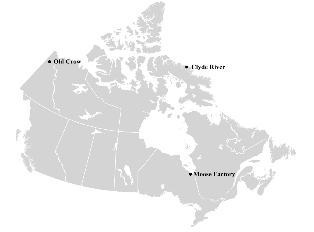
There have been longstanding calls from Indigenous groups, researchers, and policy advocates to provide greater federal support for traditional food harvesting—not only to reduce food insecurity and diet-related illnesses, but also to help restore local food systems. The Government of Canada has responded by developing federal programs to support traditional food harvesting to help address northern food security challenges, yet there remains little information about local harvesting capacity and how regional differences influence how much traditional food can be sourced to actually impact household food insecurity. Considering the known health and cultural benefits of Indigenous food systems, and the barriers Indigenous communities face accessing them, it is important to understand the quantity of traditional food harvesting needed to meet daily energy requirements for communities based on current population demographics in different regions in Canada. Efforts to measure how much traditional food is harvested have proven challenging, as accurate assessment requires long-term monitoring. In a first step in addressing this gap, Robidoux et al. 26 conducted ethnographic research with hunters in the Wapekeka First Nation in northwestern Ontario, Canada to estimate the potential contribution traditional food harvesting could have on improving household food security in this sub-Arctic region. The results highlight the important role traditional food access can have on improving local food security but also reveal the challenges people face getting on the land in this remote boreal forest region to harvest enough food sources to even meet 8% of total energy requirements for the entire community. The study emphasized the need for further research exploring how food harvesting in different geographic regions, with unique ecology, culture and demographics may impact the contribution traditional food can have on local food security. The research presented here builds on Robidoux et al.’s 26 study by calculating total caloric needs for two First Nations and one Inuit community from different geographical regions (as exemplified in Figure 1), estimating the energy required to sustain each community. The primary aim of this paper is to assess if increased traditional food harvesting can be a legitimate strategy for combatting food insecurity for Arctic and sub-Arctic Indigenous communities.
Two main methods were utilized to carry out this research. The first involved a secondary literature review documenting local foodways and estimated consumption rates of traditional food sources in three remote Arctic and sub-Arctic regions of Canada: Old Crow, Yukon; Clyde River, Nunavut; and Moose Factory, Ontario. The second involved an energy analysis of traditional foods in each region, based on Robidoux et al.’s work in 2021 26.
2.1. Secondary Literature AnalysisA secondary literature approach was utilized because there is already extensive primary research describing traditional food intake in remote northern Indigenous communities, especially in the three regions selected for this study 3, 18, 19 27, 28, 29 30, 31, 32 33, 34, 35 36, 37, 38 39, 40, 41. This paper utilized a narrative review focusing on a variety of academic and non-academic sources documenting traditional foodways in these three distinct regions. These academic and non-academic sources were obtained from searches using the University of Ottawa’s OMNI and subject specific databases, Google Scholar, community websites, historical websites, Government of Canada publications, and provincial and territorial government documents. Keywords used for online searches included traditional food, country food, food systems, harvesting, diet, consumption, preferences, access, and food (in)security. All publications, documents and online sources that mentioned food systems and harvesting of traditional or country foods were reviewed.
Existing literature from Clyde River 19, 41, 42, Old Crow 37, 39, 40, 43, 44 and Moose Factory 29, 45, 46 was utilized to determine the most harvested and consumed foods in each region based on total harvest numbers and personal consumption preferences. The food yields and estimated energy contribution from each animal are based on secondary literature and obtained from various sources 45, 47, 48, 49, 50. Depending on the community, the total daily caloric consumption of the top three or four harvested animals can be nearly 95% of their diet, which is why this study focuses on only three or four food sources when discussing maximal harvesting scenarios 41, 51. Based on the difference in land-based food access and barriers faced in the regions, this paper offers insight into the local food sources and how they contribute to the energy requirements for each region.
2.2. Energy AnalysisTo conduct the energy analysis, total energy expenditure (TEE in kcal/day) was estimated from Schofield’s predictive equation 52, validated by Rodriguez et al. 53, which considers sex, age, height, and weight. Community demographics were gathered from the 2021 Canadian Census and differentiated into age groups of 0-4, 5-9, 10-19, and 20+ years of age 54, 55, 56. Schofield’s validated predictive equation 52 of basal metabolic rate (BMR) was used to estimate the daily metabolic rate for individuals aged under 20 years. Meanwhile, male and female adult BMR were estimated using Mifflin’s predictive equation 57. Adult average age, height and weight were derived from previous anthropometric measurements conducted in two First Nations in a sub-Artic region in Ontario 58. Yearly TEE was determined by multiplying the daily BMR by 365 for each of the three communities, then dividing by 17% to obtain the caloric equivalency goals derived from harvested wild game. Caloric contributions from each wild game species were tabulated to determine the total amount of wild game required to attain 17% of yearly TEE (rationale for 17% threshold described below).
The 17% threshold used in this study is based on average traditional food consumption rates documented in these Canadian Arctic and sub-Arctic communities 27, 40, 59. There is quite a range in consumption rates based on a variety of factors, with more southern communities in the James Bay region reporting approximately 50 grams (5-7%) per day and more northern First Nations and Inuit communities reporting 150+ grams (14-35%) per day 27, 40, 59, 60. It is important to recognize that the consumption rates and harvest numbers are estimates and not absolute values. It must also be noted that all communities in this study consume a combination of traditional foods and market foods. This study focuses specifically on animal consumption due to the overwhelming majority of caloric intake being derived from animal-based food sources rather than wild edible plants 26.
The predictive analysis of each species contribution to caloric intake was performed using RStudio, version (2024.04.2+764). Caloric equivalencies of 1kg of muscle and ringed seal blubber (Clyde River) were multiplied by the edible weight of the said species to determine the total caloric contribution from the edible weight. Ashley 61 provided estimates for total energy derived from each animal by comparing several studies. They explained that weight estimates will vary as approximations are used in most studies, due to how labour-intensive and expensive it is to get exact weight measurements of each animal. An algorithm was used to determine how many animals of each species would be required to attain the goal target caloric contribution of 17% of total TEE for each community, by taking the caloric contribution from the edible weight of each species to estimate the amount of wild game required to attain the target caloric contribution.
The decision to focus on these three communities was based on their distinct regional differences, which differ by climate, food resources, food access, and barriers to land-based food practices. The descriptions below identify the unique historical, geographic, ecological, cultural and political factors that impact harvesting scenarios in each region.
Clyde River
Clyde River is an isolated Inuit community located at the head of Patricia Bay in the northeastern part of Baffin Island, near the entrance to a 100-km-long fjord known as Clyde Inlet. The community of Clyde River was established by seven extended Inuit families who were originally living off the land and received pressure from local government administrators, RCMP, nurses, and teachers to relocate to Patricia Bay, the location of an existing Hudson’s Bay Company’s trading post 62. The movement of these extended families began in the early 1950s, with the last large group arriving in 1977, and population growth has continued to the present day. This is reflected in the population dynamics as in 1961, Clyde River had a registered population of 32. This increased to 210 in 1969, 934 in 2011, and the most recent number listed as 1,055 in 2021 54.
Inuit lifestyles in this region were traditionally semi-nomadic as they developed complex societal systems and trade routes across the Arctic, some of which are still in use today 63. Traditional harvesting practices were based on kinship, where the older male, who was the most accomplished hunter with the largest extended family, would assume the role of leader 64. They would be responsible for decision-making regarding hunting excursions and resource decisions, including food distribution 6. The resources were shared from subordinate family members to other family members, and each person’s role was immensely impactful in the harvesting practices. The older, more experienced hunters required the labour and agility of the younger hunters, and the women had an important role in food preparation, making clothing, and ensuring shelter was provided 6.
These traditional migratory lifestyles and subsistence practices were maintained by Inuit groups into the twentieth century based on the availability of natural resources. Although exposed to European and Norse travelers between the tenth and fifteenth centuries, many harvesting practices were not altered until the mid to late 1800s due to the introduction of European goods and technologies by Dutch, American, French, and Scottish whalers 65, 66. During the late 1800s, American, English, and Scottish commercial whalers overharvested bowhead whales, leading to the subsequent decimation of whale populations, forever changing how Inuit harvested and provided food for their families in this region. The lack of availability of a historically abundant whale population shifted the focus to other skin and fur-bearing mammals to trade for income as the Inuit shifted away from traditional subsistence practices.
The mass relocation of the Baffin Island Inuit to thirteen permanent settlements had a major impact on Inuit lifestyles 67, 68, 69. This included the expansion of Hudson’s Bay Company (HBC) trading posts, which were followed by the Northwest Mounted Police and missionaries who flooded the area and focused on the development and construction of hospitals, schools, and churches. The forced permanent settlements also enabled the intensification of resource extraction, resulting in great revenue for Canadian companies 65. The exploitation came in many forms, initiated by overhunting local game populations to justify the relocation to permanent settlements, contributing to the portrayal of the Inuit as helpless and lacking social structures 67, 68. This formula was successful as Arctic mining and fossil fuel industries expanded, while Inuit socio-cultural and economic structures began to erode 67.
The lack of consultation in establishing the location of these settlements proved detrimental, as the vast distance between the permanent settlements increased the difficulty of trade between Indigenous groups. This further increased the reliance on government provisions to supplement their diet. Some settlements were positioned close to hunting grounds, decreasing the impact on obtaining traditional food. However, the location of the settlements was mainly chosen because they were easily accessible by boat or aerial routes, as the federal government in the 1950s had planned for thirteen permanent settlements that encompassed 100 different Inuit communities and groups 67.
The older generations who transitioned from nomadic lifestyles to permanent settlements have often felt disengaged and disconnected from younger generations 67. This disconnect has affected both older generations and youth on several levels. Some Elders among these older generations feel less certain in their ability to predict the weather, making them uncomfortable advising hunters about safe and accessible areas throughout the year 38. This advisory role is of critical importance to communities as hunters have relied on this knowledge for generations, but also for many community Elders whose shifting roles are impacting their emotional health 70. Furthermore, fewer young Inuit people are acquiring essential traditional hunting and harvesting knowledge and skills 34. While subsistence activities remain important for younger generations, proportionately fewer are showing the same level of commitment to harvesting as previous generations.
Old Crow
Old Crow is known as the Vuntut Gwitchin First Nation, or people of the lakes, and is the northernmost community in the Yukon territories, 128 km north of the Arctic Circle. There has been archaeological evidence that places Old Crow as one of the earliest human settlements in North America, dating as far back as 15,000 years 68. As a people, they were known to be nomadic as they followed the Porcupine Caribou Herd’s migration route for sustenance. The permanent settlement of Old Crow was established in the 1950s 44 and has grown to a population of 240 71 but people have been living there since the early 1900s when a community leader, John Tizya, built a camp at the mouth of Crow River because of the location’s well-known productivity as a fishing camp.
Before the introduction of permanent settlements, semi-permanent dwellings were used as shelters where people lived in moss houses from autumn to mid-winter, each structure housing up to two families. These transportable structures allowed people to follow the caribou herd migration which was of utmost importance for survival. Caribou is the main source of caloric consumption for the Vuntut Gwitchin people, historically estimated as being 90% of the community’s country food intake 37. To hunt caribou, hunters would drive herds into previously constructed enclosures lined with snares using a wolf’s cry. They used several locations for the enclosures to increase the hunt's success 72. During the colder seasons, there were surrounds of snares placed in habitually travelled forest locations where the caribou were herded.
These land-based harvesting practices have been increasingly compromised due to changes in human and animal populations, extractive policies, climate change, commercial hunting, and access to hunting territory. For example, the Porcupine Caribou herd has fluctuated in population from 100,000 in the late 1970s to over 200,000 in 2020 73. Despite the herds’ rise in numbers, their alteration in migration path is taking them further away from Old Crow’s hunting territories, resulting in lower harvest numbers. The change in migration path has been due to the highest-ever recorded levels of tundra fires, increased spring rains, and thinning sea ice. The boreal regions of northern Canada are host to the most rapid increase in fire activity 74, 75. With the combination of wildfires destroying lichen that caribou feed on and increased rain, caribou have been avoiding Old Crow altogether, resulting in a substantial reduction in harvesting numbers 76.
The decline in caribou harvesting has led to an attempted reliance on other, more precarious food sources. Salmon has historically been one of the secondary food sources relied upon by Old Crow community members 30, 37, 40, 44. Historically, summer months provided easier access to food sources like fish, with popular methods that included ‘fish traps’ being used. These traps consisted of a V-shaped weir of stakes and willow poles with an opening point into a sluice where the fish entered a dipnet or a basket 77. This technique took significant planning and organization between the men, and the catch was distributed equitably amongst all families who contributed. This technique was extremely proficient, with catches of up to 2000 fish in a single night. Despite reports of salmon populations in the Yukon River watershed declining 78, consumption of salmon in Old Crow has increased 44, 79. Salmon consumption was the only statistically significant increase in the top foods consumed, but there was also a small increase in the mean moose consumption from 1992 to 2008 90.
Moose hunting was viewed by the Vuntut Gwitchin as secondary due to the abundance and preference for caribou meat, as well as unique environmental conditions that made moose more difficult to harvest 72. Unlike group harvesting methods used to hunt caribou, hunting moose required more individualistic methods, such as lying in ambush and placing snares around lakes that moose frequented, as the most common tactics used 72. Moose meat is the second most common mammal consumed by Old Crow households, which increases the importance of moose harvesting, considering caribou harvesting declines 39, 80.
Moose Factory Island (Moose Cree First Nation)
The Moose Cree First Nation is on Moose Factory Island, an island on the southwestern portion of James Bay, and is home to 1,390 residents 56. It is home to the Mushkegowuk people, who speak three different Cree languages 81 and is the site of the second oldest HBC trading posts 82. The major fur-trading post is a contributing factor to the location of Moose Factory, as it was a centralized location that increased in popularity as a permanent settlement in the 1900s and was fully established with the construction of the hospital in 1951 83. The smaller outposts also transitioned into smaller permanent settlements due to governmental developments 84.
Before contact, hunting differed based on food availability and season with summer months seeing 30-40 families gathered in fishing camps, slowly dispersing as colder weather approached with a maximum of 10 families at hunting camps in the autumn, and finally reaching their family hunting grounds in the boreal forest interior during winter months with groups of 1-4 families 84, 85. The families dispersed in the winter to maximize their chances of finding food where intense physical requirements ensured a healthy and active lifestyle 86.
Due to the location of Moose Factory Island, it was one of the first regions in Canada that was contacted by Europeans, being at the mouth of Moose River, connecting to the southeastern portion of James Bay. Early explorations led to the building of trading posts as part of the HBC. They traded with local Indigenous people who were hoping to acquire new goods, including tools, food, and clothing 87. The HBC employees and postmen were forced to trade for food and other essentials because they had not developed skills that would allow them to provide necessities, which is why Indigenous life skills such as hunting, fishing, and harvesting were deemed essential 85, 88.
The larger trading posts quickly transitioned into colonial settlements, with Moose Factory reaching a population of 575 by 1901, consisting of 129 HBC employees and 446 Indigenous people 89. With the signing of Treaty 9 in 1905 and the adhesion in 1929, a Reserve settlement was established on the east side of the island of Moose Factory 81, 90, 91. Treaty 9 was understood to have no impediment to the hunting and fishing freedoms of the Indigenous groups who signed, although they had to accept that they would be restricted in terms of living in permanent settlements 92. The written version of the treaty was significantly different than the orally agreed upon terms, which impacted harvesting and traditional food consumption for several communities and nations across the country. These agreements and their impact on traditional foods and harvesting add to the plethora of barriers experienced by Indigenous people across the country, as traditional foods contribute value far beyond nutrition to these communities.
Due to the shift in reliance on Western goods and food supplies, animal food sources were also harvested for the furs to be traded and sold, which decimated the animal populations in the region 16 93, 94. Concurrently, there was an expansion of trade in the boreal interior, which increased trade stability but ultimately caused a greater reliance of Indigenous people on traded items, impacting consumption habits and lifestyles 95, 96. Reliance on traded items included the introduction of new technologies, which contributed to the degradation of traditional knowledge and teaching methods that were utilized pre-colonization.
As discussed by Preston 97, formal education on bush skills was not formally taught but was experienced through the popular teaching method of “learning by doing”. Younger people would contribute to the bush camps by imitating adults performing tasks, with most children assisting in small chores around the camps as soon as they could walk. Failure was viewed as a positive attribute because mastery was achieved through trial and error, with patience and support being enforced to encourage learning 98, 99. This form of education was greatly impacted because missionaries encouraged Indigenous adults to leave their children in formal educational institutions instead of bringing them along to the hunting camps 100. Eventually, children were forced to attend educational institutions, learning skills that did not necessarily translate to living on the land. The values and skills they learned were not in line with Cree culture, which contributed to the weakening social system in several communities 101, as children were not afforded adequate access to the traditional knowledge that their parents and grandparents experienced. The lack of access to traditional teaching methods, such as learning by doing, led to a lack of skills and knowledge that would have allowed them to be successful in living on the land 88. They were being prepared for a capitalist society that revolved around wage work instead of traditional knowledge and hunting skills.
3.2. Local Harvesting and Energy RequirementsIn order to understand the quantity of traditional food harvesting needed to meet daily energy requirements for communities based on current population demographics in different regions in Canada, total caloric requirements were calculated for the three communities identified for this study. Maximal food harvesting scenarios are also presented, which reflect current consumption patterns without limitations in harvesting capacity. These consumption patterns are based on the most consumed foods in each community, while meeting the most basic resting energy requirements.
Clyde River
According to Wenzel et al. 41, the top three consumed land/sea-based foods in Clyde River are ringed seal, caribou, and Arctic char. As referenced in Table 2, based on the daily TEE, the community of Clyde River would require 670,045,100 calories yearly (1,835,740 calories daily) to fulfill their energy requirements. The existing literature regarding traditional food intake in the three regions in this study estimates that approximately 10-36% of overall diets are traditional foods, with the higher percentages being from Inuit communities 27, 51, 59. If average daily consumption of traditional foods reached 17% of daily energy requirement (as estimated by references 27, 51, 59), the total daily calories required from traditional foods in Clyde River would be 312,076 kcal. In a maximal harvesting scenario to meet this 17%, Clyde River residents would consume 55% of their traditional food caloric intake from ringed seal (379 seals), 32% from caribou (906 caribou), and 13% from Arctic char (6,385 char), as exemplified in Table 2.
Old Crow
Although Old Crow has experienced many changes such as migration patterns, late freezes, and uncertain ice conditions, they continue to hunt and consume caribou, moose, salmon, and duck as the most common traditional foods 30, 37, 51, 80. Caribou is their most consumed traditional food, at nearly 85-90% of the traditional diet, and the remaining 10-15% of calories are split between other traditional foods. To fulfill 17% of Old Crow’s yearly TEE (listed as 166,533,075 kcal in Table 3), they must consume 28,310,623 kcal from traditional foods. As demonstrated in Table 4, there would need to be 411 caribou (85% of diet), 66 chinook salmon (5%), 6 moose (5%), and 8,701 ducks (5%) harvested in one calendar year to meet a 17% contribution to total caloric requirements for the community of Old Crow. To determine these numbers, the edible weight and calories that each animal provides were sourced from 45, 47, 49, 102. How closely these estimations align with contemporary harvesting practices can only be confirmed by local harvesters in each region based on the feasibility of each animal to be harvested at that rate from a sustainability standpoint, based on local ecology and animal populations. The number of animals harvested can be adjusted to fit the community's needs while fulfilling their traditional food consumption and sustaining the animal populations. If these numbers are not manageable, increased consumption of moose and chinook salmon, for example, could fulfill traditional food requirements while preserving the caribou and duck populations.
Moose Factory Island (Moose Cree First Nation)
Moose Cree First Nation, being the largest of the three populations, has greater caloric needs than the other two communities. As exemplified in Table 5, MCFN requires 925,399,100 kcal total to fulfill annual caloric requirements, and 157,317,847 kcal from traditional foods to reach a 17% contribution rate towards yearly caloric requirements. As recorded by Berkes et al. 29, 45, 46 the most consumed foods in Moose Factory are moose, geese (Canada and snow), and fish (whitefish, walleye, pike). As demonstrated in Table 6, each animal’s edible weight and their kcal per kilogram were sourced from Berkes et al. 45 and Canadian Nutrient File 48. In a maximal harvesting scenario, based on previously recorded harvests, 213 moose would be consumed at a rate of 34% of the total traditional food intake, 65,355 fish at 34% (split between whitefish, walleye, and pike), and 11,988 geese at 22%. Moose Factory is a unique case as it is in a more densely populated region compared to the previous two communities. In addition to the island population, the proximity to the town of Moosonee (pop 1,505) 103 creates an increased strain on the local food resources. With caloric needs being so high and increased strain on local food resources, an 8% contribution rate for traditional foods could be a more feasible option from a sustainability perspective. Halving the traditional food requirements would result in 107 moose, 5,994 geese, and 32,678 fish being harvested, creating less strain on the local food resources, lowering the costs associated with traditional food harvesting, and providing more realistic harvesting scenarios for local hunters.
The energy analysis in this paper offers important insight into the number of animals required for communities to meet relative energy requirements based on unique population and environmental dynamics. The transition from nomadic or semi-nomadic lifestyles, travelling in small family hunting groups, to living in permanent settlements with much greater populations was a result of treaties and government legislation and was experienced by all three communities in this study. These population and lifestyle changes drastically altered the number of animals required to sustain the local population and maintain a diet consisting of traditional foods. A large community like the Moose Cree First Nation hosts a population of 1,385, which would require 213 moose, nearly 12,000 geese, and over 64,000 fish to be harvested in one year to reach just 17% of the total caloric intake for the community. The sheer volume of animals required for harvest in this region is considerable, making one question how realistic it is to reach 17% of caloric intake from traditional food. Conversely, a slightly smaller population like Clyde River (1,055), which has year-round access to its most consumed traditional food (ringed seal) that requires less travel distance to harvest, creates a more realistic expectation to reach, and possibly exceed, a 17% contribution to overall traditional food consumption. In addition, approximately 55% of Clyde River’s estimated traditional diet is ringed seal, and the lipids (blubber) in seal make up 27% of its edible portion. The high lipid levels mean that per edible kilogram, seals provide more than double the calories of the next highest calorie animal in this study, making the 17% consumption rate more attainable.
Comparatively, MCFN and Old Crow, being inland communities, rely on land-based mammals as their most harvested foods (moose and caribou, respectively). Their most abundant harvests are limited to seasonal periods due to animal migration and mating seasons, creating limited harvest time and requiring a longer distance to travel for harvest 26, 104, 105. These two inland communities also have direct access to rivers, providing access to a secondary food source, fish. Old Crow’s smaller population and remote location prove to require fewer calories to sustain the community, with no neighbouring communities putting extra pressure on local food sources. If Old Crow faces a harvesting season that is not optimal (the Porcupine caribou herds’ migration path avoids Old Crow for a season), they can pivot and focus on increasing their moose and salmon harvests to compensate for a lower-than-anticipated caribou harvest season. These differences between the three communities prove that geographical location, population size, permanent settlements, and policy restrictions influence traditional harvesting and would impact whether reaching or exceeding a 17% consumption rate would be a realistic goal.
These results have further implications for policymakers looking to meaningfully change Indigenous communities’ access to traditional foods, which requires a significant financial investment. Individuals in these communities can teach, learn, and understand traditional harvesting methods, but if they are not afforded access to the land and safe, functioning equipment, they will not be able to apply their skills and knowledge to provide food for their family/community. The cost required to access the land/sea, which includes purchasing harvesting tools, maintaining and purchasing equipment and vehicles, and taking leave from work, all create barriers to access. The substantial costs of traditional food harvesting are creating greater reliance on store-bought foods, which are exorbitantly priced, but are still often a cheaper alternative and are more easily accessible than food from the land/sea. The economic investment results in greater pressures to participate in the wage economy to pay for equipment, clothing, and hunting supplies, posing a paradox as participation in the wage economy limits one’s time to get on the land 106. The cost of necessary equipment for modern-day harvesting has increased significantly, with the substantial cash investment going towards items such as GPS, VHF radios, and more powerful boat motors that are required to fulfill safety concerns 106, 107. The market for seal skins and animal furs has declined, resulting in many full-time harvesters seeking income through different sources 108.
Harvesters have increased their reliance on full-time and part-time employment to supplement their income and to assist in funding their subsistence activities. They must book time off weeks and sometimes months in advance, increasing the probability of risky behaviour due to the limited harvest time 109. Furthermore, there are significantly fewer employment opportunities in northern Indigenous communities, resulting in high unemployment rates 110. Considering the unemployment rates and the essentiality of traditional harvesting, government organizations have implemented strategies to combat the costs related to subsistence activities and to lower the costs of market food items in isolated northern regions. The Harvesters Support Program is one example that provides lump-sum payments to a limited number of hunters to help them cover equipment costs associated with harvesting. Clyde River and Old Crow are eligible for the grant. To qualify for the program, harvesters must meet certain criteria, with the program covering just 75% of the total equipment cost and a maximum amount of $1,000 per equipment request 111. Another program that all three communities in this study are eligible for is the Nutrition North Canada subsidy. This subsidy is applied to a specific list of nutritious eligible foods, as well as non-food items sold by retailers, suppliers or local food growers, with the subsidy paid to the retailer 112.
The Nutrition North Canada program was reviewed to understand and evaluate its overall success in combating food insecurity in Nunavut 113. The review revealed that food insecurity in the ten most populous communities in Nunavut increased from 33.1% of households in 2010 (one year before Nutrition North Canada’s implementation) to 46.6% in 2014 (one year after full implementation). With amendments made to the program in 2016 and 2019, there continue to be issues 114. In a scoping review of the program by Pagaduan et al. 115, the second most mentioned recommendation for future directions was support for traditional food harvesting, hunting, and community food initiatives. This supports the stance that Nutrition North should expand its subsidy to focus more on traditional food access than simply groceries. It is important to note that relying solely on traditional foods is not a feasible short-term solution, which is why programs that include modern Indigenous lifestyles and culture to produce recipes incorporating non-traditional foods are suggested to improve healthy eating measures 79.
Traditional foods play an important and complicated role in connecting Indigenous communities to their culture, communities, and ways of knowing. Traditional foods impact so many facets of this sovereignty, and the process involved in harvesting, which includes hunting/gathering, preparing, and cooking the food, intertwining endless numbers of lessons and teachings within one act of Indigeneity. The benefits of increasing access to traditional harvesting, as discussed in the article, are proven to positively impact cultural, mental, physical, and emotional health. This research intends to contribute to the conversation about the importance of traditional food harvesting and how its significance can impact daily life, far beyond simply meeting nutritional requirements. For all individuals to understand the necessity of traditional food harvesting, the impact and legacy of colonization that continues to impact communities in the present must be acknowledged. Based on all the changes that Indigenous communities have experienced, including land dispossession, the signing of treaties, forced settlement, decimation of animal populations, etc., getting on the land and increasing traditional food access and harvesting is easier said than done. Given today's population levels and the size of permanent settlements, traditional harvesting will differ significantly from pre-contact times. As a result, substantial and ongoing annual economic investment is necessary to adequately support these harvesting activities. Questions need to be considered, such as: What specifically do communities need? What is possible in the present day? And how should the government be supporting these efforts? These questions are for Indigenous communities to answer, and supporting their assessment on these matters is of utmost importance.
| [1] | Ayach, B., & Korda, H. (2010). Commentary: Type 2 Diabetes Epidemic in First Nations People of Canada. Ethnicity & Disease, 20(3), 300–303. | ||
| In article | |||
| [2] | Batal, M., Decelles, S., & Raynor, H. (2019). A Scoping Review of Obesity among Indigenous Peoples in Canada. Journal of Obesity, 2019, 1–20. | ||
| In article | View Article PubMed | ||
| [3] | Batal, M., Gray-Donald, K., Kuhnlein, H. V., & Receveur, O. (2005). Estimation of traditional food intake in indigenous communities in Denendeh and the Yukon. International Journal of Circumpolar Health, 64(1), 46–54. | ||
| In article | View Article PubMed | ||
| [4] | Furgal, C., Pirkle, C., Lemire, M., Lucas, M., & Martin, R. (2021). Food security. Nunavik Inuit health survey 2017, Qanuilirpitaa? How are we now? Quebec: Nunavik Regional Board of Health and Social Services (NRBHSS). https:// www.nunivaat.org/ doc/document/ 2022-05-24-01.pdf. | ||
| In article | |||
| [5] | Haman, F., Fontaine-Bisson, B., Batal, M., Imbeault, P., Blais, J. M., & Robidoux, M. A. (2010). Obesity and type 2 diabetes in northern Canada’s remote First Nations communities: The dietary dilemma. International Journal of Obesity, 34 (S2), S24 S31. | ||
| In article | View Article PubMed | ||
| [6] | Harder, M. T., & Wenzel, G. W. (2012). Inuit subsistence, social economy and food security in Clyde River, Nunavut. Arctic, 65(3), 305–318. | ||
| In article | View Article | ||
| [7] | Power, E. M. (2008). Conceptualizing food security for Aboriginal people in Canada. Canadian Journal of Public Health, 99(2), 95–97. | ||
| In article | View Article PubMed | ||
| [8] | Pullman, V. (2023). Food insecurity in northern Canada: Exploring the opportunities and challenges [Master’s Thesis, Simon Fraser University]. Summit Research Repository. https://summit.sfu.ca/item/36542. | ||
| In article | |||
| [9] | Willows, N. D. (2005). Determinants of healthy eating in Aboriginal Peoples in Canada: The current state of knowledge and research gaps. Canadian Journal of Public Health, 96(S3), S32–S36. | ||
| In article | View Article PubMed | ||
| [10] | Berkes, F., & and Farkas, C. S. (1978). Eastern James Bay Cree Indians: Changing patterns of wild food use and nutrition. Ecology of Food and Nutrition, 7(3), 155–172. | ||
| In article | View Article | ||
| [11] | Skinner, K., Hanning, R. M., Desjardins, E., & Tsuji, L. J. (2013). Giving voice to food insecurity in a remote indigenous community in subarctic Ontario, Canada: Traditional ways, ways to cope, ways forward. BMC Public Health, 13(1), 427. | ||
| In article | View Article PubMed | ||
| [12] | Taylor, J. G. (1972). Northern Ojibwa Communities of the Contact-Traditional Period. Anthropologica, 14(1), 19–30. | ||
| In article | View Article | ||
| [13] | Neufeld, H. T., Richmond, C. A. M., & Southwest Ontario Aboriginal Health Access Centre. (2017). Impacts of place and social spaces on traditional food systems in southwestern Ontario. International Journal of Indigenous Health, 12(1), Article 1. | ||
| In article | View Article | ||
| [14] | Richmond, C. A. M., & Ross, N. A. (2009). The determinants of First Nation and Inuit health: A critical population health approach. Health & Place, 15(2), 403–411. | ||
| In article | View Article PubMed | ||
| [15] | Keeling, A., & Sandlos, J. (2009). Environmental Justice Goes Underground? Historical Notes from Canada’s Northern Mining Frontier. Environmental Justice, 2(3), 117-125. | ||
| In article | View Article | ||
| [16] | Bishop, C. A. (1970). The Emergence of Hunting Territories among the Northern Ojibwa. Ethnology, 9(1), 1–15. | ||
| In article | View Article | ||
| [17] | Kuhnlein, H. V., & Receveur, O. (1996). Dietary Change and Traditional Food Systems of Indigenous Peoples. Annual Review of Nutrition, 16, 417–442. | ||
| In article | View Article PubMed | ||
| [18] | Elliott, B., Jayatilaka, D., Brown, C., Varley, L., & Corbett, K. K. (2012). “We Are Not Being Heard”: Aboriginal Perspectives on Traditional Foods Access and Food Security. Journal of Environmental and Public Health, 2012(1), 1–9. | ||
| In article | View Article PubMed | ||
| [19] | Kenny, T.-A., & Chan, H. M. (2017). Estimating Wildlife Harvest Based on Reported Consumption by Inuit in the Canadian Arctic. ARCTIC, 70(1), Article 1. | ||
| In article | View Article | ||
| [20] | Chan, L., Receveur, O., Sharp, D., Schwartz, H., Ing, A., & Fediuk, K. (2011). First Nations Food, Nutrition, and Environent Study: Result from British Columbia (2008/2009). https://www.fnfnes.ca/docs/BC%20Reports/FNFNES_Report_BC_FINAL_PRINT_v2-lo.pdf. | ||
| In article | |||
| [21] | Kuhnlein, H. V., & Chan, H. M. (2000). ENVIRONMENT AND CONTAMINANTS IN TRADITIONAL FOOD SYSTEMS OF NORTHERN INDIGENOUS PEOPLES. Annual Review of Nutrition, 20(Volume 20, 2000), 595–626. | ||
| In article | View Article PubMed | ||
| [22] | Receveur, O., Boulay, M., & Kuhnlein, H. V. (1997). Decreasing Traditional Food Use Affects Diet Quality for Adult Dene/Métis in 16 Communities of the Canadian Northwest Territories1,2. The Journal of Nutrition, 127(11), 2179–2186. | ||
| In article | View Article PubMed | ||
| [23] | Samson, C., & Pretty, J. (2006). Environmental and health benefits of hunting lifestyles and diets for the Innu of Labrador. Food Policy, 31(6), 528–553. | ||
| In article | View Article | ||
| [24] | Sumner, J., Tarhan, M., & McMurtry, J. (2019). Eating in Place: Mapping Alternative Food Procurement in Canadian Indigenous Communities. Journal of Agriculture, Food Systems, and Community Development, 9(B). | ||
| In article | View Article | ||
| [25] | Timler, K., Varcoe, C., & Brown, H. (2019). Growing Beyond Nutrition: How a Prison Garden Program Highlights the Potential of Shifting from Food Security to Food Sovereignty for Indigenous Peoples. International Journal of Indigenous Health, 14(2), 95–114. | ||
| In article | View Article | ||
| [26] | Robidoux, M. A., Winnepetonga, D., Santosa, S., & Haman, F. (2021). Assessing the contribution of traditional foods to food security for the Wapekeka First Nation of Canada. Applied Physiology, Nutrition, and Metabolism, 46(10), 1170–1178. | ||
| In article | View Article PubMed | ||
| [27] | Batal, M., Chan, H. M., Fediuk, K., Ing, A., Berti, P. R., Mercille, G., Sadik, T., & Johnson-Down, L. (2021). First Nations households living on-reserve experience food insecurity: Prevalence and predictors among ninety-two First Nations communities across Canada. Canadian Journal of Public Health = Revue Canadienne de Santé Publique, 112(Suppl 1), 52–63. | ||
| In article | View Article PubMed | ||
| [28] | Batal, M., Chan, H. M., Fediuk, K., Ing, A., Berti, P., Sadik, T., & Johnson-Down, L. (2021). Importance of the traditional food systems for First Nations adults living on reserves in Canada. Canadian Journal of Public Health, 112(1), 20–28. | ||
| In article | View Article PubMed | ||
| [29] | Berkes, F., Hughes, A., George, P. J., Preston, R. J., Cummins, B. D., & Turner, J. (1995). The Persistence of Aboriginal Land Use: Fish and Wildlife Harvest Areas in the Hudson and James Bay Lowland, Ontario. Arctic, 48(1), 81–93. | ||
| In article | View Article | ||
| [30] | Berman, M., Nicolson, C., Kofinas, G., Tetlichi, J., & Martin, S. (2004). Adaptation and Sustainability in a Small Arctic Community: Results of an Agent-Based Simulation Model. Arctic, 57(4), 401–414. | ||
| In article | View Article | ||
| [31] | Drysdale, M., Ratelle, M., Majowicz, S., Brammer, J., Gamberg, M., Skinner, K., & Laird, B. (2023). Traditional food consumption and other determinants of exposure for lead, cobalt, manganese, and hexachlorobenzene in northern Canada. Arctic, 76(3), 336–356. | ||
| In article | View Article | ||
| [32] | Gagnon, C. A., Hamel, S., Russell, D. E., Powell, T., Andre, J., Svoboda, M. Y., & Berteaux, D. (2020). Merging indigenous and scientific knowledge links climate with the growth of a large migratory caribou population. Journal of Applied Ecology, 57(9), 1644–1655. | ||
| In article | View Article | ||
| [33] | Gamberg, M., Laird, B., Leger, V., Josie, W., Williams, M., Furgal, C., Boyd, A., & Skinner, K. (2020). Yukon contaminant biomonitoring seed funding: Investigating the links between contaminant exposire, nutritional status and country food use. Government of Canada. https:// pubs.aina.ucalgary.ca/ ncp/Synopsis20172018AbstractsKeyMessages_Eng.pdf. | ||
| In article | |||
| [34] | Gearheard, S., Matumeak, W., Angutikjuaq, I., Maslanik, J., & al, et. (2006). “It’s Not that Simple”: A Collaborative Comparison of Sea Ice Environments, Their Uses, Observed Changes, and Adaptations in Barrow, Alaska, USA, and Clyde River, Nunavut, Canada. Ambio, 35(4), 203–211. | ||
| In article | View Article PubMed | ||
| [35] | Kenny, T.-A., Hu, X. F., Kuhnlein, H. V., Wesche, S. D., & Chan, H. M. (2018). Dietary sources of energy and nutrients in the contemporary diet of Inuit adults: Results from the 2007–08 Inuit Health Survey. Public Health Nutrition, 21(7), 1319–1331. | ||
| In article | View Article PubMed | ||
| [36] | Kuhnlein, H. V., Receveur, O., Soueida, R., & Berti, P. R. (2008). Unique patterns of dietary adequacy in three cultures of Canadian Arctic indigenous peoples. Public Health Nutrition, 11(4), 349–360. | ||
| In article | View Article PubMed | ||
| [37] | MacPherson, N., & Netro, G. (1989). Community Impact Assessment: The Community of Old Crow, Yukon. Canadian Environmental Assessment Research Council. | ||
| In article | |||
| [38] | Qaqqasiq, A. (2006). Healthy Land, Healthy Ice, Healthy Life: Understanding Health-Environment Relationships at Clyde River, Nunavut (p. 18pp). Ilisaqsivik Society. | ||
| In article | |||
| [39] | Schuster, R. C. (2009). What’s in your freezer? Traditional food use and food security in two Yukon First Nations communities. [Master of Science, University of Northern British Columbia]. | ||
| In article | |||
| [40] | Wein, E. E. (1995). Nutrient Intakes of First Nations people in four Yukon communities. Nutrition Research, 15(8), 1105–1119. | ||
| In article | View Article | ||
| [41] | Wenzel, G. W., Dolan, J., & Brown, C. (2016). Wild Resources, Harvest Data and Food Security in Nunavut’s Qikiqtaaluk Region: A Diachronic Analysis. ARCTIC, 69(2), Article 2. | ||
| In article | View Article | ||
| [42] | Priest, H., & Usher, P. J. (2004, February). The Nunavut Wildlife Harvest Study. Nunavut Wildlife Management Board. https://www.nwmb.com/inu/publications/harvest-study/1824-156-nwhs-report-2004-156-0003/file. | ||
| In article | |||
| [43] | Berman, M., Nicolson, C., Kofinas, G., Tetlichi, J., & Martin, S. (2004). Adaptation and Sustainability in a Small Arctic Community: Results of an Agent-Based Simulation Model. Arctic, 57(4), 401–414. | ||
| In article | View Article | ||
| [44] | Schuster, R. C., Gamberg, M., Dickson, C., & Chan, H. M. (2011). Assessing risk of mercury exposure and nutritional benefits of consumption of caribou (Rangifer tarandus) in the Vuntut Gwitchin First Nation community of Old Crow, Yukon, Canada. Environmental Research, 111(6), 881–887. | ||
| In article | View Article PubMed | ||
| [45] | Berkes, F., George, P. J., Preston, R. J., Hughes, A., Turner, J., & Cummins, B. D. (1994). Wildlife Harvesting and Sustainable Regional Native Economy in the Hudson and James Bay Lowland, Ontario. Arctic, 47(4), 350–360. | ||
| In article | View Article | ||
| [46] | Prevett, J. P., Lumsden, H. G., & Johnson, F. C. (1983). Waterfowl Kill by Cree Hunters of the Hudson Bay Lowland, Ontario. Arctic, 36(2), 185–192. | ||
| In article | View Article | ||
| [47] | Alaska Department of Fish and Game. (n.d.). Chinook Salmon Species Profile. https:// www.adfg.alaska.gov/ index.cfm? adfg=chinook.printerfriendly. | ||
| In article | |||
| [48] | Health Canada. (2024). Canadian Nutrient File (CNF)—Search by food. Government of Canada. https://food-nutrition.canada.ca/cnf-fce/index-eng.jsp. | ||
| In article | |||
| [49] | Pattimore, J. H. (1985). Inuit wildlife harvest for 1984 in the Baffin Region. Frobisher Bay: Baffin Regional Inuit Association. | ||
| In article | |||
| [50] | Warkentin, J. (2010). 10 Thomas R. Berger, Northern Frontier – Northern Homeland, The Report of the Mackenzie Valley Pipeline Inquiry, 1977. In So Vast and Various: Interpreting Canada’s Regions in the Nineteenth and Twentieth Centuries (pp. 476–496). McGill-Queen’s University Press. | ||
| In article | View Article | ||
| [51] | Wein, E. E., & Freeman, M. M. R. (1995). Frequency of Traditional Food Use by Three Yukon First Nations Living in Four Communities. Arctic, 48(2), 161–171. | ||
| In article | View Article | ||
| [52] | Schofield, W. N. (1985). Predicting basal metabolic rate, new standards and review of previous work. Human Nutrition. Clinical Nutrition, 39 Suppl 1, 5–41. | ||
| In article | |||
| [53] | Rodríguez, G., Moreno, L. A., Sarría, A., Fleta, J., & Bueno, M. (2002). Resting energy expenditure in children and adolescents: Agreement between calorimetry and prediction equations. Clinical Nutrition, 21(3), 255–260. | ||
| In article | View Article PubMed | ||
| [54] | Statistics Canada. (2023). Census profile, 2021 Census of Population: Clyde River. https://www12.statcan.gc.ca/census-recensement/2021/dp-pd/prof/ details/page.cfm? Lang=E& SearchText=Clyde%20River&DGUIDlist=2021A00051102037&GENDERlist=1&STATISTIClist=1&HEADERlist=0. | ||
| In article | |||
| [55] | Statistics Canada. (2022a, February 9). Profile table, Census Profile, 2021 Census of Population—Clyde River, Hamlet (HAM) [Census subdivision], Nunavut. https:// www12.statcan.gc.ca/ census-recensement/2021/dp-pd/prof/index.cfm?Lang=E. | ||
| In article | |||
| [56] | Statistics Canada. (2022b, February 9). Profile table, Census Profile, 2021 Census of Population—Factory Island 1, Indian reserve (IRI) [Census subdivision], Ontario. https:// www12.statcan.gc.ca/ census-recensement/ 2021/dp-pd/prof/ index.cfm?Lang=E. | ||
| In article | |||
| [57] | Mifflin, M., St Jeor, S., Hill, L., Scott, B., Daugherty, S., & Koh, Y. (1990). A new predictive equation for resting energy expenditure in healthy individuals. The American Journal of Clinical Nutrition, 51(2), 241–247. | ||
| In article | View Article PubMed | ||
| [58] | Imbeault, P., Haman, F., Blais, J. M., Pal, S., Seabert, T., Krümmel, E. M., & Robidoux, M. A. (2011). Obesity and Type 2 Diabetes Prevalence in Adults from Two Remote First Nations Communities in Northwestern Ontario, Canada. Journal of Obesity, 2011. | ||
| In article | View Article PubMed | ||
| [59] | Kuhnlein, H. V., Receveur, O., & Chan, H. M. (2001). Traditional Food Systems Research with Canadian Indigenous Peoples. International Journal of Circumpolar Health, 60(2), 112–122. | ||
| In article | View Article PubMed | ||
| [60] | Kuhnlein, H. V., Barthet, V., Farren, A., Falahi, E., Leggee, D., Receveur, O., & Berti, P. (2006). Vitamins A, D, and E in Canadian Arctic traditional food and adult diets. Journal of Food Composition and Analysis, Biodiversity and Nutrition: A Common Path, 19(6), 495–506. | ||
| In article | View Article | ||
| [61] | Ashley, B. (2002). Edible Weights of Wildlife Species used for Country Food in the Northwest Territories and Nunavut (Manuscript No. 138). Department of Resources, Wildlife and Economic Development. https:// www.gov.nt.ca/ sites/ecc/ files/weights_of_wildlife.pdf. | ||
| In article | |||
| [62] | Wenzel, G. (1991). Animal rights, human rights: Ecology, economy, and ideology in the Canadian Arctic. University of Toronto Press. https://books-scholarsportal-info. proxy.bib. uottawa.ca/en/read?id=/ebooks/ebooks0/gibson_crkn/2009-12-01/5/417454. | ||
| In article | View Article | ||
| [63] | Aporta, C. (2009). The Trail as Home: Inuit and Their Pan-Arctic Network of Routes. Human Ecology, 37(2), 131–146. | ||
| In article | View Article | ||
| [64] | Qikiqtani Inuit Association (QIA). (2013). QTC Final Report: Achieving Saimaqatigiingniq. Inhabit Media Inc. https://www.qtcommission.ca/sites/default/files/public/thematic_reports/thematic_reports_english_final_report.pdf. | ||
| In article | |||
| [65] | Bonesteel, S., & Anderson, E. (2008). Canada’s relationship with Inuit: A History of Policy and Program Development. Ottawa, Ont.: Indian and Northern Affairs Canada. https:// publications.gc.ca/collections/collection_2010/ainc-inac/R3-82-2008-eng.pdf. | ||
| In article | |||
| [66] | Brower, R. (2009, February 3). Inuit and viking contact in ancient times. https://freerepublic.com/focus/chat/2197610/posts. | ||
| In article | |||
| [67] | Lightbody, A. (2015). Power, Truth, and Fossil Fuels: The Inuit community of Clyde River’s struggle against the Arctic resource rush [York University]. https:// yorkspace.library.yorku.ca/ server/api/core/bitstreams/f0596b2a-7bea-4df8-a0e7-af26572 ef6c7/ content. | ||
| In article | |||
| [68] | Bonesteel, S. (2009). Use of Traditional Inuit Culture in the Policies and Organization of the Government of Nunavut. In Orality in the 21st century: Inuit discourse and practices. Proceedings of the 15th Inuit Studies Conference. INALCO. | ||
| In article | |||
| [69] | Tester, F., & Kulchyski, P. (1994). Tammarniit (mistakes): Inuit relocation in the eastern Arctic, 1939-63 // Review. Arctic, 47(4), 415–416. | ||
| In article | View Article | ||
| [70] | Fox, S. (2002). “These are things that are really happening”: Inuit perspectives on the evidence and impacts of climate change in Nunavut. In The Earth is Faster Now: Indigenous Observations of Arctic Environmental Change (pp. 12–53). Arctic Research Consortium of the United States. | ||
| In article | |||
| [71] | Statistics Canada. (2022d, February 9). Profile table, Census Profile, 2021 Census of Population—Old Crow, Settlement (SÉ) [Census subdivision], Yukon. https://www12.statcan.gc.ca/census-recensement/2021/dp-pd/prof/index.cfm?Lang=E. | ||
| In article | |||
| [72] | Balikci, A. (1963). Vunta Kutchin social change, a study of the people of Old Crow, Yukon Territory. Ontario: Northern Co-ordination and Research Centre, Deptartment of Northern Affairs and National Resources. https:// babel.hathitrust.org/ cgi/pt?id=mdp.39015014647161&seq=5. | ||
| In article | |||
| [73] | Porcupine Caribou Management Board. (2024). Population. Porcupine Caribou Management Board (PCMB). https://pcmb.ca/population/. | ||
| In article | |||
| [74] | Brown, C., & Johnstone, J. (2011). How does increased fire frequency affect carbon loss from fire? A case study in the northern boreal forest. International Journal of Wildland Fire, 20(7). | ||
| In article | View Article | ||
| [75] | Walker, X. J., Baltzer, J. L., Cumming, S. G., Day, N. J., Ebert, C., Goetz, S., Johnstone, J. F., Potter, S., Rogers, B. M., Schuur, E. A. G., Turetsky, M. R., & Mack, M. C. (2019). Increasing wildfires threaten historic carbon sink of boreal forest soils. Nature, 572, 520–523. | ||
| In article | View Article PubMed | ||
| [76] | Jamal, M. (2019, December 23). A new era for Old Crow. Briarpatch. https://briarpatchmagazine.com/articles/view/a-new-era-for-old-crow. | ||
| In article | |||
| [77] | Osgood, C. (1936). Contributions to the Ethnography of the Kutchin. Yale University Publications in Anthropology, 14. | ||
| In article | |||
| [78] | Connors, B. M., von Finster, A., Gustafson, J., Bradford, M., Trerice, J., Zimmermann, D., Wright, H., & Tamburello, N. (2016). Yukon Chinook Strategic Stock Restoration Initiative: Technical Team Year 1 Final Report. Yukon Salmon Sub-Committee. https:// yssc.ca/wp-content/ uploads/2019/ 10/YSSC_ Yr1_Technical_Report_FINAL_Online.pdf. | ||
| In article | |||
| [79] | Douglas, V., Chan, L., Wesche, S., Dickson, C., Kassi, N., Netro, L., & Williams, M. (2014). Reconciling Traditional Knowledge, Food Security, and Climate Change: Experience From Old Crow, YT, Canada. Progress in Community Health Partnerships : Research, Education, and Action, 8, 21–27. | ||
| In article | View Article PubMed | ||
| [80] | Schuster, R., Wein, E., Dickson, C., & Chan, H. M. (2011, January 2). Importance of traditional foods for the food security of two First Nations communities in the Yukon, Canada. | ||
| In article | View Article PubMed | ||
| [81] | Gaudet, J. C. (2018). Keeoukaywin: The Visiting Way - Fostering an Indigenous Research Methodology. Aboriginal Policy Studies, 7(2). | ||
| In article | View Article | ||
| [82] | Parks Canada. (2017, July 26). Moose Factory Buildings, Moose Factory, Ontario. https://www.canada.ca/ en/ parks-canada/ news/2017/08/moose_factory_buildingsmoosefactoryontario.html. | ||
| In article | |||
| [83] | Ohmagari, K., & Berkes, F. (1997). Transmission of Indigenous Knowledge and Bush Skills among the Western James Bay Cree Women of Subarctic Canada. Human Ecology, 25(2), 197–222. | ||
| In article | View Article | ||
| [84] | Flannery, R. (1995). Ellen Smallboy: Glimpses of a Cree Woman’s Life. McGill-Queen’s University Press. https:// canadacommons-ca.proxy.bib.uottawa.ca/artifacts/1891904/ellen-smallboy/2641946/view/. | ||
| In article | View Article | ||
| [85] | Long, J. S., Preston, R. J., Srigley, K., & Sutherland, L. (2017). Sharing the Land at Moose Factory in 1763. Ontario History, 109(2), 238–262. | ||
| In article | View Article | ||
| [86] | Dickason, O. P., & Newbigging, W. (2019). Indigenous Peoples within Canada: A Concise History (4th ed.). Oxford University Press. | ||
| In article | |||
| [87] | Rich, E. E. (1949). James Isham’s Observations and Notes 1743-49; A Voyage to Hudsons Bay in the Dobbs Gallery (1st ed.). Toronto Champlain Society/Hudson’s Bay Record Society 1949. | ||
| In article | |||
| [88] | Carlos, A. M., & Lewis, F. D. (1999). Property Rights, Competition, and Depletion in the Eighteenth-Century Canadian Fur Trade: The Role of the European Market. The Canadian Journal of Economics, 32(3), 705–728. | ||
| In article | View Article | ||
| [89] | Reimer, G., & Chartrand, J.-P. (2005, March 14). A Historical Profile of the James Bay Area’s Mixed European-Indian or Mixed European-Inuit Community. Department of Justice Canada. https:// www.metisnation.org/wp-content/ uploads/ 2011/07/ doj20report20 - 20james20bay20region.pdf. | ||
| In article | |||
| [90] | Long, J. S. (2010). Making the Agreement to Share the Land in 1905. In Treaty No. 9 (pp. 329–353). MQUP. | ||
| In article | View Article | ||
| [91] | Loukes, K. A., Ferreira ,Celeste, Gaudet ,Janice Cindy, & and Robidoux, M. A. (2021). Can selling traditional food increase food sovereignty for First Nations in northwestern Ontario (Canada)? Food and Foodways, 29(2), 157–183. | ||
| In article | View Article | ||
| [92] | Long, J. S. (2006). How the Commissioners Explained Treaty Number Nine to the Ojibway and Cree in 1905. Ontario History, 98(1). | ||
| In article | View Article | ||
| [93] | Honigmann, J. J. (1981). West Main Cree. In J. Helm (Ed.), Handbook of North American Indians: Subarctic (Vol. 6, pp. 214–230). Smithsonian Institution. | ||
| In article | |||
| [94] | Rogers, E. S. (1963). Changing Settlement Patterns of the Cree-Ojibwa of Northern Ontario. Southwestern Journal of Anthropology, 19(1), 64–88. | ||
| In article | View Article | ||
| [95] | Black-Rogers, M. (1986). Varieties of “Starving”: Semantics and Survival in the Subarctic Fur Trade, 1750-1850. Ethnohistory, 33(4), 353–383. | ||
| In article | View Article PubMed | ||
| [96] | Krech, S. (2014). Subarctic Fur Trade: Native Social and Economic Adaptions. UBC Press. | ||
| In article | |||
| [97] | Preston, R. J. (1975). Cree Narrative: Expressing the Personal Meanings of Events. University of Ottawa Press. | ||
| In article | View Article | ||
| [98] | Blythe, J., Brizinski, P., & Preston, S. (1985). “I was never idle”: Women and work in Moosonee and Moose Factory. McMaster University. | ||
| In article | |||
| [99] | Preston, R. J. (1979). The development and self control in the eastern Cree life cycle. In K. Ishwaran, Childhood and Adolescence in Canada. McGraw-Hill. | ||
| In article | |||
| [100] | Johnston, B. (1988). Indian School Days. Key Porter Books. | ||
| In article | |||
| [101] | Barman, J., Hebert, Y., & McCaskill, D. (1987). The challenge of Indian education: An overview. In J. Barman, Y. Hebert, & D. McCaskill, Indian Education in Canada: Volume 2: The Challenge. University of British Columbia Press. | ||
| In article | |||
| [102] | Berger, T. R. (1977). Northern homeland northern frontier: The report of the Mackenzie Valley Pipeline Inquiry: Volume 2 (p. 268). Privy Council Office of Canada. https://publications.gc.ca/site/eng/9.831770/publication.html | ||
| In article | |||
| [103] | Statistics Canada. (2022c, February 9). Profile table, Census Profile, 2021 Census of Population—Moosonee, Town (TV) [Census subdivision], Ontario. https:// www12.statcan.gc.ca/ census-recensement/2021/dp-pd/prof/index.cfm?Lang=E. | ||
| In article | |||
| [104] | Duhaime, G. (2001). Sustainable food security in the Arctic: State of knowledge. Canadian Circumpolar Institute Press. | ||
| In article | |||
| [105] | Hamilton, M. J., Lobo, J., Rupley, E., Youn, H., & West, G. B. (2016). The ecological and evolutionary energetics of hunter-gatherer residential mobility. Evolutionary Anthropology: Issues, News, and Reviews, 25(3), 124–132. | ||
| In article | View Article PubMed | ||
| [106] | Chabot, M. (2003). Economic changes, household strategies, and social relations of contemporary Nunavik Inuit. Polar Record, 39(1), 19–34. | ||
| In article | View Article | ||
| [107] | Condon, R. G., Collings, P., & Wenzel, G. (1995). The Best Part of Life: Subsistence Hunting, Ethnicity, and Economic Adaptation among Young Adult Inuit Males. Arctic, 48(1), 31–46. | ||
| In article | View Article | ||
| [108] | Wenzel, G. (1991). Animal rights, human rights: Ecology, economy, and ideology in the Canadian Arctic. University of Toronto Press. https:// books-scholarsportal-info.proxy.bib. uottawa.ca/en/read?id=/ebooks/ebooks0/gibson_crkn/2009-12-01/5/417454. | ||
| In article | View Article | ||
| [109] | Ford, J. D., Smit, B., & Wandel, J. (2006). Vulnerability to climate change in the Arctic: A case study from Arctic Bay, Canada. Global Environmental Change, 16(2), 145–160. | ||
| In article | View Article | ||
| [110] | Nuttall, M., & Freeman, M. M. (2000). Protecting the Arctic: Indigenous peoples & cultural survival. Arctic, 53(2), 194. | ||
| In article | View Article | ||
| [111] | Qikiqtani Inuit Association (QIA). (2021, September). Nunavut Harvesters Support Program: Harvesting Equipment Program, Manual and Application. https:// www.qia.ca/ wp-content/ uploads/2021/10/qikiqtaaluk-nhsp-harvester-equipment-program-manual-and-application_en-1.pdf. | ||
| In article | |||
| [112] | Government of Canada. (2022, November 24). How Nutrition North Canada works. https:// www. nutritionnorthcanada.gc.ca/ eng/ 1415538638170/1415538670874. | ||
| In article | |||
| [113] | St-Germain, A.-A. F., Galloway, T., & Tarasuk, V. (2019). Food insecurity in Nunavut following the introduction of Nutrition North Canada. Canadian Medical Association Journal, 191(20), E552–E558. | ||
| In article | View Article PubMed | ||
| [114] | Galloway, T., & Li, N. (2023). Pass-through of subsidies to prices under limited competition: Evidence from Canada’s Nutrition North program. Journal of Public Economics, 225, 1–9. | ||
| In article | View Article | ||
| [115] | Pagaduan, J. E., Lazarescu, C., Vallieres, E., Skinner, K., Zuckermann, A. M. E., & Idzerda, L. (2024). The impacts of the Nutrition North Canada program on the accessibility and affordability of perishable, nutritious foods among eligible communities: A scoping review. International Journal of Circumpolar Health, 83(1), 2313255. | ||
| In article | View Article PubMed | ||
Published with license by Science and Education Publishing, Copyright © 2026 Derek R. Wendel, Cole Goode and Michael A. Robidoux
 This work is licensed under a Creative Commons Attribution 4.0 International License. To view a copy of this license, visit
http://creativecommons.org/licenses/by/4.0/
This work is licensed under a Creative Commons Attribution 4.0 International License. To view a copy of this license, visit
http://creativecommons.org/licenses/by/4.0/
| [1] | Ayach, B., & Korda, H. (2010). Commentary: Type 2 Diabetes Epidemic in First Nations People of Canada. Ethnicity & Disease, 20(3), 300–303. | ||
| In article | |||
| [2] | Batal, M., Decelles, S., & Raynor, H. (2019). A Scoping Review of Obesity among Indigenous Peoples in Canada. Journal of Obesity, 2019, 1–20. | ||
| In article | View Article PubMed | ||
| [3] | Batal, M., Gray-Donald, K., Kuhnlein, H. V., & Receveur, O. (2005). Estimation of traditional food intake in indigenous communities in Denendeh and the Yukon. International Journal of Circumpolar Health, 64(1), 46–54. | ||
| In article | View Article PubMed | ||
| [4] | Furgal, C., Pirkle, C., Lemire, M., Lucas, M., & Martin, R. (2021). Food security. Nunavik Inuit health survey 2017, Qanuilirpitaa? How are we now? Quebec: Nunavik Regional Board of Health and Social Services (NRBHSS). https:// www.nunivaat.org/ doc/document/ 2022-05-24-01.pdf. | ||
| In article | |||
| [5] | Haman, F., Fontaine-Bisson, B., Batal, M., Imbeault, P., Blais, J. M., & Robidoux, M. A. (2010). Obesity and type 2 diabetes in northern Canada’s remote First Nations communities: The dietary dilemma. International Journal of Obesity, 34 (S2), S24 S31. | ||
| In article | View Article PubMed | ||
| [6] | Harder, M. T., & Wenzel, G. W. (2012). Inuit subsistence, social economy and food security in Clyde River, Nunavut. Arctic, 65(3), 305–318. | ||
| In article | View Article | ||
| [7] | Power, E. M. (2008). Conceptualizing food security for Aboriginal people in Canada. Canadian Journal of Public Health, 99(2), 95–97. | ||
| In article | View Article PubMed | ||
| [8] | Pullman, V. (2023). Food insecurity in northern Canada: Exploring the opportunities and challenges [Master’s Thesis, Simon Fraser University]. Summit Research Repository. https://summit.sfu.ca/item/36542. | ||
| In article | |||
| [9] | Willows, N. D. (2005). Determinants of healthy eating in Aboriginal Peoples in Canada: The current state of knowledge and research gaps. Canadian Journal of Public Health, 96(S3), S32–S36. | ||
| In article | View Article PubMed | ||
| [10] | Berkes, F., & and Farkas, C. S. (1978). Eastern James Bay Cree Indians: Changing patterns of wild food use and nutrition. Ecology of Food and Nutrition, 7(3), 155–172. | ||
| In article | View Article | ||
| [11] | Skinner, K., Hanning, R. M., Desjardins, E., & Tsuji, L. J. (2013). Giving voice to food insecurity in a remote indigenous community in subarctic Ontario, Canada: Traditional ways, ways to cope, ways forward. BMC Public Health, 13(1), 427. | ||
| In article | View Article PubMed | ||
| [12] | Taylor, J. G. (1972). Northern Ojibwa Communities of the Contact-Traditional Period. Anthropologica, 14(1), 19–30. | ||
| In article | View Article | ||
| [13] | Neufeld, H. T., Richmond, C. A. M., & Southwest Ontario Aboriginal Health Access Centre. (2017). Impacts of place and social spaces on traditional food systems in southwestern Ontario. International Journal of Indigenous Health, 12(1), Article 1. | ||
| In article | View Article | ||
| [14] | Richmond, C. A. M., & Ross, N. A. (2009). The determinants of First Nation and Inuit health: A critical population health approach. Health & Place, 15(2), 403–411. | ||
| In article | View Article PubMed | ||
| [15] | Keeling, A., & Sandlos, J. (2009). Environmental Justice Goes Underground? Historical Notes from Canada’s Northern Mining Frontier. Environmental Justice, 2(3), 117-125. | ||
| In article | View Article | ||
| [16] | Bishop, C. A. (1970). The Emergence of Hunting Territories among the Northern Ojibwa. Ethnology, 9(1), 1–15. | ||
| In article | View Article | ||
| [17] | Kuhnlein, H. V., & Receveur, O. (1996). Dietary Change and Traditional Food Systems of Indigenous Peoples. Annual Review of Nutrition, 16, 417–442. | ||
| In article | View Article PubMed | ||
| [18] | Elliott, B., Jayatilaka, D., Brown, C., Varley, L., & Corbett, K. K. (2012). “We Are Not Being Heard”: Aboriginal Perspectives on Traditional Foods Access and Food Security. Journal of Environmental and Public Health, 2012(1), 1–9. | ||
| In article | View Article PubMed | ||
| [19] | Kenny, T.-A., & Chan, H. M. (2017). Estimating Wildlife Harvest Based on Reported Consumption by Inuit in the Canadian Arctic. ARCTIC, 70(1), Article 1. | ||
| In article | View Article | ||
| [20] | Chan, L., Receveur, O., Sharp, D., Schwartz, H., Ing, A., & Fediuk, K. (2011). First Nations Food, Nutrition, and Environent Study: Result from British Columbia (2008/2009). https://www.fnfnes.ca/docs/BC%20Reports/FNFNES_Report_BC_FINAL_PRINT_v2-lo.pdf. | ||
| In article | |||
| [21] | Kuhnlein, H. V., & Chan, H. M. (2000). ENVIRONMENT AND CONTAMINANTS IN TRADITIONAL FOOD SYSTEMS OF NORTHERN INDIGENOUS PEOPLES. Annual Review of Nutrition, 20(Volume 20, 2000), 595–626. | ||
| In article | View Article PubMed | ||
| [22] | Receveur, O., Boulay, M., & Kuhnlein, H. V. (1997). Decreasing Traditional Food Use Affects Diet Quality for Adult Dene/Métis in 16 Communities of the Canadian Northwest Territories1,2. The Journal of Nutrition, 127(11), 2179–2186. | ||
| In article | View Article PubMed | ||
| [23] | Samson, C., & Pretty, J. (2006). Environmental and health benefits of hunting lifestyles and diets for the Innu of Labrador. Food Policy, 31(6), 528–553. | ||
| In article | View Article | ||
| [24] | Sumner, J., Tarhan, M., & McMurtry, J. (2019). Eating in Place: Mapping Alternative Food Procurement in Canadian Indigenous Communities. Journal of Agriculture, Food Systems, and Community Development, 9(B). | ||
| In article | View Article | ||
| [25] | Timler, K., Varcoe, C., & Brown, H. (2019). Growing Beyond Nutrition: How a Prison Garden Program Highlights the Potential of Shifting from Food Security to Food Sovereignty for Indigenous Peoples. International Journal of Indigenous Health, 14(2), 95–114. | ||
| In article | View Article | ||
| [26] | Robidoux, M. A., Winnepetonga, D., Santosa, S., & Haman, F. (2021). Assessing the contribution of traditional foods to food security for the Wapekeka First Nation of Canada. Applied Physiology, Nutrition, and Metabolism, 46(10), 1170–1178. | ||
| In article | View Article PubMed | ||
| [27] | Batal, M., Chan, H. M., Fediuk, K., Ing, A., Berti, P. R., Mercille, G., Sadik, T., & Johnson-Down, L. (2021). First Nations households living on-reserve experience food insecurity: Prevalence and predictors among ninety-two First Nations communities across Canada. Canadian Journal of Public Health = Revue Canadienne de Santé Publique, 112(Suppl 1), 52–63. | ||
| In article | View Article PubMed | ||
| [28] | Batal, M., Chan, H. M., Fediuk, K., Ing, A., Berti, P., Sadik, T., & Johnson-Down, L. (2021). Importance of the traditional food systems for First Nations adults living on reserves in Canada. Canadian Journal of Public Health, 112(1), 20–28. | ||
| In article | View Article PubMed | ||
| [29] | Berkes, F., Hughes, A., George, P. J., Preston, R. J., Cummins, B. D., & Turner, J. (1995). The Persistence of Aboriginal Land Use: Fish and Wildlife Harvest Areas in the Hudson and James Bay Lowland, Ontario. Arctic, 48(1), 81–93. | ||
| In article | View Article | ||
| [30] | Berman, M., Nicolson, C., Kofinas, G., Tetlichi, J., & Martin, S. (2004). Adaptation and Sustainability in a Small Arctic Community: Results of an Agent-Based Simulation Model. Arctic, 57(4), 401–414. | ||
| In article | View Article | ||
| [31] | Drysdale, M., Ratelle, M., Majowicz, S., Brammer, J., Gamberg, M., Skinner, K., & Laird, B. (2023). Traditional food consumption and other determinants of exposure for lead, cobalt, manganese, and hexachlorobenzene in northern Canada. Arctic, 76(3), 336–356. | ||
| In article | View Article | ||
| [32] | Gagnon, C. A., Hamel, S., Russell, D. E., Powell, T., Andre, J., Svoboda, M. Y., & Berteaux, D. (2020). Merging indigenous and scientific knowledge links climate with the growth of a large migratory caribou population. Journal of Applied Ecology, 57(9), 1644–1655. | ||
| In article | View Article | ||
| [33] | Gamberg, M., Laird, B., Leger, V., Josie, W., Williams, M., Furgal, C., Boyd, A., & Skinner, K. (2020). Yukon contaminant biomonitoring seed funding: Investigating the links between contaminant exposire, nutritional status and country food use. Government of Canada. https:// pubs.aina.ucalgary.ca/ ncp/Synopsis20172018AbstractsKeyMessages_Eng.pdf. | ||
| In article | |||
| [34] | Gearheard, S., Matumeak, W., Angutikjuaq, I., Maslanik, J., & al, et. (2006). “It’s Not that Simple”: A Collaborative Comparison of Sea Ice Environments, Their Uses, Observed Changes, and Adaptations in Barrow, Alaska, USA, and Clyde River, Nunavut, Canada. Ambio, 35(4), 203–211. | ||
| In article | View Article PubMed | ||
| [35] | Kenny, T.-A., Hu, X. F., Kuhnlein, H. V., Wesche, S. D., & Chan, H. M. (2018). Dietary sources of energy and nutrients in the contemporary diet of Inuit adults: Results from the 2007–08 Inuit Health Survey. Public Health Nutrition, 21(7), 1319–1331. | ||
| In article | View Article PubMed | ||
| [36] | Kuhnlein, H. V., Receveur, O., Soueida, R., & Berti, P. R. (2008). Unique patterns of dietary adequacy in three cultures of Canadian Arctic indigenous peoples. Public Health Nutrition, 11(4), 349–360. | ||
| In article | View Article PubMed | ||
| [37] | MacPherson, N., & Netro, G. (1989). Community Impact Assessment: The Community of Old Crow, Yukon. Canadian Environmental Assessment Research Council. | ||
| In article | |||
| [38] | Qaqqasiq, A. (2006). Healthy Land, Healthy Ice, Healthy Life: Understanding Health-Environment Relationships at Clyde River, Nunavut (p. 18pp). Ilisaqsivik Society. | ||
| In article | |||
| [39] | Schuster, R. C. (2009). What’s in your freezer? Traditional food use and food security in two Yukon First Nations communities. [Master of Science, University of Northern British Columbia]. | ||
| In article | |||
| [40] | Wein, E. E. (1995). Nutrient Intakes of First Nations people in four Yukon communities. Nutrition Research, 15(8), 1105–1119. | ||
| In article | View Article | ||
| [41] | Wenzel, G. W., Dolan, J., & Brown, C. (2016). Wild Resources, Harvest Data and Food Security in Nunavut’s Qikiqtaaluk Region: A Diachronic Analysis. ARCTIC, 69(2), Article 2. | ||
| In article | View Article | ||
| [42] | Priest, H., & Usher, P. J. (2004, February). The Nunavut Wildlife Harvest Study. Nunavut Wildlife Management Board. https://www.nwmb.com/inu/publications/harvest-study/1824-156-nwhs-report-2004-156-0003/file. | ||
| In article | |||
| [43] | Berman, M., Nicolson, C., Kofinas, G., Tetlichi, J., & Martin, S. (2004). Adaptation and Sustainability in a Small Arctic Community: Results of an Agent-Based Simulation Model. Arctic, 57(4), 401–414. | ||
| In article | View Article | ||
| [44] | Schuster, R. C., Gamberg, M., Dickson, C., & Chan, H. M. (2011). Assessing risk of mercury exposure and nutritional benefits of consumption of caribou (Rangifer tarandus) in the Vuntut Gwitchin First Nation community of Old Crow, Yukon, Canada. Environmental Research, 111(6), 881–887. | ||
| In article | View Article PubMed | ||
| [45] | Berkes, F., George, P. J., Preston, R. J., Hughes, A., Turner, J., & Cummins, B. D. (1994). Wildlife Harvesting and Sustainable Regional Native Economy in the Hudson and James Bay Lowland, Ontario. Arctic, 47(4), 350–360. | ||
| In article | View Article | ||
| [46] | Prevett, J. P., Lumsden, H. G., & Johnson, F. C. (1983). Waterfowl Kill by Cree Hunters of the Hudson Bay Lowland, Ontario. Arctic, 36(2), 185–192. | ||
| In article | View Article | ||
| [47] | Alaska Department of Fish and Game. (n.d.). Chinook Salmon Species Profile. https:// www.adfg.alaska.gov/ index.cfm? adfg=chinook.printerfriendly. | ||
| In article | |||
| [48] | Health Canada. (2024). Canadian Nutrient File (CNF)—Search by food. Government of Canada. https://food-nutrition.canada.ca/cnf-fce/index-eng.jsp. | ||
| In article | |||
| [49] | Pattimore, J. H. (1985). Inuit wildlife harvest for 1984 in the Baffin Region. Frobisher Bay: Baffin Regional Inuit Association. | ||
| In article | |||
| [50] | Warkentin, J. (2010). 10 Thomas R. Berger, Northern Frontier – Northern Homeland, The Report of the Mackenzie Valley Pipeline Inquiry, 1977. In So Vast and Various: Interpreting Canada’s Regions in the Nineteenth and Twentieth Centuries (pp. 476–496). McGill-Queen’s University Press. | ||
| In article | View Article | ||
| [51] | Wein, E. E., & Freeman, M. M. R. (1995). Frequency of Traditional Food Use by Three Yukon First Nations Living in Four Communities. Arctic, 48(2), 161–171. | ||
| In article | View Article | ||
| [52] | Schofield, W. N. (1985). Predicting basal metabolic rate, new standards and review of previous work. Human Nutrition. Clinical Nutrition, 39 Suppl 1, 5–41. | ||
| In article | |||
| [53] | Rodríguez, G., Moreno, L. A., Sarría, A., Fleta, J., & Bueno, M. (2002). Resting energy expenditure in children and adolescents: Agreement between calorimetry and prediction equations. Clinical Nutrition, 21(3), 255–260. | ||
| In article | View Article PubMed | ||
| [54] | Statistics Canada. (2023). Census profile, 2021 Census of Population: Clyde River. https://www12.statcan.gc.ca/census-recensement/2021/dp-pd/prof/ details/page.cfm? Lang=E& SearchText=Clyde%20River&DGUIDlist=2021A00051102037&GENDERlist=1&STATISTIClist=1&HEADERlist=0. | ||
| In article | |||
| [55] | Statistics Canada. (2022a, February 9). Profile table, Census Profile, 2021 Census of Population—Clyde River, Hamlet (HAM) [Census subdivision], Nunavut. https:// www12.statcan.gc.ca/ census-recensement/2021/dp-pd/prof/index.cfm?Lang=E. | ||
| In article | |||
| [56] | Statistics Canada. (2022b, February 9). Profile table, Census Profile, 2021 Census of Population—Factory Island 1, Indian reserve (IRI) [Census subdivision], Ontario. https:// www12.statcan.gc.ca/ census-recensement/ 2021/dp-pd/prof/ index.cfm?Lang=E. | ||
| In article | |||
| [57] | Mifflin, M., St Jeor, S., Hill, L., Scott, B., Daugherty, S., & Koh, Y. (1990). A new predictive equation for resting energy expenditure in healthy individuals. The American Journal of Clinical Nutrition, 51(2), 241–247. | ||
| In article | View Article PubMed | ||
| [58] | Imbeault, P., Haman, F., Blais, J. M., Pal, S., Seabert, T., Krümmel, E. M., & Robidoux, M. A. (2011). Obesity and Type 2 Diabetes Prevalence in Adults from Two Remote First Nations Communities in Northwestern Ontario, Canada. Journal of Obesity, 2011. | ||
| In article | View Article PubMed | ||
| [59] | Kuhnlein, H. V., Receveur, O., & Chan, H. M. (2001). Traditional Food Systems Research with Canadian Indigenous Peoples. International Journal of Circumpolar Health, 60(2), 112–122. | ||
| In article | View Article PubMed | ||
| [60] | Kuhnlein, H. V., Barthet, V., Farren, A., Falahi, E., Leggee, D., Receveur, O., & Berti, P. (2006). Vitamins A, D, and E in Canadian Arctic traditional food and adult diets. Journal of Food Composition and Analysis, Biodiversity and Nutrition: A Common Path, 19(6), 495–506. | ||
| In article | View Article | ||
| [61] | Ashley, B. (2002). Edible Weights of Wildlife Species used for Country Food in the Northwest Territories and Nunavut (Manuscript No. 138). Department of Resources, Wildlife and Economic Development. https:// www.gov.nt.ca/ sites/ecc/ files/weights_of_wildlife.pdf. | ||
| In article | |||
| [62] | Wenzel, G. (1991). Animal rights, human rights: Ecology, economy, and ideology in the Canadian Arctic. University of Toronto Press. https://books-scholarsportal-info. proxy.bib. uottawa.ca/en/read?id=/ebooks/ebooks0/gibson_crkn/2009-12-01/5/417454. | ||
| In article | View Article | ||
| [63] | Aporta, C. (2009). The Trail as Home: Inuit and Their Pan-Arctic Network of Routes. Human Ecology, 37(2), 131–146. | ||
| In article | View Article | ||
| [64] | Qikiqtani Inuit Association (QIA). (2013). QTC Final Report: Achieving Saimaqatigiingniq. Inhabit Media Inc. https://www.qtcommission.ca/sites/default/files/public/thematic_reports/thematic_reports_english_final_report.pdf. | ||
| In article | |||
| [65] | Bonesteel, S., & Anderson, E. (2008). Canada’s relationship with Inuit: A History of Policy and Program Development. Ottawa, Ont.: Indian and Northern Affairs Canada. https:// publications.gc.ca/collections/collection_2010/ainc-inac/R3-82-2008-eng.pdf. | ||
| In article | |||
| [66] | Brower, R. (2009, February 3). Inuit and viking contact in ancient times. https://freerepublic.com/focus/chat/2197610/posts. | ||
| In article | |||
| [67] | Lightbody, A. (2015). Power, Truth, and Fossil Fuels: The Inuit community of Clyde River’s struggle against the Arctic resource rush [York University]. https:// yorkspace.library.yorku.ca/ server/api/core/bitstreams/f0596b2a-7bea-4df8-a0e7-af26572 ef6c7/ content. | ||
| In article | |||
| [68] | Bonesteel, S. (2009). Use of Traditional Inuit Culture in the Policies and Organization of the Government of Nunavut. In Orality in the 21st century: Inuit discourse and practices. Proceedings of the 15th Inuit Studies Conference. INALCO. | ||
| In article | |||
| [69] | Tester, F., & Kulchyski, P. (1994). Tammarniit (mistakes): Inuit relocation in the eastern Arctic, 1939-63 // Review. Arctic, 47(4), 415–416. | ||
| In article | View Article | ||
| [70] | Fox, S. (2002). “These are things that are really happening”: Inuit perspectives on the evidence and impacts of climate change in Nunavut. In The Earth is Faster Now: Indigenous Observations of Arctic Environmental Change (pp. 12–53). Arctic Research Consortium of the United States. | ||
| In article | |||
| [71] | Statistics Canada. (2022d, February 9). Profile table, Census Profile, 2021 Census of Population—Old Crow, Settlement (SÉ) [Census subdivision], Yukon. https://www12.statcan.gc.ca/census-recensement/2021/dp-pd/prof/index.cfm?Lang=E. | ||
| In article | |||
| [72] | Balikci, A. (1963). Vunta Kutchin social change, a study of the people of Old Crow, Yukon Territory. Ontario: Northern Co-ordination and Research Centre, Deptartment of Northern Affairs and National Resources. https:// babel.hathitrust.org/ cgi/pt?id=mdp.39015014647161&seq=5. | ||
| In article | |||
| [73] | Porcupine Caribou Management Board. (2024). Population. Porcupine Caribou Management Board (PCMB). https://pcmb.ca/population/. | ||
| In article | |||
| [74] | Brown, C., & Johnstone, J. (2011). How does increased fire frequency affect carbon loss from fire? A case study in the northern boreal forest. International Journal of Wildland Fire, 20(7). | ||
| In article | View Article | ||
| [75] | Walker, X. J., Baltzer, J. L., Cumming, S. G., Day, N. J., Ebert, C., Goetz, S., Johnstone, J. F., Potter, S., Rogers, B. M., Schuur, E. A. G., Turetsky, M. R., & Mack, M. C. (2019). Increasing wildfires threaten historic carbon sink of boreal forest soils. Nature, 572, 520–523. | ||
| In article | View Article PubMed | ||
| [76] | Jamal, M. (2019, December 23). A new era for Old Crow. Briarpatch. https://briarpatchmagazine.com/articles/view/a-new-era-for-old-crow. | ||
| In article | |||
| [77] | Osgood, C. (1936). Contributions to the Ethnography of the Kutchin. Yale University Publications in Anthropology, 14. | ||
| In article | |||
| [78] | Connors, B. M., von Finster, A., Gustafson, J., Bradford, M., Trerice, J., Zimmermann, D., Wright, H., & Tamburello, N. (2016). Yukon Chinook Strategic Stock Restoration Initiative: Technical Team Year 1 Final Report. Yukon Salmon Sub-Committee. https:// yssc.ca/wp-content/ uploads/2019/ 10/YSSC_ Yr1_Technical_Report_FINAL_Online.pdf. | ||
| In article | |||
| [79] | Douglas, V., Chan, L., Wesche, S., Dickson, C., Kassi, N., Netro, L., & Williams, M. (2014). Reconciling Traditional Knowledge, Food Security, and Climate Change: Experience From Old Crow, YT, Canada. Progress in Community Health Partnerships : Research, Education, and Action, 8, 21–27. | ||
| In article | View Article PubMed | ||
| [80] | Schuster, R., Wein, E., Dickson, C., & Chan, H. M. (2011, January 2). Importance of traditional foods for the food security of two First Nations communities in the Yukon, Canada. | ||
| In article | View Article PubMed | ||
| [81] | Gaudet, J. C. (2018). Keeoukaywin: The Visiting Way - Fostering an Indigenous Research Methodology. Aboriginal Policy Studies, 7(2). | ||
| In article | View Article | ||
| [82] | Parks Canada. (2017, July 26). Moose Factory Buildings, Moose Factory, Ontario. https://www.canada.ca/ en/ parks-canada/ news/2017/08/moose_factory_buildingsmoosefactoryontario.html. | ||
| In article | |||
| [83] | Ohmagari, K., & Berkes, F. (1997). Transmission of Indigenous Knowledge and Bush Skills among the Western James Bay Cree Women of Subarctic Canada. Human Ecology, 25(2), 197–222. | ||
| In article | View Article | ||
| [84] | Flannery, R. (1995). Ellen Smallboy: Glimpses of a Cree Woman’s Life. McGill-Queen’s University Press. https:// canadacommons-ca.proxy.bib.uottawa.ca/artifacts/1891904/ellen-smallboy/2641946/view/. | ||
| In article | View Article | ||
| [85] | Long, J. S., Preston, R. J., Srigley, K., & Sutherland, L. (2017). Sharing the Land at Moose Factory in 1763. Ontario History, 109(2), 238–262. | ||
| In article | View Article | ||
| [86] | Dickason, O. P., & Newbigging, W. (2019). Indigenous Peoples within Canada: A Concise History (4th ed.). Oxford University Press. | ||
| In article | |||
| [87] | Rich, E. E. (1949). James Isham’s Observations and Notes 1743-49; A Voyage to Hudsons Bay in the Dobbs Gallery (1st ed.). Toronto Champlain Society/Hudson’s Bay Record Society 1949. | ||
| In article | |||
| [88] | Carlos, A. M., & Lewis, F. D. (1999). Property Rights, Competition, and Depletion in the Eighteenth-Century Canadian Fur Trade: The Role of the European Market. The Canadian Journal of Economics, 32(3), 705–728. | ||
| In article | View Article | ||
| [89] | Reimer, G., & Chartrand, J.-P. (2005, March 14). A Historical Profile of the James Bay Area’s Mixed European-Indian or Mixed European-Inuit Community. Department of Justice Canada. https:// www.metisnation.org/wp-content/ uploads/ 2011/07/ doj20report20 - 20james20bay20region.pdf. | ||
| In article | |||
| [90] | Long, J. S. (2010). Making the Agreement to Share the Land in 1905. In Treaty No. 9 (pp. 329–353). MQUP. | ||
| In article | View Article | ||
| [91] | Loukes, K. A., Ferreira ,Celeste, Gaudet ,Janice Cindy, & and Robidoux, M. A. (2021). Can selling traditional food increase food sovereignty for First Nations in northwestern Ontario (Canada)? Food and Foodways, 29(2), 157–183. | ||
| In article | View Article | ||
| [92] | Long, J. S. (2006). How the Commissioners Explained Treaty Number Nine to the Ojibway and Cree in 1905. Ontario History, 98(1). | ||
| In article | View Article | ||
| [93] | Honigmann, J. J. (1981). West Main Cree. In J. Helm (Ed.), Handbook of North American Indians: Subarctic (Vol. 6, pp. 214–230). Smithsonian Institution. | ||
| In article | |||
| [94] | Rogers, E. S. (1963). Changing Settlement Patterns of the Cree-Ojibwa of Northern Ontario. Southwestern Journal of Anthropology, 19(1), 64–88. | ||
| In article | View Article | ||
| [95] | Black-Rogers, M. (1986). Varieties of “Starving”: Semantics and Survival in the Subarctic Fur Trade, 1750-1850. Ethnohistory, 33(4), 353–383. | ||
| In article | View Article PubMed | ||
| [96] | Krech, S. (2014). Subarctic Fur Trade: Native Social and Economic Adaptions. UBC Press. | ||
| In article | |||
| [97] | Preston, R. J. (1975). Cree Narrative: Expressing the Personal Meanings of Events. University of Ottawa Press. | ||
| In article | View Article | ||
| [98] | Blythe, J., Brizinski, P., & Preston, S. (1985). “I was never idle”: Women and work in Moosonee and Moose Factory. McMaster University. | ||
| In article | |||
| [99] | Preston, R. J. (1979). The development and self control in the eastern Cree life cycle. In K. Ishwaran, Childhood and Adolescence in Canada. McGraw-Hill. | ||
| In article | |||
| [100] | Johnston, B. (1988). Indian School Days. Key Porter Books. | ||
| In article | |||
| [101] | Barman, J., Hebert, Y., & McCaskill, D. (1987). The challenge of Indian education: An overview. In J. Barman, Y. Hebert, & D. McCaskill, Indian Education in Canada: Volume 2: The Challenge. University of British Columbia Press. | ||
| In article | |||
| [102] | Berger, T. R. (1977). Northern homeland northern frontier: The report of the Mackenzie Valley Pipeline Inquiry: Volume 2 (p. 268). Privy Council Office of Canada. https://publications.gc.ca/site/eng/9.831770/publication.html | ||
| In article | |||
| [103] | Statistics Canada. (2022c, February 9). Profile table, Census Profile, 2021 Census of Population—Moosonee, Town (TV) [Census subdivision], Ontario. https:// www12.statcan.gc.ca/ census-recensement/2021/dp-pd/prof/index.cfm?Lang=E. | ||
| In article | |||
| [104] | Duhaime, G. (2001). Sustainable food security in the Arctic: State of knowledge. Canadian Circumpolar Institute Press. | ||
| In article | |||
| [105] | Hamilton, M. J., Lobo, J., Rupley, E., Youn, H., & West, G. B. (2016). The ecological and evolutionary energetics of hunter-gatherer residential mobility. Evolutionary Anthropology: Issues, News, and Reviews, 25(3), 124–132. | ||
| In article | View Article PubMed | ||
| [106] | Chabot, M. (2003). Economic changes, household strategies, and social relations of contemporary Nunavik Inuit. Polar Record, 39(1), 19–34. | ||
| In article | View Article | ||
| [107] | Condon, R. G., Collings, P., & Wenzel, G. (1995). The Best Part of Life: Subsistence Hunting, Ethnicity, and Economic Adaptation among Young Adult Inuit Males. Arctic, 48(1), 31–46. | ||
| In article | View Article | ||
| [108] | Wenzel, G. (1991). Animal rights, human rights: Ecology, economy, and ideology in the Canadian Arctic. University of Toronto Press. https:// books-scholarsportal-info.proxy.bib. uottawa.ca/en/read?id=/ebooks/ebooks0/gibson_crkn/2009-12-01/5/417454. | ||
| In article | View Article | ||
| [109] | Ford, J. D., Smit, B., & Wandel, J. (2006). Vulnerability to climate change in the Arctic: A case study from Arctic Bay, Canada. Global Environmental Change, 16(2), 145–160. | ||
| In article | View Article | ||
| [110] | Nuttall, M., & Freeman, M. M. (2000). Protecting the Arctic: Indigenous peoples & cultural survival. Arctic, 53(2), 194. | ||
| In article | View Article | ||
| [111] | Qikiqtani Inuit Association (QIA). (2021, September). Nunavut Harvesters Support Program: Harvesting Equipment Program, Manual and Application. https:// www.qia.ca/ wp-content/ uploads/2021/10/qikiqtaaluk-nhsp-harvester-equipment-program-manual-and-application_en-1.pdf. | ||
| In article | |||
| [112] | Government of Canada. (2022, November 24). How Nutrition North Canada works. https:// www. nutritionnorthcanada.gc.ca/ eng/ 1415538638170/1415538670874. | ||
| In article | |||
| [113] | St-Germain, A.-A. F., Galloway, T., & Tarasuk, V. (2019). Food insecurity in Nunavut following the introduction of Nutrition North Canada. Canadian Medical Association Journal, 191(20), E552–E558. | ||
| In article | View Article PubMed | ||
| [114] | Galloway, T., & Li, N. (2023). Pass-through of subsidies to prices under limited competition: Evidence from Canada’s Nutrition North program. Journal of Public Economics, 225, 1–9. | ||
| In article | View Article | ||
| [115] | Pagaduan, J. E., Lazarescu, C., Vallieres, E., Skinner, K., Zuckermann, A. M. E., & Idzerda, L. (2024). The impacts of the Nutrition North Canada program on the accessibility and affordability of perishable, nutritious foods among eligible communities: A scoping review. International Journal of Circumpolar Health, 83(1), 2313255. | ||
| In article | View Article PubMed | ||