Cornus fruit (Cornus officinalis) is a medicinal and edible fruit rich in bioactive compounds, including polysaccharides (PS) and ursolic acid (UA). However, the effects of these individual functional components on the quality and bioactivity of fruit wines remain poorly understood. This study aimed to investigate the distinct and matrix-dependent effects of C. officinalis-derived PS and UA on the physicochemical properties, chemical composition, aroma characteristics, and biological activities of grape wine and C. officinalis fermented wine. PS and UA were extracted from dried C. officinalis fruits and quantified using UV–Vis spectrophotometry. Their antioxidant and α-glucosidase inhibitory activities were evaluated in vitro. Subsequently, PS- and UA-fortified wines were prepared, and their physicochemical properties, phenolic profiles, volatile compounds, and bioactivities were analyzed using chemical assays, HPLC, GC–MS, and statistical analysis. The extraction yields of UA and PS were 4.17% and 2.88%, respectively. UA exhibited stronger bioactivity at low concentrations, whereas PS showed concentration-dependent antioxidant effects, particularly for hydroxyl radical scavenging. In wine matrices, UA promoted the retention of floral aroma compounds, increasing linalool and geraniol contents by 18.7% and 15.2%, respectively. PS markedly altered volatile profiles by enhancing higher alcohols and acetate esters. Moreover, PS increased ABTS scavenging activity, hydroxyl radical scavenging activity, and α-glucosidase inhibition by 16.4%, 19.1%, and 14.7%, respectively. UA and PS regulate fruit wine quality through different pathways. UA is more suitable for low-dose functional enhancement while preserving aroma characteristics, whereas PS contributes to bioactivity improvement and aroma modification. These findings provide a basis for the targeted application of C. officinalis functional components in fruit wine development.
Cornus fruit (Cornus officinalis Sieb. et Zucc.), a traditional medicinal and edible fruit, has attracted increasing attention due to its abundant phytochemical components and potential health-promoting properties 1. Previous studies have demonstrated that C. officinalis contains various bioactive compounds, including iridoid glycosides, organic acids, phenolic compounds, triterpenoids, and polysaccharides, which contribute to its antioxidant, anti-inflammatory, and metabolic regulatory activities. Among these compounds, polysaccharides (PS) and ursolic acid (UA) are considered important functional constituents because of their reported biological activities, particularly antioxidant capacity and enzyme inhibition 2.
Despite its nutritional and medicinal value, direct utilization of C. officinalis in food products remains limited due to its strong sourness, astringency, and relatively restricted processing applications 3. Fermentation into fruit wine provides an effective strategy to improve sensory acceptability while retaining or enhancing the functional properties of the fruit 4. Beyond conventional physicochemical parameters, the quality and functional potential of fruit wines are also influenced by their volatile and phenolic composition 5.
The incorporation of isolated functional components into fermented beverages has recently attracted interest because individual compounds may exhibit different behaviors compared with their original plant matrix 6. Polysaccharides can interact with phenolic compounds, proteins, and volatile molecules through hydrogen bonding, hydrophobic interactions, and colloidal effects, thereby influencing aroma release, mouthfeel, and antioxidant properties. In contrast, ursolic acid, a pentacyclic triterpenoid with low polarity, possesses strong biological activity but its influence on wine composition and aroma characteristics remains insufficiently understood.
Previous studies have mainly focused on the extraction optimization and biological activities of PS and UA from C. officinalis 7. However, the functional roles of these isolated components after incorporation into complex food matrices, particularly fermented beverages, remain unclear. Two important scientific questions require further investigation: (1) whether PS and UA exert similar or distinct effects when separated from the whole fruit matrix, and (2) whether their effects vary among different wine systems with different chemical backgrounds.
Therefore, this study aimed to investigate the matrix-dependent effects of C. officinalis-derived polysaccharides and ursolic acid in two different fruit wine systems: grape wine and C. officinalis fermented wine. The specific objectives were to: (1) extract and quantify PS and UA from dried C. officinalis fruits; (2) evaluate their antioxidant and α-glucosidase inhibitory activities; (3) determine their effects on physicochemical properties, phenolic profiles, and volatile aroma compounds of fruit wines; and (4) analyze the relationship between chemical composition and functional activities. The findings provide new insights into the targeted application of bioactive components in functional fruit wine production.
Dried Cornus fruit (Cornus officinalis Sieb. et Zucc.) was provided by Shaanxi Changsheng Ecological Wine Industry Co., Ltd. (Shaanxi, China). Commercial dry red grape wine was purchased from the Mediterranean region of France and produced from Cabernet Sauvignon and Cabernet Franc grapes (vintage 2019). The basic physicochemical characteristics of the grape wine were as follows: reducing sugar content, 4.72 g/L; alcohol content, 10.21% (v/v); total acidity, 3.86 g/L; and pH value, 3.58.
The wine yeast strain CECA (Angel Yeast Co., Ltd., China) was used for fermentation. All chemical reagents and analytical standards were of analytical or chromatographic grade. Ursolic acid and glucose standards were purchased from commercial suppliers and used for quantitative analysis.
2.2. Extraction and Preparation of Functional Components from Cornus FruitUrsolic acid (UA) was extracted from dried C. officinalis fruit using ultrasound-assisted extraction according to a previously reported method with slight modifications. The optimized extraction conditions were as follows: ethanol concentration, 74%; liquid-to-solid ratio, 1:31 (g/mL); ultrasonic power, 200 W; extraction temperature, 70°C; and extraction time, 50 min.
After extraction, the mixture was centrifuged at 4000 rpm for 15 min, and the supernatant was collected. The extract was concentrated under reduced pressure using a centrifugal vacuum concentrator at 200 mbar, 90 °C, and 66% rotational speed 6. The concentrated product was collected as UA extract for further analysis.
Polysaccharides (PS) were extracted from dried C. officinalis fruit using ultrasound-assisted extraction with slight modifications. The optimized extraction conditions were as follows: liquid-to-solid ratio, 1:30 (g/mL); ultrasonic power, 400 W; extraction temperature, 70°C; and extraction time, 70 min.
After extraction, the suspension was centrifuged at 4000 rpm for 15 min at 4 °C. The supernatant was collected, and four volumes of absolute ethanol were added for polysaccharide precipitation. The mixture was stored at 4°C for 24 h and then centrifuged at 6000 rpm for 15 min 7. The precipitate was collected, dried, and dissolved for subsequent analysis.
2.3. Determination of UA and PS ContentsUA: The UA content was determined using the vanillin–perchloric acid colorimetric method with minor modifications 8. Briefly, 0.5 mL of UA standard solution or 0.2 mL of sample solution was transferred into a test tube and evaporated to dryness in a boiling water bath. Subsequently, 0.2 mL of 5% (w/v) vanillin in glacial acetic acid solution and 0.8 mL of perchloric acid were added sequentially. The mixture was incubated at 60°C for 15 min and rapidly cooled to room temperature. Then, 5 mL of glacial acetic acid was added and mixed thoroughly. A reagent blank containing only vanillin-glacial acetic acid solution, perchloric acid, and glacial acetic acid was prepared simultaneously. The absorbance spectrum was recorded from 450 to 700 nm using a UV-Vis spectrophotometer. The wavelength corresponding to the maximum absorption was selected for quantitative determination.
PS: The total polysaccharide content was determined using the phenol-sulfuric acid method 9. Briefly, 1 mL of glucose standard solution was mixed with 1.2 mL of 5% phenol solution, followed by rapid addition of 7.5 mL concentrated sulfuric acid. After complete mixing, the reaction solution was allowed to stand at room temperature. The absorbance spectrum was recorded from 400 to 700 nm, and the wavelength showing the maximum absorbance was selected for polysaccharide determination.
UA Standard Curve: Different volumes (0-1.0 mL) of UA standard solution (0.1 mg/mL) were transferred into test tubes. After evaporation, the color development procedure described above was performed. The absorbance was measured at the selected wavelength. A calibration curve was established using UA concentration as the independent variable and absorbance as the dependent variable.
Total Sugar Standard Curve: Glucose solutions with different concentrations were prepared and treated according to the phenol-sulfuric acid method. Absorbance was measured at the selected wavelength. The calibration curve was generated using glucose concentration as the x-axis and absorbance as the y-axis.
Reducing Sugar Standard Curve: Reducing sugars were determined using the 3,5-dinitrosalicylic acid (DNS) method. Different concentrations of glucose standard solution were mixed with DNS reagent and heated in a boiling water bath for 5 min. After cooling, distilled water was added, and absorbance was measured at 562 nm. The standard curve was constructed using glucose concentration as the independent variable.
Stability Test: Aliquots of 1 mL of 0.1 mg/mL ursolic acid reference solution, glucose reference solution, and C. officinalis test solution from the same batch were transferred into test tubes. After evaporation to dryness in a boiling water bath to remove the solvent, the samples were treated according to the color development procedure described in Section 2.3.1. The absorbance (A) was measured at the selected wavelength every 10 min over a period of 2 h. The relative standard deviation (RSD) of the stabilized absorbance values was calculated to determine the time range over which the color development of the sample solution remained stable.
Precision Test: Aliquots of 1 mL of 0.1 mg/mL ursolic acid reference solution, glucose standard solution, and C. officinalis test solution from the same batch were transferred into test tubes. After solvent removal by evaporation in a boiling water bath, the samples were treated according to the procedure. The absorbance (A) was measured six consecutive times at the selected wavelength, and the relative standard deviation (RSD) of the absorbance values was calculated 10.
Repeatability Test: Six portions of C. officinalis dried fruit powder with identical mass were weighed and independently prepared into test solutions. Each sample was subjected to the color development procedure described in Section 2.3.1, and the absorbance (A) was measured at the selected wavelength. The relative standard deviation (RSD) of the absorbance values was calculated to evaluate repeatability 11.
The active material extracted following the procedure in Section 2.2 was subsequently weighed. The extraction yields of UA (1) and PS (2, 3) from C. officinalis were calculated according to the following equation.
 | (1) |
In Equation (1): Tu: extraction yield of UA from C. officinalis, %; m1: mass of UA calculated from the standard curve, μg; n: dilution factor of the sample; V2: total volume of the sample solution, mL; V1: volume of sample solution used for determination, mL; m2: total mass of the sample, g.
 | (2) |
 | (3) |
In Equation (2) and (3):
Cp: concentration of PS from C. officinalis, g/L; c1: total sugar concentration calculated from the total sugar standard curve, μg/mL; n1: dilution factor for total sugar determination; c2: reducing sugar concentration calculated from the reducing sugar standard curve, g/L; n2: dilution factor for reducing sugar determination; V1: volume of distilled water added to dissolve the polysaccharide precipitate, mL; V2: volume of polysaccharide supernatant before precipitation, mL; Tp: extraction yield of PS from C. officinalis, %; V: total volume of the sample solution, mL; m: total mass of the sample, g.
2.4. Determination of In Vitro Antioxidant ActivityAccording to previously described methods 12, the antioxidant capacities (hydroxyl radical, DPPH, and ABTS scavenging) of UA and PS were evaluated using commercial assay kits (Solarbio, Beijing, China) with vitamin C as the positive control. Briefly, gradient dilutions of each sample were prepared and mixed with the respective kit reagents. Following incubation under the conditions specified in assay kits (temperature, time, and wavelength), the absorbance was recorded using a UV-Vis spectrophotometer. All tests were conducted in triplicate, and scavenging/inhibition rates were calculated according to the kit-specific equations.
2.5. Determination of α-Glucosidase Inhibitory ActivityA defined amount of C. officinalis functional components was dissolved in PBS buffer to prepare a series of gradient concentrations (0-0.10 mg/mL). The functional component solutions at different concentrations, together with the extract solution, were centrifuged at 10,000 r/min for 10 min at 4°C 13. The resulting supernatants were collected as test samples. The corresponding reagents were added sequentially and mixed thoroughly, after which the absorbance was measured at 405 nm.The α-glucosidase inhibitory activity was calculated according to Equation (4).
 | (4) |
In Equation (4): G: α-glucosidase inhibitory activity; Aa: Absorbance value of the test tube; Ac: Absorbance value of the positive control tube; Ad: Absorbance value of the blank tube; Ab: Absorbance value of the control tube.
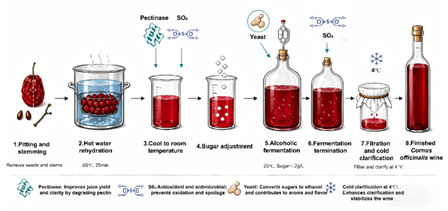
2.6. Preparation of Fruit WinesThe production process of C. officinalis fermented wine is shown in Figure 1. Dried fruits were washed, deseeded, destemmed, oven-dried (60°C, 24h), and rehydrated with hot water (85–95°C, 1:10, g). After cooling, pectinase (20mg/L) and SO₂ (60mg/L) were added. The mash sugar content was adjusted to 187 g/L (11% potential alcohol) and homogenized. Activated CECA yeast (0.3%, v/v; activated in water, 1:10, g, at 37°C for 30min) was inoculated, and fermentation proceeded at room temperature under an airlock. CO₂-related weight loss was monitored daily until a plateau indicated fermentation completion. The wine was then supplemented with SO₂ (60 mg/L), filtered through sterile gauze, and clarified at 4°C for 4 days.

Dried C. officinalis fruits were washed, cleaned, and dried at 60°C for 24h. Commercial grape wine was added to the dried fruit material at a solid-to-liquid ratio of 1:10 (g:mL). The mixture was sealed and macerated at room temperature in darkness for 15 days.
After maceration, the mixture was filtered through sterile gauze to obtain C. officinalis-infused grape wine.
Based on the optimal concentrations determined from in vitro antioxidant and α-glucosidase inhibitory assays, UA and PS were separately incorporated into two wine matrices.
For C. officinalis fermented wine: UA was added to obtain a final concentration of 1.5 mg/mL; PS was added to obtain a final concentration of 3.0 mg/mL. The resulting samples were designated as UA-fortified fermented wine and PS-fortified fermented wine.
For grape wine: UA was added to obtain a final concentration of 1.5 mg/mL; PS was added to obtain a final concentration of 3.0 mg/mL. The resulting samples were designated as UA-fortified grape wine and PS-fortified grape wine.
All wine samples were stored under identical conditions before analysis.
Seven wine samples were included in this study:
grape wine (W);
C. officinalis-infused grape wine (CW);
UA-fortified grape wine (WTU);
PS-fortified grape wine (WTP);
C. officinalis fermented wine (CB);
UA-fortified C. officinalis fermented wine (CTU);
PS-fortified C. officinalis fermented wine (CTP).
2.7. Determination of Physicochemical Properties of Fruit WinesThe main physicochemical parameters of fruit wines, including residual sugar, alcohol content, total acidity, pH value, and volatile acidity, were determined according to the Chinese national standard method GB/T 15038-2006 (General Analytical Methods for Wine and Fruit Wines). All measurements were performed in triplicate.
2.8. Determination of Individual Phenolic CompoundsMonomeric phenolic compounds in C. officinalis fruit wine were determined using ethyl acetate extraction combined with reverse-phase high-performance liquid chromatography (RP-HPLC) 14.
Chromatographic Conditions: An XTerra MS C18 reverse-phase column (250 mm × 4.6 mm, 5 μm) was employed. For sample preparation, 100 mL of ethyl acetate was added to 50 mL of the wine sample, and the extraction was performed three times. The combined extracts were concentrated to dryness by rotary evaporation under reduced pressure at 35°C, then reconstituted with methanol to a final volume of 25 mL. The solution was filtered through a 0.45 μm organic microporous membrane prior to analysis.
Mobile Phase: Solvent A was 2% aqueous acetic acid, and solvent B was a mixture of 0.5% aqueous acetic acid and acetonitrile (50:50, V/V). The volume ratio of mobile phase A to B was 50:50.
Gradient Elution Program: 0-50 min, 10%-55% A and 90%-45% B; 50-60 min, 55%-100% A and 45%-0% B; 60-65 min, 100%-10% A and 0%-90% B; 65-75 min, 10% A and 90% B. The column temperature was maintained at 30 °C, and the flow rate was 0.8 mL/min.
Monomeric phenolic compounds were identified based on their retention times, and their concentrations were quantified using the external standard method.
2.9. Determination of Aroma ComponentsVolatile aroma compounds were qualitatively and quantitatively analyzed using gas chromatography-mass spectrometry (GC-MS) 15.
Headspace Solid-Phase Microextraction (HS-SPME): A 5.0 mL aliquot of the sample wine was transferred into a 15 mL vial, followed by the addition of 1.0 g NaCl, 10 μL of internal standard solution (2,000 mg/L 4-methyl-2-pentanol), and a magnetic stirring bar. The vial was placed on a magnetic stirrer and equilibrated at 40 °C with stirring for 30 min. Subsequently, the SPME fiber was inserted into the headspace and extracted at 40 °C under continuous stirring for 30 min. After extraction, the fiber was immediately inserted into the GC injection port and thermally desorbed at 250°C for 8 min.
GC-MS Analysis: Gas chromatographic analysis was performed using an Agilent 7890B GC coupled with an Agilent 5975B MS, equipped with an HP-INNOWAX capillary column (60 m×0.25 mm×0.25 μm). Samples were introduced via splitless injection. High-purity helium was used as the carrier gas at a constant flow rate of 1 mL/min. The injector temperature was set at 250°C, the MS transfer line at 280°C, and the ion source at 230°C. The oven temperature program was as follows: initial temperature of 50°C held for 1 min, increased to 220°C at a rate of 3°C/min, and held for 5 min. Electron ionization (EI) was employed at 70 eV, with a mass scanning range of 25-350 amu.
Qualitative and Quantitative Analysis: Compounds were identified by comparison with the NIST14 mass spectral library and by matching retention indices (RI) with those reported in the NIST Chemistry WebBook. Quantification was performed using the external standard calibration method, with correlation coefficients (R2) exceeding 0.99.
2.10. Statistical AnalysisAll experiments were conducted with three independent biological replicates, and results were expressed as mean ± standard deviation. Statistical significance was evaluated using one-way analysis of variance (ANOVA), followed by Duncan’s multiple range test using IBM SPSS Statistics 26.0. Response surface methodology (RSM), regression analysis, and response surface plots were performed using Design-Expert 8.0.6. Principal component analysis (PCA), hierarchical cluster analysis (HCA), and Pearson correlation analysis were performed using Origin 2021. Statistical significance was defined as: p < 0.05: significant difference; p < 0.01: highly significant difference.
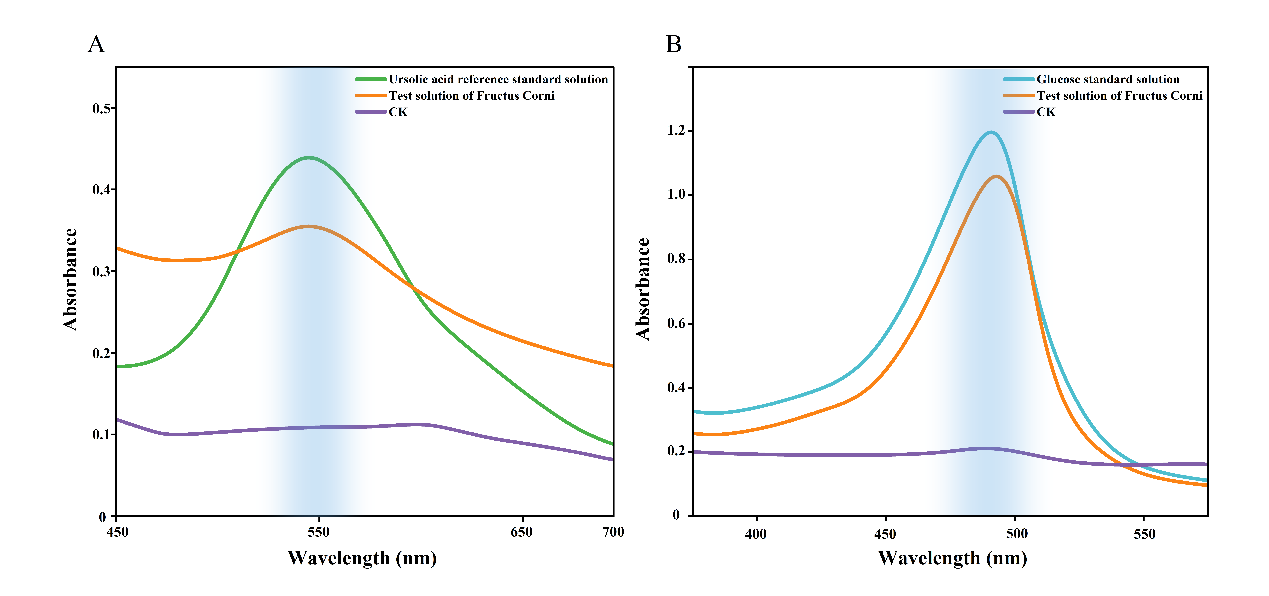
The maximum absorption wavelengths of ursolic acid (UA) and polysaccharides (PS) extracted from Cornus officinalis were determined using UV-Vis spectrophotometry 16.
The UA standard solution and C. officinalis extract exhibited identical absorption maxima at 548 nm (Figure 2A), while the reagent blank showed no obvious interference at this wavelength. Therefore, 548 nm was selected as the detection wavelength for UA quantification.
For PS determination, the glucose standard solution and polysaccharide extract showed maximum absorbance at approximately 485 nm and 490 nm (Figure 2B), respectively. Considering the stronger signal intensity and lower background interference, 490 nm was selected as the analytical wavelength.

The standard curves for each analyte were established at the selected wavelengths:
UA standard curve:
 |
Total sugar standard curve:
 |
Reducing sugar standard curve:
 |
Stability: For UA determination, the absorbance values remained relatively stable after color development, with RSD values of 2.29% for the standard solution and 0.93% for the sample solution. For PS determination, both the standard and sample solutions exhibited excellent stability, with RSD values of 0.24% and 0.22%, respectively.
Precision: The precision tests showed that the RSD values of repeated measurements were below 0.20%, demonstrating good instrumental precision.
Repeatability: As shown in Table 1. The repeatability test using six independently prepared samples showed RSD values of 0.93% for both UA and PS determination, confirming good reproducibility.
Recovery: As shown in Table 2. The recovery experiment showed an average recovery rate of 98.14% with an RSD of 1.76%, indicating that the established methods were accurate and reliable for determining UA and PS contents in C. officinalis samples.

The extraction yield of UA was 4.17 ± 0.12%, whereas the yield of PS was 2.88 ± 0.14%.
The results demonstrated that ultrasonic-assisted extraction effectively enriched both functional components from C. officinalis. The obtained yields provided sufficient quantities for subsequent biological evaluation and wine fortification experiments.
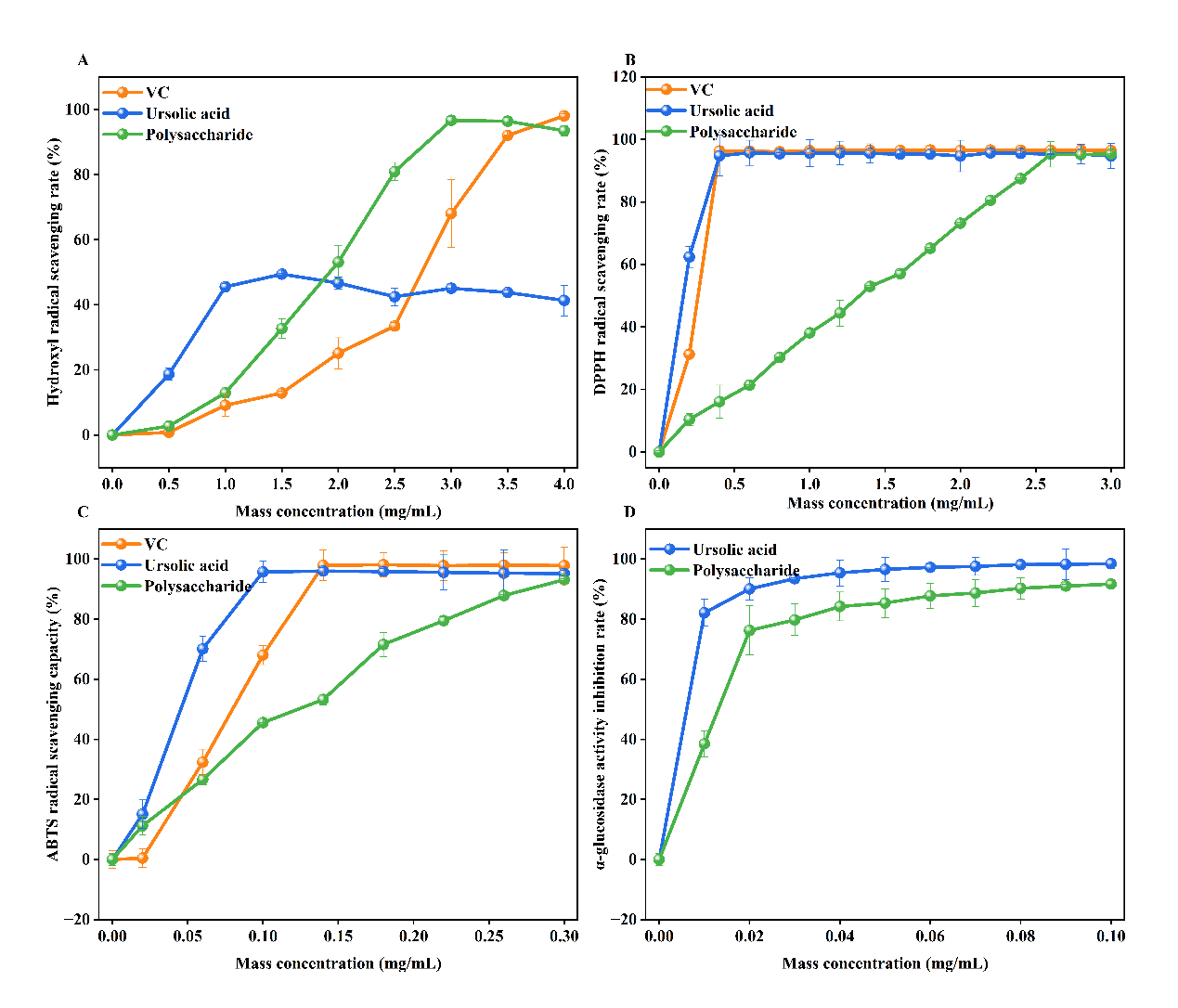
3.2. In Vitro Antioxidant Activity of UA and PSThe antioxidant activities of UA and PS were evaluated using DPPH, ABTS, and hydroxyl radical scavenging assays 17. Both UA and PS exhibited concentration-dependent antioxidant activities, although their response patterns differed significantly.
UA showed strong antioxidant capacity at relatively low concentrations. At 0.4 mg/mL, UA achieved more than 95% DPPH radical scavenging activity (Figure 3B), while ABTS radical scavenging activity exceeded 96% at 0.14 mg/mL( Figure 3C).
PS exhibited a gradual concentration-dependent increase in antioxidant activity. Compared with UA, PS required higher concentrations to achieve comparable DPPH and ABTS scavenging effects. However, PS showed excellent hydroxyl radical scavenging ability, reaching 96.7% inhibition at 3.0 mg/mL( Figure 3A).
The antioxidant activity profiles indicated that UA and PS exhibited different functional characteristics.
3.3. In Vitro α-Glucosidase Inhibitory ActivityAs shown in Figure. 3D, at a concentration of 0.01 mg/mL, UA from C. officinalis exhibited a significant increase in α-glucosidase inhibitory activity, reaching 82.13 ± 0.47%. This result indicates strong α-glucosidase inhibitory activity of the UA-containing sample at a low test concentration, corresponding to 2.13 times the inhibition observed for PS at the same concentration. At 0.10 mg/mL, the inhibitory activity of UA reached a maximum value of 98.50 ± 0.52%.
For C. officinalis PS, the inhibitory effect increased significantly at a concentration of 0.02 mg/mL, achieving an inhibition rate of 76.25 ± 8.17%. Previous studies have demonstrated that higher contents of galactose, galacturonic acid, and glucuronic acid, lower molecular weight, and a greater abundance of free carboxyl and hydroxyl groups enhance the α-glucosidase inhibitory activity of PS. At 0.10 mg/mL, the inhibitory rate of PS reached a peak value of 91.70 ± 1.08%, indicating effective inhibition of α-glucosidase activity. These findings suggest that the PS from C. officinalis may possess relatively low molecular weight and be rich in galactose and galacturonic acid. Previous studies have identified polysaccharide fractions such as PFC and FCPC in C. officinalis, both of which contain glucuronic acid and relatively high levels of xylose, contributing positively to their hypoglycemic activity 18.
Both UA and PS exhibited strong α-glucosidase inhibitory activity at 0.10 mg/mL; however, UA showed greater inhibition under the tested conditions.
3.4. Effects of UA and PS on Physicochemical Properties of Fruit WinesThe effects of UA and PS supplementation on the physicochemical properties of different wine matrices are summarized in Table 3.
The addition of PS showed no significant influence on residual sugar, total acidity, volatile acidity, alcohol content, or pH values in either grape wine or C. officinalis fermented wine. In contrast, UA supplementation resulted in significant increases in total acidity contents in both wine systems. No significant changes in volatile acidity were observed among different treatments, indicating that the addition of UA and PS did not promote microbial spoilage during storage.
3.5. Effects of UA and PS on Phenolic Composition of Fruit WinesThe phenolic profiles of different wine samples are presented in Table 4. A total of 15 individual phenolic compounds were detected in grape wine, whereas 10 compounds were identified in C. officinalis fermented wine. The addition of UA and PS produced different effects depending on the wine matrix.
In grape wine, UA supplementation increased the contents of several phenolic compounds, including chlorogenic acid, catechin, resveratrol, and total flavonoids. PS addition mainly affected specific compounds, increasing phloridzin content while reducing several phenolic acids and flavonoids.
In C. officinalis fermented wine, UA increased the contents of several phenolic compounds, including epicatechin, rutin, quercetin, and gentisic acid. PS supplementation resulted in increases in ferulic acid, p-coumaric acid, and syringic acid.
These results demonstrated that UA and PS affected phenolic composition differently depending on the wine matrix.

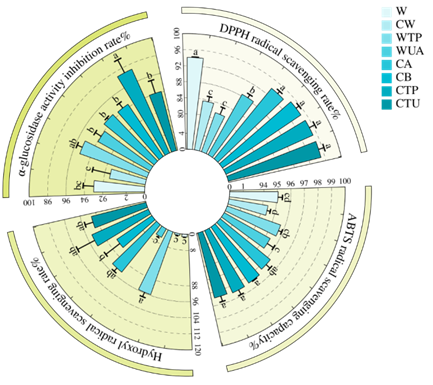
The antioxidant activities and α-glucosidase inhibitory activities of different fruit wines are presented in Figure 5.

Overall, Cornus officinalis fermented wines exhibited stronger biological activities than grape wine-based samples. This difference was mainly attributed to the naturally abundant bioactive compounds present in C. officinalis, including polysaccharides, phenolic compounds, and triterpenoids.
Compared with untreated grape wine, the addition of PS produced different effects on antioxidant activities. PS significantly increased ABTS radical scavenging activity and hydroxyl radical scavenging activity, while DPPH radical scavenging activity showed a slight decrease.
UA supplementation showed a relatively limited effect on radical scavenging activities in grape wine. However, UA addition improved α-glucosidase inhibitory activity, suggesting that UA may contribute more strongly to enzyme-related functional properties rather than general antioxidant enhancement.
In C. officinalis fermented wine, PS supplementation further improved α-glucosidase inhibitory activity, whereas UA showed relatively minor effects.
These results indicate that the functional effects of UA and PS are strongly dependent on the chemical environment of the wine matrix.
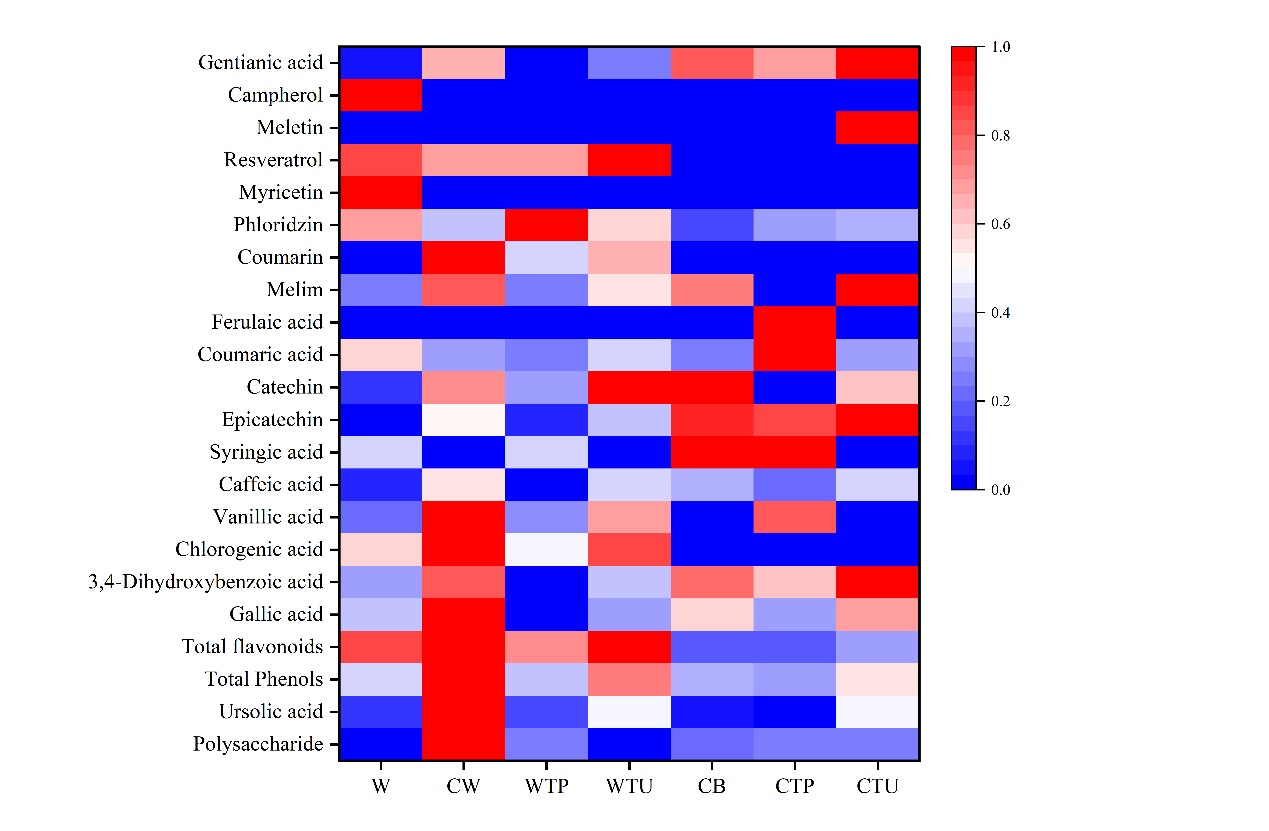
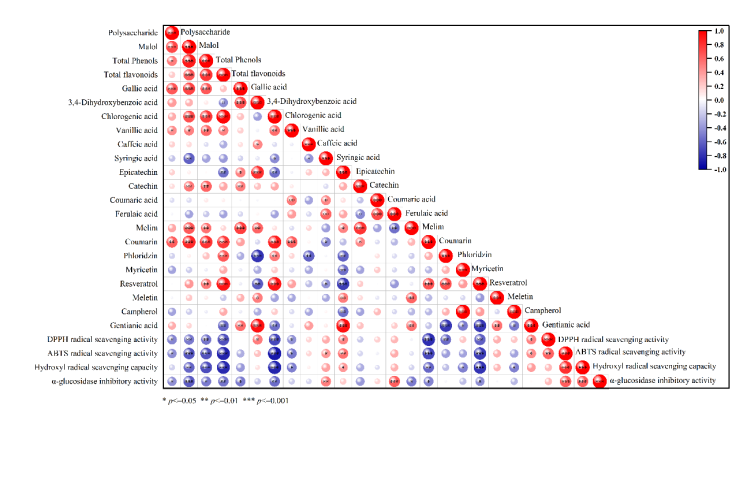
3.7. Correlation between Chemical Components and Functional ActivitiesPearson correlation analysis was performed to investigate relationships between chemical components and biological activities of fruit wines (Figure 6).
The correlation results showed that total phenolic content and total flavonoid content were not always positively correlated with antioxidant activities. Although phenolic compounds are generally considered important antioxidant contributors, the present results indicated that the functional activity of fruit wines was influenced not only by the total amount of bioactive compounds but also by the composition and interactions among individual molecules.
Several individual phenolic compounds exhibited strong positive correlations with antioxidant activity. Chlorogenic acid showed a strong correlation with DPPH radical scavenging activity (r = 0.86), while quercetin derivatives were positively associated with antioxidant performance (r = 0.82). Epicatechin showed a positive relationship with ABTS scavenging activity, suggesting that individual phenolic compounds may contribute more significantly to antioxidant activity than total phenolic concentration.
For α-glucosidase inhibitory activity, ferulic acid and syringic acid showed positive correlations, with correlation coefficients of 0.63 and 0.52, respectively.
Interestingly, UA, PS, total phenolics, and total flavonoids showed negative correlations with several antioxidant indicators. These results suggest that interactions among different functional components may influence bioactivity through matrix-dependent effects.

The volatile aroma profiles of different fruit wines were analyzed using GC–MS, and the identified compounds are summarized in Table 5. A total of 50 volatile compounds were detected, including higher alcohols, esters, terpenes, acids, and aldehydes.
Grape wine exhibited a more complex volatile profile than C. officinalis fermented wine, with higher levels of varietal aroma compounds such as geraniol, citronellol, and nerol. The addition of PS produced significant changes in volatile composition, particularly in grape wine.
Compared with untreated grape wine, PS supplementation reduced several varietal aroma compounds, including C6 alcohols and terpenes, while increasing fermentation-derived compounds such as higher alcohols and acetate esters. The contents of higher alcohols, acetate esters, and fatty acid ethyl esters increased by approximately 7.63-, 4.89-, and 1.45-fold, respectively.
In contrast, UA addition had a relatively mild influence on volatile composition. UA supplementation maintained the main varietal aroma compounds of grape wine while increasing some fatty acid esters associated with creamy and fruity aromas.
These results demonstrate that PS and UA regulate aroma profiles through different pathways.
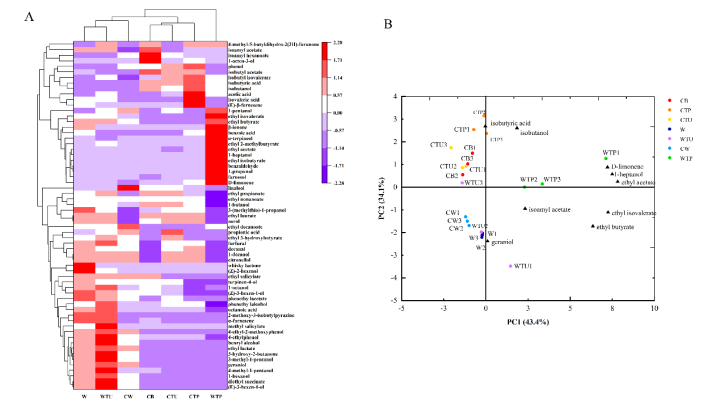
Hierarchical cluster analysis was performed based on volatile compound composition. The seven wine samples were classified into three major groups(Figure 7A).
The first group consisted of grape wine, C. officinalis-infused grape wine, and UA-fortified grape wine. These samples shared similar aroma characteristics dominated by floral and fruity volatile compounds. The second group included C. officinalis fermented wine and its UA- and PS-fortified derivatives. These samples showed relatively similar aroma profiles, characterized by higher alcohols and fatty acid-related compounds. The third group consisted solely of PS-fortified grape wine, indicating that PS supplementation caused substantial modification of the original grape wine aroma profile.
Principal component analysis was conducted using volatile compounds with odor activity values (OAV) greater than 0.1. The first principal component clearly separated PS-fortified grape wine from other samples (Figure 7B).
PS-fortified grape wine showed strong associations with fermentation-derived aroma compounds, including isoamyl acetate, ethyl acetate, and n-heptanol, which contribute fruity and fatty aroma characteristics.
Grape wine, C. officinalis-infused grape wine, and UA-fortified grape wine were mainly associated with geraniol and other terpene compounds responsible for floral and citrus-like aromas.
C. officinalis fermented wine and its derivatives were associated with compounds such as isobutanol and isobutyric acid, indicating stronger fermentation-derived and fatty aroma characteristics.
Overall, PS mainly enhanced fermentation-related fruity aromas but altered the original varietal aroma characteristics of grape wine. UA showed a better ability to preserve the inherent aroma structure while providing moderate aroma enhancement.
UA showed relatively high antioxidant and α-glucosidase inhibitory activities at lower concentrations than PS. This behavior is consistent with the structural characteristics of UA, a pentacyclic triterpenoid containing a hydrophobic carbon skeleton together with hydroxyl and carboxyl groups 19. The hydrophobic region may facilitate association with nonpolar regions of proteins, whereas the polar groups can participate in hydrogen bonding. Previous kinetic, fluorescence, and molecular-docking analyses demonstrated that UA can inhibit α-glucosidase through noncompetitive binding and that hydrogen bonding contributes substantially to the formation of the UA–enzyme complex 20. Therefore, the high inhibitory activity observed in the present study may be related to the capacity of UA to interact with sites outside the catalytic center and induce changes in enzyme conformation rather than simply competing with the substrate.
In contrast, the bioactivity of PS increased more gradually with concentration, and PS displayed particularly strong hydroxyl radical scavenging activity. Polysaccharide antioxidant activity is generally influenced by molecular weight, monosaccharide composition, branching degree, uronic acid content, and the availability of hydroxyl and carboxyl groups. These groups may contribute to radical scavenging through hydrogen or electron donation and may also chelate transition metal ions involved in hydroxyl radical generation. However, the present study did not characterize the molecular weight distribution, glycosidic linkage pattern, or monosaccharide composition of the extracted PS 21. Consequently, the proposed contribution of uronic acids or specific sugar residues should be regarded as a mechanistic hypothesis rather than a confirmed structural explanation.
The different concentration–response patterns of UA and PS also indicate that activity measured per unit mass should not be equated directly with their practical value in food systems. UA may provide strong enzyme inhibition at a comparatively low dose, but its low aqueous solubility and hydrophobicity may restrict homogeneous dispersion in wine. PS is more compatible with aqueous systems but can interact extensively with other macromolecules, which may either expose or mask active groups 18. Thus, the apparent activities of both components are likely to reflect a balance between intrinsic chemical reactivity and matrix-mediated accessibility.
4.2. Matrix-dependent modulation of phenolic composition and biological activityThe responses to UA and PS differed between grape wine and C. officinalis fermented wine, demonstrating a clear matrix effect. Grape wine is a complex colloidal system containing phenolic acids, flavan-3-ols, anthocyanins, condensed tannins, proteins, grape-derived polysaccharides, and yeast mannoproteins 22. In comparison, C. officinalis fermented wine contains a different spectrum and proportion of iridoids, organic acids, triterpenoids, phenolics, and fruit-derived polysaccharides. These differences can alter the solubility, binding behavior, oxidation stability, and analytical recovery of exogenously added compounds 23.
The changes in individual phenolic concentrations after PS addition may arise from noncovalent interactions between PS and phenolic molecules. Hydrogen bonding can occur between the hydroxyl groups of polysaccharides and phenolics, whereas hydrophobic association may involve less polar regions of phenolic structures. Such interactions can modify phenolic solubility, aggregation, precipitation, and extractability during HPLC sample preparation 24. More broadly, studies of complex food systems have shown that phenolics interact with polysaccharides and other macromolecules, thereby altering their accessibility and measured biological performance.
Accordingly, an increase or decrease in the measured concentration of a phenolic compound should not automatically be interpreted as chemical synthesis or degradation 25. Because UA and PS were added after fermentation, the observed differences may partly reflect changes in phenolic stabilization, complex formation, extraction recovery, or oxidation during storage and analysis. Direct evidence for these possibilities would require complementary techniques such as size-exclusion chromatography, fluorescence spectroscopy, Fourier-transform infrared spectroscopy, nuclear magnetic resonance spectroscopy, or isothermal titration calorimetry 26.
The weak or negative relationships between total phenolic or flavonoid contents and some antioxidant indices further support the importance of compositional quality rather than total concentration alone. Individual phenolics differ markedly in the number and position of hydroxyl groups, conjugation patterns, redox potentials, and steric accessibility. Therefore, chlorogenic acid, epicatechin, quercetin derivatives, ferulic acid, and syringic acid may contribute differently to DPPH, ABTS, and hydroxyl radical scavenging assays. In addition, interactions among phenolics, PS, UA, organic acids, ethanol, and metal ions may produce additive, synergistic, or antagonistic responses 27.
However, correlations calculated from a small number of wine treatments should be interpreted cautiously. A high Pearson correlation coefficient does not demonstrate that a particular compound directly caused the observed biological activity. Some variables may change simultaneously because of treatment effects, and multiple compounds may contribute to the same assay response. Thus, the present correlation analysis is more appropriately viewed as a hypothesis-generating approach that identifies potential contributors for subsequent validation using purified compounds, reconstructed model wines, or multivariate regression.
The apparent increase in total acidity and reducing sugar after UA supplementation also requires cautious interpretation. Given the low UA addition level, a direct quantitative contribution of UA to total acidity or reducing sugar is unlikely to fully explain the observed changes. Possible explanations include matrix interference with the analytical assays, altered equilibrium among wine components, variation during sample handling, or treatment-associated analytical uncertainty 28. This result should therefore not be presented as evidence that UA generated sugars or organic acids. Additional recovery experiments using UA-spiked model wine would help determine whether UA interferes with the relevant analytical methods.
4.3. Possible mechanisms underlying changes in volatile profilesThe most pronounced change in volatile composition was observed in PS-fortified grape wine. Because PS was added after alcoholic fermentation, the higher HS-SPME-GC–MS responses of higher alcohols and esters cannot reasonably be attributed to increased microbial production. Instead, PS may have altered the partitioning of pre-existing volatile compounds among the liquid phase, colloidal structures, and headspace, thereby affecting their availability for SPME extraction.
Wine polysaccharides can interact with aroma compounds and other matrix components through hydrogen bonding, hydrophobic interactions, and colloidal effects 29. These interactions are highly dependent on polysaccharide structure, concentration, and the physicochemical properties of individual volatile compounds. Previous studies have shown that polysaccharides can either enhance or suppress the headspace availability of aroma compounds and that these effects may be further modified by phenolics and other macromolecules 30. Therefore, the higher apparent abundances of isoamyl acetate, ethyl acetate, higher alcohols, and fatty acid ethyl esters observed after PS addition may reflect altered liquid–headspace partitioning or HS-SPME extraction efficiency rather than true increases in their total concentrations. Conversely, the lower measured levels of some C6 alcohols and terpenes may result from preferential retention within PS-associated colloidal structures or competitive extraction effects.
UA caused substantially smaller changes in the volatile profile and was associated with a terpene pattern more similar to that of untreated grape wine. Its lower addition level and smaller molecular size may have caused less disruption of the wine matrix than PS. However, the present results do not demonstrate that UA directly protects or retains linalool, geraniol, or other terpenes. Rather, UA may exert a comparatively limited effect on volatile partitioning under the tested conditions.
Overall, the present HS-SPME-GC–MS data cannot distinguish true changes in total volatile concentration from matrix-dependent changes in headspace partitioning and extraction response. Future studies using reconstructed model wines, matrix-matched standard addition, stable-isotope dilution analysis, or complementary exhaustive extraction methods are required to clarify these mechanisms and determine whether the observed chemical differences translate into perceptible sensory changes.
4.4. Implications for the Targeted Formulation of Functional Fruit WinesThe results indicate that UA and PS serve different formulation objectives. UA appears more suitable when strong α-glucosidase inhibition is required at a relatively low addition level and when substantial modification of the original volatile profile is undesirable. PS may be more appropriate when enhancement of selected antioxidant properties and deliberate modulation of aroma release or mouthfeel are desired. Nevertheless, the optimal dose cannot be determined from in vitro activity alone, because increasing PS concentration may also alter clarity, viscosity, colloidal stability, and aroma perception 30.
The practical interpretation of α-glucosidase inhibition should also remain conservative. Enzyme inhibition measured in vitro indicates potential bioactivity but does not demonstrate an antidiabetic effect in humans. Wine ethanol content, gastrointestinal digestion, compound bioaccessibility, metabolism, and realistic serving size will influence the physiological relevance of UA and Ps 31. Therefore, terms such as “hypoglycemic activity” should preferably be replaced with “in vitro α-glucosidase inhibitory activity” unless animal or clinical evidence is available.
Several limitations should be acknowledged. First, the PS extract was quantified as total polysaccharide but was not structurally characterized; therefore, the molecular features responsible for its activity remain unknown. Second, UA solubility and possible precipitation in the wine matrices were not reported. Third, the study relied on chemical antioxidant assays that do not fully reproduce biological oxidative conditions. Fourth, sensory analysis was not performed, making it impossible to determine whether the GC-MS differences were perceptible or desirable. Finally, direct molecular interactions among UA, PS, phenolics, proteins, and volatile compounds were inferred rather than experimentally demonstrated.
Future studies should characterize PS using monosaccharide profiling, molecular-weight determination, methylation analysis, and spectroscopic methods 32. The binding of PS and UA to representative phenolics and aroma compounds should be evaluated in reconstructed model wines, followed by validation in real wine matrices. Sensory analysis, gastrointestinal digestion models, cellular assays, and storage-stability studies would further establish whether the observed chemical changes provide meaningful technological and physiological benefits.
Overall, the present study supports a component-specific rather than extract-wide strategy for the formulation of functional fruit wines. UA and PS should not be regarded as interchangeable sources of bioactivity: UA primarily provides low-dose enzyme inhibition with comparatively limited alteration of the aroma matrix, whereas PS exerts broader matrix-mediated effects on radical scavenging, phenolic behavior, and volatile partitioning. Rational formulation should therefore consider both the intrinsic activity of each component and its interactions with the chemical environment of the target beverage.
This study systematically compared the effects of Cornus officinalis-derived polysaccharides (PS) and ursolic acid (UA) on the chemical composition, volatile profile, and in vitro functional activities of two wine matrices. UA exhibited stronger radical-scavenging and α-glucosidase inhibitory activities at relatively low test concentrations, whereas PS showed a more gradual concentration-dependent antioxidant response and pronounced hydroxyl radical scavenging activity. In the wine systems, PS supplementation enhanced selected antioxidant and α-glucosidase inhibitory activities and was associated with substantial changes in the HS-SPME-determined volatile profile. In contrast, UA caused comparatively smaller changes in the original volatile pattern of grape wine and was associated with higher measured levels of the floral terpenes linalool and geraniol.
More importantly, the effects of UA and PS differed between grape wine and C. officinalisfermented wine, demonstrating that the functional behavior of isolated phytochemicals cannot be predicted solely from their intrinsic in vitro activities. The surrounding wine matrix appeared to influence phenolic composition, bioactivity, and volatile partitioning, resulting in component- and matrix-dependent responses. PS exerted broader matrix-mediated effects on radical scavenging and volatile distribution, whereas UA provided relatively strong α-glucosidase inhibition with less extensive alteration of the volatile profile. These findings support a component-specific formulation strategy rather than treating UA and PS as interchangeable functional ingredients.
Overall, this study provides a scientific basis for the targeted application of C. officinalis-derived UA and PS in functional fruit wine formulation and emphasizes the importance of matrix effects when incorporating isolated phytochemicals into fermented beverages. Further studies combining polysaccharide structural characterization, matrix-matched analytical validation, sensory evaluation, and physiologically relevant in vitro or cellular models are needed to confirm the mechanisms underlying these responses and to support the development of fruit wines with targeted chemical, sensory, and in vitro functional properties.
There are no conflicts of interest to declare.
The data that support the findings of this study are available from the corresponding author upon reasonable request.
This work was supported by National Key R&D Program of China 2024YFD2100600, Key R&D Program of Shaanxi Province 2023-ZDLNY-31, Central Funds Guiding Local Science and Technology Development Project 2026FRF05006, Gansu Provincial Science and Technology Program 26ZDNA009, Key Research and Development Program of Shaanxi Province 2025PT-ZCK-22, Grape Winemaking Microorganisms (China Agricultural Research System) CARS-29-jg-4.
| [1] | Cui C, Liu W, Feng L, Zou J, Shi Y, Sun J, et al. Cornus officinalis Sieb.: An updated review on the ethnopharmacology, phytochemistry, pharmacology, toxicology, and pharmacokinetics. Journal of ethnopharmacology. 2025: 120365. | ||
| In article | View Article PubMed | ||
| [2] | Yue Z, Liu H, Liu M, Wang N, Ye L, Guo C, et al. Cornus officinalis Extract Enriched with Ursolic Acid Ameliorates UVB-Induced Photoaging in Caenorhabditis elegans. Molecules. 2024; 29. | ||
| In article | View Article PubMed | ||
| [3] | Wang D, Li C, Fan W, Yi T, Wei A-C, Yuxiang. Hypoglycemic and hypolipidemic effects of a polysaccharide from Fructus Corni in streptozotocin-induced diabetic rats. International journal of biological macromolecules. 2019; 133: 420-7. | ||
| In article | View Article PubMed | ||
| [4] | Čakar U, Čolović M, Milenković D, Pagnacco M, Maksimović J, Krstić D, et al. Strawberry and Drupe Fruit Wines Antioxidant Activity and Protective Effect Against Induced Oxidative Stress in Rat Synaptosomes. Antioxidants. 2025; 14. | ||
| In article | View Article PubMed | ||
| [5] | Fernandes P, Coimbra M. The antioxidant activity of polysaccharides: A structure-function relationship overview. Carbohydrate polymers. 2023; 314: 120965. | ||
| In article | View Article PubMed | ||
| [6] | Yang T, Tan C, Wang R, Shi Y, Liu J, Liang Y, et al. Ultrasound-assisted hydrophobic deep eutectic solvent extraction and purification of ursolic acid and oleanolic acid from Cornus officinalis: Optimization and mechanistic insights. Ultrasonics Sonochemistry. 2026; 129. | ||
| In article | View Article PubMed | ||
| [7] | Tan J, Cui P, Ge S-Q, Cai X, Li Q, Xue H. Ultrasound assisted aqueous two-phase extraction of polysaccharides from Cornus officinalis fruit: Modeling, optimization, purification, and characterization. Ultrasonics Sonochemistry. 2022; 84. | ||
| In article | View Article PubMed | ||
| [8] | Guo Y, Han Z, Zhang J, Lu Y, Li C, Liu G. Development of a high-speed and ultrasensitive UV/Vis-CM for detecting total triterpenes in traditional Chinese medicine and its application. Heliyon. 2024; 10. | ||
| In article | View Article PubMed | ||
| [9] | Chen W, Gao L, Song L, Sommerfeld M, Hu Q. An improved phenol-sulfuric acid method for the quantitative measurement of total carbohydrates in algal biomass. Algal Research. 2023. | ||
| In article | View Article | ||
| [10] | Mahmood BA. Analytical validation of a UV–Vis spectrophotometric method for precise and sensitive biochemical quantification. Applied Chemical Engineering. 2026. | ||
| In article | |||
| [11] | Tayeng D, Das S, Das S, Chetia D. UV Spectrophotometric Method Development And Validation For The Combined Plant Extract Traditionally Used In Arunachal Pradesh To Treat Malaria. Journal of Neonatal Surgery. 2025. | ||
| In article | View Article | ||
| [12] | Hu J, Wang Q, Wang Y, You G-X, Li P, Zhao L, et al. Polydopamine-based surface modification of hemoglobin particles for stability enhancement of oxygen carriers. Journal of colloid and interface science. 2020; 571: 326-36. | ||
| In article | View Article PubMed | ||
| [13] | Gao X, Liu Y, An Z, Ni J. Active Components and Pharmacological Effects of Cornus officinalis: Literature Review. Frontiers in Pharmacology. 2021; 12. | ||
| In article | View Article PubMed | ||
| [14] | Wang S, Zhang Q, Zhao P, Zeqiang, Zhang J, Wen P, et al. Investigating the effect of three phenolic fractions on the volatility of floral, fruity, and aged aromas by HS-SPME-GC-MS and NMR in model wine. Food Chemistry: X. 2022; 13. | ||
| In article | View Article PubMed | ||
| [15] | Chen Q, Yang X, Hong P, Liu M, Li Z, Zhou C, et al. GC-MS, GC-IMS, and E-Nose Analysis of Volatile Aroma Compounds in Wet-Marinated Fermented Golden Pomfret Prepared Using Different Cooking Methods. Foods. 2024; 13. | ||
| In article | View Article PubMed | ||
| [16] | Afzal F, Ullah H, Amjad M, Akhtar M, Shah M, Batool Z, et al. Detection of Uric Acid in UV-VIS wavelength Regime. JOURNAL OF NANOSCOPE (JN). 2023. | ||
| In article | View Article | ||
| [17] | Gulcin I. Antioxidants and antioxidant methods: an updated overview. Archives of Toxicology. 2020; 94: 651-715. | ||
| In article | View Article PubMed | ||
| [18] | Wang J, Zhang A, Hu Y, Yuan X, Qiu Y, Dong C. Polysaccharides from fructus corni: Extraction, purification, structural features, and biological activities. Carbohydrate research. 2024; 538: 109072. | ||
| In article | View Article PubMed | ||
| [19] | Ghante M, Jamkhande P. Role of Pentacyclic Triterpenoids in Chemoprevention and Anticancer Treatment: An Overview on Targets and Underling Mechanisms. Journal of Pharmacopuncture. 2019; 22: 55-67. | ||
| In article | View Article PubMed | ||
| [20] | Wang J, Zhao J, Yan Y, Liu D, Wang C, Wang H. Inhibition of glycosidase by ursolic acid: In vitro, in vivo and in silico study. Journal of the science of food and agriculture. 2020. | ||
| In article | View Article PubMed | ||
| [21] | Chen G, Wan X, Zhang X, Chen X, Deng H. Polysaccharides from Rosa roxburghii Tratt fruit: The effect of extraction solvent on their chemical structure, bioactivities, in vitro simulated digestion and fecal fermentation characteristics. Food Chemistry: X. 2025; 32. | ||
| In article | View Article PubMed | ||
| [22] | Zhao M, Wu F, Tang Z, Yang X, Liu Y, Wang F, et al. Anti-inflammatory and antioxidant activity of ursolic acid: a systematic review and meta-analysis. Frontiers in Pharmacology. 2023; 14. | ||
| In article | View Article PubMed | ||
| [23] | Rayess YE, Nehme N, Azzi-Achkouty S, Julien S. Wine Phenolic Compounds: Chemistry, Functionality and Health Benefits. Antioxidants. 2024; 13. | ||
| In article | View Article PubMed | ||
| [24] | Shahidi F, Athiyappan KD. Polyphenol-polysaccharide interactions: molecular mechanisms and potential applications in food systems – a comprehensive review. Food Production, Processing and Nutrition. 2025; 7. | ||
| In article | View Article PubMed | ||
| [25] | Zhang T, Yang P, Ji Y, Lu J. The Role of Natural Organic Matter in the Degradation of Phenolic Pollutants by Sulfate Radical Oxidation: Radical Scavenging vs Reduction. Environmental science & technology. 2025. | ||
| In article | View Article PubMed | ||
| [26] | Santos T, Salgado G, Cabrita E, Cruz C. G-Quadruplexes and Their Ligands: Biophysical Methods to Unravel G-Quadruplex/Ligand Interactions. Pharmaceuticals. 2021; 14. | ||
| In article | View Article PubMed | ||
| [27] | Corrigan H, Dunne A, Purcell N, Guo Y, Wang K, Xuan H, et al. Conceptual functional-by-design optimisation of the antioxidant capacity of trans-resveratrol, quercetin, and chlorogenic acid: Application in a functional tea. Food chemistry. 2023; 428: 136764. | ||
| In article | View Article PubMed | ||
| [28] | García-Viñola V, Ruiz-De-Villa C, Gombau J, Poblet M, Bordons A, Reguant C, et al. Simultaneous Analysis of Organic Acids, Glycerol and Phenolic Acids in Wines Using Gas Chromatography-Mass Spectrometry. Foods. 2024; 13. | ||
| In article | View Article PubMed | ||
| [29] | Pérez-Jiménez M, Esteban-Fernández A, Muñoz-González C, Pozo-Bayón M. Interactions among Odorants, Phenolic Compounds, and Oral Components and Their Effects on Wine Aroma Volatility. Molecules. 2020; 25. | ||
| In article | View Article PubMed | ||
| [30] | Jones-Moore H, Jelley R, Marangon M, Fedrizzi B. The interactions of wine polysaccharides with aroma compounds, tannins, and proteins, and their importance to winemaking. Food Hydrocolloids. 2021; 123: 107150. | ||
| In article | View Article | ||
| [31] | Sun X, Cheng X, Zhang J, Ju Y, Que Z, Liao X, et al. Letting wine polyphenols functional: Estimation of wine polyphenols bioaccessibility under different drinking amount and drinking patterns. Food research international. 2020; 127: 108704. | ||
| In article | View Article PubMed | ||
| [32] | Han X, Ren X, Zhang D, Guo Q, Li S, Xiu Z-L, et al. A novel polysaccharide in Polygonatum kingianum: structure elucidation, the activities of anti-inflammatory and the regulation of gut microbiota in vitro. Natural Products and Bioprospecting. 2025; 15. | ||
| In article | View Article PubMed | ||
Published with license by Science and Education Publishing, Copyright © 2026 Junhe Wang, Yuanyuan You, Rongjun Xu, Lanying Li, Xian Li, Jiao Jiang, Yi Qin, Yanlin Liu and Yuyang Song
 This work is licensed under a Creative Commons Attribution 4.0 International License. To view a copy of this license, visit
http://creativecommons.org/licenses/by/4.0/
This work is licensed under a Creative Commons Attribution 4.0 International License. To view a copy of this license, visit
http://creativecommons.org/licenses/by/4.0/
| [1] | Cui C, Liu W, Feng L, Zou J, Shi Y, Sun J, et al. Cornus officinalis Sieb.: An updated review on the ethnopharmacology, phytochemistry, pharmacology, toxicology, and pharmacokinetics. Journal of ethnopharmacology. 2025: 120365. | ||
| In article | View Article PubMed | ||
| [2] | Yue Z, Liu H, Liu M, Wang N, Ye L, Guo C, et al. Cornus officinalis Extract Enriched with Ursolic Acid Ameliorates UVB-Induced Photoaging in Caenorhabditis elegans. Molecules. 2024; 29. | ||
| In article | View Article PubMed | ||
| [3] | Wang D, Li C, Fan W, Yi T, Wei A-C, Yuxiang. Hypoglycemic and hypolipidemic effects of a polysaccharide from Fructus Corni in streptozotocin-induced diabetic rats. International journal of biological macromolecules. 2019; 133: 420-7. | ||
| In article | View Article PubMed | ||
| [4] | Čakar U, Čolović M, Milenković D, Pagnacco M, Maksimović J, Krstić D, et al. Strawberry and Drupe Fruit Wines Antioxidant Activity and Protective Effect Against Induced Oxidative Stress in Rat Synaptosomes. Antioxidants. 2025; 14. | ||
| In article | View Article PubMed | ||
| [5] | Fernandes P, Coimbra M. The antioxidant activity of polysaccharides: A structure-function relationship overview. Carbohydrate polymers. 2023; 314: 120965. | ||
| In article | View Article PubMed | ||
| [6] | Yang T, Tan C, Wang R, Shi Y, Liu J, Liang Y, et al. Ultrasound-assisted hydrophobic deep eutectic solvent extraction and purification of ursolic acid and oleanolic acid from Cornus officinalis: Optimization and mechanistic insights. Ultrasonics Sonochemistry. 2026; 129. | ||
| In article | View Article PubMed | ||
| [7] | Tan J, Cui P, Ge S-Q, Cai X, Li Q, Xue H. Ultrasound assisted aqueous two-phase extraction of polysaccharides from Cornus officinalis fruit: Modeling, optimization, purification, and characterization. Ultrasonics Sonochemistry. 2022; 84. | ||
| In article | View Article PubMed | ||
| [8] | Guo Y, Han Z, Zhang J, Lu Y, Li C, Liu G. Development of a high-speed and ultrasensitive UV/Vis-CM for detecting total triterpenes in traditional Chinese medicine and its application. Heliyon. 2024; 10. | ||
| In article | View Article PubMed | ||
| [9] | Chen W, Gao L, Song L, Sommerfeld M, Hu Q. An improved phenol-sulfuric acid method for the quantitative measurement of total carbohydrates in algal biomass. Algal Research. 2023. | ||
| In article | View Article | ||
| [10] | Mahmood BA. Analytical validation of a UV–Vis spectrophotometric method for precise and sensitive biochemical quantification. Applied Chemical Engineering. 2026. | ||
| In article | |||
| [11] | Tayeng D, Das S, Das S, Chetia D. UV Spectrophotometric Method Development And Validation For The Combined Plant Extract Traditionally Used In Arunachal Pradesh To Treat Malaria. Journal of Neonatal Surgery. 2025. | ||
| In article | View Article | ||
| [12] | Hu J, Wang Q, Wang Y, You G-X, Li P, Zhao L, et al. Polydopamine-based surface modification of hemoglobin particles for stability enhancement of oxygen carriers. Journal of colloid and interface science. 2020; 571: 326-36. | ||
| In article | View Article PubMed | ||
| [13] | Gao X, Liu Y, An Z, Ni J. Active Components and Pharmacological Effects of Cornus officinalis: Literature Review. Frontiers in Pharmacology. 2021; 12. | ||
| In article | View Article PubMed | ||
| [14] | Wang S, Zhang Q, Zhao P, Zeqiang, Zhang J, Wen P, et al. Investigating the effect of three phenolic fractions on the volatility of floral, fruity, and aged aromas by HS-SPME-GC-MS and NMR in model wine. Food Chemistry: X. 2022; 13. | ||
| In article | View Article PubMed | ||
| [15] | Chen Q, Yang X, Hong P, Liu M, Li Z, Zhou C, et al. GC-MS, GC-IMS, and E-Nose Analysis of Volatile Aroma Compounds in Wet-Marinated Fermented Golden Pomfret Prepared Using Different Cooking Methods. Foods. 2024; 13. | ||
| In article | View Article PubMed | ||
| [16] | Afzal F, Ullah H, Amjad M, Akhtar M, Shah M, Batool Z, et al. Detection of Uric Acid in UV-VIS wavelength Regime. JOURNAL OF NANOSCOPE (JN). 2023. | ||
| In article | View Article | ||
| [17] | Gulcin I. Antioxidants and antioxidant methods: an updated overview. Archives of Toxicology. 2020; 94: 651-715. | ||
| In article | View Article PubMed | ||
| [18] | Wang J, Zhang A, Hu Y, Yuan X, Qiu Y, Dong C. Polysaccharides from fructus corni: Extraction, purification, structural features, and biological activities. Carbohydrate research. 2024; 538: 109072. | ||
| In article | View Article PubMed | ||
| [19] | Ghante M, Jamkhande P. Role of Pentacyclic Triterpenoids in Chemoprevention and Anticancer Treatment: An Overview on Targets and Underling Mechanisms. Journal of Pharmacopuncture. 2019; 22: 55-67. | ||
| In article | View Article PubMed | ||
| [20] | Wang J, Zhao J, Yan Y, Liu D, Wang C, Wang H. Inhibition of glycosidase by ursolic acid: In vitro, in vivo and in silico study. Journal of the science of food and agriculture. 2020. | ||
| In article | View Article PubMed | ||
| [21] | Chen G, Wan X, Zhang X, Chen X, Deng H. Polysaccharides from Rosa roxburghii Tratt fruit: The effect of extraction solvent on their chemical structure, bioactivities, in vitro simulated digestion and fecal fermentation characteristics. Food Chemistry: X. 2025; 32. | ||
| In article | View Article PubMed | ||
| [22] | Zhao M, Wu F, Tang Z, Yang X, Liu Y, Wang F, et al. Anti-inflammatory and antioxidant activity of ursolic acid: a systematic review and meta-analysis. Frontiers in Pharmacology. 2023; 14. | ||
| In article | View Article PubMed | ||
| [23] | Rayess YE, Nehme N, Azzi-Achkouty S, Julien S. Wine Phenolic Compounds: Chemistry, Functionality and Health Benefits. Antioxidants. 2024; 13. | ||
| In article | View Article PubMed | ||
| [24] | Shahidi F, Athiyappan KD. Polyphenol-polysaccharide interactions: molecular mechanisms and potential applications in food systems – a comprehensive review. Food Production, Processing and Nutrition. 2025; 7. | ||
| In article | View Article PubMed | ||
| [25] | Zhang T, Yang P, Ji Y, Lu J. The Role of Natural Organic Matter in the Degradation of Phenolic Pollutants by Sulfate Radical Oxidation: Radical Scavenging vs Reduction. Environmental science & technology. 2025. | ||
| In article | View Article PubMed | ||
| [26] | Santos T, Salgado G, Cabrita E, Cruz C. G-Quadruplexes and Their Ligands: Biophysical Methods to Unravel G-Quadruplex/Ligand Interactions. Pharmaceuticals. 2021; 14. | ||
| In article | View Article PubMed | ||
| [27] | Corrigan H, Dunne A, Purcell N, Guo Y, Wang K, Xuan H, et al. Conceptual functional-by-design optimisation of the antioxidant capacity of trans-resveratrol, quercetin, and chlorogenic acid: Application in a functional tea. Food chemistry. 2023; 428: 136764. | ||
| In article | View Article PubMed | ||
| [28] | García-Viñola V, Ruiz-De-Villa C, Gombau J, Poblet M, Bordons A, Reguant C, et al. Simultaneous Analysis of Organic Acids, Glycerol and Phenolic Acids in Wines Using Gas Chromatography-Mass Spectrometry. Foods. 2024; 13. | ||
| In article | View Article PubMed | ||
| [29] | Pérez-Jiménez M, Esteban-Fernández A, Muñoz-González C, Pozo-Bayón M. Interactions among Odorants, Phenolic Compounds, and Oral Components and Their Effects on Wine Aroma Volatility. Molecules. 2020; 25. | ||
| In article | View Article PubMed | ||
| [30] | Jones-Moore H, Jelley R, Marangon M, Fedrizzi B. The interactions of wine polysaccharides with aroma compounds, tannins, and proteins, and their importance to winemaking. Food Hydrocolloids. 2021; 123: 107150. | ||
| In article | View Article | ||
| [31] | Sun X, Cheng X, Zhang J, Ju Y, Que Z, Liao X, et al. Letting wine polyphenols functional: Estimation of wine polyphenols bioaccessibility under different drinking amount and drinking patterns. Food research international. 2020; 127: 108704. | ||
| In article | View Article PubMed | ||
| [32] | Han X, Ren X, Zhang D, Guo Q, Li S, Xiu Z-L, et al. A novel polysaccharide in Polygonatum kingianum: structure elucidation, the activities of anti-inflammatory and the regulation of gut microbiota in vitro. Natural Products and Bioprospecting. 2025; 15. | ||
| In article | View Article PubMed | ||