Gamma-aminobutyric acid (GABA) is a naturally occurring bioactive compound found in plants, microorganisms, animals, and humans. Specifically, it functions as a neurotransmitter in the central nervous system. Therefore, GABA-enriched functional foods are widely preferred by consumers. This study aimed to investigate the effects of adding various probiotic strains to selected foods on GABA formation during in vitro digestion. In the study, various probiotic supplements were added to banana, kiwi, avocado, pineapple, strawberry, tomato, onion, walnut, hazelnut, peanut, and pumpkin seed samples, and the formation of γ-aminobutyric acid (GABA), one of the neurotransmitters, was examined in in vitro digestion. In vitro pre-digestion GABA values were determined as 14.04 mg/100 g in banana, 13.42 mg/100 g in kiwi, 14.10 mg/100 g in avocado, 15.25 mg/100 g in pineapple, 15.74 mg/100 g in strawberry, 19.34 mg/100 g in tomato, 17.74 mg/100 g in onion, 14.98 mg/100 g in walnut, 18.28 mg/100 g in hazelnut, 17.10 mg/100 g in peanut, and 16.54 mg/100 g in pumpkin seed. In vitro digestions performed by adding probiotic supplements to these foods showed that the highest increase in the fruit and vegetable group was 243%, 248% in tomatoes and strawberries, respectively, and 238% in pumpkin seeds in the nut group, with the addition of the probiotic supplement 10. The study's findings showed that probiotic supplements containing combination of different bacterial strains were effective in increasing GABA production. These results are important for optimizing the interaction of probiotics with nutrients and GABA production.
Gamma-aminobutyric acid (GABA) is a neurotransmitter that acts on the central nervous system and is critical to physiological and neurological functions 1. GABA has important functions in stress management, sleep regulation, muscle relaxation, and cognitive functions. These functions of GABA have been effective in its use in the production of functional foods and supplements 2. Deficiency of GABA has been linked to anxiety, depression, and neurodegenerative diseases 3.
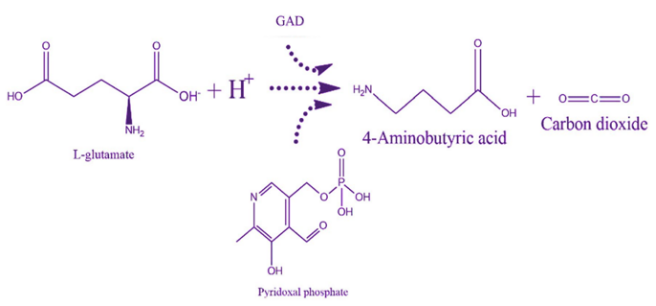
GABA is naturally found in some foods, and fermented products, some vegetables, fruits, grains, and nuts are rich sources of GABA 4. Glutamate found in food serves as a precursor to GABA and is converted to GABA by glutamic acid decarboxylase (GAD). This transformation contributes to the palatability of glutamate-rich foods 5. In addition, foods containing GABA also have prebiotic properties (Figure 1).

Prebiotics are defined as “a substrate that is selectively utilized by host microorganisms and confers health benefits” 6. Major prebiotics include inulin, fructooligosaccharides (FOS), galactooligosaccharides (GOS), and some resistant starches 7.
Prebiotics stimulate the growth of beneficial gut microbiota, particularly species of Bifidobacterium and Lactobacillus. Increased beneficial bacteria induce the formation of short-chain fatty acids (SCFA) and the neurotransmitter, GABA, and limit the proliferation of pathogenic bacteria by lowering intestinal pH 8, 9.
It has been stated in the literature that regular consumption of probiotics containing Lactobacillus and Bifidobacterium strains can reduce anxiety and stress levels and regulate neurological health 10.
Probiotics are live microorganisms that confer health benefits to the host when administered in adequate amounts. Probiotics confer protection against a wide range of diseases, primarily through modulation of the gut microbiota 11. Species of Lactobacillus and Bifidobacterium, among the most studied probiotics, have been shown to enhance GABA production 9. Psychobiotics refer to specific probiotic strains that influence brain function and mood by modulating the gut microbiota 12. By influencing neurotransmitter synthesis and signaling via the gut–brain axis, these probiotics may contribute to the mitigation of psychiatric symptoms such as depression, anxiety, and stress. However, more clinical studies are needed to clarify the underlying mechanisms.
GABA produced in the gut may affect brain function and behavior via the microbiota–gut–brain axis. These findings have underscored the potential role of probiotics as a therapeutic strategy for anxiety and depression 13.
In vitro models simulating the digestive system facilitate the evaluation of the GABA production capacity of probiotics when ingested with particular foods 14. Thus, the GABA production potential of probiotics plays a significant role both in modulating gastrointestinal functions and in influencing the gut–brain axis 13. The study demonstrates that certain foods influence the metabolic activity of probiotics and that the GABA production potential varies between animal- and plant-based foods 14.
Compatible combinations of specific prebiotics and probiotic strains can enhance the proliferation and functionality of beneficial gut microbiota 15. Some studies reported the use of a single strain of LAB for GABA synthesis, while some studies reported GABA synthesis by using different bacterial strains together 16. Formulations are available in multiple formats, such as capsules, powders, and fortified foods, thereby providing consumers with versatile options 17.
In recent years, research on the synthesis and neurological functions of GABA has expanded; however, further investigations and a deeper understanding of the underlying mechanisms remain necessary. A significant proportion of studies investigating GABA (gamma-aminobutyric acid) synthesis concentrate on the optimization of environmental and biological factors, particularly pH, temperature, and the selection of specific bacterial strains, in order to enhance production efficiency 18.
In the present study, the human digestive system was simulated in vitro to investigate GABA formation in the large intestine following the digestion of various foods combined with probiotic supplements, either containing a single bacterial species or a mixture of different species. The primary objective of this study is to investigate the effects of various probiotic strains and commercial probiotic products on GABA synthesis in different foods, thereby contributing to the development of functional foods.
For sample selection, foods with potential for GABA synthesis and probiotic supplements containing various bacterial strains were chosen. The probiotic supplements were sourced from local pharmacies, while the food samples were obtained from local markets.
The foods used in this study were divided into two groups: the vegetable and fruit group, and the nut group. Samples from the fruit and vegetable group included banana, kiwi, avocado, pineapple, strawberry, tomato, and onion, while the nut group comprised walnut, hazelnut, peanut, and pumpkin seed.
Ten different probiotic supplements were supplied for added to foods, and their compositions are detailed in Table 1. Each food sample was individually treated with the probiotic supplements listed in Table 1.
2.1. Enzymes and ChemicalsChicken Alpha-amylase (1.5 U/mg, from Aspergillus powder), lipase (100–500 U/mg protein), pancreatin (8 × USP), pepsin (≥250 U/mg, lyophilized powder), NaCl, CaCl2 2H2O, urea, uric acid, bovine serum albumin, KCl, mucin, NaHCO3, and bile salts mixture were purchased from Sigma-Aldrich (St. Louis, MO, USA) and used in the study.
Chemical materials: GABA (analytical standard), sodium hydroxide (NaOH, ≥98%), and sodium acetate (CH3COONa × 3H2O, ≥99.0%) were obtained from Sigma-Aldrich (St. Louis, MO, USA). Acetonitrile (ACN, gradient grade, ≥99.9%) and sodium bicarbonate (NaHCO3, ≥99.7%) were obtained from Honeywell (Charlotte, NC, USA). Dansyl chloride and sodium hydrogencarbonate were purchased from Sigma-Aldrich (BioReagent, ≥99%), methanol, ethanol, and acetone (analytical grade) were purchased from Merck (Darmstadt, Germany). Deionized water was obtained from a Labconco System by Millipore (Bedford, MA, USA).
2.2. In Vitro Gastrointestinal Digestive System MethodFoods were homogenized individually, and each food–probiotic supplement combination was subjected to in vitro digestion. The in vitro digestive system simulated the conditions of the mouth, stomach, small intestine, and large intestine, each involving specific enzymatic digestion processes. In the control digestion group, food samples were subjected to in vitro digestion without the addition of probiotic supplements. GABA formation was determined from nutrients digested in the in vitro gastrointestinal model. The digestion procedure was a modified version of the method described by Lee et al. 19. The simulated mouth, stomach, small intestine, and large intestine environments in the in vitro gastrointestinal system were prepared in 500 mL of distilled water using specific enzymes, as well as organic and inorganic compounds. The pH of each solution was adjusted to the appropriate value.
Preparation of solutions for the in vitro digestive system:
Oral phase; 1.7 mL of NaCl solution (175.3 g/L), 8 mL of urea solution (25 g/L), 15 g of uric acid, 280 mg of α-amylase, and 25 mg of mucin were dissolved in deionized water in a 500 mL erlenmeyer flask. The volume was then adjusted to 500 mL with deionized water, and the pH was set to 6.8 ± 0.2.
Gastric phase; 6.5 mL of HCl solution (37 g/L), 18 mL of CaCl₂·H₂O solution (22 g/L), 1 g of bovine serum albumin, 2.5 g of pepsin, and 3 g of mucin were dissolved in deionized water in a 500 mL erlenmeyer flask. The volume was then adjusted to 500 mL with deionized water, and the pH was set to 1.5 ± 0.02.
Small intestine phase; 6.3 mL of KCl solution (89.6 g/L), 9 mL of CaCl₂·H₂O solution (22.2 g/L), 2 g of bovine serum albumin, 1 g of pancreatin, and 1.5 g of lipase were dissolved in deionized water in a 500 mL conical flask. The volume was then adjusted to 500 mL with deionized water, and the pH was set to 8.0 ± 0.2.
Bile solution; 68.3 mL of NaHCO₃ solution (84.7 g/L), 10 mL of CaCl₂·H₂O solution (22.2 g/L), 1.8 g of bovine serum albumin, and 30 g of bile were dissolved in deionized water in a 500 mL Erlenmeyer flask. The volume was then adjusted to 500 mL with deionized water, and the pH was set to 7.0 ± 0.2.
Large intestine phase; Escherichia coli was cultured using liquid agar, 2.5 g of Luria-Bertani (LB) broth, and 100 mL of purified water. Lacticaseibacillus casei was prepared with liquid agar, 100 mL of purified water, and 5.5 g of Lactobacilli MRS broth. Each agar preparation was sterilized by autoclaving at 121 °C for 15 minutes. Frozen stocks of Escherichia coli and Lacticaseibacillus casei stored at –80 °C were thawed to room temperature and then incubated at 37 °C. Subsequently, 1/100 aliquots of the Escherichia coli and Lacticaseibacillus casei stocks were inoculated into appropriately sterilized liquid agar. For activation, Escherichia coli and Lacticaseibacillus casei cultures were incubated at 37 °C for 12 hours. Following incubation, the colony counts of Escherichia coli and Lacticaseibacillus casei reached approximately log 108 to 1010 CFU/mL. For large intestine digestion, 10 mL of Escherichia coli and Lacticaseibacillus casei cultures were added to the samples (following small intestine digestion) and incubated at 37°C for 4 hours 19.
The in vitro digestion procedure was performed as follows:
Five grams of each sample were placed into 100 mL Erlenmeyer flasks, and in vitro digestion was carried out by sequentially adding simulated mouth, stomach, small intestine, and large intestine solutions.
In the oral phase, 5 mL of the prepared oral solution was added to the samples weighed into 100 mL beakers and mixed using a vortex mixer to ensure homogeneity. The mixture was then incubated in a shaking water bath at 37°C for 5 minutes.
In the gastric phase, 12 mL of the prepared gastric solution was added to the mixture obtained from the oral phase, and incubated in a shaking water bath at 37°C for 2 hours.
In the small intestine phase, 10 mL of the prepared small intestine solution and 5 mL of bile solution were added to the mixture obtained after the gastric phase and incubated in a shaking water bath at 37 °C for 2 hours.
In the large intestine phase, 10 mL of the large intestine solution was added to the indigestible fraction obtained after the small intestine phase and incubated at 37°C for 4 hours. Following the completion of the digestion process, the final volume was adjusted to 50 mL with deionized water.
The samples were then centrifuged at 8000 rpm for 10 minutes, filtered through a 0.45 µm membrane filter, and injected into the high-performance liquid chromatography (HPLC) system 19.
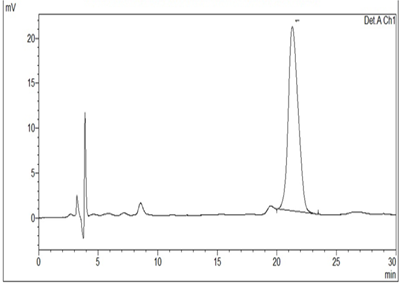
2.3. Determination of GABA ContentGABA amounts were determined using high-performance liquid chromatography (HPLC) based on a modified version of the method described by Pencheva et al. 20.
2.4. Preparation of Extracts and StandardsOne gram of sample was mixed with 15 mL of 75% ethanol and vortexed for 15 minutes. The resulting extract was filtered, and the supernatant was transferred into vials for derivatization and subsequent HPLC analysis. For the derivatization of GABA, the derivatization reagent was prepared by dissolving 5 mg of dansyl chloride in 10 mL of acetone. The GABA standard solution was prepared using ultrapure water.
For derivatization, 100 µL of sample (GABA standard or extract) was brought to a final volume of 2 mL by adding 900 µL of 0.1 M sodium bicarbonate buffer (pH 8.7) and 1000 µL of dansyl chloride solution. The solution was homogenized by vortexing and incubated at 55 °C for 1 hour for derivatization. It was then cooled to room temperature and filtered through a 0.45 µm membrane filter before HPLC analysis.
2.5. HPLC Conditions
HPLC determination of GABA derivatives; HPLC analyses were conducted using a Nexera-i LC-2040C Plus UHPLC system (Shimadzu Corporation, Kyoto, Japan) equipped with a UV detector and a binary pump. The chromatographic column used was an ACE C18 column (100 Å, 5 µm, 4.6 × 250 mm) maintained at 30 °C. The mobile phase consisted of 900 mL of 0.05 M sodium acetate buffer and 100 mL of methanol, adjusted to pH 8.0.
The flow rate was set isocratically at 1.0 mL/min, the injection volume was 10 µL, and the total analysis time was 30 minutes. Detection of the derivatives was performed at a wavelength of 254 nm 20.
2.6. Statistical AnalysisIn this study, GABA values of the samples were analyzed in triplicate on the HPLC device.
Data analysis was performed using Minitab Statistical Software 22.1.0 program. Significant differences among the results were determined by analysis of variance (ANOVA) by Tukey’s test and statistical significance level was accepted as p<0.05.
In this study, the GABA levels of fruit-vegetable and nut groups were determined before and after in vitro digestion. Changes in GABA formation were examined during the in vitro gastrointestinal digestion of these food groups following the addition of probiotic supplements.
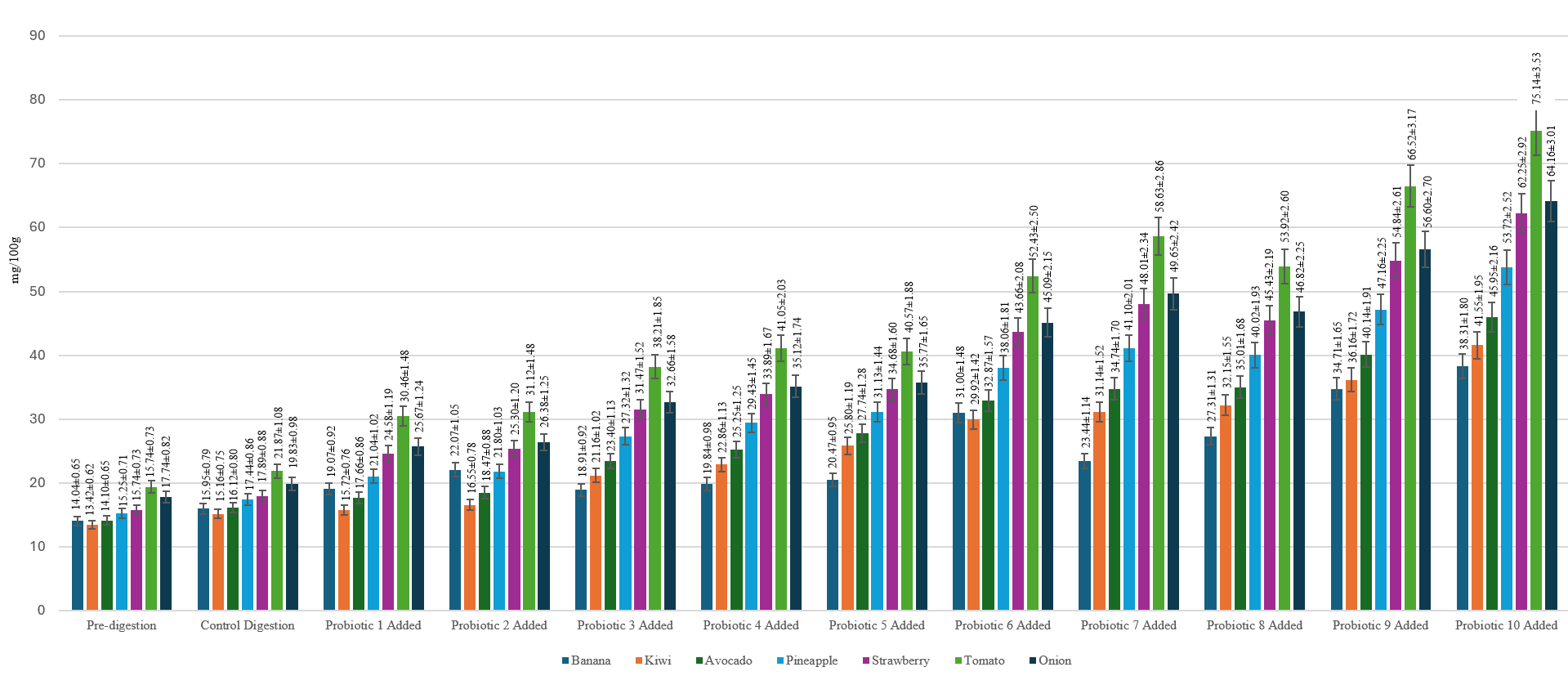
GABA levels before and after in vitro digestion in the fruit and vegetable group are presented in Table 2 and Figure 3. The pre-digestive GABA content in the fruit and vegetable group was determined as 14.04 ± 0.65 mg/100 g in banana, 13.42 ± 0.62 mg/100 g in kiwi, 14.10 ± 0.65 mg/100 g in avocado, 15.25 ± 0.71 mg/100 g in pineapple, 15.74 ± 0.73 mg/100 g in strawberry, 19.34 ± 0.90 mg/100 g in tomato, and 17.74 ± 0.82 mg/100 g in onion. After control digestion of the fruit and vegetable group without the addition of any supplements, GABA levels were determined to range from a minimum of 15.16 ± 0.75 mg/100 g in kiwi to a maximum of 21.87 ± 1.08 mg/100 g in tomato.
Significant increases in GABA production were observed following the addition of probiotic supplements to the fruit and vegetable group. Among the probiotic supplements added to the fruit and vegetable group, the highest increase in GABA levels was observed with the 10th probiotic supplement. With the addition of the 10th probiotic supplement, GABA levels increased to 38.31 ± 1.80 mg/100 g in banana, 62.25 ± 2.92 mg/100 g in kiwi, 45.95 ± 2.16 mg/100 g in avocado, 53.72± 2.52 mg/100 g in pineapple, 64.13 ± 3.53 mg/100 g in strawberry, 66.50 ± 2.70 mg/100 g in tomato, and 64.16 ± 3.01 mg/100 g in onion. These increases were statistically significant (p < 0.05).
Glutamic acid (Glu), the precursor of GABA, plays a crucial role in GABA formation in plants. In the literature, glutamic acid content has been reported as 2.2 mg/100 g in strawberries, 13.6 mg/100 g in onions, and 53.58 mg/100 g in tomatoes, while GABA levels were reported as 4.4 mg/100 g in strawberries, 4.03–4.93 mg/100 g in onions, and 17.73–36.82 mg/100 g in tomatoes 20.
The GABA level in the tomatoes used in this study was comparable to that reported in the aforementioned study, whereas higher GABA levels were observed in strawberries and onions. In this study, the highest GABA level within the fruit and vegetable group was detected in tomato. Similarly, previous research has indicated that tomatoes possess the highest GABA concentration among vegetables and fruits. Additionally, glutamic acid content in tomatoes increases gradually during fruit ripening, reaching its peak at full maturity 5.

Table 3 shows the increase in GABA formation resulting from in vitro digestion with the addition of probiotic supplements to vegetables and fruits, with the highest GABA formation observed in strawberries and tomatoes.
Compared to control digestion, GABA formation in strawberries increased by 38% with the first probiotic supplement and by 248% with the tenth probiotic supplement.
In tomatoes, GABA formation increased by 39% with probiotic supplement 1 and by 243% with probiotic supplement 10. These increases may be attributed to the nutritional matrix of the fruits and vegetables and their glutamate content. In this study, the effects of probiotics on the in vitro digestive system within the fruit and vegetable group were evaluated, and the findings demonstrated a significant increase in GABA formation.
In the fruit and vegetable group, among the probiotic supplements, probiotic supplement 10 had the greatest effect on GABA formation, resulting in a minimum increase of 140% in bananas and a maximum increase of 248% in strawberries. This finding highlights that the activity of the glutamate decarboxylase (GAD) enzyme in probiotic interactions with different foods may vary depending on the food matrix 18. These increases in GABA formation via the GAD enzyme, resulting from the metabolic activities of probiotics, may be attributed to the fact that glutamate-rich foods provide a favorable environment for the metabolic activities of probiotic strains 21. Similarly, the literature reports that Lactobacillus and Bifidobacterium strains possess a high capacity for GABA production 18. This increase, which occurs particularly through the fermentation of fruits and vegetables with probiotics, highlights the potential for microbial GABA formation.
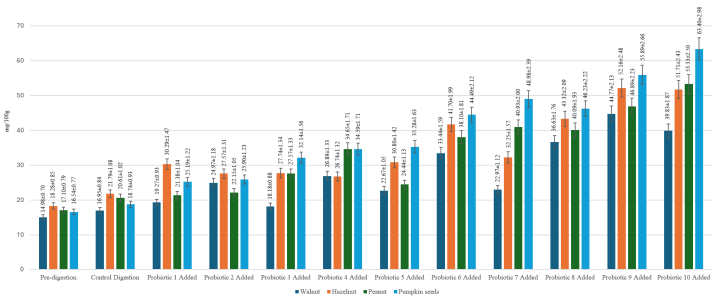
GABA values before and after in vitro digestion in the nut group are presented in Table 4 and Figure 4. The pre-digestion GABA content in the nut group was determined as 14.98 ± 0.70 mg/100 g in walnuts, 18.28 ± 0.85 mg/100 g in hazelnuts, 17.10 ± 0.79 mg/100 g in peanuts, and 16.54 ± 0.77 mg/100 g in pumpkin seeds. After control digestion of the nut group without any supplementation, GABA levels ranged from a minimum of 16.95 ± 0.84 mg/100 g in walnuts to a maximum of 21.79 ± 1.08 mg/100 g in hazelnuts. When GABA levels before and after in vitro digestion were evaluated in the nut group, an increase in GABA concentration was observed in all samples after digestion. GABA levels following digestion with the addition of probiotic supplements were higher compared to the control digestion without supplementation. These differences in GABA levels were statistically significant (p< 0.05).
Post-digestion GABA levels were examined in the nut group after the addition of probiotic supplements. In walnuts, the pre-digestion GABA level was measured at 14.98 ± 0.70 mg/100 g, while this value increased to 16.95 ± 0.84 mg/100 g after control digestion. The highest GABA level, 44.77 ± 2.13 mg/100 g, was determined with the addition of probiotic supplement 9. In hazelnuts, the GABA level increased from 18.28 ± 0.85 mg/100 g before digestion to 21.79 ± 1.08 mg/100 g after control digestion. The highest GABA levels in hazelnuts supplemented with probiotics were 52.16 ± 2.48 mg/100 g and 51.71 ± 2.43 mg/100 g following the addition of probiotic supplements 9 and 10, respectively. The pre-digestion GABA level in peanuts was 17.10 ± 0.79 mg/100 g, and the highest increase was observed at 53.33 ± 2.50 mg/100 g following digestion with the addition of probiotic supplement 10. While the pre-digestion GABA level in pumpkin seeds was 16.54 ± 0.77 mg/100 g, the highest level after digestion with probiotic supplementation was 63.40 ± 2.98 mg/100 g following the addition of probiotic supplement 10. Statistically significant differences were observed between the GABA values of the nut group before digestion, after control digestion, and after digestion with probiotic supplementation (p < 0.05).

Table 5 shows the increase in GABA formation resulting from in vitro digestion with the addition of probiotic supplements to nuts. When the probiotic supplement 1 was added, the highest GABA formation was observed in hazelnuts; with the probiotic supplement 2, it was observed in walnuts; and for in vitro digestions with other probiotic supplements, the highest GABA formation was observed in pumpkin seeds. Compared to control digestion, GABA formation in pumpkin seeds increased by 34% with the probiotic supplement 1 and by 238% with the probiotic supplement 10, representing the minimum and maximum increases, respectively. In hazelnuts, the probiotic supplement 4 resulted in a minimum increase of 23%, while the probiotic supplement 9 produced the maximum increase of 139%. In walnut, the probiotic supplement 3 resulted in a minimum increase of 7%, while the probiotic supplement 9 produced the maximum increase of 164%. In peanuts, the probiotic supplement 1 resulted in a minimum increase of 4%, while the probiotic supplement 10 yielded a maximum increase of 238%. In the nut group, the probiotic supplement 9 induced the highest increase in GABA formation among the supplements, with increases of 164% in walnuts and 139% in peanuts; meanwhile, the probiotic supplement 10 resulted in increases of 159% in hazelnuts and 238% in pumpkin seeds.
In this study, the high GABA concentrations obtained by adding probiotic supplements 9 and 10 to the nut group are thought to be attributable to the type, quantity, and diversity of bacterial strains present in these formulations. A study has shown that the activity of probiotic supplements is influenced by the type and quantity of bacterial strains they contain 22. The composition of food matrices can significantly influence the activity of probiotics and the production of GABA. However, it has been reported that the presence of antinutritional factors such as phytic acid and tannins in nuts may limit the activity of probiotics 23. In a study investigating the phytic acid content of dried nuts, the levels in hazelnuts, peanuts, and walnuts were reported to be 0.95%, 0.58%, and 0.87%, respectively 24. The physicochemical properties of the food matrix have an important effect on the metabolic activities of probiotics 25.
In this study, greater increases in GABA were observed in foods like walnuts and pumpkin seeds, whereas lower increases were detected in samples such as peanuts and hazelnuts. These differences in GABA levels among nuts may be attributed to the chemical composition of the food matrix and the metabolic activity of probiotics within these environments. In protein-based foods, free amino acids released during digestion are believed to enhance the GABA production capacity of probiotics 25. In addition, the environmental pH and substrates released during fermentation can also influence the potential for GABA formation. Among fermented foods, sauerkraut and fermented dairy products are known to contain high levels of GABA. For instance, the GABA content in miso soup has been reported to range from 50 to 300 mg/kg 1.
In fermented dairy products, particularly yogurt and kefir, GABA production can be enhanced by probiotic bacteria 26. The GABA concentration in sprouted brown rice has been reported to range between 3.96 and 17.87 mg/100 g 27. Additionally, sprouting pseudocereals such as quinoa has been shown to significantly increase GABA content Optimizing the combinations of food matrices and probiotic strains is crucial to maximize the potential for GABA formation in these foods. To increase the GABA production capacity in nuts, pre-treatment of these foods or modification of fermentation processes may be recommended 18.
In this study, varying amounts of GABA were detected in foods from the fruit-vegetable and nut groups. In the fruit-vegetable group, GABA levels ranged from 13.42 to 19.34 mg/100 g, with the highest concentration found in tomatoes. In the nut group, GABA levels ranged from 14.98 to 18.28 mg/100 g, with the highest amount detected in hazelnuts. Following in vitro digestion with the addition of probiotic supplements, GABA formation increased in both groups. Specifically, in the fruit-vegetable group, the highest increase was observed in tomatoes with the addition of probiotic supplement 10, reaching 75.14 mg/100 g after digestion. In the nut group, the greatest increase was found in pumpkin seeds with the probiotic supplement 10, reaching 63.40 mg/100 g after digestion. In this study, it was observed that vegetables, fruits, and nuts significantly influence GABA formation capacity, depending on their protein and amino acid profiles. These findings demonstrate that probiotic supplementation positively affects GABA production and holds potential for the development of GABA-enriched functional foods.
Findings from this study indicate that probiotics stimulate GABA formation in the gastrointestinal tract and enhance its bioaccessibility during in vitro digestion simulation. The superior effectiveness of probiotic supplement 10 in GABA production observed in this study may be attributed to the efficiency of the bacterial strains it contains in glutamate metabolism 28. The varying capacities of probiotic strains to form GABA are attributed to their genetic and metabolic characteristics. For instance, probiotics such as Lactobacillus plantarum and Lactobacillus brevis are known to exhibit higher glutamate decarboxylase enzyme production capacities 29. This study demonstrates that specific probiotic strains can enhance GABA production through interactions with various food matrices. Studies have reported that strains such as Lactobacillus plantarum and Bifidobacterium lactis possess the capacity to synthesize GABA 30, 31. Another study evaluated the potential for GABA formation through food fermentation, observing high GABA production in fermentations conducted with yeast containing Saccharomyces boulardii 32. Additionally, a study using a culture medium inoculated with Streptococcus thermophilus resulted in GABA-rich foods after fermentation 33.
In this study, the addition of probiotic supplement 7, containing Akkermansia muciniphila, to the food groups increased GABA formation in the in vitro gastrointestinal system. It has been demonstrated that high carbohydrate and dietary fiber content effectively supports enhanced GABA production by next-generation probiotics such as Akkermansia muciniphila. The combination of these probiotics with prebiotic foods, known for their beneficial effects on intestinal health, is thought to create a synergistic effect on GABA production 34. However, the limited increase in GABA observed in some foods may be attributed to the low levels of free glutamate in their composition or the presence of components that inhibit probiotic activity. Additionally, this may be related to the adaptability of probiotics within such matrices 25. In this study, increases in GABA production within the in vitro gastrointestinal system following supplement addition were observed to be lower in hazelnuts from the nut group and bananas from the fruit and vegetable group compared to other foods.
Studies have specifically focused on the potential of Lactobacillus plantarum to synthesize GABA across arious substrates and cultivation conditions. L. plantarum is a mesophilic bacterium with an optimal growth temperature of approximately 37°C. Research indicates that the optimal conditions for maximum GABA production typically fall within a temperature range of 30–40°C and a pH range of 5.0–6.0 35. The findings from various studies suggest that co-culture formulations involving Lactobacillus plantarum in combination with other bacterial species represent a promising approach to enhance fermentation quality and promote GABA synthesis 36.
In a review study examining the GABA production potential of Lactobacillus plantarum, it was reported that GABA yield varied depending on factors such as fermentation time, temperature, pH, and the composition of the culture medium, with production levels ranging from 82.12 to 115.86 mg/100 g) 37.
In the present study, the fermentation time, pH, and temperature within the in vitro gastrointestinal (GI) system differed from the optimal conditions typically used in culture media for maximal GABA production. As a result, GABA formation in the GI tract is generally considered to be lower compared to the levels achieved under controlled culture conditions.
This study presents significant findings by utilizing an in vitro digestive system to evaluate the GABA production potential of probiotic supplements across different food matrices. It was observed that probiotics produced GABA at varying levels depending on the food matrix, with this effect being particularly pronounced in foods with high glutamate content. Furthermore, the glutamate decarboxylase activity of the probiotic strains emerged as a key determinant of GABA production.
These results suggest that the beneficial effects of probiotic supplements on the gut-brain axis may be enhanced through their combination with functional foods. In particular, probiotics that promote the production of GABA, an inhibitory neurotransmitter in the central nervous system, hold potential for use in the treatment of anxiety, depression, and other neurological disorders. The findings indicate that foods supplemented with probiotics can increase GABA intake. However, further research is required to optimize the stability and bioavailability of probiotics within various food matrices.
Variations in intestinal microflora among individuals, as well as the viability of probiotics within the intestinal environment, may influence the clinical relevance of these findings. Nevertheless, these results demonstrate that probiotic supplementation represents a promising strategy in food technology and functional food development, not only for promoting intestinal health but also for enhancing the production of bioactive compounds.
The authors would like to thank all participants. This study is part of Ö.F.M.’s doctoral thesis “Investigation of the Effects of Prebiotic Foods and Probiotic and Psychobiotic Supplements on Some Neurotransmitters Formed in the Microbiota with In Vitro Gastrointestinal System”.
| [1] | R. Dhakal, V. K. Bajpai, and K.-H. Baek, “Production of gaba (γ - Aminobutyric acid) by microorganisms: a review,” Brazilian Journal of Microbiology, vol. 43, no. 4, pp. 1230–1241, Dec. 2012. | ||
| In article | View Article PubMed | ||
| [2] | S. Almutairi, A. Sivadas, and A. Kwakowsky, “The Effect of Oral GABA on the Nervous System: Potential for Therapeutic Intervention,” Nutraceuticals, vol. 4, no. 2, pp. 241–259, May 2024. | ||
| In article | View Article | ||
| [3] | J. F. Cryan et al., “The Microbiota-Gut-Brain Axis,” Physiol Rev, vol. 99, no. 4, pp. 1877–2013, Oct. 2019. | ||
| In article | |||
| [4] | R. B. Milon, P. Hu, X. Zhang, X. Hu, and L. Ren, “Recent advances in the biosynthesis and industrial biotechnology of Gamma-amino butyric acid,” Bioresour Bioprocess, vol. 11, no. 1, p. 32, Mar. 2024. | ||
| In article | View Article PubMed | ||
| [5] | P. Bai et al., “Exogenous ALA applied on different plant parts promotes tomato fruit quality and GABA synthesis,” Front Nutr, vol. 11, Jan. 2025. | ||
| In article | View Article PubMed | ||
| [6] | R. Hutkins et al., “Classifying compounds as prebiotics — scientific perspectives and recommendations,” Nat Rev Gastroenterol Hepatol, vol. 22, no. 1, pp. 54–70, Jan. 2025. | ||
| In article | View Article PubMed | ||
| [7] | A. Kumari, R. K. G., A. Sudhakaran. V., A. S. Warrier, and N. K. Singh, “Unveiling the Health Benefits of Prebiotics: A Comprehensive Review,” Indian J Microbiol, vol. 64, no. 2, pp. 376–388, Jun. 2024. | ||
| In article | View Article PubMed | ||
| [8] | H.S. SargınMızrak, and A. Dağ, “Inhibitory Effect of Blueberry, Curcumin, Prebiotic, and Probiotic on N-Nitrosamine Formation in Cooked Meat Products by Gastrointestinal Simulation,” Journal of Food and Nutrition Research, vol. 13, no. 2, pp. 77–86, Feb. 2025. | ||
| In article | View Article | ||
| [9] | B. Guo, J. Zhang, W. Zhang, F. Chen, and B. Liu, “Gut microbiota-derived short chain fatty acids act as mediators of the gut–brain axis targeting age-related neurodegenerative disorders: a narrative review,” Crit Rev Food Sci Nutr, vol. 65, no. 2, pp. 265–286, Jan. 2025. | ||
| In article | View Article PubMed | ||
| [10] | C. Ruiz-Gonzalez, D. Cardona, L. Rueda-Ruzafa, M. Rodriguez-Arrastia, C. Ropero-Padilla, and P. Roman, “Cognitive and Emotional Effect of a Multi-species Probiotic Containing Lactobacillus rhamnosus and Bifidobacterium lactis in Healthy Older Adults: A Double-Blind Randomized Placebo‐Controlled Crossover Trial,” Probiotics Antimicrob Proteins, Jun. 2024. | ||
| In article | View Article PubMed | ||
| [11] | I. A. Charitos, M. Colella, D. M. Carretta, and L. Santacroce, “Probiotics, gut microbiota and physical activity: A close relationship,” Sports Medicine and Health Science, Apr. 2025. | ||
| In article | View Article | ||
| [12] | R. Sharma, D. Gupta, R. Mehrotra, and P. Mago, “Psychobiotics: The Next-Generation Probiotics for the Brain,” Curr Microbiol, vol. 78, no. 2, pp. 449–463, Feb. 2021. | ||
| In article | View Article PubMed | ||
| [13] | S. Ferrari et al., “The influence of the gut-brain axis on anxiety and depression: A review of the literature on the use of probiotics,” J Tradit Complement Med, vol. 14, no. 3, pp. 237–255, May 2024. | ||
| In article | View Article PubMed | ||
| [14] | M. Casertano et al., “Gut production of GABA by a probiotic formula: an in vitro study,” Benef Microbes, vol. 15, no. 1, pp. 67–81, Jan. 2024. | ||
| In article | View Article PubMed | ||
| [15] | B. E. Jiménez-Villeda et al., “Synbiotic Encapsulation: A Trend towards Increasing Viability and Probiotic Effect,” J Food Process Preserv, vol. 2023, pp. 1–20, Mar. 2023. | ||
| In article | View Article | ||
| [16] | Iorizzo, Massimo, Gianluca Paventi, and Catello Di Martino. "Biosynthesis of gamma-aminobutyric acid (GABA) by Lactiplantibacillus plantarum in fermented food production." Current Issues in Molecular Biology 46.1: 200-220, December 2023. | ||
| In article | View Article PubMed | ||
| [17] | P. T. Edwards, P. C. Kashyap, and G. A. Preidis, “Microbiota on biotics: probiotics, prebiotics, and synbiotics to optimize growth and metabolism,” American Journal of Physiology-Gastrointestinal and Liver Physiology, vol. 319, no. 3, pp. G382–G390, Sep. 2020. | ||
| In article | View Article PubMed | ||
| [18] | M. A. Icer et al., “Contributions of Gamma-Aminobutyric Acid (GABA) Produced by Lactic Acid Bacteria on Food Quality and Human Health: Current Applications and Future Prospects,” Foods, vol. 13, no. 15, p. 2437, Aug. 2024. | ||
| In article | View Article PubMed | ||
| [19] | S.-J. Lee, S. Y. Lee, M.-S. Chung, and S. J. Hur, “Development of novel in vitro human digestion systems for screening the bioavailability and digestibility of foods,” J Funct Foods, vol. 22, pp. 113–121, Apr. 2016. | ||
| In article | View Article | ||
| [20] | D. Pencheva, D. Teneva, and P. Denev, “Validation of HPLC Method for Analysis of Gamma-Aminobutyric and Glutamic Acids in Plant Foods and Medicinal Plants,” Molecules, vol. 28, no. 1, p. 84, Dec. 2022. | ||
| In article | View Article PubMed | ||
| [21] | A. Kaushal, “Microbiome to dictate the occurrence of neurological disorders,” Journal of Experimental and Molecular Pathology, vol. 1, no. 1, pp. 11–25, Sep. 2024. | ||
| In article | View Article | ||
| [22] | A. Gundogdu et al., “Culture-independent assessment of probiotic supplement consistency in commercially available probiotic supplements,” Food Biosci, vol. 53, p. 102709, Jun. 2023,. | ||
| In article | View Article | ||
| [23] | P. Lu, H. Wu, J. Gu, M. A. Nawaz, X. Ma, and H. A. R. Suleria, “Impact of processing on bioaccessibility of phytochemicals in nuts,” Food Reviews International, vol. 39, no. 8, pp. 5968–5985, Sep. 2023. | ||
| In article | View Article | ||
| [24] | K. Dost and G. Karaca, “Evaluation of Phytic Acid Content of Some Tea and Nut Products by Reverse-Phase High Performance Liquid Chromatography/Visible Detector,” Food Anal Methods, vol. 9, no. 5, pp. 1391–1397, May 2016. | ||
| In article | View Article | ||
| [25] | F. Melini, V. Melini, F. Luziatelli, A. G. Ficca, and M. Ruzzi, “Health-Promoting Components in Fermented Foods: An Up-to-Date Systematic Review,” Nutrients, vol. 11, no. 5, p. 1189, May 2019. | ||
| In article | View Article PubMed | ||
| [26] | A. Hurtado-Romero, M. Del Toro-Barbosa, M. S. Gradilla-Hernández, L. E. Garcia-Amezquita, and T. García-Cayuela, “Probiotic Properties, Prebiotic Fermentability, and GABA-Producing Capacity of Microorganisms Isolated from Mexican Milk Kefir Grains: A Clustering Evaluation for Functional Dairy Food Applications,” Foods, vol. 10, no. 10, p. 2275, Sep. 2021. | ||
| In article | View Article PubMed | ||
| [27] | D. Karladee and S. Suriyong, “γ-Aminobutyric acid (GABA) content in different varieties of brown rice during germination,” ScienceAsia, vol. 38, no. 1, p. 13, 2012. | ||
| In article | View Article | ||
| [28] | A. Monteagudo-Mera et al., “Gamma aminobutyric acid production by commercially available probiotic strains,” J Appl Microbiol, vol. 134, no. 2, Feb. 2023. | ||
| In article | View Article PubMed | ||
| [29] | S. Siragusa, M. De Angelis, R. Di Cagno, C. G. Rizzello, R. Coda, and M. Gobbetti, “Synthesis of γ-Aminobutyric Acid by Lactic Acid Bacteria Isolated from a Variety of Italian Cheeses,” Appl Environ Microbiol, vol. 73, no. 22, pp. 7283–7290, Nov. 2007. | ||
| In article | View Article PubMed | ||
| [30] | H. Tamés et al., “Mouse intestinal microbiome modulation by oral administration of a GABA-producing Bifidobacterium adolescentis strain,” Microbiol Spectr, vol. 12, no. 1, Jan. 2024. | ||
| In article | View Article PubMed | ||
| [31] | X. Bai, P. Shi, and W. Chu, “Probiotic attributes, antioxidant and neuromodulatory effects of GABA-Producing Lactiplantibacillus plantarum SY1 and optimization of GABA production,” BMC Microbiol, vol. 25, no. 1, p. 341, May 2025. | ||
| In article | View Article PubMed | ||
| [32] | D. Zhang, A. Yousefvand, M. Wahlsten, and P. E. J. Saris, “Postbiotic bread with neurotransmitter γ-aminobutyric acid (GABA) by supplementation with Lactiplantibacillus plantarum H64 fermentate of spent probiotic brewer’s yeast Saccharomyces boulardii,” Food Biosci, vol. 68, p. 106766, Jun. 2025. | ||
| In article | View Article | ||
| [33] | T. Xiao and N. P. Shah, “Role of cysteine in the improvement of γ-aminobutyric acid production by nonproteolytic Levilactobacillus brevis in coculture with Streptococcus thermophilus,” J Dairy Sci, vol. 105, no. 5, pp. 3883–3895, May 2022. | ||
| In article | View Article PubMed | ||
| [34] | H. Plovier et al., “A purified membrane protein from Akkermansia muciniphila or the pasteurized bacterium improves metabolism in obese and diabetic mice,” Nat Med, vol. 23, no. 1, pp. 107–113, Jan. 2017. | ||
| In article | View Article PubMed | ||
| [35] | Yogeswara, Ida Bagus Agung, Suppasil Maneerat, and Dietmar Haltrich. "Glutamate decarboxylase from lactic acid bacteria—A key enzyme in GABA synthesis." Microorganisms 8.12, 1923, November 2020 | ||
| In article | View Article PubMed | ||
| [36] | Watanabe, Yuko, Kiyoshi Hayakawa, and Hiroshi Ueno. "Effects of co-culturing LAB on GABA production." J. Biol. Macromol 11.1, 3-13, February 2011. | ||
| In article | |||
| [37] | Yang, S-Y., et al. "Production of γ-aminobutyric acid by Streptococcus salivarius subsp. thermophilus Y2 under submerged fermentation." Amino acids 34.3, 473-478, April 2008. | ||
| In article | View Article PubMed | ||
Published with license by Science and Education Publishing, Copyright © 2025 Ömer Faruk Mızrak and Sabiha Zeynep Aydenk Köseoğlu
 This work is licensed under a Creative Commons Attribution 4.0 International License. To view a copy of this license, visit
http://creativecommons.org/licenses/by/4.0/
This work is licensed under a Creative Commons Attribution 4.0 International License. To view a copy of this license, visit
http://creativecommons.org/licenses/by/4.0/
| [1] | R. Dhakal, V. K. Bajpai, and K.-H. Baek, “Production of gaba (γ - Aminobutyric acid) by microorganisms: a review,” Brazilian Journal of Microbiology, vol. 43, no. 4, pp. 1230–1241, Dec. 2012. | ||
| In article | View Article PubMed | ||
| [2] | S. Almutairi, A. Sivadas, and A. Kwakowsky, “The Effect of Oral GABA on the Nervous System: Potential for Therapeutic Intervention,” Nutraceuticals, vol. 4, no. 2, pp. 241–259, May 2024. | ||
| In article | View Article | ||
| [3] | J. F. Cryan et al., “The Microbiota-Gut-Brain Axis,” Physiol Rev, vol. 99, no. 4, pp. 1877–2013, Oct. 2019. | ||
| In article | |||
| [4] | R. B. Milon, P. Hu, X. Zhang, X. Hu, and L. Ren, “Recent advances in the biosynthesis and industrial biotechnology of Gamma-amino butyric acid,” Bioresour Bioprocess, vol. 11, no. 1, p. 32, Mar. 2024. | ||
| In article | View Article PubMed | ||
| [5] | P. Bai et al., “Exogenous ALA applied on different plant parts promotes tomato fruit quality and GABA synthesis,” Front Nutr, vol. 11, Jan. 2025. | ||
| In article | View Article PubMed | ||
| [6] | R. Hutkins et al., “Classifying compounds as prebiotics — scientific perspectives and recommendations,” Nat Rev Gastroenterol Hepatol, vol. 22, no. 1, pp. 54–70, Jan. 2025. | ||
| In article | View Article PubMed | ||
| [7] | A. Kumari, R. K. G., A. Sudhakaran. V., A. S. Warrier, and N. K. Singh, “Unveiling the Health Benefits of Prebiotics: A Comprehensive Review,” Indian J Microbiol, vol. 64, no. 2, pp. 376–388, Jun. 2024. | ||
| In article | View Article PubMed | ||
| [8] | H.S. SargınMızrak, and A. Dağ, “Inhibitory Effect of Blueberry, Curcumin, Prebiotic, and Probiotic on N-Nitrosamine Formation in Cooked Meat Products by Gastrointestinal Simulation,” Journal of Food and Nutrition Research, vol. 13, no. 2, pp. 77–86, Feb. 2025. | ||
| In article | View Article | ||
| [9] | B. Guo, J. Zhang, W. Zhang, F. Chen, and B. Liu, “Gut microbiota-derived short chain fatty acids act as mediators of the gut–brain axis targeting age-related neurodegenerative disorders: a narrative review,” Crit Rev Food Sci Nutr, vol. 65, no. 2, pp. 265–286, Jan. 2025. | ||
| In article | View Article PubMed | ||
| [10] | C. Ruiz-Gonzalez, D. Cardona, L. Rueda-Ruzafa, M. Rodriguez-Arrastia, C. Ropero-Padilla, and P. Roman, “Cognitive and Emotional Effect of a Multi-species Probiotic Containing Lactobacillus rhamnosus and Bifidobacterium lactis in Healthy Older Adults: A Double-Blind Randomized Placebo‐Controlled Crossover Trial,” Probiotics Antimicrob Proteins, Jun. 2024. | ||
| In article | View Article PubMed | ||
| [11] | I. A. Charitos, M. Colella, D. M. Carretta, and L. Santacroce, “Probiotics, gut microbiota and physical activity: A close relationship,” Sports Medicine and Health Science, Apr. 2025. | ||
| In article | View Article | ||
| [12] | R. Sharma, D. Gupta, R. Mehrotra, and P. Mago, “Psychobiotics: The Next-Generation Probiotics for the Brain,” Curr Microbiol, vol. 78, no. 2, pp. 449–463, Feb. 2021. | ||
| In article | View Article PubMed | ||
| [13] | S. Ferrari et al., “The influence of the gut-brain axis on anxiety and depression: A review of the literature on the use of probiotics,” J Tradit Complement Med, vol. 14, no. 3, pp. 237–255, May 2024. | ||
| In article | View Article PubMed | ||
| [14] | M. Casertano et al., “Gut production of GABA by a probiotic formula: an in vitro study,” Benef Microbes, vol. 15, no. 1, pp. 67–81, Jan. 2024. | ||
| In article | View Article PubMed | ||
| [15] | B. E. Jiménez-Villeda et al., “Synbiotic Encapsulation: A Trend towards Increasing Viability and Probiotic Effect,” J Food Process Preserv, vol. 2023, pp. 1–20, Mar. 2023. | ||
| In article | View Article | ||
| [16] | Iorizzo, Massimo, Gianluca Paventi, and Catello Di Martino. "Biosynthesis of gamma-aminobutyric acid (GABA) by Lactiplantibacillus plantarum in fermented food production." Current Issues in Molecular Biology 46.1: 200-220, December 2023. | ||
| In article | View Article PubMed | ||
| [17] | P. T. Edwards, P. C. Kashyap, and G. A. Preidis, “Microbiota on biotics: probiotics, prebiotics, and synbiotics to optimize growth and metabolism,” American Journal of Physiology-Gastrointestinal and Liver Physiology, vol. 319, no. 3, pp. G382–G390, Sep. 2020. | ||
| In article | View Article PubMed | ||
| [18] | M. A. Icer et al., “Contributions of Gamma-Aminobutyric Acid (GABA) Produced by Lactic Acid Bacteria on Food Quality and Human Health: Current Applications and Future Prospects,” Foods, vol. 13, no. 15, p. 2437, Aug. 2024. | ||
| In article | View Article PubMed | ||
| [19] | S.-J. Lee, S. Y. Lee, M.-S. Chung, and S. J. Hur, “Development of novel in vitro human digestion systems for screening the bioavailability and digestibility of foods,” J Funct Foods, vol. 22, pp. 113–121, Apr. 2016. | ||
| In article | View Article | ||
| [20] | D. Pencheva, D. Teneva, and P. Denev, “Validation of HPLC Method for Analysis of Gamma-Aminobutyric and Glutamic Acids in Plant Foods and Medicinal Plants,” Molecules, vol. 28, no. 1, p. 84, Dec. 2022. | ||
| In article | View Article PubMed | ||
| [21] | A. Kaushal, “Microbiome to dictate the occurrence of neurological disorders,” Journal of Experimental and Molecular Pathology, vol. 1, no. 1, pp. 11–25, Sep. 2024. | ||
| In article | View Article | ||
| [22] | A. Gundogdu et al., “Culture-independent assessment of probiotic supplement consistency in commercially available probiotic supplements,” Food Biosci, vol. 53, p. 102709, Jun. 2023,. | ||
| In article | View Article | ||
| [23] | P. Lu, H. Wu, J. Gu, M. A. Nawaz, X. Ma, and H. A. R. Suleria, “Impact of processing on bioaccessibility of phytochemicals in nuts,” Food Reviews International, vol. 39, no. 8, pp. 5968–5985, Sep. 2023. | ||
| In article | View Article | ||
| [24] | K. Dost and G. Karaca, “Evaluation of Phytic Acid Content of Some Tea and Nut Products by Reverse-Phase High Performance Liquid Chromatography/Visible Detector,” Food Anal Methods, vol. 9, no. 5, pp. 1391–1397, May 2016. | ||
| In article | View Article | ||
| [25] | F. Melini, V. Melini, F. Luziatelli, A. G. Ficca, and M. Ruzzi, “Health-Promoting Components in Fermented Foods: An Up-to-Date Systematic Review,” Nutrients, vol. 11, no. 5, p. 1189, May 2019. | ||
| In article | View Article PubMed | ||
| [26] | A. Hurtado-Romero, M. Del Toro-Barbosa, M. S. Gradilla-Hernández, L. E. Garcia-Amezquita, and T. García-Cayuela, “Probiotic Properties, Prebiotic Fermentability, and GABA-Producing Capacity of Microorganisms Isolated from Mexican Milk Kefir Grains: A Clustering Evaluation for Functional Dairy Food Applications,” Foods, vol. 10, no. 10, p. 2275, Sep. 2021. | ||
| In article | View Article PubMed | ||
| [27] | D. Karladee and S. Suriyong, “γ-Aminobutyric acid (GABA) content in different varieties of brown rice during germination,” ScienceAsia, vol. 38, no. 1, p. 13, 2012. | ||
| In article | View Article | ||
| [28] | A. Monteagudo-Mera et al., “Gamma aminobutyric acid production by commercially available probiotic strains,” J Appl Microbiol, vol. 134, no. 2, Feb. 2023. | ||
| In article | View Article PubMed | ||
| [29] | S. Siragusa, M. De Angelis, R. Di Cagno, C. G. Rizzello, R. Coda, and M. Gobbetti, “Synthesis of γ-Aminobutyric Acid by Lactic Acid Bacteria Isolated from a Variety of Italian Cheeses,” Appl Environ Microbiol, vol. 73, no. 22, pp. 7283–7290, Nov. 2007. | ||
| In article | View Article PubMed | ||
| [30] | H. Tamés et al., “Mouse intestinal microbiome modulation by oral administration of a GABA-producing Bifidobacterium adolescentis strain,” Microbiol Spectr, vol. 12, no. 1, Jan. 2024. | ||
| In article | View Article PubMed | ||
| [31] | X. Bai, P. Shi, and W. Chu, “Probiotic attributes, antioxidant and neuromodulatory effects of GABA-Producing Lactiplantibacillus plantarum SY1 and optimization of GABA production,” BMC Microbiol, vol. 25, no. 1, p. 341, May 2025. | ||
| In article | View Article PubMed | ||
| [32] | D. Zhang, A. Yousefvand, M. Wahlsten, and P. E. J. Saris, “Postbiotic bread with neurotransmitter γ-aminobutyric acid (GABA) by supplementation with Lactiplantibacillus plantarum H64 fermentate of spent probiotic brewer’s yeast Saccharomyces boulardii,” Food Biosci, vol. 68, p. 106766, Jun. 2025. | ||
| In article | View Article | ||
| [33] | T. Xiao and N. P. Shah, “Role of cysteine in the improvement of γ-aminobutyric acid production by nonproteolytic Levilactobacillus brevis in coculture with Streptococcus thermophilus,” J Dairy Sci, vol. 105, no. 5, pp. 3883–3895, May 2022. | ||
| In article | View Article PubMed | ||
| [34] | H. Plovier et al., “A purified membrane protein from Akkermansia muciniphila or the pasteurized bacterium improves metabolism in obese and diabetic mice,” Nat Med, vol. 23, no. 1, pp. 107–113, Jan. 2017. | ||
| In article | View Article PubMed | ||
| [35] | Yogeswara, Ida Bagus Agung, Suppasil Maneerat, and Dietmar Haltrich. "Glutamate decarboxylase from lactic acid bacteria—A key enzyme in GABA synthesis." Microorganisms 8.12, 1923, November 2020 | ||
| In article | View Article PubMed | ||
| [36] | Watanabe, Yuko, Kiyoshi Hayakawa, and Hiroshi Ueno. "Effects of co-culturing LAB on GABA production." J. Biol. Macromol 11.1, 3-13, February 2011. | ||
| In article | |||
| [37] | Yang, S-Y., et al. "Production of γ-aminobutyric acid by Streptococcus salivarius subsp. thermophilus Y2 under submerged fermentation." Amino acids 34.3, 473-478, April 2008. | ||
| In article | View Article PubMed | ||