Donkey meat and beef are considered rich sources of protein. However, limited information is currently available on the comparative compositional analysis of these two meat types. In this paper, Tandem Mass Tag (TMT) was used to investigate the difference in the proteomes of Dezhou donkey meat and Luxi cattle meat. Our results showed that donkey meat exhibited significantly higher protein content compared to beef (p<0.05), while the fat content of beef was higher than that of donkey meat (p<0.01). Furthermore, the contents of acetic acid and isobutyric acid were significantly higher in beef than in donkey meat (p<0.05), whereas the levels of butyric acid and valeric acid were more abundant in donkey meat (p<0.05). Furthermore, using proteomic analysis, we identified a total of 1328 differentially expressed proteins (DEPs), which may contribute to subtle variations in the quality of beef and donkey meat. Notably, proteins such as collagen, calpain, troponin, desmin, myoglobin and glycolytic enzymes phosphoglucomutase 1, aldolase, triosephosphate isomerase 1 were identified, suggesting their potential roles in influencing meat quality. In addition, the study highlighted that pathways related to glycolysis and oxidative phosphorylation were predominantly associated with muscle energy metabolism. Overall, this study provides a comprehensive proteomic profile of donkey meat and beef, advancing our understanding of the molecular determinants of meat quality and flavor.
With economic development, the consumption of high-quality, protein-rich red meat has become an integral component of dietary patterns globally 1, 2. Both donkey meat and beef are characterized by high protein content and relatively low-fat composition, with donkey meat garnering preference in certain regions due to its distinctive organoleptic properties 3, 4. From a nutritional standpoint, donkey meat exhibits comparatively higher concentrations of protein, various vitamins, and essential minerals, while containing lower lipid content than conventional meat sources such as beef 5. However, the mechanisms that account for the differential nutrient profiles between donkey meat and beef remain inadequately elucidated.
Proteomics, with its ability to provide robust quantitative analyses, offers significant potential in the identification of biomarkers associated with meat quality 6. The application of proteomic techniques for identifying specific peptides and proteins has facilitated deeper insights into meat quality assessment 7. For instance, a recent study by Malva et al 8 utilized proteomics to explore the tenderization process of Martina Franca donkey meat during aging, demonstrating its influence on muscle structure and myofibrillar proteins. Similarly, Chai et al 9 employed a data-independent acquisition (DIA) approach in a differential proteomic analysis to identify potential biomarkers linked to quality traits in Dezhou donkey meat. Furthermore, proteomic analyses have enabled cross-species comparisons of meat quality. For example, Sun et al 10 analyzed the molecular differences in the longissimus dorsi muscles of donkeys, cows, and goats, revealing that the differentially expressed proteins (DEPs) were primarily involved in metabolic processes. Despite these advancements, no study has yet reported the differences between the longissimus dorsi muscle of Dezhou donkey and Luxi yellow cattle.
In this context, we conducted a comprehensive analysis of the proximate composition and short-chain fatty acids of the longissimus dorsi muscle of Dezhou donkey and Luxi yellow cattle. Our study aim was to identify specific proteins potentially associated with meat quality, contributing to a deeper understanding of the biological mechanisms that regulate meat quality traits in Dezhou donkey and Luxi yellow cattle. These findings hold promise for enhancing the overall understanding of meat quality differentiation between these two species.
Longissimus dorsi (LD) samples were collected from 10 animals, including five each from healthy Dezhou donkeys (group A, n=5) and healthy Luxi yellow cattles (group B, n=5), all aged 24 months, male. The animals were slaughtered in a commercial slaughterhouse, and subsequently chilled for 24 h at 0–4°C. After 24 hours post-mortem, 30 g muscle samples were excised, immediately immersed in liquid nitrogen, and stored at −80°C until further analysis.
2.2. Proximate CompositionThe content of fat, moisture, protein and ash in LD muscle were determined according to GB/T 5009.6-2016, GB/T 5009.3-2016, GB/T 5009.5-2016 and GB/T 5009.4-2016, respectively.
2.3. Short-chain Fatty AcidsFor short-chain fatty acid analysis, 2 g of the LD muscle sample was homogenized with 300 μL of a 50% acetonitrile-aqueous solution (pre-chilled at 4°C). The homogenized sample was subjected to ultrasonication in an ice-water bath for 10 min and then centrifuged at 4°C, 12,000 rpm for 10 min. 80 μL of supernatant was taken and transferred to the injection vial. To this, 40 μL of 200 mM 3-NPH (50 % acetonitrile in water, v/v) and 40 μL of 120 mM EDC-6 % pyridine (50 % acetonitrile in water, v/v) were added, followed by incubation at 40°C for 30 minutes. After cooling the mixture on ice for 1 minute, 160 μL of the supernatant was filtered using a 0.22 μm organic phase pinhole filter, transferred to a brown injection vial, and stored at −80°C until further use.
Liquid chromatography tandem mass spectrometry (LC-MS/MS) was used for detection, with an injection volume of 1 μL. The flow rate was set at 0.4 mL/min. The mobile phase consisted of A (0.1% formic acid-aqueous solution) and B (acetonitrile/methanol = 2:1). The gradient elution procedure were 0 min A/B (80:20, v/v), 2 min A/B (80:20, v/v), 8 min A/B (60:40, v/v), 8.1 min A/B (5:95, v/v), 9.5 min A/B (5:95, v/v), 9.6 min A/B (80:20, v/v), and 10 min A/B (80:20, v/v). The air curtain gas pressure for chromatography is set at 35 psi. The collision-activated dissociation (CAD) parameter is set to medium. The negative ion spray voltage is −4500V, the ion source temperature is 450°C, the column temperature is 40°C, gas1 is 50 psi, auxiliary heating gas (Gas2) is 50 (psi). Metabolite quantification was analyzed using the multiple reaction detection (MRM) mode of triple quadrupole mass spectrometry, followed by profiling and accusation analysis, standard curve calculation, and absolute quantification of volatile fatty acids based on peak area.
2.4. ProteomicsFrozen samples (2 g) were chopped with liquid nitrogen, transferred to low-binding tubes, lysed with 300 μL lysis buffer containing 1 mM PMSF, and then ultrasonicated on ice for 5 min. The samples were centrifuged at 12,000 rpm for 10 min at 4°C to remove insoluble particles after sonication. The supernatant was transferred to a clean tube, and then the protein concentration was determined using a bicinchoninic acid assay (BCA). A total of 25 mM DTT was added to the protein solution mentioned above, which was then incubated at 55°C for 30 min. The appropriate volume of iodoacetamide was added to achieve a final concentration of approximately 10 mM. The solution was left in the dark for 15 min at room temperature. Six times the precooled acetone volume was added to the above system to precipitate the protein. Finally, the samples were kept at −20°C for more than 4 h or overnight. A total of 100 μL of triethyl ammonium bicarbonate (TEAB) (200 mM) was used for reconstitution precipitation, and 1 mg/mL of pancreatic enzyme trypsin-TPCK to 1/50 of the pellets was digested overnight at 37°C. The protein concentration was determined again using the BCA method.
TMT6/10-plex reagents were used to label the peptides (Thermo Fisher Scientific, Waltham, M A, USA) according to manufacturer’s protocol and instructions. The lyophilized samples were re-suspended for TMT labeling in 100 μL of 200 mM triethyl ammonium bicarbonate (TEAB). Each sample was then transferred to a new 1.5 mL tube. Anhydrous acetonitrile was added to the TMT reagent, followed by centrifugation with shaking to dissolve the reagent. A volume of 41 μL of the TMT labeling reagent was added to each sample, and the mixture was incubated at room temperature for 1 hour to allow for complete labeling. After labeling, 8 μL of 5% hydroxylamine was introduced to quench the reaction, which was allowed to proceed for an additional 15 minutes. The labeled peptide solutions were then lyophilized and stored at −80°C. All procedures for TMT labeling of peptides were performed according to the protocol described by previous study 11.
The Q-Exactive HF mass spectrometer (Thermo, USA) with a Nanospray Flex source (Thermo, USA) performed all analyses. A C18 column with 25 cm × 75 μm dimensions separated the samples at a 300 nL/min flow rate. The total run covered a period of 75 min, with the following mobile phase profiles: 0–50 min (2%–28% B), 50–60 min (28%–42% B), 60–65 min (42%–90% B), and 65–75 min (90% B), where A represents 0.1% formic acid (FA) in water and B represents 0.1% FA in acetonitrile. Full mass scans were obtained in the mass range of 350–1500 m/z, with a mass resolution of 60,000. The automatic gain control (AGC) target value was set at 3–6. The most intense peaks (20) in MS were fragmented with high-energy collisional dissociation, with a collision energy of 32. MS/MS spectra were obtained with a resolution of 45,000, an AGC target of 2–5, and a maximum injection time of 50 ms. The dynamic Q Exactive HF exclusion was set to 30 s and operated positively.
The data were analyzed using ProteomeDiscoverer 2.4.1.15 (Thermo Fisher Scientific), and the search sequence files were uniprot-Equus asinus-9793-2023.3.28. fasta, uniprot-Bos taurus-9913-2023.3.10. fasta. The search parameters included a 10-ppm mass tolerance for precursor ion scanning and 0.02 Da for-production scanning. A fixed modification of cysteine was considered for alkylation in the database search. A global numdiscovery rate (FDR) of 0.01 was applied. The protein groups for quantification required a minimum of two peptides and were placed in separate protein groups to differentiate between proteins with similar peptides that could not be distinguished based on MS/MS analysis.
2.5. Bioinformatics Analyses and Statistical AnalysisAfter obtaining proteins with different expression levels, we conducted a Gene ontology/Kyoto encyclopedia of genes and genome (GO/KEGG) enrichment analysis to elucidate their functional roles. The species protein was used in the GO/KEGG functional enrichment analysis method as the background list and the differential protein list as the candidate list, which was screened from the background list. The hypergeometric distribution test was used to calculate the p-value for the representative function set significantly enriched in the differential protein list. The p-value was obtained using the Benjamini & Hochberg multiplex test to obtain FDR.
The proximate composition and short-chain fatty acids of beef and donkey meat was analyzed using One-way ANOVA in IBM SPSS Statistics 26. The reporter quantification (TMT) methodology was used for TMT quantification. The difference filter criterion is a fold change (FC) ≥ 2 or ≤ 1/2 and a p-value < 0.05.
The results of protein, water, fat, and ash content are presented in Table 1. A comparative analysis of beef and donkey meat revealed a significant difference in protein content, with donkey meat (24.10%) exhibiting a higher percentage compared to beef (21.67%) (p < 0.05). In contrast, the fat content of donkey meat (1.12%) was significantly lower than that of beef (2.64%) (p < 0.01). No significant differences were observed between the two meats in terms of moisture and ash content (p > 0.05). These results are consistent with findings of previous studies who reported that donkey meat contains a higher protein content and lower fat content compared to beef 5, 12. The significantly higher protein and lower fat composition suggests that donkey meat represents a valuable alternative protein source.
Fat in meat tissue predominantly exist in the form of fatty acid esters, while short-chain fatty acids (SCFAs) generated during post-mortem processing contribute significantly to the aromatic profile. SCFAs significantly influence meat quality, flavor, and sensory attributes 13. Empirical evidence indicates that SCFAs are more readily digestible and absorbable than longer-chain fatty acids. In this study, seven volatile fatty acids were quantified, including acetic acid, propionic acid, isobutyric acid, butyric acid, isovaleric acid, valeric acid, and caproic acid (Table 2). The results showed that the levels of acetic acid (12.28 µg/g) and isobutyric acid (0.82 µg/g) were significantly higher in beef compared to donkey meat (p < 0.05). Conversely, donkey meat exhibited significantly higher levels of butyric acid (0.37 µg/g) and valeric acid (0.19 µg/g) compared to beef (p < 0.05), which contains 0.25 µg/g of butyric acid and 0.06 µg/g of valeric acid. The analysis conducted by Li et al 14 revealed a significant difference in the flavor components among the neck meat of donkey, swine, bovine, and sheep. Notably, donkeys exhibited significantly higher levels of unsaturated free fatty acids. While this previous study did not focus specifically on SCFAs variations, it supports the notion that SCFAs play a significant role in differentiating the flavors of various meats. Based on our findings, we believe that SCFAs may be one of many factors that contribute to the difference in nutrition between beef and donkey meat.
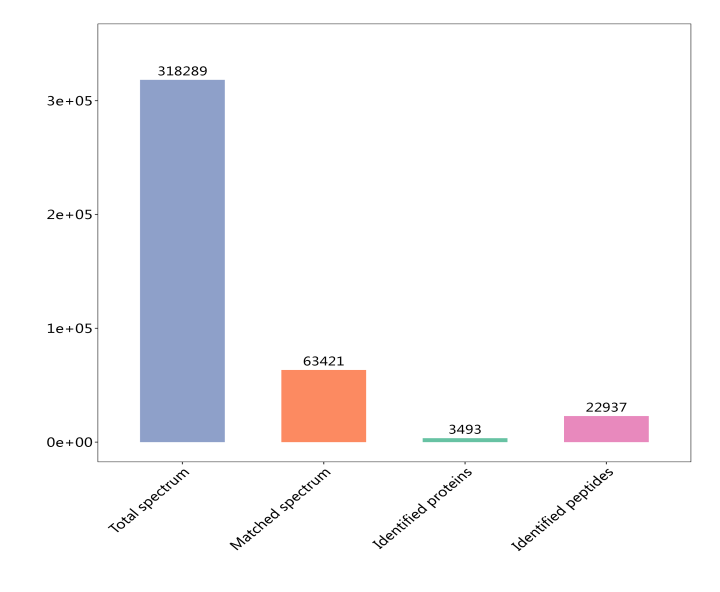
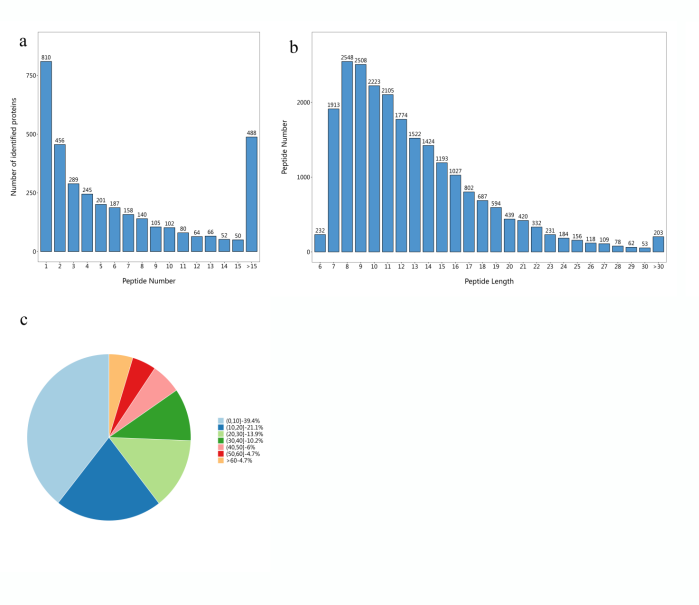
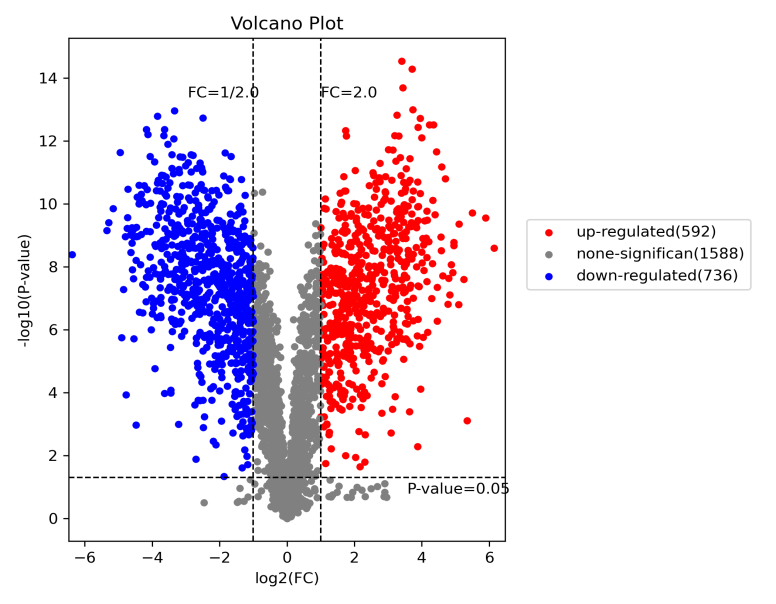
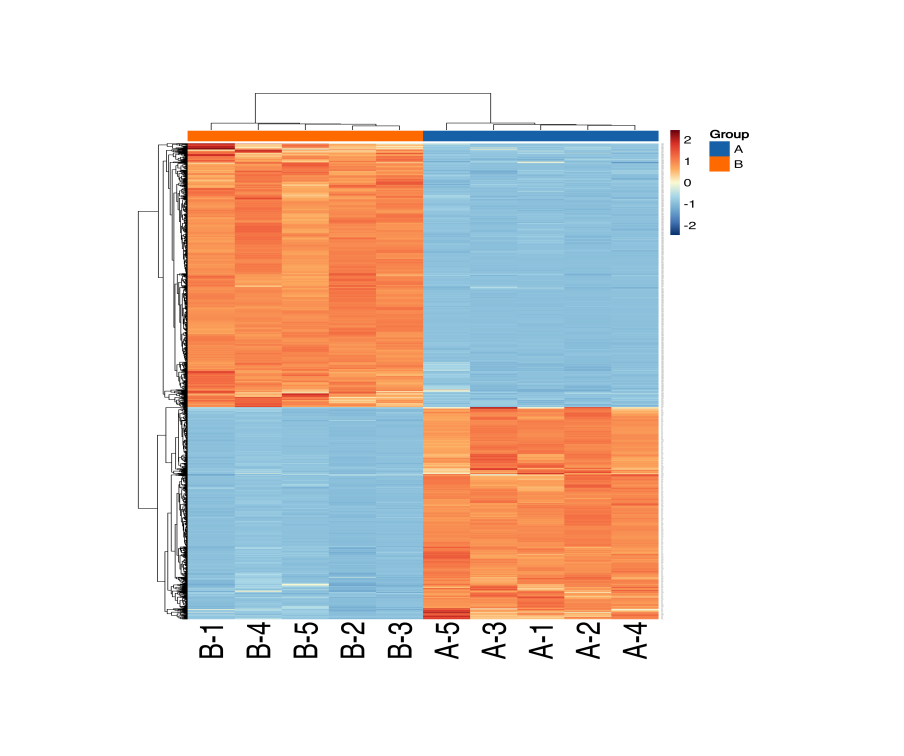
3.3. Changes in the Proteome Profiles of Donkey Meat versus BeefA total of 318,289 secondary maps of the identified proteins were generated, with 63,421 active maps identified at a 1% FDR. Of these, 3,493 proteins were successfully quantified, with 22,937 unique peptides used for protein identification (Figure 1). The majority of identified proteins had molecular weights ranging from 10 to 60 kDa (Figure 2a). The peptides predominantly ranged from 7 to 12 amino acids in length (Figure 2b), and the peptide sequence coverage typically fell within 0-30% (Figure 2c). From the 3,493 proteins, DEPs were identified based on FC ≥ 2 or FC ≤ 1/2 and p < 0.05. A total of 1,328 DEPs were selected, including 592 upregulated and 736 downregulated proteins. The volcano map (Figure 3) and cluster heat map (Figure 4) show the overall distribution of DEPs. The DEPs associated with meat quality were screened as potential markers for evaluating meat quality (Table 3).


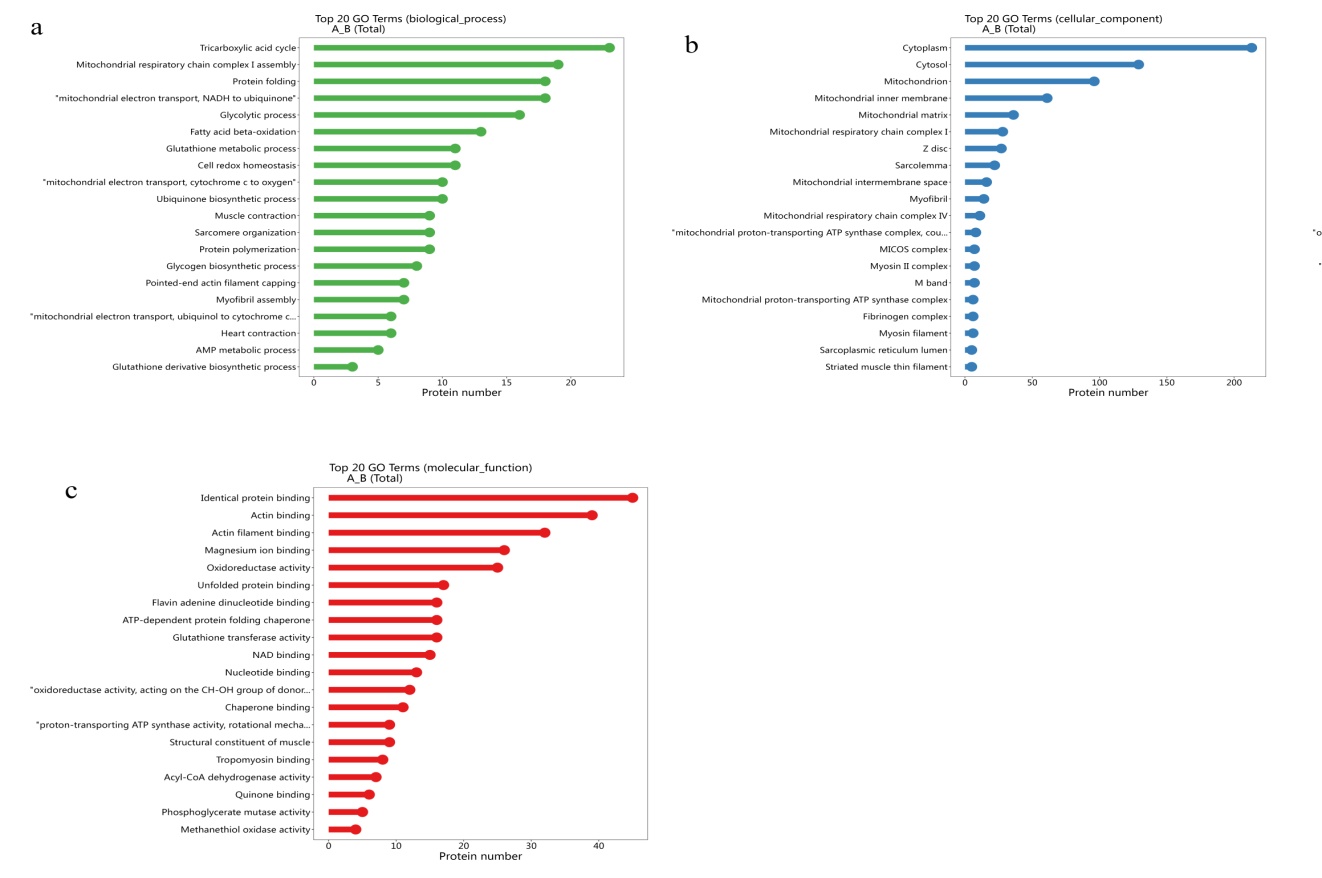
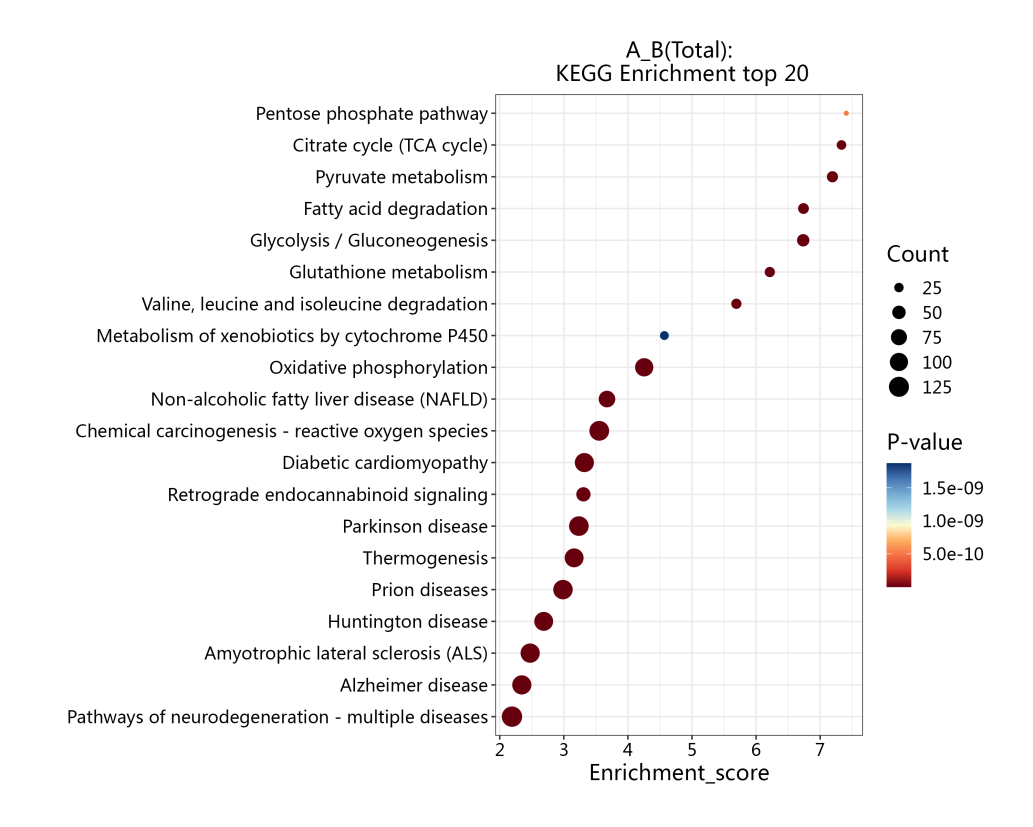
Gene Ontology (GO) is a comprehensive database developed by the Gene Ontology Consortium to describe the functions of genes and proteins across various species. GO consists of three primary ontologies including biological process, cellular component, and molecular function 15. In this study, a total of 1,328 DEPs were quantitatively analyzed. From these, 20 GO terms with ListHits greater than 1 were identified across the three ontologies. These GO terms were ranked by the corresponding -log10 p-value to assess the functional significance, classification, and relationships of the DEPs within each category. A total of 218 proteins were identified with various biological processes (Figure 5a), 331 proteins were associated to possess specific molecular functions (Figure 5b), and 710 proteins were localized to specific cellular components (Figure 5c). Furthermore, GO analysis showed that the most enriched biological processes of DEPs were tricarboxylic acid cycle (TCA) (23 of 218, 11%), mitochondrial electron transport (53/218, 24%) and muscle contraction (32/218, 14%). In addition, GO analysis for DEPs showed that most of the cellular component were localized in the cytoplasm (48%) and mitochondria (37%). It was further documented that the molecular functions for DEPs were predominantly associated with protein binding (46%), oxidoreductase activity (11%), nucleotide binding (9%), magnesium ion binding (8%), and glutathione transferase activity (5%). The TCA cycle, a central metabolic pathway in aerobic energy production, emerged as the most significant biological process. This cycle primarily occurs in the mitochondrial matrix and is crucial for ATP production in muscle cells, which is directly related to muscle function postmortem 16. Given that mitochondria are the primary organelles affected by postmortem changes, they play a vital role in meat tenderization and overall meat quality 17. Further analysis using KEGG pathway enrichment identified 20 metabolic pathways significantly associated with the DEPs, ranked by -log10 p-value (Figure 6). These pathways include the pentose phosphate pathway, TCA cycle, pyruvate metabolism, fatty acid degradation, glycolysis/gluconeogenesis, glutamine metabolism, valine/leucine/isoleucine degradation, and oxidative phosphorylation. Notably, many of these pathways are integral to muscle energy metabolism. The glycolytic pathway, which is a primary metabolic route in post-slaughter muscle, plays a critical role in energy production. Pyruvate metabolism and the pentose phosphate pathway are particularly important for sustaining muscle activity by generating energy. Additionally, the glycolytic pathway influences meat quality by modulating the rate of pH decline during the early post-mortem phase, which has significant implications for meat texture and tenderness 18, 19. Following the slaughter of animals, skeletal muscle activates anaerobic glycolysis to produce ATP and lower pH by accumulating H+, thereby affecting meat quality 20. The KEGG analysis further suggests that these metabolic pathways may contribute to the differences in meat quality observed between beef and donkey meat.


Meat and Beef
The quality of meat is determined by various biochemical processes that occur during the early post-mortem period. One of the most important indicators of meat quality is tenderness, which is often used by consumers as a criterion for assessing meat. Collagen, the primary structural protein of connective tissue, plays a crucial role in determining meat tenderness 21. The content of collagen directly influences the texture and tenderness of meat. Among the collagen family, COL14A1 and COL15A1 are key proteins that contribute to connective tissue structure. In this study, we observed significantly higher expression levels of COL14A1 and COL15A1 in beef compared to donkey meat, with fold changes of 0.4434 and 0.1380, respectively. These findings suggest that COL14A1 and COL15A1 may serve as potential biomarkers for the observed differences in tenderness between beef and donkey meat. Previous studies have indicated that COL14A1 plays a significant role in influencing tenderness, particularly in Iberian pork 22, 23. Similarly, COL15A1 has been identified as a candidate biomarker for assessing tenderness of Nelore beef 24. Troponin (TNNT) is another important structural protein associated with meat tenderness, as its degradation produces small molecular fragments that were closely correlated with meat tenderness 25. The expression of TNNT3 has been shown to vary between high- and low-tender yak meat 26. Another key protein, desmin (DES), is involved in the structural integrity of muscle fibers, playing a critical role in the alignment and positioning of adjacent myofibrils. Degradation of DES is essential for maintaining muscle structure and function 27. Previous research has demonstrated that muscle fiber properties significantly affect meat tenderness 28. In our study, the expression levels of DES and TNNT3 in donkey meat were significantly higher than in beef, with values of 8.1240 and 16.0648, respectively (Table 3). This suggests that the higher expression of these proteins in donkey meat may contribute to its increased tenderness. Furthermore, calpains is also considered for the post-mortem tenderization process, as it degrades muscle fibers and proteins that contribute to meat texture 23. CAPN-1 and CAPN-2 are calcium-activated proteases that play a key role in the structural changes that occur during meat aging by hydrolyzing myofibrils and cytoskeletal proteins 29. In our study, the expression levels of CAPN-1 and CAPN-2 were relatively lower in donkey meat (0.3124 and 0.4707), which may help explain the observed differences in tenderness between beef and donkey meat.
Meat color is a key factor in determining meat quality, as it significantly influences consumer perceptions and purchasing decisions 30. Myoglobin (GLNG) is a primary determinant of meat color, as it regulates the valence state and ligand binding at the iron coordination site 31. In this study, we observed a significant upregulation of GLNG expression in donkey meat, with a higher expression level (3.9397) compared to beef. Previous studies have demonstrated a significant correlation between myoglobin content and meat color, particularly redness (a*) in pork 32. The relationship between post-slaughter energy metabolism and meat quality is inseparable, and the oxygen retained in the muscles cannot maintain the normal process of oxidative phosphorylation for a long time after slaughter and bloodletting, and the glycolytic pathway has gradually become the main way to produce ATP 33. The regulation of glycolysis through key enzymes directly affects various aspects of meat quality, including color, tenderness 34. The color stability of meat has been shown to be strongly associated with glycolytic enzymes 35, particularly with the a* value 36. In this study, the enzyme phosphoglucomutase 1 (PGM1) was found to be overexpressed in color-stable steaks, exhibiting a positive correlation with both redness and color stability 37. Certain enzymes, particularly those involved in glycolysis, can be implicated in meat color, with aldolase A (ALDOA) being among the most influential 38. Previous research by Maria et al 39 highlighted the significant impact of ALDOA on the flesh color of foal meat. In the present study, the expression levels of PGM1 and ALDOA in donkey meat were significantly higher (0.4504 and 0.1813, respectively) compared to beef. Moreover, the expression levels of GLNG, the glycolytic enzyme PGM1, and ALDOA in both beef and donkey meat exhibited notable differences, suggesting that these biomarkers may serve as reliable indicators for differentiating meat color and color stability between beef and donkey meat.
Water holding capacity (WHC) is another important quality indicator for meat, as it impacts yield and texture, and has significant economic implications. Furthermore, triosephosphate isomerase 1 (TPI1) plays a critical role in glycolysis. Previous studies have demonstrated that TPI1 expression significantly differs between pork phenotypes characterized by high and low drip losses, suggesting its potential as a predictive biomarker for WHC 40. In the present study, the expression level of TPI1 in donkey meat was found to be significantly higher than in beef (9.8321, Table 3), indicating that TPI1 may serve as a potential biomarker for differentiating the WHC between beef and donkey meat.
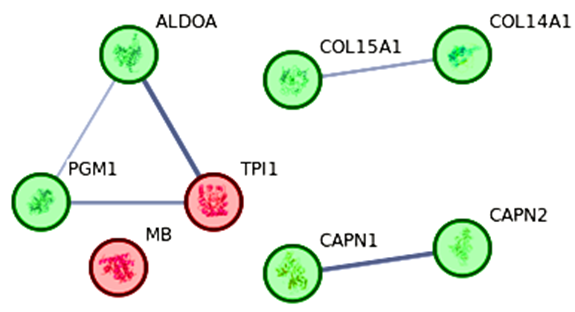
3.6. Protein–protein interaction (PPI) networkThe protein interactions were analyzed using the STRING database, which provides insights into how proteins may collaborate in metabolic signaling pathways, regulate each other via mediators, or collectively contribute to common cellular structures 41. In this study, we utilized STRING to map PPI networks for a selection of DEPs, as shown in Figure 7. The resulting PPI network comprises 8 nodes and 5 edges, with each node representing a protein generated from a single protein-coding gene, and each edge indicating a predicted functional interaction. The interaction diagram reveals that COL14A1 and COL15A1, both collagen family members, exhibit strong associations with one another. Likewise, the CAPN-1 and CAPN-2 proteins, part of the calpain system, demonstrate robust interactions. Additionally, the glycolytic enzymes TPI1, ALDOA, and PGM1 are interconnected, suggesting their collaborative roles in glycolysis. For instance, Silva et al. demonstrated that increased glycolysis and decreased oxidative phosphorylation led to enhanced glycerol-3-phosphate and fatty acid synthesis, which, in turn, affects meat quality at the microscopic level 42. These proteins, individually or collectively, may contribute to the structural and biochemical differences observed between beef and donkey meat, ultimately influencing their distinct quality profiles.

Collectively our findings revealed that the donkey meat has a significantly higher protein content but lower fat, water, and ash content compared to beef. Notably, beef was found to contain higher levels of acetic and isobutyric acids, while donkey meat exhibited greater amounts of butyric and valeric acids. Based on TMT proteomic analysis, we identified 1,328 DEPs in donkey meat, of which 592 were upregulated and 736 were downregulated. Among these, COL14A1 and COL15A1 and CAPN-1 and CAPN-2 emerged as key markers that may influence the differences in tenderness between beef and donkey meat. The difference in meat color between the two types of meat is likely attributable to proteins such as GLNG, ALDOA, and PGM1, while TPI1, a glycolytic enzyme, may serve as a potential biomarker for distinguishing WHC between donkey and beef meat.
Acknowledgements: This work was supported by The Shandong Rural Revitalization Science and Technology Innovation Action Plan (Key Technology Innovation demonstration of Integrated Development of Dong-E Black Donkey Industry) (2021TZXD012); The Donkey Innovation Team of the Shandong Modern Agricultural Industry Technology System (SDAIT-27); Doctoral research fund of Liaocheng University (318052120).
Conflicts of interest: The authors declare no potential conflict of interest.
Author Contributions: Conceptualization, T.L., X.C. and G.L.; methodology, T.L.; validation, T.L. and C.C.; data curation, T.L., Y.Z., X.Q. and W.L.; writing-original draft preparation, T.L.; review and editing, M.F.A., M.Z.K. and X.C.; supervision, G.L., Y.J., and L.L. All authors have read and agreed to the published version of the manuscript.
Informed Consent Statement: This study was approved by Animal Policy and Welfare Committee of Liaocheng University (No. LC2019-1). The care and use of laboratory animals fully comply with local animal welfare laws, guidelines and policies.
| [1] | Williamson, C., Foster, R., Stanner, S., Buttriss, J. “Red meat in the diet.” Nutrition Bulletin 2005, 30, 323-355. | ||
| In article | View Article | ||
| [2] | Zhang, J., Wei, Z., Lu, T., Qi, X., Xie, L., Vincenzetti, S., Polidori, P., Li, L., Liu, G. “The Research Field of Meat Preservation: A Scientometric and Visualization Analysis Based on the Web of Science.” Foods 2023, 12. | ||
| In article | View Article PubMed | ||
| [3] | Li, M., Sun, L., Du, X., Ren, W., Man, L., Chai, W., Zhu, M., Liu, G., Wang, C. “Characterization of lipids and volatile compounds in boiled donkey meat by lipidomics and volatilomics.” Journal of Food Science 2024, 89, 3445-3454. | ||
| In article | View Article PubMed | ||
| [4] | Jingjing, Z., Zixiang, W., Huachen, Z., Lan, X., Silvia, V., Paolo, P., Lanjie, L., Guiqin, L. “Changes in the Physical–Chemical Properties and Volatile Flavor Components of Dry-Cured Donkey Leg during Processing.” Foods 2022, 11, 3542-3542. | ||
| In article | View Article PubMed | ||
| [5] | Zhang, W., Zhang, M., Sun, Y., Liu, S. “Factors affecting the quality and nutritional value of donkey meat: a comprehensive review.” Frontiers in Veterinary Science 2024, 11, 1460859. | ||
| In article | View Article PubMed | ||
| [6] | Gagaoua, M.; Picard, B. “Proteomics to explain and predict meat quality.” In New aspects of meat quality; Elsevier: 2022; pp. 393-431. | ||
| In article | View Article | ||
| [7] | Agregán, R.; Pateiro, M.; Kumar, M.; Franco, D.; Capanoglu, E.; Dhama, K.; Lorenzo, J.M. “The potential of proteomics in the study of processed meat products.” Journal of Proteomics 2023, 270, 104744. | ||
| In article | View Article PubMed | ||
| [8] | Della Malva, A., Gagaoua, M., Santillo, A.; De Palo, P., Sevi, A., Albenzio, M. “First insights about the underlying mechanisms of Martina Franca donkey meat tenderization during aging: A proteomic approach.” Meat science 2022, 193, 108925. | ||
| In article | View Article PubMed | ||
| [9] | Chai, W., Xu, J., Qu, H., Ma, Q., Zhu, M., Li, M., Zhan, Y., Wang, T., Gao, J., Yao, H. “Differential proteomic analysis to identify potential biomarkers associated with quality traits of Dezhou donkey meat using a data-independent acquisition (DIA) strategy.” LWT 2022, 166, 113792. | ||
| In article | View Article | ||
| [10] | Sun, Y., Wang, J., Li, Y., Yang, C., Wang, X., Ju, Z., Jiang, Q., Huang, J., Wang, C. “Changes between longissimus dorsi muscle from donkey, cow, and goat assessed by transcriptomic and proteomic analyses.” 2020. | ||
| In article | View Article | ||
| [11] | Hou, J., Deng, Q., Liu, S., Qiu, X., Deng, X., Zhong, W., Zhong, Z. “Plasma proteome profiling of patients with In-stent restenosis by Tandem Mass Tag-based quantitative Proteomics Approach.” Frontiers in Cardiovascular Medicine 2022, 9, 793405. | ||
| In article | View Article PubMed | ||
| [12] | Aganga, A., Aganga, A., Thema, F., Obocheleng, K. “Carcass analysis and meat composition of the donkey.” 2003. | ||
| In article | |||
| [13] | Ma, J., Wang, J., Mahfuz, S., Long, S., Wu, D., Gao, J., Piao, X.“Supplementation of mixed organic acids improves growth performance, meat quality, gut morphology and volatile fatty acids of broiler chicken.” Animals 2021, 11, 3020. | ||
| In article | View Article PubMed | ||
| [14] | Li, X., Amadou, I., Zhou, G.-Y., Qian, L.Y., Zhang, J.L., Wang, D.L., Cheng, X.R. “Flavor components comparison between the neck meat of donkey, swine, bovine, and sheep.” Food Science of Animal Resources 2020, 40, 527. | ||
| In article | View Article PubMed | ||
| [15] | Ashburner, M., Ball, C.A., Blake, J.A., Botstein, D., Butler, H., Cherry, J.M., Davis, A.P., Dolinski, K., Dwight, S.S., Eppig, J.T. “Gene ontology: tool for the unification of biology.” Nature genetics 2000, 25, 25-29. | ||
| In article | View Article PubMed | ||
| [16] | Zequan, X., Yonggang, S., Guangjuan, L., Shijun, X., Li, Z., Mingrui, Z., Yanli, X., Zirong, W. “Proteomics analysis as an approach to understand the formation of pale, soft, and exudative (PSE) pork.” Meat Science 2021, 177, 108353. | ||
| In article | View Article PubMed | ||
| [17] | Li, C., Bassey, A.P., Zhou, G. “Molecular changes of meat proteins during processing and their impact on quality and nutritional values.” Annual Review of Food Science and Technology 2023, 14, 85-111. | ||
| In article | View Article PubMed | ||
| [18] | Patra, K.C., Hay, N. “The pentose phosphate pathway and cancer.” Trends in biochemical sciences 2014, 39, 347-354. | ||
| In article | View Article PubMed | ||
| [19] | Zhao, Y., Kong, X., Yang, X., Zhu, L., Liang, R., Luo, X., Zhang, L., Hopkins, D.L., Mao, Y., Zhang, Y. “Effect of energy metabolism and proteolysis on the toughness of intermediate ultimate pH beef.” Meat Science 2022, 188, 108798. | ||
| In article | View Article PubMed | ||
| [20] | Stajkovic, S., Vasilev, D., Teodorovic, V., Karabasil, N. “Postmortem glycolysis and pork quality. In Proceedings of the IOP Conference Series: Earth and Environmental Science,” 2019; p. 012032. | ||
| In article | View Article | ||
| [21] | Li, X., Ha, M., Warner, R.D., Dunshea, F.R. “Meta-analysis of the relationship between collagen characteristics and meat tenderness.” Meat Science 2022, 185, 108717. | ||
| In article | View Article PubMed | ||
| [22] | Fernández-Barroso, M.Á., Caraballo, C., Silió, L., Rodríguez, C., Nuñez, Y., Sánchez-Esquiliche, F., Matos, G., García-Casco, J.M., Muñoz, M. “Differences in the loin tenderness of Iberian pigs explained through dissimilarities in their transcriptome expression profile.” Animals 2020, 10, 1715. | ||
| In article | View Article PubMed | ||
| [23] | Wu, F., Sun, H., Lu, S., Gou, X., Yan, D., Xu, Z., Zhang, Z., Qadri, Q.R., Zhang, Z., Wang, Z. “Genetic diversity and selection signatures within Diannan small-ear pigs revealed by next-generation sequencing. ”Frontiers in genetics 2020, 11, 733. | ||
| In article | View Article PubMed | ||
| [24] | Tizioto, P.C., Decker, J.E., Taylor, J.F., Schnabel, R.D., Mudadu, M.A., Silva, F.L., Mourão, G.B., Coutinho, L.L., Tholon, P., Sonstegard, T.S. “Genome scan for meat quality traits in Nelore beef cattle.” Physiological genomics 2013, 45, 1012-1020. | ||
| In article | View Article PubMed | ||
| [25] | Lana, A., Zolla, L. “Proteolysis in meat tenderization from the point of view of each single protein: A proteomic perspective.” Journal of Proteomics 2016, 147, 85-97. | ||
| In article | View Article PubMed | ||
| [26] | Li, S., Li, C. “Proteomics discovery of protein biomarkers linked to yak meat tenderness as determined by label‐free mass spectrometry.” Animal Science Journal 2021, 92, e13669. | ||
| In article | View Article PubMed | ||
| [27] | Paulin, D., Li, Z. “Desmin: a major intermediate filament protein essential for the structural integrity and function of muscle.” Experimental cell research 2004, 301, 1-7. | ||
| In article | View Article PubMed | ||
| [28] | Roy, B.C., Walker, B., Rahman, M.M., Bruce, H.L., McMullen, L. “Role of myofibers, perimysium and adipocytes in horse meat toughness.” Meat science 2018, 146, 109-121. | ||
| In article | View Article PubMed | ||
| [29] | Saccà, E., Corazzin, M., Bovolenta, S., Piasentier, E. “Meat quality traits and the expression of tenderness-related genes in the loins of young goats at different ages.” Animal 2019, 13, 2419-2428. | ||
| In article | View Article PubMed | ||
| [30] | Ruedt, C., Gibis, M., Weiss, J. “Meat color and iridescence: Origin, analysis, and approaches to modulation.” Comprehensive Reviews in Food Science and Food Safety 2023, 22, 3366-3394. | ||
| In article | View Article PubMed | ||
| [31] | Pujol, A., Ospina-E, J.C., Alvarez, H., Muñoz, D.A. “Myoglobin content and oxidative status to understand meat products’ color: Phenomenological based model.” Journal of Food Engineering 2023, 348, 111439. | ||
| In article | View Article | ||
| [32] | Kim, G.-D., Jeong, J.-Y., Hur, S.-J., Yang, H.-S., Jeon, J.T., Joo, S.T. “The relationship between meat color (CIE L* and a*), myoglobin content, and their influence on muscle fiber characteristics and pork quality.” Food Science of Animal Resources 2010, 30, 626-633. | ||
| In article | View Article | ||
| [33] | Chauhan, S.S., England, E.M. “Postmortem glycolysis and glycogenolysis: Insights from species comparisons.” Meat science 2018, 144, 118-126. | ||
| In article | View Article PubMed | ||
| [34] | Luo, J., Shen, Y.L., Lei, G.H., Zhu, P.K., Jiang, Z.Y., Bai, L., Li, Z.M., Tang, Q.G., Li, W.X., Zhang, H.S. “Correlation between three glycometabolic‐related hormones and muscle glycolysis, as well as meat quality, in three pig breeds.” Journal of the Science of Food and Agriculture 2017, 97, 2706-2713. | ||
| In article | View Article PubMed | ||
| [35] | Zhu, Q., Xing, L., Hou, Q., Liu, R., Zhang, W. “Proteomics identification of differential S-nitrosylated proteins between the beef with intermediate and high ultimate pH using isobaric iodoTMT switch assay.” Meat Science 2021, 172, 108321. | ||
| In article | View Article PubMed | ||
| [36] | Huang, C., Hou, C., Ijaz, M., Yan, T., Li, X., Li, Y. Zhang, D. “Proteomics discovery of protein biomarkers linked to meat quality traits in post-mortem muscles: Current trends and future prospects: A review.” Trends in Food Science & Technology 2020, 105, 416-432. | ||
| In article | View Article | ||
| [37] | Canto, A.C., Suman, S.P., Nair, M.N., Li, S., Rentfrow, G., Beach, C.M., Silva, T.J., Wheeler, T.L., Shackelford, S.D., Grayson, A. “Differential abundance of sarcoplasmic proteome explains animal effect on beef Longissimus lumborum color stability.” Meat science 2015, 102, 90-98. | ||
| In article | View Article PubMed | ||
| [38] | de Geus, M.B., Leslie, S.N.; Lam, T.; Wang, W., Roux-Dalvai, F., Droit, A., Kivisakk, P., Nairn, A.C., Arnold, S.E., Carlyle, B.C. “Mass spectrometry in cerebrospinal fluid uncovers association of glycolysis biomarkers with Alzheimer’s disease in a large clinical sample.” Scientific Reports 2023, 13, 22406. | ||
| In article | View Article PubMed | ||
| [39] | López-Pedrouso, M., Lorenzo, J.M., Cittadini, A., Sarries, M.V., Gagaoua, M., Franco, D. “A proteomic approach to identify biomarkers of foal meat quality: a focus on tenderness, color and intramuscular fat traits.” Food Chemistry 2023, 405, 134805. | ||
| In article | View Article PubMed | ||
| [40] | Di Luca, A., Elia, G., Hamill, R., Mullen, A.M. “2D DIGE proteomic analysis of early post mortem muscle exudate highlights the importance of the stress response for improved water‐holding capacity of fresh pork meat.” Proteomics 2013, 13, 1528-1544. | ||
| In article | View Article PubMed | ||
| [41] | Szklarczyk, D., Kirsch, R., Koutrouli, M., Nastou, K., Mehryary, F., Hachilif, R., Gable, A.L., Fang, T., Doncheva, N.T., Pyysalo, S. “The STRING database in 2023: protein–protein association networks and functional enrichment analyses for any sequenced genome of interest.” Nucleic acids research 2023, 51, D638-D646. | ||
| In article | View Article PubMed | ||
| [42] | Silva, L.H., Rodrigues, R.T., Assis, D.E., Benedeti, P.D., Duarte, M.S., Chizzotti, M.L. “Explaining meat quality of bulls and steers by differential proteome and phosphoproteome analysis of skeletal muscle.” Journal of proteomics 2019, 199, 51-66. | ||
| In article | View Article PubMed | ||
Published with license by Science and Education Publishing, Copyright © 2025 Ting Lu, Changyun Cai, Wenjie Li, Yanhao Zhao, Muhammad Zahoor Khan, Muhammad Faheem Akhtar, Xingzhen Qi, Lanjie Li, Yaqian Jin, Xue Chen and Guiqin Liu
 This work is licensed under a Creative Commons Attribution 4.0 International License. To view a copy of this license, visit
http://creativecommons.org/licenses/by/4.0/
This work is licensed under a Creative Commons Attribution 4.0 International License. To view a copy of this license, visit
http://creativecommons.org/licenses/by/4.0/
| [1] | Williamson, C., Foster, R., Stanner, S., Buttriss, J. “Red meat in the diet.” Nutrition Bulletin 2005, 30, 323-355. | ||
| In article | View Article | ||
| [2] | Zhang, J., Wei, Z., Lu, T., Qi, X., Xie, L., Vincenzetti, S., Polidori, P., Li, L., Liu, G. “The Research Field of Meat Preservation: A Scientometric and Visualization Analysis Based on the Web of Science.” Foods 2023, 12. | ||
| In article | View Article PubMed | ||
| [3] | Li, M., Sun, L., Du, X., Ren, W., Man, L., Chai, W., Zhu, M., Liu, G., Wang, C. “Characterization of lipids and volatile compounds in boiled donkey meat by lipidomics and volatilomics.” Journal of Food Science 2024, 89, 3445-3454. | ||
| In article | View Article PubMed | ||
| [4] | Jingjing, Z., Zixiang, W., Huachen, Z., Lan, X., Silvia, V., Paolo, P., Lanjie, L., Guiqin, L. “Changes in the Physical–Chemical Properties and Volatile Flavor Components of Dry-Cured Donkey Leg during Processing.” Foods 2022, 11, 3542-3542. | ||
| In article | View Article PubMed | ||
| [5] | Zhang, W., Zhang, M., Sun, Y., Liu, S. “Factors affecting the quality and nutritional value of donkey meat: a comprehensive review.” Frontiers in Veterinary Science 2024, 11, 1460859. | ||
| In article | View Article PubMed | ||
| [6] | Gagaoua, M.; Picard, B. “Proteomics to explain and predict meat quality.” In New aspects of meat quality; Elsevier: 2022; pp. 393-431. | ||
| In article | View Article | ||
| [7] | Agregán, R.; Pateiro, M.; Kumar, M.; Franco, D.; Capanoglu, E.; Dhama, K.; Lorenzo, J.M. “The potential of proteomics in the study of processed meat products.” Journal of Proteomics 2023, 270, 104744. | ||
| In article | View Article PubMed | ||
| [8] | Della Malva, A., Gagaoua, M., Santillo, A.; De Palo, P., Sevi, A., Albenzio, M. “First insights about the underlying mechanisms of Martina Franca donkey meat tenderization during aging: A proteomic approach.” Meat science 2022, 193, 108925. | ||
| In article | View Article PubMed | ||
| [9] | Chai, W., Xu, J., Qu, H., Ma, Q., Zhu, M., Li, M., Zhan, Y., Wang, T., Gao, J., Yao, H. “Differential proteomic analysis to identify potential biomarkers associated with quality traits of Dezhou donkey meat using a data-independent acquisition (DIA) strategy.” LWT 2022, 166, 113792. | ||
| In article | View Article | ||
| [10] | Sun, Y., Wang, J., Li, Y., Yang, C., Wang, X., Ju, Z., Jiang, Q., Huang, J., Wang, C. “Changes between longissimus dorsi muscle from donkey, cow, and goat assessed by transcriptomic and proteomic analyses.” 2020. | ||
| In article | View Article | ||
| [11] | Hou, J., Deng, Q., Liu, S., Qiu, X., Deng, X., Zhong, W., Zhong, Z. “Plasma proteome profiling of patients with In-stent restenosis by Tandem Mass Tag-based quantitative Proteomics Approach.” Frontiers in Cardiovascular Medicine 2022, 9, 793405. | ||
| In article | View Article PubMed | ||
| [12] | Aganga, A., Aganga, A., Thema, F., Obocheleng, K. “Carcass analysis and meat composition of the donkey.” 2003. | ||
| In article | |||
| [13] | Ma, J., Wang, J., Mahfuz, S., Long, S., Wu, D., Gao, J., Piao, X.“Supplementation of mixed organic acids improves growth performance, meat quality, gut morphology and volatile fatty acids of broiler chicken.” Animals 2021, 11, 3020. | ||
| In article | View Article PubMed | ||
| [14] | Li, X., Amadou, I., Zhou, G.-Y., Qian, L.Y., Zhang, J.L., Wang, D.L., Cheng, X.R. “Flavor components comparison between the neck meat of donkey, swine, bovine, and sheep.” Food Science of Animal Resources 2020, 40, 527. | ||
| In article | View Article PubMed | ||
| [15] | Ashburner, M., Ball, C.A., Blake, J.A., Botstein, D., Butler, H., Cherry, J.M., Davis, A.P., Dolinski, K., Dwight, S.S., Eppig, J.T. “Gene ontology: tool for the unification of biology.” Nature genetics 2000, 25, 25-29. | ||
| In article | View Article PubMed | ||
| [16] | Zequan, X., Yonggang, S., Guangjuan, L., Shijun, X., Li, Z., Mingrui, Z., Yanli, X., Zirong, W. “Proteomics analysis as an approach to understand the formation of pale, soft, and exudative (PSE) pork.” Meat Science 2021, 177, 108353. | ||
| In article | View Article PubMed | ||
| [17] | Li, C., Bassey, A.P., Zhou, G. “Molecular changes of meat proteins during processing and their impact on quality and nutritional values.” Annual Review of Food Science and Technology 2023, 14, 85-111. | ||
| In article | View Article PubMed | ||
| [18] | Patra, K.C., Hay, N. “The pentose phosphate pathway and cancer.” Trends in biochemical sciences 2014, 39, 347-354. | ||
| In article | View Article PubMed | ||
| [19] | Zhao, Y., Kong, X., Yang, X., Zhu, L., Liang, R., Luo, X., Zhang, L., Hopkins, D.L., Mao, Y., Zhang, Y. “Effect of energy metabolism and proteolysis on the toughness of intermediate ultimate pH beef.” Meat Science 2022, 188, 108798. | ||
| In article | View Article PubMed | ||
| [20] | Stajkovic, S., Vasilev, D., Teodorovic, V., Karabasil, N. “Postmortem glycolysis and pork quality. In Proceedings of the IOP Conference Series: Earth and Environmental Science,” 2019; p. 012032. | ||
| In article | View Article | ||
| [21] | Li, X., Ha, M., Warner, R.D., Dunshea, F.R. “Meta-analysis of the relationship between collagen characteristics and meat tenderness.” Meat Science 2022, 185, 108717. | ||
| In article | View Article PubMed | ||
| [22] | Fernández-Barroso, M.Á., Caraballo, C., Silió, L., Rodríguez, C., Nuñez, Y., Sánchez-Esquiliche, F., Matos, G., García-Casco, J.M., Muñoz, M. “Differences in the loin tenderness of Iberian pigs explained through dissimilarities in their transcriptome expression profile.” Animals 2020, 10, 1715. | ||
| In article | View Article PubMed | ||
| [23] | Wu, F., Sun, H., Lu, S., Gou, X., Yan, D., Xu, Z., Zhang, Z., Qadri, Q.R., Zhang, Z., Wang, Z. “Genetic diversity and selection signatures within Diannan small-ear pigs revealed by next-generation sequencing. ”Frontiers in genetics 2020, 11, 733. | ||
| In article | View Article PubMed | ||
| [24] | Tizioto, P.C., Decker, J.E., Taylor, J.F., Schnabel, R.D., Mudadu, M.A., Silva, F.L., Mourão, G.B., Coutinho, L.L., Tholon, P., Sonstegard, T.S. “Genome scan for meat quality traits in Nelore beef cattle.” Physiological genomics 2013, 45, 1012-1020. | ||
| In article | View Article PubMed | ||
| [25] | Lana, A., Zolla, L. “Proteolysis in meat tenderization from the point of view of each single protein: A proteomic perspective.” Journal of Proteomics 2016, 147, 85-97. | ||
| In article | View Article PubMed | ||
| [26] | Li, S., Li, C. “Proteomics discovery of protein biomarkers linked to yak meat tenderness as determined by label‐free mass spectrometry.” Animal Science Journal 2021, 92, e13669. | ||
| In article | View Article PubMed | ||
| [27] | Paulin, D., Li, Z. “Desmin: a major intermediate filament protein essential for the structural integrity and function of muscle.” Experimental cell research 2004, 301, 1-7. | ||
| In article | View Article PubMed | ||
| [28] | Roy, B.C., Walker, B., Rahman, M.M., Bruce, H.L., McMullen, L. “Role of myofibers, perimysium and adipocytes in horse meat toughness.” Meat science 2018, 146, 109-121. | ||
| In article | View Article PubMed | ||
| [29] | Saccà, E., Corazzin, M., Bovolenta, S., Piasentier, E. “Meat quality traits and the expression of tenderness-related genes in the loins of young goats at different ages.” Animal 2019, 13, 2419-2428. | ||
| In article | View Article PubMed | ||
| [30] | Ruedt, C., Gibis, M., Weiss, J. “Meat color and iridescence: Origin, analysis, and approaches to modulation.” Comprehensive Reviews in Food Science and Food Safety 2023, 22, 3366-3394. | ||
| In article | View Article PubMed | ||
| [31] | Pujol, A., Ospina-E, J.C., Alvarez, H., Muñoz, D.A. “Myoglobin content and oxidative status to understand meat products’ color: Phenomenological based model.” Journal of Food Engineering 2023, 348, 111439. | ||
| In article | View Article | ||
| [32] | Kim, G.-D., Jeong, J.-Y., Hur, S.-J., Yang, H.-S., Jeon, J.T., Joo, S.T. “The relationship between meat color (CIE L* and a*), myoglobin content, and their influence on muscle fiber characteristics and pork quality.” Food Science of Animal Resources 2010, 30, 626-633. | ||
| In article | View Article | ||
| [33] | Chauhan, S.S., England, E.M. “Postmortem glycolysis and glycogenolysis: Insights from species comparisons.” Meat science 2018, 144, 118-126. | ||
| In article | View Article PubMed | ||
| [34] | Luo, J., Shen, Y.L., Lei, G.H., Zhu, P.K., Jiang, Z.Y., Bai, L., Li, Z.M., Tang, Q.G., Li, W.X., Zhang, H.S. “Correlation between three glycometabolic‐related hormones and muscle glycolysis, as well as meat quality, in three pig breeds.” Journal of the Science of Food and Agriculture 2017, 97, 2706-2713. | ||
| In article | View Article PubMed | ||
| [35] | Zhu, Q., Xing, L., Hou, Q., Liu, R., Zhang, W. “Proteomics identification of differential S-nitrosylated proteins between the beef with intermediate and high ultimate pH using isobaric iodoTMT switch assay.” Meat Science 2021, 172, 108321. | ||
| In article | View Article PubMed | ||
| [36] | Huang, C., Hou, C., Ijaz, M., Yan, T., Li, X., Li, Y. Zhang, D. “Proteomics discovery of protein biomarkers linked to meat quality traits in post-mortem muscles: Current trends and future prospects: A review.” Trends in Food Science & Technology 2020, 105, 416-432. | ||
| In article | View Article | ||
| [37] | Canto, A.C., Suman, S.P., Nair, M.N., Li, S., Rentfrow, G., Beach, C.M., Silva, T.J., Wheeler, T.L., Shackelford, S.D., Grayson, A. “Differential abundance of sarcoplasmic proteome explains animal effect on beef Longissimus lumborum color stability.” Meat science 2015, 102, 90-98. | ||
| In article | View Article PubMed | ||
| [38] | de Geus, M.B., Leslie, S.N.; Lam, T.; Wang, W., Roux-Dalvai, F., Droit, A., Kivisakk, P., Nairn, A.C., Arnold, S.E., Carlyle, B.C. “Mass spectrometry in cerebrospinal fluid uncovers association of glycolysis biomarkers with Alzheimer’s disease in a large clinical sample.” Scientific Reports 2023, 13, 22406. | ||
| In article | View Article PubMed | ||
| [39] | López-Pedrouso, M., Lorenzo, J.M., Cittadini, A., Sarries, M.V., Gagaoua, M., Franco, D. “A proteomic approach to identify biomarkers of foal meat quality: a focus on tenderness, color and intramuscular fat traits.” Food Chemistry 2023, 405, 134805. | ||
| In article | View Article PubMed | ||
| [40] | Di Luca, A., Elia, G., Hamill, R., Mullen, A.M. “2D DIGE proteomic analysis of early post mortem muscle exudate highlights the importance of the stress response for improved water‐holding capacity of fresh pork meat.” Proteomics 2013, 13, 1528-1544. | ||
| In article | View Article PubMed | ||
| [41] | Szklarczyk, D., Kirsch, R., Koutrouli, M., Nastou, K., Mehryary, F., Hachilif, R., Gable, A.L., Fang, T., Doncheva, N.T., Pyysalo, S. “The STRING database in 2023: protein–protein association networks and functional enrichment analyses for any sequenced genome of interest.” Nucleic acids research 2023, 51, D638-D646. | ||
| In article | View Article PubMed | ||
| [42] | Silva, L.H., Rodrigues, R.T., Assis, D.E., Benedeti, P.D., Duarte, M.S., Chizzotti, M.L. “Explaining meat quality of bulls and steers by differential proteome and phosphoproteome analysis of skeletal muscle.” Journal of proteomics 2019, 199, 51-66. | ||
| In article | View Article PubMed | ||