Soursop (Annona muricata L.) is a typical fruit of South East Asia, North Africa and Pacific regions. This fruit possesses an aromatic flavor and bioactive value, thus developing beverage from soursop is a potential direction, especially into probiotic fermented fruit juice since this type of product has received widespread attention from health-concerning consumers. Among probiotic strains Lactobacillus plantarum is considered to have many properties that are very suitable for fermenting fruit juice products. This work aimed to optimize parameters of fermentation soursop juice using L. plantarum in order to develop fermented soursop juice having the probiotic properties, good sensory quality while maintaining the nutritional and bioactive compounds. For this purpose, varying parameters were examined, including soursop juice (SJ): sugar syrup (SS) concentration of 1:1, 1:1.5 and 1:2; total soluble solids content (TSS) of 14, 16, 18 oBx; pH index of 4.5, 5.0, 5.5, 6.0; fermentation temperature of 20, 30, 40°C; and time of 48, 56, 64 hours. The optimum parameters were selected as 107 CFU/mL of L. plantarum LB-1; SJ:SS ratio of 1:2; TSS of 16°Bx; pH 5.0; 48-hour fermentation time at 30°C. The final product achieved total titratable acidity (TTA) of 0.54 ± 0.02 g/100mL, reducing sugar content of 2.13 ± 0.04 g/100mL, TSS of 14.97 ± 0.47 oBx, pH of 3.95 ± 0.13, 30.54 ± 0.89 mg/100mL vitamin C and total phenolic content of 172.62 ± 8.16 mg GAE /100mL. The final product met the microbiological safety quality since coliform and mold were undetected, while the yeast count was below the permissible level for beverage. The lactic bacteria content accounted for 6.35×10⁷ CFU/mL. The sensory quality of the final fermented juice was rated moderated like, based on the results of the hedonic rating test where the overall acceptability was 7.69 ± 0.56/9.00.
Soursop (Annona muricata L.) is a tropical fruit tree belonging to the family Annonaceae, genus Annona 1. Soursop is now widely grown throughout the tropical and subtropical regions of the world, including the West Indies, North and South America, Africa, the Pacific Islands and Southeast Asia 2. In Vietnam, the tree is mainly grown in the Southern regions with an average harvest yield of 15–17 tons per hectare 3.
Soursop is a potential fruit with rich nutritional value 4. The fruit pulp of soursop contains large amounts of carbohydrates and sugars, mainly fructose, glucose, and sucrose 5. Soursop is also an excellent source of essential vitamins, with high levels of vitamin C, vitamin B1, vitamin B2, along with significant amounts of organic acids such as citric acid, malic acid, and isocitric acid 6, 7. Besides, soursop fruit pulp also has the presence of many bioactive compounds with potential in treatment, including alkaloids 8, phenolics 9, essential oils, and especially annonaceous acetogenin compounds 10.
However, since soursop is a climacteric fruit, it is susceptible to deterioration and unsuitable for long-term storage after the ripening 11. Among them, probiotic fermented fruit juice is a product that has received widespread attention 12 for its ability to create appealing fruit flavors in final product, while carrying health benefits for consumers.
Lactic acid bacteria (LAB) are a common type of bacteria used for the production of probiotic fermented juices in the food and beverage industry. Depending on the type of fruit used, the added LAB strain, and the fermentation and storage conditions, the lactic acid fermentation of fruit juice can be maintained or improved: shelf life, nutritional value, and sensory properties of the final product 13. With the application of lactic acid fermentation, the shelf life of fruit juice products is prolonged to average 4 weeks or even 6 months of cold storage at 4 to 8°C 14. In addition, lacto-fermentation has the effect of increasing increases total polyphenol content and antioxidant activity 15, 16 as well as beneficially impacts the aromatic properties 17, 18 and sensory quality 19, 20 of fruit juices.
Among LAB bacteria that can be used in food fermentation, Lactobacillus plantarum, a probiotic strain, is a widely used bacterial strain and is considered to have many properties that are very suitable for fermenting fruit juice products. L. plantarum is a safe microorganism (Generally Regard as Safe — GRAS) 21, which can grow well at temperatures ranging from 15 to 30°C and at pH values of approximately 4, however, there are specific probiotic strains of L. plantarum is tolerant to low pH values (about 3.2) and low temperatures (4–8°C) 22. Many fruit juices have been successfully fermented using L. plantarum strains including apple 23, pomegranate 24, cherry 25, sweet lemon 26, mulberry 27 and jujube 28 juice, resulting in final products with potential functional properties. Therefore, using L. plantarum in fermentation fruit juice met the requirements of a probiotic product and enhance flavor of final product.
The aim of this work was to select suitable fermentation parameters corresponding to the L. plantarum strain by varying soursop juice: sugar syrup (SJ:SS) concentration, total soluble solids content (oBx), pH index, fermentation temperature, and time in order to develop fermented soursop juice having probiotic properties, high sensory value, capable of maintaining the nutritional and bioactive compounds.
Chemicals: Enzyme Pectinex Ultra SP-L was obtained from Angel Yeast Co., Ltd (enzyme activity 60,000 U/g). Folin-Ciocalteu reagent (≥ 99.8), gallic acid (GA) (≥ 99.9%), 3,5-Dinitrosalicylic acid (DNS) (≥ 98%) were supplied by Merck (Darmstadt, Germany). All other chemicals were analytical grade.
Starter culture: lactic acid bacteria LAB culture including Lactobacillus plantarum LB-1 (Chr. Hansen, Denmark). LAB culture was activated with pasteurization soursop fruit juice at a temperature of about 30-40°C for 15 minutes before conducting the experiment.
Raw material: Evenly ripened soursop fruits (Annona muricata) were collected from Hau Giang, Viet Nam with the similarity in terms of maturity, weight and without any defects or crushes. Some nutritional values of raw material have been estimated in our published paper 29: 0.54 ± 0.02% TTA, 43.04 ± 0.61 mg/100g vitamin C, 173.42 ± 11.56 mgGAE/100g polyphenols, 11.8 ± 0.87 g/100g total sugar, 14.4 ± 0.09 oBx. Raw materials are guaranteed to be transported from the place of collection to the laboratory within 24-48 hours. After being transported to the laboratory, soursop is washed, peeled, seeded and grounded. 0.1% w/w of ascorbic acid was added during the grounding. Next, the ground pulp is treated with pectinase 0.8% w/v at 40ºC for 60 minutes, then centrifuged at 4000 rpm for 20 min to receive pure soursop juice.
2.2. Processing of Fermented Fruit JuiceFermented soursop fruit juice was produced by lactic acid fermentation by Lactobacillus plantarum LB-1 culture. The suitable fermentation parameters are evaluated by One Factor at a Time (OFAT) method 30 in which one examined factor in each experiment is changed while all other factors are kept constant: soursop extracted juice was adjusted to achieve 15°Bx with SJ:SS ratio of 1:2 and pH 4.5, followed by pasteurization at 65oC for 15 minutes to destroy wild bacteria. The 107 CFU/mL of LAB was added after activation (as mentioned above). Fermentation was conducted at 20°C for 64 hours. The modified variables included: SJ:SS ratio (M2), TSS (M2), pH (M3), fermentation temperature (M4), and fermentation time (M5) (Table 1).
The product is not pasteurized after the fermentation process and stored at 4°C to retain the probiotic properties of L. plantarum bacteria. The fermentation process is similarly presented as above with the change of the one tested factor. Fermentation progress was monitored by TSS, TTA, pH and reducing sugar content every 8 hours. After fermentation, the quality criteria of the final product were evaluated. Each experiment was repeated three times.
2.3. Chemical Composition AnalysisThe titratable acidity was carried out by a method described by AOAC (2010) 31. Adding 20mL distilled water to 5 mL of sample, then titrating with 0.1N NaOH solution using 3-4 drops of phenolphthalein. The titration of each 25 mL solution was done until the color changed to pink and persisting 30 seconds.
The pH value was measured by pH meter (Model SI Analytics Lab Meter 845) and total soluble solids was employed by the portable refractometer.
The reducing sugars were quantified by Miller's method 32. The reaction mixture contained 0.5 mL juice sample (already diluted by distilled water) and 3 mL of DNS in full. The solution was then boiled (at 100℃ for 5 minutes) before cooling down in an icy water bath for 10 minutes. The absorbance of the solution was measured by a UV–vis spectrophotometer (Model Apel PD-3000UV) at 540 nm. The standard curve was formed by evaluating glucose (0.1–1 g/L).
Total phenolic content were measured by the Folin-Ciocalteu method 33 described by Obanda et al. (1997) with slight modification. 0.2 mL of diluted soursop juice was accurately transferred to a test tube which contained 1 mL of Folin-Ciocalteu’s phenol reagent. The mixture was vortexed and incubated for 3 min before adding 0.8 mL of 7.5% (w/v) Na2CO3, followed by one hour reaction at room teemperature in darkness. The absorbance of the solution was evaluated at 765 nm. The standard curve was obtained by using gallic acid in a range of 25 mg/L to 125 mg/L.
Vitamin C concentration was obtained by the iodine titration method 34. Starch indicator solution was prepared by mixing 1 g of starch with 200 mL of boiling water then left for cool. Iodine solution 0.01N was prepared by dissolving 5.00g KI and 0.268g KIO3 in 200mL of distilled water before adding 30mL of 3M H2SO4, and finally making up the volume to 500mL.The iodine solution was standardized by titrating againsts 5 mL of 1% ascorbic acid solution using 3-4 drops of 1% starch indicator solution. 5 mL of juice sample was conducted in the same way. The concentration of ascorbic acid in the samples was determined as follows:
 |
where V1 is titre (mL) from the titration of the sample solutionand V2 that of standard ascorbic acid solution.
2.4. Microbiological AnalysisPrecisely 1 mL sample of fermented soursop juice was homogenized in a sterilized peptone solution to achieve serial dilutions. 0.1 mL diluted probiotic soursop juice was plated onto MRS agar using the spread plate technique and incubated for 48 hours at 37°C 35. Following the incubation period, distinct colonies were enumerated, multiplied by the reciprocal of the dilution factor, and expressed in the number of colony forming units (CFU) per milliliter of juice (CFU/mL). All microbiological analyses were conducted in duplicate.
The total bacterial count of fermented fruit juice samples was determined by diluting decimally and plating 0.1 mL in duplicate on plate count agar (PCA) media 36. Plates were incubated at 30-32°C for 48 hours. Plates with 20-200 colonies were counted, and the results were reported as CFU/mL sample.
The coliform count was calculated on MacConkey Agar and incubated at 37°C for 24 hours 37. Typical dark red colonies indicate the presence of coliform bacteria. Meanwhile, yeast and mold counts of the fermented probiotic soursop juice were determined using the pour plate count method, in potato dextrose agar (PDA) media supplemented with 0.01% chloramphenicol included (to limit bacteria development) at 30°C for 48 hours 35.
2.5. Sensory EvaluationThe sensory analysis was carried out using 50 untrained panelists (both sexes aged 18 to 28). 10 mL samples were presented in transparent glasses with a capacity of 25 mL. The examples were chilled at a refrigerated temperature of 4°C before serving. The evaluation sessions occurred between 9 and 10 a.m. 2 at room temperature (30 - 32°C). The samples were rated for overall acceptance using a nine-category hedonic scale 38. Extreme dislike = 1; very much dislike = 2; moderately dislike = 3; slightly dislike = 4; neither like nor dislike = 5; slightly like = 6; moderately like = 7; very much like = 8; and extremely like = 9.
2.6. Statistical AnalysisThe experiment results from triplicate assay were expressed as mean ± SD. One-way ANOVA with a level of significance at 5% performed by MS Excel was used in statistical analysis.
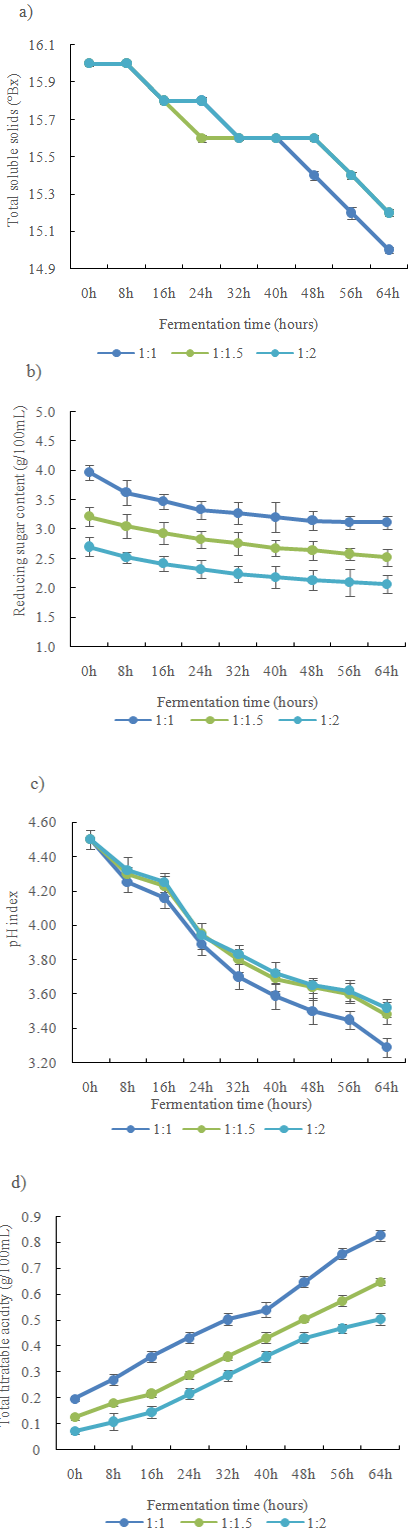
L. plantarum is facultative heterologous fermentation that uses glucose and fructose in the glycolysis through the Embden-Meyerhof pathway to produce lactic acid as a major metabolite 39. The dilution fruit juice with sugar syrup to achieve the SJ:SS ratio of 1:1, 1:1.5 and 1:2 has changed the concentration of nutrients in the fermentation liquid, including reducing sugars, organic acids, vitamins, minerals and phenolic compounds. This ratio affected the fermentation process and the growth of the L. plantarum shown in Figure 1.

The SJ:SS ratio of 1:1 featured higher concentrations of nutrients, indicating better performance of the L. plantarum strain. In Figure 1(a), at this ratio, TSS content is reduced by a higher level (1oBx) when compared to the remaining two ratios, which only lower 0.8oBx after 64 hours of fermentation. Simultaneously, the reducing sugars content decreased the most with the ratio of 1:1 (0.85 g/100mL) from 3.97 ± 0.12 to 3.12 ± 0.11. Followed by the ratio 1:1.5 with reducing sugars content declined by 0.70 g/100mL. The ratio of 1:2 results in the lowest lessening in reducing sugars content (0.63 g/100mL).
Total titratable acidity content was increased significantly after fermentation owing to the LAB metabolic biosynthesis pathway 39. From Figure 1(d), it can be seen that the SJ:SS ratio of 1:1 gives the highest increase in TTA content, 0.58 g/100mL. The ratio 1:1.5 increased total acid content by 0.47 g/100mL, whereas the ratio 1:2 resulted in the lowest TTA rise rate of 0.43 g/100mL.
From Figure 1(c), along with the increase in acid content, a significant decrease in pH value can be observed. The reduction of pH was considered due to the formation of organic acids by LAB. At the SJ:SS ratio of 1:1, the pH at this ratio had the most elevated decline from 4.50 ± 0.00 to 3.29 ± 0.05 when fermented soursop juice with L. plantarum. At the ratio 1:1.5, the pH value diminished from 4.50 ± 0.00 to 3.48 ± 0.07, that is not statistically different from the ratio 1:2. From the aforementioned results, it can be seen that the higher the dilution of soursop juice by sugar syrup, the weaker the fermentation ability of the L. plantarum strain.
Although the 1:1 ratio provides favorable conditions for bacterial activity, the resulting fermented product only reached an overall acceptability of 6.67, lower than the other two samples. Meanwhile, fermented samples with dilution ratios of 1:1.5 and 1:2 resulted in higher acceptability. The SJ:SS ratio of 1:2 had the greatest value (7.47 ± 0.59). The reason for this distinction is probably due to the TTA content of the 1:2 sample is at a suitable level of 0.50 ± 0.02 g/100mL due to the balanced taste profile and cost reduction potential, thus not creating a strong sour taste while the 1:1 ratio has a fairly high TTA content at 0.83 ± 0.02 g/100mL. The above results are consistent with the study of Akapeji et al. (2017), choosing the SJ:SS ratio of 1:2 for the fermentation process of soursop fruit juice by LAB probiotic strain Pediococcus pentosaceus LBF2 40. Therefore, the SJ:SS ratio of 1:2 is the most appropriate SJ:SS ratio for the fermentation of soursop juice using L. plantarum LB-1.
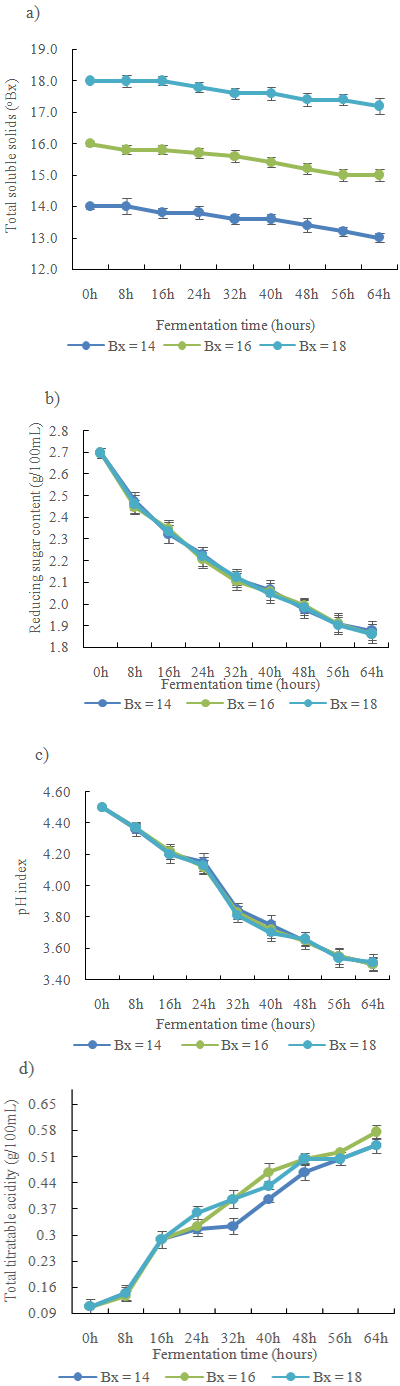
3.2. Effect of Total Soluble Solids (TSS) on the Process of Soursop Juice FermentationFigure 2 shows the results of the proximate analysis carried out on the soursop juice every 8 hours during 64 hours of fermentation under different total soluble solids content. At different concentrations of TSS, the increase in total titrable acidity and the decrease in reducing sugars content show the resemblance. Besides, there are similarities in TSS and pH during 64 hours of fermentation between samples Bx = 14, Bx = 16 and Bx = 18. The reason is that L. plantarum utilizes reducing sugars to convert into lactic acid 41, while sucrose is the ingredient used to modify the taste of beverage. Therefore, at different values of TSS, the changes in basic physicochemical parameters such as TTA, reducing sugars and pH value were not statistically different. Hence the difference in sensory evaluation will play an important role in determining which added TSS will be the most suitable for fermenting soursop juice by L. plantarum LB-1 strain.

From Table 3, sensory evaluation results indicated that the total soluble solids content of 16 oBx has the highest overall acceptability (7.73 ± 0.72), which is statistically different compared to the other samples. TSS of 14 oBx gave a acceptance score of 7.04 ± 0.63 and 7.31 ± 0.87 for 18oBx sample. These results can be explained by the reason that the juice sample of 16 oBx did not have to add high amount of sucrose, thus giving a moderately sweet taste to the final product. Therefore, total soluble solids content of 16 oBx is the most appropriate for the soursop juice fermentation by L. plantarum LB-1.
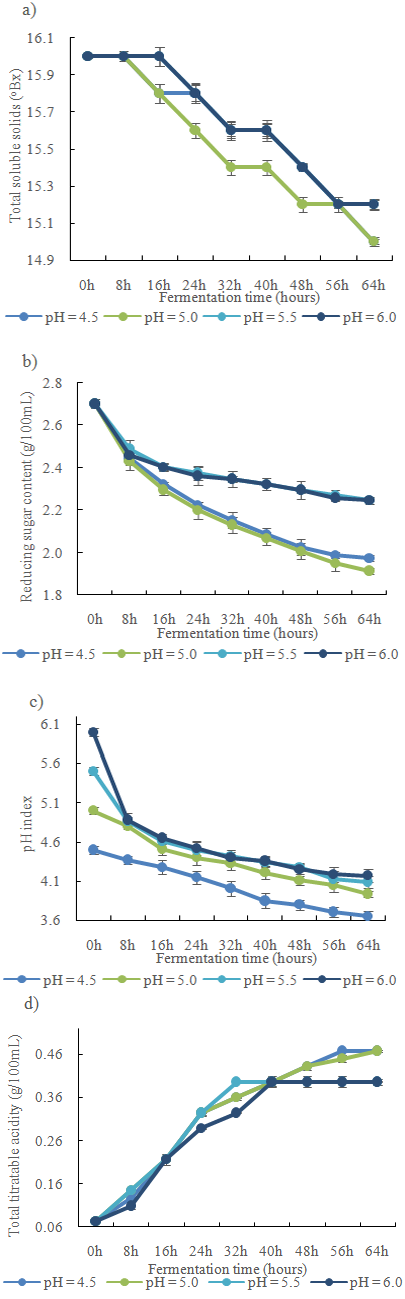
Results on the influence of initial pH value when fermenting with L. plantarum strain are presented in Figure 3. It can be seen that at pH 4.5 and 5.0, the sample supplemented with L. plantarum bacteria showed the highest increase in TTA from 0.07 ± 0.00 g/100mL to 0.47 ± 0.02 g/100mL. Moreover, the highest decrease in reducing sugars content of 0.8 g/100ml was observed when compared to other samples at pH 5.5 and 6.0. This result indicated that the L. plantarum has more effective fermentation activity and a good competitive advantage at pH 4.5 and 5.0 medium as low pH inhibits the growth of spoilage organisms but creates a favorable environment for the growth of the desired organism. This result agrees with the study of Dimitrovski et al. (2015) which showed that at an initial pH of 5.1, the L. plantarum strain grew most intensive 42, reaching a density of 1.3x10¹⁰ CFU /mL in just 11 hours from the start of fermentation when compared to pH 3.5. and 4.2.
From Table 4, fermented samples with pH 5.0 had the highest acceptance score (7.78 ± 0.71). This sample has a harmonious and balanced flavor, while giving the product a better visual appearance and color. The pH 4.5 sample also gave relatively high overall acceptability (7.52 ± 0.54), but it was still slightly lower than pH 5.0, perhaps due to the imbalance between acid and reducing sugars content. Meanwhile, samples with pH 5.5 and 6.0 showed no statistical difference in acceptance level. Therefore, pH 5.0 is the most suitable for soursop juice fermentation.

From the results obtained, the initial pH of the fruit juice at 4.5 and 5.0 is more suitable for fermenting soursop due to many benefits such as supporting the development of L. plantarum strains as well as helping to maintain color and condition of fermented products. Therefore, the pH of 5.0 with slightly higher sensory score was chosen to imply the next experiment.
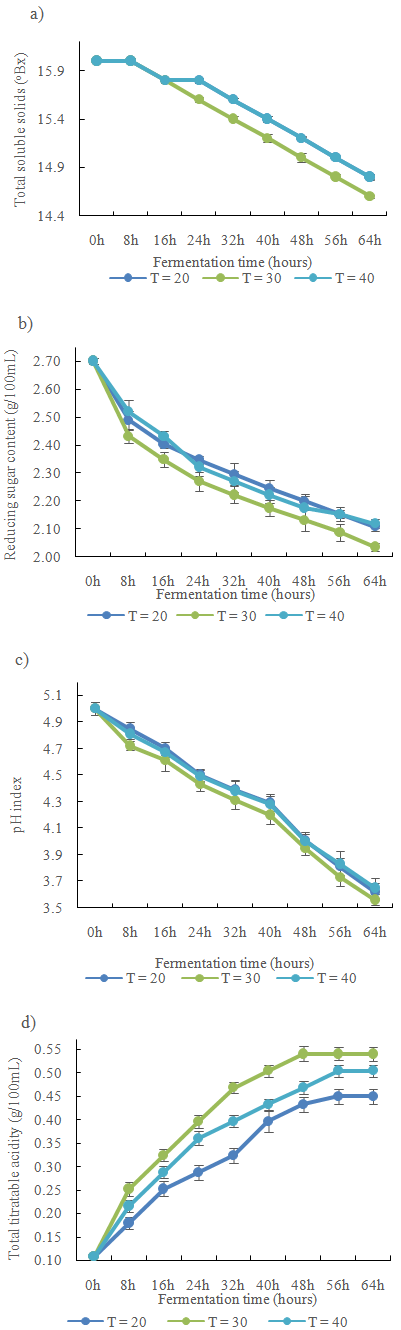
3.4. Effect of Temperature on the Process of Soursop Juice FermentationAccording to the results from Figure 4, specifically, after 64 hours of fermentation, the total titratable acidity increased the most (from 0.11 g/100mL to 0.50 g/100mL) while the reducing sugars content decreased the most (from 2.70 g/100mL to 2.04 g/100mL) in the sample fermented at 30°C by L. plantarum.
Similarly to the change in reducing sugar content, pH index also decreases the highest amount in the sample fermented at 30°C, from 5.0 to 3.65. The highest reduction in total soluble solids content (1.2 °Bx) was recorded when fermenting the soursop juice at 30°C.
Higher fermentation temperatures lead to faster fermentation and thus increase production efficiency. However, total titratable acidity and pH index should be closely monitored since they influence astringency and sourness, with higher intensities negatively impacting preference sensory scores.

Therefore, based on the sensory evaluation in Table 5, the fermentation temperature of 30°C is considered the most suitable since this sample was ranked at highest overall acceptability (7.53 ± 0.55).The results show an agreement with the study of Rafiq et al. (2016), which concluded that a fermentation temperature of 30°C is the most suitable for fruit juice fermentation with common LAB strains 43 including L. acidophillus, L. plantarum, L. casei and Bifidum longum.
3.5. Effect of Fermentation Time on the Process of Soursop Juice FermentationFrom the results, the majority of the critical changes in physico-chemical parameters occurred over a period of 30 up to 48 hours of fermentation. Extending the fermentation procedure (from 48 to 64 hours) did not yield significant results 44.
Specifically, TTA after 48 hours of fermentation reached 0.50 ± 0.01 g/100mL, 56 hours reached 0.52 ± 0.02 g/100mL and 64 hours was highest at 0.54 ± 0.02 g/100mL. However, these fermentation durations are not statistically different. Regarding TSS and reducing sugars, prolonged fermentation time reduces these values, creating a statistical difference between the 2 time points 48 hours and 64 hours while the 56 hours mark no significant difference from the others.
The only physico-chemical parameter that makes a significant difference when changing the fermentation time is the pH value. The decrease in pH value is due to the fermentation mechanism of LAB to produce lactic acid. During fermentation, lactic acid will be decomposed into H+ ions and CH3CHOHCOO- ions, thus the longer the fermentation time, the higher H+ ions content be released, causing the reduction in pH 45. Fermenting soursop juice for 48 hours reaches a pH of 3.95 ± 0.03, 56 hours reaches 3.73 ± 0.03 and 64 hours reaches 3.55 ± 0.03.
From Table 6, there is no statistically significant difference with the three different fermentation time points. However, the 48-hour fermentation time is still the time point having a slightly higher sensory score than the rest (7.69 ± 0.56). Therefore, it can be concluded that a 48-hour fermentation time is the most suitable for fermenting soursop juice with L. plantarum strain, providing feasible sensory results as well as shortening product fermentation time.
The sousop fruit juice was then fermented under optimum parameters (adding 107 CFU/mL of L. plantarum LB-1, SJ:SS ratio of 1:2; TSS 16°Bx; pH 5.0; 48-hour fermentation time at 30°C). According to the results from Table 2, the pH of soursop juice decreased significantly (P<0.05) from 5.0 to 3.95 ± 0.13 after the fermentation process while TSS reduced from 16 oBx to 14.97 ± 0.47 oBx. This is a consequence of the metabolism process of converting reducing sugars into lactic acid by L. plantarum. Along with this process, an increase in TTA was also observed, to 0.54 ± 0.02 g/100mL, and there is a decrease in reducing sugars content to 2.13 ± 0.04 g/100mL.
Soursop fruit is a climatary fruit that has been shown to have quite high vitamin C (30.54 ± 0.89 mg/100mL) and phenolic content (172.62 ± 8.16 mg GAE /100mL). As many studies have proven, lactic fermentation can help increase phenolic content in general and increase antioxidant capacity in particular. The enzymes produced by L. plantarum bacteria such as ferulic esterase which can catalyze the release of ferulic acid from conjugated phenolic acid and tannase which can convert catechin and gallic acid into protocatechin acid 46. The release and transformation of phenolic substances is the reason for improving the antioxidant activity of fruit juice products after fermentation with lactic acid bacteria.
The microbiological quality of the fermented soursop juice with L. plantarum is shown in Table 7. After a 48-hour fermentation process with L. plantarum strain, the lactic bacteria content accounted for 6.35×10⁷ CFU/mL in the final product. With a content of probiotic LAB over than 106 CFU/mL, the soursop juice product fermented with L. plantarum LB-1 strain may have the biological value of a probiotic product 35. The coliform and mold were undetected in the fermented soursop juice. Whereas yeast count in the product was below the permissible level for beverage, thus it fulfilled the microbiological safety requirements.
The optimum condition for fermentation of sousop fruit juice was obtained when adding 107 CFU/mL of L. plantarum LB-1, SJ:SS ratio of 1:2; TSS 16°Bx; pH 5.0; 48-hour fermentation time at 30°C. Conducting fermentation at these parameters, the final product achieved TTA of 0.54 ± 0.02 %, reducing sugars of 2.13 ± 0.04 g/100mL, TSS of 14.97 ± 0.47 oBx, pH 3.95 ± 0.13, 30.54 ± 0.89 mg/100mL vitamin C and total phenolic content of 172.62 ± 8.16 mg GAE /100mL. The coliform and mold were not detected in the fermented soursop juice, while the yeast count was below the permissible level for beverage. The lactic bacteria content accounted for 6.35×10⁷ CFU/mL and the overall acceptability was 7.69 ± 0.56 over the 9-point hedonic scale.
The authors gratefully acknowledge Hanoi University of Science and Technology (HUST) for facilitating this study and research team for the support.
This research is funded by Hanoi University of Science and Technology (HUST) under project number T2022-PC-099.
The authors declare no conflict of interest.
SJ: soursop juice
SS: sugar syrup
TSS: total soluble solids
TTA: total titratable acidity
GAE: Gallic acid equivalent
| [1] | A. C. de Q. Pinto et al., Annona species. International Centre for Underutilised Crops, University of Southampton, 2005. | ||
| In article | |||
| [2] | P. Padmanabhan and G. Paliyath, “Annonaceous Fruits,” Encyclopedia of Food and Health, pp. 169–173, Jan. 2016. | ||
| In article | View Article | ||
| [3] | N. D. Vu, T. K. L. Doan, T. P. Dao, T. Y. N. Tran, and N. Q. Nguyen, “Soursop fruit supply chains: Critical stages impacting fruit quality,” J Agric Food Res, vol. 14, p. 100754, Dec. 2023. | ||
| In article | View Article | ||
| [4] | N. Badrie and A. G. Schauss, “Soursop (Annona muricata L.): Composition, Nutritional Value, Medicinal Uses, and Toxicology,” Bioactive Foods in Promoting Health, pp. 621–643, Jan. 2010. | ||
| In article | View Article | ||
| [5] | S. B. Patel and J. Patel, “A review on a miracle fruits of Annona muricata,” J Pharmacogn Phytochem, 2016. | ||
| In article | |||
| [6] | S. Z. Moghadamtousi, M. Fadaeinasab, S. Nikzad, G. Mohan, H. M. Ali, and H. A. Kadir, “Annona muricata (Annonaceae): A Review of Its Traditional Uses, Isolated Acetogenins and Biological Activities,” Int J Mol Sci, vol. 16, no. 7, pp. 15625–15658, Jul. 2015. | ||
| In article | View Article PubMed | ||
| [7] | S. B. Sanusi and M. F. Abu Bakar, “Soursop—Annona muricata,” in Exotic Fruits Reference Guide, Elsevier, 2018, pp. 391–395. | ||
| In article | View Article | ||
| [8] | J. A. Hasrat, T. De Bruyne, J. P. De Backer, G. Vauquelin, and A. J. Vlietinck, “Isoquinoline Derivatives Isolated from the Fruit of Annona muricata as 5-HTergic 5-HT1A Receptor Agonists in Rats: Unexploited Antidepressive (Lead) Products,” Journal of Pharmacy and Pharmacology, vol. 49, no. 11, pp. 1145–1149, Apr. 2011. | ||
| In article | View Article PubMed | ||
| [9] | M. Isabelle, B. L. Lee, M. T. Lim, W. P. Koh, D. Huang, and C. N. Ong, “Antioxidant activity and profiles of common fruits in Singapore,” Food Chem, vol. 123, no. 1, pp. 77–84, Nov. 2010. | ||
| In article | View Article | ||
| [10] | S. Sun, J. Liu, H. Kadouh, X. Sun, and K. Zhou, “Three new anti-proliferative Annonaceous acetogenins with mono-tetrahydrofuran ring from graviola fruit (Annona muricata),” Bioorg Med Chem Lett, vol. 24, no. 12, pp. 2773–2776, Jun. 2014. | ||
| In article | View Article PubMed | ||
| [11] | Y. A. Palomino-Hermosillo et al., “Transcriptome Analysis of Soursop (Annona muricata L.) Fruit under Postharvest Storage Identifies Genes Families Involved in Ripening,” Plants, vol. 11, no. 14, Jul. 2022. | ||
| In article | View Article PubMed | ||
| [12] | T. Lan et al., “Optimization of strains for fermentation of kiwifruit juice and effects of mono- and mixed culture fermentation on its sensory and aroma profiles,” Food Chem X, vol. 17, p. 100595, Mar. 2023. | ||
| In article | View Article PubMed | ||
| [13] | S. Plessas, “Advancements in the use of fermented fruit juices by lactic acid bacteria as functional foods: Prospects and challenges of Lactiplantibacillus (Lpb.) plantarum subsp. plantarum application,” Fermentation, vol. 8, no. 1. MDPI, Jan. 01, 2022. | ||
| In article | View Article | ||
| [14] | B. J. Muhialdin, H. Kadum, and A. S. Meor Hussin, “Metabolomics profiling of fermented cantaloupe juice and the potential application to extend the shelf life of fresh cantaloupe juice for six months at 8°C,” Food Control, vol. 120, p. 107555, Feb. 2021. | ||
| In article | View Article | ||
| [15] | E. Valero-Cases, N. Nuncio-Jáuregui, and M. J. Frutos, “Influence of Fermentation with Different Lactic Acid Bacteria and in Vitro Digestion on the Biotransformation of Phenolic Compounds in Fermented Pomegranate Juices,” J Agric Food Chem, vol. 65, no. 31, pp. 6488–6496, Aug. 2017. | ||
| In article | View Article PubMed | ||
| [16] | T. Li, T. Jiang, N. Liu, C. Wu, H. Xu, and H. Lei, “Biotransformation of phenolic profiles and improvement of antioxidant capacities in jujube juice by select lactic acid bacteria,” Food Chem, vol. 339, p. 127859, Mar. 2021. | ||
| In article | View Article PubMed | ||
| [17] | A. Ricci, M. Cirlini, A. Levante, C. Dall’Asta, G. Galaverna, and C. Lazzi, “Volatile profile of elderberry juice: Effect of lactic acid fermentation using L. plantarum, L. rhamnosus and L. casei strains,” Food Research International, vol. 105, pp. 412–422, Mar. 2018. | ||
| In article | View Article PubMed | ||
| [18] | E. de Godoy Alves Filho et al., “Chemometric evaluation of the volatile profile of probiotic melon and probiotic cashew juice,” Food Research International, vol. 99, pp. 461–468, Sep. 2017. | ||
| In article | View Article PubMed | ||
| [19] | R. Di Cagno, P. Filannino, and M. Gobbetti, “Lactic acid fermentation drives the optimal volatile flavor-aroma profile of pomegranate juice,” Int J Food Microbiol, vol. 248, pp. 56–62, May 2017. | ||
| In article | View Article PubMed | ||
| [20] | C. Chen, Y. Lu, H. Yu, Z. Chen, and H. Tian, “Influence of 4 lactic acid bacteria on the flavor profile of fermented apple juice,” Food Biosci, vol. 27, pp. 30–36, Feb. 2019. | ||
| In article | View Article | ||
| [21] | T. Aziz et al., “Functional Annotation of Lactiplantibacillus plantarum 13-3 as a Potential Starter Probiotic Involved in the Food Safety of Fermented Products,” Molecules, vol. 27, no. 17, Sep. 2022. | ||
| In article | View Article PubMed | ||
| [22] | P. Filannino et al., “Metabolic responses of Lactobacillus plantarum strains during fermentation and storage of vegetable and fruit juices,” Appl Environ Microbiol, vol. 80, no. 7, pp. 2206–2215, 2014. | ||
| In article | View Article PubMed | ||
| [23] | Z. Li, J. Teng, Y. Lyu, X. Hu, Y. Zhao, and M. Wang, “Enhanced Antioxidant Activity for Apple Juice Fermented with Lactobacillus plantarum ATCC14917,” Molecules 2019, vol. 24, no. 1, p. 51, Dec. 2018. | ||
| In article | View Article PubMed | ||
| [24] | I. Mantzourani et al., “Potential of the Probiotic Lactobacillus Plantarum ATCC 14917 Strain to Produce Functional Fermented Pomegranate Juice,” Foods 2019, Vol. 8, Page 4, vol. 8, no. 1, p. 4, Dec. 2018. | ||
| In article | View Article PubMed | ||
| [25] | I. Mantzourani et al., “Production of a Novel Functional Fruit Beverage Consisting of Cornelian Cherry Juice and Probiotic Bacteria,” Antioxidants 2018, Vol. 7, Page 163, vol. 7, no. 11, p. 163, Nov. 2018. | ||
| In article | View Article PubMed | ||
| [26] | S. M. B. Hashemi, A. Mousavi Khaneghah, F. J. Barba, Z. Nemati, S. Sohrabi Shokofti, and F. Alizadeh, “Fermented sweet lemon juice (Citrus limetta) using Lactobacillus plantarum LS5: Chemical composition, antioxidant and antibacterial activities,” J Funct Foods, vol. 38, pp. 409–414, Nov. 2017. | ||
| In article | View Article | ||
| [27] | E. Kwaw et al., “Effect of lactobacillus strains on phenolic profile, color attributes and antioxidant activities of lactic-acid-fermented mulberry juice,” Food Chem, vol. 250, pp. 148–154, Jun. 2018. | ||
| In article | View Article PubMed | ||
| [28] | T. Li, T. Jiang, N. Liu, C. Wu, H. Xu, and H. Lei, “Biotransformation of phenolic profiles and improvement of antioxidant capacities in jujube juice by select lactic acid bacteria,” Food Chem, vol. 339, p. 127859, Mar. 2021. | ||
| In article | View Article PubMed | ||
| [29] | T. Hanh Nguyen, N. Cham Nguyen, T. Trang Nguyen, and V. Hung Nguyen, “Low-alcoholic Fermented Beverage from Soursop (Annona muricata L.) by Saccharomyces cerevisiae and Saccharomyces bayanus,” Journal of Food and Nutrition Research, vol. 12, no. 5, pp. 278–285, May 2024. | ||
| In article | View Article | ||
| [30] | D. D. Frey and H. Wang, “Adaptive One-Factor-at-a-Time Experimentation and Expected Value of Improvement,” Technometrics, vol. 48, no. 3, pp. 418–431, Aug. 2006. | ||
| In article | View Article | ||
| [31] | Association of Official Analytical Chemist (AOAC), “Official Methods of Analysis,” 2010. | ||
| In article | |||
| [32] | A. V. Gusakov, E. G. Kondratyeva, and A. P. Sinitsyn, “Comparison of Two Methods for Assaying Reducing Sugars in the Determination of Carbohydrase Activities,” Int J Anal Chem, vol. 2011, pp. 1–4, 2011. | ||
| In article | View Article PubMed | ||
| [33] | M. Obanda, P. O. Owuor, and S. J. Taylor, “Flavanol Composition and Caffeine Content of Green Leaf as Quality Potential Indicators of Kenyan Black Teas,” J Sci Food Agric, vol. 74, pp. 209–215, 1997. | ||
| In article | View Article | ||
| [34] | N. T. Hanh et al., “Removal of tannins from cashew (Anacardium occidentale L.) apple juice in Binh Phuoc (Viet Nam) by using enzymatic method,” Journal of Law and Sustainable Development, 2023. | ||
| In article | View Article | ||
| [35] | S. Sabrina Hassan, I. Nabihah Ahmad Fadzil, H. Nazirah Mohammed Yazid, A. Yusoff, and K. Abdul Khalil, “Effects of double emulsification on Lactobacillus plantarum NBRC 3070 stability and physicochemical properties of soursop juice during storage,” AsPac J. Mol. Biol. Biotechnol, vol. 28, no. 4, pp. 11–25, 2020. | ||
| In article | View Article | ||
| [36] | T. Turgut and S. Cakmakci, “Probiotic Strawberry Yogurts: Microbiological, Chemical and Sensory Properties,” Probiotics Antimicrob Proteins, vol. 10, no. 1, pp. 64–70, Mar. 2018. | ||
| In article | View Article PubMed | ||
| [37] | P. G. I. Dias and M. C. Niroshan Jayasooriya, “Enhancing the Physiochemical and Antioxidant Properties of Stirred Yoghurt by Incorporating Soursop (Annona Muricata),” International Journal of Life Sciences Research, vol. 5, pp. 69–77. | ||
| In article | |||
| [38] | P. T. Huan, N. M. Hien, and N. H. T. Anh, “Optimization of alcoholic fermentation of dragon fruit juice using response surface methodology,” Food Res, vol. 4, no. 5, pp. 1529–1536, Oct. 2020. | ||
| In article | View Article | ||
| [39] | J. Yang et al., “Fermentation and Storage Characteristics of ‘Fuji’ Apple Juice Using Lactobacillus acidophilus, Lactobacillus casei and Lactobacillus plantarum: Microbial Growth, Metabolism of Bioactives and in vitro Bioactivities,” Front Nutr, vol. 9, p. 833906, Feb. 2022. | ||
| In article | View Article PubMed | ||
| [40] | S. C. Akpeji, B. Christianah Adebayo-Tayo, J. F. Sanusi, and S. O. Alao, “Production and Properties of Probioticic Soursop Juice Using Pediococcus pentosaceus LBF2 as Starter,” International Journal of Biochemistry Research & Review, vol. 17, no. 2, pp. 1–10, 2017. | ||
| In article | View Article | ||
| [41] | S. M. B. Hashemi and D. Jafarpour, “Lactic acid fermentation of guava juice: Evaluation of nutritional and bioactive properties, enzyme (α‐amylase, α‐glucosidase, and angiotensin‐converting enzyme) inhibition abilities, and anti-inflammatory activities,” Food Sci Nutr, vol. 11, no. 12, p. 7638, Dec. 2023. | ||
| In article | View Article PubMed | ||
| [42] | D. Dimitrovski, E. Velickova, T. Langerholc, and E. Winkelhausen, “Apple juice as a medium for fermentation by the probiotic Lactobacillus plantarum PCS 26 strain,” Ann Microbiol, vol. 65, no. 4, pp. 2161–2170, Dec. 2015. | ||
| In article | View Article | ||
| [43] | S. Rafiq et al., “Development of Probiotic Carrot Juice,” J Nutr Food Sci, vol. 6, no. 4, 2016. | ||
| In article | View Article | ||
| [44] | A. A. A. El-Sayed, M. A. Rabie, S. M. Abu El-Maaty, and S. E. A. El-Nemr, “Fermentation of yellow carrot juice (Daucus carota L.) via probiotic lactic acid bacteria during storage,” Zagazig Journal of Agricultural Research, vol. 43, no. 5, pp. 1659–1671, Sep. 2016. | ||
| In article | View Article | ||
| [45] | T. Alfi Nahdiyah and P. Retno Wikandari, “The Effect of Fermentation Time on the Quality of Probiotic Products from Jackfruit Seed Extract with Lactobacillus plantarum B1765 as The Starter Culture Bacteria,” International Journal of Progressive Sciences and Technologies (IJPSAT, vol. 33, no. 1, pp. 456–463, 2022. | ||
| In article | |||
| [46] | S. Saud, T. Xiaojuan, and S. Fahad, “The consequences of fermentation metabolism on the qualitative qualities and biological activity of fermented fruit and vegetable juices,” Food Chem X, vol. 21, Mar. 2024. | ||
| In article | View Article PubMed | ||
Published with license by Science and Education Publishing, Copyright © 2024 Thi Hanh Nguyen, Ngoc Cham Nguyen, Thi Trang Nguyen and Van Hung Nguyen
 This work is licensed under a Creative Commons Attribution 4.0 International License. To view a copy of this license, visit
https://creativecommons.org/licenses/by/4.0/
This work is licensed under a Creative Commons Attribution 4.0 International License. To view a copy of this license, visit
https://creativecommons.org/licenses/by/4.0/
| [1] | A. C. de Q. Pinto et al., Annona species. International Centre for Underutilised Crops, University of Southampton, 2005. | ||
| In article | |||
| [2] | P. Padmanabhan and G. Paliyath, “Annonaceous Fruits,” Encyclopedia of Food and Health, pp. 169–173, Jan. 2016. | ||
| In article | View Article | ||
| [3] | N. D. Vu, T. K. L. Doan, T. P. Dao, T. Y. N. Tran, and N. Q. Nguyen, “Soursop fruit supply chains: Critical stages impacting fruit quality,” J Agric Food Res, vol. 14, p. 100754, Dec. 2023. | ||
| In article | View Article | ||
| [4] | N. Badrie and A. G. Schauss, “Soursop (Annona muricata L.): Composition, Nutritional Value, Medicinal Uses, and Toxicology,” Bioactive Foods in Promoting Health, pp. 621–643, Jan. 2010. | ||
| In article | View Article | ||
| [5] | S. B. Patel and J. Patel, “A review on a miracle fruits of Annona muricata,” J Pharmacogn Phytochem, 2016. | ||
| In article | |||
| [6] | S. Z. Moghadamtousi, M. Fadaeinasab, S. Nikzad, G. Mohan, H. M. Ali, and H. A. Kadir, “Annona muricata (Annonaceae): A Review of Its Traditional Uses, Isolated Acetogenins and Biological Activities,” Int J Mol Sci, vol. 16, no. 7, pp. 15625–15658, Jul. 2015. | ||
| In article | View Article PubMed | ||
| [7] | S. B. Sanusi and M. F. Abu Bakar, “Soursop—Annona muricata,” in Exotic Fruits Reference Guide, Elsevier, 2018, pp. 391–395. | ||
| In article | View Article | ||
| [8] | J. A. Hasrat, T. De Bruyne, J. P. De Backer, G. Vauquelin, and A. J. Vlietinck, “Isoquinoline Derivatives Isolated from the Fruit of Annona muricata as 5-HTergic 5-HT1A Receptor Agonists in Rats: Unexploited Antidepressive (Lead) Products,” Journal of Pharmacy and Pharmacology, vol. 49, no. 11, pp. 1145–1149, Apr. 2011. | ||
| In article | View Article PubMed | ||
| [9] | M. Isabelle, B. L. Lee, M. T. Lim, W. P. Koh, D. Huang, and C. N. Ong, “Antioxidant activity and profiles of common fruits in Singapore,” Food Chem, vol. 123, no. 1, pp. 77–84, Nov. 2010. | ||
| In article | View Article | ||
| [10] | S. Sun, J. Liu, H. Kadouh, X. Sun, and K. Zhou, “Three new anti-proliferative Annonaceous acetogenins with mono-tetrahydrofuran ring from graviola fruit (Annona muricata),” Bioorg Med Chem Lett, vol. 24, no. 12, pp. 2773–2776, Jun. 2014. | ||
| In article | View Article PubMed | ||
| [11] | Y. A. Palomino-Hermosillo et al., “Transcriptome Analysis of Soursop (Annona muricata L.) Fruit under Postharvest Storage Identifies Genes Families Involved in Ripening,” Plants, vol. 11, no. 14, Jul. 2022. | ||
| In article | View Article PubMed | ||
| [12] | T. Lan et al., “Optimization of strains for fermentation of kiwifruit juice and effects of mono- and mixed culture fermentation on its sensory and aroma profiles,” Food Chem X, vol. 17, p. 100595, Mar. 2023. | ||
| In article | View Article PubMed | ||
| [13] | S. Plessas, “Advancements in the use of fermented fruit juices by lactic acid bacteria as functional foods: Prospects and challenges of Lactiplantibacillus (Lpb.) plantarum subsp. plantarum application,” Fermentation, vol. 8, no. 1. MDPI, Jan. 01, 2022. | ||
| In article | View Article | ||
| [14] | B. J. Muhialdin, H. Kadum, and A. S. Meor Hussin, “Metabolomics profiling of fermented cantaloupe juice and the potential application to extend the shelf life of fresh cantaloupe juice for six months at 8°C,” Food Control, vol. 120, p. 107555, Feb. 2021. | ||
| In article | View Article | ||
| [15] | E. Valero-Cases, N. Nuncio-Jáuregui, and M. J. Frutos, “Influence of Fermentation with Different Lactic Acid Bacteria and in Vitro Digestion on the Biotransformation of Phenolic Compounds in Fermented Pomegranate Juices,” J Agric Food Chem, vol. 65, no. 31, pp. 6488–6496, Aug. 2017. | ||
| In article | View Article PubMed | ||
| [16] | T. Li, T. Jiang, N. Liu, C. Wu, H. Xu, and H. Lei, “Biotransformation of phenolic profiles and improvement of antioxidant capacities in jujube juice by select lactic acid bacteria,” Food Chem, vol. 339, p. 127859, Mar. 2021. | ||
| In article | View Article PubMed | ||
| [17] | A. Ricci, M. Cirlini, A. Levante, C. Dall’Asta, G. Galaverna, and C. Lazzi, “Volatile profile of elderberry juice: Effect of lactic acid fermentation using L. plantarum, L. rhamnosus and L. casei strains,” Food Research International, vol. 105, pp. 412–422, Mar. 2018. | ||
| In article | View Article PubMed | ||
| [18] | E. de Godoy Alves Filho et al., “Chemometric evaluation of the volatile profile of probiotic melon and probiotic cashew juice,” Food Research International, vol. 99, pp. 461–468, Sep. 2017. | ||
| In article | View Article PubMed | ||
| [19] | R. Di Cagno, P. Filannino, and M. Gobbetti, “Lactic acid fermentation drives the optimal volatile flavor-aroma profile of pomegranate juice,” Int J Food Microbiol, vol. 248, pp. 56–62, May 2017. | ||
| In article | View Article PubMed | ||
| [20] | C. Chen, Y. Lu, H. Yu, Z. Chen, and H. Tian, “Influence of 4 lactic acid bacteria on the flavor profile of fermented apple juice,” Food Biosci, vol. 27, pp. 30–36, Feb. 2019. | ||
| In article | View Article | ||
| [21] | T. Aziz et al., “Functional Annotation of Lactiplantibacillus plantarum 13-3 as a Potential Starter Probiotic Involved in the Food Safety of Fermented Products,” Molecules, vol. 27, no. 17, Sep. 2022. | ||
| In article | View Article PubMed | ||
| [22] | P. Filannino et al., “Metabolic responses of Lactobacillus plantarum strains during fermentation and storage of vegetable and fruit juices,” Appl Environ Microbiol, vol. 80, no. 7, pp. 2206–2215, 2014. | ||
| In article | View Article PubMed | ||
| [23] | Z. Li, J. Teng, Y. Lyu, X. Hu, Y. Zhao, and M. Wang, “Enhanced Antioxidant Activity for Apple Juice Fermented with Lactobacillus plantarum ATCC14917,” Molecules 2019, vol. 24, no. 1, p. 51, Dec. 2018. | ||
| In article | View Article PubMed | ||
| [24] | I. Mantzourani et al., “Potential of the Probiotic Lactobacillus Plantarum ATCC 14917 Strain to Produce Functional Fermented Pomegranate Juice,” Foods 2019, Vol. 8, Page 4, vol. 8, no. 1, p. 4, Dec. 2018. | ||
| In article | View Article PubMed | ||
| [25] | I. Mantzourani et al., “Production of a Novel Functional Fruit Beverage Consisting of Cornelian Cherry Juice and Probiotic Bacteria,” Antioxidants 2018, Vol. 7, Page 163, vol. 7, no. 11, p. 163, Nov. 2018. | ||
| In article | View Article PubMed | ||
| [26] | S. M. B. Hashemi, A. Mousavi Khaneghah, F. J. Barba, Z. Nemati, S. Sohrabi Shokofti, and F. Alizadeh, “Fermented sweet lemon juice (Citrus limetta) using Lactobacillus plantarum LS5: Chemical composition, antioxidant and antibacterial activities,” J Funct Foods, vol. 38, pp. 409–414, Nov. 2017. | ||
| In article | View Article | ||
| [27] | E. Kwaw et al., “Effect of lactobacillus strains on phenolic profile, color attributes and antioxidant activities of lactic-acid-fermented mulberry juice,” Food Chem, vol. 250, pp. 148–154, Jun. 2018. | ||
| In article | View Article PubMed | ||
| [28] | T. Li, T. Jiang, N. Liu, C. Wu, H. Xu, and H. Lei, “Biotransformation of phenolic profiles and improvement of antioxidant capacities in jujube juice by select lactic acid bacteria,” Food Chem, vol. 339, p. 127859, Mar. 2021. | ||
| In article | View Article PubMed | ||
| [29] | T. Hanh Nguyen, N. Cham Nguyen, T. Trang Nguyen, and V. Hung Nguyen, “Low-alcoholic Fermented Beverage from Soursop (Annona muricata L.) by Saccharomyces cerevisiae and Saccharomyces bayanus,” Journal of Food and Nutrition Research, vol. 12, no. 5, pp. 278–285, May 2024. | ||
| In article | View Article | ||
| [30] | D. D. Frey and H. Wang, “Adaptive One-Factor-at-a-Time Experimentation and Expected Value of Improvement,” Technometrics, vol. 48, no. 3, pp. 418–431, Aug. 2006. | ||
| In article | View Article | ||
| [31] | Association of Official Analytical Chemist (AOAC), “Official Methods of Analysis,” 2010. | ||
| In article | |||
| [32] | A. V. Gusakov, E. G. Kondratyeva, and A. P. Sinitsyn, “Comparison of Two Methods for Assaying Reducing Sugars in the Determination of Carbohydrase Activities,” Int J Anal Chem, vol. 2011, pp. 1–4, 2011. | ||
| In article | View Article PubMed | ||
| [33] | M. Obanda, P. O. Owuor, and S. J. Taylor, “Flavanol Composition and Caffeine Content of Green Leaf as Quality Potential Indicators of Kenyan Black Teas,” J Sci Food Agric, vol. 74, pp. 209–215, 1997. | ||
| In article | View Article | ||
| [34] | N. T. Hanh et al., “Removal of tannins from cashew (Anacardium occidentale L.) apple juice in Binh Phuoc (Viet Nam) by using enzymatic method,” Journal of Law and Sustainable Development, 2023. | ||
| In article | View Article | ||
| [35] | S. Sabrina Hassan, I. Nabihah Ahmad Fadzil, H. Nazirah Mohammed Yazid, A. Yusoff, and K. Abdul Khalil, “Effects of double emulsification on Lactobacillus plantarum NBRC 3070 stability and physicochemical properties of soursop juice during storage,” AsPac J. Mol. Biol. Biotechnol, vol. 28, no. 4, pp. 11–25, 2020. | ||
| In article | View Article | ||
| [36] | T. Turgut and S. Cakmakci, “Probiotic Strawberry Yogurts: Microbiological, Chemical and Sensory Properties,” Probiotics Antimicrob Proteins, vol. 10, no. 1, pp. 64–70, Mar. 2018. | ||
| In article | View Article PubMed | ||
| [37] | P. G. I. Dias and M. C. Niroshan Jayasooriya, “Enhancing the Physiochemical and Antioxidant Properties of Stirred Yoghurt by Incorporating Soursop (Annona Muricata),” International Journal of Life Sciences Research, vol. 5, pp. 69–77. | ||
| In article | |||
| [38] | P. T. Huan, N. M. Hien, and N. H. T. Anh, “Optimization of alcoholic fermentation of dragon fruit juice using response surface methodology,” Food Res, vol. 4, no. 5, pp. 1529–1536, Oct. 2020. | ||
| In article | View Article | ||
| [39] | J. Yang et al., “Fermentation and Storage Characteristics of ‘Fuji’ Apple Juice Using Lactobacillus acidophilus, Lactobacillus casei and Lactobacillus plantarum: Microbial Growth, Metabolism of Bioactives and in vitro Bioactivities,” Front Nutr, vol. 9, p. 833906, Feb. 2022. | ||
| In article | View Article PubMed | ||
| [40] | S. C. Akpeji, B. Christianah Adebayo-Tayo, J. F. Sanusi, and S. O. Alao, “Production and Properties of Probioticic Soursop Juice Using Pediococcus pentosaceus LBF2 as Starter,” International Journal of Biochemistry Research & Review, vol. 17, no. 2, pp. 1–10, 2017. | ||
| In article | View Article | ||
| [41] | S. M. B. Hashemi and D. Jafarpour, “Lactic acid fermentation of guava juice: Evaluation of nutritional and bioactive properties, enzyme (α‐amylase, α‐glucosidase, and angiotensin‐converting enzyme) inhibition abilities, and anti-inflammatory activities,” Food Sci Nutr, vol. 11, no. 12, p. 7638, Dec. 2023. | ||
| In article | View Article PubMed | ||
| [42] | D. Dimitrovski, E. Velickova, T. Langerholc, and E. Winkelhausen, “Apple juice as a medium for fermentation by the probiotic Lactobacillus plantarum PCS 26 strain,” Ann Microbiol, vol. 65, no. 4, pp. 2161–2170, Dec. 2015. | ||
| In article | View Article | ||
| [43] | S. Rafiq et al., “Development of Probiotic Carrot Juice,” J Nutr Food Sci, vol. 6, no. 4, 2016. | ||
| In article | View Article | ||
| [44] | A. A. A. El-Sayed, M. A. Rabie, S. M. Abu El-Maaty, and S. E. A. El-Nemr, “Fermentation of yellow carrot juice (Daucus carota L.) via probiotic lactic acid bacteria during storage,” Zagazig Journal of Agricultural Research, vol. 43, no. 5, pp. 1659–1671, Sep. 2016. | ||
| In article | View Article | ||
| [45] | T. Alfi Nahdiyah and P. Retno Wikandari, “The Effect of Fermentation Time on the Quality of Probiotic Products from Jackfruit Seed Extract with Lactobacillus plantarum B1765 as The Starter Culture Bacteria,” International Journal of Progressive Sciences and Technologies (IJPSAT, vol. 33, no. 1, pp. 456–463, 2022. | ||
| In article | |||
| [46] | S. Saud, T. Xiaojuan, and S. Fahad, “The consequences of fermentation metabolism on the qualitative qualities and biological activity of fermented fruit and vegetable juices,” Food Chem X, vol. 21, Mar. 2024. | ||
| In article | View Article PubMed | ||