Bread is a popular food item consumed by humans regardless of class or status in the society. Bread is prepared predominantly of cereal flour. Potassium bromate is an alluring additive as well as an oxidizing agent which can improve bread texture and appearance. However, due to its potential toxicity it is prohibited in many countries, including the EU and Nigeria. Since previous studies have found evidence of persistent potassium bromate use in Nigeria, we wanted to ascertain the present situation in this country and, for comparison, in Finland as an EU member. To this end, 50 bread samples each were collected from bread vendors and supermarkets in Benin city, Edo state, Nigeria and from supermarkets in Helsinki, Finland. Bromate concentration was determined by two spectrophotometric methods, one based on potassium iodide and another on promethazine. In addition, total bromine concentration was analyzed in selected samples by inductively coupled plasma mass spectrometry (ICP-MS). The spectrophotometric methods yielded highly congruent data. A total of 62% and 16% of Nigerian and Finnish bread samples, respectively, contained measurable bromate quantities. The concentrations were also much higher in Nigerian breads (up to >1000 µg/g) than the Finnish samples (up to 5.3 µg/g). Similarly, total bromine levels were about 5-fold as high in Nigerian as in Finnish bread samples (p < 0.001). These findings imply that bread consumers in Nigeria are still being exposed to potassium bromate regardless of the legislation banning its use.
Access to safe and healthy food is one of the fundamental rights of humans and thus food products should not be adulterated. Bread is one of the most popular food items that is widely consumed by all classes of people all over the world. Dough conditioners are substances which mature the flour, contribute to stabilizing the bread dough’s network, as well as increase its elastic features 1. One of them is potassium bromate (KBrO₃). Potassium bromate has been used by the pastries and baking industry for a very long time. It is a white crystalline solid with no flavor and odor and it is easily soluble in water. This additive makes the bread stronger, increases its volume and enhances its texture 2, 3, 4. It is assumed that in baked products, toxic potassium bromate gets reduced to potassium bromide (KBr) which is considered harmless in the final baked product 1, 5.
However, if a large amount of potassium bromate is used or if the bread is baked for a short period of time, or in situations where the process is not carried out at a sufficiently high temperature, the remaining quantity of potassium bromate can be toxic 6. Potassium bromate is a genotoxic carcinogen capable of causing renal tumors, mesothelioma, and thyroid follicular cell tumors in rats 7, 8. Studies have further shown that repeated exposure to potassium bromate can also result in other adverse health effects such as nephrotoxicity, low blood pressure, depression, thrombocytopenia, diarrhea, abdominal pain, and vomiting 9. Moreover, the major vitamins in bread including A2, B1, B2 and B3 are depleted when potassium bromate is used in excess 10.
The use of potassium bromate has been an important subject of ongoing controversy. The substance has been banned from use in food products in the United Kingdom since 1990, the EU since 1992, Canada since 1994, Sri Lanka since 2001 and China since 2005 11. As to Nigeria, in 2003 the National Agency for Food, Drug Administration and Control (NAFDAC), the agency responsible for regulating drugs, foods and chemicals in Nigeria banned the use of potassium bromate in bread on accounts of its numerous negative effects on the human body 12. However, surveillance studies conducted after the banning in Nigeria have attested to persistent presence of high bromate concentrations in bread, strongly suggestive of continuous use of potassium bromate 5, 13, 14, 15. Whether the situation is similar in the EU is unknown. Therefore, this study sought to ascertain the present levels of bromate and total bromine in commercial bread sold in Nigeria. For comparison, the situation was explored in Finland as a representative of the EU with high food hygienic standards.
All the reagents used were of analytical grade obtained from recognized chemical companies. Hydrochloric acid (HCl) was from Thermo Fisher Scientific (Waltham, Massachusetts, USA). Potassium iodide, potassium bromate as well as promethazine hydrochloride were from Sigma-Aldrich (Darmstadt, Hesse, Germany). Randomly chosen white bread samples of different brands were purchased from bread vendors and supermarkets in Benin city, Edo state, Nigeria and from supermarkets in Helsinki, Finland (50 samples each from both cities). The white bread samples acquired from Benin city comprised 15 samples of oat bread, 15 samples of wheat bread, 10 samples of multigrain bread and 10 samples of whole grain (barley) bread. Of the Finnish bread samples, 15 samples were oat bread, 13 wheat bread, 10 multigrain bread and 12 whole grain (wheat) bread.
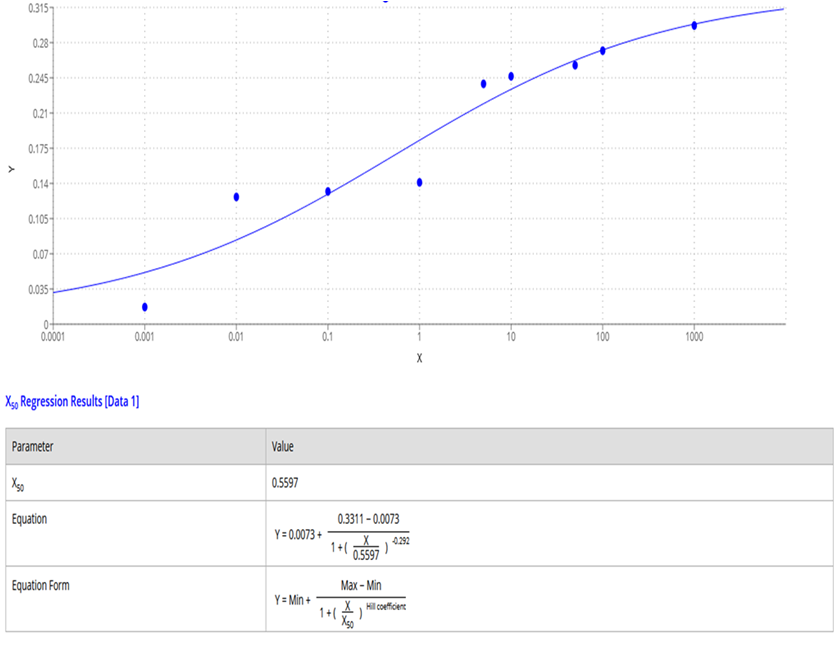
2.2. Spectrophotometric AnalysisTwo independent spectrophotometric methods were employed in bromate analysis: one relying on the use of promethazine (PTZ) and another utilizing potassium iodide (KI). In both, the calibration curves were prepared with a progressive dilution series of potassium bromate. The concentrations thus obtained for bread samples were then rectified for bromate by multiplying them by 0.77 (the relative weight of BrO3 in KBrO3 molecule). The KI-based method was a slight modification of the one described in 12. In brief, 0.5% KI solution in 0.1 N hydrochloric acid was freshly prepared. 1 g of each bread sample was ground using a laboratory mortar and pestle and added into 10 ml of distilled water in a Falcon tube. The sample was homogenized using the Ultraturrax device for 1 min. The solution was allowed to stand at 28 °C for 20 min and then centrifuged at 13,000 g for 5 min. 5 ml of the supernatant was transferred into a new Falcon tube to which 5 ml of the KI solution in 0.1 N hydrochloric acid was added. The tube was closed and vortexed at high speed for ~30 s. The tube was left standing at room temperature for 10 min. The absorbance was then measured at 620 nm, and color changes were also visually assessed. To quantify the absorbance readings, a standard series ranging from 0.001 to 1000 µg/ml of potassium bromate was analyzed in duplicate. The data were plotted to generate a calibration curve. To cover the whole range of concentrations, a non-linear linear (four parameter logistic) regression was found to be best suited (Figure 1). The limit of detection (LoD) was estimated visually from the standard curve. Relative standard deviation (RSD) was obtained from back-calculated standard replicate concentrations. Recovery was determined by spiking samples of a loaf of bread with three known concentrations of potassium bromate, carrying out the analysis and calculating the ratio of observed/expected.
The PTZ-based method was conducted as described in 16 with slight modifications. In brief, 50 ml of 0.01 M PTZ hydrochloride was freshly prepared by dissolving 160.5 mg solid PTZ hydrochloride in 50 ml of distilled water. 10 ml of 12 M HCl was also freshly prepared. 1 g of each bread sample was measured.


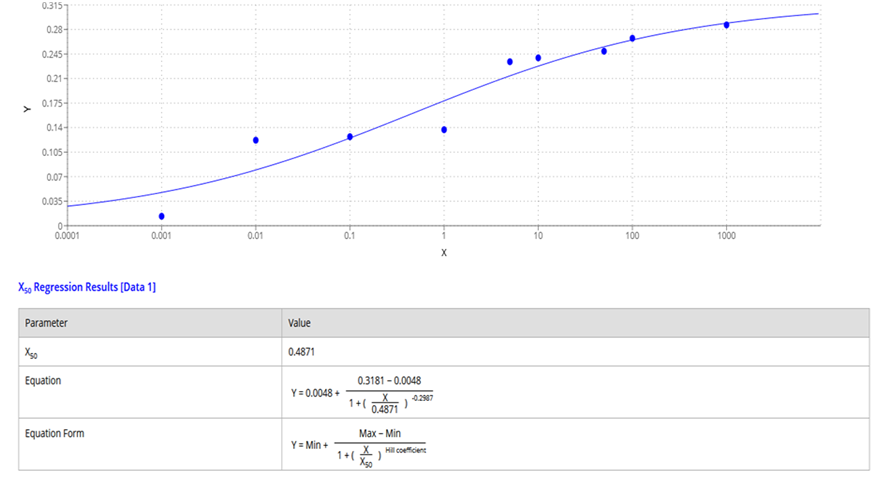
It was ground using a laboratory mortar and pestle and added into a Falcon tube containing 10 ml of distilled water. The sample was homogenized completely using an Ultraturrax device for 1 min. The solution was filtered using Whatman number 41 filter paper into a conical flask. An 8.8-ml aliquot of the filtrate solution was transferred into a 50-ml Falcon tube. 1 ml of the 0.01 M PTZ hydrochloride solution and 200 μL of 12 M HCl were added, vortexed for ~1 min, and left to stand at room temperature for 20 min. The absorbance of the pink-colored solution was measured spectrophotometrically at the wavelength of 515 nm. The standard curve proved again non-linear and was approached by four-parameter logistic regression (Figure 2).
2.3. Bromine AnalysisThe bromine concentrations of seven Finnish and eight Nigerian bread samples (different batches from those used in potassium bromate analyses) were determined in the Finnish Food Authority. Bread samples were decomposed in closed containers by a microwave treatment using 0.5% ammonium hydroxide as reagent. This procedure degrades the organic matter in the sample leaving inorganic substances dissolved in the reagent solution. The bromine concentration of the samples was then determined by inductively coupled plasma mass spectrometry (ICP-MS). The measurement uncertainty was 25% and the limit of quantification 0.50 µg/g.
2.4. StatisticsThe concordance of the concentration data obtained by the KI- and PTZ-based methods was evaluated by Spearman’s correlation analysis. Mean ranks of bromate and bromine concentrations in Finnish and Nigerian bread samples were statistically compared by the Mann-Whitney U test. Moreover, the medians of bread bromate levels were assessed by the independent samples median test. The level of significance was set at p < 0.05 and all calculations were performed with IBM SPSS Statistics, v. 28.
For the KI-based method, the LOD was estimated to be 0.1 µg/ml, which corresponds to the bread bromate concentration of 0.77 µg/g. Within the range of concentrations 0.1–1000 µg/ml, the RSD varied from 3.1 to 38.9%. The accuracy of the method improved with higher concentrations as evidenced by the recovery data: 5 µg/ml, 214%; 50 µg/ml, 60%; 100 µg/ml, 102%. The two spectrophotometric methods yielded highly congruent data with the correlation coefficient (Spearman’s rho) for the calculated bread concentrations being 0.995 (p < 0.001). The PTZ-based method almost always generated slightly lower values than the KI-based method. As the standard curves of these methods were also almost identical, the PTZ-method was not subjected to the LOD, RSD and recovery assessments.
Most of the samples analyzed fell below the LOD (Table 1). However, of the samples exceeding the LOD, the great majority were Nigerian breads (8/50 and 31/50 for the Finnish and Nigerian samples, respectively). Moreover, while the highest bromate concentration recorded among the Finnish breads by the KI-method was 5.3 µg/g, in four of the Nigerian bread samples the concentration exceeded 100 µg/g with a single sample exceeding the upper limit of the standard curve (1000 µg/g). To compare the observed Finnish and Nigerian bromate concentrations statistically, the samples whose concentration was below the LOD cutoff were given the value of LOD/2. Both the Mann-Whitney U test and the independent samples median test confirmed that there was a statistically highly significant difference between the two countries, irrespective of the bromate analysis method (p < 0.001 in all cases).
Interestingly, except for two cases, visual observation of the staining reaction (used for the KI-method) was able to correctly distinguish between samples below and above LOD. It was further able to classify the concentrations above LOD into two categories: 1-14 (light purple) and > 24 µg/g (deep purple; Table 1). There was no correlation between bromate concentrations and the grains of which the bread was baked. For example, of the 15 breads with bromate level > 10 µg/g, 5 were made of wheat, 5 of oats, 2 of barley, and 3 were multigrain based.
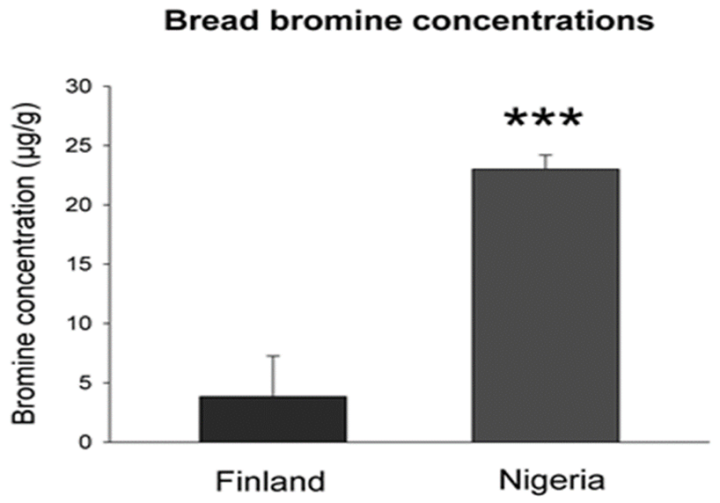
Bread bromine concentrations were determined from a different batch of bread samples collected in a random fashion before the data from the spectrophotometric analyses were at hand. Again, Nigerian samples proved to contain significantly (p < 0.001) higher levels than their Finnish counterparts (Figure 3).

This study was carried out to determine bromate levels in randomly selected white bread samples acquired from Benin city, Edo state, Nigeria and, for comparison, from Helsinki, Finland. Bromate was quantified by two spectrophotometric methods and additionally assessed visually by the change in color for one of the methods. Moreover, total bromine concentration was measured in another batch of bread samples from these two locations by ICP-MS. As potassium bromate is a problem especially in many developing countries in which expensive laboratory equipment may not be available, it is important to have affordable, quick, simple and yet accurate enough analytic approaches for the supervising authorities of food industry. Dye-based methodology has also prevailed in previous investigations and was therefore justified here to enable unbiased data comparisons. Although we observed that the sensitivity of these methods is wanting, the recovery test indicated them to perform better at higher bromate concentrations. A noticeable side finding was that by visual inspection of stain intensity it proved to be possible to rank the samples reproducibly to three categories. This has implications for working in field conditions without access to a spectrophotometer.
As far as we are aware of, the present study comprises the largest number of bread samples so far analyzed for their bromate concentrations. The data obtained by the two spectrophotometric methods were highly consistent revealing a conspicuous difference in the occurrence and levels of bread bromate between Nigeria and Finland. Of the breads tested, 62 vs. 16% contained measurable quantities of bromate in Nigeria and Finland, respectively. Furthermore, whereas all Finnish samples harbored concentrations of maximally ~5 µg/g, in Nigerian samples these levels were much higher, reaching a stunning >1000 µg/g. It should be noted that because of the wide range of standards needed in the calibration curve, we found the default linear representation poorly suited for both the KI- and the PTZ-based methods. We therefore used a non-linear (4PL) regression, which worked best at the higher end of concentration values. Based on the recovery test, the measured concentrations close to the LOD are probably somewhat too high, which tends to accentuate the difference between Nigerian and Finnish samples even further. In line with our findings, other researchers have also reported that the spectrophotometric methods for bromate analysis appear to have a linear dynamic range only at the lower end of concentrations 14.
There are a number of earlier publications on bread bromate levels in Nigeria. The studies carried out by Alli et al. 15 in Gwagwalada, Abuja, Nigeria showed that their 20 bread samples analyzed contained bromate in the range of 3.6–9.2 µg/g. In Jalingo metropolis, northern Nigeria, Magomya and Yebpella 18 recorded bromate concentrations of 2.5–11.5 µg/g in their 20 bread samples. Ojeka et al. 14 published data on five bread samples purchased from Kaduna State, mid-Nigeria. Depending on the dye applied in the spectrophotometric analysis method, bromate levels ranged 3.7–5.2 or 11.6–12.1 µg/g. In the Eastern part of Nigeria, Emeje et al. 5 reported these concentrations in 23 bread brands to be 1.2–10.4 µg/g, in Uyo metropolis, Southern Nigeria they were 1.1–3.8 µg/g (only 4 samples 19), and in Ibadan, the Oyo State (Southwestern Nigeria), they were found to range between 1.2 and 9.3 μg/g for a total of 30 samples 12. As the bromate most likely originates from potassium bromate, these findings thus collectively imply that, despite it has been banned since 2003, potassium bromate is still a widely used additive in bread production all over Nigeria.
We cannot totally exclude the possible contribution of non-specific factors to the outcome. To reduce the risk of such factors possibly interfering with the data, we confined the analysis to white bread. Furthermore, from both countries we had an identical number of bread samples made of oat (15) and multigrain (10). It turned out that in our sample selection, whole grain bread was always made of barley in Nigeria but of wheat in Finland. However, we do not believe it could have noticeably affected the outcome because there was no correlation between bromate level and the grain of which bread was baked. Although there was a substantial difference between Nigeria and Finland in bread bromate levels, the presence of some samples harboring measurable concentrations also in Finland is thus noteworthy and warrants further studies by alternative analytical methods for verification.
As a complementary approach, we determined total bromine concentration in another batch of seven Finnish and eight Nigerian bread samples. Again, there was a clear divergence between the two countries. In Finland, six out of the seven samples analyzed showed concentrations of 1.5–5.4 µg/g; for the last one, the bromine level was 11 µg/g. All the Nigerian samples exhibited concentrations of 21–25 µg/g. Previously, Cunningham and Warner 20 determined the natural background bromine concentration of bread products (made without potassium bromate addition) to be 7.3 ± 2.3 µg/g. Although their sample number was only 5 and environmental bromine levels probably vary somewhat geographically, these findings support the view that whereas the Finnish bread samples (or the great majority of them) did not contain extraneous bromine, a large portion of their Nigerian counterparts did. An earlier bromine analysis of flour and bread samples gathered from Ile-Ife, Nigeria supports this conclusion. Using a non-chemical particle-induced X-ray emission method, Olise et al. 21 found slightly higher bread bromine concentrations (30–41 µg/g) than the ones recorded in this research. Since flour contained less bromine, the findings suggested that potassium bromate had been added.
Taken together, we found evidence that many bakeries in Benin city, Edo state, Nigeria still use potassium bromate as a bread improver during bread production. A large number of the Nigerian bread samples contained high concentrations of bromate. There was also a drastic difference between Nigerian and Finnish bread samples in this regard. Our data imply that bread consumers in Benin city are still being exposed to this toxic substance regardless of the legislation banning its use. Due to its toxicity, foremost genotoxic carcinogenicity, the presence of bromate in bread products calls for serious concerns 22. Moreover, bread is a staple food consumed daily in Nigeria irrespective of socio-economic status, which results in wide exposure among Nigerians. A specific risk group are bakery workers who may also be exposed via inhalation. Therefore, the exposure levels of these people to bromate should be monitored with special care 23.
Financially supported by a grant to RP from the Finnish Foundation of Veterinary Research. Open access funded by Helsinki University Library.
| [1] | Akunyili, N. D. “Potassium bromate in bread.... what are the implications?”, NAFDAC, 1. 13-21. 2005. | ||
| In article | |||
| [2] | Aletan, U. and Okon, J. J. O. 2018. “Investigation of potassium bromate and anti-nutrient contents of flour and bread in Ikot Ekpene metropolis”, Int. J. Basic Sci. Technol., 4(3). 77-80. 2018. | ||
| In article | |||
| [3] | Gandikota, S. and MacRitchie, F. “Expansion capacity of doughs: Methodology and applications”, J. Cer. Sci., 42. 157-163. 2005. | ||
| In article | View Article | ||
| [4] | Shanmugavel, V., Santhi, K. K., Kurup, A. H., Kalakandan, S., Anandharaj, A. and Rawson, A. “Potassium bromate: Effects on bread components, health, environment and method of analysis: A review”, Food Chem., 311. 125964. 2020. | ||
| In article | View Article PubMed | ||
| [5] | Emeje, M., Ofoefule, S., Nnaji, A., Ofoefule, A. and Brown, S. “Assessment of bread safety in Nigeria: Quantitative determination of potassium bromate and lead”, Afr. J.Food Sci., 4(6). 394-397. 2010. | ||
| In article | |||
| [6] | Bushuk, W. and Hlynka, I. “Disappearance of bromate during baking of bread”, Cer. Chem., 37. 573-576. 1960. | ||
| In article | |||
| [7] | Kurokawa, Y., Maekawa, A., Takahashi, M. and Hayashi, Y. “Toxicity and carcinogenicity of potassium bromate – a new renal carcinogen”, Environ. Health Perspect., 87. 309-335. 1990. | ||
| In article | View Article PubMed | ||
| [8] | Starek, A.. and Starek-Swiechowicz, B. “Toxicological properties of potassium bromate”, J. Pharmacol. Rep. 1.122. 2016. | ||
| In article | |||
| [9] | Ajarem, J., Altoom, N. G., Allam, A. A., Maodaa, S. N., Abdel-Maksoud, M. A. and Chow, B. K. “Oral administration of potassium bromate induces neurobehavioral changes, alters cerebral neurotransmitters level and impairs brain tissue of Swiss mice”, Behav. Brain Func., 12(1). 14. 2016. | ||
| In article | View Article PubMed | ||
| [10] | Nakamura, M., Murakami, T., Himata, K., Hosoya, S. and Yamada, Y. “Effects of reducing agents and baking conditions on potassium bromate in bread”, Cer. Foods World, 51. 69-75. 2006. | ||
| In article | View Article | ||
| [11] | International Agency for Research on Cancer (IARC). “Summaries & Evaluations - potassium bromate (Group 2B)”, http://www.inchem.org/documents/iarc/vol40/potassiumbromate.html. | ||
| In article | |||
| [12] | Airaodion, A., Ewa, O., Ogbuagu, E., Ogbuagu, U., Agunbiade, A. and Oloruntoba, A. “Evaluation of potassium bromate in bread in Ibadan Metropolis: Fifteen years after ban in Nigeria”, As. Food Sci. J., 7. 1-7. 2019. | ||
| In article | View Article | ||
| [13] | Akunyili, N. D. “Eradication of potassium bromated from Nigerian bakery industry”, NAFDAC, 5. 1-6. 2004. | ||
| In article | |||
| [14] | Ojeka, E. O., Obidiaku, M. C. and Enukorah, C. “Spectrophotometeric determination of bromate in bread by the oxidation of dyes”, J. Appl. Sci. Environ. Man., 10(3). 43-46. 2006. | ||
| In article | View Article | ||
| [15] | Alli, A., Nwegbu, M., Inyang, B., Nwachukwu, K., Ogedengbe, J., Onaadepo, O., Jamda, M., Okoye, S., Akintan, G., Ibrahim, S. and Onifade, E. “Determination of potassium bromate content in selected bread samples in Gwagwalada, Abuja-Nigeria”, Int. J. Health Nutr., 4. 15-20. 2013. | ||
| In article | |||
| [16] | El Ati-Hellal, M., Doggui, R., Krifa, Y., El Ati, J. “Potassium bromate as a food additive: a case study of Tunisian breads”, Environ. Sci. Pollut. Res., 25. 2702-2706. 2018. | ||
| In article | View Article PubMed | ||
| [17] | AAT Bioquest, Inc. “Quest Graph™ Four Parameter Logistic (4PL) Curve Calculator”, AAT Bioquest. 2022, February 21. https://www.aatbio.com/tools/four-parameter-logistic-4pl-curve-regression-online-calculator. | ||
| In article | |||
| [18] | Magomya, A. M., Yebpella, G. G, Okpaegbe, U. C and Nwunuji, P. C. “Analysis of potassium bromate in bread and flour samples sold in Jalingo Metropolis, Northern Nigeria”, IOSR J. Environ. Sci. Toxicol. Food Technol., 14(2). 1-5. 2020. | ||
| In article | |||
| [19] | Ekop, A. S., Obot, I. B. and Ikpatt, E. N. “Anti-nutritional factors and potassium bromate content in bread and flour samples in Uyo Metropolis, Nigeria”, E-J. Chem., 5(4), 736-741. 2008. | ||
| In article | View Article | ||
| [20] | Cunningham, W. C. and Warner, C. A. “Br concentration as an indication of pre-baking bromation of bread products”, Food Addit. Contam., 17(2).143-148. 2000. | ||
| In article | View Article PubMed | ||
| [21] | Olise, F. S., Fernandes, A. M., Chaves, P. C., Taborda, A. and Reis, M. A. “PIXE analysis of Nigerian flour and bread samples”, Nucl. Instrum. Meth. Phys. Res. B: Beam Interac. Mat. Atoms, 318. 207-210. 2014. | ||
| In article | View Article | ||
| [22] | World Health Organization. “Toxicology evaluation of certain food additives and contaminants”, 33rd Meeting of the Joint (FAO) WHO Expert Committee, 1989. | ||
| In article | |||
| [23] | Diachenko, G. W. and Warner, C. R. “Potassium bromate in bakery products: Food technology, toxicological concerns, and analytical methodology”, In: Bioactive Compounds in Foods. T.-C Lee and C.-T Ho, eds. ACS Symp. Ser. 816. American Chemical Society, Washington, DC, 218. 2002. | ||
| In article | View Article | ||
Published with license by Science and Education Publishing, Copyright © 2023 Etinosa Usiosefe Osemwowa and Raimo Pohjanvirta
 This work is licensed under a Creative Commons Attribution 4.0 International License. To view a copy of this license, visit
http://creativecommons.org/licenses/by/4.0/
This work is licensed under a Creative Commons Attribution 4.0 International License. To view a copy of this license, visit
http://creativecommons.org/licenses/by/4.0/
| [1] | Akunyili, N. D. “Potassium bromate in bread.... what are the implications?”, NAFDAC, 1. 13-21. 2005. | ||
| In article | |||
| [2] | Aletan, U. and Okon, J. J. O. 2018. “Investigation of potassium bromate and anti-nutrient contents of flour and bread in Ikot Ekpene metropolis”, Int. J. Basic Sci. Technol., 4(3). 77-80. 2018. | ||
| In article | |||
| [3] | Gandikota, S. and MacRitchie, F. “Expansion capacity of doughs: Methodology and applications”, J. Cer. Sci., 42. 157-163. 2005. | ||
| In article | View Article | ||
| [4] | Shanmugavel, V., Santhi, K. K., Kurup, A. H., Kalakandan, S., Anandharaj, A. and Rawson, A. “Potassium bromate: Effects on bread components, health, environment and method of analysis: A review”, Food Chem., 311. 125964. 2020. | ||
| In article | View Article PubMed | ||
| [5] | Emeje, M., Ofoefule, S., Nnaji, A., Ofoefule, A. and Brown, S. “Assessment of bread safety in Nigeria: Quantitative determination of potassium bromate and lead”, Afr. J.Food Sci., 4(6). 394-397. 2010. | ||
| In article | |||
| [6] | Bushuk, W. and Hlynka, I. “Disappearance of bromate during baking of bread”, Cer. Chem., 37. 573-576. 1960. | ||
| In article | |||
| [7] | Kurokawa, Y., Maekawa, A., Takahashi, M. and Hayashi, Y. “Toxicity and carcinogenicity of potassium bromate – a new renal carcinogen”, Environ. Health Perspect., 87. 309-335. 1990. | ||
| In article | View Article PubMed | ||
| [8] | Starek, A.. and Starek-Swiechowicz, B. “Toxicological properties of potassium bromate”, J. Pharmacol. Rep. 1.122. 2016. | ||
| In article | |||
| [9] | Ajarem, J., Altoom, N. G., Allam, A. A., Maodaa, S. N., Abdel-Maksoud, M. A. and Chow, B. K. “Oral administration of potassium bromate induces neurobehavioral changes, alters cerebral neurotransmitters level and impairs brain tissue of Swiss mice”, Behav. Brain Func., 12(1). 14. 2016. | ||
| In article | View Article PubMed | ||
| [10] | Nakamura, M., Murakami, T., Himata, K., Hosoya, S. and Yamada, Y. “Effects of reducing agents and baking conditions on potassium bromate in bread”, Cer. Foods World, 51. 69-75. 2006. | ||
| In article | View Article | ||
| [11] | International Agency for Research on Cancer (IARC). “Summaries & Evaluations - potassium bromate (Group 2B)”, http://www.inchem.org/documents/iarc/vol40/potassiumbromate.html. | ||
| In article | |||
| [12] | Airaodion, A., Ewa, O., Ogbuagu, E., Ogbuagu, U., Agunbiade, A. and Oloruntoba, A. “Evaluation of potassium bromate in bread in Ibadan Metropolis: Fifteen years after ban in Nigeria”, As. Food Sci. J., 7. 1-7. 2019. | ||
| In article | View Article | ||
| [13] | Akunyili, N. D. “Eradication of potassium bromated from Nigerian bakery industry”, NAFDAC, 5. 1-6. 2004. | ||
| In article | |||
| [14] | Ojeka, E. O., Obidiaku, M. C. and Enukorah, C. “Spectrophotometeric determination of bromate in bread by the oxidation of dyes”, J. Appl. Sci. Environ. Man., 10(3). 43-46. 2006. | ||
| In article | View Article | ||
| [15] | Alli, A., Nwegbu, M., Inyang, B., Nwachukwu, K., Ogedengbe, J., Onaadepo, O., Jamda, M., Okoye, S., Akintan, G., Ibrahim, S. and Onifade, E. “Determination of potassium bromate content in selected bread samples in Gwagwalada, Abuja-Nigeria”, Int. J. Health Nutr., 4. 15-20. 2013. | ||
| In article | |||
| [16] | El Ati-Hellal, M., Doggui, R., Krifa, Y., El Ati, J. “Potassium bromate as a food additive: a case study of Tunisian breads”, Environ. Sci. Pollut. Res., 25. 2702-2706. 2018. | ||
| In article | View Article PubMed | ||
| [17] | AAT Bioquest, Inc. “Quest Graph™ Four Parameter Logistic (4PL) Curve Calculator”, AAT Bioquest. 2022, February 21. https://www.aatbio.com/tools/four-parameter-logistic-4pl-curve-regression-online-calculator. | ||
| In article | |||
| [18] | Magomya, A. M., Yebpella, G. G, Okpaegbe, U. C and Nwunuji, P. C. “Analysis of potassium bromate in bread and flour samples sold in Jalingo Metropolis, Northern Nigeria”, IOSR J. Environ. Sci. Toxicol. Food Technol., 14(2). 1-5. 2020. | ||
| In article | |||
| [19] | Ekop, A. S., Obot, I. B. and Ikpatt, E. N. “Anti-nutritional factors and potassium bromate content in bread and flour samples in Uyo Metropolis, Nigeria”, E-J. Chem., 5(4), 736-741. 2008. | ||
| In article | View Article | ||
| [20] | Cunningham, W. C. and Warner, C. A. “Br concentration as an indication of pre-baking bromation of bread products”, Food Addit. Contam., 17(2).143-148. 2000. | ||
| In article | View Article PubMed | ||
| [21] | Olise, F. S., Fernandes, A. M., Chaves, P. C., Taborda, A. and Reis, M. A. “PIXE analysis of Nigerian flour and bread samples”, Nucl. Instrum. Meth. Phys. Res. B: Beam Interac. Mat. Atoms, 318. 207-210. 2014. | ||
| In article | View Article | ||
| [22] | World Health Organization. “Toxicology evaluation of certain food additives and contaminants”, 33rd Meeting of the Joint (FAO) WHO Expert Committee, 1989. | ||
| In article | |||
| [23] | Diachenko, G. W. and Warner, C. R. “Potassium bromate in bakery products: Food technology, toxicological concerns, and analytical methodology”, In: Bioactive Compounds in Foods. T.-C Lee and C.-T Ho, eds. ACS Symp. Ser. 816. American Chemical Society, Washington, DC, 218. 2002. | ||
| In article | View Article | ||