Clear renal cell carcinoma (ccRCC) is the most common pathological subtype of renal cell carcinoma, accounting for about 70% of all renal cell carcinomas. This article aims to discuss the relationship between VWA3B and the prognostic risk, clinical characteristics, overall survival of patients with clear renal cell carcinoma and the relationship between related pathways. Using The Cancer Genome Atlas (TCGA) database, we evaluated the association of VWA3B with CCRCC. The results showed that the expression of VWA3B in renal cell carcinoma tissues was lower than that in normal tissues (***, P < 0.001). The low expression of VWA3B had clinical significance, such as clinical stage (P=0.0051) and TNM stage (T:P < 0.001; N: P = 0.03; M: P =0.01). Through ROC curve analysis, VWA3B was not only closely related to the favorable prognosis of RCC (hazard ratio [HR] =1.373, 95% CI, 1.017-1.852, P = 0.037), but also had a high diagnostic value (AUC = 0.789). Correlation between VWA3B expression and immune cell infiltration in clear renal cancer cells. Abbreviation: ccRCC = Clear renal cell carcinoma, HGNC = HUGO Gene Nomenclature Committee, IBD = identical by descent, GSEA = Gene set enrichment analysis, OS = overall survival, ROC = receiver operating characteristic, TCGA = The Cancer Genome Atlas.
Renal cell carcinoma (RCC), also known as renal carcinoma cell and renal adenocarcinoma, is a malignant tumor originating from renal tubular epithelial cells. 1 Clear cell renal cell carcinoma (ccRCC), the most prevalent subtype of renal cell carcinoma, has a high mortality rate of 30%-40%. Factors such as gender, obesity, hypertension, smoking, and chronic kidney disease are potential triggers of ccRCC. 2, 3 Radiation therapy, chemotherapy, and surgery are currently the most widely used treatments for renal cell carcinoma. 4A poor prognosis, a high rate of metastasis, and recurrence risk still exist, nevertheless. To effectively control or eradicate tumors, it is necessary to research and develop innovative cancer treatment strategies. Targeted therapy is a new cancer treatment option that has become increasingly prevalent thanks to advancements in biomedical technology. [5-7] 5
Compared with traditional cancer treatment, targeted therapy can identify and analyze the key genes and mechanisms of action of RCC, laying the foundation for subsequent drug development. [8-10] 8 Targeted therapy has unquestionably produced highly promising therapeutic outcomes, but there are still significant obstacles to overcome in the treatment of kidney cancer, particularly the emergence of drug resistance. 11 To create a solid theoretical foundation for the treatment of RCC, we concentrate on examining the genes associated with RCC and weeding out the important genes that may be employed in the future for the diagnosis and treatment of renal cell carcinoma. [12-14] 12
The gene VWA3B, which encodes an intracellular protein containing the von Willebrand factor type A domain, is supplied by the HGNC (HUGO Gene Nomenclature Committee). Studies have demonstrated the critical roles that intracellular proteins with VWA domains play in proteasome, ribosome, and membrane trafficking. Spinocerebellar ataxia is caused by an autosomal recessive gene mutation known as VWA3B. Imoto et al. examined three patients from consanguineous Japanese families and discovered that VWA3B mutations may be related to cerebellar degeneration accompanied by intellectual disability, suggesting that VWA3B is an important player in the neural tissue apoptotic pathway. 15 To investigate the new susceptibility genes of serum mineral elements in the Han nationality in the Chinese population, Ding et al. used mixed linear regression (additive genetic model) combined with an identical by descent (IBD) matrix and discovered that rs6747410 of the VWA3B gene was associated with serum copper concentration (p510-6). 16 The majority of earlier research on VWA3B concentrated more on blood disorders than tumor etiology. VWA3B, however, offers potentially significant utility in the diagnosis and prognosis of renal cancer patients, according to TCGA database screening.
In this work, we investigated the association between VWA3B and clear cell renal cell carcinoma using the clinical data from TCGA, including clinical features, prognosis, and survival data.
Our analysis of the data download from the TCGA database (https://cancergenome.nih.gov), a total of 541 samples, the data type for RNA Seq-FPKM. The following keywords were used in this study: project name, TCGA, project ID, gender, htseq count, data category, transcriptome analysis, and data type. Quantitative gene expression data were also retrieved. Clinicopathological data included age, height, weight, smoking history, contraceptive use history, stage, grade, radiotherapy, and primary treatment outcome. As this was a bioinformatics study, no ethics committee or institutional review board approval was required. This study was conducted by the published guidelines provided by TCGA. 17, 18
2.2. Gene Set Enrichment AnalysisGene set enrichment analysis (GSEA) is a gene-level probe that can use the genes in a predefined gene set to evaluate the distribution trend in the gene table ranked by phenotypic correlation, to judge the contribution and correlation of phenotypes. 19, 20 Therefore, in this study, GSEA was used to analyze all genes associated with VWA3B expression and whether there were differences between different expression levels of VWA3B. The criteria for significant enrichment of gene sets were normal P < 0.05 and false discovery rate < 0.25.
Based on multivariate regression analysis, the column line table can integrate multiple predictors by using graduated line segments to achieve personalized prediction of life expectancy. 21, 22 In this paper, the survival package was used for proportional hazards hypothesis testing and Cox regression analysis, and the rms package was used to construct and visualize the nomogram-related model. Calibration and discrimination are the most commonly used methods to evaluate model performance. The TCGA-CESC data were divided into the VWA3B high-risk group and the VWA3B low-risk group according to the median risk score. Kaplan-Meier method and two-sided log-rank test were used to compare the differences in overall survival (OS) between high-risk and low-risk patients. A calibration chart was constructed to evaluate the predictive accuracy of the nomogram based on the prognostic model.
2.4. Statistical AnalysisWilcoxon rank-sum test was used to analyze VWA3B gene expression levels in unpaired samples from RCC patients. 23 Paired sample T-test was used to analyze the expression of the VWA3B gene in RCC patients. The Bonferroni method was used to adjust the significance level of multiple hypothesis tests to analyze the relationship between RCC clinical characteristics and VWA3B expression. Log-rank test and Cox regression were used to analyze the difference in survival time distribution between different VWA3B expression groups. The receiver operating characteristic (ROC) curve was drawn and the area under the curve (AUC) was analyzed to evaluate the diagnostic value of VWA3B gene expression. Univariate Cox analysis was used to screen potential prognostic factors. Forest plots show overall survival rates at 1, 3, and 5 years for RCC. GEPIA was used to analyze the expression level of VWA3B in different types of tumors. TIMER was used to analyze the relationship between VWA3B and immune cell infiltration in patients with renal cell carcinoma. Statistical analysis and visualization were performed with the use of R software, version 3.6.3. Significant markers: ns, P≥0.05; *, P < 0.05; **, P < 0.01; ***, P < 0.001. A p-value < 0.05 was considered statistically significant.
First, we retrieved 541 CCRCC samples, including 270 samples with low VWA3B expression and 271 samples with high VWA3B expression, from the TCGA database. Table 1 lists the detailed clinical characteristics of the sample.
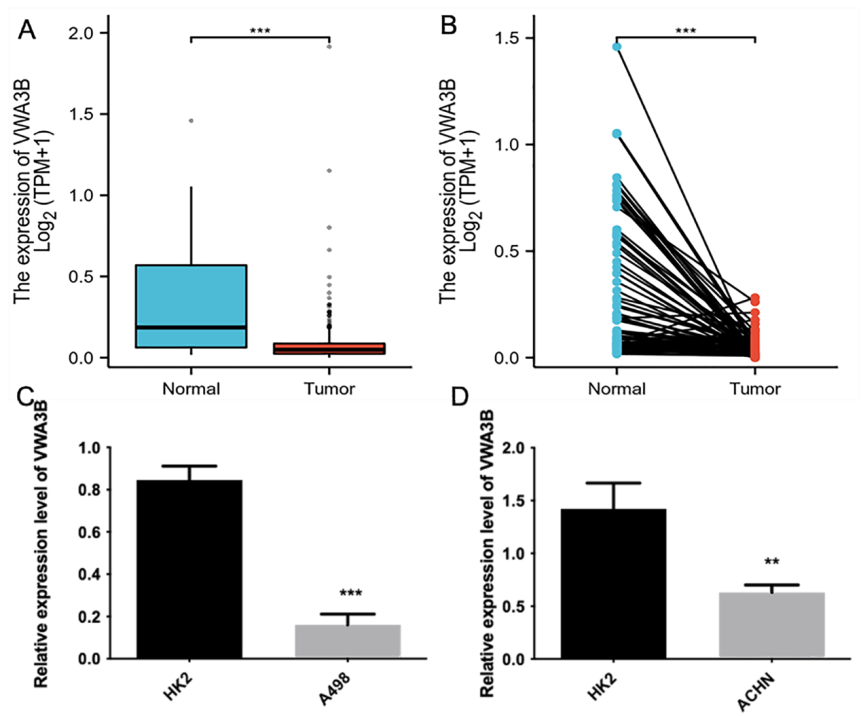
3.2. Low Expressions of VWA3B in Renal Clear Cell CarcinomaTo investigate the expression level of VWA3B in renal clear cell carcinoma and normal control tissues, we compared unpaired and paired samples from the two groups, respectively. The results showed that VWA3B expression in unpaired samples was significantly reduced in renal cancer patients (P < 0.001) (Figure 1A). The results in the paired samples were identical to those in the unpaired samples (P < 0.001) (Figure 1B). In addition, we used human renal cell carcinoma cell line (A-498), human renal adenocarcinoma cell line (ACHN), and human renal cortical/proximal tubule cell line HK-2 to analyze the expression of VWA3B by qRT-PCR. The results showed that VWA3B expression was significantly down-regulated in A-498 cells (P<0.001), and VWA3B was downregulated in ACHBN (P<0.01).
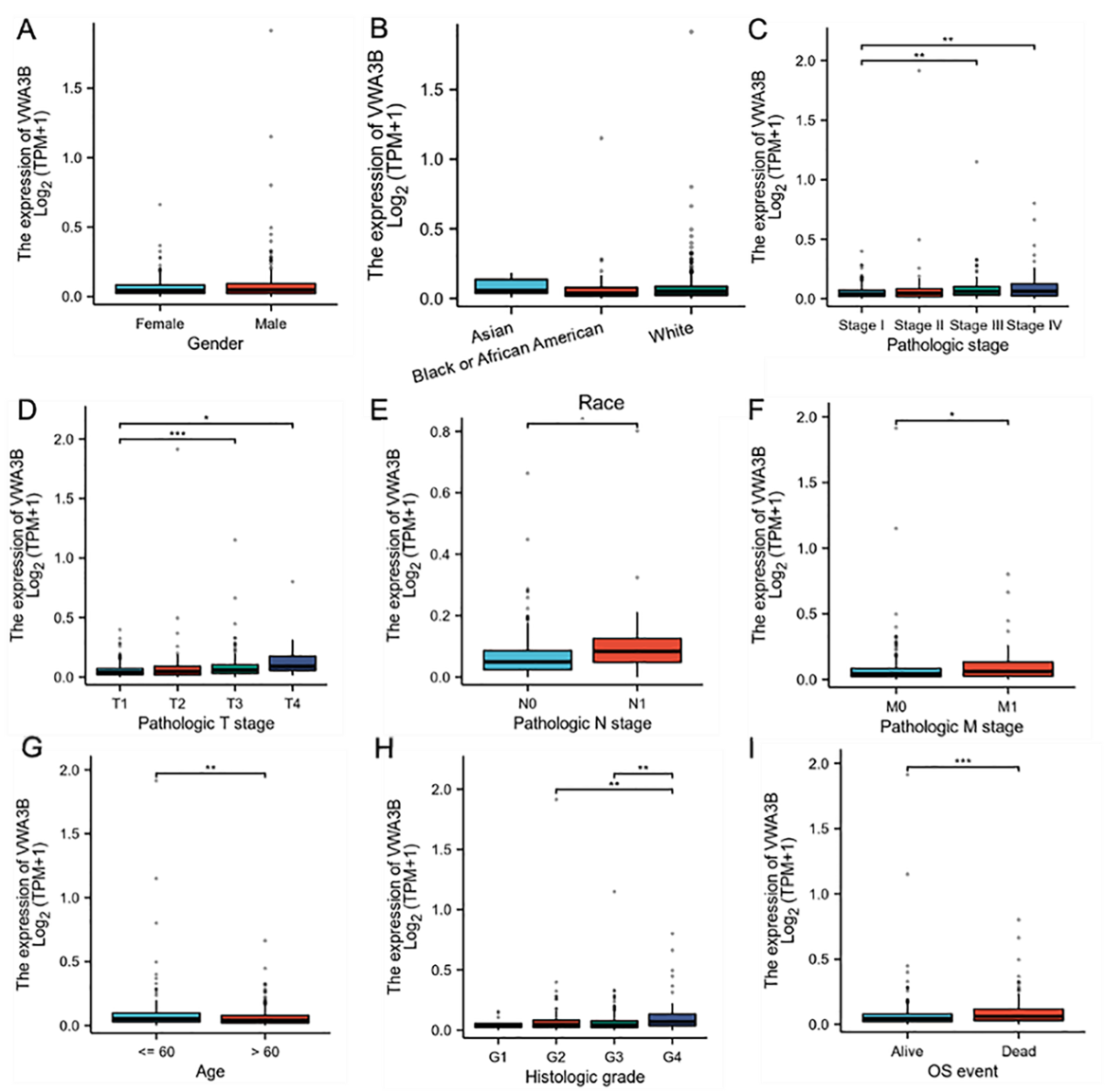
3.3. Correlation Between VWA3B Expression and Clinical FeaturesVWA3B expression, as a variable, is correlated with clinicopathological factors and used to judge the prognosis. The relationship between VWA3B gene and clinical parameters in ccRCC patients was analyzed. The results showed that VWA3B expression was not statistically significant in men and women and in Asian, African, and White patients (Figure 2, ns, P=0.762). ccRCC is divided into four pathological stages (Ⅰ, Ⅱ, Ⅲ and Ⅳ) based on the degree of deterioration, tumor size or presence of metastasis. Pathological TNM stage is the most common tumor staging system in the world, and it is also the standard method for clinical staging of malignant tumors. According to the extent and size of the primary tumor, pathological T stage is further divided into T1, T2, T3, and T4 stages. Pathological N staging was divided into N0 and N1 according to lymph node spread (whether lymph nodes were affected and the extent of the affected lymph nodes). The pathological M stage is composed of M0 and M1 stages, depending on whether the tumor is metastatic or not. With the progression of ccRCC, VAWA3B gene showed significant differences, such as clinical stage (P=0.0051), T stage (P <0.001), N stage (P=0.03), M stage (P=0.01), age stage (P=0.0052), histological grade (P=0.0023) and OS events (P <0.001). Based on this, we hypothesized that low expression of VWA3B may be associated with prognosis in renal cell carcinoma. Therefore, the study of Table 2 was performed. The results were consistent with our prediction. Low VWA3B expression was associated with T stage (t2 & t3 & t4 vs. T1: OR = 1.902(1.282-2.535), P < 0.001) and M stage (M1 vs. M0: OR = 1.935 (1.176-3.185), P < 0.01), pathological stage (stage III & IV vs. stage I & I: OR = 1.828 (1.285-2.600), P < 0.001), race (white vs Asian, black or African American: OR = 1.720 (1.011-2.927), P < 0.05), age (> 60 vs. ≤60: OR = 0.675 (0.481-0.947).


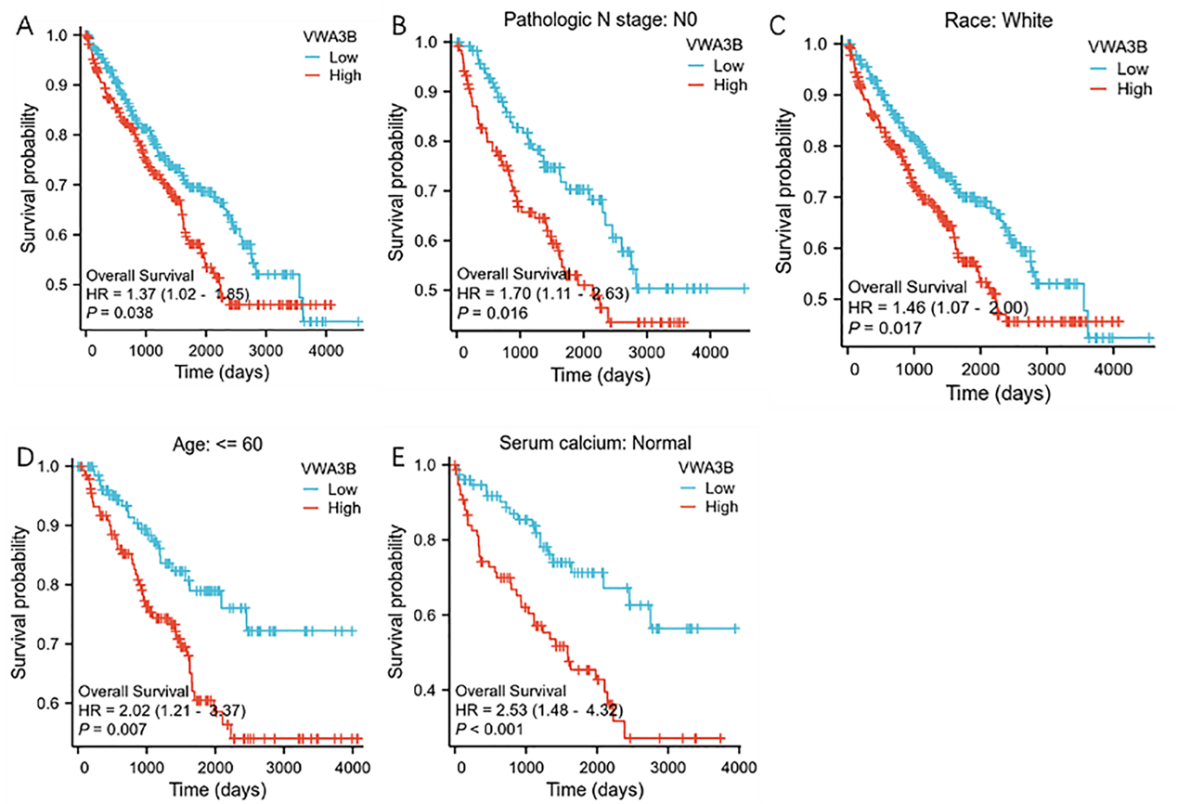
Kaplan-Meier survival analysis (P = 0.038, HR=1.37) and multiple clinical subgroups, including N0(P = 0.016, HR=1.70), white race (P = 0.017, HR=1.46), age≤60 (P =0.007, HR=2.02) and serum calcium (P <0.001, HR=2.53). We confirmed by univariate Cox analysis (logrank test) that low VWA3B expression in RCC patients was associated with favorable prognosis (hazard ratio [HR] =1.373, 95% CI, 1.017-1.852, P = 0.037).
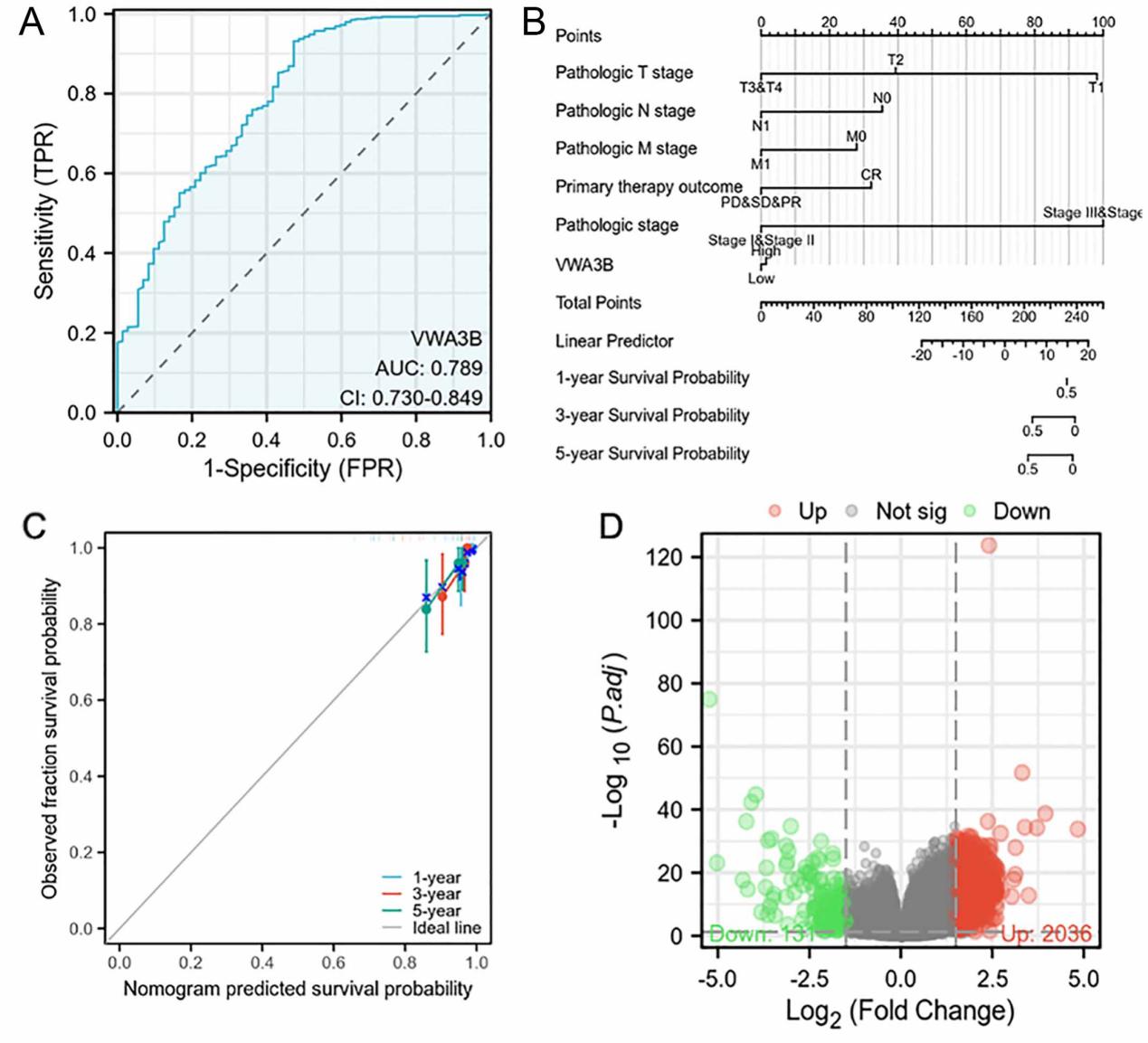
3.5. VWA3B Has a High Diagnostic Value in Renal Clear Cell Carcinoma.By ROC curve analysis, VWA3B was not only closely related to the prognosis of RCC, but also had a high diagnostic value (AUC = 0.789) (Figure 4A). In addition, we constructed a nomogram to predict patient survival at 1, 3, and 5 years, taking into account VWA3B expression and other predictor variables such as age and stage (Figure 4B). We constructed a bias correction line in the calibration plot to approximate the ideal curve (45-degree line), which indicates perfect agreement between prediction and observation (Figure 4C).


The gene expression profiles of VWA3B high and low expression groups were compared by RNAseq gene expression analysis to clarify whether VWA3B plays a role in the occurrence and development of CESC. We verified VWA3B expression in normal and tumor samples using paired plots, and the results showed statistically significant differences. A total of 2036 up-regulated genes (> 1.5 times) and 131 down-regulated genes (> -1.5 times) were detected in the VWA3B low expression group (taking the VWA3B high expression group as a reference). The expression of DEG is shown by the volcano plot (Figure 4D).
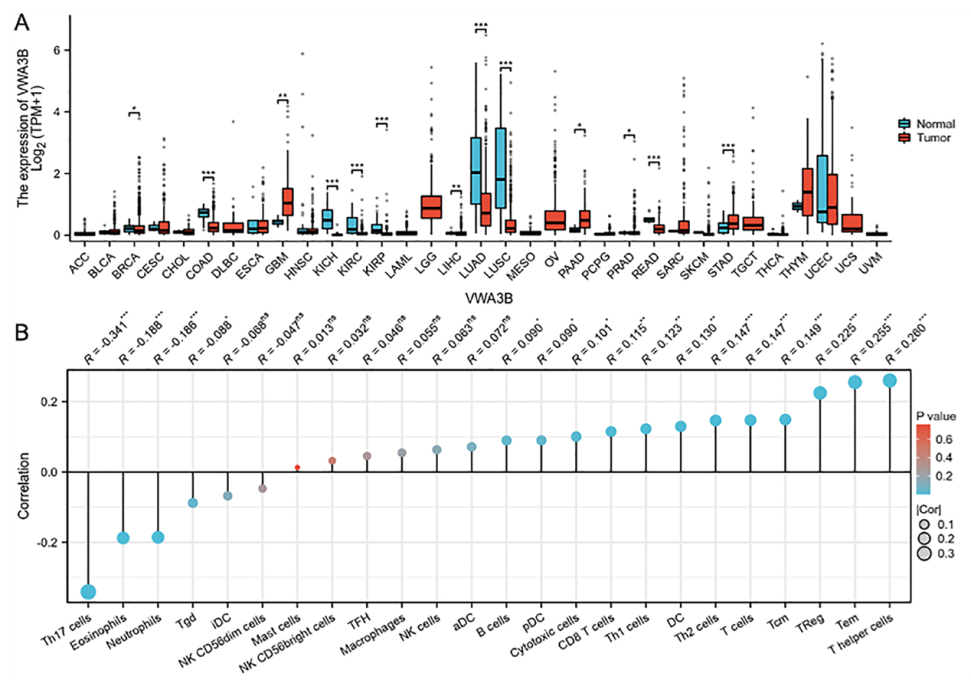
3.7. Correlation Between VWA3B Expression and Immune Cell Infiltration in Clear Renal Cancer CellsThe expression of VWA3B in different types of tumors was analyzed by TIMER. The results showed that VWA3B was lowly expressed in a variety of tumors, including lung pancreatic carcinoma, lung squamous cell carcinoma, renal papillary cell carcinoma, renal chromophobe cell carcinoma, colon cancer, rectal adenocarcinoma, and multiform glioblastoma (P < 0.001) (Figure 5A).
Spearman correlation analysis of VWA3B expression and immune cell enrichment (ssGSEA generation) showed that VWA3B expression was negatively correlated with the abundance of Th17 cells, eosinophils, neutrophils and iDC. There was a positive correlation with the abundance of helper T cells, Tem, regulatory T cells, Tcm, Th2 cells, DC cells, Th1 cells, CD8 T cells, cytotoxic cells, pDCs and NK cells (P < 0.05) (Figure 5B).
RCC takes the lives of about 17,900 people every year, which seriously threatens the safety of people's lives and property. ccRCC is the most common pathological type of RCC, accounting for about 70% of the total RCC. It is imperative to develop effective modalities for the diagnosis and treatment of ccRCC. Through the means of bioinformatics, we can predict the targets that may induce ccRCC, and improve the overall survival time of patients by implementing targeted therapy. The gene for VWA3B encodes an intracellular protein containing the von Willebrand factor type A domain. Intracellular proteins with VWA domains play important roles in transcriptional DNA repair, ribosome and membrane trafficking, and the proteasome. VWA3B gene mutation is often associated with autosomal recessive spinocerebellar ataxia. In recent years, there are few studies on VWA3B, and most of the only literature is on blood diseases and genetic diseases, rather than the mechanism of tumor. For example, Ryuji Kaji et al. conducted neurological examination and genome-wide linkage analysis on three groups of congenic families and found that mutated VWA3B may be related to cerebellar degeneration and intellectual disability, and he plays a key role in the apoptotic pathway of neuronal tissue. 15 Torben Hansen and his team performed a genotype-phenotype study of 14 Pakistani families affected by two subtypes of mucopolysaccharide (MPS, also known as hereditary lysosomal storage disease, LDS), MPS III (also known as Sanfilippo) and MPS IV (Morquio), Variant genes associated with MPS were revealed, and the results newly included VWA3B, which was not previously thought to be associated with MPS, suggesting that new genes may be useful in the treatment of LSD. 24Yipeng Ding and his team Applied Biosystems Axiom™PMDA to genotype 587 Chinese Han individuals to find gene loci affecting serum mineral elements (Cu, Zn, Ca, Mg, Fe, Pb) levels. 16 The rs6747410 locus of VWA3B was found to be associated with serum copper concentration (p < 5 × 10⁻⁶). In this study, VWA3B was screened by GO database and TCGA database, and it may be a molecular marker of poor prognosis of renal cell carcinoma. Through Kaplan-Meier curve, univariate Cox regression analysis, total ROC curve and TIMER database analysis, it was found that low expression of VWA3B and ccRCC patients had low overall survival rate, poor prognosis, multiple immune cell infiltration and related pathways, which had high diagnostic value and was helpful for the early diagnosis of RCC.
The expression of VWA3B may be a molecular marker for the poor prognosis of renal cell carcinoma. We further demonstrated that a valuable prognostic factor, the low expression of VWA3B, can be used to improve the clinical outcome of patients with renal cancer. It is hoped that our study on VWA3B can provide some help for future mechanism research and develop related drugs for cancer treatment as soon as possible.
This work was supported by the Zunyi City Science and Technology Fund (NO.2019-137) .
Funding acquisition: Jianping Li.
Methodology: Yu Li.
Supervision: MingBo Luo.
Writing – original draft: Xue Cao.
Writing – review & editing: Xue Cao, Jianping Li.
| [1] | Jiang T, Mao H, Chen Q, et al. Trim24 prompts tumor progression via inducing EMT in renal cell carcinoma. Open Med (Wars). 2020; 15: 1153-1162. | ||
| In article | View Article PubMed | ||
| [2] | Burnier M, Damianaki A. Hypertension as cardiovascular risk factor in chronic kidney disease. Circulation Research. 2023; 132: 1050-1063. | ||
| In article | View Article PubMed | ||
| [3] | Ponticelli C, Podestà MA, Moroni G. Hyperuricemia as a trigger of immune response in hypertension and chronic kidney disease. Kidney International. 2020; 98: 1149-1159. | ||
| In article | View Article PubMed | ||
| [4] | Markham MJ, Wachter K, Agarwal N, et al. Clinical cancer advances 2020: annual report on progress against cancer from the American Society of clinical oncology. Journal of Clinical Oncology. 2020; 38: 1081. | ||
| In article | View Article PubMed | ||
| [5] | Moravan MJ, Fecci PE, Anders CK, et al. Current multidisciplinary management of brain metastases. Cancer. 2020; 126: 1390-1406. | ||
| In article | View Article PubMed | ||
| [6] | Yu B, Yu X, Xiong J, et al. Methylation modification, alternative splicing, and noncoding RNA play a role in cancer metastasis through epigenetic regulation. BioMed Research International. 2021; 2021: 4061525. | ||
| In article | View Article PubMed | ||
| [7] | Zhou Y, Yuan K, Yang Y, et al. Gallbladder cancer: current and future treatment options. Frontiers in Pharmacology. 2023; 14: 1183619. | ||
| In article | View Article PubMed | ||
| [8] | Han H, Feng X, Guo Y, et al. Identification of potential target genes of breast cancer in response to Chidamide treatment. Frontiers in Molecular Biosciences. 2022; 9: 999582. | ||
| In article | View Article PubMed | ||
| [9] | Stimphil E, Nagesetti A, Guduru R, et al. Physics considerations in targeted anticancer drug delivery by magnetoelectric nanoparticles. Applied Physics Reviews. 2017; 4: 021101. | ||
| In article | View Article | ||
| [10] | Xiang Y, Zheng G, Zhong J, et al. Advances in renal cell carcinoma drug resistance models. Frontiers in Oncology. 2022; 12: 870396. | ||
| In article | View Article PubMed | ||
| [11] | Silva VL, Al-Jamal WT. Exploiting the cancer niche: Tumor-associated macrophages and hypoxia as promising synergistic targets for nano-based therapy. Journal of Controlled Release. 2017; 253: 82-96. | ||
| In article | View Article PubMed | ||
| [12] | Xu K, Zhang Y, Yan Z, et al. Identification of disulfidptosis related subtypes, characterization of tumor microenvironment infiltration, and development of DRG prognostic prediction model in RCC, in which MSH3 is a key gene during disulfidptosis. Frontiers in Immunology. 2023; 14: 1205250. | ||
| In article | View Article PubMed | ||
| [13] | Jiang A, Song J, Fang X, et al. A novel thinking: DDR axis refines the classification of ccRCC with distinctive prognosis, multi omics landscape and management strategy. Frontiers in Public Health. 2022; 10: 1029509. | ||
| In article | View Article PubMed | ||
| [14] | Wang Y, Wang Y, Feng M, et al. Renal cell carcinoma associated with Xp11.2 translocation/transcription factor E3 gene fusion: an adult case report and literature review. Journal of International Medical Research. 2020; 48: 0300060520942095. | ||
| In article | View Article PubMed | ||
| [15] | Kawarai T, Tajima A, Kuroda Y, et al. A homozygous mutation of VWA3B causes cerebellar ataxia with intellectual disability. J Neurol Neurosurg Psychiatry. 2016; 87: 656-62. | ||
| In article | View Article PubMed | ||
| [16] | Guo D, Zhou Y, Wei X, et al. Preliminary study of genome-wide association identifies novel susceptibility genes for serum mineral elements in the Chinese Han population. Biol Trace Elem Res. 2022; 200: 2549-2555. | ||
| In article | View Article PubMed | ||
| [17] | Xie BF, Xia Y, Lin DH, et al. Pan-cancer gene analysis of m6A modification and immune infiltration in uterine corpus endometrial carcinoma. Computational Intelligence and Neuroscience. 2022; 2022: 6530884. | ||
| In article | View Article PubMed | ||
| [18] | Yoon BJ, Qian X, Kahveci T, et al. Selected research articles from the 2019 international workshop on computational network biology: modeling, analysis, and control (CNB-MAC). BMC Genomics. 2020; 21: 584. | ||
| In article | View Article PubMed | ||
| [19] | Hundt C, Hildebrandt A, Schmidt B. rapidGSEA: Speeding up gene set enrichment analysis on multi-core CPUs and CUDA-enabled GPUs. BMC Bioinformatics. 2016; 17: 394. | ||
| In article | View Article PubMed | ||
| [20] | Tsai CA, Chen JJ. Gene set correlation analysis and visualization using gene expression data. Current Bioinformatics. 2021; 16: 406-421. | ||
| In article | View Article | ||
| [21] | Shao Z, Wang Z, Bi S, et al. Establishment and validation of a nomogram for progression to diabetic foot ulcers in elderly diabetic patients. Frontiers in Endocrinology. 2023; 14: 1107830. | ||
| In article | View Article PubMed | ||
| [22] | Jenelius E. Personalized predictive public transport crowding information with automated data sources. Transportation Research Part C: Emerging Technologies. 2020; 117: 102647. | ||
| In article | View Article | ||
| [23] | Wu M, Kim KY, Park WC, et al. Enhanced expression of GABRD predicts poor prognosis in patients with colon adenocarcinoma. Translational Oncology. 2020; 13: 100861. | ||
| In article | View Article PubMed | ||
| [24] | Gul R, Firasat S, Schubert M, et al. Identification of genetic variants associated with a wide spectrum of phenotypes clinically diagnosed as Sanfilippo and Morquio syndromes using whole genome sequencing. Front Genet. 2023; 11: 1254909. | ||
| In article | View Article PubMed | ||
Published with license by Science and Education Publishing, Copyright © 2023 Xue Cao, Yu Li, MingBo Luo and Jianping Li
 This work is licensed under a Creative Commons Attribution 4.0 International License. To view a copy of this license, visit
http://creativecommons.org/licenses/by/4.0/
This work is licensed under a Creative Commons Attribution 4.0 International License. To view a copy of this license, visit
http://creativecommons.org/licenses/by/4.0/
| [1] | Jiang T, Mao H, Chen Q, et al. Trim24 prompts tumor progression via inducing EMT in renal cell carcinoma. Open Med (Wars). 2020; 15: 1153-1162. | ||
| In article | View Article PubMed | ||
| [2] | Burnier M, Damianaki A. Hypertension as cardiovascular risk factor in chronic kidney disease. Circulation Research. 2023; 132: 1050-1063. | ||
| In article | View Article PubMed | ||
| [3] | Ponticelli C, Podestà MA, Moroni G. Hyperuricemia as a trigger of immune response in hypertension and chronic kidney disease. Kidney International. 2020; 98: 1149-1159. | ||
| In article | View Article PubMed | ||
| [4] | Markham MJ, Wachter K, Agarwal N, et al. Clinical cancer advances 2020: annual report on progress against cancer from the American Society of clinical oncology. Journal of Clinical Oncology. 2020; 38: 1081. | ||
| In article | View Article PubMed | ||
| [5] | Moravan MJ, Fecci PE, Anders CK, et al. Current multidisciplinary management of brain metastases. Cancer. 2020; 126: 1390-1406. | ||
| In article | View Article PubMed | ||
| [6] | Yu B, Yu X, Xiong J, et al. Methylation modification, alternative splicing, and noncoding RNA play a role in cancer metastasis through epigenetic regulation. BioMed Research International. 2021; 2021: 4061525. | ||
| In article | View Article PubMed | ||
| [7] | Zhou Y, Yuan K, Yang Y, et al. Gallbladder cancer: current and future treatment options. Frontiers in Pharmacology. 2023; 14: 1183619. | ||
| In article | View Article PubMed | ||
| [8] | Han H, Feng X, Guo Y, et al. Identification of potential target genes of breast cancer in response to Chidamide treatment. Frontiers in Molecular Biosciences. 2022; 9: 999582. | ||
| In article | View Article PubMed | ||
| [9] | Stimphil E, Nagesetti A, Guduru R, et al. Physics considerations in targeted anticancer drug delivery by magnetoelectric nanoparticles. Applied Physics Reviews. 2017; 4: 021101. | ||
| In article | View Article | ||
| [10] | Xiang Y, Zheng G, Zhong J, et al. Advances in renal cell carcinoma drug resistance models. Frontiers in Oncology. 2022; 12: 870396. | ||
| In article | View Article PubMed | ||
| [11] | Silva VL, Al-Jamal WT. Exploiting the cancer niche: Tumor-associated macrophages and hypoxia as promising synergistic targets for nano-based therapy. Journal of Controlled Release. 2017; 253: 82-96. | ||
| In article | View Article PubMed | ||
| [12] | Xu K, Zhang Y, Yan Z, et al. Identification of disulfidptosis related subtypes, characterization of tumor microenvironment infiltration, and development of DRG prognostic prediction model in RCC, in which MSH3 is a key gene during disulfidptosis. Frontiers in Immunology. 2023; 14: 1205250. | ||
| In article | View Article PubMed | ||
| [13] | Jiang A, Song J, Fang X, et al. A novel thinking: DDR axis refines the classification of ccRCC with distinctive prognosis, multi omics landscape and management strategy. Frontiers in Public Health. 2022; 10: 1029509. | ||
| In article | View Article PubMed | ||
| [14] | Wang Y, Wang Y, Feng M, et al. Renal cell carcinoma associated with Xp11.2 translocation/transcription factor E3 gene fusion: an adult case report and literature review. Journal of International Medical Research. 2020; 48: 0300060520942095. | ||
| In article | View Article PubMed | ||
| [15] | Kawarai T, Tajima A, Kuroda Y, et al. A homozygous mutation of VWA3B causes cerebellar ataxia with intellectual disability. J Neurol Neurosurg Psychiatry. 2016; 87: 656-62. | ||
| In article | View Article PubMed | ||
| [16] | Guo D, Zhou Y, Wei X, et al. Preliminary study of genome-wide association identifies novel susceptibility genes for serum mineral elements in the Chinese Han population. Biol Trace Elem Res. 2022; 200: 2549-2555. | ||
| In article | View Article PubMed | ||
| [17] | Xie BF, Xia Y, Lin DH, et al. Pan-cancer gene analysis of m6A modification and immune infiltration in uterine corpus endometrial carcinoma. Computational Intelligence and Neuroscience. 2022; 2022: 6530884. | ||
| In article | View Article PubMed | ||
| [18] | Yoon BJ, Qian X, Kahveci T, et al. Selected research articles from the 2019 international workshop on computational network biology: modeling, analysis, and control (CNB-MAC). BMC Genomics. 2020; 21: 584. | ||
| In article | View Article PubMed | ||
| [19] | Hundt C, Hildebrandt A, Schmidt B. rapidGSEA: Speeding up gene set enrichment analysis on multi-core CPUs and CUDA-enabled GPUs. BMC Bioinformatics. 2016; 17: 394. | ||
| In article | View Article PubMed | ||
| [20] | Tsai CA, Chen JJ. Gene set correlation analysis and visualization using gene expression data. Current Bioinformatics. 2021; 16: 406-421. | ||
| In article | View Article | ||
| [21] | Shao Z, Wang Z, Bi S, et al. Establishment and validation of a nomogram for progression to diabetic foot ulcers in elderly diabetic patients. Frontiers in Endocrinology. 2023; 14: 1107830. | ||
| In article | View Article PubMed | ||
| [22] | Jenelius E. Personalized predictive public transport crowding information with automated data sources. Transportation Research Part C: Emerging Technologies. 2020; 117: 102647. | ||
| In article | View Article | ||
| [23] | Wu M, Kim KY, Park WC, et al. Enhanced expression of GABRD predicts poor prognosis in patients with colon adenocarcinoma. Translational Oncology. 2020; 13: 100861. | ||
| In article | View Article PubMed | ||
| [24] | Gul R, Firasat S, Schubert M, et al. Identification of genetic variants associated with a wide spectrum of phenotypes clinically diagnosed as Sanfilippo and Morquio syndromes using whole genome sequencing. Front Genet. 2023; 11: 1254909. | ||
| In article | View Article PubMed | ||