The aim of this paper is to establish the link between the official announcement of the Saldanha Special Economic Zone (SSEZ) and consequently the gradual concentration of foreign traders and the steady fading of native residential spaza shop owners. This research focus on the existing literature on informal trading in Africa and specifically on micro level. Special prominence is given to the entrepreneurial culture of both the foreign and residential informal traders. Informal trading forms a substantial component of any economy in providing employment, secure sustainable livelihoods and income for millions of workers and business owners. Research in South Africa lack the aptitude to investigate and divulge the root causes of informal trading and how informal trading contributes to individual and household income, and to lay the platform for policy formation and intervention. This article envisages the major informal trading structures in Saldanha town, the underlying cause (-s) of doing business and its socio-economic impact on individuals, households, and the community. Central to this study will be the identification of various informal institutional economic activities and the situation, its evolution, their contribution to individual and household survival, and their relationships with the formal economy. The research followed a mixed methods approach (the combination of qualitative and quantitative methods). The application of semi-structured interviews, focus group and follow-up discussions reveals the deeper perceptions of doing business and their means to survival, despite current challenges of Covid-19 and evolving competition challenges. In contrast, the quantitative methods deal largely with the questions of “what” or “how many”.
Nonetheless, the determinations and the preferred small number of outreaching agendas that are delivered by governmental institutions to residential and foreign unofficial merchants, they still are not keen to grasp the opportunity 1. At the same point, informal trading continued to be marginalised and depreciated by formal organisations in South Africa. It has been generated by the prerequisite to complement personal revenue to serve as a survivalist mechanism for especially the residential spaza shops owners. On the other hand, the easy-going sector also embodies the main section of city urban engagement in Sub-Saharan Africa (SSA), 2. Notwithstanding these inclusive offerings to confined markets, they wriggled to overawe the admission impediments to enlarge and connect with the official economy owing to fiscal restrictions and monetary relations, supervision and technical expertise that are compulsory to push or advance into the conventional economy. The informal sector played a meaningful part in the livings of individuals and households’ units explicitly the jobless and inhabited senior citizens. It assumed to be part of a mounting quantity of the labour force and day-to-day practices of the labor force in developing nations 3.
Meanwhile, the post-1994 South Africa, informal interchange has thriven at an appalling grade due to the long-lasting scarcities of engagement gaps in the official economic and community divisions 4. There are no authoritative structures concerning to that who oversees relaxed transaction in South Africa. Even though, there was countless acknowledgement and sanguinity given in the powers’ major policy document, the National Development Plan (NDP) in auspicious between 1.2 and 2 million new informal jobs to dropping off poverty 5, presently the policy is still quiet about the conceivable job openings and how it can relate with the formal economy. There is still a perception amongst politicians that the informal sector is regarded as a regressive and inefficient economy while on the other hand it is recognised by the same people as a valuable tool for poverty reduction and the absorption of the unemployed 6. It also served as a fallback pond of inexpensive labour for both informal and formal institutions. South Africa, however, has an abstemiously negligible informal sector proportional to its African neighbours.
The reduction in guiding principles concerning foreign nationals to South Africa ever since post-1994, has commenced the forceful competition between the local survivalist (residential) tuck shop owners and the foreign informal traders 7. Over and done with the latter’s robust commercial principles, founded nets, and cost driven behaviour of undertaking things jointly, the sustained pursuit for trades breaks, residential spaza owners find it a daunting task to compete with overseas dealers.
Since the formal announcement of the Saldanha Special Economic Zone (SSEZ) on the 31 October 2013, Saldanha experienced a drastic increase in immigrants from other provinces as well as from countries from the African continent, and others, for example, Sri Lanka and Pakistan. Some of these migrants have a sound entrepreneurial skill set which was transferred from their parents at an early stage and regarded as a way of living and or survival tool. The opening of the local market creates opportunities for foreign traders to explore the latent capital especially in the urban spaces with detrimental effects on the native residential spaza owner’s existence.
The informal segment is a very vulnerable area of doing business 6 and should be considered as a standardised sector 8. Mentioning from StatsSA (2019), the reread showing that 8.9 million people were retained in 1994, with a redundancy proportion of 20 percent (8.112 million of the total population). Concurrently, the jobless rate did not comprise the then homelands (Transkei, Bophuthatswana, Ciskei, Venda, Gazankulu, KaNgwane, KwaNdebele, KwaZulur, Lebowa, and QwaQwa, 9. Contempt the amount to individuals that had almost increase twofold up to 16.5 million people agree to 28.5 percent of the populace, the unemployment rate has augmented to 27.1 percent in 2018 and 29.1 percent in the third quarter of 2019 (the topmost rate in concluded 16 years, 10, 11. These upsetting outcomes prompt additional to the problems associated with some categories of job exploration in, especially the informal sector. The redundant job seekers who want to enter the informal sector need to make critical and exclusive decisions (migratory and venture capital expenses) to make a livelihood, elsewhere. Virtually 70% of people who contract an informal venture in South Africa do so since they are deprived of a job and have no substitute source of returns 11.
The informal monetary sector has noticeably changed built-up places in Africa. The reassurance of the informal sector is frequently thought as a feasible approach for generating jobs for city inhabitants who are powerless to work in the formal sector 12. These self-structured or controlled individuals stick to a co-operative attitude of partaking their vitalities and capitals to construct commercial buildings in unoccupied central business district (CBD) spaces and or enlarge their properties for the reason of starting a residential spaza.
The growth of South Africa’s unauthorised fiscal sector is greatest recognised in the setting of the past (before 1994) and a post-dispensation era 13. Throughout the previous era, the emphasis was on the execution of rules that focussed people by colour in countryside areas and their prohibiting from conventional teaching and city areas. This deterrence of incorporation into the formal economy propelled people away to pursue other earnings of job formation to support their relatives. In difference, the post-apartheid authority has over-focused manufacturing strategies whereby regions with dormant capital are reserved as those that would benefit from spatial development initiatives (SDIs). This national policy acknowledged certain regions [14 and 15]. Furthermost, SDIs were growth passageways (such as the Saldanha) which comprised port amenities 16.
Nevertheless, these spatial approaches to create jobs after 1994 through spatial development initiatives, such as the special economic zones (SEZs), Saldanha has knowledgeable experiences increases in capital-intensive productions and an unrestrained arrival of unexperienced migrants from other South African provinces and other developing countries. This study intended to confine an image not only about the development of spaza shops exchange since the implementation of industrial activities during the late 90s in Saldanha, but to divulge the changing dynamics of survivalist (residential) and foreign spazas, since the 1970s. First, a summary of the contextual base on the evolutionary thought and second, informal trading is given. Third, a review of the SSEZ were disclosed. Fourth, a mixed-methods strategy will be going along. Firth, the local situation is considered.
The next two subsections review the distinctive features of the evolutionary theory and the literature on informal trading. Central to both will be an all-encompassing overview with its underlying concepts.
2.1. Evolutionary TheoryThe most difficult challenge between social scientists and biological science is to reconcile or integrate the various methodological approaches (deductive and inductive) in case-studies research. A critical understanding in evolutionary theory is “the explanation to why something exists intimately rests on how it became what it is” 17. Evolutionary theory is progressive – the shift or movement from one phase of development to another. Therefore, it is about space and time in specific localities. Hence, the whole process of evolution is about path-dependent {1} relationships that underlie space and time 18. Although evolutionary theory explains the process of concentration (intensification) and progression, it also needs to be aware of creative destruction{2} at distinctive levels of spatial clusters 18. The dramatic rise and fall, for example of residential spaza’s in White City were caused by various factors: lack of financial support, impropriated financial management, dwindling fish resources (largely snoek{3}), the inexperience of the younger spaza shop owners, the unparalleled economic expectancies caused by the SEZ and associated industrial activities that propelled the influx of immigration to Saldanha.
In a societal perspective, the presence of heavy industrial activities creates centripetal forces for potential job seekers outside Saldanha without knowing the nature and scope of jobs available. Evolutionary thought can be relating to various levels (micro, meso and macro) 18. As mentioned, path-dependent relationships and networks, for example between policy decisions-makers (authorities) and several networks contribute to these evolution path and or regression (closure) of industries, private businesses, and informal trading economic activities. Reference 18 asserted that varieties in the evolution process can drive the selection process, the evolving of new spatial patterns of business activities and or the deterioration and probably the exodus of others.
Apart from territorial condition (business environment), 21 avowed that the establishment and relocation of a potential entrepreneur need certain requirements, for instance: capital, labour, network, and knowledge. Reference 22 give weight to the significance of territorial condition in starting new ventures. Concurring reference 23 new businesses can tap into the existing knowledge and can generate a constant set of relations with suppliers in the supply chain. Another important aspect of evolutionary theory is the establishment of networks to transfer knowledge. Network relationship is not in a real sense competitive but rather more additional and or complementary in nature 18.
2.2. Informal TradingThe informal business is excessively multifaceted in kind, stretching from survivalist spazas, street venders, enrolled informal dealers, employees, housekeepers, gardeners, plumbers, construction workers, etc. Hence, it is multipurpose and self-motivated, and participate in several economic activities that are essential for the healthy running of families on a day-to-day base. This article emphasised on the dynamic change and development of informal trading in residential areas and in urban spaces since the inception of the SSEZ in 2013.
The study discovered that unauthorised activities as being actual varied in type 24. Some informal activities are portrayed by extraordinarily near to the ground entrance charges, while others required considerable initial investment such as trading structures, rental, extra workforces, transportation, and other in-between efforts in urban spaces. Reference 24 proclaimed, that some informal dealers in West-African countries that go through area of high displays of capital earnings are persons with advanced schooling qualifications, exhibited remarkable organisational abilities, enthusiasm, and the capability of speaking French. Case studies also recommended that local municipal regulations should accommodate the pleas of the survivalist-bothered entrepreneurs 25.
The informal sector is an attention-grabbing occasion for the unqualified and unexperienced owing to the low challenge of entering 26. In South Africa, the informal practices are also employed by the untaught and they do not have to pay tariffs on the selling of domestic goods (foodstuffs) and much-required consumer products (cigarettes, razors, batteries, etc.). Reference 27 has discovered that several possible businesspersons in India, who running away from the tax load, targeting the informal trade. In the case of China, informal trading was supported by authorities as part of a ‘new’ private sector which was reinforced by sound controlled and the reassuring of an institutional network chain 28. In any nation there will continuously be a search for labour concentrated business activities that are determined by need and availability 29. In future, it is significant that municipalities must set the scene for build-up structures and offer the requisite sustenance and ease (enable) the course of support 30.
The development of city informal trading in Sub-Saharan Africa (SSA) charted a unique pathway. Meanwhile, between the early 1950s to the 1970s the city jobless performed as an employment pool that can be at any given time engaged into cities urban structures 31, 32. With the sustained rising of urban interchange, the casual labour force and businesspersons contending in the same open market which contribute to the rise of lowering the goods and labour cost 33. This starts off the second surge of price fixing, competing for greater market apportion, urban traffic bottleneck and overconcentration of people, land pollution, teamwork, and entrepreneurship. Even though these positive and negative spinoffs, the disjuncture between all the economic businesses, business as usual persists. The need for illegal commodities would chiefly come from downgraded informal consumers 34, 35. Even though there occur still life-threatening divisions between the informal and formal businesses. There is great endeavours and creativities from public and private organisations to mutually embark on a more accessible supply chain for both. The third wave of city sectors’ evolution is the steady integration of the informal sector into the formal economy. This stage typifies the combination of city and rural business spaces, owing to better ease of access to clients and accessible foodstuffs. Foreign and domestic traders incline to generate their own places and organisational measures in a process whereby people publicise themselves with their modified spaces of businesses and or undertakings. People that are cross the threshold of the informal trading sector facing stern deficiencies such as their insufficient skills set and commercial reliability 36. They also need to be obeyed to the guidelines of authorities in attaining and inhabiting the urban places of establishments. Case studies regarding the unauthorised sector in Madagascar and West Africa 24, 25 discovered that the entrance obstacle (capital) into the informal and formal sector is one of the major stumbling blocks that informal traders experienced.
In the past decade, remarkable change has taken place in the marketing, distribution, and intensification of the foreign spaza shops in Saldanha. This structural change is so fierce that no residential spaza shop owner expands his and or her business operation to the CBD areas. These monopolistic tendencies and penetration of foreign spaza owners, put residential spaza shop owners under immense pressure and hence, they have no choice to lease their business spaces to foreigners.
The researcher has found that two types of spaza shops operating in Saldanha: those that can be classified as the marginalised operators (survivalist) that’s work from home and foreign traders. The traditional operators cannot expand their premises and business due to financial constraints. Their main objective is to survive on a daily base. Noticeable from the foreign spaza shop owners is the overconcentration in the CBD area, a variety of groceries, weekly discount on certain good and their closeness to other smaller businesses. They are well connected with main suppliers, located in Cape Town, 130 km away. With a well-established and competitive supply chain and vertical integrated operation strategies, they continued to intensify their businesses.
Reference 37 proclaimed that informal traders can be classified as businesspersons. They become thrill-seeking when doing things efficient inversely (contrariwise) to make a change in their family, being of benefit to the society and ease the severe difficulties accompanying of scarcity and joblessness 38. At the initial phases in the expansion of housing spaza shops, titleholders (homeowners) generated a marketplace gap for themselves. The profusion of fish e.g., snoek throughout the late 1970s to the 2015 has led to the divergence of home spaza’s in Whites City inhabited areas. The running down of fish supplies especially snoek due to changing weather patterns and overfishing, have a catastrophic influence on the feasibility of ‘snoek and chips’ places in White City. Nowadays, only a marginal of businesspersons with a secure investment and substructure foundation can reap the fruit of this delightful and money-spinning niche market in the Saldanha’s CBD area.
The Saldanha Bay Industrial Development Zone SOC Ltd (SBIDZ) is the first SEZ to be positioned inside a seaport and is the only sector specific SEZ in South Africa targeting energy and marine industries. Since the 2010s, South Africa has shifted to the SEZs as a tool to (re)industrialised and uplift the less performing regions 39. As in the case of the Asian Tigers, Latin America, Singapore, Malesia and India, South Africa also followed a place-based approach which targeted regions with latent capital and unexploited resource endowment. Reference 39 argued that in starting with the SEZs in South Africa, they can learn from well-functioning and underperformed SEZs on a global scale. The Department of Trade and Industries 40 defined Special Economic Zones as:
“… A geographical designated area of a country set aside for specifically targeted economic activities which are then supported through special arrangements (which may include laws) and support systems that are often different from those that are apply in the rest of the country.”
Reference 41 elaborated on the failures of the previous Spatial Development Initiatives (SDIs) in South Africa: first, the political motivated nature of the programme; second, the poor relatedness with the host economies; third, the costly nature of the involvements; and fourth, the failure to generate viable programmes of sustainable economic growth. The main objectives of the SEZs are to generate a vivid centre of prospects, enhance job creation and to foster sustainable growth for firms within the SEZ and on domestic levels. Saldanha with its unique location (south most point) and natural deep harbour as well as existing economic activities (harbour and domestic firms) make the town the ideal location. It is also well position to be of service for East and West African ocean traffic and to established linkages with both the African countries and global markets.
Saldanha was selected since the ever-changing trend in the development of survivalist (home) traders on the one side, and the dissemination of foreign traders into CBD areas. The ethnicity of each informal trader was note down, what is his or her function in society and why do they opt for that specific site. Throughout the field investigation and as a known client of particularly the Somalis, the researcher involved, casually through open dialogues. This conversation permitted the investigator to discover other commerce undercurrents, for example: what are their encounters and achievements? Primary and secondary data were gathered. Primary data was gathered all the way through coordinated and shapeless interviews and secondary data within the literature review. Through semi-structured interviews and a questionnaire survey, the progression and change of easy-going work, the dealings between local traders (foreign and indigenous), societies, establishments and the municipality will be exposed. Since spazas differ in scope, dealership, how they arranged and organised their business fundamentals, the mixed-method approach will earn indispensable info around their doings.
The informal sector is in numerous means connected to the formal economy, varying from the distribution of inputs to the industrial area, the purchasing of goods in the recognised economy as well as the distribution of services. In most events informal trading in the (CBD) need to involve in enquiring trading permits and meet the terms with residential health guidelines which are only permissible to buy and sell in allocated areas. In difference to home spaza’s, there are currently no legal obligations available for doing business from home.
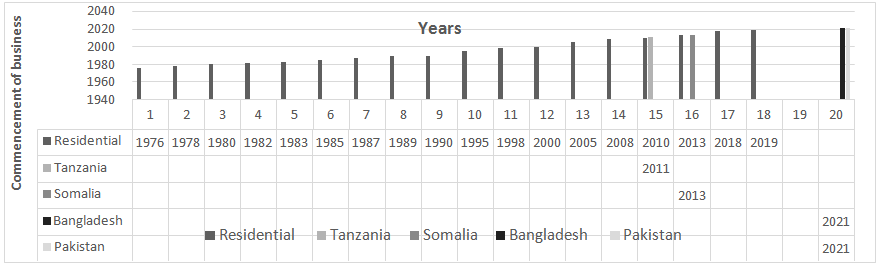
5.1. Informal Trading in SaldanhaThe evolution of informal trading dated back to the establishment of the residential area (White City) in 1960. It was a force removal process by the apartheid’s regime of South Africa. The informal foreign traders start operating since the 2010 onwards, increase and expand in the urban spaces of Saldanha town (Figure 1).

The inception of foreign traders in Saldanha coincides with existing heavy industries (Tronox: 1994; Saldanha Steel: 1998; and Duferco: 2000) and the announcement of the SSEZ in 2013 (Figure 1). As mentioned, the opening of the local market and the easing of immigration laws in South Africa further contributed to the unprecedented influx of foreigners. These factors create favourable conditions for foreign traders to locate in vacant urban spaces.
Although the residential spaza shops started at an early stage, only two spaza shops (commence during 2018s) continued to operate in White City. Residential spaza shops owners have had a start-stop business practice throughout the decades. The endogenous limitation of residential spaza shop owners since 1976, became noticeable when family members took over from their retired parents. A lack of in-service training, financial and managerial skills were disastrous for new spaza traders in White City. Depicted from the graph, the foreign spaza owners increase and expand its business practices in Saldanha, ever since 2011. The inception of the Tanzanian spaza owners in 2011 has created a self-reinforcing dynamic 18 for the later concentration of other foreigners. These self-reinforcing forces laid the foundation for spread effects.
Favourable political conditions, available business opportunities, friendly local citizens, and positive feedback to their place of birth, all contributed to this phenomenon (escalation in foreigners). In contrast to the residential home spaza owners, it displayed a disturbing picture (downward trend). Micro-enterprises are also recognised for unlawful practices such as tax evasion and a causative element in crime. Conferring to 42 an ‘unsanctioned trader’ can be viewed as “… any person or enterprise which is not registered or incorporated in terms of the corporate laws of South Africa, and which engages in informal trading”, while ‘unauthorised trading’ refers to the:
“Trading in goods and services in the informal sector by an informal trader and which may constitute various types of trading such as, but not limited to street trading, trading in pedestrian areas, malls, trading in markets, trading in transport interchanges, trading in public amenities as defined in the municipality’s by-law relating to Public Amenities, mobile trading, such as from caravans or light delivery vehicles, and roving traders” 43.
The place of transaction is offered by the local municipality and or it can be in partnership through to some extent further system of government, civil body and or private businesses in the CBD area. Under this provision the potential informal trader can choose from a diversity of interchange activities in the city as well as peripheral areas.
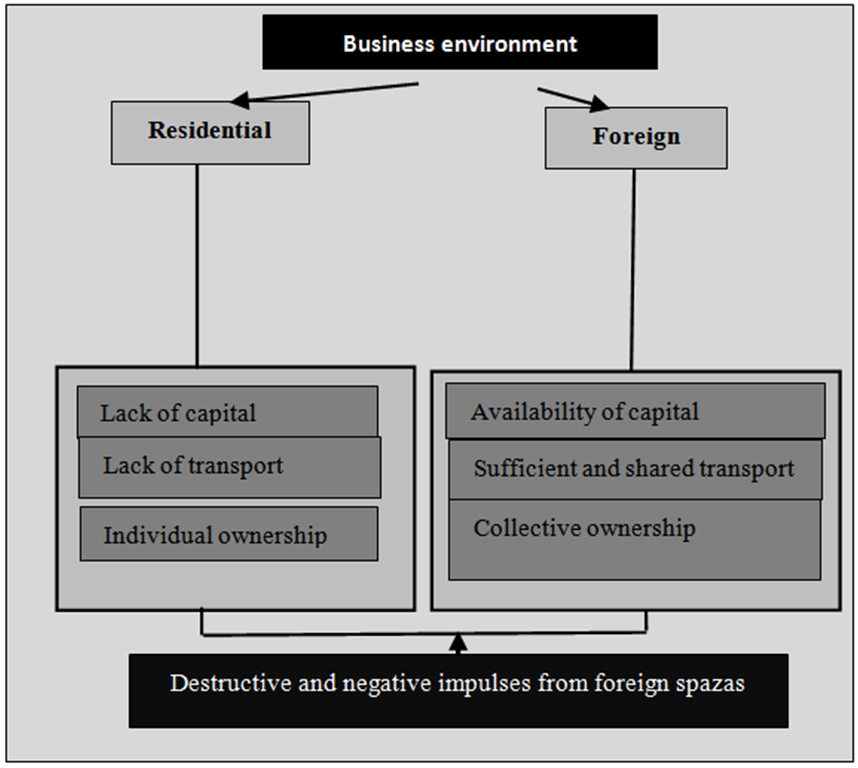
There are also convinced groupings of letting obtainable to select from in town, e.g., the well-known informal dealer can lease a fully furnished building, while the beginner has the choice to let an unoccupied space on a momentarily base. There are foremost divergences in the construction of inhabited informal sectors and those which are in the CBD. The former is more standardised in type, while the last exhibited a dissimilar distributional design (Table 1). Such alterations may replicate compound communal and economic modifications of informal traders’ economic position and their level of linkages, for example the home spazas focused on the vending of elementary domestic goods, while foreign informal traders in the CBD always seek for any occasion to enlarge and branch out their economic foundation base owing to their complex capacity of clients and needs, sufficient capital stocks and extended linkages. Because of the key site (CBD), migrant merchants in the central areas have a competitive benefit of closeness to inhabitants and urban clients. In difference, home traders are confronting with unsympathetic restraints (little and unconfident customers base, low buying power of residential customers, susceptibility, low degrees of business linkages, marginal earnings, and in most cases no means of transport).
Noticeable from the self-employed sector in Saldanha is it compound (central and discrete) spatial placement and varied economic foundation. In the town’s central areas, migrant dealers functioned as groupings and are generally near to each one. There exists a strong mutual connection between informal traders in the CBD, for example: migrant traders shared common practices and beliefs, and customs, and have an extensive net and negotiating influence to manipulate the prices of goods in Saldanha and neighbouring towns. Home spazas have a limited customer’s and returns base.
In Saldanha, the trading sector is vastly portrayed by men who all come from disadvantaged communities. Migrant traders in the central area leased fully endowed (water, sanitation, and electricity) buildings from property-owners. Owing to a space limitation and the accessibility of constant cash, home traders find it extremely arduous to preserve stock and to sell foodstuff on a regular base.
During the Covid-19 and Third Wave, participants were forced to seek alternative means of generating income. One of their major challenges was how to deal with Covid-19:
“The lockdown has had tremendous impact on our business, and it became difficult to do business”; “Yes, there were obstacles on a monthly base, especially to pay salaries and rent, and most of all we do not comply for any financial assistance from local bank branches”; and “Yes, I do have problems. During lock down we lost a lot of money because of stringent measures (the shortening of trading hours and the prohibiting of cigarettes sales) that were enforced.”
Respondents also express various perspectives on how they survive and to be resilient:
“Indeed, we did not show any profits for the past days, weeks and months. During the lockdown we worked with and has done business with pensioners and the proceeds were quite remarkable. The credit system is the most effective mechanism in securing a constant flow of revenue.”
The Somali’s, for example belief that there are underlying factors that enhance success for operating a business: “When starting a business, you need experience and have available transport. In the informal business trade, there is no support. It is a tough environment to survive and at the same time to be competitive.” All the foreign spaza owners in the CBD are overwhelming sure they can contribute to the local economy, create jobs, and expand their businesses to other local residential areas and to surrounding towns.
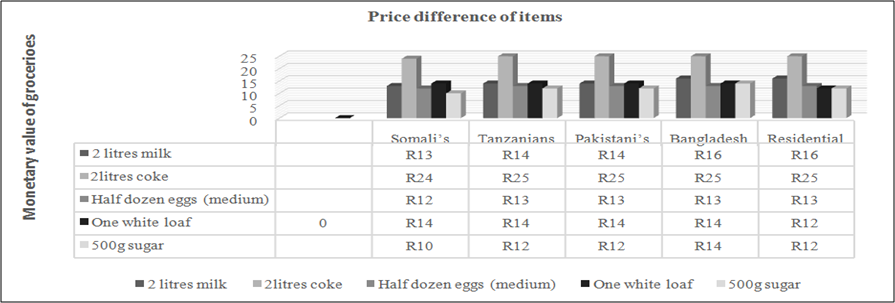
Conferring to survivalist traders their foremost drive of been a dealer is to care for their immediate family. Alliance with other traders in the society is a far distance dream. In contrast to the town’s dealers, they are family-based, consolidate their businesses and labour based on price-fixing principle. Due to its metropolitan networks and high returns, they can outspread and keep bulk stock. One more constructive feature, they can close at 10 pm. Figure 2 displayed the complete variances in price value (Rand and cents) amongst migrant and home spazas on essential household items. The average price of the two groupings in White City and the town was surveyed.
This study found that on all price items excluding for 1(l) milk, 500(g) salt and 2(l) Coca Cola (2litre), the regular price of Somali-owned shops was lesser than the other spaza in Saldanha due to its larger venture capital, turnout and proceeds, capital concentration, aggressive pricing, competent and well-organised supply chain, and institutional thickness give the Somali dealers the comparative advantage. At the same time, the average price difference is discreetly insignificant, as exemplified in the figure, the Somali’s dealing in large quantities. In the words of one Somali spaza owner: “We sell basic needs (bread, milk and sugar, soap, washing power and salt at cost price. We function as a collectively and continuously lowering the price of goods not only to attract new customers, but to please existing customers.” An illustrious feature of Somali’s practices is their method of economy of scale. Several factors underwritten to the current accomplishments of the Somali’s traders:
“We deal and live in a semi supportive supply chain whereby our boss (a family member) procures our goods directly from wholesalers in Cape Town and producers (factory shops). We belief in a hygienic environment and that is why all ethnic groups visited our shops. Each smaller unit of us, shared the same values and cultures, and ultimately benefitted from a procurement and distribution agreement” (Interview with Somali spaza shop owner, 15 February 2021).

As a result of all the advantageous factors including transport availability, home spaza owners listen in on the approachable commercial dealings of immigrants:
“We cannot compete with the Somali’s. They are friendly people, they offer credit, their products are much cheaper, as most of all they also offer a variety (generic brands) which are much cheaper for those who cannot afford the original expensive ones. What is also convenient in doing business with them, their shops are open between 6am and close after 10pm. Often on a monthly base their groceries, cigarettes and soft drinks prices can compete with local supermarkets.” (Interview: residential spaza owner, 19 February 2021).
Over the past ten years there is a rapid decline in the residential traders due to the uncontrolled escalating in foreign traders. Despite the mentioned strong business culture of foreign traders, the residential informal traders cannot compete with them due to a lack of education and most of all financial capital and or fitness: “We experience and was not exposed to the transfer of knowledge because our parents worked as fishermen and factory workers” (Residential spaza owner, 20 February 2021). In contrast, the foreign spaza owners have a sound business culture and knowledge as indicated by the Tanzanian:
“I originated from Tanzania. From an early age I mastered the skills that was transferred by my father to me to be active and seek for opportunities. Essential to that was to be creative and later it became a way of life. A post-democratic South Africa open the doors for me to start a business” (Interview: Tanzanian spaza owner, 18 February 2021).
Family-orientated easy-go practices emphasised on the growth performances of the economic activity and are not stuck into an existence manner 44. These businesses have always a vast variety of goods to select from. The Tanzanian owner moreover operating two spaza shops in the CBD. In all the spaza shops only female local workers were outsources as cleaners. The next figure demonstrated the chief features of the home and migrant spazas commercial settings.
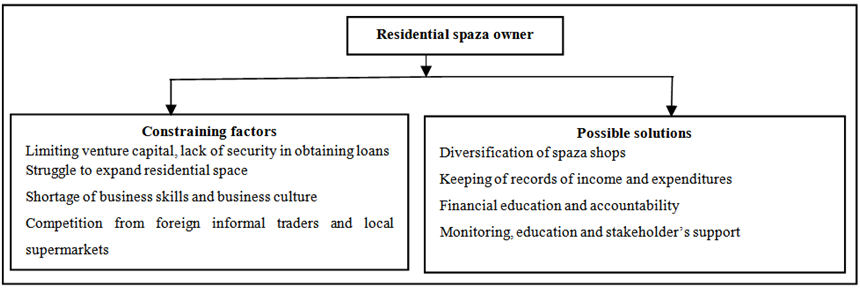
The Pakistani’s as well as the Bangladeshi’s informal traders employed family members. In all the spaza shops only female local workers were outsources as cleaners A lack of extension capital and limited access to funding in especially residential areas are the two most important stumbling blocks for growth and the development of entrepreneurship 1. A shortage of capital and reduced admission to finance in particularly inhabited areas are the two greatest constraining factors for growth and the expansion of free enterprise 1. The following figure displayed the main characteristics of the residential spaza owners and how to address it.


Notwithstanding all the assurances from authorities since 1994, there are no legislature in place to defend and or backing informal trading 45.
This study has discovered that the presence of heavy industries and the official launching of the SSEZ has kick-start the migration of job seekers to Saldanha. Also noted, is the easing of migration laws in South Africa and the opening of the local market contributed to the following: the intensification and concentration of foreign traders and the gradual diminishing of residential (survivalist) spaza owners in Saldanha. The author has found that there was no compelling evidence of support from local authorities to support residential spaza owners in gaining access to financial and to uplift their business skills.
The previous decade has revealed a sudden surge in the absorption and diverse ethnic spaza shop ownership in the central areas of Saldanha. The arrival of specifically Somali traders has transformed informal dealings in Saldanha. The strong embedded corporate ethos of the foreigners has postured a threat for the remaining residential traders.
Teamwork, sound locational choices, partaking in competitive practices, sightseeing the most appropriate marketplace in the central areas, and a strong supply chain put the Somalis in a very suitable position to operate. Due to the foreigner’s economic way of doing business, and tremendous sociability, a credit system, xenophobia is non-existent in Saldanha. Most home traders lease their shop space (home) to foreigners and that create a supportable basis of earnings for them.
Governmental organisations in South Africa lack the ability in making space available for the introduction of a central informal trading hub in each town. The current state of the informal trading businesses in Saldanha needs much consideration and commitment from all relevant stakeholders. The most critical challenges with all the potential spaza traders are the lack of venture capital. Residential spaza owners have an important role to play in targeting the most vulnerable. Partnerships between local authorities and the private sector (banks and companies) can reduce the entry barriers for spaza shop owners. The nonappearance of comprehensive data about, for example the evolution of residential informal spazas market impeded the authorities’ capabilities to search for alternatives in how to assist residential spaza shop owners.
1. When foregoing decision of the past, influence the present decision-making process of institutions 18.
2. Creative destruction refers to the continual creation and development improvement apparatus by which new production units supersede outmoded ones. This rearrangement or reorganization process pervades main characteristics of macro-economic function, not only long-run progress but also economic rise and fall, operational alteration and the performing of markets 19.
3. Cape snoek is frequently perceived as a cheap fish, but it is in fact a healthful, comparatively inexpensive great protein, little fat nutrition basis that is excessive in worthy omega-3 full of fat doses 20.
| [1] | Tengeh, R.K. and Mukwarami, J, The growth challenges of native-owned spaza shops in selected townships in South Africa. International Journal of Applied Business and Economic Research, 15 (2): 61-74. 2017. | ||
| In article | |||
| [2] | Bohme, M.’ & Thiele, R, (2014) Informal-formal linkages and informal enterprise performance in West Africa, European Journal of Development, 26: 473-489. | ||
| In article | View Article | ||
| [3] | Getis, A., Bjelland, M. and Getis, V, Introduction to Geography. New York: McGraw-Hill Education. 2018. | ||
| In article | |||
| [4] | Legodi, K., & Kanjere, M. The challenges faced by informal traders in greater Letaba municipality in Limpopo province, South Africa. Africa’s Public Service Delivery & Performance Review (SDPR) 3(4). 2015. | ||
| In article | View Article | ||
| [5] | South African Government, National Development Plan, 2012. | ||
| In article | |||
| [6] | Cichello, P., and Rogan, M, Informal sector employment and poverty in South Africa: Identifying the contribution of informal sources of income on aggregate poverty measures. The Research Project on Employment, Income Distribution, and Inclusive Growth (REDI) 3x3 Working Paper 34. 2017. 2002. | ||
| In article | |||
| [7] | Charmank, A., Petersen, L., and Piper, L, From local survivalism to foreign entrepreneurship: The transformation of the spaza sector in Delft, Cape Town. Transformation, 78: 47-73. 2012. | ||
| In article | View Article | ||
| [8] | Heintz, J., and Posel, D, Revisiting informal employment and segmentation in the South African labour market. South African Journal of Economics, 76, 1: 26-44. 2008. | ||
| In article | View Article | ||
| [9] | Butler, J, Robert, I., Rotberg, and John, A, The Blacks Homelands of South Africa: The Political and Economic Development of Bophuthatswana and Kwa-Zulu. Berkeley: University of California Press. The history of the homeland history essay. Available at: https://www.ukessays.com/essays/history/the-history-of-the-homelands-history-essay.php. 1978. | ||
| In article | |||
| [10] | Stats SA, Quarterly Labour Force Report, Quarter 4. Republic of South Africa. 2019. | ||
| In article | |||
| [11] | Stats SA, Survey of Employers and Self-Employed (SESE). Republic of South Africa. 2019. | ||
| In article | |||
| [12] | Harris, A, 2004. Modes of informal urban development: A global phenomenon. Journal of Planning Literature, 1-21. | ||
| In article | |||
| [13] | Hoosha, J., and Meyer, A, The informal economy and sustainable livelihoods. The Journal of the Helen Suzman Foundation, 21, 1-37. 2015. | ||
| In article | |||
| [14] | Rogerson, C.M, Planning spatial development initiatives: South Africa’s industrial development zones. Urban Forum, 10, 259-73. 1999. | ||
| In article | View Article | ||
| [15] | Rogerson, C.M, Spatial development initiatives in Southern Africa: The Maputo Development Corridor. Tijdschrift moor Econoische en Sociale Geografie, 92, 324-46. 2001. | ||
| In article | View Article | ||
| [16] | Bek, D., Binns, J.A., & Nel, E.L, ‘Catching the developing train’: Perspectives on ‘top-down’ and ‘bottom-up’ development in post-apartheid South Africa. Progress in Development Studies 4, 22-46. 2004. | ||
| In article | View Article | ||
| [17] | Dosi G, Opportunities, incentives, and the collective patterns of technological change. The Economic Journal, 107: 1530-1547. 1997. | ||
| In article | View Article | ||
| [18] | Boschma, R.A, and Frenken, K, Applications of evolutionary economic geography. Danish Research Unit for Industrial Dynamics (DRUID), 1: 33. 2006. | ||
| In article | |||
| [19] | Schumpeter, J.A, Capitalism, socialism, and democracy. New York: Harper and Row. 1942. | ||
| In article | |||
| [20] | Henning, S.S., and Hoffman, L.C, Proximate and fatty acid composition of cooked South African Cape snoek (Thyrsites atun). South African Journal of Science, 113: 1-4. 2017. | ||
| In article | View Article | ||
| [21] | Hoover, E.M., and Vernon, R, Anatomy of a Metropolis: The Changing Distribution of People and Jobs Within the New York Metropolitan Area. Pp. xvi, 345. Cambridge: Harvard University Press. 1959. | ||
| In article | View Article | ||
| [22] | Porter, M.E., The Competitive Advantage of Nations. New York: Free Press. 1990. | ||
| In article | View Article | ||
| [23] | Stam, E, Why butterflies do not leave. Locational behavior of entrepreneurial firms and life cycle. Economic Geography, 83: 27-50. 2007. | ||
| In article | View Article | ||
| [24] | Grimm, M., Krüger, J., and Lay, J, Barriers to entry and returns to capital in informal activities: Evidence from sub-Saharan Africa. Review of Income and Wealth 57: 27-53. 2011a. | ||
| In article | View Article | ||
| [25] | Grimm, M., Van der Hoeven, R., and Lay, J, Unlocking potential: Tackling economic, institutional, and social constraints of informal entrepreneurship in sub-Saharan Africa: Main findings and policy conclusions. International Institute of Social Studies, 22: 1-14. 2011b. | ||
| In article | View Article | ||
| [26] | Biney, I.K., Unearthing entrepreneurial opportunities among youth vendors and hawkers: Challenges and strategies. Journal of Innovation and Entrepreneurship, 8(2): 1-15. 2019. | ||
| In article | View Article | ||
| [27] | Rajesh-Raj, S.N., Sen, K., and Kathuria, V, Does banking development matter for new firm creation in the informal sector? Evidence from India. Review of Development Finance, 38-39. 2014. | ||
| In article | View Article | ||
| [28] | Guibin, J, The informal sector and growth in China. Eco-Environmental Science, 4(2), 454-659. 2008. | ||
| In article | |||
| [29] | Böhm, M.H., and Thiele R, Informal–Formal Linkages and Informal Enterprise Performance in Urban West Africa. European Journal of Development Research, 26(4): 473-489. 2014. | ||
| In article | View Article | ||
| [30] | Rajesh-Raj, S.N., Sen, K., and Kathuria, V, Does banking development matter for new firm creation in the informal sector? Evidence from India. Review of Development Finance, 38-39. 2014. | ||
| In article | View Article | ||
| [31] | Lewis, W.A, Economic development with unlimited supplies of labor. Oxford Bulletin of Economics and Statistics, 42: 203-226. 1954. | ||
| In article | |||
| [32] | Todaro, M.P, A model of labor migration and urban unemployment in less developed countries. American Economic Review, 59: 139-148. 1969. | ||
| In article | |||
| [33] | Mazumdar, D., The urban informal sector, World Development, 4: 655-679. 1976. | ||
| In article | View Article | ||
| [34] | Reilly, B., Krstic, G., and Cominetta, M, Purchasing from informal markets: Evidence from Serbia. Applied Economics Quarterly, 52: 239-264. 2006. | ||
| In article | |||
| [35] | La Porta, R., and Shleifer, A, The unofficial economy in Africa. NBER Working Paper 16821. 2011. | ||
| In article | View Article | ||
| [36] | Kingdon, G.G., and Knight, J.B, Unemployment in South Africa: The nature of the beast. World Development, Elsevier, 32(3), 391-408. 2004. | ||
| In article | View Article | ||
| [37] | Ligthelm, A.A., A targeted approach to informal business development: the entrepreneurial route. Development Southern Africa, 25(4): 367-382. 2008. | ||
| In article | View Article | ||
| [38] | Minard, C.S.L, 2009. Valuing entrepreneurship in the informal economy in Senegal. Social Enterprise Journal, 5(3): 186-209. | ||
| In article | View Article | ||
| [39] | Rogerson, C.M., & Nel, E., Redressing inequality in South Africa: The spatial targeting of distressed areas. Local Economy, 31(1-2): 28-41. 2016. | ||
| In article | View Article | ||
| [40] | Department of Trade and Industry. Republic of South Africa. 2012. | ||
| In article | |||
| [41] | Binns, T., and Nel, E., The role of local economic development and community self-reliance in rural South Africa. The Journal of Modern African Studies, 37(3): 389-408. 1999. | ||
| In article | View Article | ||
| [42] | Government Gazette, Business Act 71 of 1991. Republic of South Africa. 1991. | ||
| In article | |||
| [43] | SBM, Saldanha Bay municipality informal trading by-law. 1996. | ||
| In article | |||
| [44] | Pasquier-Doumer, L., Oudin, X., and Thang, N. The Importance of Household Businesses and the Informal Sector for Inclusive Growth in Vietnam. Vietnam Academy of Social Sciences and the French National Research Institute for Sustainable Development. 2017. | ||
| In article | |||
| [45] | Nuys, A. and Baud, P.F, The dual labour theory and the informal sector in South Africa, Acta Commercii, 240-265. 2007. | ||
| In article | |||
Published with license by Science and Education Publishing, Copyright © 2021 Lesley Peter Welman
 This work is licensed under a Creative Commons Attribution 4.0 International License. To view a copy of this license, visit
http://creativecommons.org/licenses/by/4.0/
This work is licensed under a Creative Commons Attribution 4.0 International License. To view a copy of this license, visit
http://creativecommons.org/licenses/by/4.0/
| [1] | Tengeh, R.K. and Mukwarami, J, The growth challenges of native-owned spaza shops in selected townships in South Africa. International Journal of Applied Business and Economic Research, 15 (2): 61-74. 2017. | ||
| In article | |||
| [2] | Bohme, M.’ & Thiele, R, (2014) Informal-formal linkages and informal enterprise performance in West Africa, European Journal of Development, 26: 473-489. | ||
| In article | View Article | ||
| [3] | Getis, A., Bjelland, M. and Getis, V, Introduction to Geography. New York: McGraw-Hill Education. 2018. | ||
| In article | |||
| [4] | Legodi, K., & Kanjere, M. The challenges faced by informal traders in greater Letaba municipality in Limpopo province, South Africa. Africa’s Public Service Delivery & Performance Review (SDPR) 3(4). 2015. | ||
| In article | View Article | ||
| [5] | South African Government, National Development Plan, 2012. | ||
| In article | |||
| [6] | Cichello, P., and Rogan, M, Informal sector employment and poverty in South Africa: Identifying the contribution of informal sources of income on aggregate poverty measures. The Research Project on Employment, Income Distribution, and Inclusive Growth (REDI) 3x3 Working Paper 34. 2017. 2002. | ||
| In article | |||
| [7] | Charmank, A., Petersen, L., and Piper, L, From local survivalism to foreign entrepreneurship: The transformation of the spaza sector in Delft, Cape Town. Transformation, 78: 47-73. 2012. | ||
| In article | View Article | ||
| [8] | Heintz, J., and Posel, D, Revisiting informal employment and segmentation in the South African labour market. South African Journal of Economics, 76, 1: 26-44. 2008. | ||
| In article | View Article | ||
| [9] | Butler, J, Robert, I., Rotberg, and John, A, The Blacks Homelands of South Africa: The Political and Economic Development of Bophuthatswana and Kwa-Zulu. Berkeley: University of California Press. The history of the homeland history essay. Available at: https://www.ukessays.com/essays/history/the-history-of-the-homelands-history-essay.php. 1978. | ||
| In article | |||
| [10] | Stats SA, Quarterly Labour Force Report, Quarter 4. Republic of South Africa. 2019. | ||
| In article | |||
| [11] | Stats SA, Survey of Employers and Self-Employed (SESE). Republic of South Africa. 2019. | ||
| In article | |||
| [12] | Harris, A, 2004. Modes of informal urban development: A global phenomenon. Journal of Planning Literature, 1-21. | ||
| In article | |||
| [13] | Hoosha, J., and Meyer, A, The informal economy and sustainable livelihoods. The Journal of the Helen Suzman Foundation, 21, 1-37. 2015. | ||
| In article | |||
| [14] | Rogerson, C.M, Planning spatial development initiatives: South Africa’s industrial development zones. Urban Forum, 10, 259-73. 1999. | ||
| In article | View Article | ||
| [15] | Rogerson, C.M, Spatial development initiatives in Southern Africa: The Maputo Development Corridor. Tijdschrift moor Econoische en Sociale Geografie, 92, 324-46. 2001. | ||
| In article | View Article | ||
| [16] | Bek, D., Binns, J.A., & Nel, E.L, ‘Catching the developing train’: Perspectives on ‘top-down’ and ‘bottom-up’ development in post-apartheid South Africa. Progress in Development Studies 4, 22-46. 2004. | ||
| In article | View Article | ||
| [17] | Dosi G, Opportunities, incentives, and the collective patterns of technological change. The Economic Journal, 107: 1530-1547. 1997. | ||
| In article | View Article | ||
| [18] | Boschma, R.A, and Frenken, K, Applications of evolutionary economic geography. Danish Research Unit for Industrial Dynamics (DRUID), 1: 33. 2006. | ||
| In article | |||
| [19] | Schumpeter, J.A, Capitalism, socialism, and democracy. New York: Harper and Row. 1942. | ||
| In article | |||
| [20] | Henning, S.S., and Hoffman, L.C, Proximate and fatty acid composition of cooked South African Cape snoek (Thyrsites atun). South African Journal of Science, 113: 1-4. 2017. | ||
| In article | View Article | ||
| [21] | Hoover, E.M., and Vernon, R, Anatomy of a Metropolis: The Changing Distribution of People and Jobs Within the New York Metropolitan Area. Pp. xvi, 345. Cambridge: Harvard University Press. 1959. | ||
| In article | View Article | ||
| [22] | Porter, M.E., The Competitive Advantage of Nations. New York: Free Press. 1990. | ||
| In article | View Article | ||
| [23] | Stam, E, Why butterflies do not leave. Locational behavior of entrepreneurial firms and life cycle. Economic Geography, 83: 27-50. 2007. | ||
| In article | View Article | ||
| [24] | Grimm, M., Krüger, J., and Lay, J, Barriers to entry and returns to capital in informal activities: Evidence from sub-Saharan Africa. Review of Income and Wealth 57: 27-53. 2011a. | ||
| In article | View Article | ||
| [25] | Grimm, M., Van der Hoeven, R., and Lay, J, Unlocking potential: Tackling economic, institutional, and social constraints of informal entrepreneurship in sub-Saharan Africa: Main findings and policy conclusions. International Institute of Social Studies, 22: 1-14. 2011b. | ||
| In article | View Article | ||
| [26] | Biney, I.K., Unearthing entrepreneurial opportunities among youth vendors and hawkers: Challenges and strategies. Journal of Innovation and Entrepreneurship, 8(2): 1-15. 2019. | ||
| In article | View Article | ||
| [27] | Rajesh-Raj, S.N., Sen, K., and Kathuria, V, Does banking development matter for new firm creation in the informal sector? Evidence from India. Review of Development Finance, 38-39. 2014. | ||
| In article | View Article | ||
| [28] | Guibin, J, The informal sector and growth in China. Eco-Environmental Science, 4(2), 454-659. 2008. | ||
| In article | |||
| [29] | Böhm, M.H., and Thiele R, Informal–Formal Linkages and Informal Enterprise Performance in Urban West Africa. European Journal of Development Research, 26(4): 473-489. 2014. | ||
| In article | View Article | ||
| [30] | Rajesh-Raj, S.N., Sen, K., and Kathuria, V, Does banking development matter for new firm creation in the informal sector? Evidence from India. Review of Development Finance, 38-39. 2014. | ||
| In article | View Article | ||
| [31] | Lewis, W.A, Economic development with unlimited supplies of labor. Oxford Bulletin of Economics and Statistics, 42: 203-226. 1954. | ||
| In article | |||
| [32] | Todaro, M.P, A model of labor migration and urban unemployment in less developed countries. American Economic Review, 59: 139-148. 1969. | ||
| In article | |||
| [33] | Mazumdar, D., The urban informal sector, World Development, 4: 655-679. 1976. | ||
| In article | View Article | ||
| [34] | Reilly, B., Krstic, G., and Cominetta, M, Purchasing from informal markets: Evidence from Serbia. Applied Economics Quarterly, 52: 239-264. 2006. | ||
| In article | |||
| [35] | La Porta, R., and Shleifer, A, The unofficial economy in Africa. NBER Working Paper 16821. 2011. | ||
| In article | View Article | ||
| [36] | Kingdon, G.G., and Knight, J.B, Unemployment in South Africa: The nature of the beast. World Development, Elsevier, 32(3), 391-408. 2004. | ||
| In article | View Article | ||
| [37] | Ligthelm, A.A., A targeted approach to informal business development: the entrepreneurial route. Development Southern Africa, 25(4): 367-382. 2008. | ||
| In article | View Article | ||
| [38] | Minard, C.S.L, 2009. Valuing entrepreneurship in the informal economy in Senegal. Social Enterprise Journal, 5(3): 186-209. | ||
| In article | View Article | ||
| [39] | Rogerson, C.M., & Nel, E., Redressing inequality in South Africa: The spatial targeting of distressed areas. Local Economy, 31(1-2): 28-41. 2016. | ||
| In article | View Article | ||
| [40] | Department of Trade and Industry. Republic of South Africa. 2012. | ||
| In article | |||
| [41] | Binns, T., and Nel, E., The role of local economic development and community self-reliance in rural South Africa. The Journal of Modern African Studies, 37(3): 389-408. 1999. | ||
| In article | View Article | ||
| [42] | Government Gazette, Business Act 71 of 1991. Republic of South Africa. 1991. | ||
| In article | |||
| [43] | SBM, Saldanha Bay municipality informal trading by-law. 1996. | ||
| In article | |||
| [44] | Pasquier-Doumer, L., Oudin, X., and Thang, N. The Importance of Household Businesses and the Informal Sector for Inclusive Growth in Vietnam. Vietnam Academy of Social Sciences and the French National Research Institute for Sustainable Development. 2017. | ||
| In article | |||
| [45] | Nuys, A. and Baud, P.F, The dual labour theory and the informal sector in South Africa, Acta Commercii, 240-265. 2007. | ||
| In article | |||