The rapid population growth in the city of Sokodé over recent decades has significantly increased household solid waste generation, currently estimated at approximately sixty-one (61) tons per day. Despite this growing waste stream, the efficiency of waste management services particularly the pre-collection stage remains limited. This study addresses a critical research gap by investigating the underlying factors responsible for the low subscription rate to pre-collection services, an area that has received limited attention in the context of medium-sized cities in West Africa. A survey was conducted across all thirty-three (33) neighborhoods of Sokodé, targeting 336 households and 28 institutional and commercial structures, including markets, hotels, bar-restaurants, schools, and a training center. Findings reveal an average subscription rate of les than 30% to pre-collection services. By analyzing several performance indicators, the study highlights the inefficiencies in the current system. The low subscription rate is primarily attributed to economic barriers such as affordability and irregular income and socio-institutional factors like low awareness and lack of trust in service providers. The study’s findings have practical implications for policymakers, urban planners, and service providers. They underline the need for targeted awareness campaigns, economic incentives, and institutional reforms to improve household participation in waste pre-collection systems. The results also provide a valuable empirical foundation for future interventions aimed at strengthening urban sanitation governance in similar urban contexts.
African cities are expanding rapidly and experiencing a population explosion, leading to an increase in the amount of waste produced 1, 2. Poor waste management has direct repercussions on city sanitation, water and soil quality, and the health of residents 3, 4. Household solid waste production is also increasing worldwide due to lifestyle changes, increased purchasing power, and the push to consume personalized products through packaging 5, 6, 7. Compared to developed countries, waste collection in cities in developing countries poses a significant challenge for local authorities. These difficulties result in an accumulation of waste and the emergence of numerous illegal dumps, which impact the environment and human health 8, 9. Unfortunately, the collection and landfill rates remain low in several African countries, particularly in their municipalities. Low collection rates and uncontrolled fly-tipping are characteristic of disadvantaged neighborhoods in developing countries 10, 11, 12. In some African capitals, for example, less than 30% of waste is disposed of 13. The collection rate in developing countries is between 50 and 80% of the waste generated due to a lack of financial resources and poor organization 14, 15, 16. Particularly in Togo, the collection rate is low; it is 28.35% in Sokodé according to Water and Sanitation Project in Togo, Phase 2 17; 35% in Lomé 2; 22.5% in the city of Tsévié in 2013 18 and 15% in 2018 17 in the same city. These low collection rates demonstrate the nuisance and environmental impact that uncollected waste can cause. The city of Sokodé, particularly the commune of Tchaoudjo1, like other communes in Togo, is facing strong population growth, as well as a change in consumption patterns which results in an increase in the daily weight of waste produced. The population of the city of Sokodé is estimated at 113,486 inhabitants in 2020 19. The daily production per person is 0.51 kg 19. This corresponds to 61 ± 1.97 tonnes/day or 22,141 ± 1,253 tonnes/year. In the entire city of Sokodé, only 28.35% of the population subscribe to the solid waste pre-collection service 17. This means that 71.65% of the population throws their waste into the environment. This situation, the effects of which are visible everywhere, causes significant nuisances for residents and has harmful consequences for the health of the population. The objective of this study is to identify the factors linked to the low subscription rate to the pre-collection service and to propose solution approaches that can contribute to increasing the subscription rate to the pre-collection service in the city of Sokodé.
Located between 8°57’ and 9°03’ North Latitude and 1°05’ and 1°11’ East Longitude, 346 km north of Lomé, Sokodé, the capital of the Central Region of Togo and the Tchaoudjo Prefecture, has long remained the country's second largest population center. This important commercial center lies at the intersection of major transport routes such as National Road No. 1 (Lomé-Cinkassé), which crosses the country in a south-north direction, and the Tchamba-Bassar axis, which connects Togo to the Republic of Benin to the east and Ghana to the west. It has experienced rapid population growth and, above all, dazzling spatial dynamism, and has now encompassed several villages formerly located on its outskirts. According to the General Population and Housing Census (RGPH) of November 2010, it has a population of 95,070. After experiencing a high growth rate, exceeding 6% in the 1960s, the city now appears to be stabilizing at around 2 to 3%. Its density, estimated at 47 inhabitants/km², is distributed across 33 official neighborhoods. The estimated population in 2018 was 111,258 inhabitants 17.
2.2. SamplingThe sociological survey was conducted to assess the actual level of pre-collection service coverage and determine households' willingness and ability to pay for the pre-collection service. Setting a target of 1.8% of the population, the number of households to be surveyed was estimated based on six (6) people per household. Thus, the number of households to be surveyed was estimated at three hundred and thirty-six (336). Sectors of activity that provide basic services to the population, such as markets, hotels, bar-restaurants, and schools, which are also major producers of solid waste, were considered. Twenty-eight (28) structures, including four (4) markets, six (6) hotels, four (4) bar-restaurants, twelve (12) schools, and 1 training center, were selected for the survey. The selection of households took into account the standard of the housing 20. Three standards were considered (low, medium, and high):
- Low standard: mud or clay housing
- Medium standard: housing built with cement
- High standard: Villas In each neighborhood, the number allocated to each standard was based on their abundance. The more a given status is no longer present, the more the selection of households to be surveyed was oriented towards that status. The number of households selected in each neighborhood is shown in Table 1.
Subscription rate, quantity of waste produced and quantity of waste produced by subscribers were calculated by the formula 1, 2 and 3.  (1), where, TA is production ratio R(kg/inhab/d) ;
 | (2) |
 | (3) |
A= number of subscribers; H= number of households ; C= quantity of waste collected; PH= quantity of waste produced, PA= quantity of waste produced by subscribers.
The information collected through the survey forms was digitized and processed using Excel software.
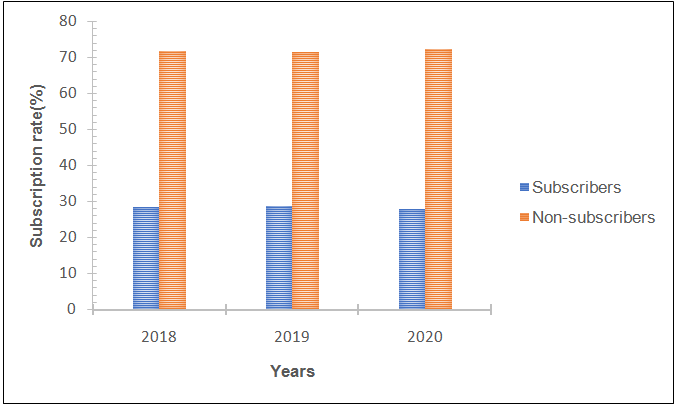
The subscription rate for pre-collection structures at the city level is 28.35% ; 28.5% and 27.8% respectively for the years 2018, 2019 and 2020 (Figure 1). The decrease in the subscription rate in 2020 can be explained by the Covid-19 pandemic which weakened the economy of the populations preventing them from honoring their commitments to household waste pre-collection services. Overall, this subscription rate is low and a major challenge therefore remains to be met in this area.
3.2. Evaluation of the Effectiveness of the Pre-collection ServiceThe implementation of the solid waste management plan in the city of Sokodé (pre-collection and landfill) presents challenges, and collection performance indicators have made it possible to assess its ineffectiveness (Table 2).

The coverage rates of pre-collection services in the studied city were 28.35% in 2018, 28.50% in 2019, and 27.80% in 2020, resulting in an average subscription rate of 28.22%. These low pre-collection coverage rates contribute to the accumulation of uncollected waste in the environment, estimated at 15,895 tonnes per year 19. This situation exacerbates unsanitary conditions in neighborhoods, particularly where waste evacuation services are insufficient or non-functional. The predominance of traditional waste management systems over associative or formalized structures further reflects systemic weaknesses, especially among low-income households unable to afford service fees or sustain subscription contracts.
Similar trends were observed in Sokodé (Togo), where a study conducted in 2017 in the districts of Kpangalam and Tchawanda revealed subscription rates of 23.76% and 8.81% respectively 21. The disparity between these districts was linked to differences in living standards, with residents of Kpangalam better able to afford pre-collection services than those in Tchawanda.
Comparable findings have been reported elsewhere in West Africa. In Ouagadougou (Burkina Faso), the subscription rate to pre-collection services was estimated at 34%, with wide disparities between urban and peri-urban zones, attributed to income levels, household awareness, and service reliability 22. Similarly, a study in Bamako (Mali) found that only 20% of households subscribed to solid waste collection services, primarily due to cost and lack of trust in the operators 23.
These comparisons highlight a recurring challenge across West African cities, where household waste management remains largely informal and underfunded, with socio-economic barriers impeding broader service coverage. Improving subscription rates requires not only strengthening the capacity of pre-collection operators but also implementing inclusive financing mechanisms adapted to low-income urban populations.
For the city of Sokodé, the main factors explaining the low subscription rate for the pre-collection service are:
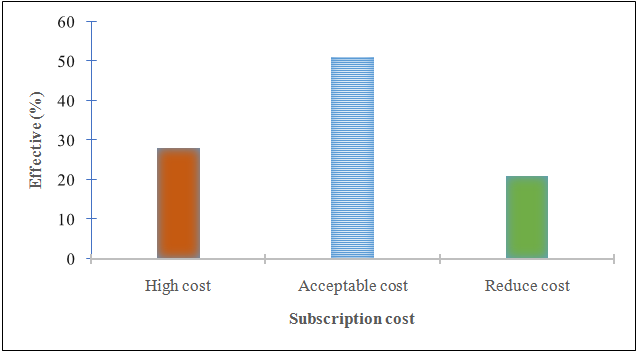
Ø Cost of Service: The price of the pre-collection service subscription is a crucial factor. If the cost is too high, it can deter residents from subscribing. Indeed, 28% believe that the household waste collection tax is too high but are willing to change their behavior if the subscription fee is reduced (Figure 2).


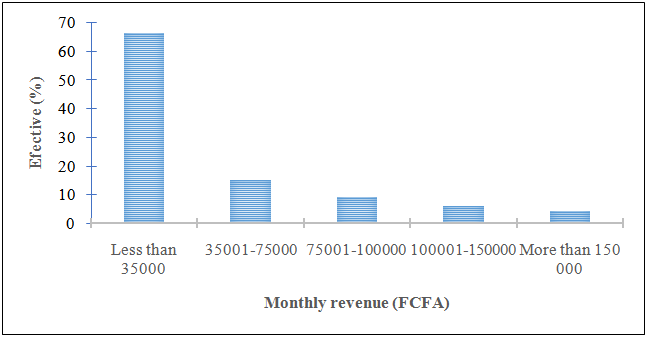
Ø Household Income Level: A significant proportion of household heads in the study area engage in non-salaried activities such as agriculture and informal commerce. This economic structure largely explains why 66% of them earn a monthly income of less than or equal to 35,000 CFA francs (Figure 3). These households, often economically vulnerable, face considerable difficulty in affording regular payments for waste pre-collection services. Consequently, 66% of non-subscribing households cite insufficient income as the primary reason for not subscribing, underscoring a strong negative correlation between subscription cost and subscription rate. As the cost of the service rises relative to household income, subscription rates tend to decline. This pattern is consistent with findings in other West African urban contexts. For instance, in Bamako (Mali), 22 found that only 20% of households subscribed to waste collection services, with cost and income instability cited as key deterrents. Similarly, in Ouagadougou (Burkina Faso), a study by 23 reported that low-income households in peri-urban areas were significantly less likely to engage with formal waste collection systems, preferring self-disposal or informal arrangements due to cost concerns. In Cotonou (Benin), a study by 24 showed that over 60% of non-subscribers to household waste collection services lived below the poverty line, and proposed fee adjustments based on household size and income were widely supported by residents. These findings echo local perspectives in the present study area, where non-subscribers advocate for a sliding-scale pricing model: 500 CFA francs for households with fewer than three members, 700 CFA francs for those with three or more, and 1,000 CFA francs for higher-income households. Such a tiered system could improve affordability and foster broader access to pre-collection services, aligning better with the socio-economic realities of urban populations in the region.
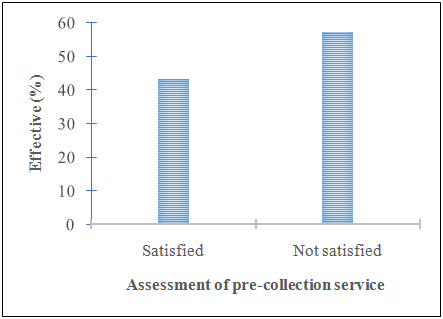
These factors are linked to the behaviors and attitudes of the population and pre-collection service agents. Indeed, the reliability, frequency, and efficiency of the pre-collection service directly influence the satisfaction and willingness of the population to subscribe. In the city of Sokodé, some pre-collection associations do not respect the collection frequency, which is normally two (02) times per week, which discourages subscribers and limits their willingness to renew their subscription contracts. 57% of respondents are not satisfied with the pre-collection service in the city of Sokodé (Figure 4). Furthermore, there is a lack of ongoing communication between the pre-collection service and households when pre-collectors are unable to attend.

To encourage households to subscribe to the pre-collection service, flexible pricing structures should be established, such as installment payments or discounts for long-term subscriptions. Also, to encourage strong adoption of pre-collection services, the price should be set based on household size and standard of living. For example, 500 CFA francs for low-income households (housing made of mud or clay), 700 CFA francs for middle-income households (housing built with cement) and above, and 1,000 CFA francs for high-income households (villas) and other structures (hotels, bars, restaurants, and schools). The pre-collection method in the city of Sokodé is door-to-door, delivered by existing associations. Subscribed households must pay a monthly fee (between 500 FCFA and 1000 FCFA/ month/ household) for their waste to be transported to the final landfill. This pre-collection method is more relevant to new neighborhoods where roads exist and households have significant economic power. It is obvious that not all households can subscribe to the associative pre-collection. The collection system therefore presents difficulties. In most cases, waste is dumped on public roads, burned at night, or buried. All of this can only be corrected if collection and citizen responsibility are controlled, as is the case in developed cities. The problems lie in the administrative organization and the management of conflicts arising from waste management. Beyond these difficulties faced by this city, there is the anarchic occupation of the territory. As a result, the municipality has no method for collecting taxes and addressing problems. Furthermore, it should be noted that the majority of the population is in the informal or artisanal sector and therefore does not have bank account that would allow the municipality to directly collect waste through banks. To better ensure pre-collection, this sector should be entrusted to an operator who signs a contract with the municipality. To finance waste pre-collection in the city of Sokodé, an integrated management system approach is required. Indeed, the city of Sokodé cannot indefinitely rely on external funding through projects ; it is important to explore scenarios based on essential sectors such as mobile telephony and the electricity grid.
- Mobile telephony
Telephone communications have become a necessity for the majority of the population of Sokodé, even for young students, middle school students, high school students, and University students. Levying a tax on mobile phones could contribute to improving pre-collection services. - Electricity distribution The results of surveys conducted as part of the Togo Water and Sanitation Project, Phase 2 (PAEAT 2) in 2018 shows that 66% of households in Sokodé are subscribed to the CEET (National Electricity and Water Supply Network). Thanks to the sub-meter system and illegal connections, almost all of Sokodé's suburbs use the electricity grid. Electricity companies can use this opportunity to collect household waste collection taxes as well as taxes for the electrification of public roads.
In the city of Sokodé, awareness campaigns must be conducted to raise awareness among the population about the importance of waste management and the benefits of pre-collection services in order to influence subscription rates. It is also imperative to maintain ongoing communication between the population and household waste pre-collection services to better manage conflicts.
Municipal authorities must implement strong local regulations that encourage or requires households to use pre-collection services in order to increase subscription rates. Pre-collection services in the city of Sokodé must receive subsidies, incentives, and support from local authorities to make these pre-collection services more attractive.
Our work has focused on addressing one of the most sensitive issues for urban authorities, one that threatens our environment and undermines human living conditions: household waste management. The objective of this study is to assess the factors influencing the pre-collection service subscription rate in the city of Sokodé in order to provide the municipality with indicators to further convince households to abandon poor traditional management practices and encourage them to subscribe to the paid pre-collection service. To increase the household waste pre-collection service subscription rate, it is essential to consider an integrated approach that addresses these various factors. Fair pricing policies, effective awareness campaigns, continuous improvement of service quality, and support from local authorities are all strategies that can encourage wider adoption of the service by city residents. The findings of this study offer practical and strategic insights for multiple stakeholders:
Researchers in the fields of environmental management, urban sanitation, and public policy can use these findings as a basis for comparative studies or to design interventions aimed at improving waste management systems. The study contributes to the growing literature on household behavior toward sanitation services in Sub-Saharan Africa.
Local and national decision-makers can better understand the determinants of household subscription behavior and design targeted strategies to boost participation in pre-collection waste services. These findings can inform urban planning, environmental policy, and community engagement frameworks.
Waste management companies and private operators can refine their business models by aligning their services with the preferences and constraints of potential subscribers. By identifying key barriers to subscription such as cost, service reliability, or awareness, they can develop tailored solutions to expand their client base and improve service efficiency. Despite its contributions, the study has some limitations. In fact, the findings, while relevant to Sokodé, may not be directly transferable to other countries due to differences in socio-economic, cultural, and infrastructural conditions.
This work was carried out thanks to the Organic Chemistry and Environmental Sciences Laboratory (LaCOSE, formerly LASEE). We would like to thank the Director of the said laboratory for the framework he provided us with for this work.
The authors declare that they have no conflict of interests.
| [1] | Charnay F. Compostage des déchets urbains dans les PED: Elaboration d’une démarche méthodologique pour une production pérenne de compost. Thèse de Doctorat N°56. Université de Limoges, 277 p. 2005. | ||
| In article | |||
| [2] | Koledzi, K. E., Baba, G., Feuillade, G., & Matejka, G. Caractérisation physique des déchets solides urbains à Lomé au Togo, dans la perspective du compostage décentralisé dans les quartiers. Revue Déchets Sciences et Techniques, 59: 14-22. 2012. | ||
| In article | View Article | ||
| [3] | Henry, R. K., Yongsheng, Z., & Jun, D. Municipal solid waste management challenges in developing countries-Kenyan case study. Waste management, 26(1), 92-100. 2006. | ||
| In article | View Article PubMed | ||
| [4] | Féniel P, Culot M. Household solid waste generation and characteristics in cape Haitian City, Republic of Haïti. ,54(2):73-78. 2009. | ||
| In article | View Article | ||
| [5] | Ka-Mbaya K, Gerard C, Karim S, Philippe T. A multiple criteria analysis for household waste management in the urban community of Dakar. Waste Management, 27(11): 1690-1705. 2007. | ||
| In article | View Article PubMed | ||
| [6] | Guermoud N, Addou A. Etude et caractérisation des déchets ménagers de la ville de Mostaganem (Ouest-Algérie). Déchets Sciences et Techniques - N°66 - Mars 2014. 45-50. 2014. | ||
| In article | View Article | ||
| [7] | Gnamssou P. Diagnostic de la gestion des déchets solides dans la commune de Kantè au Togo. Mémoire de Master à l’Université de Lomé, 65 p. 2017. | ||
| In article | |||
| [8] | Topanou N, Domeizel M, Fatombi J, Josse RG, Aminou T. Characterization of household solid waste in the town of Abomey-Calavi in Benin. Journal of Environmental Protection, 2(6): 692-699. 2011. | ||
| In article | View Article | ||
| [9] | Babalola A, Tsenbeya Ishaku H, Busu1 I, Rafee Majid M. The Practice and Challenges of Solid Waste management in Damaturu, Yobe State, Nigeria. Journal of Environmental and Protection, 1:384-388. 2011. | ||
| In article | View Article | ||
| [10] | Sharholy, M., Ahmad, K., Vaishya, R.C. and Gupta, R.D. Municipal Solid Waste Characteristics and Management in Allahabad, India. Journal of Waste Management, 27, 490-496. 2007. | ||
| In article | View Article PubMed | ||
| [11] | Oyelola OT, Babatunde A. Characterization of domestic and market solid wastes at source in Lagos, Nigeria, African Journal of Environmental Science and Technology, 3 (12): 430-437. 2008. | ||
| In article | |||
| [12] | Nshimirimana F. Caractérisation des déchets solides ménagers: cas de l’arrondissement de SIG-NOGHIN (Burkina Faso). Mémoire de Master à l’Institut International d’Ingénierie de l’Eau et de l’Environnement (2iE). 2016. | ||
| In article | |||
| [13] | Zahrani F., Naquin P., Ngnikam E. Précollecte des déchets ménagers dans les pays en développement: comment évaluer les actions menées ? Environnement, Ingénierie & Développement, N°43- Juillet-Août-Septembre 2006:31-39. 10.4267/dechets-sciences-techniques.1868. Hal-03175387. 2006. | ||
| In article | View Article | ||
| [14] | Ojeda-Benitez S., Carolina AV., Ma YM. Household solid waste characterization by family socioeconomic profile as unit of analysis. Resources Conservation and Recycling, 52(7): 992-999. 2008. | ||
| In article | View Article | ||
| [15] | Parrot L, Sotamenou J, Kamgnia DB. Municipal solid waste management in Africa: Strategies and livelihoods in Yaoundé, Cameroon. Waste Management, 29(2): 986-995. 2009. | ||
| In article | View Article PubMed | ||
| [16] | Kondoh E., Koledzi KE., Bodjona BM., Kili AK., Tchangbedji G. Survey and Quantification of Household Waste in Tsévié City, Togo. Asian Journal of Chemistry, 33(4): 802-806. 2021. | ||
| In article | View Article | ||
| [17] | PEAT2. « Quantification et caractérisation du gisement des ordures ménagères dans la ville de Sokodé: ratios spécifiques de production d’ordures ménagères par habitant et par ménage, » Rapport final. 88p. 2018. | ||
| In article | |||
| [18] | Gadesse Y. Gestion des déchets solides ménagers dans les villes du Togo et ses problèmes. Mémoire de licence à l’Université de Lomé, 58 p. 2013. | ||
| In article | |||
| [19] | Krou. «Caractérisation physico-chimique des déchets urbains solides et liquides de Sokodé (Togo): impact sur les plans d’eau et approches d’une gestion appropriée». Thèse de Doctorat Unique, Université de Lomé, Togo. 223p. 2021. | ||
| In article | |||
| [20] | AFNOR XP X30- 411. Guide d’élaboration de procédures d’échantillonnage. 1996. | ||
| In article | |||
| [21] | Krou. Evaluation de la quantité et de la qualité de la matière organique contenue dans les ordures ménagères de la ville de Sokodé: cas des quartiers Kpangalam et Tchawanda. Mémoire de master, Université de Lomé, Togo. 123p. 2017. | ||
| In article | |||
| [22] | Zombré, N. P., Ouédraogo, A., & Sawadogo, S. Gestion des déchets solides à Ouagadougou: analyse des pratiques des ménages et des perspectives d'amélioration. Cahiers Agricultures, 20(2), 140-145. 2011. | ||
| In article | |||
| [23] | Diallo, S., Konaté, A., & Camara, A. Gestion des déchets solides ménagers à Bamako: enjeux et limites des stratégies communautaires. VertigO - la revue électronique en sciences de l’environnement, 14(3). 2014. | ||
| In article | |||
| [24] | Koussey, K. D., Biaou, A., & Tovissodé, C. F. Accessibilité financière aux services de précollecte des déchets solides ménagers à Cotonou (Bénin). Revue de Géographie Tropicale, 18(2), 87–98. 2018. | ||
| In article | |||
Published with license by Science and Education Publishing, Copyright © 2025 Nitale M’Balikine KROU, Ogouvidé AKPAKI, Sassou MEGNASSAN, Kwamivi Nyonuwosro SEGBEAYA and Gnon BABA
 This work is licensed under a Creative Commons Attribution 4.0 International License. To view a copy of this license, visit
http://creativecommons.org/licenses/by/4.0/
This work is licensed under a Creative Commons Attribution 4.0 International License. To view a copy of this license, visit
http://creativecommons.org/licenses/by/4.0/
| [1] | Charnay F. Compostage des déchets urbains dans les PED: Elaboration d’une démarche méthodologique pour une production pérenne de compost. Thèse de Doctorat N°56. Université de Limoges, 277 p. 2005. | ||
| In article | |||
| [2] | Koledzi, K. E., Baba, G., Feuillade, G., & Matejka, G. Caractérisation physique des déchets solides urbains à Lomé au Togo, dans la perspective du compostage décentralisé dans les quartiers. Revue Déchets Sciences et Techniques, 59: 14-22. 2012. | ||
| In article | View Article | ||
| [3] | Henry, R. K., Yongsheng, Z., & Jun, D. Municipal solid waste management challenges in developing countries-Kenyan case study. Waste management, 26(1), 92-100. 2006. | ||
| In article | View Article PubMed | ||
| [4] | Féniel P, Culot M. Household solid waste generation and characteristics in cape Haitian City, Republic of Haïti. ,54(2):73-78. 2009. | ||
| In article | View Article | ||
| [5] | Ka-Mbaya K, Gerard C, Karim S, Philippe T. A multiple criteria analysis for household waste management in the urban community of Dakar. Waste Management, 27(11): 1690-1705. 2007. | ||
| In article | View Article PubMed | ||
| [6] | Guermoud N, Addou A. Etude et caractérisation des déchets ménagers de la ville de Mostaganem (Ouest-Algérie). Déchets Sciences et Techniques - N°66 - Mars 2014. 45-50. 2014. | ||
| In article | View Article | ||
| [7] | Gnamssou P. Diagnostic de la gestion des déchets solides dans la commune de Kantè au Togo. Mémoire de Master à l’Université de Lomé, 65 p. 2017. | ||
| In article | |||
| [8] | Topanou N, Domeizel M, Fatombi J, Josse RG, Aminou T. Characterization of household solid waste in the town of Abomey-Calavi in Benin. Journal of Environmental Protection, 2(6): 692-699. 2011. | ||
| In article | View Article | ||
| [9] | Babalola A, Tsenbeya Ishaku H, Busu1 I, Rafee Majid M. The Practice and Challenges of Solid Waste management in Damaturu, Yobe State, Nigeria. Journal of Environmental and Protection, 1:384-388. 2011. | ||
| In article | View Article | ||
| [10] | Sharholy, M., Ahmad, K., Vaishya, R.C. and Gupta, R.D. Municipal Solid Waste Characteristics and Management in Allahabad, India. Journal of Waste Management, 27, 490-496. 2007. | ||
| In article | View Article PubMed | ||
| [11] | Oyelola OT, Babatunde A. Characterization of domestic and market solid wastes at source in Lagos, Nigeria, African Journal of Environmental Science and Technology, 3 (12): 430-437. 2008. | ||
| In article | |||
| [12] | Nshimirimana F. Caractérisation des déchets solides ménagers: cas de l’arrondissement de SIG-NOGHIN (Burkina Faso). Mémoire de Master à l’Institut International d’Ingénierie de l’Eau et de l’Environnement (2iE). 2016. | ||
| In article | |||
| [13] | Zahrani F., Naquin P., Ngnikam E. Précollecte des déchets ménagers dans les pays en développement: comment évaluer les actions menées ? Environnement, Ingénierie & Développement, N°43- Juillet-Août-Septembre 2006:31-39. 10.4267/dechets-sciences-techniques.1868. Hal-03175387. 2006. | ||
| In article | View Article | ||
| [14] | Ojeda-Benitez S., Carolina AV., Ma YM. Household solid waste characterization by family socioeconomic profile as unit of analysis. Resources Conservation and Recycling, 52(7): 992-999. 2008. | ||
| In article | View Article | ||
| [15] | Parrot L, Sotamenou J, Kamgnia DB. Municipal solid waste management in Africa: Strategies and livelihoods in Yaoundé, Cameroon. Waste Management, 29(2): 986-995. 2009. | ||
| In article | View Article PubMed | ||
| [16] | Kondoh E., Koledzi KE., Bodjona BM., Kili AK., Tchangbedji G. Survey and Quantification of Household Waste in Tsévié City, Togo. Asian Journal of Chemistry, 33(4): 802-806. 2021. | ||
| In article | View Article | ||
| [17] | PEAT2. « Quantification et caractérisation du gisement des ordures ménagères dans la ville de Sokodé: ratios spécifiques de production d’ordures ménagères par habitant et par ménage, » Rapport final. 88p. 2018. | ||
| In article | |||
| [18] | Gadesse Y. Gestion des déchets solides ménagers dans les villes du Togo et ses problèmes. Mémoire de licence à l’Université de Lomé, 58 p. 2013. | ||
| In article | |||
| [19] | Krou. «Caractérisation physico-chimique des déchets urbains solides et liquides de Sokodé (Togo): impact sur les plans d’eau et approches d’une gestion appropriée». Thèse de Doctorat Unique, Université de Lomé, Togo. 223p. 2021. | ||
| In article | |||
| [20] | AFNOR XP X30- 411. Guide d’élaboration de procédures d’échantillonnage. 1996. | ||
| In article | |||
| [21] | Krou. Evaluation de la quantité et de la qualité de la matière organique contenue dans les ordures ménagères de la ville de Sokodé: cas des quartiers Kpangalam et Tchawanda. Mémoire de master, Université de Lomé, Togo. 123p. 2017. | ||
| In article | |||
| [22] | Zombré, N. P., Ouédraogo, A., & Sawadogo, S. Gestion des déchets solides à Ouagadougou: analyse des pratiques des ménages et des perspectives d'amélioration. Cahiers Agricultures, 20(2), 140-145. 2011. | ||
| In article | |||
| [23] | Diallo, S., Konaté, A., & Camara, A. Gestion des déchets solides ménagers à Bamako: enjeux et limites des stratégies communautaires. VertigO - la revue électronique en sciences de l’environnement, 14(3). 2014. | ||
| In article | |||
| [24] | Koussey, K. D., Biaou, A., & Tovissodé, C. F. Accessibilité financière aux services de précollecte des déchets solides ménagers à Cotonou (Bénin). Revue de Géographie Tropicale, 18(2), 87–98. 2018. | ||
| In article | |||