The ongoing trend of crime problems in the Philippines has taken the government to create many ways and solutions to resolve this issue. One of these is the passage of House Bill 8858. It is a bill that aims to expand the scope of the Juvenile Justice and Welfare System and strengthen programs concerning the social integration of juvenile delinquents. Its possible enactment will change the MACR of the Philippines from fifteen to twelve years old. With this, the researchers conducted the current study that aims to evaluate the public perceptions and implications of lowering the MACR in Naga City. A mixed-method research design was used to assess the results of the study. Quantitative data were gathered from the survey conducted, while the qualitative method was used in the interview. The PNP-Naga provided statistics of CICL in Naga City in the year 2018. The selected respondents for this study include CICL, non-CICL, parents, DSWD officials, PNP officers, CYO, and professionals such as lawyers, guidance counselors, and psychologists. Two-tailed t-test with a p-value < 0.05 was also used to determine if there is a significant difference between the response of the CICL and non-CICL. Based on the results, in the year 2018, it turns out that there were 219 CICL in Naga City, which is considered relatively low. Most of these were aged 15-18, male, and in secondary school. Moreover, theft topped the criminal cases involving the children. The results also presented that there is no significant difference in the response of CICL and non-CICL. Both subjects disagree with lowering the MACR as it affects their mental and physical behavior. Most parents, officials, and professionals also disagree with lowering the MACR as they believe that the country is not yet prepared in terms of implementation, infrastructure, and management. Implications on the community showed that there could be an increase in the crime rate if not implemented properly. There is also a need to increase the budget allocation in the overall implementation. If CICL is detained, they will be just exposed to serious illegal activities, which can encourage them to be heightened rebellious and defiant. Furthermore, CICL that will be put on jurisdiction may be the reason for to drop in their morale and sense of behavior. Thus, the results affirm that lowering the MACR in the Philippines does not positively affect Naga City.
With the Philippines experiencing a climb in crime problems, the government has taken many ways and solutions, some of which are the passage of bills aimed at being enacted in the senate. One of these bills is House Bill (HB) 8858 or known as “An act expanding the scope of the reformation and rehabilitation of children in conflict with the law and strengthening the social reintegration programs, amending for the purpose Republic Act No. 9344, as amended, otherwise known as the ‘Juvenile Justice and Welfare Act of 2006’” 1. It is a bill that aims to expand the scope of the Juvenile Justice and Welfare System and strengthen programs concerning the social integration of juvenile delinquents. Its possible enactment will lower the Minimum Age of Criminal Responsibility (MACR) of the Philippines from fifteen to twelve years old 2.
HB 8858 was initially proposed to lower the criminal responsibility to 9. However, due to a strong standpoint of the opposition lawmakers and other children’s rights groups, it was decided to raise the MACR to 12 years old. 3. It was also decided to change all mentions of “criminal responsibility” in the bill to “social responsibility.” However, the bill’s intent remains the same: When a child 12 to 18 years old commits a serious crime, he or she would be sent to the Intensive Juvenile Intervention and Support Center inside the nearest youth care facility, also called Bahay Pag-Asa. Nevertheless, most Bahay Pag-Asa facilities are not in good condition to be a rehabilitation center of CICL 4.
In the supporter of the bill, they believe that one of the country’s solutions to criminal problems is lowering the MACR because children at the age of twelve and above already have the ability to understand and identify the rights and wrongs. Additionally, the possibility of enacting such measures is a way to discipline young individuals who break the law. It is also a solution to prevent and reduce the number of children and drug trafficking. However, many individuals and organizations inside and outside of the country are against this bill because it violates certain human rights and laws, such as the Juvenile Justice and Welfare Act of 2006 (Why experts strongly oppose lowering the age of criminal responsibility, 2019). The United Nations Children’s Fund (UNICEF), the Philippines Child Rights Network, and Philippine Action for Youth also opposed the bill because the Philippines has signed the United Nations Convention on Child’s Rights (Lowering the age of criminal responsibility is against child rights: UNICEF, 2021).
The effect of lowering the MACR is uncertain, and it still requires careful analysis. Moreover, studies on juvenile delinquency are still minimal to evaluate the aim of the bill. This study was conducted to help fill in the gaps in the current bill’s understanding and effects. It also aims to evaluate whether lowering the MACR would be appropriate in the Naga City, Camarines Sur, based on the public perceptions and implications on community, criminality, education, and affected individuals as carried out from the respondents.
The study conducted used a mixed-method research design, a type of research method that collects and analyzes both qualitative and quantitative data within the same study. Quantitative data were gathered from the survey questionnaire conducted, while the qualitative method was derived from the short interview. In selecting and identifying respondents, the researchers used homogenous purposive sampling, in which respondents were selected based on the characteristics of the population and the purpose of the study. This study had three groups of respondents to have a more concrete result. The selected respondents for this study are: First, 15 children in conflict with the law (CICL) and 15 children not involved in a crime (non-CICL) aged 12 to 17. The researchers conducted a brief orientation to ensure that the respondents who would be answering the questionnaires understand each matter, including the nature of the study and confidentiality of their information. Second, 15 parents with children 12 to 17 years old. Third are DSWD officials, PNP officers, CYO, and professionals such as lawyers, guidance counselors, and psychologists.
2.2. Ethical ConsiderationThe data of the children in conflict with the law in the year 2018 were obtained from PNP – Naga with the approval of the City Mayor and Chief of Police of Naga. Informed consent was obtained verbally and electronically from the participants with the guidance of professionals. A short orientation to all the participants was conducted to inform them that they are free to withdraw from the study at will. Personal information of the participants, such as name, age, and address, were not disclosed to preserve their confidentiality and accord with the Data Privacy Act of 2012. The Social Welfare officer guided the interview and survey to the CICL. Moreover, the children who were not involved in crimes were guided by their parents. The study was conducted according to the principles outlined in the Ethics of research involving human subjects in criminal justice. (Bloomberg & Wilkins, 1977, pp. 439-440)
2.3. Data CollectionIn this study, data were collected for two weeks in the month of March 2019. Data collected include the statistics of CICL in the year 2018, which PNP-Naga provided, and results from the self-administered survey questionnaire and verbal interview with the respondents. The responses were anonymous to maintain confidentiality and privacy. The survey included the following statements: “Do you agree with lowering the age of criminal liability from 15 to 12 years old?”; “Children aged 12 and over are eligible for criminal liability.”; “The implementation of the lowering of the MACR within the city of Naga will be effective.”; “Lowering the MACR will serve as an effective solution within the City of Naga.”; “It is just to give liability to children aged 12 to 17 who are involved in crime.”; “Imprisonment is the solution for children involved in a crime.”
2.4. Statistical AnalysesData management and statistical analyses were conducted by using Microsoft Excel 2020. Data were cleaned for missing and invalid responses. Frequencies and percentages with 95% confidence intervals (CIs) were calculated for categorical data. Responses of CICL and non-CICL were compared with a t-test with a two-tailed p-value. Values of p < 0.05 were considered statistically significant. Also, the researchers used the frequency and percentage distribution method to present data specifying the percentage of observations that existed for each point or group of data points.
The study entitled “Lowering the Minimum Age of Criminal Responsibility (MACR) in the Philippines: A Study on Its Implications and Public Perception in Naga City, Camarines Sur” has focused on exploring the perception of local people and implications in Naga City on the possibility of lowering the criminal liability from 15 years old to 12 years old in the Philippines. The following were the results gathered and analyzed from the current study.
3.1. Data Statistics on CICL in Annual 2018Based on the data and statistics obtained by the researchers on the number of children involved in committing crimes or Children in Conflict with the Law (CICL) from the PNP Office, Naga City, throughout the year 2018, as shown in Table 1, a total number of 141 children ages 15 years and one day old to 18 years old have committed crimes. Most of them were males, of which 119 (84.40%) were recorded, while only 22 (15.60%) were females. Meanwhile, children aged 12 to 15 recorded 70 in total, including 56 (80.00%) males and 14 (20.00%) females. On the other hand, eight children ages 9 to 11 were also involved in crime, where they were males (100.00%). There was no record of children under the age of eight involved in a crime. Overall, the total number of children recorded by the PNP Naga was 219, where 183 (83.56%) were males, 36 (16.44%) females, and 0 (0.00%) SOGIE for the entire year of 2018.
The data also showed that the majority of the children involved in the crime are in secondary school, where 108 (49.32%) of the 219 were recorded by the PNP Naga. In contrast, out-of-school youth recorded a total of 71 (32.42%). Lastly, children who are still in elementary school were 40 (18.26%) in total.
In addition, as presented in Table 2, it was also recorded that there were 34 CICL that were turned over to the parents; nine were turned over to the barangay (Local Society); six were also turned over to the school/guidance, and 136 CICL were sent to LSWD/DSWD to help them rehabilitate and start over. Additionally, there were 34 CICL that were at large.
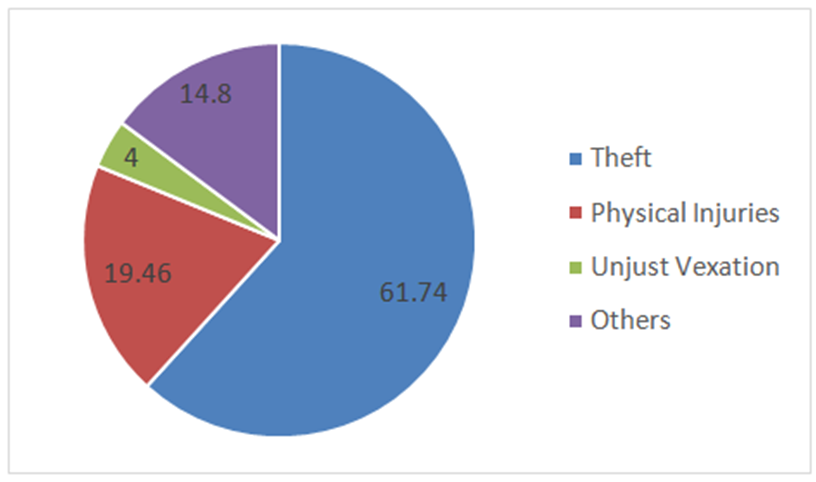
Moreover, based on the data presented in Figure 1, 61.74% of the crimes committed by children in Naga City in 2018 were theft. Meanwhile, 19.46% of it were physical injuries; 4.00% were unjust vexation; while 14.8 % were others which includes qualified theft, illegal gambling, robbery, trespass to dwelling, malicious mischief, Acts of Lasciviousness, curfew for minors, grave Threats, drug use, reckless imprudence resulting in physical injury, reckless imprudence resulting to damage to property, and alarm and scandal.

The following is the assessment conducted by the researchers under the distribution of responses and mean scores of children who were not involved in any crime, which determined their perspective on lowering the MACR. Based on the study results, it appeared that these children “disagree” with House Bill 8858’s proposal. On the other hand, the data obtained by the researchers from children already involved in crime also disagree with this. Throughout the research, the total weighted mean was estimated to be 3.58. In addition, the statement “Imprisoning children involved in a crime is not a solution” has the highest weighted mean of 3.41, which indicated that the said respondents are opposed to the intention of this proposed bill. During the survey and interviews with these children, it was revealed that the respondents did not have enough prior knowledge and awareness about House Bill 8858. In addition, the respondents also expressed their fear of the possible implementation of the said measure.
To further analyze the results of the difference in the responses of the two subject groups presented, CICL and non-CICL, a two-tailed t-test was used. A significant level of 0.05 was utilized, the computed p-value is equal to 0.279298518, and the computed critical value is equal to 2.228138852, as shown in Table 5. With the null hypothesis that there was no significant difference in the response of those children who experienced be conflicted with the law and those who were not; It can be inferred that it was failed to reject the null hypothesis at the significance level of 0.05 because the critical value is greater than the p-value thus, there is no a significant difference between the responses of CICL and non-CICL. This result implies that both subjects share the same perception of lowering the MACR in the country. However, since the sample size is small, the results can only assume to support but not fully accept the hypothesis. Moreover, to even have a more accurate outcome, the following results were also obtained.
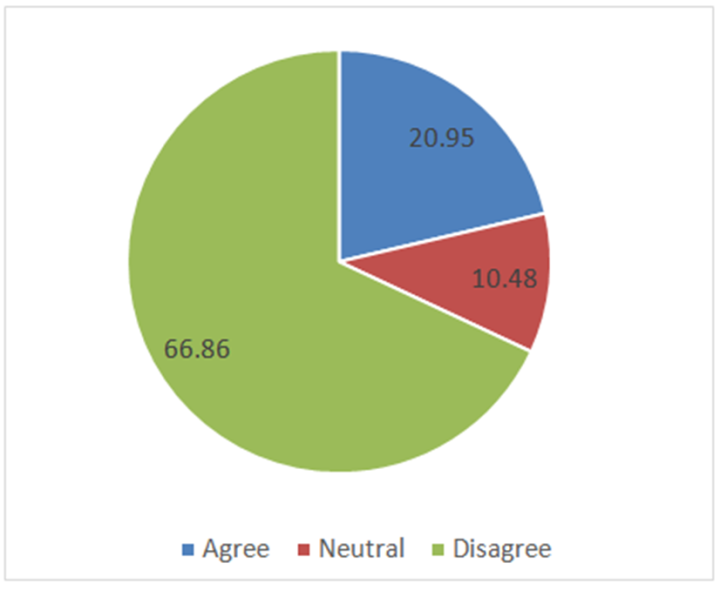
The distribution of the Responses of 15 parents on lowering the MACR in the Philippines is shown in Figure 2. It turned out that 66.86% of the parents interviewed disagreed with lowering the MACR in the country, specifically in the city of Naga. Moreover, 20.95% agreed, while 10.48% of them were neutral about the proposal. According to them, the measure's implementation has a massive impact on the community; when the criminal rate becomes high, the country's economic and tourism aspects may drop. They also added that this will significantly affect the children's education and may also affect their future. On the contrary, according to the respondents, it may help decrease the number of children involved in a crime with the bill's implementation.

The parents also suggested that in implementing this proposal, the government must be prepared for its financial impact, the skills of government officials, and awareness of the people about it. Moreover, the parents also noted that if this happens to their children, they will defend them and support them in attaining their rights, but they will just let the law decide if they are found guilty.
Some of the parents' suggestions were; first, there should be moral support from the church to enlighten them spiritually. Second, as a parent, guidance to children is essential to avoid them getting involved in any crime as the law is always there. Third, the government should also focus on education because it is one way to guide children on the right path.
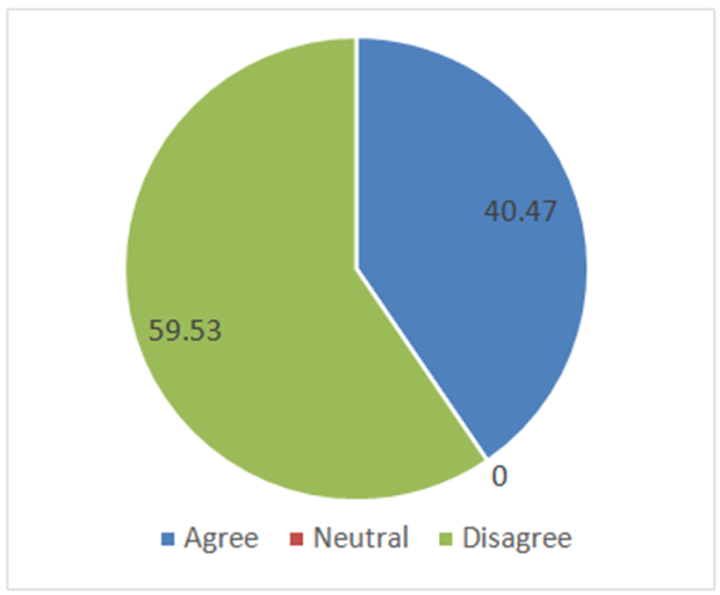
Government officials and some professionals interviewed by the researchers, specifically the social worker of the City Social Welfare Development (CSWD), guidance counselor, psychologist, lawyer, and a city youth officer, showed little difference in their opinions on lowering the MACR in the country. The result presented that 59.53% disagreed about its possible implementation, while 40.47% agreed.
They believed that lowering the MACR can help minimize the number of children involved in crimes as children will be frightened, and parents will give more of their attention to their children. However, they added that insufficient focus and implementation could lead to worse. Some also stated their dismay with the lowering of the MACR. According to them, with the current situation of the justice system in the Philippines, detaining children will only expose them to more criminal behavior and activities. Their will to live and in education may even lose.

The following data are the summary of the information gathered from the short interview conducted with the respondents.
Community. Based on interviews and surveys obtained from CICL, non-CICL, parents, and professionals, the possible effects are as follows:
1. Awareness of children in the aspect of their responsibility.
2. Changes in the economy due to the increase in the number of crimes in the country can lead to fear and a possible decrease in tourism.
3. Increase in the possible allocation of government money as it will require space, new infrastructure and equipment, professionals and administrators, and strict enforcement.
Crime Rate. According to the respondents, specifically parents and professionals, the number of crimes involving children will increase due to lowering the minimum age of criminal liability. However, if there are proper interventions and programs, there will be a possible decrease in the involvement of children included in the new Minimum Age of Criminal Responsibility.
Education. Based on the responses obtained from the interviews and surveys, the possible enactment of House Bill 8858 has a significant impact on education, particularly on the children involved or CILCs who may be the reason for their dropping out of school.
Affected Individuals. Children involved in a crime will have a drop in their sense of morale. It was also stated in an interview with the CILCs that their stay at Bahay Pag-Asa is depressing.
Based on the data gathered in the interviews and surveys of the respondents, it can be drawn that lowering the MACR will have a significant impact on our community, particularly on the economy, crime rate, education, and the individuals involved. With its possible implementation, it would be better to have specific planning and consider all the aspects affected by its process. It would also be better to focus on other crime problems rather than this. Given the possible need for facilities such as resettlement sites or children’s homes and people with sufficient knowledge and skills to guide the children affected by the bill, it would be better to determine if the country is ready for these needs. The main reason why some children get involved in crime is the lack of thorough preaching and parental guidance. It is better to start solving such problems at home first to not grow up with violent behaviors. It is also recommended that children be given the opportunity to education because most of the CICL respondents were not able to go to school before being brought to Bahay Pag-Asa.
Children are said to be the hope of the future, but can they still have a future after they are put behind bars because of committing crimes as an effect of the nature of their life? With the passage of HB 8858, it is believed that it will help alleviate the trend in criminal problems that the Philippines is currently facing. However, strong opposition from children advocates urged to reject this bill as it will not give any positive outcome to children nor the whole community. They are voicing out that the children should not be blamed for the crime crisis in the country as they are also victims of this circumstance. Reflected from the study of Ancheta-Templa, M. et al. 5 stated that “They [CICL] should not be seen as adults nor as criminals, but as children who, mostly because of their personal circumstances, committed an offence or a crime and have to be corrected but with the recognition that they are children, that they have rights and that they need to return to their communities as productive citizens.” That is why to understand the perspective of the authors of the bill and the oppositions and the small group, especially those who will be affected by the implementation, this study was conducted. The following discusses the results of the current study to understand its importance and impact on society further.
As presented in Table 1, the data and statistics provided by the PNP-Naga on the demographics of CICL cases in the year 2018 showed that a total number of 219 children were involved in crime. The data can be related to the PNP's statement that only 2% of the total number of crimes in the Philippines involved children 6. Statistics obtained from the PNP-Naga showed that only a few children out of the total population of Naga City had been involved in a crime. As for Greenberg 7, in India, relatively few (3%) criminal arrests were youth, even though most of the Indian population was still in the youth bracket. Laub 8 showed that the ratio of personal crimes in cities committed by White youth under 17 to those committed by Whites over 17 was 19.3, while the same factor ratio for Blacks was 10.2. In rural areas, the ratio of the crimes committed by White youth under 17 to Whites over 17 was 9.1. On the other hand, for Blacks, this ratio was 4.9. The results showed that older ages, both White and Black are more likely to be involved in crimes than the younger ages in African Americans. On the same study, it stated that the risk factors for offending among youth include: (1) Biological: prenatal exposure to high levels of testosterone; (2) Psychological: neurological impairment such as low IQ; (3) Environmental: exposure to dysfunctional families or deviant peers. These risk factors often go along with others; thus, it means that youth usually experience more than one risk factor—for instance, poverty which is a well-known risk factor for offending. “Poverty in turn is associated with other risk factors, such as child abuse, parental substance use, and living in a dangerous neighborhood.” Another is early childhood aggression, a risk factor that serves as a potential “early marker” for delinquency.
Out of 219 children, 141 children ages 15 years and one day old to 18 years old, 70 children ages 12 to 15 years old, and eight children ages 9 to 11. Ulmer, J. and Steffensmeir, D. 9 pointed out that the relationship between aging and criminal activity had already been observed since the beginning of criminology. Quetelet, A. 10 presented that the proportion involved in crime tends to peak in adolescence or early adulthood and then decline with age. Steffensmeir & Herer 11 stated that the age bracket of the crime-prone group is between 15 to 24 years old in youth. This data is because, at this age bracket, children experience a significant change in their biological and physiological behaviors, which may result in their involvement in crimes.
In the study of Ancheta-Templa, M. et al. 5, in Davao, Philippines, the CICL in the study areas were dominated by males ages 11 to 15 years old, but excluding those who are in jails (16 to 17 years old), which are more in numbers. A minimal number of cases involving girls were recorded. Furthermore, an even lesser number of girls are detained in jails because most of them are placed Release on Recognizance (ROR) when they are offenders.
This supports the results of the current study that 183 were males, 36 females, and 0 SOGIE recorded by the PNP-Naga. An article from Emeritus, et.al., gree (2021) explained that men commit crimes at a far higher rate than women. This article is supported by the Edgework theory in which stated that men in the criminal justice system are often the “risky thrill-seekers” while women were described as “at risk.” In social learning theory hypothesized that men are more likely to be associate with antisocial peers than women. The science concerning psychology suggests gender role identification in which internalized characteristics regarded as appropriate behavior for men and women − rather than gender itself is crucial to the experience of anger, its expression, and control. Strain theory in the sociological frame proposes that life challenges or stresses generate anger and frustration that may lead to violence. It added that men are likely to react violently to such strains while women are more likely to internalize their responses 2.
Furthermore, Table 1 data also showed that 108 of the CICL were in secondary, 71 out-of-school youth, and 40 were still in elementary school. Jacob, B. and Lefgren L. 12, students are often likely to commit crimes, especially those who gradually skip class and do not receive enough attention from school and family. Reasons may include peer pressure, as students are required to spend many hours right next to each other; that is why violence and altercations are often done. Ancheta-Templa, M. et al. 5, tackled that most of CICL brought to Davao police stations in the Philippines have not finished elementary schooling, and a large number come from large and low-income families. Most of them are children on the streets who left their homes to escape violence, abuse, and exploitation within their own families, to earn additional income for their families, or to find belongingness in their group of friends. They had identified two major factors that drove children to leave their homes or schools to stay and work in the streets, join gangs, and eventually get involved in criminal activities or to risk offending. First is poverty; aside from working in the streets, children are forced to engage in criminal activities, such as snatching, shoplifting, and acting as couriers in the illegal drugs trade. Second is children being neglected and abused at home, which is also to poverty. Their interview with CICL tackled those children who have learned to adopt strategies, such as earning, keeping deadly weapons for protection, and joining gangs for protection and acceptance.
These activities had led the children to worse. In Naga City, data in Figure 1 showed that in 2018, 61.74% of the crimes committed by children in Naga City were theft while 19.46% of it were physical injuries, 4.00% were unjust vexation, and 14.8 % were others. In Davao in the year 2002, theft also tops the offenses recorded in the police station. Theft cases often involved such crimes as shoplifting and snatching. One of the reasons for this is that children who escaped their homes, or those who were neglected were looking for ways to survive, and stealing is their only way to do it as they are not still at the right age to work or have the proper education to know the value and intensity of this wrong behaviors. In addition, analysis of the study on a child’s particular circumstances points to the interplay of factors that lead many children to conflict with the law, either individually or in groups. Topped these factors were structural poverty and a sense of deprivation–material, emotional or social. Once more, engaging in peer pressure is often stronger than parental authority.
Table 2 and Table 3 recognized that both CICL and non-CICL “disagree” on lowering the MACR in the Philippines. Figure 2, with a 95% interval, showed no significant difference in the responses on the survey of the two subjects. During the survey and interviews with these children, it was also revealed that the respondents did not have enough prior knowledge and awareness on the possibility of lowering the MACR in the country. In addition, the respondents also expressed their fear of the possible implementation of the said measure. In support of this, according to Ancheta-Templa, M. et al. 5, CICL, whose cases reach the courts are most often just become spectators during court proceedings as they are unaware of the processes they are made to go through. Another thing that made it difficult is English as the medium of proceedings which children, especially those out-of-school, are hard to comprehend. Some children played games inside the courtroom while waiting for their trial, which shows how they are unwitting on their criminal offenses. Moreover, it was also revealed in the same study that children in jails were opted to stay silent and do what they are asked to, which they also follow as they are afraid of making things worse. Lack of parent support was also observed during the proceeding, and they were also put as spectators as they are also not aware of the legal options and processes.
Moreover, the study conducted by Damm et al 14 showed that lowering the criminal age liability did not help prevent the commission of the crime by a 14-year-old youth. Moshorovics presented that the custody of minors in 'penitentiary houses' impacted their psychological aspect. This case has a detrimental effect on their behavior; they became more aggressive and violent in their acts. Additionally, it has also been found out that being imprisoned at an early age caused intense anticipation, loneliness, desperation, hopelessness, and frustration.
The results from Figure 2 analyzed the views of 15 parents. It turned out that 66.86% of the parents interviewed disagreed with lowering the MACR, specifically in the city of Naga. Meanwhile, 20.95% agreed, and 10.48% of them were neutral about the proposal. They believe that the country's economic and tourism aspects may drop when the criminal rate becomes high. They added that if ever implemented and have a good and clean process, it may help decrease the number of children involved in a crime with the bill's implementation. According to them, the implementation still will significantly affect the children's education and behavior that may lead to affecting their future. This information is supported by a study conducted by Hirschfield, in which the level of participation and importance of education among affected children decreased, with a 39% probability that the affected individuals will not be able to graduate and a 41% probability that in age 25 and older can re-offend and be imprison again based on research by Aizer and Doyle. Additionally, children who become involved in the crime may have a low sense of morale.
Though the parents had setbacks on its implementation, they are still open to the possibility of having a positive change in the city if ever mandated. They noted that if their child has a conflict with the law, they will defend them and support them in attaining their rights, but they will just let the law decide if they are found guilty. However, they added that the government must be prepared for its financial impact, the skills of government officials, and awareness of the people about it. Some of the parents' suggestions were; moral support from the church, attentive parental guidance to children, and the government should also focus on education.
This result can be linked again to the study conducted by Aiser and Doyle 13, in which, according to their analysis, children who were imprisoned can also be helpful because they tend to avoid repetition or practice of crime in the future. However, children at the stage of adolescence who experience a change in their behavior and actions might increase the likelihood of committing crime again as they mature. Overall, it can be noted that imprisonment of children affected their education and the possibility of committing crimes again as they are getting up in years.
Some key informants in the study of Ancheta-Templa, M. et al. 5 blamed parents of CICL for not taking care and be good role models to their children. The perspective of the CICL themselves also followed this. They stated that parental neglect and the breakdown of families are among their reasons for being involved in crimes. They felt unwanted at home and felt belongingness with peer groups. Adding to it, they think that if parents took care of them, they would not be pushed to the streets and be in the wrong direction of life.
Furthermore, government officials and some professionals interviewed by the researchers, specifically the social worker of the City Social Welfare Development (CSWD), guidance counselor, psychologist, lawyer, and a city youth officer, showed little difference in their opinions on lowering the MACR in the Philippines. As presented in Figure 3, the result was that 59.53% disagreed about the possible implementation of the bill, while 40.47% agreed. This data implies that there are almost equal opinions of the officials and professionals on lowering the MACR in the Philippines.
In Davao City, children who conflicted with the law are either neglected or stowed away children from neighboring provinces, and streets become their way to survive. According to the professionals, there is no intensive monitoring and active referral of these children for appropriate commitment or state intervention had been undertaken to protect them from all forms of neglect, abuse, cruelty, exploitation, and other conditions prejudicial to their development. In addition, there is no budget allocated for community-based family support projects that alleviate poverty, according to a senior officer of the DSWD FO Region XI. Due to this, children were most likely to be involved in barkadas, which are usually involved in risk-taking behavior, including illegal activities.
Moreover, the experiences of the children who participated in the previous study showed that their rights are violated as soon as they enter the criminal justice system. With the absence of a juvenile justice system in the country, children who conflict with the law are made to enter the criminal justice system, which is supposed to be adult-oriented. Therefore, children experience the same treatment and are subject to penalties meant for adults.
CICL who are arrested and/or detained lose their most significant support system from being separated. Most of the CICL is also stigmatized and discriminated against in their communities, making it very difficult for them to start over. It also concluded in the study that subjecting children to the justice system does not positively impact the behavior of CICL, nor has it prevented reoffending. They are just becoming exposed to more serious criminal activities, encouraged criminal behavior, and heightened rebelliousness and defiance.
It also added that the existing justice system in the Philippines is by nature punitive and retributive, that is, “it is based on the belief that crimes can be prevented and criminal behavior can be corrected by punishing the criminal, and that punishment should correspond to the gravity of the crime committed.” CICL also accepts whatever treatment they receive because of the lack of understanding of the justice system. The study also showed that first-time offenders are usually traumatized by the experience of being put behind bars.
In the same study, Police officers observed that instead of learning from the first time, CICL got used to being detained. A Police Inspector also noted that detention centers should be like a home or a camp and not a place with bars but should be like a home or a camp. Also, CICL detained were just released after three days because of lack of facilities and food supply at the Tagum Central Police Office.
The interview and survey conducted to CICL, non-CICL, parents, and professionals, showed that the possible implications of lowering the MACR in the country in terms of the community were: (1) Awareness of children in the aspect of their responsibility; (2) Changes in the economy due to the increase in the number of crimes in the country can lead to fear and possibly decrease tourism; (3) Increase in the possible allocation of government money as it will require space, new infrastructure and equipment, professionals and administrators, and strict enforcement. While, in terms of the crime rate factor, according to the respondents, specifically parents and professionals, the number of crimes involving children will increase due to lowering the minimum age of criminal liability. However, if there are proper interventions and programs, there will be a possible decrease in the involvement of children included in the new Minimum Age of Criminal Responsibility. In terms of education, from the responses obtained from the interviews and surveys, the possible enactment of House Bill 8858 has a significant impact on education, particularly on the children involved or CILCs who may be the reason for their dropping out of school. On the other hand, affected Individuals, specifically the CICL, will drop their sense of morale. It was also stated in an interview with the CILCs that their stay at Bahay Pag-Asa is depressing.
The findings of Ancheta-Templa, M. et al. 5 supported this. Their study’s results affirmed the need to divert children from the criminal justice system through a community-based diversion program. Children are being arrested because of their status and petty offenses such as curfew violation, rugby sniffing, and petty theft, which in return, they all have experienced various forms of abuse at each stage of the justice process. They also noted that drastic changes in terms of policy and practice should be done within the five pillars of the justice system to ensure that children’s rights are not violated or ignored. This idea should begin with the change in their view of CICL. Crime involvement of children is not just an issue of criminality but is a matter of child protection. It also pointed out that interventions for CICL should also consider the context of these children—chronic poverty, experiences of parental abuse and neglect, peer influence, and survival in the streets. Additionally, child abuse and exploitation must also look like an essential part of mitigation effort against children being involved in crimes as this can be linked and cause of children being in illegal activities. Intensive support and strengthening of programs, especially within the communities, should be address to respond to the needs, concerns, and issues of CICL.
The findings of the research showed that based on the respondents who took the survey and interview, which includes the CICL, non-CICL, parents, and professionals, lowering the minimum age of criminal responsibility in the Philippines will not be effective to reduce the number of children who are in conflict with the law. The following is the summary of the results gathered from the current study:
1. CICL is mostly in their adolescent stage (aged 15-18); Majority are male and in secondary school;
2. Most of the children are arrested and/or detained because of offenses such as theft, physical injuries, and unjust vexation;
3. There is no significant difference in the response of CICL and non-CICL. Both subjects disagree with lowering the MACR. As they lose support system being separated from their families and affecting their mental and physical behavior;
4. Parents and professionals also disagree with lowering the MACR as they believe that the country is not yet prepared in terms of implementation, infrastructure, and management. CICL might also be discriminated against in their own communities as CICL already experienced affecting their future.
5. Implications on the community showed that there could be an increase in the crime rate if not implemented properly. There is also a need to increase the budget allocation in the overall implementation. If CICL is to be detained, they will be just exposed to adult offenders that might result in encouragement of CICL to criminal behavior and heightened rebelliousness and defiance. Children still have a young mind to understand the justice system. Being put on jurisdiction may be the reason for to drop in their morale and sense of behavior.
This study was conducted in Naga City, which is an independent city in the Philippines. This study's results may not represent the response of the other cities and provinces in the whole country.
MACR: Minimum Age of Criminal Responsibility; CICL: Children in Conflict with the Law; HB: House Bill; PNP: Philippine National Police; CSWD: City Social Welfare and Development; DSWD: Department of Social Welfare and Development; SOGIE: Sexual Orientation, Gender Identity and Expression; CYO: City Youth Officials.
We would like to thank all the respondents for their agreement and participation.
No funding to disclose.
The authors declare that there are no competing interests.
| [1] | Castro, F., Alvarez, P., Yap, V., Cagas, M., Acop, R. and Suansing, E., 2019. “An act expanding the scope of the reformation and rehabilitation of children in conflict with the law and strengthening the social reintegration programs, amending for the purpose Republic Act No. 9344, as amended, otherwise known as the ‘Juvenile Justice and Welfare Act of 2006’”. [ebook] Quezon CIty: House of the Representatives, p.range of pages. Available at: <https://www.congress.gov.ph/legisdocs/third_17/HBT8858.pdf>. | ||
| In article | |||
| [2] | Alhambra, A (2017). Intersect Quick Facts, vol. 3, no.2, p.2. | ||
| In article | |||
| [3] | Cepeda, M. (2019). Highlights of House bill lowering criminal liability age to 12. Rappler. https://www.rappler.com/newsbreak/iq/highlights-house-bill-lowering-minimum-age-criminal-responsibility. | ||
| In article | |||
| [4] | Cepeda, M., (2019). House changes proposed minimum criminal liability age from 9 to 12 years old. [online] Rappler. Available at: <https://www.rappler.com/nation/house-2nd-reading-lowering-minimum-age-criminal-responsibility>. | ||
| In article | |||
| [5] | Ancheta-Templa, M. et. al. (2019, April 23). Understanding children in conflict with the law: Contradictions on victimisation, survivor behaviour and the Philippine justice system. A Study of the Situation of Children in Conflict with the Law in Davao. Retrieved from https://resourcecentre.savethechildren.net/library/understanding-children-conflict-law-contradictions-victimisation-survivor-behaviour-and. | ||
| In article | |||
| [6] | Cargullo, D. (2018, October 1). Panukalang ibaba ang edad para sa criminal liability suportado ng PNP. Radyo Inquirer. Retrieved from https://radyo.inquirer.net/141488/panukalang-ibaba-ang-edad-para-sa-criminal-liability-suportado-ng-pnp. | ||
| In article | |||
| [7] | Greenberg, D. (1985). Age,crime and social explanation. American Journal of Sociology, 91(1), 1-21. | ||
| In article | View Article | ||
| [8] | Laub, J. (1983). Urbanism, race, and crime. Journal of Research in Crime and Delinquency, 20, 183-198. | ||
| In article | View Article | ||
| [9] | Ulmer, J. T., & Steffensmeier, D. J. (2017, January 10). The age and crime relationship: Social variation, social explanations. Retrieved from https://pennstate.pure.elsevier.com/en/publications/the-age-and-crime-relationship-social-variation-social-explanation. | ||
| In article | |||
| [10] | Qutelet, A. (1984). Research on the propensity for crime at different ages (S. Sylvester, Trans.). Cincinnati, OH: Anderson (Original work published 1831). | ||
| In article | |||
| [11] | Steffensmeier, D., & Harer, M. (1987). Did crime rise or fall during the Reagan presidency? The effects of an “aging” U.S. population on the nation’s crime rate. Journal of Research in Crime and Delinquency, 36, 235-274. | ||
| In article | |||
| [12] | Jacob, Brian A., and Lars Lefgren. “Are Idle Hands the Devil’s Workshop? Incapacitation, Concentration, and Juvenile Crime.” American Economic Review 93.5 (2003): 1560-1577. | ||
| In article | View Article | ||
| [13] | Aizer, A. at Doyle, J. (2013). What is the long-term impact of incarcerating juveniles? https://voxeu.org/article/what-long-term-impact-incarcerating-juveniles | ||
| In article | |||
| [14] | Damm, A. et.al. (2017). “Lowering the minimum age of criminal responsibility: Consequences for juvenile crime and education,” Economics Working Papers 2017-10, Department of Economics and Business Economics, Aarhus University. | ||
| In article | |||
| [15] | Andal, R. (2012, September 26). Edad 13 pasok sa criminal liability. Philstar. Retrieved from https://www.philstar.com/pang-masa/police-metro/2018/09/26/1854728/edad-13-pasok-sa-criminal-liability. | ||
| In article | |||
| [16] | Girls versus Boys in the Juvenile Justice System. (n.d.). Retrieved from https://www.njjn.org/uploads/digital-library/Girls_and_boys_in_the_JJ_system_The_Future_of_Children_.pdf. | ||
| In article | |||
| [17] | Unicef. org. 2021. Lowering the age of criminal responsibility is against child rights: UNICEF. [online] Available at: <https://www.unicef.org/philippines/press-releases/lowering-age-criminal-responsibility-against-child-rights-unicef> [Accessed 5 August 2021]. | ||
| In article | |||
| [18] | Johnson, C. (2010, January 26). Denmark: Criminal Age May Be Lowered. Retrieved from http://www.loc.gov/law/foreign-news/article/denmark-criminal-age-may-be-lowered/. | ||
| In article | |||
| [19] | Madzharov, E. (2016). Age-psychological characteristics of inmates. Psychological portrait, Vol. 1, 1877-0428, 94. | ||
| In article | View Article | ||
| [20] | Rappler. (2019). Why experts strongly oppose lowering the age of criminal responsibility. [online] Available at: <https://www.rappler.com/newsbreak/in-depth/reason-experts-strongly-opposing-lowering-minimum-age-criminal-responsibility>. | ||
| In article | |||
| [21] | Rick Sarre Emeritus Professor of Law and Criminal Justice, Andrew Day Professor in the School of Social and Political Sciences, Ben Livings Associate Professor of Criminal Law and Evidence, & Catia Malvaso Postdoctoral Researcher in Psychology and Public Health. (2021, April 07). Men are more likely to commit violent crimes. Why is this so and how do we change it? Retrieved from https://theconversation.com/men-are-more-likely-to-commit-violent-crimes-why-is-this-so-and-how-do-we-change-it-157331. | ||
| In article | |||
Published with license by Science and Education Publishing, Copyright © 2021 Leny Morano, Jan Carlo Bagasbas, Mark Remiter, Mickel Joseph Ragas, Rauna Mae Bron, Ma. Anika Dawn De Lima and Jeza Padayao
 This work is licensed under a Creative Commons Attribution 4.0 International License. To view a copy of this license, visit
http://creativecommons.org/licenses/by/4.0/
This work is licensed under a Creative Commons Attribution 4.0 International License. To view a copy of this license, visit
http://creativecommons.org/licenses/by/4.0/
| [1] | Castro, F., Alvarez, P., Yap, V., Cagas, M., Acop, R. and Suansing, E., 2019. “An act expanding the scope of the reformation and rehabilitation of children in conflict with the law and strengthening the social reintegration programs, amending for the purpose Republic Act No. 9344, as amended, otherwise known as the ‘Juvenile Justice and Welfare Act of 2006’”. [ebook] Quezon CIty: House of the Representatives, p.range of pages. Available at: <https://www.congress.gov.ph/legisdocs/third_17/HBT8858.pdf>. | ||
| In article | |||
| [2] | Alhambra, A (2017). Intersect Quick Facts, vol. 3, no.2, p.2. | ||
| In article | |||
| [3] | Cepeda, M. (2019). Highlights of House bill lowering criminal liability age to 12. Rappler. https://www.rappler.com/newsbreak/iq/highlights-house-bill-lowering-minimum-age-criminal-responsibility. | ||
| In article | |||
| [4] | Cepeda, M., (2019). House changes proposed minimum criminal liability age from 9 to 12 years old. [online] Rappler. Available at: <https://www.rappler.com/nation/house-2nd-reading-lowering-minimum-age-criminal-responsibility>. | ||
| In article | |||
| [5] | Ancheta-Templa, M. et. al. (2019, April 23). Understanding children in conflict with the law: Contradictions on victimisation, survivor behaviour and the Philippine justice system. A Study of the Situation of Children in Conflict with the Law in Davao. Retrieved from https://resourcecentre.savethechildren.net/library/understanding-children-conflict-law-contradictions-victimisation-survivor-behaviour-and. | ||
| In article | |||
| [6] | Cargullo, D. (2018, October 1). Panukalang ibaba ang edad para sa criminal liability suportado ng PNP. Radyo Inquirer. Retrieved from https://radyo.inquirer.net/141488/panukalang-ibaba-ang-edad-para-sa-criminal-liability-suportado-ng-pnp. | ||
| In article | |||
| [7] | Greenberg, D. (1985). Age,crime and social explanation. American Journal of Sociology, 91(1), 1-21. | ||
| In article | View Article | ||
| [8] | Laub, J. (1983). Urbanism, race, and crime. Journal of Research in Crime and Delinquency, 20, 183-198. | ||
| In article | View Article | ||
| [9] | Ulmer, J. T., & Steffensmeier, D. J. (2017, January 10). The age and crime relationship: Social variation, social explanations. Retrieved from https://pennstate.pure.elsevier.com/en/publications/the-age-and-crime-relationship-social-variation-social-explanation. | ||
| In article | |||
| [10] | Qutelet, A. (1984). Research on the propensity for crime at different ages (S. Sylvester, Trans.). Cincinnati, OH: Anderson (Original work published 1831). | ||
| In article | |||
| [11] | Steffensmeier, D., & Harer, M. (1987). Did crime rise or fall during the Reagan presidency? The effects of an “aging” U.S. population on the nation’s crime rate. Journal of Research in Crime and Delinquency, 36, 235-274. | ||
| In article | |||
| [12] | Jacob, Brian A., and Lars Lefgren. “Are Idle Hands the Devil’s Workshop? Incapacitation, Concentration, and Juvenile Crime.” American Economic Review 93.5 (2003): 1560-1577. | ||
| In article | View Article | ||
| [13] | Aizer, A. at Doyle, J. (2013). What is the long-term impact of incarcerating juveniles? https://voxeu.org/article/what-long-term-impact-incarcerating-juveniles | ||
| In article | |||
| [14] | Damm, A. et.al. (2017). “Lowering the minimum age of criminal responsibility: Consequences for juvenile crime and education,” Economics Working Papers 2017-10, Department of Economics and Business Economics, Aarhus University. | ||
| In article | |||
| [15] | Andal, R. (2012, September 26). Edad 13 pasok sa criminal liability. Philstar. Retrieved from https://www.philstar.com/pang-masa/police-metro/2018/09/26/1854728/edad-13-pasok-sa-criminal-liability. | ||
| In article | |||
| [16] | Girls versus Boys in the Juvenile Justice System. (n.d.). Retrieved from https://www.njjn.org/uploads/digital-library/Girls_and_boys_in_the_JJ_system_The_Future_of_Children_.pdf. | ||
| In article | |||
| [17] | Unicef. org. 2021. Lowering the age of criminal responsibility is against child rights: UNICEF. [online] Available at: <https://www.unicef.org/philippines/press-releases/lowering-age-criminal-responsibility-against-child-rights-unicef> [Accessed 5 August 2021]. | ||
| In article | |||
| [18] | Johnson, C. (2010, January 26). Denmark: Criminal Age May Be Lowered. Retrieved from http://www.loc.gov/law/foreign-news/article/denmark-criminal-age-may-be-lowered/. | ||
| In article | |||
| [19] | Madzharov, E. (2016). Age-psychological characteristics of inmates. Psychological portrait, Vol. 1, 1877-0428, 94. | ||
| In article | View Article | ||
| [20] | Rappler. (2019). Why experts strongly oppose lowering the age of criminal responsibility. [online] Available at: <https://www.rappler.com/newsbreak/in-depth/reason-experts-strongly-opposing-lowering-minimum-age-criminal-responsibility>. | ||
| In article | |||
| [21] | Rick Sarre Emeritus Professor of Law and Criminal Justice, Andrew Day Professor in the School of Social and Political Sciences, Ben Livings Associate Professor of Criminal Law and Evidence, & Catia Malvaso Postdoctoral Researcher in Psychology and Public Health. (2021, April 07). Men are more likely to commit violent crimes. Why is this so and how do we change it? Retrieved from https://theconversation.com/men-are-more-likely-to-commit-violent-crimes-why-is-this-so-and-how-do-we-change-it-157331. | ||
| In article | |||