The global economy is expanding which has resulted into the expansion of business activities. However, as businesses multiply, more attention is being paid to generating revenues amidst a growing concern about aspects of environmental degradation exacerbated by business activities. This has heightened the need for promoting sustainable business practices so as to preserve the environment, living standards of people and profit margins of firms. The current study sought to investigate the mediating effect of social innovation on the relationship between collaborative competence and sustainable business practices. The study used a cross sectional design and it was carried out from Uganda. The sample consisted of micro and small enterprises in the sectors of trade and manufacturing. Structural equation modelling was used to test the relationship under investigation. The results showed that social innovation significantly mediates positively the relationship between collaborative competence and sustainable business practice. This implies that when businesses collaborate, socially innovative solutions emerge which are directed towards promoting sustainable business practices.
Sustainable Business practices have been cited as critical in promoting viable growth and development of societies in developed and emerging economies 1. Sustainable business practices relates to business activities which are socially responsible, economically viable, and environmentally friendly 2. In the contemporary world, economies are dealing with unprecedented market, social, technological and environmental complexities which have impacted on the performance of businesses. Business managers are habitually hesitant to place sustainability strategies as a core to their firm’s plans with a faulty belief that the costs from implementing sustainable practices outweigh the benefits 3. The world is facing a global challenge and complexities of creating a society that has a shared responsibility of promoting sustainable business practices 4. The emerging complexities require refined sustainable based practices to enable firms thrive in a competitive yet unpredictable business environment 5. The main objective of promoting business practices that are sustainable is to create avenues aimed at preserving the long-term viability of nature, people and profit margins of firms 6. Sustainability demands that human activities should be governed as an integrated system that links their activities to the environment and communities through both time and space 7. According to 8, countries should strive to achieve the development goal which is transforming societies into the 2030 agenda for sustainable development. This agenda indirectly requires among others business communities to be mindful of a need to engage in commercial activities that are not only oriented towards making profits but making profits in a sustainable manner 4, 9.
While the global economy is expanding, attention has been paid to generating incomes for businesses yet there is a growing concern about aspects of environmental conditions exacerbated by human activities, such as natural resource depletion, climate change, floods, air pollution and loss of biodiversity which has heightened the need for promoting sustainable business practices 8. As business activities are expanding, waste generation is increasing too and most of this is generated by micro and small enterprises 1, 10. 8 Revealed that achieving sustainable growth and development is a precondition for developing economies to achieve middle income status. It should however be noted that the aspiration of most business deals entrepreneurs engage in is to create value for their businesses often neglecting other stakeholders who are critical to the success of such businesses 11. There is a need to redefine the commercial ecosystem by designing strategies that yield value for all stakeholders in business, including customers, employees, civil society, shareholders and government 5. While many studies have been carried out to offer alternative solutions that can be adopted to enrich sustainable business practices less attention has been paid to the mediating role of social innovation in explaining the relationship between collaborative competence and sustainable business practices from the perspective of an emerging economy. The reminder of the article highlights the theoretical framework, review of literature, research methods, results and policy implications.
Cultural Historical Activity Theory (CHAT) observes that a community which collaborates and acts together will easily generate and share ideas from which innovations emerge and directed towards solving a shared problem 12. The theory observes that, co-designed solutions are expected to have positive effects on a community, either by empowering it in the innovation processes or through increasing social value. Through social interactions, differing opinions and contradictions emerge creating a new social order as members of the community challenge each other on how to confront a shared problem 13. The theory notes that divergent views are healthy in a community because if they emerge, community members reflect on the problem at hand from various dimensions and eventually a refined solution to the shared problem materializes 14. From the theory, it can be advanced that when business firms collaborate with clients, suppliers and fellow traders, a community with a shared objective will surface. The collaborative business community can easily share ideas from which social innovations emerge and used as tools in promoting sustainable business practices 14. Therefore it can be advanced that collaborative competences are foundations for social innovations which subsequently promote sustainable business practices.
Collaborative competence refers to intrapersonal and interpersonal qualities possessed by an individual to act collectively with a community to solve a problem or achieve a common objective 15. 16 Noted that collaboration is a platform for joint resource generation that can be used as an engine to respond to social, economic and environmental challenges. Collaboration is maintained through mutual orientation of members of a community towards each other in a synchronized manner to solve an emerging problem as a group 17. Through collaboration, division of labour may emerge whereby community members distribute responsibilities with a target of solving common problems effectively 15, 18. Collaborative competence is constructed based on various dimensions which may include information sharing and coordination 15, 19. It has been observed that Collaboration can only occur if there is information sharing and coordination in an activity and this is a result of a sustained effort to construct but also preserve a shared goal 15. Information-sharing competence relates to the degree to which an individual or a company exchanges vital, useful and accurate information with suppliers, business partners or buyers 20, 21. Sharing of information is crucial for a group of people with a common objective because it is through available information that groups of people create strategies to overcome unsustainable business practices 20. Accordingly when owners of businesses coordinate their activities and act as a team with those of other business partners, suppliers and clients, a sense of mindfulness is created about the impact of business practices on the whole community 21, 22, 23. However 23 observed that if collaboration isn’t controlled, it may not have tangible benefits aimed at promoting sustainable business practices.
H1: There is a relationship between collaborative competence and sustainable business practices
3.2. Relationship between Collaborative Competence and Social InnovationSocial innovation refers to emergence of social practices whose aim is to solve a common problem or advance a better idea that is socially responsive, economically viable and environmentally friendly to the challenges faced by a community 24. Social innovation is intended at promoting a long term positive impact on society 25. Innovations that are socially constructed are usually advanced without profit orientations however since a business exists in a community, companies are also open to financing activities that produce innovations 26. It has been observed by 26 that with information sharing, communities have a basis to explore various avenues through which they can advance ideas that produce communal innovations. When information is shared, communities can use such information to challenge existing ineffective methods which ultimately yields new methods that are socially innovative 27. Through collaboration between the business community and clients, business owners derive new knowledge which is a foundation for generating new products that speak to the wishes of customers and other stakeholders along the value chain 26. Additionally, collaboration empowers suppliers with knowledge to supply products that are economically and environmentally responsive to the wishes of the business community. It has however been noted that collaborative competencies are generally behavioural in nature that because of differences in norms and values among collaborating agencies, shared attitude and goals may not be adopted which curtails promotion of social innovation 21.
H2: There is a relationship between collaborative competence and social innovation
3.3. Relationship between Social Innovation and Sustainable Business PracticesSocial innovation has emerged as an engine that organizations use to serve market interests while paying attention to the wishes of the community 28. The objective of social innovation is to create new solutions to deal with a social problem in a more efficient, just and effective approach 29. Social innovation adds value to the community and this benefits a whole society rather than one individual 30. A firm is considered to be socially innovative if it offers services that are socially responsive, economically viable and environmentally friendly to the challenges of a community 30. It has been observed by 31 that when firms institute new methods or processes of carrying out business activities while paying attention to the needs of the community, it can be a source of raising revenue but also serve as the immediate alternative solution to the deplorable effect of business activities on the environment. A firm can use social innovations as platforms to attract customers but also educate and sensitize the community on how to use the product and how to dispose it such that as revenue increases, consumption has a lesser environmental impact 32. It has however been observed by 26 that social innovation can only yield results if firms are willing to incorporate social innovations in the policies governing business activities. Business communities tend to operate with a capitalist mindset embracing selfish interests and this can only be overturned if such communities embrace socially constructed activities promoting collective ideas 26. If market forces were fully functional and competitive, then business communities are expected to pay and respond to social challenges 33. Since market forces are far from being perfectly competitive, this calls for a social response to counter unsustainable business practices 33.
H3: There is a relationship between social innovation and sustainable business practices
3.4. The Mediating Effect of Social Innovation on the Relationship between Collaborative Competence and Sustainable Business PracticesWithin the business environment, when firms operate in isolation, they miss out on tapping into the new knowledge that can be derived from customers, suppliers and business communities 34. Through collaborations, firms can share best practices from which new ideas emerge 15. The ideas generated can in turn yield social innovations that respond to social, economic and environmental challenges 24, 35. Unsustainable business practices endanger the wellbeing of the current and future generations 36. While collaboration is expected to be a solution to unsustainable business practices, this can be achieved through social innovations 27, 37. Collaboration among business firms and customers enriches the execution of ideas that are innovative but also advances creative solutions by developing a shared action on a social problem 9, 37. If there is any risk and challenge a community faces, such a risk is spread to a larger group in a community which will subsequently generate ideas to respond to the challenge 31. It has been observed 37 that if diffusion of social innovations is to be achieved, this can only be done by promoting collaboration through knowledge sharing. By bringing together different people who have different views, ideas and experiences it promotes development of new and creative solutions but also enhance a combined momentum to counter social challenges 14.
H4: The relationship between collaborative competence and sustainable business practices is mediated by social innovation
The study used a cross sectional design whereby data was collected at a single point in time. The study was carried out from Fort Portal city found in the western part of Uganda. Fort portal city is one of the new cities which were created in Uganda and it is found in the western part of the country in Tooro region. The elevation of Fort portal from a municipality to city status was mainly due to the expansion of business activities in the area 19. As business activities are expanding in Fort Portal city, there is a growing concern about aspects of natural resource depletion and loss of biodiversity which has heightened the need for promoting sustainable business practices 19, 38. The study population consisted of micro and small enterprises in the sector of trade and manufacturing which makeup the biggest percentage of businesses in Uganda 39. According to the business register, there are 536 small and micro enterprises that renewed their licenses in 2021 19. Stratified random sampling design was used to capture respondents from the micro and small enterprises. Using a sampling table by Krejcie and Morgan (1970), a sample of 226 micro and small enterprises was used. From each enterprise, two respondents were used which yielded a total of 452 respondents. Out of 452 questionnaires given out, 310 questionnaires were returned which yielded a 68% response rate.
4.2. Measurement of VariablesThere are three variables used in this study and they include- collaborative competence, social innovation and sustainable business practices. Collaborative competence was measured and the items used were adapted based on dimensions of information sharing and coordination 15, 19, 27. Social innovation was measured as a one-dimensional variable based on the scale developed by 28, 40. The concept of sustainable business practices was measured and the items used adapted based on dimensions of environment, economic and social practices 41.
Missing data analysis was carried out and it was discovered that 21 out of 13,309 values were missing accounting for 0.15%. Little’s Missing Completely At Random (MCAR) test produced results with Chi-square= 476.424, DF= 453 and Sig. =0.216 which confirmed that data was Missing Completely at Random (MCAR). As recommended by 42, linear interpolation was used to replace missing data.
5.1. Descriptive StatisticsResults from Table 1 indicate that majority of the respondents were female who are 171 in total accounting for 55.2% of the population which implies that majority of micro and small enterprises in Fort Portal city are owned by females which resonates with data from Uganda Bureau of Statistics. According to the age bracket, majority of the respondents are between 36-45 years which accounts for 31% of the population which means that majority of the enterprises are managed by adults above the youth age bracket. Majority of the respondents were at the education level of a diploma accounting for 41.9% of the population which means that most of the people owning micro and small enterprises can read and understand government programs and policies aimed at promoting sustainable businesses. Most of the business enterprises sampled were in trade which accounts for 65.2% of the population meaning that sustainable business practices are largely determined by businesses in the sector of trade in Fort Portal city. Most of the businesses have a capital base between 1-10 million which implies that most businesses in Fort Portal are micro enterprises.
In order to measure reliability and validity of the instrument, the questionnaire tool was supplied to professionals so as to evaluate the correctness of the items. Results indicated that content validity index was 0.85 which is above the minimum threshold of 0.7 confirming content validity 43. Using exploratory factor analysis, data suitability was assessed to determine adequacy of sample size using Bartlett test and Keiser-Meyer-Olkin (KMO) tests. Values of KMO for all the variables used in the study produced results above 0.7 while Bartlett’s test of sphericity was statistically significant in all the scales used. Confirmatory factor analysis was carried out using the Analysis of Moment Structures (AMOS) statistical package on the three variables to determine reliability and validity of the instrument. The results are shown in the Table 2.
In order to determine reliability of the instrument, construct reliability (CR) was measured. It was observed by 44 that for a construct to be reliable, it should post a minimum construct reliability value of 0.7. From Table 2, it has been shown that all constructs achieved the minimum threshold of 0.7. To further examine reliability of the instrument, internal consistency was evaluated using Cronbach’s Alpha coefficient. 42 Noted that an instrument is declared internally consistent if it posts Cronbach’s coefficient value with a minimum of 0.7. It has been shown in Table 2 that all variables achieved the minimum threshold for scale internal consistency. A measurement instrument is considered excellent if factor loading is 0.7 and above 44, 45. Scanning through the results in Table 2, it can be observed that all retained items posted factor loading above 0.7. To further examine instrument validity, Average Variance Extracted (AVE) was evaluated. As observed by 44 a construct is considered valid if it achieves AVE at a minimum of 0.5 which was achieved for all dimensions as observed in Table 2. Discriminant validity was examined to measure a difference in the constructs measuring the variables. As recommended by 37 discriminant validity was achieved since the square root of AVE (figures that are bold on the diagonal of Table 3) for each construct was above the inter construct correlations (other values in Table 3).
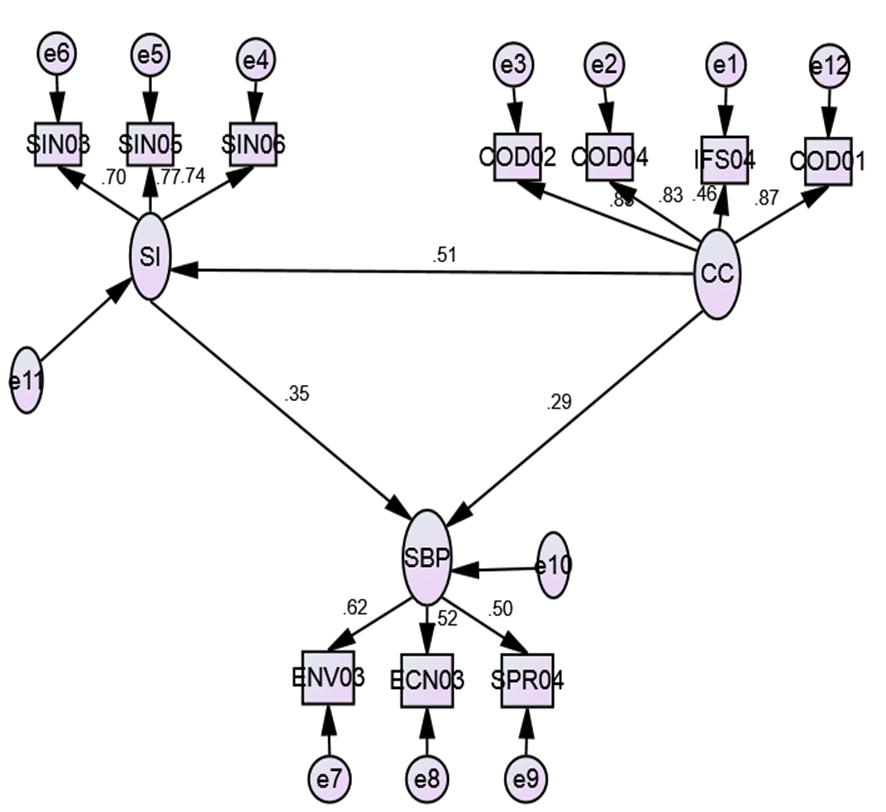
Figure 1 displays the structural model output showing the magnitude of the relationship between the variables used in the study while Table 4 shows the model fit values as recommended 44, 45. As observed by 45, a model is considered to be fit as long as it meets the cut off points displayed in the Table 4. Inspecting the structural model results in Table 4 shows that the model in Figure 1 achieved all the minimum cut off points.

The main objective of this paper was to examine the relationship between collaborative competence and sustainable business practices mediated by social innovation. To achieve this objective, structural equation modeling was employed to examine the relationships. The results are depicted in Figure 1 and Table 5. As recommended by 44, bootstrap statistical technique was employed to test for the significance of the parameters and mediation effects. From Table 5, results of standardized estimates of the parameters indicate that all the hypotheses were supported since the lower and upper bounds of confidence interval derived from bootstrap estimates do not contain a zero. Additionally the probability values from bootstrap testing are below 0.05 critical value which as recommended by 44 proves that the parameters are statistically significant.
The study sought to examine the relationship between collaborative competence and sustainable business practices. The standardized estimate of 0.29 was significant. Therefore based on standardized parameter estimates, the hypothesis was supported. This means that sharing information and coordinating activities is critical in promoting sustainable business practices. It has been observed by 22 that collaborations enable agencies to access resources in form of knowledge and finances that would have been a hard task to achieve by individual agencies. 34 Noted that through collaborations, agencies can pull resources together which is an added advantage because it raises the capacity of a community to deal with social, economic and environmental challenges faced. Through collaborations, firms can reduce on environmental costs through sharing experiences but also simultaneously creating new markets within the new networks created 22, 34. Collaboration is a platform that links the supplier, producer and a consumer in a value chain through which information flows on how products can be used, recycled and disposed without endangering the environment 23. Activity theory observes that communities with a shared objective will initiate collaborations through which experiences are shared aimed at responding to a common problem 12. Therefore business communities can use collaborations as a platform to enrich sustainable business practices.
The study searched for a relationship between collaborative competence and social innovation. This hypothesis was supported with a 0.5 standardized estimate. This implies that collaborative competence is a precursor to social innovation. Through collaborations, communities have a basis to explore various avenues through which they can advance and share creative solutions once they have access to information both internally and outside the communities they stay in 12, 26, 27. 27 Observed that when correct information is shared, agencies use knowledge derived to produce socially innovative solutions. Communities are constrained with resources yet finances are critical in developing innovations that are socially sustainable. Activity theory observes that innovations are best developed through collectiveness because through communal interactions, ideas emerge and refined to produce creative solutions 12. 46 Observed that through collaborations, communities can jointly generate resources that can finance social innovations. 32 Noted that collaboration empowers suppliers with knowledge to supply products that are economically and environmentally responsive to the wishes of the business community. Therefore activities that are well coordinated can generate consensus among community members which will reduce on redundant information that is critical to the process of generating socially innovative solutions.
The study investigated the relationship between social innovation and sustainable business practice. The hypothesis was supported indicating that social innovation is a platform to promote sustainable business practice. As observed by 29, social innovation is an engine of creating new solutions to respond to a social, economic and environmental challenge that a community faces in a more efficient, just and effective manner. Business organizations can rely on social innovation as an engine to serve market interests while paying attention to the wishes of the community they serve 28. When this is done, business organizations can expand with the increased revenue but also build a social bond with the supplier and client base to monitor each other’s action with respect to sustainable business practice. Activity theory observes that socially innovative ideas can act as a tool that can be used to respond to a shared goal 12. The shared goal of promoting sustainable business practices can be achieved by generating communally innovative ideas. Therefore as observed by 30 social innovation adds value to the whole society socially, economically and environmentally rather than promoting selfish interests of a singular business.
The study investigated the mediating effect of social innovation on the relationship between collaborative competence and sustainable business practices. This hypothesis was supported and it was a partial mediation. This implies that collaborative competence will respond better to sustainable business practices through social innovations 20. Social innovation turns out to be a link between collaborative competence and sustainable business practices. Activity theory observed that when different people who have different views, ideas, resources and experiences collaborate, new and creative solutions emerge and such solutions are used as tools to counter social, economic and environmental challenges 12.
In conclusion there is a positive and significant relationship between collaborative competence and sustainable business practices. This implies that when agents with a shared objective of promoting sustainable business practice collaborate, they engage in activities that are socially responsive, economically viable and environmentally friendly to the community. It was found out that there is a significant relationship which is positive between collaborative competence and social innovation. This proves that information sharing and coordination of activities among collaborating agencies provides a platform for generating new ideas, resources and creative solutions. The study also found out that there is a significant relationship which is positive between social innovation and sustainable business practices and this confirms that new ideas and creative solutions can respond to social, economic and environmental challenges faced by the business community. The study also found out that social innovation significantly mediates positively the relationship between collaborative competence and sustainable business practice which indicates that collaborative competence will respond better to sustainable business practice through social innovation.
From the policy perspective, in order to promote sustainable businesses, business agents should initiate collaborations with stakeholders in the business community but also adopt a shared goal that brings together all stakeholders. Through collaborations, stakeholders should be accommodative to all agents irrespective of background, status and ideas so as to create an environment that promotes a sense of devotedness in promoting sustainable businesses. The business community should provide information and coordinate its activities with clients and suppliers on how to use, recycle and dispose products that have been sold. Networks from collaborations can be used by the business community to access resources and markets not only drive growth of businesses but also be used to preserve the environment. Networks can also be used as a platform to instil a sense of mindfulness among stakeholders on the need to engage in activities that are socially responsible, economically viable and environmentally friendly.
The study was carried out from Uganda, a developing country which may present different findings compared to a developed country. Therefore there is need to carry out further research in the context of developed countries. Additionally the study used a cross sectional research design to collect data at a single point in time. There is need to carry out a longitudinal study examining sustainable business practices.
| [1] | Muhmad, S. N., & Muhamad, R. (2021). Sustainable business practices and financial performance during pre-and post-SDG adoption periods: A systematic review. Journal of Sustainable Finance & Investment, 11(4), 291-309. | ||
| In article | View Article | ||
| [2] | Tura, N., Keränen, J., & Patala, S. (2019). The darker side of sustainability: Tensions from sustainable business practices in business networks. Industrial Marketing Management, 77, 221-231. | ||
| In article | View Article | ||
| [3] | Whelan, T., & Fink, C. (2016). The comprehensive business case for sustainability. Harvard Business Review, 21(2016). | ||
| In article | |||
| [4] | Moyer, J. D., & Hedden, S. (2020). Are we on the right path to achieve the sustainable development goals?. World Development, 127, 104749. | ||
| In article | View Article | ||
| [5] | Bocken, N., Boons, F., & Baldassarre, B. (2019). Sustainable business model experimentation by understanding ecologies of business models. Journal of Cleaner Production, 208, 1498-1512. | ||
| In article | View Article | ||
| [6] | Caldera, H. T. S., Desha, C., & Dawes, L. (2017). Exploring the role of lean thinking in sustainable business practice: A systematic literature review. Journal of cleaner production, 167, 1546-1565 | ||
| In article | View Article | ||
| [7] | Raut, R. D., Mangla, S. K., Narwane, V. S., Gardas, B. B., Priyadarshinee, P., & Narkhede, B. E. (2019). Linking big data analytics and operational sustainability practices for sustainable business management. Journal of cleaner production, 224, 10-24. | ||
| In article | View Article | ||
| [8] | United Nations (2017) Resolution adopted by the General Assembly on 6 July 2017, Work of the Statistical Commission pertaining to the 2030 Agenda for Sustainable Development (A/RES/71/313. | ||
| In article | |||
| [9] | Ziegler, R. (2017). Social innovation as a collaborative concept. Innovation: The European Journal of Social Science Research, 30(4), 388-405. | ||
| In article | View Article | ||
| [10] | Hassenforder, E., Barreteau, O., Daniell, K. A., Ferrand, N., Kabaseke, C., Muhumuza, M., & Tibasiima, T. (2020). The effects of public participation on multi-level water governance, lessons from Uganda. Environmental Management, 66(5), 770-784. | ||
| In article | View Article PubMed | ||
| [11] | Caldera, H. T. S., Desha, C., & Dawes, L. (2019). Evaluating the enablers and barriers for successful implementation of sustainable business practice in ‘lean’ SMEs. Journal of Cleaner Production, 218, 575-590. | ||
| In article | View Article | ||
| [12] | Engeström, Y. (1987). Learning by expanding: An activity-theoretical approach to developmental research. Orienta-Konsultit Oy. | ||
| In article | |||
| [13] | Engeström, Y. (2007). From communities of practice to mycorrhizae. In J. Hughes, N. Jewson & L. Unwin (Eds.), Communities of practice: Critical perspectives. London: Routledge. | ||
| In article | View Article | ||
| [14] | Engeström, Y., & Sannino, A. (2010). Studies of expansive learning: Foundations, findings and future challenges. Educational Research Review, 5(1), 1-24. | ||
| In article | View Article | ||
| [15] | Schmitz, C. C., Radosevich, D. M., Jardine, P., MacDonald, C. J., Trumpower, D., & Archibald, D. (2017). The interprofessional collaborative competence attainment survey (ICCAS): A replication validation study. Journal of Interprofessional Care, 31(1), 28-34. | ||
| In article | View Article PubMed | ||
| [16] | Melander, L. (2018). Customer and supplier collaboration in green product innovation: External and internal capabilities. Business Strategy and the Environment, 27(6), 677-693. | ||
| In article | View Article | ||
| [17] | Sun, C., Shute, V. J., Stewart, A., Yonehiro, J., Duran, N., & D'Mello, S. (2020). Towards a generalized competency model of collaborative problem solving. Computers & Education, 143, 103672. | ||
| In article | View Article | ||
| [18] | Haruta, J., Yoshida, K., Goto, M., Yoshimoto, H., Ichikawa, S., Mori, Y., ... & Otsuka, M. (2018). Development of an interprofessional competency framework for collaborative practice in Japan. Journal of interprofessional care, 32(4), 436-443. | ||
| In article | View Article PubMed | ||
| [19] | Kabarole Dsitrict Local Governement, (2021). | ||
| In article | |||
| [20] | Gil-Garcia, J. R., Guler, A., Pardo, T. A., & Burke, G. B. (2019). Characterizing the importance of clarity of roles and responsibilities in government inter-organizational collaboration and information sharing initiatives. Government Information Quarterly, 36(4), 101393. | ||
| In article | View Article | ||
| [21] | Hepp, S. L., Suter, E., Jackson, K., Deutschlander, S., Makwarimba, E., Jennings, J., & Birmingham, L. (2015). Using an interprofessional competency framework to examine collaborative practice. Journal of interprofessional care, 29(2), 131-137. | ||
| In article | View Article PubMed | ||
| [22] | Ordonez-Ponce, E., Clarke, A. C., & Colbert, B. A. (2021). Collaborative sustainable business models: Understanding organizations partnering for community sustainability. Business & Society, 60(5), 1174-1215. | ||
| In article | View Article | ||
| [23] | Rodrigo Lozano;Maria Barreiro-Gen;Afnan Zafar; (2021). Collaboration for organizational sustainability limits to growth: Developing a factors, benefits, and challenges framework. Sustainable Development. | ||
| In article | View Article | ||
| [24] | Hsu, H. Y., Liu, F. H., Tsou, H. T., & Chen, L. J. (2018). Openness of technology adoption, top management support and service innovation: a social innovation perspective. Journal of Business & Industrial Marketing. | ||
| In article | View Article | ||
| [25] | Nicolopoulou, K., Karataş-Özkan, M., Vas, C., & Nouman, M. (2017). An incubation perspective on social innovation: the London Hub–a social incubator. R&D Management, 47(3), 368-384. | ||
| In article | View Article | ||
| [26] | Álvarez-González, L. I., García-Rodríguez, N., Rey-García, M., & Sanzo-Perez, M. J. (2017). Business-nonprofit partnerships as a driver of internal marketing in nonprofit organizations. Consequences for nonprofit performance and moderators. BRQ Business Research Quarterly, 20(2), 112-123. | ||
| In article | View Article | ||
| [27] | Liu, F. H., & Huang, T. L. (2018). The influence of collaborative competence and service innovation on manufacturers’ competitive advantage. Journal of Business & Industrial Marketing. | ||
| In article | View Article | ||
| [28] | Pasricha, P. and Rao, M.K. (2018), “The effect of ethical leadership on employee social innovation tendency in social enterprises: mediating role of perceived social capital”, Creativity and Innovation Management, Vol. 27 No. 3, pp. 270-280, Wiley Online Library. | ||
| In article | View Article | ||
| [29] | Schubert, C. (2018). Social innovation. In Innovation society today (pp. 371-391). Springer VS, Wiesbaden. | ||
| In article | View Article | ||
| [30] | Neumeier, S. (2017). Social innovation in rural development: identifying the key factors of success. The geographical journal, 183(1), 34-46. | ||
| In article | View Article | ||
| [31] | Aoyama, Y., & Parthasarathy, B. (2018). When both the state and market fail: inclusive development and social innovation in India. Area development and policy, 3(3), 330-348. | ||
| In article | View Article | ||
| [32] | Sanzo-Pérez, M. J., & Álvarez-González, L. I. (2022). Partnerships between Spanish social enterprises and nonprofits: A rich hybridity-based setting for social innovation. Technovation, 110, 102376. | ||
| In article | View Article | ||
| [33] | Al-Tabbaa, O., Leach, D., & March, J. (2014). Collaboration between nonprofit and business sectors: A framework to guide strategy development for nonprofit organizations. VOLUNTAS: International Journal of Voluntary and Nonprofit Organizations, 25(3), 657-678. | ||
| In article | View Article | ||
| [34] | Melander, L. (2017). Achieving sustainable development by collaborating in green product innovation. Business strategy and the environment, 26(8), 1095-1109. | ||
| In article | View Article | ||
| [35] | DAmario, E. Q., & Comini, G. M. (2020). Social Innovation in Brazilian Social Entrepreneurships: A proposed scale for its classification. Revista Brasileira de Gestão de Negócios, 22, 104-122. | ||
| In article | View Article | ||
| [36] | Bocken, N. M., & Short, S. W. (2021). Unsustainable business models–Recognising and resolving institutionalised social and environmental harm. Journal of Cleaner Production, 312, 127828. | ||
| In article | View Article | ||
| [37] | Fiore, Mariantonietta; Galati, Antonino; GoÅ‚ Ä™biewski, JarosÅ, aw; Drejerska, Nina (2020). Stakeholders' involvement in establishing sustainable business models. British Food Journal, 122(5), 1671-1691. | ||
| In article | View Article | ||
| [38] | George, T. E., Karatu, K., & Edward, A. (2020). An evaluation of the environmental impact assessment practice in Uganda: challenges and opportunities for achieving sustainable development. Heliyon, 6(9), e04758. | ||
| In article | View Article PubMed | ||
| [39] | Uganda Bureau of Statistics, (2021). | ||
| In article | |||
| [40] | Bulut, C., Eren, H., & Seckin-Halac, D. (2013a). Social innovation and psyochometric analysis. Procedia: Social and Behavioral Sciences (World Conference on Psychology and Sociology 2012), 82, 122-130. | ||
| In article | View Article | ||
| [41] | Høgevold, Nils M.; Svensson, Göran; Klopper, H.B.; Wagner, Beverly; Valera, Juan Carlos Sosa; Padin, Carmen; Ferro, Carlos; Petzer, Daniel (2015). A triple bottom line construct and reasons for implementing sustainable business practices in companies and their business networks. Corporate Governance: The international journal of business in society, 15(4), 427-443. | ||
| In article | View Article | ||
| [42] | Field, A. (2006), Discovering Statistics using SPSS. 2nd Sage, London. | ||
| In article | |||
| [43] | Polit, D. F., & Beck, C. T. (2006). The content validity index: are you sure you know what's being reported? Critique and recommendations. Research in nursing & health, 29(5), 489-497. | ||
| In article | View Article PubMed | ||
| [44] | Hair. J. F., Black, B, Babin, B. Anderson, R. E, and Tatham, R. L. (2010), Multivariate data analysis: A global perspective New Jersey: Pearson Education Inc. | ||
| In article | |||
| [45] | Kim, M., & Chai, S. (2017). The impact of supplier innovativeness, information sharing and strategic sourcing on improving supply chain agility: Global supply chain perspective. International Journal of Production Economics, 187, 42-52. | ||
| In article | View Article | ||
| [46] | Calza, F., Parmentola, A., & Tutore, I. (2021). For green or not for green? The effect of cooperation goals and type on environmental performance. Business Strategy and the Environment, 30(1), 267-281. | ||
| In article | View Article | ||
| [47] | Fornell, C. and Larker, D. F. (1981), ―Structural equation models with unobservable variable and measurement error: algebra and statistics. Journal of Marketing Research, Vol.18. No.3, pp.382-388. | ||
| In article | View Article | ||
| [48] | National Environment Management Authority (NEMA), (2019). | ||
| In article | |||
Published with license by Science and Education Publishing, Copyright © 2023 Kintu Gerald Joseph, Kizito Reuben David and Sekitoleko Eric
 This work is licensed under a Creative Commons Attribution 4.0 International License. To view a copy of this license, visit
http://creativecommons.org/licenses/by/4.0/
This work is licensed under a Creative Commons Attribution 4.0 International License. To view a copy of this license, visit
http://creativecommons.org/licenses/by/4.0/
| [1] | Muhmad, S. N., & Muhamad, R. (2021). Sustainable business practices and financial performance during pre-and post-SDG adoption periods: A systematic review. Journal of Sustainable Finance & Investment, 11(4), 291-309. | ||
| In article | View Article | ||
| [2] | Tura, N., Keränen, J., & Patala, S. (2019). The darker side of sustainability: Tensions from sustainable business practices in business networks. Industrial Marketing Management, 77, 221-231. | ||
| In article | View Article | ||
| [3] | Whelan, T., & Fink, C. (2016). The comprehensive business case for sustainability. Harvard Business Review, 21(2016). | ||
| In article | |||
| [4] | Moyer, J. D., & Hedden, S. (2020). Are we on the right path to achieve the sustainable development goals?. World Development, 127, 104749. | ||
| In article | View Article | ||
| [5] | Bocken, N., Boons, F., & Baldassarre, B. (2019). Sustainable business model experimentation by understanding ecologies of business models. Journal of Cleaner Production, 208, 1498-1512. | ||
| In article | View Article | ||
| [6] | Caldera, H. T. S., Desha, C., & Dawes, L. (2017). Exploring the role of lean thinking in sustainable business practice: A systematic literature review. Journal of cleaner production, 167, 1546-1565 | ||
| In article | View Article | ||
| [7] | Raut, R. D., Mangla, S. K., Narwane, V. S., Gardas, B. B., Priyadarshinee, P., & Narkhede, B. E. (2019). Linking big data analytics and operational sustainability practices for sustainable business management. Journal of cleaner production, 224, 10-24. | ||
| In article | View Article | ||
| [8] | United Nations (2017) Resolution adopted by the General Assembly on 6 July 2017, Work of the Statistical Commission pertaining to the 2030 Agenda for Sustainable Development (A/RES/71/313. | ||
| In article | |||
| [9] | Ziegler, R. (2017). Social innovation as a collaborative concept. Innovation: The European Journal of Social Science Research, 30(4), 388-405. | ||
| In article | View Article | ||
| [10] | Hassenforder, E., Barreteau, O., Daniell, K. A., Ferrand, N., Kabaseke, C., Muhumuza, M., & Tibasiima, T. (2020). The effects of public participation on multi-level water governance, lessons from Uganda. Environmental Management, 66(5), 770-784. | ||
| In article | View Article PubMed | ||
| [11] | Caldera, H. T. S., Desha, C., & Dawes, L. (2019). Evaluating the enablers and barriers for successful implementation of sustainable business practice in ‘lean’ SMEs. Journal of Cleaner Production, 218, 575-590. | ||
| In article | View Article | ||
| [12] | Engeström, Y. (1987). Learning by expanding: An activity-theoretical approach to developmental research. Orienta-Konsultit Oy. | ||
| In article | |||
| [13] | Engeström, Y. (2007). From communities of practice to mycorrhizae. In J. Hughes, N. Jewson & L. Unwin (Eds.), Communities of practice: Critical perspectives. London: Routledge. | ||
| In article | View Article | ||
| [14] | Engeström, Y., & Sannino, A. (2010). Studies of expansive learning: Foundations, findings and future challenges. Educational Research Review, 5(1), 1-24. | ||
| In article | View Article | ||
| [15] | Schmitz, C. C., Radosevich, D. M., Jardine, P., MacDonald, C. J., Trumpower, D., & Archibald, D. (2017). The interprofessional collaborative competence attainment survey (ICCAS): A replication validation study. Journal of Interprofessional Care, 31(1), 28-34. | ||
| In article | View Article PubMed | ||
| [16] | Melander, L. (2018). Customer and supplier collaboration in green product innovation: External and internal capabilities. Business Strategy and the Environment, 27(6), 677-693. | ||
| In article | View Article | ||
| [17] | Sun, C., Shute, V. J., Stewart, A., Yonehiro, J., Duran, N., & D'Mello, S. (2020). Towards a generalized competency model of collaborative problem solving. Computers & Education, 143, 103672. | ||
| In article | View Article | ||
| [18] | Haruta, J., Yoshida, K., Goto, M., Yoshimoto, H., Ichikawa, S., Mori, Y., ... & Otsuka, M. (2018). Development of an interprofessional competency framework for collaborative practice in Japan. Journal of interprofessional care, 32(4), 436-443. | ||
| In article | View Article PubMed | ||
| [19] | Kabarole Dsitrict Local Governement, (2021). | ||
| In article | |||
| [20] | Gil-Garcia, J. R., Guler, A., Pardo, T. A., & Burke, G. B. (2019). Characterizing the importance of clarity of roles and responsibilities in government inter-organizational collaboration and information sharing initiatives. Government Information Quarterly, 36(4), 101393. | ||
| In article | View Article | ||
| [21] | Hepp, S. L., Suter, E., Jackson, K., Deutschlander, S., Makwarimba, E., Jennings, J., & Birmingham, L. (2015). Using an interprofessional competency framework to examine collaborative practice. Journal of interprofessional care, 29(2), 131-137. | ||
| In article | View Article PubMed | ||
| [22] | Ordonez-Ponce, E., Clarke, A. C., & Colbert, B. A. (2021). Collaborative sustainable business models: Understanding organizations partnering for community sustainability. Business & Society, 60(5), 1174-1215. | ||
| In article | View Article | ||
| [23] | Rodrigo Lozano;Maria Barreiro-Gen;Afnan Zafar; (2021). Collaboration for organizational sustainability limits to growth: Developing a factors, benefits, and challenges framework. Sustainable Development. | ||
| In article | View Article | ||
| [24] | Hsu, H. Y., Liu, F. H., Tsou, H. T., & Chen, L. J. (2018). Openness of technology adoption, top management support and service innovation: a social innovation perspective. Journal of Business & Industrial Marketing. | ||
| In article | View Article | ||
| [25] | Nicolopoulou, K., Karataş-Özkan, M., Vas, C., & Nouman, M. (2017). An incubation perspective on social innovation: the London Hub–a social incubator. R&D Management, 47(3), 368-384. | ||
| In article | View Article | ||
| [26] | Álvarez-González, L. I., García-Rodríguez, N., Rey-García, M., & Sanzo-Perez, M. J. (2017). Business-nonprofit partnerships as a driver of internal marketing in nonprofit organizations. Consequences for nonprofit performance and moderators. BRQ Business Research Quarterly, 20(2), 112-123. | ||
| In article | View Article | ||
| [27] | Liu, F. H., & Huang, T. L. (2018). The influence of collaborative competence and service innovation on manufacturers’ competitive advantage. Journal of Business & Industrial Marketing. | ||
| In article | View Article | ||
| [28] | Pasricha, P. and Rao, M.K. (2018), “The effect of ethical leadership on employee social innovation tendency in social enterprises: mediating role of perceived social capital”, Creativity and Innovation Management, Vol. 27 No. 3, pp. 270-280, Wiley Online Library. | ||
| In article | View Article | ||
| [29] | Schubert, C. (2018). Social innovation. In Innovation society today (pp. 371-391). Springer VS, Wiesbaden. | ||
| In article | View Article | ||
| [30] | Neumeier, S. (2017). Social innovation in rural development: identifying the key factors of success. The geographical journal, 183(1), 34-46. | ||
| In article | View Article | ||
| [31] | Aoyama, Y., & Parthasarathy, B. (2018). When both the state and market fail: inclusive development and social innovation in India. Area development and policy, 3(3), 330-348. | ||
| In article | View Article | ||
| [32] | Sanzo-Pérez, M. J., & Álvarez-González, L. I. (2022). Partnerships between Spanish social enterprises and nonprofits: A rich hybridity-based setting for social innovation. Technovation, 110, 102376. | ||
| In article | View Article | ||
| [33] | Al-Tabbaa, O., Leach, D., & March, J. (2014). Collaboration between nonprofit and business sectors: A framework to guide strategy development for nonprofit organizations. VOLUNTAS: International Journal of Voluntary and Nonprofit Organizations, 25(3), 657-678. | ||
| In article | View Article | ||
| [34] | Melander, L. (2017). Achieving sustainable development by collaborating in green product innovation. Business strategy and the environment, 26(8), 1095-1109. | ||
| In article | View Article | ||
| [35] | DAmario, E. Q., & Comini, G. M. (2020). Social Innovation in Brazilian Social Entrepreneurships: A proposed scale for its classification. Revista Brasileira de Gestão de Negócios, 22, 104-122. | ||
| In article | View Article | ||
| [36] | Bocken, N. M., & Short, S. W. (2021). Unsustainable business models–Recognising and resolving institutionalised social and environmental harm. Journal of Cleaner Production, 312, 127828. | ||
| In article | View Article | ||
| [37] | Fiore, Mariantonietta; Galati, Antonino; GoÅ‚ Ä™biewski, JarosÅ, aw; Drejerska, Nina (2020). Stakeholders' involvement in establishing sustainable business models. British Food Journal, 122(5), 1671-1691. | ||
| In article | View Article | ||
| [38] | George, T. E., Karatu, K., & Edward, A. (2020). An evaluation of the environmental impact assessment practice in Uganda: challenges and opportunities for achieving sustainable development. Heliyon, 6(9), e04758. | ||
| In article | View Article PubMed | ||
| [39] | Uganda Bureau of Statistics, (2021). | ||
| In article | |||
| [40] | Bulut, C., Eren, H., & Seckin-Halac, D. (2013a). Social innovation and psyochometric analysis. Procedia: Social and Behavioral Sciences (World Conference on Psychology and Sociology 2012), 82, 122-130. | ||
| In article | View Article | ||
| [41] | Høgevold, Nils M.; Svensson, Göran; Klopper, H.B.; Wagner, Beverly; Valera, Juan Carlos Sosa; Padin, Carmen; Ferro, Carlos; Petzer, Daniel (2015). A triple bottom line construct and reasons for implementing sustainable business practices in companies and their business networks. Corporate Governance: The international journal of business in society, 15(4), 427-443. | ||
| In article | View Article | ||
| [42] | Field, A. (2006), Discovering Statistics using SPSS. 2nd Sage, London. | ||
| In article | |||
| [43] | Polit, D. F., & Beck, C. T. (2006). The content validity index: are you sure you know what's being reported? Critique and recommendations. Research in nursing & health, 29(5), 489-497. | ||
| In article | View Article PubMed | ||
| [44] | Hair. J. F., Black, B, Babin, B. Anderson, R. E, and Tatham, R. L. (2010), Multivariate data analysis: A global perspective New Jersey: Pearson Education Inc. | ||
| In article | |||
| [45] | Kim, M., & Chai, S. (2017). The impact of supplier innovativeness, information sharing and strategic sourcing on improving supply chain agility: Global supply chain perspective. International Journal of Production Economics, 187, 42-52. | ||
| In article | View Article | ||
| [46] | Calza, F., Parmentola, A., & Tutore, I. (2021). For green or not for green? The effect of cooperation goals and type on environmental performance. Business Strategy and the Environment, 30(1), 267-281. | ||
| In article | View Article | ||
| [47] | Fornell, C. and Larker, D. F. (1981), ―Structural equation models with unobservable variable and measurement error: algebra and statistics. Journal of Marketing Research, Vol.18. No.3, pp.382-388. | ||
| In article | View Article | ||
| [48] | National Environment Management Authority (NEMA), (2019). | ||
| In article | |||