Background: The coronavirus disease 2019 (COVID-19) pandemic has immeasurably struck healthcare systems worldwide, generating disruptions in the care of chronic disease patients. We herein aimed to assess the impact of the COVID-19 pandemic on celiac disease (CD) patients. Materials and Methods: An online questionnaire with 46 cascade questions was designed and distributed through the social media channel of the Romanian CD patient association. Results: Altogether, 113 respondents accessed the questionnaire, of whom 95 adult CD patients with complete responses were included in the analysis. The median age of the surveyed participants was 44 years, with the majority (86.3%) being female. Despite concerns, the availability of gluten-free products was reported as being unchanged compared to before the pandemic by 3 out of 4 respondents. Also, our survey did not reveal significant changes regarding adherence to gluten-free diet during the pandemic, as assessed by Biagi score. However, 25.3% of respondents reported feelings of anxiety and 29.5% of depression, but only 3.2% benefited from psychological or psychiatric support. About one quarter of participants postponed their medical checkups due to fear of getting infected. One fifth of respondents declared having been infected with the novel coronavirus, but only 10% of them were hospitalized. One third of respondents had already gotten the COVID-19 vaccine and reported only minor side effects. Also, over half (57.9%) of survey participants declared they had not received enough information during the pandemic. Conclusions: Among our study respondents, availability and adherence to gluten-free diet was not markedly changed during the pandemic, but they were significantly impacted by the lack of CD-specific information about SARS-CoV2 infection and vaccination.
The severe acute respiratory syndrome coronavirus 2 (SARS-CoV-2) disease (COVID-19) pandemic, as declared by WHO on March 11th 2020 1, has put unprecedented pressure on healthcare systems worldwide, creating gaps in care for both acute and chronic patients. Especially in limited resource countries, the burden of the pandemic overwhelmed the already fragile medical systems, both at infrastructure and human resource level. While medical emergencies have been prioritized even in the peak months of the pandemic, care of patients with chronic diseases has suffered significant disruptions due to COVID-19 2, 3. In fact, chronic diseases account for significant resources in healthcare systems, and the relocation of some of these resources to COVID-19 has created discontinuities in the provision of chronic patients' medical care, including those suffering from digestive diseases 4, 5.
Celiac disease (CD) is one of the most frequent chronic digestive diseases, affecting about 1 in 100 individuals, but remains severely underdiagnosed 6, 7. CD is a systemic immune-mediated disease triggered by gluten ingestion in genetically susceptible individuals 8, 9. Unlike other chronic digestive diseases, CD is distinguished by the fact that, on the one hand, it does not require frequent medical visits for routine prescriptions or follow-up exams if the course of the disease is uneventful. On the other hand, CD management is dietary, so access to gluten-free products is essential for controlling the gluten-driven autoimmune cascade in these individuals. Moreover, the novel coronavirus SARS-CoV-2 is known to enter human cells using the Angiotensin Converting Enzyme 2 (ACE2) receptor, which is highly expressed in enterocytes too 10. As CD affects mainly the small bowel, the SARS-CoV2 interaction with the diseased intestinal mucosa of CD patients seems highly relevant to getting in-depth insight on gastrointestinal involvement in COVID-19.
For patients with chronic diseases, the most important obstacles during the pandemic were the limitation of access to medical services, the designation of their usual healthcare provider as a COVID-19 unit, and the avoidance of medical institutions due to fear of getting infected 11. For CD patients, a potential major concern was that of reduced access to gluten-free foods and restaurants. Given the particularities of CD, we hypothesize a lower impact of the pandemic on CD itself concerning the limited interaction with the healthcare system, but a significant impact concerning access to gluten-free diet, in the setting of the lockdown measures. With a gluten-free diet being the only treatment for CD, social restriction and home isolation measures generated significant changes in the lifestyles of CD individuals by interfering with eating-out habits, provisioning of gluten-free products, and at-home preparation of food. In this setting, CD patients were challenged to adapt their habits in order to maintain strict adherence to the gluten-free diet. Along with the impact on diet, COVID-19 related restrictions have also generated CD diagnostic and therapeutic delays, which may sometimes be life-threatening, such as the celiac crisis 12, 13.
With this research, we aimed to assess the impact of the pandemic in Romanian CD patients, both on a personal and medical level, using an online survey.
An online questionnaire was designed by the study authors according to the Checklist for Reporting Results of Internet E-Surveys (CHERRIES) 14, and distributed through the social media channel of the Romanian CD patient association. Inclusion criteria for participants were: (1) having a diagnosis of CD, (2) understanding all aspects of the survey and consenting to participate, (3) being ≥ 18 years old at the time of completing the questionnaire. Pediatric CD individuals were excluded for the purpose of this study.
The survey consisted of 46 cascade questions, assessing the demographic profile of respondents, diagnostic features, the impact of restrictions on personal and professional life, as well as experience with COVID-19 infection and vaccination, when applicable – available as Supplementary File 1. Several filter questions were designed throughout the survey, with skip logic if the item in question was not applicable to the respondent – specifically those regarding the COVID-19 infection (Q29 was set as skip logic for Q30-39) and COVID-19 vaccination (Q40 and Q42 were skip logic questions for Q43-46). All questions were marked as mandatory and required at least one valid response. The first eleven questions (Q1-Q11) surveyed the demographic profile of respondents, referring to age, gender, socio-economic status, and details about the CD diagnosis (type of medical unit and physician who set the diagnosis, diagnostic workup, and gluten-free diet recommendation – as presented in Table 1). Q12-Q15 and Q24-Q28 addressed the impact of COVID-19 on personal and professional levels, as well as on access to healthcare services (See Table 2). Questions 16-23 assessed the adherence to the gluten-free diet (presented in Table 3), before and during the pandemic, and were adapted after the Biagi score 15. Question 29 asked whether respondents had been infected with SARS-CoV2, and Q30-39, which asked for details about the clinical course of the infection, were available only for participants who declared having had COVID-19 (see Table 4). The last block of questions was designed to look at respondents’ experience with COVID-19 vaccination, whether they had been vaccinated or not, the reason for not being vaccinated, and adverse reactions due to vaccination, Q40-46 (see Table 5).
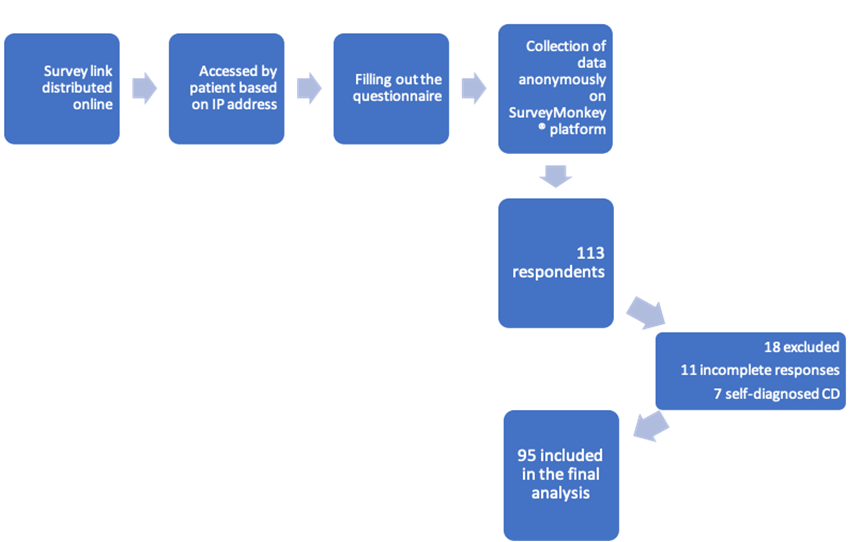
2.2. InstrumentThe survey was introduced on a dedicated platform (SurveyMonkey®) and a collector link was generated to be distributed online. Based on the IP address registered, only one response from the same device was allowed. Response editing was available until the survey was completed. All respondents voluntarily filled out the survey during a one-month period (March 21st – April 21st, 2021). The timing of data collection was set after one year of the pandemic and overlapped with the third wave of COVID-19 infections in Romania, along with a steady increase in vaccination rates in the second round of the vaccination schedule, which included chronic disease patients and individuals aged over 65. Social restriction and evening lockdown measures were in force during the time-period of the survey, according to the State of Alert on the Romanian territory 16, 17. Upon accessing the survey link, an introduction was available for respondents, stating the premises, terms of participation, and goals of the research. Only fully completed questionnaire reports meeting inclusion and exclusion criteria were included in the final analysis – Figure 1.
2.3. EthicsAs stated in the introductory section, participation in the survey was voluntary and filling out the survey implied the respondents’ consent to be included in this research. Ethics approval was granted by the local Ethics Committee (No 5752/2021).
2.4. Data AnalysisDescriptive statistics were used for reporting the data gathered through the questionnaire. Statistics were done using Microsoft Excel 16.35 and SPSS Statistics 25 software Armonk, NY, USA. Continuous variables are expressed as median (range) and categorical variables are expressed as count and percentage.
Altogether, 113 responses were gathered during the one-month study period, of which 102 were complete responses. Furthermore, 7 respondents were excluded as being self-diagnosed with CD, and the remaining 95 were included in the final analysis. The median age of respondents was 44 (range 19-69), with 86.3% of the female gender (see Table 1).
80% of patients were biopsy-proven CD, and the diagnosis was set by the gastroenterologist in 85.3% of cases. Most of the respondents (64.2%) were diagnosed in a public medical institution, while the remaining received their diagnosis in a private medical unit or at their general practitioner’s office. Regarding disease activity, over half (56.9%) of interviewed patients were either improved or in remission at the time of the survey.
At a professional level, half of the respondents (52.6%) reported unchanged activity at their workplace, and three out of four participants (74.7%) did not have a change in their revenue related to COVID-19. However, 3.2% of respondents had an early retirement during the pandemic, but none reported higher levels of anxiety or depression (Table 2).
Regarding adherence to the gluten-free diet, as assessed by Biagi questionnaire, there were insignificant changes in gluten consumption, eating-out behavior, or food-packaging check during the pandemic, as compared to the period before the pandemic – 87.4% participants reported strict adherence to gluten-free diet before COVID-19 while 78.9% continued strict exclusion of gluten during the pandemic (Table 3). Similar results were seen when asking patients if they were telling the cooking personnel about their disease when eating out: an affirmative answer was reported by 88.4% of participants for the period before and by 81.1% during the pandemic. Subjects taking part in the survey were carefully checking the labels of packaged food both before and during the pandemic, with a frequency of 95.8% and 89.5%, respectively. A lower rate of positive responses was registered when inquiring participants if they only ate packaged foods certified with the crossed grain symbol, with 67.4% of patients having declared so both before and during the pandemic time.
Regarding the impact on a personal level, 28/95 (29.5%) and 24/95 (25.3%) CD patients reported being either more anxious or depressed, while a minority of them (3.2%) required psychological or psychiatric support during the pandemic. Among respondents who reported higher levels of anxiety, the vast majority (96.4%) were female CD patients.
With regard to the accessibility of gluten-free foods, 73.7% of the survey participants considered that dietary products were available to the same extent as before the pandemic. On the other hand, access to healthcare services was somehow limited, with one fourth of respondents (24.2%) having declared they could only be seen by their general practitioner and in private medical clinics, and another fourth (25.3%) postponing their medical checkups due to fear of getting infected (see Table 2). Among those who reported postponing of medical visits, higher anxiety was declared by one out of three respondents.
Over half of survey participants (57.9%) were not satisfied with the information available for CD individuals during the COVID-19 pandemic, regarding specific implications for their digestive disease, risks associated with SARS-CoV2 infection, and COVID-19 vaccination. Of note, over two thirds of CD respondents who experienced COVID-19 (14/20) were among them. Most of the respondents were getting informed by means of online support groups (51.6%) or patients’ associations (24.2%) (Table 2).
About one in five (21.1%) subjects reported having COVID-19, but only two out of twenty (10%) needed hospitalization. The median age of SARS-CoV2 infected CD respondents was 36 years, lower than that of noninfected study participants. Also, the proportion of males was higher among infected than non-infected respondents (25% vs 10.7%). 85% of participants who declared having COVID-19 were on a gluten-free diet for more than two years. None of the hospitalized patients required supplemental oxygen. With all non-severe COVID-19, no rescue therapies were reported. COVID-19-related symptoms usually lasted less than one week (40%), except for anosmia and ageusia, which lasted for more than two weeks in 45% and 30% of respondents, respectively (Table 4).
About one third of respondents (35.8%) declared having been vaccinated with at least one dose of the available vaccines. There was significant uncertainty with regard to interactions between vaccination and CD-autoimmunity, with as much as 39.3% of study participants not getting vaccinated because they were not assured that CD patients could have the vaccine. Among vaccinated subjects, the most frequent side effect was pain at the injection site in 44.1%, followed by headache and chills in 11.8% (Table 5).
The novel coronavirus and its associated disease COVID-19 have undoubtedly kept the headlines for the beginning of the twenty-twenties decade. Medical professionals, patients and healthcare policymakers altogether had to deal with rapidly evolving changes in providing medical services 18.
As a chronic digestive disease with special dietary needs, CD was in the spotlight during the pandemic. The main issues for CD patients were availability and adherence to a gluten-free diet, as well as uncertainties regarding an elevated risk of infection and worse outcomes with COVID-19.
Among the factors that might influence the impact of COVID-19 in CD individuals, disease activity and adherence to a gluten-free diet have been assessed in several papers focusing on the consequences of the pandemic in CD. Falcomer et al. 19 have shown that the quality of life of Brazilian CD patients was mostly impacted by gastrointestinal aspects, independently of gender, age, marital status, and SARS-CoV2 infection, but was correlated with adhesion to the gluten-free diet. Others have looked at the impact of lockdown measures on diet and revealed improved adherence, particularly in patients with worse disease control, in whom home isolation provided an opportunity to avoid contamination and encouraged at-home cooking using naturally gluten-free foods 20. An increase in home food preparation was also reported by Bascuñán et al. 21, among 331 individuals following a gluten-free diet, but over half of the respondents in this study admitted having consumed gluten-containing foods also, without any differences seen between those who were on the diet because of medical reasons (CD, non-celiac gluten sensitivity or wheat allergy) or those who were following it as a trendy healthy diet, and independently of diet duration 21.
Due to reports of increased risk of infections in CD, a major concern for contacting SARS-CoV-2 and developing severe COVID-19 emerged among CD patients during pandemic. Indeed, CD has been previously reported to be associated with an increased risk of respiratory infections and viral illness 22, 23, 24, 25, 26, 27, 28 and increased mortality attributed to respiratory disease 27, 29. This has been hypothesized to be due to functional hyposplenism and defective immunity in CD 30, 31, 32, 33. Immune dysregulation has been reported in COVID-19 and this may trigger the development of associated autoimmune phenomena, which have been associated with poor prognosis 34.
However, according to available reports, there is no data to support an increased risk of COVID-19 in CD patients 35, 36, 37, 38, 39. In fact, currently available data has shown that the risk of contracting COVID-19 is not higher in CD patients 35, 36, 37. Moreover, a population-based study from Sweden has shown that CD is not associated with severe COVID-19 (hospitalization for COVID-19, admission to an ICU unit, and/or death attributed to COVID-19) compared to controls 36. Among our SARS-CoV2 infected study participants, only non-severe disease was reported. Resolution of symptoms which occurred at diagnosis was seen in 4 out of 10 COVID-19 CD patients within the first week, but some of these symptoms or later-occurring ones, considered COVID-19 related, were declared to last more than two weeks by 65% of infected respondents. Anosmia and ageusia were reported as persistent symptoms beyond the acute phase, but neurological manifestations may also be related to extraintestinal autoimmune phenomena in CD individuals 40, 41.
Despite evidence showing the odds of contracting COVID-19 in CD patients is similar to that of the general population, individuals suffering from CD still perceive they are at higher risk 42. This can be associated with higher levels of pandemic-related anxiety and could be due to insufficient communication of reliable data about their illness during the pandemic. In our survey, over half of respondents (57.9%) considered there was not enough information available for celiac individuals during pandemic and over one fourth (29.5%) reported higher anxiety due to the pandemic. This can contribute to increased pandemic-related stress and generate detrimental consequences for mental health, which in turn has been reported to be associated with decreased immunity 43. Of note, in the survey by Zhen et al. 42, members of CD's associations were less likely to perceive an increased risk of getting COVID-19 compared to those who were not affiliated with a patients' association, which supports the role of patient-centered communities in providing support during healthcare crisis. On the other hand, the web-survey conducted by Siniscalchi et al. 44 in two Italian centers revealed that CD patients did not feel more vulnerable of getting COVID-19 because of CD, but reported worries among females, elderly and those with comorbidities.
Lack of information drives uncertainty, especially during a global health crisis such as the COVID-19 pandemic, and this can cause high levels of anxiety for patients. Elevated levels of anxiety were reported in about half of patients seeing a general practitioner during the COVID-19 pandemic, prompting the need for adequate recognition of at-risk individuals in order to target therapeutic interventions 45. In our survey, increased anxiety levels were reported by over one fourth of respondents, of whom 96.4% were female. Anxiety rate among study participants was lower than that seen in the meta-analysis by Wu et al – 31.9% 46, but most of the studies included were from the early phases of the pandemic while we surveyed CD individuals one year after the pandemic onset. Also, a study looking at CD patients' anxiety using the State-trait Anxiety Inventory (STAI) scale evaluated all 101 patients to be mildly anxious, with a state anxiety index of 40.7±7.9 and trait anxiety index was 44.5±8.5 47. CD patients were also concerned about social distancing or of going in crowded public places, with most of respondents declaring to be enough, much or very much worried, as reported by Siniscalchi et al. 44. Compared to CD respondents in our study, higher rates of anxiety have been reported in other chronic digestive illness such as inflammatory bowel disease patients 48, which however did not seem to be related to hospital visits for biologics administration 49. Prevalence of depressive symptoms was also lower among our study participants compared to the general population 50, but comparison is limited by data collection during different timeframes during the pandemic.
A gluten-free diet remains the cornerstone treatment for CD patients. In the first weeks of the pandemic, fears of food shortages led to stockpiling of foods and living essentials, and this might have raised concerns in the community of people with CD. Regarding the availability of dietary products, an Italian questionnaire study from the beginning of the pandemic revealed that CD patients did not worry about the possible shortness of gluten-free foods 44. Our survey respondents indicated that the availability of gluten-free foods was unchanged during the pandemic (73.7%), with fewer than one in four respondents considering products to be less available compared to the period before the pandemic. In the questionnaire by Gokden et al. 47, there was a significant decrease in the number of patients who could obtain gluten-free products during than before the pandemic. Another study reporting the results of a web-based survey among Italian CD patients found unchanged gluten-free diet compliance for 69% of adults and improved adherence for 29% of respondents, particularly in those with suboptimal disease control 20. Similar results were reported by Siniscalchi et al. 44 with half of respondents not being worried about the possible shortness of gluten-free food during the pandemic. In our survey, questions looking at gluten-free diet adherence before and during the pandemic did not reveal significant changes in gluten consumption, behavior on eating-out and checking of labels of packaged food during the pandemic, as compared to the period before the pandemic.
Lockdowns and social restriction measures imposed by authorities during the pandemic have undoubtedly created disruptions in healthcare access for a significant proportion of patients suffering from chronic diseases, CD included. A significant proportion of our study respondents declared limited access to medical services during the pandemic, some being able to reach their GP only, others seeking care in private clinics also, and an alarmingly high rate of 25.3% reporting postponing of medical visits due to fear of contracting SARS-CoV2. There are several studies showing that reduced access to healthcare during the pandemic was successfully substituted by the use of telemedicine for CD patients 44, 51, 52, 53. In fact, CD patients declared themselves satisfied with remote consultations and even explicitly asked for them 44. This could represent an opportunity to set new approaches for follow-up of CD patients, which has been reported to be far from satisfactory due to low adherence 54, 55.
With regard to vaccination, CD has been reported to be associated with low responsiveness to hepatitis virus B vaccination 56, 57. Among our study respondents, there was significant uncertainty regarding the COVID-19 vaccine among CD patients, with 39.3% reporting being unsure if CD individuals could get vaccinated. Vaccine hesitancy among our participants might be a consequence of the reduced availability of information about COVID-19 vaccination among this patient group. As a chronic disease, CD was eligible for vaccination in the second round according to the Romanian COVID-19 vaccination schedule, which was underway during the time of data collection. An Italian study looking at vaccination willingness among 103 CD patients revealed that 25.2% of respondents were hesitant and 4.8% were refusing the COVID-19 vaccine, the main reason being fear of adverse effects (68.2%); factors associated with vaccine willingness were positive attitude to vaccination in general, adherence to the gluten-free diet, and perception of good knowledge about COVID-19 and its vaccines 58. Vaccination hesitancy among CD respondents in our study was higher compared to surveyed physicians or autoimmune disease patients during a similar time period of the pandemic 59, 60. Data on immune response to COVID-19 infection has shown that CD patients exhibit an anti-SARS-CoV-2 Ig positiveness and profile similar to non-celiac controls, except for anti-nucleocapsid IgA, probably due to the associated IgA hypogammaglobulinemia 61. A study including a small cohort of CD individuals did not show an increased risk of disease flaring after COVID-19 vaccination 62. Also, only mild side effects were reported by our study respondents. Further data on vaccinated CD patients will shed light on this topic.
Our survey intended to capture the self-perceived burden of COVID-19 on Romanian CD patients, one year after being declared pandemic, in a time-frame with increasing number of infections (277 new cases per million people on March 21st 2021, more than double compared to the incidence one month previously), despite social restriction and lockdown measures (COVID-19 stringency index – 63.89 out of 100, which is the strictest) and despite a good progression of the vaccination campaign (14.56% vaccinated with at least one dose on April 21st, 2021) 16, 63, 64.
The current web-based research has some limitations. The first is represented by the low number of respondents, which is a risk in survey-based research – up to ten times lower response rates have been reported in online surveys compared to face-to-face direct collection of data 65. However, there is wide age distribution among the study respondents, which reflect active members in CD communities. Also, the use of a convenience sample is also a potential source of bias, but internet dissemination of the survey in online patient groups was the most accessible way to reach individuals during pandemic. Considering the large female predominance of respondents, we acknowledge that there may be some gender-specific effects in self-reported items such as emotional swings during pandemic or vaccination side-effects. We also acknowledge the limit in using an unvalidated questionnaire, however its development was based on a thorough literature search conducted by the study authors in generating the survey items, design of straightforward questions and adapting of previously validated scales such as Biagi score. Not least, our research does not provide a comparison with the general population or other disease patient groups. However, data resulted from this survey adds to the currently available international experiences on COVID-19 and CD, which are each particular by specific culinary behavior and by extent of COVID-19 impact on local healthcare systems.
In a survey which assessed perceptions of CD individuals during the COVID-19 crisis, no significant impact was seen concerning availability and adherence to gluten-free diet. However a large proportion of CD patients reported feelings of anxiety and depression, amid growing concerns about COVID-19 and a lack of CD-specific information during the pandemic. Significant vaccine hesitancy was also seen among CD patients, mostly due to the low availability of information about COVID-19 vaccination among this patient group. Better awareness is needed for CD patients and online channels of patient groups or associations, along with implementation of virtual communication platforms, seem appropriate for conveying COVID-19-related messages.
All authors discussed the research idea and agreed on the manuscript structure and content. All authors contributed to the manuscript writing. All authors approved the last draft and the manuscript submission.
No specific grant from any public agency, commercial or not-for-profit sectors was received for the presented research.
None of the authors has any interests that would constitute a conflict of interest with the current article.
| [1] | WHO Director-General’s opening remarks at the media briefing on COVID-19 - 11 March 2020 [Internet]. [cited 2020 Dec 2]. Available from: https://www.who.int/director-general/speeches/detail/who-director-general-s-opening-remarks-at-the-media-briefing-on-covid-19---11-march-2020. | ||
| In article | |||
| [2] | Xia Y, Li Q, Li W, Shen H. Elevated mortality of chronic diseases during COVID-19 pandemic: a cause for concern? Ther Adv Chronic Dis. 2020; 11. | ||
| In article | View Article PubMed | ||
| [3] | Danhieux K, Buffel V, Pairon A, Benkheil A, Remmen R, Wouters E, et al. The impact of COVID-19 on chronic care according to providers: a qualitative study among primary care practices in Belgium. BMC Fam Pract 2020 211. 2020 Dec 5; 21(1): 1-6. | ||
| In article | View Article PubMed | ||
| [4] | Guidry JPD, Carlyle KE, Miller CA, Ksinan AJ, Winn R, Sheppard VB, et al. Endorsement of COVID-19 related misinformation among cancer survivors. Patient Educ Couns. 2021 May 21. | ||
| In article | View Article PubMed | ||
| [5] | Jayasinghe R, Ranasinghe S, Jayarajah U, Seneviratne S. Quality of online information for the general public on COVID-19. Patient Educ Couns. 2020 Dec 1; 103(12): 2594-7. | ||
| In article | View Article PubMed | ||
| [6] | Singh P, Arora A, Strand TA, Leffler DA, Catassi C, Green PH, et al. Global Prevalence of Celiac Disease: Systematic Review and Meta-analysis. Clin Gastroenterol Hepatol Off Clin Pract J Am Gastroenterol Assoc. 2018 Jun 1; 16(6): 823-836.e2. | ||
| In article | View Article PubMed | ||
| [7] | Murray JA, Van Dyke C, Plevak MF, Dierkhising RA, Zinsmeister AR, Melton LJ. Trends in the identification and clinical features of celiac disease in a North American community, 1950-2001. Clin Gastroenterol Hepatol Off Clin Pract J Am Gastroenterol Assoc. 2003 Jan; 1(1): 19-27. | ||
| In article | View Article PubMed | ||
| [8] | Al-Toma A, Volta U, Auricchio R, Castillejo G, Sanders DS, Cellier C, et al. European Society for the Study of Coeliac Disease (ESsCD) guideline for coeliac disease and other gluten-related disorders. United Eur Gastroenterol J. 2019 Jun; 7(5): 583-613. | ||
| In article | View Article PubMed | ||
| [9] | Husby S, Koletzko S, Korponay-Szabó I, Kurppa K, Mearin ML, Ribes-Koninckx C, et al. European Society Paediatric Gastroenterology, Hepatology and Nutrition Guidelines for Diagnosing Coeliac Disease 2020. J Pediatr Gastroenterol Nutr. 2020 Jan; 70(1): 141-56. | ||
| In article | View Article PubMed | ||
| [10] | Hamming I, Timens W, Bulthuis ML, Lely AT, Navis G, van Goor H. Tissue distribution of ACE2 protein, the functional receptor for SARS coronavirus. A first step in understanding SARS pathogenesis. J Pathol. 2004 Jun; 203(2): 631-7. | ||
| In article | View Article PubMed | ||
| [11] | Dima A, Balaban DV, Jurcut C, Berza I, Jurcut R, Jinga M. Article perceptions of romanian physicians on lockdowns for covid-19 prevention. Healthc Switz. 2021 Jan 18; 9(1): 95. | ||
| In article | View Article PubMed | ||
| [12] | Valitutti F, Toncone R, Pisano P, Ciacci C. Where have all the other coeliacs gone in 2020? Road for a 2021 catch-up with missed diagnoses. Dig Liver Dis Off J Ital Soc Gastroenterol Ital Assoc Study Liver. 2021 Apr 1; 53(4): 504-5. | ||
| In article | View Article PubMed | ||
| [13] | Catassi GN, Vallorani M, Cerioni F, Lionetti E, Catassi C. A negative fallout of COVID-19 lockdown in Italy: Life-threatening delay in the diagnosis of celiac disease. Dig Liver Dis. 2020 Oct 1; 52(10): 1092. | ||
| In article | View Article PubMed | ||
| [14] | Eysenbach G. Improving the quality of Web surveys: the Checklist for Reporting Results of Internet E-Surveys (CHERRIES). J Med Internet Res. 2004 Sep 29; 6(3): e34. | ||
| In article | View Article PubMed | ||
| [15] | Biagi F, Andrealli A, Bianchi PI, Marchese A, Klersy C, Corazza GR. A gluten-free diet score to evaluate dietary compliance in patients with coeliac disease. Br J Nutr. 2009 Sep; 102(6): 882-7. | ||
| In article | View Article PubMed | ||
| [16] | Dong E, Du H, Gardner L. An interactive web-based dashboard to track COVID-19 in real time. Lancet Infect Dis. 2020 May 1; 20(5): 533-4. | ||
| In article | View Article | ||
| [17] | HOTARARE 293 10/03/2021 - Portal Legislativ [Internet]. [cited 2021 Jul 18]. Available from: http://legislatie.just.ro/Public/DetaliiDocumentAfis/239080. | ||
| In article | |||
| [18] | Leao T, Amorim M, Fraga S, Barros H. What doubts, concerns and fears about COVID-19 emerged during the first wave of the pandemic? Patient Educ Couns. 2021 Feb 1; 104(2): 235-41. | ||
| In article | View Article PubMed | ||
| [19] | Falcomer AL, Farage P, Pratesi CB, Pratesi R, Gandolfi L, Nakano EY, et al. Health-Related Quality of Life and Experiences of Brazilian Celiac Individuals over the Course of the Sars-Cov-2 Pandemic. Nutr 2021 Vol 13 Page 1582. 2021 May 9; 13(5): 1582. | ||
| In article | View Article PubMed | ||
| [20] | Monzani A, Lionetti E, Felici E, Fransos L, Azzolini D, Rabbone I, Catassi C. Adherence to the Gluten-Free Diet during the Lockdown for COVID-19 Pandemic: A Web-Based Survey of Italian Subjects with Celiac Disease. Nutrients. 2020 Nov 1; 12(11): 1-12. | ||
| In article | View Article PubMed | ||
| [21] | Bascuñán KA, Rodríguez JM, Osben C, Fernández A, Sepúlveda C, Araya M. Pandemic Effects and Gluten-Free Diet: An Adherence and Mental Health Problem. Nutr 2021 Vol 13 Page 1822. 2021 May 27; 13(6): 1822. | ||
| In article | View Article PubMed | ||
| [22] | Mårild K, Fredlund H, Ludvigsson JF. Increased risk of hospital admission for influenza in patients with celiac disease: a nationwide cohort study in Sweden. Am J Gastroenterol. 2010 Nov; 105(11): 2465-73. | ||
| In article | View Article PubMed | ||
| [23] | Ludvigsson JF, Wahlstrom J, Grunewald J, Ekbom A, Montgomery SM. Coeliac disease and risk of tuberculosis: a population based cohort study. Thorax. 2007 Jan; 62(1): 23-8. | ||
| In article | View Article PubMed | ||
| [24] | Simons M, Scott-Sheldon LAJ, Risech-Neyman Y, Moss SF, Ludvigsson JF, Green PHR. Celiac Disease and Increased Risk of Pneumococcal Infection: A Systematic Review and Meta-Analysis. Am J Med. 2018 Jan; 131(1): 83-9. | ||
| In article | View Article PubMed | ||
| [25] | Ludvigsson JF, Choung RS, Marietta EV, Murray JA, Emilsson L. Increased risk of herpes zoster in patients with coeliac disease - nationwide cohort study. Scand J Public Health. 2018 Dec; 46(8): 859-66. | ||
| In article | View Article PubMed | ||
| [26] | Canova C, Ludvigsson J, Baldo V, Barbiellini Amidei C, Zanier L, Zingone F. Risk of bacterial pneumonia and pneumococcal infection in youths with celiac disease - A population-based study. Dig Liver Dis Off J Ital Soc Gastroenterol Ital Assoc Study Liver. 2019 Aug; 51(8): 1101-5. | ||
| In article | View Article PubMed | ||
| [27] | Zingone F, Abdul Sultan A, Crooks CJ, Tata LJ, Ciacci C, West J. The risk of community-acquired pneumonia among 9803 patients with coeliac disease compared to the general population: a cohort study. Aliment Pharmacol Ther. 2016 Jul; 44(1): 57-67. | ||
| In article | View Article PubMed | ||
| [28] | Ludvigsson JF, Sanders DS, Maeurer M, Jonsson J, Grunewald J, Wahlström J. Risk of tuberculosis in a large sample of patients with coeliac disease--a nationwide cohort study. Aliment Pharmacol Ther. 2011 Mar; 33(6): 689-96. | ||
| In article | View Article PubMed | ||
| [29] | B L, PHR G, J S, B R, JF L. Association Between Celiac Disease and Mortality Risk in a Swedish Population. JAMA. 2020 Apr 7; 323(13): 1277-85. | ||
| In article | View Article PubMed | ||
| [30] | Di Sabatino A, Rosado MM, Cazzola P, Riboni R, Biagi F, Carsetti R, et al. Splenic hypofunction and the spectrum of autoimmune and malignant complications in celiac disease. Clin Gastroenterol Hepatol Off Clin Pract J Am Gastroenterol Assoc. 2006 Feb; 4(2): 179-86. | ||
| In article | View Article | ||
| [31] | William BM, Corazza GR. Hyposplenism: a comprehensive review. Part I: basic concepts and causes. Hematol Amst Neth. 2007 Feb; 12(1): 1-13. | ||
| In article | View Article PubMed | ||
| [32] | Di Sabatino A, Carsetti R, Corazza GR. Post-splenectomy and hyposplenic states. Lancet Lond Engl. 2011 Jul 2; 378(9785): 86-97. | ||
| In article | View Article | ||
| [33] | Giuffrida P, Aronico N, Rosselli M, Lenti MV, Cococcia S, Roccarina D, et al. Defective spleen function in autoimmune gastrointestinal disorders. Intern Emerg Med. 2020 Mar; 15(2): 225-9. | ||
| In article | View Article PubMed | ||
| [34] | Pascolini S, Vannini A, Deleonardi G, Ciordinik M, Sensoli A, Carletti I, et al. COVID-19 and Immunological Dysregulation: Can Autoantibodies be Useful? Clin Transl Sci. 2021 Mar; 14(2): 502-8. | ||
| In article | View Article PubMed | ||
| [35] | Zhen J, Stefanolo JP, Temprano M de la P, Tedesco S, Seiler C, Caminero AF, et al. The Risk of Contracting COVID-19 Is Not Increased in Patients With Celiac Disease. Clin Gastroenterol Hepatol. 2021 Feb 1; 19(2): 391-3. | ||
| In article | View Article PubMed | ||
| [36] | Lebwohl B, Larsson E, Söderling J, Roelstraete B, Murray JA, Green PHR, et al. Risk of Severe Covid-19 in Patients with Celiac Disease: A Population-Based Cohort Study. Clin Epidemiol. 2021; 13: 121-30. | ||
| In article | View Article PubMed | ||
| [37] | Schiepatti A, Alimenti E, Maimaris S, Nicolardi ML, Manzella La Barbera F, Baiardi P, et al. Prevalence, incidence and clinical features of SARS-CoV-2 infection in adult coeliac patients. Eur J Gastroenterol Hepatol. 2021; Publish Ah(June): 1-6. | ||
| In article | View Article PubMed | ||
| [38] | Zingone F, D’Odorico A, Lorenzon G, Marsilio I, Farinati F, Savarino EV. Risk of COVID-19 in celiac disease patients. Autoimmun Rev. 2020 Oct; 19(10): 102639. | ||
| In article | View Article PubMed | ||
| [39] | Lerner, Aaron. The COVID-19 Vaccination Debate: CoV-2 in Celiac Disease: A Pathogen or just along for the Ride? Int J Celiac Dis. 2021; 9(1): 6-9. | ||
| In article | |||
| [40] | Volta U, De Giorgio R, Granito A, Stanghellini V, Barbara G, Avoni P, et al. Anti-ganglioside antibodies in coeliac disease with neurological disorders. Dig Liver Dis Off J Ital Soc Gastroenterol Ital Assoc Study Liver. 2006 Mar; 38(3): 183-7. | ||
| In article | View Article PubMed | ||
| [41] | Cervio E, Volta U, Verri M, Boschi F, Pastoris O, Granito A, et al. Sera of patients with celiac disease and neurologic disorders evoke a mitochondrial-dependent apoptosis in vitro. Gastroenterology. 2007 Jul; 133(1): 195-206. | ||
| In article | View Article PubMed | ||
| [42] | Zhen J, Stefanolo JP, Temprano M de la P, Seiler CL, Caminero A, de-Madaria E, et al. Risk perception and knowledge of COVID-19 in patients with celiac disease. http://www.wjgnet.com/. 2021 Mar 28; 27(12): 1213-25. | ||
| In article | View Article PubMed | ||
| [43] | T Z, S K. Psychoneuroimmunology--cross-talk between the immune and nervous systems. J Neurol. 2007 May; 254 Suppl 2(2 SUPPL.). | ||
| In article | View Article PubMed | ||
| [44] | Siniscalchi M, Zingone F, Savarino EV, D’Odorico A, Ciacci C. COVID-19 pandemic perception in adults with celiac disease: an impulse to implement the use of telemedicine. Dig Liver Dis. 2020 Oct 1; 52(10): 1071. | ||
| In article | View Article PubMed | ||
| [45] | Ionescu TC, Fetecau BI, Boscaiu V, Tudose C. Anxiety, Perceived Stress, and Resilience during the COVID-19 Pandemic: Population Estimates of Persons Presenting to a General Practitioner in Romania. Brain Sci. 2021 Nov 20; 11(11): 1541. | ||
| In article | View Article PubMed | ||
| [46] | Wu T, Jia X, Shi H, Niu J, Yin X, Xie J, Wang X. Prevalence of mental health problems during the COVID-19 pandemic: A systematic review and meta-analysis. J Affect Disord. 2021 Feb 15; 281: 91-8. | ||
| In article | View Article PubMed | ||
| [47] | Gokden Y, Hot S, Adas M, Ogutmen Koc D, Atak S, Hot AB. Celiac disease and COVID-19 pandemic : should we worry? | ||
| In article | |||
| [48] | Trindade IA, Ferreira NB. COVID-19 Pandemic’s Effects on Disease and Psychological Outcomes of People With Inflammatory Bowel Disease in Portugal: A Preliminary Research. Inflamm Bowel Dis. 2021 Jul 27; 27(8): 1224-9. | ||
| In article | View Article PubMed | ||
| [49] | Bertani L, Barberio B, Tricò D, Zanzi F, Maniero D, Ceccarelli L, et al. Hospitalisation for Drug Infusion Did Not Increase Levels of Anxiety and the Risk of Disease Relapse in Patients with Inflammatory Bowel Disease during COVID-19 Outbreak. J Clin Med. 2021 Jul 24; 10(15): 3270. | ||
| In article | View Article PubMed | ||
| [50] | Medda E, Toccaceli V, Gigantesco A, Picardi A, Fagnani C, Stazi MA. The COVID-19 pandemic in Italy: Depressive symptoms immediately before and after the first lockdown. J Affect Disord. 2022 Feb 1; 298(Pt A): 202-8. | ||
| In article | View Article PubMed | ||
| [51] | Elli L, Barisani D, Vaira V, Bardella MT, Topa M, Vecchi M, et al. How to manage celiac disease and gluten-free diet during the COVID-19 era: proposals from a tertiary referral center in a high-incidence scenario. BMC Gastroenterol. 2020 Nov 19; 20(1): 387. | ||
| In article | View Article PubMed | ||
| [52] | Galli G, Esposito G, Dilaghi E, Annibale B, Lahner E, Conti L. Successful coping with SARS-CoV-2 infection of adult celiac patients assessed by telemedicine. Dig Liver Dis Off J Ital Soc Gastroenterol Ital Assoc Study Liver. 2021 Apr; 53(4): 391-3. | ||
| In article | View Article PubMed | ||
| [53] | Costantino A, Roncoroni L, Noviello D, Nandi N, Lombardo V, Scricciolo A, et al. Nutritional and Gastroenterological Monitoring of Patients With Celiac Disease During COVID-19 Pandemic: The Emerging Role of Telemedicine and Point-of-Care Gluten Detection Tests. Front Nutr. 2021; 8: 622514. | ||
| In article | View Article PubMed | ||
| [54] | Husby S, Bai JC. Follow-up of Celiac Disease. Gastroenterol Clin North Am. 2019 Mar 1; 48(1): 127-36. | ||
| In article | View Article PubMed | ||
| [55] | Moya DA, Nugent CA, Baker RD, Baker SS. Celiac Disease Nutritional Status and Poor Adherence to Follow-up. Clin Pediatr (Phila). 2020 Jun 1; 59(7): 649-55. | ||
| In article | View Article PubMed | ||
| [56] | Opri R, Veneri D, Mengoli C, Zanoni G. Immune response to Hepatitis B vaccine in patients with celiac disease: A systematic review and meta-analysis. Hum Vaccines Immunother. 2015 Jan 1; 11(12): 2800. | ||
| In article | View Article PubMed | ||
| [57] | Balamtekın N, Uslu N, Baysoy G, Saltik-Temızel I, Demır H, Yüce A. Responsiveness of children with celiac disease to different hepatitis B vaccination protocols. Turk J Gastroenterol Off J Turk Soc Gastroenterol. 2011 Feb; 22(1): 27-31. | ||
| In article | View Article PubMed | ||
| [58] | Costantino A, Topa M, Roncoroni L, Doneda L, Lombardo V, Stocco D, et al. COVID-19 Vaccine: A Survey of Hesitancy in Patients with Celiac Disease. Vaccines. 2021 May 1; 9(5). | ||
| In article | View Article PubMed | ||
| [59] | Pinte L, Caraiola S, Balaban DV, Badea C, Mazilu D, Ionescu GD, et al. COVID-19 Impact and Vaccination Willingness among Romanian Patients with Autoimmune/Immune-Mediated Diseases. Healthc Basel Switz. 2021 Dec 8; 9(12): 1707. | ||
| In article | View Article PubMed | ||
| [60] | Dima A, Jurcut C, Balaban DV, Gheorghita V, Jurcut R, Dima AC, et al. Physicians’ Experience with COVID-19 Vaccination: A Survey Study. Healthc Basel Switz. 2021 Dec 17; 9(12): 1746. | ||
| In article | View Article PubMed | ||
| [61] | Elli L, Facciotti F, Lombardo V, Scricciolo A, Sanders DS, Vaira V, et al. Impact of a SARS-COV-2 Infection in Patients with Celiac Disease. medRxiv. 2020 Dec 16; 2020. 12.15. 20248039. | ||
| In article | View Article | ||
| [62] | Pinte L, Negoi F, Ionescu GD, Caraiola S, Balaban DV, Badea C, et al. COVID-19 Vaccine Does Not Increase the Risk of Disease Flare-Ups among Patients with Autoimmune and Immune-Mediated Diseases. J Pers Med. 2021 Dec 2; 11(12): 1283. | ||
| In article | View Article PubMed | ||
| [63] | Mathieu E, Ritchie H, Ortiz-Ospina E, Roser M, Hasell J, Appel C, et al. A global database of COVID-19 vaccinations. Nat Hum Behav. | ||
| In article | |||
| [64] | Hale T, Angrist N, Goldszmidt R, Kira B, Petherick A, Phillips T, et al. A global panel database of pandemic policies (Oxford COVID-19 Government Response Tracker). Nat Hum Behav 2021 54. 2021 Mar 8; 5(4): 529-38. | ||
| In article | View Article PubMed | ||
| [65] | Arámburo-Gálvez JG, Carvalho Gomes I, André TG, Beltrán-Cárdenas CE, Macêdo-Callou MA, Braga Rocha ÉM, Mye-Takamatu-Watanabe EA, Rahmeier-Fietz V, Figueroa-Salcido OG, Cárdenas-Torres FI, Ontiveros N, Cabrera-Chávez F. Translation, Cultural Adaptation, and Evaluation of a Brazilian Portuguese Questionnaire to Estimate the Self-Reported Prevalence of Gluten-Related Disorders and Adherence to Gluten-Free Diet. Med Kaunas Lith. 2019 Sep 1; 55(9). | ||
| In article | View Article PubMed | ||
RO-Celiac-COVID: A questionnaire-based study on the impact of the COVID-19 pandemic on Romanian patients with celiac disease
Dear patient,
You are in medical records with celiac disease (gluten enteropathy). As you well know, the COVID-19 pandemic has put unprecedented pressure on global health systems. Patients with chronic digestive diseases also suffered in the context of the COVID-19 pandemic, due to limited healthcare access and allocation of significant resources (human, material, infrastructure) for SARS-CoV2 infected patients. This questionnaire is intended for all patients diagnosed with celiac disease and is conducted by a multidisciplinary team of doctors from UMF Carol Davila. We invite you to take part in this questionnaire that evaluates the impact of the COVID-19 pandemic on patients with celiac disease. By participating in this research, you bring a benefit to the entire celiac community, by helping to determine the current problems and needs of patients with celiac disease in the context of the COVID-19 pandemic. Your participation is voluntary and implies your agreement to use the answers to conduct an analysis of the consequences of the COVID-19 pandemic among celiac disease individuals. The questionnaire takes about 5-10 minutes to complete. Data collected through this questionnaire will be processed completely anonymously. You can refuse to participate in this questionnaire or withdraw your participation at any time before completing the survey. Results will be presented in the form of a research paper that will be available online. For further question or details, please contact physician.survey.covid19@gmail.com. Thanks for taking the time to complete this questionnaire!
Q1. What is your gender?
• Male
• Female
Q2. What is your age?

Q3. What year were you diagnosed with celiac disease?

Q4. Since when did you start a gluten-free diet? (please choose only one answer)
• At diagnosis
• Before diagnosis
• Some weeks-months after diagnosis
• Not yet started, still in the course of getting diagnosed
• Don’t know/don’t remember
Q5. Where did you get the diagnosis of celiac disease? (please choose only one answer)
• Public Clinic/Outpatient/Hospital
• Private Clinic/Outpatient/Hospital
• General practitioners’ office
Q6. Who diagnosed celiac disease: (please choose only one answer)
• Gastroenterologist
• Internal medicine specialist
• General practitioner
• Self-diagnosed
• Other (please mention)
Q7. When I was diagnosed with celiac disease, the following tests were performed: (several answers can be checked/completed)
• Serology (anti-tissue transglutaminase, anti-endomisium, anti-deamidated gliadin peptides)
• Genetic testing (HLA)
• Endoscopy without biopsy
• Endoscopy with biopsies
• Don’t know/Don’t remember
• Other (please mention)
Q8. At present, after the last medical visit, the evolution of celiac disease was, according to the discussion with the doctor and the laboratory workup: (please choose only one answer)
• Stationary
• Remission
• Improved
• Never went to the doctor after diagnosis
• Don’t know
• Other (please mention)
Q9. What is your marital status? (please choose only one answer)
• Single
• Married
• Divorced
• Widowed
Q10. Living conditions: (several answers can be checked/completed)
• Single
• With husband/wife
• With kids
• With parents
• Something else (please mention)
Q11. Where does your monthly income come from?
• Salary
• Pension
• Income from other family members
• Something else (please mention)
Q12. How has your monthly income changed during the COVID-19 pandemic? (please choose only one answer)
Unchanged
• Lower monthly income
• Higher monthly income
• I lost my monthly income
• Something else (please mention)
Q13. How has the COVID-19 pandemic affected your workplace? (please choose only one answer)
• My professional activity was not influenced
• I continued to work for the same employer, but from home
• I continued to work for the same employer, but with mandatory days off and a lower salary
• I involuntarily lost my job and got another job
• I involuntarily lost my job and failed to get another one
• I voluntarily left my job and got another job
• I left my job voluntarily and did not get another job so far
• Not applicable (pupil/student/retired)
• Other (please mention):
Q14. To what extent did you comply with the instructions imposed by the authorities regarding home isolation? (please choose only one answer)
• I strictly adhered to the isolation measures at home
• I tried to follow the isolation instructions (I left the house only for good reasons)
• I tried to respect the most important measures, I left the house for less founded reasons also
• I tried to get out of the house as much as possible during periods of isolation, usually for reasons not considered by the authorities as grounded
Q15. How did you proceed with your daily shopping during the pandemic / isolation period at home? (several answers can be checked/completed)
• I went shopping as often as possible so that I could leave the house motivated
• When we went shopping, we bought products that would last for several days, in order to get out of the house as rarely as possible.
• We usually designated a single family member to go shopping to limit the risk of COVID-19 infection.
• I usually went shopping with another family member
Q16. Before the pandemic - did you eat gluten voluntarily?
• Yes, a normal portion
• Just a taste, rarely
• Just a taste, often
• No
Q17. As compared to before the pandemic, did you eat gluten voluntarily during the pandemic?
• Yes, the same amount
• Yes, more frequent
• Yes, less frequent
• No, before I used to eat gluten, but now I’m strictly avoiding gluten
• No, I did not eat gluten neither before, nor during the pandemic
Q18. Before the pandemic - When you ate out, did you tell the person who was cooking about your disease?
• Yes
• No
Q19. As compared to before the pandemic, when you ate out, did you tell the person who was cooking about your disease during the pandemic?
• Yes, to the same extent
• Yes, more frequent
• Yes, less frequent
• No, before I used to tell the cooking staff, but during pandemic I did not
• No, I was not telling the cooking staff about my disease neither before, nor during the pandemic
Q20. Before the pandemic – Did you check the labels of packaged food?
• Yes
• No
Q21. As compared to before the pandemic, did you check the labels of packaged food during the pandemic?
• Yes, to the same extent
• Yes, more frequent
• Yes, less frequent
• No, before I used to check the labels, but during pandemic I did not
• No, I was not checking the labels neither before, nor during the pandemic
Q22. Before the pandemic – Did you only eat packaged food guaranteed by the Coeliac Association/crossed grain symbol?
• Yes
• No
Q23. As compared to before the pandemic, did you only eat packaged food guaranteed by the Coeliac Association/crossed grain symbol during the pandemic?
• Yes, as before the pandemic, I eat only certified products
• Yes, before the pandemic I used to eat non-certified products, but now I eat only certified products
• No, before the pandemic I ate only certified products, but now I eat non- certified products also
• No, as before the pandemic, I eat non-certified products
Q24. How has the period of the pandemic affected you emotionally? (several answers can be checked/completed)
• I did not notice any changes in my emotional state
• I was sadder, more depressed during this period
• I was more agitated, anxious during this period
• I had alternate periods of depression and anxiety
• I needed psychological or psychiatric medical help for anxiety or depression
• I did not need the intervention of a psychologist or psychiatrist
• I was more relaxed, calmer
• I was more rested
Q25. How do you assess the availability of gluten-free products during the COVID-19 pandemic?
• The products were available to the same extent as before the pandemic
• The products were less available during the COVID-19 pandemic
• The products were more frequently available during the COVID-19 pandemic
• I don't know / can't appreciate
Q26. Did you have access to health services during the COVID-19 pandemic? (please choose only one answer)
• Yes, only at the family doctor
• Yes, only at the family doctor and private medical clinics
• Yes, I benefited from hospitalization in a state hospital
• I needed medical care, but I did not have access to the services offered by public hospitals
• I postponed medical consultations for fear of COVID-19 infection
• I did not need medical services during the pandemic
Q27. Do you consider that there was sufficient information available for patients with celiac disease during the COVID-19 pandemic? (please choose only one answer)
• Yes
• No
• Don’t know/don’t answer
Q28. Where did you get information about the particularities of the new coronavirus infection in people with celiac disease? (several possible answers)
• General practitioner
• Specialist physician
• Online support groups
• Patients’ association
• Did not have access to information
• Other (please mention)
Q29. Have you been diagnosed with COVID-19 infection?
• Yes
• No
These questions are only for patients with celiac disease who have had COVID-19
Q30. What month were you diagnosed with COVID-19 infection?
• February 2020
• March 2020
• April 2020
• May 2020
• June 2020
• July 2020
• August 2020
• September 2020
• October 2020
• November 2020
• December 2020
• January 2021
• February 2021
• March 2021
• April 2021
Q31. Where do you think you got COVID-19 from? (several answers can be checked)
• From work
• From school / high school / college
• From a family member who lives with you
• From a member of the entourage (friends / acquaintances / relatives who do not live with you)
• From a roommate / apartment / dormitory
• From the hospital
• From the family doctor
• From the means of transport (bus / tram / metro / taxi /uber, etc.)
• From shopping (supermarkets / markets / neighborhood shops)
• From the elevator / block staircase
• I do not know
• Other (please mention)
Q32. What symptoms did you experience during COVID-19 infection? (several answers can be checked / completed)
I had no symptoms. I tested positive, but I didn't feel bad
• Fever
• Shiver
• Marked fatigue (asthenia)
• Feeling weak
• Muscle aches (myalgias)
• Lack of air (dyspnea) at rest
• Lack of air only at exertion
• Dry cough
• Sputum cough
• Sore throat (odynophagia)
• Rhinorrhea
• Diarrhea
• Nausea / vomiting
• Newly installed headache (headache)
• Absence of taste (ageusia)
• Absence of odor (anosmia)
• Other symptoms (please mention)
Q33. How long did the symptoms of COVID-19 infection last? (please choose only one answer)
• I had no symptoms
• Less than a week
• About a week
• About 2 weeks
• Between 2 weeks and a month
• More than a month
Q34. Are there symptoms of COVID-19 that have persisted for more than 2 weeks?
• Yes
• No
Q35. Only if there have been COVID-19 symptoms that have persisted for more than 2 weeks, please mention: (several answers can be checked / completed)
• It does not apply; I did not have symptoms that persisted more than 2 weeks
• Fever
• shiver
• Marked fatigue (asthenia)
• Feeling weak
• Muscle aches (myalgias)
• Lack of air (dyspnea) at rest
• Lack of air only at exertion
• Dry cough
• Sputum cough
• Sore throat (odynophagia)
• Rhinorrhea
• Diarrhea
• Nausea / vomiting
• Newly installed headache (headache)
• Absence of taste (ageusia)
• Absence of odor (anosmia)
• Other symptoms (please mention)
Q36. Have you been hospitalized for COVID-19 infection? (please choose only one answer)
• No, hospitalization was not required
• No, I refused admission
• No, I requested hospitalization, but I was refused
• Yes, I was hospitalized even though I had mild symptoms
• Yes, I was hospitalized with moderate symptoms
• Yes, I was hospitalized in emergency, with severe symptoms
• Initially I refused hospitalization, but then my symptoms got worse and I was later hospitalized
Q37. How many days have you been hospitalized for COVID-19 infection? (please fill in with 0 if you have not been hospitalized)

Q38. During the hospitalization, you benefited from the following: (please choose only one answer)
• It does not apply, I was not hospitalized at all
• Oxygen on the nasal cannulas (small tubes of oxygen inserted in the nostrils)
• Oxygen on the mask
• Hospitalization in the intensive care unit (ICU), for monitoring, without invasive or non-invasive ventilation
• Non - invasive oxygen mask ventilation (CPAP, BPAP ventilation)
• Intubation and mechanical ventilation
• I did not need any of the options mentioned above
• I don't know, I can't specify
Q39. What treatment were you given for COVID-19 infection? (multiple answers can be checked / completed)
• I did not follow any treatment
• Hydroxychloroquine (Plaquenil)
• Lopinavir / Ritonavir (Kaletra)
• Corticosteroids (Dexamethasone, Medrol, Prednisone)
• Tocilizumab (RoActemra)
• Anakinra (Kineret)
• Remdesivir (Veklury)
• Favipiravir
• Convalescent plasma
• Anticoagulant
• Antibiotic
• I don't know the name of the drugs that were given to me
• Other drugs. Please mention:
Next, we want to evaluate your impressions and experience with COVID-19 vaccination.
Q40. Did you get vaccinated against COVID-19?
• Yes
• No
Q41. If you have NOT been vaccinated, please mention the reason (several answers can be checked/ completed):
• I have not yet been assured that I can get the vaccine as I suffer from celiac disease
• I haven't been able to get an appointment yet, but I intend to vaccinate
• I didn't understand exactly how to do my scheduling for vaccination
• I believe that the side effects of the vaccine are not known well enough
• I don't think the vaccine works
• I do not believe in the existence of the SARS-CoV2 virus
• I had COVID-19 infection and as such the vaccine would not bring a benefit
Q42. Have you completed the complete vaccination schedule (2 doses) against COVID-19? (please choose a single answer)
• Yes, I received both doses of the vaccine
• No, I only received the first dose and I will get the second dose
• I received the first dose and I refused / will refuse the second dose
Q43. Have you experienced side effects after the first dose of COVID-19 vaccine?
• does not apply, I did not have side effects after the first dose
• pain at the injection site
• swelling at the injection site
• redness at the injection site
• enlarged (swollen) lymph nodes in the lateral area of the neck or in the armpit
• marked fatigue (asthenia)
• headache
• muscle pain (myalgias)
• joint pain (arthralgia)
• chills
• fever
• severe allergic reaction / anaphylactic shock
• mild allergic reactions / rashes
• ringing in the ears (tinnitus)
• dizziness (vertigo)
• others (please mention)
Q44. How did you feel after the second dose of COVID-19 vaccine?
• As usual. I had no side effects at either the first or second dose of the vaccine
• I had the same side effects as after the first dose
• I had the same side effects as after the first dose, but more severe
• I had additional side effects compared to the first dose (will be detailed in the next question)
Q45. If you answered YES to the previous question - you had additional side effects compared to the first dose, please check the correct answers from the list below:
• swelling at the injection site
• redness at the injection site
• enlarged (swollen) lymph nodes in the lateral area of the neck or in the armpit
• marked fatigue (asthenia)
• headache
• muscle pain (myalgias)
• joint pain (arthralgia)
• chills
• fever
• severe allergic reaction / anaphylactic shock
• mild allergic reactions / rashes
• ringing in the ears (tinnitus)
• dizziness (vertigo)
• others (please mention)
Q46. How long did the side effects start after the second dose of the vaccine? (please choose only one answer)
• Immediately, in the first 15 minutes
• Between one hour and 4 hours
• Between 4 hours and 8 hours
• Between 8 hours and 12 hours
• The next day
• In the next 2-3 days
Published with license by Science and Education Publishing, Copyright © 2022 Vasile Daniel Balaban, Alina Dima, Catalin Augustin Dima, Alina Popp, Ciprian Jurcut and Mariana Jinga
 This work is licensed under a Creative Commons Attribution 4.0 International License. To view a copy of this license, visit
http://creativecommons.org/licenses/by/4.0/
This work is licensed under a Creative Commons Attribution 4.0 International License. To view a copy of this license, visit
http://creativecommons.org/licenses/by/4.0/
| [1] | WHO Director-General’s opening remarks at the media briefing on COVID-19 - 11 March 2020 [Internet]. [cited 2020 Dec 2]. Available from: https://www.who.int/director-general/speeches/detail/who-director-general-s-opening-remarks-at-the-media-briefing-on-covid-19---11-march-2020. | ||
| In article | |||
| [2] | Xia Y, Li Q, Li W, Shen H. Elevated mortality of chronic diseases during COVID-19 pandemic: a cause for concern? Ther Adv Chronic Dis. 2020; 11. | ||
| In article | View Article PubMed | ||
| [3] | Danhieux K, Buffel V, Pairon A, Benkheil A, Remmen R, Wouters E, et al. The impact of COVID-19 on chronic care according to providers: a qualitative study among primary care practices in Belgium. BMC Fam Pract 2020 211. 2020 Dec 5; 21(1): 1-6. | ||
| In article | View Article PubMed | ||
| [4] | Guidry JPD, Carlyle KE, Miller CA, Ksinan AJ, Winn R, Sheppard VB, et al. Endorsement of COVID-19 related misinformation among cancer survivors. Patient Educ Couns. 2021 May 21. | ||
| In article | View Article PubMed | ||
| [5] | Jayasinghe R, Ranasinghe S, Jayarajah U, Seneviratne S. Quality of online information for the general public on COVID-19. Patient Educ Couns. 2020 Dec 1; 103(12): 2594-7. | ||
| In article | View Article PubMed | ||
| [6] | Singh P, Arora A, Strand TA, Leffler DA, Catassi C, Green PH, et al. Global Prevalence of Celiac Disease: Systematic Review and Meta-analysis. Clin Gastroenterol Hepatol Off Clin Pract J Am Gastroenterol Assoc. 2018 Jun 1; 16(6): 823-836.e2. | ||
| In article | View Article PubMed | ||
| [7] | Murray JA, Van Dyke C, Plevak MF, Dierkhising RA, Zinsmeister AR, Melton LJ. Trends in the identification and clinical features of celiac disease in a North American community, 1950-2001. Clin Gastroenterol Hepatol Off Clin Pract J Am Gastroenterol Assoc. 2003 Jan; 1(1): 19-27. | ||
| In article | View Article PubMed | ||
| [8] | Al-Toma A, Volta U, Auricchio R, Castillejo G, Sanders DS, Cellier C, et al. European Society for the Study of Coeliac Disease (ESsCD) guideline for coeliac disease and other gluten-related disorders. United Eur Gastroenterol J. 2019 Jun; 7(5): 583-613. | ||
| In article | View Article PubMed | ||
| [9] | Husby S, Koletzko S, Korponay-Szabó I, Kurppa K, Mearin ML, Ribes-Koninckx C, et al. European Society Paediatric Gastroenterology, Hepatology and Nutrition Guidelines for Diagnosing Coeliac Disease 2020. J Pediatr Gastroenterol Nutr. 2020 Jan; 70(1): 141-56. | ||
| In article | View Article PubMed | ||
| [10] | Hamming I, Timens W, Bulthuis ML, Lely AT, Navis G, van Goor H. Tissue distribution of ACE2 protein, the functional receptor for SARS coronavirus. A first step in understanding SARS pathogenesis. J Pathol. 2004 Jun; 203(2): 631-7. | ||
| In article | View Article PubMed | ||
| [11] | Dima A, Balaban DV, Jurcut C, Berza I, Jurcut R, Jinga M. Article perceptions of romanian physicians on lockdowns for covid-19 prevention. Healthc Switz. 2021 Jan 18; 9(1): 95. | ||
| In article | View Article PubMed | ||
| [12] | Valitutti F, Toncone R, Pisano P, Ciacci C. Where have all the other coeliacs gone in 2020? Road for a 2021 catch-up with missed diagnoses. Dig Liver Dis Off J Ital Soc Gastroenterol Ital Assoc Study Liver. 2021 Apr 1; 53(4): 504-5. | ||
| In article | View Article PubMed | ||
| [13] | Catassi GN, Vallorani M, Cerioni F, Lionetti E, Catassi C. A negative fallout of COVID-19 lockdown in Italy: Life-threatening delay in the diagnosis of celiac disease. Dig Liver Dis. 2020 Oct 1; 52(10): 1092. | ||
| In article | View Article PubMed | ||
| [14] | Eysenbach G. Improving the quality of Web surveys: the Checklist for Reporting Results of Internet E-Surveys (CHERRIES). J Med Internet Res. 2004 Sep 29; 6(3): e34. | ||
| In article | View Article PubMed | ||
| [15] | Biagi F, Andrealli A, Bianchi PI, Marchese A, Klersy C, Corazza GR. A gluten-free diet score to evaluate dietary compliance in patients with coeliac disease. Br J Nutr. 2009 Sep; 102(6): 882-7. | ||
| In article | View Article PubMed | ||
| [16] | Dong E, Du H, Gardner L. An interactive web-based dashboard to track COVID-19 in real time. Lancet Infect Dis. 2020 May 1; 20(5): 533-4. | ||
| In article | View Article | ||
| [17] | HOTARARE 293 10/03/2021 - Portal Legislativ [Internet]. [cited 2021 Jul 18]. Available from: http://legislatie.just.ro/Public/DetaliiDocumentAfis/239080. | ||
| In article | |||
| [18] | Leao T, Amorim M, Fraga S, Barros H. What doubts, concerns and fears about COVID-19 emerged during the first wave of the pandemic? Patient Educ Couns. 2021 Feb 1; 104(2): 235-41. | ||
| In article | View Article PubMed | ||
| [19] | Falcomer AL, Farage P, Pratesi CB, Pratesi R, Gandolfi L, Nakano EY, et al. Health-Related Quality of Life and Experiences of Brazilian Celiac Individuals over the Course of the Sars-Cov-2 Pandemic. Nutr 2021 Vol 13 Page 1582. 2021 May 9; 13(5): 1582. | ||
| In article | View Article PubMed | ||
| [20] | Monzani A, Lionetti E, Felici E, Fransos L, Azzolini D, Rabbone I, Catassi C. Adherence to the Gluten-Free Diet during the Lockdown for COVID-19 Pandemic: A Web-Based Survey of Italian Subjects with Celiac Disease. Nutrients. 2020 Nov 1; 12(11): 1-12. | ||
| In article | View Article PubMed | ||
| [21] | Bascuñán KA, Rodríguez JM, Osben C, Fernández A, Sepúlveda C, Araya M. Pandemic Effects and Gluten-Free Diet: An Adherence and Mental Health Problem. Nutr 2021 Vol 13 Page 1822. 2021 May 27; 13(6): 1822. | ||
| In article | View Article PubMed | ||
| [22] | Mårild K, Fredlund H, Ludvigsson JF. Increased risk of hospital admission for influenza in patients with celiac disease: a nationwide cohort study in Sweden. Am J Gastroenterol. 2010 Nov; 105(11): 2465-73. | ||
| In article | View Article PubMed | ||
| [23] | Ludvigsson JF, Wahlstrom J, Grunewald J, Ekbom A, Montgomery SM. Coeliac disease and risk of tuberculosis: a population based cohort study. Thorax. 2007 Jan; 62(1): 23-8. | ||
| In article | View Article PubMed | ||
| [24] | Simons M, Scott-Sheldon LAJ, Risech-Neyman Y, Moss SF, Ludvigsson JF, Green PHR. Celiac Disease and Increased Risk of Pneumococcal Infection: A Systematic Review and Meta-Analysis. Am J Med. 2018 Jan; 131(1): 83-9. | ||
| In article | View Article PubMed | ||
| [25] | Ludvigsson JF, Choung RS, Marietta EV, Murray JA, Emilsson L. Increased risk of herpes zoster in patients with coeliac disease - nationwide cohort study. Scand J Public Health. 2018 Dec; 46(8): 859-66. | ||
| In article | View Article PubMed | ||
| [26] | Canova C, Ludvigsson J, Baldo V, Barbiellini Amidei C, Zanier L, Zingone F. Risk of bacterial pneumonia and pneumococcal infection in youths with celiac disease - A population-based study. Dig Liver Dis Off J Ital Soc Gastroenterol Ital Assoc Study Liver. 2019 Aug; 51(8): 1101-5. | ||
| In article | View Article PubMed | ||
| [27] | Zingone F, Abdul Sultan A, Crooks CJ, Tata LJ, Ciacci C, West J. The risk of community-acquired pneumonia among 9803 patients with coeliac disease compared to the general population: a cohort study. Aliment Pharmacol Ther. 2016 Jul; 44(1): 57-67. | ||
| In article | View Article PubMed | ||
| [28] | Ludvigsson JF, Sanders DS, Maeurer M, Jonsson J, Grunewald J, Wahlström J. Risk of tuberculosis in a large sample of patients with coeliac disease--a nationwide cohort study. Aliment Pharmacol Ther. 2011 Mar; 33(6): 689-96. | ||
| In article | View Article PubMed | ||
| [29] | B L, PHR G, J S, B R, JF L. Association Between Celiac Disease and Mortality Risk in a Swedish Population. JAMA. 2020 Apr 7; 323(13): 1277-85. | ||
| In article | View Article PubMed | ||
| [30] | Di Sabatino A, Rosado MM, Cazzola P, Riboni R, Biagi F, Carsetti R, et al. Splenic hypofunction and the spectrum of autoimmune and malignant complications in celiac disease. Clin Gastroenterol Hepatol Off Clin Pract J Am Gastroenterol Assoc. 2006 Feb; 4(2): 179-86. | ||
| In article | View Article | ||
| [31] | William BM, Corazza GR. Hyposplenism: a comprehensive review. Part I: basic concepts and causes. Hematol Amst Neth. 2007 Feb; 12(1): 1-13. | ||
| In article | View Article PubMed | ||
| [32] | Di Sabatino A, Carsetti R, Corazza GR. Post-splenectomy and hyposplenic states. Lancet Lond Engl. 2011 Jul 2; 378(9785): 86-97. | ||
| In article | View Article | ||
| [33] | Giuffrida P, Aronico N, Rosselli M, Lenti MV, Cococcia S, Roccarina D, et al. Defective spleen function in autoimmune gastrointestinal disorders. Intern Emerg Med. 2020 Mar; 15(2): 225-9. | ||
| In article | View Article PubMed | ||
| [34] | Pascolini S, Vannini A, Deleonardi G, Ciordinik M, Sensoli A, Carletti I, et al. COVID-19 and Immunological Dysregulation: Can Autoantibodies be Useful? Clin Transl Sci. 2021 Mar; 14(2): 502-8. | ||
| In article | View Article PubMed | ||
| [35] | Zhen J, Stefanolo JP, Temprano M de la P, Tedesco S, Seiler C, Caminero AF, et al. The Risk of Contracting COVID-19 Is Not Increased in Patients With Celiac Disease. Clin Gastroenterol Hepatol. 2021 Feb 1; 19(2): 391-3. | ||
| In article | View Article PubMed | ||
| [36] | Lebwohl B, Larsson E, Söderling J, Roelstraete B, Murray JA, Green PHR, et al. Risk of Severe Covid-19 in Patients with Celiac Disease: A Population-Based Cohort Study. Clin Epidemiol. 2021; 13: 121-30. | ||
| In article | View Article PubMed | ||
| [37] | Schiepatti A, Alimenti E, Maimaris S, Nicolardi ML, Manzella La Barbera F, Baiardi P, et al. Prevalence, incidence and clinical features of SARS-CoV-2 infection in adult coeliac patients. Eur J Gastroenterol Hepatol. 2021; Publish Ah(June): 1-6. | ||
| In article | View Article PubMed | ||
| [38] | Zingone F, D’Odorico A, Lorenzon G, Marsilio I, Farinati F, Savarino EV. Risk of COVID-19 in celiac disease patients. Autoimmun Rev. 2020 Oct; 19(10): 102639. | ||
| In article | View Article PubMed | ||
| [39] | Lerner, Aaron. The COVID-19 Vaccination Debate: CoV-2 in Celiac Disease: A Pathogen or just along for the Ride? Int J Celiac Dis. 2021; 9(1): 6-9. | ||
| In article | |||
| [40] | Volta U, De Giorgio R, Granito A, Stanghellini V, Barbara G, Avoni P, et al. Anti-ganglioside antibodies in coeliac disease with neurological disorders. Dig Liver Dis Off J Ital Soc Gastroenterol Ital Assoc Study Liver. 2006 Mar; 38(3): 183-7. | ||
| In article | View Article PubMed | ||
| [41] | Cervio E, Volta U, Verri M, Boschi F, Pastoris O, Granito A, et al. Sera of patients with celiac disease and neurologic disorders evoke a mitochondrial-dependent apoptosis in vitro. Gastroenterology. 2007 Jul; 133(1): 195-206. | ||
| In article | View Article PubMed | ||
| [42] | Zhen J, Stefanolo JP, Temprano M de la P, Seiler CL, Caminero A, de-Madaria E, et al. Risk perception and knowledge of COVID-19 in patients with celiac disease. http://www.wjgnet.com/. 2021 Mar 28; 27(12): 1213-25. | ||
| In article | View Article PubMed | ||
| [43] | T Z, S K. Psychoneuroimmunology--cross-talk between the immune and nervous systems. J Neurol. 2007 May; 254 Suppl 2(2 SUPPL.). | ||
| In article | View Article PubMed | ||
| [44] | Siniscalchi M, Zingone F, Savarino EV, D’Odorico A, Ciacci C. COVID-19 pandemic perception in adults with celiac disease: an impulse to implement the use of telemedicine. Dig Liver Dis. 2020 Oct 1; 52(10): 1071. | ||
| In article | View Article PubMed | ||
| [45] | Ionescu TC, Fetecau BI, Boscaiu V, Tudose C. Anxiety, Perceived Stress, and Resilience during the COVID-19 Pandemic: Population Estimates of Persons Presenting to a General Practitioner in Romania. Brain Sci. 2021 Nov 20; 11(11): 1541. | ||
| In article | View Article PubMed | ||
| [46] | Wu T, Jia X, Shi H, Niu J, Yin X, Xie J, Wang X. Prevalence of mental health problems during the COVID-19 pandemic: A systematic review and meta-analysis. J Affect Disord. 2021 Feb 15; 281: 91-8. | ||
| In article | View Article PubMed | ||
| [47] | Gokden Y, Hot S, Adas M, Ogutmen Koc D, Atak S, Hot AB. Celiac disease and COVID-19 pandemic : should we worry? | ||
| In article | |||
| [48] | Trindade IA, Ferreira NB. COVID-19 Pandemic’s Effects on Disease and Psychological Outcomes of People With Inflammatory Bowel Disease in Portugal: A Preliminary Research. Inflamm Bowel Dis. 2021 Jul 27; 27(8): 1224-9. | ||
| In article | View Article PubMed | ||
| [49] | Bertani L, Barberio B, Tricò D, Zanzi F, Maniero D, Ceccarelli L, et al. Hospitalisation for Drug Infusion Did Not Increase Levels of Anxiety and the Risk of Disease Relapse in Patients with Inflammatory Bowel Disease during COVID-19 Outbreak. J Clin Med. 2021 Jul 24; 10(15): 3270. | ||
| In article | View Article PubMed | ||
| [50] | Medda E, Toccaceli V, Gigantesco A, Picardi A, Fagnani C, Stazi MA. The COVID-19 pandemic in Italy: Depressive symptoms immediately before and after the first lockdown. J Affect Disord. 2022 Feb 1; 298(Pt A): 202-8. | ||
| In article | View Article PubMed | ||
| [51] | Elli L, Barisani D, Vaira V, Bardella MT, Topa M, Vecchi M, et al. How to manage celiac disease and gluten-free diet during the COVID-19 era: proposals from a tertiary referral center in a high-incidence scenario. BMC Gastroenterol. 2020 Nov 19; 20(1): 387. | ||
| In article | View Article PubMed | ||
| [52] | Galli G, Esposito G, Dilaghi E, Annibale B, Lahner E, Conti L. Successful coping with SARS-CoV-2 infection of adult celiac patients assessed by telemedicine. Dig Liver Dis Off J Ital Soc Gastroenterol Ital Assoc Study Liver. 2021 Apr; 53(4): 391-3. | ||
| In article | View Article PubMed | ||
| [53] | Costantino A, Roncoroni L, Noviello D, Nandi N, Lombardo V, Scricciolo A, et al. Nutritional and Gastroenterological Monitoring of Patients With Celiac Disease During COVID-19 Pandemic: The Emerging Role of Telemedicine and Point-of-Care Gluten Detection Tests. Front Nutr. 2021; 8: 622514. | ||
| In article | View Article PubMed | ||
| [54] | Husby S, Bai JC. Follow-up of Celiac Disease. Gastroenterol Clin North Am. 2019 Mar 1; 48(1): 127-36. | ||
| In article | View Article PubMed | ||
| [55] | Moya DA, Nugent CA, Baker RD, Baker SS. Celiac Disease Nutritional Status and Poor Adherence to Follow-up. Clin Pediatr (Phila). 2020 Jun 1; 59(7): 649-55. | ||
| In article | View Article PubMed | ||
| [56] | Opri R, Veneri D, Mengoli C, Zanoni G. Immune response to Hepatitis B vaccine in patients with celiac disease: A systematic review and meta-analysis. Hum Vaccines Immunother. 2015 Jan 1; 11(12): 2800. | ||
| In article | View Article PubMed | ||
| [57] | Balamtekın N, Uslu N, Baysoy G, Saltik-Temızel I, Demır H, Yüce A. Responsiveness of children with celiac disease to different hepatitis B vaccination protocols. Turk J Gastroenterol Off J Turk Soc Gastroenterol. 2011 Feb; 22(1): 27-31. | ||
| In article | View Article PubMed | ||
| [58] | Costantino A, Topa M, Roncoroni L, Doneda L, Lombardo V, Stocco D, et al. COVID-19 Vaccine: A Survey of Hesitancy in Patients with Celiac Disease. Vaccines. 2021 May 1; 9(5). | ||
| In article | View Article PubMed | ||
| [59] | Pinte L, Caraiola S, Balaban DV, Badea C, Mazilu D, Ionescu GD, et al. COVID-19 Impact and Vaccination Willingness among Romanian Patients with Autoimmune/Immune-Mediated Diseases. Healthc Basel Switz. 2021 Dec 8; 9(12): 1707. | ||
| In article | View Article PubMed | ||
| [60] | Dima A, Jurcut C, Balaban DV, Gheorghita V, Jurcut R, Dima AC, et al. Physicians’ Experience with COVID-19 Vaccination: A Survey Study. Healthc Basel Switz. 2021 Dec 17; 9(12): 1746. | ||
| In article | View Article PubMed | ||
| [61] | Elli L, Facciotti F, Lombardo V, Scricciolo A, Sanders DS, Vaira V, et al. Impact of a SARS-COV-2 Infection in Patients with Celiac Disease. medRxiv. 2020 Dec 16; 2020. 12.15. 20248039. | ||
| In article | View Article | ||
| [62] | Pinte L, Negoi F, Ionescu GD, Caraiola S, Balaban DV, Badea C, et al. COVID-19 Vaccine Does Not Increase the Risk of Disease Flare-Ups among Patients with Autoimmune and Immune-Mediated Diseases. J Pers Med. 2021 Dec 2; 11(12): 1283. | ||
| In article | View Article PubMed | ||
| [63] | Mathieu E, Ritchie H, Ortiz-Ospina E, Roser M, Hasell J, Appel C, et al. A global database of COVID-19 vaccinations. Nat Hum Behav. | ||
| In article | |||
| [64] | Hale T, Angrist N, Goldszmidt R, Kira B, Petherick A, Phillips T, et al. A global panel database of pandemic policies (Oxford COVID-19 Government Response Tracker). Nat Hum Behav 2021 54. 2021 Mar 8; 5(4): 529-38. | ||
| In article | View Article PubMed | ||
| [65] | Arámburo-Gálvez JG, Carvalho Gomes I, André TG, Beltrán-Cárdenas CE, Macêdo-Callou MA, Braga Rocha ÉM, Mye-Takamatu-Watanabe EA, Rahmeier-Fietz V, Figueroa-Salcido OG, Cárdenas-Torres FI, Ontiveros N, Cabrera-Chávez F. Translation, Cultural Adaptation, and Evaluation of a Brazilian Portuguese Questionnaire to Estimate the Self-Reported Prevalence of Gluten-Related Disorders and Adherence to Gluten-Free Diet. Med Kaunas Lith. 2019 Sep 1; 55(9). | ||
| In article | View Article PubMed | ||