Augmented and virtual reality (AR/VR) can support secondary STEM learning by making abstract, spatially complex, and difficult-to-observe phenomena more directly accessible. This study examined secondary-school students’ evaluations of STEM-IT AR/VR applications in terms of usability, perceived pedagogical value, engagement, and post-use acceptance. A post-intervention questionnaire was completed by 115 students from four European countries; a separate diagnostic questionnaire (n = 57) provided contextual information on prior technology experience. Responses were analyzed descriptively, and Spearman rank-order correlations with 20,000-resample bootstrap confidence intervals and Benjamini–Hochberg adjustment were used to examine associations with continued-use intention and recommendation. Positive evaluations were reported for interest and enjoyment (70.4%), clarity and usefulness of content (68.7%), and ease of use (66.1%); 73.0% indicated an intention to use similar applications in future lessons and to recommend them to other students. Clarity and usefulness showed the strongest associations with future-use intention (ρ = .566) and recommendation (ρ = .548). The findings indicate that acceptance was associated primarily with pedagogical clarity, active participation, and usability rather than immersion alone.
Secondary STEM education requires students to move beyond factual recall and procedural competence toward conceptual understanding, representation, and transfer. Yet this transition remains challenging. A synthesis of empirical evidence indicates that secondary students may demonstrate procedural fluency while their conceptual understanding remains comparatively fragmented, particularly in topics involving abstract, spatial, dynamic, or otherwise difficult-to-observe phenomena 1. These difficulties have increased interest in instructional technologies capable of making complex STEM phenomena more visible, interactive, and accessible.
Augmented reality (AR) and virtual reality (VR) offer such possibilities by extending the representational conditions of conventional instruction. AR overlays digital information or three-dimensional objects onto the physical environment, whereas VR places learners within digitally generated environments. In STEM education, both technologies can support the exploration of phenomena that are microscopic, spatially complex, hazardous, temporally inaccessible, or impractical to reproduce in school settings. Students can manipulate three-dimensional models, observe processes from different perspectives, vary experimental parameters, and interact with virtual representations rather than relying exclusively on static diagrams or symbolic descriptions 2, 3. Empirical studies in biology and virtual laboratory contexts similarly suggest that AR/VR can support motivation, self-efficacy, interaction, and laboratory learning when integrated meaningfully 4, 5.
The educational value of AR/VR, however, cannot be inferred from technological immersion alone. Evidence suggests that outcomes depend substantially on how immersive activities are pedagogically designed and integrated into instruction 3. Structured exploration, active participation, collaboration, and alignment between learning objectives and technology-mediated activities appear particularly relevant. Udeozor et al. 6 similarly emphasize constructive alignment in immersive and game-based environments, indicating that technological activities should contribute directly to intended learning outcomes rather than function as isolated or novelty-driven experiences. Consequently, evaluating AR/VR in secondary STEM education requires attention not only to the technological experience itself but also to how students perceive its usability and contribution to learning.
Three dimensions are therefore particularly relevant when AR/VR applications are evaluated in school settings. First, usability concerns whether students can interact with the technology effectively and without excessive operational difficulty. Second, pedagogical value concerns whether students perceive the applications as clear, appropriate, useful, and supportive of their understanding of STEM content. Third, engagement concerns the extent to which immersive activities generate enjoyment, interest, and active involvement in the learning task. Studies across STEM domains have reported generally positive student experiences with immersive technologies, particularly in relation to visualization, motivation, satisfaction, and engagement 2, 7, 8.
Despite these encouraging findings, two distinctions are important. First, positive evaluations of immersive technologies do not necessarily indicate that students regard all aspects of the experience as equally valuable; usability, perceived pedagogical value, and engagement represent related but conceptually distinct dimensions of the learning experience. Second, favourable student perceptions should not be interpreted as direct evidence of improved academic achievement. Self-report measures can provide evidence of perceived usefulness, engagement, and acceptance, but they cannot independently establish objective gains in conceptual understanding, retention, or transfer. Examining students’ evaluations is nevertheless important because their experiences of usability and educational value may influence whether immersive technologies are accepted and meaningfully incorporated into classroom learning. Within the STEM-IT project, these affordances were operationalized across chemistry, physics, biology, climate science, geography, and thermodynamics.
Despite growing evidence that AR/VR can support visualization, motivation, and engagement in STEM, the practical problem addressed in this study is whether secondary students experience a multi-application AR/VR implementation as usable, pedagogically meaningful, and engaging when it is embedded in authentic school lessons. Prior research indicates that the educational value of immersive technologies depends on instructional design, guidance, and constructive alignment rather than on immersion alone 3, 6. Within the STEM-IT project, several AR, VR, and interactive 3D environments were implemented across STEM disciplines and participating countries, creating a need to evaluate students’ experience of the intervention as a whole and to identify which aspects of that experience were associated with post-use acceptance. This practical and evaluative need prompted the present study.
The present study examines secondary students’ evaluations of a suite of AR/VR applications implemented within the STEM-IT project in secondary-school STEM education, focusing on usability, pedagogical value, and engagement. It further investigates which aspects of students’ AR/VR experience are associated with their willingness to use similar applications in future lessons and to recommend them to other students. Accordingly, the study addresses the following research questions:
(RQ1) How do secondary students evaluate AR/VR-based STEM applications in terms of usability, pedagogical value, and engagement following their use in school lessons?
(RQ2) Which aspects of students’ AR/VR experience are associated with their intention to use similar applications in future lessons and their willingness to recommend them to other students?
The conceptual basis of the present study derives from the distinction between procedural and conceptual understanding in secondary STEM education. Christoforaki et al. 1, synthesizing 204 empirical studies, conceptualized STEM comprehension through two interrelated dimensions: knowing how, referring to the ability to execute procedures, and knowing why, referring to understanding the mechanisms, relations, and explanations underlying those procedures. Their synthesis showed a recurrent imbalance between these dimensions. Across STEM disciplines, students frequently demonstrated procedural competence while conceptual reasoning remained less coherent and less transferable. Most studies reflected a developing level of comprehension, whereas evidence of integrated understanding, where conceptual and procedural knowledge operate together and can be transferred to new contexts, was substantially less common.
This imbalance was particularly evident in science and mathematics. In physics, students could often apply formulas or conduct prescribed procedures while experiencing difficulty with causal explanations involving electricity, forces, motion, and energy transformations. Chemistry showed a comparable pattern, particularly where students were required to coordinate symbolic representations with molecular-level processes. In biology, students had difficulty connecting observable or memorized sequences with underlying systemic mechanisms, while earth and environmental science required reasoning about spatially and temporally distributed processes. Mathematics similarly showed stronger procedural than conceptual performance, especially in spatial visualization, functional relationships, rates of change, proportional reasoning, and deductive reasoning 1.
A common characteristic of many of these difficult topics is their representational complexity. Learners are required to reason about entities or processes that are invisible, dynamic, three-dimensional, temporally extended, or represented differently across symbolic, graphical, and physical forms. The review further indicated comparatively stronger evidence of integrated comprehension in integrated STEM contexts when students engaged with modelling, interdisciplinary projects, systems thinking, and socio-scientific problems. Iterative engagement and reflection also emerged as relevant conditions for maintaining conceptual coherence over time 1.
These findings provide the empirical grounding for the instructional logic adopted in the present study. The intended contribution of AR/VR is therefore not simply to digitize conventional teaching materials. Rather, immersive and three-dimensional environments can be used to provide students with alternative ways of representing, manipulating, and investigating STEM phenomena. Such environments are particularly pertinent where understanding requires movement between observable consequences and underlying mechanisms, or between procedural action and conceptual explanation. This orientation is consistent with research emphasizing structured exploration, active learning, collaboration, and constructive alignment in immersive STEM environments 3, 6. The technology thus functions as a representational and interactive medium within a broader pedagogical design rather than as an instructional objective.
2.2. Translation Into the STEM-IT AR/VR Learning EnvironmentsThe STEM-IT project operationalized this rationale through a suite of AR, VR, and interactive 3D learning environments addressing different forms of STEM representation and activity. Rather than employing a single technological format, the project incorporated augmented materials, virtual exhibitions, experimental simulations, manipulable 3D models, and problem-oriented virtual environments. This diversity allowed different aspects of STEM learning (visualization, exploration, experimentation, contextualization, and systems reasoning) to be approached through different forms of interaction.
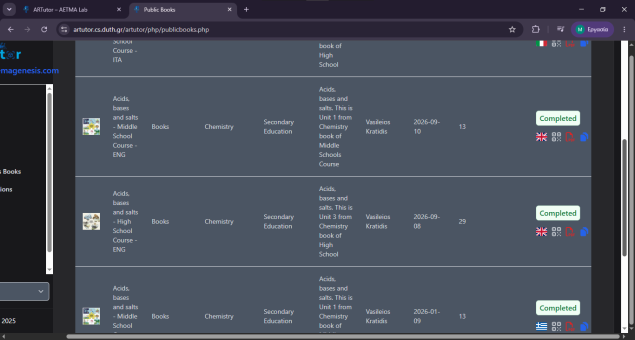
ARTutor {1}(Image 1) was used to connect conventional educational materials with augmented digital content. Within STEM-IT, middle- and high-school learning units on acids, bases, and salts were developed in which students scan pages using a smartphone or tablet and access associated augmentations, including images, videos, links, and three-dimensional models. The physical or digital textbook therefore remains part of the instructional environment while additional representations are superimposed upon it. The design is particularly relevant to the difficulty of connecting conventional symbolic or textual representations with less directly observable scientific phenomena. Rather than replacing existing teaching materials, the augmented layer expands the representational resources available to students. Comparable lower-secondary AR implementations in Cyprus and Greece have similarly used augmented learning materials to make otherwise difficult-to-observe STEM content more directly manipulable and accessible 9.
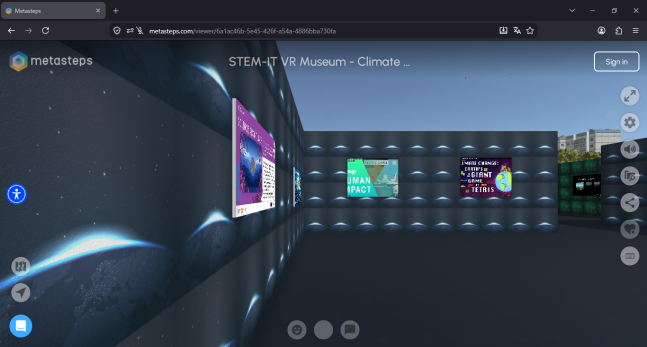
A different form of learning environment was implemented through the STEM-IT VR Museum (Image 2) — Climate Change Exhibition{2}. Developed using the Metasteps platform, the museum structures climate-change content across six sequential rooms addressing the basic concept of climate change, its historical development, underlying scientific mechanisms, environmental consequences, migration-related effects, and possible responses. Students navigate through images, video, text, games, and 3D resources before completing a quiz. This design responds to a characteristic difficulty of environmental STEM learning identified by Christoforaki et al. 1: students must integrate processes that operate across different temporal and spatial scales and connect human activity with environmental feedback mechanisms. The museum format organizes these relationships into a navigable sequence rather than presenting them as disconnected information. This design is also consistent with immersive climate-education research showing that VR can reduce the distance between abstract environmental processes and learners’ experience, supporting both learning and climate-change awareness 10, 11.


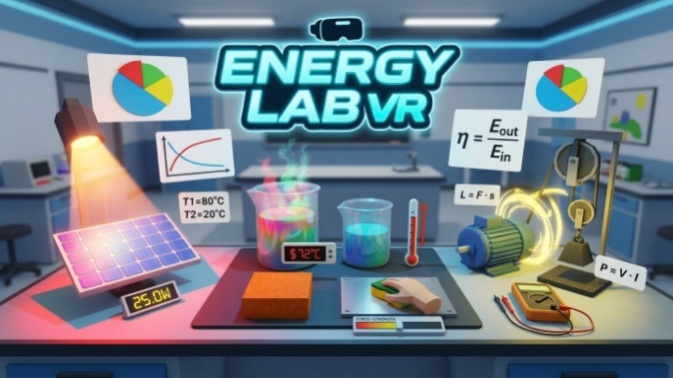
EnergyLab VR{3} (Image 3) addresses the procedural–conceptual relationship more directly through an interactive virtual laboratory centred on the First and Second Laws of Thermodynamics. Students engage with six experiments involving heat and energy. Three are structured around specific targets: heat transfer and liquid mixing, conversion of work into heat through friction, and the relationship between electrical parameters, energy, and the operation of a motor. Three additional experiments are exploratory and allow students to manipulate variables related to friction, solar-panel performance, and heat transfer to liquids. In this environment, calculations are linked to observable changes in the simulated system. The intention is thus not only to reproduce laboratory procedures digitally but also to allow students to vary parameters, observe consequences, and relate mathematical expressions to physical behaviour. This is closely aligned with the conceptual difficulty surrounding energy transformations identified in the systematic review 1. The use of a virtual laboratory also reflects evidence that digitally simulated chemistry laboratories can support meaningful laboratory learning while providing forms of interaction that differ from conventional physical settings 5.

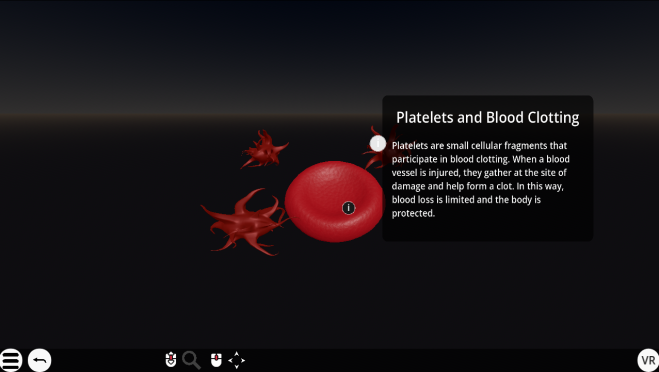
The SCP 3D Model Viewer {4}(Image 4) focuses more explicitly on spatial representation. Developed within STEM-IT using the Godot engine, it enables students to rotate and magnify three-dimensional models and access information through interactive pins attached to particular structures. Two initial scenarios concern the human heart and earthquakes, while the application architecture enables teachers to construct additional scenarios using selected 3D models and associated explanatory information. The viewer therefore addresses situations in which understanding depends on relations among parts, spatial orientation, or processes that cannot readily be inspected through static two-dimensional representations. Related mixed-reality research has highlighted the value of integrating three-dimensional representations with conventional instructional material to support spatial understanding of complex STEM structures 12.

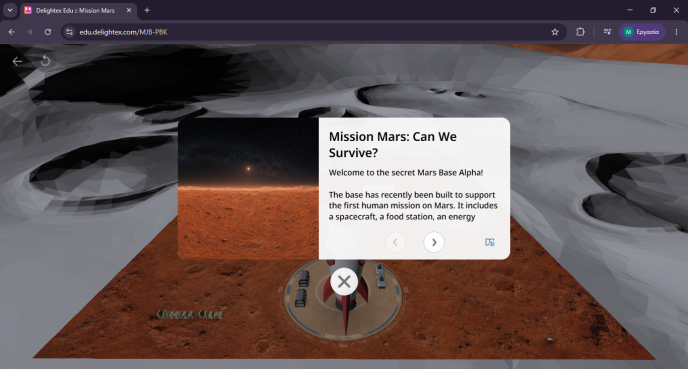
Finally, Delightex Edu {5}(Image5) was used to develop the interdisciplinary activity Mission Mars: Can We Survive? Students explore a virtual Martian base composed of an arrival zone, energy station, sleeping quarters, and food station. The environment initially appears functional, but students are required to identify missing systems and subsequently discuss whether long-term human habitation would be viable. Unlike applications organized around a single disciplinary concept, this activity requires students to coordinate multiple constraints and propose solutions to a complex problem. It therefore reflects the integrative orientation identified by Christoforaki et al. 1, in which stronger conceptual integration was associated with interdisciplinary projects, modelling, and systems-oriented reasoning. More broadly, problem-oriented VR environments in STEM have been used to combine game-based structures with active problem solving and collaborative participation 13.

The designed applications represent different responses to the same underlying educational problem. ARTutor extends conventional representations; the VR Museum structures complex and temporally distributed information; EnergyLab VR connects procedural manipulation with observable physical consequences; the SCP 3D Model Viewer supports spatial inspection; and Mission Mars places disciplinary knowledge within an integrated problem-solving context. The suite consequently moves from visualization toward manipulation and, finally, toward synthesis across systems and disciplines.
This logic also frames the evaluation undertaken in the present study. As the applications differ in modality and pedagogical function, their educational viability cannot be reduced to technical performance alone. Students must be able to operate them without excessive difficulty, perceive the content as appropriate and useful, and remain actively involved in the learning activity. Accordingly, usability, perceived pedagogical value, and engagement constitute the three principal dimensions through which students’ experiences of the STEM-IT applications are examined. This framing connects the comprehension difficulties identified in secondary STEM education with the representational and interactive affordances introduced by the project, while retaining an important methodological distinction: the present evaluation concerns students’ perceptions of these learning environments rather than direct measurement of conceptual gains or retention.
The study sample consisted of 115 secondary-school students (N = 115) from four European countries who participated in the STEM-IT AR/VR interventions. Specifically, 58 students were from [Country 1] (50.4%), 26 from [Country 2] (22.6%), 16 from [Country 3] (13.9%), and 15 from [Country 4] (13.0%). Participants were recruited through the schools involved in the project implementation using convenience sampling. In accordance with ethical requirements, informed parental consent was obtained and student participation was voluntary. As participants took part within school and classroom settings, the data may have had a hierarchical structure. The post-intervention analytical dataset retained country as the only contextual grouping variable and did not include school or classroom identifiers. Consequently, the exact number of independent school/classroom clusters could not be reconstructed from the survey export.
3.2. Research Design and ProcedureThe study employed a quantitative, post-intervention evaluation design within a standardized school-based implementation of the STEM-IT AR/VR applications. The research procedure comprised three main phases: a preliminary diagnostic assessment, implementation of the STEM-IT AR/VR learning activities, and a post-intervention evaluation.
Prior to the AR/VR activities, a diagnostic questionnaire was administered to a subsample of 57 secondary students to characterize their prior experience with educational and immersive technologies and their attitudes toward technology-supported learning. This assessment served as a contextual pre-intervention profile rather than as a conventional pre-test of the constructs assessed by the post-intervention questionnaire. The diagnostic and post-intervention samples were not matched at the individual level.
The STEM-IT AR/VR applications were subsequently implemented in authentic secondary-school settings across the participating countries. Each application was implemented separately and embedded in the corresponding STEM learning activity. Although the applications differed in technological modality, disciplinary content, and form of interaction, implementation conditions were kept as consistent as practicable across the participating countries, including the duration of the activities and participant allocation. Students engaged successively with the AR-, VR-, and 3D-based learning environments described in the Conceptual and Intervention Framework. The applications were therefore experienced as complementary components of a broader immersive STEM intervention rather than as alternative treatments intended for direct comparison.
Following completion of the full sequence of STEM-IT application-based activities, the post-intervention questionnaire was administered once to 115 students via Google Forms. The questionnaire was designed to capture students’ overall evaluation of their experience with the STEM-IT AR/VR applications rather than their evaluation of any single application. Consequently, the resulting data represent students’ perceptions of the intervention as a whole in relation to usability, perceived pedagogical value, engagement, continued-use intention, and recommendation.
3.3. InstrumentsBefore the implementation of the STEM-IT AR/VR activities, a diagnostic questionnaire was administered to 57 secondary students to establish the technological and attitudinal profile of the participating students. The questionnaire comprised eight items rated on a five-point Likert scale ranging from 1 (strongly disagree) to 5 (strongly agree). The items addressed prior use of digital applications in school, previous experience with AR/VR, expectations regarding the contribution of digital applications to lesson interest and retention, confidence in learning to use new applications, preference for technology-supported learning, willingness to use educational technology more frequently, and general openness to new technologies. The diagnostic questionnaire was intended to provide contextual information about students’ prior technological experience and attitudes rather than to measure the same constructs assessed in the post-intervention evaluation. As the items represent distinct diagnostic indicators rather than a validated unidimensional construct, they were analysed individually and no composite score was calculated.
A digital post-intervention questionnaire was used to assess secondary students’ evaluations of the STEM-IT AR/VR applications following completion of the intervention. The instrument focused on dimensions relevant to the educational use of immersive technologies, including usability, appropriateness to students’ educational level, perceived pedagogical value, engagement, and post-use acceptance. These dimensions are consistent with those commonly examined in research on AR/VR-supported STEM learning, particularly ease of interaction, perceived usefulness, learner involvement, enjoyment, and intention for continued use 2, 3, 6, 8.
The questionnaire items were developed with reference to the aims of the STEM-IT intervention and the relevant literature on immersive technologies in education. Prior to administration, the instrument underwent face-validity review. Experts examined the items for clarity, relevance to the constructs under investigation, appropriateness for secondary-school students, and consistency with the educational context of the intervention. Their feedback was incorporated into the final version of the questionnaire before its administration.
The final instrument (Table 1) consisted of nine items. One item recorded the participant’s country, while the remaining eight were five-point Likert items ranging from 1 (strongly disagree) to 5 (strongly agree). The evaluative items addressed the following dimensions (Table 1): (a) ease of use, (b) suitability to students’ educational level, (c) perceived support for understanding the lesson, (d) increased interest and enjoyment, (e) active involvement, (f) clarity and usefulness of the content, (g) intention to use similar applications in other lessons, and (h) willingness to recommend the applications to other students. The questionnaire was administered digitally through Google Forms immediately after students had completed the full sequence of STEM-IT application-based activities.
Data collected through the post-intervention questionnaire were exported from Google Forms and screened prior to analysis. All 115 questionnaires contained complete responses to the eight Likert items, and all values fell within the predefined response range of 1–5. Therefore, no cases were excluded and no missing-data imputation was required. Statistical analyses were conducted using IBM SPSS Statistics.
The analysis was structured according to the two research questions. To address RQ1, each questionnaire item was analysed individually. Frequencies and percentages were calculated for all five Likert response categories, thereby preserving the complete response distribution. Means (M) and standard deviations (SD) were additionally reported as supplementary descriptive measures to facilitate comparison across items. The results were interpreted according to the three analytical dimensions established for the study: usability (Q2), perceived pedagogical value (Q3, Q4, and Q7), and engagement (Q5 and Q6).
To address RQ2, associations between the six aspects of students’ AR/VR experience (Q2–Q7) and the two post-use acceptance outcomes, intention to use similar applications in other lessons (Q8) and willingness to recommend the applications to other students (Q9), were examined using Spearman’s rank-order correlation coefficient (ρ). Spearman’s correlation was selected because the variables were measured using ordinal Likert-type responses and the method does not require interval-level measurement or multivariate normality. For each coefficient, a 95% confidence interval was estimated using 20,000 nonparametric bootstrap resamples of individual respondents (percentile method; fixed random seed for reproducibility). The direction and magnitude of the coefficients were used to identify which aspects of the students’ experience were most strongly associated with each acceptance outcome.
All statistical tests were two-tailed with a nominal significance level of α = .05. Because 12 associations were examined for RQ2 (six aspects of the AR/VR experience × two outcome variables), the Benjamini–Hochberg false discovery rate procedure was applied to account for multiple testing 14. Raw p values and Benjamini–Hochberg FDR-adjusted p values are reported in Table 4, together with Spearman’s ρ and its 95% bootstrap confidence interval. Statistical significance was evaluated using the FDR-adjusted p values.
Because students were recruited through school and classroom settings, observations may be hierarchically clustered. School/classroom identifiers were not retained in the analytical dataset, so the number of independent clusters, intraclass correlations, and cluster-adjusted or multilevel sensitivity analyses could not be estimated. The primary analyses therefore treat individual respondents as independent; the bootstrap confidence intervals likewise resample individual respondents and do not account for potential within-school or within-classroom dependence.
No inferential cross-country comparisons were included in the principal analysis, as country was not a primary variable of interest and the national subsamples were markedly unequal.
The diagnostic sample comprised 57 secondary students from Italy (n = 35, 61.4%), Cyprus (n = 13, 22.8%), Malta (n = 7, 12.3%), and Greece (n = 2, 3.5%). Owing to the pronounced imbalance in national subsample sizes, particularly the small number of responses from Greece, the diagnostic data were used to characterise the overall cohort rather than for cross-country comparisons (Table 2).
The response pattern reveals a distinction between students’ prior exposure to educational technology and their readiness to engage with it. Frequent use of digital applications during school lessons received the lowest rating (M = 2.82, SD = 1.34). Almost half of the respondents selected either strongly disagree or disagree (45.6%), whereas 28.1% reported frequent use. Previous AR/VR experience was somewhat greater but remained heterogeneous (M = 3.04, SD = 1.32): 40.4% indicated previous experience, 31.6% reported the opposite, and 28.1% selected the midpoint of the scale. These responses indicate limited and uneven prior exposure to immersive technologies within the diagnostic sample.
Students nevertheless reported predominantly favourable attitudes toward technology-supported learning. The expectation that applications could make lessons more interesting and enjoyable received one of the highest ratings (M = 3.81, SD = 1.19), with 68.4% selecting agree or strongly agree. Confidence in learning and using a new educational application was also positive (M = 3.68, SD = 1.02); this item exhibited the lowest variability among the eight indicators, indicating comparatively consistent responses across the diagnostic sample. More than half of the students also expressed a desire to use technology applications more frequently during lessons (M = 3.56, SD = 1.23) and a preference for digital tools over exclusive reliance on traditional textbooks (M = 3.40, SD = 1.25).
Expectations regarding the contribution of applications to remembering lesson content were less uniform (M = 3.39, SD = 1.40). This item displayed the greatest variability in the diagnostic questionnaire: 47.4% agreed or strongly agreed, 29.8% selected the neutral category, and 22.8% disagreed or strongly disagreed. Students were therefore more consistent in anticipating that technology would make lessons interesting than in expecting a specific cognitive benefit related to retention.
The strongest overall response concerned openness to technological innovation. Interest in trying new technologies and gadgets yielded the highest mean score (M = 3.93, SD = 1.05), with 71.9% of respondents selecting agree or strongly agree. Taken together, the diagnostic results describe a sample with relatively limited and uneven previous exposure to digital and immersive technologies in formal schooling, but with a broadly favourable disposition toward their educational use. These findings provide contextual information for the subsequent evaluation of the STEM-IT applications, while recognizing that the diagnostic and post-intervention samples were not individually matched.

The first research question examined how secondary students evaluated the STEM-IT AR/VR applications in terms of usability, perceived pedagogical value, and engagement. Table 3 presents the complete distribution of responses for the six questionnaire items associated with these dimensions, together with the corresponding means and standard deviations.
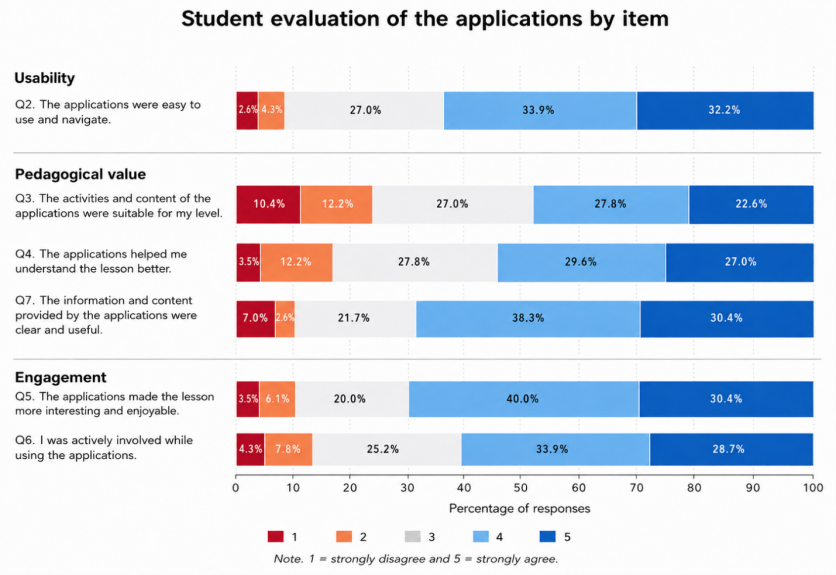
Figure 1 presents the complete Likert-scale response distributions for the six RQ1 items across usability, perceived pedagogical value, and engagement.
Overall, students evaluated the applications positively across the three dimensions examined. Usability received one of the strongest evaluations, with 66.1% of participants agreeing or strongly agreeing that the applications were easy to use and navigate (M = 3.89, SD = 1.00). Only 7.0% expressed disagreement, while 27.0% selected the neutral response category. The comparatively low standard deviation indicates limited dispersion in usability ratings.
Responses concerning perceived pedagogical value were positive but less uniform. Approximately half of the students (50.4%) agreed or strongly agreed that the activities and content were suitable for their educational level (M = 3.40, SD = 1.26), whereas 22.6% disagreed and 27.0% remained neutral. This item received the lowest mean and showed the greatest variability among the six RQ1 items. In contrast, 56.5% reported that the applications helped them understand the lesson better (M = 3.64, SD = 1.11), compared with 15.7% who disagreed. The clarity and usefulness of the information and content were evaluated more favourably, with 68.7% selecting agree or strongly agree (M = 3.83, SD = 1.11).
Engagement yielded particularly positive responses. The statement that the applications made the lesson more interesting and enjoyable received the highest positive-response proportion among the six RQ1 items, with 70.4% of students agreeing or strongly agreeing (M = 3.88, SD = 1.03). Similarly, 62.6% reported that they were actively involved while using the applications (M = 3.75, SD = 1.09), whereas 12.2% expressed disagreement.
Finally, the highest positive-response proportion was observed for interest and enjoyment (Q5), whereas suitability to students’ educational level (Q3) received the lowest mean rating and showed the greatest response dispersion.
4.3. RQ2: Associations between Students’ AR/VR Experience and Post-use AcceptanceThe second research question examined the associations between six aspects of students’ AR/VR experience and two indicators of post-use acceptance: intention to use similar applications in future lessons (Q8) and willingness to recommend the applications to other students (Q9).
Both acceptance indicators were evaluated positively. For Q8, 73.0% of students selected agree or strongly agree, while 16.5% selected the neutral category and 10.4% disagreed or strongly disagreed (M = 4.03, SD = 1.07). A comparable distribution was observed for Q9, for which 73.0% agreed or strongly agreed that they would recommend the applications to other students, 16.5% responded neutrally, and 10.4% disagreed or strongly disagreed (M = 4.03, SD = 1.15).
Spearman’s rank-order correlations were calculated between the six aspects of students’ AR/VR experience (Q2–Q7) and the two acceptance indicators (Q8 and Q9). Table 4 reports the correlation coefficients with 95% bootstrap confidence intervals, raw two-tailed p values, and Benjamini–Hochberg FDR-adjusted p values for the 12 tests.
Clear and useful content (Q7) showed the strongest association with both intention to use similar applications in future lessons (ρ = .566, 95% CI [.416, .697], FDR-adjusted p < .001) and willingness to recommend them to other students (ρ = .548, 95% CI [.396, .681], FDR-adjusted p < .001). Active involvement was also positively associated with both future-use intention (ρ = .469, 95% CI [.310, .610], FDR-adjusted p < .001) and recommendation (ρ = .452, 95% CI [.277, .605], FDR-adjusted p < .001).
Interest and enjoyment were positively associated with both outcomes, particularly with recommendation (ρ = .487, 95% CI [.308, .648], FDR-adjusted p < .001), while their association with future-use intention was somewhat lower (ρ = .427, 95% CI [.246, .590], FDR-adjusted p < .001). Ease of use was positively associated with both outcomes (Q8: ρ = .415, 95% CI [.236, .578], FDR-adjusted p < .001; Q9: ρ = .393, 95% CI [.216, .557], FDR-adjusted p < .001). Perceived support for understanding showed weaker, although statistically significant, associations with future-use intention (ρ = .289, 95% CI [.108, .463], FDR-adjusted p = .002) and recommendation (ρ = .277, 95% CI [.091, .454], FDR-adjusted p = .003).
In contrast, perceived suitability of the applications to students’ educational level was not significantly associated with either future-use intention (ρ = .034, 95% CI [−.164, .235], FDR-adjusted p = .781) or recommendation (ρ = .018, 95% CI [−.180, .221], FDR-adjusted p = .846).
The present study examined secondary students’ evaluations of a multi-application AR/VR intervention in school STEM education, with particular attention to usability, perceived pedagogical value, engagement, and post-use acceptance. Overall, the findings indicate a favourable reception of the STEM-IT applications. Positive responses were especially pronounced for interest and enjoyment, ease of use, and clarity and usefulness of the content, while active involvement and perceived support for understanding were also evaluated positively. At the same time, suitability to students’ educational level received the lowest mean rating and the most heterogeneous responses. The correlational analysis further showed that students’ intention to use similar applications in future lessons and their willingness to recommend them were most strongly related to perceptions of clear and useful content, followed by active involvement, enjoyment, and ease of use.
These findings are consistent with the pedagogical rationale underpinning the STEM-IT intervention. AR and VR were employed not simply as novel technological formats, but as means of extending the representational possibilities of STEM instruction by making abstract, spatially complex, inaccessible, or otherwise difficult-to-observe phenomena more amenable to exploration. This rationale is particularly relevant in light of the synthesis by Christoforaki et al. 1, which showed that secondary students frequently demonstrate greater procedural fluency than conceptual coherence across STEM disciplines. Difficulties were especially evident where understanding depended on integrating symbolic, spatial, causal, or dynamic representations. The STEM-IT applications were designed to address precisely these types of challenges through 3D visualization, virtual experimentation, augmented representations, and systems-oriented environments. However, the present study evaluated students’ perceptions of these environments rather than their effectiveness in overcoming the identified conceptual difficulties.
The results for RQ1 suggest that students generally experienced these environments as technically accessible. Approximately two thirds of the sample agreed or strongly agreed that the applications were easy to use and navigate. This is relevant because usability constitutes a precondition for meaningful interaction with educational technology. When students must devote excessive attention to controls, navigation, or interface conventions, the technological environment can compete with rather than support the disciplinary task. The relatively favourable usability ratings therefore suggest that, at an aggregate level, the applications did not impose excessive interaction demands. This aligns with previous research emphasizing that the educational benefits of immersive technologies depend partly on whether students can direct their cognitive resources toward the STEM activity rather than toward operating the technology itself 2, 3, 12. Usability should nevertheless be regarded as an enabling condition rather than as evidence of educational effectiveness.
Engagement emerged as another strong feature of the intervention. More than 70% of students agreed or strongly agreed that the applications made lessons more interesting and enjoyable, while approximately 63% reported feeling actively involved. These findings support previous evidence that immersive environments can promote participation and motivation by transforming learners from relatively passive recipients of information into active participants in digitally mediated tasks 3, 7, 8. Importantly, however, the present findings distinguish between enjoyment and active involvement. Although the two were both positively evaluated, they represent different aspects of the learning experience. Enjoyment reflects the affective quality of participation, whereas active involvement more directly concerns students’ perceived engagement with the activity itself. The positive associations of both dimensions with continued-use intention and recommendation suggest that students who reported greater enjoyment and involvement also tended to report greater post-use acceptance. These associations should not, however, be interpreted as evidence that engagement caused greater acceptance.
The findings regarding pedagogical value require a more differentiated interpretation. Students evaluated the clarity and usefulness of the application content particularly favourably, whereas perceived support for understanding received somewhat more moderate responses. This distinction is methodologically important. A learning environment may be perceived as clear and useful without students necessarily believing that it substantially changed their understanding of the lesson. Conversely, perceived improvement in understanding cannot be equated with objectively demonstrated conceptual learning. The post-intervention evaluation questionnaire used in this study captured students’ subjective appraisal of learning support, not achievement or conceptual change. This distinction is especially pertinent given the findings of Christoforaki et al. 1, who showed that apparently successful performance in STEM can coexist with incomplete conceptual integration. The present results should therefore be interpreted as evidence that students perceived the applications as pedagogically meaningful rather than as evidence that AR/VR produced measurable learning gains. This cautious interpretation is consistent with work showing that virtual and physical laboratory experiences can differ in both learning processes and student behaviour, underscoring the need to distinguish perceived support from independently measured outcomes 5.
Suitability to students’ educational level presented a different pattern. It received the lowest mean rating among the RQ1 items and the greatest response dispersion, indicating greater heterogeneity in students’ judgments of whether the activities and content were appropriate for their level. This finding reinforces the importance of aligning immersive activities not only with learning objectives but also with learners’ educational level and instructional needs.
The most informative findings emerged from RQ2. Among all aspects of students’ AR/VR experience, clarity and usefulness of content showed the strongest associations with both future-use intention (ρ = .566) and recommendation (ρ = .548). Students who perceived the content as clearer and more useful also tended to express greater post-use acceptance. The pattern is noteworthy because the strongest associations concerned perceived educational content rather than enjoyment. If novelty or entertainment were the predominant basis of acceptance, enjoyment might reasonably have produced the strongest associations. Instead, the strongest associations concerned the perceived quality and educational usefulness of the content.
This pattern supports arguments that immersive technologies derive their educational value from pedagogical integration rather than immersion per se. Tene et al. 3 emphasized that positive outcomes in immersive STEM learning depend strongly on structured activities, guidance, and instructional design, while Udeozor et al. 6 highlighted the importance of constructive alignment between learning objectives, activities, and assessment. In the present study, greater perceived clarity and usefulness were associated with greater post-use acceptance. This pattern is consistent with the possibility that pedagogical intelligibility is important for sustained adoption, although the correlational design does not establish its causal influence. Similar implementation research in lower-secondary STEM has shown that AR integration is most educationally meaningful when technological affordances are embedded within deliberately designed teaching activities 9.
Active involvement constituted the second strongest correlate of continued-use intention and was also strongly associated with recommendation. This finding is compatible with active-learning principles embedded in the STEM-IT design. Several applications required students to manipulate variables, explore environments, inspect three-dimensional structures, or solve problems rather than simply observe digital content. Students reporting greater active involvement also tended to report greater acceptance of the applications, suggesting that immersive environments were valued more when students experienced themselves as active participants in the learning activity. This interpretation is consistent with research showing that guided exploration and interaction can produce more meaningful immersive learning experiences than passive exposure to VR or AR environments 3. The same emphasis on active, problem-centred participation is evident in research on VR escape-room approaches for STEM education 13.
Interest and enjoyment were also substantially associated with both acceptance outcomes, particularly recommendation. Although enjoyment may contribute to willingness to engage with and revisit an activity, the present correlational findings do not establish such an effect. This distinction warrants caution when interpreting educational-technology acceptance. Enjoyment may facilitate willingness to engage, persist, and revisit an activity, but it does not by itself establish educational effectiveness. In the present dataset, both enjoyment and clarity/usefulness were associated with acceptance, with the latter showing stronger relationships. Post-use acceptance was therefore associated with both affective and pedagogical aspects of students’ experiences rather than with enjoyment alone.
Ease of use showed moderate positive associations with both future-use intention and recommendation. This result complements the descriptive findings and indicates that usability was related not only to students’ immediate evaluations but also to their reported willingness to engage with similar applications again. From an implementation perspective, this has practical implications. Even pedagogically strong immersive content may have limited classroom viability if interaction is cumbersome or technically demanding. The findings therefore support treating usability as a pedagogical implementation condition rather than as a purely technical property of the application.
Perceived support for understanding showed statistically significant but weaker associations with both acceptance outcomes. One possible interpretation is that students’ willingness to reuse or recommend AR/VR applications may reflect a broader configuration of the experience rather than perceived learning support alone. Students may value an application because it is clear, interactive, usable, and engaging even when they are less certain about the extent to which it improved their understanding. Another possibility is that the questionnaire concerning understanding asks students to make a relatively demanding metacognitive judgment. Determining whether one “understood the lesson better” may be less immediate than judging whether an application was clear, enjoyable, or easy to operate. The present data cannot distinguish between these explanations, but they indicate that perceived learning support and acceptance should not be treated as interchangeable constructs.
The absence of an association between suitability to students’ educational level and either acceptance outcome is also noteworthy. Q3 received the lowest mean score among the RQ1 items and the greatest response dispersion, yet it was essentially unrelated to future-use intention or recommendation. As the questionnaire used only fixed-response items and did not collect qualitative explanations, no explanatory mechanism is inferred from this non-significant association. The present data therefore do not establish why students rated level suitability differently. Clarifying the reasons for these ratings would require open-ended responses, interviews, or other qualitative data. Accordingly, the present findings are limited to documenting the heterogeneity of Q3 and its lack of association with the two acceptance outcomes; explanatory claims are not made.
The preliminary diagnostic assessment provides additional context for interpreting these results. Before implementation, students in the diagnostic sample reported relatively limited routine use of digital applications in school and only moderate prior experience with AR/VR, while showing comparatively strong interest in new technologies and positive expectations regarding technology-supported lessons. These findings indicate that extensive prior experience with immersive educational technologies could not be assumed within the diagnostic sample. However, because the diagnostic and post-intervention samples differed in size and were not matched at the individual level, prior technological experience and attitudes cannot be directly related to the subsequent evaluations, nor can any inference about attitudinal change be made. Taken together, the findings suggest that the educational acceptability of AR/VR in secondary STEM settings is best understood as multidimensional. Students’ willingness to continue using immersive applications and recommend them was associated with a combination of pedagogical clarity, active participation, enjoyment, and usability rather than with a single technological characteristic. The strongest relationships concerned the educational experience itself—whether the material was clear and useful and whether students felt actively involved. This reinforces a broader conclusion in the immersive-learning literature: AR/VR technologies are most promising when they are embedded in coherent pedagogical activities that make disciplinary content accessible and invite meaningful student action 2, 3, 6. The findings consequently argue against treating immersion as an educational outcome in its own right. For school implementation, the design priority should remain the STEM concept and the learning activity, with AR/VR selected where its representational or interactive affordances address a genuine instructional need. In the present study, the most favourable evaluations concerned interest and enjoyment, ease of use, and clarity and usefulness of content, while post-use acceptance was most strongly associated with clarity and usefulness. Future evaluations should extend this evidence by linking such measures of students’ experience to objective assessments of conceptual understanding, retention, and transfer, thereby determining whether the favourable perceptions observed here correspond to durable improvements in STEM learning.
Several limitations should be acknowledged. The study employed a convenience sample, and the unequal number of participants across the four participating countries limits the extent to which the findings can be generalised to the broader population of secondary-school students in these contexts. In addition, the data were based on students’ self-reported evaluations and may therefore be affected by response biases, including social desirability and short-term enthusiasm following exposure to immersive technologies.
A further limitation concerns the hierarchical structure of the implementation. Students were recruited within school and classroom contexts and therefore shared teachers, lesson structures, equipment, and local implementation conditions. School and classroom identifiers were not retained in the analytical dataset, so the exact number of independent clusters could not be reported and potential within-cluster dependence could not be quantified. Consequently, cluster-robust or multilevel sensitivity analyses were not feasible, and the reported p values and bootstrap confidence intervals assume independence at the individual-student level. If appreciable within-school or within-classroom correlations were present, inferential precision may be overstated. Future studies should retain school and classroom identifiers and use multilevel or cluster-robust methods to account explicitly for such dependence.
The post-intervention 15questionnaire collected only limited background information beyond country of participation. Potentially relevant variables, such as age, gender, grade level, prior academic achievement, digital competence, and previous experience with specific AR/VR technologies, were not examined. Moreover, the diagnostic and post-intervention samples were not matched at the individual level, preventing assessment of within-student changes over time. Future research could address these limitations through larger and more representative samples, matched pre–post designs, application-specific evaluations, inclusion of additional individual-level variables, and objective measures of learning and retention. The questionnaire also contained no open-ended items, so the reasons underlying students’ ratings, particularly the heterogeneous judgments of level suitability, could not be established. Future evaluations should include open-ended questions, interviews, or other qualitative components to examine the “why” behind students’ responses alongside quantitative ratings.
This study examined secondary students’ evaluations of a suite of AR/VR applications implemented in school STEM education. Overall, students evaluated the applications favourably in terms of usability, perceived pedagogical value, and engagement, although perceptions of suitability to students’ educational level were more heterogeneous. Post-use acceptance was most strongly associated with perceptions of clear and useful content, while active involvement, interest and enjoyment, and ease of use were also positively associated with students’ intention to use similar applications and to recommend them to others. These findings suggest that the educational viability of AR/VR in secondary STEM education depends not on immersion alone, but on its integration within clear, accessible, and engaging learning activities. Future research should determine whether these favourable student experiences are accompanied by measurable improvements in conceptual understanding, retention, and transfer.
This work was carried out within the framework of the Erasmus+ KA2 project STEM-IT (No. 2024-1-EL01-KA220-SCH-000246643), co-funded by the Erasmus+ Programme of the European Union.
{1}. https://artutor.cs.duth.gr/home/
{2}. https://metasteps.com/viewer/6a1ac46b-5e45-426f-a54a-4886bba730fa
{3}. http://platform.stem-it.eu/gest
{4}. https://stem-it.eu/scp-stem-it-3d-model-viewer
{5}. https://edu.delightex.com/MJB-PBK
| [1] | Christoforaki, M., Karatza, A., Koutra-Illiopoulou, M., Georgiou, A., Marosi, N., Chatzara, E., Mavrikaki, E., & Galani, A. (2026). A systematic review of the comprehension and retention level of STEM subjects among secondary school students. American Journal of Educational Research, 14(5), 149–158. | ||
| In article | View Article | ||
| [2] | Jiang, H., Zhu, D., Chugh, R., Turnbull, D., & Jin, W. (2025). Virtual reality and augmented reality-supported K-12 STEM learning: Trends, advantages and challenges. Education and Information Technologies, 30, 12827–12863. | ||
| In article | View Article | ||
| [3] | Tene, T., Marcatoma Tixi, J. A., Palacios Robalino, M. de L., Mendoza Salazar, M. J., Vacacela Gomez, C., & Bellucci, S. (2024). Integrating immersive technologies with STEM education: A systematic review. Frontiers in Education, 9, Article 1410163. | ||
| In article | View Article | ||
| [4] | Ciloglu, T., & Ustun, A. B. (2023). The effects of mobile AR-based biology learning experience on students’ motivation, self-efficacy, and attitudes in online learning. Journal of Science Education and Technology, 32(3), 309–337. | ||
| In article | View Article PubMed | ||
| [5] | Hu-Au, E., & Okita, S. (2021). Exploring differences in student learning and behavior between real-life and virtual reality chemistry laboratories. Journal of Science Education and Technology, 30(6), 862–876. | ||
| In article | View Article PubMed | ||
| [6] | Udeozor, C., Chan, P., Russo Abegão, F., & Glassey, J. (2023). Game-based assessment framework for virtual reality, augmented reality and digital game-based learning. International Journal of Educational Technology in Higher Education, 20, Article 36. | ||
| In article | View Article | ||
| [7] | Al Amri, A. Y., Osman, M. E., & Al Musawi, A. S. (2020). The effectiveness of a 3D-virtual reality learning environment (3D-VRLE) on the Omani eighth grade students’ achievement and motivation towards physics learning. International Journal of Emerging Technologies in Learning (iJET), 15(5), 4–16. | ||
| In article | View Article | ||
| [8] | Chuang, T.-F., Chou, Y.-H., Pai, J.-Y., Huang, C.-N., Bair, H., Pai, A., & Yu, N.-C. (2023). Using virtual reality technology in biology education: Satisfaction & learning outcomes of high school students. The American Biology Teacher, 85(1), 23–32. | ||
| In article | View Article | ||
| [9] | Lasica, I.-E., Meletiou-Mavrotheris, M., & Katzis, K. (2020). Augmented reality in lower secondary education: A teacher professional development program in Cyprus and Greece. Education Sciences, 10(4), 121. | ||
| In article | View Article | ||
| [10] | Markowitz, D. M., Laha, R., Perone, B. P., Pea, R. D., & Bailenson, J. N. (2018). Immersive virtual reality field trips facilitate learning about climate change. Frontiers in Psychology, 9, Article 2364. | ||
| In article | View Article PubMed | ||
| [11] | Thoma, S. P., Hartmann, M., Christen, J., Mayer, B., Mast, F. W., & Weibel, D. (2023). Increasing awareness of climate change with immersive virtual reality. Frontiers in Virtual Reality, 4, Article 897034. | ||
| In article | View Article | ||
| [12] | Gattullo, M., Laviola, E., Boccaccio, A., Evangelista, A., Fiorentino, M., Manghisi, V. M., & Uva, A. E. (2022). Design of a mixed reality application for STEM distance education laboratories. Computers, 11(4), 50. | ||
| In article | View Article | ||
| [13] | Mystakidis, S., & Christopoulos, A. (2022). Teacher perceptions on virtual reality escape rooms for STEM education. Information, 13(3), 136. | ||
| In article | View Article | ||
| [14] | Benjamini, Y., & Hochberg, Y. (1995). Controlling the false discovery rate: A practical and powerful approach to multiple testing. Journal of the Royal Statistical Society: Series B (Methodological), 57(1), 289–300. | ||
| In article | View Article | ||
Published with license by Science and Education Publishing, Copyright © 2026 Nelly Marosi, Maria Christoforaki, Athina Karatza, Anastasia Georgiou, Myrto Koutra-Illiopoulou, Eirini Chatzara, Evangelia Mavrikaki and Apostolia Galani
 This work is licensed under a Creative Commons Attribution 4.0 International License. To view a copy of this license, visit
http://creativecommons.org/licenses/by/4.0/
This work is licensed under a Creative Commons Attribution 4.0 International License. To view a copy of this license, visit
http://creativecommons.org/licenses/by/4.0/
| [1] | Christoforaki, M., Karatza, A., Koutra-Illiopoulou, M., Georgiou, A., Marosi, N., Chatzara, E., Mavrikaki, E., & Galani, A. (2026). A systematic review of the comprehension and retention level of STEM subjects among secondary school students. American Journal of Educational Research, 14(5), 149–158. | ||
| In article | View Article | ||
| [2] | Jiang, H., Zhu, D., Chugh, R., Turnbull, D., & Jin, W. (2025). Virtual reality and augmented reality-supported K-12 STEM learning: Trends, advantages and challenges. Education and Information Technologies, 30, 12827–12863. | ||
| In article | View Article | ||
| [3] | Tene, T., Marcatoma Tixi, J. A., Palacios Robalino, M. de L., Mendoza Salazar, M. J., Vacacela Gomez, C., & Bellucci, S. (2024). Integrating immersive technologies with STEM education: A systematic review. Frontiers in Education, 9, Article 1410163. | ||
| In article | View Article | ||
| [4] | Ciloglu, T., & Ustun, A. B. (2023). The effects of mobile AR-based biology learning experience on students’ motivation, self-efficacy, and attitudes in online learning. Journal of Science Education and Technology, 32(3), 309–337. | ||
| In article | View Article PubMed | ||
| [5] | Hu-Au, E., & Okita, S. (2021). Exploring differences in student learning and behavior between real-life and virtual reality chemistry laboratories. Journal of Science Education and Technology, 30(6), 862–876. | ||
| In article | View Article PubMed | ||
| [6] | Udeozor, C., Chan, P., Russo Abegão, F., & Glassey, J. (2023). Game-based assessment framework for virtual reality, augmented reality and digital game-based learning. International Journal of Educational Technology in Higher Education, 20, Article 36. | ||
| In article | View Article | ||
| [7] | Al Amri, A. Y., Osman, M. E., & Al Musawi, A. S. (2020). The effectiveness of a 3D-virtual reality learning environment (3D-VRLE) on the Omani eighth grade students’ achievement and motivation towards physics learning. International Journal of Emerging Technologies in Learning (iJET), 15(5), 4–16. | ||
| In article | View Article | ||
| [8] | Chuang, T.-F., Chou, Y.-H., Pai, J.-Y., Huang, C.-N., Bair, H., Pai, A., & Yu, N.-C. (2023). Using virtual reality technology in biology education: Satisfaction & learning outcomes of high school students. The American Biology Teacher, 85(1), 23–32. | ||
| In article | View Article | ||
| [9] | Lasica, I.-E., Meletiou-Mavrotheris, M., & Katzis, K. (2020). Augmented reality in lower secondary education: A teacher professional development program in Cyprus and Greece. Education Sciences, 10(4), 121. | ||
| In article | View Article | ||
| [10] | Markowitz, D. M., Laha, R., Perone, B. P., Pea, R. D., & Bailenson, J. N. (2018). Immersive virtual reality field trips facilitate learning about climate change. Frontiers in Psychology, 9, Article 2364. | ||
| In article | View Article PubMed | ||
| [11] | Thoma, S. P., Hartmann, M., Christen, J., Mayer, B., Mast, F. W., & Weibel, D. (2023). Increasing awareness of climate change with immersive virtual reality. Frontiers in Virtual Reality, 4, Article 897034. | ||
| In article | View Article | ||
| [12] | Gattullo, M., Laviola, E., Boccaccio, A., Evangelista, A., Fiorentino, M., Manghisi, V. M., & Uva, A. E. (2022). Design of a mixed reality application for STEM distance education laboratories. Computers, 11(4), 50. | ||
| In article | View Article | ||
| [13] | Mystakidis, S., & Christopoulos, A. (2022). Teacher perceptions on virtual reality escape rooms for STEM education. Information, 13(3), 136. | ||
| In article | View Article | ||
| [14] | Benjamini, Y., & Hochberg, Y. (1995). Controlling the false discovery rate: A practical and powerful approach to multiple testing. Journal of the Royal Statistical Society: Series B (Methodological), 57(1), 289–300. | ||
| In article | View Article | ||