This paper determines the levels of knowledge, skills, and attitudes of allied health instructors toward debate pedagogy. This is a pedagogical tool that engages students in the health professions in dialogue by diving deeply into the socioeconomic and political angles of clinical issues. This study also examined the pedagogical methods to promote and enhance classroom debates in allied health curricula in tertiary education. A quantitatively descriptive method measured the levels of the three. Succeeding questionnaire dissemination, results showed observable levels of knowledge, skills, and attitudes of these instructors, revealing the recommended pedagogical methods as well to integrate classroom debate. The findings allow these instructors to aid future healthcare workers in navigating clinical issues with social responsibility in health professions education.
In the current educational setup amidst the area of widespread technology and media, pedagogical approaches in the natural sciences have incorporated discussing the socioeconomic, political, and ethical issues attributed to many topic matters. This has been done to deepen critical thinking, as well as to introduce and induce within learners the quality of being in touch with the realities relevant to such matters. These are executed to promote social relevance and even encourage learners to foster socioeconomic, political, and ethical awareness amongst scientific learners. Apart from the scientific and technological importance such subject matters bring, there is a matter of socioeconomic, political, and ethical importance which tends to be overlooked. These aspects are still worth looking into to attain the United Nations Sustainable Development Goals or SDGs 1.
Currently, the tackling of issues is widely discussed, with emphasis on the sociopolitical, economic, and ethical dimensions, not only in the broadness of natural science education, but also within the specialized domain of health professions education. This is a clinically oriented field that provides windows for tackling such social, political, economic, and ethical issues. Its pedagogical approaches are particularly worth giving attention, as this bridges the gap and aligns with the imperative need for learners, and eventually, as future healthcare professionals, to be more empathic with such topics when viewed in those crucial dimensions. Reciprocally, health professions educators are given the essential duty of not only imparting foundational knowledge but also cultivating critical thinking abilities in the learners, with such discussions to be approached empathically and humanely.
One method of tackling such topics with their social, economic, political, and ethical implications is debate pedagogy. In the context of various fields, this pedagogical form of instruction is an active learning tool in which learners are persistently engaged through convincing and persuasive rhetoric and laying down their viewpoints to rebut or refute the opposing party’s argument 2. This is strategically utilized to bring forth the dynamics of social life into the classroom, further inducing collaborative and critical thinking skills, toward the promotion of active involvement beyond its four walls. Classroom debate is also defined as an instructional methodology to promote structured and reasoned discussions 3. Also, classroom debate positively impacts the performance of learners in higher education 4.
Allied health educational institutions recognize the usage of classroom debate as a form of classroom pedagogy. At the tertiary level, they critically tackle and address issues as they equip their students with knowledge deepening to navigate the social, economic, political, and ethical angles on the principles of modern healthcare, especially on public health issues 5. The central role of debate is the enrichment of the complexities of healthcare competencies among students, preparing them to engage in evidence-based practice and contribute meaningfully to the advancement of health knowledge and practice with social responsibility.
Although there is no extensive repository of studies on debate in health professions education, it was concluded that, amidst the scarce studies searched, it was found that classroom debate is an effective pedagogical tool in enabling skills learning and content teaching 6. Apart from an arsenal of pedagogical methods implemented by allied health instructors, the integration of debate pedagogy renders a positive impact in promoting among students the essential skills in communication, interaction, public speaking, research methods, and teamwork, as emphasized by this study in pharmacy education 7. Moreover, in the context of a semi-military law enforcement classroom, debate enhances critical thinking, argumentation, and the socio‑affective capacities 8. Finally, it is noted that classroom debates provide students opportunities to identify an issue to resolve, demonstrating a deeper analysis of the given issue through methods such as appraisal, critique, and reasoning of the issue to give way for potential solutions. Such skills are needed, since healthcare professionals are frequently swamped with new evidence due to the rapid changes in the field. The skills of searching for evidence and appraisal help separate the valid and invalid claims 9.
In the Philippine setting, allied health schools have recognized the various pedagogical practices to promote such social responsibility, including classroom debates. Even locally in the current period, there is no extensive repository of research studies devoted to the use of classroom debates in allied health professions. In the culture of tertiary education, college professors, even those in the health professions, exercise academic freedom, allowing for spontaneity of teaching methods and leaning mostly on didactic methods of teaching. This leaves a gap to conduct a study on debate pedagogy in health professions education.
Consequently, this leaves another gap between didactic education (i.e., the pedagogical method with the intention to teach) and clinical education (i.e., a work-based form of learning to induce clinical reasoning). This study seeks to bridge this gap that may still be recurring locally in health professions education.
Health professions educators have diverse backgrounds and profiles. With respect to such diversity, demographic factors such as gender, age, years of teaching experience, and fields of specialization may influence the familiarity and performance of these instructors from a specific field in conducting classroom debate pedagogy. Thus, the demographic profiles of instructors in relation to the classroom debate pedagogy are also a considerable gap of interest.
Thirdly, as the healthcare arena increasingly relies on data-driven decision-making and the accumulation of evidence-based data, such data are indispensable for learners who are future healthcare professionals and even for educators. With objectively grounded data gathered as a means to lay down salient points of exertion, the skill of evidence-based argumentation is being developed. Coupled with this, learners harness the skills of oral communication, interaction, public speaking, and persuasion capabilities in rhetoric to make arguments plausible. It is noted that classroom debate significantly enhanced the levels of engagement and thinking abilities and boosted public speaking 10.
The distinction between these two skills opens this fourth and final gap for health professions educators in differentiating between evidence-based argumentation and persuasion-based rhetoric in debate pedagogy. With these two skills, the levels of knowledge, practice, and attitudes should be elucidated.
Investigating these gaps, determining the levels of knowledge and skills, and the attitudes of health professions educators toward classroom debate is needed, and finding out pedagogical method/s to enhance it. This study investigates the level of knowledge, skills, and attitudes toward classroom debate pedagogy of allied health instructors in Centro Escolar University (CEU), specifically its branch in Makati City, Metropolitan Manila. By examining these, this study is extended to dive into the pedagogical method/s to reinforce the classroom debate in health professions education.
1.1. Statement of the ProblemGenerally, this study aims to delve into the levels of knowledge and skills, and the attitudes of allied health educators in accordance with the integration of the debate pedagogy in health-related programs in CEU Makati. Specifically, the researcher aims to address the following variables through these questions:
1. What is the profile of allied health faculty members in terms of:
• Gender?
• The highest educational attainment?
• The academic rank?
• The field of specialization?
• The number of years of teaching experience?
2. What is the level of knowledge of allied health faculty members in debate pedagogy in terms of differentiating between evidence-based scientific argumentation and persuasion-based rhetoric?
3. What is the level of skills of allied health faculty members in debate pedagogy, in terms of differentiating between evidence-based scientific argumentation and persuasion-based rhetoric?
4. What are the attitudes of allied health faculty members in debate pedagogy, especially in terms of differentiating between evidence-based scientific argumentation and persuasion-based rhetoric?
5. What pedagogical method/s for allied health faculty members can be proposed to incorporate classroom debate in allied health curricula?
1.2. Theoretical FrameworkThis study draws upon four interconnected theories that provide valuable insights into the integration of classroom debate pedagogy in health professions education: Constructivism, the Revised Bloom’s Taxonomy, the Argument Model, and the Knowledge, Skills, and Attitudes Competence Framework. These theoretical perspectives offer complementary perspectives on the cognitive, behavioral, and contextual dimensions of learning, thereby enriching the understanding of the pedagogical implications of incorporating classroom debate pedagogy in allied health education.
Constructivism emphasizes learning as an active process whereby individuals actively engage with new pieces of information, create meanings through cognitive processes, and integrate prior knowledge with new experiences 11. In the context of debate pedagogy in health professions, constructivist principles underscore the importance of learner-centered approaches, wherein students actively participate in the learning process and construct their understanding of clinical concepts through meaningful interactions in classroom debate to promote active learning.
The Revised Bloom’s Taxonomy provides a hierarchical representation from the lower-order cognitive skills (i.e., Remembering and Understanding) to the higher-order cognitive skills (i.e., Analyzing, Evaluating, and Creating). In this study, this framework justifies the pedagogical value of classroom debate. Through rote learning exemplified at the bottom of the hierarchy, allied health students execute remembering and understanding foundational clinical facts and the socially relevant issues attributed to them. The classroom debate pedagogy encourages them into the upper domains of the taxonomy. This framework will contextualize how educators perceive debate as a tool to elevate student cognition beyond rote memorization and toward complex clinical judgment 12.
The Argumentation Model provides a practical, structural breakdown of how logical arguments are constructed and evaluated in the real world. According to this model, a sound argument consists of six interconnected components: the claim (i.e., the assertion of a certain point), grounds/data (i.e., the evidence), the warrant (i.e., the logical connection between data and claim), backing (i.e., support for the warrant), the qualifier (i.e., degrees of certainty), and the rebuttal (i.e., acknowledgment of counterarguments) 13. For this study, Toulmin’s model serves as the mechanical blueprint for the classroom debate pedagogy in health professions education. It offers a standardized metric by which allied health educators can teach, facilitate, and assess student debates. By using this model, educators can assess students in laying down their arguments via rigorous, evidence-based argumentation and away from persuasion-based rhetoric, anchoring on linguistic and emotional delivery required in healthcare settings.
The Knowledge, Skills, and Attitudes (KSA) Model, often visualized as the "Iceberg Model" of competencies, argues that human performance is driven by a mix of highly visible and deeply hidden characteristics. The visible tip of the model represents knowledge (i.e., information a person possesses in a specific content area) and skills (i.e., the behavioral ability to perform a specific physical or mental task). The larger and lower portion of the model represents attitudes, traits, self-concepts, and motives 14. This framework is the direct theoretical anchor for this study's assessment of the allied health educators. It allows the research to systematically investigate not only what allied health educators know about debate mechanics and their practical skill in facilitating it, but also their underlying attitudes and beliefs about its value.
1.3. Conceptual FrameworkThe integration of classroom debate pedagogy in allied health education represents a paradigm shift in teaching methodologies and learning practices, as evidenced by the synthesis of literature and studies within the conglomerations of the four theoretical frameworks: the constructivist foundation, the Revised Bloom’s Taxonomy, the Argument Model, and the KSA Model. The discussion delves into how these theoretical perspectives inform and enrich our understanding of the pedagogical implications of classroom debate integration in allied health education, elucidating the cognitive, behavioral, and contextual dimensions of learning.
1.4. Scope and DelimitationsCertain delimitations were defined in this study. The study was delimited to assess the various demographic profiles, the levels of knowledge and skills, and the attitudes of instructors toward classroom debate pedagogy. It did not dive into specific technicalities of classroom debate, such as its supposed binary nature, the types, debate format, and the manner of conduct and facilitation of such pedagogy. Similarly, while the study identifies the pedagogical method/s associated with classroom debate integration, it will not evaluate the effectiveness of the pedagogy of allied health programs or curricula. The study will also not provide specific recommendations for policy.
This study utilized a quantitatively descriptive research design to investigate the knowledge, skills, and attitudes in incorporating classroom debate pedagogy among CEU Makati faculty members in the health professions programs. This was done through quantitative data collection and analysis techniques, allowing for a technical approach to the research questions and objectives.
2.2. Research LocaleThe study was conducted within the health-related academic setting of the CEU Makati branch. In focus, the study involved allied health faculty members within the Dentistry, Medical Technology, Nursing, Pharmacy, and Psychology Departments. This institution is in the urban business district of Makati City, Metropolitan Manila, with two campuses. One is across Sen. Gil Puyat Avenue for the Medical Technology, Nursing, and Pharmacy Departments, and the other is in Esteban Street, Legazpi Village, for the Dentistry and Psychology Departments.
The locale for the study provided a socially relevant environment for investigating the knowledge, skills, and attitudes toward debate pedagogy among instructors in health-related programs. In tertiary education, universities and academic institutions offering programs in allied health serve as hubs of knowledge dissemination, creation, and deepening. CEU Makati, which is one of these institutions, offers an environment characterized by collaboration, interdisciplinary interactions, and intellectual exchange.
2.3. Respondents and Sampling TechniqueThe participants for this study consisted of all allied health instructors at CEU Makati who teach in the departments of which are Dentistry, Medical Technology, Nursing, Pharmacy, and Psychology. More specifically, the key population of interest comprised faculty members who teach specialization courses that fall under the respective programs of those mentioned departments.
Purposive sampling was conducted for this study. This is a sampling technique that permits the researcher to select particularly the respondents who possess the criteria in conjunction with the research questions and objectives. For this study, all faculty members in all of those five allied health departments for the administration of a research questionnaire were selected based on their involvement in teaching health-related courses.
2.4. Research InstrumentTo ensure data collection, a four-part self-made questionnaire was crafted for the allied health instructors at CEU Makati. The survey instrument was designed to assess the levels of knowledge and skills and the attitudes of the instructors toward debate pedagogy. The first part consisted of demographic questions that focused on the instructors’ profiles, such as high educational attainment, academic rank, and teaching experience. The second part was another Likert scale portion that assessed the level of knowledge of debate pedagogy with emphasis on the areas of evidence-based argumentation and persuasion-based rhetoric. The third portion comprised the assessment of the levels of skills. The fourth and final portion of the questionnaire is another Likert scale on the attitudes of the allied health instructors on conducting classroom debates. With reference to the last research question or objective, the identification of the pedagogical method/s to enhance the incorporation of classroom debate in health professions education.
2.5. Treatment of DataSucceeding data collection, the quantitative data from the research questionnaire were analyzed using descriptive statistics. The data gathered from the survey responses were subjected to a comprehensive statistical analysis to extract meaningful insights and draw conclusions regarding the levels of knowledge and skills, and the attitudes among allied health instructors at CEU Makati regarding classroom debate.
Descriptive statistics were used to provide a summary of the demographics of the study participants. This was also executed to determine the levels of knowledge and skills, and the attitudes among allied health instructors at CEU Makati toward debate pedagogy.
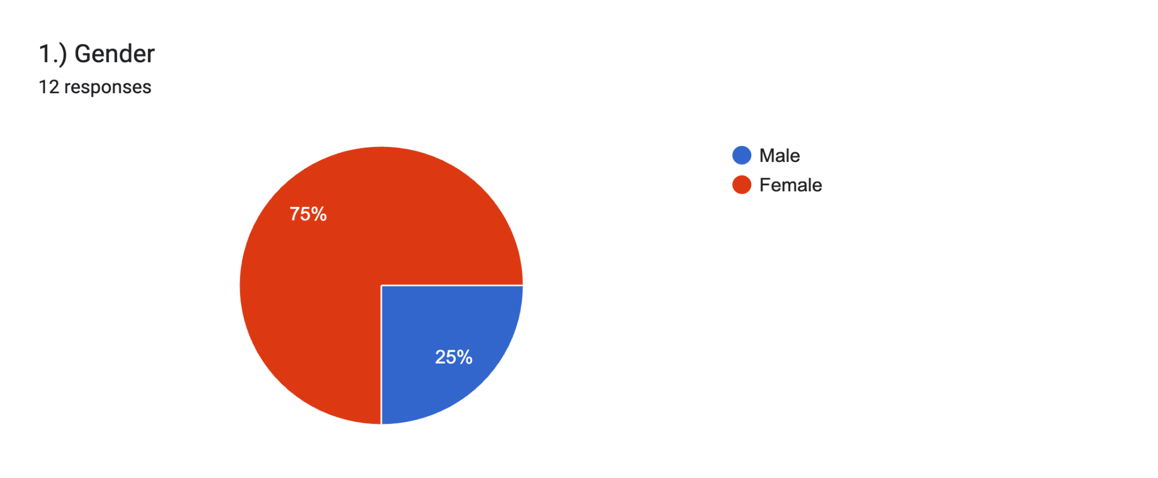
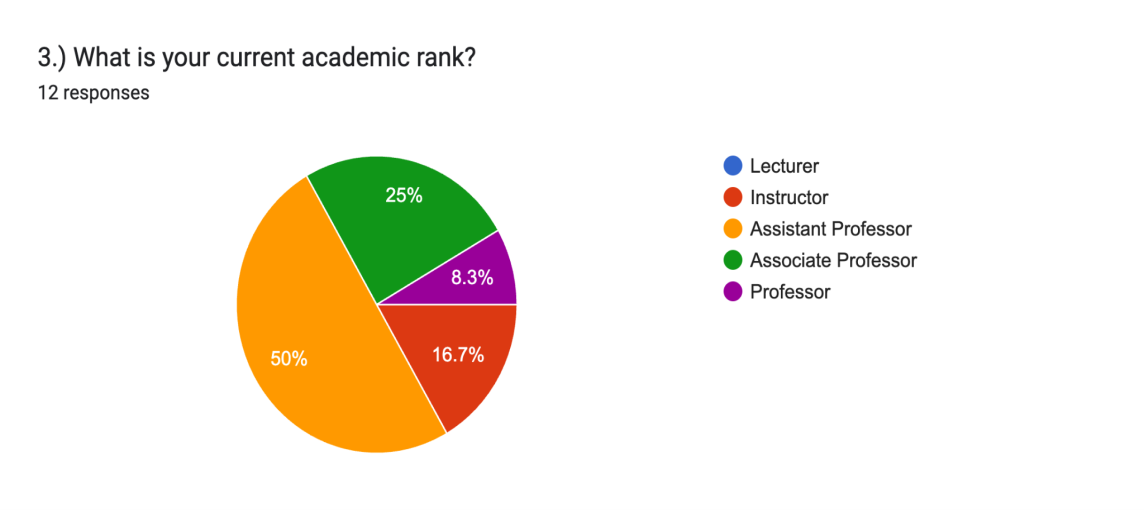
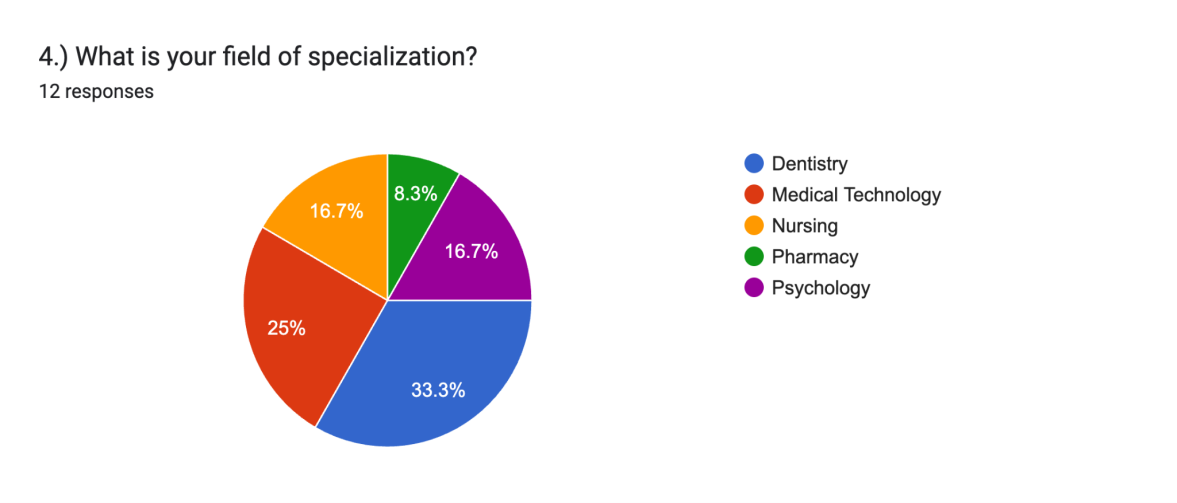
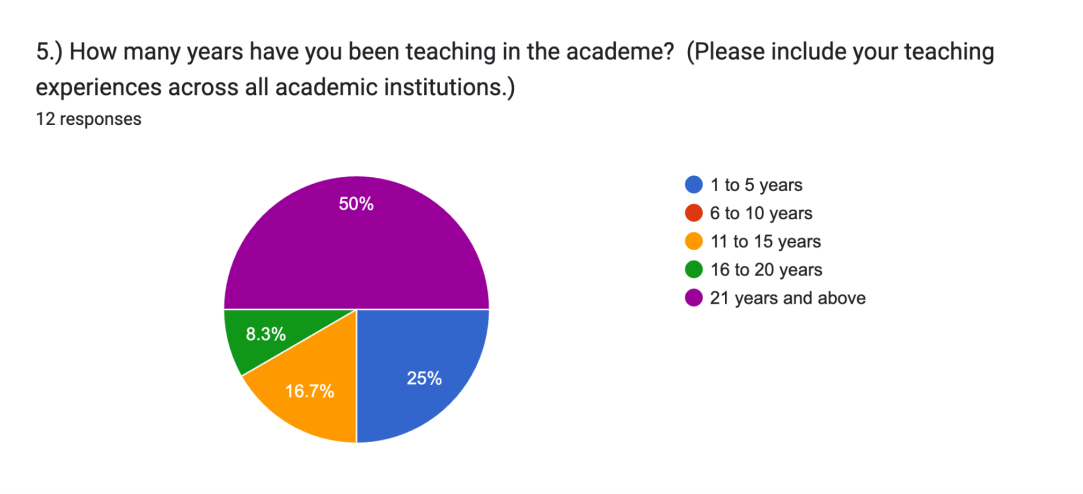
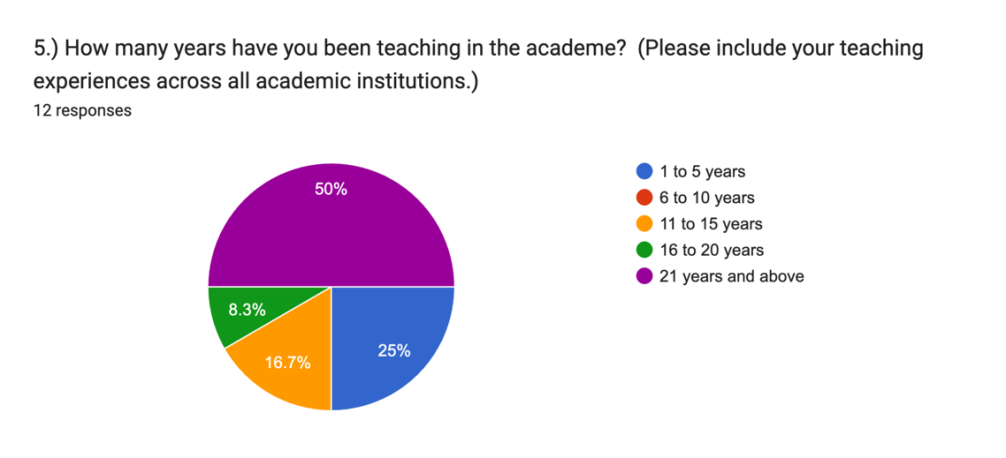
As shown in Figure 1 to Figure 5, the demographics of the allied health educators showed that 75% were females with the highest educational attainment and academic ranking. The majority responded with a master’s degree, holding the rank of “Assistant Professor,” and those with a doctorate had the second highest percentage, holding the titular rank of “Associate Professor.” For the field of specialization, most of the respondents came from the Dentistry Department. In terms of academic experience, the majority of allied health instructors have taught for more than 20 years.


In Table 1, the current educational landscape, socioeconomic, political, and ethical issues in clinical topics are rampant and essential, and are made aware by these allied health educators who responded, with an overall mean of 3.52 and a standard deviation of 0.75, equivalent to a “Strongly Agree.” The results implied a high degree of knowledge of the pedagogical approach of classroom debate. They possess a high level of familiarity and a foundational understanding of the value of classroom debate pedagogy. Such a high level of knowledge may be transmitted to the learner to increase their performance in debate. Since these instructors possess both clinical and didactic knowledge in debate pedagogy, the use of the classroom debate was useful as an active learning tool to bridge the gap with didactic learning and improve the state of pharmacy education 7. To recognize these two skills, debate requires examination and research of a problem, logic, and analysis to formulate opinions, justifying that pieces of evidence are essential 9. An equally recognized dual purpose is that debates transcend mastery of the content, through recognizing inconsistencies and identifying assumptions. Simultaneously, debates require the development of oral communication skills 15.
3.3. Level of Skills of Health Professions Educators toward Classroom Debate PedagogyWhile allied health educators are inclined toward empirical and objective data in teaching and presenting arguments, they possess a reasonably high degree of skills in distinguishing between evidence-based argumentation and persuasion-based rhetoric. Table 2 summarizes the factors between these two skills.
Motivational drivers in persuasion-based rhetoric include social proof and emotional drives, in contrast with empirical and numerical data when laying down arguments based on evidence. This can be seen through platforms such as social media, which have developed rapid popularity through means such as bandwagon. In evidence-based argumentation, examples are seen in peer-reviewed literature such as research articles and systematic reviews. This may suggest that, as empirical evidence lays down the concrete grounds in communication and laying down arguments, it is just as essential to consider the abstract areas, such as the socioeconomic, political, and ethical conditions. This adds depth and layers to the dialogues when tackling clinical issues.
Instructional cues by allied health educators include the recognition and identification of possible biases in delivering arguments in persuasion-based rhetoric. As for evidence-based argumentation, these instructors can hint at arguments containing cause-and-effect relationships as objectively grounded evidence in argument delivery. If a topic contains many arguments, which are both backed and not backed by literature, this may be a source of viable disagreements within the group 16.
Both skills have their risks, such as the tendency to be fallacious, express and evoke intense emotions, and influence the audience through the delivery of the speaker 4. Whereas, in evidence-based argumentation, overreliance on numerical and statistical data may render the argument static and non-moving. This proves that the differences between evidence-based argumentation and persuasion-based rhetoric prove that these two skills have equitable levels of importance, with respect to the theoretical groundings, which are the constructivist approach and Toulmin’s Argument Model. In essence, debating requires considering different perspectives while weighing them along with literature and personal beliefs, differentiating between evidence and anecdotes 17.
Table 3 reveals that allied health educators have a grounded preference for evidence-based argumentation over persuasion-based rhetoric, containing a weighted mean of 3.12, a standard deviation of 0.78, and a verbal interpretation of “Agree.” These findings reveal that allied health instructors possess grounded beliefs in conducting classroom debate pedagogy, as well as in assessing learners when relying primarily on evidence-based argumentation. Many of these attitudes have leaned on initial consideration of the former, as empirical and numerical data provide the foundational and concrete groundwork for laying down arguments and making points. The preparation for conducting a classroom debate requires the learners to consider and dig thoroughly into the data-driven evidence to present and argue for their case or side persuasively 6. This further cited that critically appraising scientific literature and applying evidence-based approaches improved the learners’ individual performance 18. In addition, when drawn from evidence, the debate pedagogy generated in students the increased ability to analyze issues from more than one angle, to anticipate counterarguments, and to respond quickly yet systematically to opposing positions, to further boost argumentative competence 8. Conducting such pedagogy requires and enhances preparation among debaters by searching for evidence-based data to construct and solidify their arguments 19.
Teachers positively perceived this as an effective teaching and learning tool 20. Working hand-in-hand with students, teachers can help them to be involved by engaging them in controversial issues and use this to give the students a chance to share their thoughts, evaluate their learning, and engage in interactive situations 3.
The previously mentioned level of skills in distinguishing between evidence-based argumentation and persuasion-based rhetoric may have paved the way for allied health instructors to select their attitudinal preference when assessing learners in debate pedagogy.
As depicted in Table 4, despite the reasonable degree of knowledge, skills, and attitudes manifested by the allied health instructors toward debate pedagogy, there are concerning areas that are subject to improvement to enforce and enhance the integration of this method in allied health curricula.
In the knowledge aspect, one main area of concern is the distinction between evidence-based argumentation and persuasion-based rhetoric to a minimal degree, especially when it comes to teaching students. With the high level of knowledge manifested by allied health instructors, it is recommended that they orient learners to the difference between claims supported by pieces of evidence and claims supported by emotional appeals, for reinforced student learning and ease of assessment. Moreover, allied health instructors shall introduce analysis of language rhetoric, especially that objective clinical data may be reshaped by language and the popularity of digital media platforms 15.
As allied health instructors are proficient in distinguishing and assessing their skills in evidence-based argumentation and persuasion-based rhetoric, it is recommended that they provide tasks for students to be exposed to and master peer-reviewed data and persuasion dialogues in a grounded and balanced manner.
Since allied health instructors possess the attitude of leaning primarily toward evidence-based argumentation, rendering rhetoric as secondary, it is still positioned that persuasion-based rhetoric is vital. Using language and rhetorical devices when expressing arguments serves as a window to the wider social practices surrounding particular issues. This skill builds empathy in communication, including the clinical setup in developing values. In recognition of its secondary nature, students must be assessed by recognizing rhetorical flexibility and any potential forms of bias hinted at when expressing their viewpoints and arguments 21.
Henceforth, allied health faculty members possessed observable levels of knowledge, skills, and attitudes toward classroom debate pedagogy in terms of discerning between technical evaluation via evidence-based data and recognizing the learners’ ability in persuasion-based rhetoric considering clinical issues. Likely, they may also demonstrate pedagogical competence in scaffolding and giving foundational learning experiences that foster critical thinking, problem-solving, and ethical inquiry through debate pedagogy. This method provides avenues for learners to position their stances through means of oral communication, public speaking, and methods of persuasion. This method considers not only language accuracy, but also argument quality 22. As the social landscape of health continues to be more complex, it is imperative for educators to be mindful of emerging trends and issues to ensure the relevance and efficacy of their instructional interventions, including debate pedagogy. This will serve as a springboard toward the achievement of the important UN SDGs.
Despite the reported preference by allied health instructors toward evidence-based argumentation over persuasion-based rhetoric in constructing responses, classroom debate must be balanced by facilitating affective learning through the integration of ethics in clinical issues toward the well-being of the individuals and society 23. Debates are considered a space to support the development of non-technical and soft skills, without the tendency of having such ideas immediately challenged, to further promote well-being 24, 25.
By exposing clinically oriented students to debate pedagogy early in their academic journey, health professions educators, even in the Philippine setting, aim to empower them with the essential skills to navigate the socially complex and dynamic landscape of healthcare.
With respect to the established findings and the imperative that future healthcare professionals must recognize their stances in communication, health professions educators must acquire the ability to blend empirical clinical data with the human components when it comes to communication by explicitly orienting learners between evidence-based argumentation and persuasion-based rhetoric, providing scaffolding tasks to practice the distinction between the two, assisting them in analyzing rhetorical tools especially if such clinical data may be manipulated or influenced by popularity, redefining assessments by focusing on the students’ abilities to use appropriate literature and objectively evaluate data with rhetorical bias recognition, and to build empathy by still recognizing rhetoric as an important communication skill that build awareness toward the sociopolitical and economic areas of healthcare. With daily integration and execution, these strategies will move to the enhancement of pedagogical methods in health professions education.
The authors would like to express their gratitude to the CEU Makati Vice President and Dean of Studies, Dr. Pearly P. Lim, for her approval to conduct this study. Next, to Mr. Kim Lawrence A. Odono, the Information Communication Section Coordinator, for the assistance in the questionnaire dissemination. Then, to Ms. Jhellimie G. De Asis and Dr. Rissa F. Lassap, the external validators in the educational field, for their constructive feedback on the questionnaire. Most of all, the authors would like to express their deepest thanks to all the participants from the Dentistry, Medical Technology, Nursing, Pharmacy, and Psychology Departments of CEU Makati for their substantial data.
The authors declare that there are no conflicts of interest or competing interests, whether financial or non-financial, that are directly or indirectly related to this work. No funding was received to assist with the preparation and conduct of this study.
| [1] | United Nations, The sustainable development goals report 2025. 2025. | ||
| In article | |||
| [2] | Gulnaz, F., “Fostering Saudi EFL learners’ communicative, collaborative, and critical thinking skills through the technique of in-class debate,” International journal of English linguistics, 10(5). 265. 2020. | ||
| In article | View Article | ||
| [3] | Del Mar Mesa, M., Valor, D., Montes, A., & García-Casas, I., “Energy under debate: Fostering critical thinking in chemical engineering through in-class debates,” Education for chemical engineers, 51. 121–132. 2025. | ||
| In article | View Article | ||
| [4] | Ghafar, Z., “The effect of classroom Debate on students’ academic achievement in higher education: An overview,” International journal of applied and scientific research, 2(1). 123–136. 2024. | ||
| In article | View Article | ||
| [5] | Ogunsanya, M. E., Wagner, J. L., Bennett, K., Medina, M. S., Starnes, S., & Planas, L. G., “Debate as an active learning pedagogy among pharmacy students in a public health course,” American journal of pharmaceutical education, 88(7). 100724. 2024. | ||
| In article | View Article PubMed | ||
| [6] | Ang, R. X., Chew, Q. H., Sum, M. Y., Sengupta, S., & Sim, K., “Systematic review of the use of debates in health professions education – Does it work?,” PubMed, 36(4). 2019. | ||
| In article | |||
| [7] | Lampkin, S. J., Collins, C., MS, Danison, & R., Lewis, M., “Active learning through a debate series in a first-year pharmacy self-care course,” American journal of pharmaceutical education, 79(2). 2015. | ||
| In article | View Article PubMed | ||
| [8] | Waluyo, G. H., Sulistiyo, U., Abrar, M., & Wulandari, B. A., “Debate pedagogy in semi-military law enforcement classrooms: A case study of English-speaking fluency,” TA’DIB, 297–299. 2025. | ||
| In article | View Article | ||
| [9] | Mumtaz, S., & Latif, R., “Learning through debate during problem-based learning: An active learning strategy,” Advances in physiology education, 41(3). 390–394. 2017; | ||
| In article | View Article PubMed | ||
| [10] | AlRubaie, R. S., Shuqair, K. M., & Alhaji, B. A., “Use of debate strategies to increase the effectiveness of a 1st-Year conversation course at a college of education,” International journal of higher education, 13(6), 22. 2024. | ||
| In article | View Article | ||
| [11] | Ornstein, A.C., & Hunkins, F.P., Curriculum: Foundations, principles, and issues (7th ed). Pearson Education Ltd., 2018. | ||
| In article | |||
| [12] | Anderson, L. W., & Krathwohl, D. R. A taxonomy for learning, teaching, and assessing: A revision of Bloom’s taxonomy of educational objectives. Pearson Education Group. 2001 | ||
| In article | |||
| [13] | Toulmin, S. E., The uses of argument (2nd ed.). Cambridge: Cambridge University Press, 2003. | ||
| In article | View Article | ||
| [14] | Spencer, L.M., & Spencer, S.M., Competence at work: models for superior performance. 1993. | ||
| In article | |||
| [15] | Kennedy, R., “In-class debates: Fertile ground for active learning and the cultivation of critical thinking and oral communication skills,”. International journal of teaching and learning in higher education, 19. 2. 2007. | ||
| In article | |||
| [16] | Rubin, R. W., Weyant, R. J., & Trovato, C. A., “Utilizing debates as an instructional tool for dental students,” In University of Pittsburgh. Journal of dental education, 72(3). 282–283.2008. | ||
| In article | View Article PubMed | ||
| [17] | Hall, D., “Debate: Innovative teaching to enhance critical thinking and communication skills in healthcare professionals,” Internet journal of allied health sciences and practice. 2011. | ||
| In article | View Article | ||
| [18] | Mamtani, M., Scott, K., DeRoos, F., & Conlon, L., “Assessing EM patient safety and quality improvement milestones using a novel debate format,” Western journal of emergency medicine, 16(6). 943–946. 2015. | ||
| In article | View Article PubMed | ||
| [19] | Allam, A., Kuri, A., Ajaz, A., Ahmed, S., Carter, P., & Korszun, A., “Critical psychiatry debates: A neglected tool in undergraduate medical education,” MedEdPublish, 10(1). 55. 2021. | ||
| In article | View Article PubMed | ||
| [20] | Derouiche, A., “Exploring teachers’ and students’ attitudes towards the role of classroom debate in enhancing learners’ critical thinking,” [Doctoral dissertation, University of Guelma]. 2019. | ||
| In article | |||
| [21] | Russell, J., Greenhalgh, T., Byrne, E., & Mcdonnell, J., “Recognizing rhetoric in health care policy analysis. Journal of health services research & policy, 13(1). 40–46. 2008. | ||
| In article | View Article PubMed | ||
| [22] | Murodulloyeva, S., Khakmuradova, D., Nishonova, S., & Amriddinova, N., “Debate as an interactive teaching technique for EFL Learners,” Zenodo (CERN European organization for nuclear research). 2026. | ||
| In article | |||
| [23] | Jagger, S., “Affective learning and the classroom debate,” Innovations in education and teaching international, 50(1). 38–50. 2013. | ||
| In article | View Article | ||
| [24] | Dy-Boarman, E. A., Nisly, S. A., & Costello, T. J., “It’s no debate, debates are great,” Currents in pharmacy teaching and learning, 10(1). 10–13. 2017. | ||
| In article | View Article PubMed | ||
| [25] | Rodger, D., & Stewart-Lord, A., “Students’ perceptions of debating as a learning strategy: A qualitative study,” Nurse education in practice, 42. 102681. 2019. | ||
| In article | View Article PubMed | ||
Published with license by Science and Education Publishing, Copyright © 2026 Ron Richard S. Callera and Dennis G. Caballes
 This work is licensed under a Creative Commons Attribution 4.0 International License. To view a copy of this license, visit
http://creativecommons.org/licenses/by/4.0/
This work is licensed under a Creative Commons Attribution 4.0 International License. To view a copy of this license, visit
http://creativecommons.org/licenses/by/4.0/
| [1] | United Nations, The sustainable development goals report 2025. 2025. | ||
| In article | |||
| [2] | Gulnaz, F., “Fostering Saudi EFL learners’ communicative, collaborative, and critical thinking skills through the technique of in-class debate,” International journal of English linguistics, 10(5). 265. 2020. | ||
| In article | View Article | ||
| [3] | Del Mar Mesa, M., Valor, D., Montes, A., & García-Casas, I., “Energy under debate: Fostering critical thinking in chemical engineering through in-class debates,” Education for chemical engineers, 51. 121–132. 2025. | ||
| In article | View Article | ||
| [4] | Ghafar, Z., “The effect of classroom Debate on students’ academic achievement in higher education: An overview,” International journal of applied and scientific research, 2(1). 123–136. 2024. | ||
| In article | View Article | ||
| [5] | Ogunsanya, M. E., Wagner, J. L., Bennett, K., Medina, M. S., Starnes, S., & Planas, L. G., “Debate as an active learning pedagogy among pharmacy students in a public health course,” American journal of pharmaceutical education, 88(7). 100724. 2024. | ||
| In article | View Article PubMed | ||
| [6] | Ang, R. X., Chew, Q. H., Sum, M. Y., Sengupta, S., & Sim, K., “Systematic review of the use of debates in health professions education – Does it work?,” PubMed, 36(4). 2019. | ||
| In article | |||
| [7] | Lampkin, S. J., Collins, C., MS, Danison, & R., Lewis, M., “Active learning through a debate series in a first-year pharmacy self-care course,” American journal of pharmaceutical education, 79(2). 2015. | ||
| In article | View Article PubMed | ||
| [8] | Waluyo, G. H., Sulistiyo, U., Abrar, M., & Wulandari, B. A., “Debate pedagogy in semi-military law enforcement classrooms: A case study of English-speaking fluency,” TA’DIB, 297–299. 2025. | ||
| In article | View Article | ||
| [9] | Mumtaz, S., & Latif, R., “Learning through debate during problem-based learning: An active learning strategy,” Advances in physiology education, 41(3). 390–394. 2017; | ||
| In article | View Article PubMed | ||
| [10] | AlRubaie, R. S., Shuqair, K. M., & Alhaji, B. A., “Use of debate strategies to increase the effectiveness of a 1st-Year conversation course at a college of education,” International journal of higher education, 13(6), 22. 2024. | ||
| In article | View Article | ||
| [11] | Ornstein, A.C., & Hunkins, F.P., Curriculum: Foundations, principles, and issues (7th ed). Pearson Education Ltd., 2018. | ||
| In article | |||
| [12] | Anderson, L. W., & Krathwohl, D. R. A taxonomy for learning, teaching, and assessing: A revision of Bloom’s taxonomy of educational objectives. Pearson Education Group. 2001 | ||
| In article | |||
| [13] | Toulmin, S. E., The uses of argument (2nd ed.). Cambridge: Cambridge University Press, 2003. | ||
| In article | View Article | ||
| [14] | Spencer, L.M., & Spencer, S.M., Competence at work: models for superior performance. 1993. | ||
| In article | |||
| [15] | Kennedy, R., “In-class debates: Fertile ground for active learning and the cultivation of critical thinking and oral communication skills,”. International journal of teaching and learning in higher education, 19. 2. 2007. | ||
| In article | |||
| [16] | Rubin, R. W., Weyant, R. J., & Trovato, C. A., “Utilizing debates as an instructional tool for dental students,” In University of Pittsburgh. Journal of dental education, 72(3). 282–283.2008. | ||
| In article | View Article PubMed | ||
| [17] | Hall, D., “Debate: Innovative teaching to enhance critical thinking and communication skills in healthcare professionals,” Internet journal of allied health sciences and practice. 2011. | ||
| In article | View Article | ||
| [18] | Mamtani, M., Scott, K., DeRoos, F., & Conlon, L., “Assessing EM patient safety and quality improvement milestones using a novel debate format,” Western journal of emergency medicine, 16(6). 943–946. 2015. | ||
| In article | View Article PubMed | ||
| [19] | Allam, A., Kuri, A., Ajaz, A., Ahmed, S., Carter, P., & Korszun, A., “Critical psychiatry debates: A neglected tool in undergraduate medical education,” MedEdPublish, 10(1). 55. 2021. | ||
| In article | View Article PubMed | ||
| [20] | Derouiche, A., “Exploring teachers’ and students’ attitudes towards the role of classroom debate in enhancing learners’ critical thinking,” [Doctoral dissertation, University of Guelma]. 2019. | ||
| In article | |||
| [21] | Russell, J., Greenhalgh, T., Byrne, E., & Mcdonnell, J., “Recognizing rhetoric in health care policy analysis. Journal of health services research & policy, 13(1). 40–46. 2008. | ||
| In article | View Article PubMed | ||
| [22] | Murodulloyeva, S., Khakmuradova, D., Nishonova, S., & Amriddinova, N., “Debate as an interactive teaching technique for EFL Learners,” Zenodo (CERN European organization for nuclear research). 2026. | ||
| In article | |||
| [23] | Jagger, S., “Affective learning and the classroom debate,” Innovations in education and teaching international, 50(1). 38–50. 2013. | ||
| In article | View Article | ||
| [24] | Dy-Boarman, E. A., Nisly, S. A., & Costello, T. J., “It’s no debate, debates are great,” Currents in pharmacy teaching and learning, 10(1). 10–13. 2017. | ||
| In article | View Article PubMed | ||
| [25] | Rodger, D., & Stewart-Lord, A., “Students’ perceptions of debating as a learning strategy: A qualitative study,” Nurse education in practice, 42. 102681. 2019. | ||
| In article | View Article PubMed | ||