Mock elections in schools are common in many countries to promote young people's civic and political education. Despite its popularization and the growing interest in the topic, there still needs to be more research, especially in contexts where there is no tradition for this type of project, such as in Portugal. This article focuses on a project that simulated the 2022 Portuguese legislative elections in a school in the metropolitan area of Porto. The project resulted from the teachers' willingness to address the issue of politics in school and seek ways to intervene in the growing rates of abstention and the lack of interest of young Portuguese in the elections. During the process, we observed the formation of the electoral commission, composed of students, teachers, and parents, the various activities that made up the project, its culmination on the day of the mock election, and the result of this simulation. The promotional and publicity materials were collected. We conducted semi-structured interviews with key players in the project and a focus group with the students who made up the electoral commission. These approaches allowed us to observe the participants' engagement, perspectives, and project evaluations. The findings allow us to examine the relevance of these projects for the political education of young people.
Existing research on mock elections at schools suggests that, despite the growing trend on the subject, there is a gap between the practice of schools and the research based on their experiences 3. Indeed, mock elections are part of everyday life in many schools worldwide 3, 6, 8, 21, with a relatively strong tradition in the North of Europe (e.g., Denmark, Norway, Sweden, and the UK); some countries, like the Netherlands, incorporate them in the curricula. However, in many cases, results from the mock elections are only made public within the school and later used by teachers as used as mere information about the possible political position of the students 3, 21. As such, while there is an agreement on their significance as a pedagogical tool for promoting young people's civic and political education, more is needed to know about its processes and impacts 23.
Overall, the literature points to several possibilities regarding the influence of mock elections, such as its impact on future electoral behavior 2, 3, 7, 15, 16, 21, its predictive value for official elections 2, 3, its relationship with the issue of lowering the voting age 16, 30, and its pedagogical potential for political education 6, 7, 15, 23, 31.
Electoral simulations can play an essential role in the political development of young people, e.g., by raising their level of political knowledge 15. Some studies establish a link between the participation of young people in mock elections and their turnout in subsequent official polls, but the findings are complex. For instance, Öhrvall and Oskarsson 21 analyzed about 460,000 students enrolled in schools that promoted mock elections in 1998, 2002, 2006, and 2010 and compared it with their participation in the 2010 parliamentary elections. The results show a slight advantage in the presence of these students compared to others who did not attend these schools. However, when controlled for sociocultural characteristics, the advantage disappeared. It was impossible to affirm that participation in mock elections can reduce abstentions in real-life elections. The study emphasizes that multiple factors determine participation/abstention in elections, and mock elections are not a panacea for voter turnout.
Nevertheless, bringing the topic of politics to schools creates an immersive environment that can promote political participation 15, 23 by stimulating a reflection on the ways of acting within representative democracies. In this scope, De Groot and Lo 7 underlie that mock elections reinforce the idea of conciliation with the instituted political system by focusing on more informed or higher-quality participation in the system as it is – as they strictly address electoral participation. As such, there is no room for questioning representative democracy or contesting representations of youth citizenship. Even more, these projects assume that elections sustain democracy and that abstention from voting is a negative phenomenon. However, as several authors suggest, abstention does not necessarily mean a crisis of democratic representativeness as we are witnessing the emergence of new forms of political organization and participation 11, 13, 24. In other words, the focus on electoral participation may put a moratorium on the debate regarding different forms of participation, political activism, and the meaning of abstention, which are essential for youth civic and political education.
Borge 2 refers to the Norwegian tradition of holding mock elections in the 2nd year of secondary school, which is about 70 years old. However, the Norwegian educational program is not restricted solely to the execution of the election simulation but involves a junction of three strategies: (i) debate with representatives of the youth wings of political parties; (ii) installation of an election square, "a market place where the students can meet and interact with party members from the political youth organizations" (p. 65); (iii) and holding mock elections. This model, composed of different strategies – similar to the ones adopted in our study – positively impacts young people's intention to vote in the next election (3.8 times more intention to vote than young people who have not participated in the mock elections) 3. However, the impact of two of these strategies (i.e., the debate and the election square) without mock elections is relatively low. Again, their relevance lowers when sociocultural factors are considered, such as the educational track (unfavorable to vocational education, 2.4 times less likely) and the parental level of education (1.7 times more likely to vote when at least one of the parents attended higher education). Regarding the positive impact on the intention to vote, Borge 3 nevertheless argues:
"When mock elections are conducted at school, it simulates a Parliamentary election because the votes cast do not actually elect anyone. As a simulation, mock elections become a part of the "curriculum", a school assignment for the students but also for the teachers who interrupt the classroom routine to make time for voting. Then, when the students partake in the election, they observe other students casting ballots and the teachers encouraging them to do so. Thus, voting at school becomes a means of promoting voting as the norm" (p. 16).
Another significant discussion in the literature is the relationship between mock elections and lowering the voting age. Stiers et al. 31 sought to analyze mock elections to verify the main argument against lowering the voting age: young people aged 16-17 are not mature enough to vote. The survey brought together young people and their parents. It concluded that "using a strict test, we do not observe any significant difference at all in this regard between the adult and the adolescent respondents in our sample" (p. 9). The same trend emerges in the Norwegian case. The similarity between the electoral behavior of young people in mock elections and adults in official elections makes the latter a good predictor, receiving particular attention from the media 2. This particularity will also be explored in our study.
Thus, there is also a tendency for mock elections to go beyond the school and dialogue with the community. In localities with a strong community involvement concerning the school's mock elections, the similarity between the behavior of young people and adults decreases the resistance to lowering the voting age and facilitates possible changes in legislation 16. As such, strengthening a culture of holding mock elections can be an exciting tool for a broader project to lower the voting age to 16.
This article focuses on a project aimed at promoting the political participation of young people from a secondary school in the metropolitan area of Porto, Portugal, which took place between November 2021 and January 2022.
The project "Votar Claro" [Cast a clear vote!] intended to conduct a mock election before the legislative elections in Portugal, held on 30 January 2022. The main participants would be young people of pre-electoral age (16 and 17 years old), a total of 806 students at the school. An electoral commission was organized from the outset, composed of students and teachers and chaired by a young woman, a school student; the electoral commission also involved a representative from the school board and the parents' association.
The project assumed the need to intervene concerning the growth in the abstention rate in Portuguese elections since 19751 25, mainly among young people. In recent decades, there has been a decrease in young people's interest in electoral participation and political parties, which places young people in Portugal at lower political participation levels than in other European countries 18. Among the project team, there is a consensus that young people's low political literacy and perception of political self-efficacy drive this political disaffection.
Thus, the project aimed to combat abstention and foster voting as an act of responsibility toward democracy, a critical condition for its existence 2. The mock election would lead young people of pre-electoral age to anticipate their political participation and allow the acquisition of a voting experience before participation in official elections.
The electoral commission recognized that young people generally complain about the low impact their actions might have on national politics. However, they also emphasized the need for knowledge of some basic principles that impact quality and diminish youngsters' interest in participation. Promoting young people's political literacy motivated several sessions with political education organizations to address fundamental topics such as the differences between right and left. Overall, the project involved the following:
i) a discussion of introductory political themes, such as the functioning of the Portuguese political system and the concepts of right and left, led by a group of young people from the Academy of Nonpartisan Politics;
ii) two sessions, one for students and another for parents and guardians, on "The importance of voting", covering the history of voting in the Portuguese Republic with a central focus on democracy, led by a national newspaper, "Jornal de Notícias". They addressed the transition to democracy in Portugal (1974), past and current challenges to the quality of democracy, and possibilities for citizenship participation (e.g., laws enacted by popular initiatives, such as the parental mourning law). The importance of voting was obviously emphasized.
iii) debates with representatives from political parties. Each party that made up the electoral dispute received an invitation to participate. The parties that responded to the invitation and sent representatives (13 out of 23) were grouped over two days and answered questions on different topics made by the students.
iv) use of social networks to disseminate the project and information about the electoral process; and
v) the simulation of legislative elections.
The school’s commitment to the project was clear from the entrance to the school, which had a panel in the hall with political information for each party, its logo, and a QR code for the party's government program.
Some components of the project are worth highlighting. The debates with political parties were particularly relevant, as it is rare that political parties come to schools in Portugal. The goal was to bring young people closer to the parties so that they could ask questions they considered relevant to the different parties contesting the legislative elections. The party representatives made a presentation of about 10 minutes and then answered questions from the audience. Some issues addressed were: the state budget; political participation of young people; abstention in elections; housing; transport; European integration; job creation; climate crisis; sustainability.
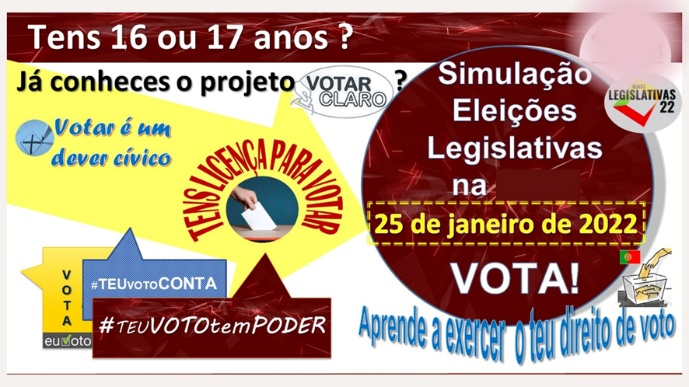
Additionally, the project was strongly disseminated through social media channels, the use of school space, and media coverage. A YouTube channel clarified the project and encouraged students' participation. The videos published on the platform were also displayed on screens installed in the school corridors. The social networks of the school students' association and parents' association announced activities, published images of the events, and published the result of the mock election. Students also distributed pamphlets highlighting the importance of voting, calling on students to participate in the mock election (Figure 1). The initiative also attracted the attention of leading newspapers and TV channels.

Finally, the National Elections Commission (CNE) supported the organization of mock elections by providing information about the act of voting and the model of ballot papers used for the legislative elections. The electoral commission used the same model in the mock election to make the experience closer to an official vote.
On 25 January, the school held the mock elections at 9 pm. The electoral commission supervised the eleven polling stations in the school's main corridor and entrance hall. Students went to the polls and participated in the simulation throughout the day. At 6 pm, the polls were declared closed, counting the votes began, and the results were made public.
Of the total number of students eligible to vote (804), 480 participated in the mock election (about 60%). Despite efforts against abstention and the possibility of remote electronic voting for students away due to covid-19, the level of abstention was higher than desired by the project organization.
The study used a qualitative approach to data collection and analysis, namely: i) ethnographic observation diaries (field notes); ii) semi-directive interviews with specific actors in the process; iii) focus group held with young people who participated in the project organization; iv) project dissemination material and content produced and shared on social networks; v) and media reports on the project. Data were analyzed with qualitative content analysis 29, from which it was possible to develop the categories of analysis that could add some knowledge about implementing projects aimed at mock elections to promote political education in schools.
The observation of the project in January 2022 was the starting point for data collection and the first object of analysis of the project. During the observation, the research team could get closer to the project participants and monitor the activities. The observation diaries allowed exploratory contact with the school environment and the ways of organizing and conducting the project. From the observation, it was possible to perceive the interactions between the project participants and some behavior patterns and follow up on the planning and operationalization of the actions.
The findings of the observations, together with the literature on citizenship education and youth civic and political participation, served as a basis for the two semi-structured interviews conducted with (adult) members of the electoral commission (D1 and D2) to understand the rationale of the project, its development, and evaluation. One of the interviews involved the school principal, and the other was a teacher, one of the project's creators, who played a central role during the process.
Finally, students' perspectives were approached using a focus group discussion with the electoral commission members to register the group's impressions on the project and their participation, thus allowing an analysis of their relationship with politics and the possible impacts of the experience. The group included seven participants, boys and girls aged between 17 and 18. The session began with photos from different project moments to stimulate the discussion, which lasted about an hour and a half. With the help of conversation analysis 22, we sought to understand the most consensual and divergent views among participants.
All the material produced by the project (e.g., images, videos, pamphlets, documents, and posts on social networks) were relevant material for analysis that can help understand the modes of communication with the project recipients. In turn, the project's appearances in media channels allowed a glimpse of possible ways of presenting the project outside the context of the school community, showing the most significant components and participants.
From all these, it was possible to compose a panorama of different interrelated perspectives on the project that expose an overview of the meanings and perspectives that made up this experience.
This section analyses the data collected from the interviews, the focus group, and the observations, working together as a set of data that make up the general framework of the project. Four categories will be presented here: 1) Absence of Politics in Schools; 2) Election results and the debate on voting at 16; 3) 'Inside and Outside' as a Metaphor for the School Universe; and 4) 'Peers among equals': the effort for integration and horizontality between young people and teachers.
4.1. Absence of Politics in Schools"J1: I never thought a school would take us into politics; we always have to pull ourselves up to look up about politics. (J1)
J2: The school usually never has that initiative."(focus groups with young people)
The absence of policy in schools is not surprising. On the contrary: participants in this study are very familiar with the issue and point out that the main merit of the project was to break with this trend. As stated by a co-leader of the project, politics is a "taboo" for being a sensitive theme in which teachers feel afraid to express their political position because the risk of influencing and interfering with the position of young people:
"There will be many reasons why this area [politics] is not explored as much, but perhaps one of the most profound is ... it is a controversial issue! Whether or not teachers should be involved in these issues, whether they should also be assumed to be someone with political convictions, or whether they should remain neutral. In fact, the response is that people remained neutral, but this neutrality is often confused with inaction. Therefore, teachers omit intervention in the field because they think that is neutral." (D1)
One of the teachers who conceived the project said that the idea came from listening to the common complaints of the students themselves:
"Students talk a lot about it: 'the school does not teach us to think what is right, what is left'; 'the school does not teach us how to do a personal income tax'; 'the school does not teach us anything about laws'" (D2)
For this teacher, the school is a training environment that should mobilize various themes that can add value to students' lives. This idea guides the project, and she saw the legislative elections as an opportunity to activate it:
“We were talking about the issues of the early elections. Legislative elections had been anticipated, and we were talking about this new situation and sharing things we felt about the students distance from politics, and that was it. So, we were getting closer to the idea until the idea came up and excited us very quickly” (D1).
In turn, the students faced the proposal with great satisfaction and enthusiasm, and there were no concerns over the possible influence of the teachers on their political inclination. However, they reinforced the idea, also brought in the teacher's discourse, that the absence of politics in schools is due to its (recurrent) distancing from themes related to the daily life of young people.
Thus, there is a consensus among the participants that the project's development would be a step towards overcoming this absence, introducing the theme of politics in the school's daily life and bringing it inside the school walls.
The common recourse to the "inside and outside" metaphor occurred throughout the observation and the participants' speeches. There is a life inside the school and another life outside the school. Life inside the school would be a series of performances in a controlled environment, often separated from life "out there". Life outside school is understood as "real life", without the protection that school provides and with the demand for knowledge that school does not offer.
As such, the project, including politics at school, builds a bridge between the artificial environment (inside) and the real one (outside), promoting the relationship of young people with knowledge relevant for the development of themselves as citizens.
4.2. Election results and the debate on voting at 16Around 60% of the total number of students eligible to vote (406 voters) took part in the mock election. The abstention was high, not meeting the project team's expectations. Still, it was slightly below the abstention verified in the Portuguese elections in the community where the school is located (61.6%). Among the reasons for the abstention among the students, the school management informed that there were about 100 students in isolation because of covid-19.
One can see that there is a great deal of similarity between the votes of young people (406), prevented by law from voting, and the votes cast in official elections for the same region. It is safe to say that there was no indicator to support opposition to the participation of these young people in official elections.
The results of the participation of these young people in the mock elections weaken (even further) one of the main arguments against voting at 16 in Portugal, which exalts a possible immaturity of young people to exercise the right to vote, reinforcing other studies which have made this same comparison between youth and adult voting.
In the same vein, different studies point to the absence of significant differences between the quality of participation in elections of underage youth and older voters 31.
Although one tends to consider that the youth vote in mock elections could be more radical, to the right and to the left, when compared to that of older voters 31, a very strong congruence between the two votes is nevertheless observed (Table 1).
Ribeiro et al. 26 point to the same finding in relation to other studies:
“However, these conclusions are strongly contested by other studies showing that the quality of vote choice of the young people under 18 is similar to that of older voters (Stiers et al., 2020; Wagner et al., 2012) ‘so they do cast votes in ways that enable their interests to be represented equally well’ (Wagner et al., 2012: 372). Moreover, Stiers et al. (2020) claim that the only conclusion that can be drawn from their study with regard to correct, well-informed voting, is that ‘16-year-olds do not perform any better, or any worse, than their parents do’” (p. 10)
One of the young participants mentioned that the possibility of a radicalization of the votes in the simulation or possible sabotage of the vote was commented on among the students. But that, in practice, it did not occur "because it was heard in the corridors: 'ah, we are going to vote for this and for that just for fun,' and this did not happen" (J1). Another issue that appears in the literature is that 16-year-olds who participate in official elections tend to maintain this participation when they become of age (18-20 years) 33. Comparing to what the literature shows about participation in mock elections, lowering the minimum age of voters can be a more effective instrument for reducing abstention among youth.
On the other hand, it is important that the young people involved in the project are seen as individuals-in-contexts and that the analysis considers the impacts on their different life contexts 4. The interaction between contexts is visible in the discourse of one young participant who says the following:
"My mother doesn't care about politics at all. No matter how hard I try to push her, she doesn't like it because it was never something that interested her. And what I found really beautiful is that this month, my mother went to vote for the first time. Because she saw that I was so focused and was enjoying it so much, being part of this project, and I would come home and talk about the meetings, and my mother saw that I liked it so much and that it was so important, that she went to vote for the first time in her life..." (J3)
In this sense, it is relevant to note that this type of project has an interesting potential to bring the school and the community closer together. The common theme may be a catalyst for greater integration between the different contexts, reinforcing the social function of the knowledge mobilized at school. Based on this integration, it is possible to reduce the feeling of the school as a universe separated from reality (which happens outside the school).
In addition, it can be seen that the mock elections are positively evaluated by the community, which may mean that they contribute to a favorable position towards lowering the voting age: "We found that citizens in municipalities that implemented mock elections were approximately five percentage points more likely to have a more positive view on lowering the voting age." (p. 447) 16.
4.3. ‘Inside and Outside’ as a Metaphor for the School UniverseThroughout the research, the participants made several mentions of reality inside and outside school. These two universes, in general, assume a complementarity, and the school tends to offer the formative instruments for the construction of young people's identity as social subjects.
This is the rationale for including education for citizenship in the curricula:
"As an educational process, Citizenship Education vows to contribute to the development of responsible, autonomous and solidary people who know and exercise their rights and duties through dialogue and respect for others, with a democratic, pluralist, critical thinking and creative spirit." (p. 1) 10.
As such, curricula are set up to cover relationships in the school context as much as life outside school. However, the successive discourses that refer to an inside and outside school environment, and criticize the absence of themes understood as relevant by the students, suggest that there is no rapprochement between the contexts. On this topic, one participant raises an interesting question: "my parents don't talk about it [politics], the school doesn't have a subject for it... so it's because it's not important."(J3).
The hypothesis raised meets the fundamental question, "if not in schools, where?" 20. This means that there is an absence of effective political education in schools that could provide students with opportunities to participate actively in democracy 19, 20.
Thus, the 'inside' of the school resembles an environment directed toward the very validation of its own assessment instruments 1. Young people and teachers commonly refer to the knowledge mobilized in classes as necessary for school development and academic success, such as for preparing for higher education entrance examinations. Notwithstanding, the knowledge obtained in school often seems to be disconnected from knowledge related to practical life, giving rise to complaints regarding how education has failed to promote the fundamental basis for acting as an active citizen in a democratic society.
4.4. ‘Peers among equals’: the effort for integration and horizontality between young people and teachersThe guiding concept of the project from its conception has been the strengthening of democracy, as well as an understanding of the school as a context promoting knowledge, experiences, and education in view of a plural and democratic society. This vision is reinforced by the objectives of the project described by the teachers who conceived it, i.e., to introduce politics at school, to reinforce the importance of voting, and to combat the growing abstention in elections among young people.
Thus, voting is understood as a fundamental instrument of democracy, with a vast history of struggles to make it universal and guaranteed as a right, but with recent signs of devaluation in some countries with consolidated democracies. In this context, the right to political participation is understood as something to be safeguarded and promoted, and political apathy is an obstacle to the quality of democracies, making room for possible attacks on democracies, as well as the resurgence of authoritarianism.
This concern is punctuated in the Paris Declaration 12, which calls for the importance of promoting citizenship and the common values of freedom, tolerance, and non-discrimination through education. A concern followed by the National Strategy for Citizenship Education (ENEC), a reference document published by the Portuguese DGE in 2017 10, that stresses the need for education to develop skills for a democratic culture
From the outset, the project, which had as its ultimate foundation the strengthening of an ideal of democratic culture, also sought to assume itself as a democratic context. There was thus a double effort, which the interviewee (D1) called: i) putting young people at the epicenter of things and ii) making them feel like peers among equals.
These efforts were mobilized to form a nucleus of the project team. This nucleus also constituted the electoral commission (plus the representative of the parents' association), composed of five young people and five adults. The students who participated in the group were invited by the school management – with the exception of one student who heard about the project and volunteered. According to staff, participation was not barred, but initially, not many students were interested.
The idea of appointing a student to occupy the position of president of the commission came from the school board and was understood by all interviewees as a positive point of the project. The measure was seen as a call to action and greater engagement of students in the project. The intention, according to the principal, was to make students feel like a relevant part of the project, participating in decision-making and being present in each action:
“The perception I have is that for these students, I don't know if it was the first project they were in, but they were closer to the epicenter of things, they were inside, they were in that epicenter from the very first moment, and there was also a care in making the students feel like equals among equals." (D1)
According to the young woman who took on the presidency of the commission, this generated a greater sense of responsibility for the project. Another youth evaluated as positive the initiative of the school management in setting up the project based on the invitation of some students who showed themselves to be more interested in the theme of politics at school, some with experience of participation in the students' association. He says that, from then on, a strong group was formed, which dealt well with the organization of the different events, which had the help of the teachers, but that the centrality of the students made the project more interesting:
“They took students, made a strong group, a ready group that managed to deal with the organization of the day (...) with counting the votes, both with the help of the teachers, all involved, some more than others, but all involved, and I think it made it much more interesting." (J1).
The relationship between young people and adults, evaluated as positive by the participants of this study, reinforces the idea of the relevance of the establishment of young-adult partnerships (Y-AP) 34 as a tool for the development of projects focused on the performance of young people. The creation of Y-APs enables a relationship of cooperation and power sharing.
However, it should be noted that the horizontality sought by the creators of the project challenged the school structure itself, with regulations based on its hierarchy and power imbalance between young people (students) and adults (teachers). These asymmetries do not disappear when a decision is made to carry out a project; even if a relationship between peers is sought, the institutions are (still) used to what Paulo Freire called banking education, in which adults deposit their knowledge on young people 14. The break with this model is based on what Freire calls a liberating education.
In this sense, we can understand that the observed model is at a level beyond what Wang et al. 32 call a 'symbolic' partnership since the role of young people was not only to be heard and assist in decision-making. There was indeed effective participation of these young people, close to what the authors call 'pluralistic', where the environment encountered by young people is welcoming, provides a good level of empowerment, and decision-making is shared. However, there is an effect observed, which may be interesting to address in future projects, which is the maintenance of the barrier between inside and outside the school for the division of tasks.
The tasks were divided, in part, following a logic of voluntarism and availability: "there was almost, I wouldn't say, an auction of tasks, but there was a concern that the students could offer to take the tasks that motivated them more, that they felt could be more useful" (D1). However, it was observed that the tasks carried out outside the school environment, such as the invitation to political parties and contact with journalists and with government bodies, were carried out by adults (management, teachers, and parents association). In turn, the actions carried out in the school environment relied more heavily on the participation of young people.
Another interesting factor to be highlighted is that the peer relationship was restricted to the core project members and did not extend to the whole student body. The format of the project generated the formation of sub-groups among the school's student body with differences in status. This difference creates an asymmetry between the students regarding how they perceive the impact of the project, as observed in other studies 28, in which the participants directly linked to the operationalization actions of the project (i.e., Young Mayor) had a more positive evaluation than the others. Therefore, it is necessary for the greater success of this type of initiative to seek ways to involve more actively the community, not only those who are directly linked to its implementation
Thus, in this case, we have different levels of action and participation in the project:
i) Young people in the electoral commission (horizontal relations with teachers, management, and parents' association; participation in decision-making and recipients of the project);
ii) Voting young people (recipients of the project, without participation in the decision-making);
iii) Non-voting young people (younger or older than or under 16 years old, not covered by the project).
These different levels dialogue among themselves and cooperate to a greater or lesser extent but have different roles. The small group of young people at the core of the project, who make up the electoral commission and participate in decision-making, are the main beneficiaries of these actions. These young people assume the project is a relevant experience.
The widest group of young students aged 16 and 17 are considered to be the target group of the project, whose aim is to get them to adhere to the actions, especially to participate in the mock election. The young people in this group demonstrated, through a significant number of abstentions, that not all of them were captured by the project. Even so, part of them did not participate in the actions nor in the mock election, which had around 40% of abstentions. About this, D1 states that:
"Although it seems that students are our captive audience, that they are there at our disposal, and that getting information across seems to be a very easy, an obvious thing, it is not always so. (...) the information may be available, but the students don't notice it, don't value it, and don't have enough interest in it, and therefore we were a bit surprised by this. We felt that there was a great insistence on our part in getting the information across through many channels in many media" (D1).
This difference in status between the students suggests that the horizontality sought at the core of the project cannot be observed outside of it. The efforts to have massive participation in the proposed events reinforce the difference in status between students, observed in a relationship in which one group of students seeks to convince the other of the importance and benefits of their participation. Part of the material published on social networks reinforces this hierarchy among students, who, in general, are called to participate based on the information given by their peers about the importance of the act of voting.
On the other hand, the elevation of these young people to key positions within the project seeks to create a bridge between the teaching team and the school students, aiming to break with the most common model, in which the figure of the adults is essential for the transmission of knowledge (as traditionally happens in the classroom). The performance of these young people is a relevant piece to guarantee a significant adhesion in such a large universe of students. The performance of these young people on the days before and on the day of the simulation, with the intention of getting specific classes and subgroups of students to participate, demonstrates their privileged knowledge of some of the factors that could lead to an absence on voting day.
In this way, the participation of young people in the teams that promote this type of project seems to be a positive point. The position of these young people as promoters and recipients of the actions ends up creating favorable conditions for better communication between the team and the participants, as well as an evaluation (assuming a self-evaluation bias) that is more efficient and informed within the process
There is also a third group, the students who did not participate in the project due to age criteria (the under-16s and the over-16s), who were not subject to any kind of analysis by the research team. When the researchers were asked about the relationship of these young people to the project, the few responses implied that the older students were a small group with little relevance and that the under-16s "had been unhappy that the project only allowed 16 and 17-year-olds to vote. Therefore, those who were not yet 16 but already felt like participating were not able to vote" (D1). However, some of the young people (over 18 years old) composed the voting table on mock election day.
These distinct groups played an unequal role within the project, which will inevitably reflect in different levels of engagement and different evaluations of the value of the experience, evidenced here by the discrepancy between the very positive evaluation of the young people who made up the project team and the high number of abstentions among students overall.
The literature review on mock elections that supports this paper shows that although there is a considerable gain in the intention of young people to participate in the upcoming elections 2, there is no actual increase in voter turnout 21. As mentioned above, cultural capital and socioeconomic status are more relevant for participation or absence in official elections than mock elections.
This does not mean that holding mock elections does not benefit young students: "We only state that mock elections do not seem to improve turnout in real elections and that the rationale for carrying them out has to be found elsewhere" (p.391) 21. Holding mock elections in schools may contribute to a vital experience gain in young people's civic and political education, especially in places – such as Portugal – that do not have a tradition of developing these projects.
The approach to the topic of politics and the electoral process also forms an essential link between the 'inside' and 'outside' of school, as we have seen, thus providing a higher level of political literacy concerning institutional politics and acting as a valuable project-based learning tool [17, 23] 17, 23. Mock elections stimulate thinking about politics and the political process in which students are embedded, interrupt the school routine for voting time 2, 3, promote reflection on the political process, and create an environment of political immersion. All of these refer to the choices that young people will make or abstain from in the future.
Thus, the value of mock elections also comes from establishing a bridge between the actual reality of students and their "school life". In other words, they make it possible to address issues not covered in schools, to which students often resist because they cannot assign meaning to them. In this context, it is possible to mobilize multidisciplinary knowledge that relates to political activity and gives support to this type of project 8, 15, 23.
The teachers evaluated the project very positively: "...on the part of the school board and colleagues in general, there is a great recognition of the importance of this type of project." (D1). More, the school is interested in influencing the development of the project at a national level: "Right now, the immediate step, which is already in place, is that we create an information package that can be offered to schools, that schools can use, taking advantage from our experience" (D1).
However, before the project's replication in other schools, efforts should involve all students rather than just a small group of young people with a prior interest in politics. It is essential to realize that specific initiatives, which often produce a positive impact in the contexts in which they were initially developed, can rapidly become mere state bureaucracies. This can happen if there is no attention to details, such as guaranteeing a broad involvement of students 27.
The creation of sub-groups of participants with different roles and responsibilities may be inevitable for the operation of this kind of project. However, it is crucial to consider that the closer the group is to the core of the project, the greater the involvement of young people and, consequently, the more relevant the experience will be. On the other hand, creating very large groups where passive participation is required will make the experience less relevant for the participants 13.
Additionally, it is essential to acknowledge that mock elections can be interesting pedagogical devices to promote reflection on institutional politics and representative democracy. However, the greater the knowledge about the community and the possible ways to encourage participation, the better able schools will be to mobilize actions that are more relevant to their participants – and this might include other forms of civic and political participation.
In short, mock election projects, to a greater or lesser extent, promote various effects on their participants or communities 2, 5, 8, 15, 23, 30. Nevertheless, by promoting a greater understanding of the ways representative democracy works, mock elections can be an essential contribution to citizenship education programs.
Although a decrease in the level of abstention is not assured 21, it is relevant to note that Portugal has a higher abstention rate among young people. As such, the potential effects of these programs can be different. More research is necessary, and the possible generalization of these projects - as a tool of the National Strategy of Citizenship Education - will make it possible to further a comparative perspective.
In any case, mock election projects mobilize their schools and communities differently. The various elements that make up the projects will play a significant role in their impact and relevance among participants. Projects promoting civic and political education related to electoral participation tend to have a positive final evaluation. For schools and government entities wishing to operationalize this type of project, there is (limited but reliable) literature that can guide action. However, as in other areas of education, a one-size-fits-all model rarely works. The school and community characteristics are an essential part of the success of mock elections, as are the opportunities for actual and broad engagement of the students in the process.
This work was supported by national funds, through the Portuguese Foundation for Science and Technology, IP (FCT), under the strategic funding awarded to CIIE [grants no. UIDB/00167/2020; and UIDP/00167/2020]. Pedro Menezes is supported with a PhD fellowship (2021.06862.BD) by FCT. Norberto Ribeiro also acknowledges FCT funding for his contract, established under the Scientific Employment Stimulus Individual Programme (CEECIND/02115/2018).
{1} In the years 2005 and 2022, there was a slight reduction in abstention compared to previous elections. In 2005, the abstention rate was 35.6%, a decrease of 2.8% compared to 2002 (38.4%) and in 2022, the abstention rate was 48.6%, a reduction of 2.8% compared to 2019 (51.4%). It is estimated that around 55% of Portuguese young people do not participate in the elections.
| [1] | Biesta, G, “¿Medir lo que valoramos o valorar lo que medimos? Globalización, responsabilidad y la noción de propósito de la educación,” Pensamiento Educativo, 51 (1). 46–57, 2014. | ||
| In article | View Article | ||
| [2] | Borge, J, “Tuning in to formal politics: Mock elections at school and the intention of electoral participation among first time voters in Norway,” Politics, 37 (2). 201–214. 2017. | ||
| In article | View Article | ||
| [3] | Borge, J, “Am I a Politics Person?” A Qualitative Study of Students’ Perspectives on Mock Elections as Political Education,” Journal of Social Science Education, 17 (3). 63-74, 2018 | ||
| In article | |||
| [4] | Bronfenbrenner, U, “Ecological systems theory,” in R. Vasta (Ed.), Six theories of child development: Revised formulations and current issues, Jessica Kingsley Publishers, 1992, 187–249. | ||
| In article | |||
| [5] | Coffey, D.J., Miller, W.J. and Feuerstein, D, “Classroom as Reality: Demonstrating Campaign Effects Through Live Simulation,” Journal of Political Science Education, 7 (1). 14-33, 2011 | ||
| In article | View Article | ||
| [6] | De Groot, I. and Eidhof, B, “Mock elections as a way to cultivate democratic development and a democratic school culture,” London Review of Education, 17 (3). 362-382, 2019. | ||
| In article | View Article | ||
| [7] | De Groot, I. and Lo, J, “Cultivating student participation in the context of mock elections in schools: Practices and constraints in secondary education in the Netherlands,” Journal of Social Science Education, 21 (1). 33-54. 2022. | ||
| In article | |||
| [8] | De Groot, I, “Mock elections in civic education: A space for critical democratic citizenship development,” Journal of Social Science Education, 16 (3). 84-96, 2017 | ||
| In article | |||
| [9] | Directorate-General for Education, Estratégia Nacional de Educação para a Cidadania (ENEC), 2017. Available: https://www.dge.mec.pt/sites/default/files/Projetos_Curriculares/Aprendizagens_Essenciais/estrategia_cidadania_original.pdf. | ||
| In article | |||
| [10] | Directorate-General for Education, Citizenship education – guidelines, 2013. Available: https://www.dge.mec.pt/sites/default/files/ECidadania/Docs_referencia/citizenship_education_guidelines.pdf | ||
| In article | |||
| [11] | Ekman, J., and Amnå, E, “Political participation and civic engagement: Towards a new typology,” Human Affairs, 22 (3). 283-300, 2012. | ||
| In article | View Article | ||
| [12] | European Education and Culture Executive Agency, Eurydice, Promoting citizenship and the common values of freedom, tolerance and non-discrimination through education : overview of education policy developments in Europe following the Paris Declaration of 17 March 2015, Publications Office, 2016. Available: https://data.europa.eu/doi/10.2797/396908 | ||
| In article | |||
| [13] | Ferreira, P.D., Azevedo, C.N. and Menezes, I, “The developmental quality of participation experiences: beyond the rhetoric that ‘participation is always good!’,” Journal of Adolescence, 35 (3). 599–610, 2012. | ||
| In article | View Article PubMed | ||
| [14] | Freire, P, Pedagogia do Oprimido, Paz e Terra, Rio de Janeiro, 1987. | ||
| In article | |||
| [15] | Keating, A. and Janmaat, J.G, “Education through citizenship at school: Do school activities have a lasting impact on youth political engagement?,” Parliamentary Affairs, 69 (2). 409–429, 2016. | ||
| In article | View Article | ||
| [16] | Larsen, E.G., Levinsen, K. and Kjaer, U, “Democracy for the youth? The impact of mock elections on voting age attitudes,” Journal of Elections, Public Opinion and Parties, 26 (4). 435–451. 2016. | ||
| In article | View Article | ||
| [17] | Lo, J.C, Learning to participate through role-play: Understanding political simulations in the high school government course (Doctoral dissertation), University of Washington), 2015. Available: http://search.proquest.com/docview/1718414960/ | ||
| In article | |||
| [18] | Magalhães, P, A Participação Política da Juventude em Portugal. Um retrato comparativo e longitudinal, 2002-2019, 2022. Available: https://gulbenkian.pt/forum-futuro/participacao-politica-dos-jovens-em-portugal/ | ||
| In article | |||
| [19] | Menezes, I., Malafaia, C. and Ferreira, P, Reinventing the European citizenship of young people: Schools as spaces of political education, CIIE, Porto, 2022. | ||
| In article | |||
| [20] | Menezes, I., Ferreira, P.D. Ribeiro, N. and Malafaia, C, “Schools as democracy labs,” in Licht A., Pateraki I. and Scimeca S, If not in Schools, where? Learn and practice Democracy with eTwinning, Central Support Service of eTwinning: European Schoolnet, Brussels, 2019, 11-13. | ||
| In article | |||
| [21] | Öhrvall, R. and Oskarsson, S, “Practice makes voters? Effects of student mock elections on turnout,” Politics, 40 (3). 377–393, 2020. | ||
| In article | View Article | ||
| [22] | Onwuegbuzie, A.J., Dickinson, W.B., Leech, N.L. and Zoran, A.G, “A qualitative framework for collecting and analyzing data in focus group research,” International Journal of Qualitative Methods, 8 (3). 1–21, 2009. | ||
| In article | View Article | ||
| [23] | Parker, W.C. and Lo, J.C, “Reinventing the high school government course: Rigor, simulations, and learning from text,” Democracy and Education, 24 (1), 1-10, 2016. | ||
| In article | |||
| [24] | Pleyers, G, Alter-globalization: Becoming actors in a global age, Polity Press, 2013. | ||
| In article | |||
| [25] | PORDATA, Eleitores nas eleições para a Assembleia da República: total, votantes e abstenção, 2023. Available: https://www.pordata.pt/portugal/eleitores+nas+eleicoes+para+a+assembleia+da+republica+total++votantes+e+abstencao-2181 | ||
| In article | |||
| [26] | Ribeiro, N., Malafaia, C. and Ferreira, T, “Lowering the voting age to 16: Young people making a case for political education in fostering voting competencies,” Education, Citizenship and Social Justice, 2022. | ||
| In article | View Article | ||
| [27] | Rizvi, F. and Lingard, B, Globalizing education policy, Routledge, 2009 | ||
| In article | View Article | ||
| [28] | Rodrigues, M., Caetano, A., Ferreira, T., Silva, J. and Ribeiro, N, “The Young Mayor project in Portugal: The effect of the Quality of Participation Experiences on perceptions of the project’s impact,” Journal of Social Science Education, 18 (3). 25-37, 2019. | ||
| In article | |||
| [29] | Schreier, M, Qualitative Content Analysis in Practice, Brilliance Corporation, 2012. | ||
| In article | |||
| [30] | Stiers, D., Hooghe, M. and Goubin, S, “Are 16-year-olds able to cast a congruent vote? Evidence from a “voting at 16” initiative in the city of Ghent (Belgium),” Electoral Studies, 63 (102107), 1-14, 2020 | ||
| In article | View Article | ||
| [31] | Wang, J.C (), “Reconstructing deweyan democratic education for a globalizing world,” Educational Theory, 59 (4). 409–425, 2009. | ||
| In article | View Article | ||
| [32] | Wong, N.T., Zimmerman, M.A. and Parker, E.A, “A typology of youth participation and empowerment for child and adolescent health promotion,” American Journal of Community Psychology, 46 (1–2). 100–114, 2010. | ||
| In article | View Article PubMed | ||
| [33] | Zeglovits, E. and Aichholzer, J, “Are people more inclined to vote at 16 than at 18? Evidence for the first-time voting boost among 16- to 25-year-Olds in Austria,” Journal of Elections, Public Opinion and Parties, 24 (3). 351–361, 2014. | ||
| In article | View Article PubMed | ||
| [34] | [Zeldin, S., Christens, B.D. and Powers, J.L, “The psychology and practice of youth-adult partnership: bridging generations for youth development and community change,” American Journal of Community Psychology, 51 (3–4). 385–397, 2013. | ||
| In article | View Article PubMed | ||
Published with license by Science and Education Publishing, Copyright © 2023 Pedro Menezes and Norberto Ribeiro, Isabel Menezes
 This work is licensed under a Creative Commons Attribution 4.0 International License. To view a copy of this license, visit
http://creativecommons.org/licenses/by/4.0/
This work is licensed under a Creative Commons Attribution 4.0 International License. To view a copy of this license, visit
http://creativecommons.org/licenses/by/4.0/
| [1] | Biesta, G, “¿Medir lo que valoramos o valorar lo que medimos? Globalización, responsabilidad y la noción de propósito de la educación,” Pensamiento Educativo, 51 (1). 46–57, 2014. | ||
| In article | View Article | ||
| [2] | Borge, J, “Tuning in to formal politics: Mock elections at school and the intention of electoral participation among first time voters in Norway,” Politics, 37 (2). 201–214. 2017. | ||
| In article | View Article | ||
| [3] | Borge, J, “Am I a Politics Person?” A Qualitative Study of Students’ Perspectives on Mock Elections as Political Education,” Journal of Social Science Education, 17 (3). 63-74, 2018 | ||
| In article | |||
| [4] | Bronfenbrenner, U, “Ecological systems theory,” in R. Vasta (Ed.), Six theories of child development: Revised formulations and current issues, Jessica Kingsley Publishers, 1992, 187–249. | ||
| In article | |||
| [5] | Coffey, D.J., Miller, W.J. and Feuerstein, D, “Classroom as Reality: Demonstrating Campaign Effects Through Live Simulation,” Journal of Political Science Education, 7 (1). 14-33, 2011 | ||
| In article | View Article | ||
| [6] | De Groot, I. and Eidhof, B, “Mock elections as a way to cultivate democratic development and a democratic school culture,” London Review of Education, 17 (3). 362-382, 2019. | ||
| In article | View Article | ||
| [7] | De Groot, I. and Lo, J, “Cultivating student participation in the context of mock elections in schools: Practices and constraints in secondary education in the Netherlands,” Journal of Social Science Education, 21 (1). 33-54. 2022. | ||
| In article | |||
| [8] | De Groot, I, “Mock elections in civic education: A space for critical democratic citizenship development,” Journal of Social Science Education, 16 (3). 84-96, 2017 | ||
| In article | |||
| [9] | Directorate-General for Education, Estratégia Nacional de Educação para a Cidadania (ENEC), 2017. Available: https://www.dge.mec.pt/sites/default/files/Projetos_Curriculares/Aprendizagens_Essenciais/estrategia_cidadania_original.pdf. | ||
| In article | |||
| [10] | Directorate-General for Education, Citizenship education – guidelines, 2013. Available: https://www.dge.mec.pt/sites/default/files/ECidadania/Docs_referencia/citizenship_education_guidelines.pdf | ||
| In article | |||
| [11] | Ekman, J., and Amnå, E, “Political participation and civic engagement: Towards a new typology,” Human Affairs, 22 (3). 283-300, 2012. | ||
| In article | View Article | ||
| [12] | European Education and Culture Executive Agency, Eurydice, Promoting citizenship and the common values of freedom, tolerance and non-discrimination through education : overview of education policy developments in Europe following the Paris Declaration of 17 March 2015, Publications Office, 2016. Available: https://data.europa.eu/doi/10.2797/396908 | ||
| In article | |||
| [13] | Ferreira, P.D., Azevedo, C.N. and Menezes, I, “The developmental quality of participation experiences: beyond the rhetoric that ‘participation is always good!’,” Journal of Adolescence, 35 (3). 599–610, 2012. | ||
| In article | View Article PubMed | ||
| [14] | Freire, P, Pedagogia do Oprimido, Paz e Terra, Rio de Janeiro, 1987. | ||
| In article | |||
| [15] | Keating, A. and Janmaat, J.G, “Education through citizenship at school: Do school activities have a lasting impact on youth political engagement?,” Parliamentary Affairs, 69 (2). 409–429, 2016. | ||
| In article | View Article | ||
| [16] | Larsen, E.G., Levinsen, K. and Kjaer, U, “Democracy for the youth? The impact of mock elections on voting age attitudes,” Journal of Elections, Public Opinion and Parties, 26 (4). 435–451. 2016. | ||
| In article | View Article | ||
| [17] | Lo, J.C, Learning to participate through role-play: Understanding political simulations in the high school government course (Doctoral dissertation), University of Washington), 2015. Available: http://search.proquest.com/docview/1718414960/ | ||
| In article | |||
| [18] | Magalhães, P, A Participação Política da Juventude em Portugal. Um retrato comparativo e longitudinal, 2002-2019, 2022. Available: https://gulbenkian.pt/forum-futuro/participacao-politica-dos-jovens-em-portugal/ | ||
| In article | |||
| [19] | Menezes, I., Malafaia, C. and Ferreira, P, Reinventing the European citizenship of young people: Schools as spaces of political education, CIIE, Porto, 2022. | ||
| In article | |||
| [20] | Menezes, I., Ferreira, P.D. Ribeiro, N. and Malafaia, C, “Schools as democracy labs,” in Licht A., Pateraki I. and Scimeca S, If not in Schools, where? Learn and practice Democracy with eTwinning, Central Support Service of eTwinning: European Schoolnet, Brussels, 2019, 11-13. | ||
| In article | |||
| [21] | Öhrvall, R. and Oskarsson, S, “Practice makes voters? Effects of student mock elections on turnout,” Politics, 40 (3). 377–393, 2020. | ||
| In article | View Article | ||
| [22] | Onwuegbuzie, A.J., Dickinson, W.B., Leech, N.L. and Zoran, A.G, “A qualitative framework for collecting and analyzing data in focus group research,” International Journal of Qualitative Methods, 8 (3). 1–21, 2009. | ||
| In article | View Article | ||
| [23] | Parker, W.C. and Lo, J.C, “Reinventing the high school government course: Rigor, simulations, and learning from text,” Democracy and Education, 24 (1), 1-10, 2016. | ||
| In article | |||
| [24] | Pleyers, G, Alter-globalization: Becoming actors in a global age, Polity Press, 2013. | ||
| In article | |||
| [25] | PORDATA, Eleitores nas eleições para a Assembleia da República: total, votantes e abstenção, 2023. Available: https://www.pordata.pt/portugal/eleitores+nas+eleicoes+para+a+assembleia+da+republica+total++votantes+e+abstencao-2181 | ||
| In article | |||
| [26] | Ribeiro, N., Malafaia, C. and Ferreira, T, “Lowering the voting age to 16: Young people making a case for political education in fostering voting competencies,” Education, Citizenship and Social Justice, 2022. | ||
| In article | View Article | ||
| [27] | Rizvi, F. and Lingard, B, Globalizing education policy, Routledge, 2009 | ||
| In article | View Article | ||
| [28] | Rodrigues, M., Caetano, A., Ferreira, T., Silva, J. and Ribeiro, N, “The Young Mayor project in Portugal: The effect of the Quality of Participation Experiences on perceptions of the project’s impact,” Journal of Social Science Education, 18 (3). 25-37, 2019. | ||
| In article | |||
| [29] | Schreier, M, Qualitative Content Analysis in Practice, Brilliance Corporation, 2012. | ||
| In article | |||
| [30] | Stiers, D., Hooghe, M. and Goubin, S, “Are 16-year-olds able to cast a congruent vote? Evidence from a “voting at 16” initiative in the city of Ghent (Belgium),” Electoral Studies, 63 (102107), 1-14, 2020 | ||
| In article | View Article | ||
| [31] | Wang, J.C (), “Reconstructing deweyan democratic education for a globalizing world,” Educational Theory, 59 (4). 409–425, 2009. | ||
| In article | View Article | ||
| [32] | Wong, N.T., Zimmerman, M.A. and Parker, E.A, “A typology of youth participation and empowerment for child and adolescent health promotion,” American Journal of Community Psychology, 46 (1–2). 100–114, 2010. | ||
| In article | View Article PubMed | ||
| [33] | Zeglovits, E. and Aichholzer, J, “Are people more inclined to vote at 16 than at 18? Evidence for the first-time voting boost among 16- to 25-year-Olds in Austria,” Journal of Elections, Public Opinion and Parties, 24 (3). 351–361, 2014. | ||
| In article | View Article PubMed | ||
| [34] | [Zeldin, S., Christens, B.D. and Powers, J.L, “The psychology and practice of youth-adult partnership: bridging generations for youth development and community change,” American Journal of Community Psychology, 51 (3–4). 385–397, 2013. | ||
| In article | View Article PubMed | ||