The Community Leaders’ Beliefs on the Purpose of Schooling and Their Community Educational Initiatives is a case study geared towards finding out if the beliefs of community leaders are communicated through their educational initiatives. It aimed to a) describe community leaders’ beliefs about the purpose of schooling, b) determine community leaders’ educational initiatives (programs and activities) conducted; and c) identify sets of beliefs that appear influential on community leaders’ educational initiatives. To attain its objective, a one-on-one interview followed by a focused group discussion with the barangay officials of Kibawe was done using a semi-structured interview schedule. The data gathered were transcribed, coded, and analyzed. Results of the study show that the barangay officials of Kibawe believe that the purpose of schooling can be categorized into four categories namely (1) personal development; (2) social development; (3) better quality of life; (4) economic development. These beliefs on the purpose of schooling are shown by the educational initiatives conducted and supported by the Kibawe barangay officials as follows: a) supported the alternative learning system (ALS), skills courses by the Technical Education and Skills Development Authority (TESDA), and the Pantawid Pamilyang Pilipino Program (4Ps) b) allocated budget for Financial Assistance for students and the Department of Education (DepEd) evaluation, c) conducted information campaign on the importance of schooling, d) submitted a Proposal to Build Barangay High School, especially for indigenous peoples (IPs). The information Campaign on the importance of schooling conducted by the barangay officials is an offshoot of the belief that the purpose of schooling is for personal development. On the other hand, social development; better quality of life; and economic development is the believed purpose of schooling which is why they supported the ALS, TESDA, and 4Ps with financial assistance allocated to students and DepEd evaluations.
Public education was conceived as a way of educating our children to prepare them in facing a more complex society and preparing them to be productive. But actual scenarios among public education in remote areas seem to be difficult to access due to geographic location and other cultural beliefs of various stakeholders.
The municipality of Kibawe is a 2nd class municipality in the province of Bukidnon. As of 2015, Kibawe obtained a poverty incidence rate of 45.3%. This data is quite alarming especially to the school community because this may directly or indirectly affect the performance of learners and the school, in general.
Aside from the factors relating to students, high rates of student success are the result of collaborations between parents and the community. The level of commitment or involvement of the different stakeholders could vary according to their beliefs and perceived value of schooling. Our belief system determines our actions, and our actions affect how we influence others. In the context of schooling, parents’ actions and behaviors towards schooling also affect children’s perceptions and beliefs about schooling. Thus, students’ interest and access to schooling are greatly affected by how their parents and community leaders perceived the value of schooling.
Numerous investigations have been implemented to find out factors associated with students’ achievement such as teachers’ skills and competencies 1, 2, 3, 4, 5, 6, teachers’ awareness, perceptions, and challenges 5, 6, 7, 8, 9, 10, 11, contemporary pedagogies [10-21], and others [22-30], however, little has been done on investigating the community leaders’ beliefs on the purpose of schooling and their initiatives.
This research study gears toward helping the community find ways on addressing their belief system and perceived value of the purpose of schooling. It intended to understand the perception of community leaders as to the value of schooling thus leading to the educational initiatives and programs they proposed or implemented.
This study would shed light on the perceived purpose of schooling among community leaders. Furthermore, it endeavored to scrutinize if their educational initiatives are an offshoot of their perception of the value of schooling.
This section presents the methodology employed by the researcher in conducting the study. It specifically presents the research design, the research locale, the subject respondents, the research instruments used in the study, the data gathering procedure, and the statistical techniques.
This study utilized a qualitative research methodology using a case study design. An explanatory approach in the case study design was specifically used in this in-depth investigation to know the community leaders’ beliefs on the purpose of schooling.
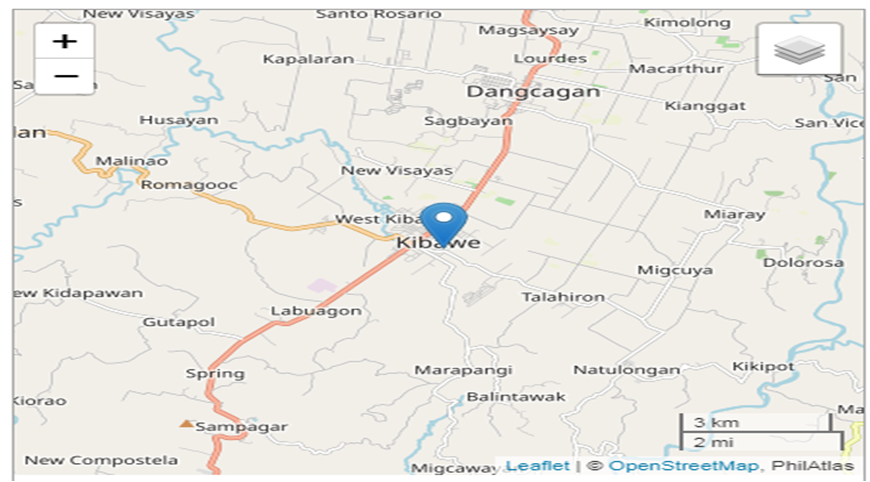
The study was conducted at Kibawe Bukidnon. Kibawe is a municipality in the landlocked province of Bukidnon.
The municipality has a land area of 304.13 square kilometers or 117.43 square miles which constitutes 2.90% of Bukidnon's total area. Its population as determined by the 2020 Census was 41,897. This represented 2.72% of the total population of Bukidnon province or 0.83% of the overall population of the Northern Mindanao region. Based on these figures, the population density is computed at 138 inhabitants per square kilometer or 357 inhabitants per square mile.
The participants of the study were the Barangay Captains and other barangay officials in Kibawe, Bukidnon. Barangay captains were asked about their participation in this research study during their ABC session.
The semi-structured interview protocol was developed, pilot-tested, and validated by the researchers based on the research questions set forth in this investigation. After the pilot testing, necessary revisions of the interview protocol were made to ensure clarity of the statements to be used.
An interview schedule was used in gathering data from the participants during the one-on-one face-to-face or virtual interview whichever was preferred by the participants. Data gathered was then transcribed and coded. After the coding, a focused group discussion was done to establish a common understanding and to fill in gaps in the one-on-one interview. Accomplishment reports of Barangay captains were then requested from the ABC office. Validation of findings was conducted.
An explanatory approach in case study research using coding and cross-case analysis 31 was used to analyze the data to present the results and identify the similarities and differences in the responses of the participants. The data that was gathered from the interview, focus group discussion (FGD) and accomplishment reports of each barangay captain comprised the three sources of data that serve as the triangulation method.
This section presents the interpretation and analysis of the data gathered from the community leaders in Kibawe, Bukidnon.
3.1. Community Leaders’ Beliefs about the Purpose of SchoolingOne purpose of schooling is to minimize/reduce or eliminate the number of out-of-school youth as expressed by one participant. The other purpose of schooling identified by the participants are a) brighter future b) better work opportunities and c) knowledge acquisition which was reiterated by the barangay officials during the FGD.
P1: “Ang Purpose sa schooling, Ma’am? Para mabawasan ang out-of-school youth, Ma’am., diri sa barangay.”(the purpose of schooling is to minimize or reduce the number of out of school youth in the barangay)
P2: “Para sa Maayo nga kaugmaon” (Schooling is for the better and brighter future)
P3: “Aron makakita ug maayo nga trabaho” (Schooling is for better job opportunities)
P4: “Para maka acquire ug knowledge” (Schooling is for knowledge acquisition)
P5: “Mueskwela ta aron makatoon.Para makbarog kay ang wala kaeskwela wala gyuy kabangkaagan, walay kinaadman unya musupak sa mga balaod ky wala may hinnawan, dili gyud musubay sa balaod ky wala man kabalo, dili pwede lalison ky pirme ra gyud sya tama ky wala man sya kahibalo unsay insakto”( The purpose of schooling to learn, so that we can stand on our own because those who did not go to school at all has no knowledge and will rebel against laws since they are ignorant and will not abide . We cannot argue with them because for them they are always right because they do not know what is right)
Table 1 shows that based on the one-on-one interview with the participants including that of the Focus Group Discussion (FGD) conducted with barangay officials, the following codes came out on their beliefs as to the purpose of schooling: 1) to minimize/reduce or eliminate a number of out of School youth; 2) to have a better/ brighter future; 3) to have better work opportunities; and 4) to acquire knowledge.
To better understand their beliefs on the purpose of schooling, the need to go to school was delved into and the following reasons: a) those who grew up and did not undergo schooling are pitiful b) to acquire knowledge c) to prepare for political aspirations d) to be able to communicate, verbalize/express one’s opinion e) to learn how to abide by rules and f) to be able to socialize.
Looking into the initial codes, to acquire knowledge, to be able to persevere can be placed in one category identified by Widdowson et al. 32 that is to learn and gain self-knowledge. Whereas codes like to be able to abide, to socialize and to communicate can be placed in another category that is to develop life and social skills. The belief in minimizing/reducing the number of out-of-school youth, Schooling develops confidence and active participation can be anchored to the category of optimizing life chances and quality of life. Lastly, codes like better and brighter future, better job opportunities and to continue with political aspirations can be anchored to the category to enable future employment and economic well-being.
Looking into the codes and checking for similarities, the perceived purpose of schooling is to have a better life. However, looking beyond the similarities we can identify the differences as to the specific purpose of schooling. Social development, personal development, economic development, and a better quality of life.
This result is supported by a study which identified the purposes of schooling as (1) to learn and gain self-knowledge; (2) to develop life and social skills; (3) to optimize life chances and quality of life; (4) to enable future employment and economic wellbeing 33. Batool and Batool 34 on a similar note also mentioned that schooling boost women empowerment through increasing income, increased access to information, assortative matching, and better labor market outcome which is also in line with the statement of Maher Fitzgerald 35 on the aspiration to develop the “whole child”: physically, socially, and cognitively as the purpose of schooling. On the economic growth or better job opportunities, it was supported by few studies as well 36, 37.
To further scrutinize their beliefs on the purpose of schooling their concept of the difference between schooled and unschooled was delved into. Accordingly, those who did not go to school tend to shy out, especially in activities, they felt out of place in activities, and they are pitiful because they are not confident. Furthermore, those who did not go to school needs one-on-one explanation of programs/activities, need house-to-house invitation to attend gatherings/activities, and will not willingly participate/join in activities. On the other hand, those who were able to go to school will attend gatherings/activities even if invitations are just posted online. They also can communicate and express themselves well. They can speak in front of dignitaries.
The categories identified in relation to beliefs about the purposes of schooling: (1) personal development, (2) social development, (3) economic development and (4) better quality of life.
3.2. Community Leaders’ Educational Initiatives (Programs and Activities) ConductedThe different educational initiatives conducted by the barangay officials in Kibawe are as follows: a) supported the ALS program b) Allocate budget for ALS from the Barangay c) Financial Assistance for students from SK funds d) supported the TESDA programs e) Conducted information Campaign on the importance of schooling f) worked out the availability of ALS teachers g) submitted a Proposal to Build Barangay High School, especially for IPs h) allocated budget in support to DepEd evaluation i) supported the implementation of the 4ps program of the government.
The following are the statements of the barangay officials with regards to their educational advocacies and programs
P1: “Kuan lang, Ma’am. Ang ako karon kay—labi na sige ko’g kuan aning ALS—sa ALS bitaw, Ma’am” “Kanang naa sa elementary pero mga ulitawo na bitaw sila. Mao na nga ang kuan karon—labi na diri kay ang ALS murag kuan gyud sila kada tuig jud. Naa man jud maestra sa ALS nga gikuan ang DepEd. Mao na nga—labi na sa—taga amoa ra gyapon nga mga teacher-- nga voluntary teacher sa ALS.” (We have elementary students who are already teenagers and they opted to go for Alternative learning System ( ALS) since we have volunteer teachers who are our residents also and are teaching in the ALS)
P1: “Gikuanan namo sila ug assistance. Sa SK Fund na siya gikuha, Ma’am.” (We also provided assistance from the Sanguniang Kabataan (SK) fund)
P1: “Lipay pud sila kay nay support ang barangay, sa DepEd, diria sa atong LGU. Nag-communicate man gyud pud ko. Nga maka-allocate, mo counterpart pud mi para madasig sila nga, kanaang dili lang ingon nga graduate na sila. Unya ang uban man gud mo graduate kay—ang uban man gud in-ana mo graduate na sa ALS, dili na lang pud dayon mo continue ug eskwela” (They are very happy with the support of the barangay, of DepEd, and Local Government Unit (LGU). I communicated for the allocation of budget for the students so that they will be inspired to really finished and graduate from the ALS program and continue to pursue higher education.)
P1: “Naa gyapon TESDA diri, pero dili gyud tong daghan ug nag avail.” (We also have the TESDA but only few availed)
P2: “Maghimo ug information campaign sa mga bata ug mga ginikanan mahitungod sa kahinungdanon sa pag eskwela” (We make information drive to children and parents on the importance of schooling.)
P3: “Mag request naa gyus teachers labi na sa ALS ky para sa out of school youth”
(We requested for a teacher for ALS to cater to our out-of-school youth)
P4: “Magproposed nga naay high school sa among barangay ilabi na sa mga IPs.”“Nagpasa ug proposal with feasibility study sa Municipal council para sa pagtukod ug High School sa Old Kibawe.” (We proposed for a high school especially for Indigenous Persons (IPs), we submitted a proposal with feasibility study to our Municipal Council to have a High School at Old Kibawe)
P5: “Support CMU Extension”
P6: “Paggahin ug budget para sa eskwelahan labi na panahon sa evaluation.”(Allocated budget for schools especially during their evaluation)
P3: “Suportahan ang ALS Ug TESDA” (Support ALS and TESDA.)
P7: Kanang 4Ps ginaimplement para makadawat ug budget ang mga gatungha.” (“Implemented the 4Ps so that recipients can receive their budget.”)
Similar programs supported by the officials of different barangay officials are Alternative Learning System (ALS), TESDA, 4Ps, and SK. Only one barangay had a proposal for an IP high school in their barangay however, the said proposal was not realized due to the number of high schools within the vicinity of the barangay. Narwana 38 is very relevant to the recent study as it introduced a more complex yet very vital role of community programs in developing the field of education. Researchers recognized the vital role of the community especially when it comes to giving advice, support, control, and as a mediator to the government 39. Nishimura 40 emphasized specific community initiatives and actions such as monthly meetings, financial support to infrastructure, practice academic powers, and interventions towards schools' incapacities. A study also recognized the importance of community interventions toward the development of the quality of education 41. Other study centers on the applicability of community participation in the assurance of quality school management in secondary education through a school-based management committee (SBMC) 42, 43. It has greatly emphasized the importance of groups or committees in the implementation of community initiatives and programs for a more effective and organized application. The importance of community participation in scholastic outcomes was recognized 44. Others pointed out that the community also provides financial and material support that can be utilized to improve educational delivery 33. The result inculcates that the community indeed contributes a vital role in the implementation of any educational program 45. Community-based volunteers, educational campaigns, implementation of community-based libraries, etc., and their relevance to the initiatives and programs of the target community were emphasized 46.
3.3. Sets of Beliefs that Appear Influential on Community Leaders’ Educational InitiativesThe categories identified in relation to beliefs about the purposes of schooling: (1) personal development, (2) social development, (3) economic development, and (4) better quality of life. Looking into the educational initiatives and programs mentioned and supported by the participants, personal development specifically in learning and gaining self-knowledge is the belief that paved the way for the information Campaign on the importance of schooling conducted by the barangay officials. While on Social development this belief enabled the barangay officials to support the ALS program and allocate a budget for ALS from the Barangay fund. On the aspect of a better quality of life; this belief in the purpose of schooling the barangay officials supported the ALS program b) allocated a budget for ALS from the Barangay c) allocated Financial Assistance for students from SK funds d) supported the TESDA programs e) Conducted information Campaign on the importance of schooling f) worked out the availability of ALS teachers g) submitted a Proposal to Build Barangay High School, especially for IPs h) allocated budget in support to DepEd evaluation i) supported the implementation of the 4ps program of the government enable future employment and economic well-being. Because of this belief in the purpose of schooling, the barangay officials supported the ALS program b) Allocated a budget for ALS from the Barangay c) allocated Financial Assistance for students from SK funds d) supported the TESDA programs e) Conducted an information Campaign on the importance of schooling f) worked out the availability of ALS teachers g) submitted a Proposal to Build Barangay High School, especially for IPs h) allocated budget in support to DepEd evaluation i) supported the implementation of the 4ps program of the government
Looking at the programs supported by the barangay officials, are geared toward giving their residents a chance and opportunity for a better life which comes out as the ultimate purpose of schooling.
Based on the findings of the study, the following conclusions are drawn:
The beliefs on the purpose of schooling of the Kibawe Barangay officials are the following (1) for personal development; (2) for social development; (3) for economic development; and (4) for a better quality of life. The educational initiatives, programs, and activities conducted are: supported the ALS program, b) Allocate budget for ALS from the Barangay, c) Financial Assistance for students from SK funds, d) supported the TESDA programs, e) Conducted an information Campaign on the importance of schooling, f) worked out the availability of ALS teachers, g) submitted a Proposal to Build Barangay High School, especially for IPs, h) allocated budget in support of DepEd evaluation, and i) supported the implementation of the 4ps program of the government. The initiatives supported and conducted by the barangay officials were an offshoot of their beliefs on the purpose of schooling which is primarily to have a better life. Specifically for personal development is the information campaign on the importance of schooling.
For social development, the barangay officials support the ALS program by allocating a budget for ALS from the Barangay. For a better quality of life and economic development, the barangay officials supported the ALS program, b) Allocated a budget for ALS from the Barangay, c) allocated Financial Assistance for students from SK funds, d) supported the TESDA programs, e) Conducted an information Campaign on the importance of schooling, f) worked out the availability of ALS teachers, g) submitted a Proposal to Build Barangay High School, especially for IPs, h)allocated budget in support to DepEd evaluation, and i) supported the implementation of the 4ps program of the government.
In view of the findings and conclusion, the following recommendations are put forward to consider:
One of the identified purposes of schooling is personal development specifically to learn and gain self-knowledge, to achieve this purpose, the barangay officials are encouraged to allocate funds for an e-library where students from Kibawe can browse and do independent learning. Livelihood programs for the youth, women, and for other sectors can also be implemented for their economic development. The barangay can also link with the schools for activities like nutrition month, fire prevention month, Women’s Month, etc. to augment the social development of not just students but all members of the community.
As to educational initiatives and activities, the barangay can connect with the schools and extend support on the much-needed facilities to make schools a conducive environment for learning, the local government unit can also determine the professionals needed by the barangay and sponsor poor but deserving students in their tertiary education who choose to pursue the career path of the much-needed professionals of the barangay.
The researchers greatly acknowledged Central Mindanao University headed by Dr. Jesus Antonio G. Derije for the research grant that enabled them to do this work. Also, they would like to extend their gratitude to the Vice President for Research, Development, and Extension, Dr. Alan P. Dargentes, the Director of Research, Dr. Jupiter V. Casas, the Dean of the College of Education, Dr. Gladys S. Escarlos, and the community leaders from the municipality of Kibawe the support extended to finally come up with this investigation.
| [1] | Tiria, R. A., & Caballes, D. G (2020). The digital skills of secondary school teachers in Manila. CiiT International Journal of Software Engineering and Technology, 12(3), 33-37. | ||
| In article | |||
| [2] | Vasquez, A. G., Caballes, D. G., Panol, R. F., & Valdez, M. R. (2021). Competency level of science teachers in teaching evolution: basis for training design. Global Journal of Advanced Research, 8(8), 235-243. | ||
| In article | |||
| [3] | Caballes, D. G., & Dapitan, D. A. (2019). Determining the level of ICT skills of junior high school faculty of Tagumpay National High School. CiiT International Journal of Wireless Communication, 11(5), 80-85. | ||
| In article | |||
| [4] | Doblada, J. C. L., & Caballes, D. G. (2021). Relationship of teachers’ technology skills and selected profile: basis for redesigning training for online distance learning modality. Instabright International Journal of Multidisciplinary Research, 3(1), 17-22. | ||
| In article | View Article | ||
| [5] | Narca, M. L., & Caballes, D. G. (2020). Philosophical bases of pedagogy in teaching knowledge, skills, attitudes of Sebastinian graduates. CiiT International Journal of Digital Image and Processing, 12(3), 49-52. | ||
| In article | |||
| [6] | Caballes, D. G., Panol, R. F., Vasquez, A. G., & Valdez, M. R. (2021). Competency level of science teachers in teaching evolution: basis for training design. Global Journal of Advanced Research, 8(8), 235-243. | ||
| In article | |||
| [7] | Caballes, D. G., Peregrino, L. P., & Javillonar, M. G. (2020). Public secondary school teachers’ awareness of open educational resources (OER). CiiT International Journal of Programmable Device Circuits and Systems, 12(4), 76-80. | ||
| In article | |||
| [8] | Dapitan, D. A. & Caballes, D. G. (2020). Teachers’ views on force and motion: towards the development of two-tier test. CiiT International Journal of Automation and Autonomous System, 12(2), 44-48. | ||
| In article | |||
| [9] | Caballes, D. G., Quintos, C. A., Gapad, E. M., & Valdez, M. R. (2020). Perceptions of teachers on the different strains of online modalities of learning: an adoption to new normal. CiiT International Journal of Software Engineering and Technology, 12(4), 69-74. | ||
| In article | |||
| [10] | Gatilogo, L.M. & Tan, D.A. (2019). Teachers’ Motivation, Home Visitation and Performance of Academically At-Risk Students. International Journal of English and Education, 8(2), 400-417, April 2019. | ||
| In article | |||
| [11] | Caballes, D. G., & Belen, J. L. (2020). The beginning teachers’ challenges in an inquiry-based approach to teaching science: provision for a special science research elective course. CiiT International Journal of Software Engineering and Technology, 12(3), 38-44. | ||
| In article | |||
| [12] | Caballes, D. G., & Capinig, R. A. V. (2020). DepEd commons: sustaining students’ learning in physical science. CiiT International Journal of Data Mining and Knowledge Engineering, 12(3), 55-60. | ||
| In article | |||
| [13] | Caballess, D. G., & Abenes, F. M. D. (2020). Readiness of tertiary students in flexible learning approach. CiiT International Journal of Automation and Autonomous System, 12(3), 62-69. | ||
| In article | |||
| [14] | Gayeta, N.E. & Caballes, D. G. (2017). Measuring conceptual change on stoichiometry using mental models and ill-structured problems in a flipped classroom environment. Asia Pacific Journal of Multidisciplinary Research, 5(2), 104-113. | ||
| In article | |||
| [15] | Caballes, D. G., & Belen, J. L. (2020). Contextualization of activities in selected topics in molecular biology. CiiT International Journal of Biometrics and Bioinformatics, 12(1), 6-10. | ||
| In article | |||
| [16] | Caballes, D. G., & Dapitan, D. A. (2019). Exploratory effects of strategic intervention materials in general biology 2. CiiT International Journal of Biometrics and Bioinformatics, 11(3), 37-41. | ||
| In article | |||
| [17] | Caballes, D. G., & Villena, R. R. (2020). Integration of information communication technology in teaching science, technology and society. CiiT International Journal of Data Mining and Knowledge Engineering, 12(2), 34-38. | ||
| In article | |||
| [18] | Asparin, A. A. & Tan, D. A. (2018). Students’ Problem Solving Skills in Enhanced Gradual Release of Responsibility Instruction Model. Asian Academic Research Journal of Multidisciplinary, 5(3), 121-128. | ||
| In article | |||
| [19] | Duque, C. & Tan, D. (2018). Students’ Mathematics Attitudes and Metacognitive Processes in Mathematical Problem Solving. European Journal of Education Studies, 4(11), 1-25. | ||
| In article | |||
| [20] | Tan-Ucang, J. & Tan, D.A. (2013). Students’ Beliefs and Mathematics Performance in a Process-Oriented Guided-Inquiry Learning (POGIL) Environment. CMU Journal of Science. 17 (2013), 141-157. | ||
| In article | |||
| [21] | Galarosa, K.J.D., & Tan, D.A. (2021). Students’ academic performance and motivation in Physics using Microlearning via Cybergogy. Unpublished Thesis. Central Mindanao University. | ||
| In article | |||
| [22] | Tan, R.D.A., Pañares, E.J.A., Pañares, F.J. A. Pagonzaga, E. D., Jumawid, J.A.M., Hinampas, R.T., Tan, D.A. (2021). Investigating the Effect of Social Media on Students’ Academic Performance and Well-being During the Pandemic. International Journal of Scientific & Technology Research, 10(7), 145-151. | ||
| In article | |||
| [23] | Pagtulon-an, E. & Tan D. (2018). Students’ Mathematics Performance and Self-efficacy Beliefs in a Rich Assessment Tasks Environment. Asian Academic Research Journal of Multidisciplinary. 5(2), 54-64. | ||
| In article | |||
| [24] | Cordova, C., & Tan, DA. (2018). Mathematics Proficiency, Attitude and Performance of Grade 9 Students in Private High School in Bukidnon, Philippines‖. Asian Academic Research Journal of Social Sciences and Humanities, vol. 5, issue 2, pp. 103-116, February 2018. | ||
| In article | |||
| [25] | Balasico, C.L., & Tan, D.A., (2020). Predictors of Performance of Central Mindanao University Laboratory High School Students, PEOPLE: International Journal of Social Sciences, 6(2), 1-21. | ||
| In article | View Article | ||
| [26] | Tan, D. A., & Balasico, C. L. (2018). Students’ Academic Performance, Aptitude and Occupational Interest in the National Career Assessment Examination. PUPIL: International Journal of Teaching, Education and Learning, 2(3), 01-21. | ||
| In article | View Article | ||
| [27] | Tan, D.A. (2018). Mathematical Problem Solving Heuristics and Solution Strategies of Senior High School Students, International Journal of English and Education, 7(3), July 2018, 1-17. | ||
| In article | |||
| [28] | Coronel, C. & Tan, D.A. (2019). Twenty-First (21st) Century Skills and Student Mathematics Performance in Self-Blend Approach, International Journal of English and Education, 8(2), 342-357, April 2019. | ||
| In article | |||
| [29] | Prado, N.I., Tan, D.A. & Pabualan, M.P, (2016). Mathematics Teachers’ Self-Efficacy Beliefs Survey in all levels of Education in Bukidnon, Philippines, CMU Journal of Science, Volume 20, No. 2, 44-58. | ||
| In article | |||
| [30] | Prado, N.I., Tan, D.A. & Capuyan, J.B. (2019). Effects of Instructional Materials in General Mathematics and High School Statistics on the Attitude, Self-Efficacy Beliefs, and Performance of High School Students, Liceo Journal of Higher Education Research, 15(1), 112-129, June 2019. | ||
| In article | View Article | ||
| [31] | Cruzes, D., Dyba T., Runeson, P. & Host, M. (2015). Case studies: a thematic, cross-case, and narrative synthesis worked example. Empirical Software Engineering. 20(6), 1634-1665. | ||
| In article | View Article | ||
| [32] | Widdowson, D.A., Dixon, R.S., Peterson, E.R., Davies, C.M., & Irving, S.E. (2015). Why go to school? Student, parent and teacher belief about the purpose of school. Asia Pacific Journal of Education, 35(4) 1-30. | ||
| In article | View Article | ||
| [33] | Aryeh-Adjei, A. A. (2021). Community participation in theanagement of Ghanaian schools. Journal of Interdisciplinary Studies in Education, 10, 79-95. | ||
| In article | |||
| [34] | Batool, S. A., & Batool, S. S. (2018). Impact of Education on Women’s Empowerment: Mediational Role of Income and Self-Esteem. Impact of Education on Women’s Empowerment: Mediational Role of Income and Self-Esteem, 12(1), 11-24. | ||
| In article | |||
| [35] | Maher, A. J., & Fitzgerald, H. (2020). The culture of special schools: perceptions of the nature, purpose and value of physical education. Educational Review, 1-15. | ||
| In article | |||
| [36] | Cruz, A. & Madden, P. & Asante, Christian. (2018). Toward Cross-Cultural Curriculum Development: An Analysis of Science Education in the Philippines, Ghana, and the United States. | ||
| In article | |||
| [37] | Relon, L.P. (2019). Community Leadership Among Education Students in Northern Luzon. https://www.researchgate.net/publication/344236024_COMMUNITY_LEADERSHIP_AMONG_ EDUCATION_STUDENTS_IN_NORTHERN_LUZON. | ||
| In article | |||
| [38] | Narwana, K. (2015). A global approach to school education and local reality: A case study of community participation in Haryana, India. Policy Futures in Education, 13(2), 219-233. | ||
| In article | View Article | ||
| [39] | Kusumaningrum, D. E., Ulfatin, N., Maisyaroh, M., Triwiyanto, T., & Gunawan, I. (2017). Community Participation in Improving Educational Quality. Proceedings of the 2nd International Conference on Educational Management and Administration (CoEMA 2017). Published. | ||
| In article | View Article | ||
| [40] | Nishimura, M. (2018). Community participation in school governance: The Maasai community in Kenya. PROSPECTS, 47(4), 393-412. | ||
| In article | View Article | ||
| [41] | Taniguchi, K., & Hirakawa, Y. (2015). Dynamics of community participation, student achievement and school management: the case of primary schools in a rural area of Malawi. Compare: A Journal of Comparative and International Education, 46(3), 479-502. | ||
| In article | View Article | ||
| [42] | Ezenwaji, I. O., Otu, M. S., Ezegbe, B. N., Okide, C. C., & Eseadi, C. (2019). Community participation in quality assurance in secondary school management. Quality Assurance in Education, 27(1), 24-40. | ||
| In article | View Article | ||
| [43] | Reddy, P. A., & Devi, D. U. (2015). Community participation in improving enrollment, retention and quality of elementary education: A case study of Andhra Pradesh. Bulgarian Journal of Science and Education Policy, 9(2). http://bjsep.org/getfile.php?id=194. | ||
| In article | |||
| [44] | Shibuya, K. (2020). Community participation in school management from the viewpoint of relational trust: A case from the Akatsi South District, Ghana. International Journal of Educational Development, 76, 102196. | ||
| In article | View Article | ||
| [45] | Nainggolan, E., Susanti, S., Silitonga, D. M., & Irwan, M. (2019). Community Participation within the Implementation of the Senior High School Equality Education Program in PKBM Cahaya. Proceedings of the 5th International Conference on Education and Technology (ICET 2019). Published. | ||
| In article | View Article | ||
| [46] | Iyengar, R. (2021). Rethinking community participation in education post Covid-19. PROSPECTS, 51(1-3), 437-447. | ||
| In article | View Article PubMed | ||
Published with license by Science and Education Publishing, Copyright © 2023 Cherly C. Cordova, Denis A. Tan, Freddielyn B. Pontemayor, Julius R. Olores, Heherson B. Guinto and Leonora L. Emperador
 This work is licensed under a Creative Commons Attribution 4.0 International License. To view a copy of this license, visit
http://creativecommons.org/licenses/by/4.0/
This work is licensed under a Creative Commons Attribution 4.0 International License. To view a copy of this license, visit
http://creativecommons.org/licenses/by/4.0/
| [1] | Tiria, R. A., & Caballes, D. G (2020). The digital skills of secondary school teachers in Manila. CiiT International Journal of Software Engineering and Technology, 12(3), 33-37. | ||
| In article | |||
| [2] | Vasquez, A. G., Caballes, D. G., Panol, R. F., & Valdez, M. R. (2021). Competency level of science teachers in teaching evolution: basis for training design. Global Journal of Advanced Research, 8(8), 235-243. | ||
| In article | |||
| [3] | Caballes, D. G., & Dapitan, D. A. (2019). Determining the level of ICT skills of junior high school faculty of Tagumpay National High School. CiiT International Journal of Wireless Communication, 11(5), 80-85. | ||
| In article | |||
| [4] | Doblada, J. C. L., & Caballes, D. G. (2021). Relationship of teachers’ technology skills and selected profile: basis for redesigning training for online distance learning modality. Instabright International Journal of Multidisciplinary Research, 3(1), 17-22. | ||
| In article | View Article | ||
| [5] | Narca, M. L., & Caballes, D. G. (2020). Philosophical bases of pedagogy in teaching knowledge, skills, attitudes of Sebastinian graduates. CiiT International Journal of Digital Image and Processing, 12(3), 49-52. | ||
| In article | |||
| [6] | Caballes, D. G., Panol, R. F., Vasquez, A. G., & Valdez, M. R. (2021). Competency level of science teachers in teaching evolution: basis for training design. Global Journal of Advanced Research, 8(8), 235-243. | ||
| In article | |||
| [7] | Caballes, D. G., Peregrino, L. P., & Javillonar, M. G. (2020). Public secondary school teachers’ awareness of open educational resources (OER). CiiT International Journal of Programmable Device Circuits and Systems, 12(4), 76-80. | ||
| In article | |||
| [8] | Dapitan, D. A. & Caballes, D. G. (2020). Teachers’ views on force and motion: towards the development of two-tier test. CiiT International Journal of Automation and Autonomous System, 12(2), 44-48. | ||
| In article | |||
| [9] | Caballes, D. G., Quintos, C. A., Gapad, E. M., & Valdez, M. R. (2020). Perceptions of teachers on the different strains of online modalities of learning: an adoption to new normal. CiiT International Journal of Software Engineering and Technology, 12(4), 69-74. | ||
| In article | |||
| [10] | Gatilogo, L.M. & Tan, D.A. (2019). Teachers’ Motivation, Home Visitation and Performance of Academically At-Risk Students. International Journal of English and Education, 8(2), 400-417, April 2019. | ||
| In article | |||
| [11] | Caballes, D. G., & Belen, J. L. (2020). The beginning teachers’ challenges in an inquiry-based approach to teaching science: provision for a special science research elective course. CiiT International Journal of Software Engineering and Technology, 12(3), 38-44. | ||
| In article | |||
| [12] | Caballes, D. G., & Capinig, R. A. V. (2020). DepEd commons: sustaining students’ learning in physical science. CiiT International Journal of Data Mining and Knowledge Engineering, 12(3), 55-60. | ||
| In article | |||
| [13] | Caballess, D. G., & Abenes, F. M. D. (2020). Readiness of tertiary students in flexible learning approach. CiiT International Journal of Automation and Autonomous System, 12(3), 62-69. | ||
| In article | |||
| [14] | Gayeta, N.E. & Caballes, D. G. (2017). Measuring conceptual change on stoichiometry using mental models and ill-structured problems in a flipped classroom environment. Asia Pacific Journal of Multidisciplinary Research, 5(2), 104-113. | ||
| In article | |||
| [15] | Caballes, D. G., & Belen, J. L. (2020). Contextualization of activities in selected topics in molecular biology. CiiT International Journal of Biometrics and Bioinformatics, 12(1), 6-10. | ||
| In article | |||
| [16] | Caballes, D. G., & Dapitan, D. A. (2019). Exploratory effects of strategic intervention materials in general biology 2. CiiT International Journal of Biometrics and Bioinformatics, 11(3), 37-41. | ||
| In article | |||
| [17] | Caballes, D. G., & Villena, R. R. (2020). Integration of information communication technology in teaching science, technology and society. CiiT International Journal of Data Mining and Knowledge Engineering, 12(2), 34-38. | ||
| In article | |||
| [18] | Asparin, A. A. & Tan, D. A. (2018). Students’ Problem Solving Skills in Enhanced Gradual Release of Responsibility Instruction Model. Asian Academic Research Journal of Multidisciplinary, 5(3), 121-128. | ||
| In article | |||
| [19] | Duque, C. & Tan, D. (2018). Students’ Mathematics Attitudes and Metacognitive Processes in Mathematical Problem Solving. European Journal of Education Studies, 4(11), 1-25. | ||
| In article | |||
| [20] | Tan-Ucang, J. & Tan, D.A. (2013). Students’ Beliefs and Mathematics Performance in a Process-Oriented Guided-Inquiry Learning (POGIL) Environment. CMU Journal of Science. 17 (2013), 141-157. | ||
| In article | |||
| [21] | Galarosa, K.J.D., & Tan, D.A. (2021). Students’ academic performance and motivation in Physics using Microlearning via Cybergogy. Unpublished Thesis. Central Mindanao University. | ||
| In article | |||
| [22] | Tan, R.D.A., Pañares, E.J.A., Pañares, F.J. A. Pagonzaga, E. D., Jumawid, J.A.M., Hinampas, R.T., Tan, D.A. (2021). Investigating the Effect of Social Media on Students’ Academic Performance and Well-being During the Pandemic. International Journal of Scientific & Technology Research, 10(7), 145-151. | ||
| In article | |||
| [23] | Pagtulon-an, E. & Tan D. (2018). Students’ Mathematics Performance and Self-efficacy Beliefs in a Rich Assessment Tasks Environment. Asian Academic Research Journal of Multidisciplinary. 5(2), 54-64. | ||
| In article | |||
| [24] | Cordova, C., & Tan, DA. (2018). Mathematics Proficiency, Attitude and Performance of Grade 9 Students in Private High School in Bukidnon, Philippines‖. Asian Academic Research Journal of Social Sciences and Humanities, vol. 5, issue 2, pp. 103-116, February 2018. | ||
| In article | |||
| [25] | Balasico, C.L., & Tan, D.A., (2020). Predictors of Performance of Central Mindanao University Laboratory High School Students, PEOPLE: International Journal of Social Sciences, 6(2), 1-21. | ||
| In article | View Article | ||
| [26] | Tan, D. A., & Balasico, C. L. (2018). Students’ Academic Performance, Aptitude and Occupational Interest in the National Career Assessment Examination. PUPIL: International Journal of Teaching, Education and Learning, 2(3), 01-21. | ||
| In article | View Article | ||
| [27] | Tan, D.A. (2018). Mathematical Problem Solving Heuristics and Solution Strategies of Senior High School Students, International Journal of English and Education, 7(3), July 2018, 1-17. | ||
| In article | |||
| [28] | Coronel, C. & Tan, D.A. (2019). Twenty-First (21st) Century Skills and Student Mathematics Performance in Self-Blend Approach, International Journal of English and Education, 8(2), 342-357, April 2019. | ||
| In article | |||
| [29] | Prado, N.I., Tan, D.A. & Pabualan, M.P, (2016). Mathematics Teachers’ Self-Efficacy Beliefs Survey in all levels of Education in Bukidnon, Philippines, CMU Journal of Science, Volume 20, No. 2, 44-58. | ||
| In article | |||
| [30] | Prado, N.I., Tan, D.A. & Capuyan, J.B. (2019). Effects of Instructional Materials in General Mathematics and High School Statistics on the Attitude, Self-Efficacy Beliefs, and Performance of High School Students, Liceo Journal of Higher Education Research, 15(1), 112-129, June 2019. | ||
| In article | View Article | ||
| [31] | Cruzes, D., Dyba T., Runeson, P. & Host, M. (2015). Case studies: a thematic, cross-case, and narrative synthesis worked example. Empirical Software Engineering. 20(6), 1634-1665. | ||
| In article | View Article | ||
| [32] | Widdowson, D.A., Dixon, R.S., Peterson, E.R., Davies, C.M., & Irving, S.E. (2015). Why go to school? Student, parent and teacher belief about the purpose of school. Asia Pacific Journal of Education, 35(4) 1-30. | ||
| In article | View Article | ||
| [33] | Aryeh-Adjei, A. A. (2021). Community participation in theanagement of Ghanaian schools. Journal of Interdisciplinary Studies in Education, 10, 79-95. | ||
| In article | |||
| [34] | Batool, S. A., & Batool, S. S. (2018). Impact of Education on Women’s Empowerment: Mediational Role of Income and Self-Esteem. Impact of Education on Women’s Empowerment: Mediational Role of Income and Self-Esteem, 12(1), 11-24. | ||
| In article | |||
| [35] | Maher, A. J., & Fitzgerald, H. (2020). The culture of special schools: perceptions of the nature, purpose and value of physical education. Educational Review, 1-15. | ||
| In article | |||
| [36] | Cruz, A. & Madden, P. & Asante, Christian. (2018). Toward Cross-Cultural Curriculum Development: An Analysis of Science Education in the Philippines, Ghana, and the United States. | ||
| In article | |||
| [37] | Relon, L.P. (2019). Community Leadership Among Education Students in Northern Luzon. https://www.researchgate.net/publication/344236024_COMMUNITY_LEADERSHIP_AMONG_ EDUCATION_STUDENTS_IN_NORTHERN_LUZON. | ||
| In article | |||
| [38] | Narwana, K. (2015). A global approach to school education and local reality: A case study of community participation in Haryana, India. Policy Futures in Education, 13(2), 219-233. | ||
| In article | View Article | ||
| [39] | Kusumaningrum, D. E., Ulfatin, N., Maisyaroh, M., Triwiyanto, T., & Gunawan, I. (2017). Community Participation in Improving Educational Quality. Proceedings of the 2nd International Conference on Educational Management and Administration (CoEMA 2017). Published. | ||
| In article | View Article | ||
| [40] | Nishimura, M. (2018). Community participation in school governance: The Maasai community in Kenya. PROSPECTS, 47(4), 393-412. | ||
| In article | View Article | ||
| [41] | Taniguchi, K., & Hirakawa, Y. (2015). Dynamics of community participation, student achievement and school management: the case of primary schools in a rural area of Malawi. Compare: A Journal of Comparative and International Education, 46(3), 479-502. | ||
| In article | View Article | ||
| [42] | Ezenwaji, I. O., Otu, M. S., Ezegbe, B. N., Okide, C. C., & Eseadi, C. (2019). Community participation in quality assurance in secondary school management. Quality Assurance in Education, 27(1), 24-40. | ||
| In article | View Article | ||
| [43] | Reddy, P. A., & Devi, D. U. (2015). Community participation in improving enrollment, retention and quality of elementary education: A case study of Andhra Pradesh. Bulgarian Journal of Science and Education Policy, 9(2). http://bjsep.org/getfile.php?id=194. | ||
| In article | |||
| [44] | Shibuya, K. (2020). Community participation in school management from the viewpoint of relational trust: A case from the Akatsi South District, Ghana. International Journal of Educational Development, 76, 102196. | ||
| In article | View Article | ||
| [45] | Nainggolan, E., Susanti, S., Silitonga, D. M., & Irwan, M. (2019). Community Participation within the Implementation of the Senior High School Equality Education Program in PKBM Cahaya. Proceedings of the 5th International Conference on Education and Technology (ICET 2019). Published. | ||
| In article | View Article | ||
| [46] | Iyengar, R. (2021). Rethinking community participation in education post Covid-19. PROSPECTS, 51(1-3), 437-447. | ||
| In article | View Article PubMed | ||