After COVID-19 had begun its journey worldwide, intensified and stringent public health precautionary measures toward COVID-19 was effectively taken by Kingdom of Saudi Arabia (KSA) for its control, among which ubiquitous education plays an essential role. This study aimed to assess knowledge, attitude and practice (KAP) about COVID-19 among Qassim University students from health and non-health colleges. A cross-sectional study, using a self-administered online, close-ended questionnaire was adopted. 534 Qassim university students from health and non-heal colleges were our participants who, voluntarily and anonymously, answered the questionnaire regarding their KAP toward COVID-19. Appropriate knowledge was acquired by 81.3% subjects, where the level was significantly higher in students from health colleges than their counterparts (P<0.05). 68.2% subjects reported positive attitude, with significantly higher level among older students, students from health colleges and students from the higher academic grades (P<0.05). Proactive practice was found in 87.8% participants which was significantly more prevalent among older students, males and higher grade students (P<0.05). Significant concordant correlation between knowledge, attitude and practice and between attitude and practice were noticed (P<0.05). Tailored public health trainings to improve preventative measures towards COVID-19 should addressed younger students in primary grades, females and students from non-health colleges.
In late December 2019, in Wuhan, China new cases of pneumonia were reported and identified by a novel coronavirus disease. World Health Organization (WHO) initially named this virus as 2019 novel coronavirus (2019-nCOV); later update it was SARS-CoV-2 and the name of the disease as coronavirus disease 2019 (COVID-19) 1, 2, 3.
Throughout the community, coronaviruses are a large family group of viruses; which are rather common. Historically, evidence showed that the virus is transmitted via mammals and birds, where human being a particular vulnerable group to transmission and infection by the virus 4. This novel coronavirus, which causing the worldwide pandemic, COVID-19, shows similarities to the previous two outbreaks of coronaviruses named Severe Acute Respiratory Syndrom-Coronavirus (SARS-CoV) and Middle East Respiratory Syndrome-Coronavirus (MERS-CoV) in 2003 and 2015; respectively 5.
Therefore, the guidelines are recommended to decline the spread of infection and respond to the challenges during the epidemic. Center of Disease Control (CDC) mentioned that, coronavirus spreads mainly by close contact with infected people from person-to-person (within about 6 feet) via respiratory droplets (coughs or sneezes) or transmitted by touching a contaminated surface or object by the virus6. Regarding symptoms, the WHO reported that most of cases (more than 80%) of COVID-19 patients had mild symptoms and recurred without any medical intervention, about 20% of infected cases showed a severe illness as shortness of breath, septic shock and multi-organ failure, and approximately 2% of cases can be fatal7. Increased severity of the disease was observed with old age and with underlying chronic diseases. Though, avoid being exposed to COVID-19 is the best preventive measure. Hand washing with soap and water or using alcohol hand rubs, face masks wearing and isolating confirmed and suspected cases can prevent from exposure 6, 7. Still, there is no specific vaccine or treatment for COVID-19 8.
After the WHO declaration, many countries all over the globe, including the Kingdom of Saudi Arabia (KSA), have been working on response plans trying to control the virus. It is worth noting that KSA has a unique previous experience as successfully dealt with two viral-origin outbreaks 9, 10, 11, 12, 13 which helped the health authorities to take precautionary measures and prompt response to control spread of COVID-19. In KSA and after the confirmation of the first case of COVID19, on 2nd March 2020, the Saudi government, vigilantly, began to evaluate the crisis and establish specific measures in accordance with the WHO guidelines to deal with the outbreak. Including: closure of all universities and schools, suspending all national and international flights, shutting all shops and malls in the Kingdom, except for supermarkets and pharmacies, and suspending Umrah visas, as well as prayers at mosques, with Mekkah and Almadina Holy Mosques. Then, nationwide curfew was imposed on March 24th 2020 to eliminate population movements almost of the day hours 14. After, curfew to be lifted and the return to normal life across the Kingdom was set to begin on June 21th 2020 15.
The outbreak, in an unprecedented way, impacted all stakeholders in education. From them, university students as a special group characterized by more autonomy and pressing need to live independently, but lack of life experience. By evidence, knowledge is important in tackling pandemics 16, 17, thus, university students' perceptions and behaviors are presumably more affected by this crisis. To the best of our knowledge, there is no study dealt with studying knowledge, attitude and practice (KAP) of university students in Qassim region in KSA. This study aimed to assess KAP toward COVID-19 among Qassim University students from health and non-health colleges, KSA. Hopping that the findings will help education authorities organizing the necessary programs in order to provide the suitable way to deal with the upcoming academic year as this study was conducting in the first day after lifting the curfew in KSA on June 21th 2020.
This was a cross-sectional study conducted among Qassim University students from June 21st, 2020 (the first day of lifting curfew) till July 4th, 2020. Qassim University, a governmental University in KSA with a total number of about 72,000 undergraduate students 18. A convenient non-probability sample of undergraduate students from both health and non-health colleges in the University who met the inclusion criteria were invited to join the study. Inclusion criteria were any student at Qassim University, both gender, living in KSA, able to read and write and has a social media account. On the other hand, exclusion criteria were illiterate individuals from outside Qassim University or do not live in KSA. All participants were voluntarily participated, guaranteed anonymity and they considered exempt from written informed consent.
2.2. The Survey Tool and Data CollectionThe study was conducted using an online self-administered questionnaire via Google Form, in Arabic language. The questionnaire was developed by the authors and the generated link was randomly shared on social media (i.e., Facebook, What's App) and also shared personally to students contact list of investigators. An interface and four main parts with a total number of 23 questions were the contents of the survey questionnaire. The aim of the study was clearly explained in the interface.
The four main parts of the questionnaire were as follow:
1. Demographic data such as age in years, sex, residence, college type (health or non-health) and academic year of the student.
2. Knowledge part which included ten questions about the category of COVID-19, mode of transmission, its incubation period, groups who are at risk and the high risk groups, the most important symptoms of COVID-19, if COVID-19 has any vaccine or specific treatment, if the disease causes death and the hotline of the Saudi Ministry of Health (MOH) for reporting a susceptible case (Service Center). Additionally, a question regarding the source of knowledge about the disease was also reported (but not included in the total knowledge score). Correct response had a value of 2 and wrong response had a value of 0 (knowledge aggregated score ranged from 0 to 20 points).
3. Attitude part was evaluated using 6 questions regarding believes about being infected is a stigma, expectations about ending the pandemic to return back to the new academic year live, if the pandemic affecting your studying in the previous second semester, if symptoms must appear on a person to be able to infect others, even with good immunity you can catch the infection by dealing with an infected person and sufficiency of adherence to the rules of hand hygiene and social distancing as preventive measures. Responses were graded as 2 for positive attitude, 1 for I don't know and 0 for negative attitude (attitude aggregated score ranged from 0 to 12 points).
4. Practice part including six protective measures followed to prevent acquiring the infection like hand washing and/or using alcohol hand rubs, avoidance of hand shaking, covering nose and mouth with a tissue while sneezing or coughing and throw it in the garbage bin, wearing a mask outside home, practicing social distancing outside home and in case you have any symptom of COVID-19, what will be your practice?. Proactive practice was awarded 2 points, sometimes was rewarded 1 point while bad practice was awarded 0 point (practice aggregated score ranged from 0 to 12 points). For each of the three sectors knowledge, attitude and practice, if the overall score was between 75–100% it considered good knowledge, positive attitude and proactive practice, where below 75% it named poor.
Initially, the questionnaire was formulated by the authors in English, and carefully revised by a panel of one microbiologist and one community medicine expert. After, the questionnaire was translated into Arabic then back into English to approve language capability. Before distribution, the Arabic version was further reviewed by experts. To minimize incomplete forms, the student was asked to fill all sections within the online survey or else could not proceed to submission; a notification box showing a caution note that one or more items were not replied. After finishing the questionnaire, the student was guided to clicks the submit option, lastly, the online survey was directed to the drive. The questionnaire was further validated by a pilot survey over 30 students; where their results are subsequently excluded from the study. The aim of this validation was to evaluate the required time to finish the questionnaire, guarantee that all the questions are phrased clearly and fittingly for comprehension and to avoid information bias that might influence the results. Additionally, further validation was done for reliability coefficient with Cronbach’s Alpha which was of 0.82, indicating acceptable internal consistency acceptability 19.
By using EPI 7™ info program 20, the sample size was calculated. Based on 95% confidence interval and 5% margin of error, the representative sample size was 384 which was increased to 422 after considering a 10% of the sample size as a non-response rate. After closing the submission to the form, a total of 534 students were recruited.
2.3. Data Management and Analysis PlanData were coded and tabulated by Statistical Package for the Social Sciences version 25 (SPSS Inc. 2011. IBM SPSS statistics for windows, version 20.0, Armnok, NK: IBM Corp.). Quantitative data appeared as mean ± Standard deviation, where student t-test was used. Number and percentages (No and %) were used to express qualitative data where Chi-square (χ2) test was used. Pearson correlation test (r test) was used to test association between quantitative data. Multivariate regression analysis was applied to assess the association (risk) of independent factor (s) with dependent factor (outcome). Differences were considered significant at two-sided P-value <0.05.
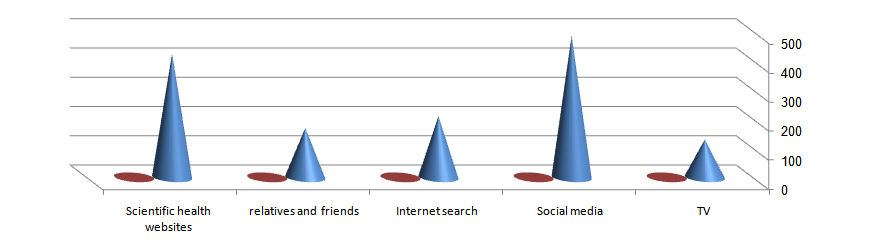
The mean age of studied students was 21.6±1.7. The vast majority of the participants were females (62.7%), most were living in urban areas (94.4%), 59.7% were students at health colleges and 29.8% were at the 4th grade (results not shown). The most common source of information about COVID-19 among studied group was social media (90.6%), followed by scientific health websites as WHO (79.4%), then internet search (39.1%) (Figure 1).
3.2. Knowledge of COVID-19The mean knowledge score of the students was 17.25±2.29 indicating a good overall knowledge among studied participants. The vast number of students had sufficient knowledge about COVID-19 (81.3%). All knew that COVID-19 is transmitted by droplets however, 75.7% knew that contact with contaminated surfaces is another mode of transmission. Studied participants correctly identified COVID-12 as a viral disease (93.4%), its incubation period is 1-14 days (80.3%) and it has no vaccine (85%). Surprising, all knew the manifestations of the disease (100%). 81.3% saved the correct hotline for Ministry Of Health to report infection (Service Center) (Table 1).
3.3. Attitude toward COVID-19More than two-thirds of the studied group had positive attitude toward COVID-19 (68.2%). The majority believed being afraid due to spread of the disease from one person to another but he/she is rational and can protect him/herself (96.3%), a person with no symptoms is able to infect others (74.7%), hoping that the pandemic will stop to return back to the University with the start of the new academic year (82.2%) and he/she can become infected if dealing with an infected person even if the immunity is good (93.4%) (Table 2).
3.4. Practice Related to COVID-19A Proactive practicing protective measures was highly prevalent among studied students (87.8%). They reported proactive practice regarding regular hand washing or use of alcohol hand rubs during the day (75.7%), practicing social distancing outside home (89.7%), using a tissue when sneezing or coughing and throw it in the garbage bin (81.3%), committing to wearing masks and gloves outside home (87.8%) and if having fever or dry cough, will rationally analyze the situation, either stay home and note, call the Ministry of Health hotline or go to hospital for treatment (96.3%) (Table 3).

Among the whole group, it was clear that mean value of total knowledge, attitude and practice scores was higher among older participants, reaching a significant level for attitude and practice (P<0.05). Female students showed significant lower knowledge score than males (P<0.05). Students at health colleges had significant higher knowledge, attitude and practice scores than their classmates in non-health colleges (P<0.001). Higher knowledge, attitude and practice scores were appeared between students at the last academic grades than freshmen colleagues however, significance appeared only for attitude (P<0.001) (Table 4).
3.6 Factors Associated with KAP toward COVID-19 among University StudentsOn performing multivariate regression analysis, a significant independent association appeared between bad knowledge and non-health college students (aOR 2.7, 95% CI 1.82-4.75, P<0.001); negative attitude and each of younger aged students (aOR 0.19, 95% CI 0.06-0.24, P<0.001), students at non-health college (aOR 2.57, 95% CI 1.23-2.79, P=0.003) and lower academic grade (aOR 0.46, 95% CI 1.08-4.55, P=0.03) and between bad practice and each of younger aged students (aOR 0.38, 95% CI 0.05-0.43, P=0.001), females (aOR 2.15, 95% CI 1.01-3.55, P=0.04) and lower academic grade (aOR 0.79, 95% CI 1.34-11.46, P=0.01) (Table 5).
There was a significant positive correlation between knowledge and both attitude and practice (P<0.001 and 0.03; respectively). Moreover, attitude is positively significantly correlated with practice (P=0.03) (Table 6).
An effective measure to prevent and control public health emergency is public health education which aimed to prepare the public against such situation. Spreading adequate knowledge, eliminating panic and encouraging positive attitude and complying people with aligned and proactive practice may enhance people’s KAP.
All these KAP principles are critical to ensure effective control and prevention of any Emergency 21. According to our search, this is the first study in this field among Qassim University students since COVID-19 outbreak. This study sought to determine KAP of Qassim University students in health and non-health colleges about COVID-19 pandemic.
Knowledge is considered as a prerequisite for establishing prevention faiths, forming positive attitudes, and promoting safe behaviors 22. This study revealed that at least 8 of each 10 students had good knowledge about COVID-19. Of interest, all students reported droplet infection as a mode of transmission and correctly knew its symptoms as fever, difficult breathing, headache, dry cough, body ache and diarrhea (100% for both). More than four-fifths had knowledge about the unavailability of a vaccine. This finding might reflect the adequate relationship between students' deep understanding and the available information about COVID-19 in different media. This finding is supported by previous studied 23, 24. In this study, more than 80% of the undergraduate students were oriented about the incubation period of the disease and high risk groups. Fortunately, 81.3% correctly saved the hotline for Ministry Of Health to report infection (Service Center) in contrast to only 60.7% between Indian medical students 25. All these results might be a luminous finding based on various factors like the disease seriousness circulated by various media and health authorities especially after reporting by World Health Organization (WHO) as a pandemic 7 as well as the effectiveness of different health education campaigns conducted within the Kingdom. This level of knowledge is in agreement with the reported level among university students in China (82.34%) 21, medical students in India (92.7%) 25, college students in university of Bisha, Saudi Arabia (80%) 26, medical students in Uganda (91%) 27 and Iranian medical students (79.6%) 28 but better than that reported among Indian health care professionals, students and nonmedical health staff (71%) 29 and Bangladesh students (10.5%) 30.
In this study, male students as well as students from health colleges had significantly higher knowledge score than their counterparts, although on performing multivariate regression analysis the significance was still toward students at health colleges only. This can be explained as students at health colleges were trained in clinical and preventive medicine; and public health. Additionally, their sense of duty and responsibility as a candidate health professional may also drive them to search for knowledge, present more positive attitude and safe practice during this public health emergency 21. Moreover, students at health colleges are commonly referred to for healthcare advice from friends and family, and have established better knowledge than students of other branches in relation to healthcare issue 31, 32, which expected in advance in higher-grads medical students 33. This finding is in congruence with Yaling 21 who reported a significantly higher score for COVID-19 related knowledge gained by medical students than non-medical ones. Moreover, age and education have been documented to be predictors and strongly relevant to knowledge 34.
In this study, reliance on social media sites was noted as the most frequent source of knowledge about COVID-19. This is in accordance with Khasawneh et al. 35 and Alzoubi et al. 36 in Jourdan, Olum et al. 27 in Uganda, White et al. 26 in KSA and Salman et al. 37 in Pakistan. Excitingly, seeking information about COVID-19 by utilizing scientific health websites and engines as WHO and Saudi MOH websites was excellent among our participants (79.4%). Although social media is convenient and preferable widespread used especially among youth, may have a lot of misleading or even false content and is not the scientific portal to provide medical knowledge to students. However, messages on particular to preventive health measures to the public can be leveraged by social media as it is widely conveyed.
In our study, 68.2% of studied group had positive attitude toward COVID-19. Comparing, positive attitude among university students was 81% in KSA 26, 74% in Uganda 27, 73.8% in China 21 and 65.4% in Pakistan 37. The vast majority of the studied participants believed being afraid due to spread of the disease from one person to another but he/she is rational and can protect him/herself (96.3%) and hoping that the pandemic will stop to return back to the University with the start of the new academic year (82.2%). About half of the participants thought that the pandemic didn't affect his/her studying during the second semester of the last academic year (54.1%). These results were much better than reported among Chinese university students 21 (93% and 77% and 34.9%; respectively). Our study revealed that older age (≥22 years), urban residence, being in a health college and being in the last academic grades were significant predictors of attitude on bivariate analysis, and keeping their significance in the multivariate analysis. This could be attributed to nearly 60% of the studied students were from health colleges and more than 40% were at 4th-5th academic grade. It was obvious that students at higher grades in health colleges had more knowledge compared to freshmen counterparts; experienced ward rotations at a good position and had better understanding of disease aspects which may affect their attitude positively. This finding is in line with Olum et al. 27 who found that academic program significantly affected attitude as their MBChB degree medical students had the most positive attitude. Moreover, White et al. 26 reported significant association between age and knowledge score.
Concerning practices, most of studied undergraduate university students had proactive practice toward COVID-19 preventive measures (87.8%). As precautionary measures such as practicing social distancing outside home (89.7%), using a tissue when sneezing or coughing and throw it in the garbage bin (81.3%), committing to wearing masks and gloves outside home (87.8%) and if having fever or dry cough, will rationally analyze the situation, either stay home and note, call the Ministry of Health hotline or go to hospital for treatment (96.3%) were adopted by participants, nevertheless, avoiding hand shaking was considered by only 64.4%. In contrary to this result, among Saudi general population 34, 88% had been avoided shaking hands. This could be due to cultural experience habit when youth meet each other and also, due to the characteristics of the sample among Saudi general population 34, as 84% had a university degree or above, and 70% were over 30 years old. Although hand washing or use of alcohol hand rubs during the day is vital practice to prevent transfer of COVID-19 from patient to another, unfortunately, we still have one-fourth of the studied students not regularly practicing it. This finding is in agreement with Modi et al. 29 where only 52.5% of the responders were aware of the preferred hand hygiene methods. These potentially risky behaviors reflected the need to more continuous and encouraged health education programs to emphasize regular hand washing or use of alcohol hand rubs and avoidance of hand shaking; which is essential.
A wide range of proactive preventing practice for COVID-19 was observed in other studies, it was 94.2% among Iranian medical students 28, 82% among Saudi university students 26, 57% among Ugandan counterparts 27 and 36.5% among Pakistani university students and employees 37. About 40% of University students in Bangladesh 30 were not using surgical face masks in public places and 32% were not interested in staying home and avoiding crowds. On the other hand, among Chinese residents, nearly all people avoided going to public places to prevent COVID-19 transmission and used face masks (98%) 38.
On bivariate analysis, older students (≥22 years), rural residence and students from health colleges significantly affected practice of the studied students on COVID-19 prevention. After adjusting the effects of independent variables on practice, older students (≥22 years), students at 4th-5th academic grade and male students were significantly more likely to have a proactive practice. This is in line with Olum et al. 27 who found that older students significantly had better practices compared to younger ones. Among KSA general population 34, older adults are likely to have better knowledge and practices, than younger people. Between Syrian general population, poor preventive practices are significantly common among younger participants 39. Furthermore, Chinese students in higher graders had significantly higher practice score than freshmen 21. Additionally, between Iranian medical students, interns’ greater experience and higher self-confidence in caring for patients have led them significantly to perceive lower risk and experience less stress and anxiety than stagers 28. Unexpected, male students in this study showed proactive preventive practices than females which is in contrary with findings of many recent studies 21, 25, 30, 38, 39, 40. The regulations enforced by the government for preventive health practices to limit the spread of the disease, which may put a person under penalty of punishment when violating, could be behind more commitment of male students by virtue of their presence outside home and being more involved in daily life activities than females based on the cultural life in the Kingdom.
We noticed a significant concordant correlation between knowledge, attitude and practice and between attitude and practice in this study. These findings clearly pointed to the importance of improving students’ COVID-19 knowledge via health education campaigns, which intern may result in enhancement of their attitude and practice towards COVID-19. In addition, these findings further suggest that providing health education intervention targeting certain demographic groups would be more effective. These results are in accordance with Yaling et al. 21, Taghrir et al. 28 White et al. 26 and Zhong et al. 38
This study had some notable limitations. Cross-sectional study design nature made causality interpretation between variables unable therefore, interpretation of the regression results might be of relevance. Using a convenient sampling method, compared to random sampling, might be subjected to selection bias and thus decreased the internal validity. Depending on an online self-reported questionnaire which to some extent, affected by the student's honesty and recall ability; could be enforced to recall bias. Studied subjects were enrolled from Qassim University, though not reflecting the whole picture of Saudi university students at large. Due to being in the summer vacation, ethical approval from Qassim University research committee can't be obtained. Despite these limitations, we hope that the results of this study may provide insights and evidence to the education authorities in Qassim University regarding dealing with the upcoming academic year and preventative measures as a whole.
Most Saudi university students, in particular males, those at health colleges and those with higher academic grade, were knowledgeable about COVID-19, possessed positive attitudes, and have proactive practices towards COVID-19 precautionary measures suggesting the efficacy of intensive awareness campaign taken by the Saudi MOH during the crisis. However, female students, younger aged students at the primary-grades and students from non-health colleges should be taken into consideration when formulating tailored public health interventions by health and education authorities emphasizing their preventative measures against COVID-19 specially practicing regular hand washing and avoidance of hand shaking.
No funding or financial support.
No conflict of interest was reported.
AMA wrote the manuscript and conducted data analysis and management. MAA designed the survey tools and developed data collection. Both authors contributed to the article and approved the submitted version.
We would like to thank all students from Qassim University who participated in the survey.
| [1] | Lu, R., Zhao, X., Li, J., Niu, P., Yang, B., Wu, H., Wang, W., Song, H., Huang, B., Zhu, N., Bi, Y., Ma, X., Zhan, F., Wang, L., Hu, T., Zhou, H., Hu, Z., Zhou, W., Zhao, L., Chen, J., Meng, Y., Wang, J., Lin, Y., Yuan, J., Xie, Z., Ma, J., Liu, W. J., Wang, D., Xu, W., Holmes, E. C., Gao, G. F., Wu, G., Chen, W., Shi, W., Tan, W., “Genomic characterisation epidemiology of 2019 novel coronavirus: implications for virus origins and receptor binding”. Lancet, 395. 565-574. Jan 2020. | ||
| In article | View Article | ||
| [2] | Riou, J., Althaus, C. L., “Pattern of early human-to-human transmission of Wuhan 2019 novel coronavirus (2019-nCoV), December 2019 to January 2020”. Euro Surveill, 25 (4). 2000058. Jan 2020. | ||
| In article | View Article PubMed | ||
| [3] | World Health Organization (WHO). Naming the coronavirus disease Available online: https://www.who.int/emergencies/diseases/novel-coronavirus- 2019/technical guidance/naming-the-coronavirusdisease-(covid- 2019)-and-the-virus-that-causes-it (accessed on 27 March, 2020). | ||
| In article | |||
| [4] | Schoeman, D., Fielding, B. C., “Coronavirus envelope protein: Current knowledge”. Virol J, 16 (1). 69. May 2019. | ||
| In article | View Article PubMed | ||
| [5] | World Health Organization (WHO). Coronavirus disease 2019 (COVID-19): World Health Organization 2020. [Online]. Available from: https://www.who.int/emergencies. | ||
| In article | |||
| [6] | Center of Disease Control (CDC). Coronavirus disease 2019 (COVID-19). 2020. [Online]. Available from: https://www.cdc.gov/coronavirus/2019-ncov/about/transmission. html [Accessed on 1st March 2020]. | ||
| In article | |||
| [7] | WHO. WHO Director-General’s opening remarks at the mission briefing on COVID-19. 2020. [Online]. Available from: https://www.who.int/dg/speeches/detail/who-director-general-s- opening-remarks-at-the-mission-briefing-on-covid-19, 11-march-2020, Accessed 23March, 2020. | ||
| In article | |||
| [8] | World Health Organization (WHO). Corona Virus. https://www.who.int/health391topics/coronavirus#tab=tab_1 (accessed on 27 March, 2020). | ||
| In article | |||
| [9] | Madani, T. A., “Preventive strategies to keep Saudi Arabia SARS-free”. Am J Infect Control, 32. 120. 2004. | ||
| In article | View Article PubMed | ||
| [10] | Almutairi, K. M., Al Helih, E. M., Moussa, M., Boshaiqah, A. E., Saleh Alajilan, A., Vinluan, J. M., Almutairi, A., “Awareness, attitudes, and practices related to coronavirus pandemic among public in Saudi Arabia”. Family Commun Health, 38 (4). 332-40. Oct 2015. | ||
| In article | View Article PubMed | ||
| [11] | Al Shehri, A. M., “A lesson learned from Middle East respiratory syndrome (MERS) in Saudi Arabia”. Med Teach, 37. S88–93. Apr 2015. | ||
| In article | View Article PubMed | ||
| [12] | Nooh, H. Z., Alshammary, R. H., Alenezy, J. M., Alrowaili, N. H., Alsharari, A. J., Alenzi, N. M., Sabaa, H. E., “Public awareness of coronavirus in Al-Jouf region, Saudi Arabia”. J Public Health, 13. 1–8. Feb 2020. | ||
| In article | View Article PubMed | ||
| [13] | Elbur, A., Alharthi, A., Aljuaid, A., Hasan, N., “Knowledge of middle east respiratory syndrome coronavirus (MERS-CoV) and its management: a survey among Saudi People in Taif; Kingdom of Saudi Arabia”. IOSR J Pharmacy. 6. 33-9. Sep 2016. | ||
| In article | View Article | ||
| [14] | Arab-News. Saudi Arabia Announces First Case of Coronavirus. Arab News (2020). https://www.arabnews.com/node/1635781/saudi-arabia. | ||
| In article | |||
| [15] | Arab-News. Saudi Arabia enters final phase in return to ‘new normal’ (2020). https://www.arabnews.com/node/1692821/saudi-arabia. | ||
| In article | |||
| [16] | Chirwa, G. C., “Who knows more, and why?” Explaining socioeconomic related inequality in knowledge about HIV in Malawi”. Sci African, 7. e00213. Mar 2020. | ||
| In article | View Article | ||
| [17] | Chirwa, G. C., “Socio-economic Inequality in Comprehensive Knowledge about HIV in Malawi”. Malawi Med J, 31. 104-11. Jun 2019. | ||
| In article | View Article PubMed | ||
| [18] | Qassim University. University History. Archived on March 28th 2018. https://www.qu.edu.sa/content/p/5/. | ||
| In article | |||
| [19] | Taber, K. S., “The use of Cronbach’s alpha when developing and reporting research instruments in science education”. Res Sci Educ, 48 (6). 1273-96. 2018. | ||
| In article | View Article | ||
| [20] | Dean, A. G., Arner, T. G., Sunki, G. G., Friedman, R., Lantinga, M., Sangam, S., Zubieta, J. C., Sullivan, K. M., Brendel, K. A., Gao, Z., Fontaine, N., Shu, M., Fuller, G., Smith, D. C., Nitschke, D. A., and Fagan, R. F., “Epi Info™, a database and statistics program for public health professionals”. CDC, Atlanta, GA, USA, 2011. | ||
| In article | |||
| [21] | Peng, Y., Pei, C., Zheng, Y., Wang, J., Zhang, K., Zheng, Z., Zhu, P., “Knowledge, Attitude and Practice Associated with COVID-19 among University Students: a Cross-Sectional Survey in China”. Research square preprint. Apr 2020. | ||
| In article | View Article | ||
| [22] | McEachan, R., Taylor, N., Harrison, R., Lawton, R., Gardner, P., Conner M., “Meta-Analysis of the Reasoned Action Approach (RAA) to Understanding Health Behaviors”. Ann Behav Med, 50(4). 592-612. Aug 2016. | ||
| In article | View Article PubMed | ||
| [23] | Huang, C., Wang, Y., Li, X., Ren, L., Zhao, J., Hu, Y., Zhang, L., Fan, G., Xu, J, Gu, X., Cheng, Z., Yu, T., Xia, J., Wei, Y., Wu, W., Xie, X., Yin, W., Li, H., Liu, M., Xiao, Y., Gao, H., Guo, L., Xie, J., Wang, G., Jiang, R., Gao, Z., Jin, Q., Wang, J., Cao, B., “Clinical features of patients infected with 2019 novel coronavirus in Wuhan. China”. Lancet, 395(10223). 497-506. Jan 2020. | ||
| In article | View Article | ||
| [24] | Dhama, K., Sharun, K., Tiwari, R., Dadar, M., Malik, Y. S., Singh, K. P., Chaicumpa, W., “COVID-19, an emerging coronavirus infection: advances and prospects in designing and developing vaccines, immunotherapeutics, and therapeutics”. Hum Vaccin Immunother, 1-7. Feb 2020. | ||
| In article | View Article PubMed | ||
| [25] | Maheshwari, S., Gupta, P. K., Sinha, R., Rawat P., “Knowledge, attitude, and practice towards coronavirus disease 2019 (COVID-19) among medical students: A cross-sectional study”. J Acute Dis, 9 (3). 100-104. Apr 2020. | ||
| In article | View Article | ||
| [26] | White, S., Omer, M., Mohamma, G. N., “Knowledge, Attitude and Practice on Prevention of Airborne and Droplet Infections During the Outbreak of Corona Virus among the College Students in University of Bisha, Saudi Arabia”. IJCRR, 11 (04), 20773-20776. Apr 2020. | ||
| In article | |||
| [27] | Olum, R., Kajjimu, J., Kanyike, A. M., Chekwech, G., Wekha, G., Nassozi, D. R., Kemigisa, J., Mulyamboga, P., Muhoozi, O. K., Lauryn Nsenga, L., Lyavala, M., Asaph Asiimwe, A., Felix Bongomin, F., “Perspective of Medical Students on the COVID-19 Pandemic: Survey of Nine Medical Schools in Uganda”. JMIR Public Health Surveill, 6 (2). e19847. May 2020. | ||
| In article | View Article PubMed | ||
| [28] | Taghrir, M. H., Borazjani, R., Shiraly, R., “COVID-19 and Iranian medical students; a survey on their related-knowledge, preventive behaviors and risk perception”. Arch Iran Med, 23 (4). 249-254. Apr 2020. | ||
| In article | View Article PubMed | ||
| [29] | Modi, P., Nair, G., Uppe, A., Modi, J., Tuppekar,. B, Gharpure, A., Langade, D., “COVID-19 awareness among healthcare students and professionals in Mumbai Metropolitan Region: a questionnaire-based survey”. Cureus, 12 (4). e7514. Apr 2020. | ||
| In article | View Article | ||
| [30] | Wadood, M. A., Mamun, A., Rafi, M. A., Islam, M., Mohd, S., Lee, L. L., Hossain. G., “Knowledge, attitude, practice and perception regarding COVID-19 among students in Bangladesh: survey in Rajshahi University”. Preprint from medRxiv, Apr 2020. | ||
| In article | View Article | ||
| [31] | Jairoun, A., Hassan, N., Ali, A., Jairoun, O., Shahwan, M., “Knowledge, attitude and practice of antibiotic use among university students: a cross sectional study in UAE”. BMC Public Health, 19. 1-8. May 2019. | ||
| In article | View Article PubMed | ||
| [32] | Plaster, A. N., Painter, J. E., Tjersland, D. H., Jacobsen, K. H., “University students’ knowledge, attitudes, and sources of information about zika virus”. J Community Health, 43: 647-55. Jan 2018. | ||
| In article | View Article PubMed | ||
| [33] | Hymowitz, M. B., Hayes, B. B., Maury, J. J., Geller, A. C., “Evaluation of medical students’ knowledge, attitudes, and personal practices of sun protection and skin self-examination”. Arch Dermatol, 142. 523-4. Apr 2006. | ||
| In article | View Article PubMed | ||
| [34] | Al-Hanawi, M. K., Angawi, K., Alshareef, N., Qattan, A. M. N., Helmy, H. Z., Abudawood, Y., Alqurashi, M., Kattan, W. M., Kadasah, N. A., Chijere G., Chirwa, G. C., Alsharqi, O., “Knowledge, Attitude and Practice Toward COVID-19 Among the Public in the Kingdom of Saudi Arabia: A Cross-Sectional Study”. Front. Public Health, 8. 217. May 2020. | ||
| In article | View Article PubMed | ||
| [35] | Khasawneh, A. I., Humeidan, A. A., Alsulaiman, J. W., Bloukh, S., Ramadan, M., Al-Shatanawi, T. N., Awad, H. H., Hijazi, W. Y., Al-Kammash, K. .R, Obeidat, N., Saleh, T, and Kheirallah, K. A., “Medical Students and COVID-19: Knowledge, Attitudes, and Precautionary Measures. A Descriptive Study From Jordan”. Front. Public Health, 8: 253. May 2020. | ||
| In article | View Article PubMed | ||
| [36] | Alzoubi, H., Alnawaiseh, N., Al-Mnayyis, A., Abu- Lubada, M., Aqel, A., Al-Shagahin, H., “COVID-19 Knowledge, Attitude and Practice among Medical and Non-Medical University Students in Jordan”. J. Pure Appl Microbiol, 14(1). 17-24. Mar 2020. Print ISSN: 0973-7510; E-ISSN: 2581-690X. | ||
| In article | View Article | ||
| [37] | Salman, M., Mustafa, Z. .U, Asif, N., Zaidi, H. .A, Hussain, K., Shehzadi, N., Khan, T. M., Saleem, Z., “Knowledge, attitude and preventive practices related to COVID-19: a cross-sectional study in two Pakistani university populations”. Drugs Ther Perspect, 1-7. May 2020. | ||
| In article | View Article PubMed | ||
| [38] | Zhong, B-L., Luo, W., Li, H-M., Zhang, Q-Q., Liu, X-G., Li, W-T., Li, Y., “Knowledge, attitudes, and practices towards COVID-19 among Chinese residents during the rapid rise period of the COVID-19 outbreak: a quick online cross-sectional survey”. Int. J. Biol. Sci, 16(10). 1745-1752. Mar 2020. | ||
| In article | View Article PubMed | ||
| [39] | Al Ahdab, S., “Knowledge, Attitudes and Practices (KAP) towards pandemic COVID-19 among Syrians”. Research square preprint, Jul 2020. | ||
| In article | View Article | ||
| [40] | Shi, Y., Wang, J., Yang, Y., Wang, Z., Wang, G., Hashimoto, K., et al. “Knowledge and attitudes of medical staff in Chinese psychiatric hospitals regarding COVID-19”. Brain Behavior Immun Health, 4. 100064. Apr 2020. | ||
| In article | View Article PubMed | ||
Published with license by Science and Education Publishing, Copyright © 2020 Manal A Al-Batanony and Ali E Mansour
 This work is licensed under a Creative Commons Attribution 4.0 International License. To view a copy of this license, visit
http://creativecommons.org/licenses/by/4.0/
This work is licensed under a Creative Commons Attribution 4.0 International License. To view a copy of this license, visit
http://creativecommons.org/licenses/by/4.0/
| [1] | Lu, R., Zhao, X., Li, J., Niu, P., Yang, B., Wu, H., Wang, W., Song, H., Huang, B., Zhu, N., Bi, Y., Ma, X., Zhan, F., Wang, L., Hu, T., Zhou, H., Hu, Z., Zhou, W., Zhao, L., Chen, J., Meng, Y., Wang, J., Lin, Y., Yuan, J., Xie, Z., Ma, J., Liu, W. J., Wang, D., Xu, W., Holmes, E. C., Gao, G. F., Wu, G., Chen, W., Shi, W., Tan, W., “Genomic characterisation epidemiology of 2019 novel coronavirus: implications for virus origins and receptor binding”. Lancet, 395. 565-574. Jan 2020. | ||
| In article | View Article | ||
| [2] | Riou, J., Althaus, C. L., “Pattern of early human-to-human transmission of Wuhan 2019 novel coronavirus (2019-nCoV), December 2019 to January 2020”. Euro Surveill, 25 (4). 2000058. Jan 2020. | ||
| In article | View Article PubMed | ||
| [3] | World Health Organization (WHO). Naming the coronavirus disease Available online: https://www.who.int/emergencies/diseases/novel-coronavirus- 2019/technical guidance/naming-the-coronavirusdisease-(covid- 2019)-and-the-virus-that-causes-it (accessed on 27 March, 2020). | ||
| In article | |||
| [4] | Schoeman, D., Fielding, B. C., “Coronavirus envelope protein: Current knowledge”. Virol J, 16 (1). 69. May 2019. | ||
| In article | View Article PubMed | ||
| [5] | World Health Organization (WHO). Coronavirus disease 2019 (COVID-19): World Health Organization 2020. [Online]. Available from: https://www.who.int/emergencies. | ||
| In article | |||
| [6] | Center of Disease Control (CDC). Coronavirus disease 2019 (COVID-19). 2020. [Online]. Available from: https://www.cdc.gov/coronavirus/2019-ncov/about/transmission. html [Accessed on 1st March 2020]. | ||
| In article | |||
| [7] | WHO. WHO Director-General’s opening remarks at the mission briefing on COVID-19. 2020. [Online]. Available from: https://www.who.int/dg/speeches/detail/who-director-general-s- opening-remarks-at-the-mission-briefing-on-covid-19, 11-march-2020, Accessed 23March, 2020. | ||
| In article | |||
| [8] | World Health Organization (WHO). Corona Virus. https://www.who.int/health391topics/coronavirus#tab=tab_1 (accessed on 27 March, 2020). | ||
| In article | |||
| [9] | Madani, T. A., “Preventive strategies to keep Saudi Arabia SARS-free”. Am J Infect Control, 32. 120. 2004. | ||
| In article | View Article PubMed | ||
| [10] | Almutairi, K. M., Al Helih, E. M., Moussa, M., Boshaiqah, A. E., Saleh Alajilan, A., Vinluan, J. M., Almutairi, A., “Awareness, attitudes, and practices related to coronavirus pandemic among public in Saudi Arabia”. Family Commun Health, 38 (4). 332-40. Oct 2015. | ||
| In article | View Article PubMed | ||
| [11] | Al Shehri, A. M., “A lesson learned from Middle East respiratory syndrome (MERS) in Saudi Arabia”. Med Teach, 37. S88–93. Apr 2015. | ||
| In article | View Article PubMed | ||
| [12] | Nooh, H. Z., Alshammary, R. H., Alenezy, J. M., Alrowaili, N. H., Alsharari, A. J., Alenzi, N. M., Sabaa, H. E., “Public awareness of coronavirus in Al-Jouf region, Saudi Arabia”. J Public Health, 13. 1–8. Feb 2020. | ||
| In article | View Article PubMed | ||
| [13] | Elbur, A., Alharthi, A., Aljuaid, A., Hasan, N., “Knowledge of middle east respiratory syndrome coronavirus (MERS-CoV) and its management: a survey among Saudi People in Taif; Kingdom of Saudi Arabia”. IOSR J Pharmacy. 6. 33-9. Sep 2016. | ||
| In article | View Article | ||
| [14] | Arab-News. Saudi Arabia Announces First Case of Coronavirus. Arab News (2020). https://www.arabnews.com/node/1635781/saudi-arabia. | ||
| In article | |||
| [15] | Arab-News. Saudi Arabia enters final phase in return to ‘new normal’ (2020). https://www.arabnews.com/node/1692821/saudi-arabia. | ||
| In article | |||
| [16] | Chirwa, G. C., “Who knows more, and why?” Explaining socioeconomic related inequality in knowledge about HIV in Malawi”. Sci African, 7. e00213. Mar 2020. | ||
| In article | View Article | ||
| [17] | Chirwa, G. C., “Socio-economic Inequality in Comprehensive Knowledge about HIV in Malawi”. Malawi Med J, 31. 104-11. Jun 2019. | ||
| In article | View Article PubMed | ||
| [18] | Qassim University. University History. Archived on March 28th 2018. https://www.qu.edu.sa/content/p/5/. | ||
| In article | |||
| [19] | Taber, K. S., “The use of Cronbach’s alpha when developing and reporting research instruments in science education”. Res Sci Educ, 48 (6). 1273-96. 2018. | ||
| In article | View Article | ||
| [20] | Dean, A. G., Arner, T. G., Sunki, G. G., Friedman, R., Lantinga, M., Sangam, S., Zubieta, J. C., Sullivan, K. M., Brendel, K. A., Gao, Z., Fontaine, N., Shu, M., Fuller, G., Smith, D. C., Nitschke, D. A., and Fagan, R. F., “Epi Info™, a database and statistics program for public health professionals”. CDC, Atlanta, GA, USA, 2011. | ||
| In article | |||
| [21] | Peng, Y., Pei, C., Zheng, Y., Wang, J., Zhang, K., Zheng, Z., Zhu, P., “Knowledge, Attitude and Practice Associated with COVID-19 among University Students: a Cross-Sectional Survey in China”. Research square preprint. Apr 2020. | ||
| In article | View Article | ||
| [22] | McEachan, R., Taylor, N., Harrison, R., Lawton, R., Gardner, P., Conner M., “Meta-Analysis of the Reasoned Action Approach (RAA) to Understanding Health Behaviors”. Ann Behav Med, 50(4). 592-612. Aug 2016. | ||
| In article | View Article PubMed | ||
| [23] | Huang, C., Wang, Y., Li, X., Ren, L., Zhao, J., Hu, Y., Zhang, L., Fan, G., Xu, J, Gu, X., Cheng, Z., Yu, T., Xia, J., Wei, Y., Wu, W., Xie, X., Yin, W., Li, H., Liu, M., Xiao, Y., Gao, H., Guo, L., Xie, J., Wang, G., Jiang, R., Gao, Z., Jin, Q., Wang, J., Cao, B., “Clinical features of patients infected with 2019 novel coronavirus in Wuhan. China”. Lancet, 395(10223). 497-506. Jan 2020. | ||
| In article | View Article | ||
| [24] | Dhama, K., Sharun, K., Tiwari, R., Dadar, M., Malik, Y. S., Singh, K. P., Chaicumpa, W., “COVID-19, an emerging coronavirus infection: advances and prospects in designing and developing vaccines, immunotherapeutics, and therapeutics”. Hum Vaccin Immunother, 1-7. Feb 2020. | ||
| In article | View Article PubMed | ||
| [25] | Maheshwari, S., Gupta, P. K., Sinha, R., Rawat P., “Knowledge, attitude, and practice towards coronavirus disease 2019 (COVID-19) among medical students: A cross-sectional study”. J Acute Dis, 9 (3). 100-104. Apr 2020. | ||
| In article | View Article | ||
| [26] | White, S., Omer, M., Mohamma, G. N., “Knowledge, Attitude and Practice on Prevention of Airborne and Droplet Infections During the Outbreak of Corona Virus among the College Students in University of Bisha, Saudi Arabia”. IJCRR, 11 (04), 20773-20776. Apr 2020. | ||
| In article | |||
| [27] | Olum, R., Kajjimu, J., Kanyike, A. M., Chekwech, G., Wekha, G., Nassozi, D. R., Kemigisa, J., Mulyamboga, P., Muhoozi, O. K., Lauryn Nsenga, L., Lyavala, M., Asaph Asiimwe, A., Felix Bongomin, F., “Perspective of Medical Students on the COVID-19 Pandemic: Survey of Nine Medical Schools in Uganda”. JMIR Public Health Surveill, 6 (2). e19847. May 2020. | ||
| In article | View Article PubMed | ||
| [28] | Taghrir, M. H., Borazjani, R., Shiraly, R., “COVID-19 and Iranian medical students; a survey on their related-knowledge, preventive behaviors and risk perception”. Arch Iran Med, 23 (4). 249-254. Apr 2020. | ||
| In article | View Article PubMed | ||
| [29] | Modi, P., Nair, G., Uppe, A., Modi, J., Tuppekar,. B, Gharpure, A., Langade, D., “COVID-19 awareness among healthcare students and professionals in Mumbai Metropolitan Region: a questionnaire-based survey”. Cureus, 12 (4). e7514. Apr 2020. | ||
| In article | View Article | ||
| [30] | Wadood, M. A., Mamun, A., Rafi, M. A., Islam, M., Mohd, S., Lee, L. L., Hossain. G., “Knowledge, attitude, practice and perception regarding COVID-19 among students in Bangladesh: survey in Rajshahi University”. Preprint from medRxiv, Apr 2020. | ||
| In article | View Article | ||
| [31] | Jairoun, A., Hassan, N., Ali, A., Jairoun, O., Shahwan, M., “Knowledge, attitude and practice of antibiotic use among university students: a cross sectional study in UAE”. BMC Public Health, 19. 1-8. May 2019. | ||
| In article | View Article PubMed | ||
| [32] | Plaster, A. N., Painter, J. E., Tjersland, D. H., Jacobsen, K. H., “University students’ knowledge, attitudes, and sources of information about zika virus”. J Community Health, 43: 647-55. Jan 2018. | ||
| In article | View Article PubMed | ||
| [33] | Hymowitz, M. B., Hayes, B. B., Maury, J. J., Geller, A. C., “Evaluation of medical students’ knowledge, attitudes, and personal practices of sun protection and skin self-examination”. Arch Dermatol, 142. 523-4. Apr 2006. | ||
| In article | View Article PubMed | ||
| [34] | Al-Hanawi, M. K., Angawi, K., Alshareef, N., Qattan, A. M. N., Helmy, H. Z., Abudawood, Y., Alqurashi, M., Kattan, W. M., Kadasah, N. A., Chijere G., Chirwa, G. C., Alsharqi, O., “Knowledge, Attitude and Practice Toward COVID-19 Among the Public in the Kingdom of Saudi Arabia: A Cross-Sectional Study”. Front. Public Health, 8. 217. May 2020. | ||
| In article | View Article PubMed | ||
| [35] | Khasawneh, A. I., Humeidan, A. A., Alsulaiman, J. W., Bloukh, S., Ramadan, M., Al-Shatanawi, T. N., Awad, H. H., Hijazi, W. Y., Al-Kammash, K. .R, Obeidat, N., Saleh, T, and Kheirallah, K. A., “Medical Students and COVID-19: Knowledge, Attitudes, and Precautionary Measures. A Descriptive Study From Jordan”. Front. Public Health, 8: 253. May 2020. | ||
| In article | View Article PubMed | ||
| [36] | Alzoubi, H., Alnawaiseh, N., Al-Mnayyis, A., Abu- Lubada, M., Aqel, A., Al-Shagahin, H., “COVID-19 Knowledge, Attitude and Practice among Medical and Non-Medical University Students in Jordan”. J. Pure Appl Microbiol, 14(1). 17-24. Mar 2020. Print ISSN: 0973-7510; E-ISSN: 2581-690X. | ||
| In article | View Article | ||
| [37] | Salman, M., Mustafa, Z. .U, Asif, N., Zaidi, H. .A, Hussain, K., Shehzadi, N., Khan, T. M., Saleem, Z., “Knowledge, attitude and preventive practices related to COVID-19: a cross-sectional study in two Pakistani university populations”. Drugs Ther Perspect, 1-7. May 2020. | ||
| In article | View Article PubMed | ||
| [38] | Zhong, B-L., Luo, W., Li, H-M., Zhang, Q-Q., Liu, X-G., Li, W-T., Li, Y., “Knowledge, attitudes, and practices towards COVID-19 among Chinese residents during the rapid rise period of the COVID-19 outbreak: a quick online cross-sectional survey”. Int. J. Biol. Sci, 16(10). 1745-1752. Mar 2020. | ||
| In article | View Article PubMed | ||
| [39] | Al Ahdab, S., “Knowledge, Attitudes and Practices (KAP) towards pandemic COVID-19 among Syrians”. Research square preprint, Jul 2020. | ||
| In article | View Article | ||
| [40] | Shi, Y., Wang, J., Yang, Y., Wang, Z., Wang, G., Hashimoto, K., et al. “Knowledge and attitudes of medical staff in Chinese psychiatric hospitals regarding COVID-19”. Brain Behavior Immun Health, 4. 100064. Apr 2020. | ||
| In article | View Article PubMed | ||