Background: Female genital mutilation/cutting has complicated social and cultural foundations that outweigh the requirements and ideas of individuals. FGM/C is seen as a normal part of female socialization in societies that practice it. The reasons for continuing FGM/C in these societies include religious obligations, beauty in the form of smooth and small genitalia, delighting future families and sexual partners, having social significance, and being accepted for marriage. Aim: the study was conducted to assess Upper Egyptian females' knowledge about FGM/C. Subject & Methods: A descriptive cross-sectional study was used. The study population consisted of 2837 females in family health centers (FHCs) in different sitting at Beni-Suef. Α Structured Interviewing Questionnaire sheet was used to collect data. Results: The mean age of the studied participants was 22.6±5, 77.2% knew that FGM/C has other names, 76.9% of females knew that FGM/C practice is illegal and 79.1% knew that the government makes an effort to reduce FGM/C practice. Most (87.3%) of participant females knew that FGM/C complications and health problems. Concerning immediate health consequences, 59.5% mentioned bleeding, 49.2% and 16.1% mentioned severe pain and psychological trauma, respectively. As regards, long-term health consequences, 48.8% and 51.9% of females mentioned psychiatric consequences and sexual consequences, respectively, while almost all did not know that labor problems are among the long-term consequences of FGM/C. Conclusion: Most females did not know that FGM/C has more than one type and almost all did not know that FGM/C has four types. Most of females knew that FGM/C practice is illegal and knew that the government makes an effort to reduce FGM/C practice. Most of participant females knew that FGM/C causes complications and health problems. Recommendations: Development of an educational programs and brochures for mothers about FGM is required to increase their awareness.
Female genital mutilation/cutting has complicated social and cultural foundations that outweigh the requirements and ideas of individuals. FGM/C is seen as a normal part of female socialization in societies that practice it. The reasons for continuing FGM/C in these societies include religious obligations, beauty in the form of smooth and small genitalia, delighting future families and sexual partners, having social significance, and being accepted for marriage [1-7].
Female genital mutilation/cutting is extensively done in societies where it is believed to promote marriageability. As a result, the practice of FGM/C will continue because parents believe it will provide a better future for their daughters, and some girls may even desire to be mutilated to find a husband. The hypothesis also suggests that in places where FGM/C is a part of the culture, no one will want to stop doing it because families are afraid of deviating from community norms [8-15].
The understanding of females, males, midwives, and health care practitioners regarding FGM/C was the subject of much of the research, which was largely conducted in African countries. They intended to look at their participants' basic knowledge and attitudes about FGM/C, as well as its determinants, to see whether any intervention strategies could assist abolish the practice [16-21]. Other research was conducted in the Eastern Mediterranean region, Europe, and the United States [22-27].
Several nations, including Sudan, Ethiopia, and Nigeria, have conducted studies on females' knowledge of FGM. FGM is viewed differently by girls and women in different countries. Mali, Sierra Leone, Guinea, and Somalia had the highest levels of support for FGM, with more than half of the female population believing the practice should continue 28, 29, 30, 31.
The present study was carried out to:
1. Assess females' Knowledge Related to the Spreading, Type, and Procedure of FGM
2. Assess females' Knowledge about Egyptian Law about FGM
3. Assess females' Knowledge Related to Complications of FGM
2.1. Research Questions1. What is females' Knowledge Related to the Spreading, Type, and Procedure of FGM
2. What is females' Knowledge about Egyptian Law about FGM
3. What is females' Knowledge Related to Complications of FGM
A Descriptive Cross-sectional study was used to achieve the aim of the current study.
3.2. Subjects & SettingThe study was conducted in family health centers (FHCs) in different sitting at Beni-Suef Governorate. Beni-Suef governorate is divided into seven sectors. From every sector the MCH was randomly selected to geographically represent the sector.
A Convenient sample was used.
The study population consisted of all females who were accepted to participate in the study at the time of data collection (A period of six months from the start of data collection) and will be included in the study.
3.3. Tools of Data CollectionA pre-designed structured questionnaire was used to collect data. Data were collected through personal interviews. The questionnaire is divided into six sections:
Section I: А Structured Interviewing Questionnaire sheet which includes the following parts: age, residence, level of education, marital status, occupation and experience with mutilation, etc……
Section II: Knowledge of females regarding FGM/C: Females' knowledge was assessed using both single-response and multiple-response questions.
a. Single response questions:
They included knowledge of females about the spread, types, and procedures of FGM/C, side effects, and health consequences of FGM/C and FGM/C in Egyptian law.
Scoring system
• It received (0) if the answers were wrong or don't know
• It received (1) if the answers were incomplete correct
• It received (2) if the answers were complete correct
b. Multiple response questions:
They included knowledge of females regarding the immediate and long-term health consequences of FGM/C. Participants were expected to select the right responses and not select the wrong responses.
Scoring system
• It received (0) if less than 25% of the answers were correct.
• It received (1) if ≥25 percent to less than 50% of the responses were correct.
• It received (2) if ≥50% of the answers were correct.
The scores are then turned into percentages, and the overall score is divided into the following categories:
• Good level of knowledge ≥75%.
• A fair level of knowledge is ≥50% to <75 %.
• Poor level of knowledge <50%.
3.4. Validity of the ToolContent validity will be done through five experts from Faculty Members of the Maternal Health Nursing department and obstetrics medicine Specialty to ascertain relevance and completeness.
3.5. Reliability of the ToolThe study tools were tested for their internal consistency by calculating Cronbach's Alpha, which was (0.405).
3.6. Ethical ConsiderationsThe proposal was approved by the Scientific Research Ethics Committee, faculty of nursing, Beni-Suef University. All ethical issues were taken into consideration during all phases of the study.
3.7. Administrative ConsiderationsThe researcher fulfilled the official steps required to get the approval for carrying out the study. Approval was taken from MCHs’ directors before taking up the research. Before starting data collection; ethical issues (anonymity, confidentiality, & voluntary participation) were considered. The aims of the study were explained to each participant to be familiar with her participation. It was the participants’ right to refuse participation.
3.8. Pilot StudyThe pilot study included about 10% of the study sample.
3.9. Field WorkData were gathered over six months beginning in November 2021 and ending in April 2022. The researcher was present at the previously mentioned location until the entire sample size was gathered. Before data collection, the researcher introduced herself to the women and explained the purpose of the study. The sample was taken three days a week; (Saturday, Tuesday and Thursday) from 9 A.m. to 2 P.m.
3.10. Statistical AnalysisAll data were collected, tabulated and statistically analyzed using IBM SPSS 25. Data was supplied, and appropriate analysis was performed for each parameter based on the type of data obtained.
• Count and percentage: Used for describing and summarizing categorical data
• Arithmetic mean (X-), Standard deviation (SD): Used for normally distributed quantitative data, these are used as measurements of central tendency and dispersion.
• Cronbach alpha and Spearman-Brown coefficients: The internal consistency of the generated tools was measured to assess their reliability.
• Data visualization was done with Colum chart.
Table 1 showed that the mean age of the studied participants was 22.6±5, most of them were rural residents (70.4%), 90.2% were highly educated, 57.5% were single. About two-thirds of the participants were a student (65.4%).
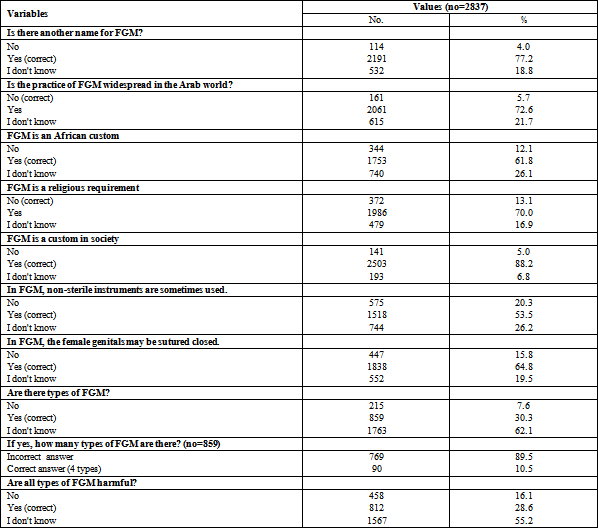
Table 2 presents the distribution of females aged 18-60 years according to their knowledge regarding the spread, types, and procedure of FGM/C. About 77.2% knew that FGM/C has other names, 5.7% knew that the practice of FGM/C is not common in Arab countries and only 61.8% of females knew that FGM/C is an African habit. About 70% of females had a misconception that FGM/C is required by religion and most of them (88.2%) knew that FGM/C is a social habit. Regarding the FGM/C procedure, 53.5% of females correctly stated that unsterilized equipment was sometimes used in FGM/C procedure, and 64.8% acknowledged that suturing of female genitalia could be done during the procedure. Most females (62.1%) did not know that FGM/C has more than one type and almost all (89.5) did not know that FGM/C has four types. About 55.2% did not know that all types of FGM/C are harmful.
The distribution of females according to their knowledge regarding FGM/C in Egyptian law is shown in Table 3. About 76.9% of females knew that FGM/C practice is illegal and 79.1% knew that the government makes an effort to reduce FGM/C practice. About 36.4% had a misconception that FGM/C is a medical practice and physicians are not allowed to perform it under any circumstance. The highest proportion of females (61.7%) did not know that there is a punishment for parents seeking FGM/C, and most of them (70.4%) did not know that prison is the type of punishment for parents in Egyptian law. About 54.9% did not know that there is a punishment for physicians performing FGM/C in Egyptian law and only 24.3% knew that prison is the type of punishment for physicians performing FGM/C in Egyptian law.
The distribution of females aged 18-60 years according to their knowledge regarding side effects and health consequences of FGM/C is shown in Table 4. Most (87.3%) of participant females knew that FGM/C causes complications and health problems. About 64% and 59.6% of females knew that FGM/C causes psychological problems and social problems, respectively, 71.3% knew that FGM/C might cause the girls' death

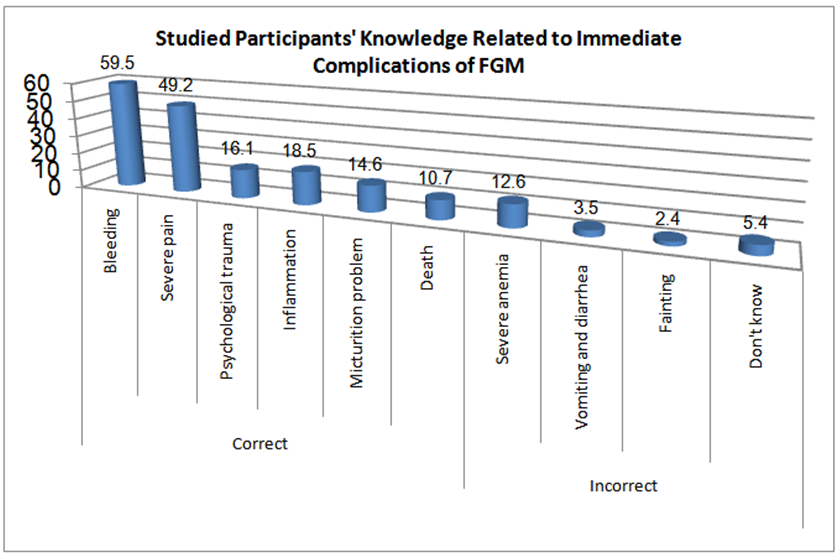
Figure 1 presents Studied Participants' Knowledge Related to Immediate Complications of FGM. Concerning immediate health consequences, 59.5% mentioned bleeding, 49.2% and 16.1% mentioned severe pain and psychological trauma, respectively. Only 10.7% mentioned death as an immediate health consequence of FGM/C.

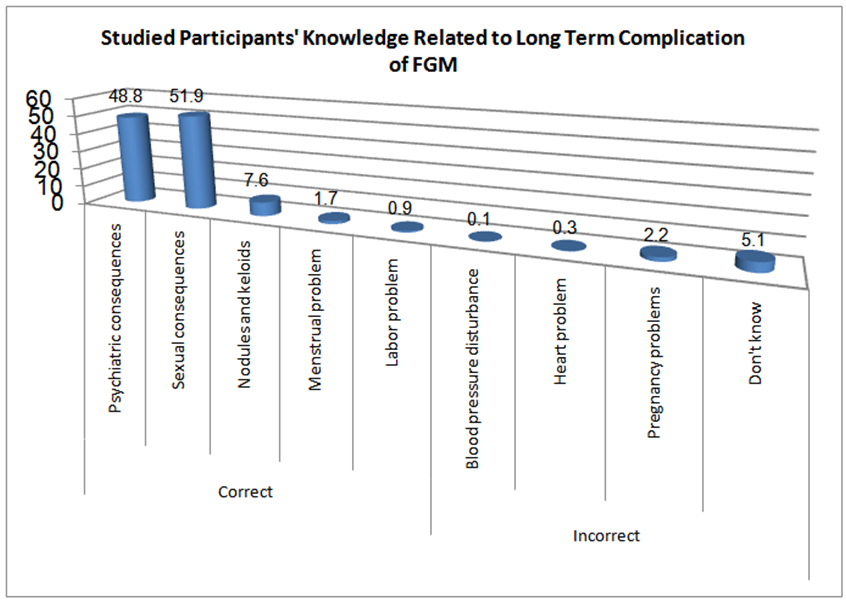
Figure 2 presents Studied Participants' Knowledge Related to Long Term Complication of FGM. As regards, long-term health consequences, 48.8% and 51.9% of females mentioned psychiatric consequences and sexual consequences, respectively, while almost all did not know that labor problems are among the long-term consequences of FGM/C.
According to research conducted in Egypt, even though women are aware of the risks associated with FGM, the number of women who favor the practice remains high 32. The percentage of those who support the continuation of FGM/C dropped from 62 % to 58 % in 2014 33.
Regarding studied females' Knowledge about FGM/C, the results of the current study illustrated that; all of the female participants in the current study stated that they had heard of FGM/C and were aware that it was practiced in Egypt. This outcome was similar to the result of the study conducted in Egypt 34, 35.
About more than three fourths of females knew that FGM/C practice is illegal. The highest proportion of females did not know that there is a punishment for parents seeking FGM/C; more than half did not know that there is a punishment for physicians performing FGM/C in Egyptian law. This was less than the Ethiopian results, where reported that most of participants knew that FGM/C was illegal and punished for both parents and the mutilator 35. On the other hand, this result was far better than those in the UAE, which reported that the minority of individuals indicated that FGM/C is illegal in their country 36.
Female genital mutilation/cutting has no benefits; on the contrary, it has several negative health consequences and alters the normal function of women's bodies 37. FGM has both physiological and psychological consequences, including short- and long-term effects 38. The approach used to perform the procedure may influence the severity of the short-term consequences 39. These repercussions may occur immediately or throughout the healing period (during the next eight weeks) as a result of the use of non-surgical, non- sterilized equipment such as razor blades, knives, or broken glass, as well as unsanitary surroundings 40.
Most participants in the current study were aware that FGM/C has health effects, which was consistent with research done among university students in Sohag 41. Participants in the current study had a higher general level of knowledge about the effects of FGM/C than those who took part in the previous study. Participants in both studies had good knowledge of the problems of FGM/c despite their different ages and educational backgrounds. The present finding, however, disagreed with that of a study conducted in Ethiopia, which revealed more than two third of participants were unaware that FGM/C had negative health effects 42.
Consequences of FGM/C include Excruciating pain and tissue damage, Hemorrhage, Swelling of the genital tissues, Infection, Delayed wound healing, Acute urine retention, and Hemorrhagic shock and death 43, 44, 45, 46, 47, 48.
Long-term health consequences of FGM/C include late (chronic) Genito-urinary outcomes attributed to FGM/C Scarring and keloid formation. Infection of the FGM/C wound can cause scarring and keloid formation. Later on, keloids can create a variety of issues during sexual activity, delivery, and surgical treatments, Menstrual problems, Chronic pelvic infections, Urinary tract infections, and infertility 44, 46, 49, 50.
Participants in the current study identified bleeding, sexual repercussions, severe pain, and inflammation as the short- and long-term health effects of FGM/C. Comparable findings were reported from Ethiopia 41, 51. Some participants revealed that FGM can lead to labor and menstrual problems. This finding disagrees with, Ethiopia's result which claimed that FGM might cause difficult labor and menstrual problems, respectively 35. In a meta-analysis of 44 main studies including 3 million participants that looked at the obstetric effects of FGM, it became clear that the practice was significantly linked to longer labor, obstetric lacerations, instrumental delivery, obstetric hemorrhage, and difficult delivery 48. Almost half of the females had a misconception that FGM/C does not affect a woman's sexual satisfaction, and more than tenth of the participant stated that the reason for continuing FGM was to decrease the sexual desire of females.
Most of participants were rural residents; most of them had acceptable knowledge regarding FGM/C (names, practice, and procedure). Most females did not know that FGM/C has more than one type and almost all did not know that FGM/C has four types. Most of females knew that FGM/C practice is illegal and knew that the government makes an effort to reduce FGM/C practice. Most of participant females knew that FGM/C causes complications and health problems.
Development of an educational programs and brochures for mothers about FGM is required to increase their awareness.
| [1] | Matanda, D., Okondo, C., Kabiru, C. W., & Shell-Duncan, B. Tracing change in female genital mutilation/cutting: Shifting norms and practices among communities in Narok and Kisii counties, Kenya, 2018: 1-57. | ||
| In article | View Article | ||
| [2] | Hassan H., Abd-ELhakam F., Ebrahim R., Mohammed M. Study Females' Attitude toward Female Genital Mutilation. Journal of Gynecology and Women’s Health, 2022, 24(3): 1-9. | ||
| In article | |||
| [3] | Abd-ELhakam F., Ebrahim R., Mohammed M., Hassan H. Relationship between Women's Intention for Female Genital Mutilation and their Exposure to Complication and Pressure. Journal of Community Medicine and Public Health Reports 2022; 3(10). | ||
| In article | |||
| [4] | Hassan H. The Impact of Evidence-Based Nursing as The Foundation for Professional Maternity Nursing Practices. Open Access Journal of Reproductive System and Sexual Disorder, 2019; 2(2): 195-197. | ||
| In article | |||
| [5] | Mohammed M., Abd-ELhakam F., Hassan H., Ebrahim R. Study Females' Intention to practice Female Genital Mutilation for their Daughters at Beni-Suef. Public Health Open Access, 2022; 6(2): 1-8 | ||
| In article | |||
| [6] | Hassan H., Ebrahim R., Mohammed M., Abd-ELhakam F. Prevalence and Determinants of Female Genital Mutilation at Beni-Suef. Journal of Gynecology and Women’s Health, 2022, 24(3): 1-10. | ||
| In article | |||
| [7] | Ebrahim R., Abd-ELhakam F., Hassan H., Mohammed M. Relationship between Females' Knowledge and Attitude and Intention of Female Genital Mutilation. Research in Psychology and Behavioral Sciences, 2023; 11(1). | ||
| In article | |||
| [8] | UNICEF, Female genital mutilation/cutting: a global concern. Geneva. 2016. http://data.unicef.org/resources/female-genital-mutilation-cutting-a-global-concern.html. | ||
| In article | |||
| [9] | Hassan H., Abd-ELhakam F., Ebrahim R., Mohammed M. Prevalence of Female Genital Mutilation in Northern Upper Egypt. American Journal of Nursing Research, 2023; 11(1). | ||
| In article | |||
| [10] | Abd-ELhakam F., Ebrahim R., Mohammed M., Hassan H. Female Genital Mutilation: Females' Related Knowledge. Biomedical Research and Clinical Reviews, 2022; 2022, 7(2). | ||
| In article | |||
| [11] | Hassan H., Mohammed M., Abd-ELhakam F., Ebrahim R. Female Genital Mutilation: Study Sexual Issues. American Journal of Nursing Research, 2023; 11(1). | ||
| In article | |||
| [12] | Ebrahim R., Mohammed M., Hassan H., Abd-ELhakam F. Relationship between Personal Characteristics and the Person Performing Female Genital Mutilation. Journal of Community Medicine and Public Health Reports, 2022. | ||
| In article | |||
| [13] | Abd-ELhakam F., Hassan H., Ebrahim R., Mohammed M. Relationship between Females' Intention of Mutilating Their Daughters and Demographic Characteristics, Journal of Psychology and Neuroscience, 2023; 5(1): 1-6. | ||
| In article | |||
| [14] | Hassan H., Abd-ELhakam F., Ebrahim R., Mohammed M. Female Genital Mutilation: Females' Intention in Northern Upper Egypt. Journal of Obstetrics Gynecology and Reproductive Sciences, 2022; 6(4). | ||
| In article | |||
| [15] | Hassan H., Nady F., Youns E., Zahran K. Call for Change Level of Knowledge, Awareness and Attitude to Follow A High Folate Diet Among Pregnant Women. IOSR Journal of Nursing and Health Science. 2016; 5(1): 93-100. | ||
| In article | |||
| [16] | Adigüzel, C., Baş, Y., Erhan, M. D., & Gelle, M. A. The female genital mutilation/cutting experience in Somali women: their wishes, knowledge, and attitude. Gynecologic and Obstetric Investigation, 2019; 84(2):118-127. | ||
| In article | View Article PubMed | ||
| [17] | Hassan H., Ebrahim R., Mohammed M., Abd-ELhakam F. Female Genital Mutilation: Impact on Knowledge, Attitude, Sexual Score Domains and Intention of Females in Northern Upper Egypt. Archives of Medical Case Reports and Case Study, 2022; 6(4). | ||
| In article | |||
| [18] | Said S., Hassan H., Sarhan A. Effect of an Educational Intervention on Women's Knowledge and Attitude Regarding Cervical Cancer. American Journal of Nursing Research. 2018; 6(2): 59-66. | ||
| In article | |||
| [19] | Hassan H., Abd-ELhakam F., Zakria M., El-sayed R. Female Genital Mutilation in Northern Upper Egypt: Prospects of Reasons for Performing and Refusing. International Journal of Nursing Science, 2022; 12(1). | ||
| In article | |||
| [20] | Hassan H., Saber N., Sheha E. Comprehension of Dyspareunia and Related Anxiety among Northern Upper Egyptian women: Impact of Nursing Consultation Context Using PLISSIT Model. Nursing & Care Open Access Journal. 2019; 6(1): 1-19. | ||
| In article | View Article | ||
| [21] | Abd-ELhakam F. Prevalence of Female Genital Mutilation at Beni-Suef Governorate, Egypt. [Master's Disseration, Beni-Suef University]. Beni-Suef, Egypt. 2022. | ||
| In article | |||
| [22] | Ahmed, H. M., Kareem, M. S., Shabila, N. P., & Mzori, B. Q. Knowledge and perspectives of female genital cutting among the local religious leaders in Erbil governorate, Iraqi Kurdistan region. Reproductive health, 2018; 15(1), 1-14. | ||
| In article | View Article PubMed | ||
| [23] | Qalawa, Sh., Eldeeb, A., & Hassan, H. Young Adult Women’s intention regarding breast and cervical cancer screening in Beni-Suef. Scientific Research Journal, 2015; 3(3): 11-24. | ||
| In article | |||
| [24] | Abd-Elhakam F., Ibrahim R., Mohamed M., Hassan H. Prevalence of Female Genital Mutilation at Beni-Suef Governorate, Egypt. Egyptian Journal of Health Care, (EJHC), 2023; 14 (1). | ||
| In article | |||
| [25] | Zahran K., Youness E., Hassan H. Women’s Knowledge and Perception about Benefits of Folic Acid Intake Before and During Pregnancy According to Health Belief Model in Beni-Suef City. Assuit Scientific Nursing Journal, 2014; 2(3): 1-13. | ||
| In article | View Article | ||
| [26] | Abd El Salam S., Hassan H., Kamal K., Ali R. Sexual Dysfunction of Women’s Associated with Cervical Cancer. Journal of Applied Health Sciences and Medicine, 2021; 1(2): 12-27. | ||
| In article | |||
| [27] | González-Timoneda, A., Ruiz Ros, V., González-Timoneda, M., & Cano Sánchez, A. Knowledge, attitudes and practices of primary healthcare professionals to female genital mutilation in Valencia, Spain: are we ready for this challenge?. BMC health services research, 2018; 18(1): 1-13. | ||
| In article | View Article PubMed | ||
| [28] | Hassan H. Evidence-Based Practice in Midwifery and Maternity Nursing for Excellent Quality of Care Outcomes. American Journal of Nursing Research, 2020; 8(6): 606-607. | ||
| In article | View Article | ||
| [29] | Abolfotouh, S. M., Ebrahim, A. Z., & Abolfotouh, M. A. Awareness and predictors of female genital mutilation/cutting among young health advocates. International journal of women's health, 2015; 7, 259. | ||
| In article | View Article PubMed | ||
| [30] | Abd-ELhakam F., Ebrahim R., Mohammed M., Hassan H. Relationship between Socio Demographic Data and Female Genital Mutilation. Archives of Medical Case Reports and Case Study, 2022; 6(4). | ||
| In article | |||
| [31] | Hassan H., Zahran K., Youness E., Nady F., Pregnant Women's Awareness, Intention and Compliance regarding Folic Acid Usage for Prevention of Neural Tube Defects According to Health Belief Model in Beni-Suef City. Pyrex Journal of Nursing and Midwifery, 2015; 1(3): 13-26. | ||
| In article | |||
| [32] | Mohammed, E. S., Seedhom, A. E., & Mahfouz, E. M. Female genital mutilation: current awareness, beliefs and future intention in rural Egypt. Reproductive Health, 2018; 15(1): 1-10. | ||
| In article | View Article PubMed | ||
| [33] | Alkhalaileh, D., Hayford, S. R., Norris, A. H., & Gallo, M. F. Prevalence and attitudes on female genital mutilation/cutting in Egypt since criminalisation in 2008. Culture, Health & Sexuality, 2018; 20(2): 173-182. | ||
| In article | View Article PubMed | ||
| [34] | Abdou, M. S., Wahdan, I. M., & El-Nimr, N. A. Prevalence of Female Genital Mutilation, and Women’s Knowledge, Attitude, and Intention to Practice in Egypt: A Nationwide Survey. Journal of High Institute of Public Health, 2020; 50(3): 139-145. | ||
| In article | View Article | ||
| [35] | Belda, S., & Tololu, A. Knowledge, attitude and practice of mothers towards female genital mutilation in south west Shoa zone, Oromia region, Ethiopia. MOJ Public Health, 2017; 6(2): 279-286. | ||
| In article | View Article | ||
| [36] | Al Awar, S., Al-Jefout, M., Osman, N., Balayah, Z., Al Kindi, N., & Ucenic, T. Prevalence, knowledge, attitude, and practices of female genital mutilation and cutting (FGM/C) among the United Arab Emirates population. BMC women's health, 2020; 20(1): 1-12. | ||
| In article | View Article PubMed | ||
| [37] | World Health Organization (WHO). Female genital mutilation Geneva: WHO; 2020 https://www.who.int/news-room/fact-sheets/detail/female-genital-mutilation. | ||
| In article | |||
| [38] | Young, J., Nour, N. M., Macauley, R. C., Narang, S. K., Johnson-Agbakwu, C., & Committee on bioethics. Diagnosis, management, and treatment of female genital mutilation or cutting in girls. Pediatrics, 2020; 146(2). | ||
| In article | View Article PubMed | ||
| [39] | Klein, E., Helzner, E., Shayowitz, M., Kohlhoff, S., & Smith-Norowitz, T. A. Female genital mutilation: health consequences and complications-a short literature review. Obstetrics and gynecology international, 2018, Article id 7365715, 7 pages, 2018. 1-8. | ||
| In article | View Article PubMed | ||
| [40] | World Health Organization (WHO). Care of girls and women living with female genital mutilation: A clinical handbook. Geneva: WHO; 2018. | ||
| In article | |||
| [41] | Yousef, F., Hamed, A., & Mostafa, N. (2017). Female genital cutting: prevalence, knowledge, and attitudes of Sohag University level students, Upper Egypt. Egyptian Journal of Community Medicine, 35(1):1-9. | ||
| In article | View Article | ||
| [42] | Yirga, W. S., Kassa, N. A., Gebremichael, M. W., & Aro, A. R. Female genital mutilation: Prevalence, perceptions and effect on women's health in Kersa district of Ethiopia. International Journal of Women's Health, 2012, 4: 45-54. | ||
| In article | View Article PubMed | ||
| [43] | Shabila, N. Geographical variation in the prevalence of female genital mutilation in the Kurdistan region of Iraq. Eastern Mediterranean Health Journal, 2019; 25(9): 630-636. | ||
| In article | View Article PubMed | ||
| [44] | Kimani, S., & Shell-Duncan, B. Medicalized female genital mutilation/cutting: contentious practices and persistent debates. Current sexual health reports, 2018; 10(1): 25-34. | ||
| In article | View Article PubMed | ||
| [45] | IPPF. Addressing the needs of women and girls affected by female genital mutilation in service delivery facilities: A handbook for sexual and reproductive health organizations. London: 2018; https://www.ippf.org/resource/addressing-needs-women-girls-affected-fgm-service-delivery-facilities-handbook. | ||
| In article | |||
| [46] | Sarayloo, K., Roudsari, R. L., & Elhadi, A. Health consequences of the female genital mutilation: a systematic review. Galen Medical Journal, 2019; 8: e1336. | ||
| In article | View Article | ||
| [47] | Effa, E., Ojo, O., Ihesie, A., & Meremikwu, M. M. Deinfibulation for treating urologic complications of type III female genital mutilation: a systematic review. International Journal of Gynecology & Obstetrics, 2017; 136: 30-33. | ||
| In article | View Article PubMed | ||
| [48] | Berg, R. C., & Underland, V. Obstetric Consequences of Female Genital Mutilation/Cutting (FGM/C). Report from Kunnskapssenteret, 2013, 6. Oslo: Norwegian Knowledge Centre for Health Services: 1-9. PMID: 29319995. | ||
| In article | |||
| [49] | EL-Gharib, M. N. Female genital cutting: A persistent African health challenge. Gyne and Obste Open A Open J, 2019; 1(1): 1-6. | ||
| In article | View Article | ||
| [50] | Gnofam, M., & Momoh, C. The impact of FGM on the genitourinary system: A 2021 perspective. urology news, 2021, 25(3). | ||
| In article | |||
| [51] | Elgaali, M., Strevens, H., & Mårdh, P. A. Female genital mutilation–an exported medical hazard. The European Journal of Contraception & Reproductive Health Care, 2005; 10(2): 93-97. | ||
| In article | View Article PubMed | ||
Published with license by Science and Education Publishing, Copyright © 2023 Hanan Elzeblawy Hassan, Fatima Hosny Abd-ELhakam, Rasha El-Syed Ebrahim and Momen Zakria Mohammed
 This work is licensed under a Creative Commons Attribution 4.0 International License. To view a copy of this license, visit
http://creativecommons.org/licenses/by/4.0/
This work is licensed under a Creative Commons Attribution 4.0 International License. To view a copy of this license, visit
http://creativecommons.org/licenses/by/4.0/
| [1] | Matanda, D., Okondo, C., Kabiru, C. W., & Shell-Duncan, B. Tracing change in female genital mutilation/cutting: Shifting norms and practices among communities in Narok and Kisii counties, Kenya, 2018: 1-57. | ||
| In article | View Article | ||
| [2] | Hassan H., Abd-ELhakam F., Ebrahim R., Mohammed M. Study Females' Attitude toward Female Genital Mutilation. Journal of Gynecology and Women’s Health, 2022, 24(3): 1-9. | ||
| In article | |||
| [3] | Abd-ELhakam F., Ebrahim R., Mohammed M., Hassan H. Relationship between Women's Intention for Female Genital Mutilation and their Exposure to Complication and Pressure. Journal of Community Medicine and Public Health Reports 2022; 3(10). | ||
| In article | |||
| [4] | Hassan H. The Impact of Evidence-Based Nursing as The Foundation for Professional Maternity Nursing Practices. Open Access Journal of Reproductive System and Sexual Disorder, 2019; 2(2): 195-197. | ||
| In article | |||
| [5] | Mohammed M., Abd-ELhakam F., Hassan H., Ebrahim R. Study Females' Intention to practice Female Genital Mutilation for their Daughters at Beni-Suef. Public Health Open Access, 2022; 6(2): 1-8 | ||
| In article | |||
| [6] | Hassan H., Ebrahim R., Mohammed M., Abd-ELhakam F. Prevalence and Determinants of Female Genital Mutilation at Beni-Suef. Journal of Gynecology and Women’s Health, 2022, 24(3): 1-10. | ||
| In article | |||
| [7] | Ebrahim R., Abd-ELhakam F., Hassan H., Mohammed M. Relationship between Females' Knowledge and Attitude and Intention of Female Genital Mutilation. Research in Psychology and Behavioral Sciences, 2023; 11(1). | ||
| In article | |||
| [8] | UNICEF, Female genital mutilation/cutting: a global concern. Geneva. 2016. http://data.unicef.org/resources/female-genital-mutilation-cutting-a-global-concern.html. | ||
| In article | |||
| [9] | Hassan H., Abd-ELhakam F., Ebrahim R., Mohammed M. Prevalence of Female Genital Mutilation in Northern Upper Egypt. American Journal of Nursing Research, 2023; 11(1). | ||
| In article | |||
| [10] | Abd-ELhakam F., Ebrahim R., Mohammed M., Hassan H. Female Genital Mutilation: Females' Related Knowledge. Biomedical Research and Clinical Reviews, 2022; 2022, 7(2). | ||
| In article | |||
| [11] | Hassan H., Mohammed M., Abd-ELhakam F., Ebrahim R. Female Genital Mutilation: Study Sexual Issues. American Journal of Nursing Research, 2023; 11(1). | ||
| In article | |||
| [12] | Ebrahim R., Mohammed M., Hassan H., Abd-ELhakam F. Relationship between Personal Characteristics and the Person Performing Female Genital Mutilation. Journal of Community Medicine and Public Health Reports, 2022. | ||
| In article | |||
| [13] | Abd-ELhakam F., Hassan H., Ebrahim R., Mohammed M. Relationship between Females' Intention of Mutilating Their Daughters and Demographic Characteristics, Journal of Psychology and Neuroscience, 2023; 5(1): 1-6. | ||
| In article | |||
| [14] | Hassan H., Abd-ELhakam F., Ebrahim R., Mohammed M. Female Genital Mutilation: Females' Intention in Northern Upper Egypt. Journal of Obstetrics Gynecology and Reproductive Sciences, 2022; 6(4). | ||
| In article | |||
| [15] | Hassan H., Nady F., Youns E., Zahran K. Call for Change Level of Knowledge, Awareness and Attitude to Follow A High Folate Diet Among Pregnant Women. IOSR Journal of Nursing and Health Science. 2016; 5(1): 93-100. | ||
| In article | |||
| [16] | Adigüzel, C., Baş, Y., Erhan, M. D., & Gelle, M. A. The female genital mutilation/cutting experience in Somali women: their wishes, knowledge, and attitude. Gynecologic and Obstetric Investigation, 2019; 84(2):118-127. | ||
| In article | View Article PubMed | ||
| [17] | Hassan H., Ebrahim R., Mohammed M., Abd-ELhakam F. Female Genital Mutilation: Impact on Knowledge, Attitude, Sexual Score Domains and Intention of Females in Northern Upper Egypt. Archives of Medical Case Reports and Case Study, 2022; 6(4). | ||
| In article | |||
| [18] | Said S., Hassan H., Sarhan A. Effect of an Educational Intervention on Women's Knowledge and Attitude Regarding Cervical Cancer. American Journal of Nursing Research. 2018; 6(2): 59-66. | ||
| In article | |||
| [19] | Hassan H., Abd-ELhakam F., Zakria M., El-sayed R. Female Genital Mutilation in Northern Upper Egypt: Prospects of Reasons for Performing and Refusing. International Journal of Nursing Science, 2022; 12(1). | ||
| In article | |||
| [20] | Hassan H., Saber N., Sheha E. Comprehension of Dyspareunia and Related Anxiety among Northern Upper Egyptian women: Impact of Nursing Consultation Context Using PLISSIT Model. Nursing & Care Open Access Journal. 2019; 6(1): 1-19. | ||
| In article | View Article | ||
| [21] | Abd-ELhakam F. Prevalence of Female Genital Mutilation at Beni-Suef Governorate, Egypt. [Master's Disseration, Beni-Suef University]. Beni-Suef, Egypt. 2022. | ||
| In article | |||
| [22] | Ahmed, H. M., Kareem, M. S., Shabila, N. P., & Mzori, B. Q. Knowledge and perspectives of female genital cutting among the local religious leaders in Erbil governorate, Iraqi Kurdistan region. Reproductive health, 2018; 15(1), 1-14. | ||
| In article | View Article PubMed | ||
| [23] | Qalawa, Sh., Eldeeb, A., & Hassan, H. Young Adult Women’s intention regarding breast and cervical cancer screening in Beni-Suef. Scientific Research Journal, 2015; 3(3): 11-24. | ||
| In article | |||
| [24] | Abd-Elhakam F., Ibrahim R., Mohamed M., Hassan H. Prevalence of Female Genital Mutilation at Beni-Suef Governorate, Egypt. Egyptian Journal of Health Care, (EJHC), 2023; 14 (1). | ||
| In article | |||
| [25] | Zahran K., Youness E., Hassan H. Women’s Knowledge and Perception about Benefits of Folic Acid Intake Before and During Pregnancy According to Health Belief Model in Beni-Suef City. Assuit Scientific Nursing Journal, 2014; 2(3): 1-13. | ||
| In article | View Article | ||
| [26] | Abd El Salam S., Hassan H., Kamal K., Ali R. Sexual Dysfunction of Women’s Associated with Cervical Cancer. Journal of Applied Health Sciences and Medicine, 2021; 1(2): 12-27. | ||
| In article | |||
| [27] | González-Timoneda, A., Ruiz Ros, V., González-Timoneda, M., & Cano Sánchez, A. Knowledge, attitudes and practices of primary healthcare professionals to female genital mutilation in Valencia, Spain: are we ready for this challenge?. BMC health services research, 2018; 18(1): 1-13. | ||
| In article | View Article PubMed | ||
| [28] | Hassan H. Evidence-Based Practice in Midwifery and Maternity Nursing for Excellent Quality of Care Outcomes. American Journal of Nursing Research, 2020; 8(6): 606-607. | ||
| In article | View Article | ||
| [29] | Abolfotouh, S. M., Ebrahim, A. Z., & Abolfotouh, M. A. Awareness and predictors of female genital mutilation/cutting among young health advocates. International journal of women's health, 2015; 7, 259. | ||
| In article | View Article PubMed | ||
| [30] | Abd-ELhakam F., Ebrahim R., Mohammed M., Hassan H. Relationship between Socio Demographic Data and Female Genital Mutilation. Archives of Medical Case Reports and Case Study, 2022; 6(4). | ||
| In article | |||
| [31] | Hassan H., Zahran K., Youness E., Nady F., Pregnant Women's Awareness, Intention and Compliance regarding Folic Acid Usage for Prevention of Neural Tube Defects According to Health Belief Model in Beni-Suef City. Pyrex Journal of Nursing and Midwifery, 2015; 1(3): 13-26. | ||
| In article | |||
| [32] | Mohammed, E. S., Seedhom, A. E., & Mahfouz, E. M. Female genital mutilation: current awareness, beliefs and future intention in rural Egypt. Reproductive Health, 2018; 15(1): 1-10. | ||
| In article | View Article PubMed | ||
| [33] | Alkhalaileh, D., Hayford, S. R., Norris, A. H., & Gallo, M. F. Prevalence and attitudes on female genital mutilation/cutting in Egypt since criminalisation in 2008. Culture, Health & Sexuality, 2018; 20(2): 173-182. | ||
| In article | View Article PubMed | ||
| [34] | Abdou, M. S., Wahdan, I. M., & El-Nimr, N. A. Prevalence of Female Genital Mutilation, and Women’s Knowledge, Attitude, and Intention to Practice in Egypt: A Nationwide Survey. Journal of High Institute of Public Health, 2020; 50(3): 139-145. | ||
| In article | View Article | ||
| [35] | Belda, S., & Tololu, A. Knowledge, attitude and practice of mothers towards female genital mutilation in south west Shoa zone, Oromia region, Ethiopia. MOJ Public Health, 2017; 6(2): 279-286. | ||
| In article | View Article | ||
| [36] | Al Awar, S., Al-Jefout, M., Osman, N., Balayah, Z., Al Kindi, N., & Ucenic, T. Prevalence, knowledge, attitude, and practices of female genital mutilation and cutting (FGM/C) among the United Arab Emirates population. BMC women's health, 2020; 20(1): 1-12. | ||
| In article | View Article PubMed | ||
| [37] | World Health Organization (WHO). Female genital mutilation Geneva: WHO; 2020 https://www.who.int/news-room/fact-sheets/detail/female-genital-mutilation. | ||
| In article | |||
| [38] | Young, J., Nour, N. M., Macauley, R. C., Narang, S. K., Johnson-Agbakwu, C., & Committee on bioethics. Diagnosis, management, and treatment of female genital mutilation or cutting in girls. Pediatrics, 2020; 146(2). | ||
| In article | View Article PubMed | ||
| [39] | Klein, E., Helzner, E., Shayowitz, M., Kohlhoff, S., & Smith-Norowitz, T. A. Female genital mutilation: health consequences and complications-a short literature review. Obstetrics and gynecology international, 2018, Article id 7365715, 7 pages, 2018. 1-8. | ||
| In article | View Article PubMed | ||
| [40] | World Health Organization (WHO). Care of girls and women living with female genital mutilation: A clinical handbook. Geneva: WHO; 2018. | ||
| In article | |||
| [41] | Yousef, F., Hamed, A., & Mostafa, N. (2017). Female genital cutting: prevalence, knowledge, and attitudes of Sohag University level students, Upper Egypt. Egyptian Journal of Community Medicine, 35(1):1-9. | ||
| In article | View Article | ||
| [42] | Yirga, W. S., Kassa, N. A., Gebremichael, M. W., & Aro, A. R. Female genital mutilation: Prevalence, perceptions and effect on women's health in Kersa district of Ethiopia. International Journal of Women's Health, 2012, 4: 45-54. | ||
| In article | View Article PubMed | ||
| [43] | Shabila, N. Geographical variation in the prevalence of female genital mutilation in the Kurdistan region of Iraq. Eastern Mediterranean Health Journal, 2019; 25(9): 630-636. | ||
| In article | View Article PubMed | ||
| [44] | Kimani, S., & Shell-Duncan, B. Medicalized female genital mutilation/cutting: contentious practices and persistent debates. Current sexual health reports, 2018; 10(1): 25-34. | ||
| In article | View Article PubMed | ||
| [45] | IPPF. Addressing the needs of women and girls affected by female genital mutilation in service delivery facilities: A handbook for sexual and reproductive health organizations. London: 2018; https://www.ippf.org/resource/addressing-needs-women-girls-affected-fgm-service-delivery-facilities-handbook. | ||
| In article | |||
| [46] | Sarayloo, K., Roudsari, R. L., & Elhadi, A. Health consequences of the female genital mutilation: a systematic review. Galen Medical Journal, 2019; 8: e1336. | ||
| In article | View Article | ||
| [47] | Effa, E., Ojo, O., Ihesie, A., & Meremikwu, M. M. Deinfibulation for treating urologic complications of type III female genital mutilation: a systematic review. International Journal of Gynecology & Obstetrics, 2017; 136: 30-33. | ||
| In article | View Article PubMed | ||
| [48] | Berg, R. C., & Underland, V. Obstetric Consequences of Female Genital Mutilation/Cutting (FGM/C). Report from Kunnskapssenteret, 2013, 6. Oslo: Norwegian Knowledge Centre for Health Services: 1-9. PMID: 29319995. | ||
| In article | |||
| [49] | EL-Gharib, M. N. Female genital cutting: A persistent African health challenge. Gyne and Obste Open A Open J, 2019; 1(1): 1-6. | ||
| In article | View Article | ||
| [50] | Gnofam, M., & Momoh, C. The impact of FGM on the genitourinary system: A 2021 perspective. urology news, 2021, 25(3). | ||
| In article | |||
| [51] | Elgaali, M., Strevens, H., & Mårdh, P. A. Female genital mutilation–an exported medical hazard. The European Journal of Contraception & Reproductive Health Care, 2005; 10(2): 93-97. | ||
| In article | View Article PubMed | ||