The normal anatomical, physiological and emotional changes that occur during pregnancy impact pregnant woman’s whole life, including her sexual function and quality of life. The aim was to evaluate the effect of sexual health educational program on enhancing female sexual function during pregnancy. Design: a quasi-experimental design was used. Setting: This study conducted in antenatal clinic at Helwan General Hospital. Sample: A purposive sample of 240 pregnant women was used and equally divided into first, second and third trimester. Tools: two tools were used for data collection in this study, 1st tool was an interviewing questionnaire to collect data about socio-economic characteristics, sexual health knowledge, effect of pregnancy on sexual function, sources of sexual health information during pregnancy as well as myths and misinformation related to sexuality during pregnancy 2nd tool was female sexual function index (FSFI) which was a validated and reliable measure of female sexual function Results: The study denoted that there was an improvement of pregnant women’s total score of knowledge with statistically significant difference between post and follow-up test. More than three quarter (75.8%) of the pregnant women had good sexual function at the post test than of pre test. Conclusion: Sexual health education during pregnancy was effective in enhancing pregnant women’s knowledge, sexual beliefs as well as sexual function during pregnancy. Recommendation: providing sexual health counseling during pregnancy as an essential part of routine antenatal care.
Sexual health is a fundamental aspect to the physical and emotional health and is considered one of the bases of well-being of individuals, couples and families. Additionally, one of the key components of pregnant women’s sexual health is sexual function, which unfortunately, is the most common sexual health problem affecting them. Female Sexual function is how the female body reacts in different stages of the , or as a result of . Studies have shown that, disturbance in the female sexual function at any level is able to affects pregnant women’s sexual satisfaction, body image and causes different degrees of stress in their life 1, 2.
Pregnant women’s sexual function is influenced by physical and psychological factors. Among the common factors that can threaten pregnant women’s sexual function is the understanding them from their sexuality. For instance, pregnant women who think they are not attractive for their husbands during the period of their pregnancy are at the risk of developing sexual disorder twice the time than women who think the opposite 3.
According to a recent studies foundation, cultural differences and myths about sexual practice are also other factors that contribute to altering the sexual response during pregnancy. For example, the orgasm, courses with an oxytocin peak that stimulates contraction of the uterine fibers which, although not sufficient to induce labor in a pregnancy of habitual risk, may generate discomfort and insecurity for the couple. Several studies have included fear of damage the fetus and of postcoital bleeding as factors associated with reduced sexual function. These myths typical of each culture may also be responsible for the diverse sexual behavior of pregnant women 4.
For these reasons lack of sexual health information during pregnancy affect pregnant women’s interpersonal relationship, leads to undesired consequences such as inability to make a healthy and satisfactory sexual relation with their husbands, which itself leads to undesired physical, mental and social consequences in couples. In addition to Psychological disorders such as; depression, anxiety, mood swings, sexual fear and sexual dysfunction all these factors may lead pregnant women to abstain from sexual intercourse; however, the restriction of sexual activity in a healthy pregnancy is unnecessary 2.
Hence, the obstetric nurse has a crucial sex counselor role to address sexual health problems during pregnancy as well as educating pregnant women health sexual practices to enhance their sexual function in pregnancy and to gain a better understanding of how these aspects of a woman's life impact the health care services she receives. Women's health care practitioners have an opportunity to advance pregnant women sexual satisfaction and overall health by evaluating and communicating with them about their sexual function 5.
1.1. Significance of the StudyAccording to the latest report of Zahra et al., 6 reported that the prevalence of sexual dysfunction during pregnancy is between 23% and 47% in the second trimester, between 46% and 73% in the third trimester of pregnancy. Diminished sexual activity may adversely affect pregnant woman health, self-esteem, loss of emotional connection and mental tension as well as interpersonal relationships between her husband. Such problems during pregnancy, when couples need greater intimacy, can make the already highly tense period of pregnancy even harder 5.
In this context, pregnancy has a negative effect on women’s sexual function. However; the data about female sexual function is limited due to a lack of validated instruments and the retrospective design of studies. Ignorance, old women’s tales and Different social, cultural and religious beliefs may influence the sexuality of couples in pregnancy. Especially in societies with restricted traditional norms that are strongly influenced by religious beliefs and socio-economic inequality, sexuality cannot be discussed in an open and comprehensive manner 7.
Consequently that, Egypt, as a conservative community, is lacking adequate studies addressing sexual function during pregnancy, probably owing to superstitions, misguided beliefs as well as the sensitivity of the topic. Even healthcare providers refrain from extensive discussion and sufficient counseling to women during their sensitive period of pregnancy when several physical, hormonal and psychological changes take place simultaneously. The approach of sexual function during pregnancy is still surrounded by several taboos by the lack of knowledge and cultural, personal or religious prejudices 8.
1.2. Aim of the StudyTo evaluate effect of sexual health educational program on enhancing female sexual function during pregnancy.
1.3. Research HypothesesPregnant women's sexual function will be enhanced after Sexual Health educational program.
A quasi-experimental research design (pre and posttest one group) was utilized in this study.
2.2. SettingsThe study was carried out at the antenatal Clinic at Helwan general hospital, Helwan District, Cairo, Egypt.
2.3. SampleA purposive sample of 240 pregnant women were selected according to certain inclusion criteria.
2.4. Inclusion Criteriaprimigravida more than 8 weeks gestation (based on the first day of the last menstrual cycle or ultrasound result), with singleton pregnancy, stable marital relationship, literate and agreed to participate in this study. Regarding exclusion criteria include; pregnant women who had chronic medical diseases (hypertension, heart disease, and diabetes), any medical sexual intercourse contraindications (as vaginal bleeding), and history of drug therapy, emotional and psychological problems, history of traumatic events such as sexual harassment or termination of pregnancy.
2.5. InstrumentsThe data for this study was collected using two tools; Tool I: Self-administered questionnaire sheet: It was designed by the researcher in Arabic language after reviewing national and international related literature 9, 10. It was consisted of six parts:
First part: presented the socio-demographic characteristics such as: age, residence, occupation, duration of pregnancy, level of education, Duration of marriage, if she was circumcised or not, regular attendance to antenatal visits or not and if the woman received sexual information or counseling during antenatal care visits.
Second part: Concerned with sexual health knowledge of the pregnant woman as meaning of sexual health, importance of sexual health, components of external and internal female genital organs, meaning of female sexual function, stages of female sexual response cycle, difference between male and female sexual response cycle, normal physiological and psychological changes during pregnancy.
Scoring system: the answers of the questions were coded as following; Correct complete = 3, Correct and incomplete = 2 & Incorrect / no answer = 1. Total score of knowledge = 27 points, and scored as the following: Good knowledge ≥ 75%, from total score of knowledge. Average knowledge: 50%-75%, from total score of knowledge. Poor knowledge <50% from total score of knowledge.
Third part: represented effect of pregnancy on sexual function of the pregnant woman such as physiological and psychological changes of pregnancy that affect woman’s sexual function, changes in frequency of sexual relation during pregnancy, if there was any change in positions of sexual relation and the most suitable position of sexual relation during pregnancy for the pregnant woman
Fourth part: concerned with sources of information regarding sexuality during pregnancy and which source of information preferred to the pregnant woman
Fifth part: : concerned with pregnant woman’s sexual misinformation and myths during pregnancy as sexual intercourse during pregnancy might cause infection to the fetus, harm the fetus, lead to abortion or premature labor.
Scoring system: the score of each item was assigned as the following: agree = 1 point, Uncertain = 2 point, disagree = 3 points.
Tool II: Arabic version of the female sexual function index (ArFSFI). The Female Sexual Function Index (FSFI) was developed by Rosen et al. 11. It is a highly reliable and valid assessment tool so, it has been translated into more than 20 languages, and it has become the de facto ″gold standard″ in the assessment of female sexual function and an indispensable tool in clinical research of Female sexual dysfunction. It was adopted by Anis et al., 12 to Arabic version of the female sexual function index to be a validated, reliable, and locally accepted tool used for assessment of FSD in the Egyptian population. Sexual function of the pregnant women was assessed using the Female Sexual Function Index (FSFI) questionnaire which is a validated 19-item, self-administered questionnaire that measures the six aspects of sexual function in women (desire, arousal, lubrication, orgasm, satisfaction, and pain). For this study, the Arabic translation was used. The translation was based on the original FSFI questionnaire. Questions are grouped in six domains: desire (items 1 and 2), arousal (items 3-6), lubrication (items 7-10), orgasm (items 11-13), satisfaction (items 14-16) and pain (items 17-19). Responses to each question related to the previous month were reported.
FSFI score interpretation: The answer choices in the FSFI carry a number of points and are summed to obtain six domain scores and an overall score. The domain scores are obtained as the sum of points attributed to questions in that domain multiplied by the domain factor. Minimum score possible is 2 and the maximum is 36.
2.6. Ethical ConsiderationsAn official permission was obtained from the ethical committee of faculty of Nursing Helwan University to conduct the study. A written informed consent was obtained from each participant. They were assured that anonymity and confidentiality guaranteed and the right to withdraw from the study at any time. The researcher approached the pregnant women who were willing to participate in the study and fulfilled the inclusion criteria and asked for written consent to verify their acceptance, and all activities that occurred during the collection of data were regarded secret.
2.7. Pilot StudyIt was carried out to test feasibility, instruments applicability and intervention maneuver. It was conducted on 24 pregnant women. They represented about 10% of the total study sample .The aim of the pilot study was to evaluate clarity ,visibility ,applicability as well as the time allowed to fulfill the developed tools. According to the obtained results modifications such as omission, addition and re-wording were done. The number of the pilot study excluded from the study sample.
2.8. Field WorkThe study was conducted through 4 phases:
1-Assessment Phase: It is a preparatory phase in which an official permission including the title and purpose of the study submitted from the Dean of Faculty of Nursing Helwan University to get an approval for data collection to conduct the study that forwarded to director of Helwan General Hospital where the study was conducted. The study was carried out from the beginning of January, 2018 and completed at the end of December, 2018. The researcher visited the previously mentioned setting three days per week from 9.00 am until 1.00 Pm. A written consent was obtained from each pregnant woman after the researcher introduced herself and explained the purpose of the study. Written consent contained address, telephone number and contact details of each pregnant woman for the follow ups.
The sexual health educational program was carried out through three Phases:
Phase I: The researcher met the pregnant women recruited for the study at Helwan general hospital where they came for antenatal care follow- up. Pregnant women were classified into three groups, first, second and third trimester according to their gestational age. After the pregnant women consent to participate in the study, all pregnant women were interviewed individually to complete the study tools.
FSFI questionnaire was explained to the participants, who were instructed on how to fill it, the researcher remaining accessible in case women needed any clarification. Average time for completion of interview with each pregnant woman was around 25-30 minutes. The data obtained during this phase was considered the baseline for further comparisons to evaluate the effect of the sexual health educational program.
Phase II: Developing and implementing the program. The general objective of the program was to enhance pregnant women's sexual function after Sexual Health educational program. The program contents covered the following major area: importance of sexual health, anatomy and physiology of female reproductive system, female and male sexual response cycle, female sexual function and dysfunction, physiological and psychological changes that affect sexuality during pregnancy, contraindications of sexual intercourse during pregnancy, appropriate positions of sexual intercourse during pregnancy, importance of discussing sexual health problems, correct believes regarding sexuality during pregnancy and importance of sexual counseling during pregnancy. In this phase; the researchers analyze the pre-test then tailored the educational intervention to the needs of each family did the post-test after one month. There was a commonality among pregnant women needs from the educational program. Where there was lack of knowledge on almost all items and a need to enhance pregnant women's sexual function. In this phase, the researchers implemented the educational program followed by post-test after one month. The methods used were lectures, discussions, and brainstorming. Data show, videos. A booklet containing the knowledge needed to be provided to enhance pregnant women's sexual function
Phase III: Evaluation was done to measure their improvement through the difference between pre-post test and follow-up test.
2.9. Statistical AnalysisData entry and statistical analysis were performed using personal computer software, the statistical package for social sciences (SPSS), version 20. Suitable descriptive statistics were used such as; frequency, percentage, median, range, mean and standard deviation. Chi-square test was used to detect the relation between the variables. In addition, the correlation coefficient (r) test was used to estimate the closeness association between variables. Paired (t) test was used to compare mean score between both studied variables .the p-value is the degree of significant and using the correlation (r) test. The p-value is the probability that an observed difference is due to chance and not a true difference. A significant level value was considered when p-value ≤ 0.05 and a highly significant level value was considered when p-value ≤ 0.001, while p-value > 0.05 indicates non-significant results.
Table 1 displays that; the mean age of the studied sample was 21.25±2.22. Around half (52.5%) of them had secondary education and 28.3 % had preparatory education. Regarding their occupation; 72.1% were not work while 27.9% were worked. Additionally, 60.8% of the studied sample was from rural areas. Regarding duration of marriage; 55.3% of the studied sample married since≤ 10 months while 31.7% were married since 11-15 months ago. The mean and standard deviation of their duration of pregnancy were 19.38±8.715.
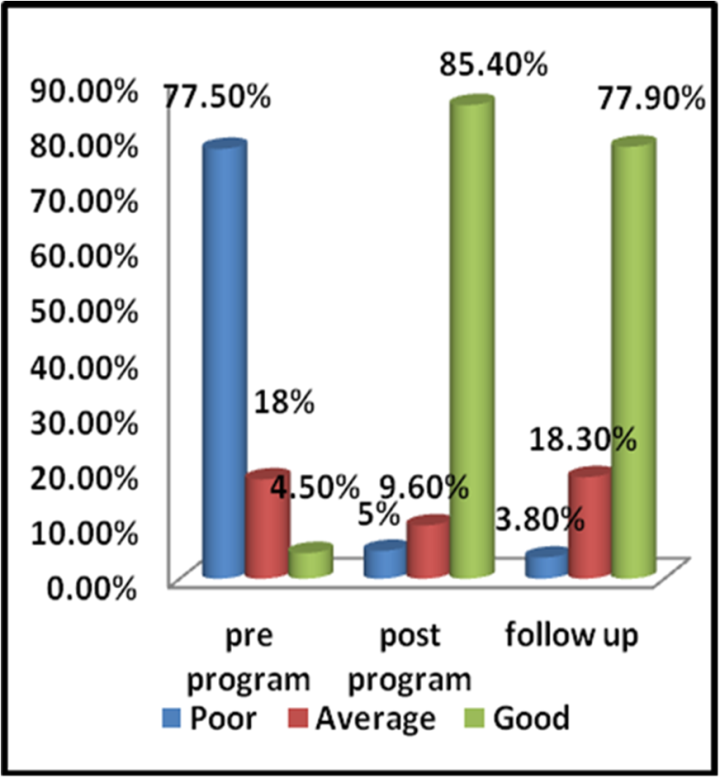
Figure 1 indicates that there was great increase in the percentage of pregnant women with good sexual health knowledge from 4.5% in the pre test which increases to 85.4% in post test. As well as, improved knowledge total score levels at the follow-up test as it was 77.9% than of pre- test which was 4.6%.
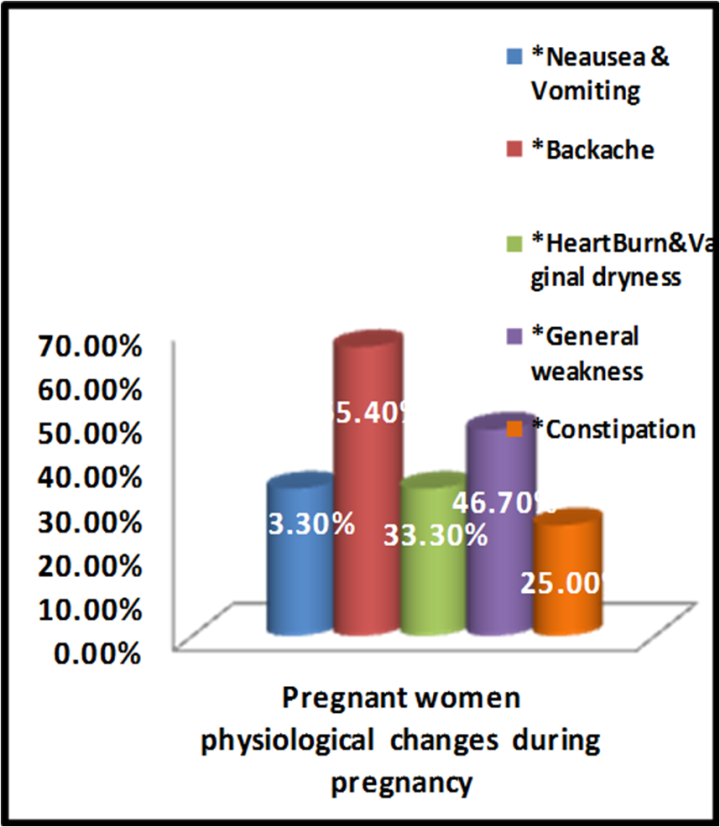
Figure 2 reflects that the three highest physiological changes that affect pregnant women’s sexual function during pregnancy were backache (65.4%), general weakness (46.7%) followed by nausea and vomiting (33.3%).


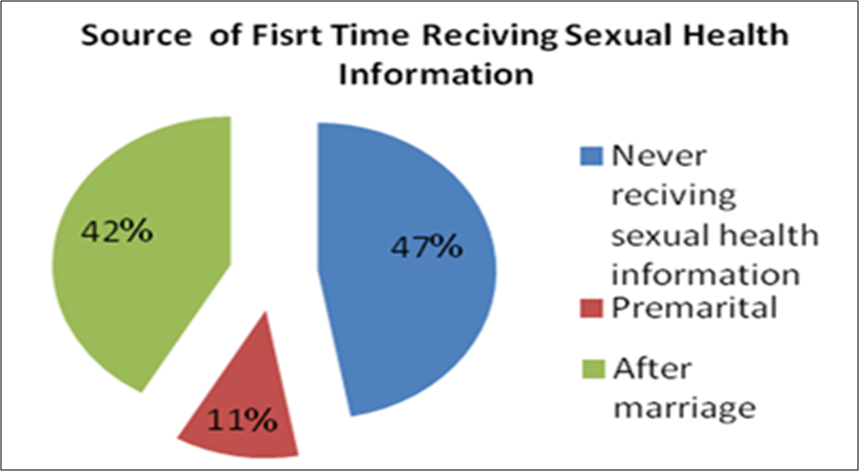
Figure 3 reveals that 47.0 % of pregnant women never received sexual health information, while 42.0 % received sexual health information after marriage.
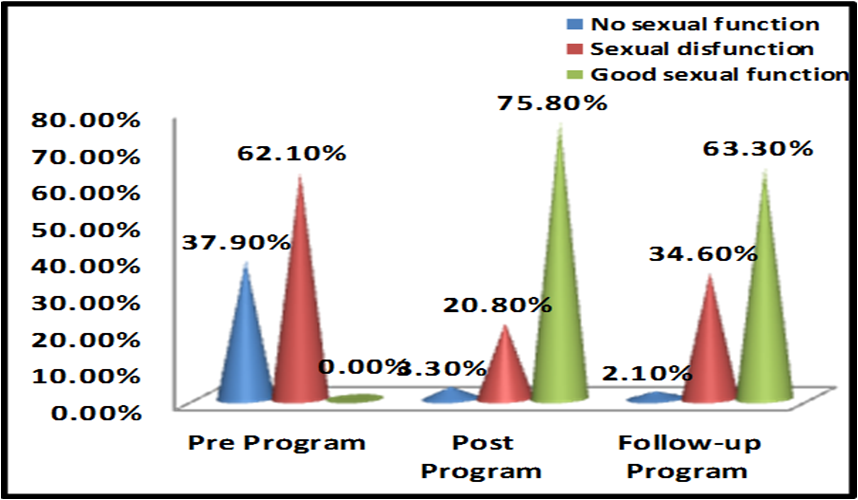
Figure 4 shows that 75.8% of the pregnant women had good sexual function in post test and at the end of the trimester while the sexual dysfunction was decreased from 62.1% before the program to 20.8% at the post test. Also, there is decrease in the “no sexual function” from 37.9% before the program to 3.3% and 2.1% at the post and at the end of the trimester test respectively.
Table 2 shows that there was highly statistical difference between all pregnant women in the 1st, 2nd and 3rd trimesters in their comfortable sexual Position during pregnancy at pre, post educational program as well as at the end of each trimester at p value p≤0.001.


The absence of sexual counseling during pregnancy gives rise to false beliefs, which, together with physical changes, concerns about the risks, and fluctuations in sexual interest, cause a decrease in sexual activity. Nonetheless, sexuality remains a very important aspect of pregnancy, toward which the pregnant women must adopt a broader approach, not limited to intercourse, and adopt healthy sexual practices that are adapted to the physical, emotional, social and sexual changes that happen during this critical time of pregnancy 13.
Regarding age of pregnant women, the results of the current study showed that half of the pregnant women were from 21-25years with mean age 21.2 ± 2.2 years. This result is inconsistent with Brown et al. 14 who studied effect of Pregnancy on Sexuality of Women in Ibadan, Nigeria and denoted that the mean age of the study subjects was 30.7 ± 0.27 years.
Concerning pregnant women’s educational level, more than half of them had secondary education, nearly three quarter did not work and two- thirds of them were from rural areas. This could be confirmed that there was strong relation between educational level and the pregnant women place of residence. This result is in agreement with El-nashar et al. 15, who studied female sexual dysfunction in Lower Egypt and denoted that 50% of the study subjects had secondary education, and about two- thirds of them were from rural areas.
Regarding duration of marriage of the pregnant women, the study findings showed that the mean of the duration of marriage was 10.9 ±4.2 months. This may be because two quarters of the studied pregnant women were from rural areas that encourage early marriage of females. This result is in disagreement with Erbil 9, who studied Sexual function of pregnant women in the third trimester and mentioned that mean of duration of marriage of the study sample was 4.20 ± 4.36 years.
Regarding sexual health knowledge of the pregnant women during pregnancy, the present study revealed that there was great increase in the percentage of knowledge total score levels from pre to post implementation of the sexual health educational program regarding all items of knowledge. The majority of the pregnant women had good sexual health knowledge compared with the pre test results. This figuring out an alarm concerns with the importance of sexual health education and awareness during pregnancy. This finding is consistent with Heidari et al. 16, who studied the effect of sexual education on sexual function of Iranian couples during pregnancy and reported a statistically significant increase in the mean scores of pregnant women’s knowledge throughout pre and post intervention. Also, this result is in agreement with Masoumi 17, who studied the effect of sexual counseling on marital satisfaction of pregnant women referring to health centers in Malayer (Iran) and stated that the mean post test scores of knowledge was higher than of pre test knowledge scores.
Regarding normal physiological effects of pregnancy on sexual function of the pregnant women, the current study findings revealed that the highest normal physiological changes reported by the studied pregnant women that affect their sexual function during pregnancy were backache, general weakness followed by nausea and vomiting. This was in agreement with study conducted by Çavus & Beyazıt 18 who studied factors affecting sexual activity and sexuality-related quality of life in different stages of pregnancy and stated that backache, general weakness as well as nausea and vomiting were among normal physiological changes which affect sexual function for most of the study subjects.
Regarding Sources of Sexual Health Information during pregnancy, the present study revealed that half of the pregnant women received their sexual health information during pregnancy from their husbands. This may be related to the fact that sexual relation is a private issue in marital relation and pregnant women cannot be able to frankly talk about their sexual issues due to the cultural background and the conservative society.
Additionally, internet was the second source of sexual health information during pregnancy for nearly one fifth of the study subjects. This result is incongruent with Sudabeh et al. 19, who reported that around three quarters of the study sample received sexual information during pregnancy from internet.
In addition, Health team members were the source of sexual information for the minority of pregnant women. A study conducted by Bahloul et al. 20 who stated that the low interest and insufficient knowledge of health care providers on the issue of sexuality during pregnancy can lead to lower amount information given to pregnant women, and this is among the most common reason for the lack of discussion on this topic.
Regarding sexual function, the findings of current study revealed that female sexual function index (FSFI) scores were positively changed in accordance with advancing gestation as well as three quarter of pregnant women after sexual health educational program and nearly two third of them in follow up had enhanced sexual function rather than before sexual health educational program this significant difference revealed positive effectiveness of sexual education for correcting pregnant women’s misinformation and beliefs that affect their sexual function during pregnancy.
The study finding is in accordance with Ali et al. 21 who evaluated the effect of group sexual counseling on the traditional perceptions and attitudes of Iranian pregnant women and concluded that sexual counseling had a positive effect of group sexual counseling on improving the sexual response and sexual function of women in pregnancy. This may lead to satisfying and improving the sexual needs of couples, reducing stress, and also increasing support from the spouse by helping to improve the quality of life and the dimensions of marital relationships of pregnant women during this critical period of their lives.
As well this result is congruent with Heidari et al. 16, in the quasi experimental study which evaluated the effect of sexual education on sexual function of Iranian couples during pregnancy and reported an improvement in the sexual function of couples during pregnancy due to the education offered.
Also, this result is in disagreement with Moradi, Shafiabadi & Sodani 22 who reported that sexual education could not have any improvement on the sexual functions of the couples due to cultural limitations, group education in educational classes, as well as limitation in clear expression of sexual problems.
Regarding mean scores of female sexual Function Index (FSFI) of the pregnant women, the present study revealed that there was highly statistical significant difference of the six domains means scores of female sexual function index at the pre and post educational test as well as and at the end of each trimester. This study finding is in agreement with Onah et al. 23 who reported that Mean differences in terms of the six domains scores of FSFI in the study groups between pretest and posttest were significant.
In addition, FSFI scores during the second trimester were higher than first and third trimesters. In the first trimester such discomfort as fatigue, nausea, vomiting, emotional changes, and fear of abortion take place. As well as discomfort of third trimester such as dyspnea, weight gain, vaginal dryness and back pain make sexual activities are more undesirable and negatively affect sexual function. All these discomfort are not present or not as marked in the second trimester. As well as most women feel more emotionally stable, have more energy and trouble free. This finding is consistent with Heidari et al. 16, who stated that sexual function significantly improved during the mid- pregnancy period than the first and third trimester.
Also, this study finding is supported by Khalesi, Bokaie & Attari 8, who stated that FSFI scores in domain: desire, arousal and lubrication had been increased from the second trimester compared with the first trimester. The second gestational trimester is considered the most emotionally stable periods of gestation when pregnancy seems to be clearly established, increased pelvis vascularity and with the cessation of nausea allows an increase in orgasmic quality as well as in the level of orgasm. These factors can explain the presence of the sexual function’s best indicators in the second trimester.
In addition, the study results showed there was no statistical significant correlation between all socio-demographic items except place of residence, duration of marriage, and duration of pregnancy there were a strong direct correlation in relation with the total scores of pregnant women FSFI. This result finding is in the same line with Aydin et al. 14 who compared between Sexual Functions in Pregnant and Non-Pregnant Women and mentioned that there was no meaningful difference between the studied socio-demographic criteria of the study subjects on sexual function in pregnant and non-pregnant women.
In the light of the study hypothesis and finding, it might be concluded; the results of the study supported the study hypothesis as there was an enhancement of pregnant women’s sexual function after sexual health educational program in post and follow-up test than of pre-test with statistically significant differences in the six domain of sexual function, i.e. desire, arousal, lubrication, orgasm, satisfaction and pain.
Furthermore, pregnant women’s sexual health knowledge was improved as well as misinformation and myths related to sexuality during pregnancy were corrected after sexual health educational program as reported on post and follow-up test than in pre-test with statistically significant differences.
Based on the finding of the current study, the following recommendations are suggested:
Ÿ There is an urgent need to involve sexual counseling during routine antenatal care.
Ÿ Husbands should be integrated during sexual counseling with their pregnant wives.
More investigations about the physical and psychological effect of pregnancy on the sexual function of the pregnant women with large sample size in different geographic location to confirm the findings.
| [1] | Çavus, E., & Beyazıt, F., Evaluation of Factors Affecting Sexual Activity and Sexuality Related Quality of Life in Different Stages of Pregnancy. stanbul Med J. 2019; 20(3): 234-40. | ||
| In article | View Article | ||
| [2] | Shojaa, M., Jouybari, L., Sanagoo, A. (2018). The sexual activity during pregnancy among a group of Iranian women. Arch Gynecol Obstet 2018; 279: 353-356. | ||
| In article | View Article PubMed | ||
| [3] | Ebrahimi, M., Haghighat, S., Mehrdad, N., Olfatbakhsh, A., Sexual Dysfunction in Breast Cancer: A Case-Control Study, Archives of Breast Cancer, Canadian Journal of Human Sexuality, Volume 2(1): 15-20. | ||
| In article | |||
| [4] | Liliam, S. Lucia, L., Adriana, R., Maria, T. & Ana, S., Impact of Pregnancy on the Sex Life of Women: State of the Art, International Journal of Clinical Medicine, Volume 4, 257-264, 2013. | ||
| In article | View Article | ||
| [5] | Khamis, M., Mustafa, M., Mohamed, S. & Toson, M., Influence of Gestational Period on Sexual Behavior, Journal of Egypt public health association, Volume 82 No.1 & 2, 2012. | ||
| In article | |||
| [6] | Zahra, P., Sakineh, Ch., Mojgan, M., Sakineh, E. & Fariba, Gh. (2017). Effect Of Pelvic Floor Muscle Training on Female Sexual Function during Pregnancy and Postpartum: A Randomized Controlled Trial, Iranian Red Crescent Medical Journal, October 2017. | ||
| In article | |||
| [7] | Mamour, G., Mame, D., Moussa, D., Mamadou, C., et al., Sexuality during Pregnancy and Postpartum in suburbs of Dakar, Journal of Gynecology and Women’s Health, Volume 8 Issue 4, February 2018. | ||
| In article | View Article | ||
| [8] | Khalesi, Z., Bokaie,M., Attari, S.(2018). Effect of pregnancy on sexual function of couples, African Health Sciences Vol 18 Issue 2, June, 2018. | ||
| In article | View Article | ||
| [9] | Erbil, N., Sexual function of pregnant women in the third trimester,Alexandria Journal of Medicine,Volume 54, Issue 2, June 2018, Pages 139-142. | ||
| In article | View Article | ||
| [10] | EL-Gharib, M., Orgasm During Pregnancy, Gynaecology and Perinatology, Volume 2 Issue 2 July 2018.Available at https://scientiaricerca.com/srgype/pdf. | ||
| In article | |||
| [11] | Rosen, R. et al., The Female Sexual Function Index (FSFI): A multidimensional self-report instrument for the assessment of female sexual function. J Sex Marital Therapy. 26, 191-208 (2000). | ||
| In article | View Article PubMed | ||
| [12] | Anis, TH, Gheit SA, Saied HS, Al kherbash SA.,Arabic translation of Female Sexual Function Index and validation in an Egyptian population, the journal of sexual medicine, 2011. | ||
| In article | View Article | ||
| [13] | Brown, C, Bradford, J, et al., Sex and Sexuality in Pregnancy. Global library of Women’s medicine, 2017, available at: http://www.GLOWM.com. | ||
| In article | |||
| [14] | Aydin,,M., Neval, C., Mustafa, K., Lokman, I., Mustafa, K., Muammer, K.,Comparison of Sexual Functions in Pregnant and Non-Pregnant Women Volume 12 No 05 September-October 2015 2341. | ||
| In article | |||
| [15] | Elnashar, A., EL-Dien, I., EL-Desoky,M., Ali,O., El-Sayd, M., Female sexual dysfunction in Lower Egypt. International Journal of Obstetrics and Gynaecology, 2016. | ||
| In article | |||
| [16] | Heidari, M., Aminshokravi, F., Zayeri, F., Ali, S. Effect of Sexual Education on Sexual Function of Iranian couples during Pregnancy: A Quasi Experimental Study. Journal of Reproduction and Infertility. 2018 Jan-Mar; 19(1): 39-48. | ||
| In article | |||
| [17] | Masoumi, S., Kazemi, F., Nejati, B., Parsa, P., Karami, M., Effect of Sexual Counseling on Marital Satisfaction of Pregnant Women Referring to Health Centers in Malayer (Iran): An educational randomized experimental study. January 2017, Volume: 9, Issue: 1, Pages: 3598-3604. | ||
| In article | View Article PubMed | ||
| [18] | Chang, S., Chen, KH., Lin, H.& Yu, J., Comparison of overall sexual function, Sexual intercourse/activity, sexual satisfaction and sexual desire during the three trimesters of pregnancy and assessment of their determinants. Journal of Sex Medicine volume 8(10): 2859-67, 2018. | ||
| In article | View Article PubMed | ||
| [19] | Sudabeh,K., Leila, A., Reza, Kh., Kambiz, B. (2017). Health information needs of pregnant women: information sources, motives and barriers. welly on line liberary. | ||
| In article | |||
| [20] | Bahloul, M., Ahmed, M., Ahmed, A., Safwat, A., & Gamal H., Sexual behaviour of pregnant women attending antenatal care clinic at Assiut Women's Health Hospital, Egypt. International Journal of Reproduction, Contraception, Obstetrics and Gynecology, Sep; 7(9): 3446-3449. | ||
| In article | View Article | ||
| [21] | Ali, N., Asadollah, K., Mahmood, I., Batol, T., Parvin, S., The Effect of Group Sexual Counseling on the Sexual Response of Pregnant Women, International Journal of Women’s Health and Reproduction Sciences Vol. 5, No. 1, January 2017, 60-65. | ||
| In article | View Article | ||
| [22] | Moradi, Z., Shafiabadi A, Sodani M., Effective communication training on marital satisfaction in mothers of elementary school students in the city of Khorramabad. Educ Res. 2018; 5: 114-97. | ||
| In article | |||
| [23] | Onah HE, Iloabachie GC, Obi SN, Ezugwu FO, Eze JN. Nigerian male sexual activity during pregnancy. Int J Gynecol Obstet. 2018; 76(2): 219-23. | ||
| In article | View Article | ||
| [24] | El Atrash G, Ali MH, Abdelwahab HA, et al. , The assessment of sexual dysfunction in Egyptian women with lower urinary tract symptoms.Arab Journal of Urology (Official Journal of the Arab Association of Urology). 2014. | ||
| In article | View Article PubMed | ||
| [25] | Johnson, CE., Sexual health during pregnancy and the postpartum, Journal of Sex Medicine, cited 2015 Jun5, 8 (5): 1267-84. | ||
| In article | View Article PubMed | ||
| [26] | Tayebe, Ziaei, Halimeh Farahmand Rad, Ghlomareza Roshandel and Masumeh Aval (2018). Effect of Counseling based on Sexual Self-Concept on the Sexual Health of Women in Reproductive Age, Global Journal of Reproductive Medicine, Volume 3 Issue 5, March 2018. | ||
| In article | View Article | ||
Published with license by Science and Education Publishing, Copyright © 2020 Shaimaa Hashem, Entesar Fatouh and Gehan Ghonemy
 This work is licensed under a Creative Commons Attribution 4.0 International License. To view a copy of this license, visit
http://creativecommons.org/licenses/by/4.0/
This work is licensed under a Creative Commons Attribution 4.0 International License. To view a copy of this license, visit
http://creativecommons.org/licenses/by/4.0/
| [1] | Çavus, E., & Beyazıt, F., Evaluation of Factors Affecting Sexual Activity and Sexuality Related Quality of Life in Different Stages of Pregnancy. stanbul Med J. 2019; 20(3): 234-40. | ||
| In article | View Article | ||
| [2] | Shojaa, M., Jouybari, L., Sanagoo, A. (2018). The sexual activity during pregnancy among a group of Iranian women. Arch Gynecol Obstet 2018; 279: 353-356. | ||
| In article | View Article PubMed | ||
| [3] | Ebrahimi, M., Haghighat, S., Mehrdad, N., Olfatbakhsh, A., Sexual Dysfunction in Breast Cancer: A Case-Control Study, Archives of Breast Cancer, Canadian Journal of Human Sexuality, Volume 2(1): 15-20. | ||
| In article | |||
| [4] | Liliam, S. Lucia, L., Adriana, R., Maria, T. & Ana, S., Impact of Pregnancy on the Sex Life of Women: State of the Art, International Journal of Clinical Medicine, Volume 4, 257-264, 2013. | ||
| In article | View Article | ||
| [5] | Khamis, M., Mustafa, M., Mohamed, S. & Toson, M., Influence of Gestational Period on Sexual Behavior, Journal of Egypt public health association, Volume 82 No.1 & 2, 2012. | ||
| In article | |||
| [6] | Zahra, P., Sakineh, Ch., Mojgan, M., Sakineh, E. & Fariba, Gh. (2017). Effect Of Pelvic Floor Muscle Training on Female Sexual Function during Pregnancy and Postpartum: A Randomized Controlled Trial, Iranian Red Crescent Medical Journal, October 2017. | ||
| In article | |||
| [7] | Mamour, G., Mame, D., Moussa, D., Mamadou, C., et al., Sexuality during Pregnancy and Postpartum in suburbs of Dakar, Journal of Gynecology and Women’s Health, Volume 8 Issue 4, February 2018. | ||
| In article | View Article | ||
| [8] | Khalesi, Z., Bokaie,M., Attari, S.(2018). Effect of pregnancy on sexual function of couples, African Health Sciences Vol 18 Issue 2, June, 2018. | ||
| In article | View Article | ||
| [9] | Erbil, N., Sexual function of pregnant women in the third trimester,Alexandria Journal of Medicine,Volume 54, Issue 2, June 2018, Pages 139-142. | ||
| In article | View Article | ||
| [10] | EL-Gharib, M., Orgasm During Pregnancy, Gynaecology and Perinatology, Volume 2 Issue 2 July 2018.Available at https://scientiaricerca.com/srgype/pdf. | ||
| In article | |||
| [11] | Rosen, R. et al., The Female Sexual Function Index (FSFI): A multidimensional self-report instrument for the assessment of female sexual function. J Sex Marital Therapy. 26, 191-208 (2000). | ||
| In article | View Article PubMed | ||
| [12] | Anis, TH, Gheit SA, Saied HS, Al kherbash SA.,Arabic translation of Female Sexual Function Index and validation in an Egyptian population, the journal of sexual medicine, 2011. | ||
| In article | View Article | ||
| [13] | Brown, C, Bradford, J, et al., Sex and Sexuality in Pregnancy. Global library of Women’s medicine, 2017, available at: http://www.GLOWM.com. | ||
| In article | |||
| [14] | Aydin,,M., Neval, C., Mustafa, K., Lokman, I., Mustafa, K., Muammer, K.,Comparison of Sexual Functions in Pregnant and Non-Pregnant Women Volume 12 No 05 September-October 2015 2341. | ||
| In article | |||
| [15] | Elnashar, A., EL-Dien, I., EL-Desoky,M., Ali,O., El-Sayd, M., Female sexual dysfunction in Lower Egypt. International Journal of Obstetrics and Gynaecology, 2016. | ||
| In article | |||
| [16] | Heidari, M., Aminshokravi, F., Zayeri, F., Ali, S. Effect of Sexual Education on Sexual Function of Iranian couples during Pregnancy: A Quasi Experimental Study. Journal of Reproduction and Infertility. 2018 Jan-Mar; 19(1): 39-48. | ||
| In article | |||
| [17] | Masoumi, S., Kazemi, F., Nejati, B., Parsa, P., Karami, M., Effect of Sexual Counseling on Marital Satisfaction of Pregnant Women Referring to Health Centers in Malayer (Iran): An educational randomized experimental study. January 2017, Volume: 9, Issue: 1, Pages: 3598-3604. | ||
| In article | View Article PubMed | ||
| [18] | Chang, S., Chen, KH., Lin, H.& Yu, J., Comparison of overall sexual function, Sexual intercourse/activity, sexual satisfaction and sexual desire during the three trimesters of pregnancy and assessment of their determinants. Journal of Sex Medicine volume 8(10): 2859-67, 2018. | ||
| In article | View Article PubMed | ||
| [19] | Sudabeh,K., Leila, A., Reza, Kh., Kambiz, B. (2017). Health information needs of pregnant women: information sources, motives and barriers. welly on line liberary. | ||
| In article | |||
| [20] | Bahloul, M., Ahmed, M., Ahmed, A., Safwat, A., & Gamal H., Sexual behaviour of pregnant women attending antenatal care clinic at Assiut Women's Health Hospital, Egypt. International Journal of Reproduction, Contraception, Obstetrics and Gynecology, Sep; 7(9): 3446-3449. | ||
| In article | View Article | ||
| [21] | Ali, N., Asadollah, K., Mahmood, I., Batol, T., Parvin, S., The Effect of Group Sexual Counseling on the Sexual Response of Pregnant Women, International Journal of Women’s Health and Reproduction Sciences Vol. 5, No. 1, January 2017, 60-65. | ||
| In article | View Article | ||
| [22] | Moradi, Z., Shafiabadi A, Sodani M., Effective communication training on marital satisfaction in mothers of elementary school students in the city of Khorramabad. Educ Res. 2018; 5: 114-97. | ||
| In article | |||
| [23] | Onah HE, Iloabachie GC, Obi SN, Ezugwu FO, Eze JN. Nigerian male sexual activity during pregnancy. Int J Gynecol Obstet. 2018; 76(2): 219-23. | ||
| In article | View Article | ||
| [24] | El Atrash G, Ali MH, Abdelwahab HA, et al. , The assessment of sexual dysfunction in Egyptian women with lower urinary tract symptoms.Arab Journal of Urology (Official Journal of the Arab Association of Urology). 2014. | ||
| In article | View Article PubMed | ||
| [25] | Johnson, CE., Sexual health during pregnancy and the postpartum, Journal of Sex Medicine, cited 2015 Jun5, 8 (5): 1267-84. | ||
| In article | View Article PubMed | ||
| [26] | Tayebe, Ziaei, Halimeh Farahmand Rad, Ghlomareza Roshandel and Masumeh Aval (2018). Effect of Counseling based on Sexual Self-Concept on the Sexual Health of Women in Reproductive Age, Global Journal of Reproductive Medicine, Volume 3 Issue 5, March 2018. | ||
| In article | View Article | ||