Globally, the Covid-19 pandemic has confronted Critical Care nurses with an even greater, unprecedented challenge and to a great extent, exposed them to many risk factors. This has a profound psychosocial and psychological impact on their mental health and their well-being. Although several studies examining nurses’ turnover intentions have been conducted, few studies have been conducted to explore how COVID-19 contributed to critical care nurses’ turnover intentions. The most strongly supported determinants at the individual level, were workplace stress and burnout, job dissatisfaction, and commitment factors affecting productivity during the pandemic. These determinants became more significant as the demand for nurses is increasing in these crucial times brought by the corona virus. The Corona virus Disease 2019 (COVID-19) has increased the pressure on the healthcare system around the world. The increase in the critical care nurses turnover during the pandemic reached its peak and this were related to many factors but predominantly fear of the unknown. This research Aims: was to explore the impact of the COVID-19 pandemic on the shrinking workforce among the critical care nurses in a Saudi Arabian hospital. Methodology: In the proposed study, a qualitative, exploratory design was followed to explore the impact of COVID-19 on Critical Care nurses who nursed COVID-19 patients and their perceptions to leave the profession. A qualitative explorative phenomenological design was particularly relevant to this study as this approach allowed for engagement and interaction with the national Critical Care nurses through interviews whilst striving for subjectivity. The phenomenological method focuses on the experiences and feelings of participants to find shared patterns rather than individual characteristics of the research subjects. Analysis: Giorgi's four steps approach for data analysis was used to identify the various themes regarding the experiences of COVID-19 and influence on foreign and national Critical Care nurses. The aim of data analysis in this study was to identify commonalities and differences in the individual experiences of all participants. The goal was to keep the richness of the experiences that each participant had with the Covid-19 patients that they cared for whilst exploring the descriptive meanings of such experiences through the identification of essential themes. Results: The findings of the study were aligned to Alderfer’s ERG theory and provided evidence that foreign and national Critical Care nurses experienced psychosocial factors whilst caring for COVID-19 critically ill patients. Critical Care nurses experienced great stress when they were fighting against COVID-19 with their own needs for health, safety, interpersonal relationships and related knowledge. The findings from the study yielded the following three core needs: namely a need for survival; a need for relationships; and a need for growth and development. Therefore, under the direction of the leaders’ and executive management, the provision of prompt and relevant training for the prevention and control of Covid-19 would help reduce psychological panic and insecurity caused by inadequate knowledge. Conclusion: Further studies are needed to identify retention strategies and measure the wellbeing effectiveness in this population.
The Corona virus Disease 2019 (COVID-19) has increased the pressure on the healthcare system around the world. In Saudi Arabia, the healthcare nursing workforce is comprised of both Saudi nationals and foreign nationals who are employed as contract workers. The greater proportion of the Critical Care Unit in Saudi Arabia comprises foreign nationals. Although the initial COVID-19 outbreak was under control, there was still risk of viral transmission through the population and the disease continued to end in fatalities. 1 These factors had a compounding effect on the physiological and psychological well being of nurses working in critical care units. Globally, the COVID-19 pandemic has confronted the scarce skilled profession of Critical Care nursing with even greater, unprecedented challenges and to a great extent, exposed them to many risk factors. This has a profound psychosocial and psychological impact on their mental health and their well-being. 2 The same study notes that, Critical Care nurses have to deal with numerous end-of-life decisions, shortage of beds and inadequate supplies such as a shortage of Personal Protective Equipment (PPEs) and the fear of getting infected or infecting others. 3 It was now time to make efforts to prevent the progression of psychosocial effects on foreign national nurses’, as this could increase the shortage of critical care nurses and increase the high turnover within the profession. Undoubtedly, having enough trained personnel and well-perceived supervision, can significantly be associated with less mental burden and more focused and productive critical care nurses. Therefore strategies and interventions aligned with Alderfer’s Theory of Existence will be used to illustrate that the constructs of relatedness and growth to assist foreign and national critical care nurse to focus on the actual working conditions during a shift, whilst the emotional support aids him or her to cope with the effects of the COVID-19 pandemic.
Several research studies have been conducted to better understand why nurses intend leaving their jobs. A systematic review undertaken by 4 has shown that the most strongly supported determinants are at the individual level, which are stress and burnout, job dissatisfaction, and poor work commitment. 5 add that infectious disease outbreaks like the COVID-19 pandemic have psychological implications not only for people who have been infected but also for caregivers and healthcare workers. These authors also state that during previous infectious viral outbreaks, such as severe acute respiratory syndrome (SARS), people experienced a variety of emotional responses, including stress disorders, anxiety, fear, and anger. These determinants became more significant during the current COVID-19 pandemic as the demand for skilled nurses became crucial times, but became complicated due to high nursing turnover.
This paper, highlights the fact that critical care nurses are trained to make population health decisions, and provide vital leadership in health crises such as COVID-19, providing holistic, high-quality care. Yet, despite this category of nursing staff being highly valued, the current pandemic has immeasurably transformed it and impacted the available critical care nursing workforce, highlighting inequities in health outcomes, and creating gaps in specialised healthcare delivery.
The high rate of turnover intention in healthcare workers has become an obstacle in the development of the healthcare system, especially during COVID-19 period. Deadly pandemics and large-scale pandemics have challenged human existence throughout history. 6 Human resources are the most important asset in the health system and are essential to improve the quality of health care services. 7 Moreover, long working hours, 8 nurses, 9 income change, 10 and lack of proper protective equipment 11 can also lead to healthcare worker’s turnover intention during COVID-19 period. These factors can contribute to errors and jeopardise the safety and quality of care in the Critical Care Unit (CCU). Nursing is one of the professions most exposed to occupational stress due to exposure to psychosocial factors, such as high workload, fast work pace and lack of autonomy, 12 Psychosocial factors at work (PFW) are described by international agencies as one of the main factors that trigger stress and psychological illness among workers 13.
The extensive literature on this subject states that the continuously increasing numbers of COVID-19 patients, the increased workload, the limited availability of personal protective equipment, positive cases and news of death in the media as well as the lack of specific treatment medications and support, increased the mental health burdens of healthcare workers 14. To ensure the stability of the critical care nursing team during COVID-19 or any future disaster period, measures to prevent turnover are necessary.COVID-19 and the turnover intention of healthcare workers have become significant contributors to global dialogue in order to understand the relation between COVID-19 and turnover intention of healthcare workers.
A shrinking nursing workforce, an ageing patient and nursing population, coupled with a mismatch between hospital demands and the available nursing staff, has created a situation detrimental to both patient and nursing personnel well-being ehich influences the hogh turnover of the profession. The nurse shortage in Saudi Arabia is mainly attributed to various social, cultural, and educational factors 15, 16, 17. COVID-19 not only added to this problem but increased the shortage due to various factors, namely fear of the unkown.Nurses' well-being has contributed to the high turnover among critical care nurses and this has never been the focus in Saudi Arabia, and there is no cited literature specific to workload and nurses' well-being influencing high turnover during and after the pandemic, despite studies on general workload, burnout, and job satisfaction in Saudi Arabia.
Although workload plays a pivotal role in staff and patients’ well-being, very few studies have been conducted on the evaluation of workload effects during the COVID-19 pandemic on healthcare 18. Long working hours, working in more than one job, low staffing ratios, high patient acuity, minimal social support, low experience level, complicated equipment, and complex procedures and varying workload are some of the factors that may negatively impact the well-being of nursing personnel which contributed the high turnover and the critical are staffing crisis. It is recommended that well-being programmes should be provided, especially for nursing staff, in all critical care areas as a retention strategy.
The staff in senior management positions should emphasize the importance of interactions among the nursing staff and between the nurses and patients. The performance of emotional labour (EL) has been associated with fewer adverse effects and with more positive psychological and social well-being for hospital nurses. According to Hochschild's Theory, emotional work is the process by which workers have to manage their feelings, in accordance with organisationally defined rules and guidelines, to produce the proper state of mind in others, and the concept of being cared for in a safe place 19. The concept of EL also refers to a worker's endeavour to display various emotions in compliance with the social and the cultural norms and values rather than what he or she feels 20.
According to the original conceptualisation of Hochschild work, EL is an occupational requirement of waged work environments that induces the outward expression of certain emotions during the interactions, and that implies the management of feelings/emotions 21. In recent years, nursing literature has shown a growing interest in this type of emotional work and its physical and psychological implications 22. The performance of such emotional work is a valuable coping strategy and should be encouraged by hospital management for nurses’ well-being in the workplace environment.
The literature indicates that staff well-being has been extensively explored in different industries and that patient well-being and quality has been the focus of many studies in recent years. However, there are very few literature sources on the well-being of healthcare professionals, particularly nurses, who cared for these patients during the COVID-19 pandemic situation. To provide a relevant managerial framework that will explicate the workload factors that influence the well-being of nurses, in the critical care environments within a Saudi Arabian hospital, the researcher conducted a systematic literature review. The sources reviewed included relevant documents such as policy and nursing management sources, books, journal articles and online sources. The literature review enabled the researcher to gain a broader perspective of the topic under study.
Theories and theoretical frameworks assist people to sort out the world, make sense of it and guide one on how to behave in it. The researcher used Alderfer’s Existence, Relatedness, and Growth (ERG) theory to guide the study. Given the various behavioural models-social and cognitive, the study adopted the ERG model by Alderfer 23. Alderfer proposed the ERG theory of humanistic needs based on Maslow’s hierarchy of needs. He believed that people have three core needs: a need for survival, a need for relationships and a need for growth and development. Critical Care nurses experience significant work stress factors when fighting against COVID-19 with needs for health, safety, interpersonal relationships and related knowledge. The various constructs of the ERG theory were used to explore the psychosocial experiences of Critical Care nurses who were caring for COVID-19 patients in a Saudi Arabian hospital.
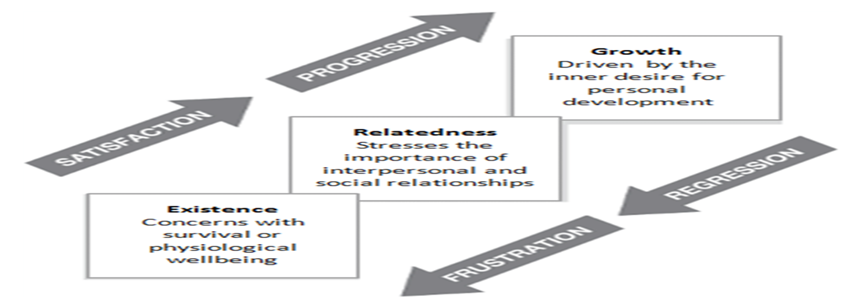
Therefore, this study used in-depth interviews to understand the psychosocial needs of front-line Critical Care nurses working in extraordinary pandemic situations and to analyse the main content of their needs from the lens of the ERG theory, whilst trying to provide a perspective for interventions to focus on turnover and retention strategies for the future of pandemics. The Alderfers Existence, Relatedness, and Growth (ERG) Theory, (Figure 1 below), was used to suppose that the impact of work related psychosocial effects on critical care nurses during COVID-19 pandemic offered explanations to job dissatisfaction and increased turnover intention
• Existence Needs: includes all material and physiological desires (e.g., food, water, air, clothing, safety, physical love and affection).
• Relatedness Needs: Encompass social and external esteem; relationships with significant others like family, friends, co-workers and employers. This also means to be recognized and feel secure as part of a group or family.
• Growth Needs: Internal esteem and self-actualization; these impel a person to make creative or productive effects on himself and the environment (e.g., to progress toward one's ideal self). This includes desires to be creative and productive, and to complete meaningful tasks.

Even though the priority of these needs differ from person to person, Alderfer's ERG theory prioritises in terms of the categories' concreteness. Existence needs are the most concrete, and easiest to verify. Relatedness needs are less concrete than existence needs, which depend on a relationship between two or more people. Finally, growth needs are the least concrete in that their specific objectives depend on the uniqueness of each person.Within this context this theoretical model will be adopted to lead the discussion related to the topic of inquiry, whilst depicting its various psychosocial factors as drivers to effective development and recommendation of supportive wellbeing strategies for critical care nurses not just for critical care units of the Saudi Arabian Hospital ,but in a global context.
Using the components of the ERG theory, this paper will seek to provide answers to the following question:
1. How has the COVID-19 pandemic influenced the turnover intention of critical nurses in relation to environmental factors and behavioural factors in the critical care unit?
In this study, a qualitative, exploratory design was followed to explore the impact of COVID-19 on Critical Care nurses who nursed COVID-19 patients and their intentions to leave the profession. A qualitative explorative phenomenological design was particularly relevant to this study as this approach allowed for engagement and interaction with the national Critical Care nurses through interviews whilst striving for subjectivity. The phenomenological method focuses on the experiences and feelings of participants to find shared patterns rather than individual characteristics of the research subjects. This type of design was chosen as it is particularly well suited for investigating a phenomenological approach which was particularly relevant to this study as this allowed engagement and interaction with the Critical Care nurses through interviews whilst striving for subjectivity.
This study was conducted in the Critical Care Unit of the Main Hospital situated in the Southern Region of Saudi Arabia, which is a total of 25 beds that were specifically allocated for COVID-19 patients. These settings were chosen as the COVID-19 pandemic impacted significantly in these areas and during the lockdown period whereby these areas were classified as COVID "hotspots" due to the soaring infection rates.
The study was conducted over a ten months period from January 2021 until the end of October 2022. The purposive sampling method was used to select Critical Care nurses who have been rendering direct patient-care to COVID-19 patients during the pandemic in the selected respective COVID-19 Saudi Arabian Critical Care Units of the participating hospital. In this study, the target population were Critical Care nurses (N=10) working in the COVID-19 Critical Care Units at the Saudi Arabian Hospital. Keeping in mind that the sample size of a qualitative study cannot be predetermined and it will depend on the availability of nurses who met the inclusion criteria and gave voluntary consent.
A research instrument (Table 1) was developed by the researcher approved by the ethics committee, in English language to guide individual participants. It consisted of 5 semi-structured open-ended probing questions which aimed to explore critical care nurses perceptions of factors influence the high turnover and this allowed engagement and interaction with the Critical Care nurses through interviews whilst striving for subjectivity.
The following questions are aligned with the theoretical framework that will guide the study will be used by the researcher to guide the interview process.
To gain a full understanding of the lived experiences of Critical Care nurses nursing COVID-19 critically-ill patients and their well-being related to high turnover of the workforce, a method of qualitative data gathering was employed. Informed consent included an explanation of the handling of all interview materials, confidentiality issues and anonymity procedures for participants and the option to withdraw at any time. Once informed consent was obtained, all interviews were recorded with participants’ permission, by audiotape to provide an unobtrusive and accurate record of the participants’ comments. The in-depth semi-structured interviews were conducted with the use of an interview guide containing demographic sections as well as a central question to focus the discussion. Probing questions were used to elicit more information. Probing is eliciting more useful information from a respondent in an interview that was volunteered in the first reply, with the goal being to ask questions that give the respondent an opportunity to provide rich, detailed information about the phenomenon under study 24. The purpose of interviewing was also to understand the essence, meaning and values that participants attributed to the phenomena under study. Interviews were scheduled for thirty minutes for each participant. If no common themes emerged in the initial set of scheduled interviews, additional interviews would have been conducted until saturation of key themes occurred. However, during the ten interviews, similar information and common themes emerged. Data saturation was reached after interviewing ten Critical Care nurses as no new information emerged. No additional interviews were arranged. As noted before, the interview was the method of data collection, and for the purposes of this research, a face-to-face interview was conducted with the Critical Care nurses.
Pre -TestA pre-test was conducted for the purpose of the study before the commencement of the main study to establish the reliability and validity of data collection instruments. The pre-test was also used to identify whether there was a need to refine the methodology or the data collection processes. It was conducted in the same setting as the main study, using the same data collection and analysis techniques. The pre-test study was conducted with five homogeneous participants made up of nurses working outside the COVID-19 critical care unit to determine the clarity and effectiveness of the interview questions and the average time required to complete the interview and data collection methods. The pre-testing study participants were asked to comment on the applicability and validity of the interview questions about the healthcare sector in the Saudi Arabian context. Overall the feedback from the participants were that the questions were clear, concise and relevant to the subject. There were no changes to the proposed interview schedule of questions as participants indicated that they were very simple to understand during the interview.
Before the commencement of the actual study, ethical clearance was obtained from the university Faculty Research Committee. Written consent was obtained from the Hospital Director of the participating hospital. All the participants made an informed, voluntary decision to participate in the study. This included the nature of the study, the right to refuse to participate, the risks as well as the benefits that were fully described to them. The researcher personally approached registered nurses who were either trained in ICU nursing or experienced in ICU nursing in order to get written and informed consent from them. The study was conducted based on the informed consents of the participants which provided a full disclosure of information to information to participants which included the identity of the researcher, the purpose and nature of the stud, the right to refuse to participate without loss or penalty, the right to withdraw at any time without fear of reprisal, the benefits and potential risks of the study and measures to be taken to protect privacy and ensure confidentiality
Giorgi's four steps approach for data analysis was used to identify the various themes regarding the experiences of COVID-19 and influence on Critical Care nurses. The aim of data analysis in this study was to identify commonalities and differences in the individual experiences of all participants. The goal was to keep the richness of the experiences that each participant had with the COVID-19 patients that they cared for whilst exploring the descriptive meanings of such experiences through the identification of essential themes 25. The first step in using Giorgi's method in this research was to read and re-read the entire set of participants’ experiences in order to familiarise the research with the contents and get a sense of the whole picture of the phenomena under discussion. This method helped and guided the researcher to understand the meaning of the experience from the participants' viewpoints and not in terms of the researcher's theory about the topic under study.
The second step involved reading each successive transcript thoroughly and breaking each down into distinct meaning units. Meaning units consisted of words, phrases, sentences or passages and were then coded by the researcher to ensure accuracy and completeness. After the whole description of the phenomena under study had been broken down and divided into meaningful units, the researcher then reflected on these units in the context of the whole experience or phenomena under study. This was done so that the true essence and meaning of the Critical Care nurses' experiences with COVID-19 patients about their well-being and workload that is increasing the turnover and would not be lost during the data analysis process.
The third step using Giorgi's analytical method was to transform participants' words into scientific terms. This was done by re-describing the meaning units into psychological language, and this was accomplished by searching for essential or dominating meanings in each unit. The researcher then related each meaning unit to the topic under study. This again was done so that the meaning of the participants' experience was not changed, but at the same time, unimportant meanings in the participants' experience or situation were discarded. The final step was to involve the synthesis of the transformed meaning units into an overall description of COVID-19 patients and influence on their workload and wellbeing as experienced by the Critical Care nurses and influencing their intentions to leave the profession. This the researcher did by consistently describing this phenomenon and adding a psycho-analytical approach to the obtained data. The researcher then attempted a general analysis by focusing on the essential aspects and characteristics of the phenomena under study. By providing descriptions and then analysing these meaning units, the researcher was able to draw individual and subjective meanings of all participants, relating to their experiences during care of COVID-19 patients and influence on their decision or intention to leave the profession.
The research findings derived from the data collected on the study topic by employing a qualitative approach. The qualitative data findings after analysis were aligned to the aim of this study which was to explore the workload factors and wellbeing effects of the COVID-19 pandemic on Saudi Arabian Critical Care nurses related to high turnover. This study was further carried out using a phenomenological exploratory approach.
The following research questions had to be answered to achieve the aim of the study:
• What are the various workload factors affecting Critical Care nurses whilst caring for COVID-19 patients in a Saudi Arabian hospital?
• How has the COVID-19 pandemic influenced the Critical Care nurses in relation to behavioural factors job productivity in the Critical Care Units?
• How has the Pandemic workload influenced their decision to stay in the nursing profession?
Only the COVID-19 Critical Care Unit in the study hospital, Southern Region was included in the study. The participants were coded in numbers from number one to number ten (No.1 to No.10) for the interview process. Coding for the qualitative phase of the data collection included categorising respondents according to the COVID-19 Critical Care Unit that they worked in. These units are part of the General hospital and part of an established Military hospital group managed by the Military of Saudi Arabia and regulated by the by-laws of the Medical Directorate Services. This data collection process, saw a total of 10 participants being interviewed (Table 2).
The number of interviews conducted in each study site was guided by data saturation. A total of 10 interviews were conducted over a period of two weeks.
The presentation of the results for the study was guided by the principles of Alderfer’s ERG model. Presentation of the participants’ demographic data and the findings were related to the psychosocial factors within the COVID-19 critical care environment, which were aligned with the objectives of the study.
A total of ten participants were interviewed from the Covid-19 Critical Care Units within the study hospital, Southern Region under study. These participants were all nursing staff, working in the COVID-19 Critical Care Unit of the sample hospitals. The demographic data of the interviewed participants is depicted in Table 3.
(4) major themes emerged during the analysis of the findings. The sub-themes are presented against each major theme in Table 4. Major themes included the following:
1. Resource challenges influencing job satisfaction of nurses
2. Staff motivation and its influence on work performance whilst caring for Covid -19 patients
3. Behavioural factors affecting group cohesion teamwork amongst staff working in a Covid-19 Critical Care Unit
4. Increase in workload and resultant emotional exhaustion of staff.
In the presentation of the findings, the themes and sub-themes are supported with verbatim statements from the participants to substantiate their relevance in the results. All foreign national critical care nursing staff were interviewed in English as this is the spoken language at work. Excerpts of interviews that have been included in this chapter to support the themes are from the original transcripts of interviews. The only alterations have been the inclusion of punctuation such as full stops, commas, question marks to make the participants’ quotes more understandable and logical. This approach was used by the researcher to present the participants’ descriptions accurately while maintaining integrity of the data.
All the participants in this study were male and female critical care nurses working within the organisation five years and more who had left their home nations to Kingdom of Saudi Arabia in search for better job opportunities in the field of healthcare, nursing profession. The following table below in Table 3 illustrates the different categories related to gender, years of experience within the critical care units and nationality. The findings of the study were aligned to Alderfer’s ERG theory and provided evidence that Critical Care nurses experienced various psychosocial factors whilst caring for COVID-19 critically ill patients that was the driving decision to leave the profession. Critical Care nurses experienced great stress and emotional fatigue when they were fighting against COVID-19 with their own needs for health, safety, interpersonal relationships and related knowledge. This virus created a magnitude of fears and emotional distress and many lost loved ones whereby they could not be with their families working in a foreign country.
This separation was one of the key reasons from the findings that revealed that critical care nurses contemplated leaving the Kingdom or leaving the health care profession. Furthermore, high job demands lead to strain and health impairment, associated with decreased job satisfaction amongst staff working in the critical care unit of Saudi Arabian hospitals. The findings from the study further yielded the following three core needs: namely a need for survival; a need for relationships; and a need for growth and development outside the healthcare profession. Therefore, under the direction of the leaders’ and executive management, the provision of retaining our critical nurses is critical for the organisation as they are scarce skills and very challenging to recruit within Saudi Arabia and also from other countries.
The study findings were discussed in relation to the theoretical model and the objectives of the study. Findings which are aligned with Alderfer’s ERG theory verify that the existence, relatedness, and intention to leave the profession among the Critical Care Nurses. This discussion was also related to relevant literature findings based on the topic of inquiry. In work organisations, where adequate psychological support is provided, nurses experiencing work related stress such as work overload or fatigue and burnout and other mental health problems are more likely to seek, and receive, appropriate help and emotional support through group therapy and employee well-being programs. The support not only creates a sense of belonging however enables the environment to be healthy and will reduce the thoughts of leaving the organisation or the profession. The psychological and behavioural manifestations of stress may take different forms and be of varying intensity.
Sometimes there are no outward manifestations, but those in distress suffer internally. At other times clearly observable, even dramatic, emotional and behavioural expressions of distress become apparent 26. Several studies suggest that high turnover can be associated to staff and patients outcomes 27. High turnover rates in a hospital unit may lead to increased demand for overtime, fatigue and work related stress, as well as low job satisfaction, among the remaining staff 28. It can also alter the continuity of care being delivered, leading to the decreased quality and safety of patient care, with potentially increased rates of medication errors, falls or other nurse-sensitive outcomes including healthcare-associated infections.
Among the many Critical Care Nurses of all nationalities, the majority have considered leaving the profession entirely because of the pandemic and the fear of the virus and other contributing factors were related to job satisfaction, special remuneration during exposure and increase in the workload and exceabrated by shortage of skilled staff in the critical care units. In addition, the findings could help and guide hospital decision makers and leaders facing high staff turnover situations, by informing them on the main factors on which they may act to try and reduce turnover intention among the staff.
In particular, two factors of interventions came out of the study qualitative analysis: first, ensuring that hospital staff is supported through adequate staffing and reward and recognition and second, enhancing social support among the staff through employee well-being programs. The former possibly requires increasing the staff-to-patient ratio. The latter may notably be achieved by implementing solutions that enable healthcare workers to effectively and collaboratively work together and facilitate social communication and interaction.
The COVID-19 virus is highly transmissible, but the source and route of transmission has yet to be determined. Critical Care nurses experienced great stress when they were fighting against COVID-19 with needs for health, safety, interpersonal relationships and related knowledge and change of jobs. 29 proposed the existence, relatedness and growth (ERG) theory of humanistic needs on the basis of Maslow’s hierarchy of needs. He believed that people have three core needs, namely a need for survival, a need for relationships and a need for growth and development. The purpose of this study was to use in-depth interviews to understand the psychological needs of Critical Care nurses working in extraordinary pandemic situations. This study also explored the content of their psychological and psychosocial needs from the lens of the ERG theory, to provide a perspective for interventions to alleviate the psychosocial and the psychological stress of Critical Care nurses at the front-line of the pandemic.
Relatedness is concerned with the desire people have for maintaining important interpersonal relationships. Growth relates to a person's needs of personal development. Unlike Maslow’s theory, lower level needs do not necessarily have to be gratified for a higher level to become relevant. This implies that in a workplace, managers must recognise their employees’ multiple simultaneous needs. The existence-relatedness-growth (ERG) theory is a psychoanalytic theory developed by American psychologist Clayton Alderfer. This theory is in fact a reformulation of Abraham Maslow’s Theory of Needs. According to this theory, the needs are divided into three divisions rather than the five suggested by Maslow. Similar to Maslow’s theory, satisfying one level of needs advances one towards satisfying the highest level of needs. But Alderfer also identifies a reverse process. According to the new theory, there is also a process of frustration stemming from the lack of ability to realise a certain level of needs. This frustration leads one to retreat to the attempt to provide a lower level of needs 30.
This theory does not involve a “personality hierarchy” but rather three groups of needs that operate differently. Alderfer criticises the direct association that Maslow assumes between the urge to provide a need and motivation. The three groups of needs do not operate in a strictly hierarchical manner. A person might engage concurrently in satisfying needs from different groups namely existence needs–physiological needs and security needs. Relatedness needs which the need for social approval. Growth needs which refer to the need to develop personal skills that constitute a relative strength versus other individuals.
The existence needs were mainly reflected in the health and security needs, whereas the relatedness needs consisted mainly of interpersonal needs, the humanistic concern needs and the family needs. Further to the theory, growth and development needs were reflected by the participants as a strong need for knowledge and understanding of the virus. Existence needs were the main needs reflected by the participants during the pandemic, with health, security and safety needs influencing each other. The humanistic concern needs were the most important of the relatedness needs; interpersonal and family needs were also growing. Discussion of the findings of this study, related to the three components of the ERG Model follows.
• Existence needs: physiological needs and security needs.
• Relatedness needs: the need for social approval
• Growth needs: the need to develop personal skills that constitute a relative strength versus other individuals.
This discussion was also related to relevant literature findings based on the topic of inquiry. In work organisations, where adequate psychological support is provided, nurses experiencing work related stress such as work overload or fatigue and burnout and other mental health problems are more likely to seek, and receive, appropriate help and emotional support through group therapy and employee well-being programs. This will initiate a strong retention strategy for the organisation and will minimise the turnover.
Recommendations for the study stem from the findings and discussions of the study. It was suggested that managers of the organisation need to focus on the implementation of employee well-being programmes which should be aligned with a well engineered staff retention strategy during such pandemics and focus on mental health and well-being and social support during such crisis. Recommendations that the researcher proposed are:
• Recommendation 1: The implementation of a managerial framework that explicates the psychosocial factors and health and well-being among the Critical Care nurses.
• Recommendation 2: Management commitment and accountability for the implementation of the programmes to retain skilled and scare skilled staff.
• Recommendation 3: Training and education on COVID-19 or any pandemic to alleviate Fear.
• Recommendation 4: Solid well structured Human resource strategy/Staffing and retention during surge of patients.
• Recommendation 5: Building sustainable team work and support structures during the pandemics
• Recommendation 6: Future research
Recent studies on a similar research topic, related to factors affecting the mental wellbeing and intention to leave the profession among Critical Care nurses during COVID-19 pandemic in critical care environments, are not publicly available in Saudi Arabia. However, the researcher was able to explore the concepts of workload, mental wellbeing and psychosocial factors and the impact on Critical Care nurses through the various websites and journal articles within the Gulf areas. In Saudi Arabia, there are limited studies focusing on the impact of psychosocial factors related to high turnover during the COVID-19 pandemic on Critical Care nurses in a critical care environment.
Most of the studies are related to infection control practices and prevention, shortage of supplies, knowledge deficit ad challenges of the human resources factors. Given these limitations, the results presented here should be the first step towards implementing a managerial and leadership support structure with the view of an employee well-being program and a well engineered retention strategy to minimise the turnover rate within the organisation among national Critical Care nurses in general. This model still needs to be implemented, tested, and refined in accordance to workload factors and retention strategies. The limitations that affected the study involved the participants’ behaviour during face-to-face interviews. This was caused by the researcher’s presence which was evident when participants hesitated to respond.
All participants were duly assured that the researcher will not influence any answers or responses and that they should be free to participate or withdraw from the study at any given time. An additional limitation that was faced by the researcher was the timeline for conducting the current research, which was governed by the university’s policies and protocol. In the qualitative data collection of this study, a purposive, non-probability sampling strategy method was used to recruit nurses to participate in the semi-structured interviews. The participants were nurses from a group of COVID-19 Critical Care Units of one hospital and did not include nurse managers and charge nurses who were not directly involved in direct clinical patient care. This could potentially limit the generalisability of the findings to managers in other clinical areas of the hospital, regarding their perceptions of the psychosocial factors influencing nurses in general during COVID-19 pandemic that influenced their decision to leave the profession. Despite some of these limitations, conclusions are drawn, and recommendations made, based on these conclusions.
The critical care nurses caring for COVID-19 patients felt extreme physical fatigue and discomfort caused by the outbreak, intense work, large number of patients, and lack of protective materials, The physical exhaustion, psychological helplessness, health threat, lack of knowledge, and interpersonal unfamiliarity under the threat of epidemic disease led to a large number of negative emotions such as fear, anxiety, and helplessness. The thoughts of leaving the profession were a consideration when the foreign nationals felt distanced and worried about their families. Therefore, early psychological intervention is particularly important to nurses in pandemic situations. At the same time, it is important to establish early support systems, such as adequate supplies of protective materials, reasonable allocation of human resources, elderly and infant care services for nurses' families, pre-job training, and interpersonal interaction among nurses to facilitate nurses' adaptation to the pandemic tasks. It is known that coping style, cognitive evaluation, and social support are all mediators of stress. Nurses adopted avoidance, isolation, speculation, humour, self-consciousness, and other psychological defenses to psychologically adjust to the situation.
This study provided a comprehensive and in-depth understanding of the increase workload, mental and emotional exhaustion and psychosocial factors experienced by Critical Care Nurses during the care of patients with COVID-19 through a phenomenological approach. We found that during the pandemic positive and negative emotions of frontline Critical Care Nurses against the COVID-19 pandemic interweave and coexist. In the early days of the COVID-19 surge, the negative emotions were dominant and positive emotions appeared simultaneously or gradually. Self-coping style and psychological growth are important for Critical Care Nurses to maintain a healthy emotional and psychological mental health and well-being during such pandemics. This study provided fundamental data for further workload demands not only psychological and psychosocial interventions but a well engineered retention strategy for global pandemics, not only COVID-19,but any such pandemics that may impact on Nurses.
The authors would like to thank the Critical care nurses for their voluntary participation in the study and the hospital management for their approval and support and encourage for the study.
There are no conflicts of interest.
| [1] | Alshammari, T.M., Altebainawi, A. F.Alenzi, K. A. (2020). Importance of early precautionary actions in avoiding the spread of COVID-19: Saudi Arabia. Saudi Pharmaceutical Journal, 28: 898-902. | ||
| In article | View Article PubMed | ||
| [2] | El-Hage, W., Hingray, C., Lemogne, C., Yrondi, A., Brunault, P. and Bienvenu, T. (2020). Health professionals facing the coronavirus disease. (COVID-19) pandemic: what are the mental health risks? Encephale Journal, 46: S73-S80. | ||
| In article | View Article PubMed | ||
| [3] | Alenazi, T. H. (2020). Prevalence and predictors of anxiety among healthcare workers in Saudi Arabia during the COVID-19 pandemic. Journal of Infection Public Health, 13: 1645-1651. | ||
| In article | View Article PubMed | ||
| [4] | Halter, M., Boiko, O. and Pelone, F. (2015). The determinants and consequences of adult nurse staff turnover: a systematic review of systematic reviews. Submitted to BMC Health Services Research December - under review, 5: 244-248. | ||
| In article | |||
| [5] | Naz, S., Li, C., Nisar, Q. A., Khan, M. A., Ahmad, N. and Anwar, F. (2020). A study in the relationship between supportive work environment and employee retention: role of organizational commitment and person–organization fit as mediator. SAGE Open Journal, 10 (2): 1-20. | ||
| In article | View Article | ||
| [6] | Morens, D.M., Daszak, P., Markel, H. and ubenberger, J.K. (2020). Pandemic COVID-19 joins history’s pandemic legion. micro Bio Journal, 11(3). | ||
| In article | View Article PubMed | ||
| [7] | WHO (2022). Coronavirus (COVID-19) Dashboard. Available from: https://covid19.who.int/. Accessed May 30. 2022. | ||
| In article | |||
| [8] | Said, R.M. and El-Shafei, D.A.(2021). Occupational stress, job satisfaction, and intent to leave: nurses working on front lines during COVID-19 pandemic in Zagazig City, Egypt. Environmental Science Pollution Research International, 28(7): 8791-8801. | ||
| In article | View Article PubMed | ||
| [9] | Chen, H.M., Liu, C.C., Yang, S.Y., Wang, Y.R. and Hsieh, P.L. (2021). Factors related to care competence, workplace stress, and intention to stay among novice nurses during the coronavirus disease (COVID-19) pandemic. International Journal Environmental Reserarch Public Health, 18(4): 2122. | ||
| In article | View Article PubMed | ||
| [10] | Song, L., Wang, Y., Li, Z., Yang, Y. and Li H. (2020). Mental health and work attitudes among people resuming work during the COVID-19 pandemic: a Cross-Sectional Study in China. International Journal Environmental Research Public Health, 17(14): 5059. | ||
| In article | View Article PubMed | ||
| [11] | Irshad, M., Khattak, S.A., Hassan, M.M., Majeed, M. and Bashir S. (2021). Withdrawn: how perceived threat of Covid-19 causes turnover intention among Pakistani nurses: a moderation and mediation analysis. International Journal Mental Health Nursing, 30(1): 350. | ||
| In article | View Article PubMed | ||
| [12] | Bulbuloglu, S., Kapikiran,G. and Saritas, S. (2020). Perceived and sources of occupational stress in surgical intensive care nurses. Proceedings of Singapore Healthcare, 1-6. | ||
| In article | View Article | ||
| [13] | International Labour Organisation. International Labour Office (ILO). (2020). Psychosocial factors at work: recognition and control. Report of the Joint International Labour Office and World Health Organization on Occupational Health, Ninth Session, Geneva, 18-24. September 1984. Occupational Safety and Health Series, 56.International Labour Office, Geneva. | ||
| In article | |||
| [14] | Lai, J., Lin, Y.P., Chang, H.K., Wang, S.C. and Liu, Y.L. (2020). Factors Associated With Mental Health Outcomes Among HealthCare Workers Exposed to Coronavirus Disease 2019. Journal of American Medical Association Network Open, 3: 3976. | ||
| In article | View Article PubMed | ||
| [15] | Alderfer, C. P. (1969). An empirical test of a new theory of human needs. Organizational Behaviour and Human Performance, 4 (2): 142-7. | ||
| In article | View Article | ||
| [16] | Nashwan, A J. (2021). Nurses' willingness to work with COVID-19 patients: The role of knowledge and attitude. Nursing open Journal, 8: 695-701. | ||
| In article | View Article PubMed | ||
| [17] | Khan, N., Jackson, D., Stayt, L. and Walthall, H. (2019). Factors influencing nurses' intentions to leave adult critical care settings. Nursing Critical Care, 24, 24-32. | ||
| In article | View Article PubMed | ||
| [18] | Hayes, L.J., O’Brien-Pallas, L., Duffield, C., Shamian, J., Buchan, J., Hughes, F., Laschinger, H.K.S., North, N. and Stone F. (2012). Nurse turnover: a literature review - an update. International Journal of Nursing Studies, 49: 887-905. | ||
| In article | View Article PubMed | ||
| [19] | Sundar, R. Manian, M. and Mathew, R.K. (2021). Post-COVID-19 Leadership in the Public Sector: A Behavioural Economics Perspective. International Journal, 1(2): 805-830. | ||
| In article | |||
| [20] | Huang, Y. and Zhao, N. (2020). Generalized anxiety disorder, depressive symptoms and sleep quality during COVID-19 outbreak in China: a web-based cross-sectional survey. Psychiatry Research, 288, 112. | ||
| In article | View Article PubMed | ||
| [21] | Wang, S.C., Wang, L.Y. and Shih, S.M. (2017). The effects of mindfulness-based stress reduction on hospital nursing staff. Appl Nursing Research. | ||
| In article | View Article PubMed | ||
| [22] | Gloria, C.T. and Steinhardt M.A.(2016). Relationships among positive emotions, coping, resilience and mental health. Stress Health, 32: 145-56. | ||
| In article | View Article PubMed | ||
| [23] | Alderfer, C. P. (1969). An empirical test of a new theory of human needs. Organizational Behaviour and Human Performance, 4 (2): 142-7. | ||
| In article | View Article | ||
| [24] | Polit, D. F. and Beck, C. T. (2017). Nursing Research: Generating and Assessing Evidence for Nursing Practice, Philadelphia, Wolters Kluwer Health. | ||
| In article | |||
| [25] | Polit, D. F. and Beck, C. T. (2017). Nursing Research: Generating and Assessing Evidence for Nursing Practice, Philadelphia, Wolters Kluwer Health. | ||
| In article | |||
| [26] | Luo, H., Sun, Q. and Gu, L. (2008). Effect of emotional labor on professional burnout of nurses (Chinese version). Chinese Journal of Nursing, 43: 969-71. | ||
| In article | |||
| [27] | Tian, B., Liu, W. and Cai, S. (2017). Research of the status and correlation between nursing work environment and nursing job burnout (Chinese version). Journal of Nursing Administration, 17: 10-11. | ||
| In article | |||
| [28] | Yang, T., Li, X. and Wang, Y. (2019). Current status and influencing factors of clinical nurses' turnover intention in tertiary grade a hospitals in Wuhan (Chinese version). Chinese Nursing anagement 19: 569-74. | ||
| In article | |||
| [29] | Said, R.M. and El-Shafei D.A. (2020). Occupational stress, job satisfaction, and intent to leave: Nurses working on front lines during COVID-19 pandemic in Zagazig City, Egypt. Environ. Science. Pollution. Research, 28: 8791-8801. | ||
| In article | View Article PubMed | ||
| [30] | Chen, H.M., Liu, C.C., Yang, S.Y., Wang, Y.R. and Hsieh P.-L. (2021). Factors Related to Care Competence, Workplace Stress, and Intention to Stay among Novice Nurses during the Coronavirus Disease (COVID-19) Pandemic. International Journal of Environmental Research. Public Health, 18: 2122. | ||
| In article | View Article PubMed | ||
Published with license by Science and Education Publishing, Copyright © 2023 Dr Krishnavellie Chetty, Dr Vasanthrie Naidoo, Dr Abdullah Bin Saleh Al Otiebi and Dr Abdulaziz Shaher
 This work is licensed under a Creative Commons Attribution 4.0 International License. To view a copy of this license, visit
http://creativecommons.org/licenses/by/4.0/
This work is licensed under a Creative Commons Attribution 4.0 International License. To view a copy of this license, visit
http://creativecommons.org/licenses/by/4.0/
| [1] | Alshammari, T.M., Altebainawi, A. F.Alenzi, K. A. (2020). Importance of early precautionary actions in avoiding the spread of COVID-19: Saudi Arabia. Saudi Pharmaceutical Journal, 28: 898-902. | ||
| In article | View Article PubMed | ||
| [2] | El-Hage, W., Hingray, C., Lemogne, C., Yrondi, A., Brunault, P. and Bienvenu, T. (2020). Health professionals facing the coronavirus disease. (COVID-19) pandemic: what are the mental health risks? Encephale Journal, 46: S73-S80. | ||
| In article | View Article PubMed | ||
| [3] | Alenazi, T. H. (2020). Prevalence and predictors of anxiety among healthcare workers in Saudi Arabia during the COVID-19 pandemic. Journal of Infection Public Health, 13: 1645-1651. | ||
| In article | View Article PubMed | ||
| [4] | Halter, M., Boiko, O. and Pelone, F. (2015). The determinants and consequences of adult nurse staff turnover: a systematic review of systematic reviews. Submitted to BMC Health Services Research December - under review, 5: 244-248. | ||
| In article | |||
| [5] | Naz, S., Li, C., Nisar, Q. A., Khan, M. A., Ahmad, N. and Anwar, F. (2020). A study in the relationship between supportive work environment and employee retention: role of organizational commitment and person–organization fit as mediator. SAGE Open Journal, 10 (2): 1-20. | ||
| In article | View Article | ||
| [6] | Morens, D.M., Daszak, P., Markel, H. and ubenberger, J.K. (2020). Pandemic COVID-19 joins history’s pandemic legion. micro Bio Journal, 11(3). | ||
| In article | View Article PubMed | ||
| [7] | WHO (2022). Coronavirus (COVID-19) Dashboard. Available from: https://covid19.who.int/. Accessed May 30. 2022. | ||
| In article | |||
| [8] | Said, R.M. and El-Shafei, D.A.(2021). Occupational stress, job satisfaction, and intent to leave: nurses working on front lines during COVID-19 pandemic in Zagazig City, Egypt. Environmental Science Pollution Research International, 28(7): 8791-8801. | ||
| In article | View Article PubMed | ||
| [9] | Chen, H.M., Liu, C.C., Yang, S.Y., Wang, Y.R. and Hsieh, P.L. (2021). Factors related to care competence, workplace stress, and intention to stay among novice nurses during the coronavirus disease (COVID-19) pandemic. International Journal Environmental Reserarch Public Health, 18(4): 2122. | ||
| In article | View Article PubMed | ||
| [10] | Song, L., Wang, Y., Li, Z., Yang, Y. and Li H. (2020). Mental health and work attitudes among people resuming work during the COVID-19 pandemic: a Cross-Sectional Study in China. International Journal Environmental Research Public Health, 17(14): 5059. | ||
| In article | View Article PubMed | ||
| [11] | Irshad, M., Khattak, S.A., Hassan, M.M., Majeed, M. and Bashir S. (2021). Withdrawn: how perceived threat of Covid-19 causes turnover intention among Pakistani nurses: a moderation and mediation analysis. International Journal Mental Health Nursing, 30(1): 350. | ||
| In article | View Article PubMed | ||
| [12] | Bulbuloglu, S., Kapikiran,G. and Saritas, S. (2020). Perceived and sources of occupational stress in surgical intensive care nurses. Proceedings of Singapore Healthcare, 1-6. | ||
| In article | View Article | ||
| [13] | International Labour Organisation. International Labour Office (ILO). (2020). Psychosocial factors at work: recognition and control. Report of the Joint International Labour Office and World Health Organization on Occupational Health, Ninth Session, Geneva, 18-24. September 1984. Occupational Safety and Health Series, 56.International Labour Office, Geneva. | ||
| In article | |||
| [14] | Lai, J., Lin, Y.P., Chang, H.K., Wang, S.C. and Liu, Y.L. (2020). Factors Associated With Mental Health Outcomes Among HealthCare Workers Exposed to Coronavirus Disease 2019. Journal of American Medical Association Network Open, 3: 3976. | ||
| In article | View Article PubMed | ||
| [15] | Alderfer, C. P. (1969). An empirical test of a new theory of human needs. Organizational Behaviour and Human Performance, 4 (2): 142-7. | ||
| In article | View Article | ||
| [16] | Nashwan, A J. (2021). Nurses' willingness to work with COVID-19 patients: The role of knowledge and attitude. Nursing open Journal, 8: 695-701. | ||
| In article | View Article PubMed | ||
| [17] | Khan, N., Jackson, D., Stayt, L. and Walthall, H. (2019). Factors influencing nurses' intentions to leave adult critical care settings. Nursing Critical Care, 24, 24-32. | ||
| In article | View Article PubMed | ||
| [18] | Hayes, L.J., O’Brien-Pallas, L., Duffield, C., Shamian, J., Buchan, J., Hughes, F., Laschinger, H.K.S., North, N. and Stone F. (2012). Nurse turnover: a literature review - an update. International Journal of Nursing Studies, 49: 887-905. | ||
| In article | View Article PubMed | ||
| [19] | Sundar, R. Manian, M. and Mathew, R.K. (2021). Post-COVID-19 Leadership in the Public Sector: A Behavioural Economics Perspective. International Journal, 1(2): 805-830. | ||
| In article | |||
| [20] | Huang, Y. and Zhao, N. (2020). Generalized anxiety disorder, depressive symptoms and sleep quality during COVID-19 outbreak in China: a web-based cross-sectional survey. Psychiatry Research, 288, 112. | ||
| In article | View Article PubMed | ||
| [21] | Wang, S.C., Wang, L.Y. and Shih, S.M. (2017). The effects of mindfulness-based stress reduction on hospital nursing staff. Appl Nursing Research. | ||
| In article | View Article PubMed | ||
| [22] | Gloria, C.T. and Steinhardt M.A.(2016). Relationships among positive emotions, coping, resilience and mental health. Stress Health, 32: 145-56. | ||
| In article | View Article PubMed | ||
| [23] | Alderfer, C. P. (1969). An empirical test of a new theory of human needs. Organizational Behaviour and Human Performance, 4 (2): 142-7. | ||
| In article | View Article | ||
| [24] | Polit, D. F. and Beck, C. T. (2017). Nursing Research: Generating and Assessing Evidence for Nursing Practice, Philadelphia, Wolters Kluwer Health. | ||
| In article | |||
| [25] | Polit, D. F. and Beck, C. T. (2017). Nursing Research: Generating and Assessing Evidence for Nursing Practice, Philadelphia, Wolters Kluwer Health. | ||
| In article | |||
| [26] | Luo, H., Sun, Q. and Gu, L. (2008). Effect of emotional labor on professional burnout of nurses (Chinese version). Chinese Journal of Nursing, 43: 969-71. | ||
| In article | |||
| [27] | Tian, B., Liu, W. and Cai, S. (2017). Research of the status and correlation between nursing work environment and nursing job burnout (Chinese version). Journal of Nursing Administration, 17: 10-11. | ||
| In article | |||
| [28] | Yang, T., Li, X. and Wang, Y. (2019). Current status and influencing factors of clinical nurses' turnover intention in tertiary grade a hospitals in Wuhan (Chinese version). Chinese Nursing anagement 19: 569-74. | ||
| In article | |||
| [29] | Said, R.M. and El-Shafei D.A. (2020). Occupational stress, job satisfaction, and intent to leave: Nurses working on front lines during COVID-19 pandemic in Zagazig City, Egypt. Environ. Science. Pollution. Research, 28: 8791-8801. | ||
| In article | View Article PubMed | ||
| [30] | Chen, H.M., Liu, C.C., Yang, S.Y., Wang, Y.R. and Hsieh P.-L. (2021). Factors Related to Care Competence, Workplace Stress, and Intention to Stay among Novice Nurses during the Coronavirus Disease (COVID-19) Pandemic. International Journal of Environmental Research. Public Health, 18: 2122. | ||
| In article | View Article PubMed | ||