Zerovalent Iron Nanoparticles (nZVI) and Aspilia africana-Zerovalent Iron Nanoparticles (Aa-nZVI) were synthesized and used to treat an industrial wastewater containing mercury, cadmium, cobalt, chromium copper, manganese, iron, zinc and lead metal pollutants. Concentrations of the metals present in the wastewater samples before and after treatment were determined using Atomic Absorption Spectrophotometer (AAS) while Fourier-Transform Infrared Spectroscopy (FTIR) was used to determine the presence of organic compounds in the Aspilia africana leaf and Aspilia africana Zerovalent Iron Nanoparticles (Aa-nZVI). Scanning electron microscopy (SEM) was used for the characterization of the synthesized nanoparticles. The results after treatment of the wastewater with different ratios (Aa-nZVI:wastewater - 1:1, 1:3, 1:6) of stabilized nanoparticle (Aa-nZVI) showed 100% removal of mercury. Removal of cadmium, chromium and copper were 100, 69 and 15% respectively by 1:1 ratio of the wastewater with the stabilized nanoparticle (Aa-nZVI). Manganese, iron, zinc and lead metals were either poorly removed, not removed or increased in concentration after treatment of the wastewater. This work presents a new and cheap method of wastewater treatment and also reveals a new usage for the Aspilia africana.
Nanoparticles (Nps) are composed of nanomaterials that have dimensions that are lower than 100 nm. These nanomaterials could comprise of carbon, metal and oxides of metal or organic materials and are mainly composed of two layers 1. The core which is the center of the Np, mostly called the Np itself and the shell, which is different from the core material in chemical composition 2. Depending on the form of nanomaterial considered, they could come in several dimensions like 2D or 3D 3. Research has shown that size affects the physicochemical features of substances, hence the uniqueness of nanoparticles as they exhibit some features that differs from their usual bulk materials and this provides for its variety of applications 4, 5. For example, as size of some metals like gold, silver, platinum and palladium change, their colours also change. This alteration or variation of color with form and size, therefore, could be employed in microscopic and bio-imaging applications 6, 7. Luo et al. 8 stated that suitability of nanoparticles used in producing electro and biochemical sensors stem from their unique physico-chemical features. Some nanoparticles act like transport material in cell membranes particularly in mitochondria 9. Gold nanoparticles found to have the ability of converting absorbed light into localized heat can be harnessed for selective laser therapy of cancer 10, 11. Nanoscale zerovalent iron (nZVI) have been employed for the remediation and treatment of waste water. 12, 13, 14, 15. The increased applications of nanoparticle (Nps) have also been underlaid with some environmental concerns. For example, some metal nanoparticles like tin and mercury are almost non-degradable therefore pose risks to humans and environment. There is, also, the fear of possible increase of Nps in ground water and soil which present the most significant exposure avenues in assessing environmental risks 16, 17.
Nanoparticles which are broadly classified into organic and inorganic nanoparticles can also employ size, morphology and chemical features to be categorized. Some of the well-known NPs based on their chemical characteristics are carbon nanotubes, polymeric, lipid-based, magnetic, metallic, semiconductor NPs 18. They are synthesized by two major methods, top-down approach and bottom-up approach.
The “Top-Down” approach involves working from bigger or bulk material down to needed or desired sized nanomaterials. Destructive approach is used in top-down synthesis and several researchers have employed different versions of this method in their work 19, 20. Silver nanoparticles are equally produced or synthesized using electro-exploding wire (EEW) technique in which current is passed through a wire-plate of certain material and heating is immediately succeeded by melting of this plate. The melted metal is subjected to further heating, and evaporation occurs with subsequent forming of plasma. Silver nanoparticles are produced or synthesized by breaking of its lump material down in water 21. Also, spherical shaped magnetic NPs are produced from iron oxide ore using top-down destructive technique and its particle size are usually within 20-50 nm 22. Top-down technique was employed in producing colloidal carbon particles having controlled sizes. Continual polyoxometalates, chemical adsorption on carbon interfacial surface was main framework in this technique. Carbon black separated into smaller particles with massive dispersion ability and small size distribution because of adsorption 23. In top-down approach, bismuth nanoparticles are produced through changing bismuth into molten form and later emulsified in boiled diethylene glycol; however, in “Bottom-up” approach bismuth acetate is simply boiled using ethylene glycol to produce NPs. Nanoparticles (NPs) produced from these procedures varied in size from 100-500 nm 23. Synthesis of zinc sulphide nanoparticle was achieved via chemical precipitation method whereby poly (N-vinyl-2-pyrrolidone) (PVP) was added to 0.5M zinc acetate and 0.5M sodium sulphide drop wise. The mixture was stirred at room temperature for additional 15minutes after adding Na2S. Whatman filter paper was used to filter the precipitated particles. Washing with distilled water was carried out on the particles to remove last traces of adhered impurities. Particles were dried at 60 oC in air 24. A combination of grinding and sonication has also been used to synthesize series of transition-metal dichalcogenide nanodots (TMD-NDs) from their bulk crystals. It was discovered that all TMD-NDs with sizes less than 10 nm show excellent dispersion due to narrow size distribution 25. Highly photoactive Co3O4 NPs have also been synthesized using the top-down approach of laser fragmentation. A well uniformed NP with good oxygen vacancies were generated by laser irradiations 26.
Bottom-Up approach is a synthetic route whereby NPs are produced in reverse direction from top-down method; from simpler substances. Hence this is equally called building up or self-assembling technique and it involves sedimentation and reducing techniques. Nature equally prefers this technique because it is a more attractive and cheaper compared to top-down method 27. Many researchers are moved by prospect of green and biogenic bottom-up production procedures because they are less harmful. It is equally cheap and environmentally harmless when production of NPs is followed via biological procedures like using plant extracts, animal cells, plant leaves, yeast in producing NPs. Gold NPs are extracted with biomass from oat and wheat with microbes and plant extracts used as reducing agents 28. Wet chemical production procedure which is bottom-up technique was used in producing ultrathin 2D nanomaterial. This was done via chemical reactions in solutions. Size, shape and morphology were controlled by surfactants. These also stabilized the synthesized NPs. Nanoparticles synthesized via this method include metal oxide NPs (In2O3, SnO2), metal chalcogenides (CuS, ZnSe), and graphenes (g-C3N4) 25.
Wild sunflower (Aspilia africana) is a locally abound innocuous, invasive cheap weed which has several medicinal purposes. A. africana is commonly used locally to stop bleeding and facilitate healing of wounds in tropical West Africa 29, 30. The leaf extracts have been found to exhibit some anti-inflammatory, antimalarial and antimicrobial activities 31, 32, 33. Fatty acid composition and essential oil composition of Aspilia africana have also been reported 34, 35. Application of the extracts as organic synthesizers in dye sensitized solar cells due to its optimal absorbance was studied by Boyo et al. 36 while Osuwa and Okere 37 worked on its use as organic corrosion inhibitor of mild steel in corrosive acidic media. Research on removal of contaminants (Pb and Cd) from wastewater using Fe and Ag nanoparticles was carried out by Alqudami et al. 38 and they added that the mechanism of the removal was by interaction between the metal ion and the oxide/hydroxyl layer around the spherical metallic core of the nanoparticle in water medium. This present work will explore the removal of metal (manganese, chromium, nickel, copper, iron, zinc, cadmium, lead, mercury and cobalt) contaminants in an industrial wastewater utilizing iron-nanoparticles stabilized with crude extracts of Aspilia africana synthesized by the bottom-up approach.
Analytical grades of iron (II) sulphate heptahydrate crystals (Hach), sodium borohydride crystals (Hach) and Chemie Lobie brand of concentrated nitric acid, perchloric acid, concentrated hydrochloric acid, and absolute ethanol were used for the work. Atomic absorption spectroscopy (AAS), scanning electron microscope (SEM), Fourier transform infrared (FTIR) were employed for the analysis.
Fresh leaves of Aspilia Africana were sourced within the premises of the University of Port Harcourt and samples were identified and authenticated at the Herbarium of Plant Science and Biotechnology Department of the University. Wastewater sample was collected from effluent discharge of Indorama Eleme Petrochemicals Limited Rivers State, Nigeria.
2.2. MethodsTo 30.0g dried and pulverized Aspilia africana leaves in a 250 cm3 conical flask was added 100 cm3 distilled water, placed in a water bath and heated at 60°C for 20 min. The aqueous plant extract was filtered with Whatman No. 1 filter paper. The filtrate was collected and refrigerated at 4°C for further use 39.
To 25 cm3 wastewater sample in a 100 cm3 beaker was added 2 cm3 conc. HNO3 and 5 cm3 conc. HCl which was heated to dryness. The residue was dissolved in 20 cm3 distilled water, filtered with Whatman No. 1 filter paper, transferred to a 100 cm3 volumetric flask and made to volume with distilled water 40.
To 20 cm3 HNO3 in a 100 cm3 conical flask was added 10 cm3 HClO4 which served as the mixed acid. To 0.5 g dried and pulverized Aspilia africana leaves in a 50 cm3 Taylor digestion tube was added 5 cm3 of the mixed acid. The tube was placed in a block digester and heated to 60°C for 15min. At completion of reaction, the sample was heated further to 120°C for 75 min. the mixture was cooled, 20 cm3 distilled water added, filtered with Whatman No. 1 filter paper, transferred to a 50 cm3 volumetric flask and made to volume with distilled water 40.
After calibration of the AAS spectrometer, the digested samples (Aspilia africana leaves, untreated wastewater and treated wastewater) were separately aspirated into the instrument using the appropriate lamps for each metal and the concentration of each metal (manganese, chromium, nickel, copper, iron, zinc, cadmium, lead, mercury and cobalt) was obtained as a read-out (Table 1 and Table 4).
This synthesis was carried out in a fume cupboard. To 250 cm3 0.05M FeSO4.7H2O in a 1000 cm3 conical flask was added drop-wise 250 cm3 0.55M NaBH4 with constant stirring at room temperature. Black precipitates were observed with evolution of hydrogen gas. At complete addition of NaBH4, the mixture was stirred for an additional one hour. The precipitate was filtered with Whatman No. 1 filter paper. The residue was washed three times with distilled water and two times with ethanol. The residue was oven-dried for 10 h at 50°C to give 2.42 g product which was labeled and stored appropriately.
To 90 cm3 0.05 M FeSO4.7H2O solution in a 250 cm3 conical flask with stirring was added 10 cm3 Aspilia africana leaf extract drop-wise. On addition of the first 4 drops of the plant extract the clear iron (II) solution immediately turned black. This indicated the synthesis of Iron nanoparticles 41. The reaction mixture was adjusted to pH 8 by adding drops 1M NaOH solution, stirred for 1 hour and incubated at 60°C in a water bath for 20 minutes, a precipitate was formed. The reaction mixture was filtered with Whatman No. 1 filter paper to obtain the precipitate; it was washed 3 times with distilled water and 2 times with absolute ethanol. The precipitate (Aspilia africana Zerovalent Iron Nanoparticles) was oven-dried at 50°C for 10h labeled, stored for characterization and further use 42.
To 0.05 g zerovalent iron nanoparticles (nZVI) in a 100 cm3 conical flask was added 30 cm3 wastewater sample. The mixture was stirred at 400 rpm for 60 min. The resultant mixture was filtered and the filtrate was collected for analysis.
To 10 cm3 (Aa-nZVI) in a 100 cm3 conical flask was added 10 cm3 wastewater and stirred at 400 revolutions per minute (rpm) for 60 min. This reaction was repeated with 10 cm3 (Aa-nZVI) using 30 cm3 and 60 cm3 wastewater. The resultant mixture was filtered and the filtrate was collected for analysis.
FTIR analysis of the dried samples was carried out through the potassium bromide (KBr) pellet (FTIR grade) method in 1:100 ratio and spectrum were recorded using Jasco FT/IR-6300 Fourier transform infrared spectrometer equipped with JASCO IRT-7000 Intron Infrared Microscope using transmittance mode operating at a resolution of 4 cm−1. 2.10 Xrd analysis.
The synthesized samples were characterized for surface morphology by scanning electron microscopy (SEM) using JEOL/JSM-5610 NE Instrument model, and also the chemical composition of samples was estimated by EDAX spectroscopy technique.
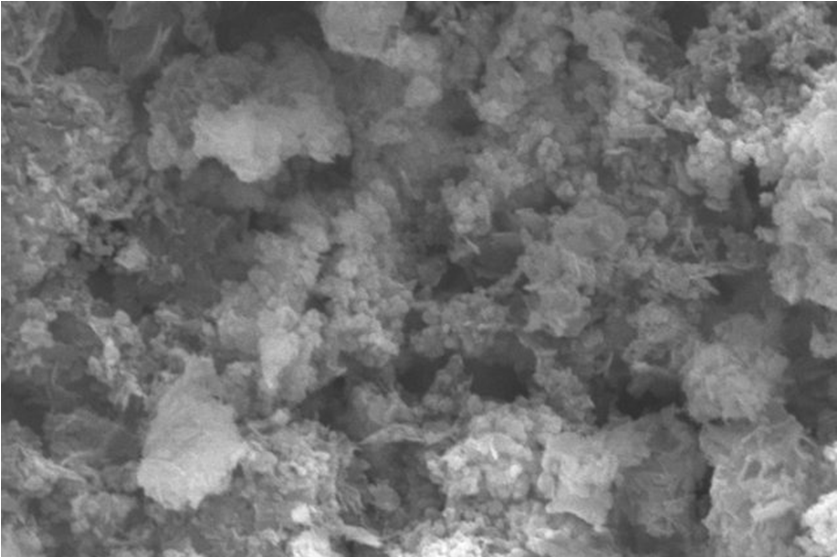
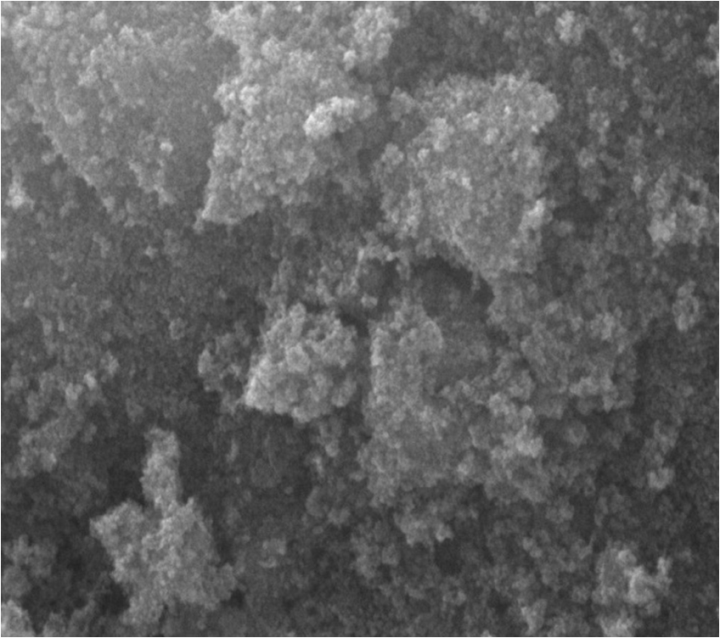
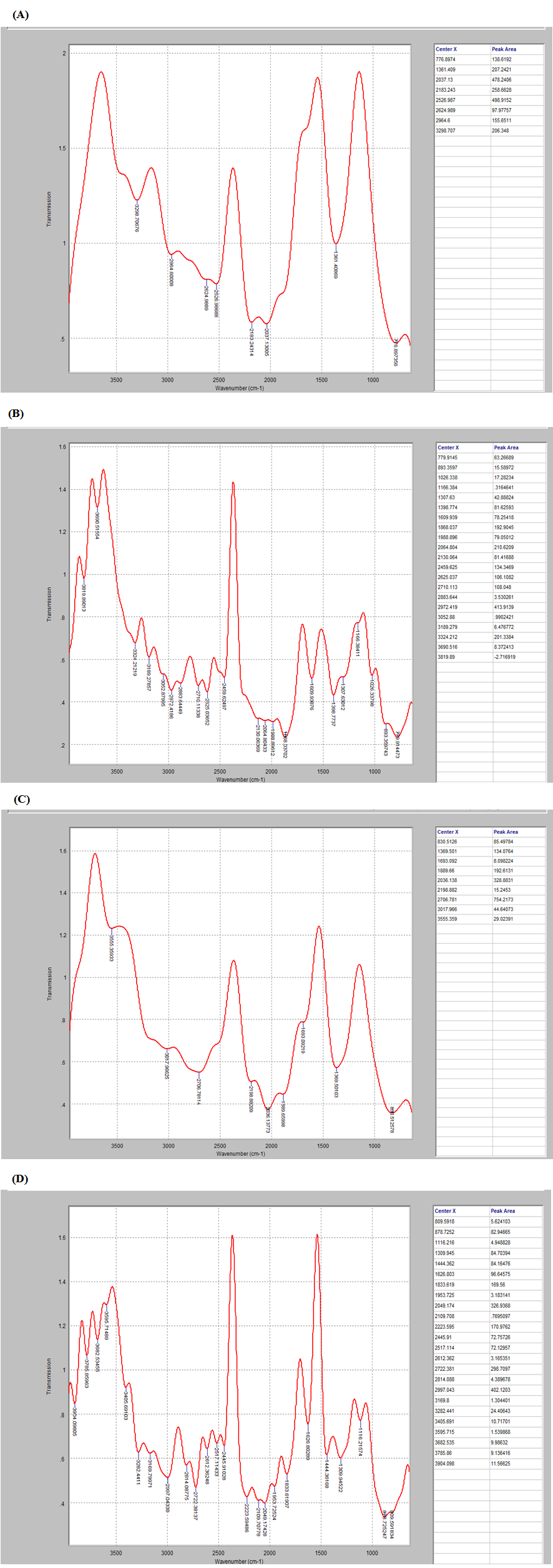
The result of the metal concentration of Aspilia africana leaf extract analyzed by Atomic Absorption Spectroscopy (AAS) is presented in Table 1 while the metal concentration of industrial wastewater before and after treatment with Aspilia africana Zerovalent Iron Nanoparticles is presented in Table 4. The Fourier transform infrared (FTIR) analysis of Aspilia africana leaf extract and its synthesized nanoparticle are presented in Table 2 and Table 3. The spectra for the leaf extract and that of the treated wastewater are shown in appendices 1(A-D). Analysis of metals removed by synthesized nanoparticle ratios are presented in Table 5. Scanning electron micrographs (SEM) results of synthesized nanoparticles are presented in Figure 1 and Figure 2.


Atomic absorption analysis of Aspilia africana plant extract (Table 1) shows that the leaf extract has ingrained metals in them which also include five essential (Mn, Cu, Fe, Co and Zn) metals of varying concentrations. Table 2 shows the FTIR spectrum of Aspilia africana leaf extract with O-H stretching at 3427 cm-1 for alcohols, polyphenols or water is observed. The FTIR spectrum of Aa-nZVI is presented in Table 3 showing difference with that of Aspilia africana leaf extract alone (Table 2) and comprises of absorption peaks (cm-1) at 3691, 3324, 3189, 3053, 2972, 2710, 2130, 2065, 1989, 1610, 1399, 1166, 780 which indicate vibrational stretching and bending of alcohols, secondary amines, carboxylic acid, alkene, alkanes, aldehyde, ketene, isothiocyanate, aromatics, α, β-unsaturated ketone, sulfate, CO stretching of secondary alcohol and 1, 3-disubstituted alkene respectively. Three-dimensional images of the nanoparticles were confirmed by the Scanning Electron Microscopy (SEM) image (Figure 1 and Figure 2) which is very important for the identification of the shapes of the synthesized nanoparticles. SEM image of nZVI particles as seen in Figure 1 indicates that nZVI is composed of individual, broad spherical particles that form aggregates and chains. These large nZVI particle sizes provide larger surface area for contaminant adsorption. SEM micrographs of Aa-nZVI (Figure 2) showed that most of the nanoparticles have broad cuboidal morphology while some were present with irregular shapes and agglomerated sizes could be attributed to the polyphenol concentration in Aspilia africana extract which plays important role in final formation structure and particles size of these green synthesis magnetite nanoparticles 36. Table 4 shows the concentrations of metals after treatment with varying ratios of synthesized Fe nanoparticle to wastewater. Some metals increased in concentration (Table 4) while others were removed. The most removed metals were cadmium and mercury with 100% removal at some ratios. Mercury achieved 100% removal with all Aa-nZVI to wastewater ratio while Cadmium achieved 100% with 1:1. Chromium and copper were removed by 69 and 16% respectively with the same ratio while only 11% of cobalt removal was achieved with 1:3 Aa-nZVI to wastewater ratio. The metals that increased in concentration such as Mn, Fe and Zn are essential minerals and their increase may be attributed to bioaccumulation of the metals in the plant extract. The metals in this category were not removed by Aa-nZVI. This could also be due to interference from bioaccumulation of metal ions in the plant leaves (Table 1). The increase in the concentration of the essential metals Mn, Fe and Zn can be used as an advantage to boost deficiency of these minerals in the discharged water. Chromium and mercury are the most removed metals for 1:6 ratio. All these had 100% removal by Aa-nZVI for the specified ratios. Only nZVI was able to remove lead from industrial wastewater as Aa-nZVI failed for the metal. Comparatively, Aa-nZVI removed more metal ions from wastewater than nZVI and cellulose functionalized silver and zinc nanoparticles. Copper and cadmium were removed by Aa-nZVI in addition to the metals removed by cellulose functionalized silver and zinc NPs which are Hg, Cr, Ni, Cr and Pb 43.
Zerovalent Iron Nanoparticles (nZVI) and Aspilia africana Zerovalent Iron Nanoparticles (Aa-nZVI) were synthesized, characterized and utilized for the treatment of wastewater from Indorama Eleme Petrochemicals which contained manganese, chromium, nickel, copper, iron, zinc, cadmium, lead, mercury and cobalt. Aa-nZVI was more effective than nZVI for the removal some metals while some increased in their concentrations probably due to their bioaccumulation in the aspilia Africana leaves. The most efficient nanoparticle:wastewater is 1:6 ratio. From this study, therefore, Aspilia africana stabilized iron nanoparticle (Aa-nZVI) can be employed for effective removal of mercury and cadmium from industrial wastewater.
The results after treatment of the wastewater with different ratios (Aa-nZVI:wastewater - 1:1, 1:3, 1:6) of stabilized nanoparticle (Aa-nZVI) showed 100% removal of mercury. Removal of cadmium, chromium and copper were 100, 69 and 15% respectively by 1:1 ratio of the wastewater with the stabilized nanoparticle (Aa-nZVI). Manganese, iron, zinc and lead metals were either poorly removed, not removed or increased in concentration after treatment of the wastewater.
Further research will focus on the mechanism of metal pollutant (mercury and cadmium) removal from wastewater using Aspilia africana stabilized Iron-nanoparticles.
The Authors declare that they have no conflict of interest.
| [1] | S. Hasan, “A Review on Nanoparticles: their synthesis and types,” Res. Recent Sci. 4, 1-3, 2015. | ||
| In article | |||
| [2] | H. Zeng, S. Sun, J. Li, Z.L. Wang, J.P. Liu, “Tailoring magnetic properties of core/shell nanoparticles,” App. Phys. Lett. 85, 792-794, 2004. | ||
| In article | View Article | ||
| [3] | J.N. Tiwari, R.N Tiwari, K.S. Kim, “Zero-dimensional, one-dimensional, two-dimensional and three-dimensional nanostructured materials for advanced electrochemical energy devices,” Prog. Mater. Sci. 57, 724-803, 2012. | ||
| In article | View Article | ||
| [4] | S. Eskandarinezhad R. Khosravi, M. Amarzadeh, P. Mondal, F.J.C. Magalhães Filho, “Application of different Nanocatalysts in industrial effluent treatment: A review,” J. Compos. Compd., 3, 43-56, 2021. | ||
| In article | View Article | ||
| [5] | L. Bazli, A. Khavandi, M.A. Boutorabi, M. Karrabi, “Correlation between viscoelastic behavior and morphology of nanocomposites based on SR/EPDM blends compatibilized by maleic anhydride,” Polym. 113, 156-166, 2017. | ||
| In article | View Article | ||
| [6] | S. Schultz, D.R. Smith, J.J. Mock, D.A. Schultz, “Single-target molecule detection with nonbleaching multi-colour optical immunolabels,” PNAS 97, 996-1001, 2000. | ||
| In article | View Article PubMed | ||
| [7] | E.C. Dreaden, A.M. Alkilany, X. Huang, C.J. Murphy, M.A. El-Sayed, “The golden age: gold nanoparticles for biomedicine,” Chem. Soc. Rev. 41, 2740-2779, 2012. | ||
| In article | View Article PubMed | ||
| [8] | X. Luo, A. Morrin, A.J. Killard, M.R. Smyth, “Application of nanoparticles in electrochemical sensors and biosensors,” Electroanalys. 18, 319-326, 2006. | ||
| In article | View Article | ||
| [9] | S. Foley, C. Crowley, M. Smaihi, C. Bonfils, B.F. Erlanger, P. Seta, C. Larrogue, “Cellular localization of a water-soluble fullerene derivative,” Biochem. Biophys. Res. Commun. 294, 116-119, 2002. | ||
| In article | View Article | ||
| [10] | B. Kumar, “Green synthesis of gold, silver, and iron nanoparticles for the degradation of organic pollutants in wastewater” J. Comp. Sci,, 5, 219, 2021. | ||
| In article | View Article | ||
| [11] | K.J. Prashant, H.S. Ivan, A.S. Mostafa, “Au NPs target cancer,” Nanotoday 2, 18-29, 2007. | ||
| In article | View Article | ||
| [12] | F. Fu, D.D. Dionysiou, H. Liu, “The use of zero-valent iron for groundwater remediation and wastewater treatment: a review,” J. Hazard. Mater. 267, 194-205, 2014. | ||
| In article | View Article PubMed | ||
| [13] | T. Wang, X. Jin, Z. Chen, M. Megharaj, R. Naidu, “Green synthesis of Fe nanoparticles using eucalyptus leaf extracts for treatment of eutrophic wastewater,” Sci. Total Environ. 466, 210-213, 2014. | ||
| In article | View Article PubMed | ||
| [14] | A. Chaudhry, F. Bashir, S.F. Adil, S. Saif, M.R. Shaik, M.R. Hatshan , B. Shaik, “Ascorbic acid-mediated Fe/Cu nanoparticles and their application for removal of COD and phenols from industrial wastewater’’, J. King Saud Univ.Sci, 34, 101927, 2022. | ||
| In article | View Article | ||
| [15] | T.A Aragaw, F.M. Bogale, B.A. Aragaw, “Iron-based nanoparticles in wastewater treatment: A review on synthesis methods, applications, and removal mechanisms” J. Saudi Chem. Soc., 25, 101280, 2021 | ||
| In article | View Article | ||
| [16] | T. Masciangioli, W.X. Zhang, “Peer reviewed: environmental technologies at the Nanoscale,” Environ. Sci. Technol. 37, 102a-108a, 2003. | ||
| In article | View Article PubMed | ||
| [17] | M. Golobic, A. Jemec, D. Drobne, T. Romih, K. Kasemetsand, A. Kahru, “Upon exposure of Cu nanoparticles, accumulation of copper in the isopod Porcellio scaberis due to the dissolved Cu ions inside the digestive tract”, Environ. Sci. Technol. 46, 12112-12119, 2012. | ||
| In article | View Article PubMed | ||
| [18] | M. Singh, S. Manikandan, A.K. Kumaraguru, “Nanoparticles: A new technology with wide applications,” Res. J. Nanosci. Nanotechnol. (2011), 1-11, 2011. | ||
| In article | View Article | ||
| [19] | S. Iravani, “Green synthesis of metal nanoparticles using plants,” Green Chem. 13, 2638-2650, 2011. | ||
| In article | View Article | ||
| [20] | S.A. Bello, J.O. Agunsoye, S.B. Hassan, “Synthesis of coconut shell nanoparticles via a top down approach: assessment of milling duration on the particle sizes and morphologies of coconut shell nanoparticles,” Mater. Lett. 159, 514-519, 2015. | ||
| In article | View Article | ||
| [21] | D.K. Tiwari, J. Behari, P. Sen, “Time and dose-dependent antimicrobial potential of Ag nanoparticles synthesized by top-down approach,” Curr. Sci. 95, 647-655, 2008. | ||
| In article | |||
| [22] | G. Priyadarshana, N. Kottegoda, A. Senaratne, A. de Alwis, V. Karunaratne, “Synthesis of magnetite nanoparticles by top-down approach from a high purity ore,” J. Nanomater. 16, 317, 2015. | ||
| In article | View Article | ||
| [23] | P. Garrigue, M. H. Delville, C. Labrugere, E. Cloutet, P.J. Kulesza, J.P. Morand, A. Kuhn, “Top-down approach for the preparation of colloidal carbon Nanoparticles,” Chem. Mater. 16, 2984-2986, 2004. | ||
| In article | View Article | ||
| [24] | M. Sharma, S. Kumara, O.P. Pandey, “Photo-physical and morphological studies of organically passivated core-shell ZnS nanoparticles,” Dig. J. Nanomater. Biostruct. 3, 189-197, 2008. | ||
| In article | |||
| [25] | X. Zhang, Z. Lai, Z. Liu, C. Tan, Y. Huang, B. Li, M. Zhao, L. Xie, W. Huang, H. Zhang, “A facile and universal top-down method for preparation of monodisperse transition-metal dichalcogenide nanodots,” Angew. Chem. Int. Ed. 54, 5425-5428, 2015. | ||
| In article | View Article PubMed | ||
| [26] | Y. Zhou, C.K. Dong, L. Han, J. Yang, X.W. Du, “Top- down preparation of active cobalt oxide catalyst” ACS Catal. 6, 6699-6703, 2016. | ||
| In article | View Article | ||
| [27] | R. Thiruvengadathan, V. Korampally, A. Ghosh, N. Chanda, K. Gangopadhyay, S. Gangopadhyay, “Nanomaterial Processing using Self-assembly-bottom–up chemical and biological approaches,” Rep. Prog. Phys. 76, 3-8, 2013. | ||
| In article | View Article PubMed | ||
| [28] | S. Ahmed, S. Annu, S.S. Yudha, “Biosynthesis of gold nanoparticles: a green approach J. Photochem. Photobiol. B,” 161, 141-153, 2016. | ||
| In article | View Article PubMed | ||
| [29] | C.W. Agyakwa, I.O Akobundu, “A handbook of West African weeds, 2nd edition, IITA, Ibadan Nigeria,” 170-171, 1998. | ||
| In article | |||
| [30] | R. Komakech, M.G. Matsabisa, Y. Kang, “The wound healing potential of Aspilia africana (Pers.) CD Adams (Asteraceae)” Evidence-Based Complementary and Alternative Medicine, 2019. | ||
| In article | View Article PubMed | ||
| [31] | C.O. Okoli, P.A. Akah, S.V. Nwafor, A.I. Anisiobi, I.N. Ibegbunam, O. Erojikwe, “Anti-inflammatory activity of hexane leaf extract of Aspilia africana CD Adams” J. Ethnopharmacol. 109, 219-225, 2007. | ||
| In article | View Article PubMed | ||
| [32] | A.G. Christian, A.G. Mfon, E.A. Dick, E. David-Oku, A.J. Linus, E.B. Chukwuma, “Antimalarial potency of the leaf extract of Aspilia africana (Pers.) CD Adams” Asian Pac. J. Trop. Med. 5, 126-129, 2012. | ||
| In article | View Article | ||
| [33] | O.R. Ezeigbo, “The antimicrobial and phytochemical analysis of the leaves of aspilia africana on clinical isolates” Int. J. Infec. Dis. 45, 124-125, 2016. | ||
| In article | View Article | ||
| [34] | G.U. Obuzor, J.N. Ntui, “Fatty acid composition of Aspilia africana (Nigerian)” Int. Arch. Appl. Sci. Technol. 1, 13-19, 2010. | ||
| In article | |||
| [35] | G.U. Obuzor, J.N. Ntui, “Essential oil composition of Aspilia africana (Pers.) CD Adams Port Harcourt, Nigerian,” Int. J. Acad. Res. 3, 140-143, 2011. | ||
| In article | |||
| [36] | A. Boyo, H. Boyo, O. Kesinro, “Annealing effect on efficiency of Aspilia africana flowers dye sensitized solar cells,” Int. J. Sustainable Green Energy 4, 137-140, 2015. | ||
| In article | |||
| [37] | J.C. Osuwa, C. Okere, “Aspilia africana extracts as organic corrosion inhibitor of mild steel in corrosive acidic media,” IOSR J. Environ. Sci. Toxicol. Food Technol. 4, 6165, 2013. | ||
| In article | View Article | ||
| [38] | A. Alqudami, N.A. Alhemiary, S. Munassar, “Removal of Pb (II) and Cd (II) ions from water by Fe and Ag nanoparticles prepared using electro-exploding wire technique,” Environ. Sci. Pollut. Res. 19, 2832-2841, 2012. | ||
| In article | View Article PubMed | ||
| [39] | O.U. Igwe, E.S. Ekebo, “Biofabrication of cobalt nanoparticles using leaf extract of Chromolaena odorata and their potential antibacterial application,” Res. J. Chem. Sci., 8, 11-17, 2018. | ||
| In article | |||
| [40] | T.P. Gaines, G.A. Mitchell, “Chemical Methods for soil and plant analysis,” Agronomy Handbook 1, 105, 1979. | ||
| In article | |||
| [41] | T. Shahwan, S.A. Sirriah, M. Nairat, E. Boyacı, A.E. Eroğlu, T.B. Scott, K.R. Hallam, “Green synthesis of iron nanoparticles and their application as a Fenton-like catalyst for the degradation of aqueous cationic and anionic dyes,” Chem. Eng. J. 172, 258-266, 2011. | ||
| In article | View Article | ||
| [42] | E.E. Elemike, D.C. Onwudiwe, A.C. Ekennia, C.U. Sonde, R.C. Ehiri, “Green synthesis of Ag/Ag2O nanoparticles using aqueous leaf extract of Eupatorium odoratum and its microbial and mosquito larvicidal activities,” Molecules 22, 1-15, 2017. | ||
| In article | View Article PubMed | ||
| [43] | A. Attarad, M. Abdul, H. Ijaz, H. Ishtiaque, Z. Muhammad, “Effective removal of metal ions from aqueous solution by silver and zinc nanoparticles functionalized cellulose: Isotherm, kinetics and statistical supposition of process,” Environ. Nanotechnol. Monit. Manage. 9, 1-11, 2018. | ||
| In article | View Article | ||
Published with license by Science and Education Publishing, Copyright © 2022 Chukwudi Chidozie Aguomba, Remy Ukachukwu Duru and Gloria Ukalina Obuzor
 This work is licensed under a Creative Commons Attribution 4.0 International License. To view a copy of this license, visit
http://creativecommons.org/licenses/by/4.0/
This work is licensed under a Creative Commons Attribution 4.0 International License. To view a copy of this license, visit
http://creativecommons.org/licenses/by/4.0/
| [1] | S. Hasan, “A Review on Nanoparticles: their synthesis and types,” Res. Recent Sci. 4, 1-3, 2015. | ||
| In article | |||
| [2] | H. Zeng, S. Sun, J. Li, Z.L. Wang, J.P. Liu, “Tailoring magnetic properties of core/shell nanoparticles,” App. Phys. Lett. 85, 792-794, 2004. | ||
| In article | View Article | ||
| [3] | J.N. Tiwari, R.N Tiwari, K.S. Kim, “Zero-dimensional, one-dimensional, two-dimensional and three-dimensional nanostructured materials for advanced electrochemical energy devices,” Prog. Mater. Sci. 57, 724-803, 2012. | ||
| In article | View Article | ||
| [4] | S. Eskandarinezhad R. Khosravi, M. Amarzadeh, P. Mondal, F.J.C. Magalhães Filho, “Application of different Nanocatalysts in industrial effluent treatment: A review,” J. Compos. Compd., 3, 43-56, 2021. | ||
| In article | View Article | ||
| [5] | L. Bazli, A. Khavandi, M.A. Boutorabi, M. Karrabi, “Correlation between viscoelastic behavior and morphology of nanocomposites based on SR/EPDM blends compatibilized by maleic anhydride,” Polym. 113, 156-166, 2017. | ||
| In article | View Article | ||
| [6] | S. Schultz, D.R. Smith, J.J. Mock, D.A. Schultz, “Single-target molecule detection with nonbleaching multi-colour optical immunolabels,” PNAS 97, 996-1001, 2000. | ||
| In article | View Article PubMed | ||
| [7] | E.C. Dreaden, A.M. Alkilany, X. Huang, C.J. Murphy, M.A. El-Sayed, “The golden age: gold nanoparticles for biomedicine,” Chem. Soc. Rev. 41, 2740-2779, 2012. | ||
| In article | View Article PubMed | ||
| [8] | X. Luo, A. Morrin, A.J. Killard, M.R. Smyth, “Application of nanoparticles in electrochemical sensors and biosensors,” Electroanalys. 18, 319-326, 2006. | ||
| In article | View Article | ||
| [9] | S. Foley, C. Crowley, M. Smaihi, C. Bonfils, B.F. Erlanger, P. Seta, C. Larrogue, “Cellular localization of a water-soluble fullerene derivative,” Biochem. Biophys. Res. Commun. 294, 116-119, 2002. | ||
| In article | View Article | ||
| [10] | B. Kumar, “Green synthesis of gold, silver, and iron nanoparticles for the degradation of organic pollutants in wastewater” J. Comp. Sci,, 5, 219, 2021. | ||
| In article | View Article | ||
| [11] | K.J. Prashant, H.S. Ivan, A.S. Mostafa, “Au NPs target cancer,” Nanotoday 2, 18-29, 2007. | ||
| In article | View Article | ||
| [12] | F. Fu, D.D. Dionysiou, H. Liu, “The use of zero-valent iron for groundwater remediation and wastewater treatment: a review,” J. Hazard. Mater. 267, 194-205, 2014. | ||
| In article | View Article PubMed | ||
| [13] | T. Wang, X. Jin, Z. Chen, M. Megharaj, R. Naidu, “Green synthesis of Fe nanoparticles using eucalyptus leaf extracts for treatment of eutrophic wastewater,” Sci. Total Environ. 466, 210-213, 2014. | ||
| In article | View Article PubMed | ||
| [14] | A. Chaudhry, F. Bashir, S.F. Adil, S. Saif, M.R. Shaik, M.R. Hatshan , B. Shaik, “Ascorbic acid-mediated Fe/Cu nanoparticles and their application for removal of COD and phenols from industrial wastewater’’, J. King Saud Univ.Sci, 34, 101927, 2022. | ||
| In article | View Article | ||
| [15] | T.A Aragaw, F.M. Bogale, B.A. Aragaw, “Iron-based nanoparticles in wastewater treatment: A review on synthesis methods, applications, and removal mechanisms” J. Saudi Chem. Soc., 25, 101280, 2021 | ||
| In article | View Article | ||
| [16] | T. Masciangioli, W.X. Zhang, “Peer reviewed: environmental technologies at the Nanoscale,” Environ. Sci. Technol. 37, 102a-108a, 2003. | ||
| In article | View Article PubMed | ||
| [17] | M. Golobic, A. Jemec, D. Drobne, T. Romih, K. Kasemetsand, A. Kahru, “Upon exposure of Cu nanoparticles, accumulation of copper in the isopod Porcellio scaberis due to the dissolved Cu ions inside the digestive tract”, Environ. Sci. Technol. 46, 12112-12119, 2012. | ||
| In article | View Article PubMed | ||
| [18] | M. Singh, S. Manikandan, A.K. Kumaraguru, “Nanoparticles: A new technology with wide applications,” Res. J. Nanosci. Nanotechnol. (2011), 1-11, 2011. | ||
| In article | View Article | ||
| [19] | S. Iravani, “Green synthesis of metal nanoparticles using plants,” Green Chem. 13, 2638-2650, 2011. | ||
| In article | View Article | ||
| [20] | S.A. Bello, J.O. Agunsoye, S.B. Hassan, “Synthesis of coconut shell nanoparticles via a top down approach: assessment of milling duration on the particle sizes and morphologies of coconut shell nanoparticles,” Mater. Lett. 159, 514-519, 2015. | ||
| In article | View Article | ||
| [21] | D.K. Tiwari, J. Behari, P. Sen, “Time and dose-dependent antimicrobial potential of Ag nanoparticles synthesized by top-down approach,” Curr. Sci. 95, 647-655, 2008. | ||
| In article | |||
| [22] | G. Priyadarshana, N. Kottegoda, A. Senaratne, A. de Alwis, V. Karunaratne, “Synthesis of magnetite nanoparticles by top-down approach from a high purity ore,” J. Nanomater. 16, 317, 2015. | ||
| In article | View Article | ||
| [23] | P. Garrigue, M. H. Delville, C. Labrugere, E. Cloutet, P.J. Kulesza, J.P. Morand, A. Kuhn, “Top-down approach for the preparation of colloidal carbon Nanoparticles,” Chem. Mater. 16, 2984-2986, 2004. | ||
| In article | View Article | ||
| [24] | M. Sharma, S. Kumara, O.P. Pandey, “Photo-physical and morphological studies of organically passivated core-shell ZnS nanoparticles,” Dig. J. Nanomater. Biostruct. 3, 189-197, 2008. | ||
| In article | |||
| [25] | X. Zhang, Z. Lai, Z. Liu, C. Tan, Y. Huang, B. Li, M. Zhao, L. Xie, W. Huang, H. Zhang, “A facile and universal top-down method for preparation of monodisperse transition-metal dichalcogenide nanodots,” Angew. Chem. Int. Ed. 54, 5425-5428, 2015. | ||
| In article | View Article PubMed | ||
| [26] | Y. Zhou, C.K. Dong, L. Han, J. Yang, X.W. Du, “Top- down preparation of active cobalt oxide catalyst” ACS Catal. 6, 6699-6703, 2016. | ||
| In article | View Article | ||
| [27] | R. Thiruvengadathan, V. Korampally, A. Ghosh, N. Chanda, K. Gangopadhyay, S. Gangopadhyay, “Nanomaterial Processing using Self-assembly-bottom–up chemical and biological approaches,” Rep. Prog. Phys. 76, 3-8, 2013. | ||
| In article | View Article PubMed | ||
| [28] | S. Ahmed, S. Annu, S.S. Yudha, “Biosynthesis of gold nanoparticles: a green approach J. Photochem. Photobiol. B,” 161, 141-153, 2016. | ||
| In article | View Article PubMed | ||
| [29] | C.W. Agyakwa, I.O Akobundu, “A handbook of West African weeds, 2nd edition, IITA, Ibadan Nigeria,” 170-171, 1998. | ||
| In article | |||
| [30] | R. Komakech, M.G. Matsabisa, Y. Kang, “The wound healing potential of Aspilia africana (Pers.) CD Adams (Asteraceae)” Evidence-Based Complementary and Alternative Medicine, 2019. | ||
| In article | View Article PubMed | ||
| [31] | C.O. Okoli, P.A. Akah, S.V. Nwafor, A.I. Anisiobi, I.N. Ibegbunam, O. Erojikwe, “Anti-inflammatory activity of hexane leaf extract of Aspilia africana CD Adams” J. Ethnopharmacol. 109, 219-225, 2007. | ||
| In article | View Article PubMed | ||
| [32] | A.G. Christian, A.G. Mfon, E.A. Dick, E. David-Oku, A.J. Linus, E.B. Chukwuma, “Antimalarial potency of the leaf extract of Aspilia africana (Pers.) CD Adams” Asian Pac. J. Trop. Med. 5, 126-129, 2012. | ||
| In article | View Article | ||
| [33] | O.R. Ezeigbo, “The antimicrobial and phytochemical analysis of the leaves of aspilia africana on clinical isolates” Int. J. Infec. Dis. 45, 124-125, 2016. | ||
| In article | View Article | ||
| [34] | G.U. Obuzor, J.N. Ntui, “Fatty acid composition of Aspilia africana (Nigerian)” Int. Arch. Appl. Sci. Technol. 1, 13-19, 2010. | ||
| In article | |||
| [35] | G.U. Obuzor, J.N. Ntui, “Essential oil composition of Aspilia africana (Pers.) CD Adams Port Harcourt, Nigerian,” Int. J. Acad. Res. 3, 140-143, 2011. | ||
| In article | |||
| [36] | A. Boyo, H. Boyo, O. Kesinro, “Annealing effect on efficiency of Aspilia africana flowers dye sensitized solar cells,” Int. J. Sustainable Green Energy 4, 137-140, 2015. | ||
| In article | |||
| [37] | J.C. Osuwa, C. Okere, “Aspilia africana extracts as organic corrosion inhibitor of mild steel in corrosive acidic media,” IOSR J. Environ. Sci. Toxicol. Food Technol. 4, 6165, 2013. | ||
| In article | View Article | ||
| [38] | A. Alqudami, N.A. Alhemiary, S. Munassar, “Removal of Pb (II) and Cd (II) ions from water by Fe and Ag nanoparticles prepared using electro-exploding wire technique,” Environ. Sci. Pollut. Res. 19, 2832-2841, 2012. | ||
| In article | View Article PubMed | ||
| [39] | O.U. Igwe, E.S. Ekebo, “Biofabrication of cobalt nanoparticles using leaf extract of Chromolaena odorata and their potential antibacterial application,” Res. J. Chem. Sci., 8, 11-17, 2018. | ||
| In article | |||
| [40] | T.P. Gaines, G.A. Mitchell, “Chemical Methods for soil and plant analysis,” Agronomy Handbook 1, 105, 1979. | ||
| In article | |||
| [41] | T. Shahwan, S.A. Sirriah, M. Nairat, E. Boyacı, A.E. Eroğlu, T.B. Scott, K.R. Hallam, “Green synthesis of iron nanoparticles and their application as a Fenton-like catalyst for the degradation of aqueous cationic and anionic dyes,” Chem. Eng. J. 172, 258-266, 2011. | ||
| In article | View Article | ||
| [42] | E.E. Elemike, D.C. Onwudiwe, A.C. Ekennia, C.U. Sonde, R.C. Ehiri, “Green synthesis of Ag/Ag2O nanoparticles using aqueous leaf extract of Eupatorium odoratum and its microbial and mosquito larvicidal activities,” Molecules 22, 1-15, 2017. | ||
| In article | View Article PubMed | ||
| [43] | A. Attarad, M. Abdul, H. Ijaz, H. Ishtiaque, Z. Muhammad, “Effective removal of metal ions from aqueous solution by silver and zinc nanoparticles functionalized cellulose: Isotherm, kinetics and statistical supposition of process,” Environ. Nanotechnol. Monit. Manage. 9, 1-11, 2018. | ||
| In article | View Article | ||