Performance-enhancing substances (PESs) have unfortunately become ubiquitous in numerous sports; some of these substances pose a serious threat to the health and well-being of athletes. This study aimed to: assess the prevalence and determinants of PESs use among gym attenders in Makkah, Saudi Arabia Research design: a cross-sectional study. Subjects: a number of 122 adult gymnasts in Makkah city. Tool: The data was collected through an on line self-administered questionnaire. Results: This study revealed that 40% of participants using PESs, 63.8 % of them knew the chemical composition of PESs, majority of them having PESs from online shopping and fitness stores. Participants using PESs for improving appearance, sexuality and power. The duration of usage was less than six months and stop for causes other than price or side effects. The most common used PESs were creatine, alagenin and beta alanine. There were a statistical significance difference between the type of PESs used and age, gender and education while there was no statistical significance difference between the type of PESs used and marital status. Conclusion: less than half of participants using PESs for less than six months, significant differences were found between PESs and gender, age and education. Recommendations: counseling and education for gym users about the adverse effects of PESs, strict regulations should be done for screening and manipulating these substances.
Performance-enhancing drugs (PEDs) or performance enhancing substances (PEDs) are pharmacologic agents that athletes and non-athletes use to enhance performance or to become leaner or more muscular. In sport, doping conventionally denotes to the use of PESs, particularly those that are forbidden by the international world anti-doping agency (WADA) 1, 2.
At present, several categories of PESs are popular among noncompetitive (recreational) and professional athletes. The most prevalent agents abused by the athletes are anabolic androgenic steroids (AASs). In addition to AASs, other hormones with potential anabolic activity like human growth hormone (hGH), insulin and insulin-like growth factor-1 (IGF-1) may be abused by the athletes. Recently, the widespread abuse of stimulant agents such as Clenbuterol (an_adrenergic agonist), amphetamine derivatives, ephedrine, pseudoephedrine and caffeine has been documented among athletes 3, 4.
Numerous investigations have indicated high rate of PED use alongside lack of scientific knowledge about these drugs all over the world. In this regard, it was estimated that about 1% of the population misuse AASs, while there are very limited data about use of other types of PED in the different parts of the world. Unfortunately, in recent years, widespread use of PEDs among recreational rather than professional athletes has led to the rapid rise of PED use in the different populations around the world 1.
The use of PESs in sports is not a new phenomenon and dates back centuries; but it became much more popular by the introduction of AASs. In addition, Use of (PESs) among athletes, or what is called “doping”, has been increasing during the last decades despite of the improved testing techniques. The World Anti-Doping Agency was initiated in 1999 after finding a large amount of PESs at a sport event in France and aimed to prevent doping practices in sports 5.
The prevalence of PESs use among athletes was found to vary from 5% to more than 70%, particularly among body building athletes. Most of these studies were conducted using self-administered questionnaires which associated with high chance of reporting bias. Reports showed that even banned and illicit drugs were used to enhance performance among 13% of the athletes and 15% used cognitive enhancing drugs to improve focus and memory. The international lifetime prevalence of AAS use is 6.4% among males and 1.6% among females. The chemical composition of PESs was manipulated to generate new substances to avoid detection during testing 6, 7.
The prevalence of PESs use among athletes in Saudi Arabia is extremely high, since it ranged from 24.5% in Riyadh to 70% in Madinah city. This can be attributed to the lack of regulations of PESs use among gym attenders, many serious side effect of PESs are encountered. Example of these substances is androgenic anabolic steroids that considered dangerous both physically and mentally. Psychiatric side-effects can occur among healthy people without a predisposition to psychiatric disease. The side-effects of androgenic anabolic steroids can be harmful not only to the misuser but also to people in contact with violent offenders 8, 9, 10, 11. Based on these serious side effects and ongoing increased prevalence of PISs among Saudi, this study aimed to assess the prevalence and determinants of PESs use among gym attenders in Makkah, Saudi Arabia.
Study design: a cross-sectional study was utilized to conduct the study.
Setting: The study was carried out virtually using a link of a Google form shared on mobile phones of gym attenders and a reminder was send one week later.
Study subjects: a number of 122 adult gymnasts in Makkah city were recruited conveniently in the study based on the following criteria: - aged 15 years and above, lived in Makkah city, accepted to participate in the study and have an access to the internet.
Tools: The data was collected through an on line self-administered questionnaire that was developed by the researchers after reviewing the related literature 1, 12, 13. It was translated in a simple Arabic language to suit the understanding level of all the study subjects. The questionnaire containing two parts:
Part one: it contained questioning about demographic and background variables such as age, sex, nationality, education level, marital status, and income.
Part two: it contained questioning about the prevalence of PESs such as causes for attending the gym, type of PESs such as (anabolic androgenic steroids (AASs, human growth hormone (hGH), insulin and insulin-like growth factor-1 (IGF-1), Clenbuterol (an _adrenergic agonist), amphetamine derivatives, ephedrine, pseudoephedrine and caffeine), sources of attaining PESs, causes of using PESs, duration of using PESs, and causes to quit using PESs.
2.2. Method• An approval to carry out the study was obtained from the responsible authorities after explaining of the purpose of the study and the date and time of data collection.
• The study tool was developed by the researchers after a thorough review of relevant literature 1, 12, 13 and translated into Arabic language.
• The study tool was tested for content validity by five (5) experts in the field of the study. Their opinions elicited regarding the format, layout, consistency, accuracy, and relevancy of the tool.
• The study tool was tested for reliability using Cronbach’s coefficient alpha reliability method. The reliability result was = 0.781.
• The pilot study was carried out on 15 participants in order to test the clarity and applicability of the constructed tool and was excluded from the study. The pilot study has also served to estimate the time needed for each subject to fill in the questionnaire.
• An online Form based on the study tool was created.
• A link of an online survey portal was shared on the mobile phones of gym attenders and a reminder was sending one week later. Participants were invited to complete and submit the survey.
• Data collection started from the mid of March to a mid of April 2020.
2.3. Statistical AnalysisThe data were coded and introduced to the Statistical Package of Social Sciences (SPSS, version 22). The data were analyzed to present the findings in the descriptive and inferential statistics. The descriptive statistics include frequencies and percentages for categorical variables, while means, median and standard deviations were used to summarize numerical data. The significant associations between demographic and background variables will be detected at < 0.05 significance level.
2.4. Ethical ConsiderationsThe researcher described the aim and objectives of the study for the residents and asks them to provide a written consent. No names required to assure confidentiality of data and all information were kept confidential only for this study purposes.
Table 1 showed that less than half of participants (41.5%) aged from 30-40 years of age followed by less than 30 years (27.1%). The lowest frequency for age of 40- 50 years (13.6%). As for nationality, majority of participants (91.5%) were Saudi. Regarding education level, approximately two thirds of participants (62.7%) were bachelor or diploma followed by master or PhD degree (32.2%). In relation to marital status, this table revealed that approximately three quarters of participants (73.3%) were married followed by single (23.7%). Concerning income, this table explained that more than half of participants (58.9%) have more than 12.000 SR monthly.
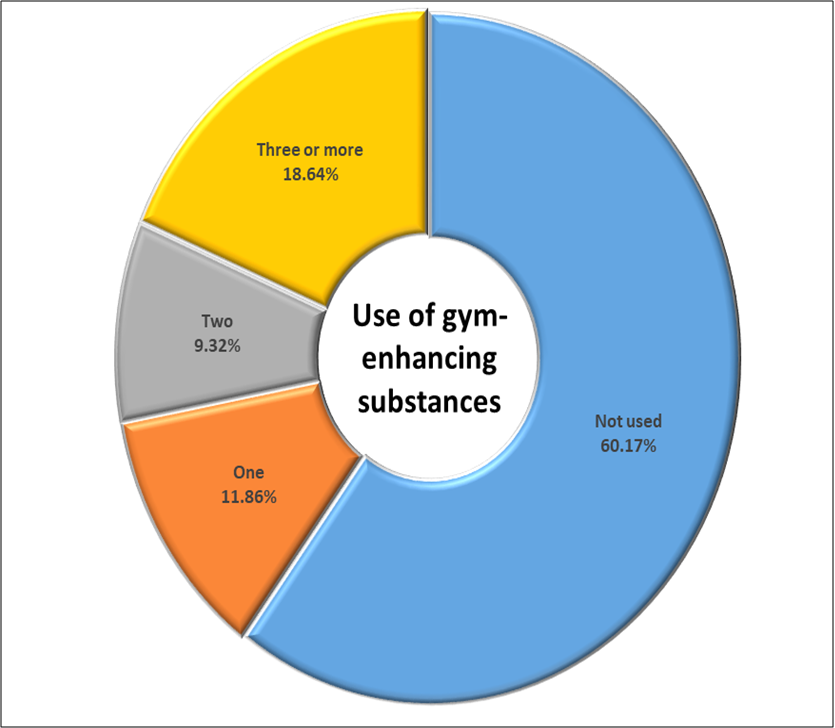
Table 2 showed that more than half of participants (60.17%) were not using PESs, while (18.64%) used three or more types of PESs, followed by (11.86%) using one type of PESs and the lowest percentage (9.32%) for the participants using two types of PESs.
Table 3 showed that more than half of participants (63.8%) know the chemical composition of PESs and one quarter of them (25.4%, 22.9%) obtain these substances from online shopping and fitness stores respectively. In addition, approximately one third of them (32.5%, 29.9%, 26.5%) take them to improve body appearance, improve sexual activity and increase power and strength respectively. More than half of them (61.8%) take the substance for less than 6 months. Regarding previous use of PESs, more than half of participants (57.6%) were use these substances in the past and stop them for causes rather than price or side effects.

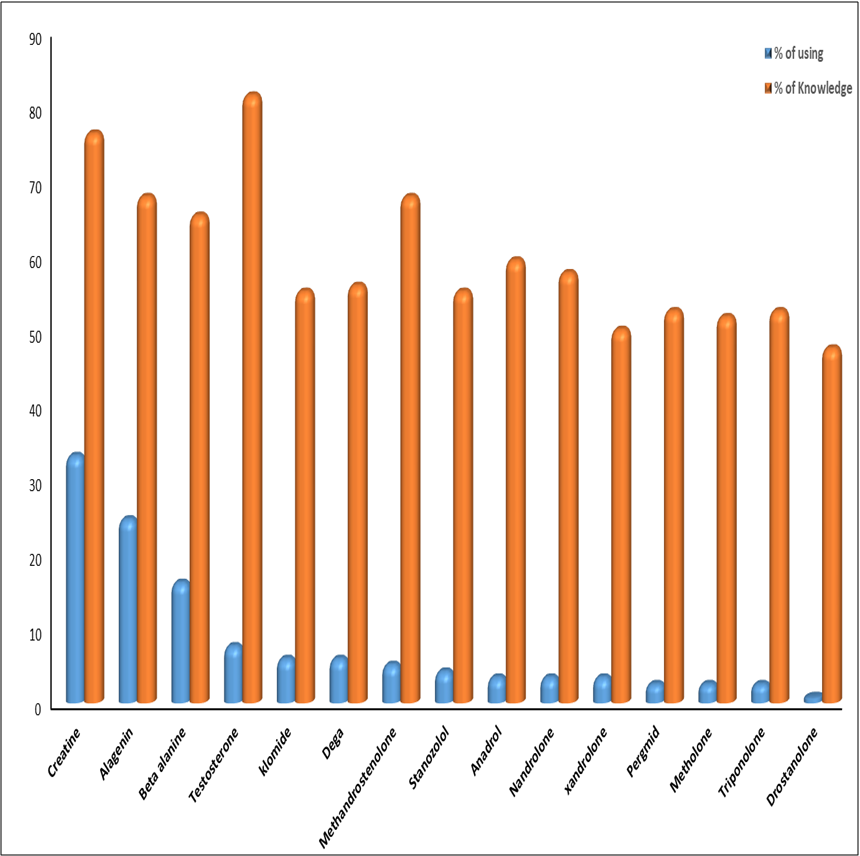
Approximately more than half of participants have knowledge about all types of PESs. There were noticed that majority of PESs used are creatine (33.1%), alaganin (24.8%), and beta alanine (16.1%).

Table 5 revealed that there was a statistical significant difference between participant's using PESs in relation to sex; all of them were males.
Table 6 revealed that there was a statistical significant difference between the type of PESs used and age. This difference found in the form of: pergamid was more frequently used in the age group of 30-40 years and less than 30 years. Creatine and alaginine was frequently used in the age group of less than 30 years of age.
Regarding the type of PESs used and level of education, this table showed that Drostanolone (88.9%), Testosterone (100%), Nandrolone (85.7%), Pergamid (74.4%), creatine (79.3%) and alagenin (84.2%) were frequently used in participants with diploma or bachelor education. (Table 7)
Table 8 showed that there was no statistical significance difference between use of PESs and marital status.
Performance-Enhancing Substances (PESs) are agents that include prescription drugs, dietary supplements, phytochemicals and illicit drugs. They are used to improve the ability to carry out activities such as athletics, mental endurance, work and resistance to stress. Reliance on self-reporting non-medically supervised consumption, differential prescription rates between countries and rise of online pharmacies make studies with PESs challenging. Misuse of PESs among gym users is a growing public health issue Arabia 14. The study aimed to estimate prevalence of PESs used among gym users in Makkah, Saudi.
This study revealed that 40% of participants using PESs, 63.8 % of them knew the chemical composition of PESs, majority of the participants having PESs from online shopping and fitness stores. Participants using PESs reported that the major aim of them is improving appearance, sexuality and power. The mean duration of usage was less than six months and stop for causes other than price or side effects. The most common used PESs were creatine, alagenin and beta alanine. There were a statistical significance difference between the type of PESs used and age, gender and education while there was no statistical significance difference between the type of PESs used and marital status.
These results were consistent with Hocaoglu et al., 2018 who reported that Sixty eight participants (32.4%) used PESs. Among PESs, anabolic steroids were the most commonly used drugs. While the result of the present study was opposite with the same study in relation to sources of obtaining PESs and causes to stop using; as they report that friends and the gym staff were the main providers of PESs. PESs users experienced liver dysfunction, erectile dysfunction, loss of hair, increased aggression and felt irritable 14. Furthermore, Momaya et al., 2015 reported rates of PES use among athletes are variable and range from 5 to 31 % 15.
In relation to the reasons for using PESs, LaBotz, M., & Griesemer, B. A. (2016) reported that substances often are used for appearance related reasons 16. In addition, the results were maximize its strength through the results of Nakhaee et al., 2013 who revealed that the prevalence of anabolic steroid was higher in single and less educated individuals (P < 0.05) 17. Similarly with our results, the main reason for using anabolic steroids was to increase muscle size.
In this respect, Stubbe et al., 2013 highlight that the prevalence of performance enhancing drugs (PED) in sports is not easy to evaluate. Studies are difficult to compare due to varying ages, athletic backgrounds, selection variation, and analysis stratification. Therefore, previous studies showed a wide variance in the prevalence of doping 18. A review by Laure showed that 3-5% of children and adolescents, and 5-15% of adults report using doping substances in sports 19.
Moreover, a study conducted by Al Bishi, K. A., & Afify, A. (2017) concluded that a percentage 24.50%. The testosterone was the most commonly used type followed by Methandrostenolone then Stanozolol. The major sources for obtaining AAS were online shopping (45%) and gym-coach (22.5%). These results are harmoiuos with the study results 8.
This study revealed that 40% of participants using PESs, 63.8 % of them knew the chemical composition of PESs, majority of the participants having PESs from online shopping and fitness stores. Participants using PESs reported that the major aim of them is improving appearance, sexuality and power. The mean duration of usage was less than six months and stop for causes other than price or side effects. The most common used PESs were creatine, alagenin and beta alanine. There were a statistical significance difference between the type of PESs used and age, gender and education while there was no statistical significance difference between the type of PESs used and marital status.
Educational programs to be established in order to increase public awareness, in addition to a tightening of control by the responsible authorities over the sources of PESs procurement.
We thank the gym users for their cooperation. Furthermore, we thank the reviewers for their insightful reading.
| [1] | Haerinejad, M. J., Ostovar, A., Farzaneh, M. R., & Keshavarz, M. (2016). The prevalence and characteristics of performance-enhancing drug use among bodybuilding athletes in the south of Iran, Bushehr. Asian journal of sports medicine, 7(3). | ||
| In article | View Article PubMed | ||
| [2] | Mason, M. A., Giza, M., Clayton, L., Lonning, J., & Wilkerson, R. D. (2001). Use of nutritional supplements by high school football and volleyball players. The Iowa Orthopaedic Journal, 21, 43. | ||
| In article | |||
| [3] | Pope Jr, H. G., Wood, R. I., Rogol, A., Nyberg, F., Bowers, L., & Bhasin, S. (2014). Adverse health consequences of performance-enhancing drugs: an Endocrine Society scientific statement. Endocrine reviews, 35(3), 341-375. | ||
| In article | View Article PubMed | ||
| [4] | Brennan, B. P., Kanayama, G., Hudson, J. I., & Pope, Jr, H. G. (2011). Human growth hormone abuse in male weightlifters. The American journal on addictions, 20(1), 9-13. | ||
| In article | View Article PubMed | ||
| [5] | Toohey, K., & Beaton, A. (2017). International cross-sector social partnerships between sport and governments: The World Anti-Doping Agency. Sport management review, 20(5), 483-496. | ||
| In article | View Article | ||
| [6] | Dietz, P., Ulrich, R., Dalaker, R., Striegel, H., Franke, A. G., Lieb, K., & Simon, P. (2013). Associations between physical and cognitive doping-a cross-sectional study in 2.997 Triathletes. PLoS One, 8(11), e78702. | ||
| In article | View Article PubMed | ||
| [7] | Sagoe, D., Molde, H., Andreassen, C. S., Torsheim, T., & Pallesen, S. (2014). The global epidemiology of anabolic-androgenic steroid use: a meta-analysis and meta-regression analysis. Annals of epidemiology, 24(5), 383-398. | ||
| In article | View Article PubMed | ||
| [8] | Al Bishi, K. A., & Afify, A. (2017). Prevalence and awareness of anabolic androgenic steroids (AAS) among gymnasts in the western province of Riyadh, Saudi Arabia. Electronic physician, 9(12), 6050. | ||
| In article | View Article PubMed | ||
| [9] | Al Nozha, O. M., & Elshatarat, R. A. (2017). Influence of knowledge and beliefs on consumption of performance enhancing agents in north-western Saudi Arabia. Annals of Saudi Medicine, 37(4), 317-325. | ||
| In article | View Article PubMed | ||
| [10] | Aldekhail, N. D. M., Alkredes, A. A., Alkabas, A. S., Al-Saeed, A. A., Alghaidani, M. A., Al-Sohaibani, R. A., & Aljomaiah, S. M. (2018). Knowledge, Attitude and Practice Related to Health Impact of Performance-Enhancing Drugs among the Male Students in Qassim University. The Egyptian Journal of Hospital Medicine, 70(11), 1907-1917. | ||
| In article | View Article | ||
| [11] | Nilsson, S., Baigi, A., Marklund, B., & Fridlund, B. (2001). The prevalence of the use of androgenic anabolic steroids by adolescents in a county of Sweden. The European Journal of Public Health, 11(2), 195-197. | ||
| In article | View Article PubMed | ||
| [12] | Buckman, J. F., Yusko, D. A., White, H. R., & Pandina, R. J. (2009). Risk profile of male college athletes who use performance-enhancing substances. Journal of studies on alcohol and drugs, 70(6), 919-923. | ||
| In article | View Article PubMed | ||
| [13] | Stubbe, J. H., Chorus, A. M., Frank, L. E., de Hon, O., & van der Heijden, P. G. (2014). Prevalence of use of performance enhancing drugs by fitness centre members. Drug testing and analysis, 6(5), 434-438. | ||
| In article | View Article PubMed | ||
| [14] | Hocaoglu, M., Cevikel, A., Mahsereci, I., Aroglan, E., Dinc, E., Memisoglu, N., & Cakmak, D. (2018). Prevalence of Performance-Enhancing Substances in gym goers in north Cyprus using mixed-methods. European Journal of Public Health, 28(suppl_4), cky213-705. | ||
| In article | View Article | ||
| [15] | Momaya, A., Fawal, M., & Estes, R. (2015). Performance-enhancing substances in sports: a review of the literature. Sports Medicine, 45(4), 517-531. | ||
| In article | View Article PubMed | ||
| [16] | LaBotz, M., & Griesemer, B. A. (2016). Use of performance-enhancing substances. Pediatrics, 138(1). | ||
| In article | View Article PubMed | ||
| [17] | Nakhaee, M. R., Pakravan, F., & Nakhaee, N. (2013). Prevalence of use of anabolic steroids by bodybuilders using three methods in a city of Iran. Addiction & health, 5(3-4), 77. | ||
| In article | |||
| [18] | Stubbe, J. H., Chorus, A. M., Frank, L. E., de Hon, O., & van der Heijden, P. G. (2013). Prevalence of use of performance enhancing drugs by fitness centre members. Drug testing and analysis, 6(5), 434-438. | ||
| In article | View Article PubMed | ||
| [19] | Laure, P. (1997). Epidemiologic approach of doping in sport. A review. The Journal of sports medicine and physical fitness, 37(3), 218-224. | ||
| In article | |||
Published with license by Science and Education Publishing, Copyright © 2021 Ahmad Alabbasi and Khalid Abdullah Almasaodi
 This work is licensed under a Creative Commons Attribution 4.0 International License. To view a copy of this license, visit
http://creativecommons.org/licenses/by/4.0/
This work is licensed under a Creative Commons Attribution 4.0 International License. To view a copy of this license, visit
http://creativecommons.org/licenses/by/4.0/
| [1] | Haerinejad, M. J., Ostovar, A., Farzaneh, M. R., & Keshavarz, M. (2016). The prevalence and characteristics of performance-enhancing drug use among bodybuilding athletes in the south of Iran, Bushehr. Asian journal of sports medicine, 7(3). | ||
| In article | View Article PubMed | ||
| [2] | Mason, M. A., Giza, M., Clayton, L., Lonning, J., & Wilkerson, R. D. (2001). Use of nutritional supplements by high school football and volleyball players. The Iowa Orthopaedic Journal, 21, 43. | ||
| In article | |||
| [3] | Pope Jr, H. G., Wood, R. I., Rogol, A., Nyberg, F., Bowers, L., & Bhasin, S. (2014). Adverse health consequences of performance-enhancing drugs: an Endocrine Society scientific statement. Endocrine reviews, 35(3), 341-375. | ||
| In article | View Article PubMed | ||
| [4] | Brennan, B. P., Kanayama, G., Hudson, J. I., & Pope, Jr, H. G. (2011). Human growth hormone abuse in male weightlifters. The American journal on addictions, 20(1), 9-13. | ||
| In article | View Article PubMed | ||
| [5] | Toohey, K., & Beaton, A. (2017). International cross-sector social partnerships between sport and governments: The World Anti-Doping Agency. Sport management review, 20(5), 483-496. | ||
| In article | View Article | ||
| [6] | Dietz, P., Ulrich, R., Dalaker, R., Striegel, H., Franke, A. G., Lieb, K., & Simon, P. (2013). Associations between physical and cognitive doping-a cross-sectional study in 2.997 Triathletes. PLoS One, 8(11), e78702. | ||
| In article | View Article PubMed | ||
| [7] | Sagoe, D., Molde, H., Andreassen, C. S., Torsheim, T., & Pallesen, S. (2014). The global epidemiology of anabolic-androgenic steroid use: a meta-analysis and meta-regression analysis. Annals of epidemiology, 24(5), 383-398. | ||
| In article | View Article PubMed | ||
| [8] | Al Bishi, K. A., & Afify, A. (2017). Prevalence and awareness of anabolic androgenic steroids (AAS) among gymnasts in the western province of Riyadh, Saudi Arabia. Electronic physician, 9(12), 6050. | ||
| In article | View Article PubMed | ||
| [9] | Al Nozha, O. M., & Elshatarat, R. A. (2017). Influence of knowledge and beliefs on consumption of performance enhancing agents in north-western Saudi Arabia. Annals of Saudi Medicine, 37(4), 317-325. | ||
| In article | View Article PubMed | ||
| [10] | Aldekhail, N. D. M., Alkredes, A. A., Alkabas, A. S., Al-Saeed, A. A., Alghaidani, M. A., Al-Sohaibani, R. A., & Aljomaiah, S. M. (2018). Knowledge, Attitude and Practice Related to Health Impact of Performance-Enhancing Drugs among the Male Students in Qassim University. The Egyptian Journal of Hospital Medicine, 70(11), 1907-1917. | ||
| In article | View Article | ||
| [11] | Nilsson, S., Baigi, A., Marklund, B., & Fridlund, B. (2001). The prevalence of the use of androgenic anabolic steroids by adolescents in a county of Sweden. The European Journal of Public Health, 11(2), 195-197. | ||
| In article | View Article PubMed | ||
| [12] | Buckman, J. F., Yusko, D. A., White, H. R., & Pandina, R. J. (2009). Risk profile of male college athletes who use performance-enhancing substances. Journal of studies on alcohol and drugs, 70(6), 919-923. | ||
| In article | View Article PubMed | ||
| [13] | Stubbe, J. H., Chorus, A. M., Frank, L. E., de Hon, O., & van der Heijden, P. G. (2014). Prevalence of use of performance enhancing drugs by fitness centre members. Drug testing and analysis, 6(5), 434-438. | ||
| In article | View Article PubMed | ||
| [14] | Hocaoglu, M., Cevikel, A., Mahsereci, I., Aroglan, E., Dinc, E., Memisoglu, N., & Cakmak, D. (2018). Prevalence of Performance-Enhancing Substances in gym goers in north Cyprus using mixed-methods. European Journal of Public Health, 28(suppl_4), cky213-705. | ||
| In article | View Article | ||
| [15] | Momaya, A., Fawal, M., & Estes, R. (2015). Performance-enhancing substances in sports: a review of the literature. Sports Medicine, 45(4), 517-531. | ||
| In article | View Article PubMed | ||
| [16] | LaBotz, M., & Griesemer, B. A. (2016). Use of performance-enhancing substances. Pediatrics, 138(1). | ||
| In article | View Article PubMed | ||
| [17] | Nakhaee, M. R., Pakravan, F., & Nakhaee, N. (2013). Prevalence of use of anabolic steroids by bodybuilders using three methods in a city of Iran. Addiction & health, 5(3-4), 77. | ||
| In article | |||
| [18] | Stubbe, J. H., Chorus, A. M., Frank, L. E., de Hon, O., & van der Heijden, P. G. (2013). Prevalence of use of performance enhancing drugs by fitness centre members. Drug testing and analysis, 6(5), 434-438. | ||
| In article | View Article PubMed | ||
| [19] | Laure, P. (1997). Epidemiologic approach of doping in sport. A review. The Journal of sports medicine and physical fitness, 37(3), 218-224. | ||
| In article | |||