The objective of this study was to explore the sleep problems of medical practitioners working in public hospitals. The cross-sectional study was conducted from August to October 2015 on Medical practitioners in four public hospitals in Pretoria and Tembisa. The representative sample was 300 doctors selected from these hospitals. Their sleep patterns were evaluated using Questionnaires that included Socio-demographic data and the Pittsburg Sleep Quality Index (PSQI). STATA 14 was used for analysis of data collected. The sample included 117 (39.3%) medical officers, 87 (28.7%), medical interns, 82 (27.3%) medical registrars and 14 (4.7%) community service doctors. It provided some evidence of significant distortion in the sleep patterns of medical practitioners as shown by high prevalence of sleep deprivation, daytime dysfunction, self-use of medications to sleep and reduced sleep quality. Of the 300 participants, 254 (84.7%) where sleep deprived and 161 (53.7%) admitted to have used medications to sleep in the past month. The researcher concluded that the quality of sleep or wakefulness of an individual goes a long way to determine his or her cognitive output. Sleep deprivation has the potential of compromising a doctor’s performance and patient care. There is impairment in the sleep patterns of medical practitioners. It also shows the need for improvement, in order to maintain their well-being and performance.
Various studies done across the globe have brought to the attention of health authorities the adverse effect of sleep deprivation on doctors’ performance and motivation, their behavior, cognition and health 1, 2. Based on available data there is no existing documented information related to sleep patterns of medical practitioners in South Africa. Sleep is defined as a recurring natural unconscious state of rest during which the brain’s activity is not apparent, apart from the continued maintenance of basic bodily functions 3, 4, 5. The average duration of sleep of an adult is between 7-8 hours, but this varies among individuals 4. Sleep is a normal physiological process that is important for well-being. The quality of sleep or wakefulness of an individual goes a long way to determine his or her cognitive output, while its lack thereof can lead to health problems and psychiatric disorders. Medical practitioners in their tortuous course in medical school, both undergraduate and postgraduate levels, tend to stay up late to study at night and thereafter indulge in long hours of work including sleeplessness of night calls. All these cumulatively, could result in distortions of their sleep-wake cycle and resultant strain in their normal circadian rhythm 1, 2. It is my belief that a good part of our medical community, in South Africa, might be having poor quality of sleep or undiagnosed sleep disorders. Hence this study was done to explore this hypothesis. This project was done to study the sleep patterns of medical practitioners in public hospitals around us from August till October 2015. One research question was formulated to guide the study. What are the sleep problems of medical practitioners working in public hospitals in Pretoria and Tembisa?
The aim of this study is to explore the sleep problems of medical practitioners working in public hospitals in Pretoria and Tembisa. The specific objectives of the study are to: determine the quality of sleep of medical practitioners in Pretoria and Tembisa by using the Pittsburg Sleep Quality Index, determine the presence of sleep related daytime-dysfunction among medical practitioners in Pretoria and Tembisa, determine the prevalence of sleep disorders among medical practitioners in Pretoria and Tembisa by using the Pittsburg Sleep Quality Index and determine the prevalence of self-use of prescription sleeping pills among medical practitioners in Pretoria and Tembisa.
Sleep is a vital component of human life. Medical practitioners like the general populace need good sleep in terms of quality and quantity to revitalize and function. This chapter explores the literature on sleep quality, daytime dysfunction due to excessive sleepiness, the self-use of medications for sleep and the prevalence of sleep disorders. It also looks into existing literature on diagnostic tools for assessing sleep. Finally, a summary of the findings closes this review.
2.1. Sleep QualityA diversity of beneficial outcomes like healthy lifestyles, less daytime- dysfunction, good psychological state of mind, are irrefutably associated with good sleep quality. On the other hand, poor sleep quality forms the basis of sleep disorders especially chronic insomnia 7, 8. Notwithstanding the fact that the term “sleep quality” is a general concept that is widely used in sleep studies, a review of existing literature insinuates that it is not completely understood. Sleep quality is actually in its complexity a phenomenon that is quite too complex to objectively define or measure. Existing data reveals that Electroencephalography (EEG) and Polysomnography (PSG) have not consistently correlated with how individuals subjectively perceived their sleep quality. It is better experienced than described 9, 10.
2.2. Sleep Related Daytime-dysfunctionExtensive literature exits that show the significant impairment in performance that is associated with sleep deprivation. Long hours of work embarked on by medical doctors have been shown to pose health and safety risk to medical doctors. Fatigue due to extended hours of wake and inadequate sleep have been associated with actual or near-miss incidents on the road for doctors to and from work or after night shifts 11, 12. A study done by Mustahsan, et al. (2013) at four public and a private hospital, in Pakistan, shows that working 80-90 hours per week in hospitals results in sleep deprivation and negative work performance among doctors. Furthermore, there is anxiety, depression and risk of accidents in their personal lives. Of the 364 study subjects 287; 78.84% admitted to being sleep deprived and 40% of these subjects complained of general weakness and poor performance 13.
Looking at the study done in the USA by Papp et al. in 2001 to 2002 on interns and senior residents, it was shown that poor sleep can have adverse effects on doctor-patient relationship and subsequent reduced compassion towards patients 14. On the other hand, work arrangements that are associated with enhancement in total sleep are associated with improved patients safety and service delivery. 15, 16 A meta-analysis by Pilcher and Huffcut showed the association of sleep deprivation with sleepiness, neuro-cognitive impairment and psychomotor disturbance. 17 All these factors that are associated with sleep deprivation are of dire need of evaluation especially when observed against the back drop of increasing cases of litigations in courts against medical doctors in recent times 18, 19, 20.
2.3. Prevalence of Sleep DisordersA lot of epidemiological studies exist in recent times that looked at sleep disorders like; Insomnia (sleep deprivation), hypersomnia with resultant excessive daytime dysfunction, narcolepsy and sleep related breathing disorders. Remarkably, most of this data revealed that Insomnia is the most prevalent and the most studied sleep disorder. Although the prevalence is not known in Southern Africa, studies done in other parts of the world puts the average at 21% to 36.6% 13, 21, 22, 23.
Furthermore, studies done in the past has shown that demographic and socio- economic factors play a role in the prevalence of insomnia and other sleep disorders. Sleep disorders increases with age. Half of elderly people above the age of seventy (70 years) have one or more sleep disorders. 24, 25, 26, 27 Insomnia and daytime dysfunction due to excessive sleepiness tends to be more common among women than men. 28, 29 This distinction is both in terms of frequency and severity and the increasing ratio is more prominent among the elderly. 30, 31 Epidemiological data also reveals difference in terms of race. White populations tend to report symptoms of insomnia more than the non-whites, and are more likely to seek medical help thereof. 32 Studies that compared insomnia among individuals with varying education and income levels revealed that symptoms were more common among those who earn less and those of lower educational status. 27, 33, 34
Psychiatric disorders also play a major role in the prevalence of sleep disorders. Insomnia is generally more common among this group, with depression and mania as the greatest contributing conditions. The prevalence of insomnia is greater than 80% in patients with major depressive disorders. 35, 36 Some medical conditions predispose individuals to sleep disorders. Insomnia is more prevalent among people with respiratory disease, cardiovascular conditions, rheumatism, arthritis, malignancy and other painful conditions. The prevalence is also higher among those whom their medical conditions are 2 or more or have higher recurrence. 37, 38, 39, 40 There is good epidemiological evidence of association between insomnia and substance use like alcohol, tobacco and caffeine. The use of these substances tends to correlate with higher prevalence of insomnia, as well as medications like anti-hypertensive drugs. 41, 42, 43 Epidemiological data from studies done in the USA, Europe and Asia gave the prevalence of less common sleep disorders as follows; hypersomnia was 0.4% to 16%, Restless leg syndrome was 6% to 10% and obstructive sleep apnea was 1% to 6%. 40, 44, 45, 46 Narcolepsy was far more common in Asia than in the western countries. Japanese studies done on prevalence of narcolepsy had figures of I50-600 per 100,000 compared to 20-70 per 100,000 in the USA and Europe. 47, 48 There is no current data that explores the prevalence of sleep disorders among medical practitioners in South Africa and environs.
2.4. Self-use of Sleeping PillsA national health and nutrition examination survey done in the USA by Bertisch, et al. showed that approximately, 3% of adults used prescription medications commonly used for insomnia in the last one month. 55% of these adults where taking 2 medications concurrently and 10% were using 3 or more sedatives. 20 A previous study done in Iran on medical students and registrars revealed 3.3% of self-use of sleeping pills among respondents in the past month. 49 There was no documented evidence that shows the number of persons or medical doctors using sleeping pills in our part of the world (Southern Africa).
2.5. Diagnostic Tools for Assessing Sleep PatternsA wide range of useful tools exist that have been used for sleep related studies. This includes the: Pittsburg sleep quality index, Epworth Sleepiness Scale, 50 Hamilton Depression Rating Scale 51 and Polysomnography for experimental studies. 52 The Epworth Sleepiness Scale is a tool used to assess daytime sleepiness. In its use, subjects are asked to rate their sleepiness as a probability in discrete settings. 50 The Hamilton Depression Rating Scale is a tool for assessing depression in clinical research invented by Max Hamilton. It evaluates mood, guilt, suicide thoughts, insomnia, somatization, agitation or retardation and loss of weight. It’s a questionnaire that is shown among other items to place emphasis on insomnia. 51 Polysomnography (PSG) is a test used to diagnose sleep disorders. It uses multiple parameters to assess sleep patterns, monitors the physiological changes that are associated with sleep in terms of brain waves, eye movements, skeletal muscle activity, cardiac rhythm, air flow while breathing and pulse oximetry. These parameters are given as traces. It is mostly conducted at nights and can be used for both adult and children. Polysomnography acclaimed to be the gold standard for diagnosis of sleep disorders, is complex, time consuming and quite expensive for use in epidemiological studies. 52
The Pittsburg sleep quality index chosen for this study is one of the oldest and the most widely used tool for sleep studies. It is an open questionnaire produced by the researchers of the University of Pittsburg. It was developed for easy use in research and for clinical diagnosis of sleep disorders. The PSQI which is currently available in 56 languages is quite popular due to the fact that it is concise, easy to use and freely available. As a tool its test-retest reliability and validity have been proven to be quite high as demonstrated by psychometric studies. 9, 53 It is a self-rated questionnaire designed for adults that assesses sleep quality, sleep medication use and disturbance over a one month interval. The PSQI comprises of nineteen (19) self-rated questions and five (5) questions rated by the bed partner/ roommate. The five questions are only used for clinical information and not recorded in this current study. The 19 self-rated questions are categorized into seven (7) components (scores). This includes subjective sleep quality, sleep latency, sleep duration, habitual sleep efficiency, sleep disturbance, use of sleep medications and daytime dysfunction. These scores are summated to give a global score. A global score greater than 5 depicts a disorder in sleep. The scoring system of the PSQI and its analysis is self- explanatory and easy to use (see Appendix E). 9, 53
The seven (7) domains of the PSQI are standardized designs of spheres that are routinely evaluated in clinical consultations of patients with sleep/wake complaints. It is of proven validity and reliability in distinguishing “good” and “poor” quality sleep. A global PSQI score greater than 5 yielded a diagnostic sensitivity of 89.6% and specificity of 86.5% (p<0.001). 53 Many studies that used the PSQI in the past have shown high validity and good psychometric qualities. 54, 55 Previous literature reveals that only one study has been done to validate the PSQI in sub-Saharan Africa. This study was conducted by Olutayo, et al. on 520 University students. It was able to confirm psychometrically that the PSQI correlates with the Diagnostic and Statistical Manual of Mental Disorders, fourth edition (DSM-IV) and subsequently validate the PSQI as a useful tool for detecting sleep disorders in our population. 56
Hence the high reliability, validity, inexpensiveness and freely availability of the PSQI made it a very useful tool for the purpose of this type of research and explains why it was chosen thereof. Quite a significant number of studies have been done on sleep patterns, prevalence of sleep disorders, sleep deprivation and its consequences and the self-use of sleep medications. Most of these studies were done in other parts of the world but none really explores the sleep patterns of medical practitioners in South Africa. In summary, more research is imperatively needed regarding sleep patterns of our medical practitioners, here in South Africa and its possible effect on service delivery.
The study is a cross-sectional questionnaire-based descriptive study.
3.2. SettingThe setting of this study was four (4) public hospitals in Pretoria. These included Steve Biko Academic Hospital, Tshwane District Hospital, Kalafong Hospital and Tembisa Hospital. These four hospitals where chosen because they had all for categories of medical doctors that where the target population of the study. It included doctors working in various wards and departments of these Hospitals. Mamelodi Hospital was the only public hospital in Pretoria left out of the study and this is due to the fact that when this study was conducted it did not have designated medical registrars.
3.3. Study PopulationThe study population consists of full-time doctors; medical Interns, community service doctors, medical officers and medical registrars working in four public hospitals in Pretoria and Tembisa, who were available and were willing to participate in the study. Private hospitals, where not part of this population as they didn’t have these four categories of doctors.
3.4. Sample SizeBased on the sample population, the extrapolated sample size required for this study to attain a statistically significant outcome was approximately 300 participants. No sample calculation was undertaken for this because there is no information available in South Africa on this type of survey. Hence the researcher, as advised by the statistician of the medical research council of South Africa was encouraged to recruit about 50% of the entire population of the staff from these locations.
3.5. Selection of ParticipantsA stratified random sampling with proportional allocation was used in the selection of participants in this study. The sampling frame was a list of medical doctors working in the four hospitals that were obtained from the Human resource/Administrative department of each hospital. Each doctor on the list had a unique number. The categories of doctors in terms of designations in the hospitals; medical Interns, community service doctors, medical officers and medical registrars each represented a stratum in the sampling of staff of the four hospitals. The sample size was proportionally allocated per each stratum.
A simple random sampling technique was used to select the participants from each stratum (hospital/designation category) with that of male and female participants done separately to ensure equal proportions. The simple random sampling was done by picking up the allocated unique codes of the participants from a basket. When no participant was available, the next on the sample frame (list of doctors) was chosen for the study. Table 1 shows allocated numbers that were sampled to make a total sample size of 300.
Inclusion Criteria, for this study was that participants were full time medical practitioners registered with the health professions council and these includes; Medical Interns, community service doctors, medical registrars and medical officers.
Exclusion Criteria, was that part-time medical doctors (doctors doing sessions only); specialists, medical managers and clinical executives that are strictly administrative staff were not selected to participate in the study.
3.6. Definition of VariablesParticipants where full-time medical doctors; medical interns, community service doctors, medical officers and medical registrars working in four public hospitals in Pretoria and Tembisa chosen for the study.
Daytime dysfunction was when one had reduced functioning due to excessive sleepiness.
Need medications to sleep described the participants that used prescribed or over the counter medications to help themselves to sleep in the past month.
Sleep disturbance described how often the participants had trouble sleeping in the past month.
Sleep duration was the actual numbers of hours of sleep per night that participants did get in the past month. Duration less than 5 hours is distorted.
Sleep efficiency = (Number of hours slept/Number of hours spent in bed) x 100 Sleep efficiency less than 65% is distorted.
Sleep latency is a measure of how difficult it is to fall asleep after lying down at night. It is distorted if it is more than 30minutes.
Subjective sleep quality is how the participants subjectively rate their quality of sleep (self-rating of sleep quality).
Total sleep score category (total sleep quality) is a global score that summates the 7 domains of the PSQI. It was an objective assessment of the total quality of sleep and a score >5 indicated that a participant was having severe difficulties in at least two domains, or moderate difficulties in more than three domains.
3.7. Data Collection InstrumentThe data collection instrument (Appendix B) was a self-administered questionnaire that was formulated from the Pittsburg Sleep Quality Index (PSQI), an open questionnaire which is a standardized measure that has been widely used in sleep research. A demographics section that included age, sex, institution and designation of the participants was included at the beginning of the questionnaire without modifying the components of the PSQI (as permissible) not to alter its validity or psychometric qualities.
The questionnaire composed of 19 items that produced a global sleep quality index and 7 component scores reflecting sleep quality, sleep latency, sleep duration, habitual sleep efficiency, sleep disturbance, use of sleeping medications, and daytime dysfunction. Each component is scored from 0 to 3 points. The total index score is between 0 and 21; the higher the score, the lower the quality of sleep. A global score greater than 5 was an indicator of significant sleep problem.
3.8. Data CollectionThe self-administered questionnaire was distributed by the researcher to the participants of the study (medical doctors), working in four public hospitals in Pretoria; these are Steve Biko Academic Hospital, Tshwane District Hospital, Kalafong Hospital and Tembisa Hospital from August to October 2015. The doctors were seen in their outpatient departments and wards. Instructions were given to medical practitioners on how to complete the questionnaires. Subsequently, the questionnaires were collected after completion and analyzed.
3.9. Data AnalysisData was analyzed with the help of biostatistician of the Medical Research Council of South Africa, using the EPI Info. The data was captured using Excel 2013 while STATA 14 was used to undertake the analysis. Descriptive statistics were used; with results presented in frequencies and proportions as well graphs and tables, were applicable. 95% Confidence interval, Standard Error (SE) and p-value were parameters used to further elaborate the analyzed data. 95% Confidence interval depicted Interval estimation with 95% chance that the Population Mean is within 2 S.E of the sample Mean. Standard Error (SE) was a measure of the deviation of the sample mean from the actual mean of the population. The p-value was the least level of statistical significance at which the null hypothesis was rejected. From these, conclusions were drawn and recommendations made.
The Fisher’s exact test for statistical significance was used to analyze the association between the various PSQI domains and the designation of participants.
Null hypothesis (Ho): Age, sex, institution or designation of the participants had no influence on the response variable (PSQI-sleep domains of the participant).
Alternative hypothesis (Ha): Age, sex, institution or designation of the participants had an influence on the response variable (PSQI-sleep domains of the participant).
The Null hypothesis was rejected if the p-value <0.05.
3.10. Ethical ConsiderationEthical approval was obtained from the research ethics committee of the faculty of health sciences of the University of Pretoria (Appendix C). The main ethical considerations of this study were confidentiality and informed consent. An informed consent was obtained from the participants according to the University of Pretoria ethical committee format.
Each questionnaire had a page requesting the candidate to fill in the self-administered questionnaire and re-assuring them of confidentiality as the questionnaire is anonymous and results would not be published by naming the hospitals. A written informed consent was obtained from the Chief Executive officers/Clinical Executives of the hospitals where the participants work (Appendix D).
The funding of this research was undertaking solely by the researcher and there was no other source of funds that could have led to conflict of interest or bias. No other ethical issues were envisaged or encompassed in the study.
This chapter outlines the key findings of this study. It gives a summary of the analysis of the sleep domains. Data was collected using questionnaires that were completed by 300 medical practitioners from August to October 2015 from the four hospitals chosen for this current study. Twelve medical doctors among those selected were not available for the study due to their own personal reasons/disposition. The next doctors on the sample frame (list of doctors) were selected for the study from the same stratum and gender as replacement.
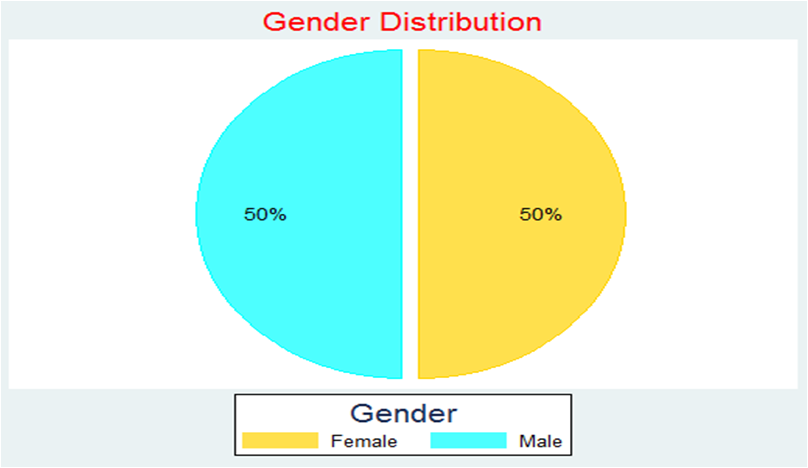
4.2. Demographic Characteristics-participantsThe chart (Figure 1) shows the gender distribution of the participants. This was equally distributed to reflect the study population.


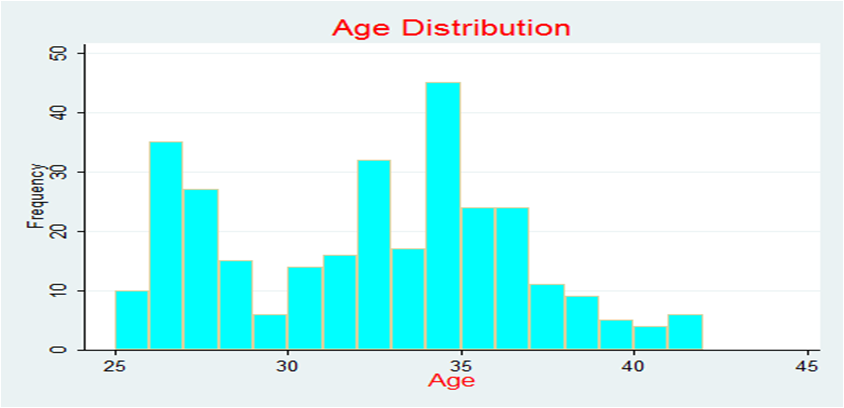
The ages of the participants ranged from 25 to 42 years. The histogram for age (Figure 2) showed that it is poly-modal, which means that the distribution has two or more localized modes thus the Median and Interquartile range was reported.
Median = 32
Interquartile range (IQR) = (28, 35)
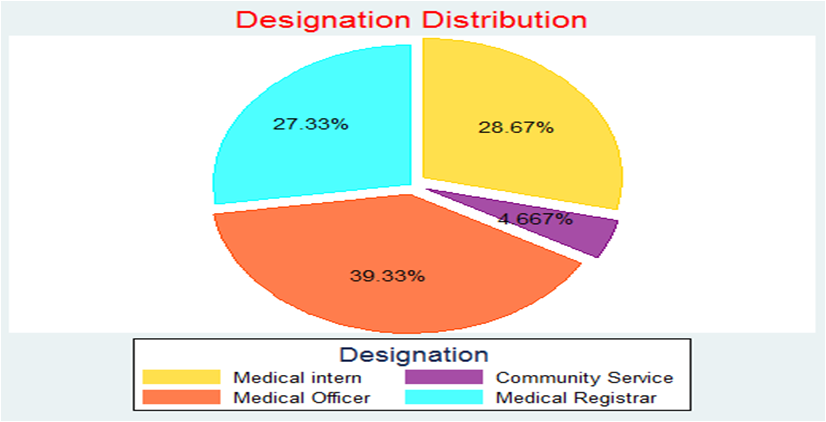
As illustrated by the Chart (Figure 3), the four groups of doctors that do full time duties were chosen for the current study. These are medical interns (28.67%), community service doctors (4.67%), medical registrars (27.33%) and medical officers (39.33%).


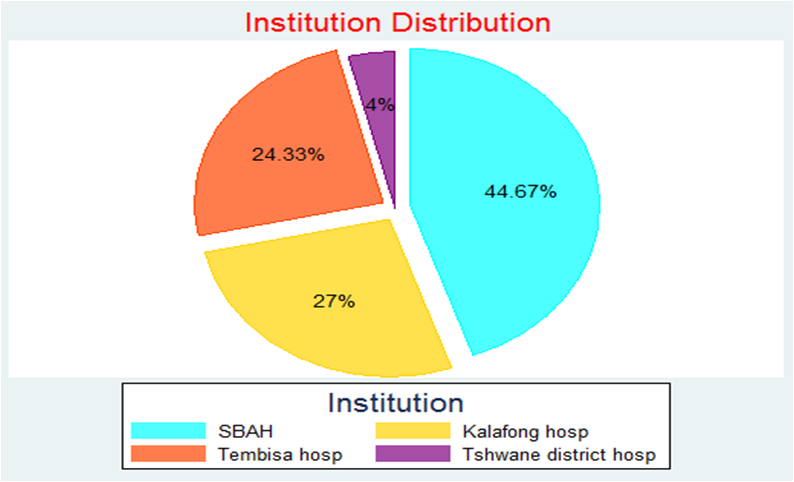
The chart (Figure 4) denotes the distribution of participants as chosen from the four public hospitals in Pretoria and Tembisa. Steve Biko Academic Hospital (SBAH): 44.67%, Kalafong Hospital: 27%, Tembisa Hospital: 24.33% and Tshwane District Hospital: 4.00%.
4.3. Pittsburg Sleep Quality Index of the ParticipantsSleep latency indicates how long it takes the participants to fall asleep and how frequently do they have a problem with this in the past month. Inability to fall asleep within 30 minutes depicts early insomnia. Table 2 shows that 70 participants had inability to fall asleep within 30 minutes of going to bed.
The sleep duration of the participants indicates the number of hours of actual sleep that they get on each night (Table 3). Sleep duration of less than 5 hours per night indicates sleep deprivation. The results show that 28 participants (9.3%) of the participants sleep for less than 5 hours at night (95% CI: 6.5-13.2).
The domain of sleep disturbance shows the number of participants that had disturbance of their sleep like waking up in the middle of the night, having to get up to use the restroom, coughing, snoring, feeling too cold/warm, nightmares, feeling pain etc. As indicated in Table 4, of the 300 participants, 287 had sleep disturbance in once or twice a week. One (1) participant had sleep disturbance three or more times a week, while, only 12 participants did not have sleep disturbance in the past month.
Sleep efficiency = (number of hours of sleep/number of hours in bed) x 100%.
PSQI used in this current survey indicates that people with percentages less than 65% had significantly distorted sleep efficiency. Table 5 shows that 277 participants (92.3%) had sleep efficiency less than 65% (95%CI: 88.7 - 94.9).
The subjective sleep quality illustrates how participants rated their sleep quality themselves. The domain of sleep quality as shown in Table 6 indicates that of the 300 participants in the study, 190 rated their sleep as very good, 65 rated their sleep as fairly good, 28 rated their sleep as fairly bad and 17 rated their sleep as very bad.
This result illustrates the proportion of participants who in the past month of the study had difficulty with keeping awake while driving, eating or engaging in social activities or those who reduced eagerness to get things done due to sleepiness (Table 7). In terms of daytime dysfunction, 232 of the 300 participants had at least one incident of daytime dysfunction due to sleepiness in the past month. The result also goes further to show that 27 (9.0%) of these 232 participants had considerably serious problems with daytime dysfunction (95% CI: 6.23 - 12.83).
The self-use of prescription medication for sleep by the participants is depicted in the result given in Table 8. It shows that a total 161 of the 300 participants admitted to have used medications for sleep in the past month and of these; 23 participants, 7.7% (95% CI: 5.1 - 11.3) used medications almost on daily basis.
The prevalence of sleep disorders among the medical practitioners is given by the summation of all the domains to produce a global PSQI score and scores >5 indicated bad quality of sleep as depicted in Table 9 below. The prevalence of sleep disorders is 84.7% (95% CI: 80.1 - 88.3), in other words 254 of the 300 participants have associated bad quality sleep as indicated by their total sleep score. Only 15.4% (46 participants) experience good sleep quality (95% CI: 10.4 - 22.4).
In Table 10, there was significant association between the medical designation of the participants and PSQI-Sleep efficiency while a marginal association exists with PSQI-Subjective sleep quality. The deduction was that participants from various designations suffer from poor quality sleep but the community service doctors significantly suffer the least in comparison to others in terms of Sleep Efficiency (p-value =0.008).
Medical doctors form the bedrock of the health sector of any country. To provide efficient service delivery to humanity in general, doctors as human beings need to be in their best physical, mental and social state. This is imperative in order to achieve our global health initiative. It will go a long way to ameliorate the scourge of litigations that abound and pose a major threat to the modern day generation of doctors. 18, 19 A lot of previous studies have been done to evaluate sleep quality of doctors in other parts of the world but none has been done in Africa or South Africa to be more specific. 12, 13, 14, 61 The PSQI used as the measuring tool in this study gives a standardized, quantitative measure of sleep quality, that promptly discerns good and bad quality sleep and this has been shown previously to correlate with Polysomnography which is the gold standard in sleep studies. 9, 52
4.5. Subjective Sleep Quality of Medical Practitioners in Pretoria and TembisaThis current study shows evidence that a large proportion of medical doctors self- rated their sleep to be of poor quality. As noted from the results of this current study, 17 of the 300 participants (5.7%) rated their sleep patterns as very bad. This has a near comparison but is higher than the 1.25% who self-rated that subjective sleep quality as very bad in the Chien, et al. study using the PSQI and cardiopulmonary coupling technique for sleep analysis. This study was conducted in hospital setting. They selected 175 (44.99%) of the total 389 staff nurses for the study. This is comparative to the current study were 300 (45.66%) of the 657 total population of the eligible medical doctors were selected. 57
4.6. Daytime-dysfunction among Medical practitioners in Pretoria and TembisaWith respect to daytime dysfunction due to excessive sleepiness, 9.0% had significantly serious problems (95% CI: 6.23 - 12.83). This is a relatively higher proportion when compared to the study done by Kanita, et al. on 4,500 Physicians in Japan. In that study excessive daytime sleepiness was reported by 3.5%. 59 A study done in the USA by Papp, K.K. et al. in 2001-02 with interns and senior residents showed that poor sleep can have adverse effects on doctor-patient relationship and subsequent reduced compassion towards patients. 14 On the other hand, work arrangements that are associated with enhancement in total sleep are associated with improved patients safety and service delivery. 14, 60, 61
Apart from work related issues, daytime dysfunction due to excessive sleepiness can have dire consequences on the lives of medical doctors. Steel, et al. in 1996 studied the prevalence and risk factors associated with motor vehicle accidents and near-crashes of resident doctors working in emergency departments and doing night and day duties. They found out that 74% of motor vehicle accidents and 80% of near crashes occurred after night shifts as compared to; 12% of motor vehicle accidents and 7% of near crashes occurring after day duties. 12
4.7. Self-use of Medications to Sleep among Medical Practitioners in Pretoria and TembisaIn this current survey about 21.4% of medical doctors admitted to requiring medications to sleep in the past week. A previous study done in Iran on medical students and registrars revealed 3.3% of use of sleeping pills among respondents in the past month. 49
This in correlation is actually a lot more, the difference might be attributable to the fact medical students were included in the Iranian study. Putting the survey done on the general population in the USA by Bertisch, et al. into context, that had 3% of adults used prescription medications for insomnia 20, it can be said that the finding from this current study is proportionately higher. This is further supported by evidence from Doi, et al. in 1997, a study conducted on the general adult population of Japan using the same PSQI that gave hypnotic medication use as 3.5% among male respondents and 5.4% among female respondents. 58
4.8. Prevalence of Sleep Disorders among Medical Practitioners in Pretoria and TembisaFinally, with respect to total sleep score greater than 5 that correlates with sleep disorders 254 of the 300 participants, 84.7% of the participants suffer from sleep deprivation (95% CI: 2.1 - 80.1). This is a lot more compared to the prevalence of sleep disorders in studies that where conducted in general population as shown by previous epidemiological data (21% - 36.6%). 21, 22, 23 A cross-sectional study done by Mustahsan, et al. in 2012 in Karachi, Pakistan revealed that 78.84% of medical interns and post graduate trainees admitted to be sleep deprived. 13 Hence putting this current study and previous studies into context, we could infer that doctors are perceived to be far more sleep deprived when compared to the general population. Kanita, et al. further showed that the adjusted odds ratio for medical incidents was more for doctors subjected to prolonged working hours and who admitted to be sleep deprived. 59
The meta-analysis done by Pilcher and Huffcutt on 19 original research studies firmly suggested that overall sleep deprivation strongly impairs human functioning. They showed that partial sleep deprivation had more effect on human functioning than long-term or short term sleep deprivation. Their study also went further to show that mood is more affected by sleep deprivation compared to motor function and Cognition. 17 Doi, et al. conducted a similar study using the PSQI on the general adult population in Japan. Difficulty in initiating sleep was reported as 8.6% among males and 12.6% among females. 58 The current study recorded the sleep latency (difficulty in initiating sleep) as 23.4%, and did not differentiate between that of males or females.
The current study is the first to analyze the sleep patterns of hospital doctors in an African setting, using objective measures.
The data as portrayed in this study provides evidence of significant distortion in the sleep patterns of medical practitioners in the areas where this study was conducted. It established that about 84.7% of medical doctors experienced poor quality of sleep when assessed objectively using the PSQI.
Based on existing literature poor sleep quality could be impacting on the mental, social and physical health of the large proportion that are sleep deprived. This in turn could have a negative impact on the on the delivery of their professional service to patients.
Another significant finding is the fact that a significant proportion of our medical doctors indulge in self-use of prescription medications to assist them to sleep.
Future studies are probably needed to see the extent of discretion or rationality or the lack thereof in this indulgence. This will form the basis for appropriate steps to be taken to regulate the practice and ensure that it doesn’t progress to detriment.
5.2. RecommendationsFor us to optimize our service delivery while putting the welfare of our doctors into context, appropriate measures should be taken by relevant authorities to reduce or limit the duty hours of our medical practitioners. This is in view of the fact that fatigue on the side of medical practitioners can have detrimental consequences on patient’s safety.
This is buttressed by the study done by Landrigan, et al. in the United Kingdom in 2004 with Interns as participants, which showed benefits in terms of reduced errors by Interns after introduction of an intervention that eliminated extended work shifts and reduced the number of work hours per week. 61
Secondly, medical practitioners should be made aware of the potential impact of sleep deprivation and the associated tendency of self-use of prescription and over the counter medications to assist in sleeping, (21.4% of participant as revealed by this current study).
Awareness should be made to encourage medical practitioners to imbibe the culture of seeking professional help when necessary and avoid the potential of indiscriminate use of pharmacological products that could have dire consequences.
It will be worthwhile to bring into limelight the potential hazards of daytime dysfunction like falling asleep while driving after night shifts and suitable measures can be put in place to curb such risks.
These recommendations have to be weighed against the backdrop of limited financial resources and shortage of medical personnel in the African context.
Area of further research should conceivably include sleep studies in other health facilities (public and private) in order to capture the pattern in hospitals across the nation with the possibility of expanding to the entire Southern African region and Africa as a continent.
5.3. Study LimitationsIt is acknowledged that this study has some limitations. Firstly, a limitation of this study is that the researcher did not conduct Polysomnograhy which is adjudged to be the gold standard for sleep evaluation. 52 Studies that implore Polysomnography are quite expensive, require a special team and machinery and are also relatively time consuming. It would have been difficult to conduct this kind of study. Hence the researcher opted to use the PSQI which has been validated to provide objective assessment of sleep patterns in the past.
Secondly, in a survey like this, there could be inconsistency and incompleteness in the completion of forms, affecting the overall quality of data. These factors were put into consideration in the final analysis of data by the statistician.
Thirdly, we cannot exclude the probability of a recall bias occurring in this study as the responses of the participants where in retrospect.
Fourthly, this study did not analyze the sleep patterns of males and female respondents separately for comparison as noted in some previous studies. This was not part of the objectives of the study.
The fifth limitation of this study was that it was conducted only in public hospitals, the fact that more one hospital was used adds to its strength.
Lastly, data was collected using a self-administered questionnaire. There is a possibility of over or under reporting by respondents.
Other studies can be done to understand the self-use of sleep medications among medical practitioners especially as regards the type and number of medications that are used concurrently. Experimental studies could be conducted to understand the possible effect of sleep deprivation on medical training in this part of the world.
The authors assure that there is no conflict of interest and no financial interest in this research and manuscript. This manuscript was written from original research and is not under consideration for publication anywhere.
| [1] | Weinger, M.B., Ancoli-Israil, S. Sleep deprivation and clinical performance. JAMA. 2002; 287: 955-7. | ||
| In article | View Article PubMed | ||
| [2] | Samkoff, J.S., Jacques, C.H. A review of studies concerning effects of sleep deprivation and fatigue on residents’ performance Acad Med. 1991; 66: 687-93. | ||
| In article | View Article PubMed | ||
| [3] | Schaefer, E.W., Williams, M.V., Zee, P.C. Sleep and circadian misalignment for the Hospitalist: a review. J Hosp Med. 2012 Jul-Aug; 7(6): 489-96. | ||
| In article | View Article PubMed | ||
| [4] | Wilhelm, B.J., Widmann, A. Objective and quantitative analysis of daytime sleepiness in physicians after night calls. Int J Psychophysiology. 2009 Jun; 72(3): 307-13. | ||
| In article | View Article PubMed | ||
| [5] | Concise Oxford English Dictionary. 12thed. Oxford: Oxford University Press; 2011. Sleep; p.1356. | ||
| In article | |||
| [6] | Zee, P.C. The normal duration of daily sleep for different age groups. Medscape Fam Med. 2005; 7(2). [Cited 2015 Sep]. Available from: http://www.medscape.org/viewarticle/511229. | ||
| In article | |||
| [7] | Edinger, J.D., Bonnet, M.H., Bootzin, R.R. et al. Derivation of research diagnostic criteria for insomnia: report of an American Academy of Sleep Medicine work Group. Sleep. 2004; 27: 1567-96. | ||
| In article | View Article PubMed | ||
| [8] | Hyyppa, M.T., Kronholm, E. Quality of Sleep and Chronic illnesses. J Clin Epidemiologic 1989; 42:633-8. | ||
| In article | View Article PubMed | ||
| [9] | Buysse, D.J., Reynolds, C.F. 3rd, Monk, T.H., Berman, S.R., Kupfer, D.J. The Pittsburgh Sleep Quality Index: a new instrument for psychiatric practice and research. Psychiatry Res. 1989 May; 28(2): 193-213. | ||
| In article | View Article PubMed | ||
| [10] | Akerstedt, T., Hume, K., Minors, D., Waterhouse, J. The subjective meaning of good sleep, an intra-individual approach using the Karolinska Sleep Diary. Percept Mot Skills. 1994; 79: 287-96. | ||
| In article | View Article PubMed | ||
| [11] | Marcus, C.L., Loughlin, G.M. Effect of sleep deprivation on driving safety of house staff. Sleep. 1996; 19: 763-6. | ||
| In article | View Article PubMed | ||
| [12] | Steele, M.T., Ma, O.J., Watson, W.A., Thomas, H.A. Jr., Muelleman, R.L. The occupational risk of motor vehicle collisions for emergency medicine residents. Acad Emerg Med. 1999 Oct; 6(10): 1050-3. | ||
| In article | View Article PubMed | ||
| [13] | Mustahsan, S.M., Ali, S.M., Khalid, F., Ali, A.A., Ahmed, H., Hashmi, S.A., et al. Sleep deprivation and its consequences on house officers and post graduate trainees. JPak Med Ass. 2013 Apr; 63(4): 540-3. | ||
| In article | |||
| [14] | Papp, K.K., Stoller, E.P., Sage, P., Aikens, J.E., Owens, J., Avidan, A., et al. The effects of sleep loss and fatigue on resident-physicians: a multi-institutional, mixed-method study. Acad Med. 2004; 79(5): 394-406. | ||
| In article | View Article PubMed | ||
| [15] | Landrigan, C.P., Fahrenkopf, A.M., Lewin, D., Sharek, P.J., Barger, L.K. Eisner, M., et al. Effects of the accreditation council for graduate medical education duty hour limits on sleep, work hours and safety. Pediatrics. 2008 Aug; 122(2): 250-8. | ||
| In article | View Article PubMed | ||
| [16] | Lockley, S.W., Cronin, J.W., Evans, E.E., Cade, B.E., Lee, C.J., Landrigan, C.P., et al. Effects of reducing interns’ weekly work hours on sleep and attentional failures. N Engl J Med. 2004 Oct; 351: 1829-37. | ||
| In article | View Article PubMed | ||
| [17] | Pilcher, J.J. and Huffcut, A.I.Effects of sleep deprivation on performance: a meta-analysis. Sleep. 1996; 19: 318-26. | ||
| In article | View Article PubMed | ||
| [18] | Seggie, J. The ‘boom’ in medical malpractice claims-patients could be losers. S Afr Med J. 2013; 103(7): 433. | ||
| In article | View Article PubMed | ||
| [19] | Pepper, M.S., Slabbert, M.N. Is South Africa on the verge of a medical malpractice litigation storm? S Afr J Bioeth Law. 2011; 4(1): 29-35. | ||
| In article | |||
| [20] | Bertisch, S.M., Herzig, S.J., Winkelman, J.W., Buettner, C. National use of prescription medications for insomnia: NHANES 1999-2010. Sleep.2014; 37(2): 343-9. | ||
| In article | View Article PubMed | ||
| [21] | Bixler, E.O., Kales, A., Soldatos, C.R., Kales, J.D., Healey, S. Prevalence of sleep disorders in the Los Angeles metropolitan area. Am J Psychiatry. 1979; 136: 1257-62. | ||
| In article | View Article PubMed | ||
| [22] | Klink, M., Quan, S.F. Prevalence of reported sleep disorders in a general population and their relationship to obstructive airways diseases. Chest, 1987; 91: 540-6. | ||
| In article | View Article PubMed | ||
| [23] | Ohayon, M.M., Smirne, S. Prevalence and consequences of insomnia disorders in the general in the general population of Italy. Sleep Med. 2002; 3: 115-20. | ||
| In article | View Article PubMed | ||
| [24] | Newman, A.B., Enright, P.L., Manolo, T.A., Haponik, E.F., Wahl, P.W. Sleep disturbance, psychosocial correlates, and cardiovascular disease in 5201 older adults: the cardiovascular Health Study. J Am Geriar Soc.1997; 45: 1-7. | ||
| In article | View Article PubMed | ||
| [25] | Ohayon, M.M., Zulley, J. Correlates of global sleep dissatisfaction in the German population. Sleep 2001; 24: 780-7. | ||
| In article | |||
| [26] | Mitchell, E.S., Woods, N.F. Symptom experiences of midlife women: observations of Seattle Midlife Women’s Health Study. Maruritas. 1996; 25: 1-10. | ||
| In article | View Article PubMed | ||
| [27] | Ancoli-Israel, S., Roth, T. Characteristics of Insomnia in the United States: results of the 1991 National Sleep Foundation Survey. 1. Sleep 1999; 22(2): 347-53. | ||
| In article | |||
| [28] | Olson, L.G., King, M.T., Hensly, M.J., Saunders, N.A. A community study of snoring and sleep-disordered breathing-prevalence. Am J Respir Crit Care Med 1995; 152(2): 711-16. | ||
| In article | View Article PubMed | ||
| [29] | Ford, D.E., Kamerow, D.B. Epidemiologic study of sleep disturbance and psychiatric disorders: An opportunity for prevention? JAMA. 1989; 262: 1479-84. | ||
| In article | View Article PubMed | ||
| [30] | Mellinger, G.D., Balter, M.B., Uhlenhuth, E.H. Insomnia and its treatment: prevalence and correlates. Arch Gen Psychiatry. 1985; 42: 225-32. | ||
| In article | View Article PubMed | ||
| [31] | Lindberg, E., Janson, C. et al. Sleep disturbance in a young adult population: can gender differences be explained by differences in psychological status? Sleep.1997; 20(6): 381-87. | ||
| In article | View Article PubMed | ||
| [32] | Blazer, D.G., Hays, J.C., Foley, D.J. Sleep complains in older adults; A racial comparison. J Gerontol A Biol Sci Med. 1995; 50: 280-4. | ||
| In article | View Article PubMed | ||
| [33] | Ohayon, M.M., Caulet, M., Guilleminault, C. Complaints about nocturnal sleep: how a general population perceives its sleep, and how this relates to the complaint of insomnia. Sleep. 1997; 20: 715-23. | ||
| In article | View Article PubMed | ||
| [34] | Kim, K., Uchiyama, M., Okawa, M., Liu, X., Ogihara, R. An epidemiological study of insomnia among the Japanese general population. Sleep. 2000; 23: 41-7. | ||
| In article | View Article PubMed | ||
| [35] | Weissman, M.M., Bland, R.C. et al. Cross-national epidemiology of major depression and bipolar disorder. JAMA. 1996; 276: 293-9. | ||
| In article | View Article PubMed | ||
| [36] | Ohayon, M.M., Caulet, M., Lemoine, P. Comorbidity of mental and insomnia disorders in the general population. Compr Psychiatry. 1998; 39: 185-97. | ||
| In article | View Article PubMed | ||
| [37] | Foley, D.J., Monjan, A., Simonsick, E.M., Wallace, R.B., Blazer, D.G. Incidence and remission of insomnia among elderly adults: an epidemiological study of 6,800 persons over three years. Sleep. 1999; 22(2): 366-72. | ||
| In article | |||
| [38] | Hagen K.B., Kvien, T.K., Bjorndal, A. Musculoskeletal pain and quality of life in patients with non-inflammatory joint pain compared to rheumatoid arthritis: a population survey. J Rheumatol. 1997; 24: 1703-9. | ||
| In article | |||
| [39] | Ohayon, M.M., Zulley, J. Correlates of global sleep dissatisfaction in the German population. Sleep. 2001; 24: 780-7. | ||
| In article | |||
| [40] | Maggi, S., Langlois, J.A. et al. Sleep complaints in community-dwelling older persons: prevalence, associated factors, and reported causes. J Am Geriatr Soc 1998; 46: 161-8. | ||
| In article | View Article PubMed | ||
| [41] | Phillips, B.A., Danner, F.J. Cigarette smoking and sleep disturbance. Arch Intern Med. 1995; 155: 734-7. | ||
| In article | View Article PubMed | ||
| [42] | Roehrs, T., Hollebeek, E., Drake, C., Roth, T. Substance use for insomnia in Metropolitan Detriot. J Psychosom Res. 2002; 53: 571-6. | ||
| In article | View Article PubMed | ||
| [43] | Jaime, M.M. Disturbance of sleep and wakefulness associated with the use of antihypertensive agents. Life Sciences 1987; 41(17): 1979-88. | ||
| In article | View Article PubMed | ||
| [44] | Nugget, A.M., Gleadhill, I. et al. Sleep complaints and risk factors for excessive daytime sleepiness in adult males in Northern Ireland. J Sleep Res. 2001; 10:69- 74. | ||
| In article | View Article PubMed | ||
| [45] | Phillips, B., Young, T. et al. Epidemiology of restless legs symptoms in adults. Arch Intern Med. 2000; 160: 2137-41. | ||
| In article | View Article PubMed | ||
| [46] | Caples, S.M., Gami, A.S., Somers, V.K. Obstructive sleep apnea. An intern Med 2005; 143(3): 187-97. | ||
| In article | View Article PubMed | ||
| [47] | Ohayon, M.M., Zulley, J., Guilleminault, C., Smirne S. Prevalence and pathological associations of sleep paralysis in the general population. Neurology. 1999; 52: 1194-1200. | ||
| In article | View Article PubMed | ||
| [48] | Billiard, M. Diagnosis of narcolepsy and idiopathic hypersomnia. An update based on the international classification of sleep disorders. Sleep Med Rev. 2007; 11(5): 377-88. | ||
| In article | View Article PubMed | ||
| [49] | Nojomi, M., Ghalhe, B., Kaffashi, S. Sleep pattern in medical students and residents. Arch Iran Med. 2009; 12(6): 542-9. | ||
| In article | |||
| [50] | Johns, M.W. A new method for measuring daytime sleepiness: the Epworth Sleepiness scale. Sleep. 1991; 14(6): 540-5. | ||
| In article | View Article PubMed | ||
| [51] | Janet, B.W., Williams, D.S.W. A structured interview guide for the Hamilton Depression Scale. Arch Gen Psychiatry. 1988; 45(8): 742-7. | ||
| In article | View Article PubMed | ||
| [52] | Van de Water, A.T., Holmes, A., Hurley, D.A. Objective measurements of sleep for non-laboratory settings as alternatives to polysomnography- a systemic review. J Sleep Res. 2011 Mar; 20 (1 Pt. 2): 183-200. | ||
| In article | View Article PubMed | ||
| [53] | Grandner, M.A., Kripke, D.F. Criterion validity of the Pittsburg Sleep Quality Index. Sleep and Biological Rhythms. 2006; 4(2): 129-39. | ||
| In article | View Article PubMed | ||
| [54] | Carpenter, J.S., Andrykowski, M.A. Psychosometric evaluation of the Pittsburgh Sleep Quality Index. J Psychometr Res. 1998; 45(1): 5-13. | ||
| In article | View Article PubMed | ||
| [55] | Backhaus, J., Junghanns, K., Broocks, A., Riemann, D., Hohagen, F. Test-retest reliability and validity of the Pittsburgh Sleep Quality Index in primary insomnia. J Psychometr Res. 2002; 53: 737-40. | ||
| In article | View Article PubMed | ||
| [56] | Olutayo, O.A., Abiodun, O. et al. Validity of the Pittsburg Sleep Quality Index (PSQI) among Nigerian University students. Sleep Medicine. 2007; 8: 266-70. | ||
| In article | View Article PubMed | ||
| [57] | Chien, P-L., Su, H-F., Hsieh, P-C., Siao, R-Y., Ling, P.Y., Jou, H-J. Sleep quality among female hospital staff nurses. Sleep Dis. 2013; [cited 2015 Sep]. Available from: http://www.hindawi.com/journals/sd/2013/283490/. | ||
| In article | View Article PubMed | ||
| [58] | Doi, Y., Minowa, M., Okawa, M., Uchiyama, M. Prevalence of sleep disturbance and hypnotic medication use in relation to socio demographic factors in the general Japanese adult population. J Epidemiol. 2000; 10: 79-86. | ||
| In article | View Article PubMed | ||
| [59] | Kanita, Y., Ohida, T. Association of current work and sleep situations with excessive daytime sleepiness and medical incidents among Japanese physicians. J Clin Sleep. 2011 Oct 15; 7(5): 512-22. | ||
| In article | View Article PubMed | ||
| [60] | Nuckols, T.K., Bhattacharya, J., Wolman, D.M., Ulmer, C., Escarce, J.J. Cost implications of reduced work hours and workloads for resident physicians. New Engl J Med. 2009; 360: 2202-15. | ||
| In article | View Article PubMed | ||
| [61] | Landrigan, C.P., Rothschild, J.M., Cronin, J.W., Kaushal, R., Burdick, E., Katz, J.T., et al. Effects of reducing interns work hours on serious medical errors in intensive care units. N Engl J Med. 2004; 351: 1838-48. | ||
| In article | View Article PubMed | ||
 |
 |
 |
 |
 |
 |
 |
 |
 |
 |
 |
 |
 |
 |
Published with license by Science and Education Publishing, Copyright © 2023 Dr. Prince Chima Ozoemena and Dr. Frank Peters
 This work is licensed under a Creative Commons Attribution 4.0 International License. To view a copy of this license, visit
http://creativecommons.org/licenses/by/4.0/
This work is licensed under a Creative Commons Attribution 4.0 International License. To view a copy of this license, visit
http://creativecommons.org/licenses/by/4.0/
| [1] | Weinger, M.B., Ancoli-Israil, S. Sleep deprivation and clinical performance. JAMA. 2002; 287: 955-7. | ||
| In article | View Article PubMed | ||
| [2] | Samkoff, J.S., Jacques, C.H. A review of studies concerning effects of sleep deprivation and fatigue on residents’ performance Acad Med. 1991; 66: 687-93. | ||
| In article | View Article PubMed | ||
| [3] | Schaefer, E.W., Williams, M.V., Zee, P.C. Sleep and circadian misalignment for the Hospitalist: a review. J Hosp Med. 2012 Jul-Aug; 7(6): 489-96. | ||
| In article | View Article PubMed | ||
| [4] | Wilhelm, B.J., Widmann, A. Objective and quantitative analysis of daytime sleepiness in physicians after night calls. Int J Psychophysiology. 2009 Jun; 72(3): 307-13. | ||
| In article | View Article PubMed | ||
| [5] | Concise Oxford English Dictionary. 12thed. Oxford: Oxford University Press; 2011. Sleep; p.1356. | ||
| In article | |||
| [6] | Zee, P.C. The normal duration of daily sleep for different age groups. Medscape Fam Med. 2005; 7(2). [Cited 2015 Sep]. Available from: http://www.medscape.org/viewarticle/511229. | ||
| In article | |||
| [7] | Edinger, J.D., Bonnet, M.H., Bootzin, R.R. et al. Derivation of research diagnostic criteria for insomnia: report of an American Academy of Sleep Medicine work Group. Sleep. 2004; 27: 1567-96. | ||
| In article | View Article PubMed | ||
| [8] | Hyyppa, M.T., Kronholm, E. Quality of Sleep and Chronic illnesses. J Clin Epidemiologic 1989; 42:633-8. | ||
| In article | View Article PubMed | ||
| [9] | Buysse, D.J., Reynolds, C.F. 3rd, Monk, T.H., Berman, S.R., Kupfer, D.J. The Pittsburgh Sleep Quality Index: a new instrument for psychiatric practice and research. Psychiatry Res. 1989 May; 28(2): 193-213. | ||
| In article | View Article PubMed | ||
| [10] | Akerstedt, T., Hume, K., Minors, D., Waterhouse, J. The subjective meaning of good sleep, an intra-individual approach using the Karolinska Sleep Diary. Percept Mot Skills. 1994; 79: 287-96. | ||
| In article | View Article PubMed | ||
| [11] | Marcus, C.L., Loughlin, G.M. Effect of sleep deprivation on driving safety of house staff. Sleep. 1996; 19: 763-6. | ||
| In article | View Article PubMed | ||
| [12] | Steele, M.T., Ma, O.J., Watson, W.A., Thomas, H.A. Jr., Muelleman, R.L. The occupational risk of motor vehicle collisions for emergency medicine residents. Acad Emerg Med. 1999 Oct; 6(10): 1050-3. | ||
| In article | View Article PubMed | ||
| [13] | Mustahsan, S.M., Ali, S.M., Khalid, F., Ali, A.A., Ahmed, H., Hashmi, S.A., et al. Sleep deprivation and its consequences on house officers and post graduate trainees. JPak Med Ass. 2013 Apr; 63(4): 540-3. | ||
| In article | |||
| [14] | Papp, K.K., Stoller, E.P., Sage, P., Aikens, J.E., Owens, J., Avidan, A., et al. The effects of sleep loss and fatigue on resident-physicians: a multi-institutional, mixed-method study. Acad Med. 2004; 79(5): 394-406. | ||
| In article | View Article PubMed | ||
| [15] | Landrigan, C.P., Fahrenkopf, A.M., Lewin, D., Sharek, P.J., Barger, L.K. Eisner, M., et al. Effects of the accreditation council for graduate medical education duty hour limits on sleep, work hours and safety. Pediatrics. 2008 Aug; 122(2): 250-8. | ||
| In article | View Article PubMed | ||
| [16] | Lockley, S.W., Cronin, J.W., Evans, E.E., Cade, B.E., Lee, C.J., Landrigan, C.P., et al. Effects of reducing interns’ weekly work hours on sleep and attentional failures. N Engl J Med. 2004 Oct; 351: 1829-37. | ||
| In article | View Article PubMed | ||
| [17] | Pilcher, J.J. and Huffcut, A.I.Effects of sleep deprivation on performance: a meta-analysis. Sleep. 1996; 19: 318-26. | ||
| In article | View Article PubMed | ||
| [18] | Seggie, J. The ‘boom’ in medical malpractice claims-patients could be losers. S Afr Med J. 2013; 103(7): 433. | ||
| In article | View Article PubMed | ||
| [19] | Pepper, M.S., Slabbert, M.N. Is South Africa on the verge of a medical malpractice litigation storm? S Afr J Bioeth Law. 2011; 4(1): 29-35. | ||
| In article | |||
| [20] | Bertisch, S.M., Herzig, S.J., Winkelman, J.W., Buettner, C. National use of prescription medications for insomnia: NHANES 1999-2010. Sleep.2014; 37(2): 343-9. | ||
| In article | View Article PubMed | ||
| [21] | Bixler, E.O., Kales, A., Soldatos, C.R., Kales, J.D., Healey, S. Prevalence of sleep disorders in the Los Angeles metropolitan area. Am J Psychiatry. 1979; 136: 1257-62. | ||
| In article | View Article PubMed | ||
| [22] | Klink, M., Quan, S.F. Prevalence of reported sleep disorders in a general population and their relationship to obstructive airways diseases. Chest, 1987; 91: 540-6. | ||
| In article | View Article PubMed | ||
| [23] | Ohayon, M.M., Smirne, S. Prevalence and consequences of insomnia disorders in the general in the general population of Italy. Sleep Med. 2002; 3: 115-20. | ||
| In article | View Article PubMed | ||
| [24] | Newman, A.B., Enright, P.L., Manolo, T.A., Haponik, E.F., Wahl, P.W. Sleep disturbance, psychosocial correlates, and cardiovascular disease in 5201 older adults: the cardiovascular Health Study. J Am Geriar Soc.1997; 45: 1-7. | ||
| In article | View Article PubMed | ||
| [25] | Ohayon, M.M., Zulley, J. Correlates of global sleep dissatisfaction in the German population. Sleep 2001; 24: 780-7. | ||
| In article | |||
| [26] | Mitchell, E.S., Woods, N.F. Symptom experiences of midlife women: observations of Seattle Midlife Women’s Health Study. Maruritas. 1996; 25: 1-10. | ||
| In article | View Article PubMed | ||
| [27] | Ancoli-Israel, S., Roth, T. Characteristics of Insomnia in the United States: results of the 1991 National Sleep Foundation Survey. 1. Sleep 1999; 22(2): 347-53. | ||
| In article | |||
| [28] | Olson, L.G., King, M.T., Hensly, M.J., Saunders, N.A. A community study of snoring and sleep-disordered breathing-prevalence. Am J Respir Crit Care Med 1995; 152(2): 711-16. | ||
| In article | View Article PubMed | ||
| [29] | Ford, D.E., Kamerow, D.B. Epidemiologic study of sleep disturbance and psychiatric disorders: An opportunity for prevention? JAMA. 1989; 262: 1479-84. | ||
| In article | View Article PubMed | ||
| [30] | Mellinger, G.D., Balter, M.B., Uhlenhuth, E.H. Insomnia and its treatment: prevalence and correlates. Arch Gen Psychiatry. 1985; 42: 225-32. | ||
| In article | View Article PubMed | ||
| [31] | Lindberg, E., Janson, C. et al. Sleep disturbance in a young adult population: can gender differences be explained by differences in psychological status? Sleep.1997; 20(6): 381-87. | ||
| In article | View Article PubMed | ||
| [32] | Blazer, D.G., Hays, J.C., Foley, D.J. Sleep complains in older adults; A racial comparison. J Gerontol A Biol Sci Med. 1995; 50: 280-4. | ||
| In article | View Article PubMed | ||
| [33] | Ohayon, M.M., Caulet, M., Guilleminault, C. Complaints about nocturnal sleep: how a general population perceives its sleep, and how this relates to the complaint of insomnia. Sleep. 1997; 20: 715-23. | ||
| In article | View Article PubMed | ||
| [34] | Kim, K., Uchiyama, M., Okawa, M., Liu, X., Ogihara, R. An epidemiological study of insomnia among the Japanese general population. Sleep. 2000; 23: 41-7. | ||
| In article | View Article PubMed | ||
| [35] | Weissman, M.M., Bland, R.C. et al. Cross-national epidemiology of major depression and bipolar disorder. JAMA. 1996; 276: 293-9. | ||
| In article | View Article PubMed | ||
| [36] | Ohayon, M.M., Caulet, M., Lemoine, P. Comorbidity of mental and insomnia disorders in the general population. Compr Psychiatry. 1998; 39: 185-97. | ||
| In article | View Article PubMed | ||
| [37] | Foley, D.J., Monjan, A., Simonsick, E.M., Wallace, R.B., Blazer, D.G. Incidence and remission of insomnia among elderly adults: an epidemiological study of 6,800 persons over three years. Sleep. 1999; 22(2): 366-72. | ||
| In article | |||
| [38] | Hagen K.B., Kvien, T.K., Bjorndal, A. Musculoskeletal pain and quality of life in patients with non-inflammatory joint pain compared to rheumatoid arthritis: a population survey. J Rheumatol. 1997; 24: 1703-9. | ||
| In article | |||
| [39] | Ohayon, M.M., Zulley, J. Correlates of global sleep dissatisfaction in the German population. Sleep. 2001; 24: 780-7. | ||
| In article | |||
| [40] | Maggi, S., Langlois, J.A. et al. Sleep complaints in community-dwelling older persons: prevalence, associated factors, and reported causes. J Am Geriatr Soc 1998; 46: 161-8. | ||
| In article | View Article PubMed | ||
| [41] | Phillips, B.A., Danner, F.J. Cigarette smoking and sleep disturbance. Arch Intern Med. 1995; 155: 734-7. | ||
| In article | View Article PubMed | ||
| [42] | Roehrs, T., Hollebeek, E., Drake, C., Roth, T. Substance use for insomnia in Metropolitan Detriot. J Psychosom Res. 2002; 53: 571-6. | ||
| In article | View Article PubMed | ||
| [43] | Jaime, M.M. Disturbance of sleep and wakefulness associated with the use of antihypertensive agents. Life Sciences 1987; 41(17): 1979-88. | ||
| In article | View Article PubMed | ||
| [44] | Nugget, A.M., Gleadhill, I. et al. Sleep complaints and risk factors for excessive daytime sleepiness in adult males in Northern Ireland. J Sleep Res. 2001; 10:69- 74. | ||
| In article | View Article PubMed | ||
| [45] | Phillips, B., Young, T. et al. Epidemiology of restless legs symptoms in adults. Arch Intern Med. 2000; 160: 2137-41. | ||
| In article | View Article PubMed | ||
| [46] | Caples, S.M., Gami, A.S., Somers, V.K. Obstructive sleep apnea. An intern Med 2005; 143(3): 187-97. | ||
| In article | View Article PubMed | ||
| [47] | Ohayon, M.M., Zulley, J., Guilleminault, C., Smirne S. Prevalence and pathological associations of sleep paralysis in the general population. Neurology. 1999; 52: 1194-1200. | ||
| In article | View Article PubMed | ||
| [48] | Billiard, M. Diagnosis of narcolepsy and idiopathic hypersomnia. An update based on the international classification of sleep disorders. Sleep Med Rev. 2007; 11(5): 377-88. | ||
| In article | View Article PubMed | ||
| [49] | Nojomi, M., Ghalhe, B., Kaffashi, S. Sleep pattern in medical students and residents. Arch Iran Med. 2009; 12(6): 542-9. | ||
| In article | |||
| [50] | Johns, M.W. A new method for measuring daytime sleepiness: the Epworth Sleepiness scale. Sleep. 1991; 14(6): 540-5. | ||
| In article | View Article PubMed | ||
| [51] | Janet, B.W., Williams, D.S.W. A structured interview guide for the Hamilton Depression Scale. Arch Gen Psychiatry. 1988; 45(8): 742-7. | ||
| In article | View Article PubMed | ||
| [52] | Van de Water, A.T., Holmes, A., Hurley, D.A. Objective measurements of sleep for non-laboratory settings as alternatives to polysomnography- a systemic review. J Sleep Res. 2011 Mar; 20 (1 Pt. 2): 183-200. | ||
| In article | View Article PubMed | ||
| [53] | Grandner, M.A., Kripke, D.F. Criterion validity of the Pittsburg Sleep Quality Index. Sleep and Biological Rhythms. 2006; 4(2): 129-39. | ||
| In article | View Article PubMed | ||
| [54] | Carpenter, J.S., Andrykowski, M.A. Psychosometric evaluation of the Pittsburgh Sleep Quality Index. J Psychometr Res. 1998; 45(1): 5-13. | ||
| In article | View Article PubMed | ||
| [55] | Backhaus, J., Junghanns, K., Broocks, A., Riemann, D., Hohagen, F. Test-retest reliability and validity of the Pittsburgh Sleep Quality Index in primary insomnia. J Psychometr Res. 2002; 53: 737-40. | ||
| In article | View Article PubMed | ||
| [56] | Olutayo, O.A., Abiodun, O. et al. Validity of the Pittsburg Sleep Quality Index (PSQI) among Nigerian University students. Sleep Medicine. 2007; 8: 266-70. | ||
| In article | View Article PubMed | ||
| [57] | Chien, P-L., Su, H-F., Hsieh, P-C., Siao, R-Y., Ling, P.Y., Jou, H-J. Sleep quality among female hospital staff nurses. Sleep Dis. 2013; [cited 2015 Sep]. Available from: http://www.hindawi.com/journals/sd/2013/283490/. | ||
| In article | View Article PubMed | ||
| [58] | Doi, Y., Minowa, M., Okawa, M., Uchiyama, M. Prevalence of sleep disturbance and hypnotic medication use in relation to socio demographic factors in the general Japanese adult population. J Epidemiol. 2000; 10: 79-86. | ||
| In article | View Article PubMed | ||
| [59] | Kanita, Y., Ohida, T. Association of current work and sleep situations with excessive daytime sleepiness and medical incidents among Japanese physicians. J Clin Sleep. 2011 Oct 15; 7(5): 512-22. | ||
| In article | View Article PubMed | ||
| [60] | Nuckols, T.K., Bhattacharya, J., Wolman, D.M., Ulmer, C., Escarce, J.J. Cost implications of reduced work hours and workloads for resident physicians. New Engl J Med. 2009; 360: 2202-15. | ||
| In article | View Article PubMed | ||
| [61] | Landrigan, C.P., Rothschild, J.M., Cronin, J.W., Kaushal, R., Burdick, E., Katz, J.T., et al. Effects of reducing interns work hours on serious medical errors in intensive care units. N Engl J Med. 2004; 351: 1838-48. | ||
| In article | View Article PubMed | ||