Background: women are often apprehensive about undergoing a pelvic examination. A previous examination that was not a good experience contributes to even more anxiety. Aim: This study was conducted to assess pre-gynecological women’s pain, discomfort and satisfaction as well. Setting: The study was conducted at the gynecological clinic at Beni-Suef University Hospital. Subjects and methods: design: Α descriptive study design. Sampling: 60 women who have attended the previously mentioned study setting for the first time. Sample type: Α purposive sample. Tools: Five tools were used. (I): Interviewing questionnaire; (II): Comfort and pain scale; (III): Visual analog scale to assess pain level; (IV): Patients’ satisfaction questionnaire; (V) Self-reported barriers. Results: The majority of the studied sample had incorrect knowledge regarding studied items, 68.3% of the studied sample were discomfort related their total discomfort scale, 70% of the studied sample were unsatisfied related their total satisfaction during a gynecological examination, 80% of the barriers that facing studied sample during the gynecological examination were the presence of too much medical and nursing student. There was a statistically significant relationship between the total knowledge of the studied sample about the gynecological examination and their age and education. Conclusion: women's knowledge about pre-gynecological-examination procedures was incorrect. They had discomfort, pain, dissatisfaction, and faced barriers regarding the gynecological examination. Recommendation: An awareness program must be designed and implemented at the gynecological clinic to enhance patient knowledge and correct their miss concept related to the gynecological examination.
The gynecological exam traditionally includes an examination of the external and internal genitalia. Under some conditions, it may be necessary to perform a rectal examination as well. A gynecological exam is typically needed for females with gynecological complaints or for screening for cervical cytology at 21 years of age 1.
The examination is a basic tool of physical diagnosis and can be performed by either physicians or trained allied health professionals. In 2015, 52 million pelvic examinations were performed in the United States 2, 3, 4. The pelvic examination has long been considered a fundamental component of the well-woman visit, and many women and gynecologic care providers view this visit as an opportunity to discuss sexual and reproductive health issues 5.
Moreover, the importance and purpose of the gynecological examination are to give accurate information and confidential answer to any question concerning sex, sexuality, changing body, prevention through checking the reproductive organ for any health problem and finally, treatment for a missed period, pain, and other reproductive problems 6, 7, 8.
The periodic gynecological test is a necessity done for adult women. Grown-up women regularly going to the gynecologist can help to keep healthy and can also aid if there are issues early enough to determine the problem. If the woman is arranged correctly and had the right attitude about it, the next visit to the physician will be a light malarkey. 9, 10, 11
Women are often apprehensive about undergoing a pelvic examination. A previous examination that was not a good experience contributes to even more anxiety. Women feel vulnerable and exposed during this examination. The positioning necessary for the examination creates a significant imbalance of power in the patient/provider interaction and carries sexual connotations for many women. The practitioner may unintentionally use words or actions that the patient may find threatening or offensive. The provider may feel that the interaction was satisfactory, but the patient may feel completely the opposite. On the other hand, if a woman is at ease with the examination experience, she is more likely to spontaneously contribute information that may prove valuable in her evaluation 12, 13, 14.
Most patients indicate that they are more comfortable if the provider talks to them during the examination. Silence can cause the patient to think that something is wrong. If the provider explains what is coming next, maintains eye contact as much as possible, and comments on findings, the patient is more likely to feel relaxed and safe. Some women will feel more at ease if they are allowed to view their anatomy by using a hand-held mirror during the examination. Warming instruments and trying to be as gentle as possible during the examination are good habits. Some women desire an attendant to be present during their examination but many prefer not. Ideally, a woman is empowered to choose whether a chaperone is present during her examination. There are situations where the provider must have a chaperone present for examinations due to liability or security concerns. If so, this should be explained to the patient 15, 16, 17, 18.
The examiner should be conscious of patient behaviors that suggest anxiety during the examination. These include holding hands, covering or shutting the eyes, placing hands on shoulders, hands covering the pelvis, placing hands-on legs, or hands holding the table. Such behaviors signal the need for a more careful or respectful approach. The examiner may suggest techniques to promote relaxation, such as slow exhalation, and may provide more information about what is coming next in the examination and what the patient may feel. The provider should endeavor to individualize the consultation and examination style so that it meets the needs of the patient 19, 20, 21, 22.
In addition, women in adulthood may be experienced strong discomfort during pelvic examinations but find it necessary to confirm their health. Many women have negative experiences with the gynecological examination. Women receive insufficient information about how the examination is performed. Therefore, gynecological examination applications can cause some traumatizing impacts that result in the reactions such as avoidance of being examined, light anxiety, and feeling of Shame 17, 18. Consequently, apart from the physical discomfort, psychological factors are important, as gynecological examination involves exposure of intimate parts of the body in a vulnerable situation with the loss of control. Women experience many feelings such as worries about cleanliness, qualms about vaginal odor, concern that the gynecologist might discover something about sexual practices, fear of discovery of a pathological condition, and fear of pain 20, 21, 22.
Given the above Mubuuke et al., (2020) found that the women experienced discomfort, tension, and anxiety during the gynecological examination, and the common words to express their responses included embarrassment, fear, guilt, pain, regret, and tension. On the contrary, reported low levels of anxiety and discomfort because women were reassured and counseled before and during the procedure. 23.
Women undergo gynecological examination face barriers due to many factors such as lack of knowledge and skills among providers, inadequate office settings and the number of time providers can spend with women, no pre and post gynecological instruction, presence of too many medical and nursing students, long waiting time before an examination, no privacy and confidentiality, presence of male gynecologist and finally transportation 18.
Women under go gynecological examination face barriers due to a number of factors such as lack of knowledge and skills among providers, inadequate office settings and the amount of time providers are able to spend with women, no pre and post gynecological instruction, presence of too much medical and nursing student, long waiting time before examination, no privacy and confidentiality, presence of male gynecologist and finally transportation 18.
1.1. Operational DefinitionGynecological examination (Gyne. Ex.): is any procedure performed to the female genital tract where an instrument is inserted directly into the vagina.
This study was conducted to assess women’s pain, discomfort and satisfaction as well during their gynecological examination.
1. What is women's knowledge concerning their gynecological examination?
2. What is the level of women's pain during their gynecological examination?
3. What is the level of women's discomfort during their gynecological examination?
4. What is the level of women's satisfaction during their gynecological examination?
5. What are women's barriers concerning their gynecological examination?
Α descriptive study design was utilized in this research.
4.2. SettingThe study was conducted at the gynecological clinic at Beni-Suef University Hospital.
4.3. Sampling60 women who were attended the previously mentioned study setting for the first time was included in the study.
Α purposive sample was used in this study.
Firstly, admitted to the gynecological clinic and had a telephone mobile or home to contact them follow up
Women who complained of the following: Leucorrhea, dyspareunia, dysuria, offensive vaginal discharge, and vulvar itching.
4.4. Tools of Data CollectionFive tools were utilized in this research as the following:
It was included two parts:
The first part: To assess female general characteristics (age, occupation, residence, education, and marital status).
The second part: To assess women’s knowledge regarding gynecological examination (definition, Importance, time, indication, preparation, ways, equipment, contraindications, …………… etc)
The scoring system for evaluating women’s knowledge was developed as the following: Knowledge was scored as a correct and incorrect answer for each knowledge question. Each question was given 1 score for the correct answer and 0 scores for an incorrect answer. The total knowledge of more than 60 % will be correct and less than 60% will be incorrect
A standardized tool for assessing women's comfort was utilized during gynecological examination. Updated by Erica Jacques (2019) it was included eight items (Alertness, Calmness, Crying, Physical movement, Muscle tone, Facial tension, Blood pressure, Heart rate) upon each (1-3).
The scoring system was utilized; three Likert scales from 1 to 3 score in front of each statement the researcher respond 1, 2, 3 scores. The total comfort score was 8-16 indicate comfort and (17-24) indicates.
Α Visual Analogue Scale (VΑS) is a measurement instrument that tries to measure a characteristic or attitude that is believed to range across а continuum of values and cannot easily be directly measured. It is usually a horizontal line, in length, anchored by word descriptors at each end, as illustrated in the figure below.
The level of pain associated with gynecological procedures was measured by asking the participants to place а line perpendicular to the VΑS line at the point that best indicates their pain at present. The score was considered as the following: 0=no pain, 1-3=mild pain 4-6=moderate pain, 7-10=sever pain.
This tool was utilized for two groups Post gynecological examination. This tool was adopted from Albashayeh et al. (2019). It was included 13 statements and modified by the researcher upon each statement patients’ responded to.
The scoring system was utilized, two Likert scales (1=dissatisfied and 2 =satisfied). The total score of satisfaction was 26. Satisfy ≥ 60% (that mean ≥ 16 score), and Dissatisfy < 60% (that mean <16 score).
Barriers that facing women during the gynecological examination as self-reported barriers by the women designed by the researcher; included five statements upon each statement the participant respond yes or no post-intervention.
The scoring system was utilized, two Likert scales (0=no and 1=yes). The total score of self-reported barriers was 6.
4.5. Validity and Reliability of the ToolsAll tools of data collection were sent to three specialized University Professors; according to their comments modifications were considered. Reliability was carried out through using Cronbach alpha test = 0.084
4.6. Statistical DesignData were analyzed using a statistical program for social science (SPSS) version 20.0. Quantitative data were expressed as mean ± SD). Qualitative data were expressed as frequency and percentage, T-was used. P-value > 0.05 Not significant (NS), P-value ≤ 0.05 Significant (S), P-value ≤ 0.01 Highly Significant
Table 1 showed that 40% of the studied sample their mean age was 30.5±4.3 years and 60% of them were from rural areas. Regarding educational level; 48.3% of them had secondary level. Also, 53.3% of them were working. Moreover, 78.4% of them are married and 73.3% of them do not prefer to perform annual gynecological examinations.
Table 2 illustrated women's knowledge about pre-gynecological-examination procedures. The majority of the studied sample had incorrect knowledge regarding studied items.
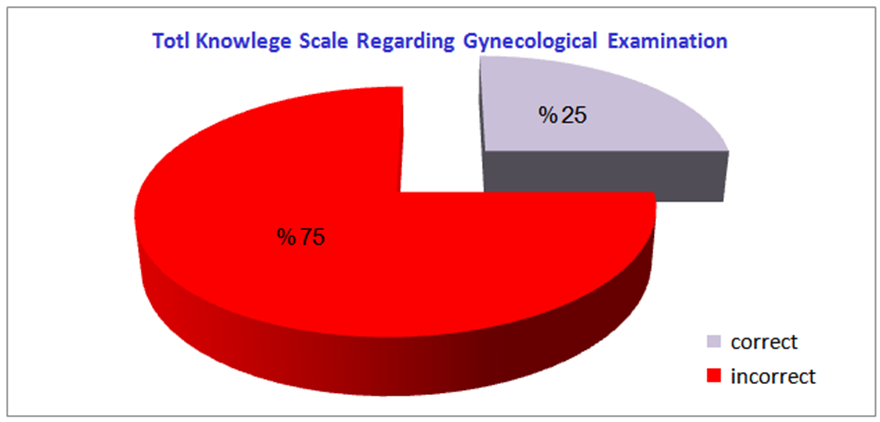
Figure 1 portrayed the frequency distribution of the studied group regarding their total knowledge about gynecological examination. It illustrated that 75% of the studied sample had incorrect knowledge regarding the gynecological examination.
Table 3 revealed that regarding alertness; 95% of the studied sample was fully awake. Regarding calmness; 40% of them were very anxious and regarding crying; 65% of them were not crying. This table also showed that regarding physical movement; 43.3% of them were a slight movement. Regarding muscle tone; 20% of them were muscle tone relaxed and regarding facial; 46.7% of them were tension evident in some facial muscle. Also regarding blood pressure; 66.7% of them were BP at baseline and regarding heart rate; 53.3% of them were heart rate above the baseline.
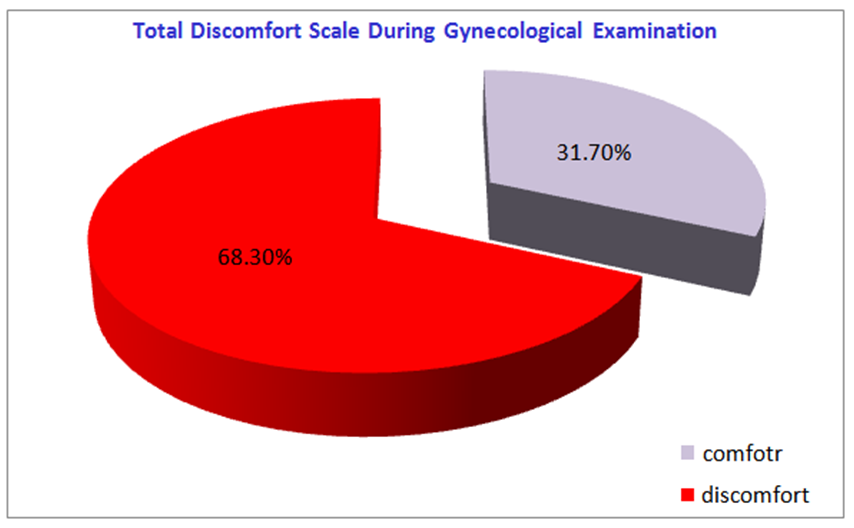
Figure 2 illustrated that 68.3% of the studied sample were discomfort-related their total discomfort scale and 31.7% of them were comfort-related their total discomfort scale.


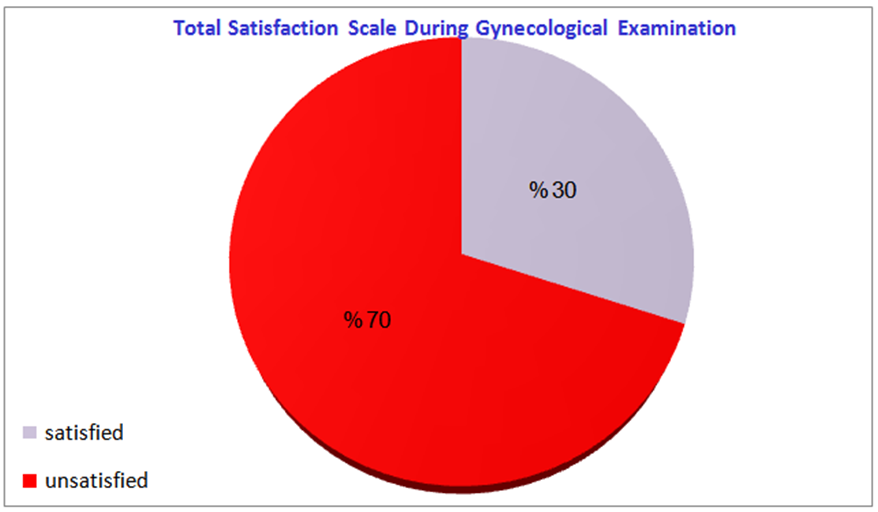
Table 4 & Figure 3 presented the number and percentage distribution of the studied sample according to their satisfaction during gynecological examination. This illustrated that 70% of the studied sample were unsatisfied related to their total satisfaction during gynecological examination. While (30%) of them were satisfied related their total satisfaction during gynecological examination.

Table 5 demonstrated that 80% of the barriers facing the studied sample during the gynecological examination were the presence of too many medical and nursing students. Also, 78.3% of the barriers were long waiting times before examination.
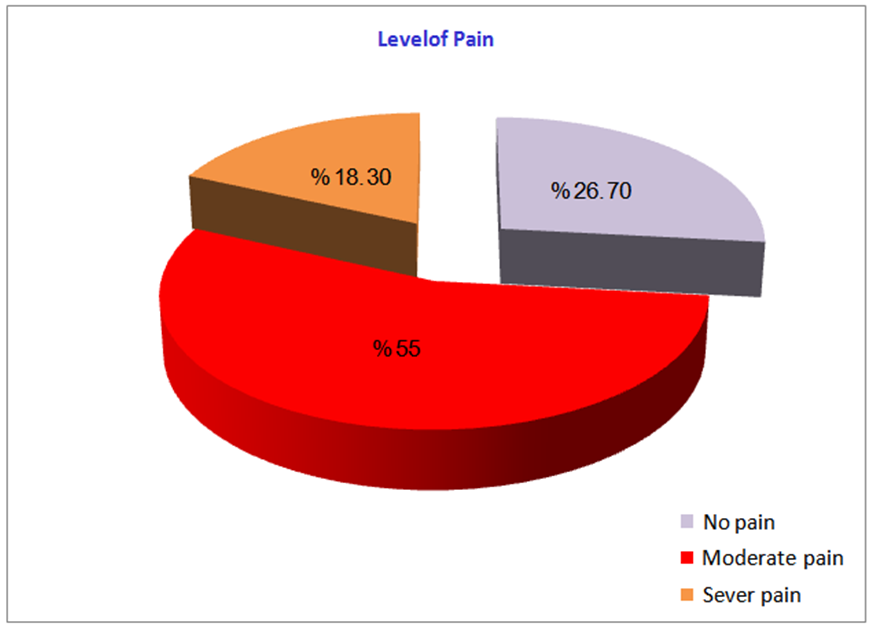
Figure 4 showed that 55% of the studied sample suffered from moderate pain. Also, 26.7% of them do not suffer from pain, while 18.3% of them suffer from severe pain.

Table 6 showed that there was a highly statistically significant relationship between the total knowledge of the studied sample about gynecological examination at the post of an instructional supportive guideline and their education level at (P= < 0.01). Also, there was a statistically significant relation with their age at (p= < 0.05). While, there was a statistically insignificant relation with residence, occupation, and marital status at (p= > 0.05).
Table 7 revealed that there was a highly statistically significant relationship between the total discomfort of the studied sample during the gynecological examination and their marital status at (P<0.01). Also, there was a statistically significant relation with their age and residence at (p<0.05), While, there was a statistically insignificant relation with education level and occupation at (p>0.05).
Table 8 illustrated that there was a highly statistically significant relation between total satisfaction of the studied sample during the gynecological examination and their education level and marital status (P<0.01); While, there was a statistically insignificant relation with age, residence, and occupation (p>0.05).
The present study result had revealed that the majority of the present studied sample had incorrect knowledge concerning the gynecological examination. This was in agreement with Norrell et al., (2016) who found that approximately one-half of the participants stated that they knew the examination's purpose. This is due to differences in culture, traditions, and education. 27
Similarly, Freyens et al., (2017) study result had elaborated that the majority of young females in Egypt had incorrect knowledge regarding reproductive issues because culture and tradition prevent them from discussing these issues of reproductive and gynecological health. Also may be due to the educational level and nature of the study sample that is from the rural area also, and the nature of silent symptoms of complaint. The present study had illustrated that majority of corresponding among studied young females had incorrect knowledge about gynecological examination. 28
The present study revealed that regarding alertness; 95% of the studied sample are fully awake, regarding calmness; 40% of them were very anxious, regarding crying; 65% of them were not crying incomparable with Nilufer Tugut et.al (2014) who reported that emotional discomfort before the examination was felt by 80.2% of women; while 76.6% of them felt physical discomfort after the examination. 29 Moreover, this is agree with Qaseem et al., (2014) who pointed out that women don’t like gynecological exams, with 60-80% reporting pain, discomfort, anxiety, or embarrassment. 1
In the present study, 73.3% of them not prefer to perform annually gynecological examination; the majority of our patients feel fear and anxiety from the examination, in agreement with our results, Hassan et al. (2018) reported that more than half among the studied young female disagreed with (Gyne Ex), technique, pre-examination preparation and with health team communication. 29
On the other hand, more than a tenth was agreed with the Gyne Ex technique, disagreed with pre-examination preparation, and disagreed with health team communication. O’Laughlin et al., (2021) found that Anxiety and fear are common before and during the pelvic examination 30. Yilmaz and Demirel (2021) showed that It was determined that all women experienced anxiety before gynecological examination 31.
This agreed with Eid et al. (2019) that reported that most women among the studied sample reported that the gynecological examination was a stressful event and the majority of the studied sample reported that it was immoral to expose intimate parts and felt embarrassing and frustrated 18. Furthermore, the majority of the studied sample was frustrated and completely correspond with their emotion during vaginal examination, Hassan et al. (2018) reported that young females have corresponded with attentive & cooperation (19.7%), while partial correspond was (39.4%) additionally not correspond was (40.9%). Also, (15.3%) among young females was corresponded with Concentrated with interest in gynecologist instructions, while partial correspond was (41.9%) and not corresponded was (42.8%) 29. Additionally, O’Laughlin et al. (2021) found that the pelvic exam is one of the most common anxiety-provoking medical procedures. This exam can provoke negative physical and emotional symptoms such as pain, discomfort, anxiety, fear, embarrassment, and irritability 30. These negative symptoms can interfere with preventative health screening compliance resulting in delayed or avoided care and significant health consequences.
The present study found that (80%) of the barriers facing the studied sample during the gynecological examination were the presence of too many medical and nursing students. Also, (78.3%) of the barriers were Long waiting time before examination, while, (91.7) of them not facing barriers. Eid et al. (2019) reported the main barriers self-reported by the women were No pre and post-gynecological instruction, 29% and the presence of male gynecologists 14%, and difficulty in transportation 18.
The present study found that (55%) of the studied sample suffered from moderate pain, also, 26.7% of them did not suffer from pain. While, 18.3 of them suffering from severe pain, slightly similar to our results as regard moderate pain, Hassan et al. (2018) reported that 46.3% of women suffer from moderate pain, but lower than our results as regard no pain and severe pain, 9.9 % of them not suffering from pain and 11.8% of them suffering from severe pain, also, lower than our results 29.
In the present study, there was a highly statistically significant relationship between the total discomfort of the studied sample during the gynecological examination and their marital status (P<0.01). Also, there was a statistically significant relationship between their age and residence (p<0.05). While there was a statistically insignificant relation with education level and occupation (p>0.05), and, there was a highly statistically significant relation between total satisfaction of the studied sample during the gynecological examination and their education level and marital status (P<0.01). There was a statistically insignificant relation with age, residence, and occupation (p>0.05). Hilden et al., (2003) found that discomfort during the gynecologic examination was strongly associated with negative emotional contact with the examiner and young age. Additionally, dissatisfaction with present sexual life, a history of sexual abuse, and mental health problems such as depression, anxiety, and insomnia were significantly associated with discomfort 32.
Ulker and Kivrak, (2016) reported that the demographics about age, gravidity and parity, miscarriage, induced abortion, ectopic pregnancy, offspring number, place of residence, working status, education level, and previous experience of gynecological examination did not differ among the groups (P>0.05). According to the STAI scores, all groups had mild state (control: 40.20±10.53, intervention 1: 42.00±11.98, and intervention 2:39.53±10.32) and severe continuous (control: 46.78 ± 8.65, Intervention 1: 47.25±9.57, and intervention 2: 46.60±9.72) anxiety levels. However, both state and continuous anxiety scores were not significantly different in all groups (P>0.05) 33.
Women's knowledge about pre-gynecological-examination procedures was incorrect. They had discomfort, pain, dissatisfaction, and faced barriers regarding the gynecological examination.
1. Awareness programs must be designed and implemented at the gynecological clinic to enhance patient knowledge and correct their miss concept related to the gynecological examination.
2. Hospital administrators must pay attention to the importance of the presence of female gynecologists to improve patient confidence and trust to attend the gynecological examination.
| [1] | Abou-Shabana K., Hassan A., Eid S., Hassan H., Effect of Counseling Sessions on Women’s Satisfaction during Gynecological Examination. Journal of Obstetrics Gynecology and Reproductive Sciences, 2022; 6(1). | ||
| In article | |||
| [2] | Qalawa, Sh., Eldeeb, A., & Hassan, H. Young Adult Women’s intention regarding breast and cervical cancer screening in Beni-Suef. Scientific Research Journal, 2015; 3(3): 11-24. | ||
| In article | |||
| [3] | Hassan, H., Bayoumi, M., & Atwa, A. Emotional Distress Associated with Gynecologic and Breast Cancer in Beni-Suef City. International Journal of Science and Research, 2016; 5(2): 1118-1129. | ||
| In article | View Article | ||
| [4] | Nady F., El-Sherbiny M., Youness E., Hassan H. Effectiveness of Quality of Life Planned Teaching Program on Women Undergoing Gynecologic Cancer Treatment. American Research Journal of Oncology. 2018; 1(1): 1-17. | ||
| In article | |||
| [5] | Eid S., (2022) Effect of Pre-Gynecological Examination (gycol.EX) Counseling session on Relieving Women’s Pain, Discomfort, and Enhancing their Satisfaction. A Thesis Submitted to Faculty of Nursing, Benha University. | ||
| In article | |||
| [6] | Said S., Hassan H., Sarhan A. Effect of an Educational Intervention on Women's Knowledge and Attitude Regarding Cervical Cancer. American Journal of Nursing Research. 2018; 6(2): 59-66. | ||
| In article | |||
| [7] | Hassan H., Atwa A. Occupational Stress, Job Satisfaction and Cervical Screening Intention of Maternity Oncology Nurses, Medical Science & Healthcare Practice, 2017; 1(1): 48-59. | ||
| In article | View Article | ||
| [8] | Mohammed F., Shahin M., Youness E., Hassan H. Survivorship in Women Undergoing Gynecological and Breast Cancer Treatment in Upper Egypt: The Impact of Quality of Life Improvement Educational Program”. American Research Journal of Gynaecology. 2018; 2(1): 1-28. | ||
| In article | |||
| [9] | Hassan H., Mohammed R., Ramadan S., Masaud H. Call for Alleviating Sexual Issues among Cervical Cancer Survivors' Women in Northern Upper Egypt. Journal of Obstetrics Gynecology and Reproductive Sciences, 2021; 5(3): 1-11. | ||
| In article | View Article | ||
| [10] | Kamal H., Ali R., Abd El Salam S., Hassan H. Self-Knowledge among Women with Cervical Cancer. Journal of Cancer Research and Treatment, 2021; 9(1): 12-21. | ||
| In article | |||
| [11] | Ali R., Kamal H., Hassan H., Abd El Salam S. Impact of an Educational Program on Sexual Distress Associated With Cervical Cancer. Further Applied Healthcare, 2021; 1(1): 30-42. | ||
| In article | |||
| [12] | Zapata L., Pazol K., Curtis K., Kane D., Jatlaoui T., Folger S., Whiteman M. Need for Contraceptive Services Among Women of Reproductive Age-45 Jurisdictions, United States, 2017–2019. Morbidity and Mortality Weekly Report, 2021; 70(25): 910. | ||
| In article | View Article PubMed | ||
| [13] | Ali R., Abd El Salam S., Kamal H., Hassan H. Women with Cervical Cancer: Impact of an Educational Program their Knowledge. Journal of Obstetrics Gynecology and Reproductive Sciences, 2021; 5(2): 1-8. | ||
| In article | View Article | ||
| [14] | Elzeblawy H., Kamal H., Abd El Salam S., Ali R. Survivors from Cervical Cancer: Impact of an Educational Program on Self-Knowledge and body-Image. Public Health Open Access, 2021; 5(2):1-9. | ||
| In article | View Article | ||
| [15] | Hassan H., Mohammed R., Ramadan S., Masaud H. Impact of an Educational Program on Sexual Issues among Cervical Cancer Survivors' Women in Northern Upper Egypt. Journal of Obstetrics Gynecology and Reproductive Sciences, 2021; 5(1): 1-16. | ||
| In article | View Article | ||
| [16] | Mohamed A., Hassan H., Gamel W., Arafa A. Awareness about breast and cervical cancers among nursing students in Beni-Suef University. Journal of Nursing Education and Practice, 2019; 9(5): 44-51. | ||
| In article | View Article | ||
| [17] | Zagloul M., Naser E., Hassan H. Cervical Cancer Knowledge, Attitude, and Practices: Educational Program Management for Female Workers at Port Said University. International Journal of Studies in Nursing, 2020; 5(3): 1-16. | ||
| In article | View Article | ||
| [18] | Eid S., Hassan H., Fathy W., Abou-Shabana K. Study Women Verbal and Nonverbal Response, During Their First Gynecological Examination. American Journal of Nursing Research. 2019; 7(1): 1-7. | ||
| In article | |||
| [19] | Hassan H., Eid S., Hassan A., Abou-Shabana R. Pre-Gynecological Examination: Impact Counseling on Women’s Pain, Discomfort, and Satisfaction. American Journal of Public Health Research, 2022; 10(2). | ||
| In article | |||
| [20] | Hassan H., Ramadan S., Ali R., Kamal H. Sexual Issues among Cervical Cancer Survivors' Women in Northern Upper Egypt. Journal of Advanced Trends in Basic and Applied Science, 2021; 1(1): 1-11. | ||
| In article | |||
| [21] | Abou-Shabana K., Hassan H., Fathy W., Ragab S. Women’s Emotional Response Concerning First Gynecological Examination. International Standard Book Number (ISBN) 978-620-3-58259-8, LAMBERT: Academic Publishing. 3/2021. | ||
| In article | |||
| [22] | Hassan H., Ali R., Abd El Salam S., Kamal H. Impact of an Educational Program on Sexual Dysfunction Associated With Cervical Cancer. Journal of Cancer Research and Treatment, 2021; 9(2): 22-31. | ||
| In article | |||
| [23] | Mubuuke A., Mbalinda S., Munabi I., Kateete D., Opoka R., Kiguli S. Knowledge, attitudes and practices of faculty on mentorship: an exploratory interpretivist study at a sub-Saharan African medical school. BMC medical education, 2020; 20(1): 1-9. | ||
| In article | View Article PubMed | ||
| [24] | Erica Jacques. Common types of pain scales. 2019. | ||
| In article | |||
| [25] | Gillian A. Measures of adult pain: Visual Analog Scale for Pain (VAS Pain), Numeric Rating Scale for Pain, NRS. Pain. 2011. | ||
| In article | |||
| [26] | Albashayreh A., Al-Rawajfah O., Huda A., Karkada S., Al Sabei S. Psychometric properties of an Arabic version of the patient satisfaction with nursing care quality questionnaire. The Journal of Nursing Research, 2019; 27(1): 1. | ||
| In article | View Article PubMed | ||
| [27] | Norrell, L. L., Kuppermann, M., Moghadassi, M. N., & Sawaya, G. F. (2017). Women’s beliefs about the purpose and value of routine pelvic examinations. American journal of obstetrics and gynecology, 217(1), 86-e1. published in Jul 2017. | ||
| In article | View Article PubMed | ||
| [28] | Freyens A., Dejeanne M., Fabre E., Rouge-Bugat M., Oustric S. Young women describe the ideal first pelvic examination: Qualitative research using semistructured interviews. Canadian Family Physician, 2018; 63(8), e376-e380. published in August 2017 Retrieved from PMC5555344. | ||
| In article | |||
| [29] | Hassan S., Aboud S., Elkayal M. Investigate young female reaction concerning their gynecological examination. Am. J. Nurs. Res, 2018; 6, 282-290. | ||
| In article | View Article | ||
| [30] | O’Laughlin J., Strelow B., Fellows N., Kelsey E., Peters S., Stevens J., Tweedy J. Addressing anxiety and fear during the female pelvic examination. Journal of Primary Care & Community Health, 2021; 12. | ||
| In article | View Article PubMed | ||
| [31] | Yilmaz T., Demirel G. The relationship between body privacy and anxiety in women having gynecological examination. Journal of Obstetrics and Gynaecology, 2021: 1-4. | ||
| In article | View Article PubMed | ||
| [32] | Hilden M., Sidenius K., Langhoff-Roos J., Wijma B., & Schei B. Women's experiences of the gynecologic examination: Factors associated with discomfort. Acta Obstetricia et Gynecologica Scandinavica, 2003; 82(11): 1030-1036. | ||
| In article | View Article PubMed | ||
| [33] | Ulker K., & Kivrak Y. The effect of information about Gynecological examination on the anxiety level of women applying to gynecology clinics: A prospective, randomized, controlled study. Iranian Red Crescent Medical Journal, 2006; 18(6). | ||
| In article | View Article PubMed | ||
Published with license by Science and Education Publishing, Copyright © 2022 Hanan Elzeblawy Hassan, Somaia Ragab Eid, Aml ahmed Hassan and Kamilia Ragab Abou-Shabana
 This work is licensed under a Creative Commons Attribution 4.0 International License. To view a copy of this license, visit
http://creativecommons.org/licenses/by/4.0/
This work is licensed under a Creative Commons Attribution 4.0 International License. To view a copy of this license, visit
http://creativecommons.org/licenses/by/4.0/
| [1] | Abou-Shabana K., Hassan A., Eid S., Hassan H., Effect of Counseling Sessions on Women’s Satisfaction during Gynecological Examination. Journal of Obstetrics Gynecology and Reproductive Sciences, 2022; 6(1). | ||
| In article | |||
| [2] | Qalawa, Sh., Eldeeb, A., & Hassan, H. Young Adult Women’s intention regarding breast and cervical cancer screening in Beni-Suef. Scientific Research Journal, 2015; 3(3): 11-24. | ||
| In article | |||
| [3] | Hassan, H., Bayoumi, M., & Atwa, A. Emotional Distress Associated with Gynecologic and Breast Cancer in Beni-Suef City. International Journal of Science and Research, 2016; 5(2): 1118-1129. | ||
| In article | View Article | ||
| [4] | Nady F., El-Sherbiny M., Youness E., Hassan H. Effectiveness of Quality of Life Planned Teaching Program on Women Undergoing Gynecologic Cancer Treatment. American Research Journal of Oncology. 2018; 1(1): 1-17. | ||
| In article | |||
| [5] | Eid S., (2022) Effect of Pre-Gynecological Examination (gycol.EX) Counseling session on Relieving Women’s Pain, Discomfort, and Enhancing their Satisfaction. A Thesis Submitted to Faculty of Nursing, Benha University. | ||
| In article | |||
| [6] | Said S., Hassan H., Sarhan A. Effect of an Educational Intervention on Women's Knowledge and Attitude Regarding Cervical Cancer. American Journal of Nursing Research. 2018; 6(2): 59-66. | ||
| In article | |||
| [7] | Hassan H., Atwa A. Occupational Stress, Job Satisfaction and Cervical Screening Intention of Maternity Oncology Nurses, Medical Science & Healthcare Practice, 2017; 1(1): 48-59. | ||
| In article | View Article | ||
| [8] | Mohammed F., Shahin M., Youness E., Hassan H. Survivorship in Women Undergoing Gynecological and Breast Cancer Treatment in Upper Egypt: The Impact of Quality of Life Improvement Educational Program”. American Research Journal of Gynaecology. 2018; 2(1): 1-28. | ||
| In article | |||
| [9] | Hassan H., Mohammed R., Ramadan S., Masaud H. Call for Alleviating Sexual Issues among Cervical Cancer Survivors' Women in Northern Upper Egypt. Journal of Obstetrics Gynecology and Reproductive Sciences, 2021; 5(3): 1-11. | ||
| In article | View Article | ||
| [10] | Kamal H., Ali R., Abd El Salam S., Hassan H. Self-Knowledge among Women with Cervical Cancer. Journal of Cancer Research and Treatment, 2021; 9(1): 12-21. | ||
| In article | |||
| [11] | Ali R., Kamal H., Hassan H., Abd El Salam S. Impact of an Educational Program on Sexual Distress Associated With Cervical Cancer. Further Applied Healthcare, 2021; 1(1): 30-42. | ||
| In article | |||
| [12] | Zapata L., Pazol K., Curtis K., Kane D., Jatlaoui T., Folger S., Whiteman M. Need for Contraceptive Services Among Women of Reproductive Age-45 Jurisdictions, United States, 2017–2019. Morbidity and Mortality Weekly Report, 2021; 70(25): 910. | ||
| In article | View Article PubMed | ||
| [13] | Ali R., Abd El Salam S., Kamal H., Hassan H. Women with Cervical Cancer: Impact of an Educational Program their Knowledge. Journal of Obstetrics Gynecology and Reproductive Sciences, 2021; 5(2): 1-8. | ||
| In article | View Article | ||
| [14] | Elzeblawy H., Kamal H., Abd El Salam S., Ali R. Survivors from Cervical Cancer: Impact of an Educational Program on Self-Knowledge and body-Image. Public Health Open Access, 2021; 5(2):1-9. | ||
| In article | View Article | ||
| [15] | Hassan H., Mohammed R., Ramadan S., Masaud H. Impact of an Educational Program on Sexual Issues among Cervical Cancer Survivors' Women in Northern Upper Egypt. Journal of Obstetrics Gynecology and Reproductive Sciences, 2021; 5(1): 1-16. | ||
| In article | View Article | ||
| [16] | Mohamed A., Hassan H., Gamel W., Arafa A. Awareness about breast and cervical cancers among nursing students in Beni-Suef University. Journal of Nursing Education and Practice, 2019; 9(5): 44-51. | ||
| In article | View Article | ||
| [17] | Zagloul M., Naser E., Hassan H. Cervical Cancer Knowledge, Attitude, and Practices: Educational Program Management for Female Workers at Port Said University. International Journal of Studies in Nursing, 2020; 5(3): 1-16. | ||
| In article | View Article | ||
| [18] | Eid S., Hassan H., Fathy W., Abou-Shabana K. Study Women Verbal and Nonverbal Response, During Their First Gynecological Examination. American Journal of Nursing Research. 2019; 7(1): 1-7. | ||
| In article | |||
| [19] | Hassan H., Eid S., Hassan A., Abou-Shabana R. Pre-Gynecological Examination: Impact Counseling on Women’s Pain, Discomfort, and Satisfaction. American Journal of Public Health Research, 2022; 10(2). | ||
| In article | |||
| [20] | Hassan H., Ramadan S., Ali R., Kamal H. Sexual Issues among Cervical Cancer Survivors' Women in Northern Upper Egypt. Journal of Advanced Trends in Basic and Applied Science, 2021; 1(1): 1-11. | ||
| In article | |||
| [21] | Abou-Shabana K., Hassan H., Fathy W., Ragab S. Women’s Emotional Response Concerning First Gynecological Examination. International Standard Book Number (ISBN) 978-620-3-58259-8, LAMBERT: Academic Publishing. 3/2021. | ||
| In article | |||
| [22] | Hassan H., Ali R., Abd El Salam S., Kamal H. Impact of an Educational Program on Sexual Dysfunction Associated With Cervical Cancer. Journal of Cancer Research and Treatment, 2021; 9(2): 22-31. | ||
| In article | |||
| [23] | Mubuuke A., Mbalinda S., Munabi I., Kateete D., Opoka R., Kiguli S. Knowledge, attitudes and practices of faculty on mentorship: an exploratory interpretivist study at a sub-Saharan African medical school. BMC medical education, 2020; 20(1): 1-9. | ||
| In article | View Article PubMed | ||
| [24] | Erica Jacques. Common types of pain scales. 2019. | ||
| In article | |||
| [25] | Gillian A. Measures of adult pain: Visual Analog Scale for Pain (VAS Pain), Numeric Rating Scale for Pain, NRS. Pain. 2011. | ||
| In article | |||
| [26] | Albashayreh A., Al-Rawajfah O., Huda A., Karkada S., Al Sabei S. Psychometric properties of an Arabic version of the patient satisfaction with nursing care quality questionnaire. The Journal of Nursing Research, 2019; 27(1): 1. | ||
| In article | View Article PubMed | ||
| [27] | Norrell, L. L., Kuppermann, M., Moghadassi, M. N., & Sawaya, G. F. (2017). Women’s beliefs about the purpose and value of routine pelvic examinations. American journal of obstetrics and gynecology, 217(1), 86-e1. published in Jul 2017. | ||
| In article | View Article PubMed | ||
| [28] | Freyens A., Dejeanne M., Fabre E., Rouge-Bugat M., Oustric S. Young women describe the ideal first pelvic examination: Qualitative research using semistructured interviews. Canadian Family Physician, 2018; 63(8), e376-e380. published in August 2017 Retrieved from PMC5555344. | ||
| In article | |||
| [29] | Hassan S., Aboud S., Elkayal M. Investigate young female reaction concerning their gynecological examination. Am. J. Nurs. Res, 2018; 6, 282-290. | ||
| In article | View Article | ||
| [30] | O’Laughlin J., Strelow B., Fellows N., Kelsey E., Peters S., Stevens J., Tweedy J. Addressing anxiety and fear during the female pelvic examination. Journal of Primary Care & Community Health, 2021; 12. | ||
| In article | View Article PubMed | ||
| [31] | Yilmaz T., Demirel G. The relationship between body privacy and anxiety in women having gynecological examination. Journal of Obstetrics and Gynaecology, 2021: 1-4. | ||
| In article | View Article PubMed | ||
| [32] | Hilden M., Sidenius K., Langhoff-Roos J., Wijma B., & Schei B. Women's experiences of the gynecologic examination: Factors associated with discomfort. Acta Obstetricia et Gynecologica Scandinavica, 2003; 82(11): 1030-1036. | ||
| In article | View Article PubMed | ||
| [33] | Ulker K., & Kivrak Y. The effect of information about Gynecological examination on the anxiety level of women applying to gynecology clinics: A prospective, randomized, controlled study. Iranian Red Crescent Medical Journal, 2006; 18(6). | ||
| In article | View Article PubMed | ||