Background: Early identification and management of multiple sclerosis (MS) related symptoms and comorbidities by physicians can lead to better outcomes, improved quality of life, and reduced disease activity. Objectives: To evaluate the knowledge towards multiple sclerosis among family medicine residents. Methods: A cross-sectional study was carried out among a representative sample Family Medicine residents enrolled in the joint program of Family Medicine in Makkah, 2020. Self-administered questionnaire was used for data collection. It includes two main parts; personal characteristics of the participants and assessment of their knowledge about different aspects of MS through 30 multiple choice questions. Results: A total of 116 Family Medicine residents participated in this study. Most of them (70.7%) aged between 26 and 30 years. Equally distributed regarding gender. History of attending conference about multiple sclerosis or neurological disorder was reported by 13.8% of the participants. Overall, 56.9% of family Medicine residents expressed good level of knowledge regarding MS. Female resident physicians were more knowledgeable about MS than males (69% vs. 44.8%), p=0.009. Majority (83.3%) of PGY4 resident physicians compared to only 47.2% and 47.4% of PGY3 and PGY2 resident physicians, respectively had good level of knowledge, p=0.040. Conclusion: A considerable percentage of family Medicine residents in Makkah city, Saudi Arabia expressed poor level of knowledge regarding all aspects of multiple sclerosis; particularly males. The highest level of knowledge was observed regarding treatment of MS, followed by complications while the lowest level was reported regarding symptoms.
Multiple sclerosis is an inflammatory demyelinating disease affecting the central nervous system and considered one of the leading causes of disability in young adults. The precise cause of multiple sclerosis is unknown, although the current evidence points towards a combination of genetic and environmental factors leading to an autoimmune response that promotes neuronal degeneration. In this review, we will describe the association between the immune response and neurodegeneration in multiple sclerosis. 1
Emerging data point to important contributions of both autoimmune inflammation and progressive degeneration in the pathophysiology of multiple sclerosis (MS). Unfortunately, after decades of intensive investigation, the fundamental cause remains unknown. A large body of research on the immunobiology of MS has resulted in a variety of anti-inflammatory therapies that are highly effective at reducing brain inflammation and clinical/radiological relapses. However, despite potent suppression of inflammation, benefit in the more important and disabling progressive phase is extremely limited; thus, progressive MS has emerged as the greatest challenge for the MS research and clinical communities. Data obtained over the years point to a complex interplay between environment (e.g., the near-absolute requirement of Epstein-Barr virus exposure), immunogenetics (strong associations with a large number of immune genes), and an ever more convincing role of an underlying degenerative process resulting in demyelination (in both white and grey matter regions), axonal and neuro-synaptic injury, and a persistent innate inflammatory response with a seemingly diminishing role of T cell-mediated autoimmunity as the disease progresses. Together, these observations point toward a primary degenerative process, one whose cause remains unknown but one that entrains a nearly ubiquitous secondary autoimmune response, as a likely sequence of events underpinning this disease. Here, we briefly review what is known about the potential pathophysiological mechanisms, focus on progressive MS, and discuss the two main hypotheses of MS pathogenesis that are the topic of vigorous debate in the field: whether primary autoimmunity or degeneration lies at the foundation. Unravelling this controversy will be critically important for developing effective new therapies for the most disabling later phases of this disease. 2
Identification and management of MS related symptoms and comorbidities can lead to improved outcomes, improved quality of life, and reduced disease activity. The use of brief patient-reported screening tools at or before the point of care can facilitate identification of symptoms and comorbidities that may be amenable to intervention. 3
Patients with MS in the Kingdom of Saudi Arabia (KSA) have less knowledge in the disease`s types, workups, and treatment efficacy. While in contrast, they have more awareness of the disease`s pathophysiology. Patient`s awareness programs should aid more knowledge among MS patients in KSA. 4
In multiple sclerosis (MS), disease course is defined by a subclinical or clinical relapsing remitting phase, a progressive phase, and the overlapping phase in-between. Each phase can have intermittently active or inactive periods. Subclinical activity in radiologically isolated syndrome evolving to primary-progressive MS is mostly indistinguishable from relapsing-remitting MS evolving to secondary-progressive MS. The onset of progressive-phase MS is age-dependent but time and pre-progressive phase agnostic. Pathologic hallmarks of progressive MS onset also appear to be age-dependent but pre-progressive phase agnostic. Onset of progressive MS is characterized by a peak in smoldering plaques. 5
This study aimed to evaluate the knowledge towards multiple sclerosis among family medicine residents in Makkah, 2020.
A cross-sectional study was conducted among all Family Medicine residents enrolled in the Residency program carried out in Makkah Al-Mukarramh (SaudiArabia, 2020), which is the holy city of whole Muslims. All of them were invited to participate in the study, regardless their age, gender, residency level or nationality.
Sample size calculated by (http://www.raosoft.com/samplesize.htm). Depending on the total population number (163), 115 were founded be enough to conduct the study at response rate 50%, margin of errors 5% and confidence interval 95%.
Each one of the participants who constitute the whole population was labelled with a natural number (1, 2, 3, 4,……., etc.), the questionnaire was distributed among all participants.
A self-administered questionnaire created by the investigators, based on literature review of information gathered from other studies. 1, 2, 3 The reliability and validity of the scale were ascertained in a pilot study.
The data were collected through structured questionnaire by the researcher through self-administrated questionnaire filled by the family medicine residents. The first part includes questions about the data of the resident (Age, gender, residency level and years of work experience), Knowing someone have MS (relatives, friends), attending conference about MS or neurological disorders: and rotation in neurology department. The Second part includes 30 multiple choice questions about different aspects of MS (definition, types, symptoms, diagnosis, treatment, education and complications). Residents physicians were asked to respond to these questions. A score of “1” was assigned to correct response while a score of “0” was assigned to incorrect response. Total score (ranged between 0 and 30) and its percentage were computed. Resident physicians scored below 60% were considered having “poor knowledge” whereas those scored 60% or above were considered having “Good knowledge”.
After taking residents verbal consent he/she was invited to fill the structured questionnaire. Permissions from the joint program of family medicine in Makkah as well as local Research committee were obtained.
Statistical analysis was performed using SPSS (statistical package for social sciences) version 26 using personal computer. Since att variables were categorized, descriptive statistics were applied in the form of frequency and percentage. Chi-square test was adopted to test for the association and/or difference between categorical variables. In case of small frequencies, Fisher exact test was applied instead of Chi-square test. Statistical significance was determined at level of p<0.05.
A total of 116 Family Medicine residents participated in this study. Their demographic characteristics are presented in Table 1. Most of them (70.7%) aged between 26 and 30 years. Equally distributed regarding gender. Most of them were recruited from either PGY2 (32.8%) or PGY3 (31%) residency levels. Over half of them (53.4%) were singles. Almost two-thirds (64.7%) had between 1 and 5 years of work experience.
History of knowing someone (relative/friend) having multiple sclerosis was observed among 22.4% of the participants. History of attending conference about multiple sclerosis or neurological disorder was reported by 13.8% of the participants while history of rotation in neurology department was mentioned by 21.6% of the participants.
Table 2 summarizes the responses of the resident physicians to 30 questions regarding different aspects of MS. Majority of them (96.6%) could recognize the kind of the disease while less than half of them knew that MS usually shortens a person's life (47.4%) and the best direct translation of "multiple sclerosis” as many locations of scar tissue (31%). Most of the respondents (75%) knew that Relapsing-remitting is the most common type of MS. Regarding risk factors, 80.2% knew that risk factors for MS could be environment, viruses and family history and 78.4% could recognize that the age group 20-40 years is the most likely to strike while only 29.3% knew that smoking is the identified and validated independent risk factor for MS. Concerning symptoms, imbalance as a common symptom of MS was identified by only 25.9% of the respondents and only 14.7% of them could recognize that bladder dysfunction occurs in 20% of people with multiple sclerosis. Most of the physicians (72.4%) knew that both hot and cold temperatures can worsen the symptoms of multiple sclerosis while only 36.2% knew that hot weather might be expected to worsen MS symptoms. More than 60% the physicians (60.3%) could recognize that the MR imaging in multiple sclerosis will show lesions in white matter. As regards treatment, 71.6% knew that there is available treatment for MS, 86.2% knew that Methylprednisolone can manage the acute attack of MS and 95.7% knew that Baclofen and Diazepam are medications that can help to treat muscle spasms in a patient with multiple sclerosis. Majority of them (94%) could recognize that in order to avoid increasing symptoms and relapses, they have to avoid infection, overexertion and stress. Regarding complications, majority of the physicians (95.7%) knew that MS causes depression while only 61.2% knew that it causes urinary tract infections.
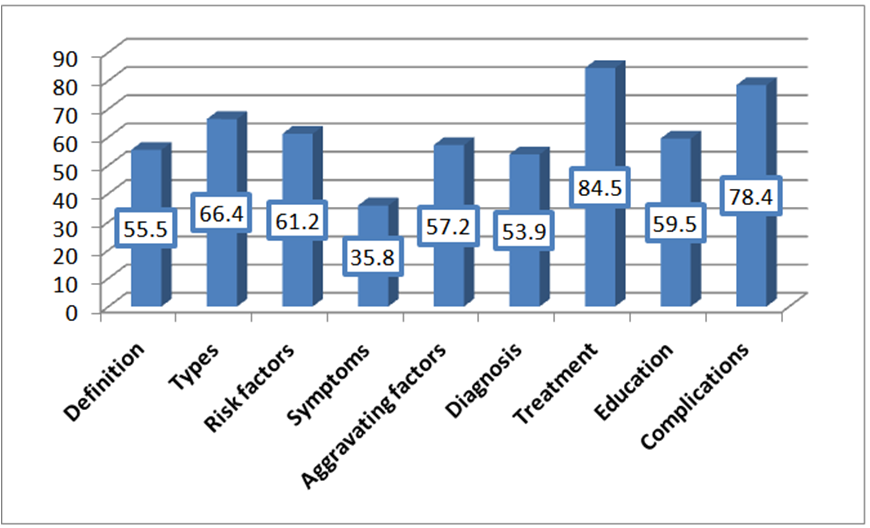
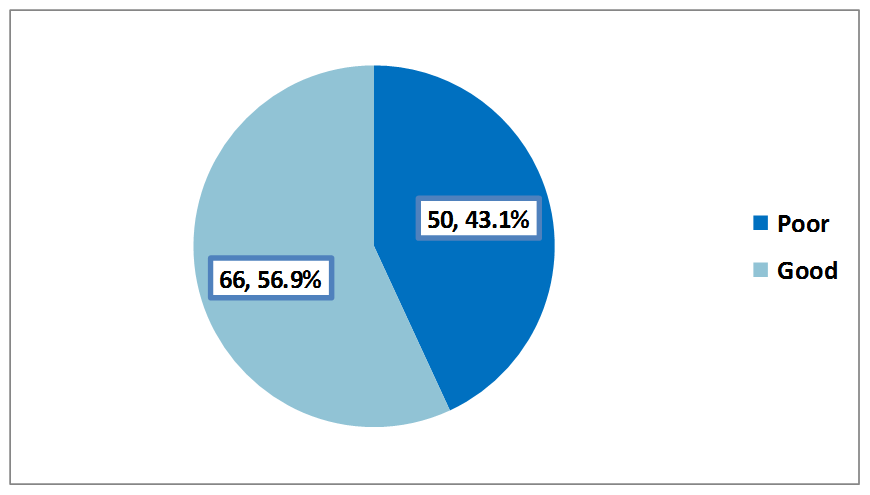
From Figure 1, it is clear that the highest mean knowledge score was observed regarding treatment of MS (84.5%), followed by complications (78.4%) while the lowest mean knowledge score was reported regarding symptoms (35.8%). Overall, 56.9% of family Medicine residents expressed good level of knowledge regarding MS as obvious from Figure 2.


- Demographic factors
Almost two-thirds (69%) of female resident physicians compared to 44.8% of males expressed good level of knowledge about multiple sclerosis, p=0.009. Majority (83.3%) of PGY4 resident physicians compared to only 47.2% and 47.4% of PGY3 and PGY2 resident physicians, respectively had good level of knowledge, p=0.040. Residents` age, marital status and years of experience were not significantly associated with their level of knowledge about MS. There was no statistically significant association between history of knowing someone (relative/ friend) having multiple sclerosis, attending conference about multiple sclerosis or rotation in neurology department from one side and knowledge about the disease among Family Medicine residents, Makkah from the other side. (Table 3)
It has been recognized that adverse consequences of MS not only exist with increased prevalence of the disease but also with delayed diagnosis, 6, 7 and relapse. 8 Thus, better knowledge of the risk factors, identifying early signs and symptoms lead to appropriate intervention earlier in disease course and reducing its activity, the risk of its progression and improving the quality of life and functional independence of patients. 9 This study was conducted to evaluate the knowledge family medicine residents in Makkah city, Saudi Arabia towards multiple sclerosis different aspects.
In the present study, only 13.8% of family medicine residents reported history of attending conference about multiple sclerosis or neurological disorder. The more important in this study was finding that the attendance of such courses did not improve the knowledge, attitude and also practice regarding MS. Therefore, the quality and contents of these courses should be revised.
Multiple sclerosis (MS) is the commonest disabling autoimmune disease that could affect young adults. 10 In the current study, majority of the family medicine residents could recognize that MS is an autoimmune disease and 78.4% knew that it affects mainly individuals between 20-40 years old. However, only one-third knew that the best direct translation of the disease as “many locations of scar tissue”.
MS is a two-stage disease, stage of early inflammation responsible for relapsing–remitting disease and stage of delayed “neurodegeneration” causing primary and secondary progressive MS. 11, 12 In the current study, nearly half of the physicians were aware that MS is not an inherited disease, usually doesn’t shorten a person`s life and doesn’t gets progressively worse. Furthermore, most of them knew that relapsing–remitting type is the commonest type of the disease and more than half of the physicians knew that most patients don’t suffer from a primary progressive type of MS. Online searching did not yield any single similar study to compare with.
MS is characterized by a wide range of symptoms and a markedly unpredictable prognosis, which can severely influence quality of patients` life. 12, 13, 14 Concerning symptoms, imbalance as a common symptom of MS was identified by only 25.9% of the family medicine in the current study and only 14.7% of them could recognize that bladder dysfunction occurs in 20% of people with multiple sclerosis. More than half (56%) identified vision loss as an early clinical finding that healthcare provider should expect multiple sclerosis if they found.
Ascherio A (2013) 15 and Ramagopalan SV, et al (2010) 16 have identified the environmental risk factors in MS, including vitamin D/ultraviolet B light exposure, obesity, Epstein–Barr virus (EBV) and smoking as well as its familial genetic predisposition. 15. Approximately 80% of the family medicine residents in the present study knew that MS is of unknown etiology and it`s risk factors include both environmental factors and family history.
Only 29.3% of physicians in the present study could recognize that smoking has been identified and validated as an independent risk factor for MS. Palacios N, et al (2011) reported that smoking increased risk of MS risk by nearly 50% and can explain up to 40% of the higher incidence of the disease in females. 17
Multiple sclerosis is more prevalent among women than men and the, the sex ratio is almost double or even triple in developed world. 18 Almost three-quarters of the physicians in the current study knew that about twice as many women as men suffer from Multiple Sclerosis worldwide.
Most of the physicians in the present study could recognize that both hot and cold temperatures can worsen the symptoms of multiple sclerosis. Temperature sensitivity in multiple sclerosis has been documented previously; 19 however, the mechanisms by which the increases or decreases in temperature modulate sensory and cognitive symptoms in MS is still not well known. Also in the present study, almost two-thirds of the physicians knew that low vitamin D levels can trigger multiple sclerosis as stated by Sintzel, et al. 20
Although the diagnosis of MS depends mainly on clinical and neurological assessment in addition to magnetic resonant imaging (MRI), all patients with suspected MS should undergo a lumbar puncture to help in supporting the diagnosis. 21 In the present study, almost half of the physicians knew that cerebrospinal fluid analysis can help to confirm the diagnosis of MRI in addition to clinica/neurological evaluation and about 60% of them could recognize that MRI in MS show lesions in while matter.
Treatment of MS can be classified into two different groups of medications; disease-modifying medications and symptomatic medications. The first group includes immunomodulatory therapy for the underlying disorder in the immune system to relieve or modify symptoms medications for clinically isolated syndrome. Symptomatic medications are directed towards symptoms of central nervous system damage. 21 Majority of the physicians in the present study could recognize that Methylprednisolone is used in the management of MS acute attack. This has been documented since three decades. 22, 23
Spasticity is a very common feature of MS and physiotherapy is an accepted basic therapeutic choice for it, despite no sufficient evidence. 24 In the current study, majority of the family medicine resident physicians knew that Baclofen and Diazepam can help to treat muscle spasms in a patient with multiple sclerosis as documented previously. 25
Association between overexertion and stress from one side and MS from the other side is well documented. 26 Additionally, it has been reported that infection exaggerated the symptoms of MS and increase their relapse. 27, 28 In the present study, majority of family medicine resident physicians knew that infection, overexertion and stress should be avoided through health education for MS patients to avoid exaggeration of symptoms and increasing relapse rate. However, only less than half of them knew that they should educate them hand hygiene to avoid infection. Also 41.4% could recognize that self-directed leering, which is a “a process in which individuals take the initiative, with or without the help of others” is the best for empowering the adult patient with MS. 29
In the current study, almost two thirds of physicians could recognize uriary tract infection while majority of them could recognize depression as complications of MS. It has been well documented that urinary tract infection (UTI) is one of the commonest three non-neurological complications of MS patients, which attributed mainly to the existence of urinary disorders in patients with MS. 30 Additionally, depressive disorders occur in up to 50% of people living with multiple sclerosis (MS). 31
The major strength of this study is its unique nature as searching online did not reveal any similar study either locally or even internationally. However, some limitations should be addressed. The cross-sectional design is one of the limitations as it affects the interpretation of the direction of the associations between dependent and independent variables. Additionally, conduction of the study in only one family medicine program could affect the generalizability of results over other programs in Saudi Arabia.
A considerable percentage of family Medicine residents in Makkah city, Saudi Arabia expressed poor level of knowledge regarding all aspects of multiple sclerosis; particularly males. The highest level of knowledge was observed regarding treatment of MS, followed by complications while the lowest level was reported regarding symptoms. Minority of the Family Medicine residents have attended conference about multiple sclerosis or neurological disorders and even those attended such courses did not show improvement in the knowledge regarding MS.
Based on results of the study, we recommended the following
-Organizing continuous medical education activities for family medicine residents concerning different aspects of multiple sclerosis; particularly symptoms and diagnosis.
-Reconsideration of the rotation of family medicine residents in Neurology department with regards duration and quality of training.
-Further interventional study including family medicine residents from other residency programs in the Kingdom of Saudi Arabia is needed for comparisons between programs and before with after the educational activities.
| [1] | Quintana FJ, Perez-Sanchez S, Farez MF. [Immunopathology of multiple sclerosis]. Medicina (B Aires). 2014; 74(5): p. 404-10. | ||
| In article | |||
| [2] | Stys PK, Tsutsui S. Recent advances in understanding multiple sclerosis. F1000Res. 2019 Dec 13; 8: F1000. | ||
| In article | View Article PubMed | ||
| [3] | Tobin WO. Management of Multiple Sclerosis Symptoms and Comorbidities. Continuum (Minneap Minn). 2019. 25(3): 753-772. | ||
| In article | View Article PubMed | ||
| [4] | Abulaban A, Altowairqi A, Altowairqi H, Almutairi A, Altalhi S, Alotaibi F, et al. Multiple Sclerosis Patients Knowledge in Saudi Arabia. Neurosciences (Riyadh). 2019; 24(4): 327-330. | ||
| In article | View Article PubMed | ||
| [5] | Zeydan B, Kantarci OH. Progressive Forms of Multiple Sclerosis: Distinct Entity or Age-Dependent Phenomena. Neurol Clin. 2018; 36(1): 163-171. | ||
| In article | View Article PubMed | ||
| [6] | Marrie RA, Horwitz R, Cutter G, Tyry T, Campagnolo D, Vollmer T. Comorbidity delays diagnosis and increases disability at diagnosis in MS. Neurology 2009; 72(2): 117-124. | ||
| In article | View Article PubMed | ||
| [7] | Thormann A, Sørensen PS, Koch-Henriksen N, Laursen B, Magyari M. Comorbidity inmultiple sclerosis is associated with diagnostic delays and increased mortality. Neurology 2017; 89(16): 1668-1675. | ||
| In article | View Article PubMed | ||
| [8] | Kowalec K, McKay KA, Patten SB, Fisk JD, Evans C, Tremlett H, et al. Comorbidity increases the risk of relapse inmultiple sclerosis: a prospective study. Neurology 2017; 89(24): 2455-2461. | ||
| In article | View Article PubMed | ||
| [9] | Tobin WO. Management of multiple sclerosis symptoms and comorbidities. Continuum 2019; 25(3):753-772 | ||
| In article | View Article PubMed | ||
| [10] | Kobelt G, Thompson A, Berg J, Gannedahl M, Jennifer Eriksson J; the MSCOI Study Group, et al. New insights into the burden and costs of multiple sclerosis in Europe. Mult Scler 2017; 23: 1123-1136. | ||
| In article | View Article PubMed | ||
| [11] | Leray E, Yaouanq J, Le Page E, Coustans M, Laplaud D, Oger J, et al. Evidence for a two-stage disability progression in multiple sclerosis. Brain 2010; 133: 1900-1913. | ||
| In article | View Article PubMed | ||
| [12] | Coles AJ, Cox A, Le Page E, Jones J, Trip SA, Deans, J, et al. The window of therapeutic opportunity in multiple sclerosis: evidence from monoclonal antibody therapy. J Neurol 2006; 253: 98-108. | ||
| In article | View Article PubMed | ||
| [13] | Muraro PA, Pasquini M, Atkins HL, Bowen JD, Farge D, Fassas A, et al. Long-term outcomes after autologous hematopoietic stem cell transplantation for multiple sclerosis. JAMA Neurol. 2017; 74: 459-469. | ||
| In article | View Article PubMed | ||
| [14] | Montalban X, Hauser SL, Kappos L, Arnold DL, Bar-Or A, Comi G, et al. Ocrelizumab versus placebo in primary progressive multiple sclerosis. N Engl J Med 2017; 376: 209-220. | ||
| In article | View Article PubMed | ||
| [15] | Ascherio A. Environmental factors in multiple sclerosis. Expert Rev Neurother 2013; 13: 3-9. | ||
| In article | View Article PubMed | ||
| [16] | Ramagopalan SV, Dobson R, Meier UC, Giovannoni G. Multiple sclerosis: risk factors, prodromes, and potential causal pathways. Lancet Neurol 2010; 9: 727-739. | ||
| In article | View Article | ||
| [17] | Palacios N, Alonso A, Brønnum-Hansen H, Ascherio A. Smoking and increased risk of multiple sclerosis: parallel trends in the sex ratio reinforce the evidence. Ann Epidemiol 2011; 21: 536-542. | ||
| In article | View Article PubMed | ||
| [18] | Orton S-M, Herrera BM, Yee IM, Ramagopalan S, Sadovnick A, Ebers G, et al. Sex ratio of multiple sclerosis in Canada: a longitudinal study. Lancet Neurol 2006; 5: 932-936. | ||
| In article | View Article | ||
| [19] | Christogianni A, Bibb R, Davis SL, Jay O, Barnett M, Evangelou N, et al. Temperature sensitivity in multiple sclerosis: An overview of its impact on sensory and cognitive symptoms. Temperature (Austin). 2018; 5(3): 208-223. | ||
| In article | View Article PubMed | ||
| [20] | Sintzel MB, Rametta M, Reder AT. Vitamin D and multiple sclerosis: a comprehensive review. Neurol Ther 2018; 7: 59-85. | ||
| In article | View Article PubMed | ||
| [21] | Dobsona R, Giovannonib G. Multiple sclerosis – a review. European Journal of Neurology 2019, 26: 27-40. | ||
| In article | View Article PubMed | ||
| [22] | Griffiths TD, Newman PK. Steroids in multiple sclerosis. J Clin Pharm Ther. 1994; 19: 219-22. | ||
| In article | View Article PubMed | ||
| [23] | Montalban X. Do steroids have a long-term benefit? London: Martin Dunitz: Multiple sclerosis: clinical challenges and controversies; 1997. pp. 155-68. | ||
| In article | |||
| [24] | Amatya B, Khan F, La Mantia L, Demetrios M, Wade D. Non pharmacological interventions for spasticity in multiple sclerosis. Cochrane Database Syst Rev. 2013; 2: CD009974. | ||
| In article | View Article PubMed | ||
| [25] | Beer S. Management of spasticity in multiple sclerosis. MS ALUMNI programme. Preceptorship course on rehabilitation in multiple sclerosis, Switzerland 25-26 Sep, 2014. Available at: https://www.excemed.org/ms-alumni/resources/management-spasticity-multiple-sclerosis-ms. | ||
| In article | |||
| [26] | Briones-Buixassa L, Milà R, Aragonès JM, Bufill E, Olaya B, Arrufat FX. Stress and multiple sclerosis: A systematic review considering potential moderating and mediating factors and methods of assessing stress. Health Psychol Open. 2015 Jul; 2(2): 2055102915612271. | ||
| In article | View Article PubMed | ||
| [27] | Marrie RA, Elliott L, Marriott J, et al. Dramatically changing rates and reasons for hospitalization in multiple sclerosis. Neurology 2014; 83: 929-937. | ||
| In article | View Article PubMed | ||
| [28] | Montgomery S, Hillert J, Bahmanyar S. Hospital admission due to infections in multiple sclerosis patients. Eur J Neurol. 2013; 20: 1153-1160. | ||
| In article | View Article PubMed | ||
| [29] | Sawatsky A. Instruments for measuring self-directed learning and self-regulated learning in health professions education: a systematic review Society of Directors of Research in Medical Education Monday, May 22nd 2017. Available at: http://www.sdrme.org/upload/312/Sawatsky_SDRME_Presentation_05.21.17.pdf. | ||
| In article | |||
| [30] | Gomes de Medeiros Junior WL, Demore CC, Mazaro LP, Nascimento de Souza MF, Parolin LF, Melo LH, et al. Urinary tract infection in patients with multiple sclerosis: An overview. Mult Scler Relat Disord. 2020 Nov; 46: 102462. | ||
| In article | View Article PubMed | ||
| [31] | Patten SB, Marrie RA, Carta MG. Depression in multiple sclerosis. Int Rev Psychiatry. 2017 Oct; 29(5): 463-472. | ||
| In article | View Article PubMed | ||
Published with license by Science and Education Publishing, Copyright © 2022 Mohammad Halabi, Abbas Halawani and Salman M. Alsubhi
 This work is licensed under a Creative Commons Attribution 4.0 International License. To view a copy of this license, visit
http://creativecommons.org/licenses/by/4.0/
This work is licensed under a Creative Commons Attribution 4.0 International License. To view a copy of this license, visit
http://creativecommons.org/licenses/by/4.0/
| [1] | Quintana FJ, Perez-Sanchez S, Farez MF. [Immunopathology of multiple sclerosis]. Medicina (B Aires). 2014; 74(5): p. 404-10. | ||
| In article | |||
| [2] | Stys PK, Tsutsui S. Recent advances in understanding multiple sclerosis. F1000Res. 2019 Dec 13; 8: F1000. | ||
| In article | View Article PubMed | ||
| [3] | Tobin WO. Management of Multiple Sclerosis Symptoms and Comorbidities. Continuum (Minneap Minn). 2019. 25(3): 753-772. | ||
| In article | View Article PubMed | ||
| [4] | Abulaban A, Altowairqi A, Altowairqi H, Almutairi A, Altalhi S, Alotaibi F, et al. Multiple Sclerosis Patients Knowledge in Saudi Arabia. Neurosciences (Riyadh). 2019; 24(4): 327-330. | ||
| In article | View Article PubMed | ||
| [5] | Zeydan B, Kantarci OH. Progressive Forms of Multiple Sclerosis: Distinct Entity or Age-Dependent Phenomena. Neurol Clin. 2018; 36(1): 163-171. | ||
| In article | View Article PubMed | ||
| [6] | Marrie RA, Horwitz R, Cutter G, Tyry T, Campagnolo D, Vollmer T. Comorbidity delays diagnosis and increases disability at diagnosis in MS. Neurology 2009; 72(2): 117-124. | ||
| In article | View Article PubMed | ||
| [7] | Thormann A, Sørensen PS, Koch-Henriksen N, Laursen B, Magyari M. Comorbidity inmultiple sclerosis is associated with diagnostic delays and increased mortality. Neurology 2017; 89(16): 1668-1675. | ||
| In article | View Article PubMed | ||
| [8] | Kowalec K, McKay KA, Patten SB, Fisk JD, Evans C, Tremlett H, et al. Comorbidity increases the risk of relapse inmultiple sclerosis: a prospective study. Neurology 2017; 89(24): 2455-2461. | ||
| In article | View Article PubMed | ||
| [9] | Tobin WO. Management of multiple sclerosis symptoms and comorbidities. Continuum 2019; 25(3):753-772 | ||
| In article | View Article PubMed | ||
| [10] | Kobelt G, Thompson A, Berg J, Gannedahl M, Jennifer Eriksson J; the MSCOI Study Group, et al. New insights into the burden and costs of multiple sclerosis in Europe. Mult Scler 2017; 23: 1123-1136. | ||
| In article | View Article PubMed | ||
| [11] | Leray E, Yaouanq J, Le Page E, Coustans M, Laplaud D, Oger J, et al. Evidence for a two-stage disability progression in multiple sclerosis. Brain 2010; 133: 1900-1913. | ||
| In article | View Article PubMed | ||
| [12] | Coles AJ, Cox A, Le Page E, Jones J, Trip SA, Deans, J, et al. The window of therapeutic opportunity in multiple sclerosis: evidence from monoclonal antibody therapy. J Neurol 2006; 253: 98-108. | ||
| In article | View Article PubMed | ||
| [13] | Muraro PA, Pasquini M, Atkins HL, Bowen JD, Farge D, Fassas A, et al. Long-term outcomes after autologous hematopoietic stem cell transplantation for multiple sclerosis. JAMA Neurol. 2017; 74: 459-469. | ||
| In article | View Article PubMed | ||
| [14] | Montalban X, Hauser SL, Kappos L, Arnold DL, Bar-Or A, Comi G, et al. Ocrelizumab versus placebo in primary progressive multiple sclerosis. N Engl J Med 2017; 376: 209-220. | ||
| In article | View Article PubMed | ||
| [15] | Ascherio A. Environmental factors in multiple sclerosis. Expert Rev Neurother 2013; 13: 3-9. | ||
| In article | View Article PubMed | ||
| [16] | Ramagopalan SV, Dobson R, Meier UC, Giovannoni G. Multiple sclerosis: risk factors, prodromes, and potential causal pathways. Lancet Neurol 2010; 9: 727-739. | ||
| In article | View Article | ||
| [17] | Palacios N, Alonso A, Brønnum-Hansen H, Ascherio A. Smoking and increased risk of multiple sclerosis: parallel trends in the sex ratio reinforce the evidence. Ann Epidemiol 2011; 21: 536-542. | ||
| In article | View Article PubMed | ||
| [18] | Orton S-M, Herrera BM, Yee IM, Ramagopalan S, Sadovnick A, Ebers G, et al. Sex ratio of multiple sclerosis in Canada: a longitudinal study. Lancet Neurol 2006; 5: 932-936. | ||
| In article | View Article | ||
| [19] | Christogianni A, Bibb R, Davis SL, Jay O, Barnett M, Evangelou N, et al. Temperature sensitivity in multiple sclerosis: An overview of its impact on sensory and cognitive symptoms. Temperature (Austin). 2018; 5(3): 208-223. | ||
| In article | View Article PubMed | ||
| [20] | Sintzel MB, Rametta M, Reder AT. Vitamin D and multiple sclerosis: a comprehensive review. Neurol Ther 2018; 7: 59-85. | ||
| In article | View Article PubMed | ||
| [21] | Dobsona R, Giovannonib G. Multiple sclerosis – a review. European Journal of Neurology 2019, 26: 27-40. | ||
| In article | View Article PubMed | ||
| [22] | Griffiths TD, Newman PK. Steroids in multiple sclerosis. J Clin Pharm Ther. 1994; 19: 219-22. | ||
| In article | View Article PubMed | ||
| [23] | Montalban X. Do steroids have a long-term benefit? London: Martin Dunitz: Multiple sclerosis: clinical challenges and controversies; 1997. pp. 155-68. | ||
| In article | |||
| [24] | Amatya B, Khan F, La Mantia L, Demetrios M, Wade D. Non pharmacological interventions for spasticity in multiple sclerosis. Cochrane Database Syst Rev. 2013; 2: CD009974. | ||
| In article | View Article PubMed | ||
| [25] | Beer S. Management of spasticity in multiple sclerosis. MS ALUMNI programme. Preceptorship course on rehabilitation in multiple sclerosis, Switzerland 25-26 Sep, 2014. Available at: https://www.excemed.org/ms-alumni/resources/management-spasticity-multiple-sclerosis-ms. | ||
| In article | |||
| [26] | Briones-Buixassa L, Milà R, Aragonès JM, Bufill E, Olaya B, Arrufat FX. Stress and multiple sclerosis: A systematic review considering potential moderating and mediating factors and methods of assessing stress. Health Psychol Open. 2015 Jul; 2(2): 2055102915612271. | ||
| In article | View Article PubMed | ||
| [27] | Marrie RA, Elliott L, Marriott J, et al. Dramatically changing rates and reasons for hospitalization in multiple sclerosis. Neurology 2014; 83: 929-937. | ||
| In article | View Article PubMed | ||
| [28] | Montgomery S, Hillert J, Bahmanyar S. Hospital admission due to infections in multiple sclerosis patients. Eur J Neurol. 2013; 20: 1153-1160. | ||
| In article | View Article PubMed | ||
| [29] | Sawatsky A. Instruments for measuring self-directed learning and self-regulated learning in health professions education: a systematic review Society of Directors of Research in Medical Education Monday, May 22nd 2017. Available at: http://www.sdrme.org/upload/312/Sawatsky_SDRME_Presentation_05.21.17.pdf. | ||
| In article | |||
| [30] | Gomes de Medeiros Junior WL, Demore CC, Mazaro LP, Nascimento de Souza MF, Parolin LF, Melo LH, et al. Urinary tract infection in patients with multiple sclerosis: An overview. Mult Scler Relat Disord. 2020 Nov; 46: 102462. | ||
| In article | View Article PubMed | ||
| [31] | Patten SB, Marrie RA, Carta MG. Depression in multiple sclerosis. Int Rev Psychiatry. 2017 Oct; 29(5): 463-472. | ||
| In article | View Article PubMed | ||